
Article share: What Is Bus Rapid Transit?
I found this short article defining and describing Bus Rapid Transit (BRT). I include this as a topic under public transportation in one of the graduate courses that I teach. Fortunately, I have materials for lecture coming from previous engagements concerning BRT including lectures by my former adviser who is an expert on public transportation and has studied the BRT in Curitiba, Brazil. Here is the article appearing in Planetizen:
Source: What Is Bus Rapid Transit?
Quoting from the article:
“Bus rapid transit, known as BRT, is a form of transit widely seen by transportation planning professionals and transit officials as a less costly alternative to light rail that offers a significant improvement over other fixed-route bus services that share lanes with regular traffic and makes bus service faster and more reliable.
BRT generally includes dedicated transit-only lanes or busways for at least part of the route, as well as prioritized traffic signal timing. BRT lanes are often located in the center of the roadway to limit interaction with cars, bikes, and pedestrians. In some cases, busways are elevated or underground.”
Definitions are good in that they provide us with a characterization of the system. There are many good examples of BRT particularly in South America (e.g., Curitiba and Bogota). These should be the models to replicate or adopt in Philippine cities rather than what local officials and their consultants propose and/or implement that are basically aberrations of the BRT concept.
–
Another look at NAIA Terminal 1 arrivals
I have not been to NAIA Terminal 1 since before the pandemic. Last May, I had the opportunity to go there to fetch the wife who was arriving from US. That meant an opportunity to take photos of the arrival areas including the well-wishers area and concourse at the main terminal building.
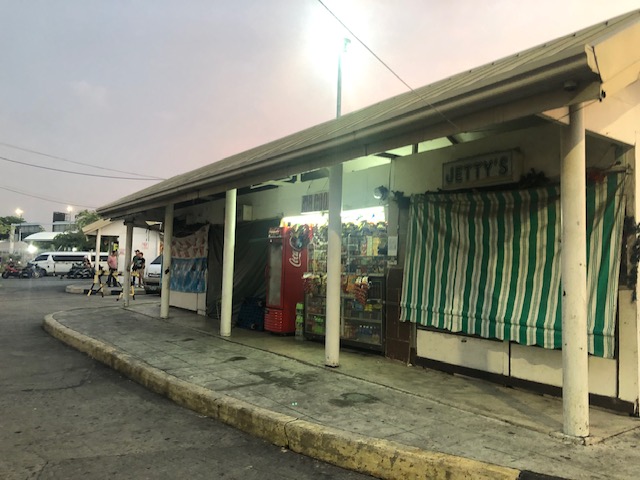 Kiosks are open basically at all times the terminal is operational or open. These usually sell or serve snacks or light meals including sandwiches and pansit (noodles). While I was not able to check the prices, items were usually priced significantly higher than if you purchased them elsewhere in similar stores.
 The well-wishers area is the same building with two levels. The ground level is open and the second level is air-conditioned.
 A single level building hosting stores selling food and drinks stands between the waiting area and the open parking lot.
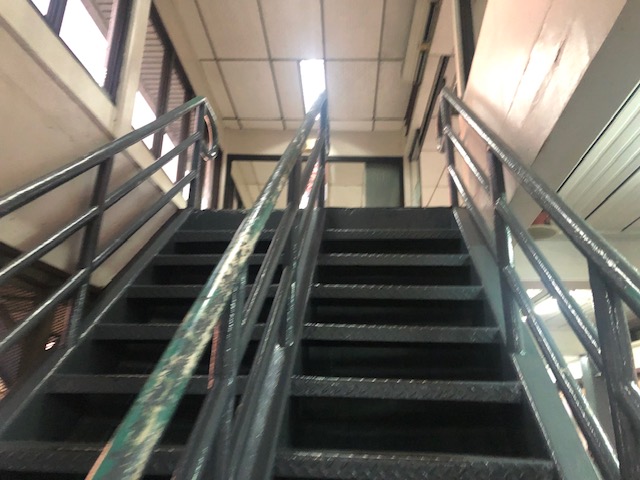 Stairs lead to the second level of the building for those who are waiting for arriving passengers (e.g., fetchers including relatives and friends).
 There used to be a Jollibee branch at the second level. I assume its closure was mainly due to the pandemic as it had a steady stream of customers before.
 There were few people at the second level. Either it was still very early or that there were fewer sundo these days. The parking lot is full of cars so I guess people just chose to stay near or in their vehicles or at the first level of the building.
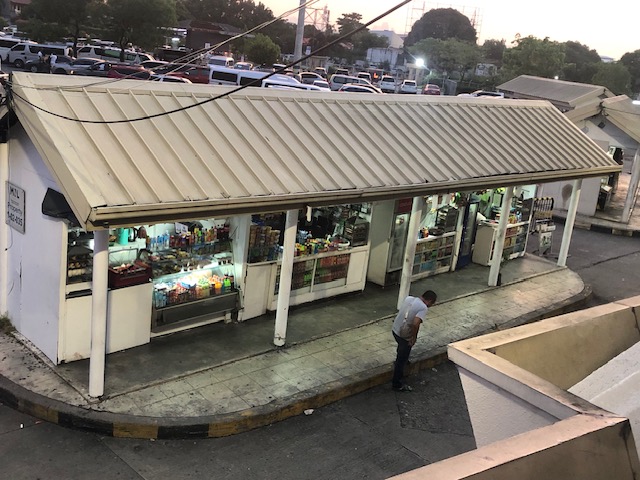 Another look at the kiosks behind the well-wishers area
 The driveway is still chaotic with drivers not following security and security often turning a blind eye to drivers taking their sweet time at the driveway.
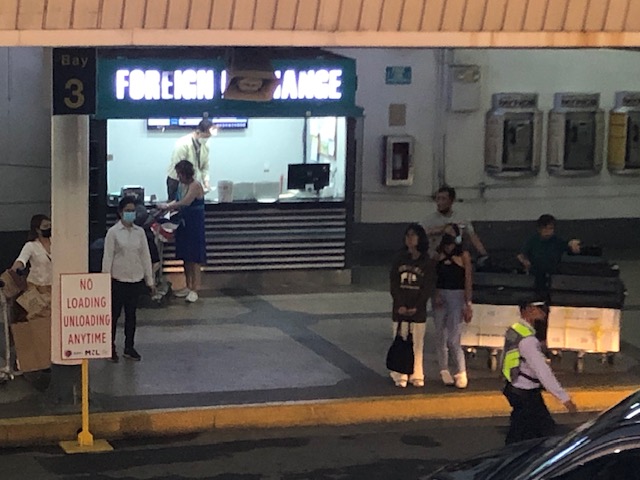 A foreign currency exchange stall at the arrival concourse
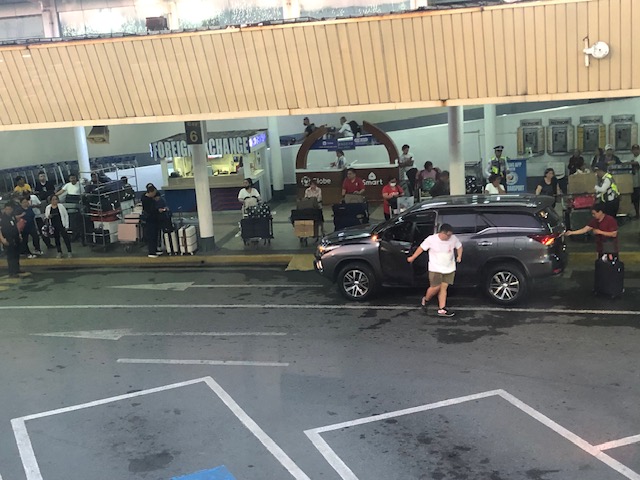 Here’s an example of a vehicle parked or standing along the concourse instead of at the designated slots marked along the middle of the driveway.
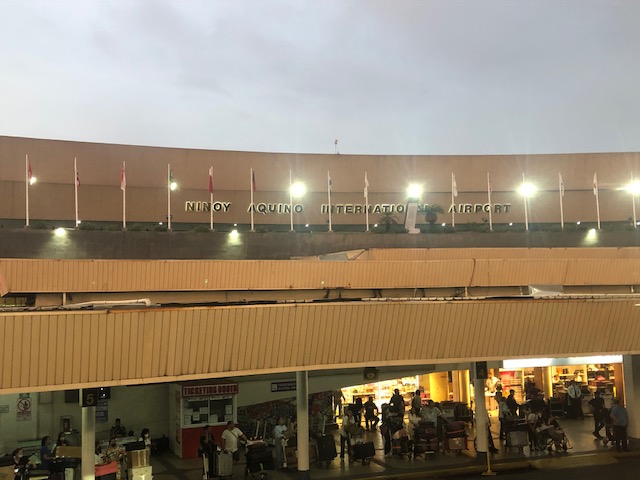 A view of the main Terminal 1 building from the waiting building. At the bottom of the photo is the arrival concourse along the driveway. At the top is the main driveway of T1, which is used by VIPs.
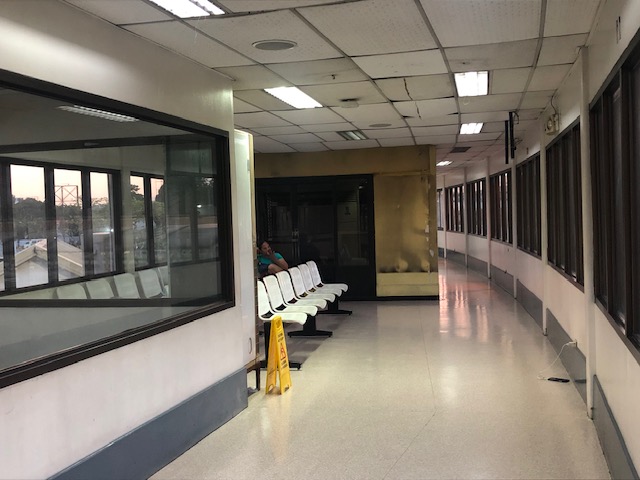 The other end of the second floor used to have a Kopi Rotti branch that became an ordinary . I guess it also became a casualty of the pandemic.
 Arriving passengers may cross from the terminal building to the well-wishers area before proceeding to the parking area.
 Crossing to the arrival concourse, here is the perspective of arriving passengers after descending from the terminal. There’s a duty free shop here for last minute purchases.
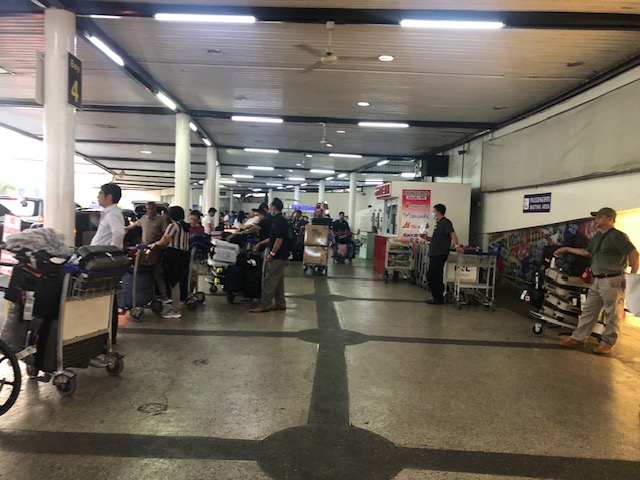 Another view of the concourse
It seems that little has changed at the arrival and waiting areas of NAIA Terminal 1. Everything appears to be back to pre-pandemic conditions. Security is very lax and there is no indication that the grand plans drawn up for the renovation of the terminal will push through in the near future.
–
Footbridges along Sumulong Highway – Part 1
There are several new pedestrian footbridges along Sumulong Highway. The intent is simple – provide a safe crossing for people considering the high volume of traffic along the highway and the high risk of being hit by vehicles. Speed is an issue here considering the highway’s slopes and curves. Footbridges present a quick solution. However, it is not necessarily the most appropriate given the objective of improving safety. Perhaps slowing down or ‘calming’ traffic is a better approach?
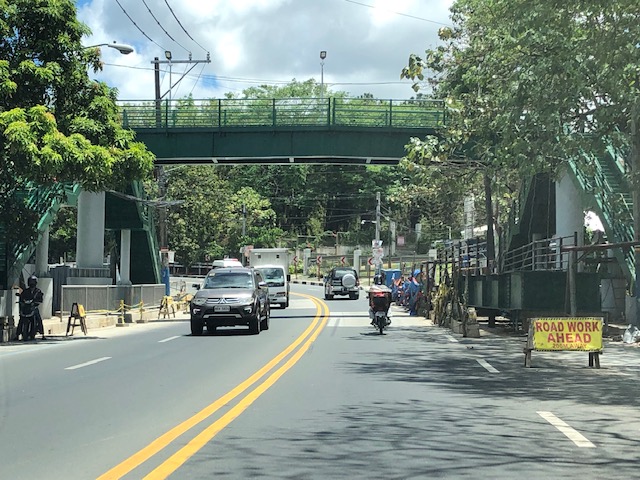 A new pedestrian footbridge near the San Pedro Calungsod Church. The intention is for people to use this footbridge to cross to or from the church. Considering the relatively narrow carriageway, crossing on road level is actually the shortest and most efficient way. However, the volume and speed of traffic is a major consideration here and elsewhere along Sumulong Highway.
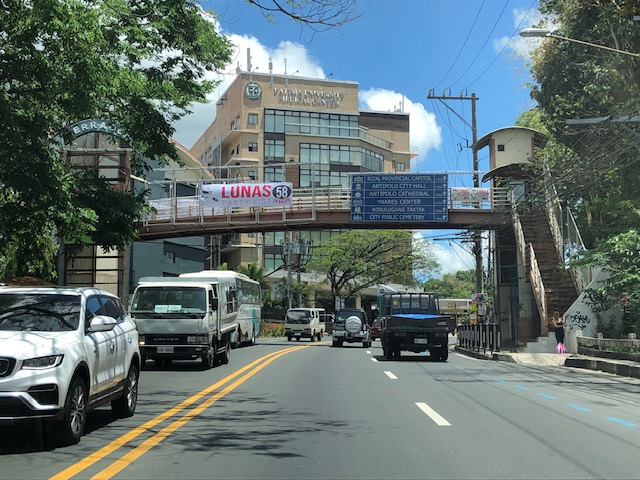 This pedestrian overpass or footbridge near Fatima University Hospital is intended for students and staff of the university and hospital. While many, even most, use the overpass, there are a significant number of people who prefer crossing directly on the highway. Before, there were school personnel, usually a guard, who helps people cross. I don’t see them anymore. Even Antipolo does not have traffic enforcers or aides in the area.
More on these pedestrian footbridges.
–
Article on “Fair Share Transportation Planning”
I am sharing this new article from Todd Litman on fair share transportation planning. The content is relevant and very timely in the Philippines considering many people including and especially transport officials are struggling with the thought of allocating resources to provide or improve facilities geared towards more equitable transport systems (e.g., more facilities for active transport).
Here’s the summary as quoted from the article:
“To be efficient and equitable, a transportation system must serve diverse demands. A diverse transportation system allows travelers to use the most efficient option for each trip—safe walking and bicycling for local errands, efficient public transit when traveling on busy travel corridors, and automobiles when they are truly the most cost-effective mode considering all impact—and it ensures that people who cannot, should not, or prefer not to drive receive their fair share of public investments.
Current transportation planning practices are biased in various ways that overinvest in automobile infrastructure and underinvest in more affordable, inclusive, and efficient modes. It is time for planners to reconsider our analysis methods and funding practices to ensure that non-auto modes, and therefore non-drivers, receive their fair share of transportation resources.
This is not anti-car. Motorists have good reasons to support more investments in non-auto modes that reduce their traffic and parking congestion, reduce their chauffeuring burdens and crash risk, and provide better options when their vehicles are unavailable. Everybody wins from a more diverse and efficient transportation system.”
On one’s exposure to noise
Here is another article on noise, relating about how it affects our health (e.g., “noise can damage your heart as well as your hearing”). The article also includes reference to an app developed by the US National Institute for Occupational Safety and Health (NIOSH) – a sound level meter iOS app that utilizes sound energy, and has its accuracy verified in an acoustics lab.
To quote from the article something related to transport and traffic:
“As a general rule of thumb, the World Health Organization considers average road traffic noise levels above 53 decibels and average aircraft noise levels above 45 dB to be associated with adverse health outcomes, though their metrics are weighted slightly differently than the average on your screen.
Nighttime noise is considered particularly harmful because it can fragment your sleep and prompt a stress response, even if you don’t remember waking up. The W.H.O. has long recommended less than 30 dB of nighttime noise inside your bedroom for high-quality sleep.”
We tend to dismiss or take for granted the noise from transport and traffic. While it seems that it does not have an effect on our health and well-being, it will eventually catch up with us and cost us health-wise. I have downloaded and installed the NIOSH app on my phone and occasionally monitor the noise around me whether I am at home or at the office. It can get pretty loud during my commutes and I drive so am curious how loud it can be for those taking public transportation. I have experienced riding in jeepneys blaring loud music. A daily dose of that for long periods each way of the commute will surely affect one’s hearing and overall health. Exposure, after all, isn’t just about the intensity of the noise but how long you experience or endure it.
–
On noise and how it affects your health
I am sharing this article on noise that was recently published in The New York Times:
Baumgaertner, E., et al (June 9, 2023) “Noise Could Take Years Off Your Life. Here’s How,” The New York Times, https://www.nytimes.com/interactive/2023/06/09/health/noise-exposure-health-impacts.html?smid=url-share [Last accessed: 6/13/2023]
To quote from the article:
“European countries have far outpaced the rest of the world in regulating noise. The European Union requires member nations to monitor and assess sound levels across regions and to produce new action plans every five years to address communities at greatest risk. The E.U. now mandates quiet brake locks on rail freight fleets and noise labels on outdoor power equipment; it also requires noise reduction in car manufacturing and mitigation efforts at airports.
Individual cities and countries have taken additional measures. Paris has installed noise cameras that measure the sound level of vehicles and fine drivers who exceed them. Berlin has used new bike lanes to reduce the flow of engine-powered vehicles and move the source of the noise to the center of the road, away from houses. Switzerland has introduced national “quiet hours” — overnight, one midday hour on weekdays, and all day on Sundays.
While scientists say it’s too soon to make a prediction about the effects of these policies on cardiovascular health, several European countries have reported tens of thousands fewer residents exposed to major sources of noise.
Like many health issues, protection against noise would be economically advantageous. Economists who analyzed health care spending and productivity loss because of heart disease and hypertension have argued that a 5 dB reduction in U.S. noise could result in an annual benefit of $3.9 billion.”
Not everyone is aware of how noise may affect our health. Most of us are exposed to noise of different levels and lengths of time (i.e., duration). We probably take for granted, for example, the noises we hear during our commutes or perhaps the noises in our workplaces. These actually take a toll not just on our hearing (e.g., long time factory workers likely have hearing problems after they retire) but other aspects of our health as well. Long commutes inside jeepneys blaring music can do damage to your health. Noise from busy streets will cause damage to the health of those residing along these streets. Are we doing anything to mitigate such noise in the Philippines?
–
Shared rides, anyone?
Would you share your ride with other people? This is not the conventional ride-sharing where you drive for someone else (i.e., Grab, Uber, etc.) but refers to a passenger sharing the vehicle he/she booked with another passenger or passengers. This is supposed to reduce the cost of the ride but can lead to more distance traveled as the matching of passengers has not been perfected. That is, it is likely to share a ride with a person heading to a destination that is out of the way of the passenger (in as far as typical routes are concerned).
Walker, J. (May 26, 2023) “Lyft: The End of Shared Rides,” Human Transit, https://humantransit.org/2023/05/lyft-the-end-of-shared-rides.html [Last accessed: 6/12/2023]
To quote from the article:
“I used this service once. On a departure from the airport, it paired my trip with one in a substantially different direction. The other trip was to a point further from the airport than my destination, and yet it served that trip first. I ended up with a travel time about twice what my direct travel time would have been, and much more than the app had estimated. I never used this option again. My impression was that they were overselling the product in contexts where it wasn’t appropriate, and they were offering the same discount to the person dropped off first — whose trip is exactly what it would have been if traveling alone — as to the person whose trip was being made much longer.”
We actually already have shared rides in the Philippines. This is in the form of UV Express (formerly and popularly referred to as FX after the Toyota vehicle model that became popular from the 1990s), which continue to be a popular mode of public transport. Shared rides evolved from a group of people negotiating with FX taxi drivers to take them to a common point or destination (not to their final destinations). At the common destination, the passengers will eventually part ways for their last mile trips. Here is the article on a taxi service that eventually became a shared service I wrote a while back:
That was before there were apps to facilitate the sharing. I think this also showed how people will find ways to overcome problems like a lack of public transportation for their commutes.
–
On delayed flights and being compensated
The last two times we traveled to Zamboanga City, we experienced significant delays to our flights. Last May, traveled twice to Zamboanga City. The first time, our flight to the city was delayed by a couple of hours. That led to a very late arrival and us having lunch at 3PM! Even though the airline could argue that they had nothing to do with the delay, the fact is that the reason (i.e., the standard “late turnaround of aircraft”) is very much due to their operations. Therefore, they should be accountable or made accountable for the inconvenience and discomfort.
While there was no issue for our return flight then, the situation was reversed the second time we traveled to Zamboanga. Our outbound flight from Manila was not delayed but our return flight was. This time though, the airline promptly distributed snacks in the form of water, crackers and biscuits to passengers.

I think that these or perhaps meals could be provided every time there is significant delay whether charged to the airline or to the airport depending on the circumstances. Travelers are paying for a service that are supposed to be delivered in the most efficient manner. Efficiency here should include safety so delays due to aircraft maintenance or technical issues or weather-related should also be covered when compensating passengers. Of course, cancellations would be another matter. Let’s talk about those later.
–
Morning walks in Zamboanga City – Part 3
Part of our walks took us to Fort Pilar and the Shrine of Our Lady of the Pillar. The shrine is originally located within the walls of the Fort, which served as a refuge for citizens when the city was under attack during various times in history. It is near the Paseo so can easily be integrated in our morning walks.
 The Shrine of Our Lady of the Pillar is open/outdoors and there’s a daily early morning Mass
 Instead of candle stands for prayer intentions, there is this trench set-up where you can put your candles and pray nearby.
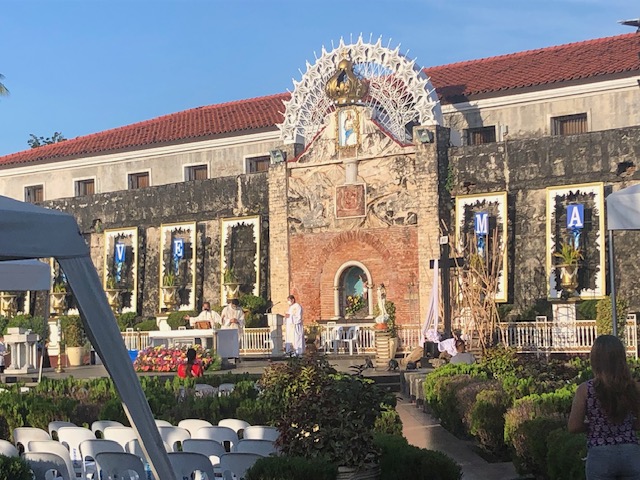 The main altar of the shrine apparently faces the sunrise
 Bells at the shrine
 Pigeons just outside the shrine and near the souvenir shops just across from Fort Pilar
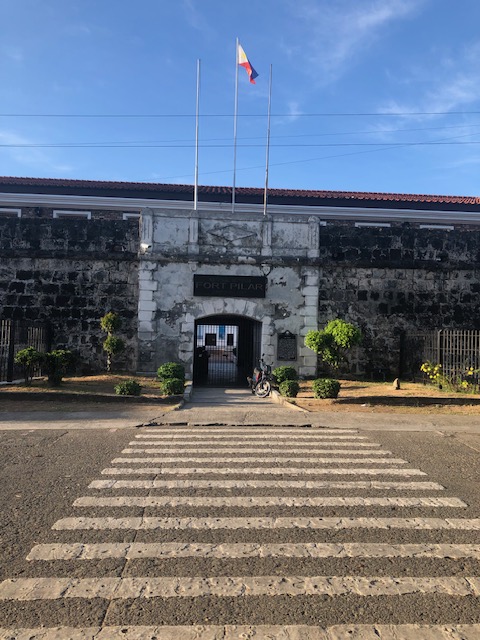 Entrance to Fort Pilar, which is administered by the National Museum of the Philippines
 Plaque describing the fort and its history
More posts on walking in Zamboanga soon!
–
Cool Walkability Planning
I am sharing this article about planning and design for more walkable streets. The term ‘cool’ in the article refers to temperatures as people are less likely to walk if it is too hot to do so.
From the article:
“Improving walkability (including variants such as wheelchairs, hand carts, low-speed scooters) can provide significant benefits to people, businesses and communities, particularly in dense urban areas where land values are high and vehicle travel is costly. However, walking can be uncomfortable and unhealthy in hot climate cities, particularly those that often experience extreme temperatures (over 40° Celsius, 105° Fahrenheit). These conditions make walking unattractive and infeasible during many days…
A well-planned networks of shadeways (shaded sidewalks) and pedways (enclosed, climate-controlled walkways) incorporated into a compact urban village can provide convenient, comfortable and efficient non-auto access during extreme heat. They can create multimodal communities where residents, workers and visitors rely more on walking and public transit, reduce vehicle use, save on vehicle costs, and require less expensive road and parking infrastructure…
The main obstacle to comprehensive pedway development is the well-entrenched biases that favor motorized travel and undervalue non-motorized modes in transportation planning and investment. Transportation agencies have tools for planning and evaluating roadway improvements, and funding to implement them, but lack comparable tools and funding for walkability improvements such as shadeways and pedways, even if they are more cost effective and beneficial than roadway projects.”
Source: Cool Walkability Planning
 Caught (up) in traffic