
Bicol International Airport Departure
Before I go on another trip, here are photos I took of the Bicol International Airport prior to our departure from Daraga. We were just in time to check in for our flight back to Manila so I wasn’t really able to take as many photos as I usually did in other airports. I did take enough for a clear description of what to expect at this terminal.
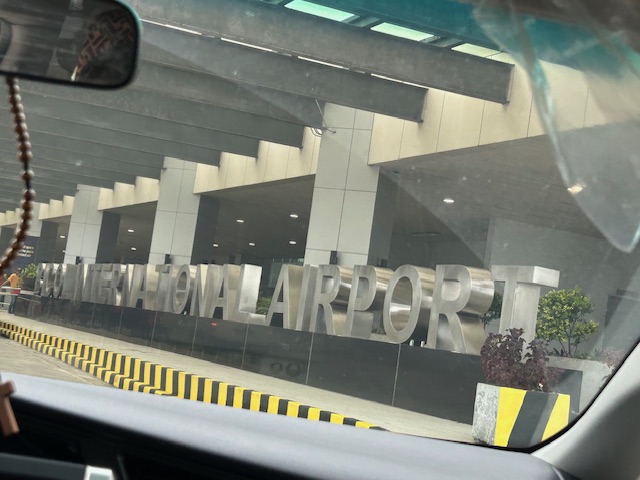 Arriving at the airport terminal’s departure area
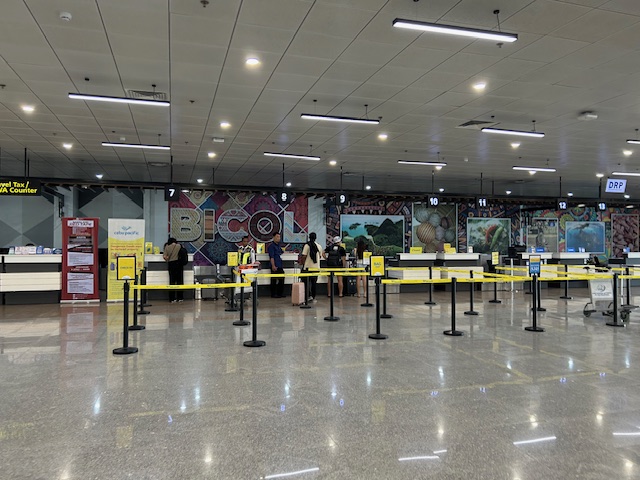 Check-in counters for Cebu Pacific
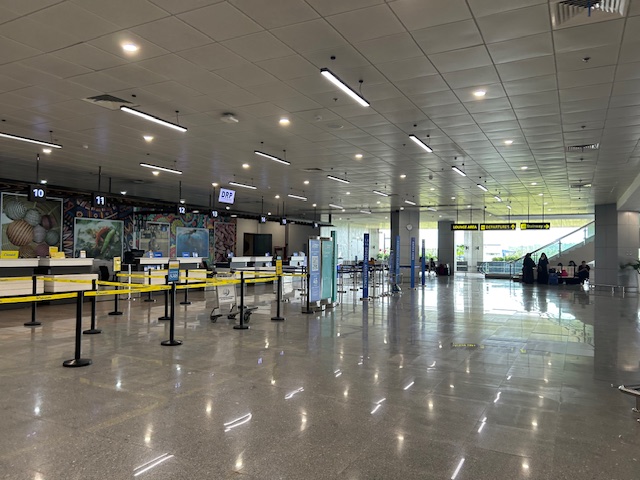 The terminal features a spacious check-in area.
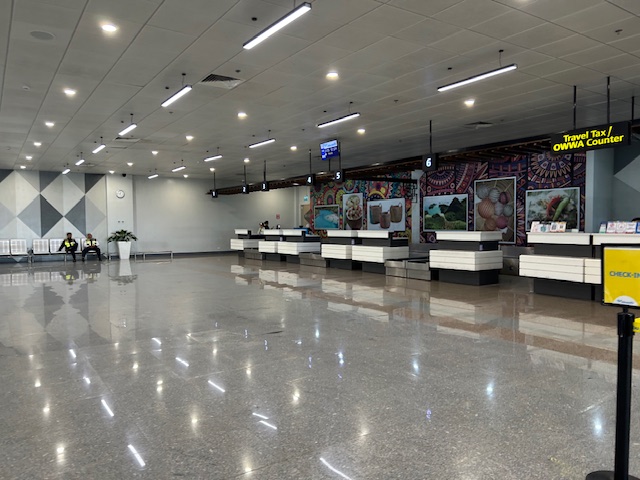 The area is more spacious than other, more busy airports like Iloilo and Bacolod
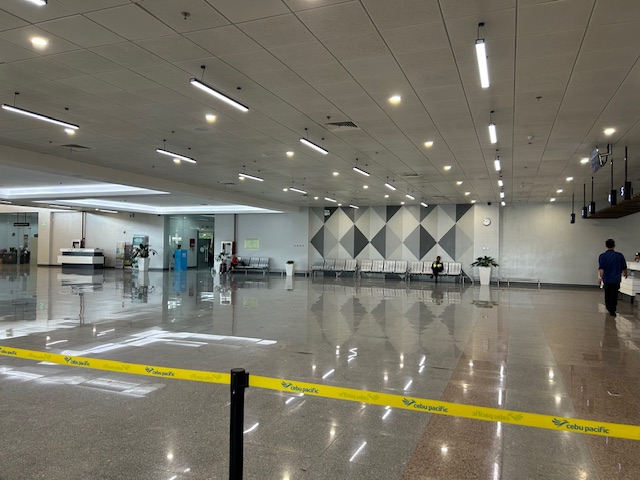 I can imagine that even if there were more flights, queues will not result in the area being too crowded.
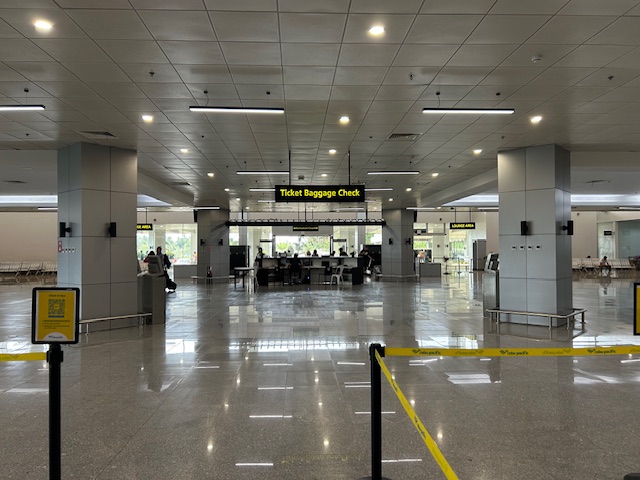 Another angle seen from the check-in area
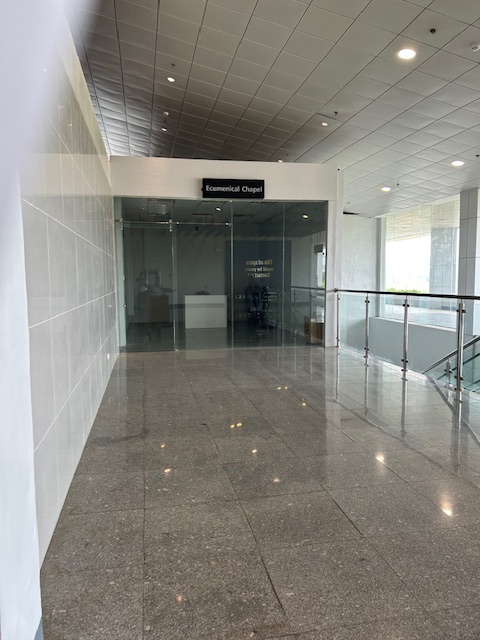 The corridors are also spacious.
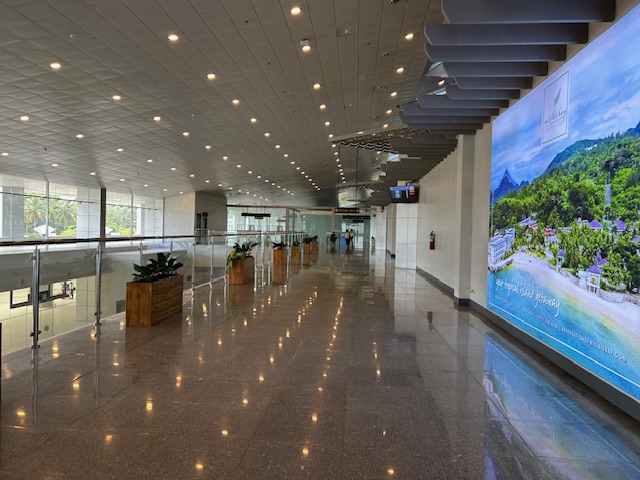 The terminal is well lit.
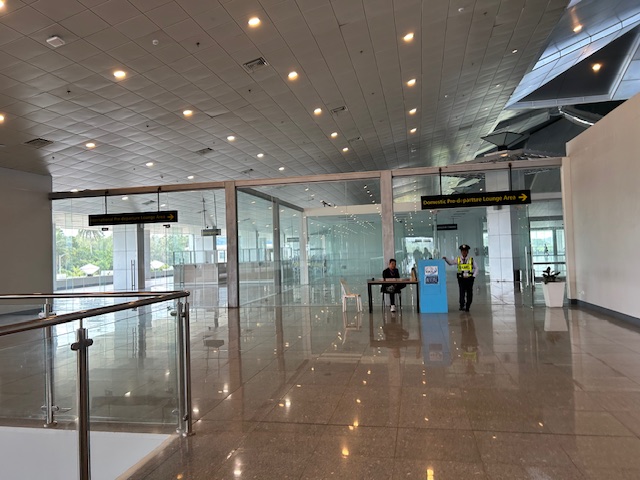 Entrance to the pre-departure lounge of the airport
I already wrote about and shared photos of the pre-departure lounge including the shops and eating options there. I look forward to visiting Legazpi City and its neighboring areas soon and perhaps get a clear photo of Mayon Volcano.
–
Quick comments on the NCAP
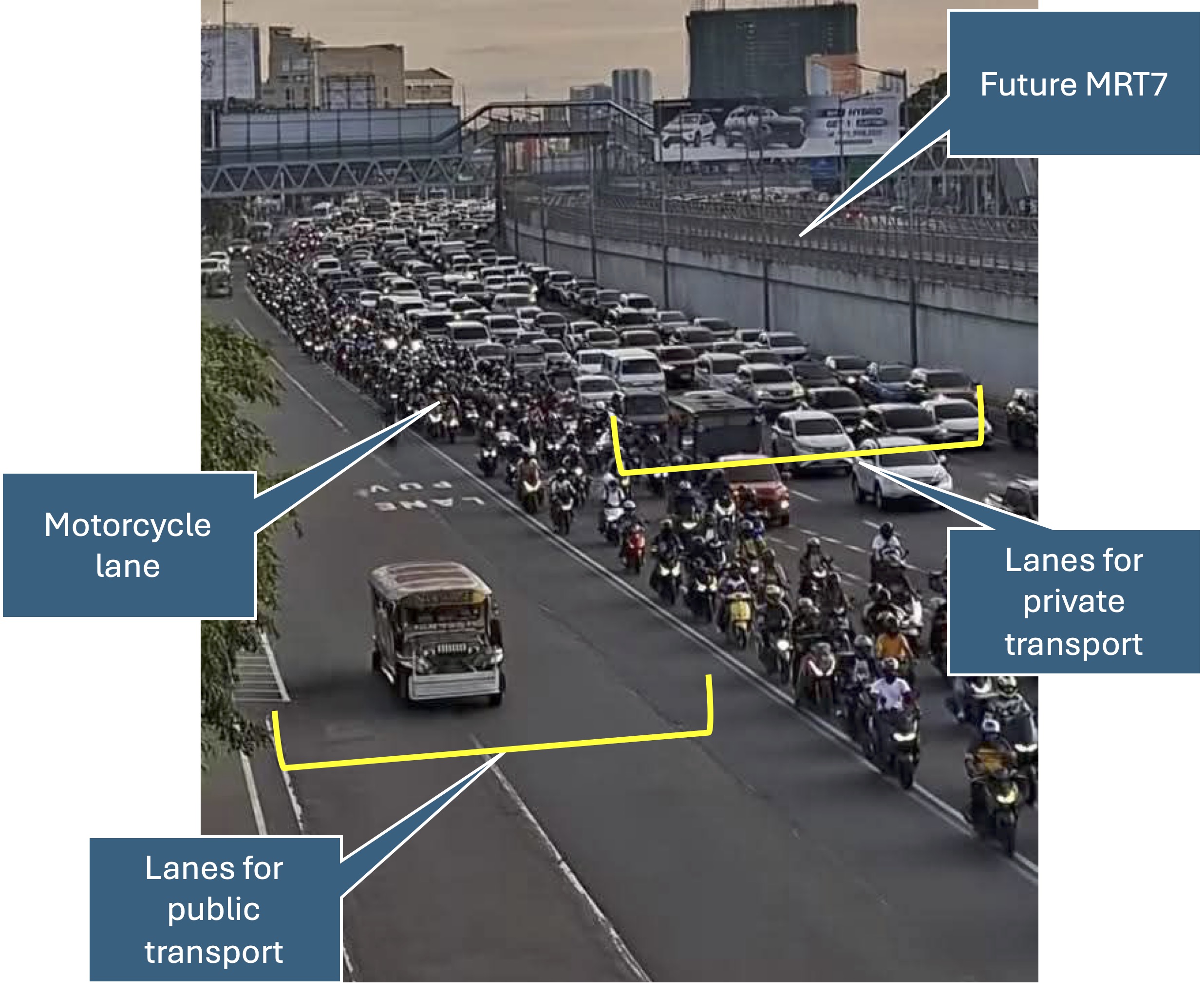
The No Contact Apprehension Policy (NCAP) is finally being implemented in Metro Manila. The results so far has been dramatic in terms of the number of violations recorded and the images being shared so far about how motorists are behaving. Below is one of those photos being shared on social media to which I added some annotations. I will use this later to comment on the NCAP and how we can use the outcomes to assess the transportation situation and determine what interventions can be done. Some are already obvious from the photo – the lack of public transport options lead to people depending on private motor vehicles like cars and motorcycles for their commutes. MRT7 is yet to be operational and road public transport has not been rationalized.
More on this topic soon!
–
Bollards along Marcos Highway
I noticed that there are new bollards installed along Marcos Highway and particularly along the curbs at either side of the road. These were installed only recently, perhaps last month, nut I only got a few photos the other day. Its not safe to take photos while one is driving so I asked the wife to take a few ones that I could use here and perhaps also in some of the lessons I teach.
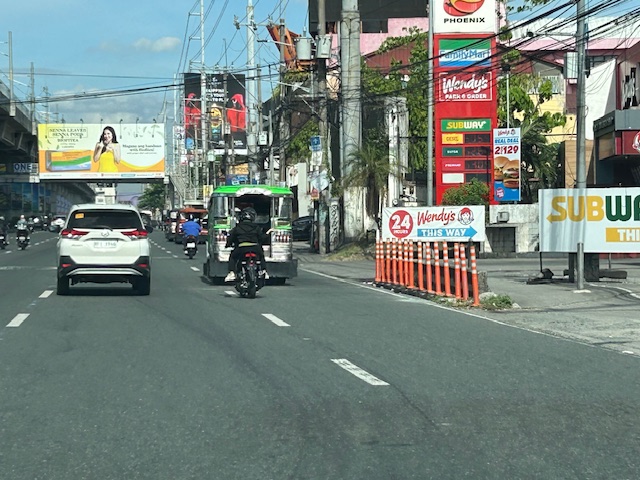 These bollards are installed along the curb where a couple of fatal crashes occurred in the past months.
The bollards are probably there to help improve road safety. They are reflectorized to you can’t miss them at night. Immediately behind them though are concrete barriers so hitting these will definitely damage the vehicle with a possibility of serious injuries to the vehicle occupants if not fatalities. Could there be a safer design intervention here? Perhaps that curbside lane can be converted into a protected bicycle lane. The barrier and the bike lane itself will be a buffer zone between motor vehicle traffic and active transport including pedestrians.
–
Metro Manila rail network by 2030?
I saw another map circulating in social media. It would really be nice to have a more comprehensive rail network for Metro Manila or perhaps the Greater Capital Region (Mega Manila or NCR plus or whatever you want to call it). Maps like this give us something to look forward to. We are made to be hopeful about our places being served by trains just like what some of us have experienced abroad in cities like Singapore and Tokyo.

Credits are due to whoever made this map. While it has the DOTr logo, I am not sure someone from there made the map. There are many ‘mapmakers’ out there who can make transit maps like this.
–
Article share: on improving road safety in the midst of automobile dependency and sprawl
I am sharing another very informative article on road safety. While it is written for North American cities, most concepts and principles presented are applicable elsewhere and especially in cities and municipalities that tend to model their development after America. Increasing dependence on private vehicles (not just automobiles but including motorized two and three-wheelers) have resulted in increasing incidence of road crashes and though we have limited space, we tend to develop land as if we can afford sprawl and its consequences. Here is the article:
Litman, T. (April 25, 2025) “End Human Sacrifices to the Demanding Gods of Automobile Dependency and Sprawl,” Planetizen, https://www.planetizen.com/blogs/134838-end-human-sacrifices-demanding-gods-automobile-dependency-and-sprawl?utm_source=Planetizen+Updates&utm_campaign=d3fcb4d16b-newswire_05_05_25&utm_medium=email&utm_term=0_-6cce27a957-89144212&mc_cid=d3fcb4d16b&mc_eid=9ccfe464b1 [Last accessed: 16/05/2025]
To quote from the article:
“North American transportation agencies currently apply various older strategies, which should not be ignored, but to achieve additional crash reductions they need new strategies, such as those listed in the following table. The older strategies are targeted programs applied after most major transportation and land use planning decisions are made. New strategies include structural reforms involving more multimodal transportation planning, more compact development, transportation demand management incentives and parking policy reforms. This recognizes that all types of planning decisions affect transportation safety, and that many policies can increase safety in addition to other economic, social and environmental benefits.
The new paradigm expands traffic safety strategies to include structural reforms that increase transport system diversity and efficiency. They tend to provide many economic, social and environmental benefits in addition to safety.”
–
Solutions to transport problems: the combination of congestion pricing and transit infrastructure development
Congestion pricing and transit infrastructure development (e.g., mass transit infrastructure) are often mentioned separately or independently. It is as if they are mutually exclusive alternatives or solutions to our transportation problems. They are not and should be considered together for greater impacts and also to complement each other. While the article below focuses on the experience in the United States, the experience is Singapore as applied to cities should provide a model that can be adopted if not outrightly replicated. Singapore’s version of congestion pricing in the form of its Electronic Road Pricing (ERP) scheme has been very effective in regulating congestion levels while helping fund public transportation in the city-state.
Descant, S. (May 8, 2025) “Congestion Pricing and Transit Are a Necessary Alliance,” Government Technology, https://www.govtech.com/transportation/congestion-pricing-and-transit-are-a-necessary-alliance %5BLast accessed: 11/05/2025]
Quoting from the article:
“In order to move a congestion pricing proposal forward, “you must have serious congestion, and you must have good transit,” said Sam Schwartz, a former New York City traffic commissioner, said during a March 21 panel on the New York City congestion pricing program. The event was organized by the Massachusetts Institute of Technology (MIT) Mobility Initiative. Schwartz is also the CEO of Sam Schwartz Pedestrian Traffic Management Services, a consulting firm.
A recent report by the Mineta Transportation Institute at San Jose State University in California concluded roadway tolling — a form of congestion pricing — can serve the dual purpose of reducing traffic congestion and supporting transit options, if the programs are structured properly.”
–
Let’s act on road safety crisis!
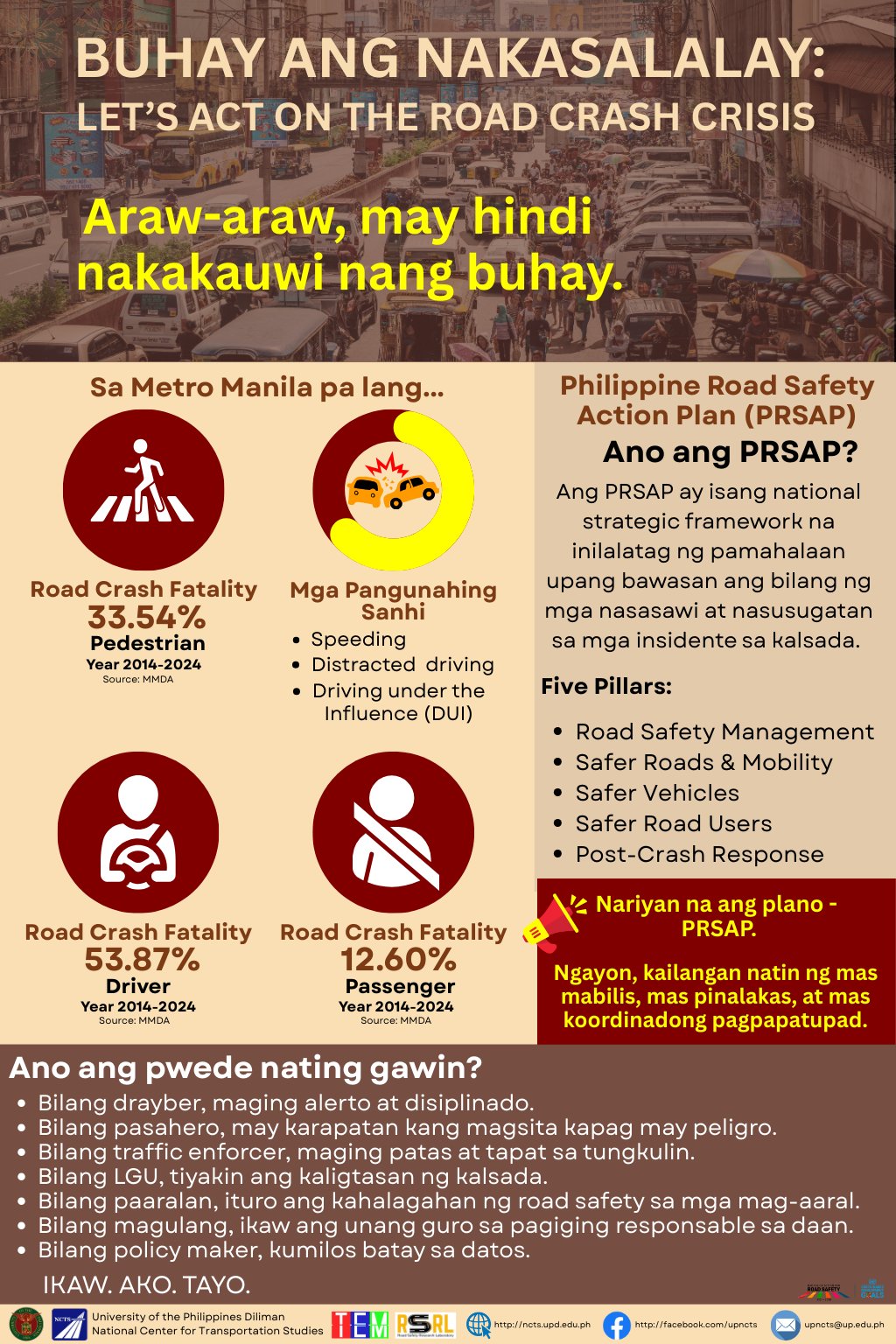
May is Road Safety Month. It’s quite ironic that we started the month with some of the most gruesome crashes including one at SCTEX and another at NAIA. There is indeed a crisis on road safety but many are in denial or perhaps insensitive to the impacts of these crashes. We need to act and only together can we be most effective in reducing the risks for all road users.
So what can one do? How can one contribute to making roads safer? Sharing this poster from the Road Safety Research Laboratory (RSRL) of the National Center for Transportation Studies (NCTS) of the University of the Philippines:
–
On gruesome road crashes and how they are reported
The past days have been terrible in terms of road crashes that have been reported. Of particular interest is the one last week involving four vehicles – a provincial bus slamming into 2 passenger vehicles against a stopped truck, and crushing both vehicles and their occupants. This was along SCTEX as vehicles were approaching a toll plaza. The trucks and passenger vehicles were stopped in a queue when a bus slammed into them. As of now the reports state at least 10 have lost their lives. One child miraculously survived the crash but lost both parents as per reports.
While mainstream media seems to be still conservative in how they report these incidents, social media offers much graphic, unedited content. Last Thursday and Friday, friends have shared posts by different people who have videoed the aftermath. It was gruesome and I will not describe them here nor share those videos that also appeared in my Facebook as reels. While there is the shock effect to the shared videos, one wonders whether these ultimately contribute to improving road safety or just add to what is now regarded as another category of porn (you’ve probably heard or read about food porn, tourism porn, shopping porn and poverty porn). These now have become more like spectacles that are viewed more for (sick) entertainment rather than to move people to action to address the road safety issues we face. While there are many responses offering comfort or prayers, how many would really act and actively call for safer transportation? As one friend exclaims – “Where’s the rage?”
–
Closed shops at NAIA Terminal 2
Recently, I wrote about the closed shops at NAIA Terminal 3. While there are still shops at the terminal, the pre-departure area was devoid of non-food shops or stalls. The same is true for NAIA Terminal 2. Here are some photos I took a few days ago en route to Davao.
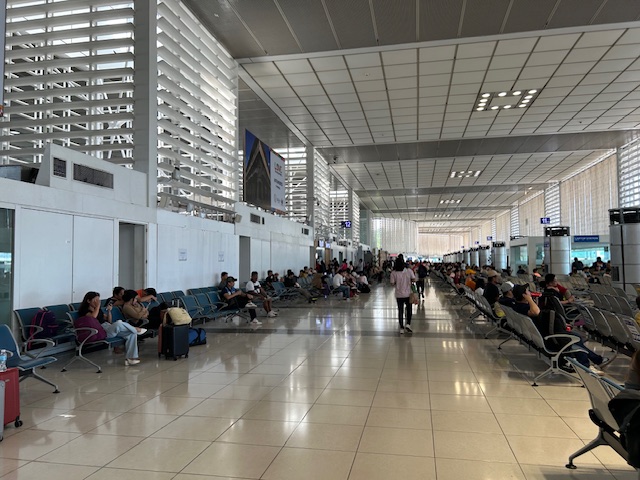 The north wing practically had no no-food shops. That left side in the photo used to have several souvenir shops and even a Duty Free Philippines shop.
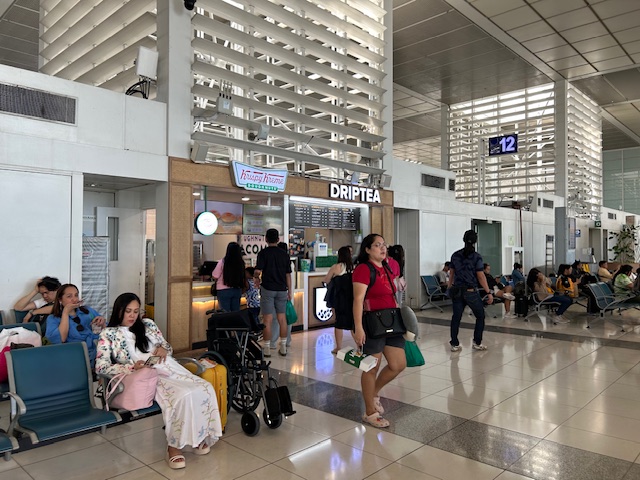 The same was true for the south wing where only the food stalls remain.
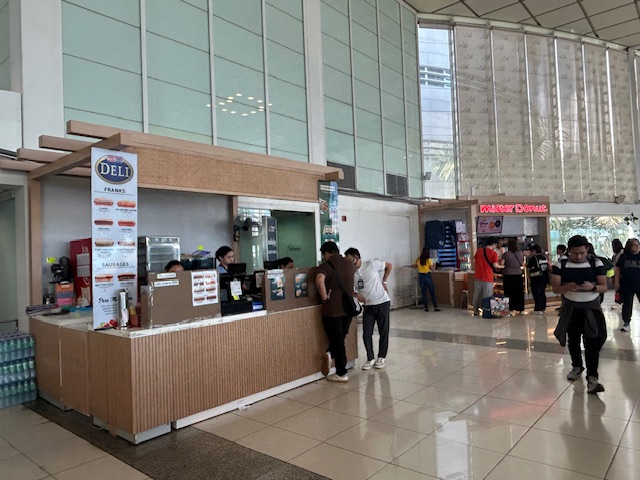 Other food stalls at the south wing. There are two Cafe France stalls at the terminal pre-departure area, one at each wing. And most people seem to line up there and a couple other stalls as they offer the more substantial meals. Others offer basically merienda or snacks.
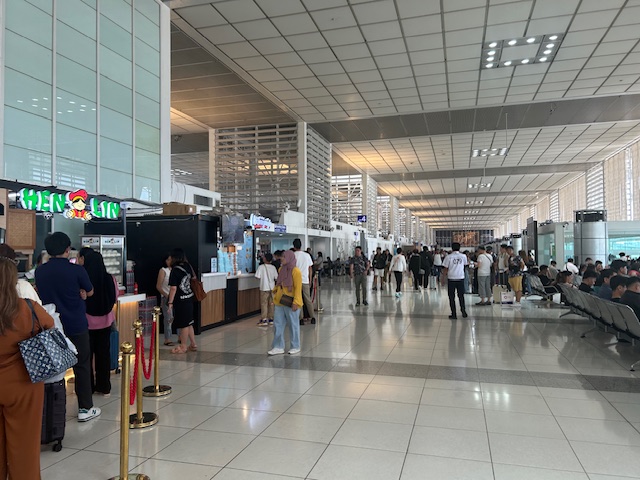 North wing food stalls
Will there be more shops later at the terminals? Maybe, perhaps. But as I mentioned in the previous post and as many have commented, it depends on the cost. Will it be expensive and therefore unattractive to potential concessionaires? Or will the airport operator come up with an attractive contract for shops to return to the terminals? Airports in Bicol, Cebu and Davao, for example, have nice shops that serve the needs of travelers. NAIA being the principal gateway to the country should have nothing less.
–
On the ‘silent walk’
My first post this May is an article share on what is referred to now as a ‘silent walk’. That means leaving your gadget at home or work to take walk whether in park, the city or your neighborhood. We all seem to be dependent on our gadgets these days, with many panicking when discovering they left their gadget. It’s as if their world has stopped without the gadget at hand.
Bull, M. (April 30, 2025) “The power of a “silent walk”,” Medium, https://blog.medium.com/the-power-of-a-silent-walk-93ffdd70dbcb [Last accessed: 02/05/2025]
To quote from the article:
“For many of us who rely on laptops, phones, and apps throughout the day, it can be easy to reach for those same devices when we need to relax — if they solve our productivity issues, the thinking goes, they must solve our stress, too. But just as spending the first hour of your day screen free will have an outsize effect on your inner peace, leaving the phone and headphone at home while you head out for a walk will return you to a saner place in record time.”
Granted that you bring your gadget for ’emergency purposes’, perhaps the key is not using it. Keep it in your pocket. Refrain from checking or glancing at the slightest temptation. It may be difficult at first but it will gradually build into your routine. And perhaps, too, you will feel a bit of liberation from these gadgets and reconnect with the world around you to help your well-being.
–
 Caught (up) in traffic