
Complicated intersections in Rizal – Tikling Junction
There are several major intersections in Rizal Province. Among them are 3 junctions in Cainta, Taytay and Antipolo – Cainta Junction (Ortigas Ave Ext.-Felix Ave), Masinag Junction (Marcos Highway-Sumulong Highway), and Tikling or Kaytikling Junction. The first two are signalized intersections. The last one is supposed to be a roundabout. All three are problematic in various ways and have been associated with congestion along the major roads intersecting at these junctions.
Tikling is quite interesting as traffic seems to have worsened after it was set up as a roundabout. Taytay enforcers have been deployed here but they seem to contribute more to worsening congestion rather than easing it. Motorists familiar with the area will tell you that traffic is better when there are no enforcers. Unfortunately, not all motorists here are from the area or are familiar with the rules for navigating or positioning at a roundabout. And so the intersection is often constricted with vehicles whose drivers and riders don’t practice courtesy.
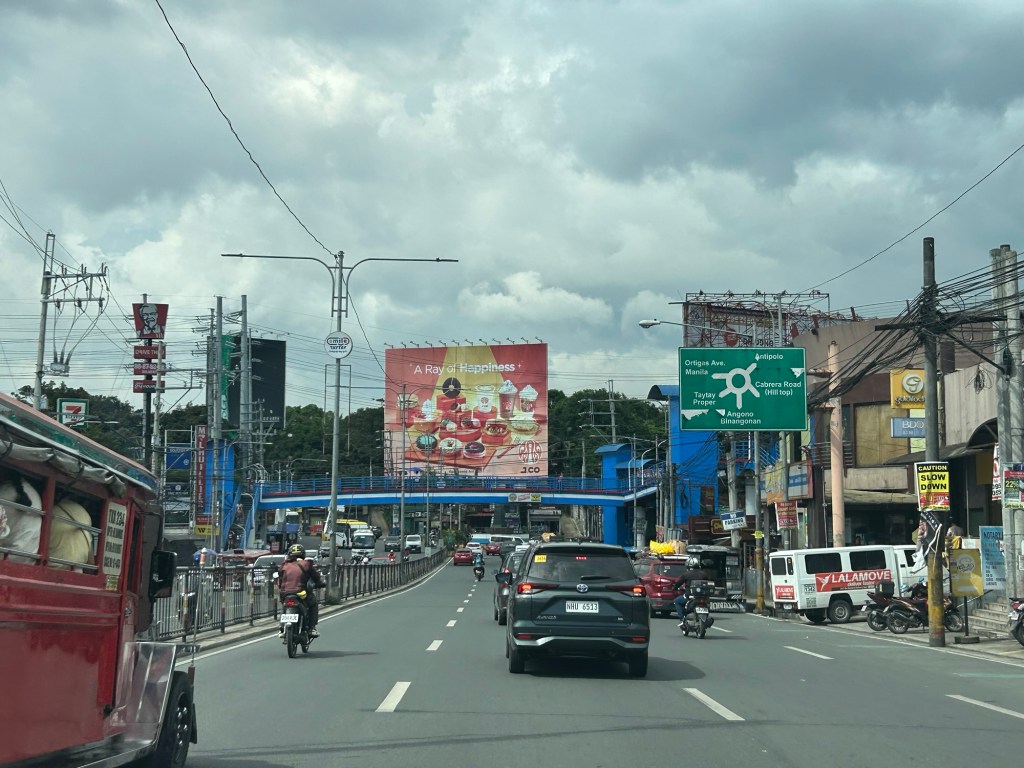
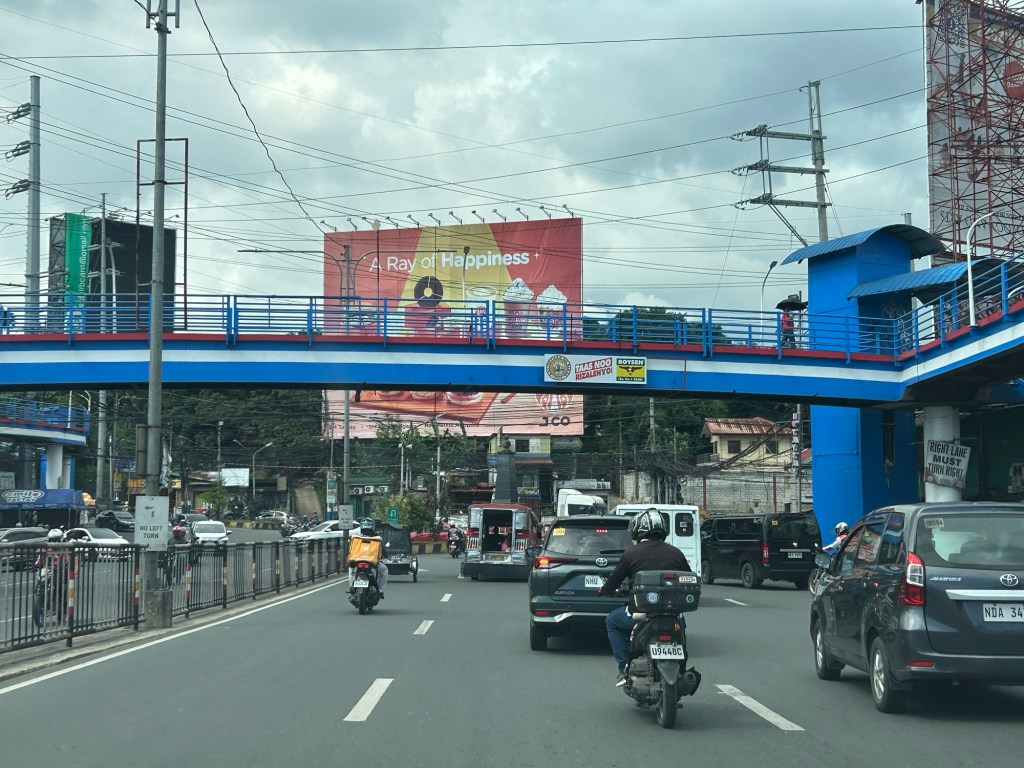
Perhaps a combination of geometric improvements and more clever enforcement/management can improve intersection performance?
–
Senseless road crashes
My staff shared the following cctv footage of a recent road crash along C.P. Garcia Avenue just across the College of Science Complex in UP Diliman. The videos show two vehicles colliding along the road at nighttime. This is usually a busy road with traffic to and from Katipunan, mostly comprised of travelers associated with the schools I the area.
https://www.facebook.com/share/v/17MPeJnrCk/
The black SUV appears to be speeding and suddenly veered towards the opposing lane where it collided with another vehicle. It is unclear if the driver lost control of the vehicle or was aware of what he was doing. That cost 2 lives as both drivers reportedly died from the crash.
This is among those crashes that can be regarded as senseless incidents. This could have been avoided if the driver was not speeding in the first place or perhaps was not influenced by any factor like alcohol or drugs. Perhaps it’s really about the behavior of certain motorists who shouldn’t have licenses to drive in the first place? We commonly refer to them as kamote drivers or riders. The LTO should do their part in ridding the roads of these menaces.
–
A cityscape revisited
I was posting photos of a familiar sight along one of my walking routes in our neighborhood. Somehow, that route became less frequented as houses were constructed in what old timers here referred to as the second floor. What offered a 360 view of areas surrounding our place was now mostly inaccessible, depriving people of spectacular views.
Last Sunday, we chanced upon the sight below along another of my routes that we now seldom passed.
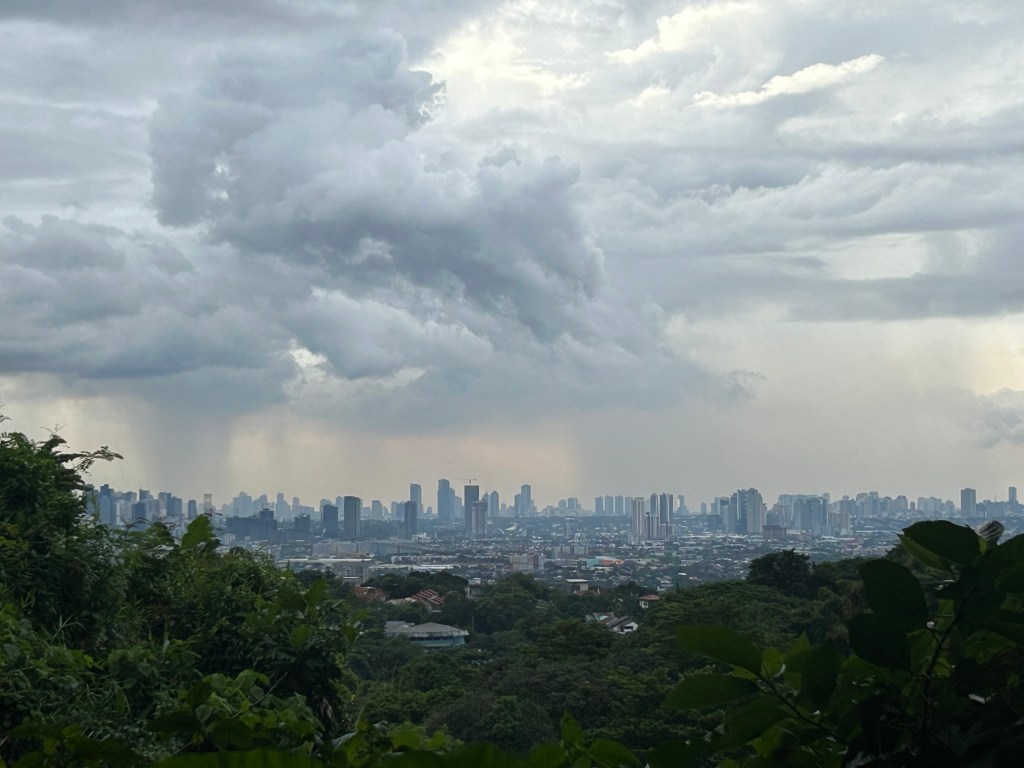
The place where I took the photo will probably also be inaccessible soon as we saw the lots being cleared for construction. We missed the views and soon they’ll be just memories or photos stored in our gadgets.
–
Grab carpool?
I saw this sign at Ayala30 earlier today.
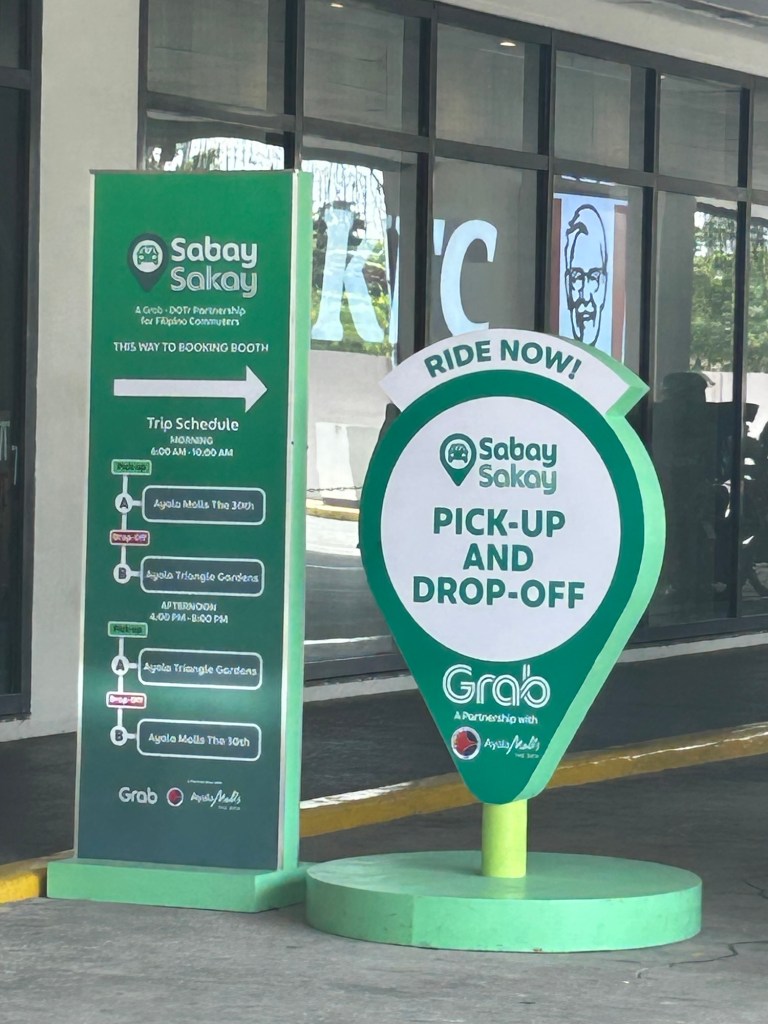
Is Grab going into carpooling? This certainly is not new as at I recall at least one company, Wunder, that tried to make a foothold in Metro Manila back in 2017. It folded after an unsuccessful run that a friend described as dating app masquerading as a TNVS. Seriously though, facilitating carpooling is not an easy task as there are security, safety and trust concerns here that need to be overcome. Perhaps it can be successful with office mates or schoolmates?
–
On roundabouts and how they can improve safety at intersections
Roundabouts are perhaps something that should be considered for Philippine roads. The concern, however, is that Philippine drivers don’t know how to navigate or position themselves in roundabouts. And the results as we have seen in several cases are congested roundabouts or rotundas.
AASHTO (September 26, 2025) “State DOTs Highlight How Roundabouts Improve Safety,” AASHTO Journal, https://aashtojournal.transportation.org/state-dots-highlight-how-roundabouts-improve-safety/%5BLast accessed: 10/19/2025]
To quote from the article:
“To highlight the safety benefits of roundabouts, the Ohio Department of Transportation recently released an analysis of crash data from 76 intersections statewide that had been converted to roundabouts. That analysis indicated single lane roundabouts decreased injury crashes by 69 percent while multi-lane roundabouts resulted in a 25 percent decline.”
And here another quotable from the same article:
“For us, it’s simple. Roundabouts remove cross-traffic turns and eliminate T-bone crashes, while improving traffic flow,” said PennDOT Secretary Mike Carroll …”“Any design that dramatically reduces the most serious crashes we see on the road is worthy of consideration in our projects.”
The article also includes a YouTube video on traffic circles.
–
Still towards a car-oriented future?
Saw this photo being circulated on social media.
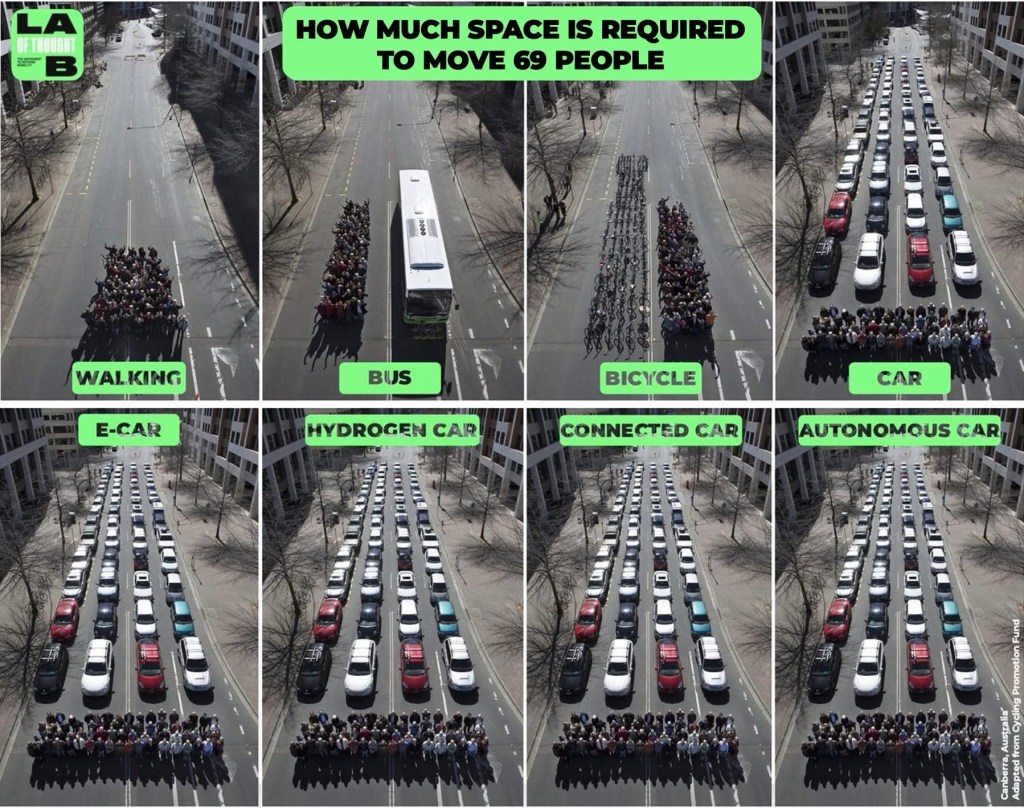
Again, there are many versions of this including the original from a town in Germany that compared 50 people on cars, a bus and on bicycles. The bottom line in the latest images (do these qualify as memes?) is that all these efforts in developing the car, whether regarding the engine or fuel, or perhaps autonomy or connectivity related, ends up being still car-oriented or car-centric. I
t doesn’t really solve our transport problems despite what is being packaged as environmentally friendly. The discussions about this is timely and relevant as electric and hybrid cars are now quickly replacing conventional ones. And there’s a kicker for those driving in Metro Manila, hybrid and electric vehicles are exempted from the travel demand management scheme that is number coding.
How do we veer away from this temptation from technology? How do we keep mode shares in favor of active and public transportation? How do we influence mode choice for the latter options?
–
Words of wisdom from the back of a taxicab
I was driving home from work one evening last week and was behind this taxi. As we were practically stopped due to the evening rush traffic jam, I was able to take this photo of a quote from the Bible that was displayed on a board installed behind the cab:
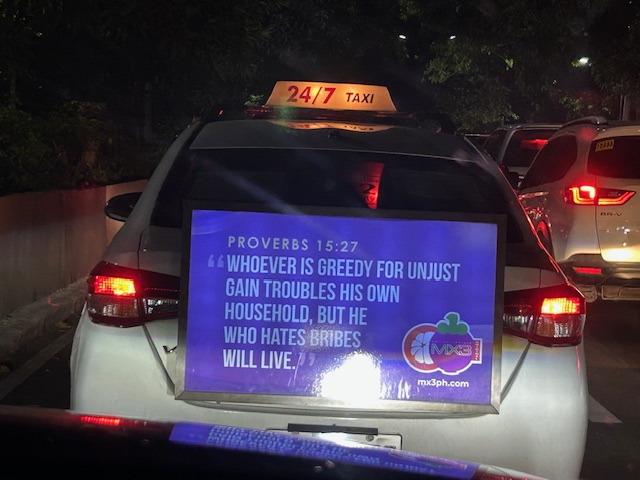 It is a very apt quote especially in these times when corruption is everywhere in the news.
The quote also reminded me of the families of those alleged to have been involved in corrupt practices. All those social media posts by the so-called nepo children of politicians, government officials and contractors bring these relatives in the fray, in the forefront of discussions. Are they innocent or be treated as so (based on the opinions of some people)? Or are they themselves guilty and even complicit of the corruption their parents are involved in? My take is that if the children are of toddler age or younger, then they shouldn’t be involved or shamed. They definitely do not know and not aware of what’s going on. But for the older children who are traveling, shopping and enjoying ill-gotten wealth, that’s a different story, even if they are still below 18 years old. They are aware. They already know of their excesses. Perhaps they have already been indoctrinated by their elders about their status and privilege, and think these are okay. Indeed, entire households can be liable and should suffer the consequences of their actions and excesses.
–
Quezon City’s electric buses
While Quezon City rolled out its new electric buses, I have not seen them along my typical commutes that takes me to C5, particularly and mainly along Katipunan Avenue. Most of these buses are probably deployed along the other routes served by the Q City buses. So I took this snapshot of one that I saw not in QC but along Ortigas Avenue Extension in Pasig City. Maybe it was en route to the end station/terminal at Bridgetown, which is at its border with Pasig?
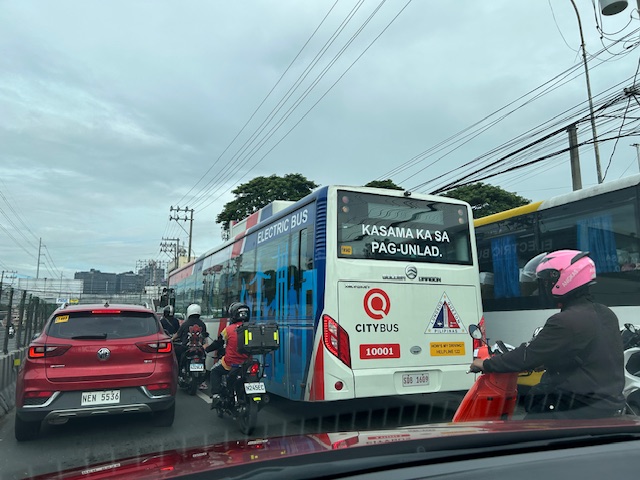 One of Quezon City’s electric buses
–
Article share: In Defence of Vision Zero — a Traffic Engineer’s Perspective
On weekends, I try to catch up on reading articles that I have deferred indulging on during busy weekdays. One such article that I have repeatedly put off reading is this one on road safety:
Source: In Defence of Vision Zero — a Traffic Engineer’s Perspective
To quote from the article:
“For years, success in transportation was measured in level of service, vehicle throughput, and reduced delay times. But Vision Zero forced the industry to confront a difficult truth. The more we prioritized speed and volume, the more we endangered the most vulnerable users of the road: pedestrians and cyclists, with particular emphasis on children and older adults. Those who sit in decision-making positions must recognize the realities of physics, namely that the human body is frail and vulnerable to a transportation system that prioritizes throughput over safety.”
The article is a really good read and one that I would recommend for my students in Traffic Engineering to read.
–
Article share: What Is Good Transit?
Here’s an article share on transit and what should be the attributes of a good transit system:
Source: What Is Good Transit?
To derive the main points from the article:
- Good transit is frequent
- Good transit is reliable
- Good transit is (reasonably) fast
- Good transit feels safe
- Good transit is equitable by nature
This is a good read whether you’re a regular commuter taking public transportation or perhaps one looking into topics for research or advocacy.
–
 Caught (up) in traffic