
Have e-bikes and e-scooters become the next pedestrian safety challenge?
Here is a quick share of an article on e-bikes. I thought this was quite relevant as e-bike and e-scooter use have been on the rise in the Philippines though perhaps more people opt for motorcycles instead for a 2-wheel transport mode.
Source: Have e-bikes and e-scooters become the next pedestrian safety challenge?
What is your experience with e-bikes and e-scooters? Have you encountered them on our sidewalks? Do they pose a challenge in the context of road safety?
How do we treat motorcycles and tricycles for capacity? analysis?
In most if not all of our projects that require traffic analysis, it is our standard practice to convert the mixed traffic counts to equivalent values in terms of passenger car units (PCU). This
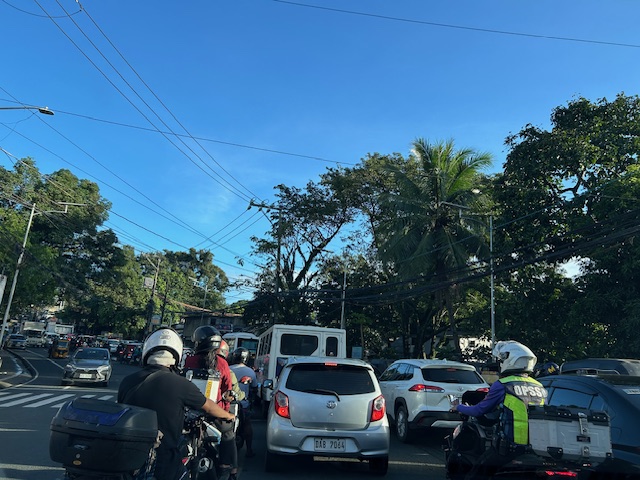 Motorcycles filtering between the lanes
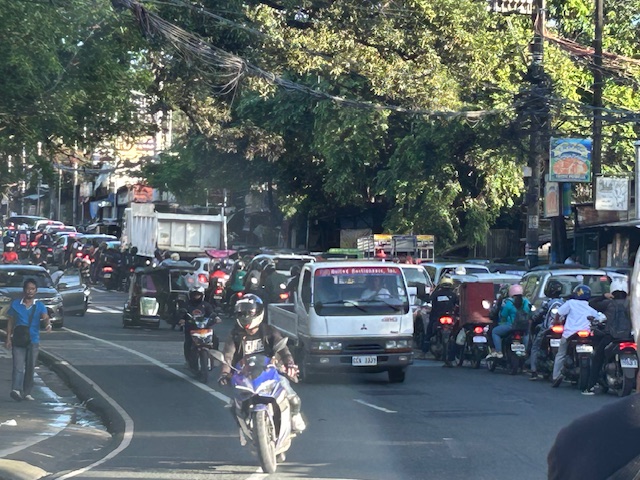 Motorcycles using the bike lane or the space along the median to beat traffic
If we simply assume that motorcycles will use the traffic lanes, then we will end up having saturated roads (i.e., volume exceeding capacity or LOS F). In reality, it is quite different and you’d find roads to be less congested compared to what is on paper. Thus, it may be more prudent or practical to reduce the number of motorcycles in the analysis by applying a factor, say 50%, aside from the conversion using passenger car equivalence.
Of course, this must be subject to studies to establish the factors and empirical evidence for this approach. Meanwhile, we can make assumptions and compare the results with field observations to determine if they’re consistent with real world conditions.
–
On exceeding the carrying capacities of popular destinations
The 3-day holiday imposed on the National Capital Region (NCR) led to many taking vacations during the 5-day stretch. Among the places that had the most visitors were Baguio City and Boracay. Social media posts show these to be too crowded.
The term ‘carrying capacity’ basically refers to a city’s or town’s or any place’s capacity to sustain its growth and development considering its population and resources. Baguio probably exceeded it a carrying capacity decades ago. Boracay probably within the last decade. These were partly due to their being accessible to many people.
In Baguio’s case, a lot of people wanted to have a piece of it and its environs so as soon as developers started building condos, a lot of people purchased units. And these weren’t purely for themselves (they didn’t live there) but as investments like for AirBnB, for example.
Does this sound familiar? Perhaps because that’s the way Tagaytay went. The latter also exceeded its carrying capacity many years ago, no thanks to the intensive commercial and residential developments that also made it too crowded for people to enjoy going there like before during its heydays.
What are other areas that will likely go this way if they haven’t already? Mactan? Panglao?
–
Proceedings of the 32nd Annual Conference of the TSSP
The Transportation Science Society of the Philippines (TSSP) recently released the Proceedings of its 32nd Annual Conference. Here is the link to the 32nd Annual Conference Proceedings:
Proceedings of the 32nd Annual Conference of TSSP (ISSN 2704-4165)
–
Ortigas Avenue Extension traffic minus NCR
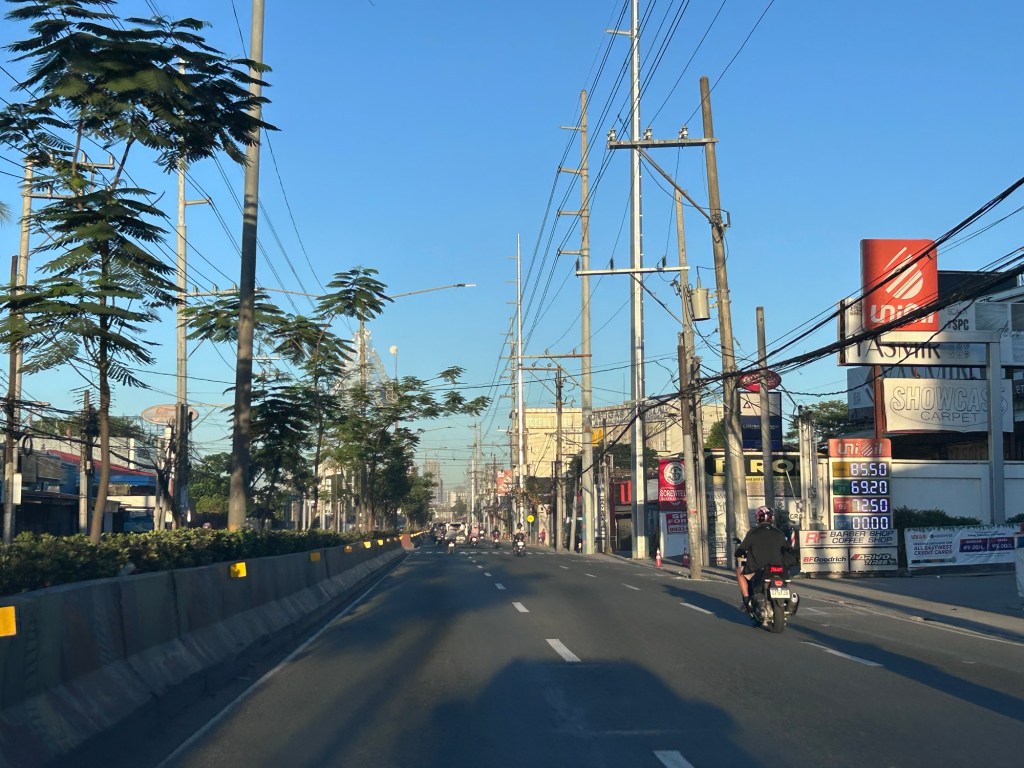
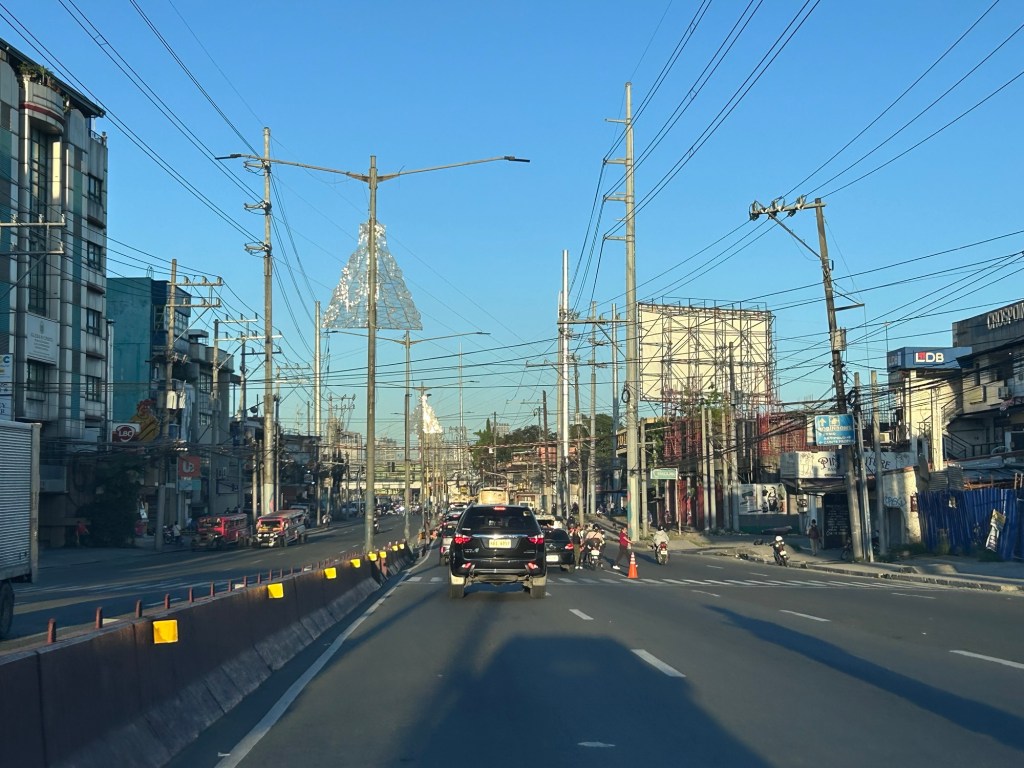
We traveled to Pasig this morning and experienced very light traffic at 6:39 as we approached Cainta Junction. You don’t experience this situation unless on Sundays and regular holidays. Government declared a three-day holiday for the National Capital Region as the country hosts the ASEAN meetings this week.
Here are a couple of photos of Ortigas Avenue Extension minus the traffic you normally attribute to trips to NCR from Rizal.
–
Less provincial passengers last Undas?
Travel to the provinces usually peak at certain times of the year in the Philippines. Those include Christmas, Holy Week and Undas when there are usually several holidays to put together for a relatively long vacation or break especially for those who are working or studying. Many who are located in the big cities actually hail from the provinces. In my case, for example, I consider Iloilo as my hometown and I have traveled to my father’s hometown in Cabatuan most of my Holy Weeks as a child and teenager. Sometimes, we go there for Christmas and New Year, too. Those two times of the years are when my father could get a long enough break for our vacation and when other family members also head to Iloilo for vacation. The result is a reunion of sorts for family. I think the more suitable term is ‘homecoming’ since we all would ‘travel home’ and actually stay at the ancestral home along Serrano Street.
Many others do this homecoming every year, and probably go home thrice a year including Undas, which is usually the shortest among the three. Airports, ports and bus terminals are usually crowded or congested during these times as other people also take advantage of the holidays to travel elsewhere (not their hometowns). The past years see people going abroad (Japan and Korea for a time, then Europe and Australia some years, and so on) or local destinations (beaches or perhaps Baguio for cooler temperatures). For Undas, which is the shortest break, the travels also cause what is called a U-turn as people head back almost as soon as they headed out. So roads are also congested including expressways in Luzon that bear much of the traffic as people opt for road trips rather than take the plane or boat to the provinces.
This year, the observation was the ports and bus terminals were significantly less congested. Photos of the Ports of Batangas and Calapan showed lots of space where people often crowded in the past. Bus terminals also didn’t have to contend with the usual rush of passengers including those making last minute decisions to travel and become what are called “chance passengers” as they didn’t have tickets (they didn’t purchase in advance). The speculation was that with the mounting expenses due to higher prices of commodities and travel, people probably decided to forego travel during Undas in favor of the Christmas break. We will probably know by Christmas if this will also be the observation and perhaps in favor of the Holy Week next year.
–
Article share – “How long till we get a decent commuting experience?”
I stumbled on this article over the Undas weekend:
https://businessmirror.com.ph/2026/10/29/how-long-till-we-get-a-decent-commuting-experience/
It mentions a study on long term strategies for low carbon transport in ASEAN that was conduced over a decade ago. I basically agree with the ideas mentioned in the article especially the part about the urgency of providing basic infrastructure such as sidewalks and basic services like decent public transportation. There’s nothing hi-tech about these items. It’s simply going back to the basics.
–

