
On “levelling-up” on fare collection
I found this article on how Japan Railways East (JR East) plans to upgrade its Suica card so passengers don’t need to swipe them at the stations. That will mean practically seamless entries and exits at the stations and perhaps the elimination of most queues related to this part of rail operations. Here is the article published on Medium:
To quote from the article:
“You can currently use Suica to pay for goods and services at around 2.26 million locations in Japan. However, JR East has only issued around 31.47 million mobile Suica cards. That lags behind the two most popular cashless payment options — PayPay (66 million) and d-Barai (63 million).
The move comes as transportation cards, long a staple of travel inside of Japan, seem to be going out of style. More train companies are introducing QR code and credit card touch payment options, making the one cutting-edge technology obsolete.”
I have a Suica card as well as others like it from Bangkok, Kuala Lumpur and Singapore. Suica has really been a convenient way to pay transport fares as well as to purchase items such as drinks or snacks particularly at train stations in Japan. We are not yet at the level of the Suica card of more than ten years ago but there are lessons to be learned here in case we finally have something like it and others that make travel or commuting easier.
–
New lanes along the NLEX Candaba Viaduct
Heading to Baguio, I noticed the new lanes in the middle of the NLEX viaduct. The viaduct was actually two bridges constructed over the Candaba Swamp. The soil being too soft for a normal road, the viaduct allowed for two way traffic with each bridge carrying northbound or southbound vehicles. The recall that the original bridges each had 2 lanes plus a shoulder lane. Each now have 3 lanes plus shoulder after expansion years ago. The additional lanes in the middle probably required additional columns to be built with more modern foundations than the original viaduct. The new structures had to be integrated with the older viaducts. Here are photos of the completed sections:
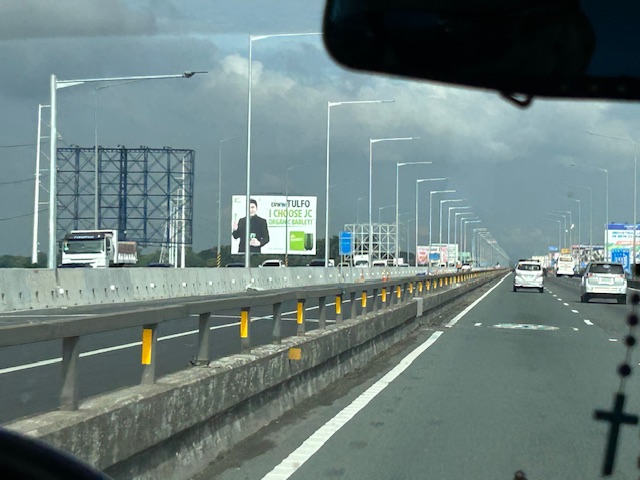


You can go to Google Maps if you want to see what the lanes looked like under construction. Here is a screenshot:

Screenshot
The middle lanes look like they can be used as variable lanes. That is, all or some of the lanes may be used to serve the direction with the heavier traffic. The directions can change depending on the time of day, day of the week or the season. I don’t know at this time though how exactly this can or will be implemented as there are no signs to guide motorists for variable lanes. What signs am I referring to? Here are examples from Bangkok showing overhead signs assigning lanes for the direction with heavier traffic:
 A close up of the signs designating lanes for traffic
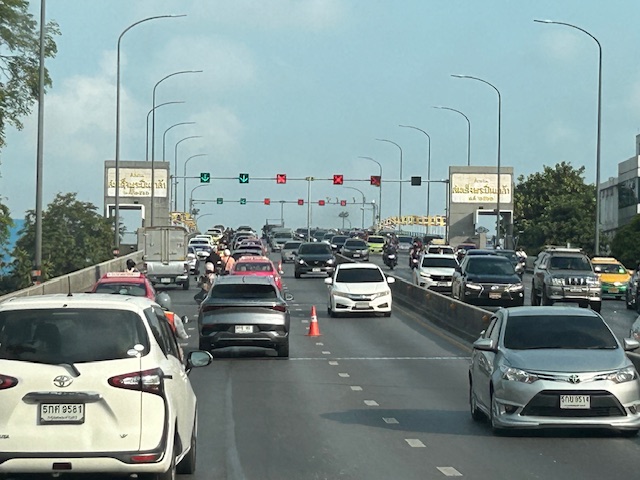 In the example above, 4 lanes including one counterflow lane are assigned to traffic along the southbound direction.
–
On a ride-hailing apps algorithm and surge pricing
I am sharing this very informative article on ride-hailing based on an investigation conducted by investigative journalists:
Ilagan, K. and Rainis, F.A. (December 10, 2024) “How we investigated the algorithm behind the Philippines’ largest ride-hailing app,” ijnet.org, https://ijnet.org/en/story/how-we-investigated-algorithm-behind-philippines-largest-ride-hailing-app?fbclid=IwZXh0bgNhZW0CMTEAAR2azviuNxdh5gSbrJKl8lsViL5YRO5k33QHFc24EAFkIi4HTo-Ew4H7LO4_aem_NnVHOD8B1PERNOQYSjVHdg [Last accessed: 12/27/2024]
To quote from the article:
“Once all the fares were broken down, we found that a surge fee was always present. With the help of statisticians from two local universities, we conducted a statistical analysis to scientifically determine whether the waiting time for a ride decreases when the surge fee is higher.
The results didn’t show a significant correlation between the surge rate and waiting times. This contradicts the assumption that a higher rate attracts more cars to the street and lowers waiting times.”
I leave it up to my readers to make their own assessment of what the conclusions to this report state or imply. The bottomline is that the ride-hailing company is making a lot of profit from their surge pricing scheme that really doesn’t make it easier for people to get a ride from their app.
–
Article share: On improving the Philippines’ transport system
I share this article on the desire for a sustainable transportation system for the country. This was written by a former Assistant Secretary of the Department of Transportation (on secondment) who has returned to teach at the School of Urban and Regional Planning of the University of the Philippines Diliman. Here is the article published by the Philippine Daily Inquirer:
To quote from the article:
“The present condition of the Philippine public transport system is indispensable to the desired transition from more sustainable, in this case, electric forms of transportation—to a better public transportation system. A good public transportation system is defined by reliability, accessibility, safety, and security…
The imperative to consolidate is clear and crucial. It is not just a technical necessity, but a pathway to inclusive growth where all stakeholders benefit from the transition, and where we can truly create an inclusive and sustainable system for public transportation.
Improving public transportation, by making it cleaner, safer, and more accessible, will directly enhance the quality of lives of Filipinos.”
–
Maligayang Pasko!
It’s been a challenging year for many especially those who were affected by the various calamities – natural or man-made. We’ve had typhoons, floods, earthquakes and volcanic eruptions this 2024. There were also fires, epidemics, crashes, and other incidents that caused so many fatalities and injuries that were life-changing or altering. Road crashes alone this year have caused to much pain and sorrow. [I was watching the news last night and there was a report of an entire family perishing in a road crash in Mindanao.] And yet there are still so much we should be thankful for. We should count our blessings and never lose hope that things will be better, that we will soon get a break from these challenges. While we continue to pray for forgiveness, healing, wisdom and prosperity, we should also strive to live as a light for others – doing our part to make this world a better place for everyone!
Maligayang Pasko!

–
Railway construction at Clark
While at Clark, we also traveled along the perimeter road to see for ourselves the state of the railway construction there. The North South Commuter Railway (NSCR) is supposed to stretch from Clark in Pampanga to Calamba in Laguna once completed. Here are some photos I took along the Clark perimeter road.
 The NSCR construction is very visible from SM City Clark. So far, there is no work on the section that will cross Clark Freeport’s main gate.
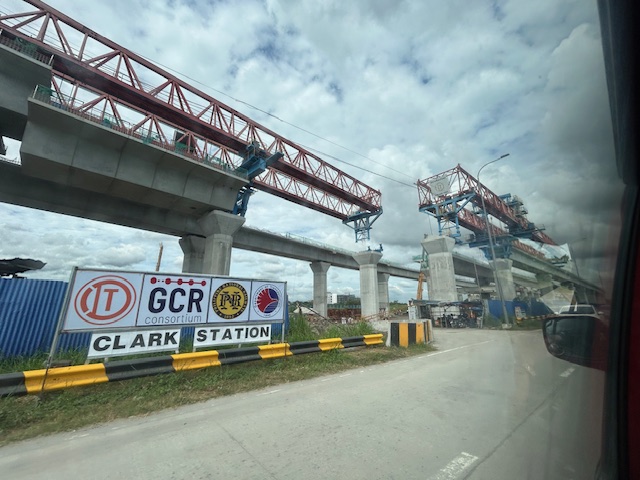 Construction of the future Clark Station
 A view of the construction along the Clark perimeter road from the direction of the Mabalacat gate.
 Project information including safety record
A lot of people are already looking forward to the completion and operation of the NSCR. This will be another game changer as the services have the potential to change the way people in Bulacan, Pampanga and Laguna commute especially those residing in these provinces and have work or school in Metro Manila. One can classify them as ‘super commuters’ considering the distances they need to travel between their home and their workplaces or schools.
–
Stopover at Sison, Pangasinan
We suddenly exited TPLEX to make a stop in Pangasinan. We were only a couple of exits away from the end of the tollway and the last part of the trip, which was the climb to Baguio via either Marcos Highway or Kennon Road. And we were doing good time until this exit and detour.
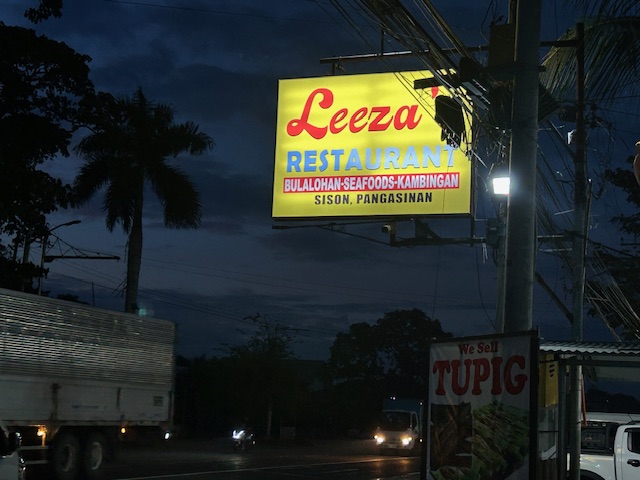 Our stop was at this restaurant in Sison, Pangasinan, which I discovered was a drivers’ stop. Drivers of buses and vans stop here to get a free meal in exchange for them bringing their passengers who will likely eat, drink and shop for pasalubong here.
 Pasalubong options including the usual local delicacies including nuts, biscuits, sweets, etc. Many items are not from Pangasinan but may be from neighboring provinces. I even found pastilles from Bulacan being sold here.
 There are also fruits and vegetables for those who want to bring home to use in cooking. Though not a market, the prices at the stop are low as these are sourced from local farms.
 Of course, there’s tupig at the stop. Tupig has its origins in the Ilocos Region so this is one of the places to get this rice cake delicacy.
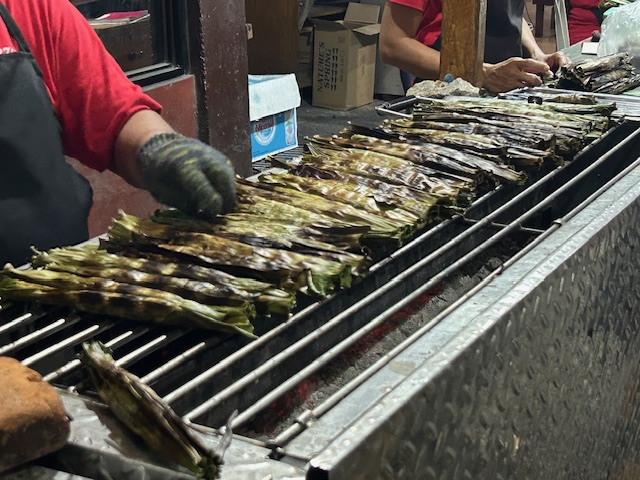 Tupi fresh from the grill
We ended up not going back to the tollway but instead used the Manila North Road to Marcos Highway. Kennon Road was closed to general traffic when we passed by the junction. And so it took us almost 2 hours more to finally get to our hotel instead of about an hour if we had not made this stop.
–
On the fatal Katipunan road crash
The vehicles involved in a recent road crash that killed at least 4 people are still there and parked under the Aurora Flyover. A truck apparently lost its brakes and control and the driver ended up plowing into other motor vehicles, likely trying to gain some control in order to stop the truck. It was reported in news articles that there were 4 immediate fatalities and many suffered serious injuries. We probably won’t know the final fatality count unless someone reports on those hospitalized for injuries.


The crash highlighted again the need for vehicles, especially trucks, to be roadworthy. This time of year, most of these trucks run busy schedules with the logistics requirements. But maintenance is just one part of the problem here as the truck was reported to be speeding. So driver behavior is also a factor and apparently there was no monitoring (having those CCTVs don’t count if they are only used in a passive manner such as for evidence after a road crash had already occurred) or enforcement versus speeding for these large vehicles. Also, was the truck overloaded? This practice may also lead to the deterioration of the truck’s brakes and the vehicle’s mass contributes to the severity of the crash including the damage to other vehicles. The MMDA and LGUs have their work cut out for them to address these road safety concerns.
–
From 9-to-5 to Anytime: How Telecommuting Changes the Traffic Game
Here’s a quick share of an article on telecommuting:
Source: From 9-to-5 to Anytime: How Telecommuting Changes the Traffic Game
To quote from the article:
“As we look across these 83 cities, it’s clear that remote work has brought relief to some areas while leaving others just as crowded as before. The cities seeing the most benefit from WFH were those with a flexible, remote-friendly workforce and a supportive economic structure. For fast-growing cities, or those with heavy industry or logistics, WFH alone wasn’t enough to solve congestion.
Telecommuting has no doubt reshaped our roadways, but it’s clear that tackling urban congestion will require more than just a remote work policy. As cities continue to grow and evolve, the future of urban mobility will rely on creative solutions, from smarter infrastructure to updated transit options, to keep America’s cities moving in this new, work-from-anywhere world.”
There are lessons to be learned here for us in the Philippines. Telecommuting is not a new thing here especially considering we have many BPOs operating across the country. Indeed, it is not to be considered as the only solution but one of many we can use to reduce congestion and improve commutes in our towns and cities.
–
Shops at the NLEX Petron Lakeshore Station
I think the stop we regularly make whenever we are traveling north whether to Clark or beyond is the Petron Station at Lakeshore. It is not too close to Manila and is just before you transfer to SCTEX. Before, there were few establishments here so fewer people used to stop here. Now there are more but not as crowded as other stops that even have outlet shops.
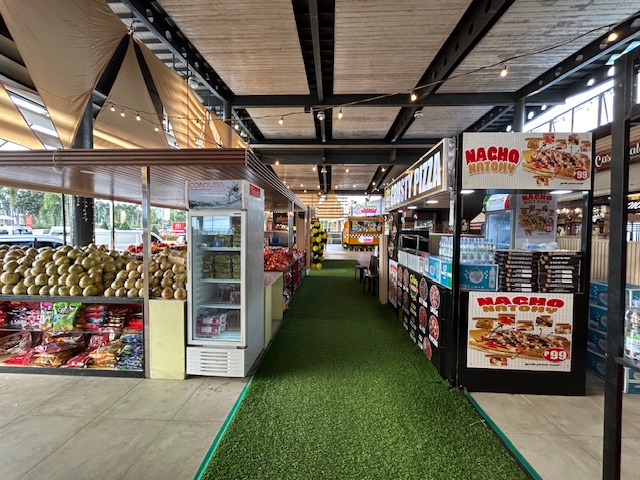 There are more shops now including those selling local products for souvenirs and fruits.
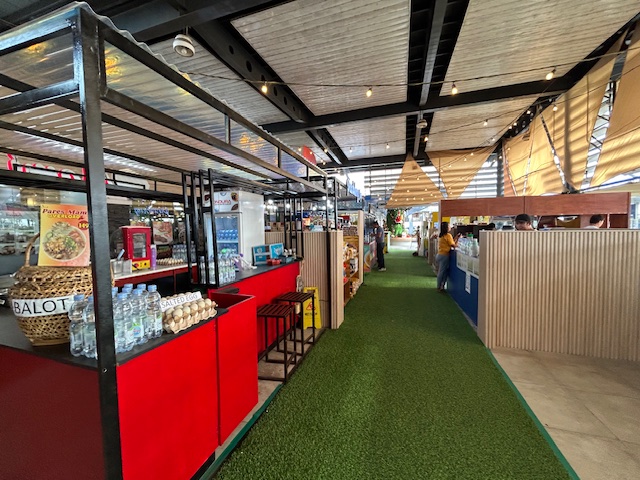 There are many selling food and drinks for quick meals of travelers.
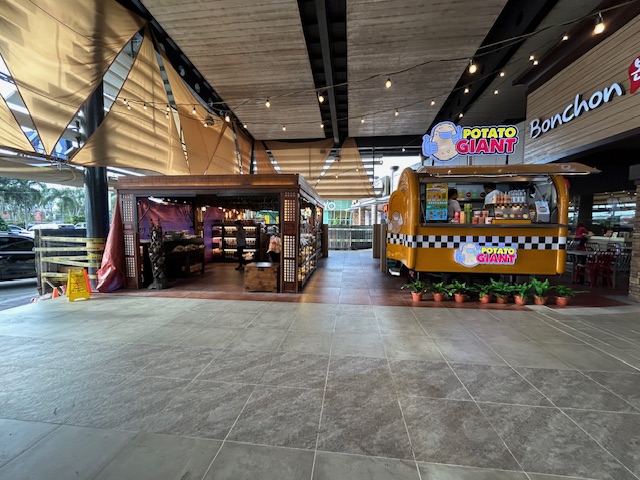 There are many choices for eating now aside from the established cafes and restaurants like McDonald’s, Razon’s, Bonchon, and Starbucks. One can get supplies from the Petron shop at the station.
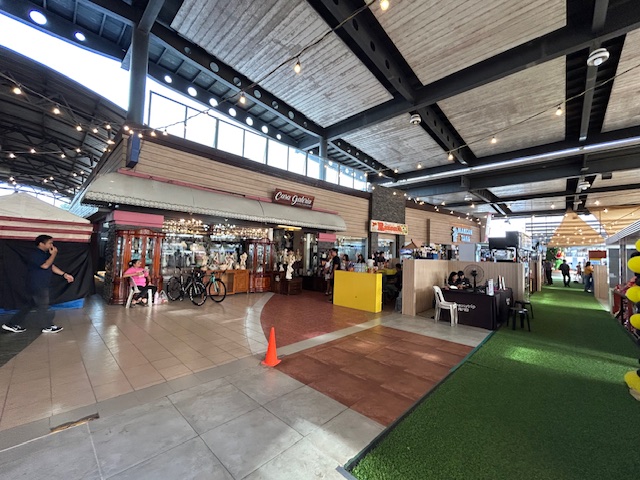 There is also a shop selling home decor and tiangge types selling clothes.
–
 Caught (up) in traffic