
Another fatal crash along Marcos Highway
Another crash happened at a location where a similar crash occurred not so long ago. This was along Marcos Highway where Antipolo, Cainta and Marikina practically converge. The landmark is the Phoenix gas station along the westbound side of the highway. Large trucks may be found parked along Marcos Highway at night and early mornings before dawn, timing their travel with the truck ban being enforced in Metro Manila. According to reports, the car was supposedly making a U-turn and it slammed against one of the parked trucks. I would assume that a turning vehicle in the area would be doing so carefully and would not be speeding. It would be difficult not to notice a parked truck in the area. I would know as this is one of my alternative routes on my daily commutes. The result, a total wreck as shown in the photo below, betrays the speed of the vehicle as well as how risky a maneuver the driver was trying to pull off. Does this look like the aftermath of a slower moving vehicle making a U-turn and slamming into a parked truck? The damage strongly suggests a fast vehicle with the driver losing control (for whatever reason or condition he was in) and slamming mightily against an immobile vehicle.
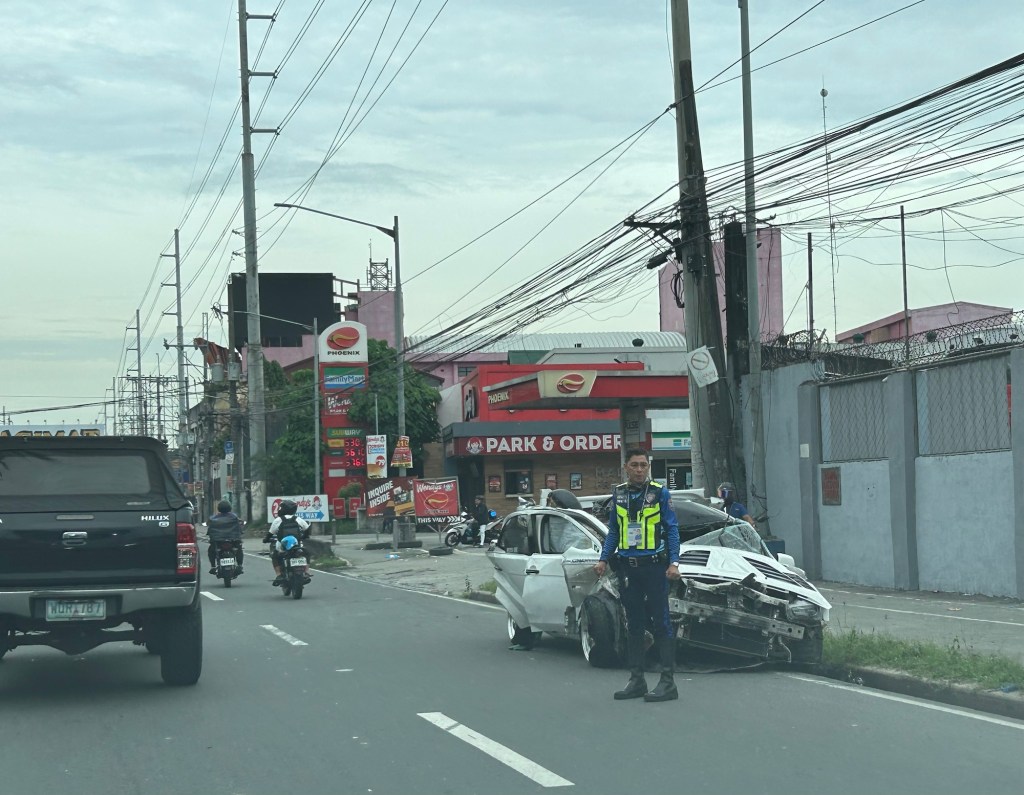
This one was also fatal, claiming the lives of the passengers of the car. Even with arguments on how our roads are supposed to be car-centric or the product of car-centricity, the inconvenient truth is that a major problem with road safety are the ones behind the wheel and driving these vehicles. Even with a ‘perfect’ road, aggressive and unsafe driving or riding behavior will always imperil people. There are also reports of many speeding (even racing) along Marcos Highway. These will likely involve impetuous young people looking for a thrill. They endanger other people with their behavior. So the challenge is for authorities to look into the matter and do their work to reduce the incidence of speeding and risky maneuvers along Marcos Highway and other roads like it.
–
On bike lanes contributing to safer roads
Do bike lanes make roads safer? There are obviously mixed reaction to this question especially if you look as social media. If we are level headed about this topic and look at the evidence out there, the answer is yes. But there can be caveats as we try to contextualize in the local setting. The formal studies so far are in countries where the drivers arguably more disciplined than ours here in the Philippines. Driver behavior, after all, is a major factor for road traffic safety. Here is a good article for reference in the discussions and arguments for bike lanes:
Tu, Maylin (November 5, 2024) “How Bike Lanes Slow Drivers and Save Lives,” Next City, https://nextcity.org/urbanist-news/how-bike-lanes-slow-drivers-and-save-lives [Last accessed: 11/10/2024]
To quote from the article:
“Bike lanes with physical delineators (cones or bollards) were more effective than paint-only lanes at calming traffic, echoing a popular mantra for bike activists: “Paint is not protection.” (The lanes were not protected, however, because drivers could drive over the delineators.) For vehicles turning right, top speeds were reduced by 28% and average speeds by 21%. Paint-only bike lanes slowed driver speeds by up to 14% and drivers going straight slowed down by up to 8%…
The study adds that pop-up bike lanes are a cost-effective solution for studying the effects of more permanent solutions — after all, you could just borrow the traffic cones. A city could quickly implement pop-up or temporary infrastructure. Then, armed with data and community feedback, they could invest in making the changes permanent.”
The article also points to a technical paper or scientific article on the traffic calming effect of bike lanes. Here is the link to the article published in the Journal of Urban Mobility: https://doi.org/10.1016/j.urbmob.2024.100071
–
On whether bike lanes cause more traffic congestion
I previously share articles on whether bike lanes cause more traffic. This question has been asked so often as we have returned to the “old normal” levels of traffic and bike lanes that were put up during the pandemic have been neglected or removed in favor of motor vehicle traffic. The perception for those in-charge of traffic and transportation in local government units is that the space occupied by bike lanes take up the space demanded by motor vehicle use. Thus, the view that bike lanes cause congestion. Here is another article share in support of bike lanes:
Mortillaro, N. (October, 2024) “Do bike lanes really cause more traffic congestion? Here’s what the research says,” cbc.ca, https://www.cbc.ca/news/science/bike-lanes-impacts-1.7358319 [Last accessed: 01/11/2024]
To quote from the article:
“One would think that building more roads with more lanes for cars would reduce congestion, but research shows that’s not the case, thanks to something called induced demand. The more traffic lanes that are put in, the more it appeals to people who may not otherwise have chosen to drive, thereby putting more cars on the roads and increasing congestion.
“So for a short period of time, there might be a slightly improved [reduction], but within a year or two, or perhaps three, traffic is as bad or worse than it was before the lanes were added in the first place,” said David Beitel, data services lead at Eco-Counter, a Montreal company that collects and analyzes pedestrian and bicycle traffic data.
Conversely, if you put in more dedicated bike lanes, people tend to feel safer and demand for use increases, said Shoshanna Saxe, an associate professor at the University of Toronto’s department of civil and mineral engineering and Canada Research Chair in sustainable infrastructure.
“As soon as you build a bike lane, within a year, two years, the latent demand shows up,” she said.
Bike Share Toronto statistics show that ridership on its network of shared bikes has increased dramatically since 2015, when 665,000 bike trips were made annually. In 2023, that shot up to 5.7 million trips.”
I think many people here are already aware of the concept of induced demand. However, this is usually shrugged aside as realities in their situations (e.g., commuting options, locations of residences and workplaces, etc.) lead them to choosing private vehicles (i.e., cars and motorcycles) over public or active transport. The last paragraph there is significant though as there never was and so far a decent estimate of bike trips in any city in the Philippines. Granted that there are attempts to measure bike trips but the volumes published so far are not as reliable as we want them to be in order to be convincing decision-makers to put up more bike lanes. Of course, the convincing part is always challenging if decision-makers have already made up their minds in favor of the car.
–
Old maps of Rizal Province
I found these two old maps of the Province of Rizal. I was trying to trace their sources but couldn’t find them yet. These were shared from social media pages.
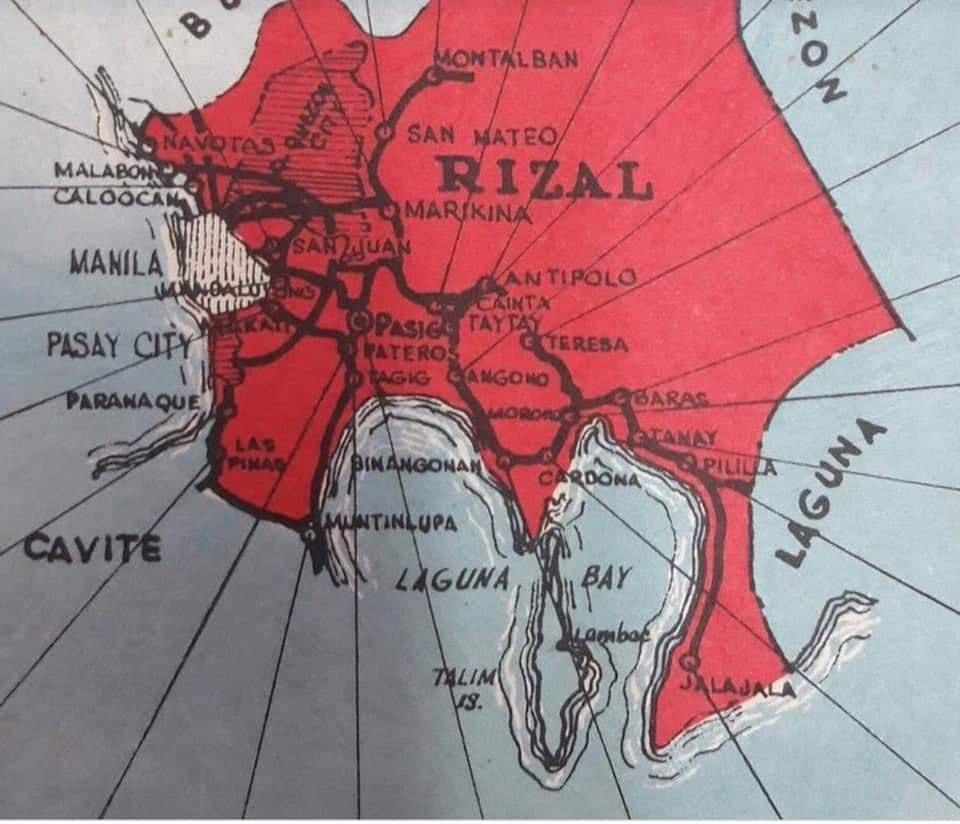
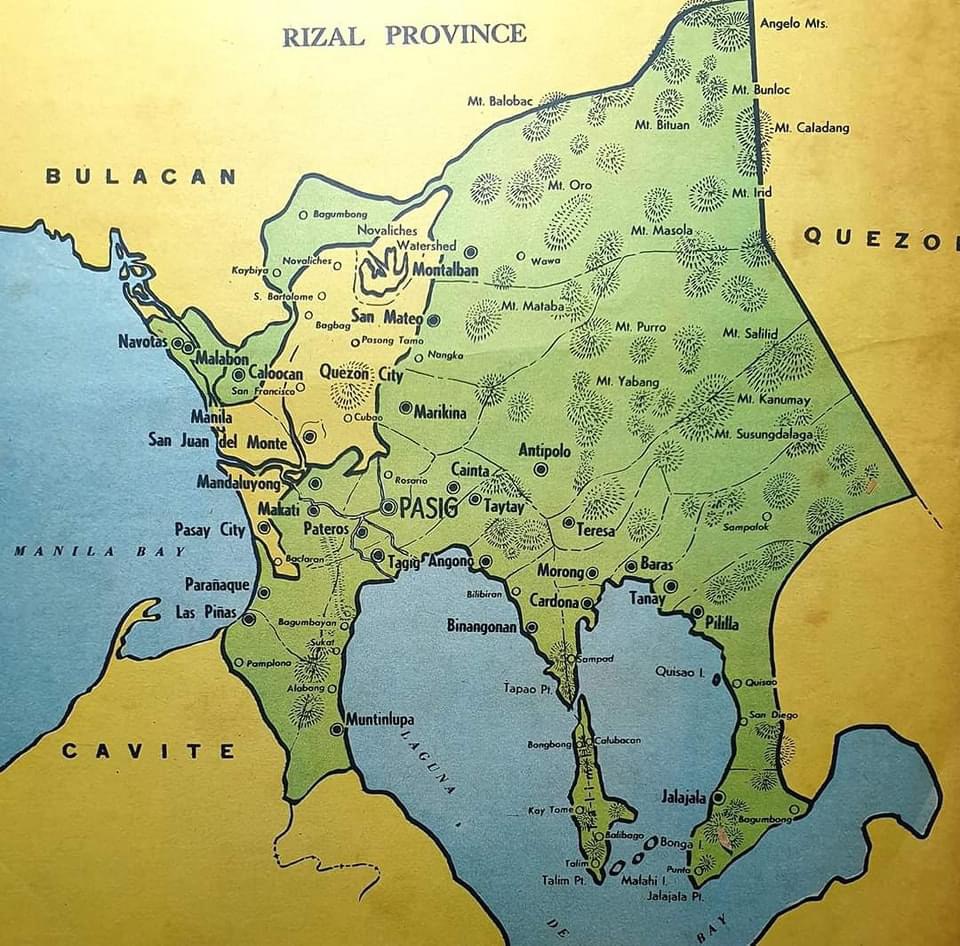
The second map clearly shows the Rizal towns that eventually became part of Metro Manila in the 1970s. These include Navotas, Malabon, Caloocan, Marikina, Pasig, Tagig, Mandaluyong, Makati, Pateros, Paranaque, Las Pinas and Muntinlupa. Pasig used to be the capital of the province; hence, Kapitolyo, which is still in Pasig. Note, too, that Caloocan was connected via a narrow strip between Quezon City and Bulacan. That part of Bulacan is the then town of Valenzuela that was also integrated with Metro Manila. I wrote about a ‘what if’ a while ago where politics would have been different in the province if it remained as it is before the creation of Metro Manila. History teaches us a lot of things including decisions made that led to how we are today. That certainly applies to transportation and definitely applies to politics if you come to think of it particularly for Rizal.
–
More political garbage along our roads
I was telling some friends who were planning to go to Antipolo this long weekend that they should not be distracted by the images of demonyos and demonyas they’ll see along the way to the Shrine of Our Lady of Peace and Good Voyage.
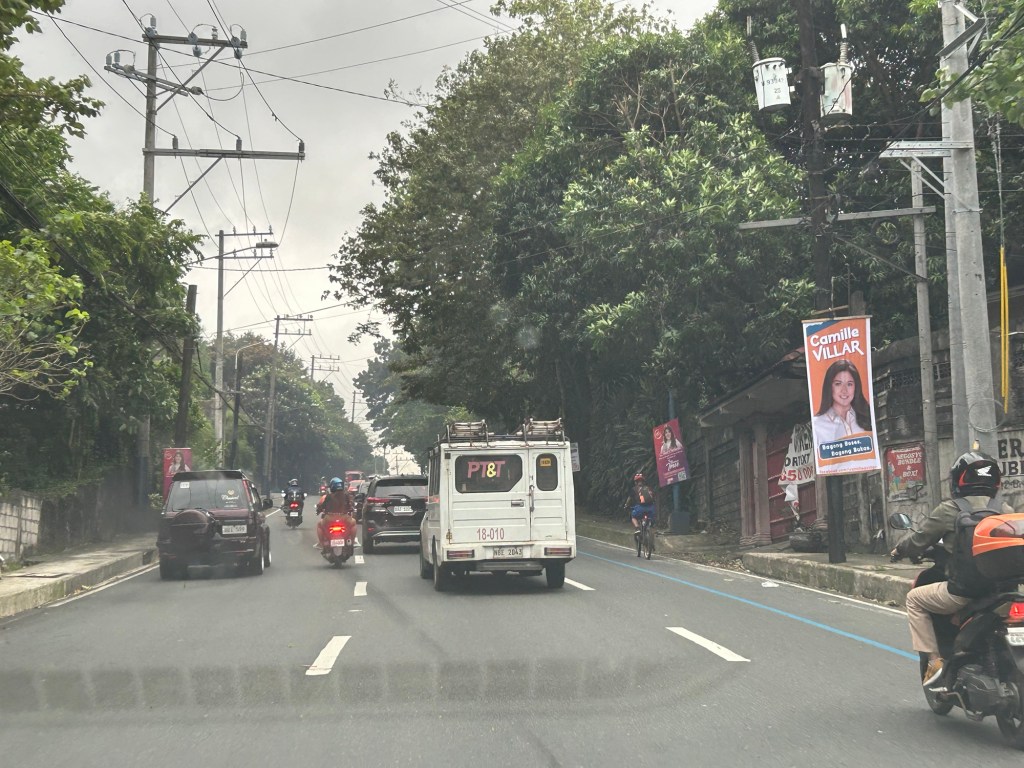
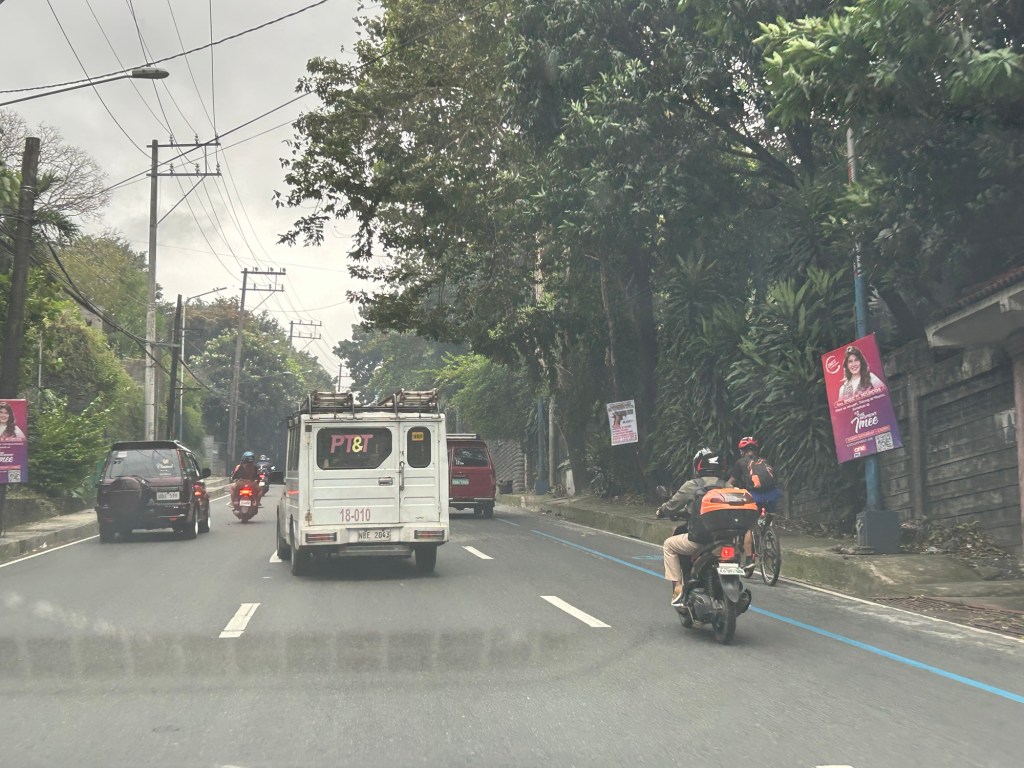
These are electioneering and those who vote for these clowns have no right to complain about their economic situation. You only perpetuate these scums in government.
–
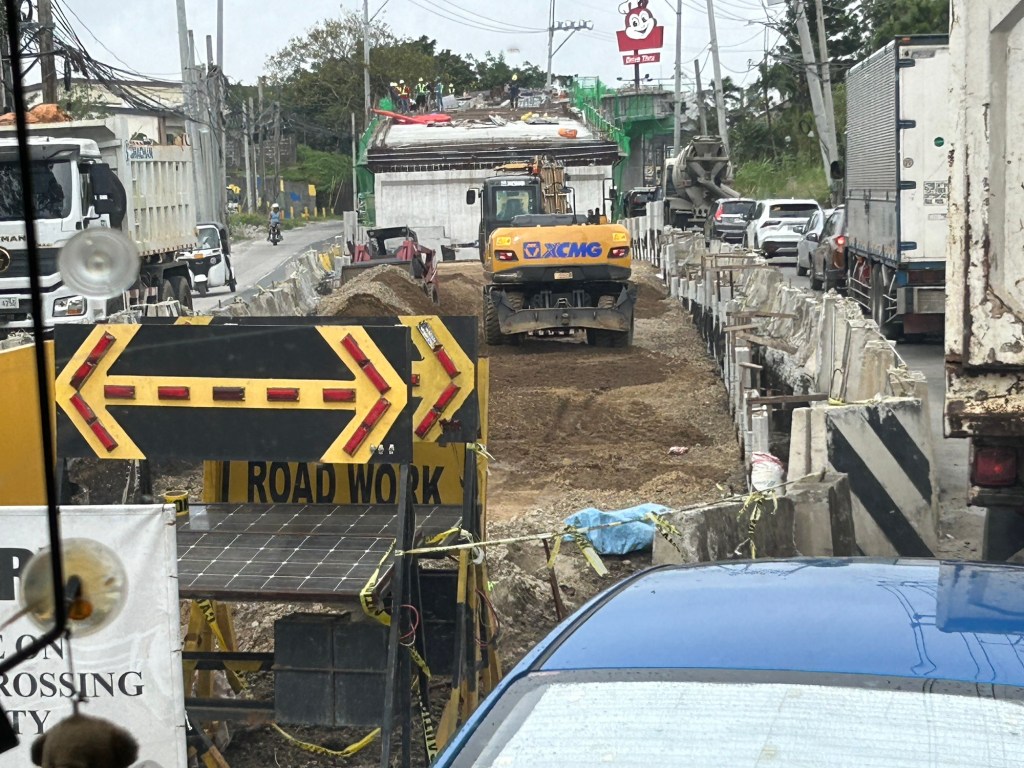
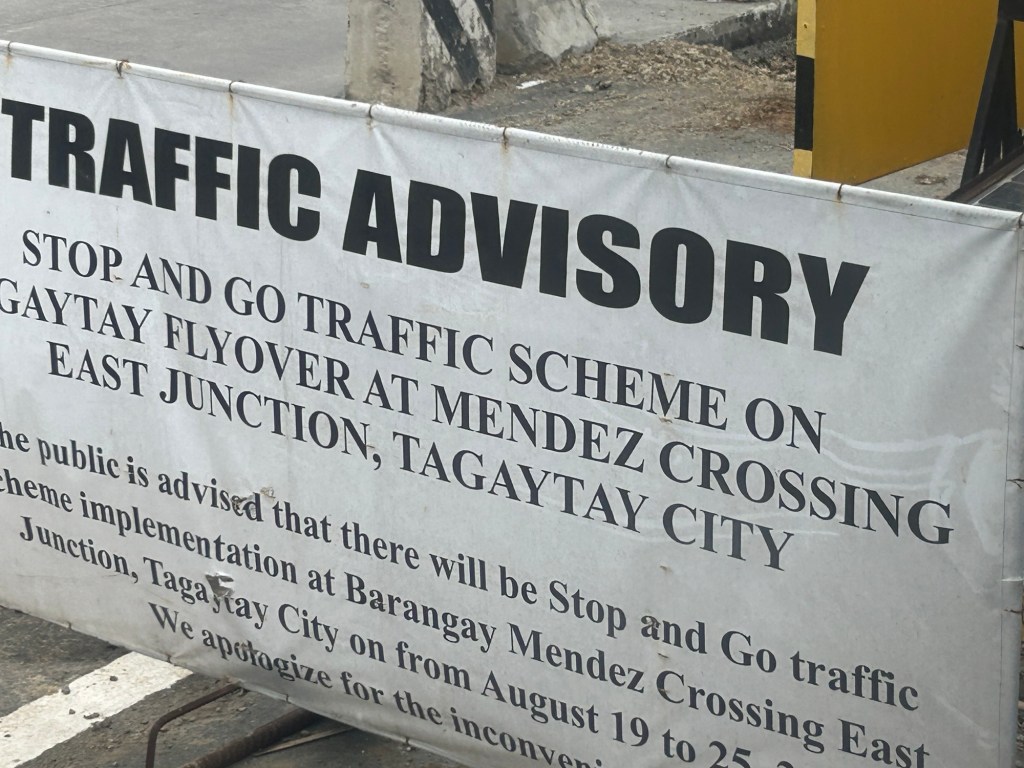
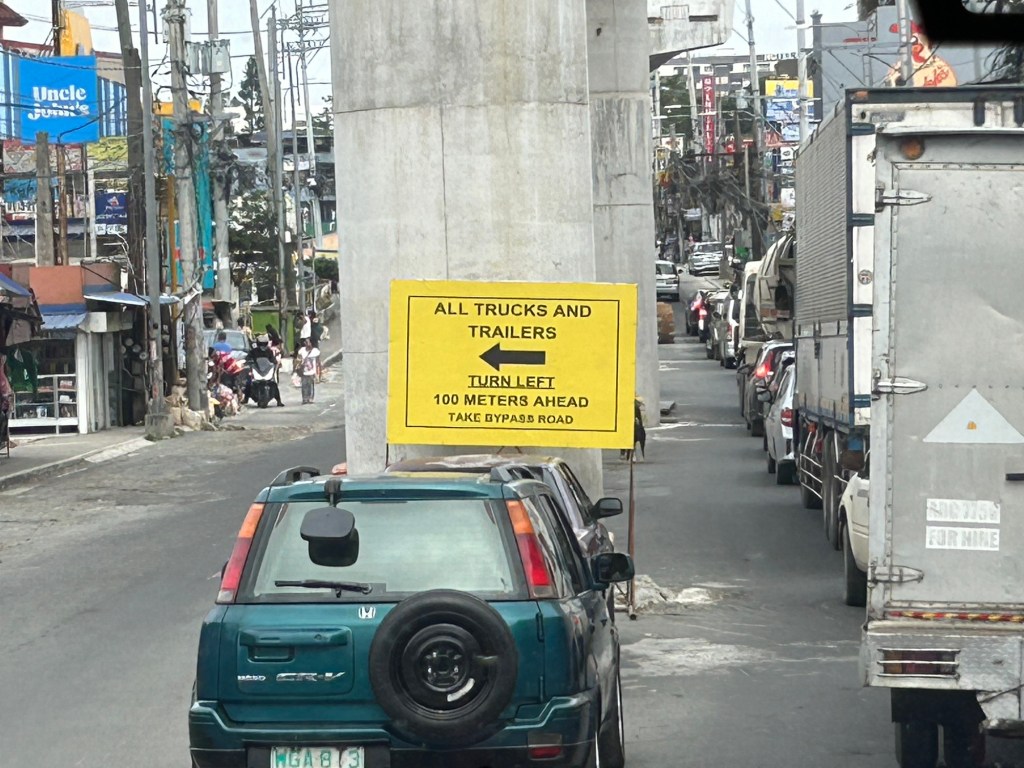
Congestion due to flyover construction: Tagaytay-Nasugbu Road – Part 2
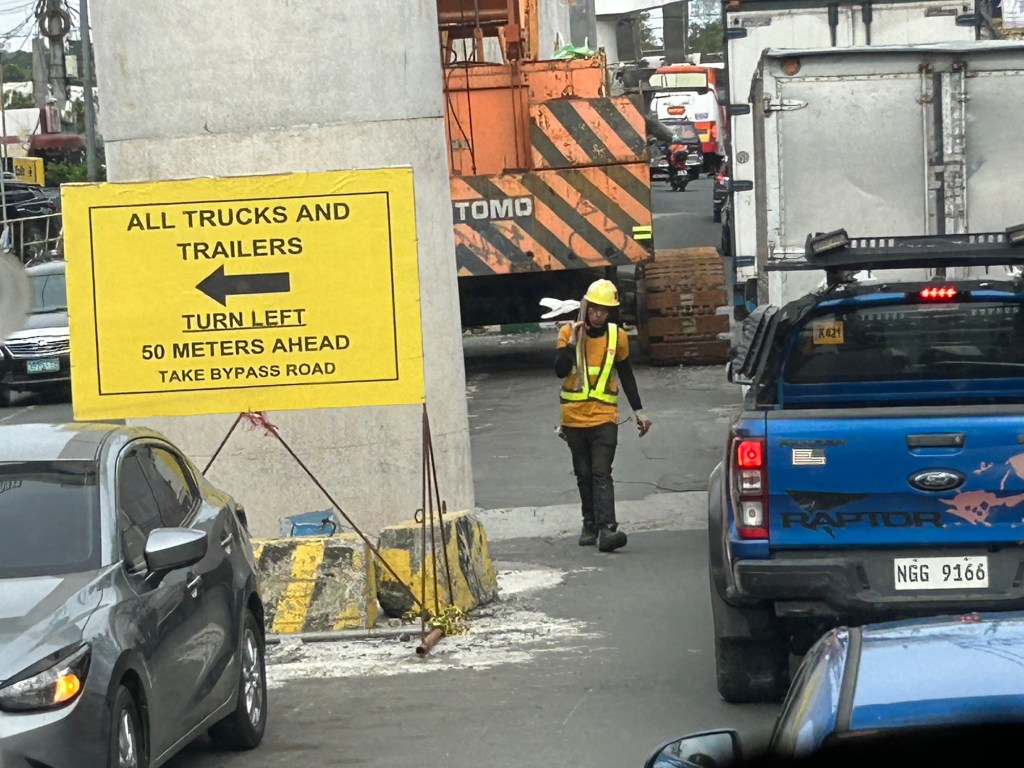
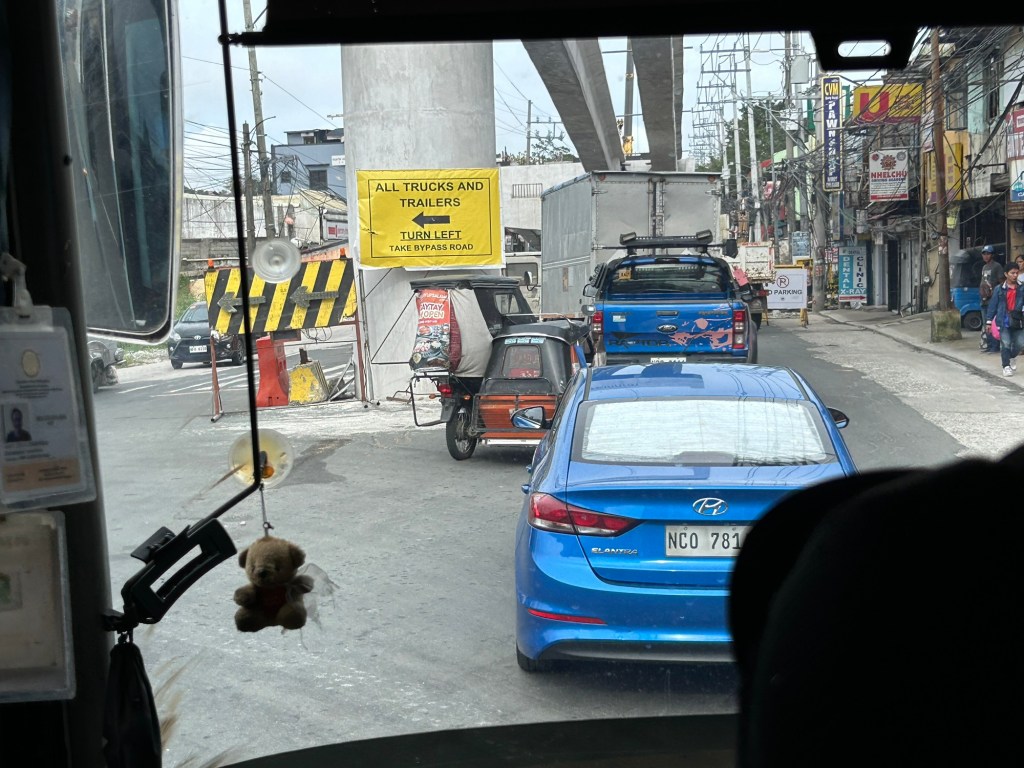
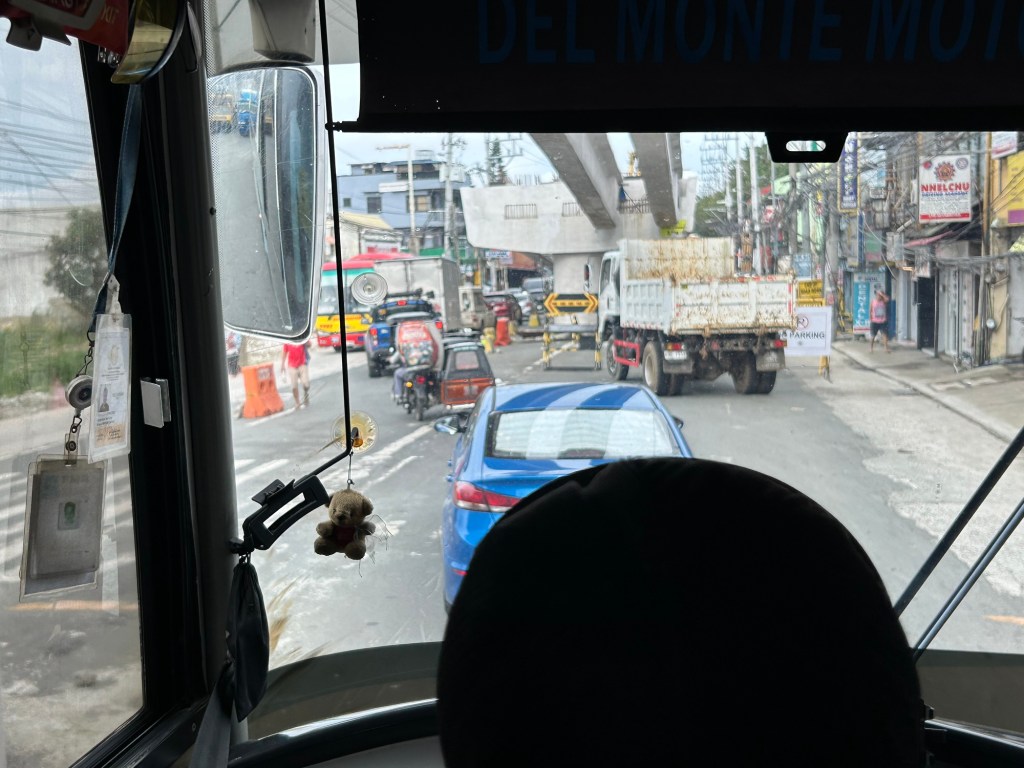
I showed photos of the construction of an overpass along the Tagaytay-Nasugbu Highway coming from Tagaytay in the previous post. This time, here are some photos taken along the opposite direction.





–
Congestion due to flyover construction: Tagaytay-Nasugbu Road – Part 1
There is significant traffic congestion along the Tagaytay – Nasugbu Highway due to the construction of an overpass along the highway at its junction with the Tagaytay – Mendez Highway.
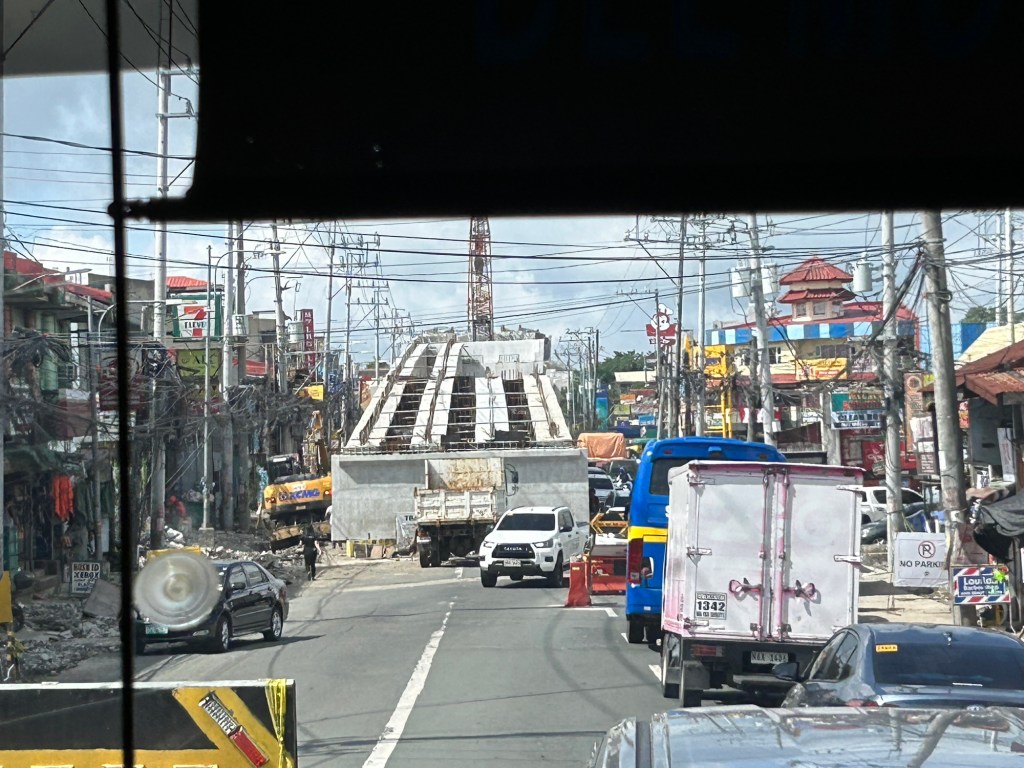


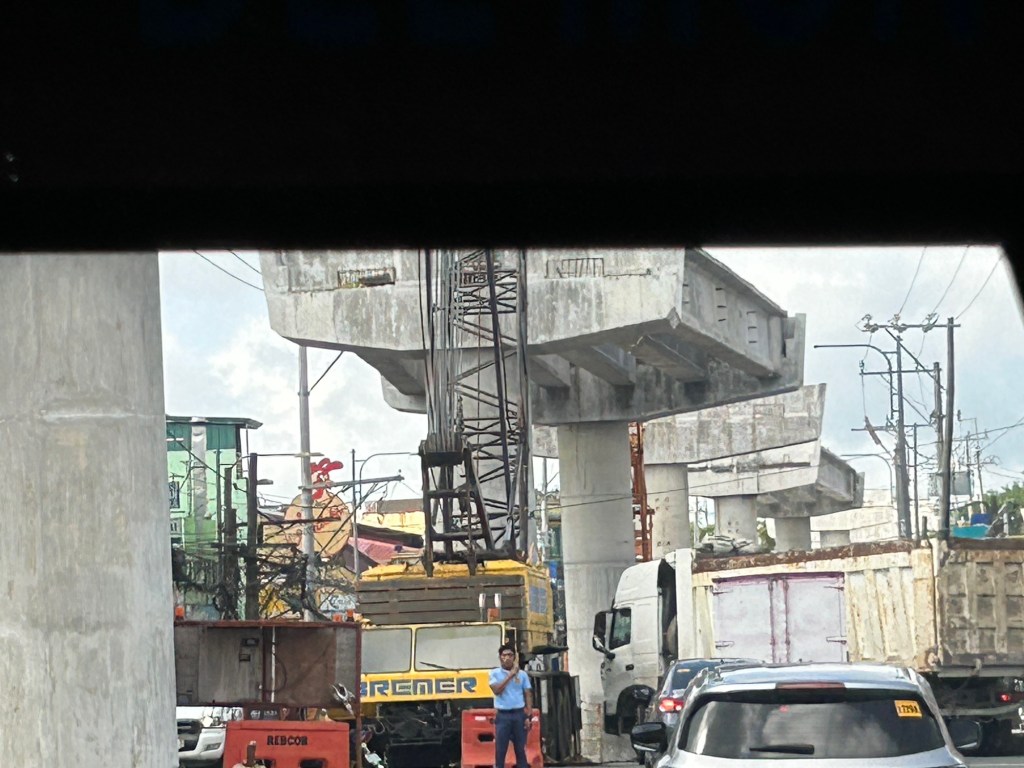

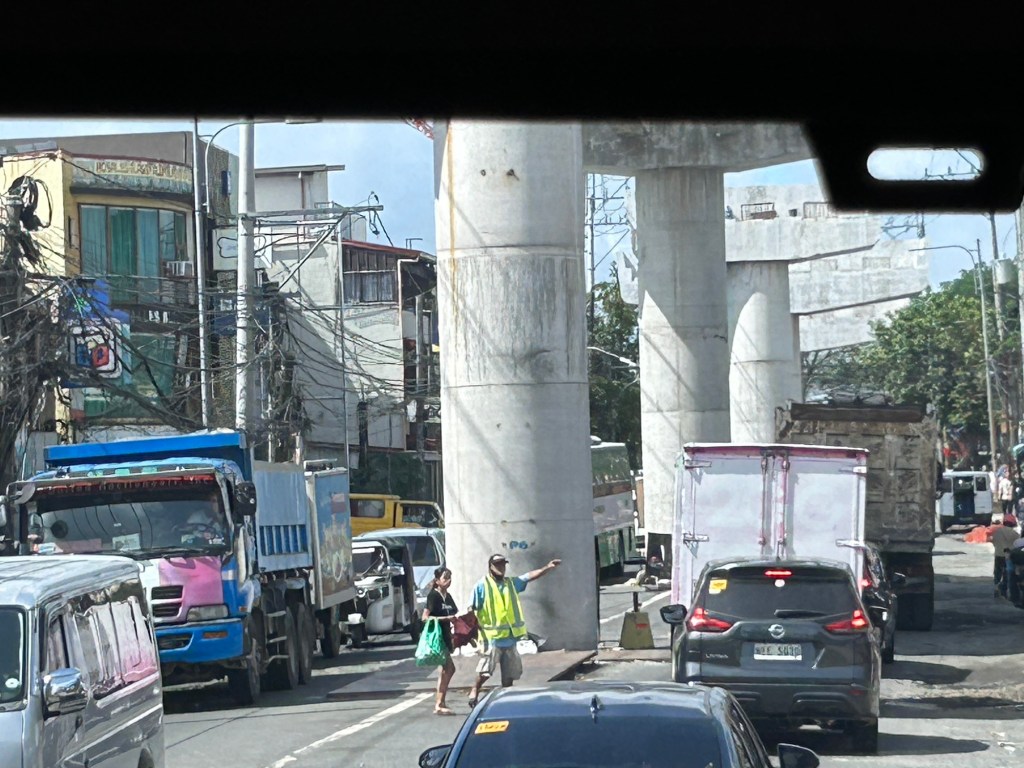
Was there a need for a flyover here? Otherwise I would suggest instead a set of good old-fashioned traffic signals and geometric improvements to the intersection.
–
Political garbage along our roads
While it is not formally campaign season, you’ve probably seen all those ads, posters, tarps and other obviously campaign materials that have sprouted around the country. Even before the filing of COCs, there were already a lot of political garbage (as I refer to them) along our roads. Many that you see on large billboards promote their purported TV or radio shows. Others pretend to be concerned about your safety while traveling (e.g., “Ingat sa biyahe!”, “Ride safe!”, etc.).

The government, particularly the COMELEC, seems to be inutile and inept about these brazen, even flamboyant displays by politicians. And so we end up with a lot of literal and figurative garbage along our streets. These are the politicians that people continue to vote while stating they want changes and reforms in government and society. You vote for these clowns and you get exactly the misery and incompetence that dooms us especially during times of difficulties and calamities.
–
On the need for helmet laws and their implementation to reduce fatal road crashes involving motorcycles
I found this article reporting on findings of their study on helmet laws and their impacts on road safety:
Insurance Institute for Highway Safety (October 20, 2024) Lax helmet laws have killed more than 20,000 motorcyclists, study shows, https://www.iihs.org/news/detail/lax-helmet-laws-have-killed-more-than-20-000-motorcyclists-study-shows [Last accessed: 10/23/2024]
To quote from the article:
“Wearing a helmet is one of the biggest things riders can do to protect themselves from death and traumatic brain injury,” said Eric Teoh, IIHS director of statistical services and the author of the paper. “We understand that requiring helmets for all riders everywhere would be unpopular with some motorcyclists, but this could save hundreds of lives each year. Those aren’t just numbers. They’re friends, parents and children.”
There’s a link to the study report in the article for those who want to have a copy of the report.
–
Sharing the road with persons with disabilities
The wife took this photo as we were turning at the roundabout at Tikling Junction in Taytay, Rizal. I just wanted to share this here for everyone’s awareness that there are those of us traveling who have certain disabilities that may not be so obvious. We probably see people on wheelchairs or special vehicles like those you’d find along Cainta roads especially near or in the vicinity of Tahanang Walang Hagdanan. And then there are those with PWD stickers on their motor vehicles. But are we aware and sensitive to the needs of others like this deaf cyclist? There should be policies to ensure their safety as they should be able to travel for whatever purpose they may have similar to our senior citizens and children who are among the most vulnerable road users. And drivers and riders should have the training and the empathy to share the road with them.
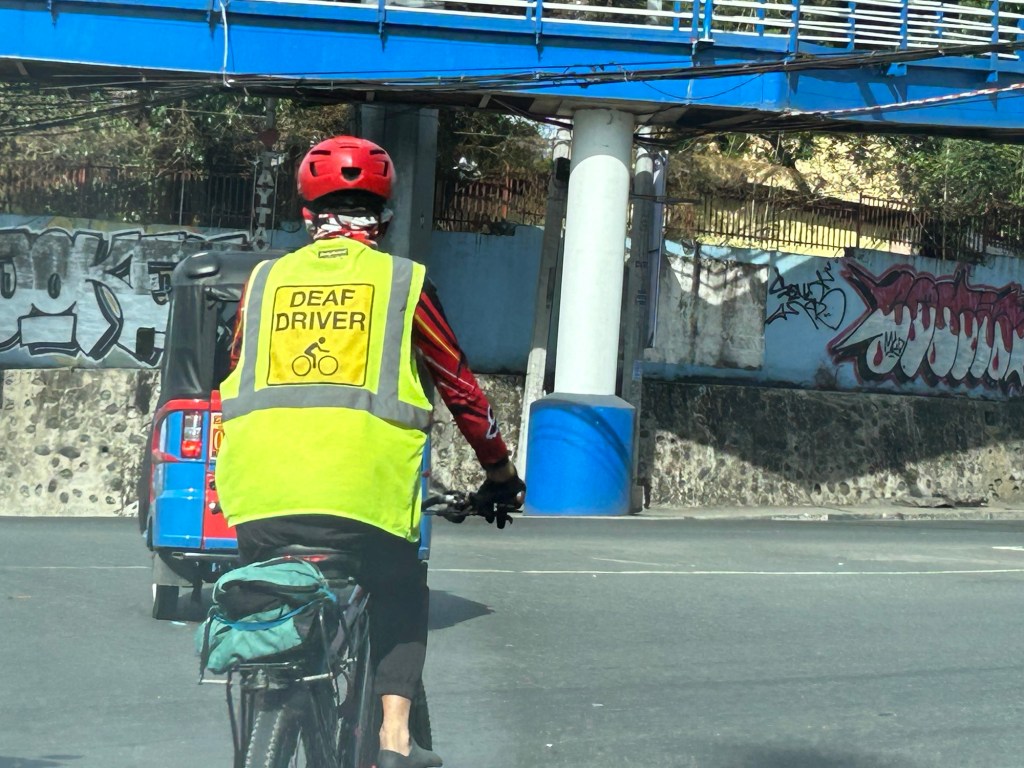 Deaf rider along Tikling Junction, Taytay, Rizal – not all would probably have a vest like this and motorists likely would be oblivious to their situation. There will also be pedestrians with similar circumstances who have natural disabilities. Irresponsible would those who are “deafened” by their gadgets like those wearing earphones or headphones while riding or walking.
 –
 Caught (up) in traffic