
A risky mode choice – recumbent bike
I spotted this cyclist along Ortigas Avenue Extension. He would be hard to notice considering how low the vehicle is and his position astride the bicycle.
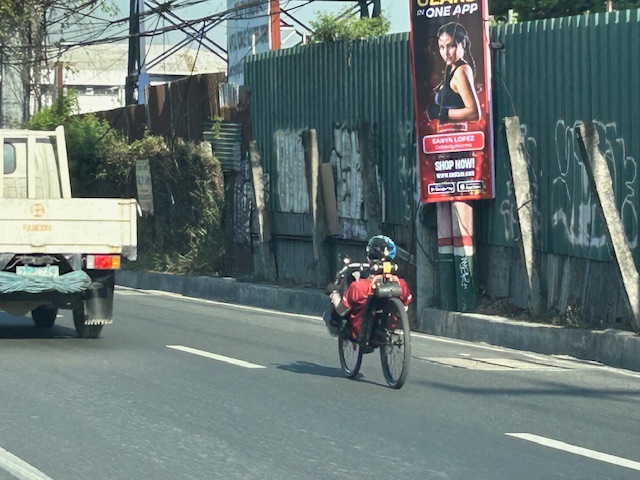 Man on a recumbent bike probably on his daily commute. Note the bike and its rider as compared with the small truck.
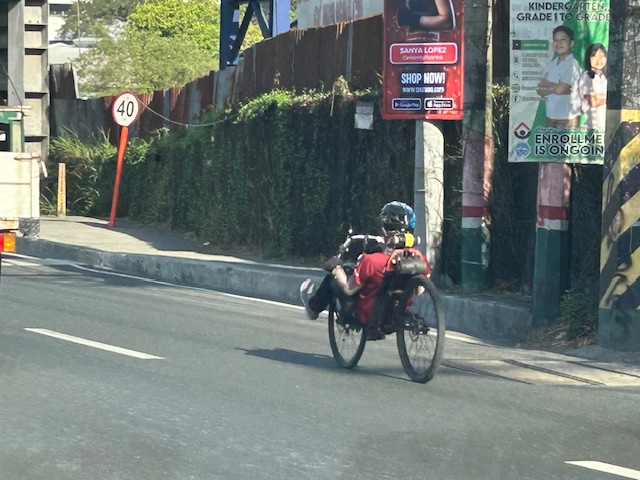
The problem is concerning his visibility to regular or typical road users. He might not be visible for the larger vehicles like trucks and buses, even jeepneys and vans whose drivers may be distracted by other vehicles in the traffic mix.
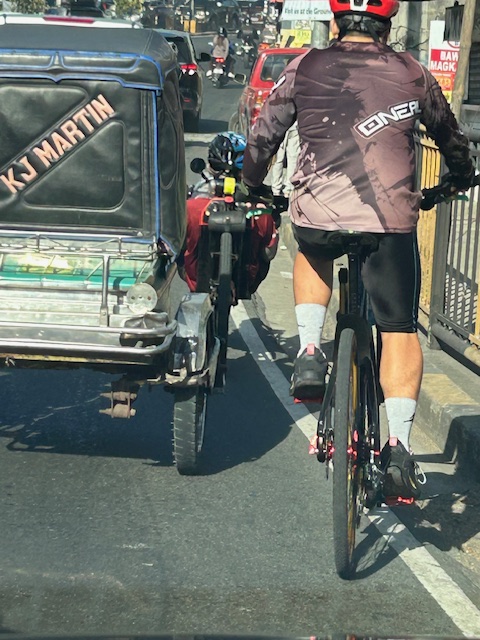 Comparison with a typical cyclist, who is quite visible as shown in the photo
–
Counterflow irony along Ortigas Avenue Extension, Pasig City
One Friday, I traveled to Ortigas Center from Antipolo via the most direct route using Ortigas Avenue Extension. I was not surprised by the counterflow scheme being implemented starting from De Castro all the way to Rosario Bridge. I was also not surprised that the more congested lane was the counterflow lane. I thought everyone expected the main traffic lanes to be congested as PUVs like jeepneys, buses and vans usually create bottlenecks as they block traffic while passengers board/alight along that section of Ortigas Avenue Extension. Here is what you might encounter in terms of traffic if you opt to stay along the westbound traffic lanes:
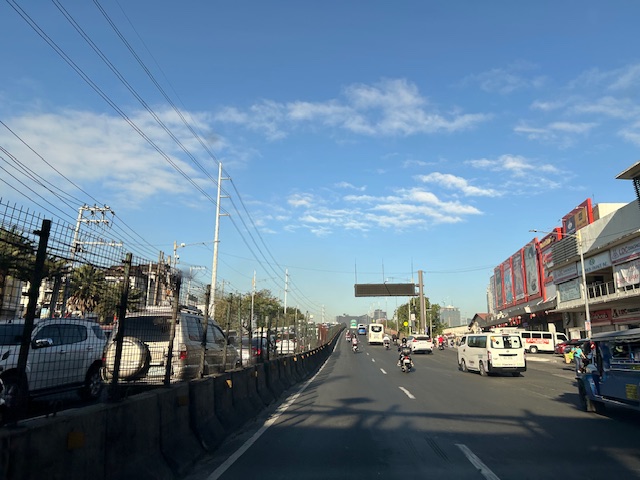 Traffic before the Manggahan floodway bridge at what was generally called Mariwasa. The Filinvest residential development on the left used to be the Mariwasa tiles plant.
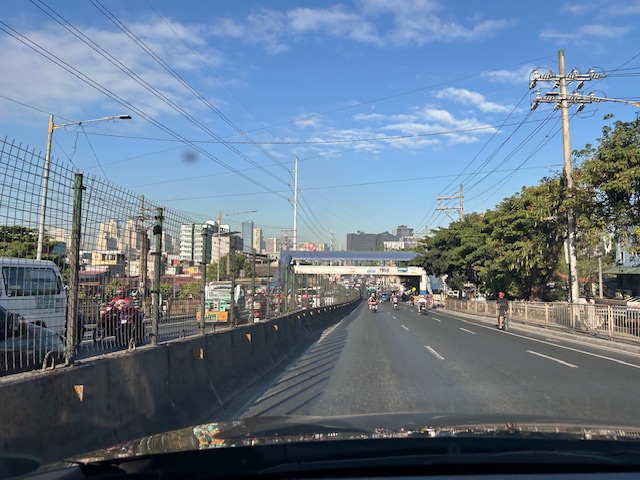 Traffic after the crossing the bridge. Note the pedestrian overpass in the photo.
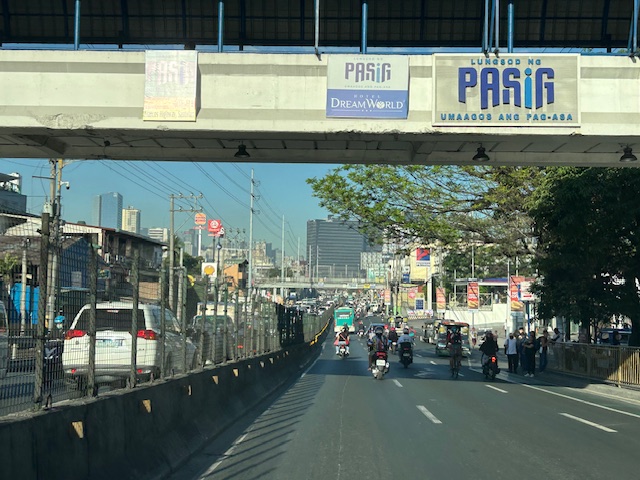 Meters after and near the overpass, you can already see the build-up in the Rosario area
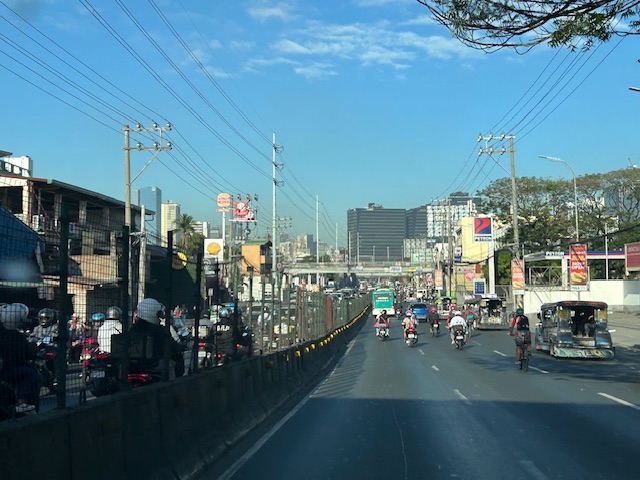 The Rosario bridge area is usually congested not just because of the PUV operations but also because there is the junction of Ortigas Avenue Extension and Amang Rodriguez Avenue, which is another major thoroughfare connecting this area to other parts of Pasig, Quezon City and Marikina City.
I will post about the counterflow scheme in Bangkok in the next post.
–
Cebu Pacific’s leased aircraft from Bulgaria Air
While boarding our plane on the return flight to Manila from Cebu, I noticed that the aircraft was all white and no livery. I learned later that the plane we flew on was a leased aircraft. Cebu Pacific leased A320’s from Bulgaria Air as it expanded its fleet to meet the demand for air travel. Apparently, the agreement included Cebu Pacific also announcing that passengers were flying via Bulgaria Air but operated by Cebu Pacific.
 The plane was not a Philippine registered aircraft (RP). Instead, it had LZ on its body. I Googled LZ and learned this was registered in Bulgaria.
 The safety instructions were in Cyrillic and English
 The sign for the life vest is also in Cyrillic and English.
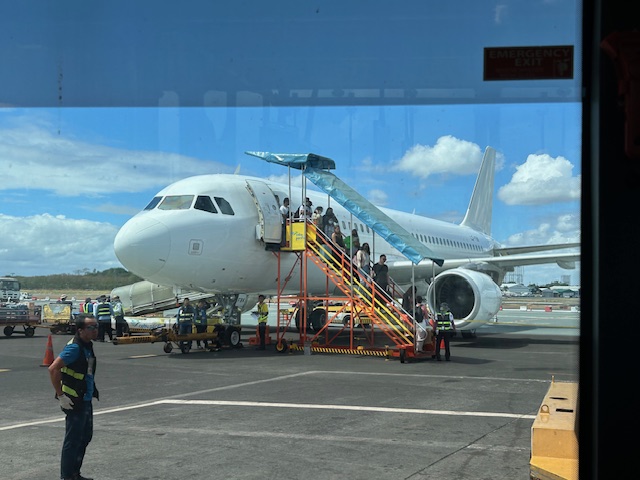 Here is the plane as we boarded our bus transporting us from the tarmac to NAIA Terminal 3. Other deplaning passengers had to wait for the next bus.
–
Airline food on Thai Airways
We booked Thai Airways for our flight to Bangkok. We had initially looked into both Philippine Airlines and Cebu Pacific thinking they would be cheaper, especially Ceb Pac, which is supposed to be a low cost carrier (LCC) or a budget airlines. They both turned out to be expensive so I suggested to the wife to check out Thai Airways since we were spending anyway and we wanted to have the full service that included decent inflight meals. Lo and behold, Thai Airways was actually cheaper than PAL or CebPac (note that we booked early so we had a lot of options for the latter airlines).
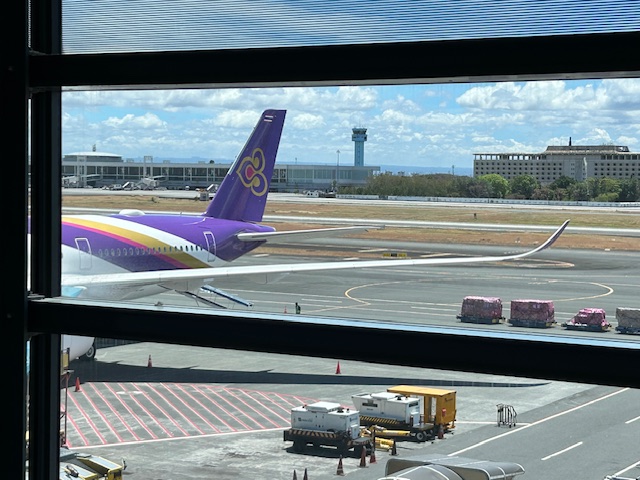 Our Thai Airways Airbus A350 at the NAIA Terminal 3. Also shown in the photo is the old Philippine Village Hotel building that surprisingly has not been demolished despite being abandoned for more than 3 decades. This is the proposed site of a Terminal 5 for NAIA that will be constructed and operated by San Miguel Corporation.
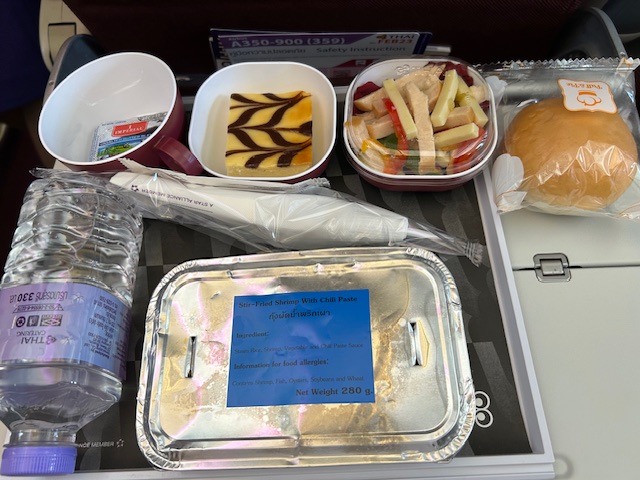 We had two choices for our inflight meal – stir-fried shrimp with chili sauce and rice or chicken in tomato sauce with pasta.
 The stir-fried shrimp with chili sauce came with carrots and young corn on the side. The set included salad, cake for dessert and a bun.
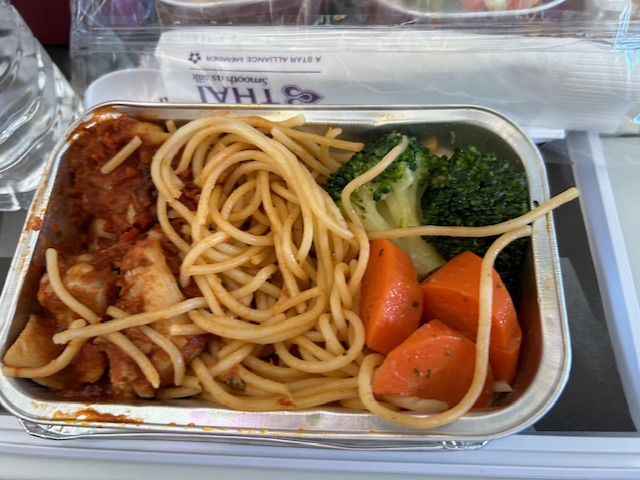 The only difference between the set was the main course. This is the chicken and pasta I eventually ate when I exchanged meals with my daughter who surprised us by preferring the spicy shrimp.
 The A350 was equipped with a tail camera for those who wanted this view of the plane. I took a video of when the plane landed to show my students about the landing including when the plane exited the runway via the rapid exit ramp.
We thought the food on economy class was okay and definitely better than what could have been served on either PAL or CebPac. What are better (on economy) if not similar in quality would be the food on Singapore Airlines and Japan Airlines.
More on our travel to Thailand in the next posts.
–
Back in Bangkok
We’re back in one of our happy places to be in again. Bangkok’s been one of our favorite destinations since the 2000’s. There was a time when we were here twice a year. Those trips were mostly business, actually academic-related as from 2001 to 2008 we had collaborative research network among ASEAN Universities hosted by Chulalongkorn University. I’ve returned several times after but the last time I was in Bangkok was in 2018 for a seminar on road safety. This is the first time we are in Bangkok with our daughter (her second ASEAN country) so we’re only very happy to share with her the experiences in Thailand.
 Clearing immigration at Suvarnabhumi Airport
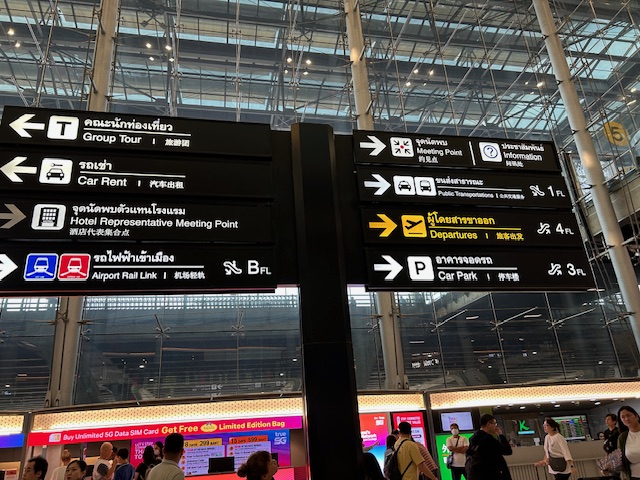 Where to and how to get there? We decided to take the airport taxi to our hotel.
 Marveling at the spacious terminal.
I will post about Bangkok and transport in Thailand in the next posts probably after we return from this trip.
–
Article share: on the collapse of a bridge in Baltimore
The recent incident of a container ship colliding with the bridge in Baltimore in the US has been trending and gone viral. There are also many articles now putting out their assessments of what happened, how the bridge collapsed, what troubled the ship, etc. There are also now articles discussing the implications or the impacts of this incident on logistics considering the collapsed bridge lies along a busy maritime route in the US. Here is an article that focuses on the former, providing analysis on how the ship caused the collapse of a major bridge.
Laris, M. Hassan, J. and Achenbach, J. (March 26, 2024) “How a cargo ship took down Baltimore’s Key Bridge,” The Washington Post, https://www.washingtonpost.com/dc-md-va/2024/03/26/how-key-bridge-collapsed-baltimore/ [Last accessed: 3/27/2024]
What also came to mind as I read reports about this incident is something similar that could happen to the CCLEX bridge connecting Cebu and Mactan Islands. Apparently, something similar already happened decades ago when a bulk carrier, Sanko Elegance, collided with the pier of the first Mactan Bridge. While the bridge did not collapse, it sustained damage that required it to be repaired and severely affected traffic between the two islands considering it was the only bridge at the time. It is important to note that the airport was on Mactan Island so it affected both passenger and freight flow for the province and others that connect and trade with it. While a former student who was much involved in the construction of the CCLEX bridge assured us in a briefing before that the bridge pier can withstand the collision of large vessels (perhaps the largest currently calling on Cebu ports), there may be larger and heavier ships in the future. The Key Bridge, after all, was hit by a container carrier that was larger than the ships transiting in the area when the bridge was designed and constructed.
–
International Shrine of Our Lady of Peace and Good Voyage
It’s Maundy Thursday today and there will be the Alay Lakad later this afternoon. Here are photos I took yesterday morning at the shrine including the road closures sign or tarp posted at the intersection of P. Oliveros Street, Ortigas Avenue Extension and L. Sumulong Circle near the provincial capitol site.
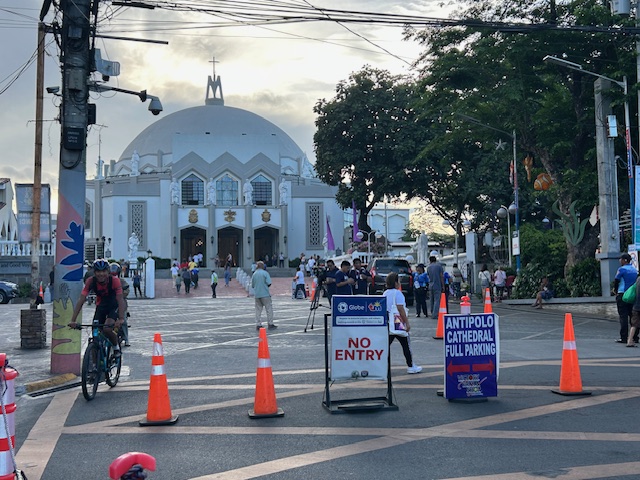 Access was already being limited as of yesterday morning. On regular days, there will be a queue of vehicles mostly new and to be blessed at the shrine. There’s limited parking at the shrine itself so visitors or pilgrims would have to find parking around the church including the nearby mall.
 View of the shrine from the entrance to the complex
 The main altar of the shrine
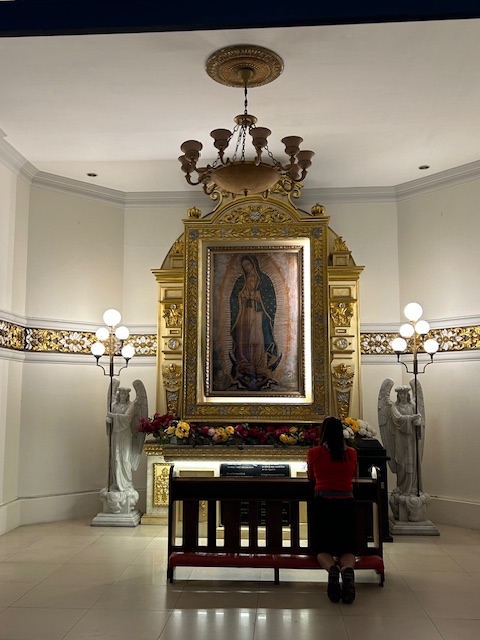 Retablo to Our Lady of Guadalupe
 The main road to the shrine, P. Oliveros Street, is an extension of Ortigas Avenue Extension from the Provincial Capitol site. This will be the main route to the shrine and will be filled with people later this afternoon and overnight.
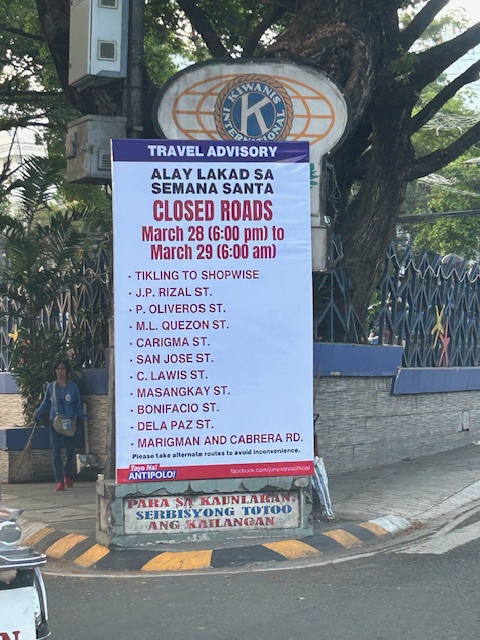 Road closures from 6:00 PM today until 6:00 AM tomorrow (Good Friday)
The Alay Lakad is a spectacle by itself and probably rivals if not exceeds the Traslacion of the Black Nazarene in Quiapo, Manila in terms of the number of participants.
–
Alay Lakad 2024
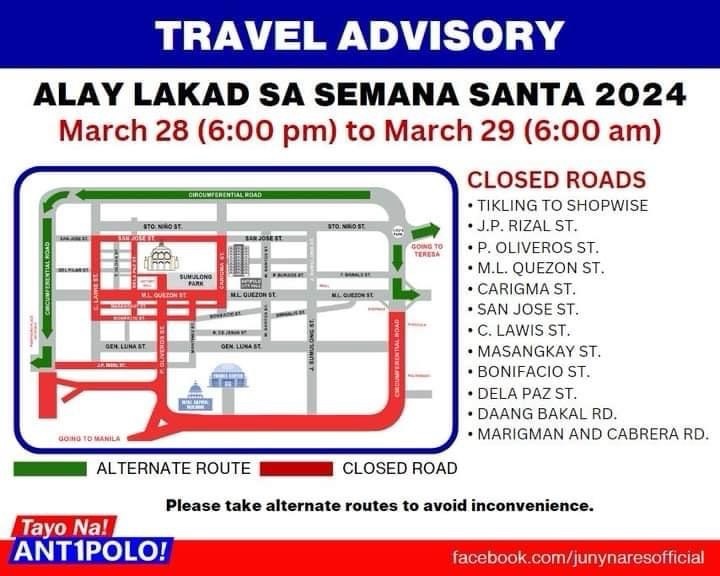
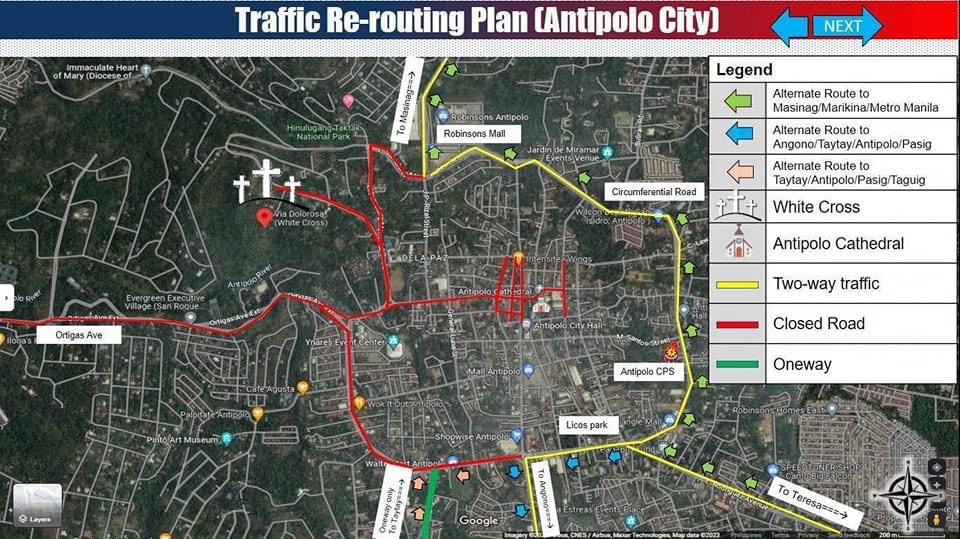
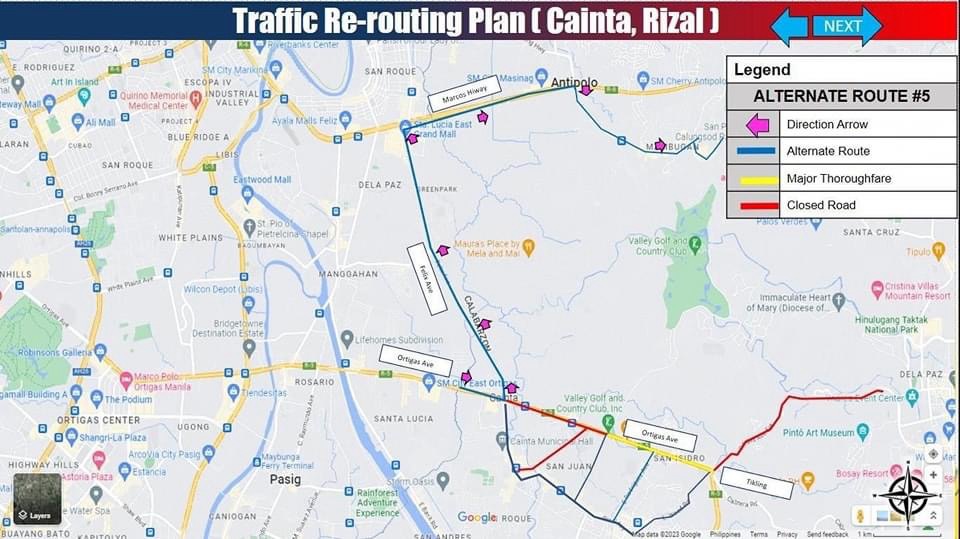
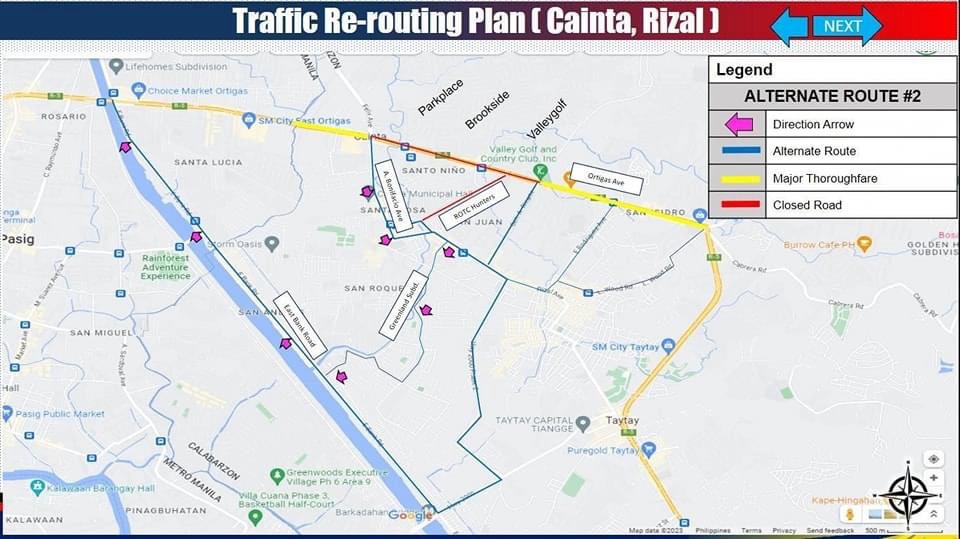
I’m sharing here the announcements and maps shared by Antipolo, Cainta and Taytay regarding road closures and alternative routes during the Alay Lakad this Holy Week. The roads leading to the Antipolo Shrine will be closed from 5pm of March 28 (Maundy Thursday) to 6am of March 29 (Good Friday). Expected are hundreds of thousands of people making the trek to the Shrine of Our Lady of Peace and Good Voyage, which is among the most popular pilgrimage sites in the country.
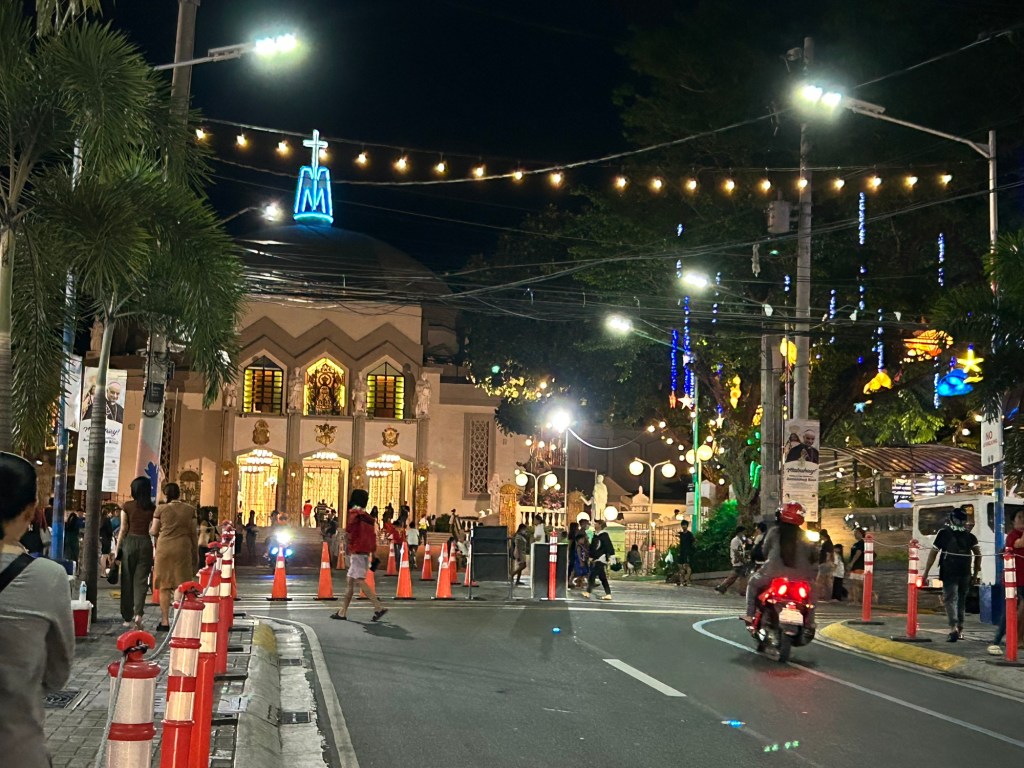
Many are probably walking as part of their panata or commitment in exchange for a favor they have prayed for. This may be healing for an illness or finding work or passing a licensure exam. Of course there are those who also pray for wants rather than needs like a new car, a big house or winning the lottery. And then there are those who are in it for the adventure, treating this as an excursion or a gig with the barkada.
Here are the maps and announcements posted in the official pages of the LGUs:
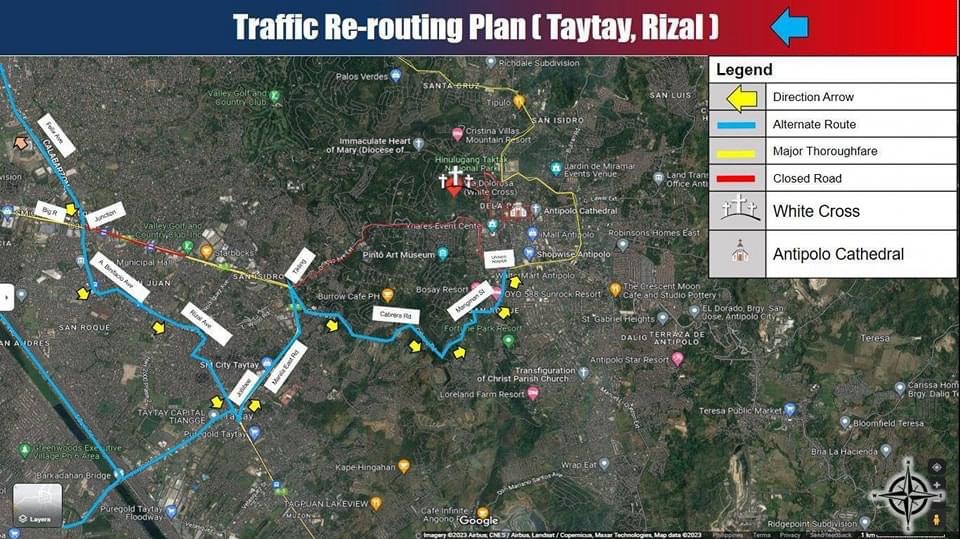
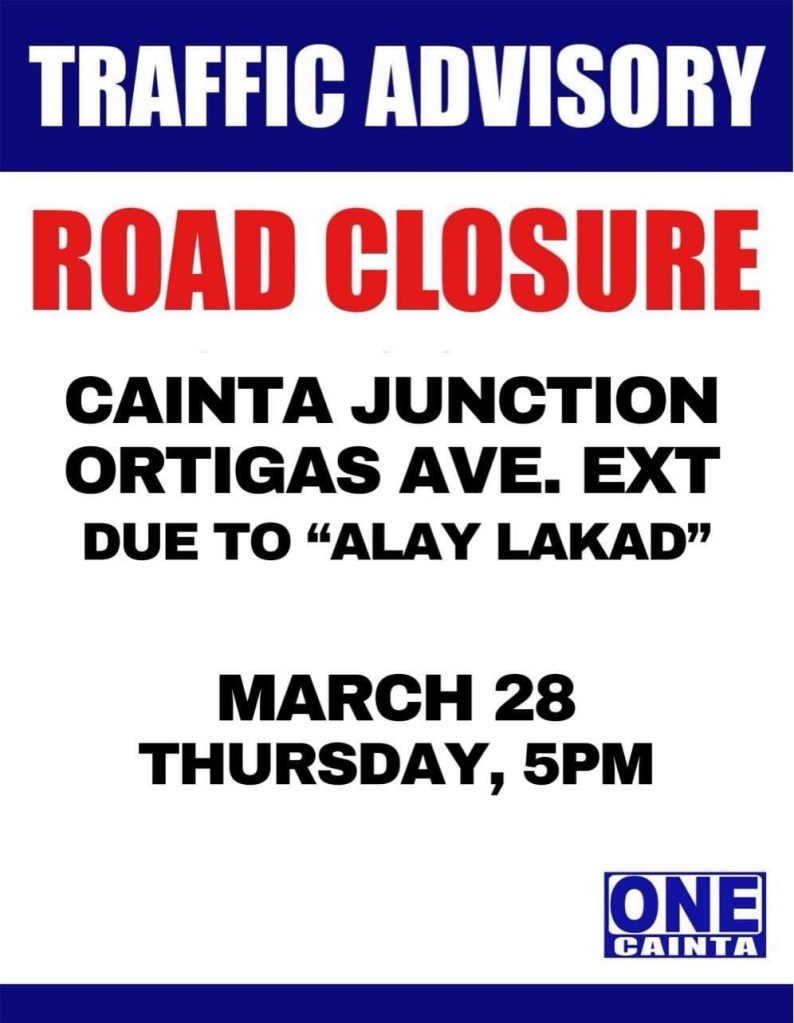
–
30th Conference of the Transportation Science Society of the Philippines
I am sharing here the First Call for Papers for the 30th Annual Conference of the Transportation Science Society of the Philippines (TSSP). The conference will be held in Iloilo City almost to the day of the last time it was held there in Sept. 12, 2014.
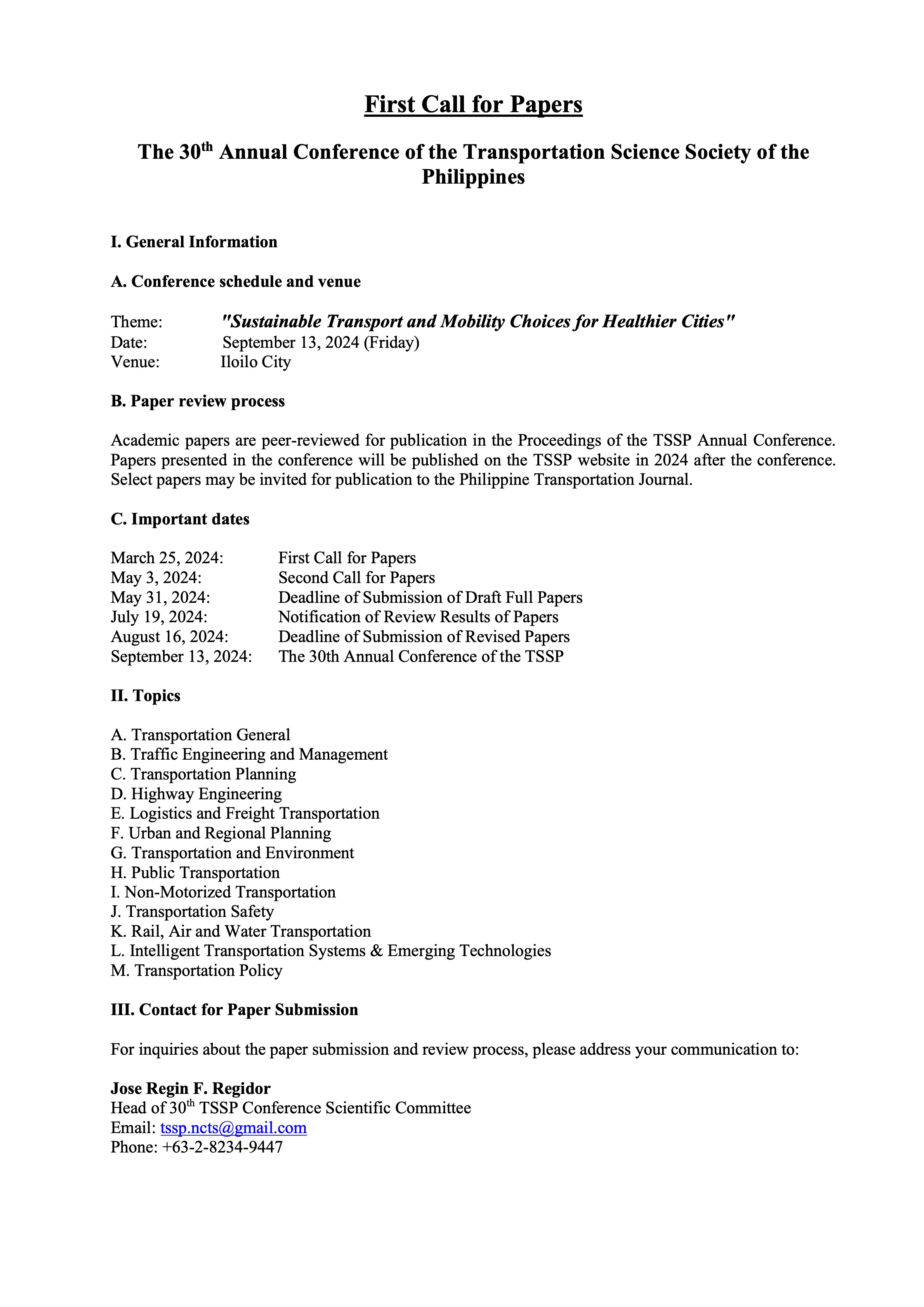
Information on past conferences may be found here: https://ncts.upd.edu.ph/tssp/conferences
–
On kamote riders
Much has been written and reported about the so-called ‘kamote’ riders. These are motorcyclists who have the propensity for risky behavior including reckless maneuvers on the road. Such often places them in harm’s way whether they are conscious about the actions or not. I see them everyday during my commutes including but not limited to those who counterflow, speed, race, zig-zag through moving traffic, and use the bicycle lanes or pedestrian sidewalks.
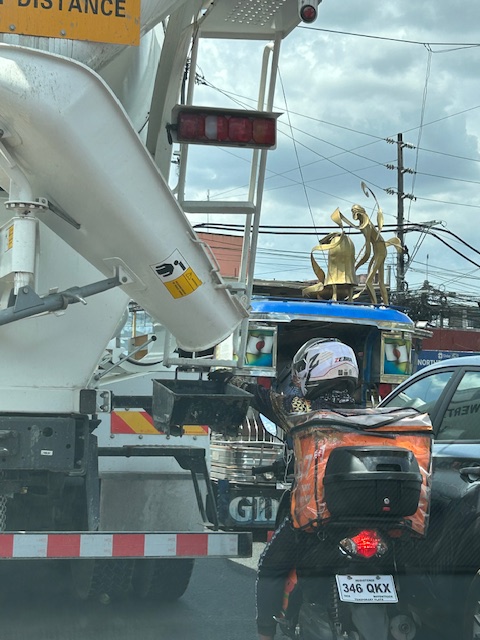 The not so obvious kamote rider positioning himself at the downspout of a concrete mixer.
Not all motorcycle riders are kamote. However, there is a significant number of them out there that put other road users in risky situations. They also contribute to a lot of damage to property as evidenced by a lot of vehicles, especially cars, that have the signature scratches, dinks and dents after being sideswiped or bumped by motorcycles. Such behavior can actually be corrected if the Land Transportation Office (LTO) would be stricter with licensing – requiring more in terms of rider training and certification as well as testing. Traffic law enforcement is also critical here because behavior change can only be done and effective if enforcers are firm. A friend made the observation that law enforcers themselves are the first to violate rules and regulations or bend them in their favor. That sends a wrong signal and would only encourage more ‘pasaway’ and ‘kamote’ riders.
Of course, there are also kamote drivers and cyclists. But those are the topics for future posts.
–
 Caught (up) in traffic