
On school trip generation
I chanced upon the changing of the shifts for a national high school. This was the time of day when the morning shift students were dismissed (i.e., coming out of school) and the afternoon shift students were coming in.
 Students come out of the school to mainly either walk or take public transport (mostly tricycles) to their homes.
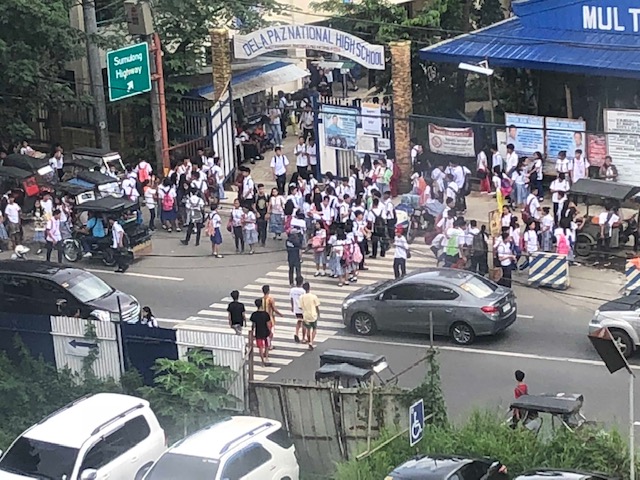 Most vehicles give way to people, especially students, crossing the busy street. There are usually traffic aides in the area who help manage traffic and to ensure pedestrians may safely cross or move about.
There are no severe traffic congestion here unlike those generated by many exclusive or private schools. There is actually a private school just beside this public high school that also generates significant private vehicle traffic but somehow manages not to congest this major road that’s part of the L. Sumulong Memorial Circle the way another private school congests Sumulong Highway in the mornings.
Is this simply because of the school being a public school as compared with private schools? Perhaps it is, given the perceived disparity in income classes concerning those going to typical public schools and those going to typical exclusive schools. But income disparity aside, wouldn’t it be possible for most students to just walk or take public transport to school? I actually envy the public school students in the photos above as they can walk to school. And that is because they likely live near the school, which is something that is a desirable situation if public schools are at least at par in quality with the more established private schools (especially the sectarian ones where many parents likely prefer their children to go to). This disparity in quality leads to people residing in relatively long distances away for the preferred schools to travel (often with their private vehicles) to and from the exclusive schools. The point here is that it really is more complicated than what it seems in terms of trip generation.
–
Laguindingan Airport – departure
I almost forgot to post this item on Laguindingan Airport. It somehow got lost among the many drafts I had already started but remained unfinished. Here is the departure part of the feature on Laguindingan Airport, which is now the major gateway to Northern Mindanao. The layout and design of the airport reminded me of Iloilo’s International Airport what with the spur road, parking lot and driveways that are somewhat similar between the two airports.
 Approaching the airport
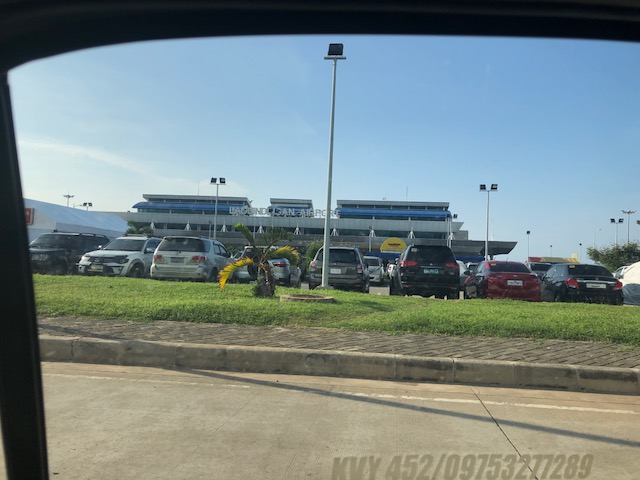 Parking lot across from the terminal building
 Driveway at the departure area – taxis and other PUVs use this driveway
 Driveway for private vehicles
 Check-in counters
 Cebu Pacific counters
 Philippine Airlines counters
 View of the airline check-in area as we ascend to the departure level via escalator
 Pre-departure area
 Pre-departure area
 Pre-departure area
 Shops at the terminal’s pre-departure area
 Charging station at the pre-departure area
Not shown in the photos are other shops and restaurants in the pre-departure area including the Seattle’s Best Coffee and Kenny Rogers Roasters. There are also good souvenir items for sale at the many concessionaires at the pre-departure area. Among those to be considered for some last minute shopping are food and beverage items like peanuts, pastries and coffee. There’s also a shop selling meat products, which I highly recommend. They have hams and bacon for sale, which they package well so it survives the trip all the way to your home.
–
On the viability of bike lanes in the Philippines
I have been inserting topics on complete streets in the undergraduate and graduate courses I teach at university. Some students have also been researching on best practices and designs that they are supposed to apply to real world situations in Philippine cities. The results are still generally mixed but I like how my undergraduate students are able to grasp the concepts and apply them in the short time they have been ‘exposed’ to the concept. I thought my graduate students, most of them practicing engineers, found it more challenging to unlearn many of the things about street design they have learned from their schools including UP and DLSU, which I thought would have the more progressive programs in Civil Engineering.
Here are a couple of helpful articles that explain the business (economic) case for bike lanes. After all, the most persuasive arguments to convince LGUs to take on bike lanes will always be economics or business. That’s also how you can probably convince the business sector to pitch in and lobby for more active transport facilities especially in the downtown areas.
Jaffe, E. (2015) The Complete Business Case for Converting Street Parking Into Bike Lanes, http://www.citylab.com, https://bikeleague.org/sites/default/files/Bicycling_and_the_Economy-Econ_Impact_Studies_web.pdf?fbclid=IwAR2RDPGy52R27zmpOAFVbiEWGZtMSjyr1Z3Kf56oPVoPI6LUfdreDWpBM5E [Last accessed: 11/1/2018]
Flusche, D. (2012) Bicycling Means Business, The economic benefits of bicycle infrastructure, http://www.bikeleague.org, https://bikeleague.org/sites/default/files/Bicycling_and_the_Economy-Econ_Impact_Studies_web.pdf?fbclid=IwAR2RDPGy52R27zmpOAFVbiEWGZtMSjyr1Z3Kf56oPVoPI6LUfdreDWpBM5E [Last accessed: 11/2/2018]
One issue often brought up by opponents of bike lanes is that there are few references for bike lane design and operations in the country. Perhaps the only really comprehensive example is Marikina City though I know for a fact that the last three of their mayors (yes, including the incumbent) is not so keen about their bikeways. In fact, one mayor tried to dissolve the city’s bikeways office only to relent and allow it to exist but under one of its departments. Iloilo City is supposed to have some bike lanes but it is still more like a landscape architecture experiment than a fully functional system (sorry my katilingbans and panggas). And so we look to the more comprehensive experiences abroad for evidences of viability and success. The bottomline here is that I would rather ask how it can succeed here than state why it will not.
Professorial Chair Colloquium of UP’s Institute of Civil Engineering
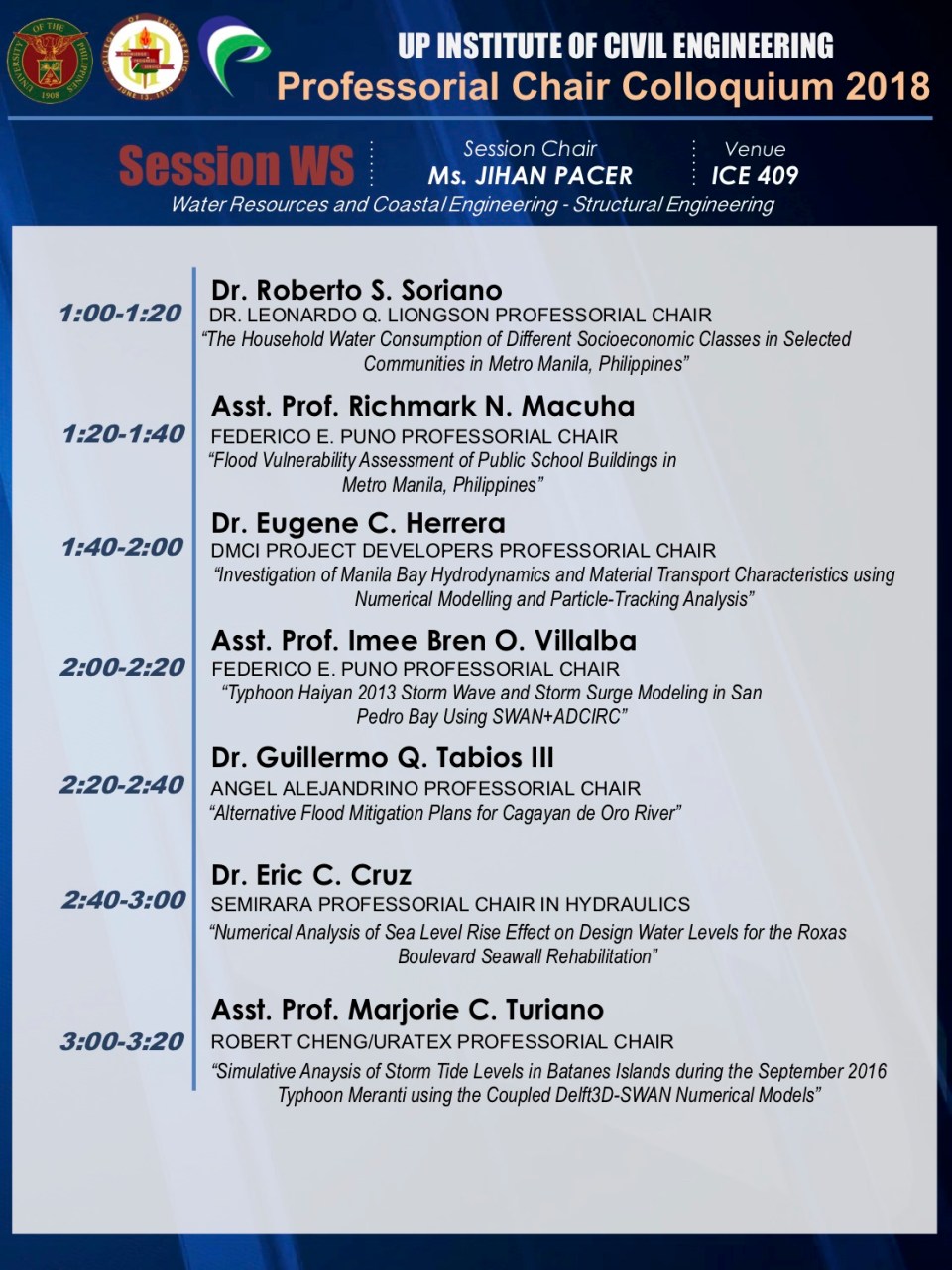
We start the month of November with an announcement. This is for the Professorial Chair Colloquium of the Institute of Civil Engineering of the University of the Philippines Diliman, which will be held on November 16, 2018 (Friday). The sessions are open to the public and surely there will be interesting topics not just regarding transportation but on the other fields as well. Following are information on the lecture topics:




–
Progress of Line 2 Extension station construction
This is another one of those quick posts. Here are a couple of photos showing the progress of the construction of the stations of the Line 2 Extension:
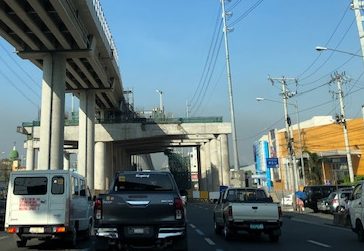 The Masinag Station under construction as viewed from the westbound side of Marcos Highway. That’s SM City Masinag on the right. The structure is very visible as you descend Sumulong Highway near the Valley Golf gate.
 Here is a blurry shot of the Emerald Station as viewed from the eastbound side of Marcos Highway. That’s Robinsons Metro East on the right side.
While the stations’ construction seem underway, a colleague pointed out that there seems to be nothing going on with the rest of the system including the electrical and the tracks for the extension from Santolan to Masinag. This is along my daily commute and I also haven’t seen anyone working on the tracks. Perhaps it hasn’t been bid out or there’s a timetable for this somewhere?
–
Partas’ Deluxe and Ms. Universe Buses
Colleagues are currently undertaking a study for the Partas Bus Company. The management was gracious to tour them around the current terminal in Cubao that is proposed for some major renovations. Part of the tour was taking them inside one of their new deluxe buses, and the bus used in the recent Ms. Universe pageant held in Manila. Here are photos of the interiors of those buses.
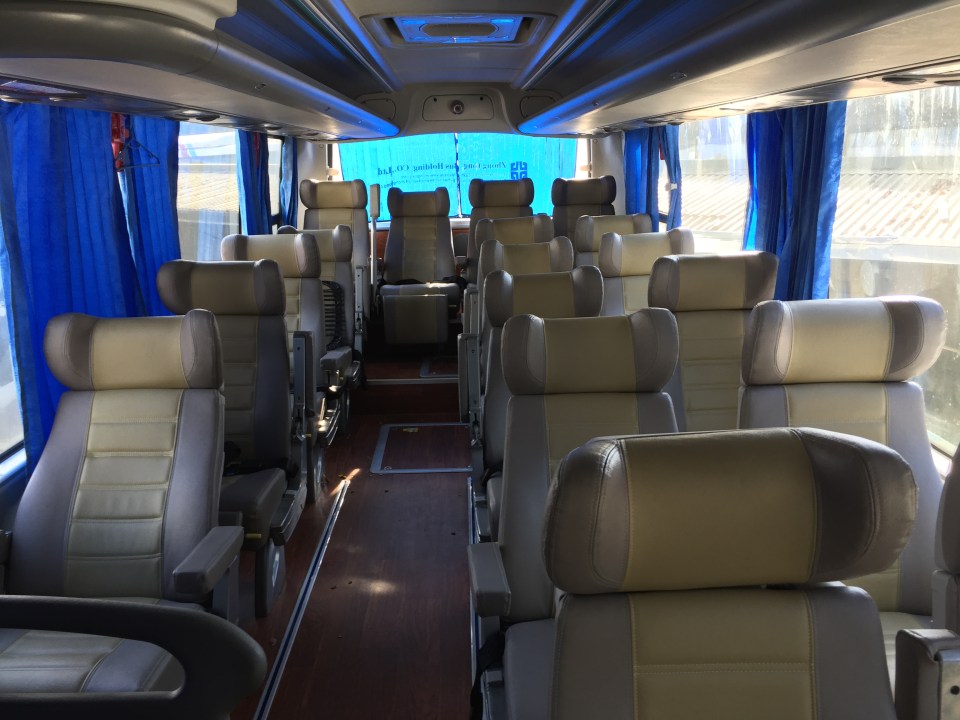 Interior of a Partas deluxe bus
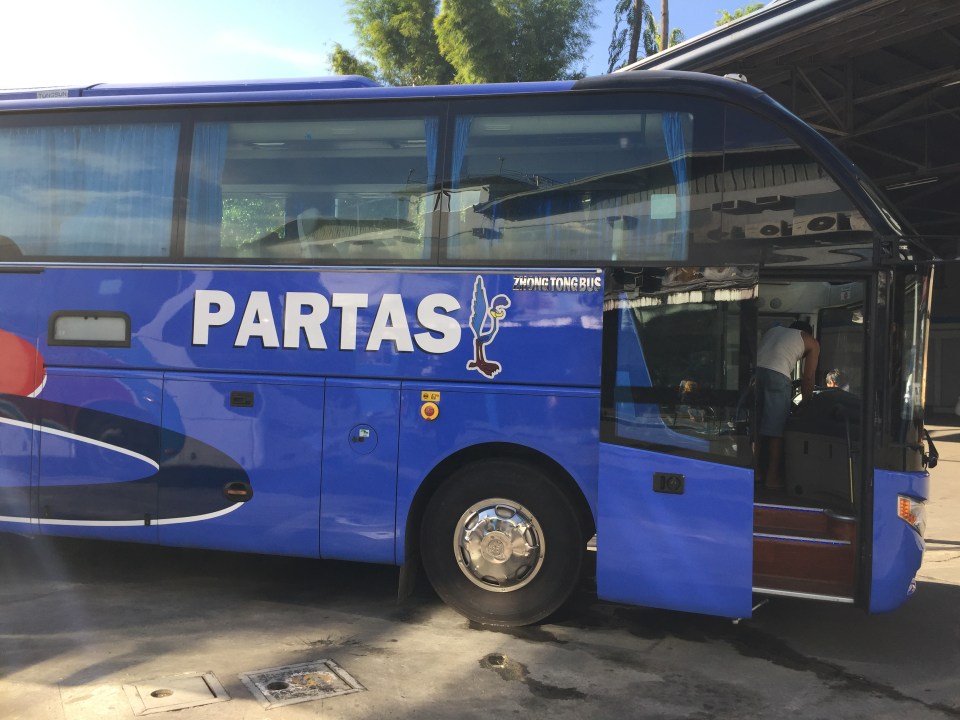 One of the company’s deluxe buses
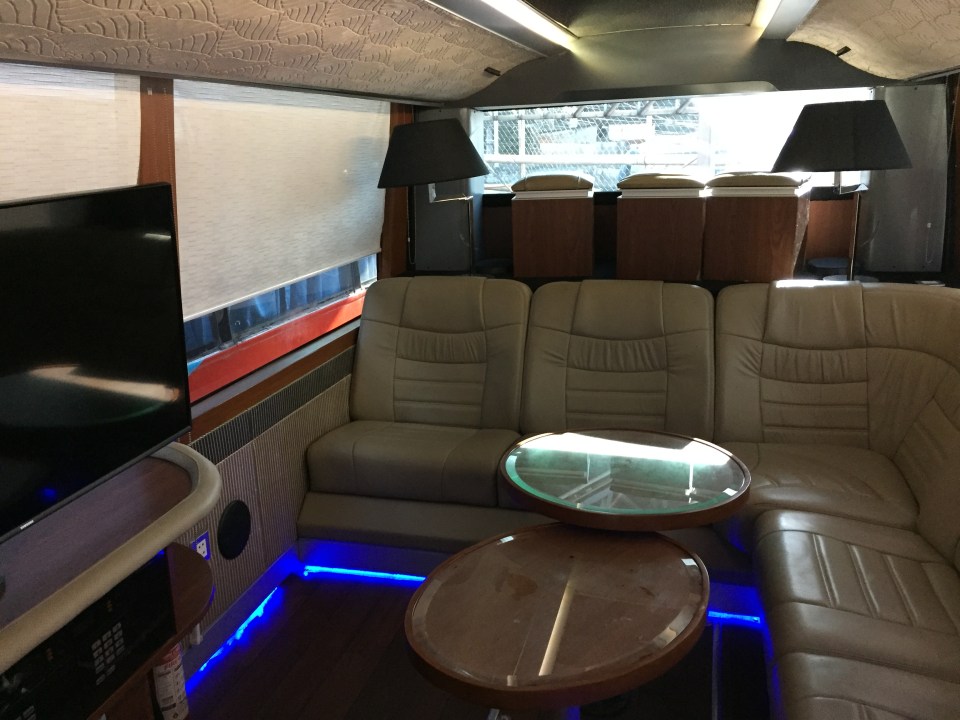 Interior of the “Ms. Universe bus”
 Another look at the interior, which includes an entertainment area
 The bus has a bar for passengers who might want to prepare some food and drinks while traveling
 The leather seats of the “Ms. Universe bus” look comfortable and perhaps perfect for long trips like those typical running between Manila and Vigan in Ilocos Sur (northern Philippines).
 Regular buses flanking the “Ms. Universe bus”
–
Politics aside?
[Caution: This is an opinion post. Skip it if you don’t like my views on politics.]
I am often asked about my political affiliations. People who ask this are usually those who don’t know me (hindi kami ‘close’) and base this likely from my recent posts on social media or perhaps interviews I have granted to print and mass media. I cannot really say I am for any one particular party or group but definitely detest certain persons and politicians who have been proven to be corrupt or associate themselves with the former. But that doesn’t mean I won’t work with them. After all, whoever is in power and wields it should be engaged at least for some good to come out of the engagement. We can cast our votes in elections but we have no control of who will win (by hook or by crook?) and who gets appointed by the winners to decision- and policy-making posts in government agencies.
No, this is not a case of selling out. I am very much aware of the saying the “everyone has his/her price.” I know I have mine and so avoid situations where I have to deal with someone or some entity that will probably lead to my corruption. Principles-wise, I would like to believe that I have so far been successful in getting out of potentially sticky situations including getting appointed to so-called sensitive posts. And so I do what I can to try to contribute to alleviating transport and traffic problems including providing what I regard as constructive criticism of agencies as well as people who are supposed to be working for improving transportation in this country. Problem is, some people cannot take criticism in whatever form and misinterpret this as what they term as “opposing progress” or being “resistant to change”.
Let it be clear that I am not ‘dilawan’, ‘pulahan‘ or whatever color it is that’s supposed to represent politicians, political groups or parties. My colours are those of the Philippine flag and what it represents, which is the interest of the Filipinos. I am not ‘bayaran‘ nor would I want to be one. I am indebted to the Filipino people for my education and for my primary income (I am employed by the government.), and not to any particular persons or political groups.
–
On good transit stop designs
We interrupt our regular programming to share this good reference for designing bus stops:
Transit Center (2018) From Sorry to Superb Everything You Need to Know about Great Bus Stops, transitcenter.org, http://transitcenter.org/publications/sorry-to-superb/#introduction [October 2018]

This is a new publication and though the focus is on bus stops, the principles and guides presented are very much adaptable and applicable to other public transport modes as well, particularly the road-based modes we have in the Philippines. The article contains a link for those who want to download the entire report.
–
Laguindingan Airport – arrival
A few years ago, Cagayan De Oro’s airport was closed in favour of a new airport located in another town, Lagundingan. My first time to visit Laguindingan Airport was when it was still under construction almost a decade ago. Afterwards, I had not had the chance to visit Cagayan De Oro again to use either the old or new airports. A recent trip to CDO provided an opportunity to finally see the airport and take some photos I could share here. The following photos were taken last July 2018.
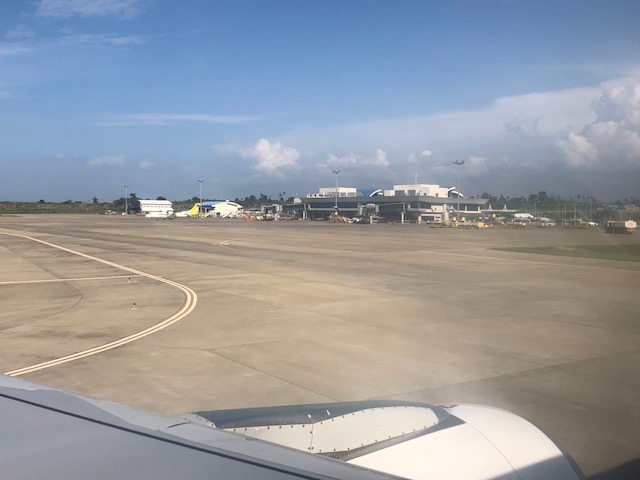 A view of the airport terminal as our plane taxied towards it after landing at the airport
 A view of the terminal as our plane berthed to unload passengers
 Deplaning passengers pass through the airbridge to the terminal building
 Ads for hotels and transport greet arriving passengers
 Passengers file into the baggage claim area
 The baggage claim area only has a couple of racetracks so I assume one is generally for Cebu Pacific and another for PAL. It also means the airport is not equipped (at least for baggage claims) to handle more than 2 flights arriving within minutes of the others.
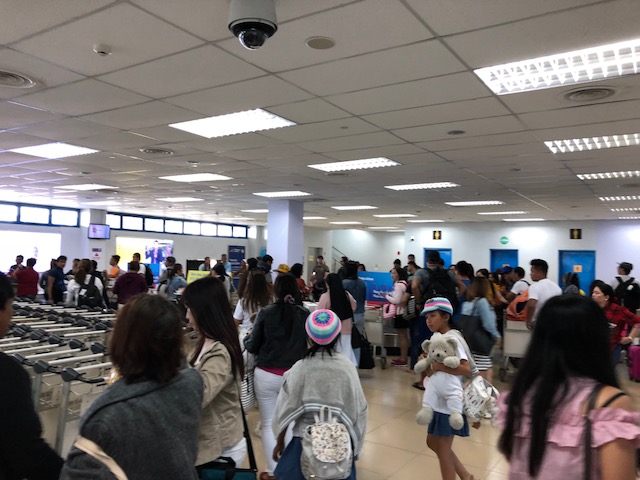 The baggage claim area can get very crowded. These are just fellow passengers from an A320 plane.
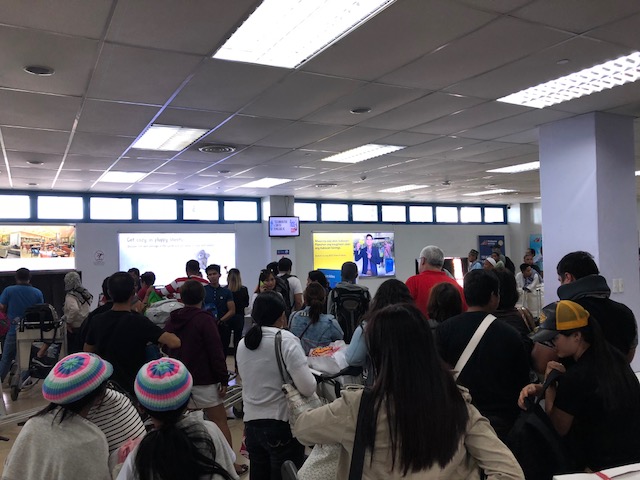 Another photo of the crowded area around one carousel in the baggage claim area
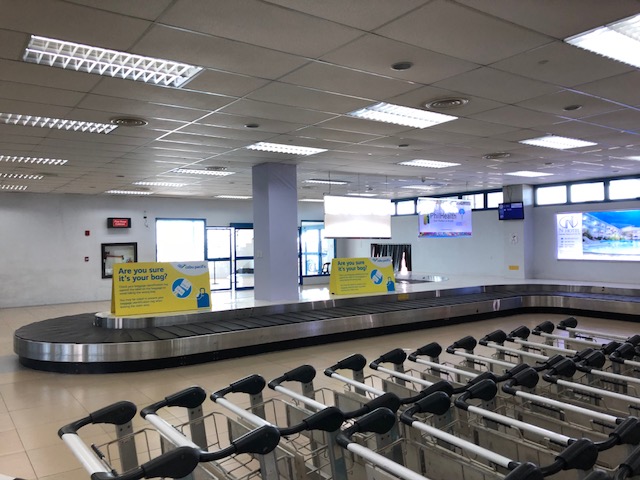 Meanwhile, the area around the other carousel/racetrack is clear of people
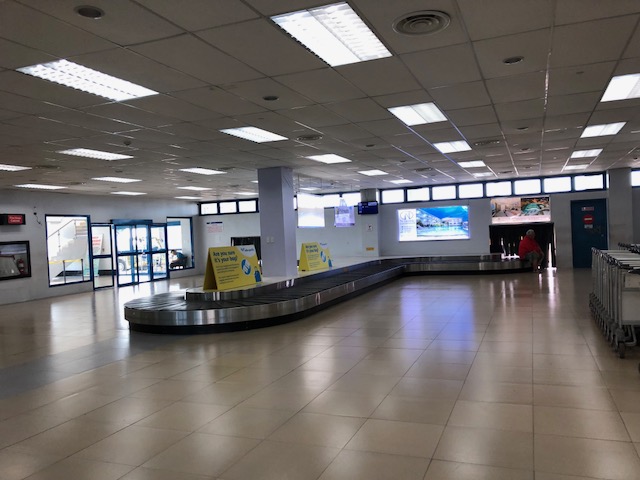 Here is what the baggage claim area looks like when passengers have exited
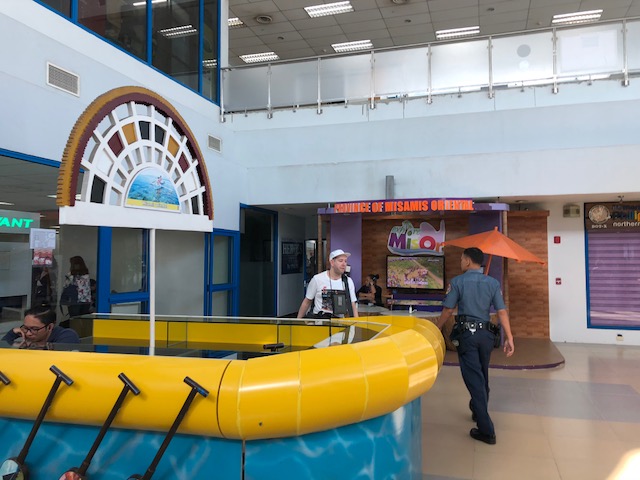 Tourism booths at the airport’s arrival area – one obviously is promoting whitewater rafting, which is quite popular for tourists visiting CDO.
 Tourism booth of the Province of Misamis Oriental
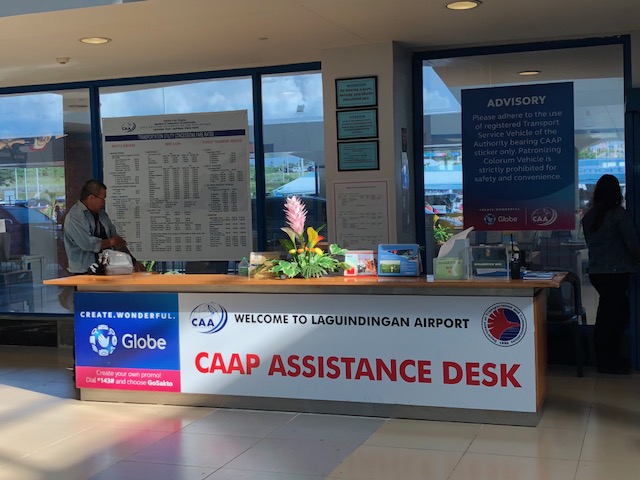 Assistance desk of the Civil Aviation Authority of the Philippines (CAAP), which is generally in-charge of airport operations in the country. This agency headed by an Assistant Secretary-level official is under the DOTr.
 Automatic teller machine (ATM) and a glimpse of the concessionaires at the departure level of the airport terminal
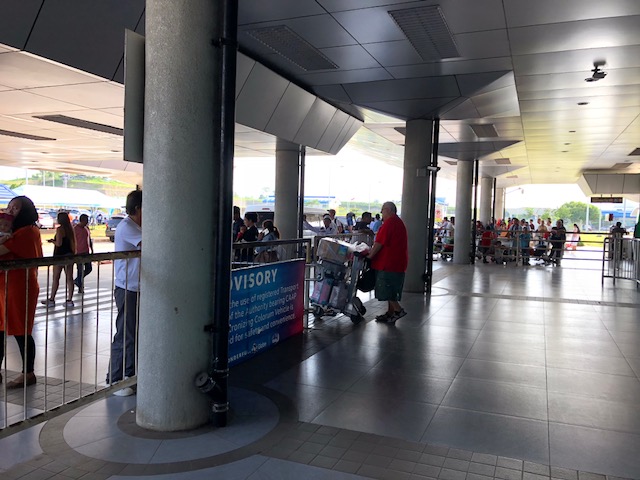 Passengers exiting the terminal
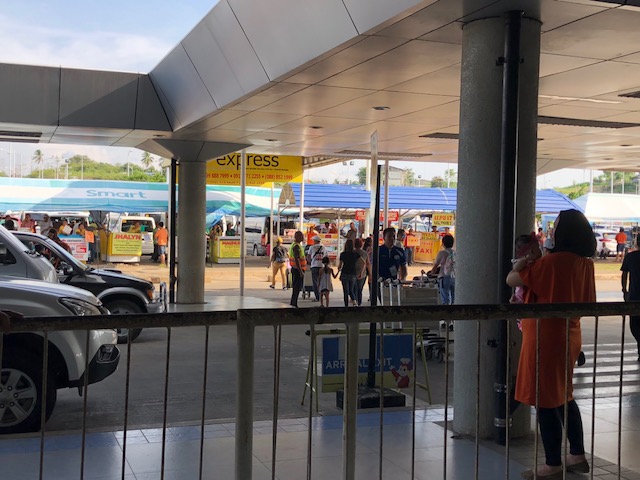 Arriving passengers are greeted by many booths with people offering transportation services between the airport and various destinations including CDO and Iligan City.
 Here’s a view of the terminal building as we walked towards our vehicle.
 The airport’s control tower
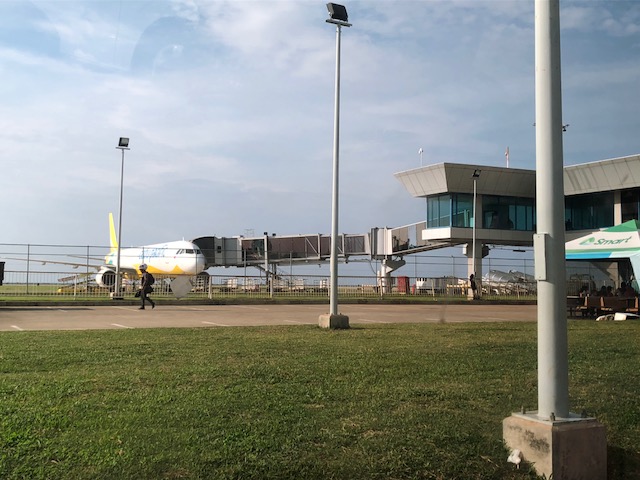 A view of our plane as we drove away from the airport to head for Cagayan De Oro City, which was more than an hour’s travel from the terminal.
More photos on Laguindingan Airport in the next post!
–
On hospital parking spaces
I had a nice view of the parking lot of the hospital where my mother-in-law was staying for a couple of days to recover from a bad case of dehydration. The doctors wouldn’t say it was severe but because Mama was 75 years old, they had to treat her condition. But that isn’t what I’d like to write about in this post. It’s really about parking.
I noticed from my times on hospital watch (relieving my wife who spent the couple of nights with her) that the parking lot didn’t get full during the day. The hospital was a good sized one and generated a lot of trips but mostly those taking public transport (mainly tricycles). But this was more a community hospital than one in the league of the St. Luke’s and Medical City, which generate much more private traffic and requires much more parking spaces.
 A view of the parking lot of Clinica Antipolo
Friends have always made the observation that parking is difficult in the major private (e.g., St. Luke’s, Medical City, Makati Med,etc.) and public hospitals (e.g., PGH, NKTI, Philippine Heart Center, etc.). I agree with these observations as we have our own experiences where it was difficult to get parking spaces for when we go to these hospitals for check-ups or to visit relatives or friends admitted there. For one, these hospitals are the “go to” places for specialists and modern medical equipment, never mind that these are also the most expensive in terms of medical and laboratory/test expenses. I guess that to be a doctor with their practices in these hospitals means a lot and ups the prices of their services? I say that based also on observations that standard tests (blood, urine, stool, etc.) are much cheaper in other hospitals or clinics. Doctor’s professional fees, too, tend to be less expensive for when you consult with them in the ‘minor’ hospitals.
Major hospitals can also be teaching hospitals and I’m not just referring to internships or residents but medical schools hosted by the hospitals. And many did not consider these schools when the hospital buildings were initially built so schools don’t have their own parking spaces and patients, doctors, hospital staff and students end up competing for parking spaces. Medical City, for example, even instituted some parking fee measures to deter long term parking or those who appeared to have attempted to park for free and therefore occupying slots that would have otherwise have been revenue-generating for the hospital.
Of course, there would be those who would be reacting to this situation and say that people going to the hospital should be taking public transportation. Perhaps this is easier said than done for many cases in Metro Manila? I’m not familiar with similar conditions in other cities like Cebu, Iloilo and Davao but perhaps it is not as severe as those in major hospitals in the capital region. Major hospitals in Metro Manila also attract a lot of people from surrounding provinces like Rizal, Bulacan, Laguna and Cavite. Again, this is because of the reputations of these hospitals. Even the current President went to Cardinal Santos Medical Center for his recent check-up.
And so the parking problem will persist unless there are better options for public transportation. Incidentally, ridesharing may have helped ease the parking dilemma since TNVS provides a very good alternative to the private car for such hospital trips. I do know Grab, for example, has booking booths at Medical City, Cardinal Santos and St. Luke’s. I personally don’t think additional parking spaces (or buildings) are required. It would be more like a parking management challenge for these hospitals. And in any case, these parking spaces would be mostly empty and therefore idle at night time and Sundays.
–

