
Home » active transport
Category Archives: active transport
Some thoughts and reflections on transport and the Middle East crisis
Much has been said and written about the ongoing crisis brought about by the US and Israel attacking Iran and the latter retaliating. The prices of fuel have risen rapidly over the past weeks. Consequently, the prices of commodities have also risen. The Philippines is still very much dependent of fossil fuels for transportation with most travel using road-based transport. Even public transportation relies heavily on fossil fuels as buses and jeepneys are mostly using diesel engines. Even paratransit such as trikes and motorcycle taxis use gasoline.
While the energy mix in the country has become more diversified with renewables now having a substantial share, majority of power is produces using coal and natural gas. And so e-powered vehicles are also ultimately dependent on these fuels. Could we have had better transport that could have made our cities more resilient in light of the conflict in the Middle East? Probably, and if we followed and implemented the plans for mass transit systems that were laid out decades ago. Of course, this is already moot and academic given the current situation. The counterfactuals though point to better commuting conditions if projects have not been delayed or shelved.
A colleague and I were just discussing about how MRT 7 could have contributed to the reduction of car use along the Commonwealth Avenue corridor if it was completed according to the original schedule. That was 2019. Even with delays including the impact of the pandemic, it could have been completed a few years ago. If it was operational in 2023, commuters could have already shifted to rail from both private and public road-based transport modes. There was also actually a proposal for a Bus Rapid Transit (BRT) line along Commonwealth about 2 decades ago. That could have been constructed and operational ahead of Line 7 and could have already disrupted commuting preferences along the corridor if it were operated as a true BRT.
There’s just a lot of opportunities already missed that could have alleviated the fuel crisis we have now. Maybe we are really heading towards a bigger crisis when all these price increases lead to a more sweeping increase in the prices of commodities? We hope it doesn’t come to that but we seem to be helpless in this situation where we are caught unprepared for a war we are have nothing to do with.
–
On at-grade crossings and footbridges
Here’s a quick share of an article on how at-grade crossings are generally better and preferred over footbridges:
When Footbridges Cost Lives and At-Grade Crossings Save Them
The article effectively articulates the case for at-grade crossings and presents the facts and references in support of these crossings. I will only add here that context is still important along with an appreciation or understanding of the volume of traffic and occupancy of vehicles along the roads. Commonwealth Avenue, for example, requires footbridges but there should be better designs for these footbridges than the current ones along this highway. I think we lack good designs that we can refer to and this leads to a summary dismissal of footbridges where they are actually most suitable.
–
On street transformations using AI
My social media feed is full of images generated by artificial intelligence (AI). The street transformations are generated using a variety of AI tools. I’ve tried Canva and Gemini in producing similar images of street transformations; an exercise I’ve included in my undergraduate and graduate classes for more than a decade now but using their sketching and software (CAD, Sketch-up, etc.) skills to do the transformations. The photos below show an example of transformation along the University of the Philippines Diliman Academic Oval using Google Gemini.
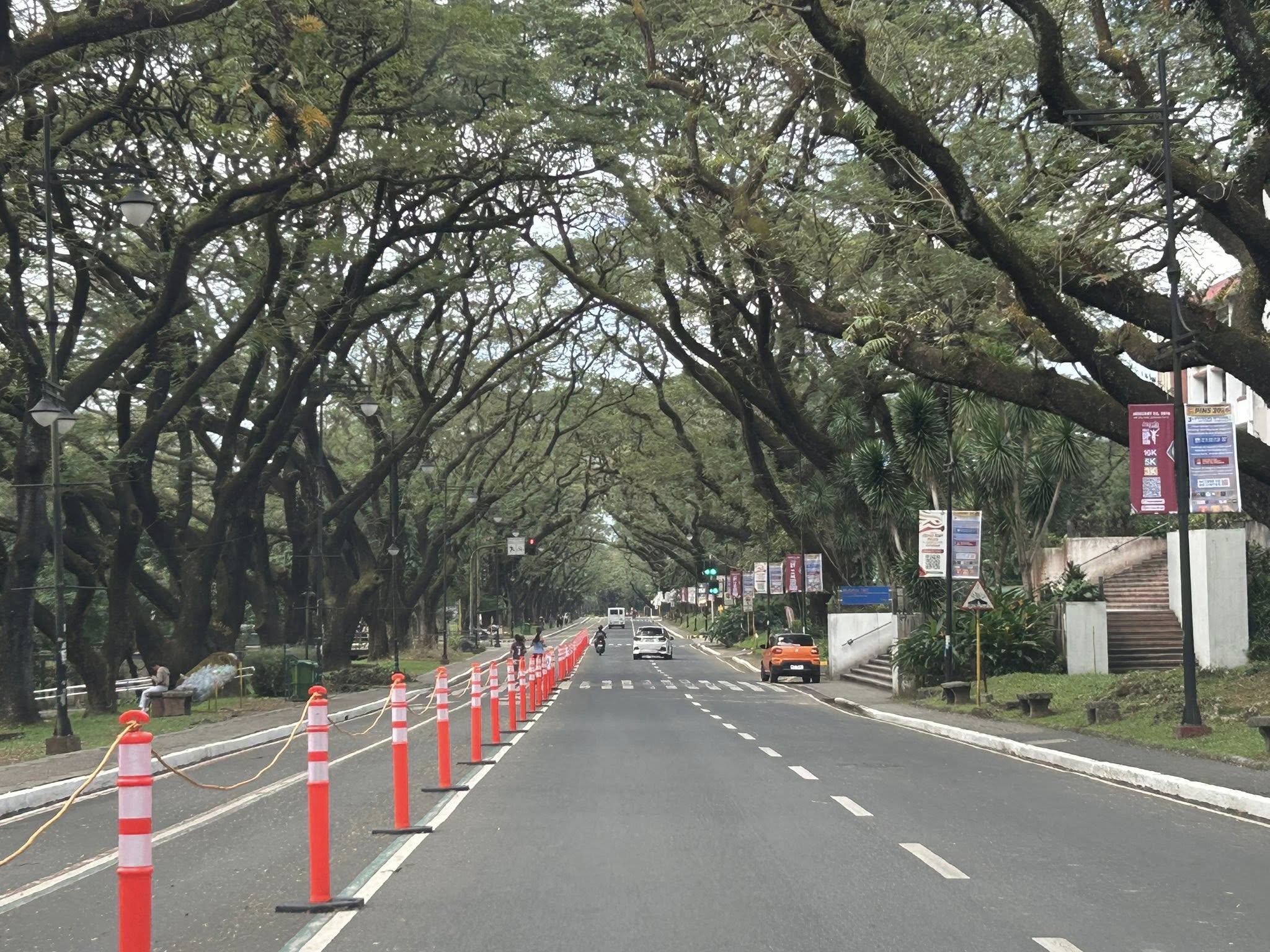 The original photo I took at the UP Academic Oval
 The first attempt at replacing the orange bollards/barriers with something that blended with the campus.
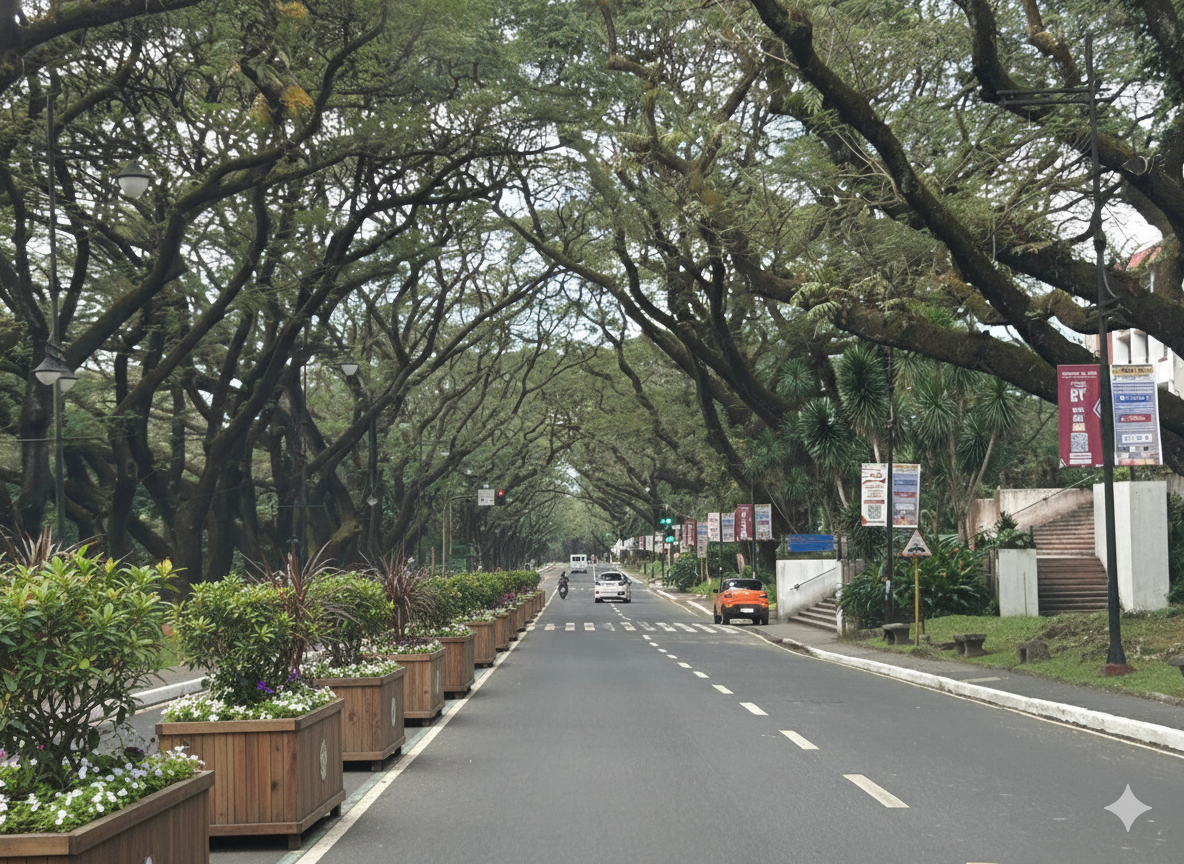 The second attempt showing plant boxes instead of the fence in the previous photo.
I think it’s possible to have excellent transformations of whatever roads or streets there are. One just needs to prompt or instruct the AI well enough to obtain these alternative designs. While the transformations are nice though, context is still important. Many of the transformations circulating on social media call for almost all major streets to be transformed. (Kulang na lang pati expressway gawan ng transformation.) Advocacy is good but context-sensitive solutions require a more constructive and cooperative. It certainly can do without being combative or antagonistic.
–
Just keep on walking
After an eventful end to 2025 and start of 2026, I finally was able to get back to walking. I passed on January 1 as there was a haze that blanketed our area. That was due to the fireworks. With more residents in our village and surrounding areas, there has been an increase in fireworks users the past few years. Last weekend, it was nice to have better air quality for my morning walks.

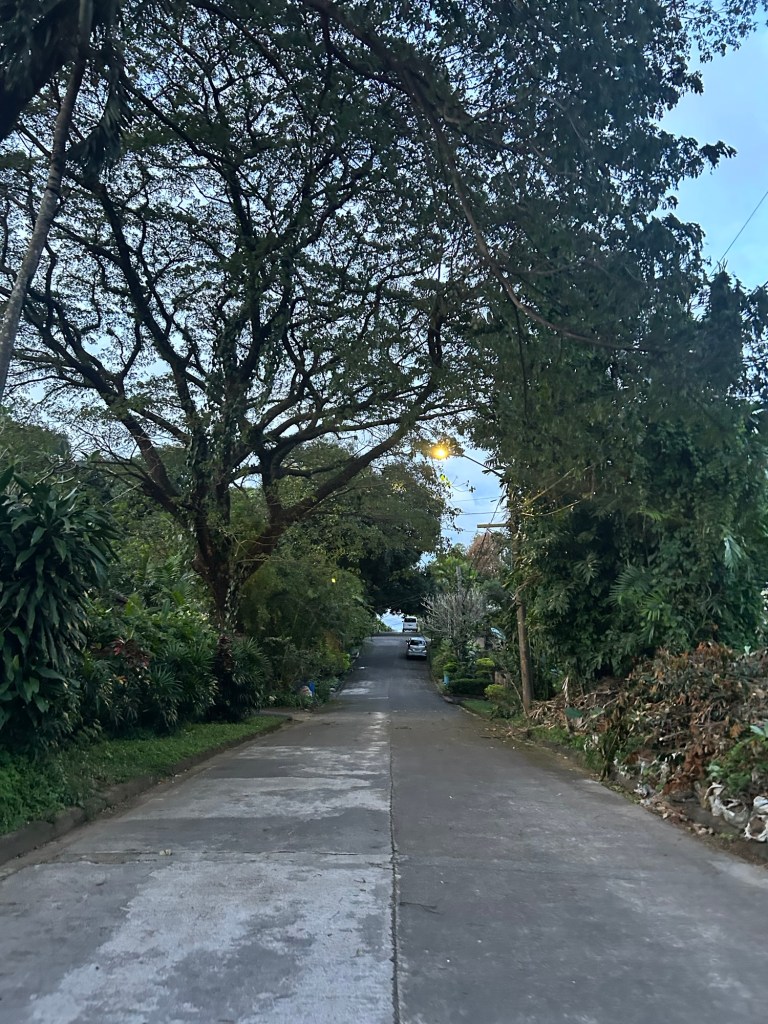
My average step count decreased last year due to a variety of factors including weather. I intend to start strong again this January and hopefully be able to sustain this for the year. It’s really a good thing for my health and wellbeing. And it’s something I would strongly recommend for others- be more active. Set some time for walking whether it’s in the morning, noon or evening.
–
“Nobody Walks Here. It’s Too Hot or Cold or Wet or Dry.”
I’m sharing this article as it provides a clear response to the question about walking under different circumstances. Those circumstances include weather conditions. How many times have we heard people saying “people won’t walk because it’s too hot or rainy” ? Maulan (rainy)! Mainit (too hot)! And yet we find a lot of people walking, even when its extremely hot or the rains are pouring.
Source: “Nobody Walks Here. It’s Too Hot or Cold or Wet or Dry.”
Quoting from the article:
“The human ability to adapt is the key to our spectacular success on this planet. Our problem is that the people who lead our public conversations, our elites of wealth and opinion, are often some of the least adaptable people on earth. And when societies assume that we should listen to those people, we all end up internalizing the message that there’s something wrong with us if we even try to walk…
…Sometimes walking a few blocks is the key to liberty and prosperity in someone’s life. Most people do what makes sense in the place where they live. Only if we recognize that will we make the investments in urban design to make walking more bearable in extreme weather. And only then will our cities include everyone.”
Here’s another quote and a take on what certain people say that often influences our choice for walking:
“The functionality of a city, and of its transport system, arises from the sum of everyone’s choices about how to travel, not just the preferences of elites. When elites make pronouncements about what “people” will tolerate, while really speaking only of themselves, they mislead us about how cities actually succeed. They also demean the contributions of the vast majority of people who are in fact tolerating extreme weather to do whatever will give their lives meaning and value.”
–
The need to be alert while walking, jogging or running in campus
With the recent bad weather, I noticed a big decrease in the number of visitors to the UP Diliman campus. Most of these walk, jog or run for health or recreation. Many of these are often lost in their conversations or too focused on their activity that they become unaware of the dangers of moving under large trees whose branches might fall on them anytime. It is especially true during the wet season and when there are typhoons or storms. The water and wind often bring down the older branches and one can get serious injuries perhaps even die should a large branch fall upon them.
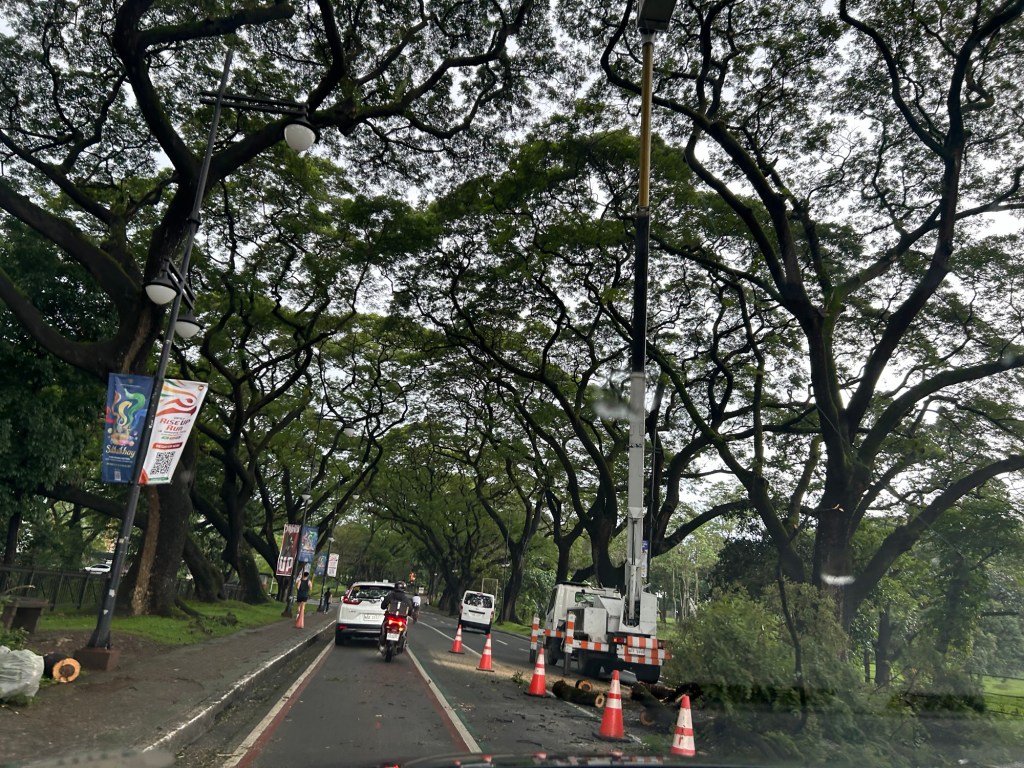
Walkers, joggers and runners (let’s also include cyclists/bikers) need to be aware of these dangers. I myself had a few near misses in the past while walking around the Academic Oval. I know people who have been injured by falling branches while they went around.
–
The need to be alert while walking, jogging or running in campus
With the recent bad weather, I noticed a big decrease in the number of visitors to the UP Diliman campus. Most of these walk, jog or run for health or recreation. Many of these are often lost in their conversations or too focused on their activity that they become unaware of the dangers of moving under large trees whose branches might fall on them anytime. It is especially true during the wet season and when there are typhoons or storms. The water and wind often bring down the older branches and one can get serious injuries perhaps even die should a large branch fall upon them.
Walkers, joggers and runners (let’s also include cyclists/bikers) need to be aware of these dangers. I myself had a few near misses in the past while walking around the Academic Oval. I know people who have been injured by falling branches while they went around.
–
Still towards a car-oriented future?
Saw this photo being circulated on social media.
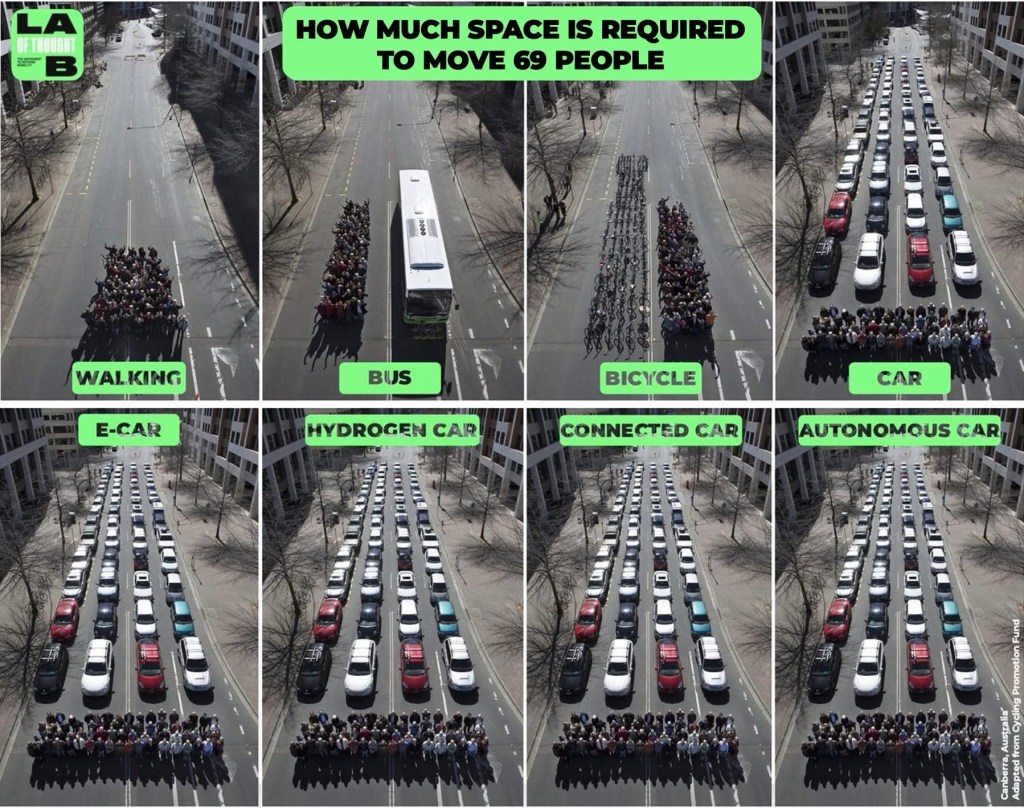
Again, there are many versions of this including the original from a town in Germany that compared 50 people on cars, a bus and on bicycles. The bottom line in the latest images (do these qualify as memes?) is that all these efforts in developing the car, whether regarding the engine or fuel, or perhaps autonomy or connectivity related, ends up being still car-oriented or car-centric. I
t doesn’t really solve our transport problems despite what is being packaged as environmentally friendly. The discussions about this is timely and relevant as electric and hybrid cars are now quickly replacing conventional ones. And there’s a kicker for those driving in Metro Manila, hybrid and electric vehicles are exempted from the travel demand management scheme that is number coding.
How do we veer away from this temptation from technology? How do we keep mode shares in favor of active and public transportation? How do we influence mode choice for the latter options?
–
Early morning walks
I’ve been waking up earlier so I can do my morning walks before leaving to drop off our daughter to school. These days, what were bright mornings at 5:30 AM are now dark. The nights are longer as we approach December. Here is the view along my walking route.
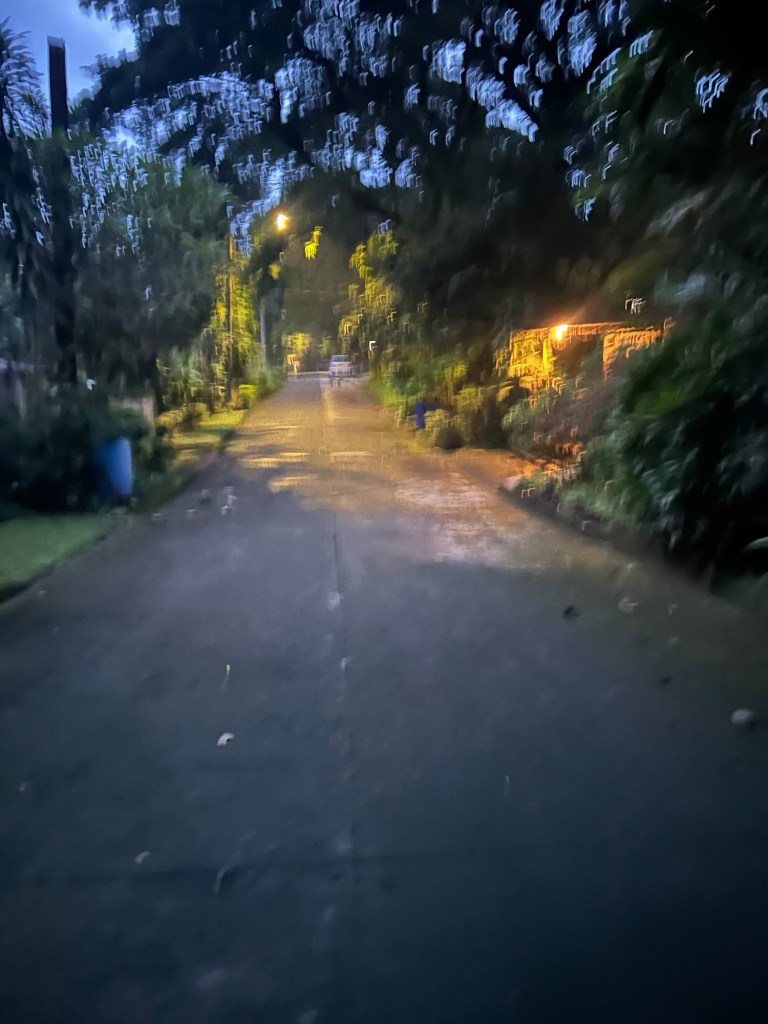
Unlike previous mornings when I can do at least 3 rounds along my usual route, I now can only do at most 2 rounds. I guess I have to wake up earlier to add 1 or 2 rounds. Afternoons to evenings are usually rainy and prevents me from walking. I treat this as a bonus if ever we are able to take afternoon or evening walks.
–
 Caught (up) in traffic