
Home » Air quality (Page 5)
Category Archives: Air quality
Sunday smog
We were staying at a hotel over the weekend and our room afforded us a good view of the cityscape to the left and seascape to the right. We weren’t able to get a good view of the sunset as we were practically facing south-east and the orientation of the window prevented any, even slight view of what is always a nice Manila Bay sunset. We did expect to see the sunrise the following morning.
As the sun came up, we took this photo of the cityscape. Closer to us were buildings in Pasay City while those farther away were buildings in Bonifacio Global City. I remembered reading somewhere that what makes our sunsets so colourful or spectacular are the elements in our atmosphere. Air pollution tends to bring the most dramatic colors for sunsets and I believe that’s in a way also applicable to sunrises. I took a snapshot of the cityscape from our hotel window expecting the worst for what could be the equivalent of an exposed negative in the old days. Instead, I got the pretty decent photo below showing the sunlight reflecting off the haze around Metro Manila and giving the cityscape that eerie look on a Sunday morning.

There’s a joke that is often recycled concerning air pollution and air quality. According to this joke, the Philippines doesn’t need to worry about air pollution since every year it is visited by many typhoons. These typhoons passing through the country sweep away the pollution thereby making the air around us cleaner. This is actually true and one need only to get outdoors after a typhoon to smell the fresh air. Of course, it doesn’t take long before the smog returns and therein lies the punchline to the real joke. At the rate we are going in terms of vehicle emissions alone, we would probably need at least a typhoon every week for the entire year if we wanted clean air to breathe. The dry seasons would probably be the worst in terms of poor air quality. And so we must see that the joke is on us and air quality will only continue to deteriorate if we do not act now and do not pitch in for the fight for clean air.
–
The Philippines’ National EST Strategy – Final Report
Friends and some acquaintances have been asking about whether there is a master plan for sustainable transport in Philippines. There is none, but there is a national strategy that should serve as the basis for the development and implementation of a master plan, whether at the national or local level. This strategy was formulated with assistance of the United Nations Council for Regional Development (UNCRD) through the Philippines’ Department of Transportation and Communication (DOTC) and Department of Environment and Natural Resources (DENR), which served as the focal agencies for this endeavour. The formulation was conducted by the National Center for Transportation Studies (NCTS) of the University of the Philippines Diliman. For reference, you can go to the NCTS website for an electronic copy of the National Environmentally Sustainable Transport Strategy Final Report.
 Cover page for the National EST Strategy Final Report
–
A study on a long-term transport action plan for ASEAN
The National Center for Transportation Studies of the University of the Philippines Diliman participated in the project “Study on the Long-Term Action Plan for Low Carbon Transport in ASEAN.” The study was funded by the Nippon Foundation and implemented by the Institution for Transport Policy Studies (ITPS) and Clean Air Asia with experts coming from ASEAN countries including Indonesia, Malaysia, the Philippines, Thailand and Vietnam, and Mizuho of Japan, which led the development of the Backcasting and Visioning Tools employed in the study. Detailed case studies were performed for Indonesia through the Universitas Gadjah Mada and for the Philippines through the University of the Philippines Diliman.
The Final Symposium for the study was held last February 20, 2014 at the Hotel Okura in Tokyo, Japan. A link containing information on the study, the symposium program, information on speakers, and presentation files are hosted by the Japan International Transport Institute, which is affiliated with ITPS.
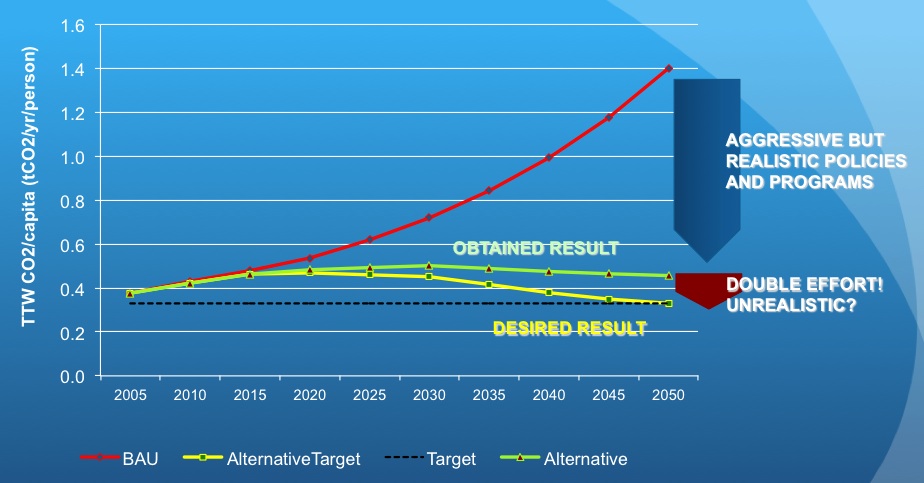 Graph of the result of backcasting for the Philippines using available transport data, policies and other information on various socio-economic and transport factors. (Image capture from the presentation by UP’s Dr. Regin Regidor)
–
Other issues on second hand imported vehicles
Much of the discussions regarding imported second hand vehicles focus on issues of taxation (customs) or registration and allegations of smuggling. The entry of used vehicles and their significantly lower-priced sales have been issues particularly to the established automobile manufacturers and dealers in the country. Importers and dealers of vehicles coming from these special economic zones/free ports claim that they are serving people who want to own a vehicle but couldn’t afford brand new or even second hand vehicles. While this may be true for some cases where regular cars, vans or even SUVs are concerned, the perception is that these importers and dealers are mainly serving a demand for luxury vehicles like sports cars, limousines and high end SUVs from prominent brands such as Audi, BMW, Lexus, Mercedes Benz, Porsche, and Hummer, and even Ferrari and Lamborghini.
On the surface, the claimed benefits to people seem an acceptable and even noble intention. However, this is further from the truth and there is the strong opinion that all this is really just for money, plain and simple. It is also not enough justification for the negative impacts of these used vehicles, which do not go through a process of being tested for compliance with emission standards as well as for safety. The latter concern is for vehicles that undergo “conversion” from their original right hand drive set-up to become left hand drive vehicles, which are the norm in the Philippines. There is also the issue of fuel efficiency for these used vehicles and the maintenance required for these to stay in A-1 condition. All these concerns stack up and clearly show the folly of the importation of used vehicles through the economic zones.
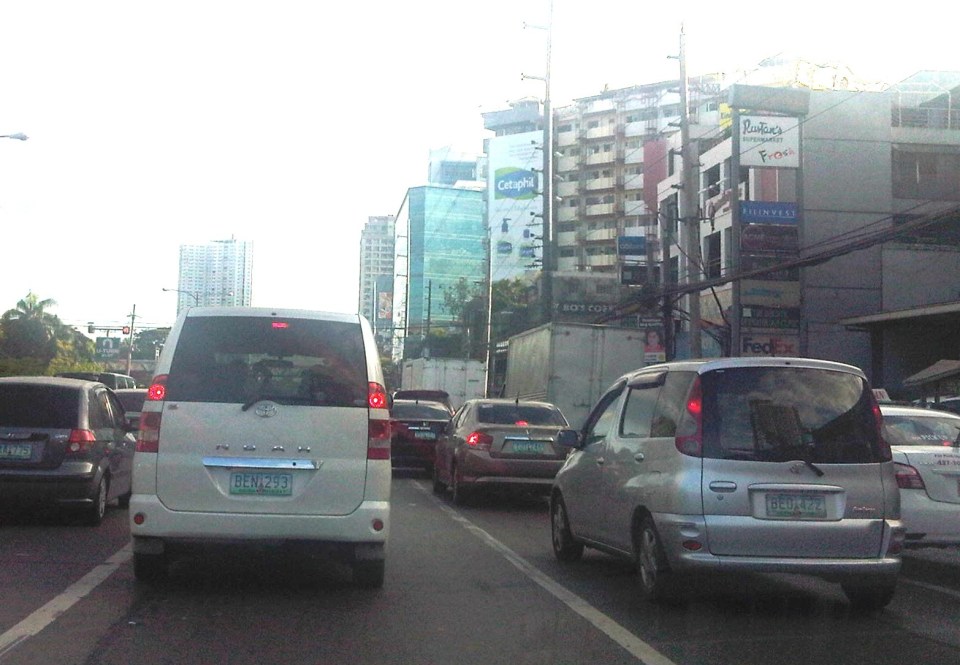 I saw these two vehicles along Katipunan as we were coming from a meeting one afternoon. Both models were not sold by Toyota Motor Philippines and conspicuously have license plates bearing the letter “B” as a first letter, indicative that they were registered in Region 2. Region 2 is where Port Irene, Cagayan is located and which is being alleged as the source of a lot of used vehicles linked to anomalies in taxes and registration. More serious are concerns pertaining to emissions, safety and fuel efficiency.
–
Air quality and road safety concerns for public transport
While traveling home one late afternoon, I couldn’t help but take a quick photo of a jeepney in front of me that was belching smoke while also carrying several people as sabit (hangers). Though a bit blurry, the photo still shows clearly the cloud of smoke coming out of jeepney’s tailpipe and the three people hanging behind the vehicle. Not obvious from the photo are the speed and lateral motion of the jeepney as it traversed this section of Marcos Highway.
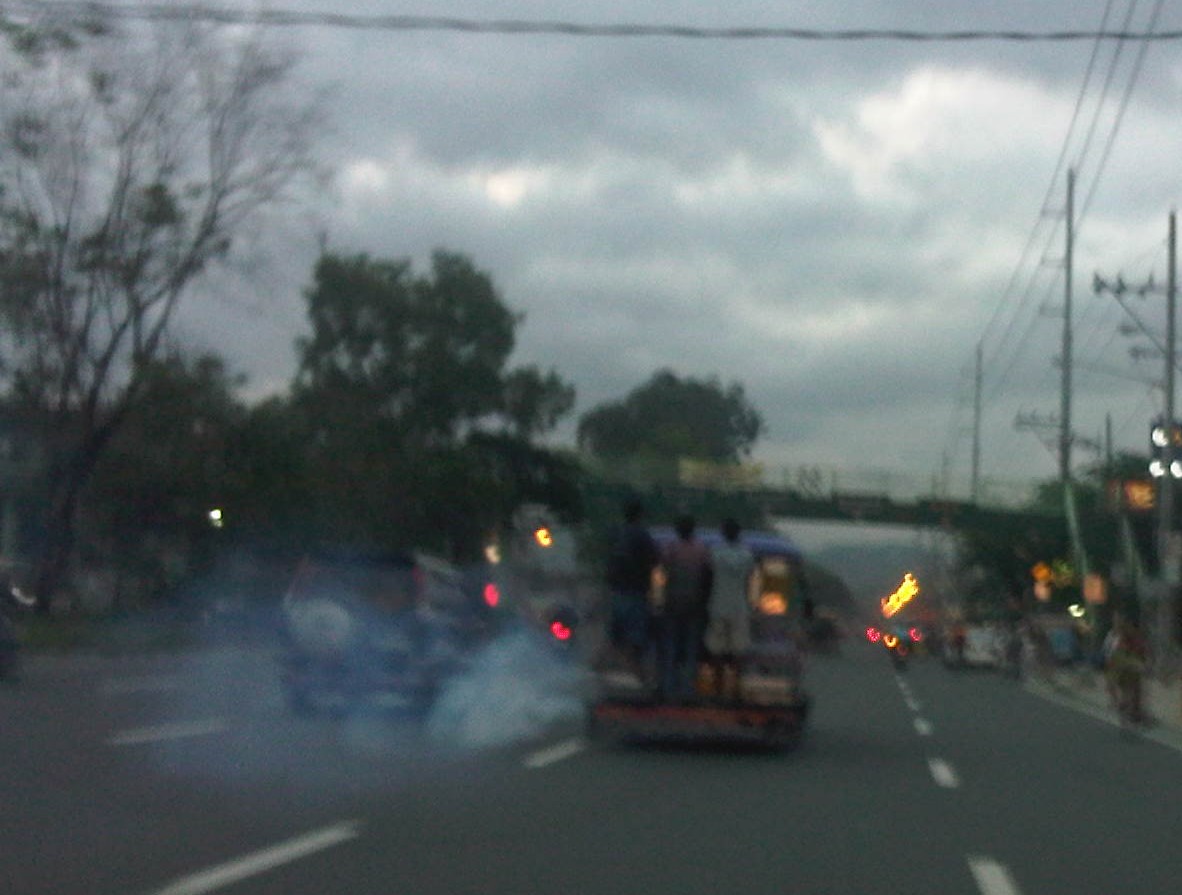
This is a scene we see everyday in our streets despite initiatives or efforts to address problems pertaining to vehicle emissions and safety. The Clean Air Act while enacted more than a decade ago has not been effectively implemented for vehicles. A lot of vehicles are able to register or renew their registrations without really going through a proper emissions test (or smog test for those in the US). “Non-appearance,” the term used for people going through the motions of a test but skipping the measurement itself while getting print-outs stating the vehicle “passed” the test is prevalent throughout the country.
The Land Transportation Office (LTO) has experimented with a lot of schemes to address the problem. These includes the requirement of a photograph showing the actual performance of the emission test on the vehicle. More recent was an initiative where RFID units were supposed to be installed/attached to vehicles and these would be used to ensure that emission tests really were conducted prior to registration. However, with very few Motor Vehicle Inspection Stations (MVIS), the LTO has no choice but to delegate emission testing to private emission testing centers (PETCs). The long standing suspicion, however, is that most of these PETCs collude with vehicle owners and fixers within the LTO to maintain a status quo in “non-appearances” and non-compliance with emission regulations.
Local governments have pitched in with their mobile anti-smoke belching units (ASBUs). In Metro Manila, many cities including Quezon City, Pasig City and Makati City have multiple ASBUs allowing them to set-up several stations along roads in their jurisdictions. These are usually seen along busy roads with policemen assisting them in flagging down vehicles (mostly trucks) observed to be smokebelchers. These vehicles are tested and penalties are imposed on emission regulations violators. The equipment of these ASBUs, however, are only for diesel engines and so are operations of these mobile units are limited in scope from the start. There have also been allegations that some ASBUs have been taking advantage of erring drivers resulting in bribery so as not to be issued violation tickets and penalties.
The bottom line for most cases of emission violations is that most violators are not properly educated about emission regulations including the requirement for them to pass emission tests at any time and not during the registration process only. This is a fact that most drivers or vehicle owners do not understand or choose not to understand, usually because of maintenance cost implications. Nevertheless, we will continue to be in the losing end of the war against air pollution if we cannot properly enforce provisions of the Clean Air Act, particularly for mobile sources that contribute most of the air pollution we experience in this country.
–
Better air quality conference
The Better Air Quality 2012 Conference comes back to Hong Kong this year and is an annual event organized by the Clean Air Asia, which was formerly the Clean Air Initiative for Asian Cities (CAI-Asia), attended by government leaders, policymakers, NGOs, the academe, private companies and other stakeholders. It is actually my first time to attend the conference though colleagues have participated in the past. This year I am participating as a transport expert and will be involved in two events – a BAQ pre-event and a session during the conference itself.
The pre-event to be held at the Hotel Nikko is on “Long Term Impacts of Low Emission Transport Policies and Actions in ASEAN” while the session in the conference is on “Transport, Energy and Emissions in 2050: Implications for Asia.” These are related as they are part of the same project implemented and supported by CAI-Asia, the Institution for Transport Policy Studies (ITPS) and the Transport Research Laboratory (TRL). There are five of us from various ASEAN universities including friends from Gadjah Mada University (Indonesia), University of Malaya (Malaysia) and Thammasat University (Thailand). I’m looking forward to a very productive conference and will post again soon about this project that we have been working on since last year.
 Metro Manila smog visible in the background of this photo of our plane to Hong Kong
–
Carbon footprint accounting tool development
The French Development Agency (AFD) is supporting the capacity and capability building for Greenhouse Gas accounting for transport projects in the Philippines through a project connected with the current initiatives on Bus Rapid Transit (BRT). Part of their engagement is the development of a tool for assessing carbon footprints of transport projects that can easily be used by officials and staff involved in evaluation work. Consultation seminars were conducted last July with various agencies and particularly the Department of Transportation and Communications (DOTC). And technology transfer is being undertaken through the National Center for Transportation Studies of the University of the Philippines Diliman, which will also be tasked with sharing the knowledge and providing training for the use of the tool for other users as well. A series of trainings were recently conducted by the consultant, Carbone 4, a Paris-based firm that was engaged by AFD for the project.
 Julien Blanc of Carbone 4, the firm appointed by AFD to develop the GHG accounting tool, explains the features of the software.
 NCTS Fellows, staff and graduate students participated in Day 1 of the training. Days 2 and 3 involved participants from various government agencies invited for the 1 day training.
 Everyone was required to have a computer to have hands-on experience on using the tool with exercises provided by Julien.
 In certain cases, Julien had to help out when some features did not work on some of the computers or when some participants had different results from what was expected from the exercises.
 The tool is MS Excel-based and employs macros for calculations and to produce the graphs illustrating outputs such as fuel efficiency profiles for vehicles.
The tool is not yet completed as there are still features to be included but it is already a working version that allowed us to input values and manipulate the tool for familiarity. The tool was developed using MS Excel and employs macros for calculations and the production of graphs to illustrate outputs such as comparative fuel efficiency profiles for vehicles having different engines. The tool should be compatible with computers running the Windows or OS-X (Mac) systems.
–
Morning and afternoon smog
I was meaning to upload these two photos taken during the same day but one in the morning and the other in the afternoon. The photos were supposed to show the quality of the air we breathe based on the smog. The band of brown that is the smog over Metro Manila is clear in the first photo while the second photo seems to be clearer. The operative word there is “seems” because although the band does not appear in the photo, it does not mean the pollution is gone.
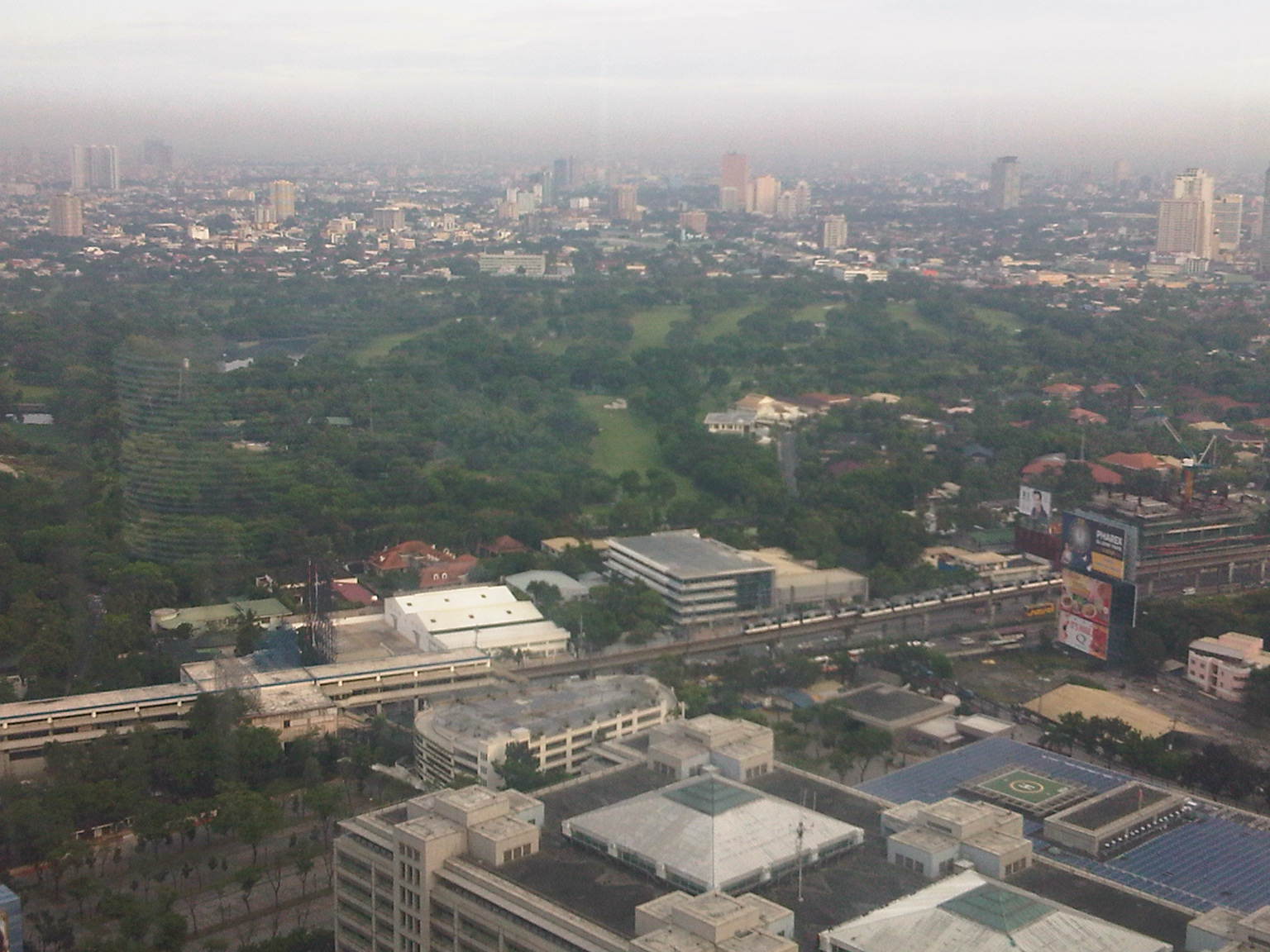 Before – photo taken during the morning at 6:43 AM
 After – photo taken in the afternoon at 2:01 PM.
One shouldn’t be fooled by the second photo where it appears as if the smog has been dispersed or that the pollution is gone. On a real clear day, one should be able to see the Manila Bay in the horizon and not the bright white seen in the second photo. If my science is correct, this bright white is actually the dispersal of light due to the same smog or haze that is above us but which we cannot discern with our eyes. I think the term is “photo chemical smog” that I remember picking up from health advisories broadcast on radio while I was living in Japan in the 1990s. The reality is that there is much pollution and while this is not visible from the ground, it is clear when one is in the air. I refer the reader to an earlier post I made about this condition.
–
The air that we breathe – morning smog in Metro Manila
We were early at the venue of the seminar we organized before the Holy Week. The seminar venue was on the top floor of a tall building in the Ortigas Center area and afforded us an almost 360 degree view of the surrounding areas and beyond. At 6:45 AM, the sun was steadily rising and it was already bright enough to look into the horizon from different parts of the venue. I took the following shots while we were setting up for the seminar and it is clear that air quality is really bad in Metro Manila and its surrounding areas. Most of this may be attributed to vehicle emissions as the DENR estimates 65% of air pollutants coming from mobile sources while only 21% are from stationary sources (i.e., factories) and 14% from area sources (e.g., burning of garbage or grass).
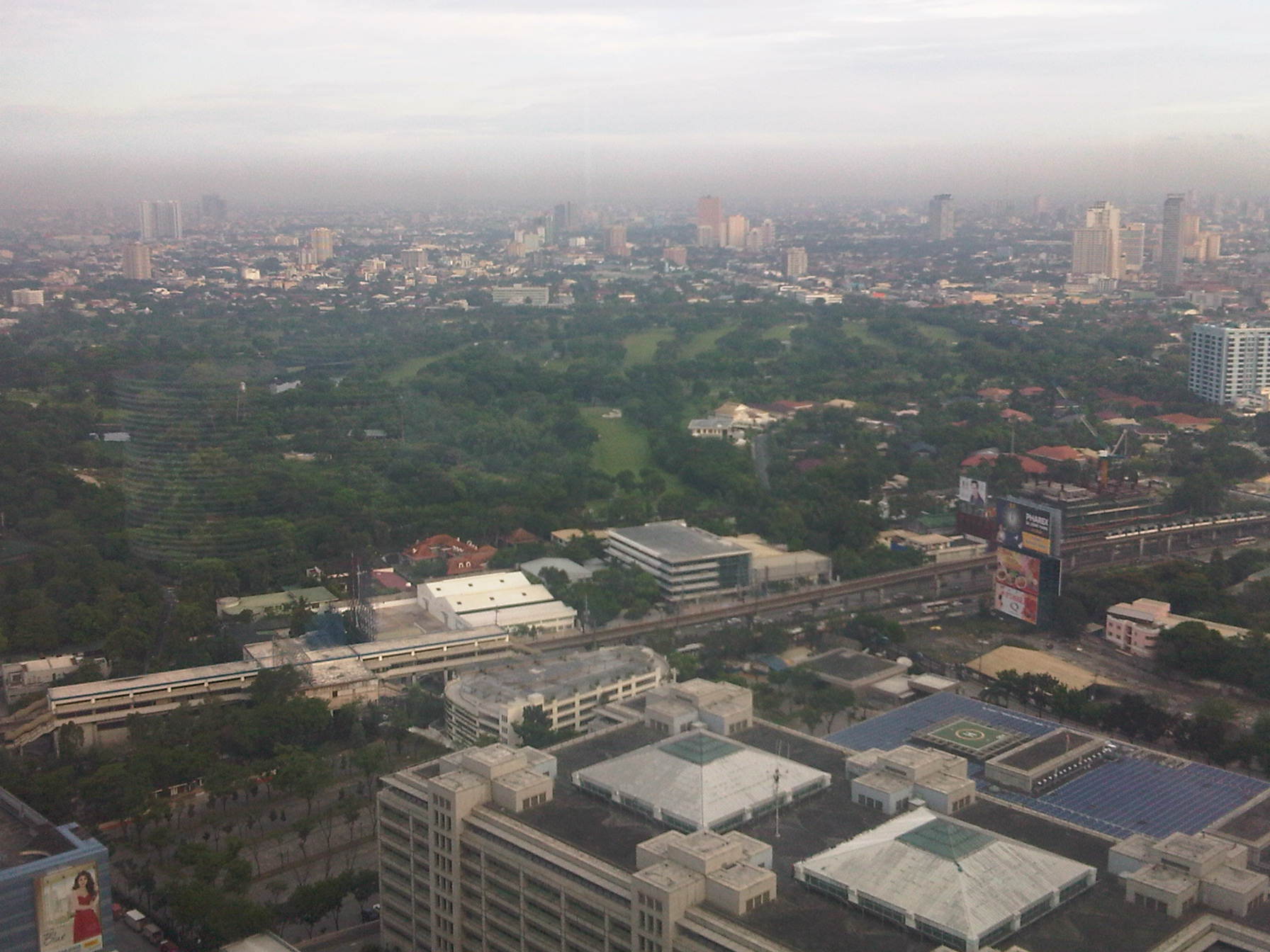 Golf anyone? – from one side of the building, you could see Wack-wack golf and the EDSA-MRT as well as the roof top of the ADB headquarters. One can also see the thick band of dark brown (or is it brownish black) that is the smog covering much of Metro Manila. Early morning golfers and joggers probably are not aware of the health implications of their activities that morning. The building where the DOTC has its offices is located is also visible in the photo (middle of the right edge of the picture).
 Makati skyline – visible in the horizon in the center of the photo is the Makati CBD with its tall buildings. People looking from atop a building on that side will see the Ortigas skyline and a band of brown. Contrast this with the blue sky and clouds at the top of the photo.
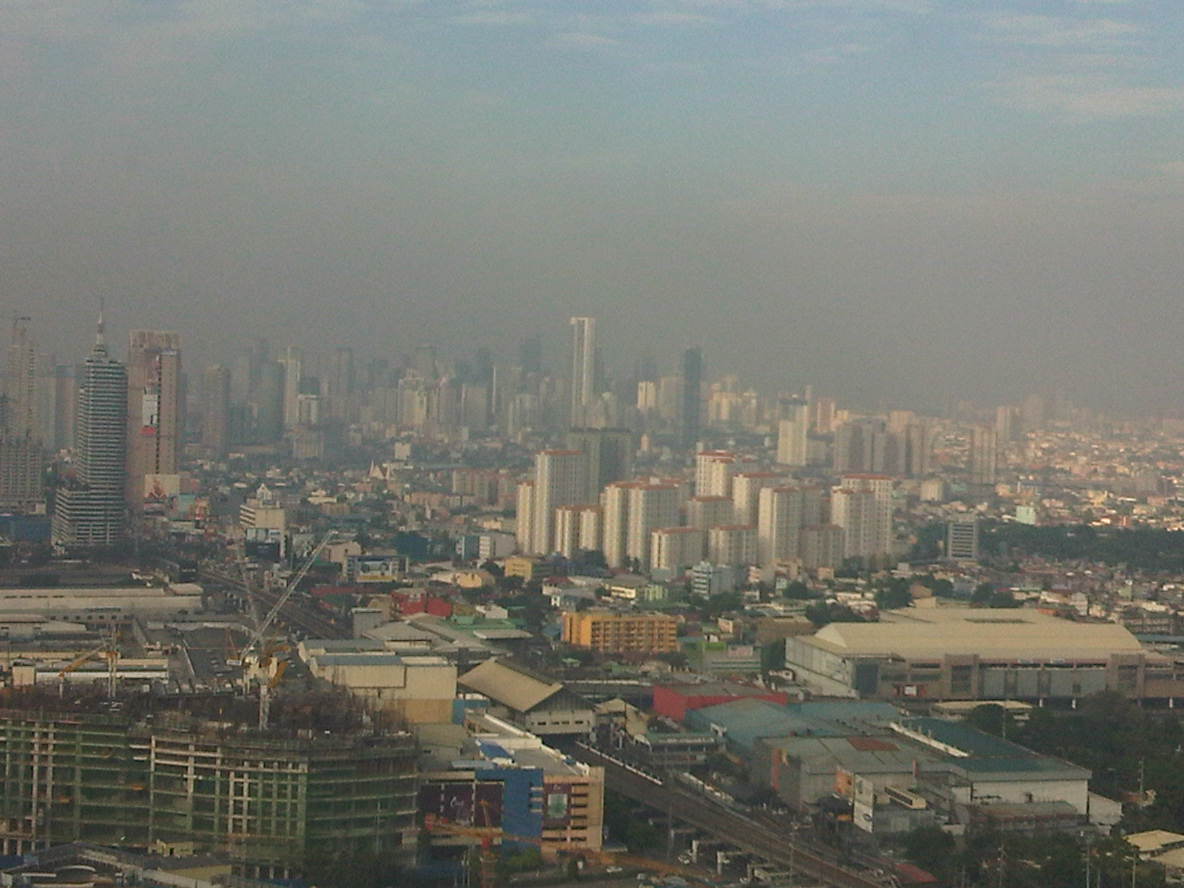 Close-up – the Makati skyline or shall we say “fog line,” a more appropriate term around Metro Manila this summer
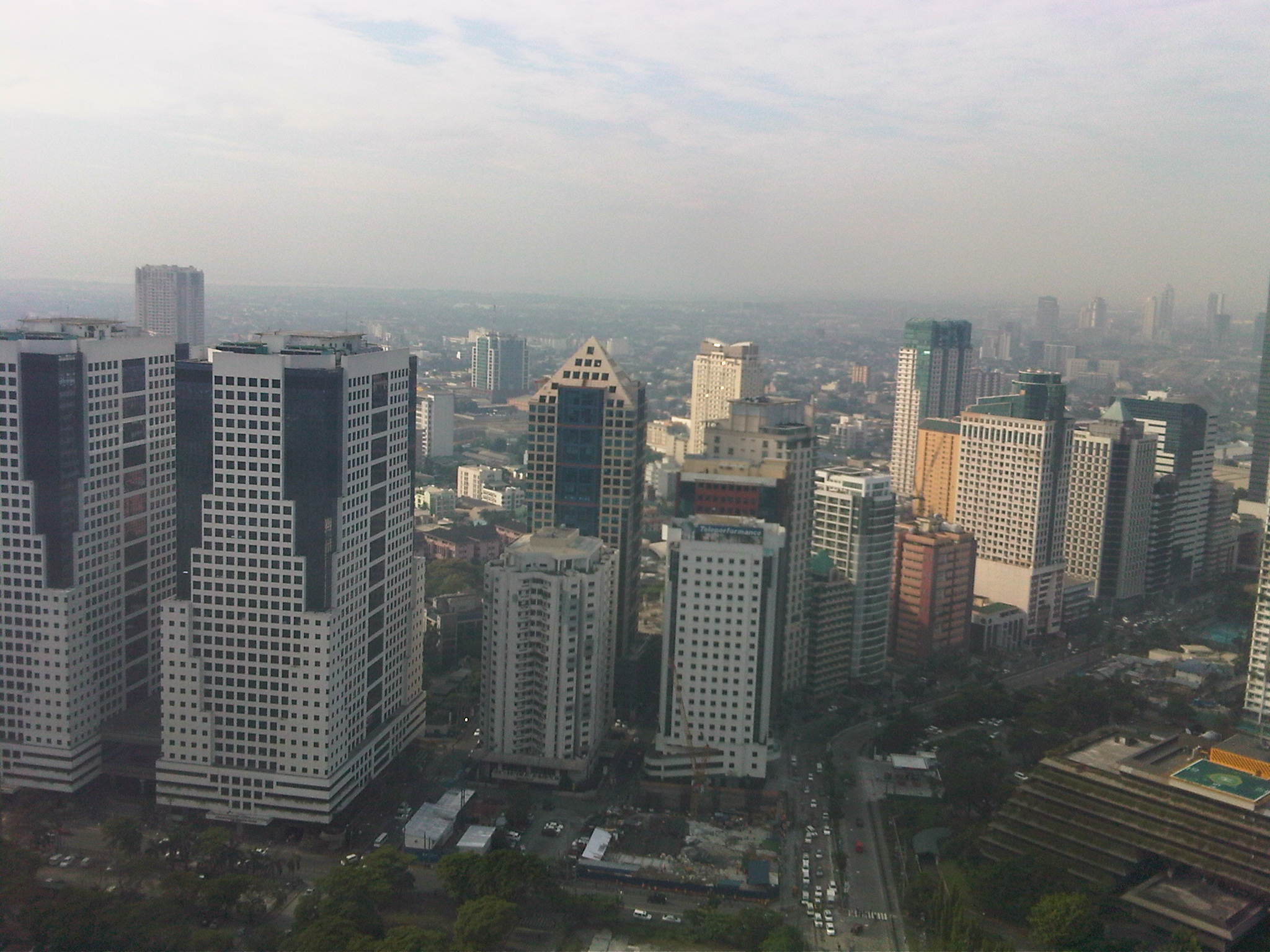 The south – beyond the Tektite Towers and other prominent buildings along San Miguel Avenue is the south (Paranaque, Las Pinas and Muntinlupa). Also, there is Taguig and Pateros along the line of sight from this photo. There are buildings of Bonifacio Global City visible on the right in the horizon.
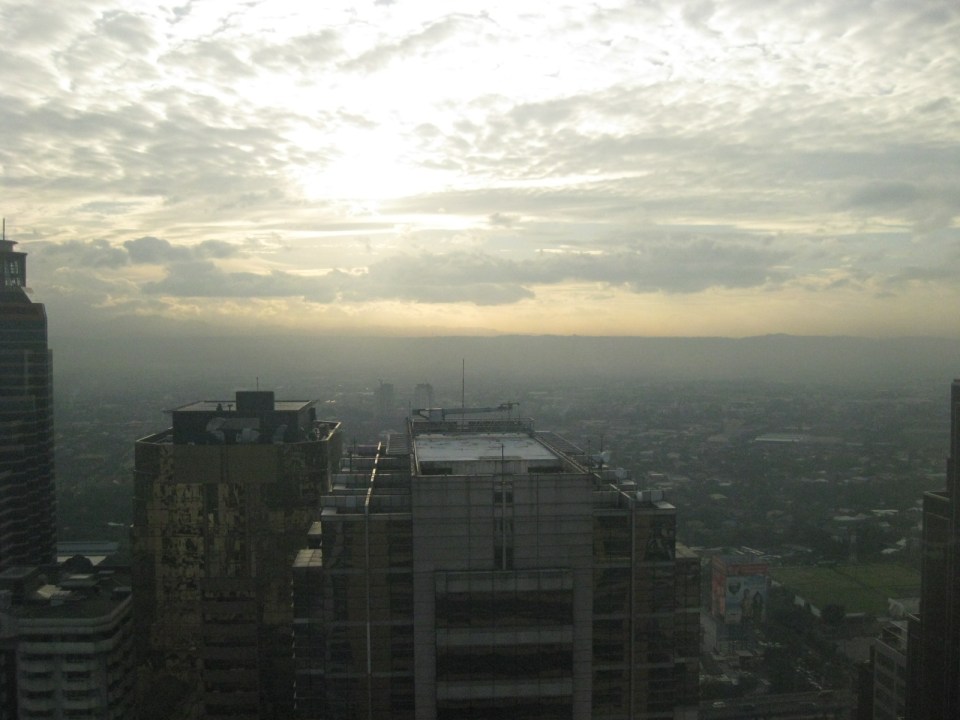 The sun rises from the east – as with Manila Bay sunsets, the colors produced by the sun become quite dramatic when combined with the pollution (Yes. The dramatic reds and oranges you get from sunsets may be attributed to the air pollution.). One is supposed to see the mountains of Antipolo in the horizon but because of the smog and the exposure of the shot, you can only see an outline of the mountains and an idea of what people in the lower parts of Rizal breathe everyday. The Ortigas Center is located in Pasig City and the areas between Rizal and our location are all within that city.
 Quezon City and beyond – right next to Pasig to the north is Quezon City, and beyond along the line of sight is the Marikina Valley and the mountains of San Mateo and Montalban (now Rodriguez). That’s Eastwood with its tall buildings barely seen in the smog to the left of the photo.
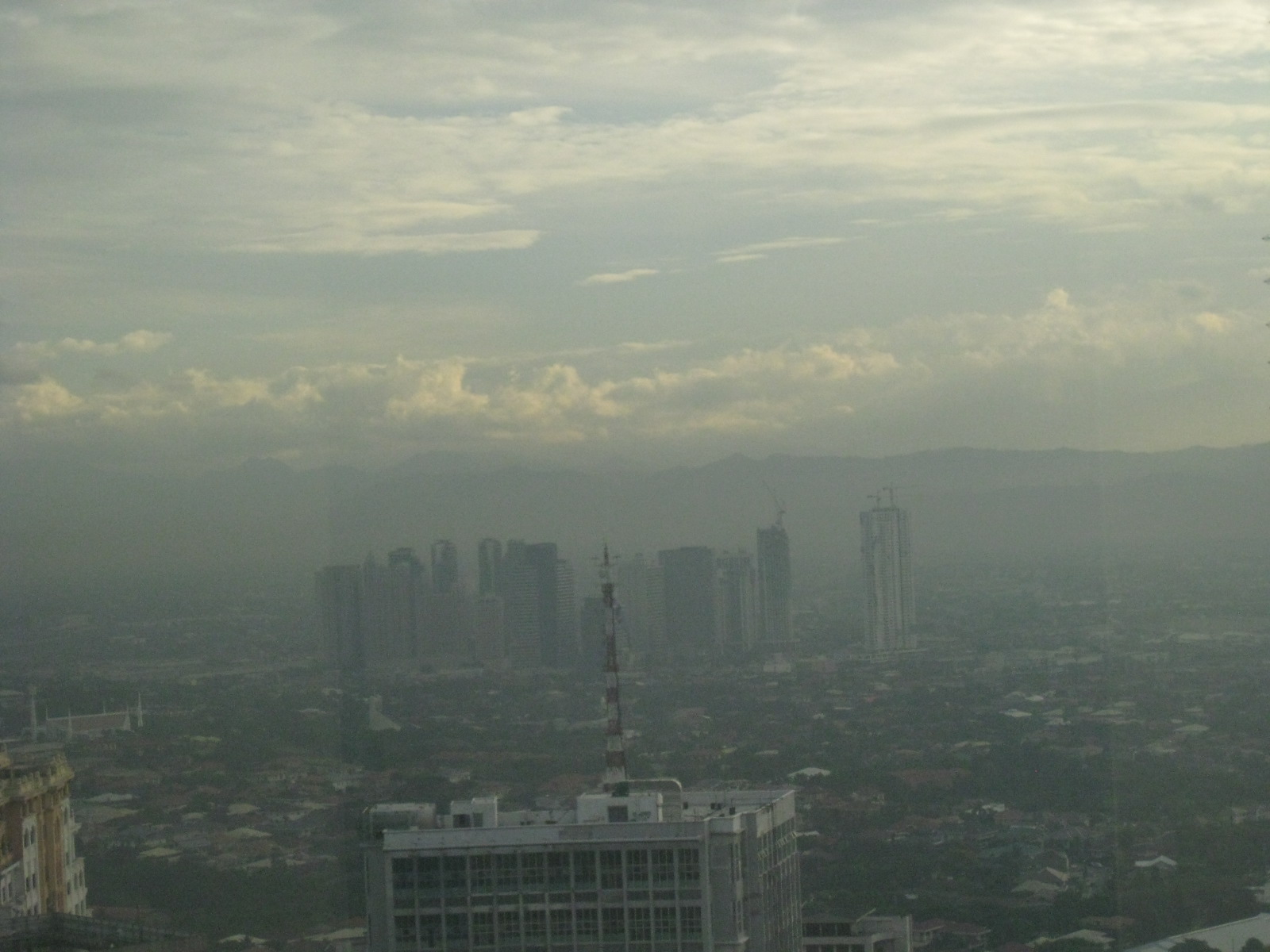 Take two – a closer look of Eastwood and the outlines of the Sierra Madre mountains. The smog seems thicker over the Marikina Valley and Quezon City as any other structure is practically hidden by it beyond Eastwood.
The photos above are on-the-ground validations of aerial observations I earlier posted. It can only go worse given the onset of the driest part of the year and behavior of air circulation at this time of the year. Of course, one isolated typhoon or weather system passing through Metro Manila can dissipate this smog but it will only return to wreak havoc on our health. So much for the Clean Air Act and other initiatives? We should try harder including doing our part in reducing our carbon footprints. Perhaps we should be honest in the way we maintain our vehicles. Perhaps we should demand more from public transport operators and truckers as they constitute a significant part of visible and observable smoke belching. Perhaps we should not encourage the proliferation of motor tricycles but instead replace most of these with non-motorized ones especially in residential areas. Air may be free but we are all at risk even in the perceived safety of our homes.
–
The air that we breathe – afternoon smog in Metro Manila
I like to take aerial photos of islands and distinguishing formations or features on the land below. Among those I’ve been able to catch on photo on clear days are Mayon Volcano, Taal Volcano, the Chocolate Hills, Cagayancillo, and Corregidor Island. I took some snapshots while our plane was approaching Metro Manila around 5PM. This time, what caught my attention was not the any land feature but something above it – the smog that covered Metro Manila and its surrounding areas.
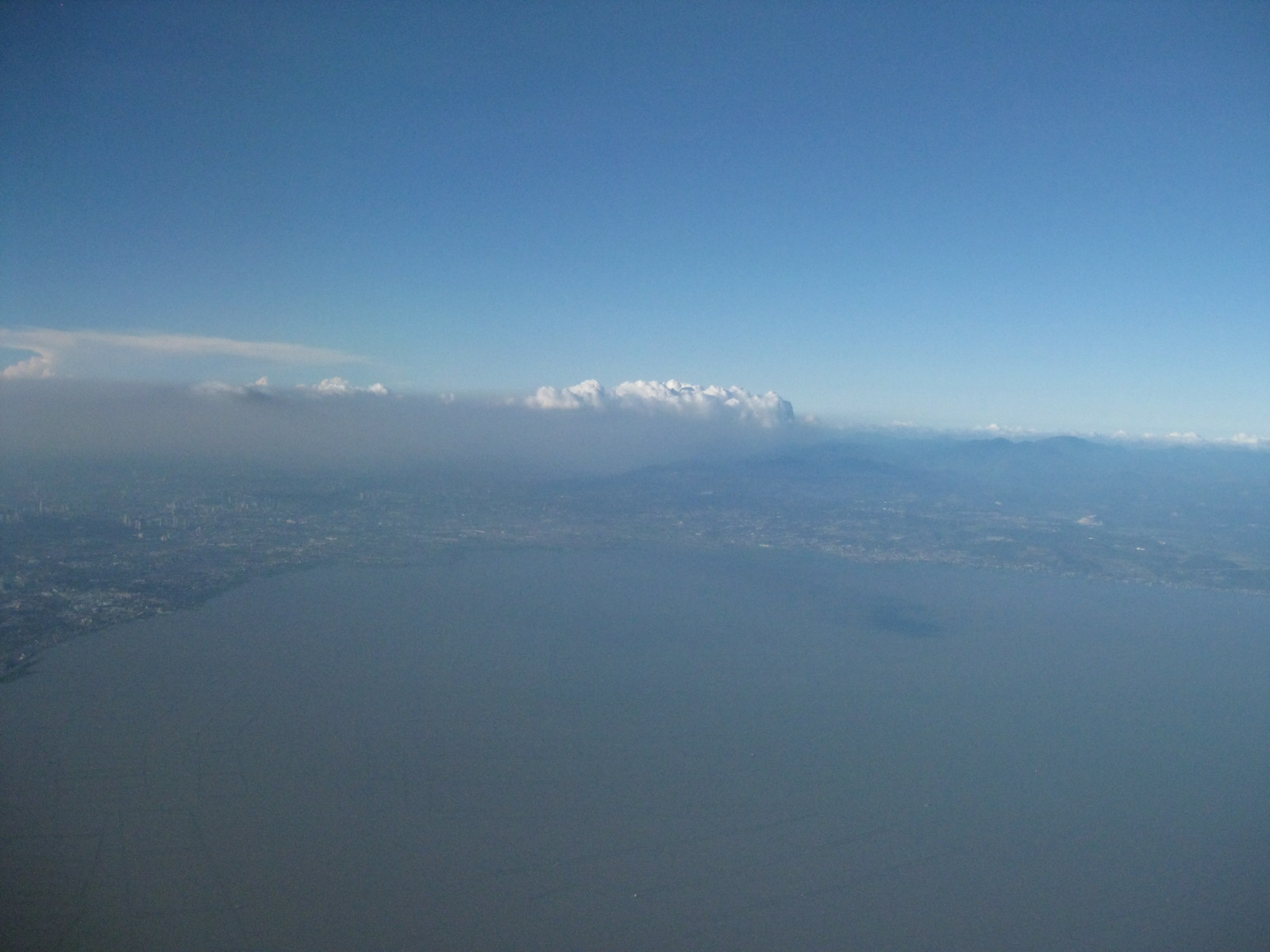 Approaching Metro Manila from Laguna de Bay, one can already sense there was something ominous in the air.
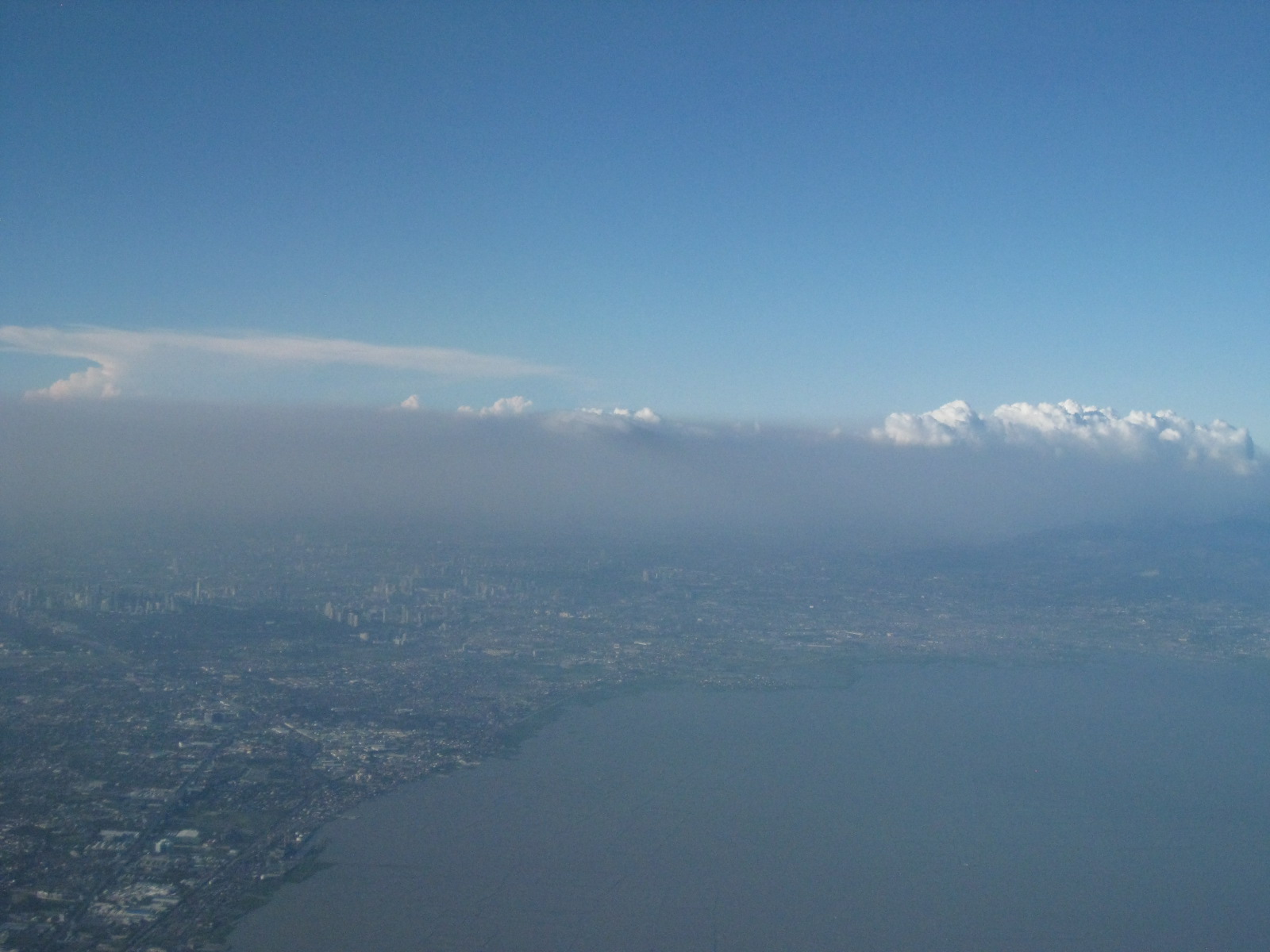 The smog over Metro Manila and parts of Rizal was not totally unexpected but I didn’t expect it to be this bad.
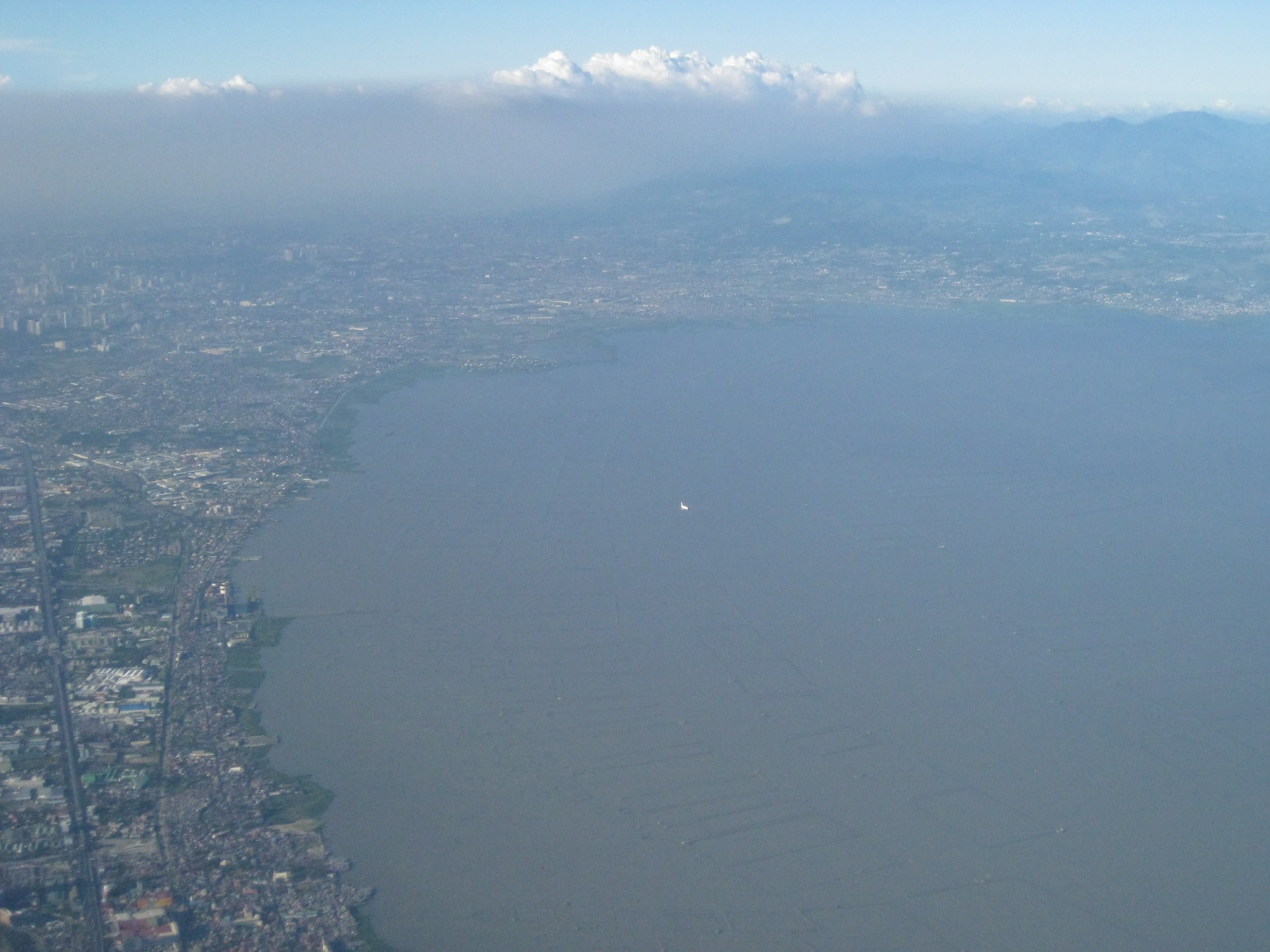 That’s the SLEX on the left side of the photo, to give the viewer a sense of location. The thick haze make it seem as if the clouds in the horizon are the tops of some snow-capped mountain range.
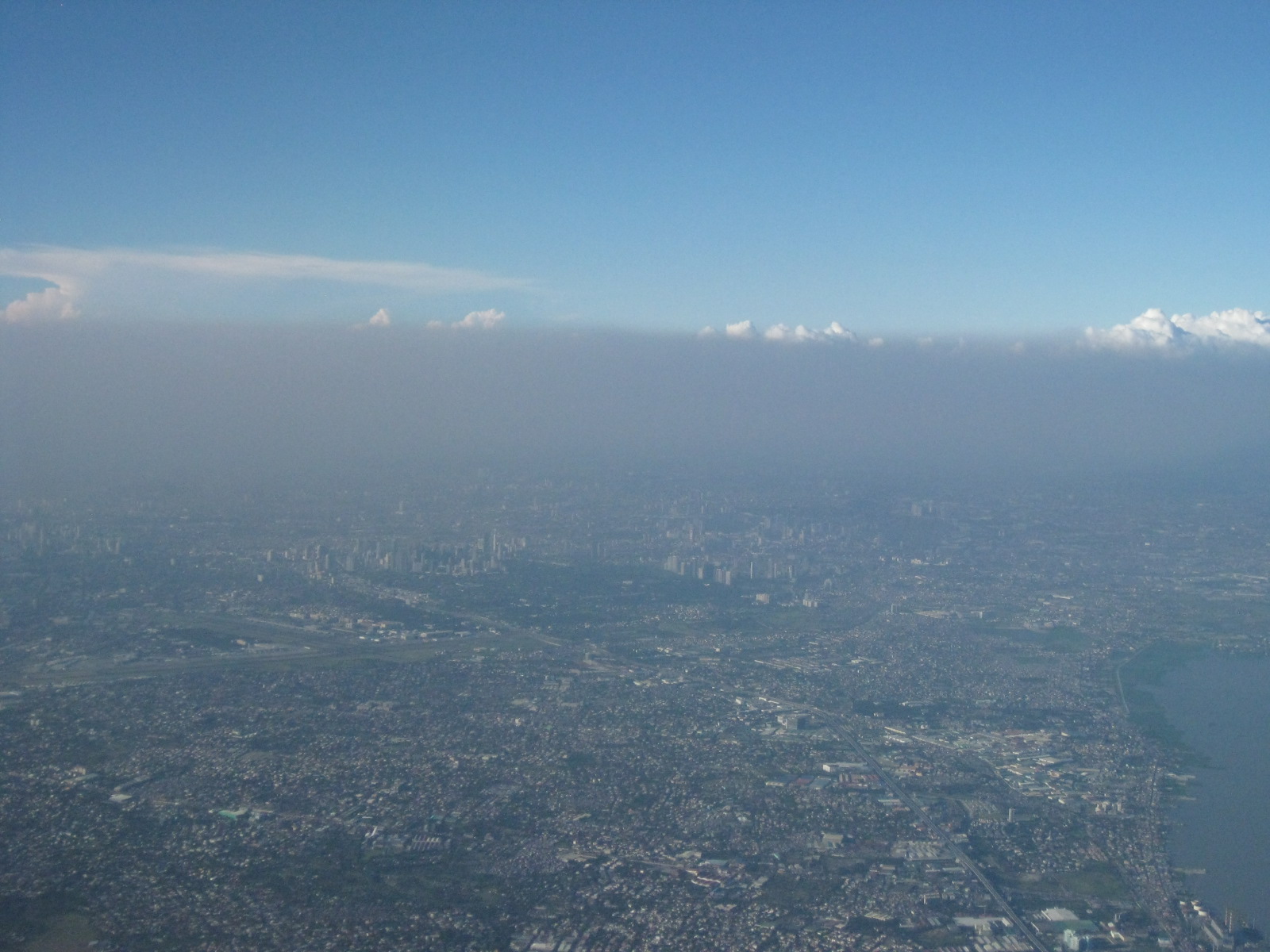 Smog over Makati and Ortigas – the main sources of this manifestation of air pollution are the emissions from road transport tailpipes.
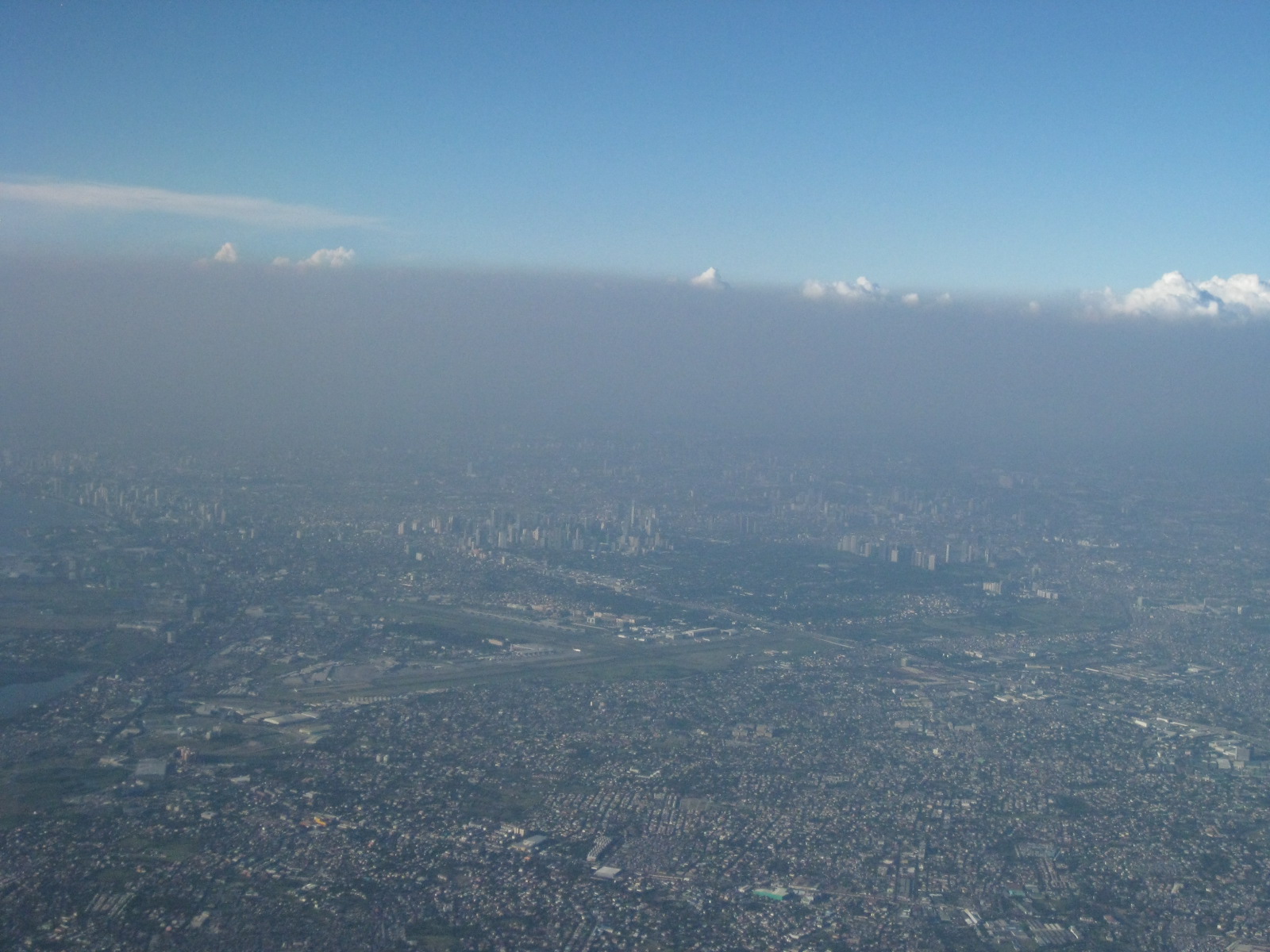 Smog over the airport – that’s the NAIA at the center of the photo
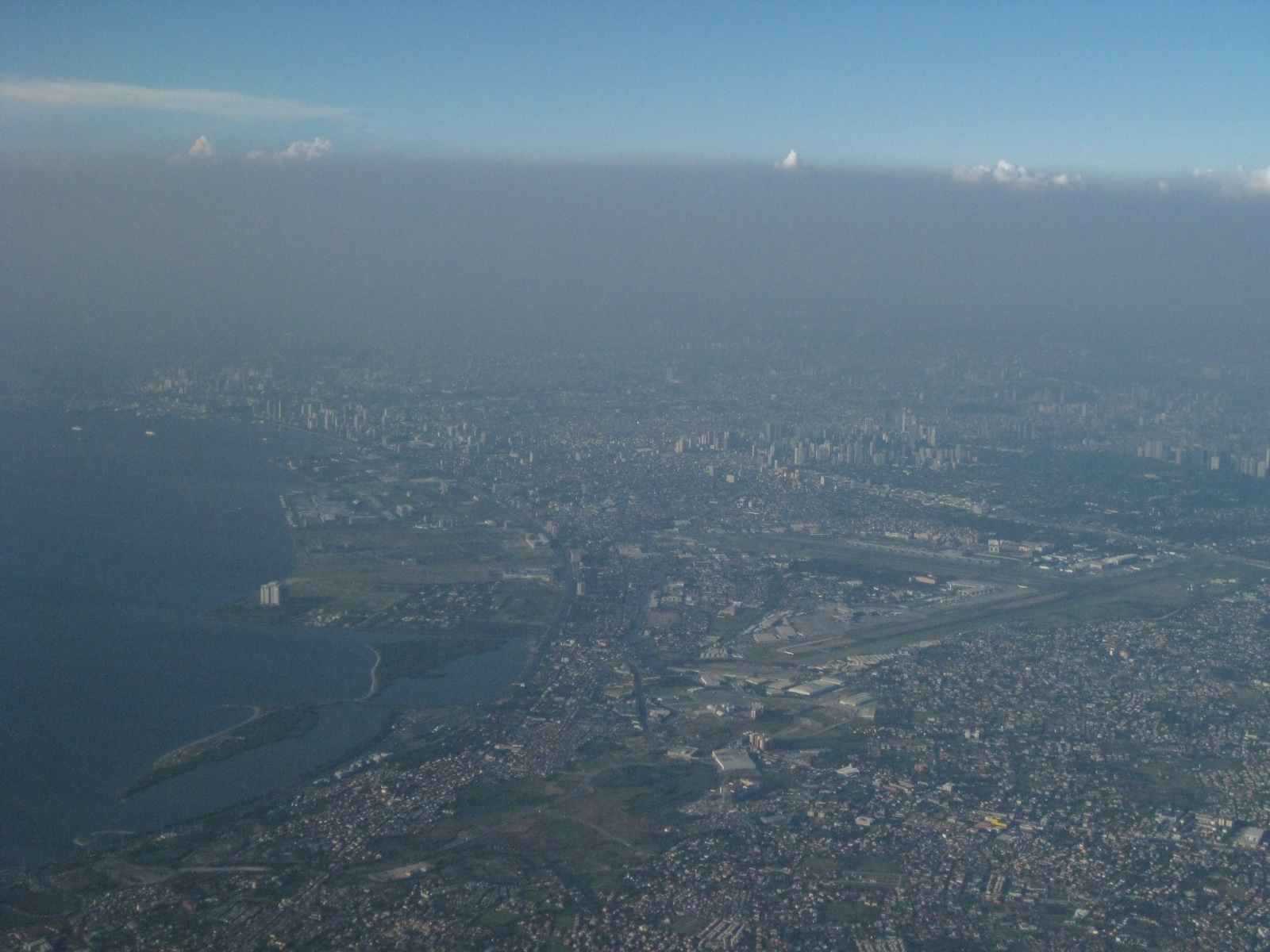 Yes Manila, that’s the air we breathe! This is what we inhale everyday and is the result of years of neglect and irresponsibility for those who cheated on the emission tests prior to vehicle registration, and continue to fail in the proper maintenance of vehicles.
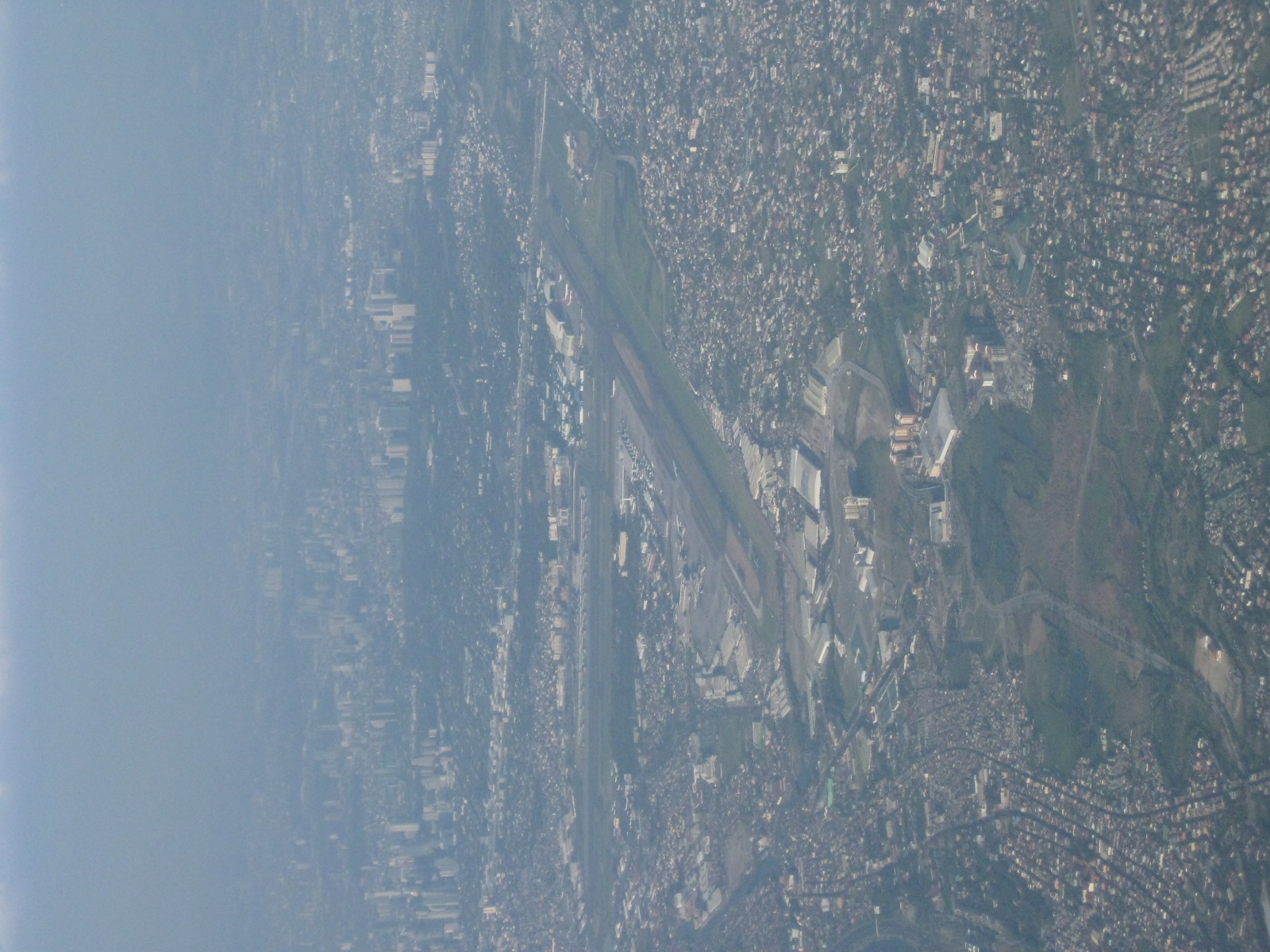 Nope, its not an out of focus photo or the effect of dirt on the aircraft windows. The blur in the photo is caused by the haze above and all around the airspace of Metro Manila.
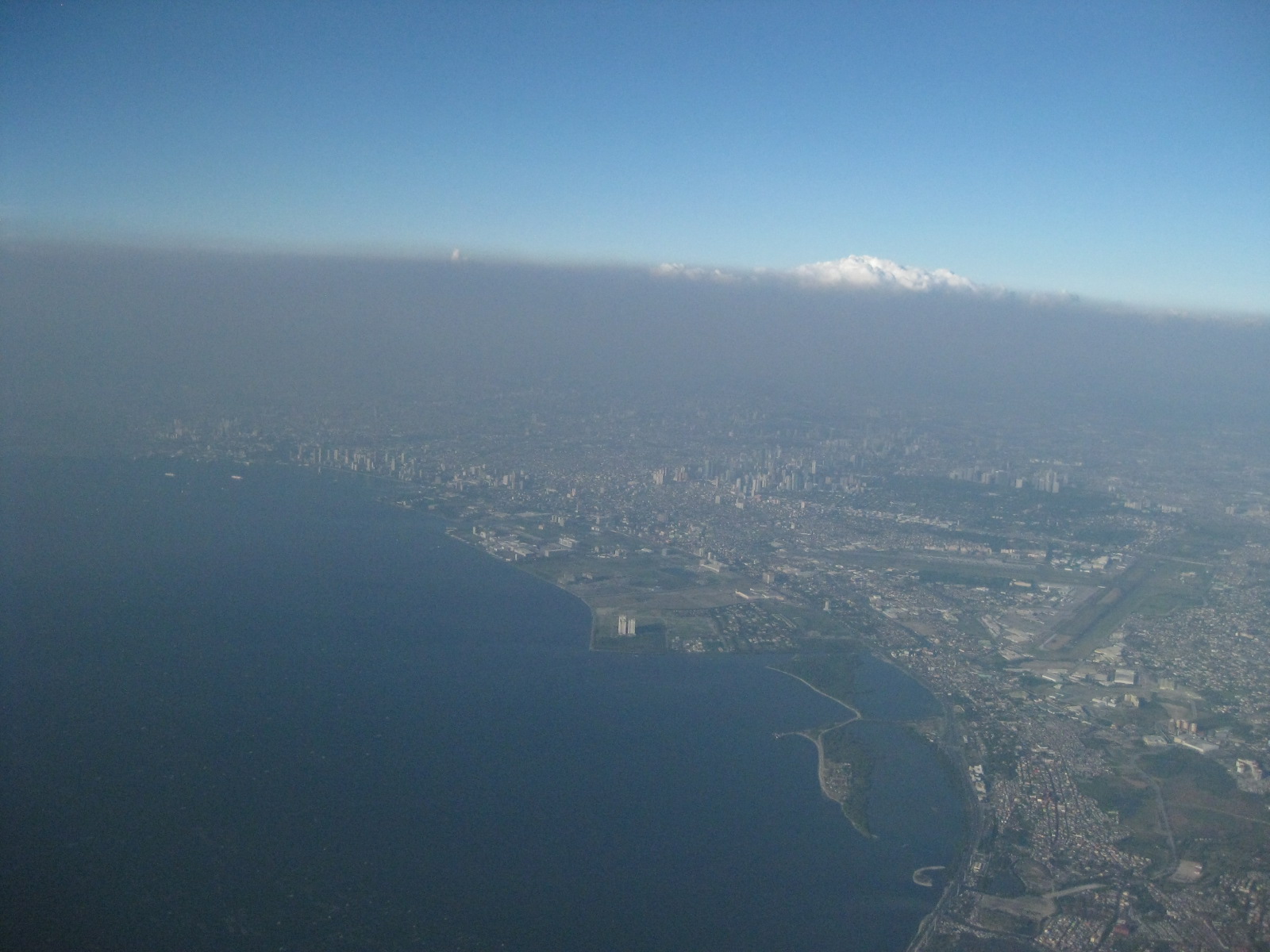 Manila with a thick band of air pollution above it. Pilots and tourists arriving by aircraft see this everyday and I’m quite sure that they have a bad impression about Metro Manila from this scene of the smog alone.
 Another shot of the airport runways with the haze above. At the lower part of the photo and along the approach to NAIA’s main runway is a bird sanctuary being threatened by plans to reclaim and develop the area.
The presence and persistence of smog over Metropolitan Manila should be a cause for concern if not outright panic considering the impacts of such pollution on our health. Unfortunately, people on the ground do not see this haze and would even likely interpret this as just cloud formations. Perhaps we tend to forget that one reason sunsets at Manila Bay are so colorful is because our air is already too polluted. It is sad that such realizations have not led to more urgent action from the government, often depending on NGOs to do much of the work. There is no other time than the present to be aggressive in such efforts as to clean our air. This is why we are pushing for sustainable transport…this is why we work!
–
 Caught (up) in traffic