
Home » Air travel (Page 2)
Category Archives: Air travel
Some aerial photos as we approached Panglao
Here are a few more photos from our plane as we journeyed to Bohol last week. This time, it is from the approach to Panglao. I was expecting the approach for the plane to pass above Cebu. I was rewarded with the following photos:
 Mactan Cebu International Airport as seen from our plane making its approach to Panglao Airport
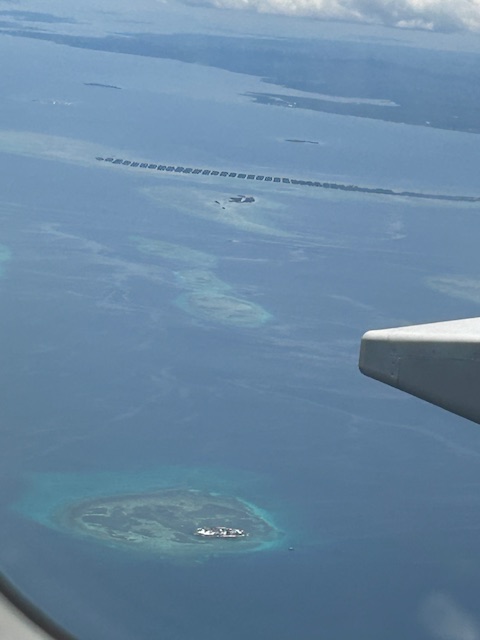 A view of the islands off Mactan and between Cebu and Bohol. There was a view of Olango Island but I wasn’t able to take a photo.
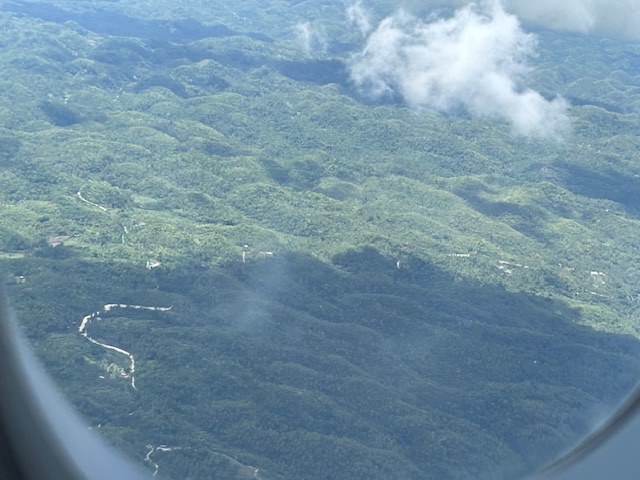 A quick shot of some of the hills at Bohol Island. I am not sure these are the Chocolate Hills but the formation, the geology is the same as the heritage site’s.
–
Some photos after taking off from NAIA
I took a few photos as our plane took off last week on our way to Panglao. The photos are not as good as I wanted them as I wasn’t seated at the window.
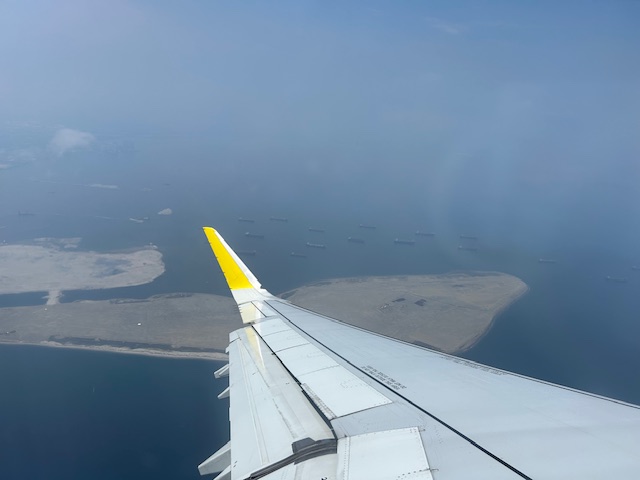 Reclamation at Manila Bay – there are currently several reclamation projects with various proponents. The projects were halted at one point during the start of the current administration. Some if not all have resumed implementation.
 A closer look at one of the reclamation areas. Note, too, the ships anchored around the area.
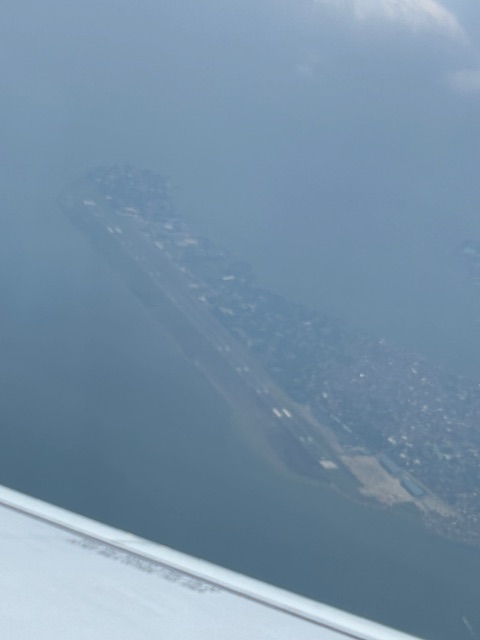 Sangley Point airbase as seen from our airplane. This is proposed to be the location of an airport recommended by a JICA study to replace NAIA. Not in the photo is the controversial former resort that is now a suspicious enclave.
The reclamation projects are also quite controversial considering many of the proponents involved Chinese companies. I have it from a reliable source who was involved in two of the projects that the project land values are sky high. So who would be able to afford settling, locating or residing in whatever will be developed in these reclaimed land? It would be very expensive for the typical Filipino and many local companies will probably balk at the property values. Whatever the developments would be, let’s just hope they don’t go the way of the former Island Cover Resort that is now allegedly a POGO facility.
–
Extreme turbulence during air travel
Transport-related news last week included a report about a Singapore Airlines B777 jet flying to London from Singapore that had to make an emergency landing in Bangkok due to extreme turbulence experienced. Many people were seriously injured when the plane suddenly ascended (“tilted up” as some news reports state) and then abruptly descended, resulting in people being tossed up and hitting the compartments above their seats. Obviously, these passengers were not wearing their seatbelts at the time. Otherwise, they would have been restrained to their seats. It is likely that the turbulence was not anticipated by the pilot as they usually advise passengers to put on their seat belts if turbulence was expected at any time during a flight.
The incident raises concerns about extreme and sudden turbulence occurring during flights. I guess this may happen anytime and aircraft instruments may not be able to tell the crew about an impending incident like this. Will such an incident have a significant impact on air travel? Perhaps not if these incidents remain rare. There should be records and monitoring of factors or elements leading to such incidents in order to establish the likelihood of these happening. Incident records will also show if there is an increasing frequency as well as the number of people killed and injured. Such information would be vital as more people use aviation for travel and there are more aircraft activity around the world.
As a precaution, it is good practice not to remove your seatbelt while seated in flight. If it’s tight, then loosen it. At least you have some restraint in case of incidents where the aircraft encounters sudden turbulence.
–
Dog on board – a cute dog on our Cebu Pacific flight
As we were boarding the plane that will take us to Cebu, we were ‘treated’ to the presence of another passenger. One passenger brought his dog with him on the flight. I don’t know what breed this is but it was really cute. One of the flight attendants carried the dog as the passenger placed his bags to the overhead bin.

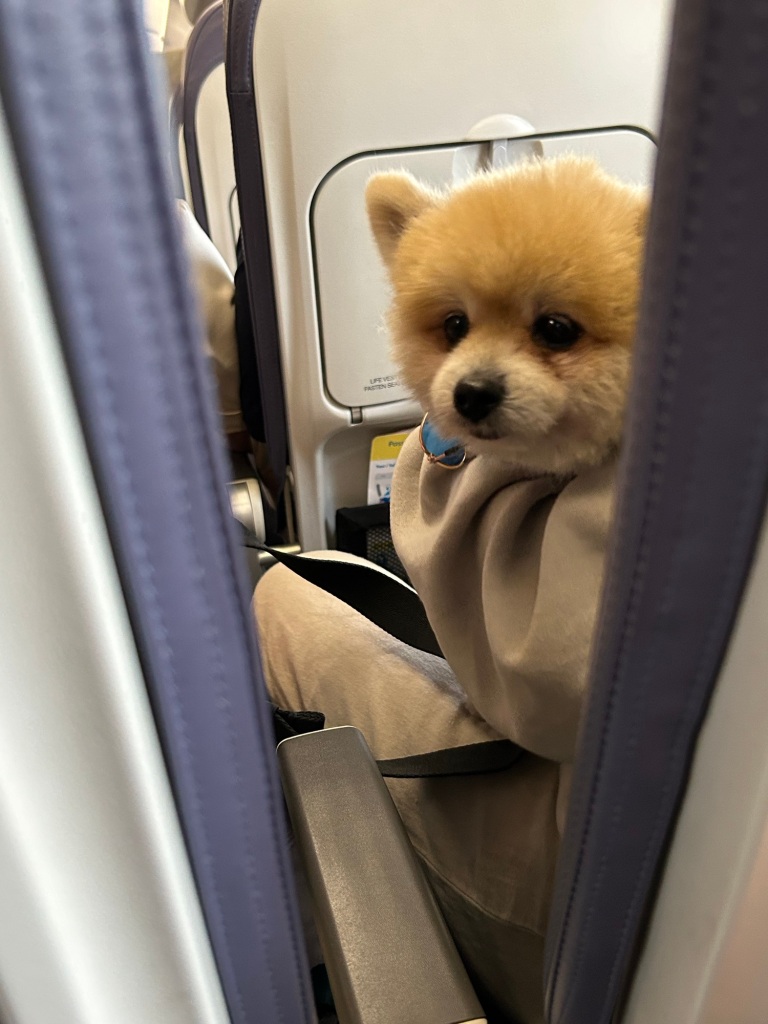
 Wearing the shades and hood as they deplaned.
This was the first time I was on a plane with a passenger who had his/her pet with him/her. Bigger dogs would have to be on carriers and transported as baggage/freight. I know some airlines allow for big dogs to be in the main cabin if they have a ticket and a seat like other (human) passengers. There should be some guidelines for this as to what breeds are allowed including whether the dog has a pleasant temperament.
–
Cebu Pacific’s leased aircraft from Bulgaria Air
While boarding our plane on the return flight to Manila from Cebu, I noticed that the aircraft was all white and no livery. I learned later that the plane we flew on was a leased aircraft. Cebu Pacific leased A320’s from Bulgaria Air as it expanded its fleet to meet the demand for air travel. Apparently, the agreement included Cebu Pacific also announcing that passengers were flying via Bulgaria Air but operated by Cebu Pacific.
 The plane was not a Philippine registered aircraft (RP). Instead, it had LZ on its body. I Googled LZ and learned this was registered in Bulgaria.
 The safety instructions were in Cyrillic and English
 The sign for the life vest is also in Cyrillic and English.
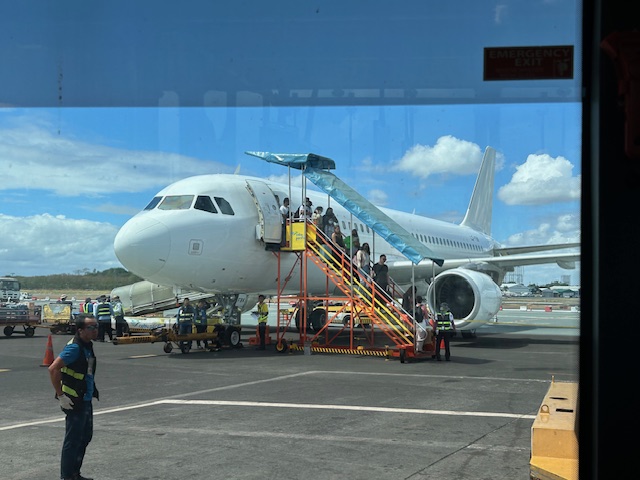 Here is the plane as we boarded our bus transporting us from the tarmac to NAIA Terminal 3. Other deplaning passengers had to wait for the next bus.
–
Airline food on Thai Airways
We booked Thai Airways for our flight to Bangkok. We had initially looked into both Philippine Airlines and Cebu Pacific thinking they would be cheaper, especially Ceb Pac, which is supposed to be a low cost carrier (LCC) or a budget airlines. They both turned out to be expensive so I suggested to the wife to check out Thai Airways since we were spending anyway and we wanted to have the full service that included decent inflight meals. Lo and behold, Thai Airways was actually cheaper than PAL or CebPac (note that we booked early so we had a lot of options for the latter airlines).
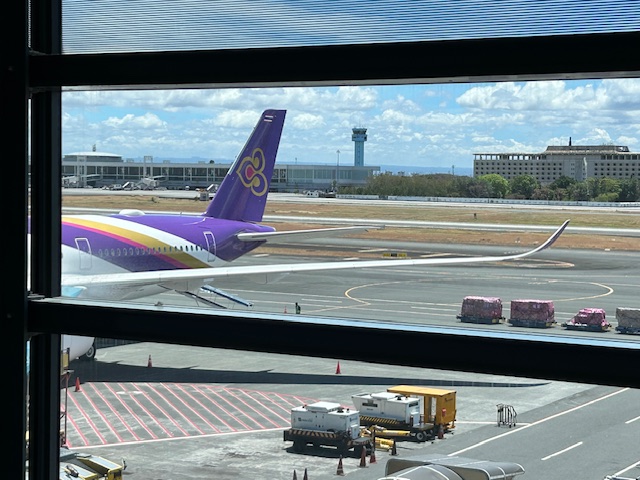 Our Thai Airways Airbus A350 at the NAIA Terminal 3. Also shown in the photo is the old Philippine Village Hotel building that surprisingly has not been demolished despite being abandoned for more than 3 decades. This is the proposed site of a Terminal 5 for NAIA that will be constructed and operated by San Miguel Corporation.
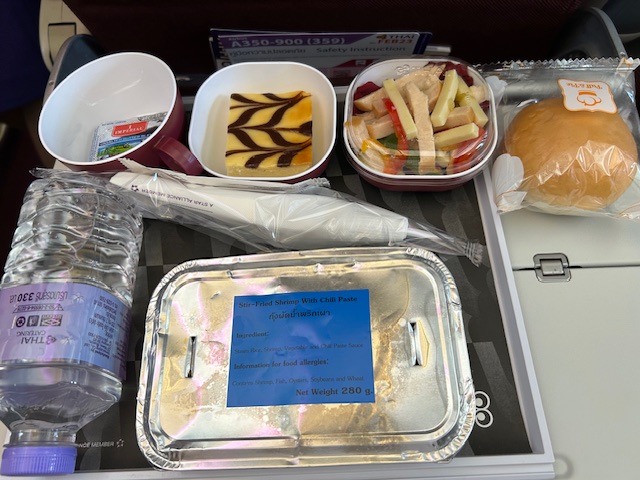 We had two choices for our inflight meal – stir-fried shrimp with chili sauce and rice or chicken in tomato sauce with pasta.
 The stir-fried shrimp with chili sauce came with carrots and young corn on the side. The set included salad, cake for dessert and a bun.
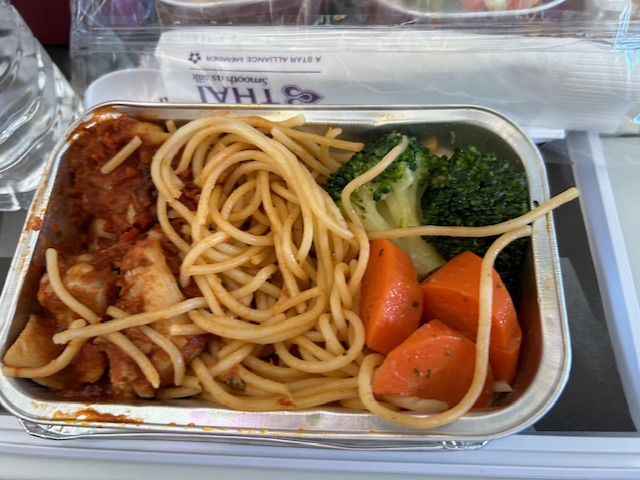 The only difference between the set was the main course. This is the chicken and pasta I eventually ate when I exchanged meals with my daughter who surprised us by preferring the spicy shrimp.
 The A350 was equipped with a tail camera for those who wanted this view of the plane. I took a video of when the plane landed to show my students about the landing including when the plane exited the runway via the rapid exit ramp.
We thought the food on economy class was okay and definitely better than what could have been served on either PAL or CebPac. What are better (on economy) if not similar in quality would be the food on Singapore Airlines and Japan Airlines.
More on our travel to Thailand in the next posts.
–
Article share: the safest airplane makers
I found this very interesting (to me) article on what are supposed to be the safest airplane makers and the safest airplanes.
Borba, L. (December 16, 2023) “What Are the Safest Airplane Makers in the World?” Medium, https://medium.com/the-expatriate-guide/what-are-the-safest-airplane-makers-in-the-world-8c9a90f48707 [Last accessed: 3/8/2024].
I won’t quote from this article and leave it up to you to read and find out for yourself what the safest maker is and what the safest plane is. There are also information here about the opposite. That is, about the least safe manufacturer and planes.
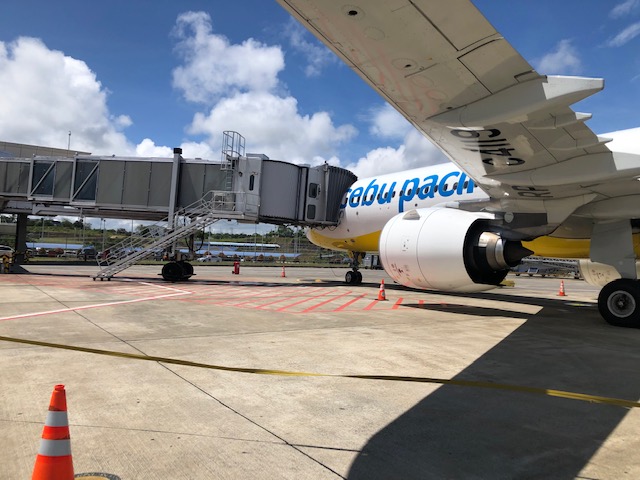 An Airbus A321 plane on the ground at NAIA
–
Article share – on aircraft evacuations and the case of JL516
Here is a very informative article on aircraft emergency evacuations, particularly the case of the recent JAL 516 where all passengers and crew were able to evacuate the burning aircraft.
Tamura, Y. (January 7, 2024) “Why the Evacuation of 379 Passengers from the Burning JAL516 Wasn’t a Miracle,” Medium, https://medium.com/japonica-publication/why-the-evacuation-of-379-passengers-from-the-jal-collision-wasnt-a-miracle-8a03cb02a95c [Last accessed: 3/4/2024]
To quote from the article:
“Japan is said to have become earthquake-resilient over the decades, but it’s less known that the same applies to aircraft accidents.
As the oldest Japanese airline company partially founded by the government in 1951, the history of JAL encapsulates the narrative of Japan’s aviation industry, punctuated by significant accidents.
It is none other than JAL that experienced the worst-ever airplane crash in the world. In 1985, JAL123 crashed into a mountain approximately 100 km from Tokyo.
The crash, believed to have been triggered by improper maintenance of the aft pressure bulkhead, caused 520 fatalities, the largest loss of life in a single aircraft.A former JAL employee comments that those who have survived traumatic incidents often grapple with returning to their duties in the sky. Despite this difficulty, they also carry a deep sense of responsibility to impart their experiences to younger crew members, contributing to the commitment to safety.
I agree that the successful evacuation was not a miracle but a product of the training and dedication of the staff as well as the culture and behavior that was very obviously Japanese. One wonders what could have happened if this were, say, an airliner from a third world country? Or perhaps even one from a country like the US? Would the evacuation have been successful like JL516’s?
–
What’s new at NAIA Terminal 2
NAIA’s Terminal 2 now only serves domestic flights. It currently hosts Philippine Airlines and Air Asia flights to major cities. I haven’t been to the parking area or had the opportunity to go around the terminal’s arrival area for some time now. I used to go to NAIA frequently the time when my wife was a frequent international traveler with her former office. If she had trips to the US West Coast (e.g., Los Angeles or San Francisco) she would likely take the direct flights via Philippine Airlines.
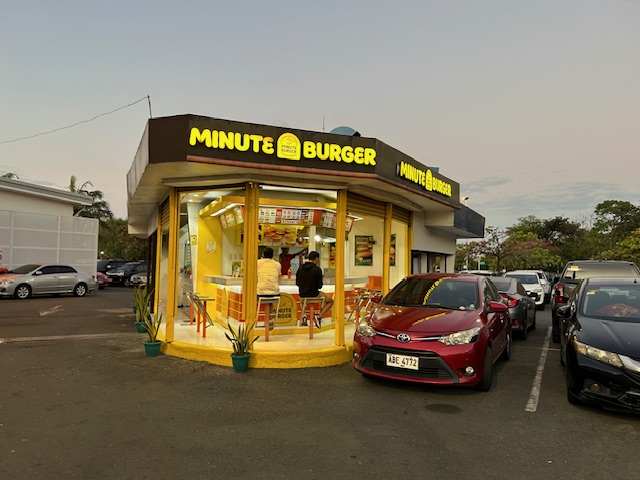 Minute Burger at the kiosk near what was the international (North) wing of NAIA Terminal 2
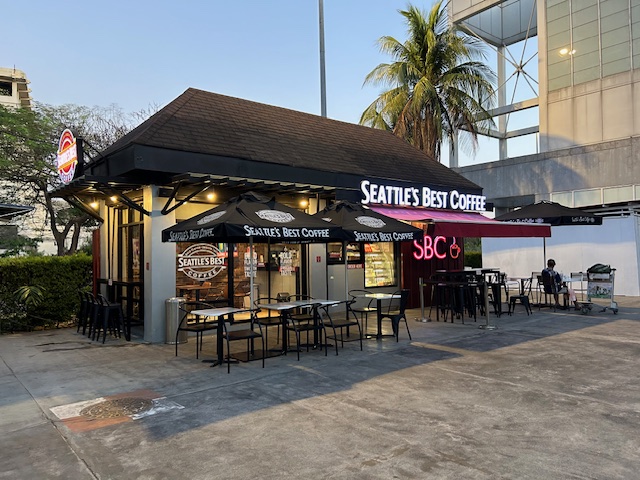 What used to be a Figaro branch at one end of the terminal is now Seattle’s Best Coffee
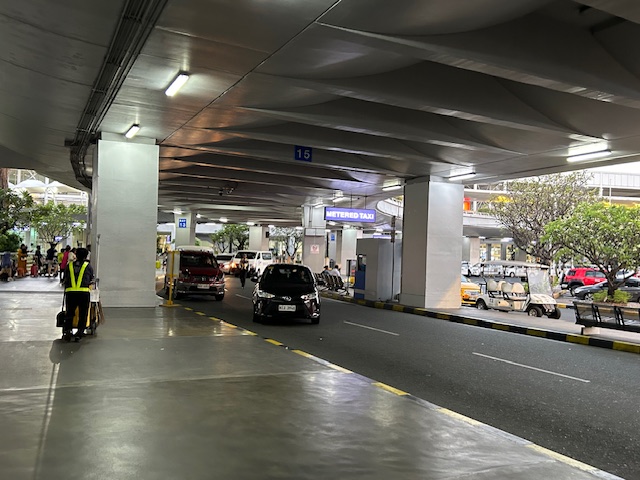 The arrival level driveway at the terminal
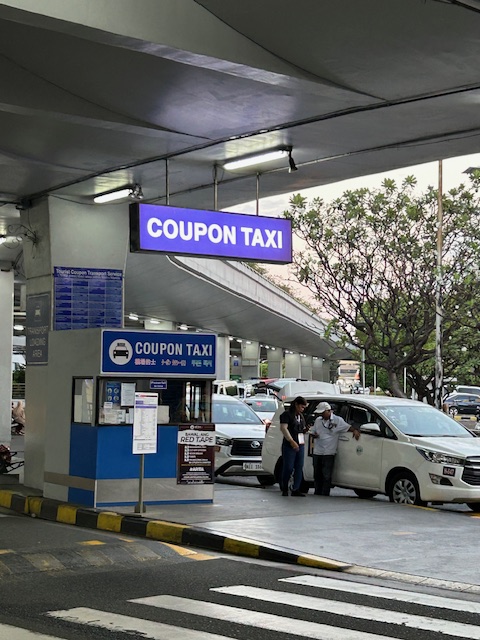 Coupon taxi stand at the terminal
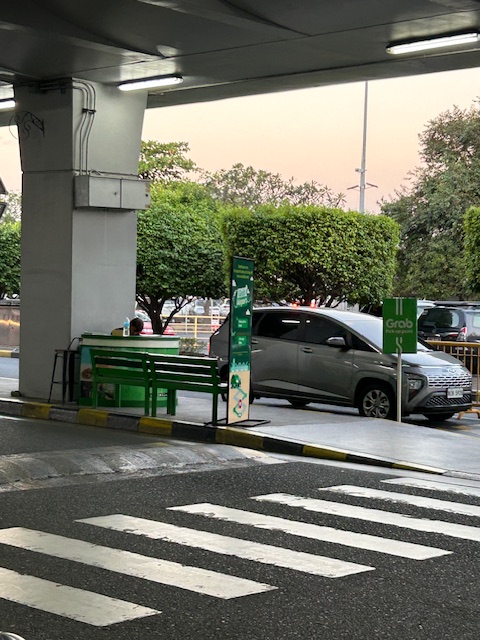 Grab station at the NAIA Terminal 2 arrival level driveway
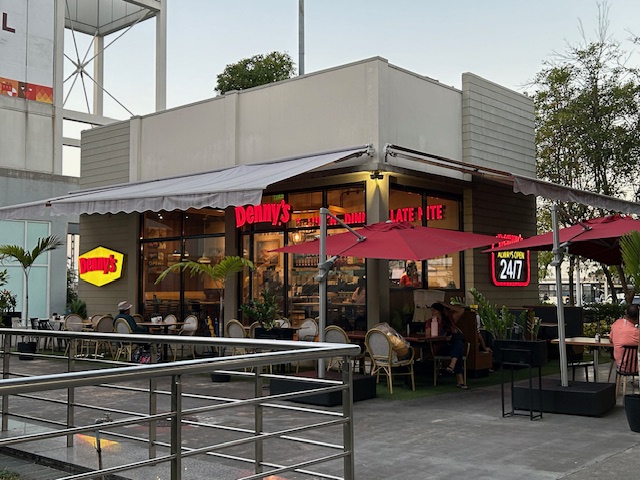 There is a Denny’s at the other end of the terminal. There used to be no restaurant or cafe at what was the domestic (South) wing of the terminal.
As I’ve mentioned earlier, I haven’t been able to go around the NAIA terminals aside from the usual departure and arrival areas when I’m traveling. So this one Sunday that I picked up my father as he returned from Iloilo, I took advantage and took photos to share here.
–
On recent airline incidents in Japan and the US
There were two recent incidents involving airlines the past days. One was on a collision as a Japan Airlines Airbus A350-900 jet arrived at Haneda Airport in Tokyo. The other was a midair incident where an Alaskan Airlines Boeing 737 Max 9 plane lost part of its fuselage. While both are troubling, the first incident provided a good example of how emergency evacuations should be. The second incident reminds us of the importance of aircraft maintenance and tests to make sure planes are safe for use by passengers.
To quote from a New York Times article on the Haneda Airport incident:
“In addition to a well-trained crew and an advanced plane, the safe evacuation of 367 passengers came down to a relative absence of panic.”
I think that basically described “how to survive a plane crash” in the context of the collision at the airport, where passengers and crew had to evacuate the plane immediately.
Meanwhile, the B737 Max crash is a cause of concern since the model was already involved in previous crashes that caused the planes to be grounded worldwide. There will be an investigation on this incident and perhaps the outcomes can help address the problems concerning the aircraft. On the business side, such incidents will further convince airliners to reconsider acquisition and operations of these planes. I am sure they are already thinking about replacing the B737’s with the competition’s aircraft (e.g., A319, A320 or A321).
–
 Caught (up) in traffic