
Home » Air travel (Page 8)
Category Archives: Air travel
Francisco Bangoy International Airport revisited
The number of views for Davao’s international airport spiked a few days ago and from the responses to the posting on Facebook, it’s clear that people are appreciative of good infrastructure provided to them. People in other cities expressed similar or related feelings in relation to the post with many expressing that they hoped their city could have a good airport. Well, we know at least that Iloilo and Bacolod have good airports in Cabatuan and Silay that are now serving international flights as well. Hopefully, we’ll have more airports upgraded like Tacloban, Tagbilaran, Legaspi and Puerto Princesa that are all very crowded as more people fly to these cities including tourists whose numbers are steadily increasing. Cebu’s airport expansion is up for bidding and Northern Mindanao will soon have a large airport opening at Laguindingan. Cagayan De Oro’s Lumbia Airport will eventually be phased out. Meanwhile, here are a few more photos on DVO from a recent trip I had.
 Check-in counter for Philippine Airlines passengers
 Check-in counters for PAL and Cebu Pacific
 The spacious terminal is desirable for large cities like Davao and generally serves the entire region.
 Cebu Pacific’s self service terminal that I first saw in Davao and now is also in other airports as well
 The check-in counters as seen from the escalator as I went up to the departure level
 The corridor to the pre-departure area Gates 1 and 2 of the terminal
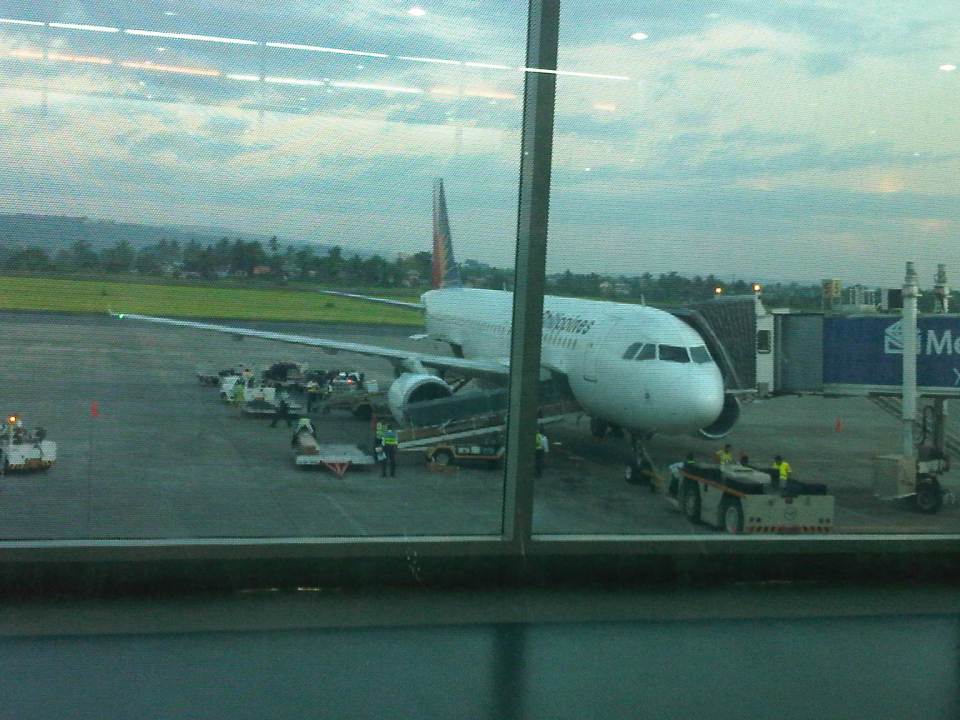 View of PAL Airbus A320 at the airport
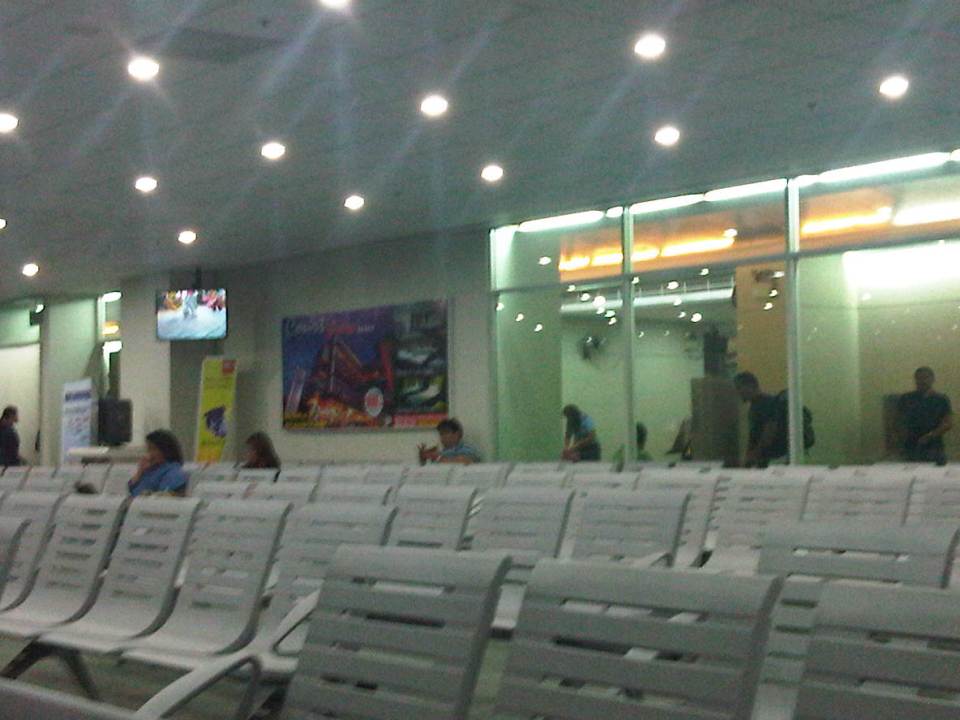 Spacious pre-departure area at the airport
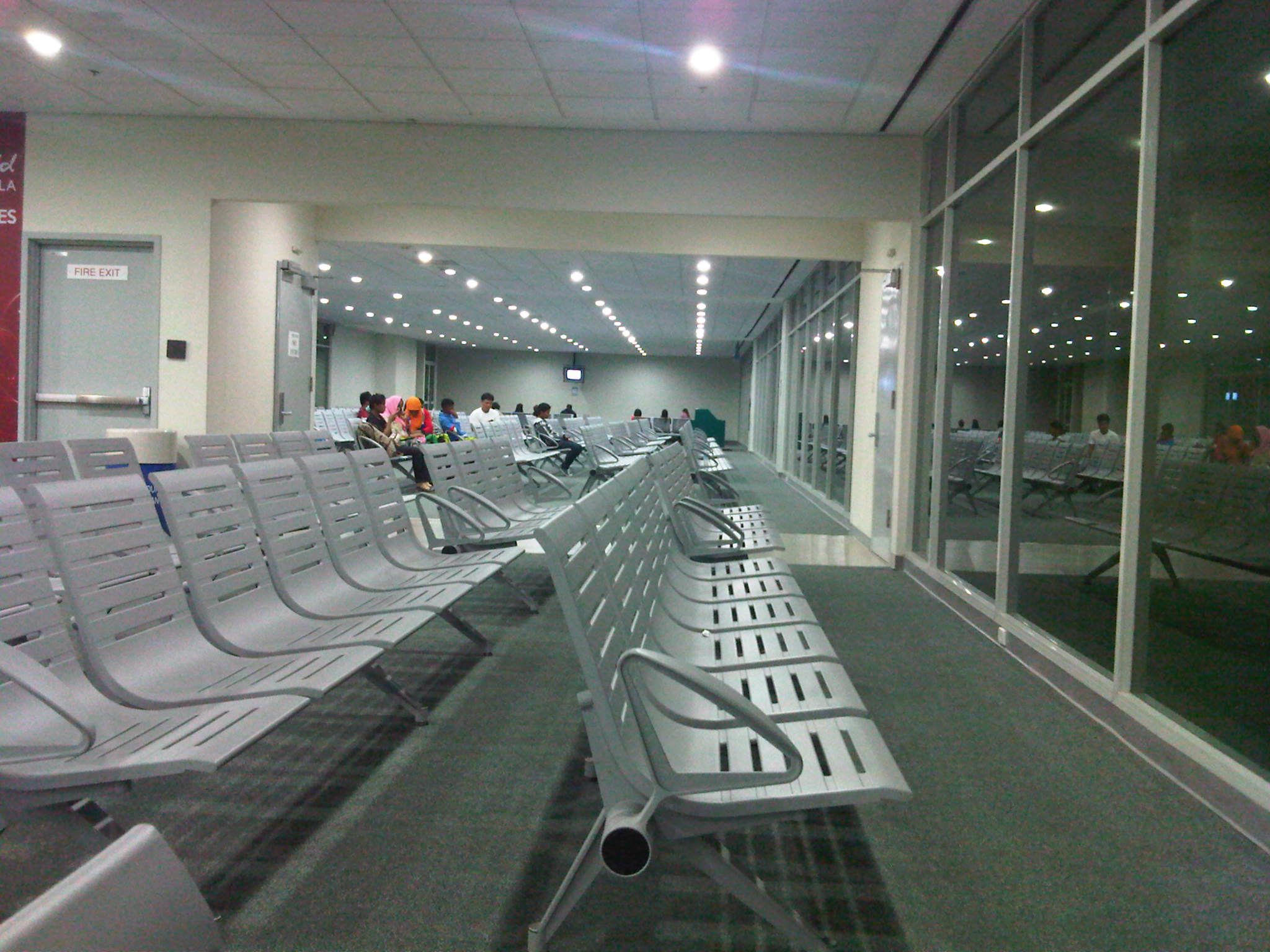 Another look at the spacious pre-departure area at Davao’s airport – I assume that the area can become full if the aircraft happens to be a widebody like the B747 or A330.
More on airports soon…
–
The benefits of local airline competition in the Philippines
With the announcement of Cebu Pacific (CEB) that it is applying for flights to Australia (Sydney and Melbourne) and Russia (Moscow), a new challenge has been posed by the Philippines’ leading airline to its competitors. This challenge is but a continuation of one they have been issuing to Philippine Airlines (PAL), which used to be the country’s only flag carrier, since the Gokongwei airline started operations in the late 1990’s. Earlier, CEB have announced flights to Dubai starting in the fourth quarter of 2013 as well as international flights connecting Iloilo and Bacolod to Hong Kong and Singapore. The general perception is that such aggressiveness has benefitted travelers though CEB is classified as a budget airline to PAL’s full service status.
While CEB has been carrying the most passengers among local airlines, its network of destinations abroad is still quite limited to mostly regional flights (e.g., Singapore, Hong Kong, Bangkok, etc.) but with higher frequencies than PAL. CEB still has no long haul flights. Meanwhile, PAL has been flying regularly to the United States (Los Angeles, San Francisco, Honolulu, Las Vegas), Canada (Vancouver), and Australia (Sydney and Melbourne) while recently opening service to India (Delhi). The airline used to have flights to Europe and the Middle East but these have been scaled down (read: currently no flights) due to increasing costs and losses. But with CEB’s announcement of Dubai flights, PAL countered with the announcement that it will be flying direct to Doha, Qatar also by the fourth quarter of this year. PAL has been enjoying a resurgence of sorts after a majority stake was acquired by San Miguel Corporation (SMC), which has diversified from its main business of beverages.
 Revving-up! – Cebu Pacific has made orders for more aircraft including its first wide-bodied jets for long haul flights.
 Playing catch-up? – PAL is now being run by San Miguel and has also made orders for additional aircraft as it plans more flights to the US and reviving its European routes.
PAL actually wanted to have more flights to the US including expanding to new destinations like Chicago and New York, where there are sizable Filipino communities, but it is currently restricted by the Philippines being degraded to Category 2 status by the US Federal Aviation Administration (FAA). Now, with the recent favorable assessment by the ICAO, it is expected that other countries outside the US will lift the current restrictions on Philippine carriers. Also, it is expected that the FAA will soon follow with its own evaluation and that a favorable result then will lead to more flights to more US destinations. With CEB also stating its interest to have US flights, it would come as no surprise that fares might just become more competitive for direct flights to the US. Maybe the next step is for either or both airlines to join one of the airline alliances, One World, Asia Miles or Star Alliance, to add their benefits to those already enjoyed by travelers in what has been a healthy competition favorable to both local and foreign travelers.
–
Suvarnabhumi Airport check-in
I forgot to post a few more photos of my recent trip to Bangkok where I was able to explore its large Suvarnabhumi International Airport. I will write more about the airport in installments to describe the airports features in more detail. For this post, the following photos show the entrance, check-in and pre-immigration areas. Taking photos at the immigration areas is not allowed so I didn’t take a chance to take photos there as I might be accosted by authorities.
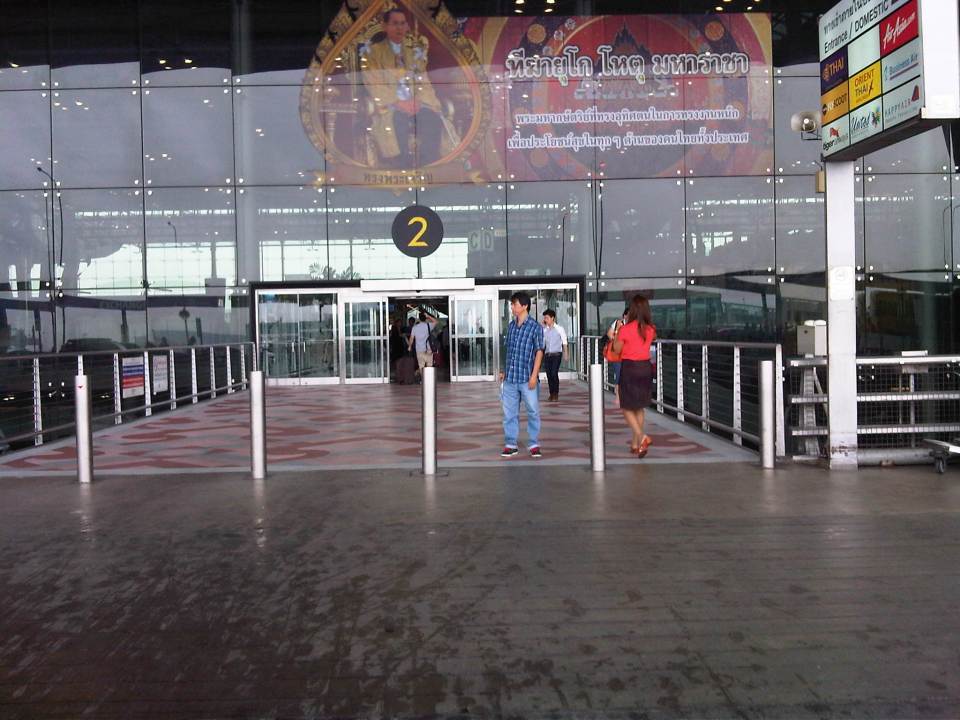 Entrance to the airport from the driveway – we took a taxi from our hotel. There were four of us and some had a little shopping so it wasn’t convenient to take the train to the airport.
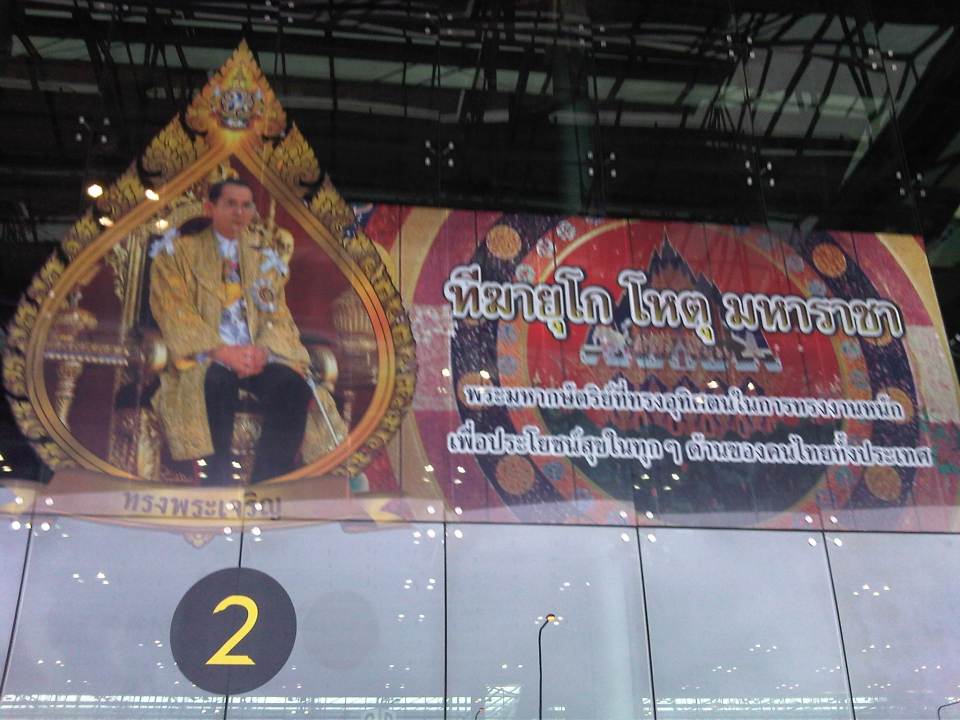 Greetings from His Royal Majesty, the King of Thailand – the Thais are proud and very respectful of their king.
 Check-in counters for the full service airlines – we traveled via Thai Airways, which is currently one of the best airlines in the world.
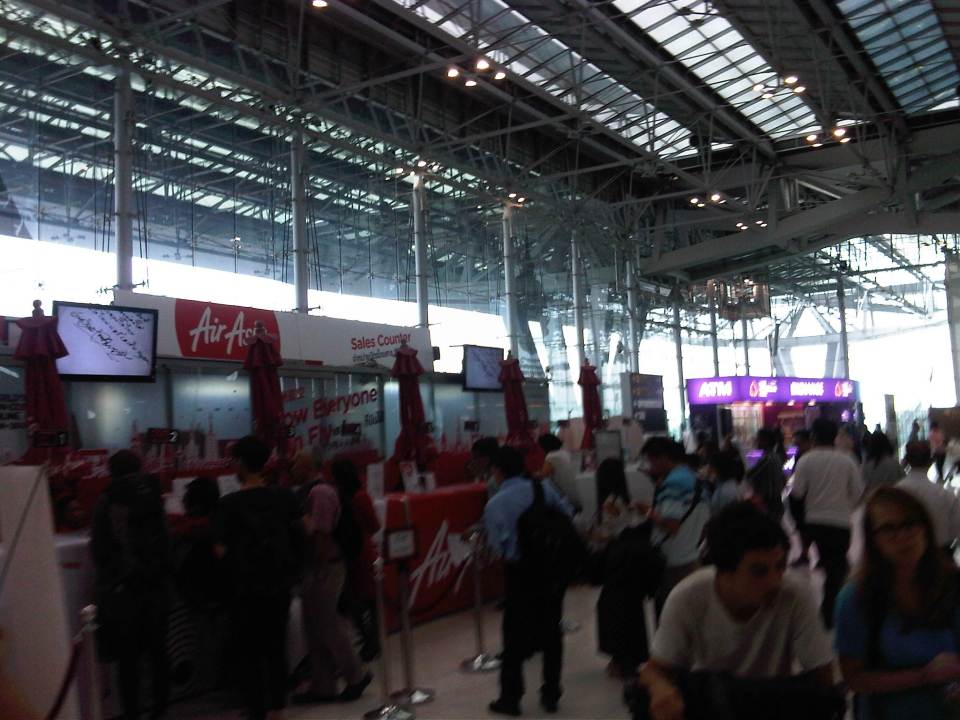 Ticketing counters for budget airlines – I found it quite unusual that the ticketing counters for some budget airlines like AirAsia was along what should have been a wide corridor leading from the entrance to the check-in counters.
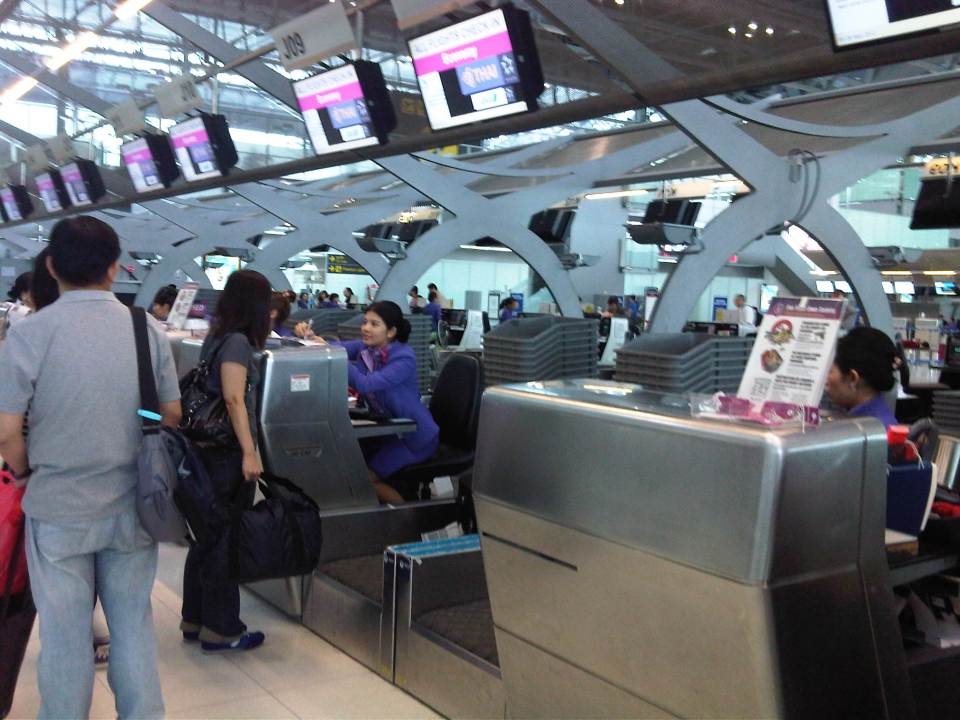 Thai Airways check-in – I had already checked-in prior to arriving at the airport for my return trip, thanks to the online check-in feature of the airline, so I just had to drop off my luggage for tagging. Others who were just checking-in to get their seats and drop off their luggage had to go through the usual procedure.
 Information board for departing passengers provide directions
 After checking-in, people have the option to shop, eat or proceed to immigration to enter the pre-departure area where there are more shops, restaurants and the airline lounges.
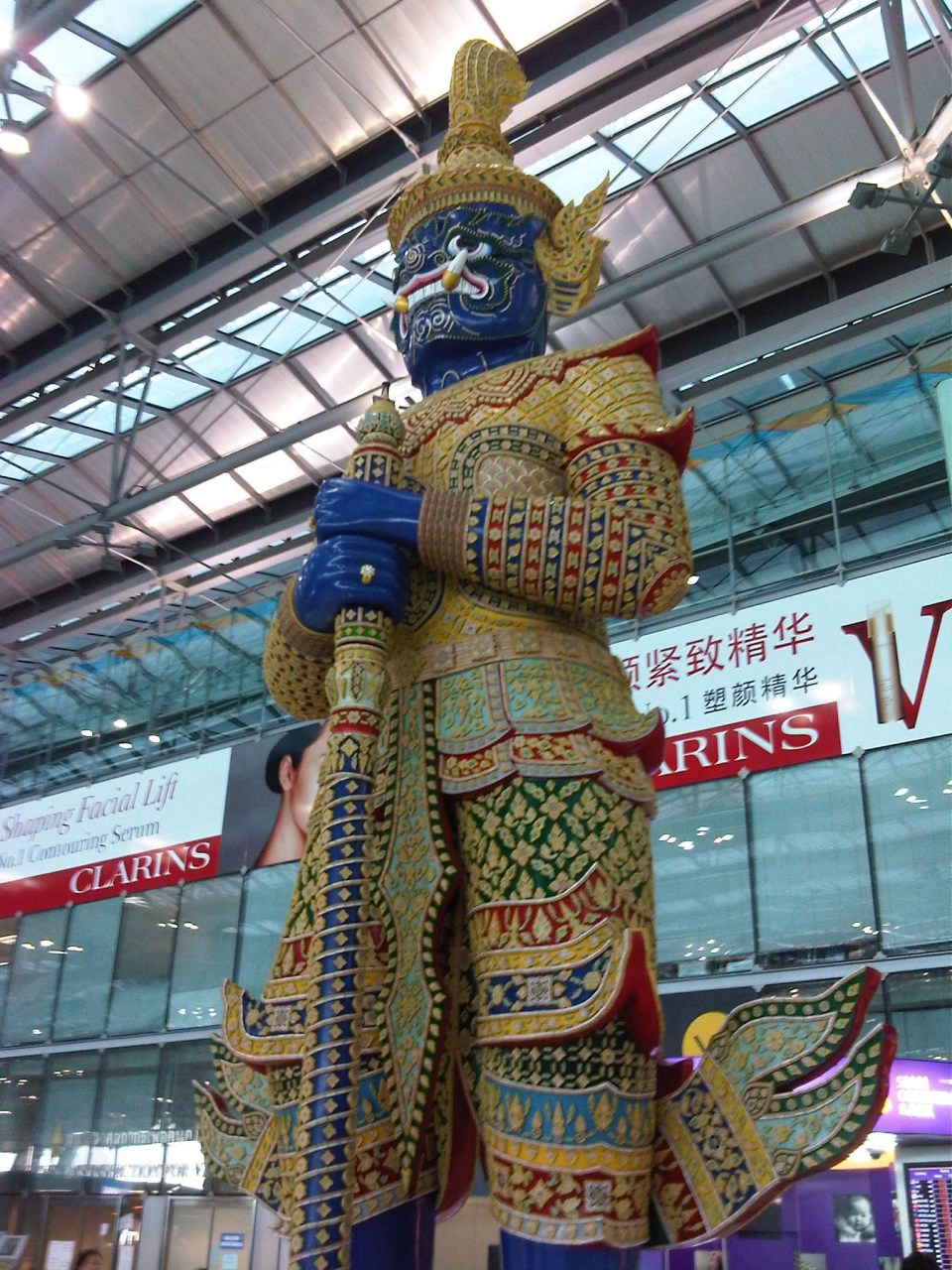 Sentinel? – among the things I like about Suvarnabhumi are the features such as this that define the airport in as far as character is concerned. It is a modern airport and yet they were able to infuse Thai culture wherever its possible. A similar case may be found in Bali and I hope they’re able to retain that airport’s character with their new terminal (under construction when I was in Bali last February 2012).
More on Suvarnabhumi Airport later!
–
Airport congestion and options to decongest NAIA
Airport congestion refers to two things – congestion at the passenger terminal and congestion at the runway(s). The first may be found in several areas of an airport terminal. Among these areas are at the check-in counters, the immigration counters, customs and the baggage claim counters. Congestion may also refer to the areas allotted to well-wishers although depending on the terminal layout or design, these can be integrated with the check-in or arrival areas. The second concerns aircraft take-offs and landings, and queuing is present both on the ground and in the air. Congestion on the ground can be observed at the end of a runway from where aircraft may be queued according to air traffic control. Congestion in the air is observed in the form of aircraft circling the vicinity of the airport at various designated distances (radius) and altitudes.
Congestion of the first kind is a given at most major airports in the Philippines especially for international flights where security is tighter and there are immigration and customs processes that passengers need to go through. In most cases including domestic flights, airports are usually congested due to the well-wishers taking passengers to the airport or welcoming the same as they arrive. It is not uncommon to see jeepney-loads or tricycle-loads of well-wishers at Philippine airports as it is customary to take relatives or friends (hatid) to the airport or fetch (sundo) people at the terminal
The second type of congestion hogged the headlines earlier this year and during the summer months of April and May when take-off and arrival delays plagued aircraft at Manila’s Ninoy Aquino International Airport (NAIA). Some flights were even cancelled, causing much headaches for passengers and particularly those with connecting flights both for domestic and international destinations. The culprit, technically, seems to be the limited capacities of NAIA’s intersecting runways. Some critics, however, have pointed out that the airlines should share part of the blame for having schedules packed during the day times and offering so many promos. While they have a poin there in as far as scheduling is concerned, one can’t blame airlines from offering such as day flights are more attractive to passengers.
 Aircraft queued along the taxiway leading to NAIA’s main runway
 A newly arrived plane cuts into the queued along the taxiway towards the eastern end of NAIA’s main runway
There are currently several options to decongest the airport in Manila. Many of these are actually proposals that are impractical if not too expensive. One option is to transfer international operations to Clark, which is about 220 kilometers from NAIA or 200 kilometers from Quezon City via the North Luzon Expressway (NLEX). It seems to be the most viable solution and has been compared with the location of other international airports like Narita and Suvarnabhumi, which are outside the metropolitan areas. The thing here is that there needs to be a good link between the airport and the metropolis, which presumably generates much of the demand for the airport. So far, there is already the NLEX for road transport and it should not take so long for someone to travel from, say, Quezon City to Clark. Meanwhile, a rail link has taken so much time in the planning (or procrastinating?) stage that it seems more and more that the Northrail will never become a reality in the foreseeable future.
Two other options have been put forward recently, one by a major corporation that has now expanded its portfolio to include infrastructure, particularly on transportation, and another by a consortium that has developed reclaimed areas along Manila Bay. The head executive of the San Miguel Corporation, which now controls Philippine Airlines, announced plans to build their own airport, initially likely to be somewhere in the province of Bulacan, which is just north of Metro Manila and a shorter distance away compared to Pampanga, which hosts Clark. No details were given making a lot of interested parties including airport aficionados think about which areas in Bulacan are viable and spacious enough to host an airport of international standards. More recent is the idea for the development of the Sangley Point airport that will require reclamation and still another airport link towards the reclaimed areas that include PAGCOR City and the SM MOA. This last proposal seems to be morphing into something that San Miguel is said to be considering based on at least one report that came out today. I think the bottomline here, which ever option is taken, is that we need to have a modern airport that will be able to handle current and projected passengers and freight given our aspirations for commerce and tourism plus the fact that more and more Filipinos are traveling given the OFWs abroad. Decisions will have to be made and government should have a say here considering it is a major piece of infrastructure being considered. One opinion is that we simply cannot rely on the private sector to decide on this and such decisions need to be guided based on the public interest and good.
–
Views from a landing plane
I like taking photos when I am traveling and have always tried to get some clear shots when I’m on-board a plane, trying to identify certain landmarks like volcanoes and bodies of water or perhaps roads that I could identify from above. Aerial shots are quite tricky with a point-and-shoot even though one can have the benefit of zoom and other pertinent functions digital cameras have these days. On one particular trip I had the fortune of being able to take photos of Mayon Volcano while in another, I was able to take a photo of Taal Volcano. I missed one opportunity to take a photo of the Chocolate Hills of Bohol in one return flight from Mindanao.
The following photos were taken during one flight when the conditions were just right for some clear pictures of roads and then some familiar places as our aircraft approached NAIA.
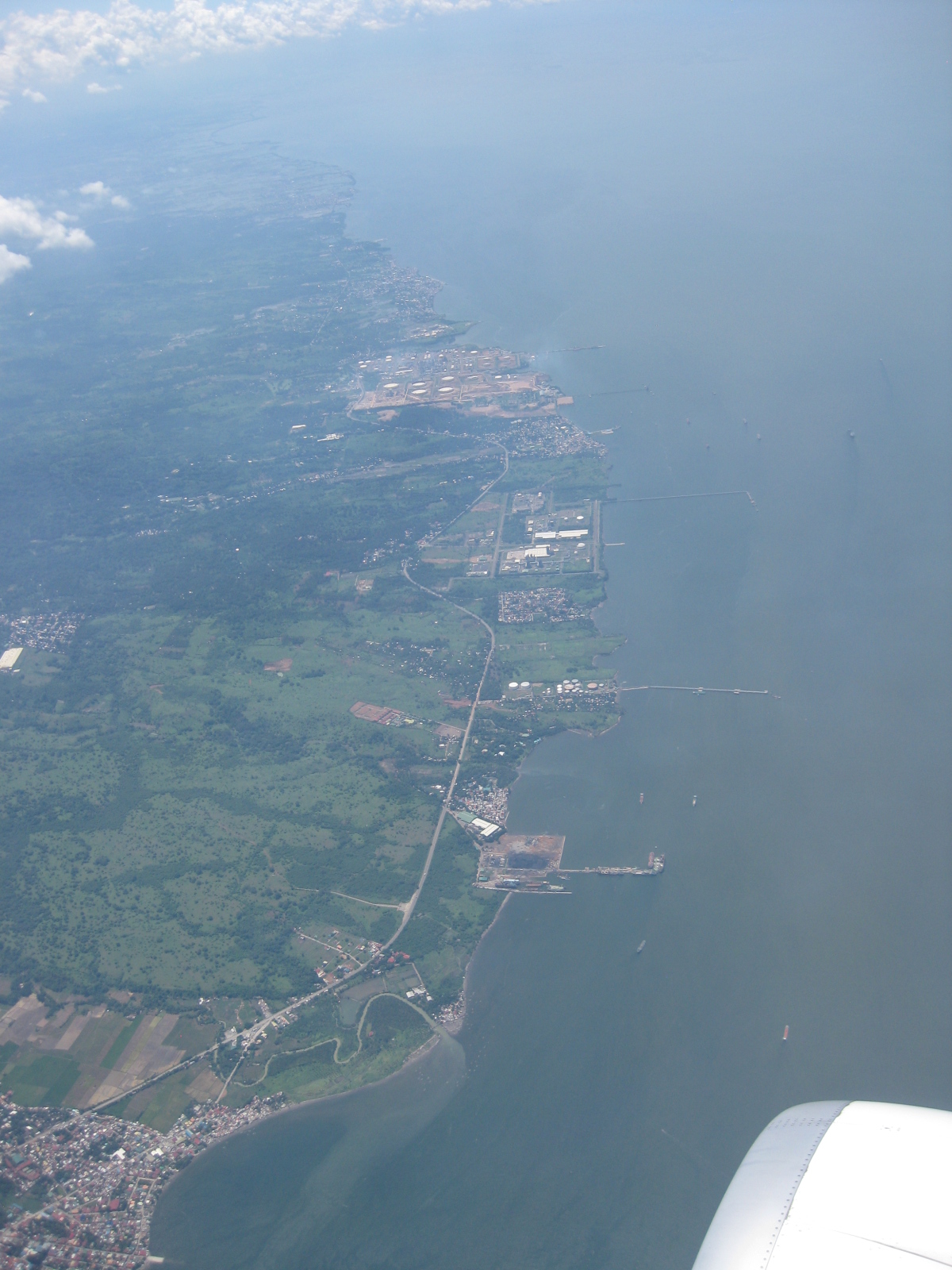 Roman Highway in the Bataan peninsula – there are many industrial estates and plants along the highway, most having their own seaports.
 Ortigas Avenue Extension with Cainta Junction on the upper left of the photo – one of the busiest roads connecting Metro Manila to the eastern province of Rizal, this avenue is often constricted due in part to varying road widths between Rosario and Junction and undisciplined public transport drivers stopping just about anywhere along the road.
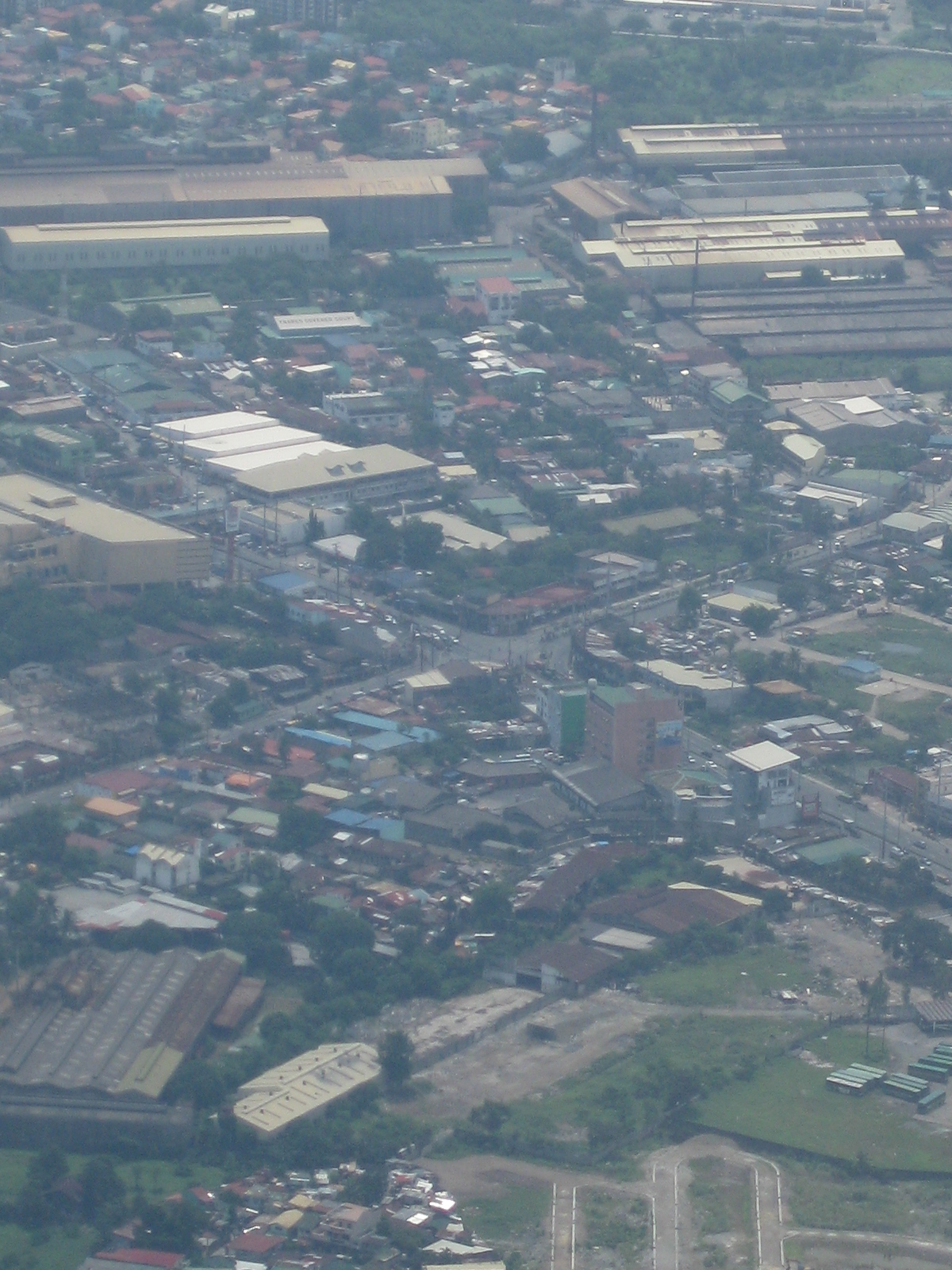 Close-up of Cainta Junction, the intersection of Ortigas Avenue and Imelda Avenue (formerly Felix Avenue) – this intersection is usually congested even during weekends as residents in Rizal with workplaces or schools in Metro Manila have steadily increased over the years.
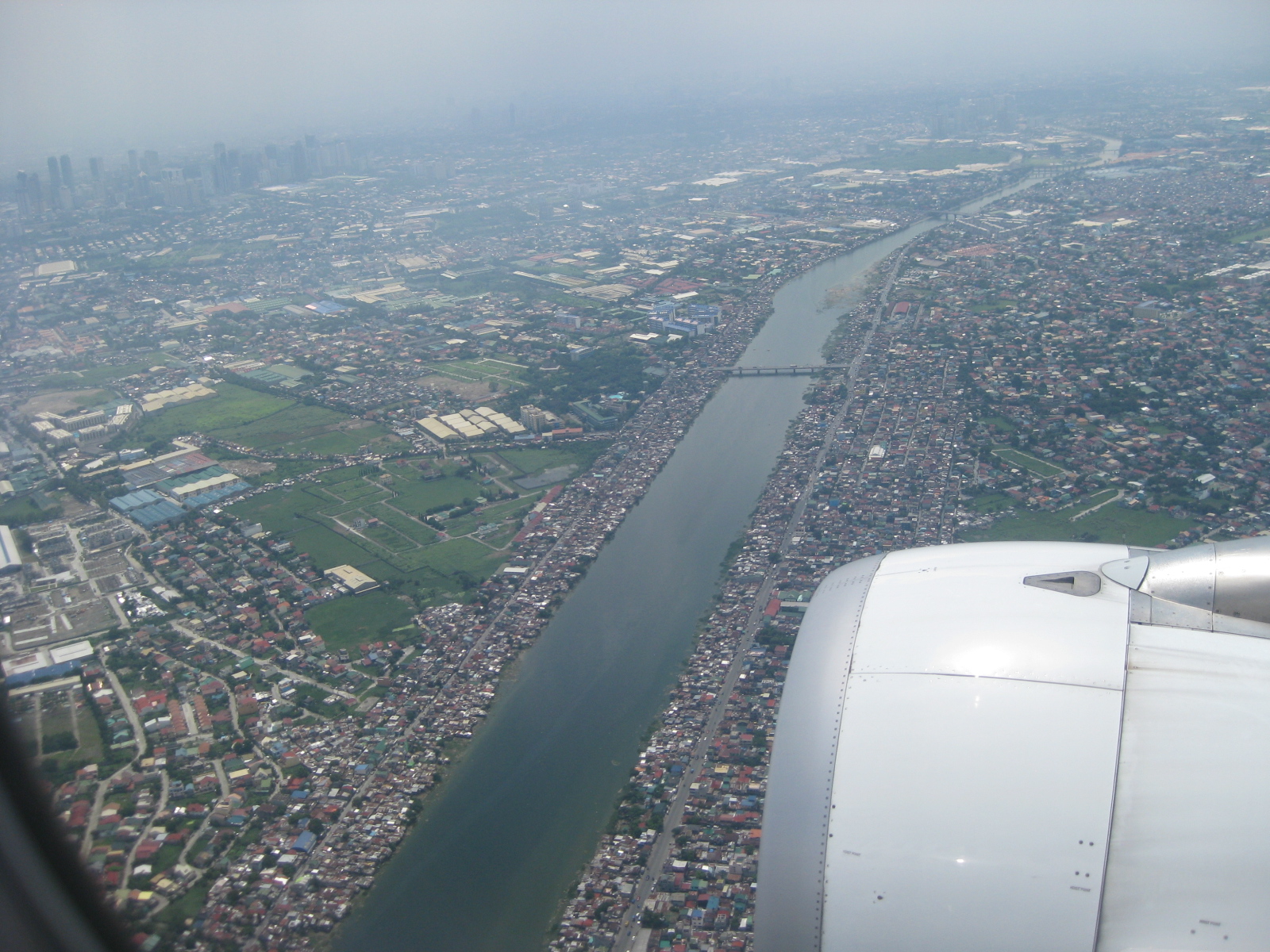 Manggahan Floodway – along the west and east service roads flanking the floodway are thousands of informal settlers. Notice the haze in the background?
 The high-rise buildings of Bonifacio Global City and the Makati CBD – Market! Market! is on the right side of the photo. While the photo seems clear, one can see the haze, probably from pollution, in the background and obscuring the buildings further away.
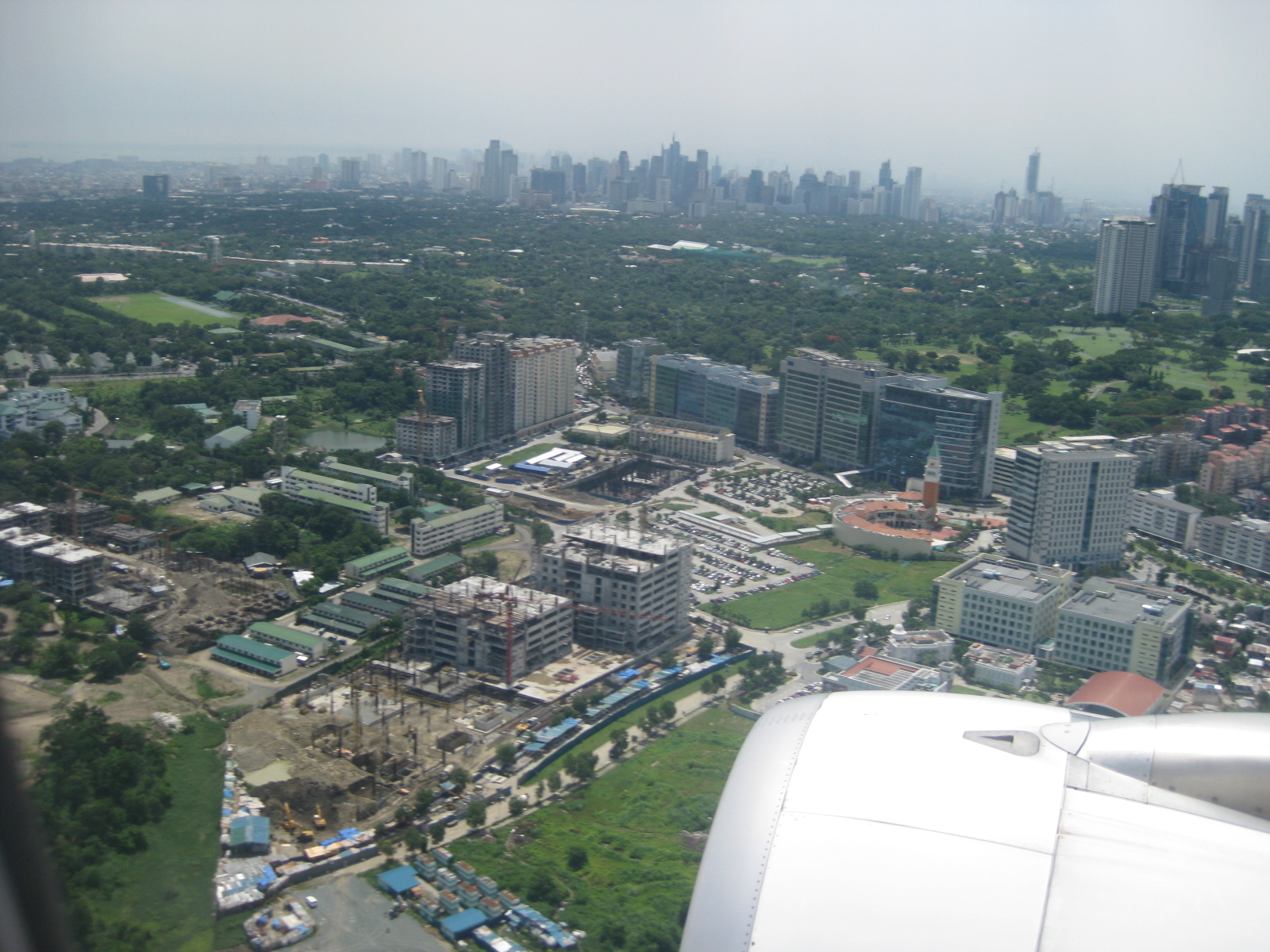 McKinley Hill – development west of Bonifacio Global City and beside the Philippine Army Headquarters. Buildings in the City of Manila are visible in the background/horizon despite the haze.
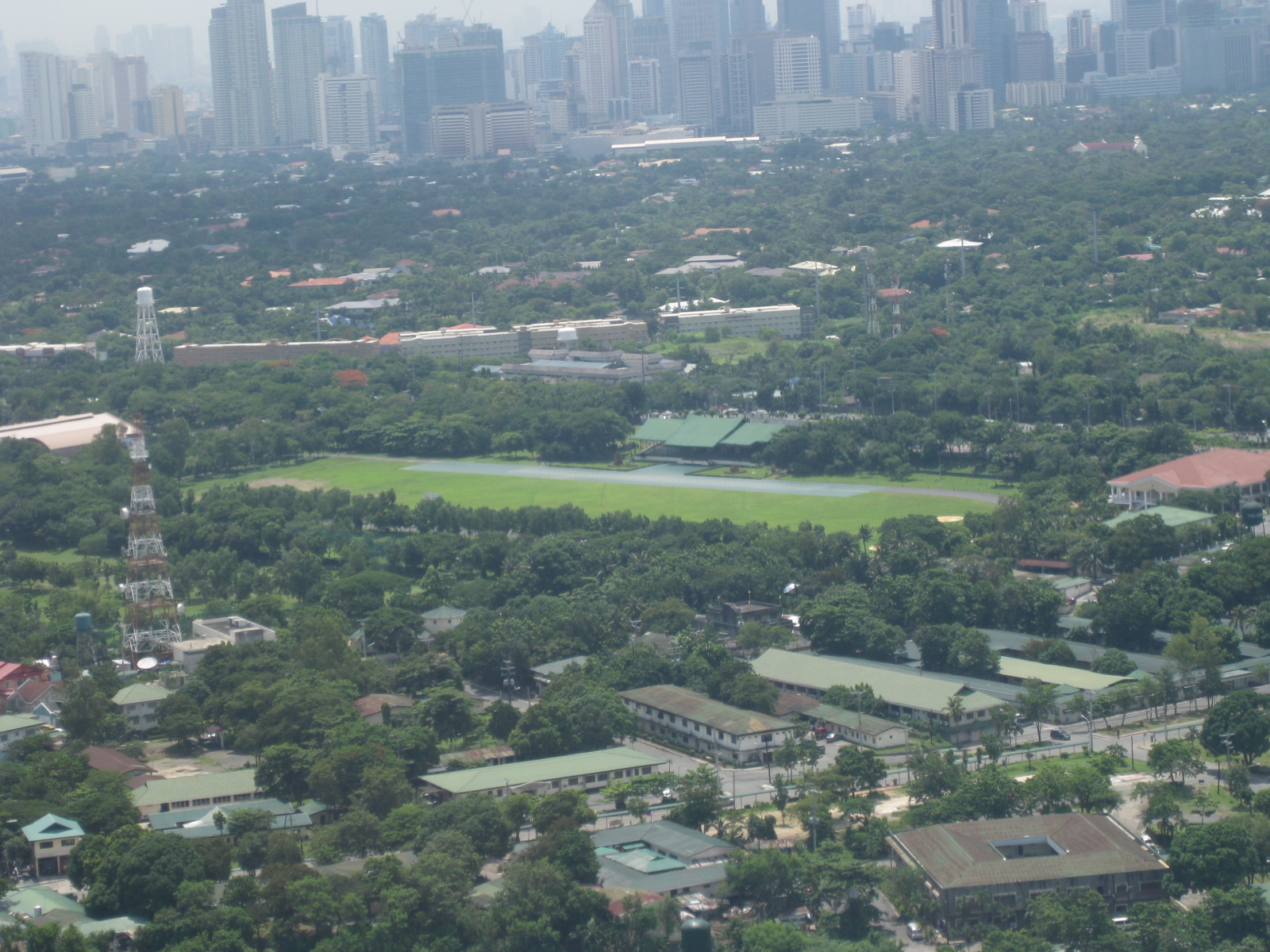 Philippine Army Grandstand and Parade Grounds at Fort Bonifacio. What looks like a wide green area between the Fort and the Makati CBD in the photo are actually parts of exclusive high-end residential subdivisions (i.e., Forbes Park and Dasmarinas Village).
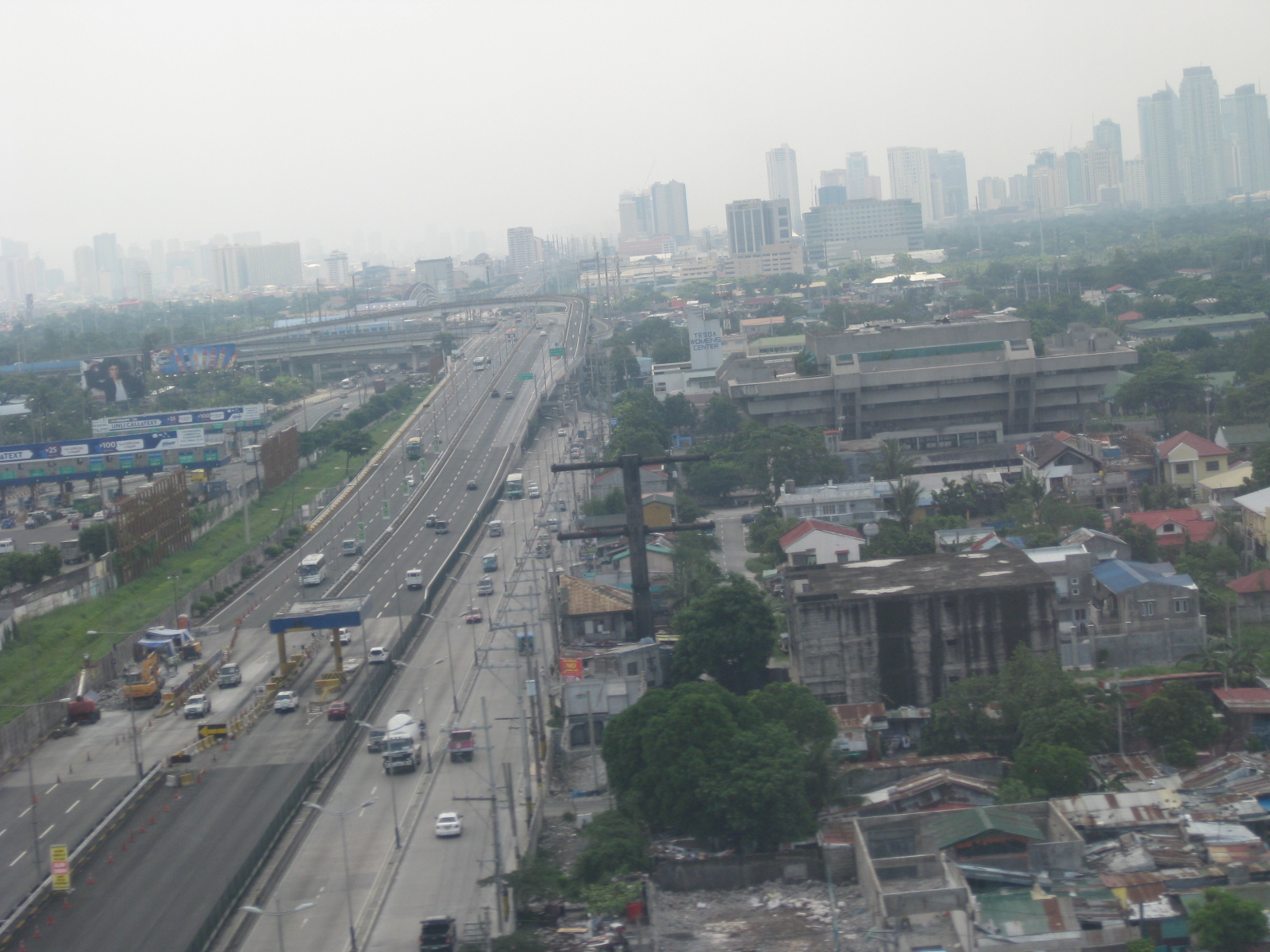 SLEX, Skyway, and the East Service Road – that’s the conspicuous TESDA building on the right with its inverted pyramid feature.
 View of the NAIA Terminal 2 upon touchdown – also known as the Centennial Terminal, this is used exclusively by Philippine Airlines for both international and domestic flight.
–
NAIA Terminal 1 Arrival
Arriving at NAIA Terminal 1, I was curious to see if there have been significant improvements in the terminal as the arrival corridors and facilities would probably give visitors a first impression of Metro Manila and the country as well. Terminal 1 serves all other international carriers with flights to Manila with only Japanese airline All Nippon Airways using Terminal 3 for its flights. Domestic carriers Philippine Airlines and Cebu Pacific operate to and from Terminals 2 and 3, respectively.
 The corridors are definitely cleaner and neater than before (when Terminal 1 was heavily criticized as being one of the worst international airports in the world) and I think the tarps featuring tourist destinations around the Philippines help promote the country.
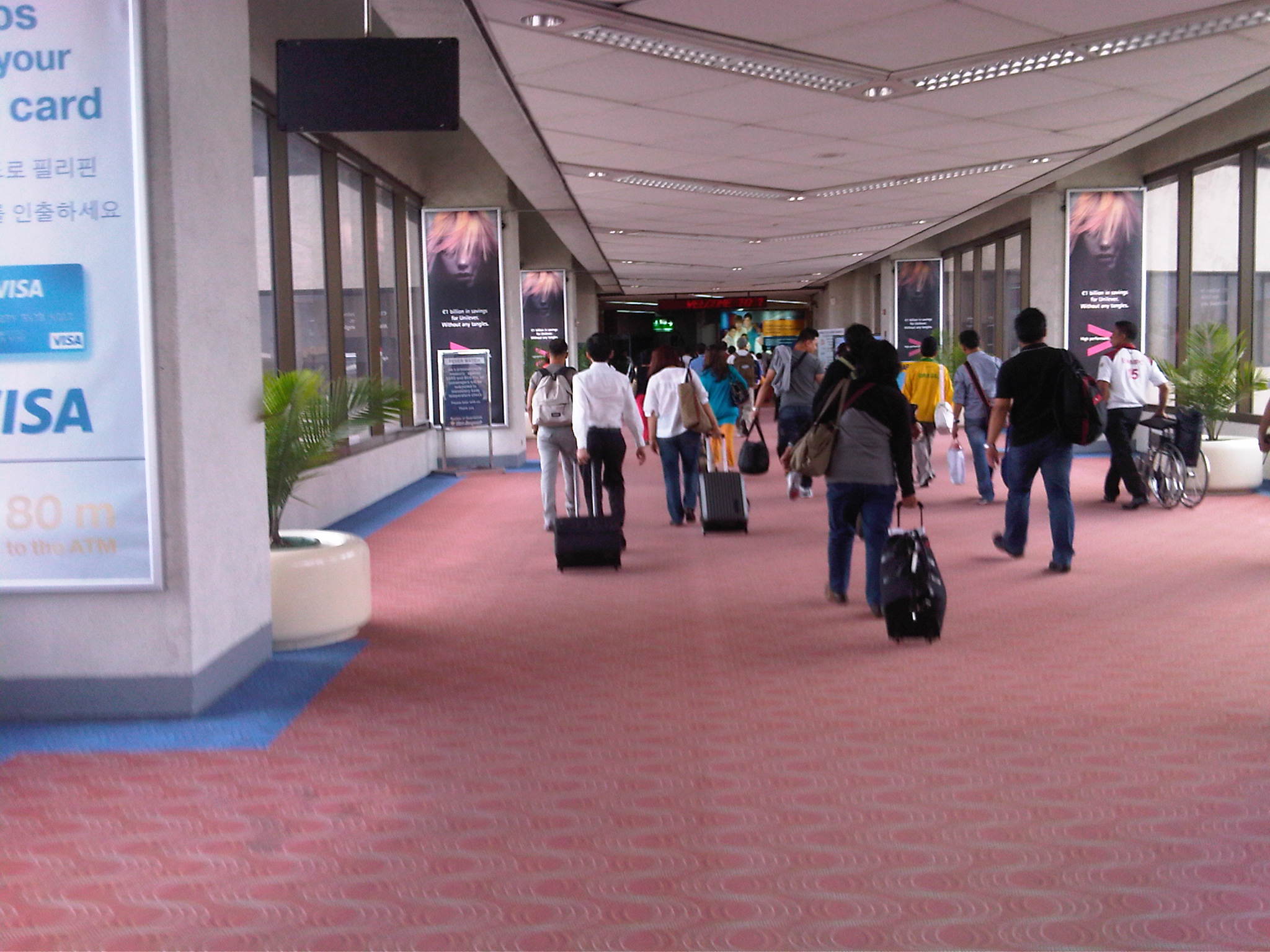 The corridors are spacious enough and the walk is not so long to require moving walkways or “walkalators.” There are staff and equipment at the end of the corridor scanning for indications of high body temperature usually associated with flu.
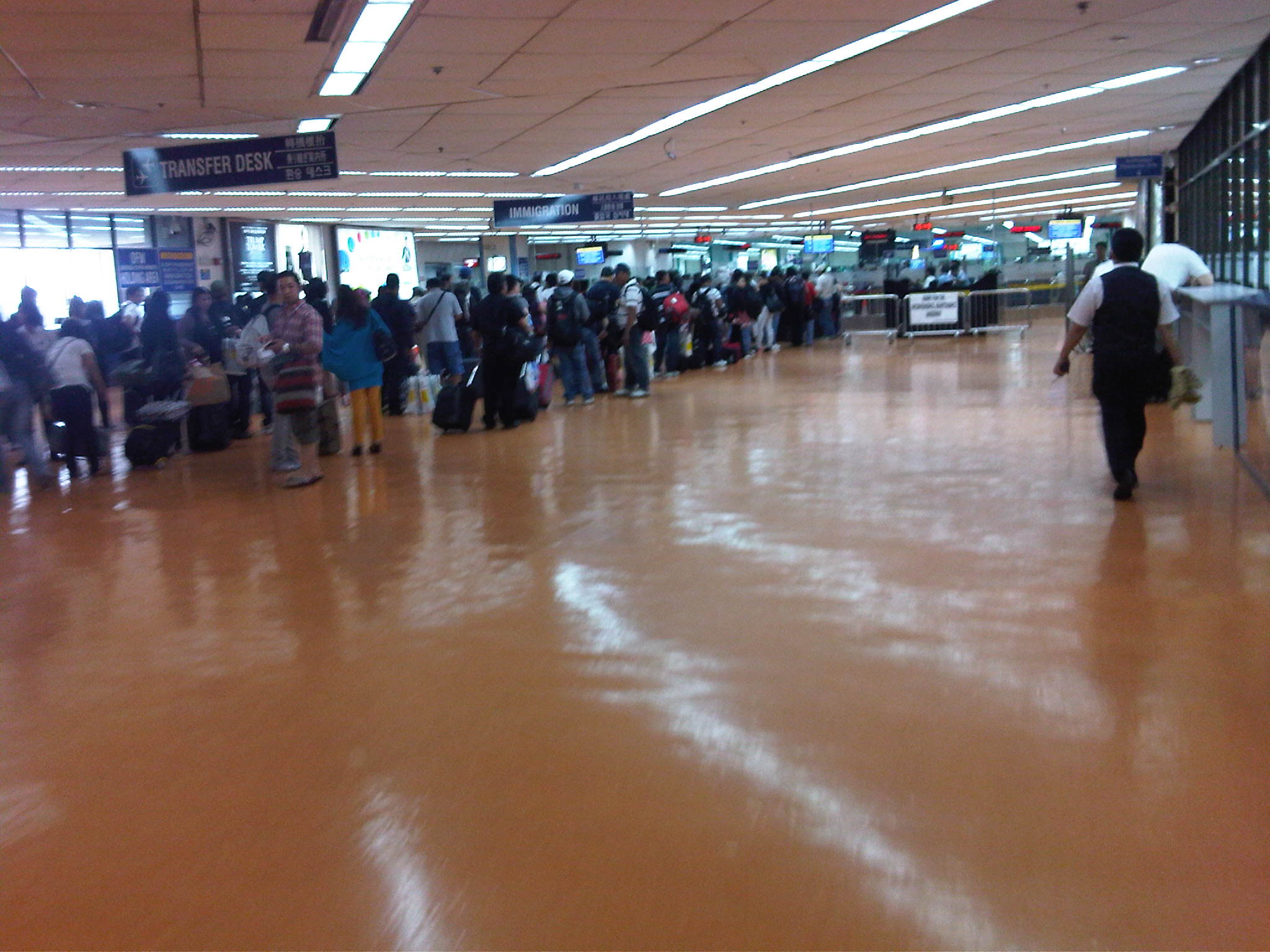 There are still long queues at the immigration counters despite additional booths and personnel posted at Terminal 1.
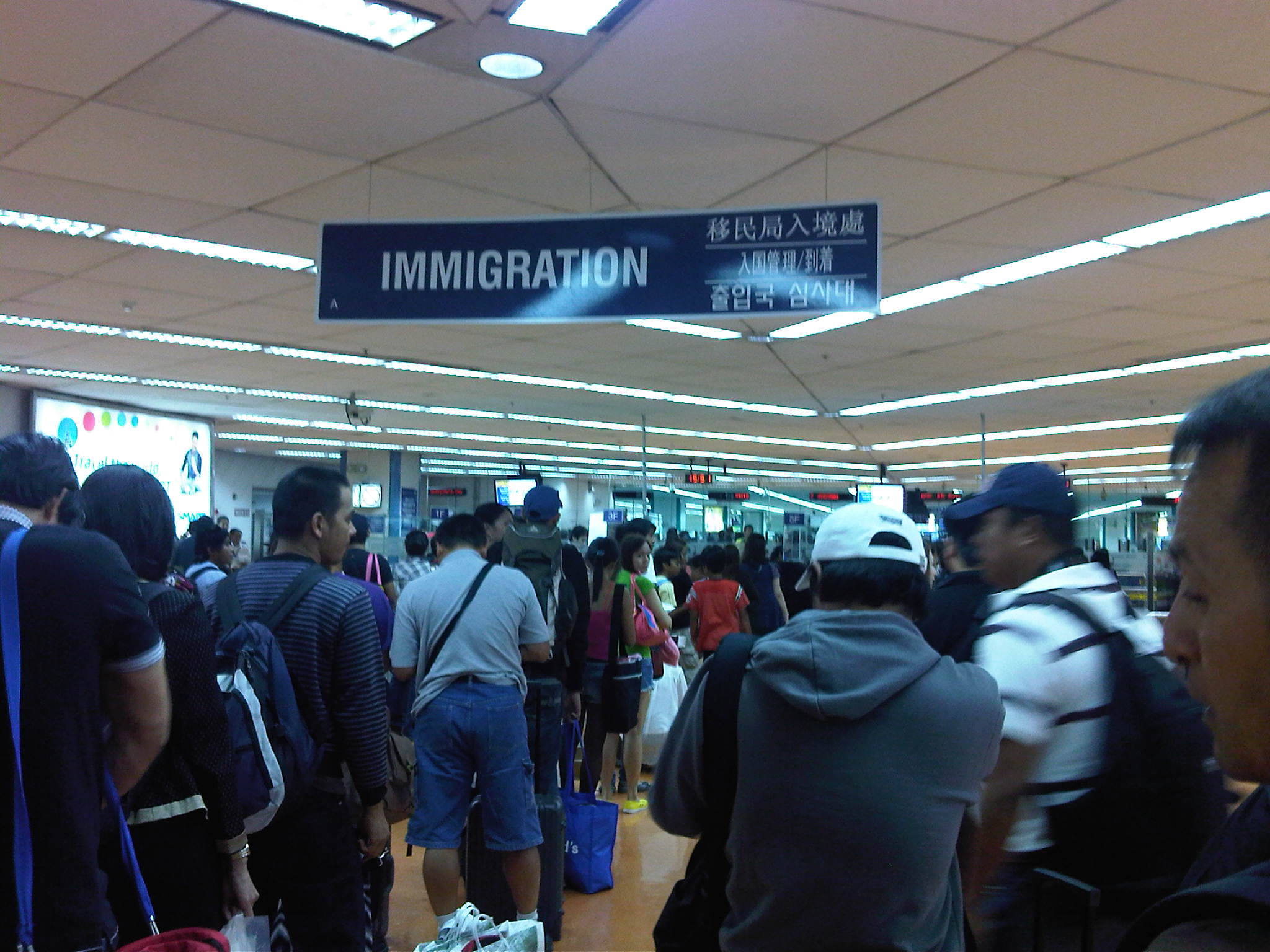 There are separate counters for Philippine passport holders and those bearing passports from other countries. Previously, there were special counters for Overseas Foreign Workers (OFW).
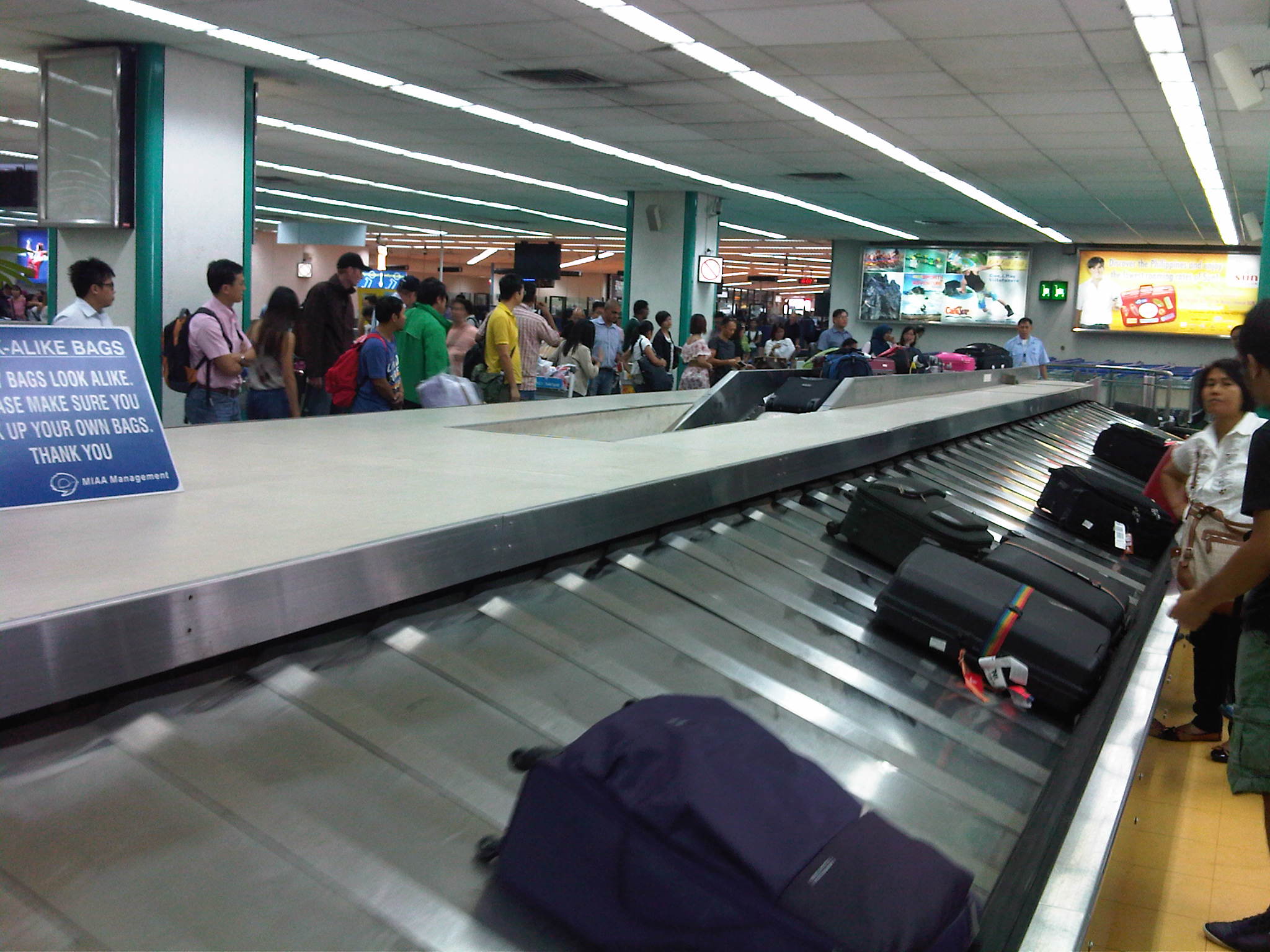 Checked-in luggage emerge and move along at the carousel for our flight.
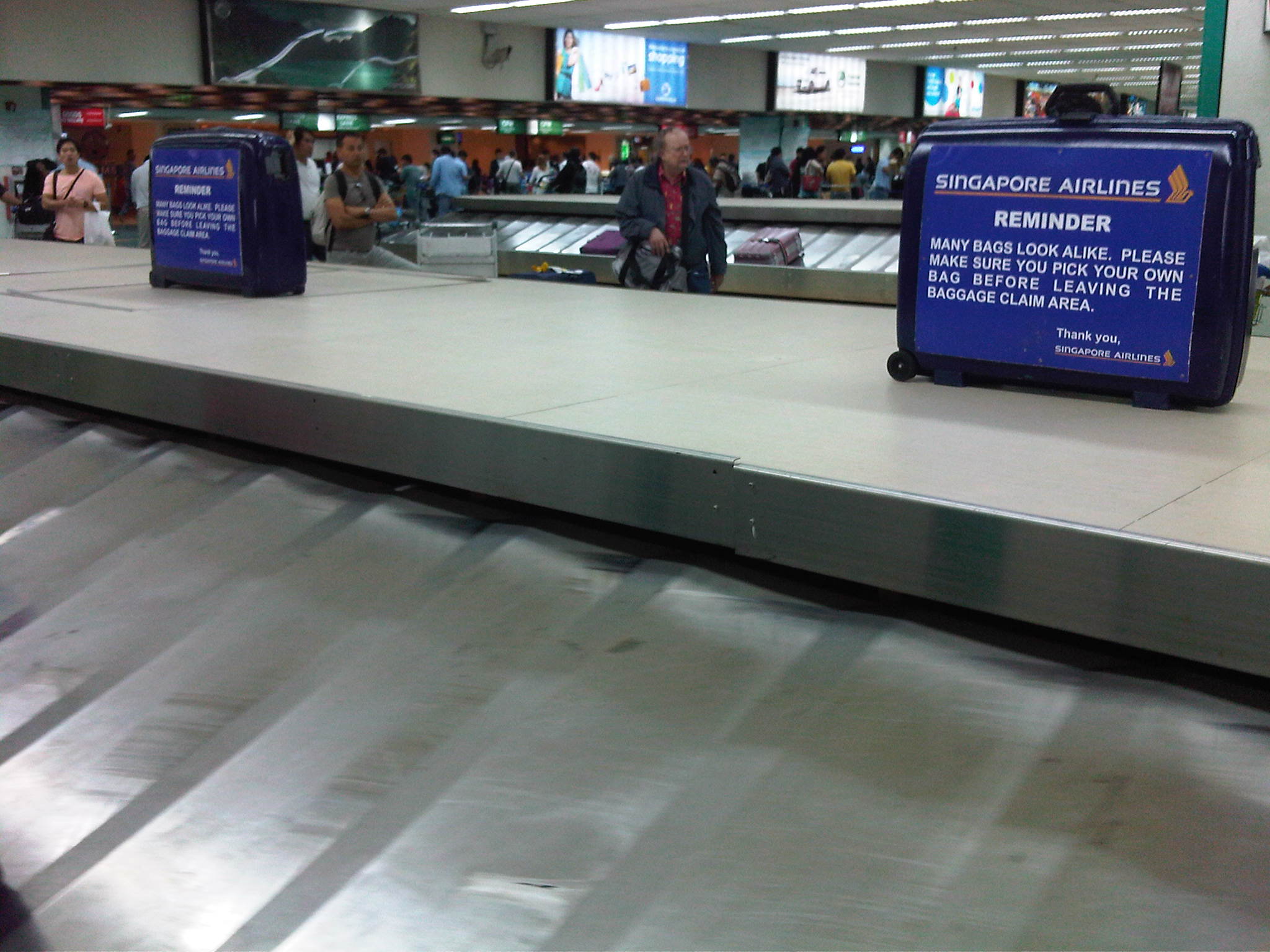 Singapore Airlines placed these signs on old luggage to caution passengers on picking up or identifying luggage from the carousel.
–
NAIA Terminal 1 Departure
I was able to take a few photos inside NAIA Terminal 1 during one recent trip. Terminal 1 is the oldest of the three main terminals of Manila international airport with the exception of the old domestic terminal. It is this Terminal 1 that was known as the New Manila International Airport until 1986, when it was renamed the Ninoy Aquino International Airport after the husband of former President Corazon Aquino, father of current Philippines President Noynoy Aquino. It is also this Terminal which has been the subject of criticisms for being dilapidated and unfit to be a major gateway to the country, particularly its capital.
 Corridor leading to the pre-departure area and gates at one wing of the terminal – the carpets seem tidy enough and airport staff may be found cleaning the area near one of the airline lounges.
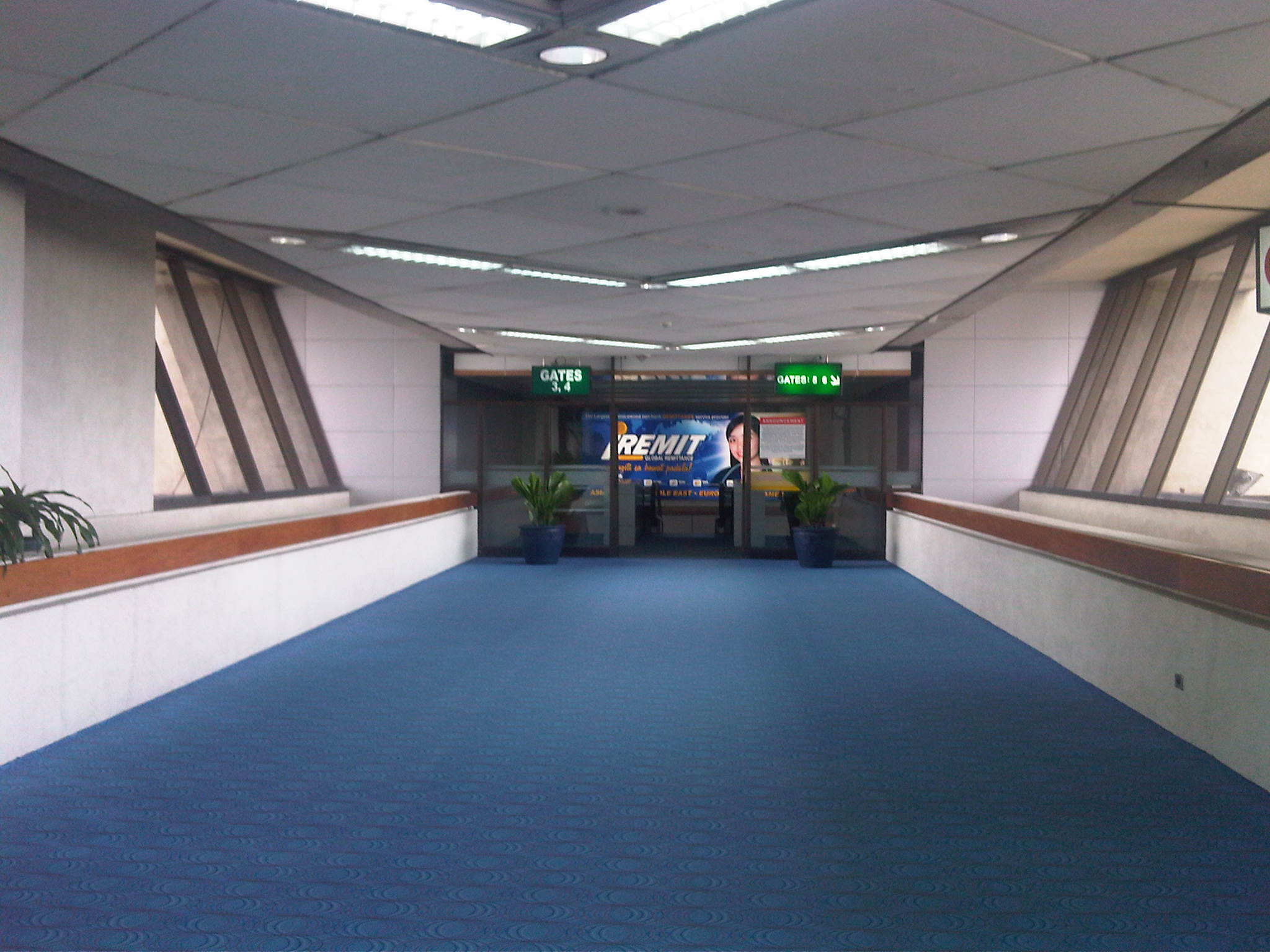 Corridor leading to the pre-departure area – the area
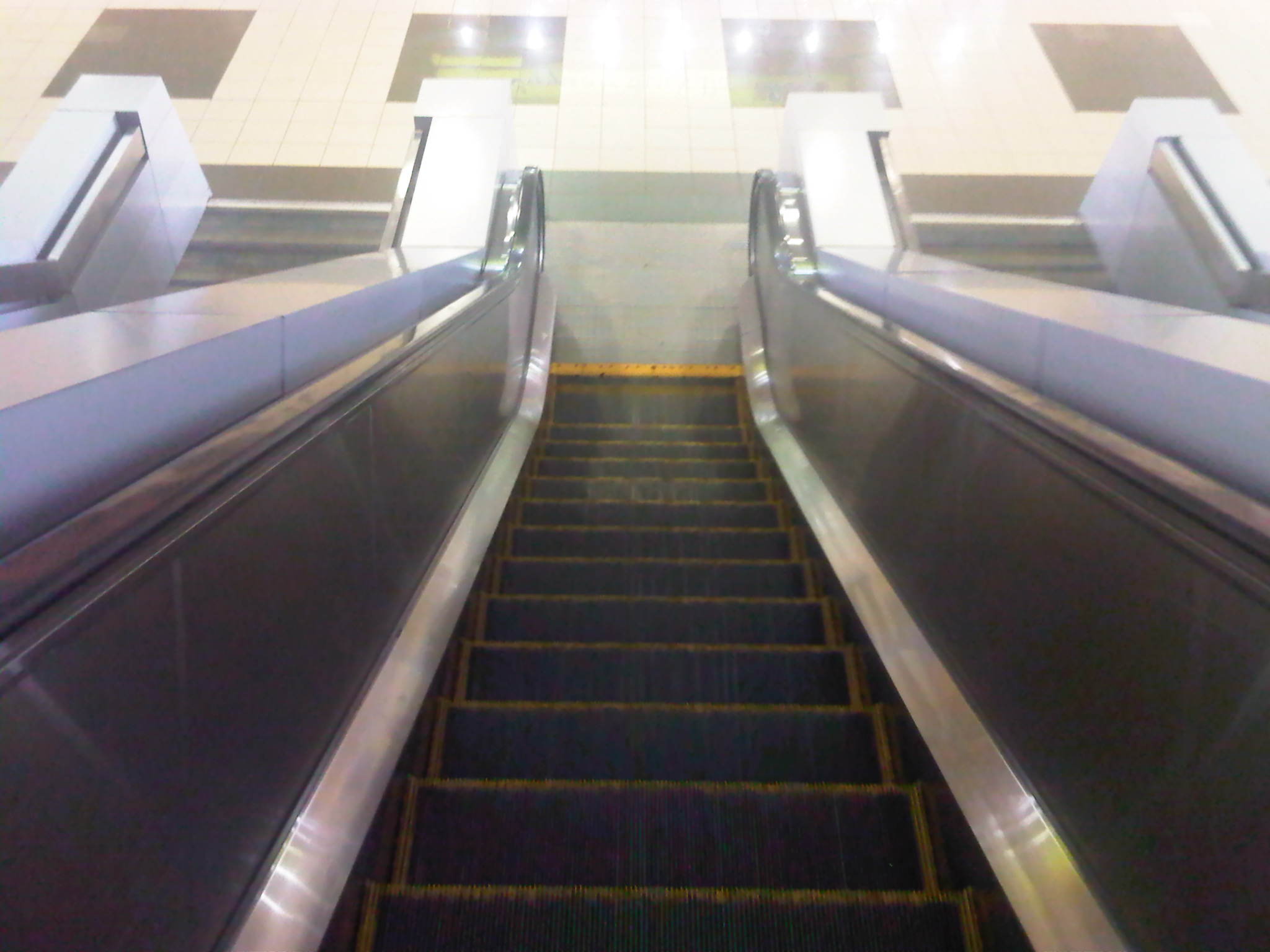 View along the escalator descending towards the pre-departure area – upon reaching the bottom, one will find himself/herself facing counters selling food and drinks to travelers.
 Shops selling local goods like dried fruit, cookies, preserves, souvenirs and other stuff at the pre-departure area of the terminal. Notice the newly tiled floors?
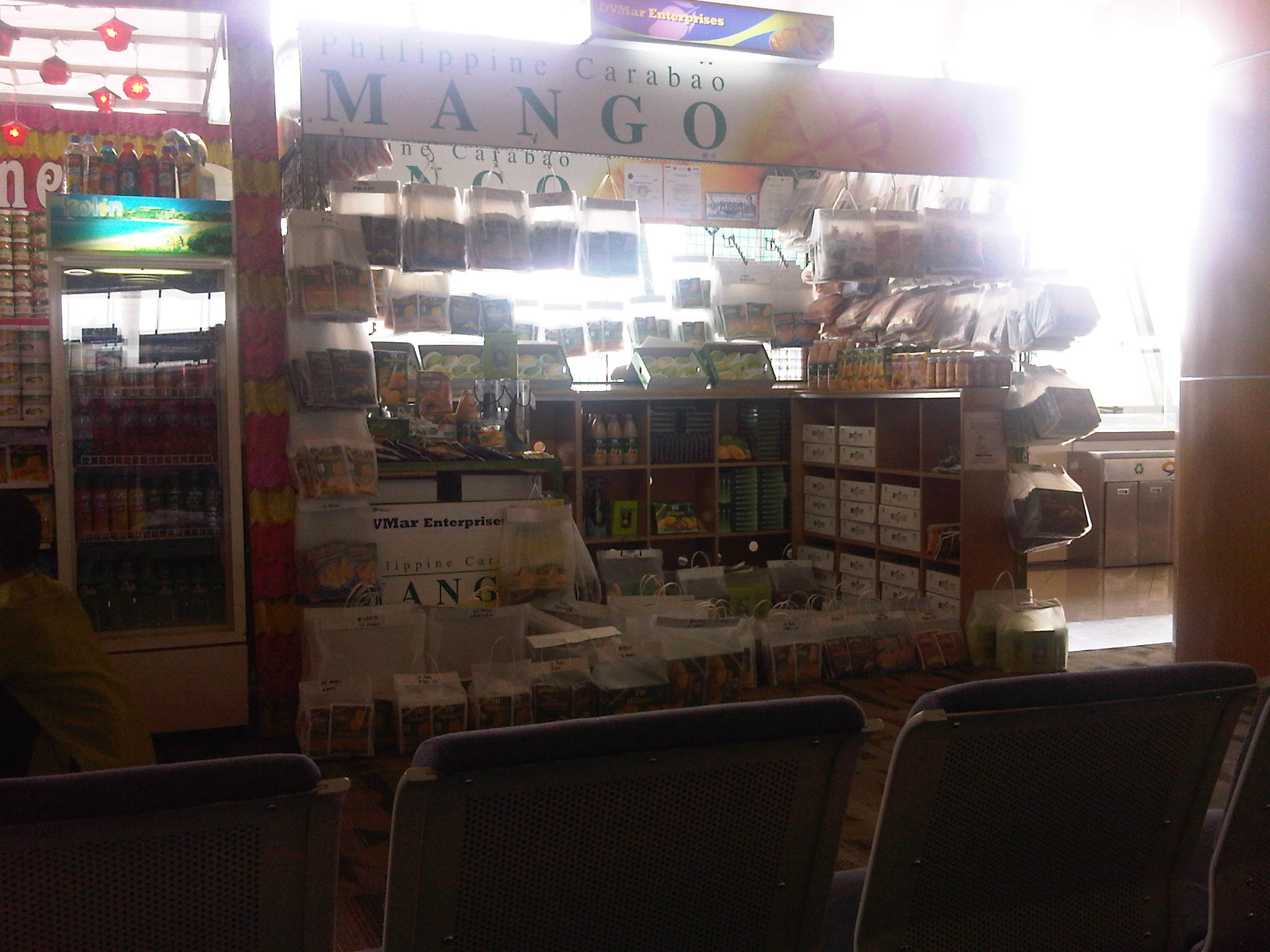 Shop specializing in products made out of Philippine mangoes – they even sell fresh mangoes aside from the popular dried fruit and candies
 Seats at the pre-departure area of the terminal – this is the free seating area that is not associated with any airline. Normally, areas are cordoned off for passenger control and security measures prior to boarding by any airline. The seats are relatively old but are clean and some appear to have been re-upholstered.
 Passengers waiting at the designated area for Singapore Airlines. The airline conducts a security check of all hand-carried baggage for all passengers similar to the practice for US-bound flights.
Admittedly, there is still much work to be done for NAIA’s Terminal 1 in order for it to be able to handle more passengers and well-wishers. There are also a lot to be done in terms of amenities and we can be hopeful that issues pertaining to its facilities will be addressed sooner rather than later.
–
The San Juanico Bridge
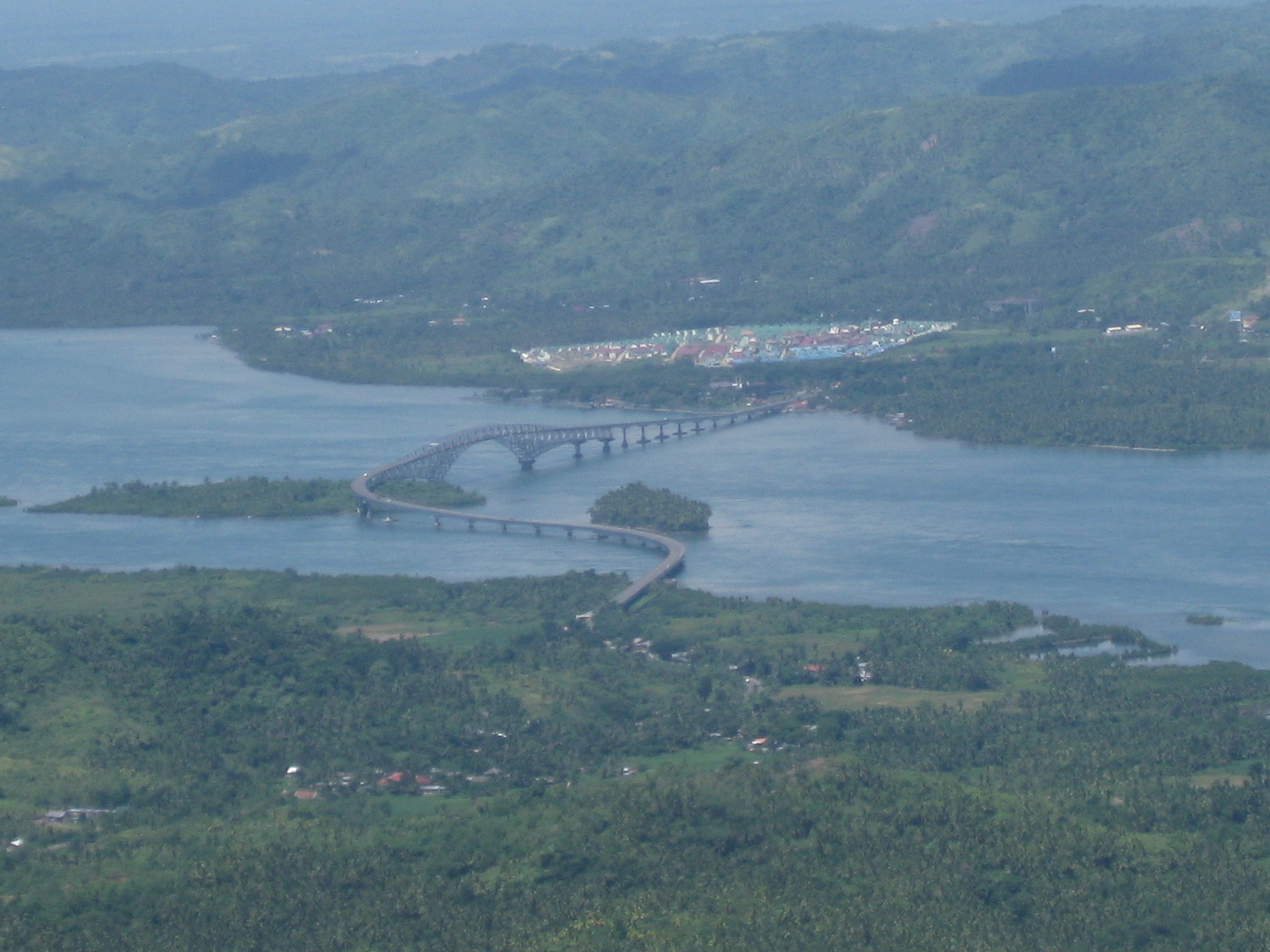
The longest bridge in the Philippines is found between the islands of Samar and Leyte in the Visayas (central Philippines). Flying on a clear day, we saw the bridge as our plane maneuvered towards Tacloban Airport. I took a few shots before our plane turned for the landing. Later, we also took a few photos along the bridge en route to Catbalogan, Samar.
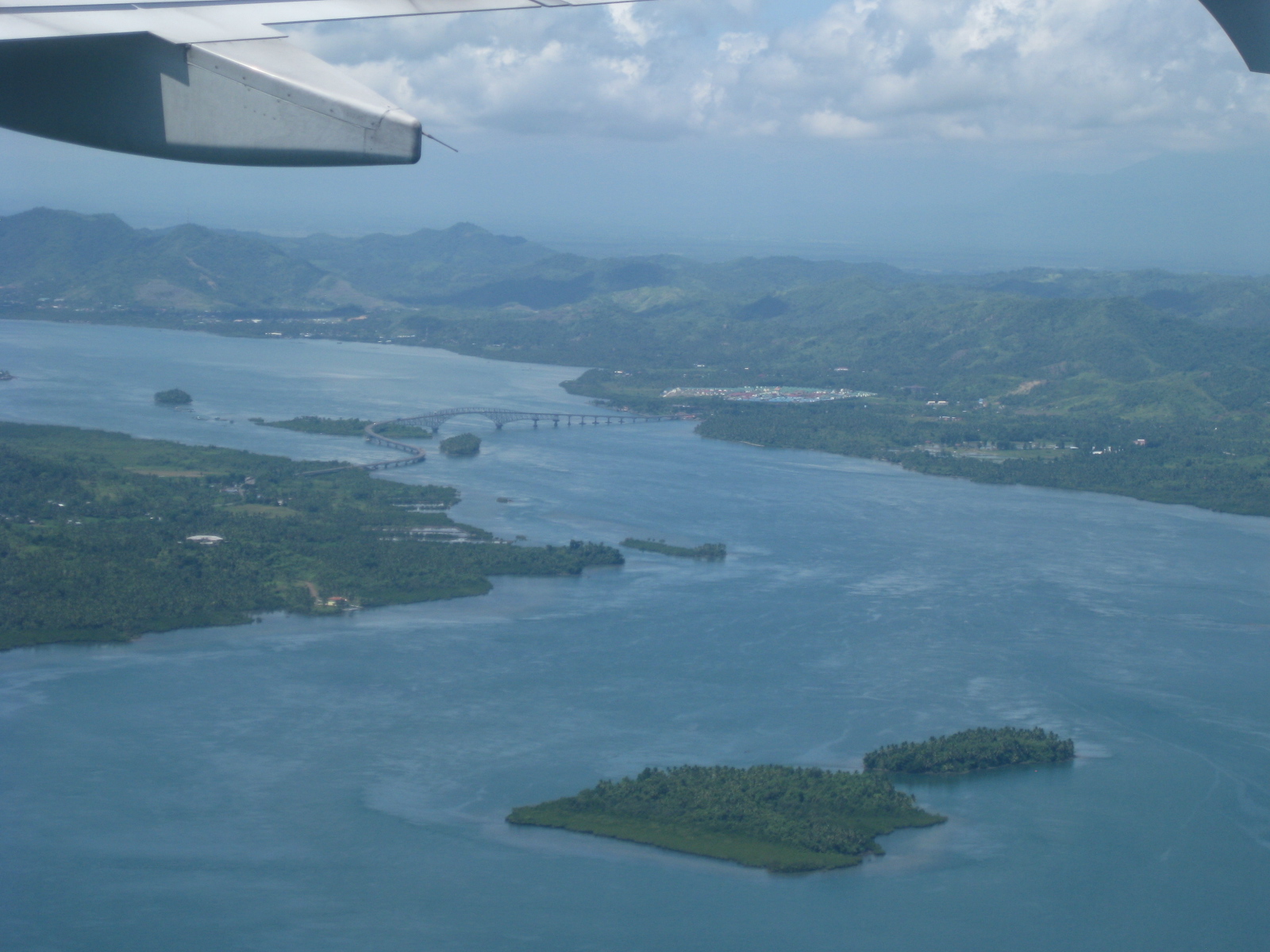 Our first look at the San Juanico Bridge was from the air as our aircraft maneuvered towards Tacloban Airport. Leyte Island is on the right while Samar Island is on the left.
 The Samar end of the bridge is in the town of Basey and the Leyte end is in Tacloban City.
 The bridge is designed in order for vessels to be able to navigate under the superstructure. The construction obviously takes advantage of the islands in the San Juanico Strait.
 Traffic along the bridge was quite low. Heavy vehicle traffic like the truck in the photo are usually regulated when using the bridge as the structure cannot carry too much load given the heavier trucks we have now. The DPWH is in charge of monitoring such heavy vehicle traffic and large trucks must get permission before traversing the bridge.
 Quite unusual – this was the first time I saw a public utility motorcycle, called habal-habal in many parts of the country, that had a makeshift roof to provide shade to the rider and his passenger(s).
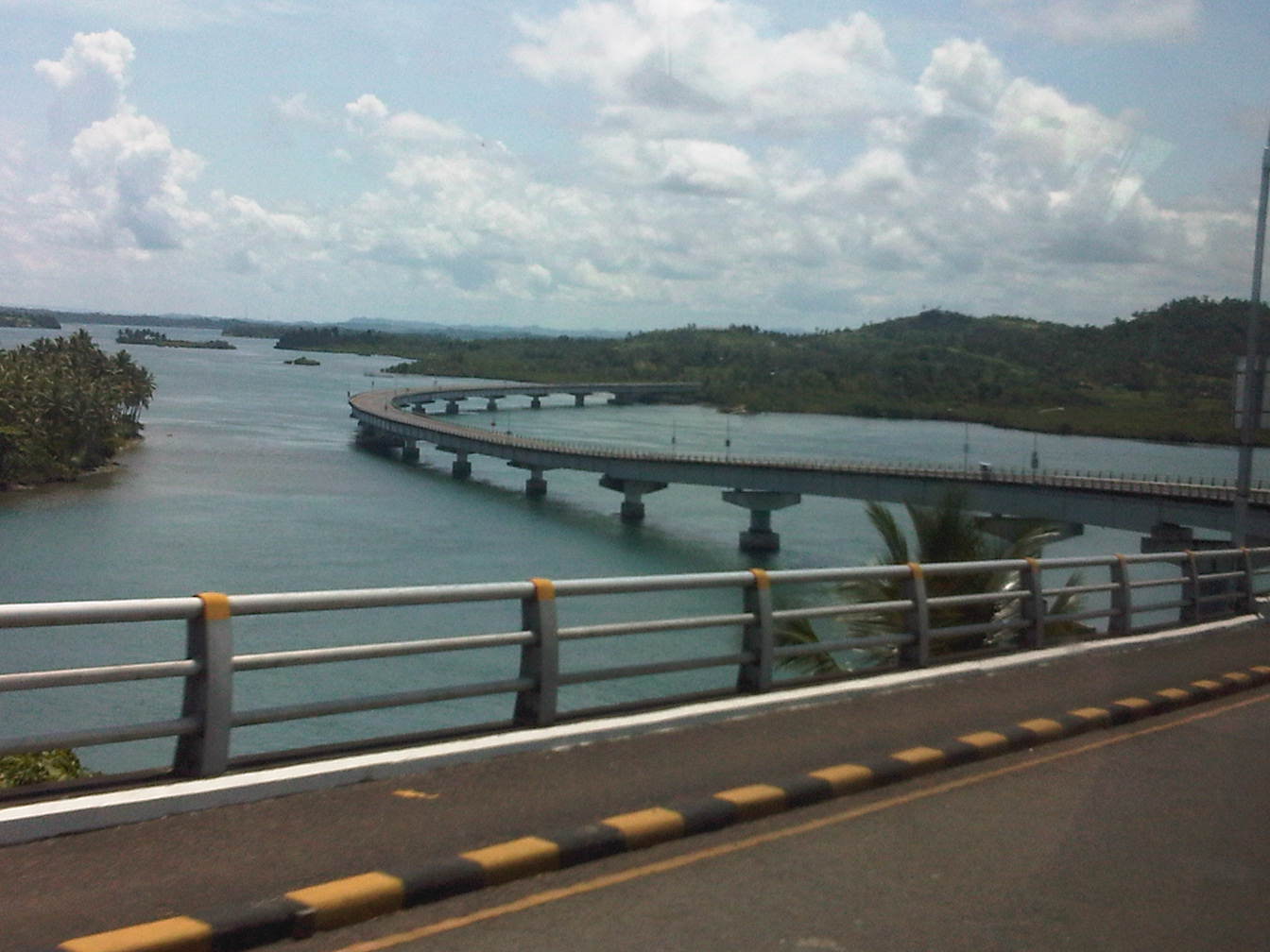 This is a view I’ve seen as a background in many photos as it shows an interesting section of the bridge as it eventually lands in Samar.
Given the light traffic along this bridge that connects two of the largest islands in the country, I am tempted to ponder on the proposals to build much longer bridges connecting other islands. One such proposal is for a bridge to connect the islands of Panay and Negros in Western Visayas. While traffic between these two islands will surely be more than that between Samar and Leyte, I would bet that this won’t be enough to justify the staggering cost of such infrastructure. Indeed, it will be a longer bridge and one that will be a marvel of engineering but it is a folly if seen from the perspective of the people in both islands having more pressing needs in both social and institutional infrastructures (e.g., health centers and schools) that spending money on such a bridge is just plain obscenity.
–
Another look at Tagbilaran Airport
Tagbilaran Airport is the gateway to the province of Bohol and the resort paradise that is Panglao Island. I wrote about the airport earlier but the photos were quite limited as they were somewhat taken more as a matter of coincidence and for souvenirs than for a blog feature on airports. Following are a few photos I consciously took specifically for this post.
 Tagbilaran Airport as seen from our plane that had just arrived.
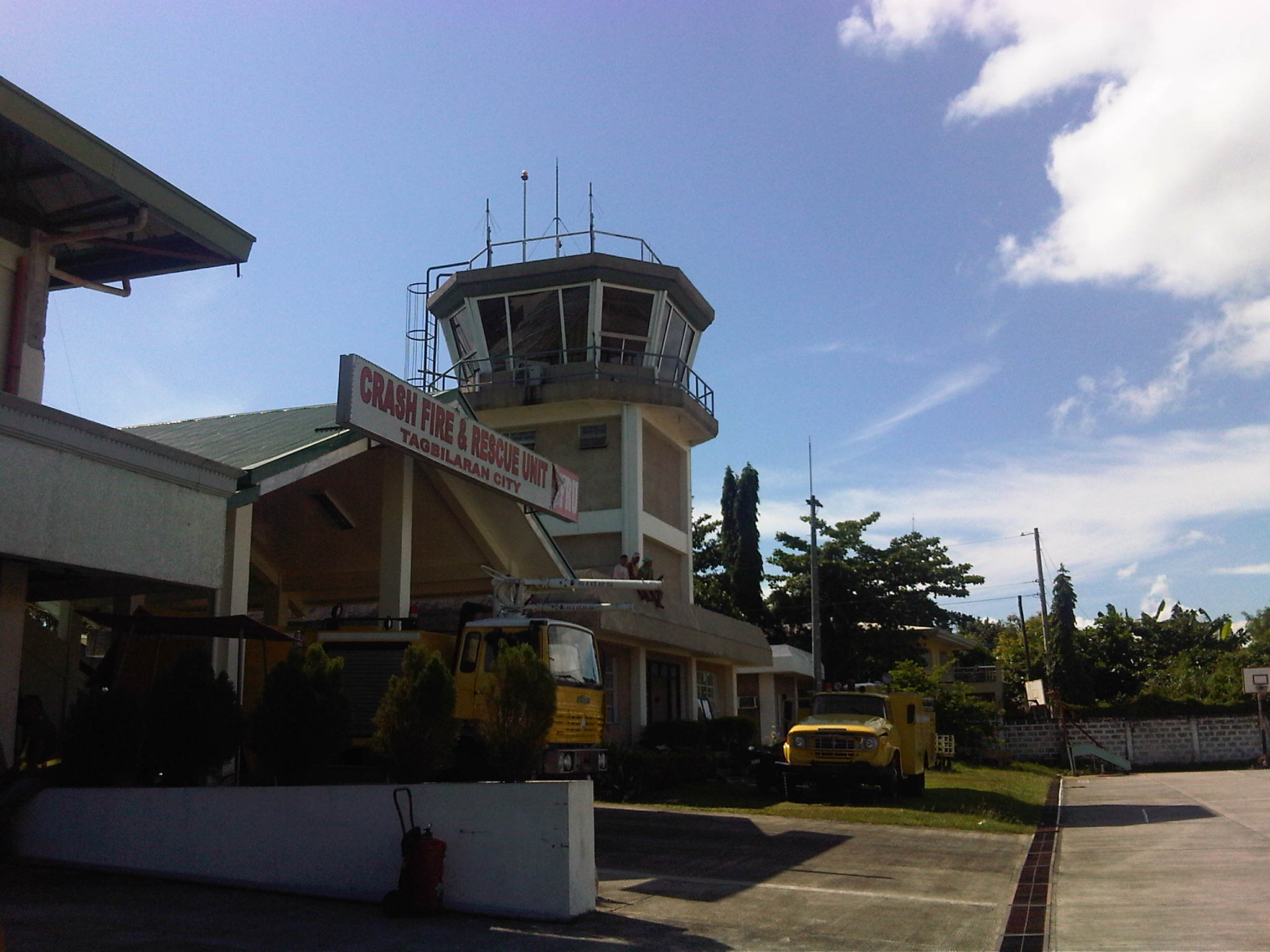 Air traffic control tower and emergency services at the airport.
 The airport is under renovation with the terminal being expanded to be able to accommodate the increasing number of passengers being handled by the airport.
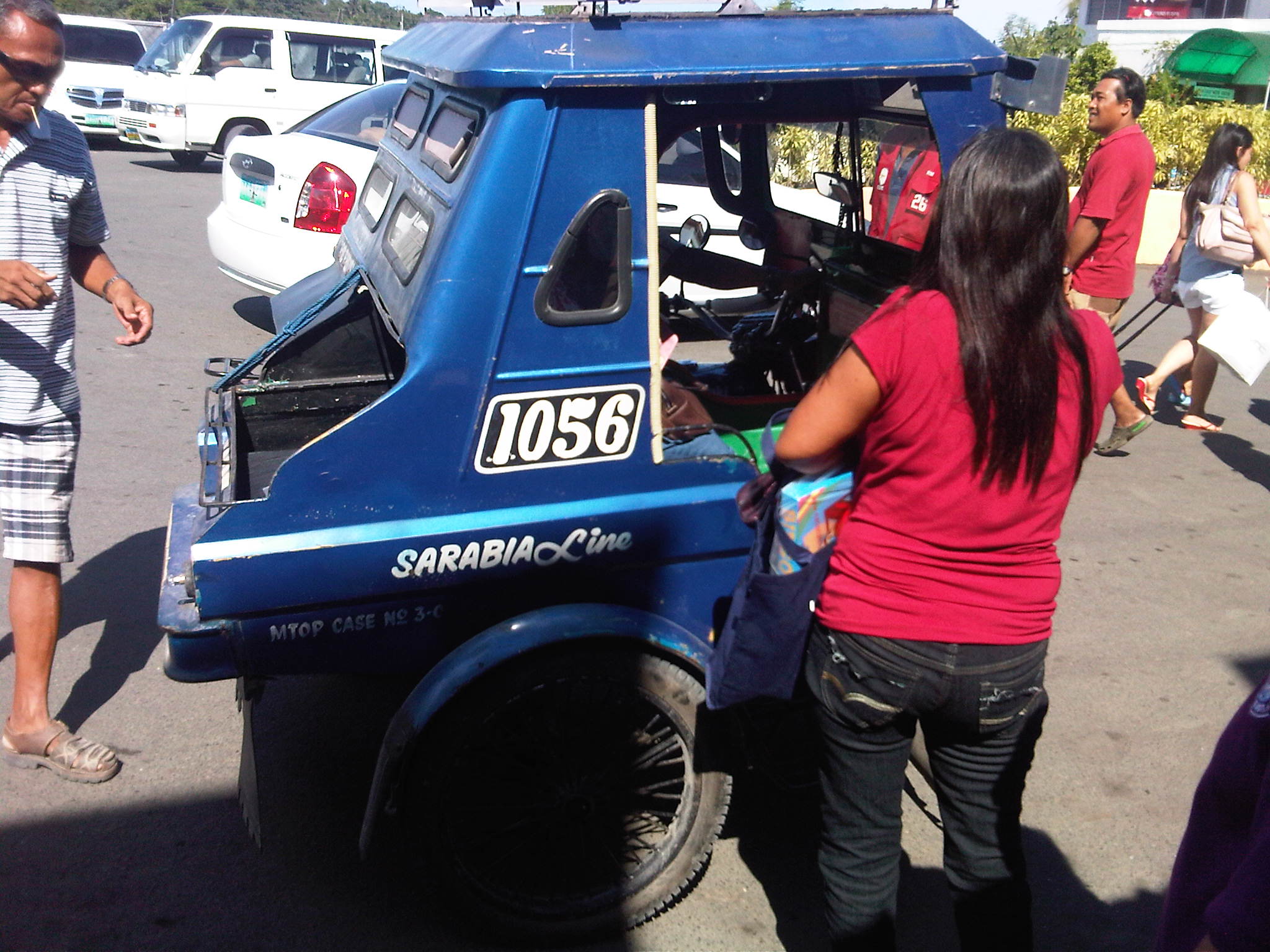 Tricycles are the dominant mode of public transport in Tagbilaran’s roads and others throughout Bohol. Their version of the tricycle comfortably seats 3 passengers including 2 in the cab and 1 behind the driver. The sidecar also features a baggage compartment or trunk in the back.
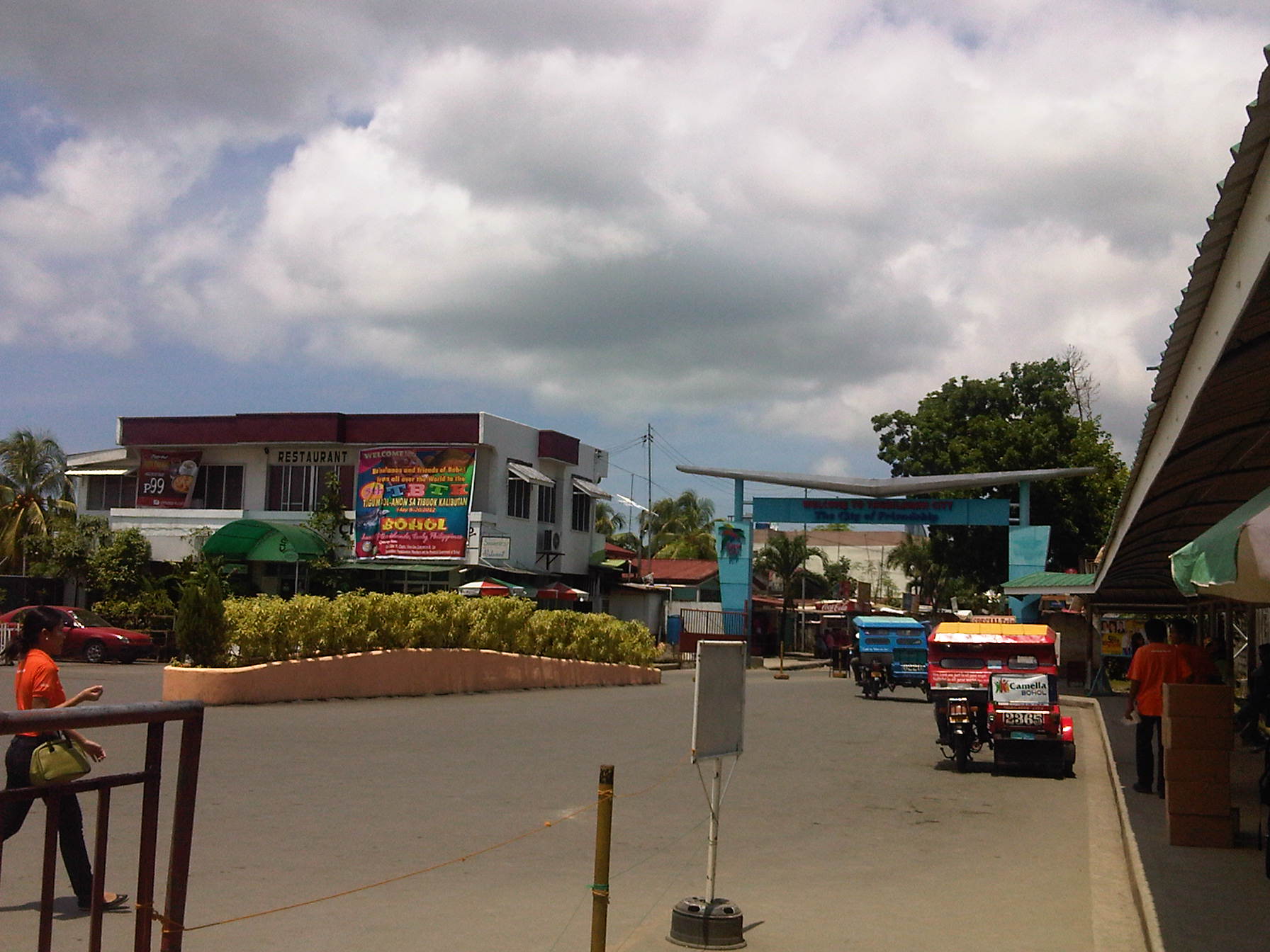 Entrance to the airport terminal – there’s precious little space at the airport for passengers and well-wishers. In fact, parking is very limited and there is usually not enough space for the mix of people and vehicles when a plane arrives at the airport.
 Pre-departure – seats at the ground floor pre-departure area at the airport. There are two concessions from where passengers may purchase refreshments or last minute souvenirs.
 Extension – the second floor is also used as waiting area for passengers. There’s one concessionaire on the second floor and a massage service with blind men as masseurs.
 Baggage handling – on the way to board our plane, I took a quick photo of the baggage being loaded unto the plane.
A new airport is being proposed for Bohol as the current one in Tagbilaran can no longer be expanded with the area required for a longer runway and a larger terminal restricted by the surrounding built up area. A new airport is planned to be constructed instead in Panglao Island where it will be closer to the resorts and other attractions that regularly bring in thousands of tourists and perhaps many more should there be a better airport for Bohol. Already, there are many issues being raised against a new airport but then if the project is implemented according to international standards, including those pertaining to the mitigation of negative environmental impacts, then we should expect the airport to be more beneficial to all involved.
–
Bali-Denpasar International Airport
One of the more interesting airports I have used in my travels is the Bali-Denpasar International Airport. I was not able to take photos when we arrived at the airport as it was already late and our group was already feeling tired from the long flight from Manila via Singapore. We also didn’t expect the long walk from the terminal to the parking lot where the guide who fetched us left his vehicle. Thus, the following photos were taken on our departure when we had some time to explore the nice airport.
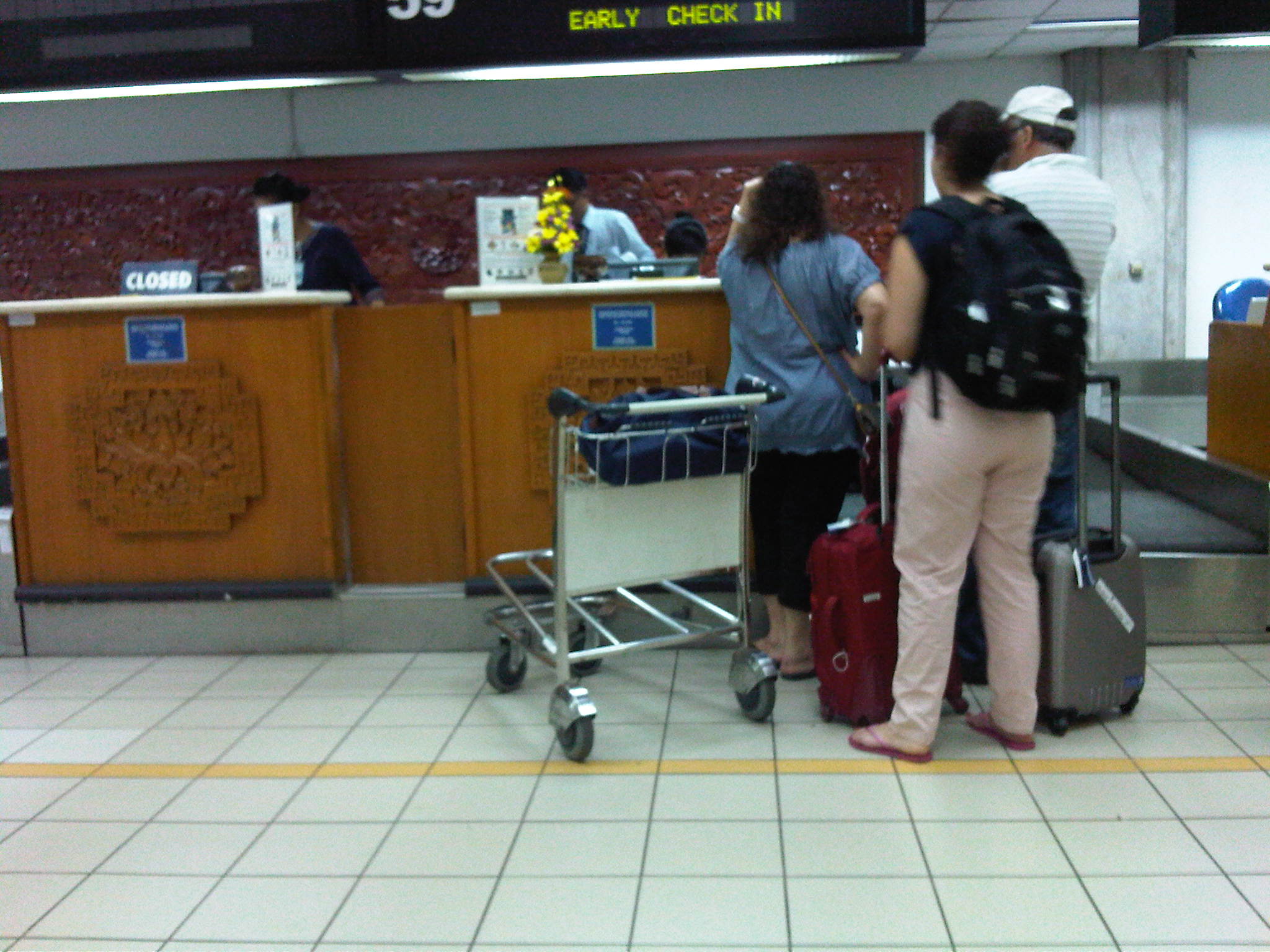 Check-in – we were quite early at the airport and were directed to the early check-in counters. I wanted to take more photos but was aware of the tight security at the airport check-in area, and didn’t want to risk being accosted by airport security.
 Where to? – Directional signs at one of the junctions inside the airport
 Time out – the spot in front of a world map with international times on display seems to be a favorite resting place for airport maintenance staff though I am not really sure about the intended use of the steel poles.
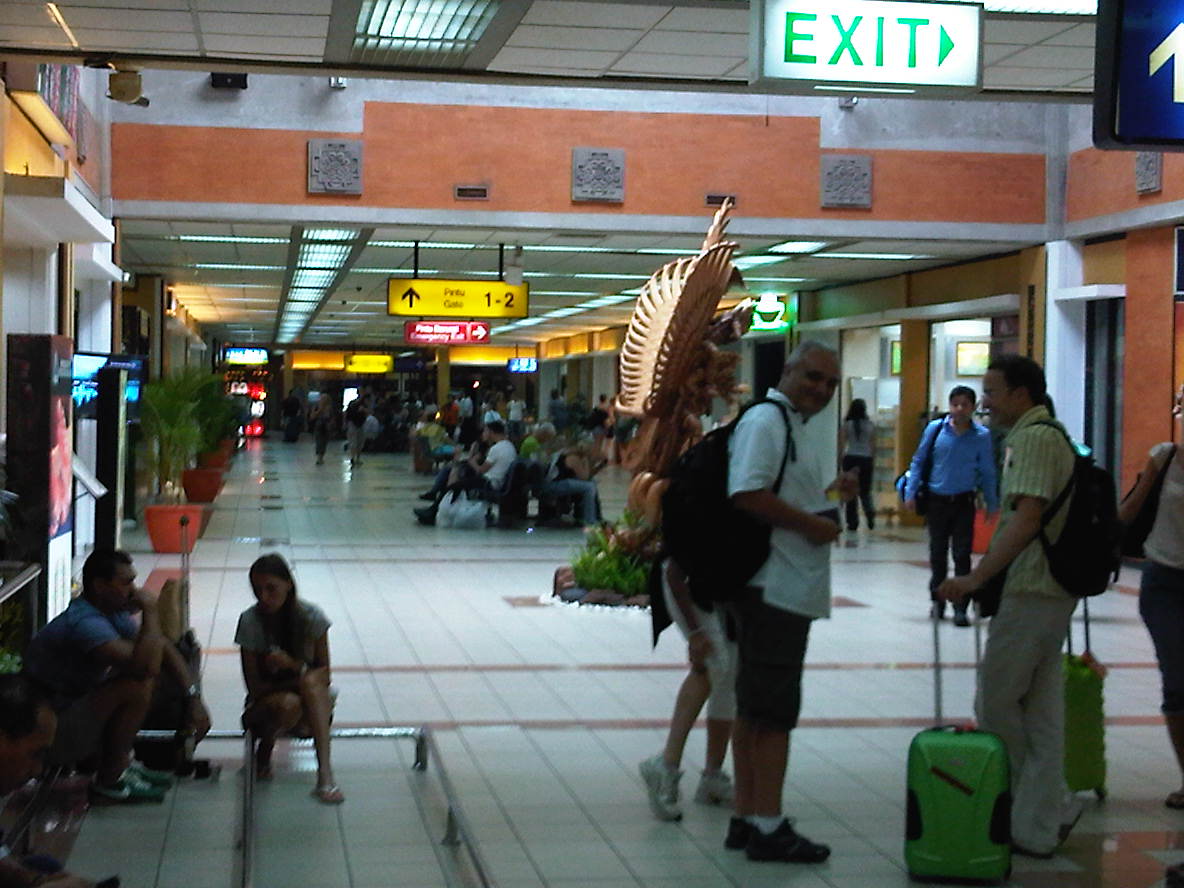 Burning time – travelers exchanging stories near a junction where stands a statue of the mythical figure Garuda, the King of Avians who is the inspiration for the name of Indonesia’s national airline
 Shopping mall – inside the airport, the layout reminded me of shopping malls as corridors were lined with shops and restaurants.
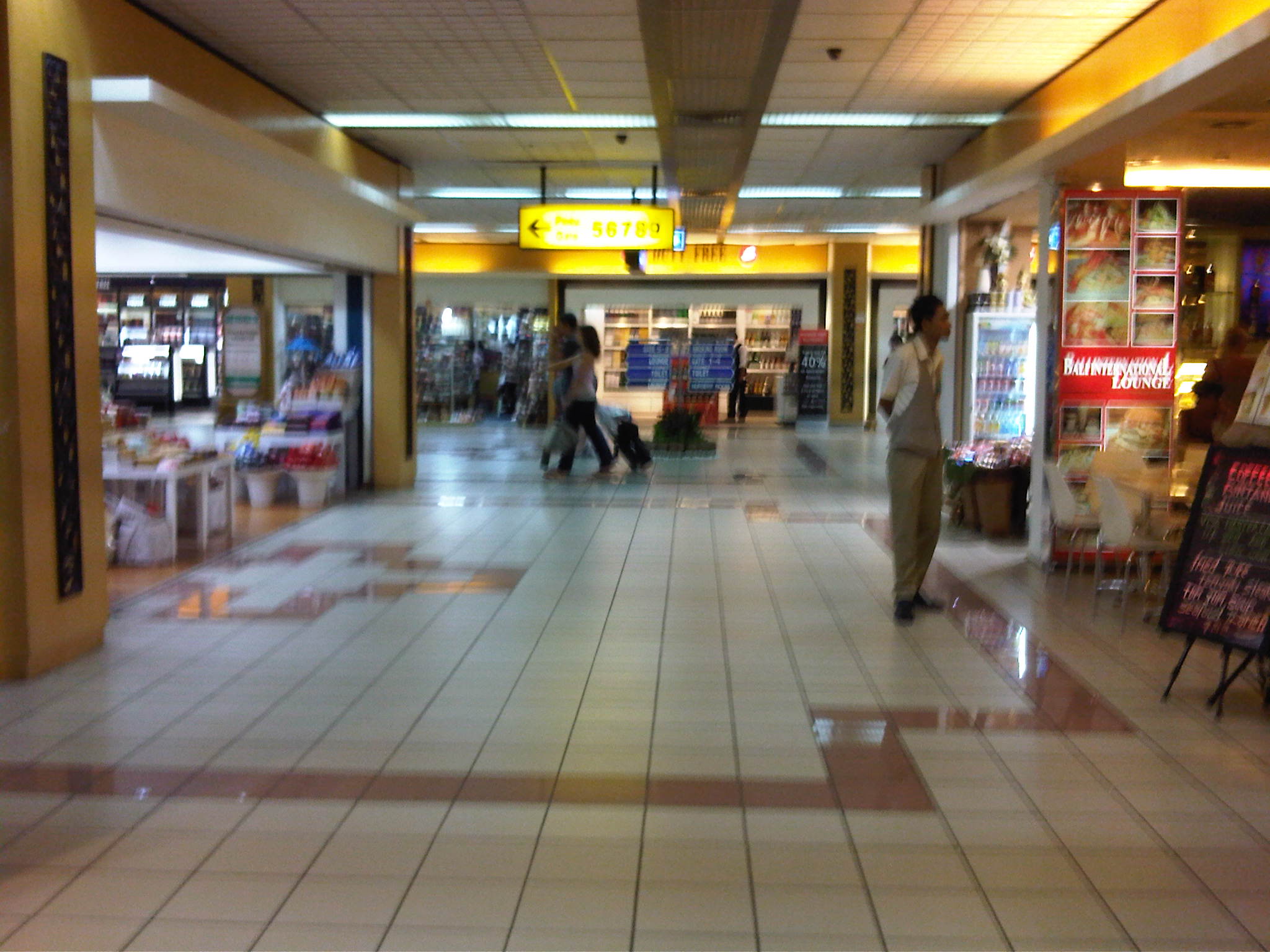 Shop and eat – while the prices indicated in the menus of restaurants were reasonable (read: they compare favorably to prices at restaurants outside the airport), the goods in the shops were priced for tourists (read: a bit expensive even considering duty free privileges). You can try haggling with some shops especially for local products like batik or souvenirs but you won’t be able to get prices close to shops elsewhere like, say, Bali Collection.
 Must try and must buy – Indonesia chocolates are available at the airport. The Monggo brand has many variants and the prices seem reasonable though I assume they are even cheaper if bought outside the airport. We didn’t have time to go to a regular supermarket and so had to do some quick shopping at the airport.
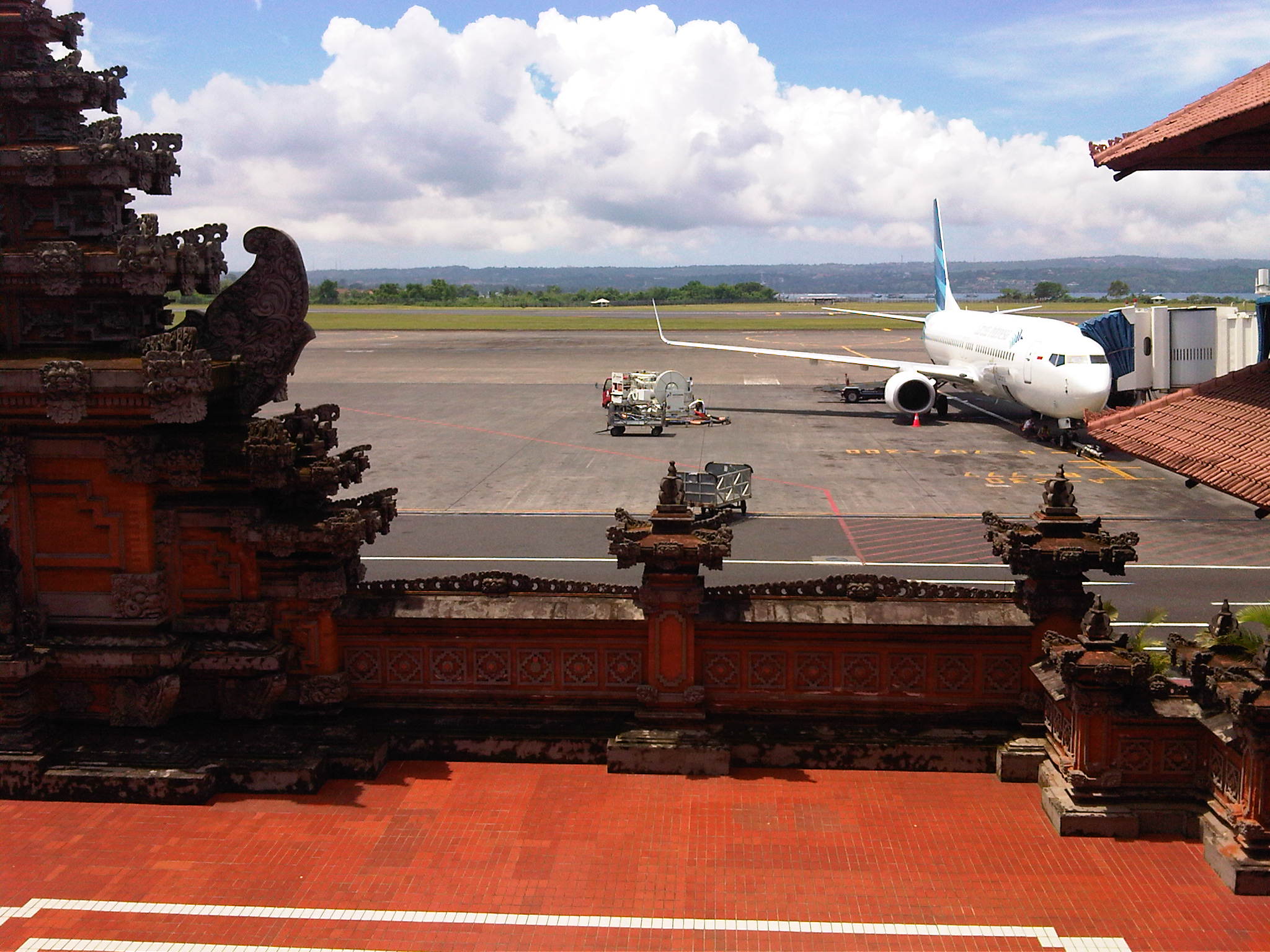 Ancient and modern – Indonesian national carrier Garuda B737 docked at the airport. Garuda, of course, also refers to the mythical God-king of the birds.
 Ancient gateway? – I am reminded of the Sci Fi series Stargate everytime I look at this photo. Such architecture gives the airport a lot of character as it banks on the cultural heritage of the region.
 The older wing of the airport with its clay-tiled roofs is shown on the right.
 Another look at the Balinese structure with a modern air bridge and the newer wing of the terminal in the background on the left.
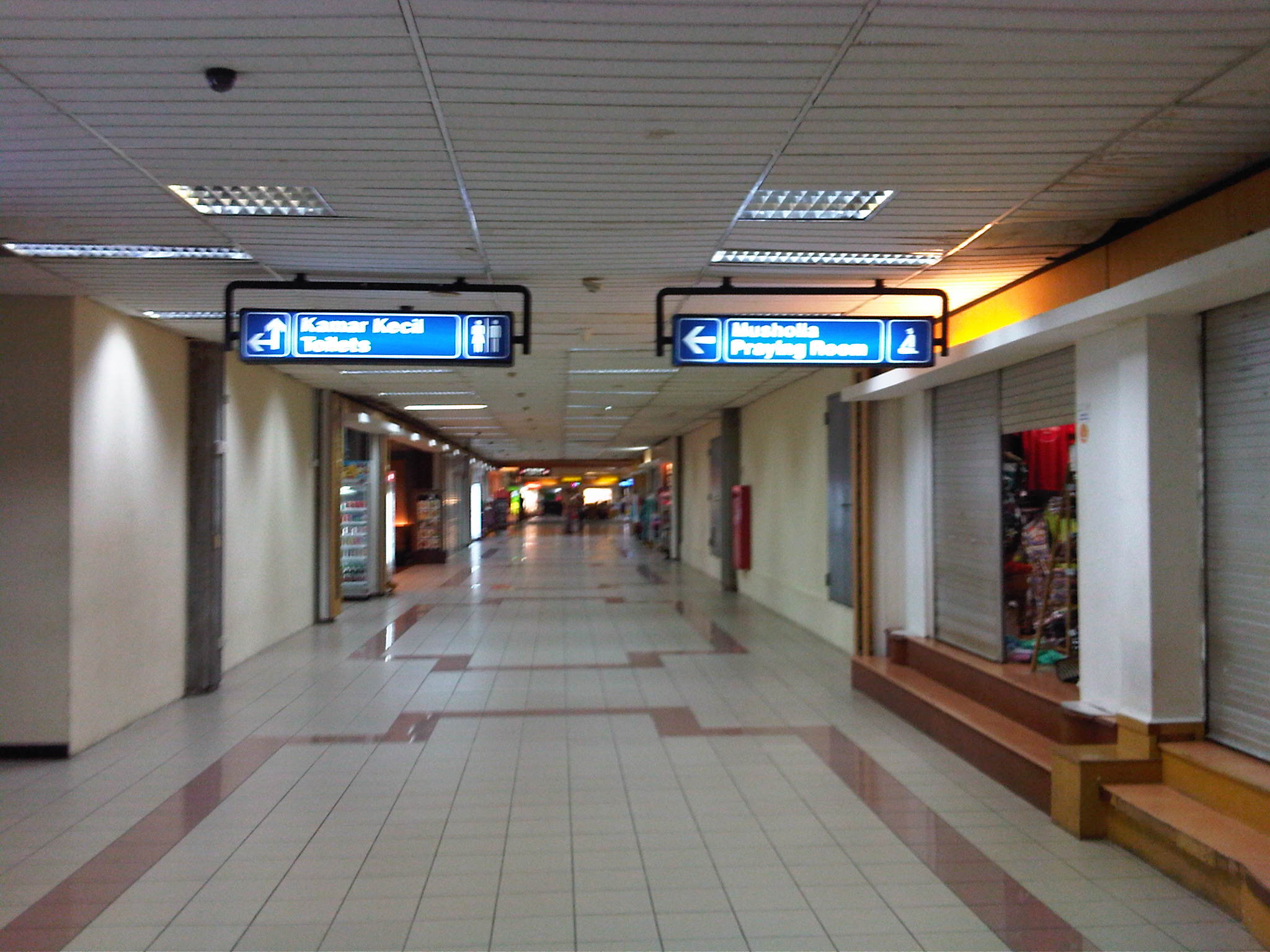 Corridor and more shops along the way towards our boarding gate.
 Benches – there were few seats near the entrance to the departure lounge. There were only two 4-seaters that were spaced a bit far from the next set of seats.
 Airport fee – Bali-Denpasar charges a 150,000 Rp (about 16.20 USD) fee for international passengers that is paid prior to the immigration counters.
 No seats? – passengers starting to crowd around benches just across from the door and the final security check to the pre-departure area. Airport staff would not allow passengers early for their flights to enter the area. It seemed to some of us that this was also a ploy for people to patronize the restaurants and shops outside the pre-departure area. There were no concessions inside.
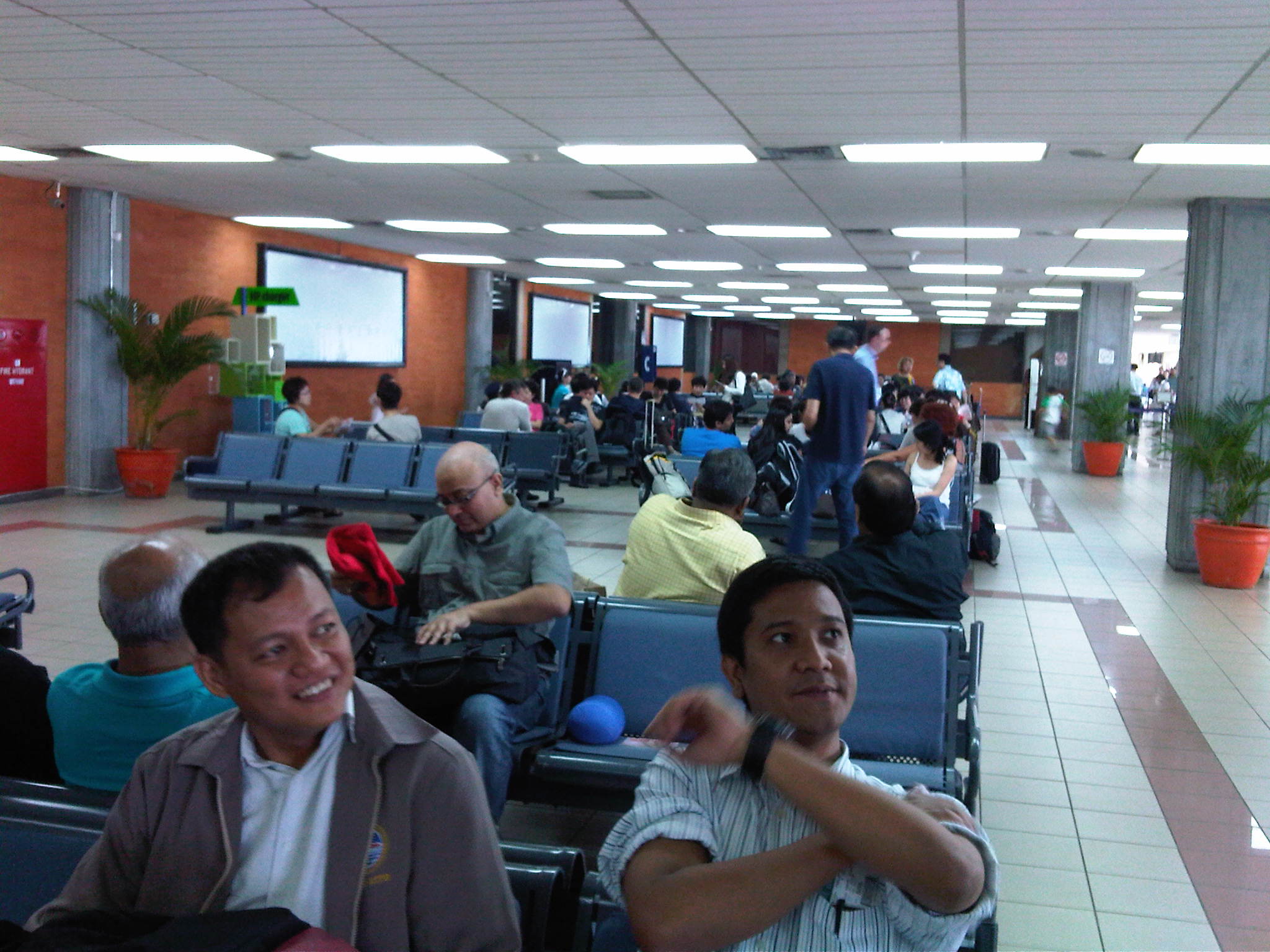 Waiting for the call – fellow passengers waiting for our respective boarding calls
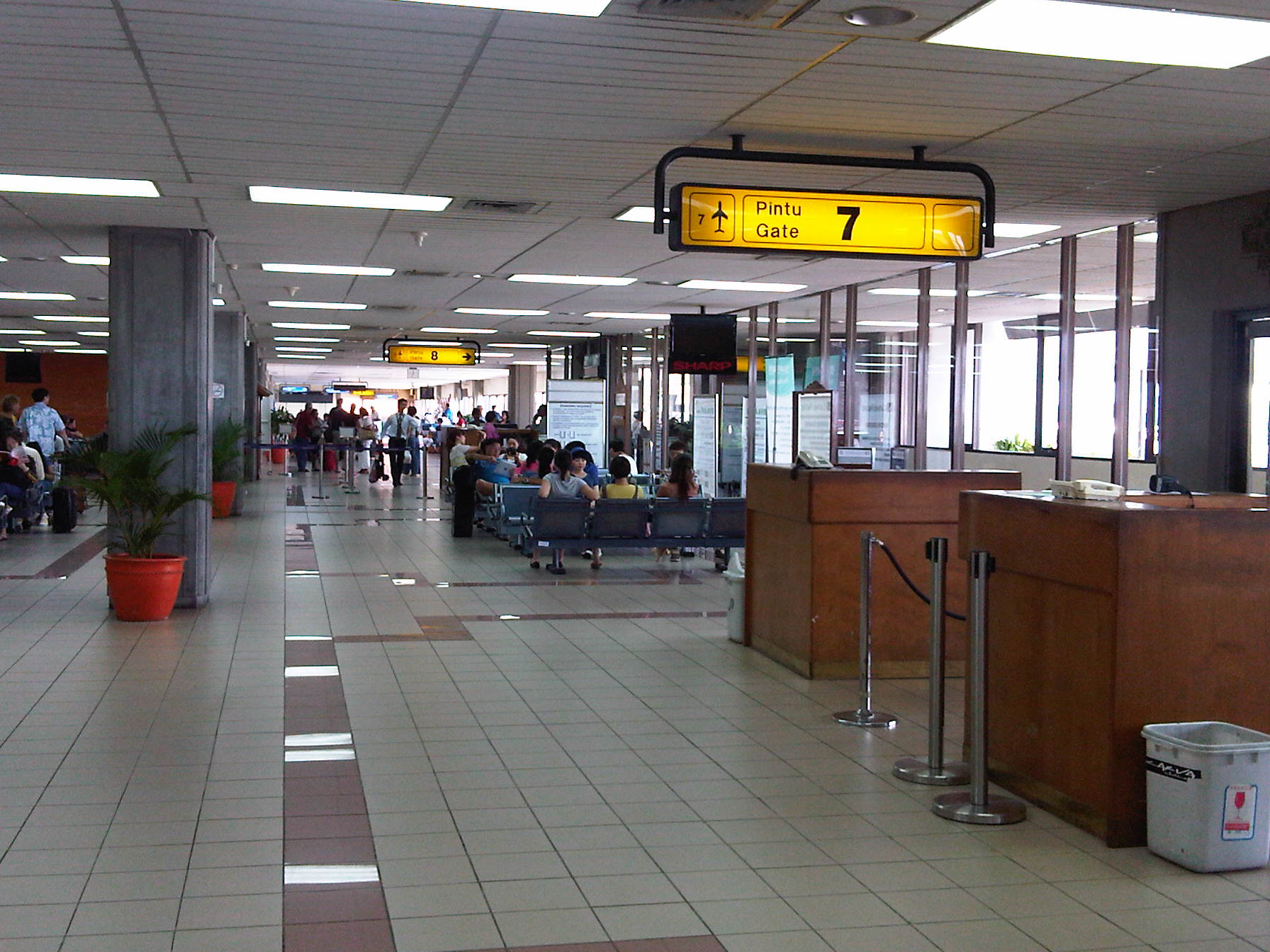 Familiar layout – the layout of the departure lounge including the boarding gates at Bali-Denpasar reminded me of the layout of the old domestic airport in Manila.
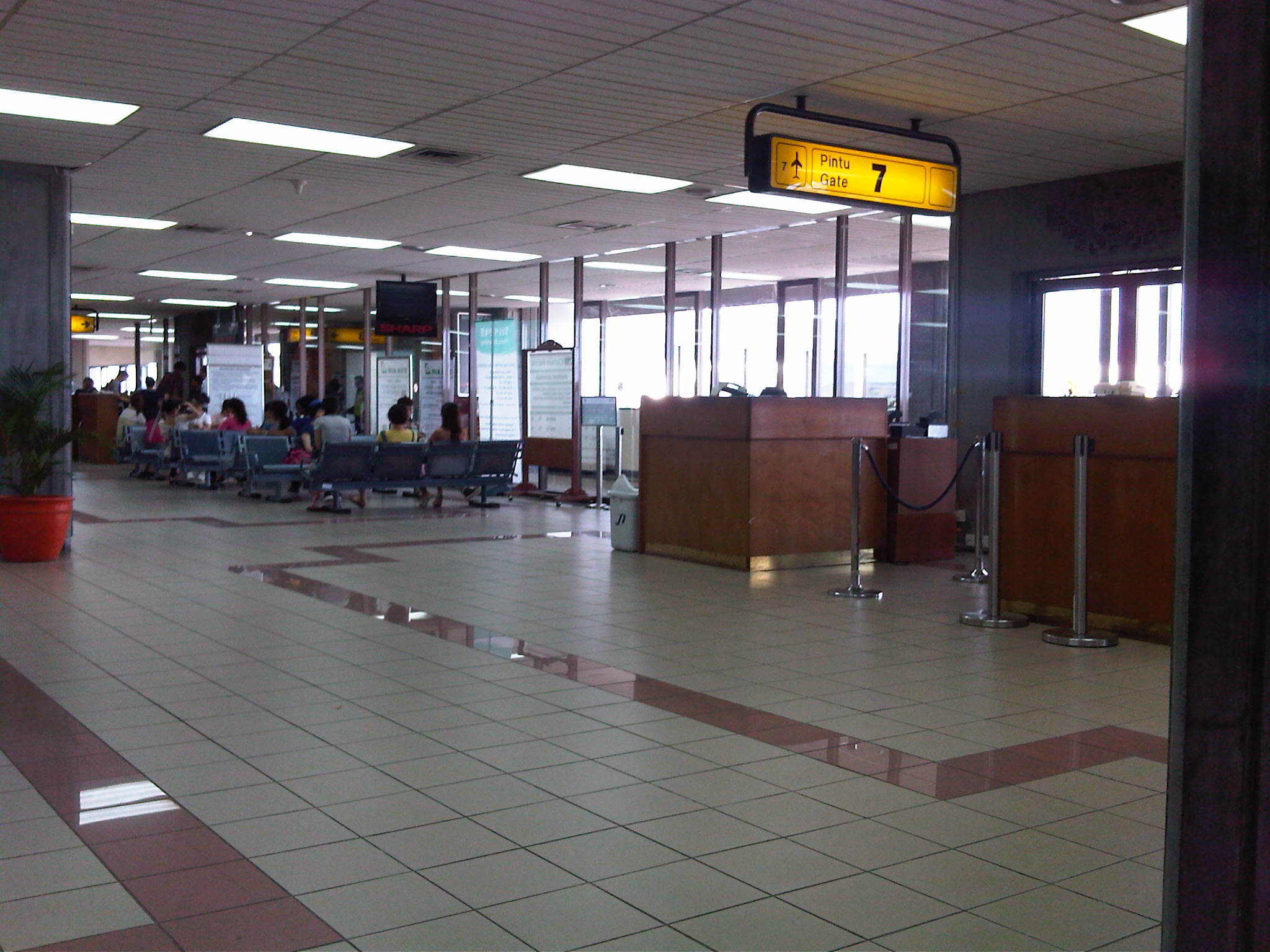 Counters – airline ground staff will eventually arrive to process passengers for boarding
Bali-Denpasar is actually constructing an even larger airport. This is necessary given what seems to be hundreds of thousands of visitors flocking to Bali mostly for recreation. The current terminal is already congested and the wise investment is for a huge modern terminal for this gateway to Indonesia. The determined push for a new terminal is admirable and seems to be what the Philippines lacks for in terms of critical aviation infrastructure that would be able to handle the projected passenger demand should the country want to attract more tourists.
–
 Caught (up) in traffic