
Home » Airports (Page 14)
Category Archives: Airports
Another look at the Tacloban Airport
The Daniel Z. Romualdez Airport in Tacloban City is the busiest in Region 8 (Eastern Visayas). Tacloban being the regional center in terms of commerce/business, attracts significant air traffic and should continue to do so as it steadily recovers from the devastation brought about by Typhoon Yolanda (Haiyan). Following are photos of the airport from our recent trip to Leyte, where we had meetings in Tacloban and Ormoc.
 Passengers arrive at the Tacloban Airport
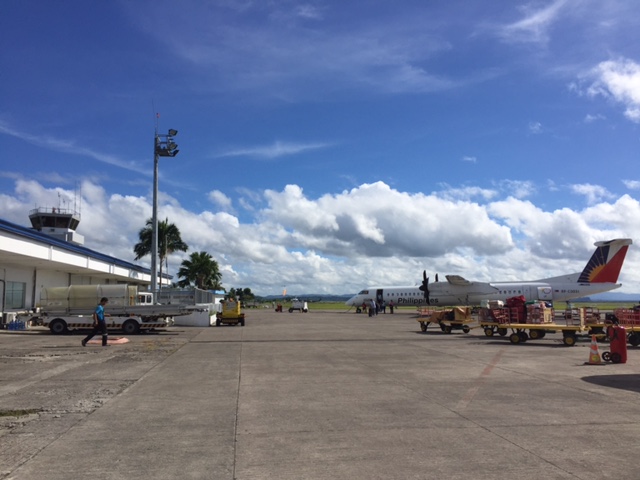 Philippine Airlines turboprop aircraft arriving at the airport
 Cebu Pacific passengers disembarking from the plane
 Passengers waiting for the checked-in luggage at the carousel
 Passengers file out of the arrival area unto the terminal’s driveway and parking lot
 Visitors may inquire about the Tacloban at the city’s information desk located at the arrival area.
 Sign of a rent-a-car service at the airport showing rental options and available vehicle models.
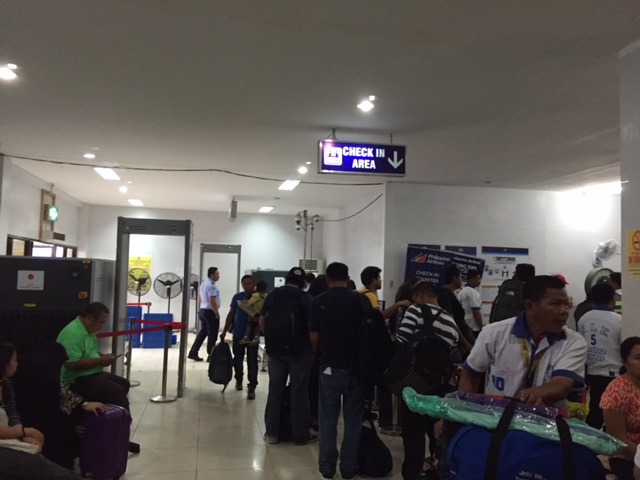 Crowded check-in area at the Tacloban airport passenger terminal
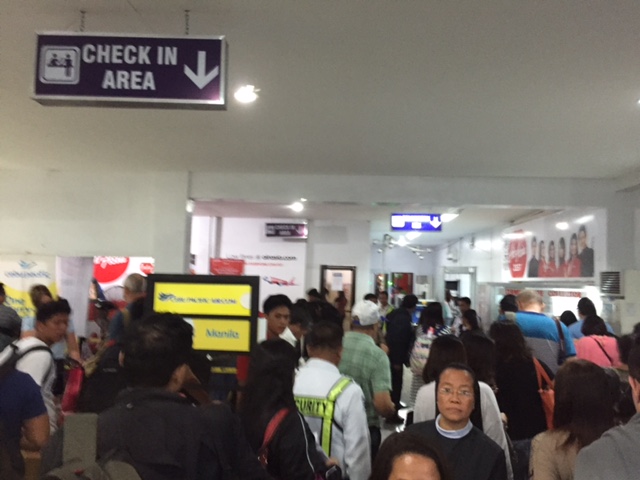 There were long queues at the check-in counters as well as the payment booths for the terminal fee.
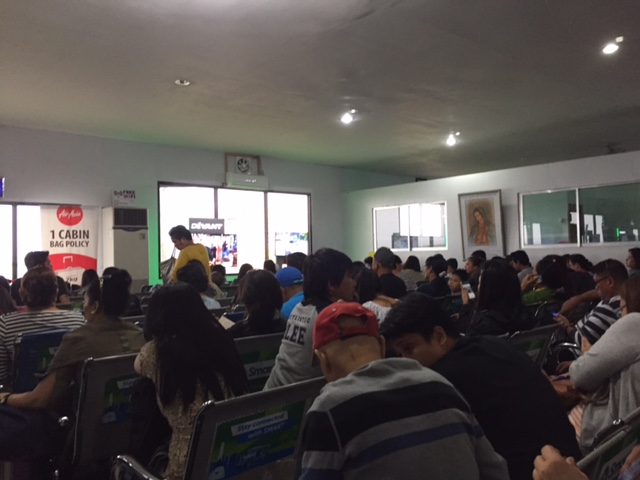 We entered a very crowded departure area as flights were delayed and people accumulated at the terminal. These are Air Asia passengers.
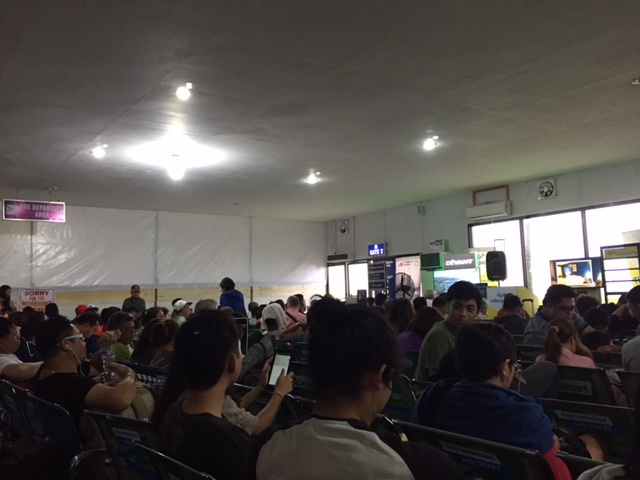 These are Philippine Airlines and Cebu Pacific passengers. Notice the temporary wall behind which is a section of the departure area that’s being renovated.
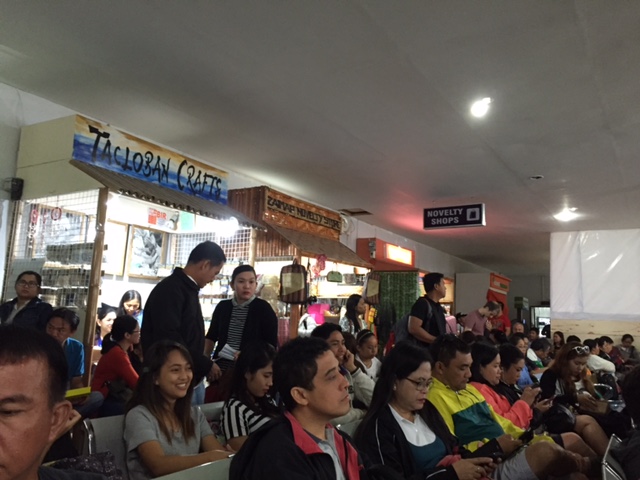 Shops at the departure area sell souvenirs and food items including local delicacies like moron and binagol.
The airport terminal is already very congested and it doesn’t help that flights are frequently delayed for various reasons. In the aftermath of Typhoon Yolanda (Haiyan), there have been proposals to move the airport to another location. However, it now seems that there is no better location for this within the city and elsewhere in the province. There are opportunities and potential though to improve the current airport and perhaps make it more resilient against typhoons of the scale of Yolanda.
The proposed new passenger terminal building is already much delayed and the runway can be extended. The latter is now possible with the areas for the extension already cleared of informal settlers mainly due to these areas being ravaged by Yolanda and authorities not permitting people to rebuild their houses there.
–
Taxi stands and queues at NAIA Terminal 3
I saw a photo going around recently in social media showing the long queue for taxis at the NAIA Terminal 2. That’s actually not as bad as how the queues at Terminal 3 can be. Terminal 2 only serves Philippine Airlines’ international and trunkline (read: Cebu, Davao, Iloilo, Bacolod, etc.)flights. PAL has transferred many of its domestic flights to Terminal 3. Terminal 3 serves all the flights of Cebu Pacific plus several major international airlines that have transferred there from Terminal 1 including Delta, Cathay Pacific, Emirates and ANA. Following are a few photos of the rental car, fixed rate taxi and metered taxi stands at Terminal 3. These photos were taken last May, and still within the ‘summer’ peak period of travel in the Philippines. I was there to fetch the wife who was arriving from the US via Narita.
 Rental car booths along the island across from the arrival curb and driveway of NAIA Terminal 3.
 More rental car and limousine booths (many unmanned) just outside the arrival level. Note the car rental poster/sign affixed on one of the columns.
 Fixed rate coupon taxi stand
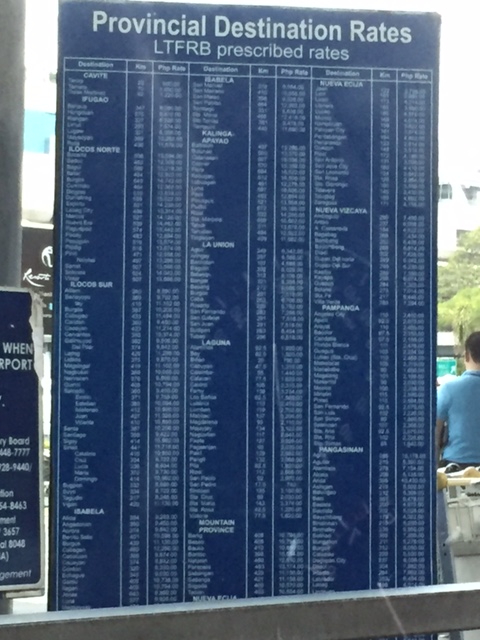 Published taxi fare rates (as approved by the LTFRB) may be found in the area. I apologise for the photo not being clear enough for my readers to see the rates.
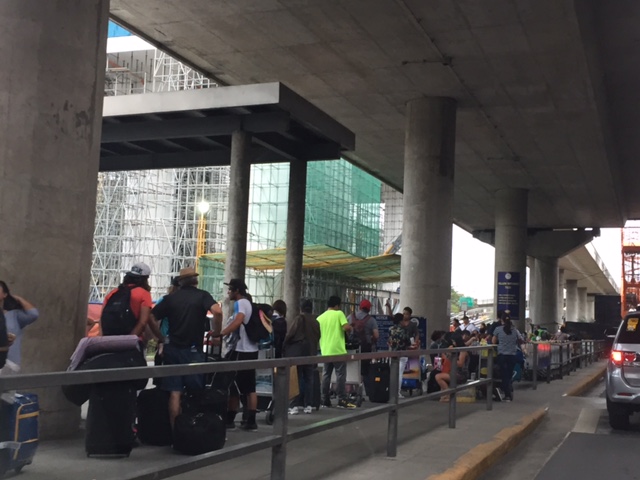 Long queue for the metered (regular) taxis at NAIA Terminal 3
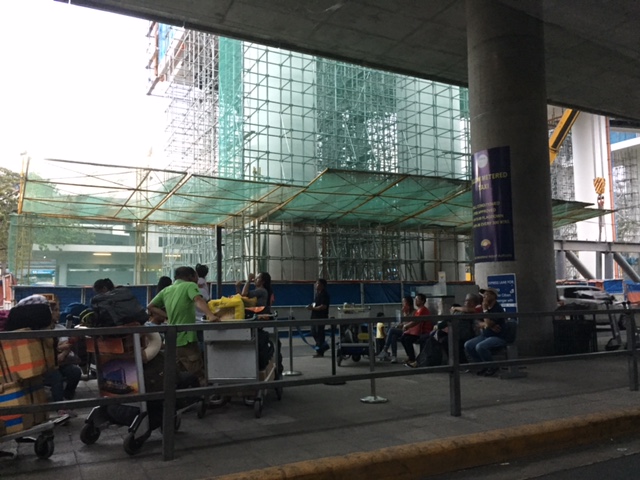 Metered taxi stand at the NAIA Terminal 3 arrival area
Passengers now also have the option to take the so-called premium airport bus services operated by logistics company Air21. There is also an airport shuttle service connecting NAIA’s four terminals. If staying at a hotel, people may also opt to avail of their hotel’s vehicle service. Also, Uber is now allowed to fetch people at the airport (I don’t exactly understand how authorities could know before if a car was Uber.) after being banned (duh?) from the airport.
–
NAIA Terminal 3 – Newport connector
Currently under construction is a bridge connecting the Ninoy Aquino International Airport (NAIA) Terminal 3 and the Newport City complex across it. Once completed, it will be a convenient physical connection between the airport and the complex of hotels, residential condominiums and commercial establishments. The connection will be at a third level above the NAIA Expressway that is currently under construction. Here are a few snapshots of the bridge:
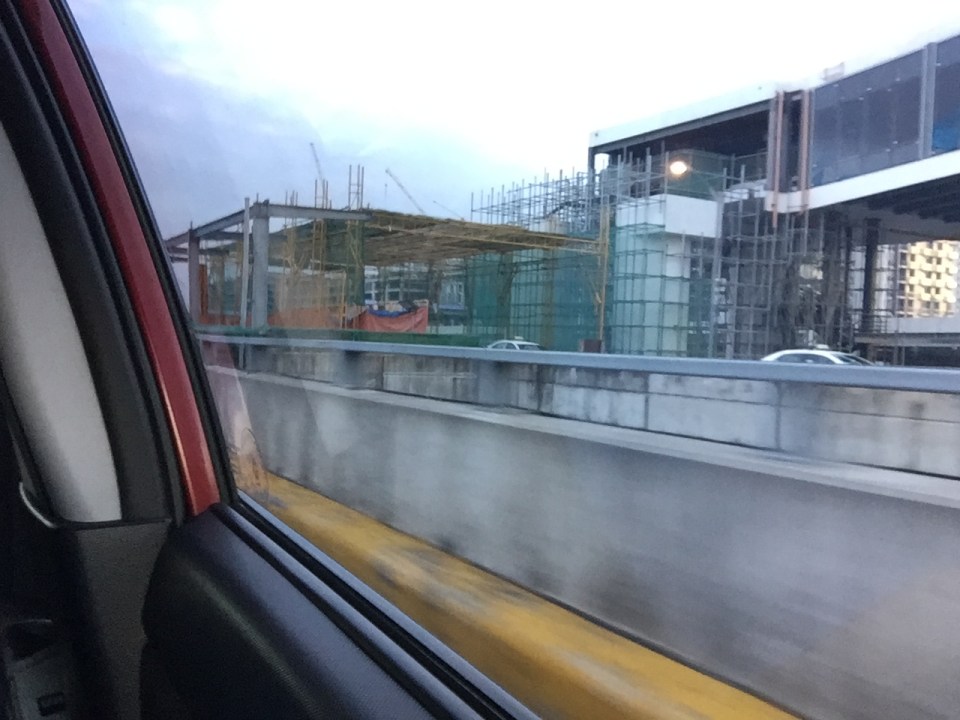 Under construction: a bridge connecting NAIA Terminal 3 and the complex that includes, among other, the Marriott Hotel and Resorts World Manila
 Another snapshot of the bridge under construction. The dome in the background is of the Shrine of St. Therese of the Child Jesus across from Terminal 3.
–
NAIA Terminal 3 international departure wing
My recent trip to Singapore allowed me to take a few photos of the departure area of the Ninoy Aquino International Airport (NAIA) Terminal 3. This is the same terminal that had a blackout recently that drew a lot of flak from a lot of people, and for which the airport manager was supposed to have attributed to bad luck (malas). I don’t agree as many of the problems of the NAIA terminals are the outcomes of poor management that, in other airports in other countries, would result in the manager’s firing.
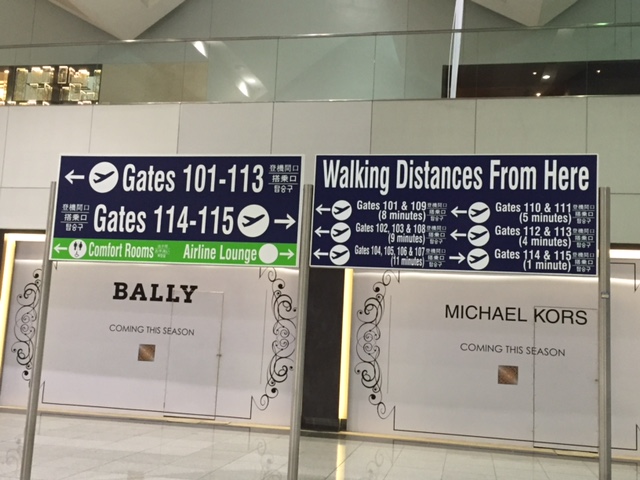 Directional signs and spaces reserved for future shops greet the traveler as he/she enters the area after the final security check.
 A view of the international departure wing’s expanse with an electric cart for passengers requiring transport assistance
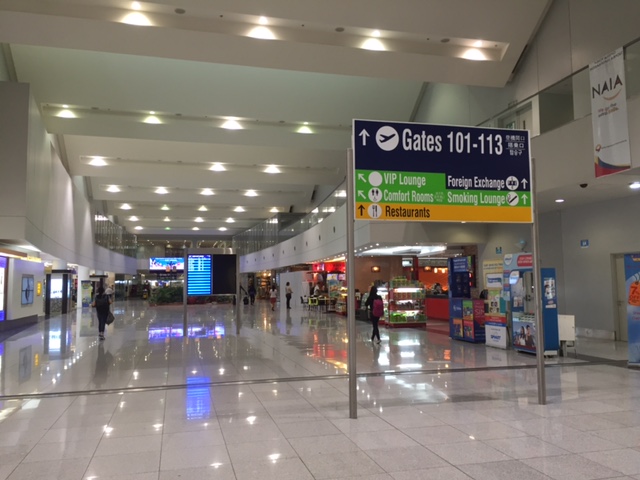 There are now more duty free shops at this wing unlike a few years ago when I was traveling frequently between Manila and Singapore.
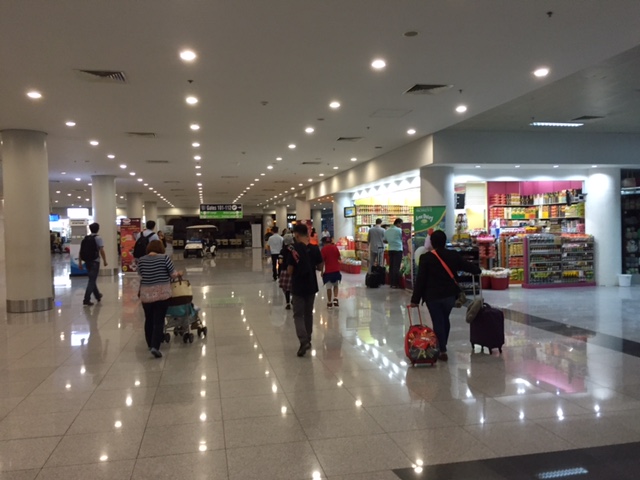 Passengers walking past the shops
 There are more choices now for duty free shopping and those returning to Manila may want to take advantage of the ‘travel light’ promo of Duty Free Philippines, which gives returning passengers 5% discount on their purchases. Items will be collected upon their return to Manila.
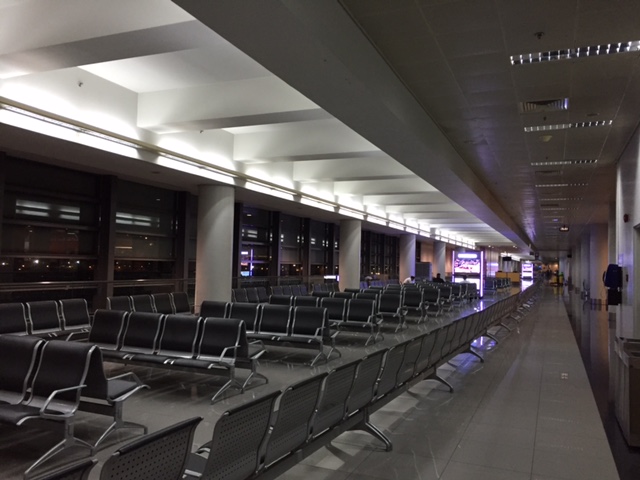 Seats for one of the gates at NAIA T3’s international departure wing
 There are still TVs there and all of them were showing replays of NBA games
–
Mactan Cebu Airport taxi terminal
I wanted to post about the new taxi stands at the Mactan Cebu International Airport as early as September of last year but I didn’t have good photos to show in the article. Last December, however, I was able to get a load of pictures during 2 trips to Cebu. The terminal at the arrival level of the airport is basically divided into 2 stands – the White Taxi Stand and the Yellow Taxi Stand. Here are the photos of the taxi terminal at Cebu’s airport.
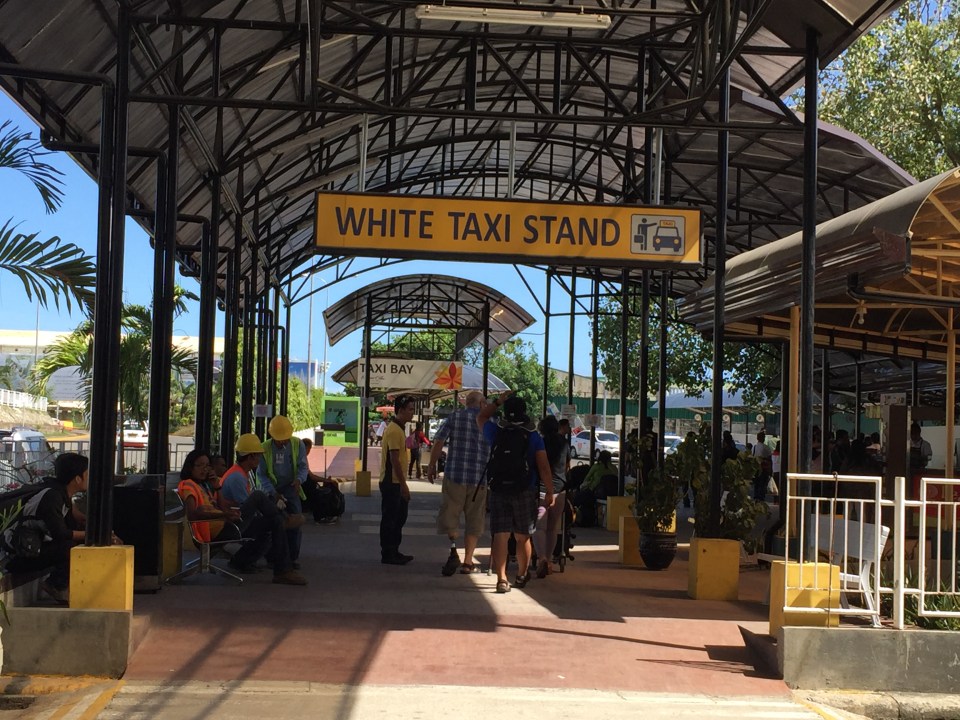 Covered facilities allow for all-weather queuing of passengers.
 White taxis are regular taxis while the yellow ones are ‘airport taxis’ charging higher fares.
 The lines for the white taxis are definitely longer and this is basically due to the lower fares charged by regular taxis.
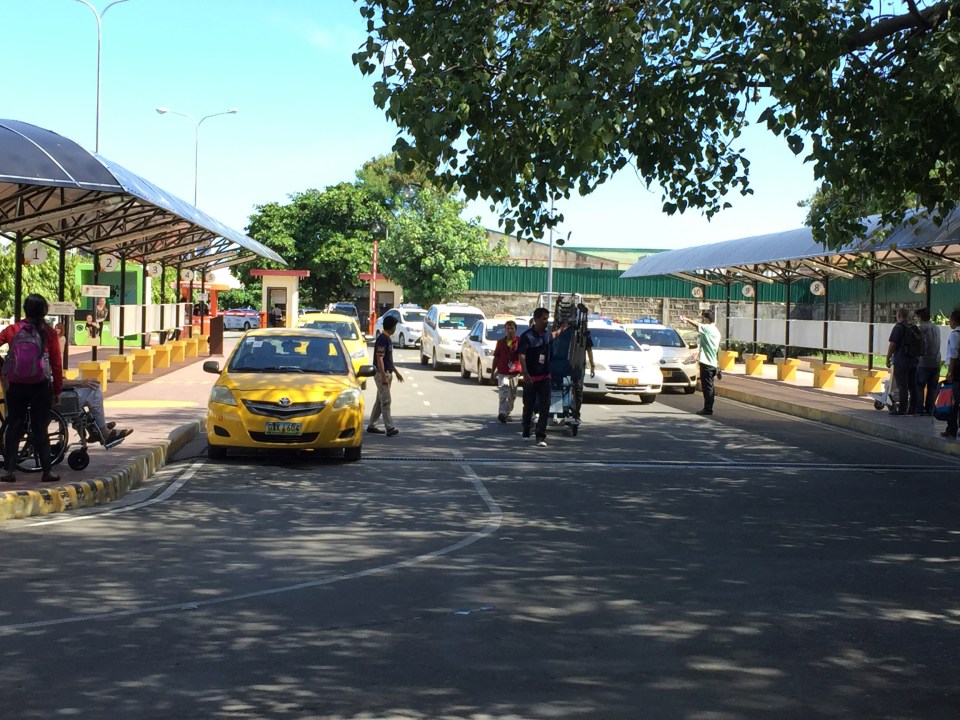 Obviously, there are more regular (white) taxis than yellow taxis so the queue proceed well and the waiting times are not so long.
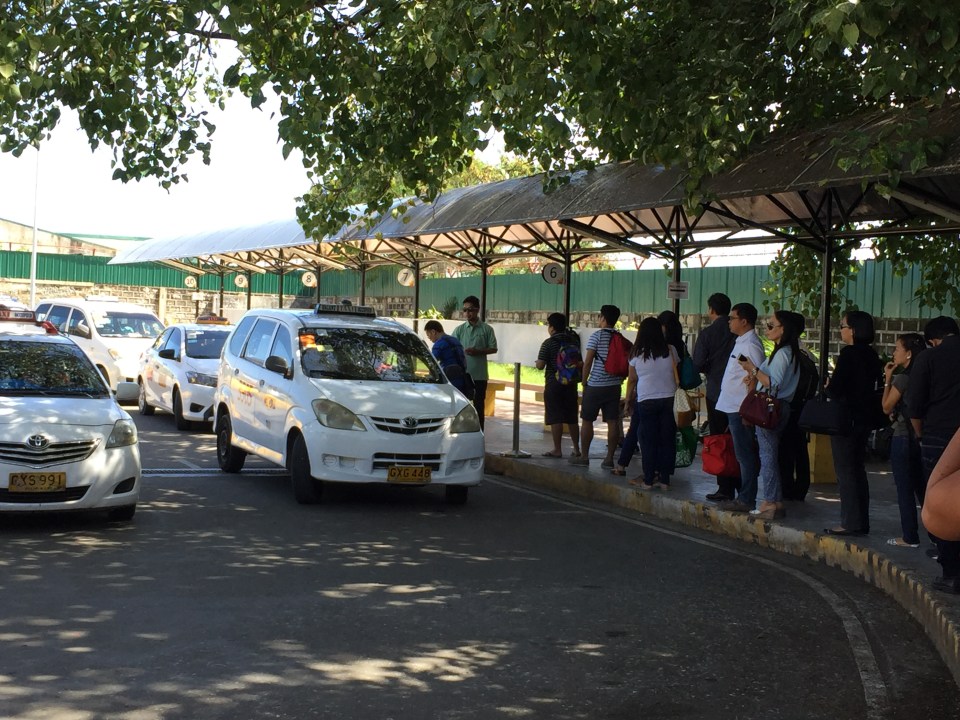 There are 5 spaces for taxis but everyone seems to be queuing for the first one. The dispatchers could do better to make the lines go faster.
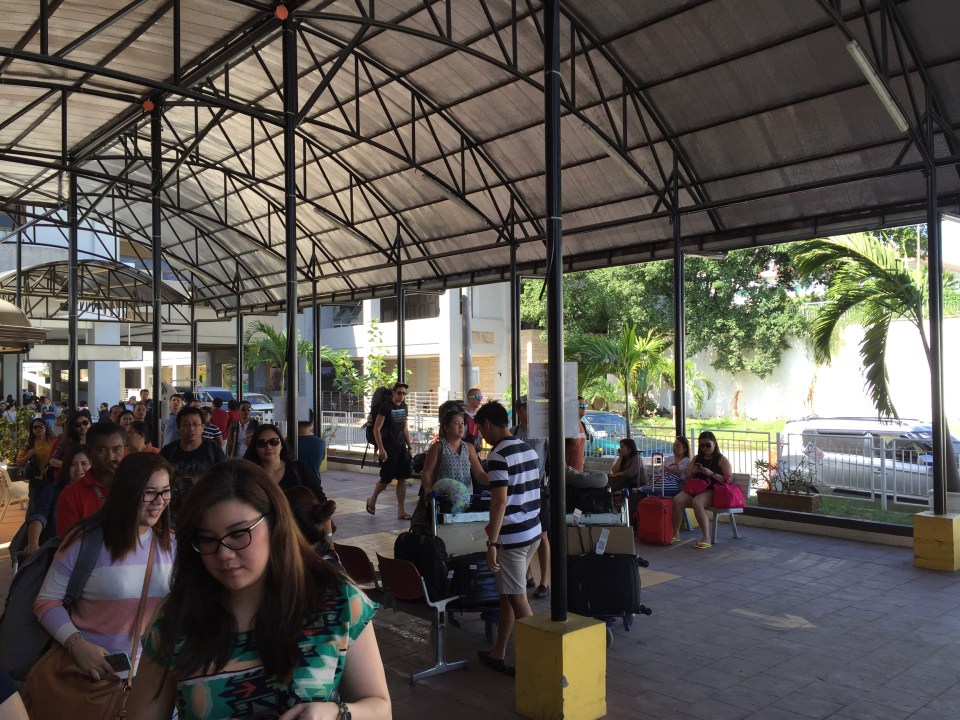 That’s the queue behind us, all going for the regular taxis.
 If the queue for the white taxis is proceeding at an acceptable pace, few people take the yellow taxis. Vehicle-wise, yellow taxis are newer and better maintained models. My observation (based on limited experience) is that yellow taxi drivers are also less reckless than drivers of white taxis.
 There are two booths for app-enabled taxis like Grab Taxi and Easy Taxi. Passengers for these may proceed to the area near the booths and board their taxis at the bays near them.
–
Here are a few photos from the second trip last December when we experienced long queues for taxis. I think we arrived during the morning peak at the airport when a couple of international flights using wide-bodied planes arrived.
 A very long queue for the white taxis greeted us when we got out of the airport terminal.
 There was a constant arrival of taxis but the demand was just too high; resulting in the long queue.
 There is a priority lane for senior citizens, expectant mothers and families with children. Dispatchers make sure that these people get their taxis ahead of others.
–
Shopping at NAIA Terminal 3
Manila’s Ninoy Aquino International Airport’s (NAIA) has four passenger terminals. Of these, Terminal 3 is the largest and the building space has not been fully utilized. Due to the legal issues surrounding its construction, it took so much time for the terminal to be developed so it could be to its full potential. Last week, when I fetched my father who was flying in from Iloilo, I had more than enough time (his flight was delayed by more than 2 hours) to go around and see the new additions to the airport. These included new restaurants and shops at the south wing of the airport. Among the more conspicuous and perhaps newest addition is Kiss & Fly.


Kiss & Fly is found at the departure (3rd) levelof the terminal. The interior looks like a department store in a mall. There is a Starbucks at one of the entrances to the store. I think this is the 2nd Starbucks at NAIA with the first one at Terminal 1’s pre-departure area.
You can now practically do your shopping at Terminal 3. There are many stores selling clothing, shoes, bags, accessories, electronics and toys. The only thing lacking perhaps is a supermarket but then there are at least 3 convenience stores inside that could provide what the other shops couldn’t in terms of food and other items. Of course, there are duty free shops in the terminal, and if you are qualified, many shops offer duty free prices when you present your travel documents. Regular prices are similar to shops at malls but if your timing is right and there is a sale, you can get items for significantly less than the mall prices. So there is no excuse for not being able to get a souvenir for your loved ones or significant others, especially if you are arriving at Terminal 3.
–
Undas traffic
Metro Manila traffic is usually lighter during Undas – the days when we remember those who passed away. Many people go back to their hometowns and this is significant because many residing or working or studying in Metro Manila hail from other provinces. Of course, some people would rather go on a vacation during this time with many now opting to travel abroad rather than braving crowded cemeteries of their hometowns. Some do the so-called ‘staycations’ – basically staying put at home during the undas break (Sorry, staying in a hotel is technically not a ‘staycation’ as many people claim it to be.)
What are the facilities that are expected to be congested? These would be the gateways from Metro Manila to other provinces. These would be airports, sea ports, bus terminals and major roads connecting Metro Manila to the provinces. There would be similar situations in other gateways as well such as in Cebu in the Visayas and Davao in Mindanao. Of course, all roads leading to cemeteries, memorial parks and columbariums. These roads would be filled with people (mostly walking) and vehicles (mostly private cars and tricycles and pedicabs if local roads) who congregate in these areas to remember and pay tribute to their dead.
The congestion experienced in most roads during this time of year is usually manageable and local governments can and are usually prepared to address transport and traffic issues within their jurisdictions. Tollways also employ their own strategies and tactics to deal with toll plaza congestion. The Land Transport Franchising and Regulatory Board (LTFRB) issues additional temporary permits to bus companies to field more vehicles along high demand routes. Meanwhile, airports and seaports would have to deal with their own versions of congestion though it is expected that such peaking or spiking up of travel activity can be handled by many airports and ports considering that these facilities are supposed to be designed for higher than usual demands.
Here’s wishing everyone safe travels during this Undas weekend. Mag-iingat lalo na sa pagmamaneho. Huwag magpatakbo na tila hinahabol ninyo ang araw ng mga patay!”
Local papers presented at the EASTS 2015 conference – Mapua Institute of Technology
Mapua Institute of Technology (MIT) has a relatively young program under its School of Civil Engineering. This is led by their Dean, Dr Francis Aldrine Uy, who is also active with the Philippine Institute of Civil Engineers (PICE). Mapua has been aggressive the recent years in presenting and publishing papers in transportation engineering and planning. Following are the papers from the MIT:
- Integrated Non-Motorized Transportation System For A Sustainability Oriented Intramuros [Francis Aldrine Uy]
- A Study on the Effectiveness of Eco-Mobility Component: E-Jeepneys in Makati City [Francis Aldrine Uy]
- Comparative Study of the Effects of Fuel Sources (Diesel, Gasoline and Autogas) in Public Transportation in Metro Manila on Price, Emission and Health Issues [Francis Aldrine Uy]
- Determinants of Demands of Pasig River Ferry Service [Francis Aldrine Uy]
- Determination of Cost Impact using Mathematical Model Comprising City Logistics to Quick Service Restaurants in Metro Manila [Francis Aldrine Uy]
- Development of Evacuation Plan by Utilizing Transportation Modeling in the City of Borongan, Eastern Samar [Riches Bacero]
- Operational Performance Analysis of Median U-Turn Intersections as Traffic Control Facility in EDSA [Riches Bacero]
- Community Perception on Trans-operability of Intramuros [Riches Bacero]
- Paradigm Shift Strategy of Inclusive Mobility: The Applicability of Bus Rapid Transit along Commonwealth Avenue [Riches Bacero]
- Evaluation of Strontium Aluminate in Traffic Paint Pavement Marking for Rural and Unilluminated Roads [Riches Bacero]
- Study on the Impact of the Construction Activity of Skyway Stage 3 on Traffic Conditions along Osmeña Highway and San Andres Street [Geoffrey Cueto]
- A Design for Silver Star Integrated Green Bus Terminal [Geoffrey Cueto]
- Proposed Diversion Road to Improve Traffic Movement of Commercially Developed Areas in Bacoor, Cavite [Geoffrey Cueto]
- Establishing the City Logistic Concept in Improving the Freight Distribution in Metro Manila [Geoffrey Cueto]
- An Analysis on the Accessibility Level of Public Transit for Persons with Disability: In care of Light Rail Transit (LRT 1) [Geoffrey Cueto]
- Design and Development of the Puerto Princesa Airport Passenger Terminal [Jocelyn Buluran]
- Design and Development of Passenger Terminal at Batangas Port [Jocelyn Buluran]
- Design and Development of Passenger Terminal Extension of Clark International Airport [Jocelyn Buluran]
- Determinants of “Travel with Dignity” of Passengers of MRT3 [Jocelyn Buluran]
- Integrating Sustainable Non – Motorized Public Transport in the City of Manila, Philippines Through Analytic Hierarchy Process (AHP) [Jocelyn Buluran]
My only comment about certain papers in the list is that many do not seem to be research papers and definitely more on the practice (i.e., design) side than the academic. I can say this based on the presentations made that I was able to attend as well as the papers themselves in the proceedings of the conference that I was able to browse. Still, Mapua has very good potential to come up with good papers from the prolific Dr Uy and his young faculty members led by Engr. Riches Bacero.
The current President of Mapua, Dr Reynaldo Vea, is also the current President of the Transportation Science Society of the Philippines (TSSP). Dr Vea was formerly Dean of UP Diliman’s College of Engineering and Officer-in-charge of UP’s National Center for Transportation Studies (NCTS). His specialty is on maritime transport as he has a degree in naval architecture.
–
Mactan Cebu International Airport – International Departures Check-in
In our recent trip to Cebu, we had more than enough time before our flight back to Manila so we decided to explore the airport that is going to be transformed into a ‘resort airport’ as per press release of the group tasked to expand and upgrade Mactan Cebu International Airport. There have been significant changes to the airport including the improved taxi stand for those arriving at Mactan. (NAIA should note of this, which has its version in Davao’s Franciso Bangoy Airport as well.) Following are some photos of the international departures check-in section of the terminal.
 Spacious area for international passengers checking-in for their flights
 Passengers queued at the Silk Air counters
 Passengers at the Cebu Pacific counters
 Air Asia counters near the end of the terminal. Note the self check-in machine in the photo. There are machines like this for Air Asia and Cebu Pacific that can be used by passengers wanting to bypass the queues for those who have not checked in online. This is particularly useful for people traveling light and in a hurry.
 A view of the Philippine Airlines counters, which are closer to the center of the airport terminal.
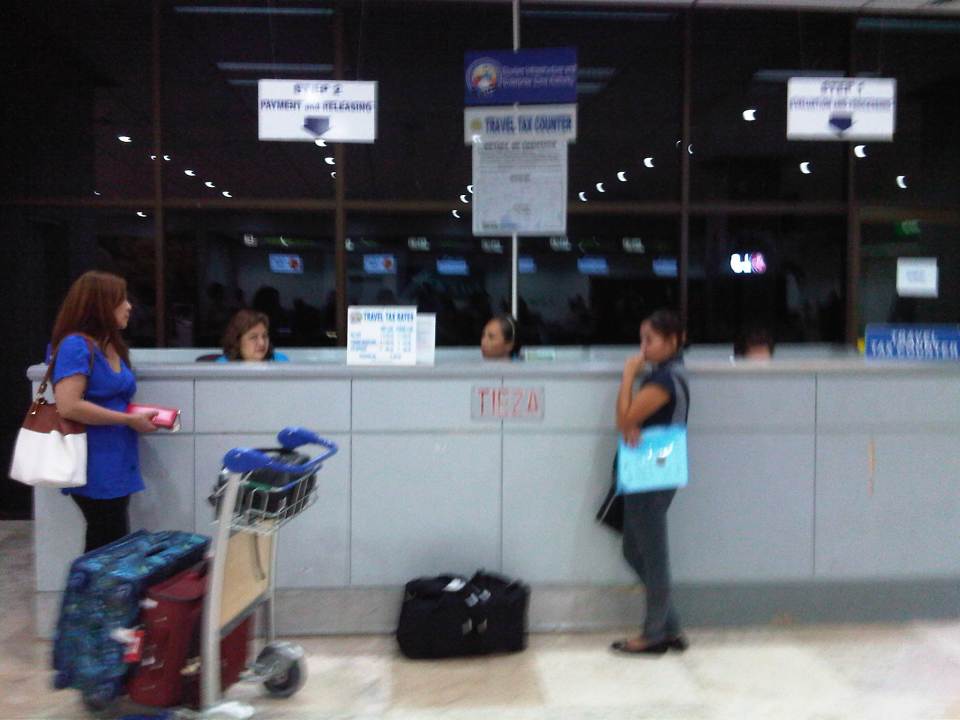 Counters for travel tax and OFW exit clearances
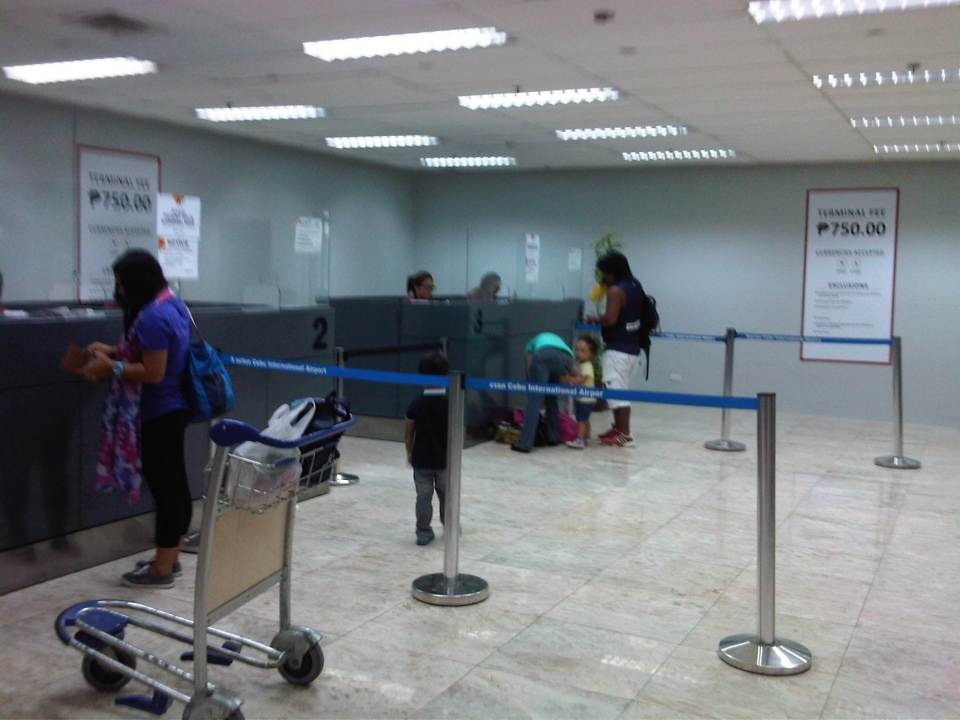 Airport terminal fee counters at Mactan
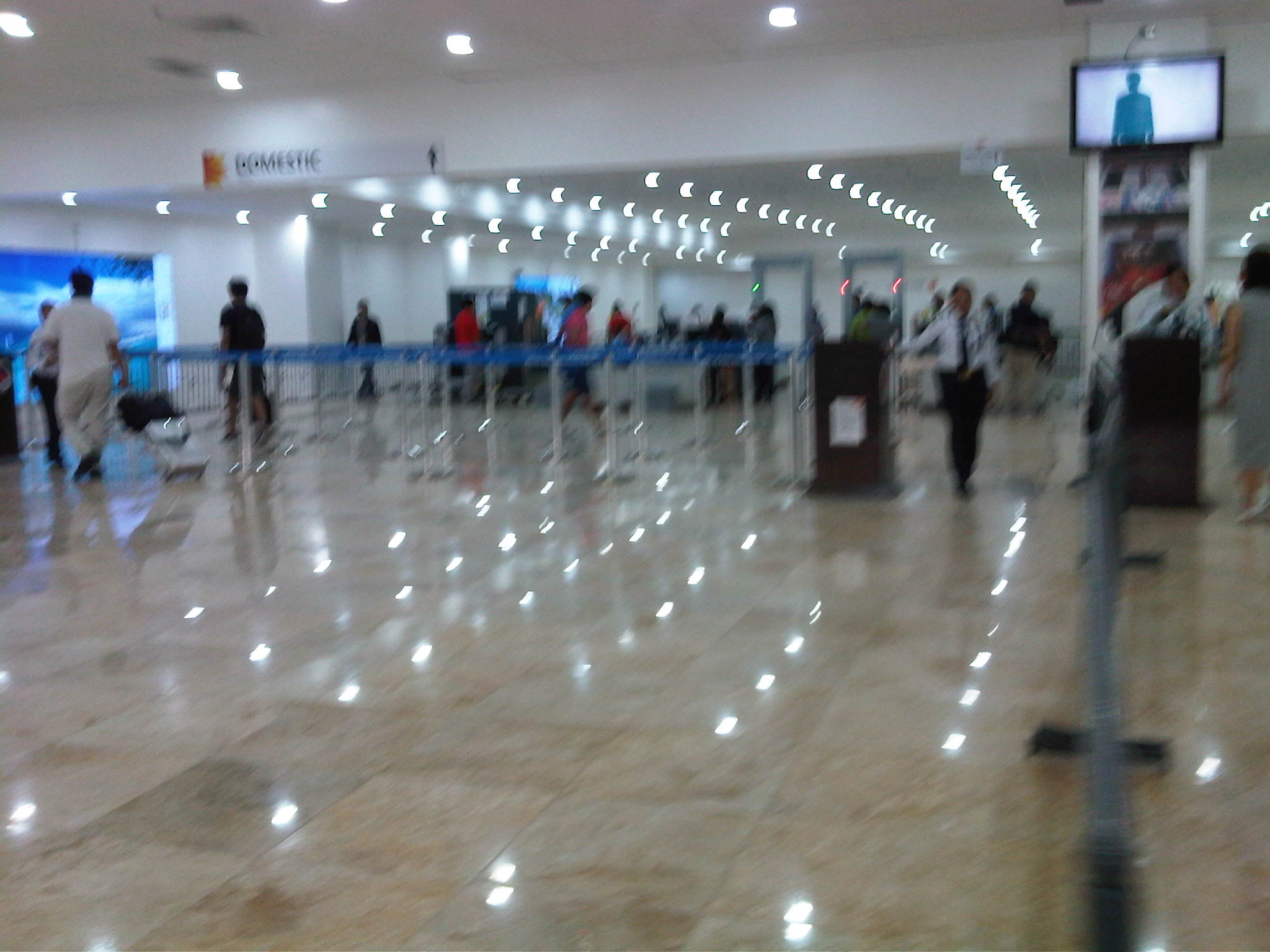 The final security check for domestic and international passengers at Mactan Airport is between the domestic and international check-in sections. The area is spacious unlike the previous set-up though I guess this can or will get crowded eventually with more flights being served by the airport.
A lot of people expect much from the expansion and upgrading of Mactan Cebu International Airport. For one, this is a major test case for the Public Private Partnership (PPP) scheme as applied to a major transport project. Succeed or fail, it will be a good reference for future projects particularly, of course, for airports. Definitely, the biggest measures for success would be the comfort and convenience of travelers using the terminal as well as the impact of a very good airport terminal to a city’s economy.
–
EASTS 2015 – Cebu City, September 11-13, 2015
The 11th International Conference of the Eastern Asia Society for Transportation Studies (EASTS 2015) will be held in Cebu City this September 11-13, 2015. For information on the conference and program, check out their website here:
You can also download a brochure about EASTS here:
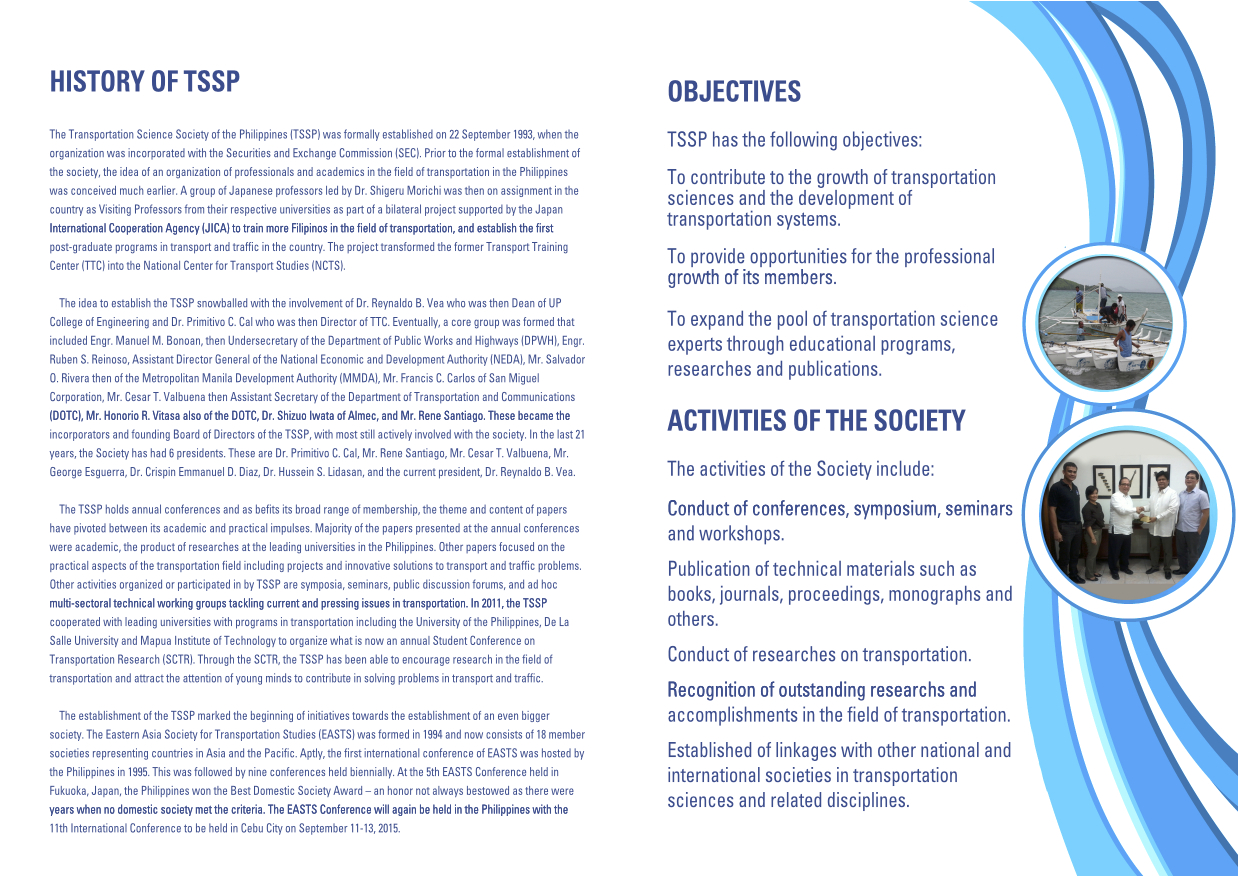
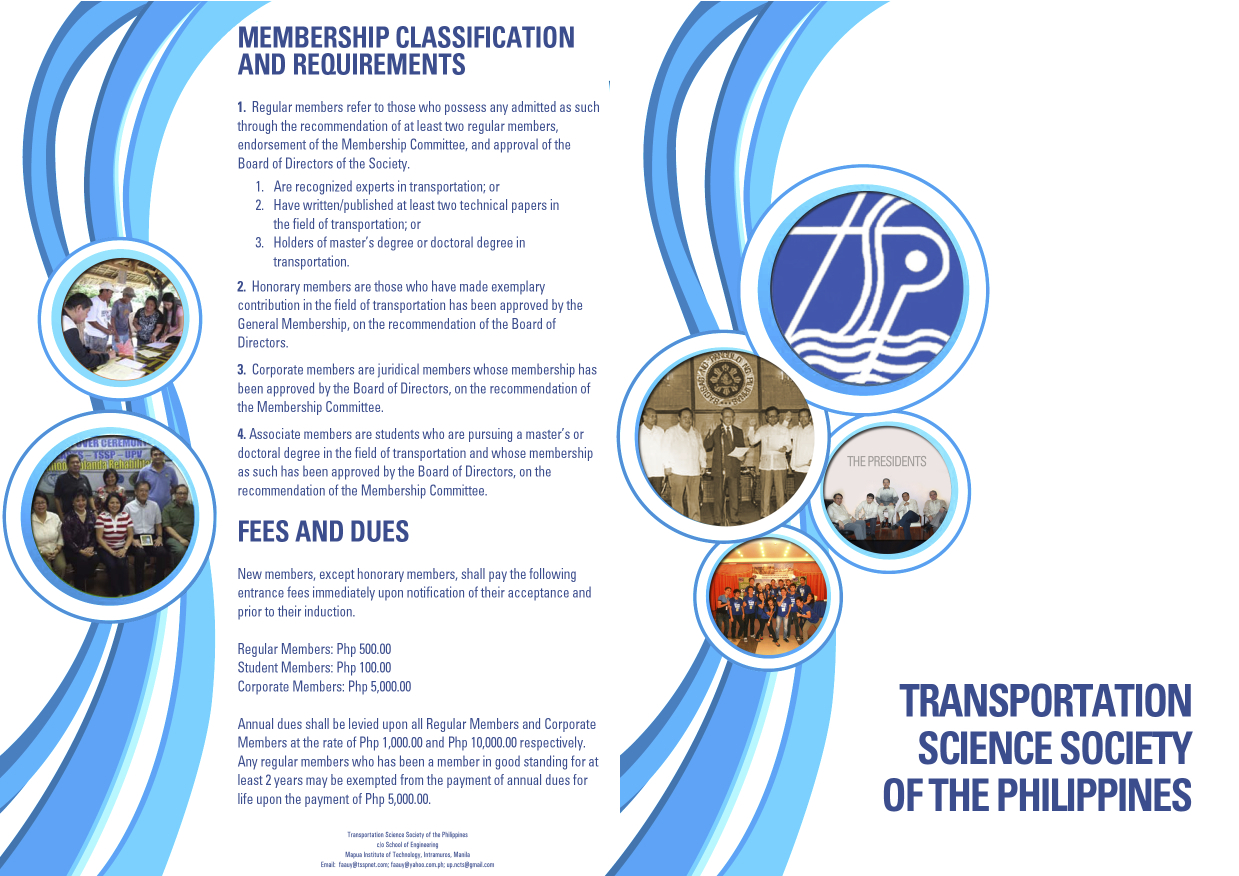
The conference is hosted by the Transportation Science Society of the Philippines (TSSP), which is the local affiliate of the EASTS. More information on the TSSP are found below:
–
 Caught (up) in traffic