
Home » EST (Page 17)
Category Archives: EST
Pedestrians first!
The Institute for Transportation & Development Policy (ITDP) released a new tool for assessing walkability and presents good practice examples from many cities around the world. The tool can be used to assess and/or compare your city, a neighborhood or a street with others. Here is the link to the ITDP’s tool:
https://pedestriansfirst.itdp.org

There is an introductory article that came out recently from Planetizen about this tool:
Litman, T. (October 16, 2020) ‘Pedestrians First’ Measures Walkability for Babies, Toddlers, Caregivers, Everyone. Planetizen. https://www.planetizen.com/node/110876?utm_source=newswire&utm_medium=email&utm_campaign=news-10192020&mc_cid=1736ec624f&mc_eid=9ccfe464b1
–
On the safety of transit use during the pandemic
Here is another quick share of an article that reports on a study showing that there is no direct correlation between COVID-19 and public transportation use:
editor@aashto.org (October 2, 2020) Study: No Direct Correlation Between COVID-19, Transit System Use. AASHTO Journal. https://aashtojournal.org/2020/10/02/study-no-direct-correlation-between-covid-19-transit-system-use/
Such articles and the study (there is a link in the article for the report) support the notion that public transportation can be made safe for use by commuters during the pandemic. The report is a compilation of best practices around the world that can be replicated here, for example, in order to assure the riding public that public transport (can be) is safe. Needless to say, car use is still less preferred and other findings have also supported active transport whenever applicable. This reference is both relevant and timely given the new pronouncement (or was it a proposal?) from the Philippines’ Department of Transportation (DOTr) to implement what they termed as “one seat apart” seating in public utility vehicles in order to increase the capacity of public transport in the country. The department has limited the number of road public transport vehicles and the current physical distancing requirements have reduced vehicle capacities to 20-30% of their seating capacities. It is worse for rail transit as designated spaces/seats in trains translated to capacities less than 10% of pre-lockdown numbers.
–
On the transformation from car-oriented to people-oriented streets
I saw this article shared by a friend on social media and share it here as an interesting piece providing ideas and the thinking or attitude required if we are to transform our streets:
Jaffe, E. (2020) “4 ways to go from “streets for traffic” to “streets for people”, Medium, https://medium.com/sidewalk-talk/4-ways-to-go-from-streets-for-traffic-to-streets-for-people-6b196db3aabe [Last accessed: 9/30/2020]
It is actually interesting to see how this plays out in Philippine cities. The ‘honeymoon’ or ‘grace’ period from the lockdown to the ‘normalization’ (read: going back to the old normal) of traffic might just have a window and this is closing for active transport. National and local officials, for example, who seemed enthusiastic and quickly put up facilities for active transport have slowed down efforts or even stopped or reneged on their supposed commitments. The next few weeks (even months) will show us where we are really headed even as there are private sector initiatives for active transport promotion and integration.
–
What if our government officials used bicycles for their commutes?
Here’s another quick share of an article about cycling:
Reid, C. (2019) ‘Cherish The Bicycle’ Says Dutch Government — Here’s That Love In Map Form, Forbes, https://www.forbes.com/sites/carltonreid/2019/01/08/cherish-the-bicycle-says-dutch-government-and-heres-that-love-in-map-form/#2951914e2726 [Last accessed: 9/29/2020]
The Dutch have perhaps the densest bikeway network in the world as shown in the article and the link below showing bike lane maps. They also have a government that is pro-bicycle. You wonder what transportation and infrastructure would look like if our government officials biked to work or used public transport on a regular basis. Perhaps these will affect how they make policies and decisions pertaining not just to transport but on housing and health as well? It would be nice to see a counterfactual discussion or paper on this and other scenarios that could help us improve transport and quality of life. This is a big “what if” that many people are actually clamoring for so government can be grounded in the way they make plans and decisions.
Here is the link to Open Cycle Map, which is affiliated with Open Street Map:
–
References for improvements for active transportation
Here’s a nice link to a National Academies of Science, Engineering and Medicine pointing to the wealth of researches supporting improvements for active transportation:
Paths to Biking, Walking Improvements Supported by Wealth of Research
Link: https://www.nationalacademies.org/trb/blog/paths-for-walking-and-biking
The references listed should aid researchers, practitioners, advocates and policymakers in their work towards realizing a people-oriented vs car-centric transportation.
–
UN General Assembly resolution on road safety
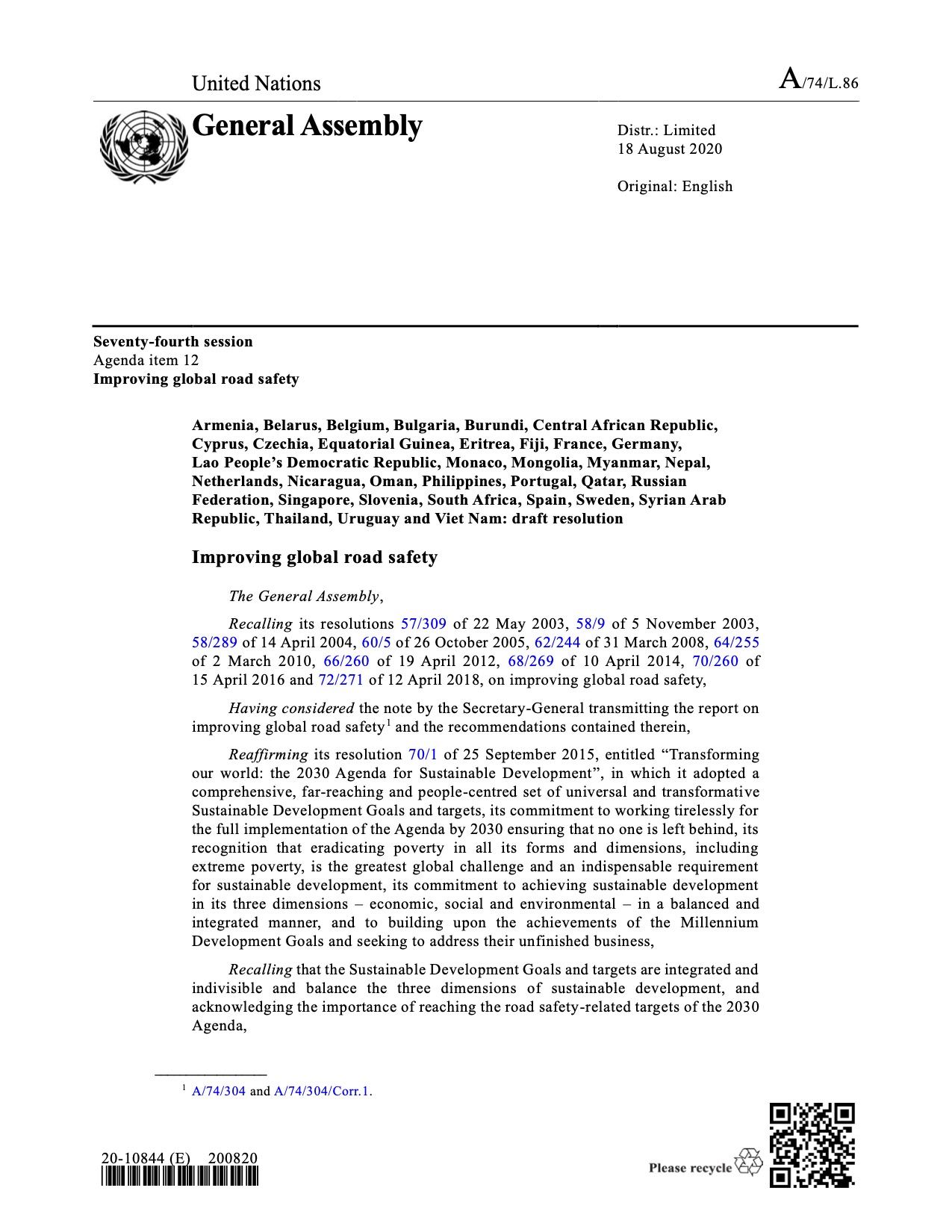
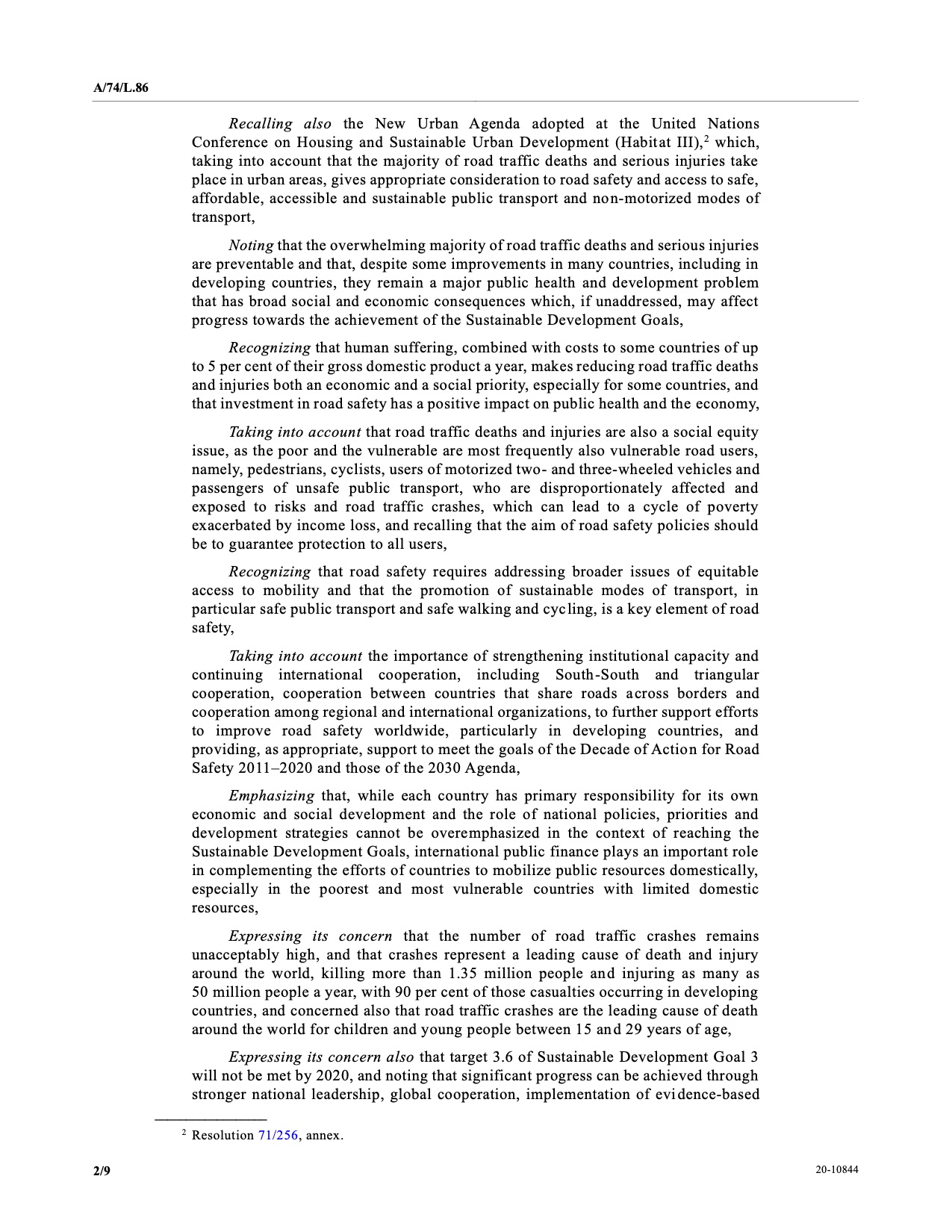
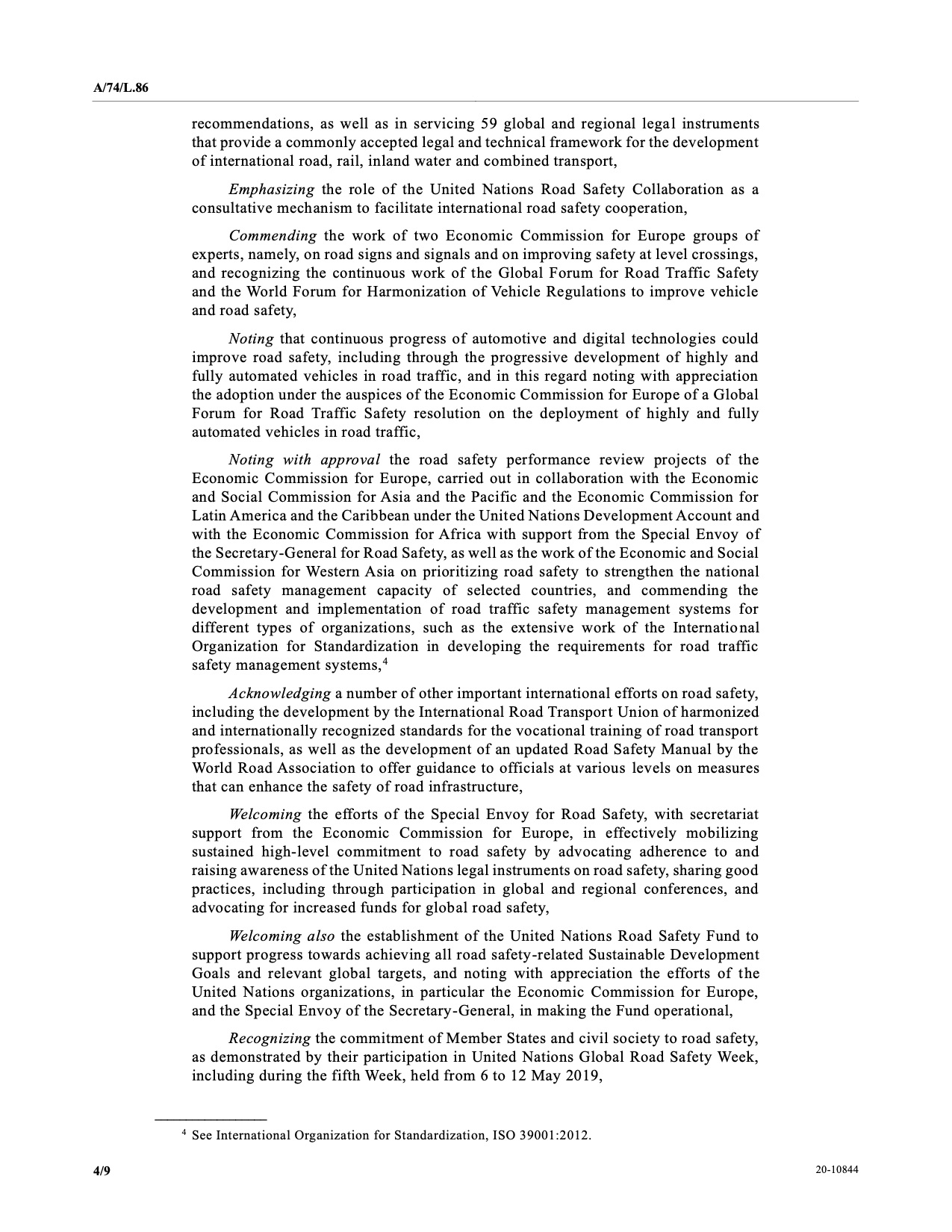
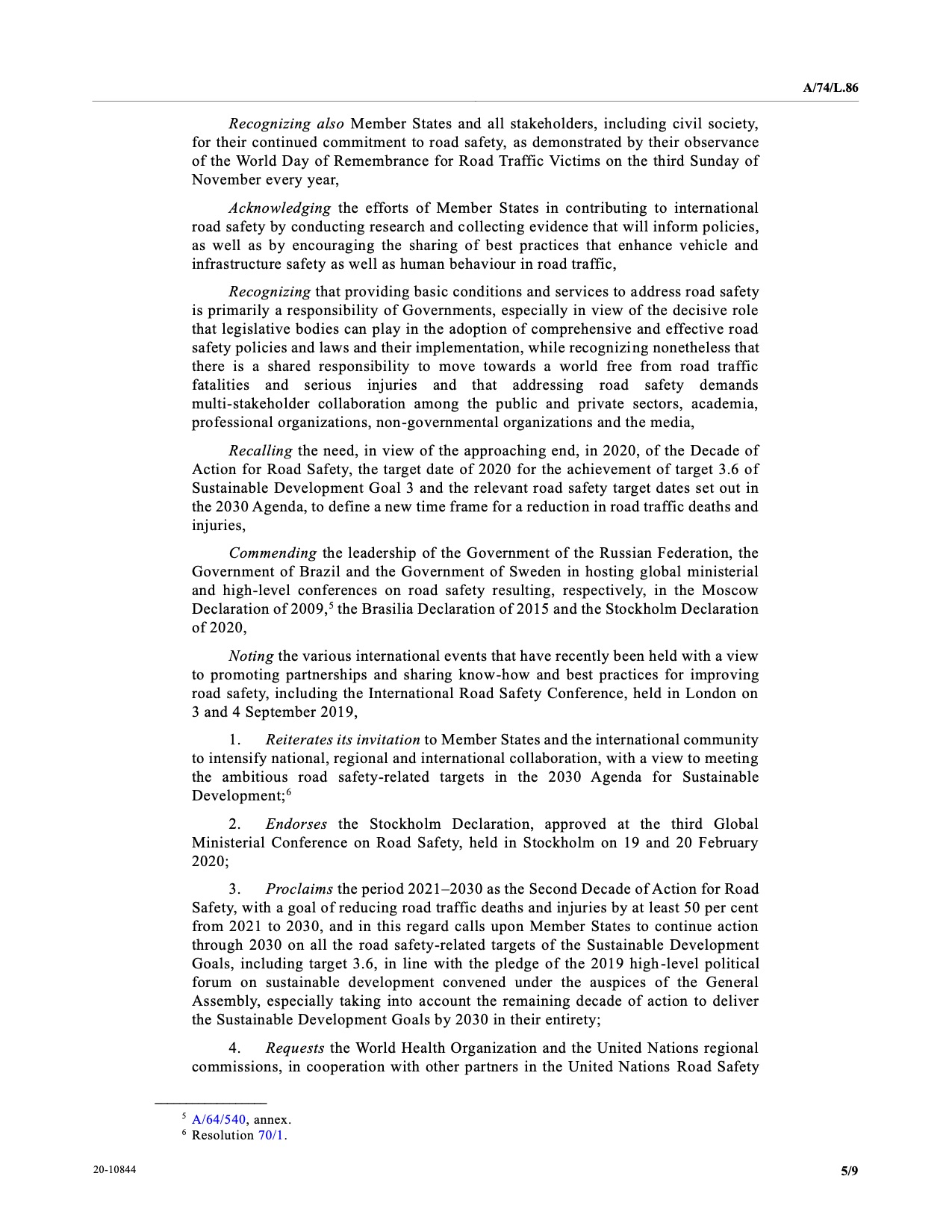
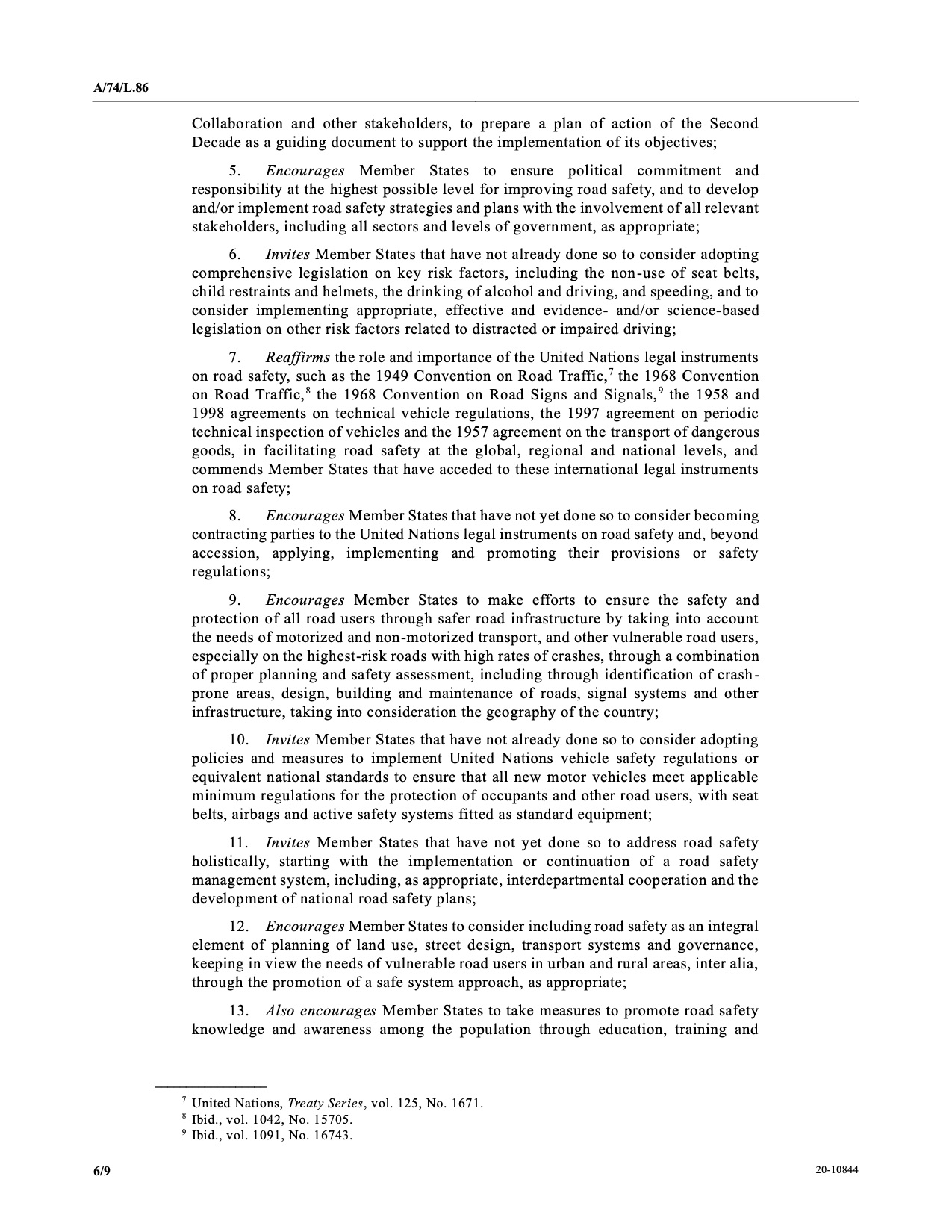
I’m posting here the 9-page resolution on road safety of the United Nations General Assembly that was recently (August 2020) passed by the body. This is the key resolution that launched a second Decade of Action for Road Safety, 2021-2030. The document may also be downloaded from the net. Here is a link to the document via the Asia Pacific Road Safety Observatory site:



–
Paved paradise? On pollution due to asphalt roads and parking lots
Here’s another quick share of an article mainly about asphalt as a material used for roads, parking lots and roofs:
Pullano, N. (2020) “Sun-heated streets can lead to air pollution strikes – study”, Inverse, https://www.inverse.com/science/summer-streets-beat-the-heat?link_uid=15&utm_campaign=inverse-daily-2020-09-03&utm_medium=inverse&utm_source=newsletter [Last accessed: 9/6/2020]
While we have a significant number of roads with asphalt paving or surfacing, the majority of roads are of Portland cement concrete (PCC). Most lots are also PCC or gravel. And unlike in the US, most roofs here are made of galvanized iron (GI) sheets or even clay tiles.
–
Painted lines are not enough for bike lanes
From the experiences of many biking or trying to bike in the Philippines, painted lines are not enough for bike lanes. Only recently, cyclists using bike lanes that did not have any physical barriers to deter motorists from encroaching have been involved in crashes, with at least a couple being reported as fatal for the cyclists. Here is an article on what cyclists need in order to ensure or at least improve the safety of their commutes.
UTC (2020) “White lines? Cyclists need more,” ITS International, https://www.itsinternational.com/its8/feature/white-lines-cyclists-need-more [Last accessed: 8/6/2020]
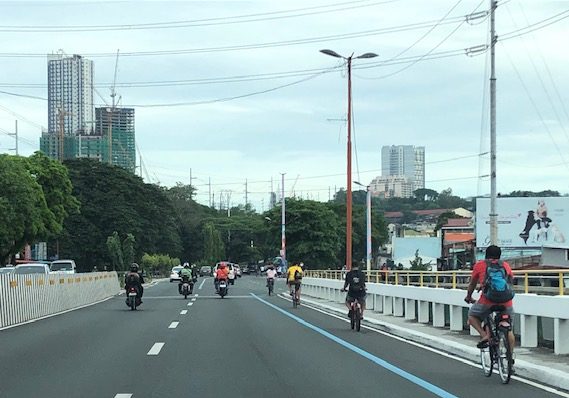 Commuters on bicycles along the Marcos Highway bridge bike lane
Are there differences regarding cycling in different countries? From a somewhat cultural-behavioral perspective, perhaps there are studies (though I am not aware of them yet) about how peoples from different countries or cities behave with respect to cyclists whether or not there are bike lanes designated for the latter’s use. I recall my experiences cycling in Japan and drivers are generally respectful of cyclists on the roads. Pedestrians, too, are very tolerant of cyclists on the sidewalks or designated areas for walking. Of course, the cyclist would have to do their share of respecting others’ spaces, too, and should behave and position themselves accordingly while traveling.
–
On the benefits of shared roads during the pandemic
There is evidence, and they are increasing, for the benefits of shared roads. Here is another quick share of an article supporting that:
Brown, M (2020) “Shared-use roads improve physical distancing, research shows,” Medical Xpress, https://medicalxpress.com/news/2020-07-shared-use-roads-physical-distancing.html%5BLast accessed: 7/30/2020]
With the situation in the Philippines and particularly in Metro Manila appearing to be worsening rather than improving, national and local governments should take heed of the evidence for shared-use roads and the importance of active transport to ensure people’s mobility will not be hampered. This is particularly important for our frontliners and other essential workers if we are to survive this pandemic.
–
On bike shares and the pandemic
We begin August 2020 with another article I want to share. Here is another article on cycling, this time on bike share:
Kanik, A. (2020) “The decisions cities made about coronavirus had a big impact on bikeshare ridership,” citymetric.com, https://www.citymetric.com/transport/decisions-cities-made-about-coronavirus-had-big-impact-bike-share-ridership-5218[Last accessed: 7/29/2020]
Our university’s bike share program currently dedicated their bikes for the use of frontliners. Outside UP Diliman, only the City of Pasig has a bike share program. Is it somewhat surprising that these are the only bike shares we know in the country? It should be, considering the potential of bike shares and cycling as a mode of transport for mobility. In fact, two cities, Marikina and Iloilo, which pride themselves having formal bikeways (Marikina even has an extensive bikeway network that began 20 years ago.) have no bike share programs. Is the concept or perhaps the lack of facilities to encourage people to bike safely that is absent and therefore need to be provided? With the surge of bike users post-lockdown, there should be evidence that bike shares can work but only if cities work on it, too.
 File photo of Iloilo City’s bikeway along the Benigno Aquino Jr. Ave. (formerly Diversion Road) taken in 2015.
–

