
Home » Governance (Page 18)
Category Archives: Governance
On how communities should be?
This post is related to my recent post about Philippine cities and municipalities already somehow being 15-minute units. I am sharing another article I’ve read and reread for its current relevance.
Litman, T. (March 15, 2021) “A Complete Community is All Mixed-up,” Planetizen, https://www.planetizen.com/node/112565?utm_source=newswire&utm_medium=email&utm_campaign=news-03222021&mc_cid=628c8ee4b1&mc_eid=9ccfe464b1 [Last accessed:
The article is loaded with references that you can download and use in research or practice. And there are these two tables – Walk Score Ratings and Public Amenities – that are quick guides or references to what is desired to be achieved in communities.
Enjoy!
–
On what local governments can do to improve road safety
Here is a very interesting article on how a small city in the US was able to reduce traffic deaths by investing in people-oriented transport programs and projects:
Kessler, E. (April 6, 2021) “EYES ON THE STREET: How Hoboken Has Eliminated Traffic Deaths,” StreetsBlog NYC, https://nyc.streetsblog.org/2021/04/06/eyes-on-the-street-how-hoboken-has-eliminated-traffic-deaths/ [Last accessed: 4/14/2021]
The article is pretty much self-explanatory. I won’t be commenting more about this except that many of the items mentioned can be taken on by many cities and municipalities in the Philippines. You don’t have to be a highly urbanized city with a big population and so much resources to come up with a plan and perhaps improvise in order to reduce costs of implementation. The most important thing is leadership since leaders like the mayor will be responsible for and making the critical decisions for the town. That is why he was elected in the first place, and the same goes for the other elected officials who are supposed to represent the interests of all their constituents and not just those who own cars.
–
On the principles of good infrastructure
Since the Philippine government is engaged in its Build, Build, Build infrastructure development program, and agencies like the DPWH and DOTr often or regularly refer to what’s happening in the US in terms of projects, guidelines and standards, I am sharing the following article on the principle
Marshall, A. (March 18, 2021)“What Are the Five Principles of Good Infrastructure?” Governing.com, https://www.governing.com/community/Five-Principles-Good-Infrastructure.html [Last accessed: 4/5/2021]
Despite obviously being an article about US infrastructure in the context of the new administration there, there are just too many takeaways or relevant information here that applies to us and how we are developing and maintaining our infrastructure. To quote:
“First of all, cost matters. The evidence is pretty clear now that we pay several times more than other advanced nations to build transit infrastructure, particularly tunnels, and possibly highways as well. It appears we pay too much to build public parks.
Second, time matters. We still get estimates for infrastructure projects whose construction stretches into decades, when it should be a few years. Time relates to cost. Adding time makes projects more expensive.
Third, connections matter. Whether it’s a light-rail line joining up to a bus line, or an interstate exit linking to a town, the connections between infrastructure systems are important. High-speed rail lines need to intersect seamlessly with the cities they serve. Infrastructure can’t be designed in a vacuum. Urban planners and designers should be at the top of the infrastructure food chain, so that transportation and other departments work for comprehensive visions.
Fourth, design matters. Western Europe has been erecting light, airy bridges for decades, while we have continued to build heavy concrete slabs. This is changing, but we lag behind other countries in the design quality of everything from bridges to subways.
Finally, ownership matters. Even the best-designed and swiftly built infrastructure will turn bad if we give one or two private companies total control over them. As we use private companies for broadband, cable, telephones, data management and the power that runs our homes, we need to remember this. When we can’t (or won’t) have public systems, then the private ones need to be carefully managed.”
To what extent do you think these principles apply to our case?
–
On a different view of the ’15-minute city’ concept
Here is an article discussing the downside(s) of the 15-minute city; particularly its adoption without understanding first and setting the context for the concept:
O’Sullivan, F. (March 3, 2021) “The Downside of a 15-Minute City,” Bloomber CityLab, https://www.bloomberg.com/news/articles/2021-03-02/the-downsides-of-a-15-minute-city [Last accessed: 3/20/21]
Some people are pushing very much the same concept for quick adoption in the Philippines without again contextualizing it. I feel these people are detached or choose to be so perhaps as they seek shortcuts to achieve what they believe should be the way cities and municipalities are laid out in the country. But wait…don’t we already have 15-minute cities in the Philippines? I will be writing about that soon…
–
On planning communities for children
I am currently involved in a project concerning child road traffic injury prevention (CRTIP). The topic of road safety is also close to my heart since a beloved aunt died due to injuries sustained after being hit by a jeepney. She was in great health and walked almost daily between our home in Iloilo and the church to hear Mass. Children and senior citizens are among the most vulnerable road users and so I believe we must address their needs more than able-bodied adults. That would probably make our communities safer and friendlier to most people. Here is an article that tackles planning for communities from the perspective of children and families:
Litman, T. (March 9, 2021) “Planning communities for children and families,” Planetizen.com, https://www.planetizen.com/node/112498?utm_source=newswire&utm_medium=email&utm_campaign=news-03112021&mc_cid=5a75b816a6&mc_eid=9ccfe464b1 [Last accessed: 3/14/2021]
To quote from the article:
“Here is a summary of child-oriented urban design features:
-
Children need opportunities to join a loose social group of other children without a formal—or prearranged—invitation to play.
-
Children need access to safe, uninhibited outdoor play to support their physical and mental health. Outdoor play should include opportunities to interact with the natural environment—finding bugs, smelling flowers, playing in puddles, or collecting objects—without the need for excessive rules, oversight, or segregation.
-
Children need environments that are safe from traffic, pollution, and undue physical or social hazards, including safe routes to and from school and local playgrounds, allowing them to travel throughout their neighbourhoods safely in order to develop confidence, resilience, and independence.
-
Children need private spaces for themselves and their friends, including tree houses, forts, or clubhouses that are close to home yet away from public view. 5.
-
Children need stable, appropriate, and affordable housing that provides them with private space to rest, study, and play.
-
Children need local access to appropriate early childhood education, child care, and community schools.
-
Children benefit from the opportunity for their parents to work locally.
-
Children benefit from walkable communities, with infrastructure for safe walking, cycling, and recreation.
-
Children benefit from diverse, multi-generational communities, where they can interact with—and learn from—children, adults, and seniors of all races, religions, cultures, and incomes.
-
Children should be given an opportunity to effectively and productively participate in decision-making processes.”
–
Vaccine passports anyone?
As the Philippines, relaxes protocols to contain the Covid-19 pandemic, it is interesting to note that other countries have not let down their guard. And the latter includes nations that have been quite successful in dealing with the pandemic. Many countries have also received the vaccines and have started inoculating their populations. These received the doses ahead of the Philippines and have now vaccinated a significant % of their population according to their respective prioritization schemes.
But even as countries have started vaccinations, the question remains whether a vaccinated individual can now move around or travel as if it were pre-pandemic conditions (the old normal). Here’s a nice article to read as the topic of unrestricted (or restricted, depending on your take) comes up in discussions including those leading to certain policies to be formulated by governments:
Fisher, M. (March 2, 2021) “Vaccine passports, Covid’s next political flashpoint,” The New York Times, https://www.nytimes.com/2021/03/02/world/europe/passports-covid-vaccine.html [Last accessed: 3/4/2021]
–
On cultivating a culture of public transportation
There’s this recent article about cultivating a culture of transit (i.e., public transportation). We probably take this for granted despite most of us taking public transportation for our commutes. I would like to think such cultures exist with variations and uniqueness for various towns, cities, even countries. There is a uniqueness about the different paratransit modes that you might find around Southeast Asia, for example. These include Thailand’s Tuktuk and Songthaew, Indonesia’s Bajaj and Angkot, and the Philippines’ jeepney and tricycle.
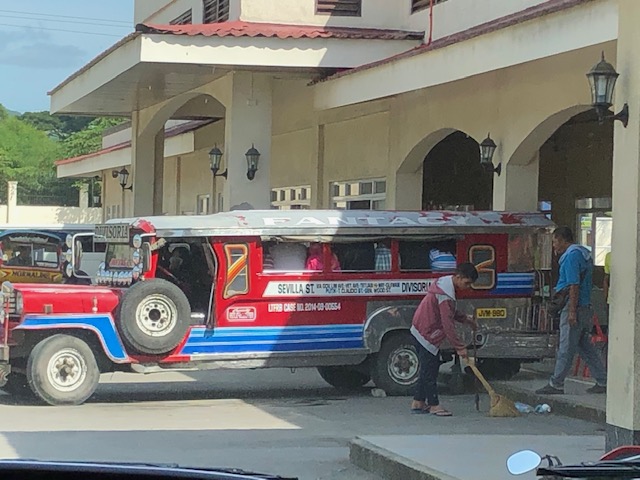 A Philippine jeepney waiting for passengers at a terminal
Here is the article via Planetizen:
Gifford, D. (February 23, 2021) “Cultivating a Culture of Transit,” Planetizen, https://www.planetizen.com/node/112361?utm_source=newswire&utm_medium=email&utm_campaign=news-02252021&mc_cid=c3b203ffe6&mc_eid=9ccfe464b1 [Last accessed: 2/26/2021]
Some takeaways from the article:
“What are the common factors for great transit? Well funded, frequent transit is one key to a successful transit system, and funding goes a long way to support transit culture. When a system is well funded, it is more frequent, more useful, more people use it, and it becomes part of the culture. Many of these systems are so popular they even have their own stores where riders and transit fans can purchase merchandise.”
and
“Improved service would cultivate a diverse culture of transit as more people rode. Just imagine a far reaching system with dedicated lanes that would not only be beneficial for commuters, when in office work resumes, but one that will improve life for daily riders who depend on it most.”
What is culture anyway? It refers to society, a way of life; including lifestyles, customs and traditions. Perhaps its worth mentioning that the jeepney and the tricycle (the conventional/older ones) are considered cultural icons. This did not happen overnight and probably involved romanticized concepts of anything about jeepneys and tricycles; including stories, true or fictional, about the people involved.
Questions: Can we develop and nurture a similar culture about bicycles? And can it happen immediately?
–
On leaders and decision-makers taking public transport or bikes to commute
There has been clamor for our leaders and decision-makers, especially those in the transport and highway agencies, to take public transportation. This is for them to experience how most commuters fare for their daily grinds. And no, having an entourage including bodyguards or reserving your own train car does not count. Dapat pumila o maghintay sa kalye. Makipagsisikan o makipag-habulan sa bus, jeepney o van para makasakay. Many if not most of these officials have their own vehicles or are even driven (may tsuper o driver) to and from work. One even had the gall to transfer his department to where he comfortably resides so he won’t commute but that’s another story.
You see articles and posts about Dutch politicians and even royalty riding the bicycle to work.
 The Dutch Prime Minister bikes to work
Then there are politicians regularly taking public transport while in office. Here is an article about the newly inaugurated POTUS, Joe Biden, who took the train for his regular commutes:
Igoe, K.J. (May 4,2020) “Where Did “Amtrak Joe,” Joe Biden’s Nickname, Come From?”, Marie Claire, https://www.marieclaire.com/politics/a32363173/joe-biden-amtrak-joe-meaning/ [Last accessed 2/14/2021]
Do we have someone close to such an example? Commuting by private plane between your home in the Southern Philippines and your office in Manila surely won’t let one have an appreciation of the commuting experiences of typical Filipinos.
–
On planning our cities from a child’s perspective
Wouldn’t it be interesting to find how children would plan their cities? No, this is not the lego building kind of exercise but something closer to actual planning exercises where children not only act as planners but stakeholders themselves. We always say they are the future and that know that they will inherit whatever good or bad we are doing now, and yet they have little say in that future. Perhaps we should heed what they think our cities require?
Ergler, C. (January 4, 2021) “Young children are intuitive urban planners — we would all benefit from living in their ‘care-full’ cities”, The Conversation, https://theconversation.com/young-children-are-intuitive-urban-planners-we-would-all-benefit-from-living-in-their-care-full-cities-151365 [Last accessed: 1/15/2021]
–
On the RFID fiasco
Early December 2020, Metro Pacific Corporation suddenly had to deal with jam-packed toll plazas and queues that affected roads connecting to the North Luzon Expressways. Fast-forward and Valenzuela City apparently had enough of it and revoked the tollway corporation’s business permit. Later, matters were resolved with the tollways reverting to mixed toll collection to manage the queues at the toll plazas.
Prior to this, tollways corporation scrambled to meet the deadline set and re-set by the Department of Transportation (DOTr) through the Toll Regulatory Board (TRB) for contactless, cashless toll payments. The question is if there was enough time for tollway operators to acquire the best (not just the minimum required) system for this endeavor. There are some opinions that this was basically required on short notice and for the government to get some brownie points for this.
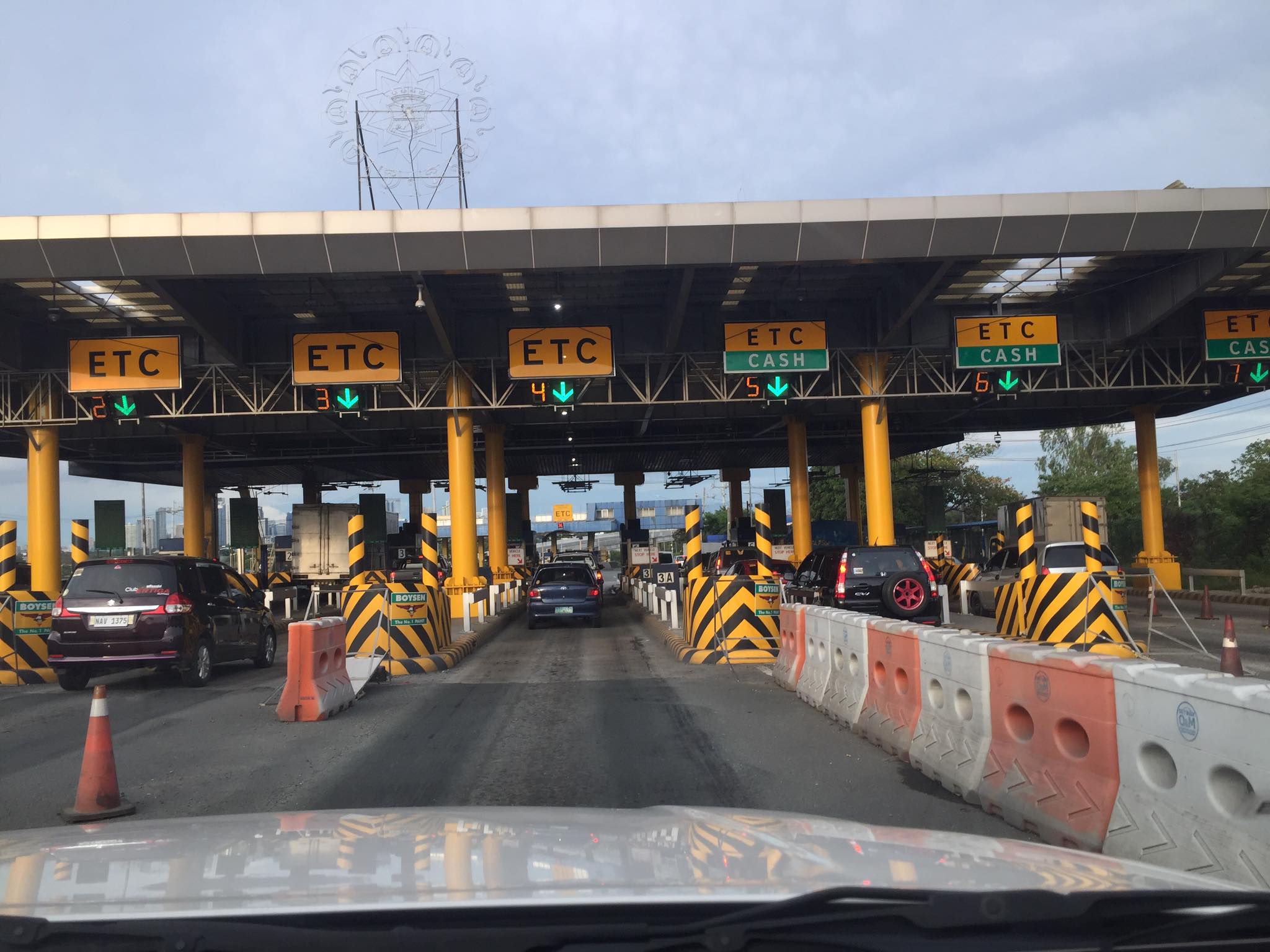
Were there issues about technology and the corresponding costs to the acquisition and deployment of the necessary devices for seamless, contactless, delay-free (in relative terms) transactions for tollways? Probably so. Those RFIDs and the readers installed at strategic locations along tollways (i.e., entries and exits) were certainly not state of the art or the best available out there. Singapore, for example, uses a more sophisticated system for their expressways where you no longer have toll plazas and you won’t have to slow down to be detected by the system. That system has corresponding costs but is perfect for the city state given that most roads are tolled anyway because of their road pricing policy. In the case of our tollways, not all travelers are actually going to utilize the tollways as frequently as it would necessitate them having to get either the Easy Trip or Auto Sweep tags. That is obvious from the relatively low penetration rates for electronic toll collection (ETC). So it still makes sense to have hybrid booths for those not availing the ETC option. Anyway, travelers will have to exercise disinfection protocols to ensure infections are prevented.
–
 Caught (up) in traffic