
Home » Health
Category Archives: Health
On reducing deaths due to road crashes
Following is a link to an article on the increase in road crash-related deaths in Singapore. The city state prides itself as one of the safest places in terms of transportation yet road crash deaths recently hit a 10-year high.
From the article:
“Cellphone-related driving violations surged 39.1% to 4,193 cases, the report showed. Motorcyclists, who make up just 15% of Singapore’s vehicle population, accounted for 54.8% of all traffic accidents and 53% of fatalities.
Speeding violations jumped 25.9% to 253,550 cases, equivalent to roughly 695 motorists caught daily. While speeding-related fatal accidents dipped from 46 to 41, red-light running accidents surged 27.1% to 122, resulting in seven deaths. Drink-driving accidents fell from 166 to 156, but the number of fatal drink-driving accidents held steady at 12 in both years…
…”Road safety requires a culture of mutual respect and graciousness among all road users,” the police force said. “Simple acts of courtesy, such as maintaining a safe following distance of at least three seconds, giving way to pedestrians, reducing speed near junctions and being patient during peak hours, can create a better road culture.” “
What can we learn from Singapore’s experience? Are we capable and equipped to improve road safety in the Philippines? Can we be more courteous, respectful and gracious in the way we drive or behave as road users?
–
On the dangers of drowsy driving
Here’s another quick share of an article on road safety. This one is about drowsy driving, which is said to be more dangerous than drunk driving. Drowsy here is equated to being sleepy – for whatever reasons may have led the driver to be drowsy. Perhaps lack of sleep, fatigue or being simply tired, or maybe due to food or medication he/she took before driving.
Here is the link to the article, which has a link to the report referred to in the article:
https://www.ghsa.org/news/drowsy-driving-new-data-analysis
From the article:
“…several strategies to combat this dangerous behavior:
-
Start with prevention: Promoting healthy sleep habits for everyone – especially for teens as they begin their driving journey – is essential. Drivers should practice good “sleep hygiene,” which includes sleeping in a quiet, cool, device-free environment and avoiding caffeine or alcohol before bed.
-
Vehicle technology that’s available now: Advanced Driver Assistance System (ADAS) features can monitor for telltale signs of drowsiness (like yawns or long blinks) and issue visual, auditory or haptic alerts to tell drivers to take a break. Notably, none of the current systems prevent a driver from ignoring them and continuing to drive, or from turning them off entirely.
-
Change the culture at work and school: Employers should implement responsible scheduling and travel policies to minimize fatigue. School districts can consider shifting high school start times later in the day to help teens get more rest. One study of high school student drivers found significantly lower crash rates with a later school start time.
-
Build more, smarter infrastructure: Infrastructure changes such as rest stops, rumble strips and cable median barriers can help prevent drowsy driving, wake drivers up or reduce the severity of a run-off-the-road crash.”
–
On at-grade crossings and footbridges
Here’s a quick share of an article on how at-grade crossings are generally better and preferred over footbridges:
When Footbridges Cost Lives and At-Grade Crossings Save Them
The article effectively articulates the case for at-grade crossings and presents the facts and references in support of these crossings. I will only add here that context is still important along with an appreciation or understanding of the volume of traffic and occupancy of vehicles along the roads. Commonwealth Avenue, for example, requires footbridges but there should be better designs for these footbridges than the current ones along this highway. I think we lack good designs that we can refer to and this leads to a summary dismissal of footbridges where they are actually most suitable.
–
A quick note on road safety parks
A new road safety park is to open today in Muntinlupa City in Metro Manila. While the objectives of the park appear to be clear enough to most people, I’ve seen some unusual reactions vs. the park. Instead of stating my piece about this and road safety parks, I will just share a couple of links on similar facilities in two countries in our region where road safety is strongly advocated not just by private citizens but by their governments:
Road Safety Park in Singapore: https://www.torque.com.sg/features/singapores-road-safety-community-park-was-built-30-years-ago/
Traffic Garden (Taman Lalu Lintas) in Malaysia: https://www.facebook.com/share/p/1BF8ruywsZ/
You can also try to Google other road safety parks or gardens in other countries to see other examples of these and how other cities have utilized the parks to promote road safety especially among children. It is better to learn about these parks and perhaps recommend how these can help rather than start shooting from the hip to discredit these and their proponents.
[Note: The MMDA has a road safety park in Manila that is patterned after the Malaysian and Singapore examples.]
–
Safety roller barriers along Sumulong Highway
Last week, I observed that the DPWH is currently installing road safety barriers along a section of Sumulong Highway in Antipolo City. Previously, I posted about the same along the Antipolo-Teresa Road, which has treacherous zigzag sections. Here are photos of the ongoing installation work along Sumulong between Padi’s Point and the Oscar Lopez Center.
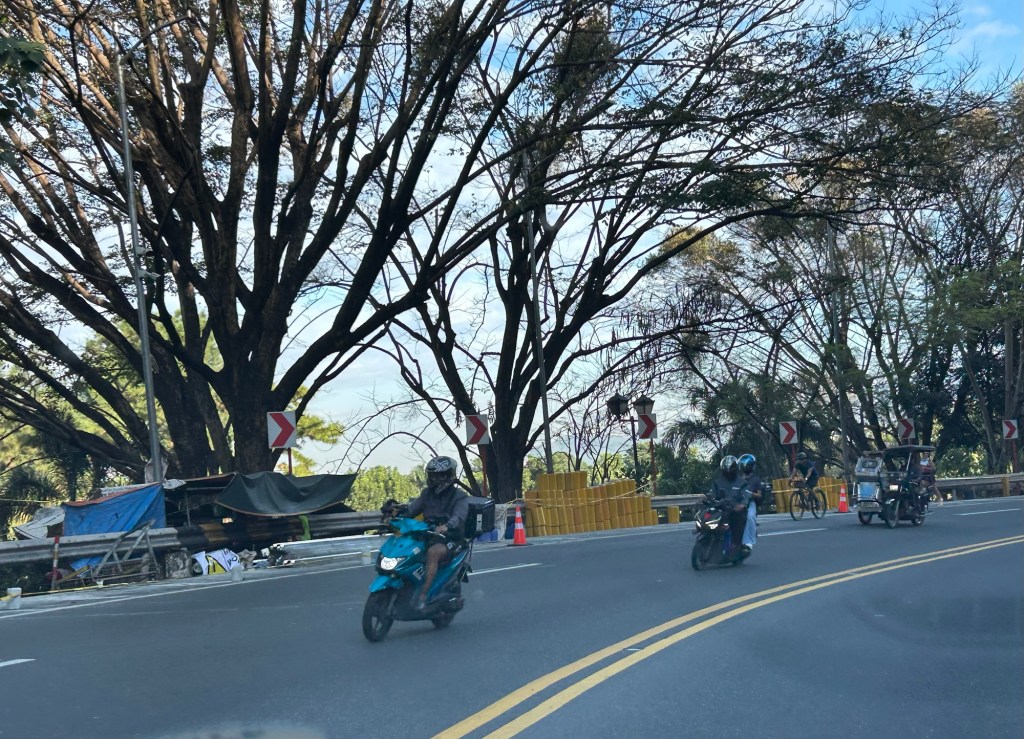
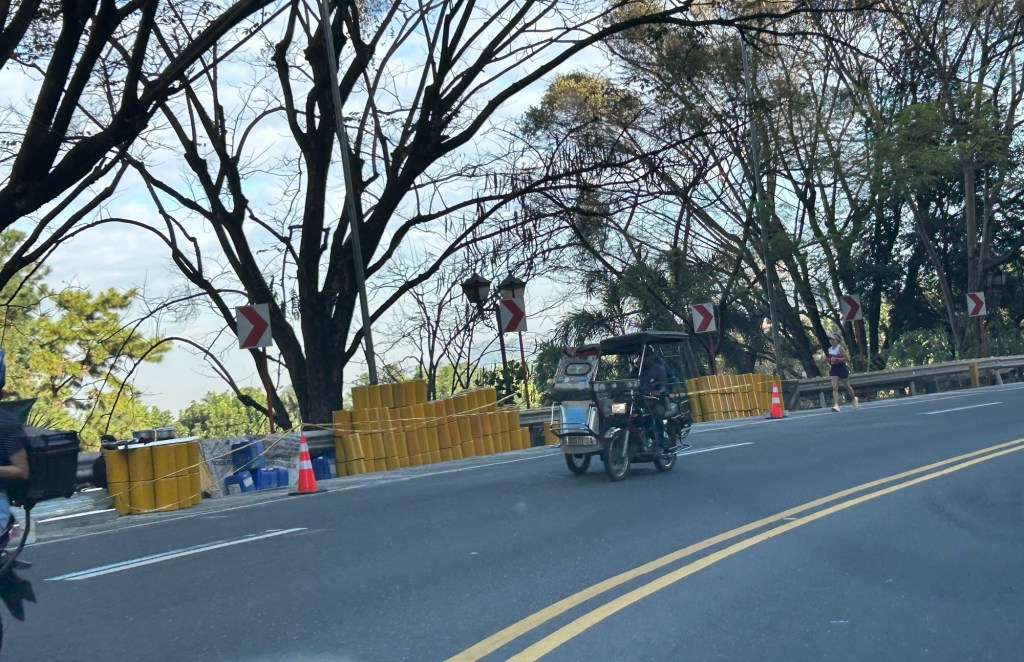
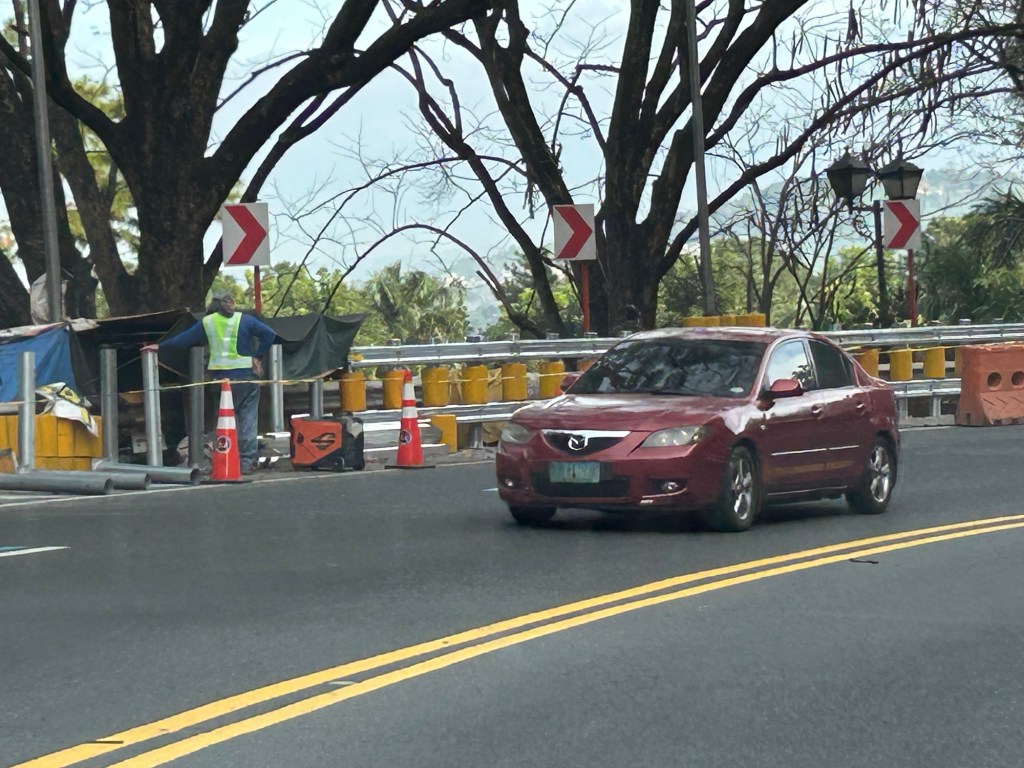
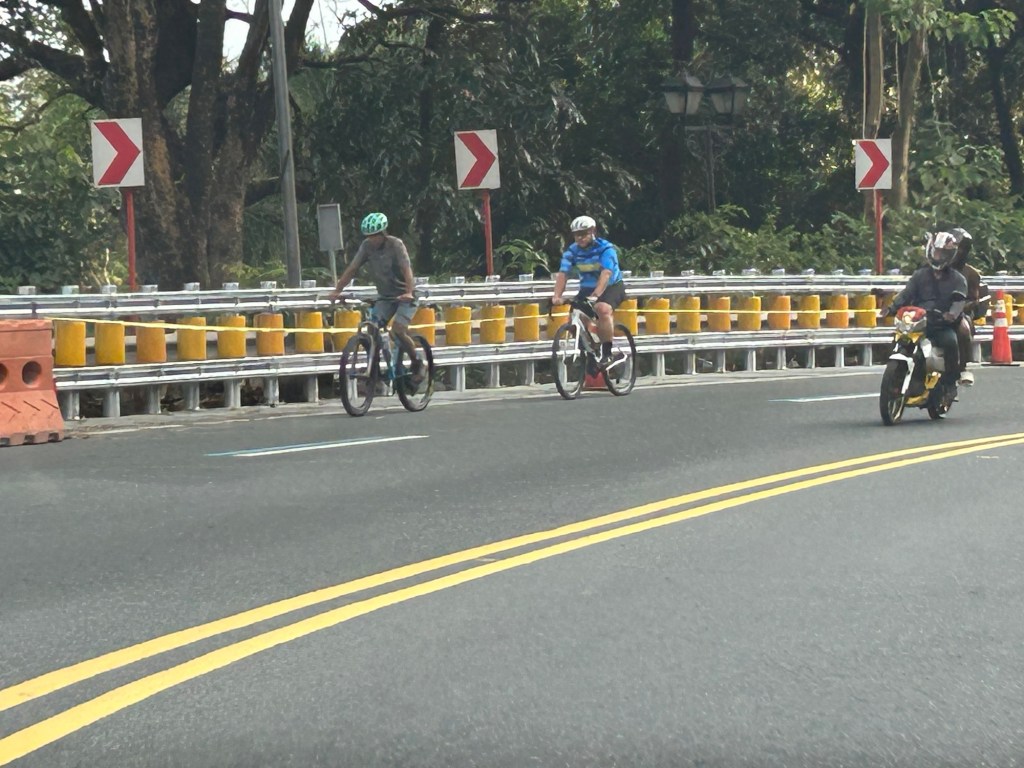
Here is a link to what these barriers are and how they help make roads safer for all users:
https://roadskyguardrail.com/what-is-a-safety-roller-barrier-a-comprehensive-guide
–
Just keep on walking
After an eventful end to 2025 and start of 2026, I finally was able to get back to walking. I passed on January 1 as there was a haze that blanketed our area. That was due to the fireworks. With more residents in our village and surrounding areas, there has been an increase in fireworks users the past few years. Last weekend, it was nice to have better air quality for my morning walks.

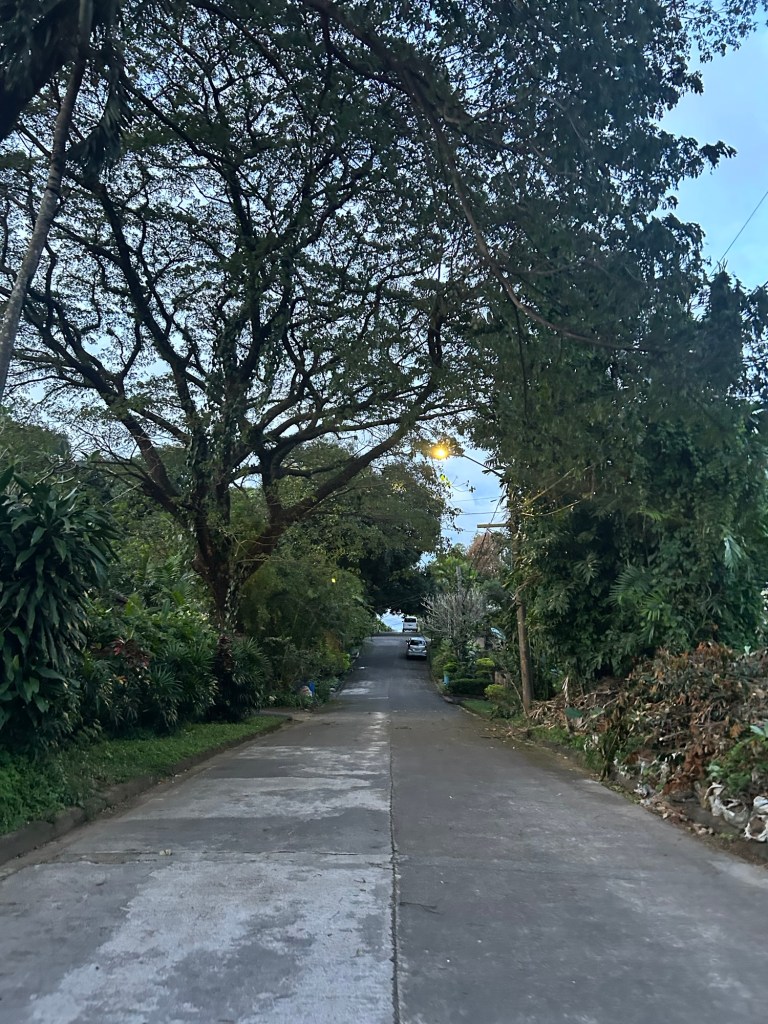
My average step count decreased last year due to a variety of factors including weather. I intend to start strong again this January and hopefully be able to sustain this for the year. It’s really a good thing for my health and wellbeing. And it’s something I would strongly recommend for others- be more active. Set some time for walking whether it’s in the morning, noon or evening.
–
“Nobody Walks Here. It’s Too Hot or Cold or Wet or Dry.”
I’m sharing this article as it provides a clear response to the question about walking under different circumstances. Those circumstances include weather conditions. How many times have we heard people saying “people won’t walk because it’s too hot or rainy” ? Maulan (rainy)! Mainit (too hot)! And yet we find a lot of people walking, even when its extremely hot or the rains are pouring.
Source: “Nobody Walks Here. It’s Too Hot or Cold or Wet or Dry.”
Quoting from the article:
“The human ability to adapt is the key to our spectacular success on this planet. Our problem is that the people who lead our public conversations, our elites of wealth and opinion, are often some of the least adaptable people on earth. And when societies assume that we should listen to those people, we all end up internalizing the message that there’s something wrong with us if we even try to walk…
…Sometimes walking a few blocks is the key to liberty and prosperity in someone’s life. Most people do what makes sense in the place where they live. Only if we recognize that will we make the investments in urban design to make walking more bearable in extreme weather. And only then will our cities include everyone.”
Here’s another quote and a take on what certain people say that often influences our choice for walking:
“The functionality of a city, and of its transport system, arises from the sum of everyone’s choices about how to travel, not just the preferences of elites. When elites make pronouncements about what “people” will tolerate, while really speaking only of themselves, they mislead us about how cities actually succeed. They also demean the contributions of the vast majority of people who are in fact tolerating extreme weather to do whatever will give their lives meaning and value.”
–
The need to be alert while walking, jogging or running in campus
With the recent bad weather, I noticed a big decrease in the number of visitors to the UP Diliman campus. Most of these walk, jog or run for health or recreation. Many of these are often lost in their conversations or too focused on their activity that they become unaware of the dangers of moving under large trees whose branches might fall on them anytime. It is especially true during the wet season and when there are typhoons or storms. The water and wind often bring down the older branches and one can get serious injuries perhaps even die should a large branch fall upon them.
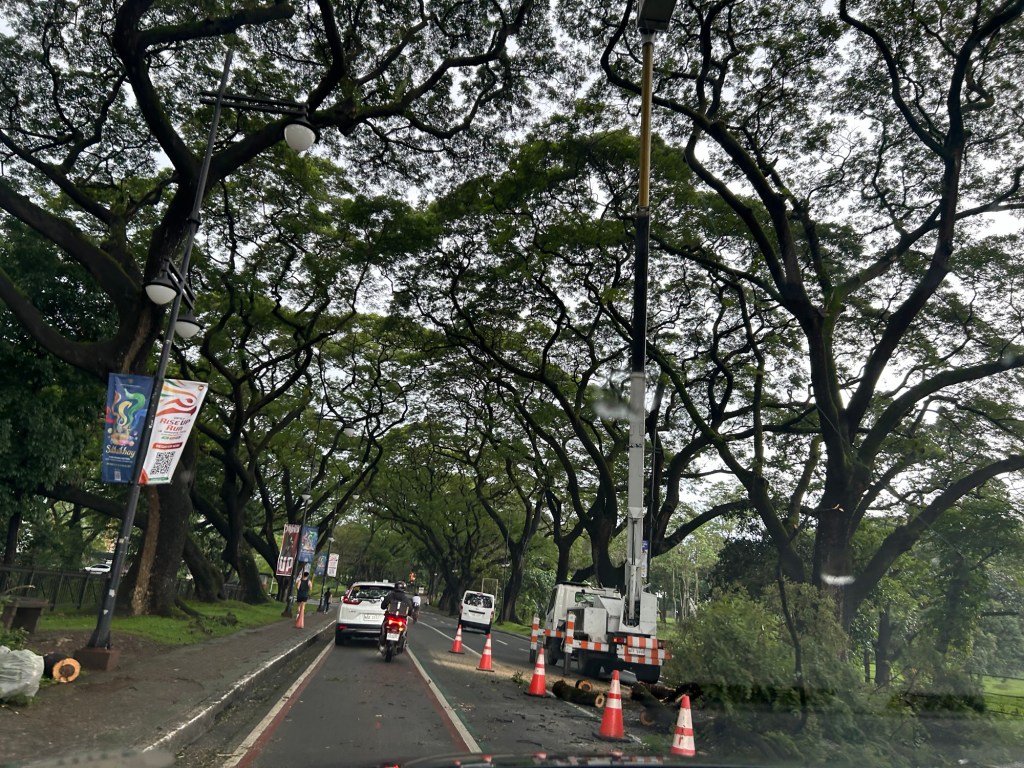
Walkers, joggers and runners (let’s also include cyclists/bikers) need to be aware of these dangers. I myself had a few near misses in the past while walking around the Academic Oval. I know people who have been injured by falling branches while they went around.
–
The need to be alert while walking, jogging or running in campus
With the recent bad weather, I noticed a big decrease in the number of visitors to the UP Diliman campus. Most of these walk, jog or run for health or recreation. Many of these are often lost in their conversations or too focused on their activity that they become unaware of the dangers of moving under large trees whose branches might fall on them anytime. It is especially true during the wet season and when there are typhoons or storms. The water and wind often bring down the older branches and one can get serious injuries perhaps even die should a large branch fall upon them.
Walkers, joggers and runners (let’s also include cyclists/bikers) need to be aware of these dangers. I myself had a few near misses in the past while walking around the Academic Oval. I know people who have been injured by falling branches while they went around.
–
Article share: on improving road safety in the midst of automobile dependency and sprawl
I am sharing another very informative article on road safety. While it is written for North American cities, most concepts and principles presented are applicable elsewhere and especially in cities and municipalities that tend to model their development after America. Increasing dependence on private vehicles (not just automobiles but including motorized two and three-wheelers) have resulted in increasing incidence of road crashes and though we have limited space, we tend to develop land as if we can afford sprawl and its consequences. Here is the article:
Litman, T. (April 25, 2025) “End Human Sacrifices to the Demanding Gods of Automobile Dependency and Sprawl,” Planetizen, https://www.planetizen.com/blogs/134838-end-human-sacrifices-demanding-gods-automobile-dependency-and-sprawl?utm_source=Planetizen+Updates&utm_campaign=d3fcb4d16b-newswire_05_05_25&utm_medium=email&utm_term=0_-6cce27a957-89144212&mc_cid=d3fcb4d16b&mc_eid=9ccfe464b1 [Last accessed: 16/05/2025]
To quote from the article:
“North American transportation agencies currently apply various older strategies, which should not be ignored, but to achieve additional crash reductions they need new strategies, such as those listed in the following table. The older strategies are targeted programs applied after most major transportation and land use planning decisions are made. New strategies include structural reforms involving more multimodal transportation planning, more compact development, transportation demand management incentives and parking policy reforms. This recognizes that all types of planning decisions affect transportation safety, and that many policies can increase safety in addition to other economic, social and environmental benefits.
The new paradigm expands traffic safety strategies to include structural reforms that increase transport system diversity and efficiency. They tend to provide many economic, social and environmental benefits in addition to safety.”
–
 Caught (up) in traffic