
Home » Health (Page 12)
Category Archives: Health
On step counts
Here’s a nice read about whether we need to reach 10,000 steps/day. We often hear or read about people asking how many steps you’re taking on average each day or lamenting or bragging about how many they’re taking each day. Perhaps we don’t really have to take so many? And maybe the key is really about our diets.
Apparently, there is really no need to reach that so-called magic number that is 10,000 steps.
Here is another article:
Landsverk, G. (July 9, 2021) “Forget 10,000 steps — here’s how much you should actually walk per day, according to science,” Insider, https://medium.com/insider/forget-10-000-steps-heres-how-much-you-should-actually-walk-every-day-db6699848f9c [Last accessed: 7/14/2021]
–
On car ownership and car use vs. public transport use
Here is another quick share of an article regarding car ownership and car use vs. public transport use. It is written in the first person as a the author relates her experience and what contradictory feelings she’s had with the decision to acquire and use a car.
Noor, D (June 21, 2021) “Buying a Car Improved My Life. It Shouldn’t Have.” Gizmodo, https://gizmodo.com/buying-a-car-improved-my-life-it-shouldnt-have-1847106068 [Last accessed: 7/10/2021]
I think many people in the Philippines (not just Metro Manila or other highly urbanized cities in the country) have similar experiences. They really don’t want to get a car or a motorcycle but their circumstances and the conveniences have outweighed their initial stand. Why do we need to have our own private vehicle anyway? Is it because its difficult to get a ride using public transport? Is it because of the quality of the ride? Is it due to health or safety-related reasons? In that last question, perhaps the fears of getting infected by Covid-19 present a overwhelming justification for car use and not just car ownership.
We also have to distinguish between vehicle ownership, car ownership and car use. ‘Vehicle ownership’ is a more general term that should include both motorized and non-motorized vehicles. Thus, if you have don’t have a car but instead have a bicycle, you are still a vehicle owner. Of course the term is more widely applied to motor vehicle owners but we need to expand this and distinguish between motor and non-motor vehicle ownership. Otherwise, let’s just be specific about the vehicle. ‘Car ownership’ is not equal to or does not correspond with car use. It is possible that one owns one or more cars or vehicles but does not use them at least for his/her regular commute. People in Singapore, for example, have cars. The same for people in Japan. However, most of these car owners choose to take public transportation most days. In their case, owning a car may not have improved their lives considering the excellent public transport services they have and requirements for people wanting to own cars in those places. Elsewhere, such as the Philippines, owning and using a car may provide better transport options depending not the circumstances of the person(s), even considering the costs of ownership and operations.
–
Are roads really designed just for cars?
The answer is no. Roads were and are built as basic infrastructure for transport no matter what the mode. However, the standards for dimensions (i.e., number of lanes, widths, etc.) are based on the motor vehicle capacity, and structural standards (i.e., thickness, strength, reinforcement, etc.) are based on the weights they are supposed to carry over their economic lives. The pavement load as it is referred to is usually based on the cumulative heavy vehicle traffic converted in terms of the equivalent standard or single axles or ESA. An ESA is 18,000 pounds or 18 kips in the English system of measurements or 8.2 metric tons in the Metric system.
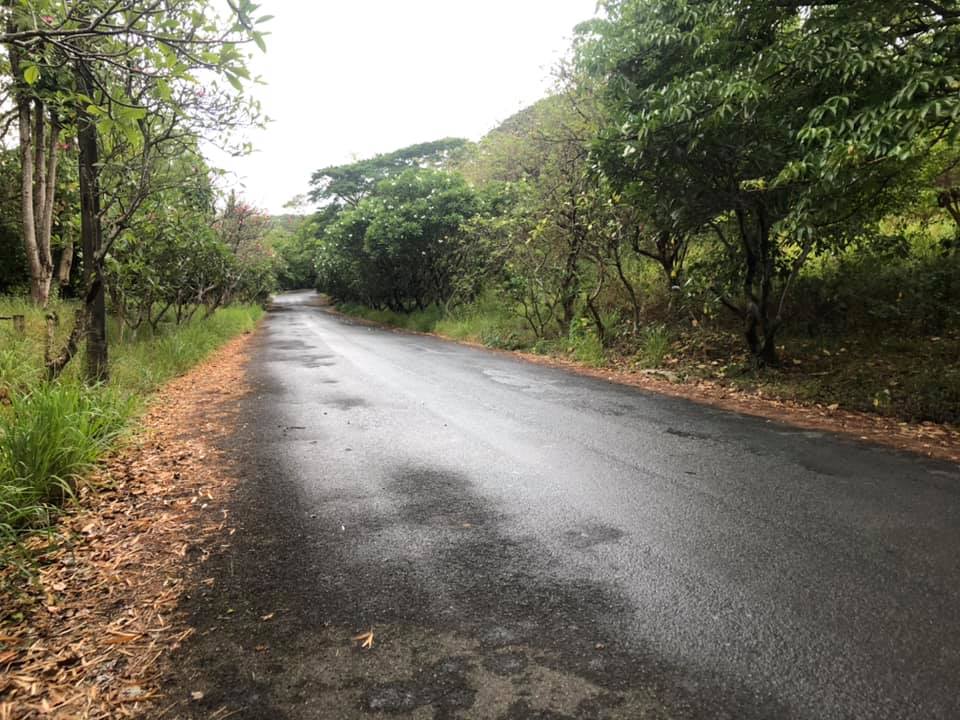 A typical local road – is it really just for cars or is it also for walking and cycling? Or perhaps animal drawn transport?
A colleague says many of the posts in social media pitting bicycles with cars are already quite OA (overacting). I tend to agree as I read how people generalize roads being car-centric. Roads have been built basically to serve a avenues for transportation. They were improved over time in order to have more efficient ways to travel by land. It didn’t hurt that vehicle technology also developed over time and bicycles somehow became less popular than the cars and motorcycles. The motorcycle itself evolved from bicycles so in a way, it is the evolved and mechanized form of the two-wheeler.
In a perfect world, people would be sharing the road space and it would be equitable among different users. In a perfect world perhaps, it won’t be car-centric as there would probably be better public transport options and transit will be efficient, reliable, comfortable and convenient to use.
The reality, however, is that we do not live in a perfect world and transformations like the ones being pitched on social media are nice but are also not as inclusive and equitable as their advocates claim them to be. I’ve always said and written that you cannot simply change transportation without also implementing changes in land use and housing in particular.
Why do we need wide roads connecting suburbs and urban areas? Why is there sprawl? Why do people live in the periphery of CBDs or the metropolis? It is not just about transport though it seems easier to focus on this. Even transportation in Japan, with Metropolitan Tokyo and its equivalent of NCR plus as a subject, needs to be properly contextualized for land use and transport interaction and development. It seems that even with a comprehensive and efficient railway network, there are still shortcomings here and there. We don’t have such a railway network (yet) so we need to find ways for easing the currently long and painful commutes many people experience on a daily basis. That means continued dependence on road-based transport and trying to implement programs and schemes to improve operations.
–
On building the ideal city from a transportation perspective
There’s a not so old article that popped in my timeline of articles I’ve read the past years. I thought I would make a quick share of it here. It is a good read and something that will never be irrelevant for as long as we have not redeveloped our cities and municipalities for transport equity and sustainability. Here’s a takeaway from the article:
“The ideal city is a place where lots of different kinds of people with lots of different amounts of money can live and work. It has to be easy to get around without a car, even for people whose bodies can’t ride bikes or hop over potholes, and for people who have kids to drop off on the way to work and groceries to buy on the way home, and maybe flowers to buy next door to the dry cleaner’s. These are places where people want to live, because it’s nice there. The fact that those places also adapt to and mitigate climate change instead of causing it is a bonus.”
Here’s the article from last year:
Rogers, A. (April 1, 2020) “Build Cities for Bikes, Buses, and Feet—Not Cars,” Wired, https://www.wired.com/story/cities-without-cars-san-francisco-jeff-tumlin/?bxid=5bd6761b3f92a41245dde413&cndid=37243643&esrc=AUTO_OTHER&source=EDT_WIR_NEWSLETTER_0_ENGAGEMENT_ZZ&utm_brand=wired&utm_campaign=aud-dev&utm_mailing=WIR_Classics_042921&utm_medium=email&utm_source=nl&utm_term=WIR_Daily_TopClickers [Last accessed: 4/30/2021]
–
On when to use masks when outdoors
Here is a useful graphic from the US Centers for Disease Control and Prevention. The graphic described situations for when masks are required. I don’t want to use preferred because it means people may opt out of using masks. It is a useful reference even for those in other countries that do not have enough clear information from their governments about wearing masks and how it helps protect vs. getting infected by Covid-19. It is applicable to people searching for a legit reference to mask-wearing in outdoor situations.

This information becomes more relevant as people start getting vaccinated and at the same time look forward to getting together with family and friends in social events such as eating out or having picnics. Of course, this also applies to exercise as well as commuting via active transport modes (i.e., walking or cycling).
–
On how communities should be?
This post is related to my recent post about Philippine cities and municipalities already somehow being 15-minute units. I am sharing another article I’ve read and reread for its current relevance.
Litman, T. (March 15, 2021) “A Complete Community is All Mixed-up,” Planetizen, https://www.planetizen.com/node/112565?utm_source=newswire&utm_medium=email&utm_campaign=news-03222021&mc_cid=628c8ee4b1&mc_eid=9ccfe464b1 [Last accessed:
The article is loaded with references that you can download and use in research or practice. And there are these two tables – Walk Score Ratings and Public Amenities – that are quick guides or references to what is desired to be achieved in communities.
Enjoy!
–
If you build the bike lanes, will people use them?
The obvious answer to this question is yes. It is not so clear, however, how many will really be using these bike lanes over time. That needs data. That requires counting. And such data will be useful in order to understand, among other things, why people choose to bike or why they don’t. The latter is important to determine what factors are being considered by people who can switch to cycling particularly for commuting. Of course, there are many references for this from other cities and countries but these still need to be contextualized from our (Philippine) perspective. Case in point is Marikina, which has the most comprehensive network of bike lanes in the country. What are the numbers and what are the constraints and misconceptions? Did the city do its part to promote and sustain cycling?
Here is an article discussing the experience in the US:
Penney, V. (April 1, 2021) “If You Build It, They Will Bike: Pop-Up Lanes Increased Cycling During Pandemic,” The New York Times, https://www.nytimes.com/2021/04/01/climate/bikes-climate-change.html?smid=url-share [Last accessed: 4/9/2021]
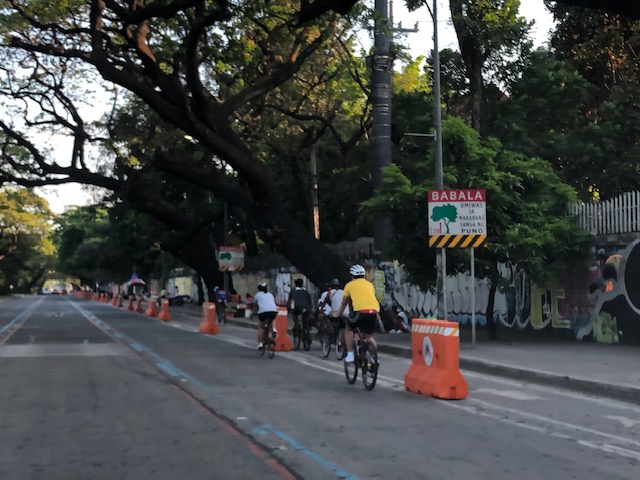 Bike lane along Katipunan Avenue (C5) in Quezon City
Here is the link to the paper mentioned in the article:
https://www.pnas.org/content/118/15/e2024399118
–
On the importance of trees along streets
I’ve written before about the importance of having parks around a city or town. Here’s an article I recently read about the positive impacts of trees along streets:
Stimpson, A. (March 12, 2021) “Green health: a tree-filled street can positively influence depression, study finds,” The Guardian, https://www.theguardian.com/us-news/2021/mar/12/baltimore-study-trees-mental-health-study [Last accessed: 3/29/2021]
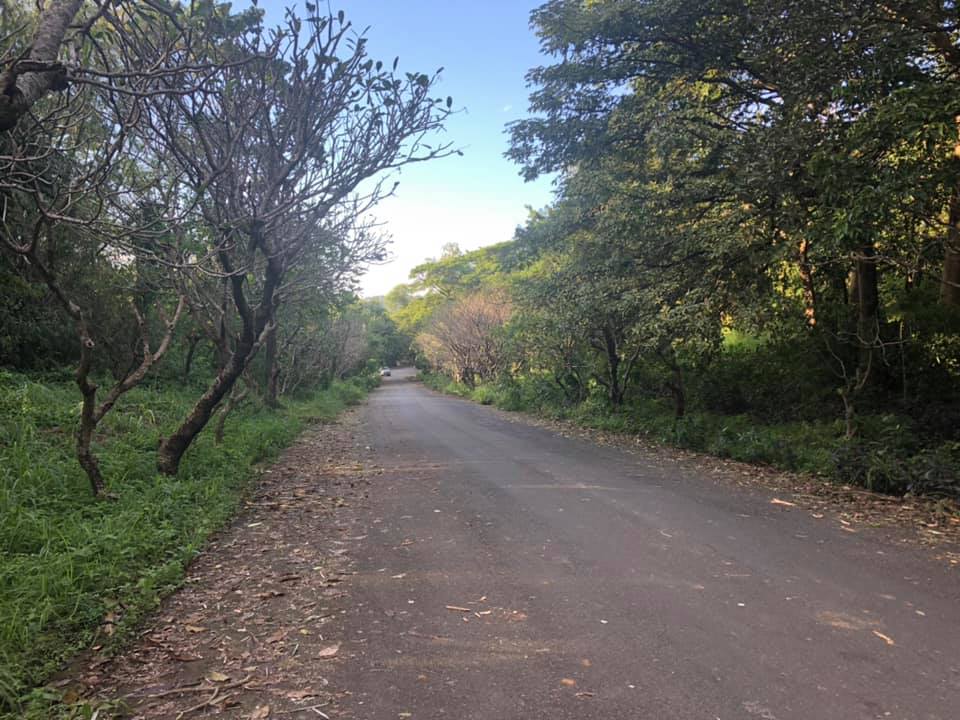 Tree-lined street somewhere in Antipolo City, Rizal
We often refer to cities as the urban jungle. Why not really, literally make cities as urban jungles by planting more trees and other plants where its possible to grow and nurture them. Gardens may be grown not just for flowers or aesthetics but for food. Perhaps architecture should deliberately be oriented for greens? Orchard Road in Singapore is much admired for its trees. Surely, similar streets in our country can be landscaped accordingly.
–
On a different view of the ’15-minute city’ concept
Here is an article discussing the downside(s) of the 15-minute city; particularly its adoption without understanding first and setting the context for the concept:
O’Sullivan, F. (March 3, 2021) “The Downside of a 15-Minute City,” Bloomber CityLab, https://www.bloomberg.com/news/articles/2021-03-02/the-downsides-of-a-15-minute-city [Last accessed: 3/20/21]
Some people are pushing very much the same concept for quick adoption in the Philippines without again contextualizing it. I feel these people are detached or choose to be so perhaps as they seek shortcuts to achieve what they believe should be the way cities and municipalities are laid out in the country. But wait…don’t we already have 15-minute cities in the Philippines? I will be writing about that soon…
–
On planning communities for children
I am currently involved in a project concerning child road traffic injury prevention (CRTIP). The topic of road safety is also close to my heart since a beloved aunt died due to injuries sustained after being hit by a jeepney. She was in great health and walked almost daily between our home in Iloilo and the church to hear Mass. Children and senior citizens are among the most vulnerable road users and so I believe we must address their needs more than able-bodied adults. That would probably make our communities safer and friendlier to most people. Here is an article that tackles planning for communities from the perspective of children and families:
Litman, T. (March 9, 2021) “Planning communities for children and families,” Planetizen.com, https://www.planetizen.com/node/112498?utm_source=newswire&utm_medium=email&utm_campaign=news-03112021&mc_cid=5a75b816a6&mc_eid=9ccfe464b1 [Last accessed: 3/14/2021]
To quote from the article:
“Here is a summary of child-oriented urban design features:
-
Children need opportunities to join a loose social group of other children without a formal—or prearranged—invitation to play.
-
Children need access to safe, uninhibited outdoor play to support their physical and mental health. Outdoor play should include opportunities to interact with the natural environment—finding bugs, smelling flowers, playing in puddles, or collecting objects—without the need for excessive rules, oversight, or segregation.
-
Children need environments that are safe from traffic, pollution, and undue physical or social hazards, including safe routes to and from school and local playgrounds, allowing them to travel throughout their neighbourhoods safely in order to develop confidence, resilience, and independence.
-
Children need private spaces for themselves and their friends, including tree houses, forts, or clubhouses that are close to home yet away from public view. 5.
-
Children need stable, appropriate, and affordable housing that provides them with private space to rest, study, and play.
-
Children need local access to appropriate early childhood education, child care, and community schools.
-
Children benefit from the opportunity for their parents to work locally.
-
Children benefit from walkable communities, with infrastructure for safe walking, cycling, and recreation.
-
Children benefit from diverse, multi-generational communities, where they can interact with—and learn from—children, adults, and seniors of all races, religions, cultures, and incomes.
-
Children should be given an opportunity to effectively and productively participate in decision-making processes.”
–

