
Home » Jeepney (Page 8)
Category Archives: Jeepney
Comparative study of jeepneys: LPG Jeepney
The University of the Philippines Diliman, through its National Engineering Center (NEC), National Center for Transportation Studies (NCTS) and the Department of Mechanical Engineering’s Vehicle Research and Testing Laboratory (VRTL), is conducting a comparative study on jeepneys. Three jeepneys will be the subject of road and laboratory tests including one conventional (diesel), one LPG, and an electric jeepney. The study is supported by the Department of Energy (DOE) through its Energy Utilization and Management Bureau (EUMB).
The following photos show the LPG jeepney provided by Pasang Masda that will be used for the study. Road tests will simulate actual operation along an actual jeepney route. The DOE secured permits from the Land Transportation Franchising and Regulatory Board (LTFRB) for the deployment of the 3 jeepneys for the UP-North EDSA (SM) route. A similar permit was also secured from the Metropolitan Manila Development Authority (MMDA) for the jeepneys to be exempt from the number coding scheme.
 LPG jeepney unit used in the study
 The LPG jeepney provided by Pasang Masda was assembled by David Motors, the pioneer of the LPG jeepney, and is owned by the jeepney group’s leader himself, Ka Obet Martin.
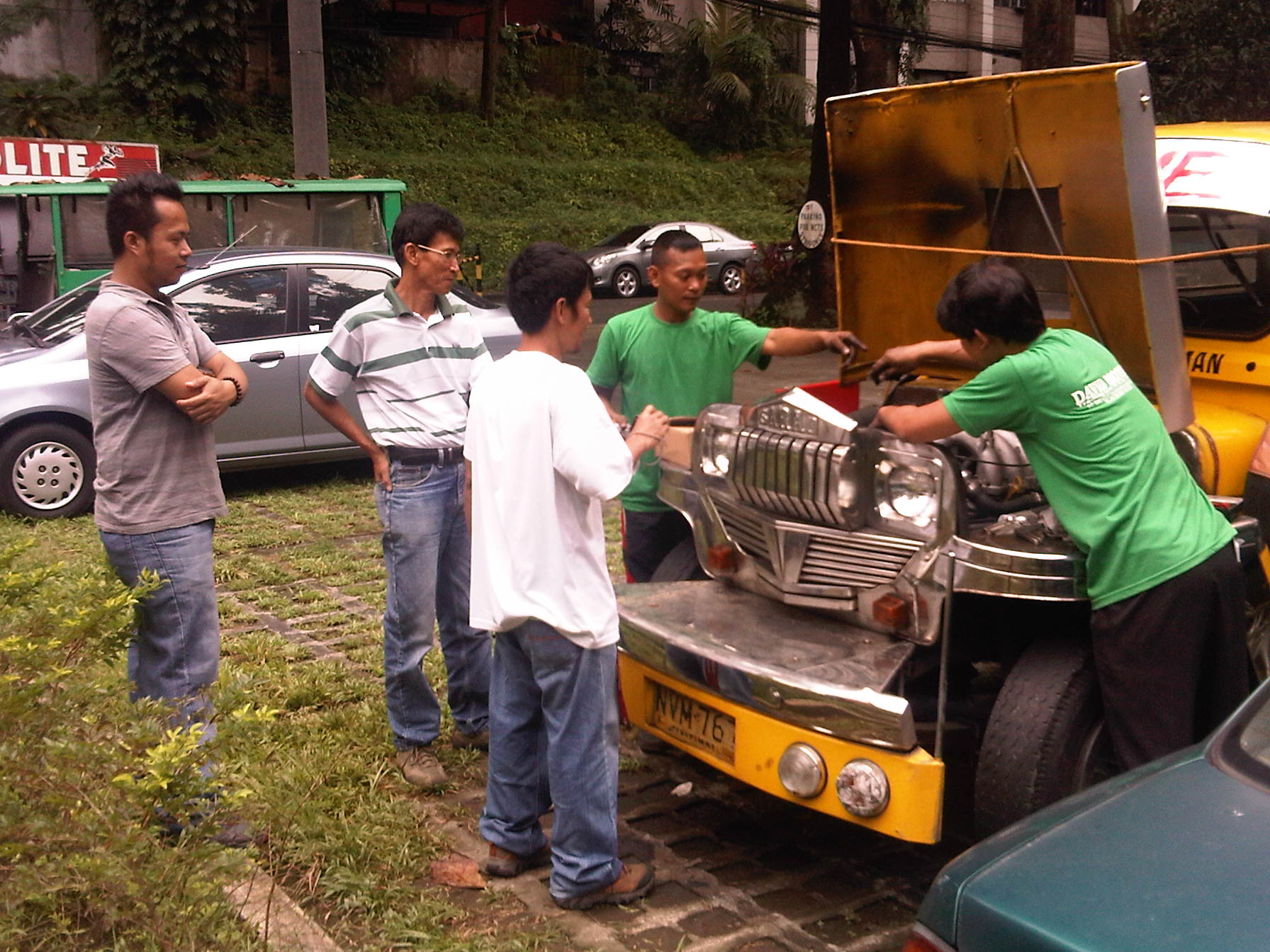 NCTS and David Motors staff work on the LPG jeepney’s engine in preparation for road tests. All jeepneys must be in tip-top condition prior to the tests in order for the comparisons to be objective.
 A look at the LPG jeepney engine
 The jeepney’s engine is supposedly not a converted one from a gasoline engine but is said to be an original Hyundai LPG engine.
 The LPG engine needed some maintenance work as it was apparently not well-maintained according to David Motors’ staff.
 Fuel indicator for the LPG jeepney
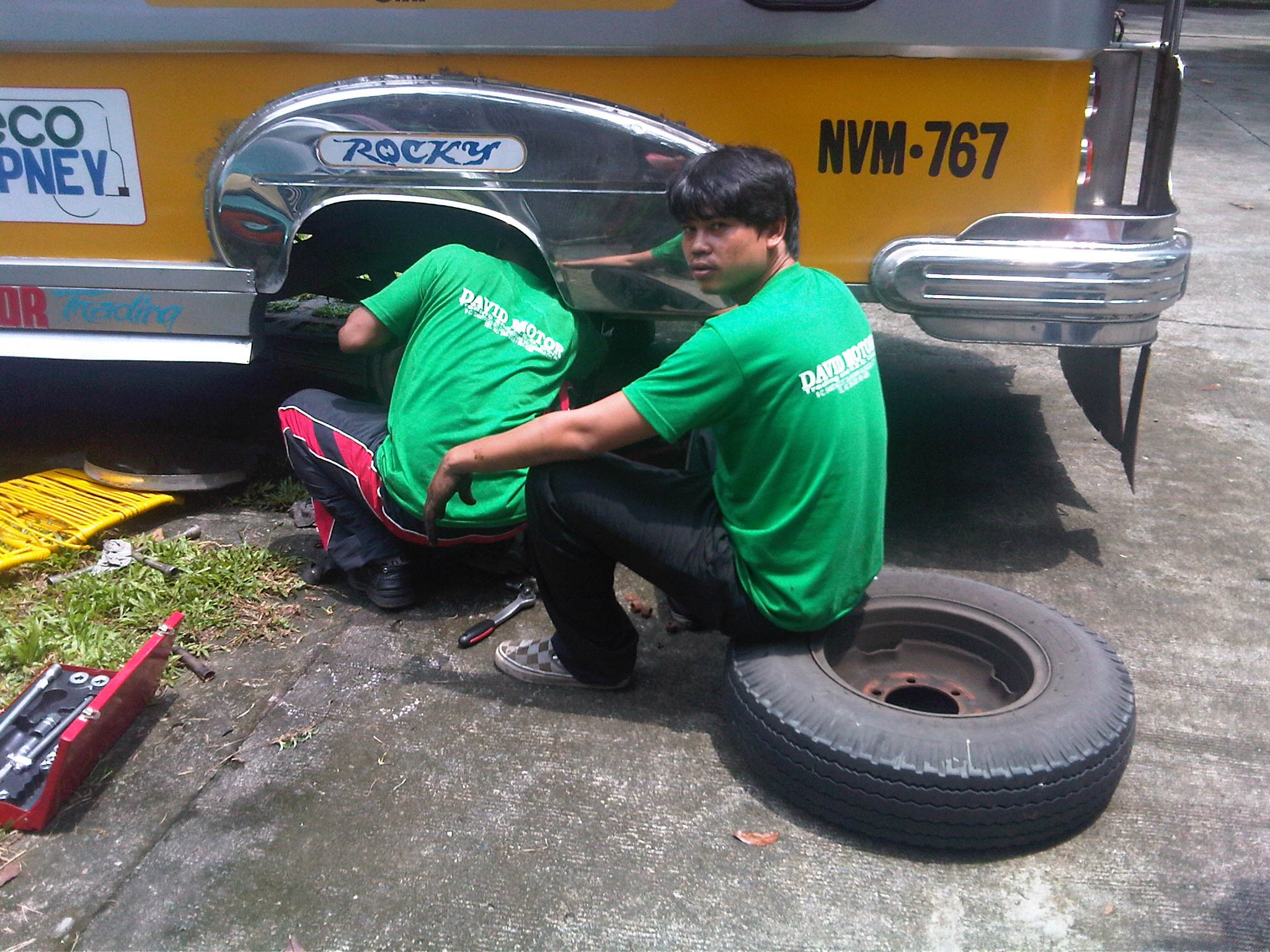 It turned out that it wasn’t only the engine that needed some attention. David Motors staff had to check everything that may affect the performance of this jeepney unit.
 9The brakes on this unit seemed to be defective; something that will affect the performance in both road and lab tests to be conducted.
As of this writing, the road and lab tests have not been conducted for the LPG jeepney due to the many issues about the unit provided by Pasang Masda. Apparently, the group was not doing its part in the study and it was as if they were passing on the costs of fixing the unit they provided to the study team. We hope it was not a conscious effort on their part, which if it did meant they were dealing with us in bad faith – not a good thing if they wanted to be a partner in this research collaboration.
–
Paratransit in Davao City
While visiting a jeepney assembler in Davao, we took the opportunity to take not a few photos of paratransit vehicles along one road in Davao City. Of particular interest to us were what appeared to be three-wheelers that resembled the tuktuks of Thailand and the four-wheeled multicabs that served as an intermediate mode with passenger capacities between that of the tricycle and the typical jeepney.
What at first seemed to be three-wheelers were actually four-wheeled vehicles. For propulsion, they used typical motorcycles but instead of one-wheeled sidecars like the typical tricycles found in many cities and towns across the country, the fabricated body has 2 wheels and provided for two benches to accommodate more passengers.
Following are photos of these 4-wheeled paratransit vehicles we took while visiting a jeepney assembly in Davao. While there is a basic form for each vehicle, there are actually some distinct features for each, probably the manufacturer’s or assembler’s signature. There is no distinct color for any particular route so commuters would have to check the panel information before flagging one to make sure whether the PUV serves their destination although these seem to have fixed routes.
 Maroon body with white roof [Agdao – Jerome route]
 Gold body and roof [Agdao – South Bay route]
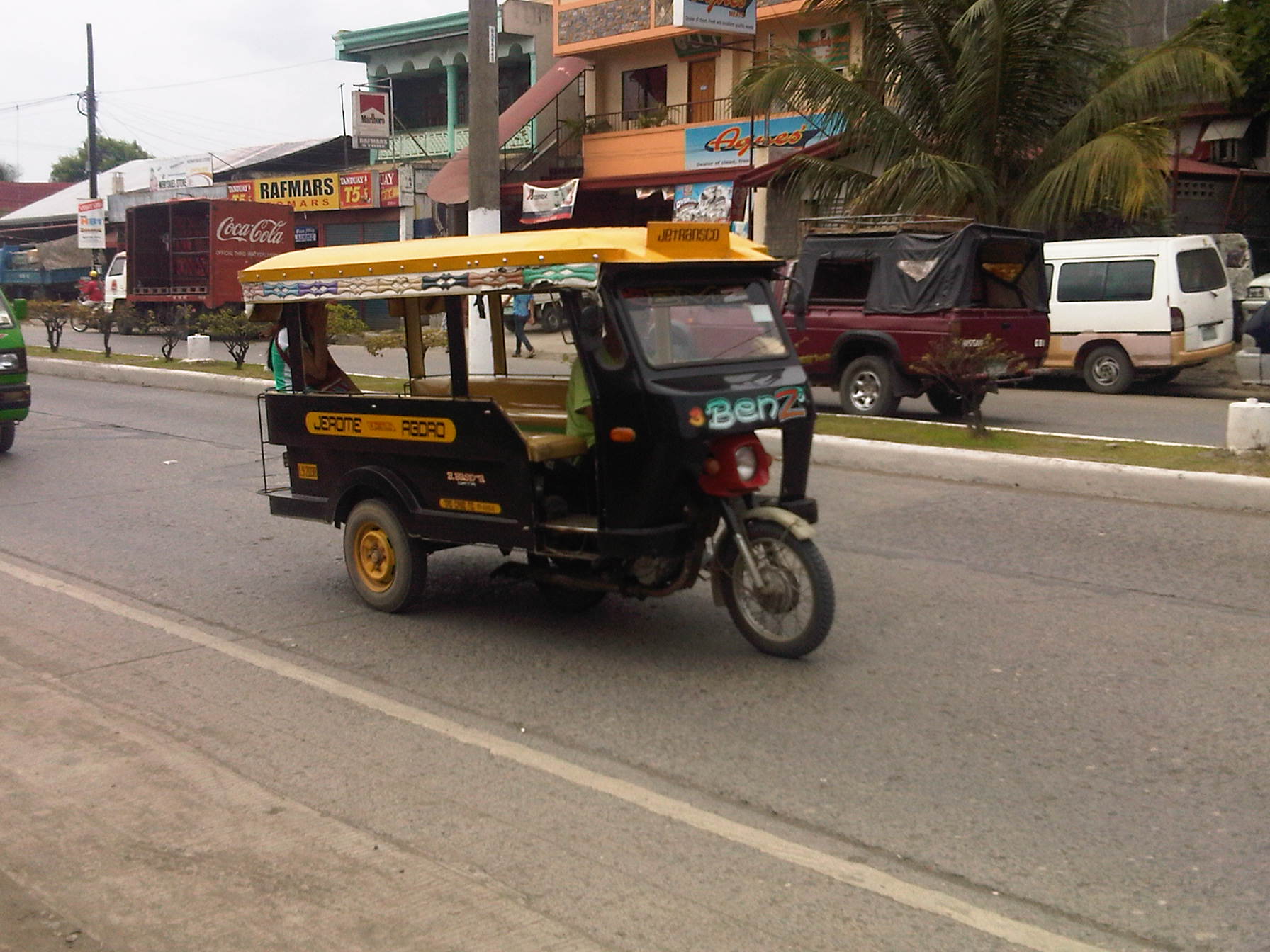 Black body and yellow roof [Agdao – Jerome route]
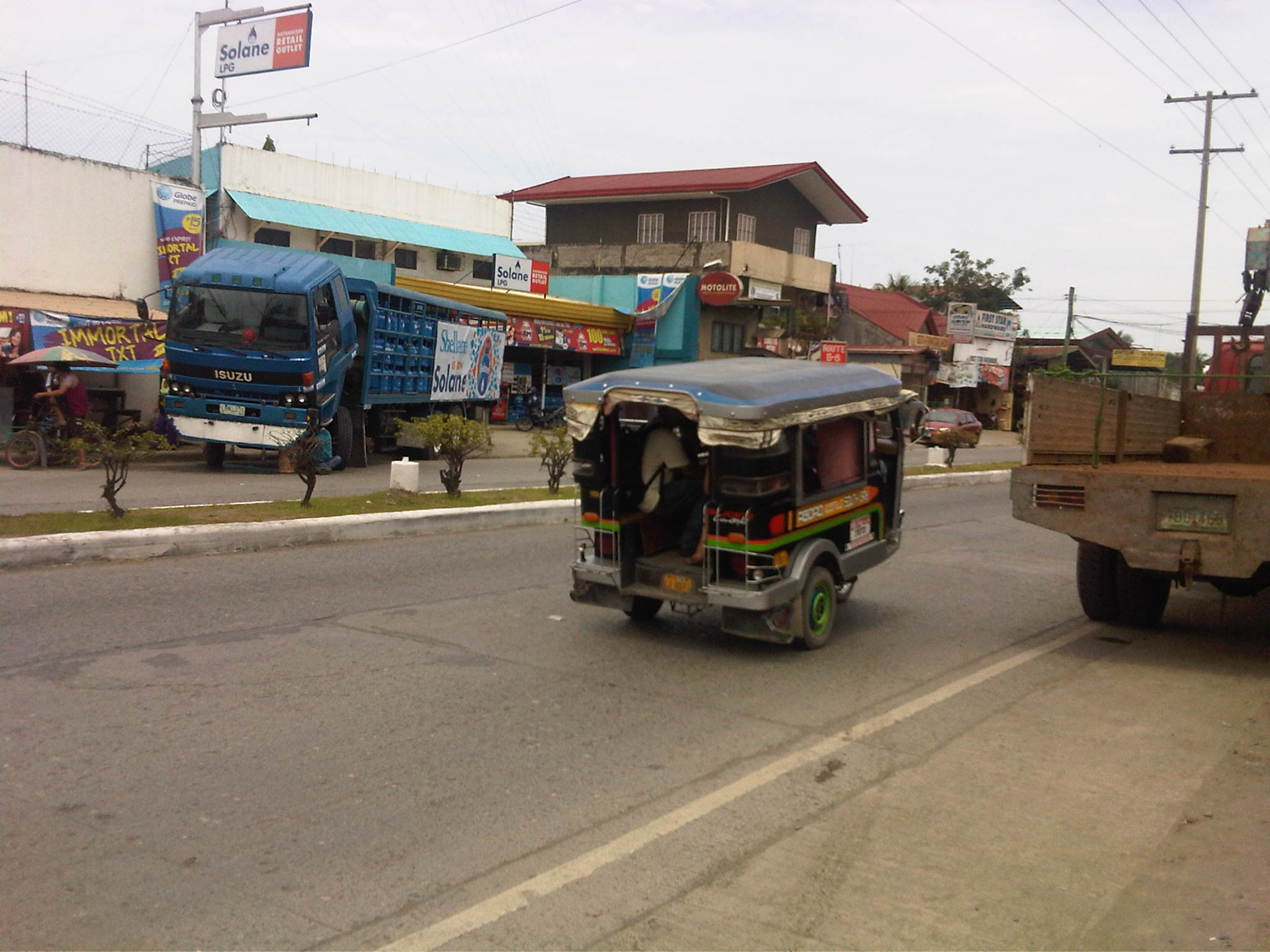 Black body and blue roof [Agdao – South Bay route]
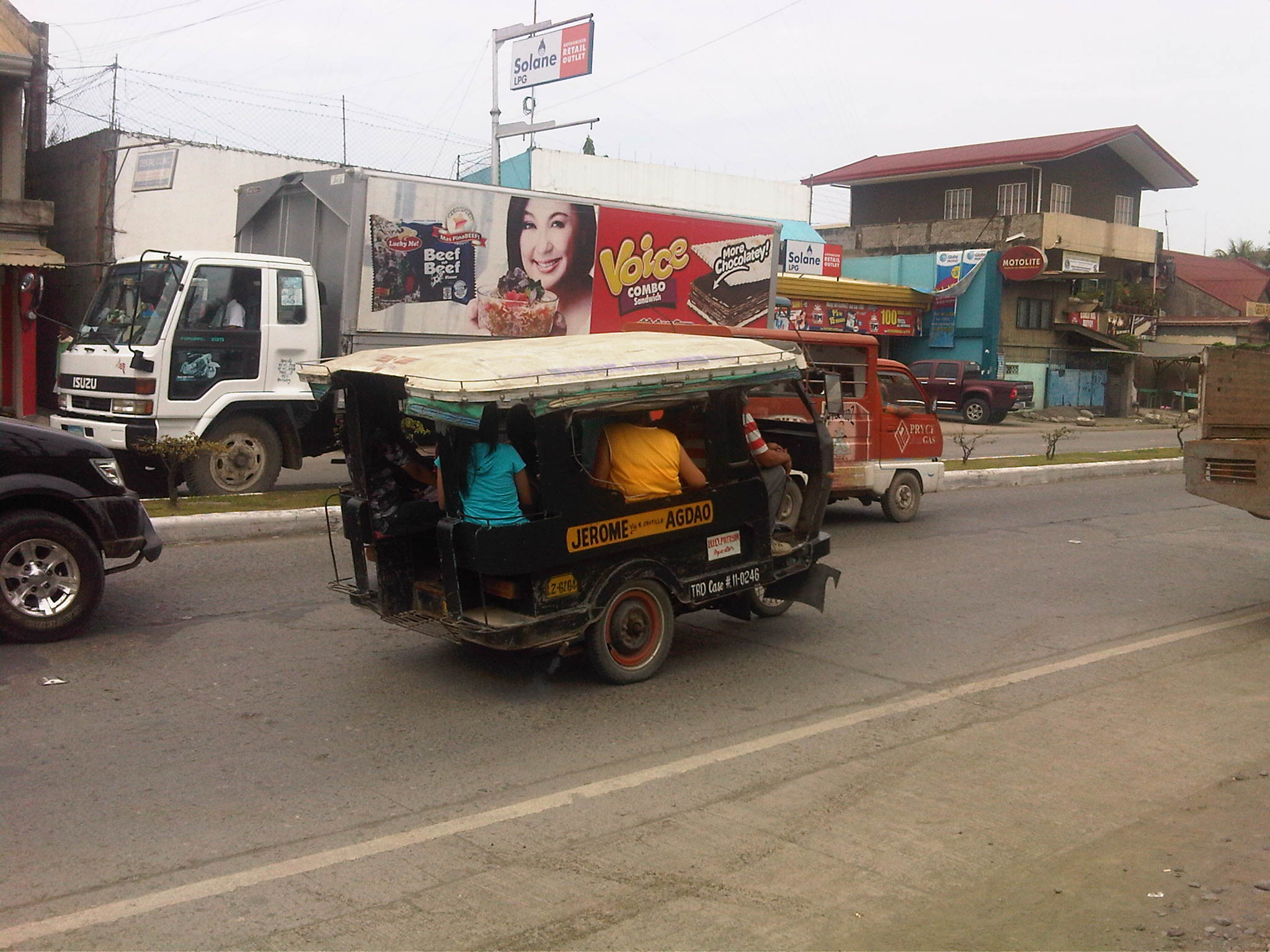 Black body and white roof [Agdao – Jerome route]
We were also able to observe another form of jitney, which are generally called multicabs in the Philippines. The term multicab seem to have originated from a brand for these 3-cylinder engine vehicles that are fitted to carry passengers or in some cases as small freight vehicles. These are very popular in the Visayas and Mindanao where they typically seat 10 – 14 passengers excluding those in the front seat. The vehicle is narrower than the typical jeepney so only two people can usually fit in the front.
 12-seater multicab
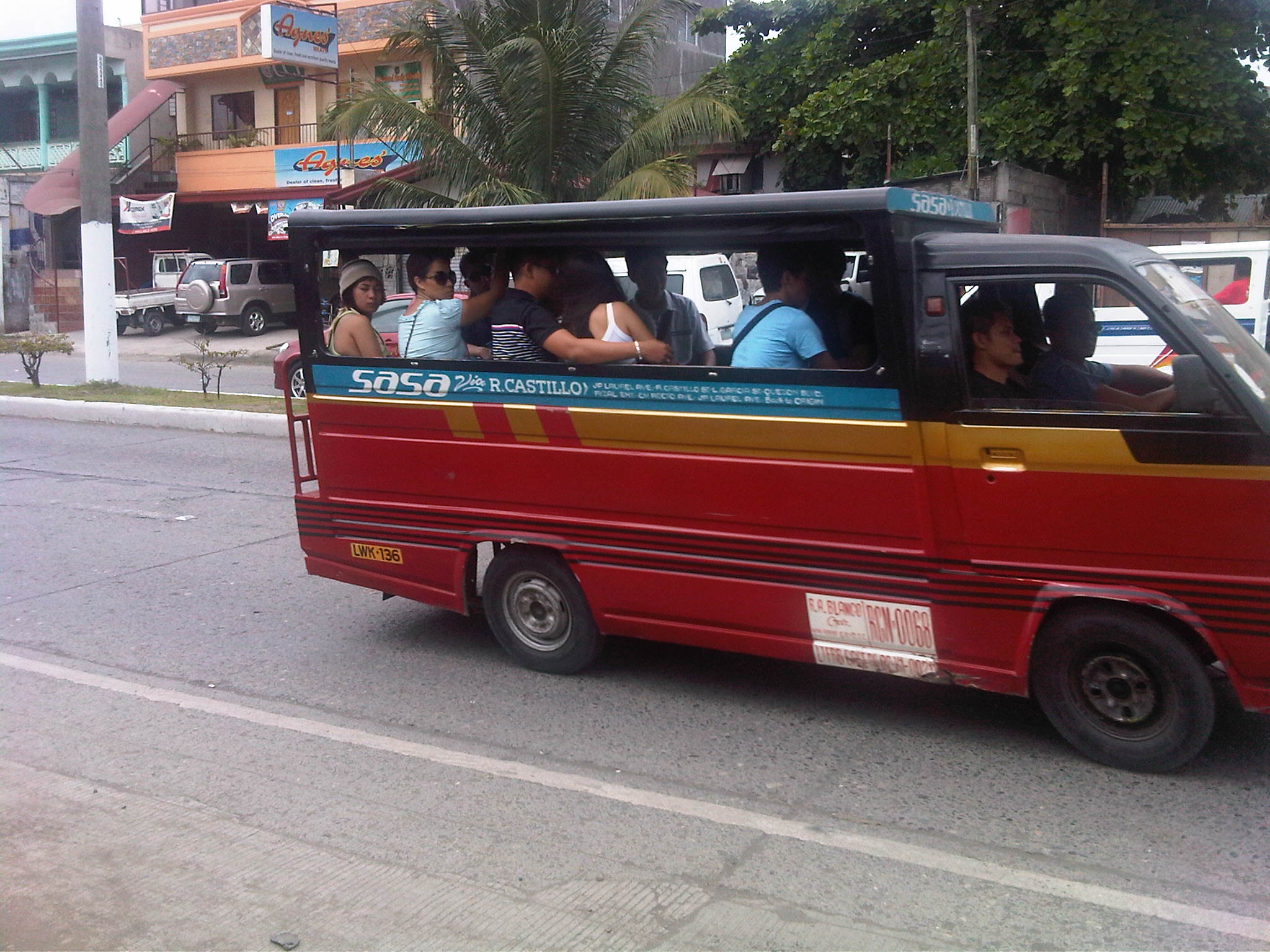 14-seater multicab
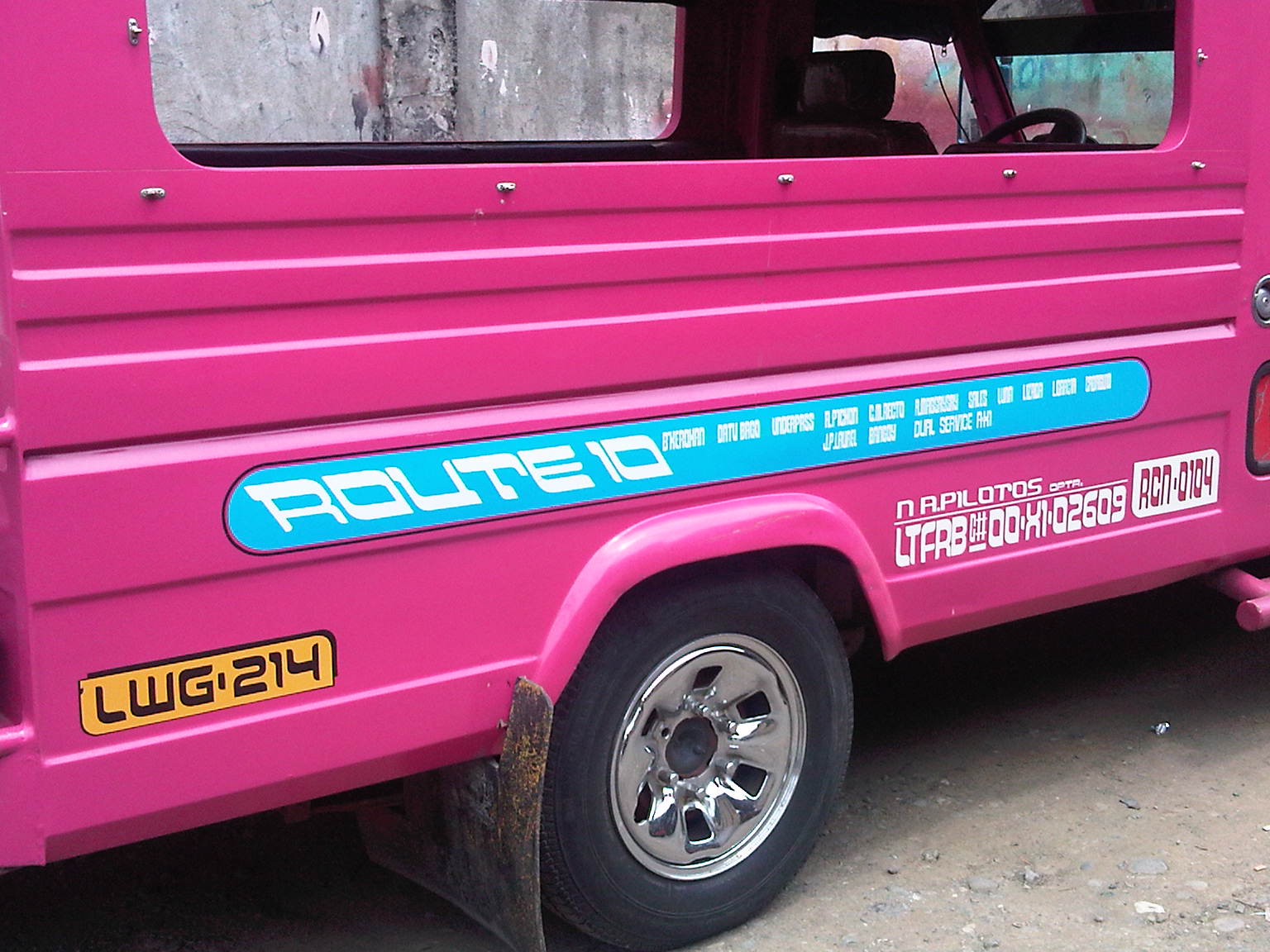 Typical jeepney design in Davao
–
Electric vehicle revolution in the Philippines
It started with the deployment of the first electric jeepneys and tricycles about 5 years ago. Today, electric vehicles are the rage in the Philippines with public transport being the main application of the e-vehicles. Makati already has 3 operational e-jeepney routes including the first e-vehicles to be registered and the first franchise for public transport. E-trikes have been operating in Bonifacio Global City in Taguig as well as in limited numbers in Puerto Princesa, Surigao and Boracay. During the 2nd Electric Vehicle Summit held last May 24-25, 2012 at the Meralco grounds, models of various electric vehicles for private and public transport use were on display for people to inspect and appreciate. These included cars, motorcycles, tricycles, jeepneys and a bus. Special mention goes to the Segway booth and its clone, which featured more personalized modes that are not really in the same category as most of the e-vehicles on display.
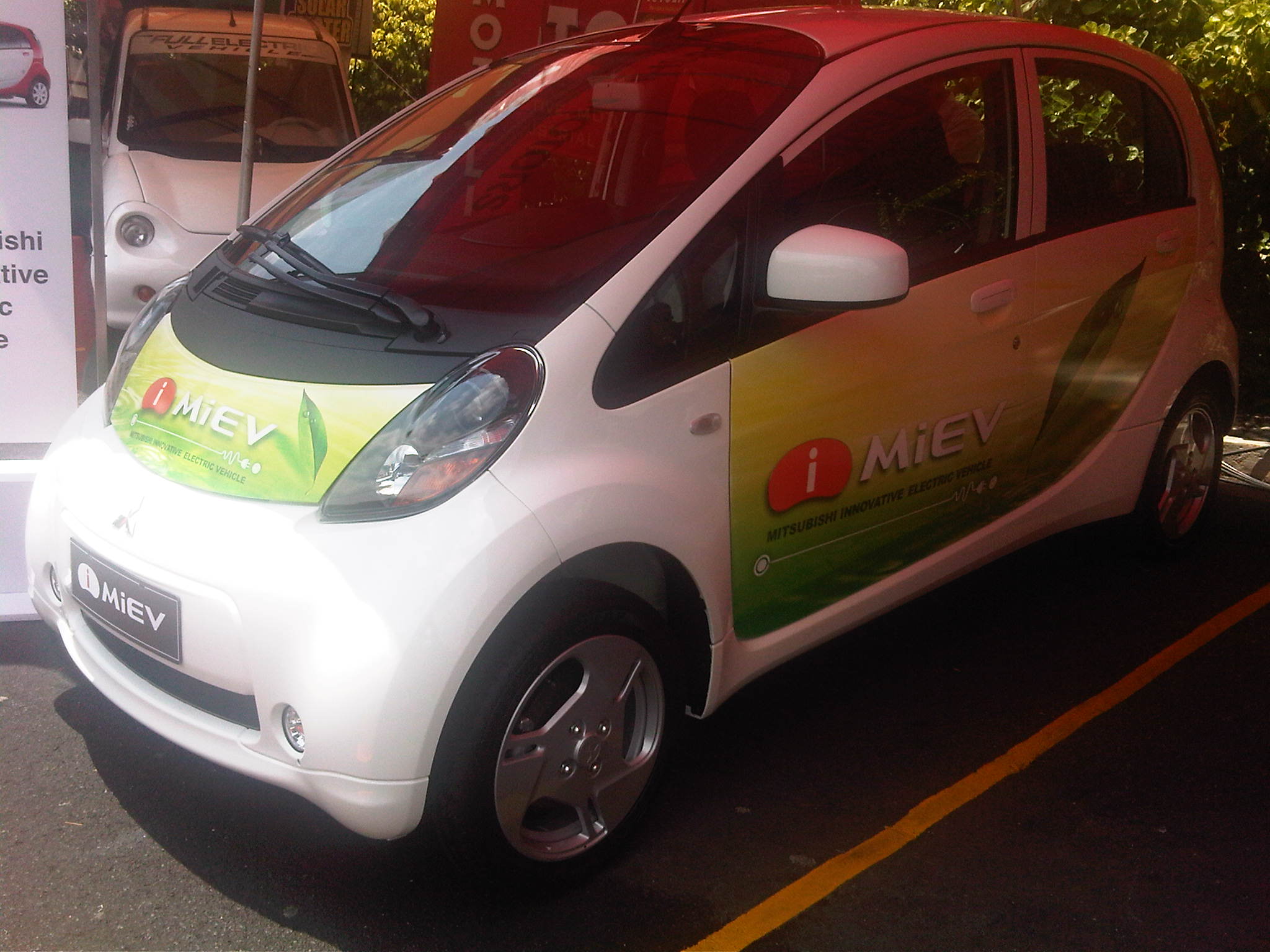 Mitsubishi’s entry in the local market is via the MiEV, a unit of which was donated to the Department of Energy (DOE)
 The REVAi is a small car produced by an Indian company. The logo on the car is of the leading battery company in the country.
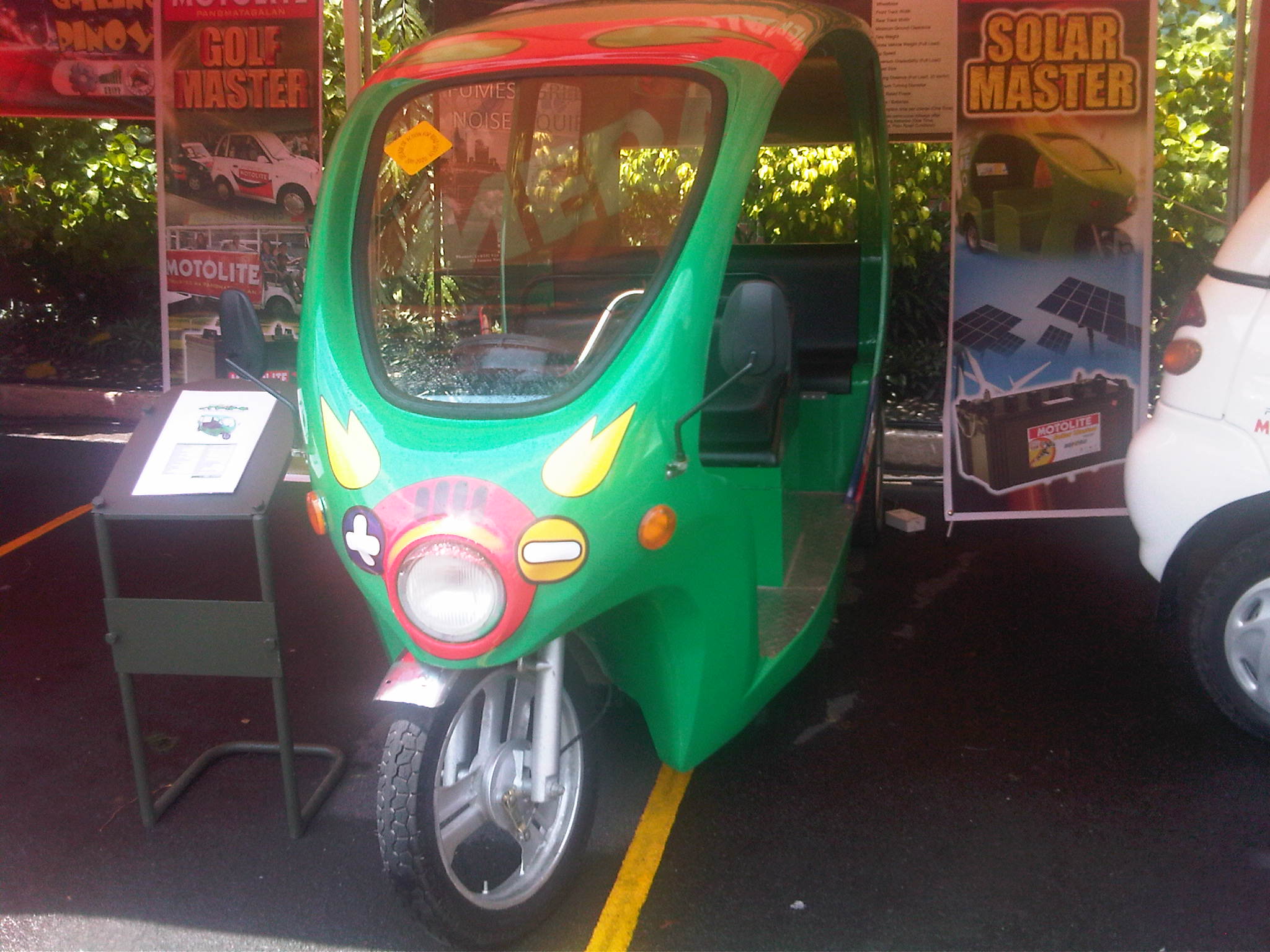 A locally assembled electric tricycle that is now popular in tourist areas like resorts.
 The 4-wheeled e-vehicle dubbed as the E-quad that is locally assembled.
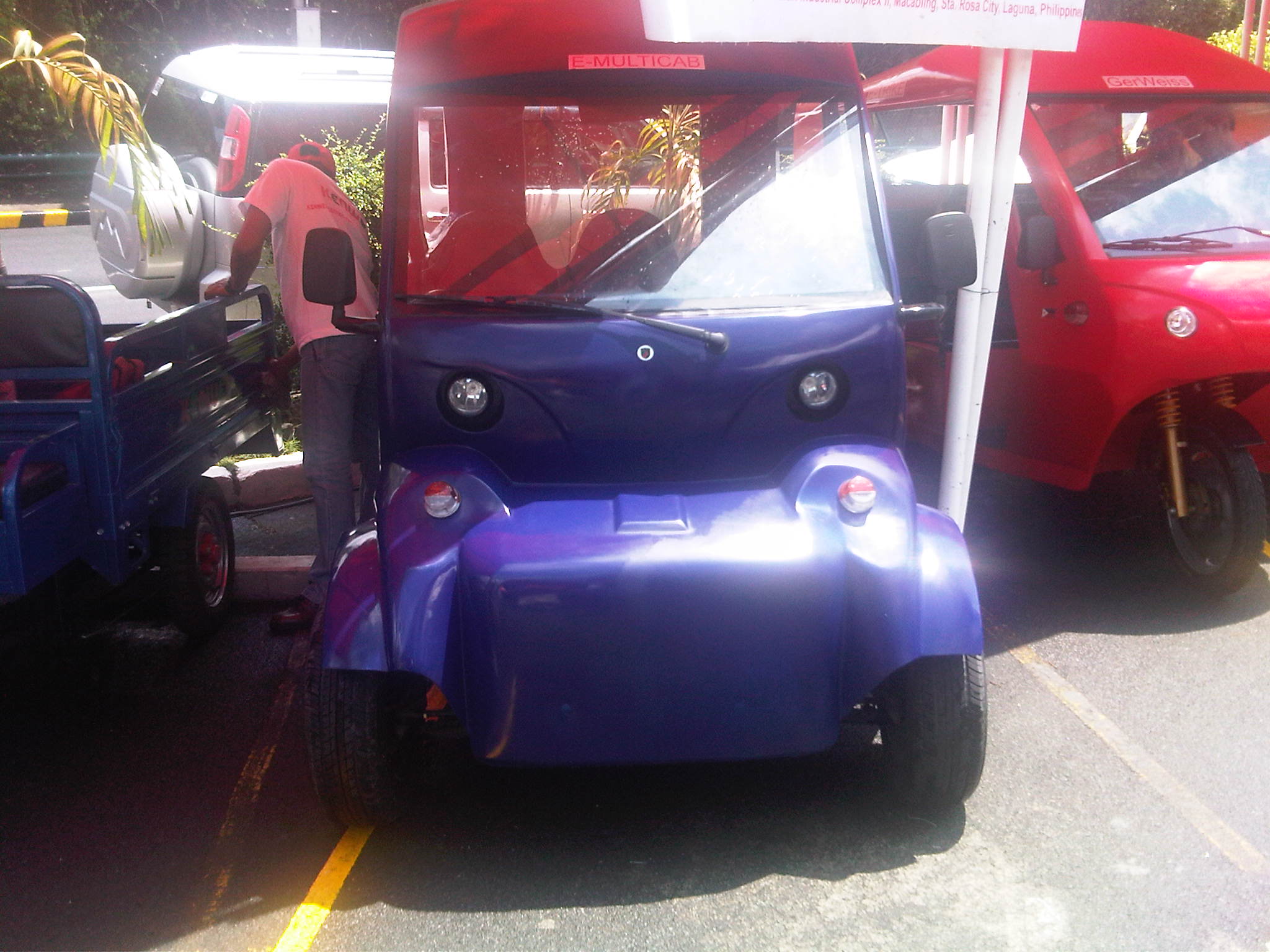 Variants of 3- and 4-wheeled e-vehicles including one (visible on the left) that is designed as a pick-up or delivery vehicle. All are made by local companies.
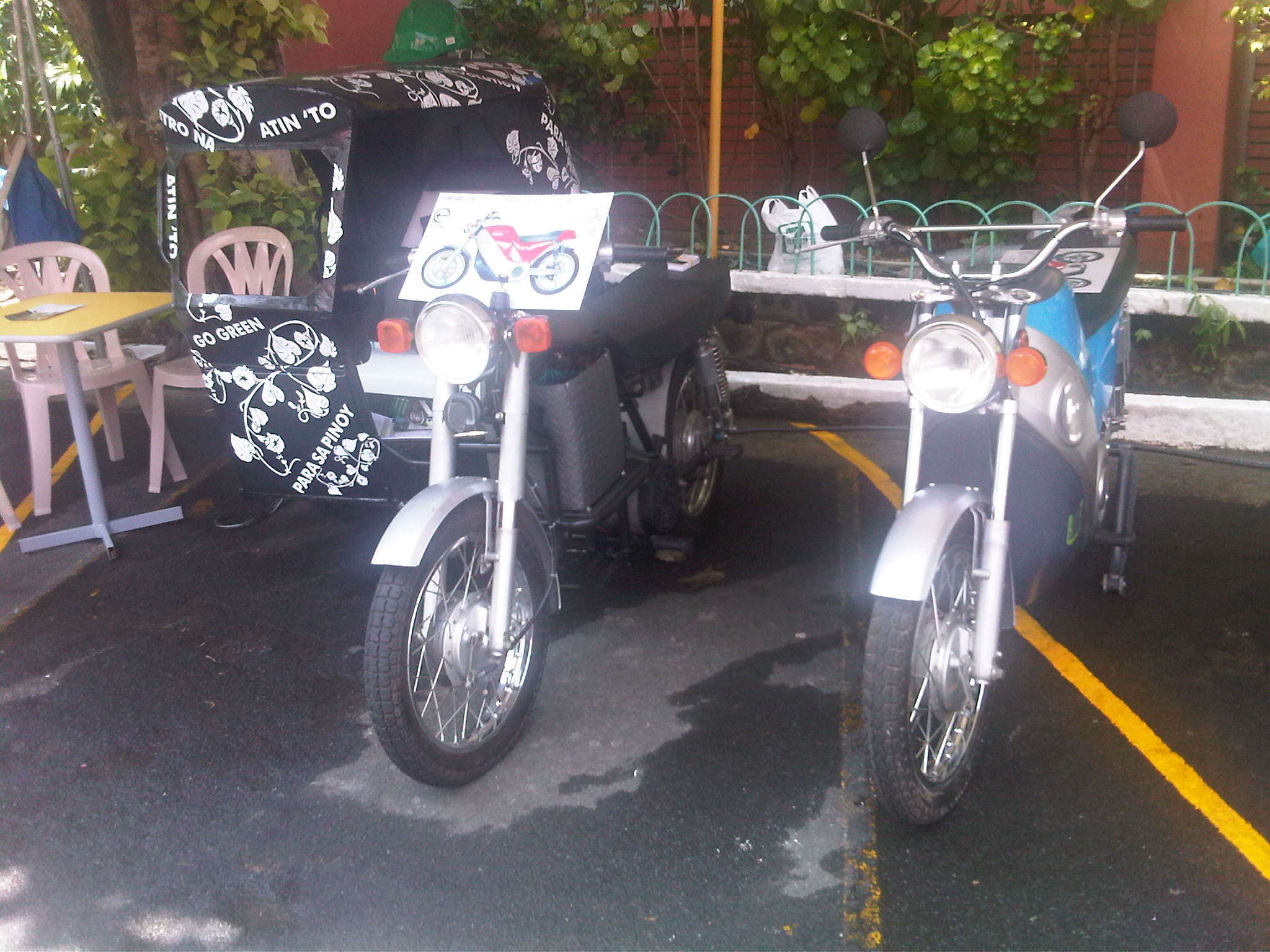 Electric motorcycles with one having a sidecar, which is the same form of the traditional tricycles that are the dominant public transport mode in local roads, many small cities and rural areas in the country.
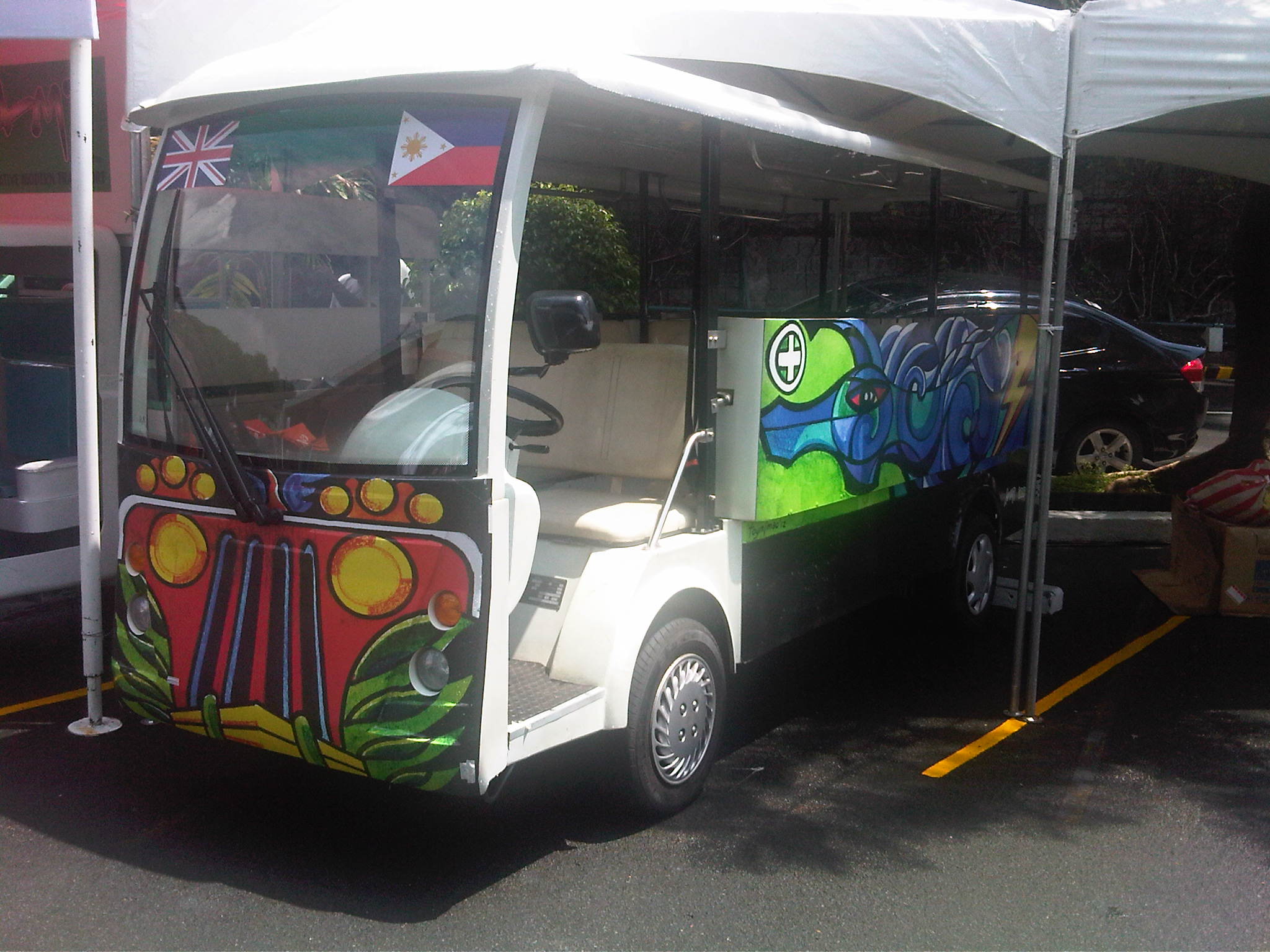 The electric jeepney that is also locally assembled with the motor and controller the only major components that are imported. I think this model is the latest one and has a more powerful motor that allows the vehicle to negotiate steeper slopes. Other models are currently operating in Makati City (CBD) and as shuttles in shopping mall complexes and industrial areas.
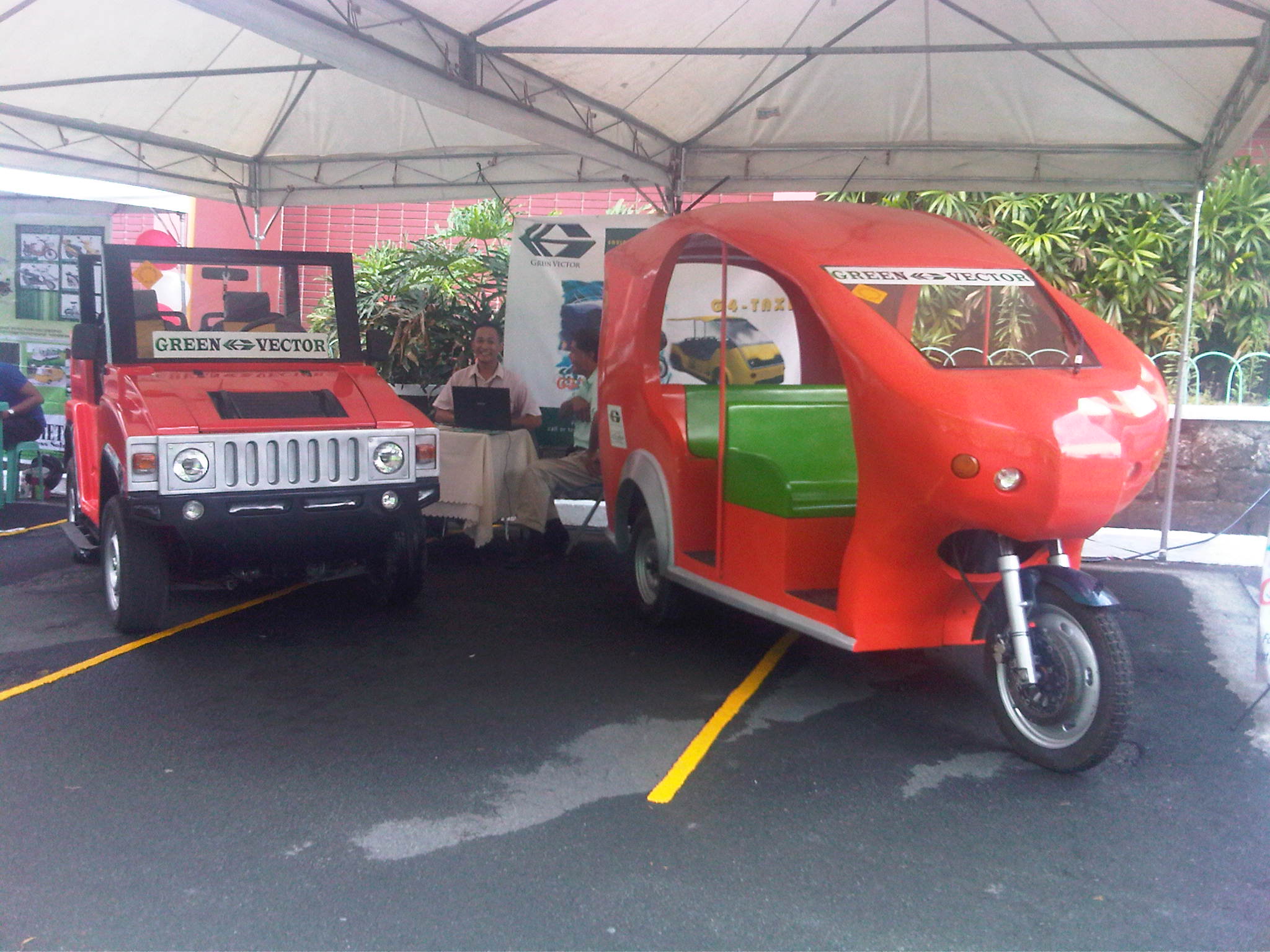 Another e-trike with form similar to the Thai tuktuks and another, a 4-wheeler, made to look like the popular Hummer vehicles.
 Electric scooters on display outside the summit venue
 The electric bus imported by a company affiliated with Victory Liner, one of the largest provincial bus companies in the Philippines was a popular attraction during the summit.
There are still many issues pertaining to the deployment or operations of e-vehicles in the Philippines. Among the more important ones involve costs and the need for infrastructure such as charging stations to support e-vehicles. Unlike the experiences in other countries, especially in Europe, the e-vehicle initiatives in the Philippines are mainly for public transport rather than for private use. In fact, the DOE’s E-trike project together with the ADB looks to the deployment of 100,000 e-trikes to replace traditional tricycles around the country. This seems to be a small initiative considering Metro Manila alone has about 250,000 legally operating tricycles (there are quite many illegally operating units) and an estimated more than 1.5 million legal units around the country. But such initiatives if carried out and evaluated scientifically, systematically and objectively will surely go a long way to addressing transport problems in this country. The Makati e-jeepneys already provide a good model for replication elsewhere and soon, more studies will be underway to evaluate such vehicles in comparison with the traditional jeepneys and the emerging Auto-LPG variant. With an impending law that will provide incentives for electric, hybrid and other alternative-powered vehicles, e-vehicles will be here to stay and perhaps effect a transformation of Philippine transport.
–
First franchise for the electric jeepney
The first franchise for electric public transport was issued by the Land Transport Franchising and Regulatory Board (LTFRB) in favor of the electric jeepneys that currently service routes in the City of Makati, the financial center of Metro Manila. An article featuring the LTFRB’s issuance of the first electric vehicle franchise may be found here. Initially, these e-jeepneys were operating with support from the Makati City Government, which had the foresight for environment friendly public transport. But despite the formality of their routes in that city’s CBD, the e-jeepneys could only rely on donations, being unable to charge fares in part due their having no franchise to authorize them to do so.
The journey towards this first franchise was a long and somewhat arduous one. It took quite some time for the e-jeepneys to be recognized and registered under the Land Transportation Office (LTO) as the agency didn’t have guidelines that were flexible enough to admit a new generation of vehicles birthed by the desire to come up with low emission, low carbon transport to address environment concerns. For one, as the popular anecdote goes, the LTO was insisting on the vehicle having a tailpipe! Another story involved inspectors being dumbfounded by the vehicle not having a conventional engine (the e-jeepney had an electric motor). There are other stories (some probably tales) about other obstacles that the proponents of the e-jeepney had encountered from government as well as their own ranks (e.g., businessmen who just wanted to make a quick buck and weren’t really looking at the medium and long term of e-vehicle applications and deployment). And these add up to the significance of their accomplishments up to this point.
It is very fortunate and definitely admirable that proponents of the e-jeepney led by the Institute for Climate and Sustainable Cities (iCSC) and active players such as the Clean Air Initiative for Asian Cities (CAI-Asia) and those in the private sector have passionately and persistently pushed for the mainstreaming of electric vehicles. The group, now under the umbrella of the Electric Vehicle Association of the Philippines (EVAP) has been able to get the attention and support of bigger players such as Meralco and its mother corporation Metro Pacific. In fact, EVAP has been very strong in their lobbying for incentive to electric, hybrid and other vehicles using alternative energy sources. Perhaps with the continued, unflagging efforts of the group we will eventually see the transformation of Philippine road transport to one that is environmentally sustainable.
Theirs is a group that is very well grounded, knowing that the stakes are high and that the public and the transport sector need to be convinced of the viability of e-vehicles. The social and economic aspects of e-vehicles replacing conventional local transport modes such as the jeepney and the tricycle are quite complex when seen from the perspective of livelihood; a topic that seems to have been taboo to transport planners and policymakers. Yet, it is a topic that would ultimately have to be dealt with or addressed if real transformation is to be achieved for road public transport even outside the realm of the e-vehicle initiatives.
Transport, after all, is not entirely an energy issue or something simplified into such. This is why the various agencies need to work closely together and with organizations like the EVAP, the academe and international agencies like the ADB and the WB. It is a challenge to all concerned, and most especially to the DOTC, the DENR and the DOE to collaborate and encourage discussions in order to effect meaningful changes to our transport system. This should be pursued instead of the current set-up where national agencies like the DOTC and DOE appear to be working independently of each other while dealing with the same concerns. This can be problematic as well as wasteful in terms of time and other resources (e.g., funds), and may lead to confusion to the people and organizations involved.
–
A glimpse of transport in the Philippines – General Santos
I’ve been fortunate to travel around the Philippines due to my line of work. In some cases, it is for our training programs, for others we do fieldwork for technical assistance or consultancies. You get to see not just the nice places around the country but also get to see transport in other cities and towns including a glimpse of its character and the behavior or preferences of its users. In the previous posts, I have included photos I’ve taken myself of some transport curiosities and there are many more that I have collected over the last few years. I guess I just need to find time to sort through the many folders containing these photos. Unlike before when the conventional cameras required photo development and I had to scan each one that I intend to save for my lectures or for posterity, nowadays there seems to be no limit with what you can take with a digital camera except perhaps the battery life and the size of you storage media.
Below are a couple of shots I took during one visit to General Santos City (GenSan) in south western Mindanao. The scenes do have similarities with others I have taken in other cities like the one I took while traversing Kennon Road en route to Baguio City. I believe the first 2 photos were taken along the Digos-Makar Road also known as Asian Highway 26 (AH 26). Note what seems to be the comfortable state of the passengers sitting on the roof of the jeepney and the disregard for safety for the bunch on top of a local truck.
 Passengers sitting on top and hanging behind a jeepney in GenSan
 Typical tricycle and people riding on top of a local truck
 Typical tricycle and multicab in GenSan (photo taken along Catolico Sr. Avenue)
Local transport services for moving about in the city are generally provided by jeepneys, multicabs (which are actually a form of jitney service), tricycles and non-motorized pedicabs. There are also the informal motorcycle taxis (habal-habal) but these are to be found mainly in the outer parts of the city. Taxicabs generally ferry passengers to and from the airport. Buses and vans are used for inter-city or inter-town transport (i.e., long distance transport) and are banned from plying routes in the city center. These may only use the national roads to get to the terminals. Tricycles are actually banned from the national roads and this is indicated in the sidecar bodies. However, the enforcement is usually lax and you can take the tricycle almost anywhere using any road in the city. Perhaps it is really too difficult to implement the ban due to the number of tricycles?
The pitch for electric public transport
Electric vehicles have been in operation as public transport modes in the Philippines since 2007 when electric three-wheelers were introduced at the Bonifacio Global City in Taguig City, Metro Manila. At the time, the City Government of Taguig bought the pitch by the proponents of the E-Trike and supported their trial operations that have since expanded but are yet to be legitimized due to the vehicles not being registered with the Land Transport Office. These could not “legally” charge their passengers since they also did not have franchises with the Land Transport Franchising and Regulatory Board (LTFRB) nor with the local government (i.e., like conventional tricycles).
 E-trike in Fort Bonifacio
Meanwhile, around the same time, another electric vehicle was introduced in the Visayas. In this case the vehicle was in the form of a national icon – the jeepney. Electric jeepneys were first built out of China and directly imported as a “proof of concept.” What were initially launched in Bacolod and Silay Cities in Negros Occidental were examined by local partners based in Manila, and eventually a locally manufactured E-jeepney came out in 2009, care of the Motor Vehicle Parts Manufacturers Association of the Philippines (MVPMAP) and Motolite with assistance from the Dutch Stichting Doen. The project quickly gained proponents including two very influential mayors and their cities – Binay of Makati and Hagedorn of Puerto Princesa. It is to the credit of the cooperation between the Institute for Climate and Sustainable Cities (iCSC, the original proponents of the E-jeepney) and Makati City that there are currently two E-jeepney lines in that city. But while the vehicles have been registered with the LTO (using the conspicuous orange plates), they have yet to be granted franchises by the LTFRB. The vehicle gained more attention when the newly elected Vice President Binay rode the vehicle to the inauguration. Currently, the E-jeepney is subject to studies at the National Center for Transportation Studies of the University of the Philippines and has gained interest from private firms as well as other researchers. Together, the E-jeepney and the E-trike represent the strongest cases for electric vehicle applications in public transport.
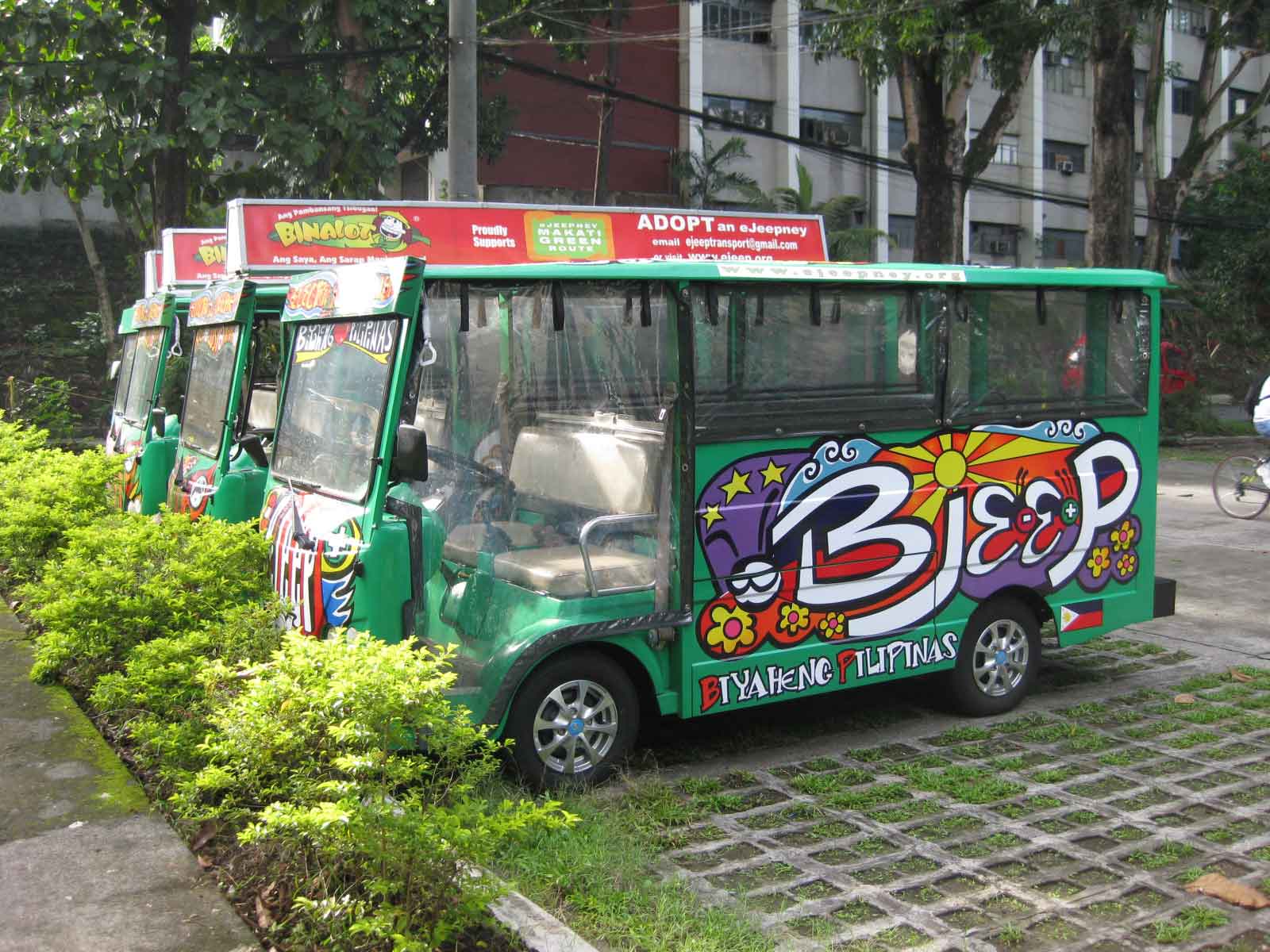 Electric jeepneys parked at UP Diliman – the Bjeep is the one used by Vice President Binay during the inaugurations
I reproduce below a news item from the GMA News website that features an initiative from the ADB that may finally push electric vehicles to gain a significant share of trips across the country:
The Asian Development Bank is offering as much as $280 million in loans for the Philippine government to finance a proposed re-fleeting program for tricycle drivers and operators shifting to electric motorbikes or e-bikes.
“The loan will be coursed through ADB conduit banks like Land Bank of the Philippines for re-lending to tricycle drivers who may want to shift into using e-bikes,” Environment Secretary Ramon Jesus Paje told reporters in a briefing Tuesday.
He said ADB will give 30 e-bikes as donation to city governments in the Metropolis.
“ADB wants to us to sample the bikes to see for ourselves that these machines are totally pollution-free. No emissions, less pollution,” he said.
If all Philippine tricycles are e-bikes, the country can save much as 20 million metric tons of carbon footprints a year.
“We could go into carbon trading. That will earn us dollar equivalent which we can use to offset a portion of the loan,” said Paje.
Tricycle drivers can save up to P300 in daily fuel costs with the use of e-bikes.
“Four hours of charging would only cost P40 compared to P340 for fossil-based fuels. The acquisition cost is about 20 to 30 percent higher than fuel-fired motorcycles but the overhead cost is certainly lower,” Paje said.
Of the total 5 million tricycles in the country, 2.8 million are in Manila.
The department said that the shift to e-bikes would reduce pollution 25 percent to 30 percent in the country’s urban centers by 2011.
As of 2009, the country’s total suspended particulates – a concentration of micro pollutants in the air – in all cities and urban centers is 134 micrograms per normal cubic meters, which is 48 percent beyond the normal standard of 90 micrograms per normal cubic meters.
The major sources of these particulates are diesel vehicles and coal-burning power plants. Dust from unpaved roads and construction activities contribute to the rise in particulates especially during summer months.
Vehicles contribute as much as 80 percent to air pollution, while the remaining 20 percent are from industries.
Department monitoring shows that more than 50 percent of vehicles are registered without prior actual testing by accredited Private Emission Testing Centers.
“If all vehicles are tested for emission prior to registration, the 30 percent reduction in particulates will be easily realized,” Paje said. —With MR Gavin/VS, GMANews.TV
The ADB initiative comes at a critical time when the national government is still finding its way with regards to local public transport modes, particularly how the tricycle has established itself as the primary (sometimes, the only) public transport option in cities and municipalities across the country. It is inevitable that the issue of proliferation and regulation of tricycles will have to be addressed. National and local government would have to discuss the nuances of the Local Government Code in as far as public transport operations, franchising and fare setting are concerned. On top of this, the time is critical also because there is a strong call for environmental sustainability; one that is anchored on the increasing awareness for climate change and its impacts. The long-standing perception is that the conventional tricycles contribute to the continuing degradation of our environment as the collective emissions from these vehicles effectively suffocate our cities, and the key is for local governments to realize this and be a major player in transforming local transport into the environment-friendly kind. It is, after all, in the best interests of their constituents that clean air be pursued to ensure that there will be a bright future for their cities and this country.
Sustainable Paratransit
Environmentally sustainable transport (EST) includes the provision of sustainable public transportation. Such public transport is premised on other aspects of EST such as emission reduction, green fuels or sustainable energy sources, noise, and inclusive services and safe vehicle design. Most paratransit modes found in the developing countries are customized vehicles of 2 to 4 wheels. Customized vehicles are often lacking in safety features and produce greenhouse gases at a significantly higher rate than conventional vehicles. As such, the former are perceived to be unfriendly to people and the environment, and therefore, unsustainable.
In the Philippines, for example, paratransit includes motorcycle taxis, tricycles, Asian utility vehicles (AUV), vans, and the jeepneys. With the exception of motorcycles, AUVs and vans, the two most dominant transport – the tricycle and the jeepney – are customized vehicles.
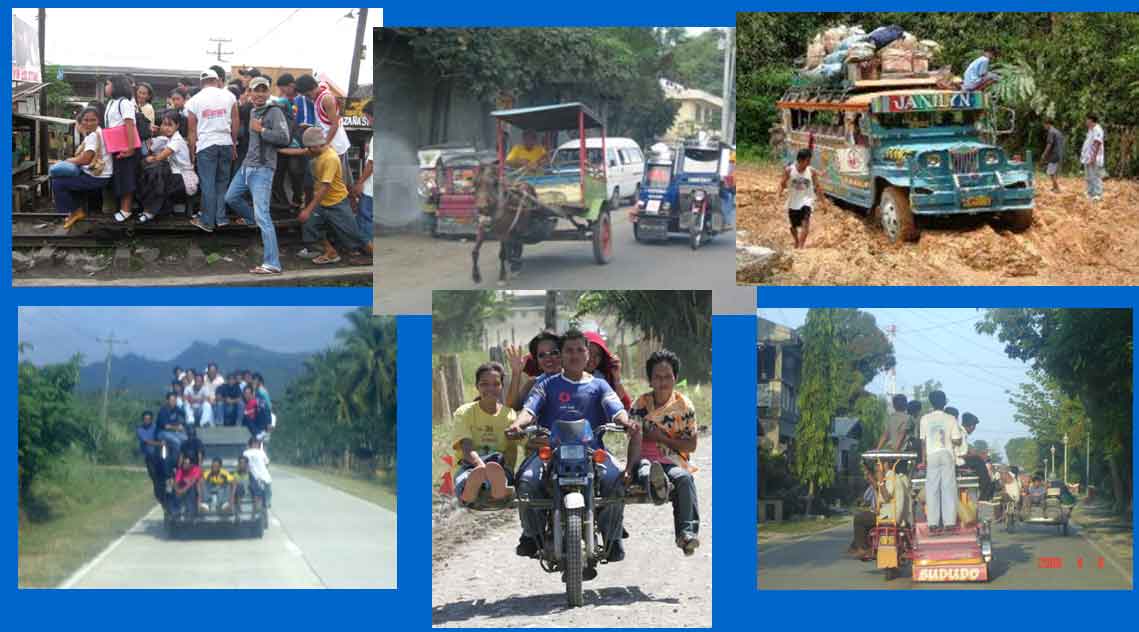
Jeepneys
The jeepney is the most popular mode of transport in the Philippines especially in cities because of its cheap fare and the convenience afforded to passengers to board and alight almost anywhere they want. In many parts of the Philippines, jeepneys provide long-distance transport services (rather than the bus) and may carry cargo, goods or freight in addition to passengers. Jeepneys in the provinces have also evolved to become significantly larger and tougher than those in the cities and are built to take on bad roads in all weather conditions. Jeepneys are locally manufactured and utilize surplus or second-hand diesel engines.
Tricycles and pedicabs
A tricycle is a motorcycle with a sidecar, while a pedicab is a bicycle with a sidecar and is classified as a non-motorized transport mode. These modes are 3-wheelers and are very convenient for passengers on short distance trip and feeder trip between residential area and arterial roads. Especially in the provinces, these modes play an important role because of insufficient bus and jeepney services. In Metro Manila the operation of tricycles is restricted partly because they cause traffic congestion. Franchising and supervision of tricycles including pedicabs have been devolved to the local government units.
AUVs
Asian utility vehicles (AUVs) refer to a variety of models designed according to the road and passenger characteristics of Asian countries particularly those in the Southeast Asian region. Vans include vehicle models produced by major Asian automakers like Toyota, Mitsubishi and Hyundai. AUVs and vans are four-wheeled vehicles with a seating capacity of seven to eleven persons including the driver. They provide services within a zone or fixed route of not more than 15 km. Fares may be set on a zonal asis or based on distance. FX services (so called FX because of the Toyota Tamaraw FX AUV that was very popular with those providing the service) evolved from the taxi as demand for a faster alternative to jeepneys arose in the 1990’s. Fares were higher than those for jeepneys but were eventually considered acceptable as longer travel times when using jeepneys became a major consideration for passengers, especially those who have constraints in their schedules like students and typical office workers (i.e., those who do not have the luxury of flexi-time). In 2003, the LTFRB issued a moratorium on the issuance of AUV franchises and pursued conversion and regulation of services into the Garage-to-Terminal Express (GTExpress). However, there is still a proliferation of vans for hire services, particularly those plying long distance routes in the rural areas. Meanwhile FX services remain in other cities in the Philippines.
Motorcycle taxis
Motorcycle taxis are also popular in the less urbanized areas including the small towns throughout the Philippines. These include the “habal-habal,” which are not regulated but have similar operations as their relatives in other countries like Thailand and Indonesia. Then there is the “skylab,” which is also a motorcycle taxi but with a wooden plank perpendicular to the motorcycle that allows for additional passengers balanced by the driver. Hence, the vehicle is made to appear like the fallen satellite of which it is named after.
Multicabs
Multicabs are similar to jeepneys but with most vehicles having about half the capacity of current jeepneys. However, their configurations are also evolving like the jeepneys, being customized vehicles like the latter. The resulting capacity has enabled these to have seating capacities equivalent to small or old model jeepneys. Multicabs are based on the Daihatsu or Suzuki mini-vans in terms of engine specifications and most came into being after the Philippines was flooded with second-hand or surplus vehicles. Their small bodies made them popular and they are now found in many cities, often competing with jeepneys and tricycles for passengers.
Other paratransit modes
Other paratransit modes are used in the Philippines in both urban and rural settings. There is the “kuliglig,” which uses a farm tractor to pull a wagon that is customized for passengers. These are mostly found in the country side where formal transport is lacking and even tricycles are unable to satisfy the demand for transport. Another paratransit mode is the “motorela,” which is a four-wheeler version of the motor tricycle. However, it is configured with the motorcycle in the front and middle instead of a one side such that it appears like the Thai “tuktuk.” These operate in cities and have capacities that are typically higher than the tricycles but significantly less than those for jeepneys.
Future of paratransit in the Philippines
The idea of environment and people friendly paratransit is always an attractive proposition. Given the current perceptions that paratransit like jeepneys and tricycles, there are many initiatives that are now being seriously considered if not yet engaged by both the government and the private sector. Some have been proposed for quite some time such as engine replacement and although financial schemes have also been proposed there have been very few takers for the program. Then there are those proposals for devices that have not been tested or validated but offer quick fixes to the emission problem, particularly claiming significant carbon reduction for a small price. Such are to be viewed as doubtful solutions that should not be pursued unless there is strong proof of their effectiveness.
Many taxis in Philippine cities have been converted to use LPG. Electric and LPG powered tricycles are now also being promoted in the Philippines. In fact, Quezon City, the biggest city in Metro Manila, only recently enacted an ordinance requiring all tricycles to convert to clean fuels or energy sources within 3 years. Such local legislation probably marks the beginning of a genuine and, perhaps, sustained effort towards making paratransit environment friendly. In the national context, a national EST strategy is currently being formulated (NCTS, 2009) and will ultimately recommend for actions to improve public transport in general.
An assessment of the jeepneys and tricycles as main public transport modes is necessary while at the same time it must be realized that jitney sized transport is necessary where passenger demand cannot justify mass transit modes including bus and rail transport. The World Bank (A Strategic Approach to Climate Change in the Philippines: An Assessment of Low-Carbon Interventions in the Transport and Power Sectors,2009) proposed medium and aggressive scenarios for the reduction of carbon in the transport sector. Among these scenarios are interventions for public transport particularly mentioning the conversion of jeepneys to CNG and assessing recent developments including options with high potential for carbon reduction, and technologies under testing such as CNG, LPG and electric powered vehicles. These are proof that the transformation of paratransit, in this case the jeepney, is essential and should be under way. Hopefully, it will be a matter of time when these popular modes of transport will gain the adjective “environment friendly.”
 Caught (up) in traffic