
Home » Mode Share (Page 13)
Category Archives: Mode Share
What if our government officials used bicycles for their commutes?
Here’s another quick share of an article about cycling:
Reid, C. (2019) ‘Cherish The Bicycle’ Says Dutch Government — Here’s That Love In Map Form, Forbes, https://www.forbes.com/sites/carltonreid/2019/01/08/cherish-the-bicycle-says-dutch-government-and-heres-that-love-in-map-form/#2951914e2726 [Last accessed: 9/29/2020]
The Dutch have perhaps the densest bikeway network in the world as shown in the article and the link below showing bike lane maps. They also have a government that is pro-bicycle. You wonder what transportation and infrastructure would look like if our government officials biked to work or used public transport on a regular basis. Perhaps these will affect how they make policies and decisions pertaining not just to transport but on housing and health as well? It would be nice to see a counterfactual discussion or paper on this and other scenarios that could help us improve transport and quality of life. This is a big “what if” that many people are actually clamoring for so government can be grounded in the way they make plans and decisions.
Here is the link to Open Cycle Map, which is affiliated with Open Street Map:
–
References for improvements for active transportation
Here’s a nice link to a National Academies of Science, Engineering and Medicine pointing to the wealth of researches supporting improvements for active transportation:
Paths to Biking, Walking Improvements Supported by Wealth of Research
Link: https://www.nationalacademies.org/trb/blog/paths-for-walking-and-biking
The references listed should aid researchers, practitioners, advocates and policymakers in their work towards realizing a people-oriented vs car-centric transportation.
–
On solving the inequality problem in cities
Here is another quick share of an article that is timely and relevant not just now but for years (maybe decades?) to come:
Grossman, D. (2020) “New Study Proposes a Mathematical Solution to Big Cities’ Inequality Problem,” Inverse, https://www.inverse.com/science/a-new-study-shows-why-building-more-equal-cities-could-save-lives?link_uid=15&utm_campaign=inverse-daily-2020-09-14&utm_medium=inverse&utm_source=newsletter [Last accessed: 9/15/2020]
I will just leave it here for future reference but to summarize, the article explains how cities should be planned or replanned based on the distribution or redistribution of certain facilities like hospitals, banks, schools, supermarkets, and parks. It argues that there is an optimum location for these in relation to where people live and work. If properly planned, travel distances and times can be significantly reduced.
–
Some takeaways from a UNICEF webinar
The UN together with its partners recently launch a Second Decade of Action for Road Safety (2021-2030). I will share the statement in a subsequent post. For now, I will share some slides from the recent webinar organized by UNICEF that focuses on safe and healthy journeys for children. Those of us who are working directly with UN agencies have been working on safe journeys for children particularly as they travel between their homes and schools. The recent launch and pledges or commitments of support from partner organizations will surely reinforce efforts to ensure the safety of children whether or not they return to school.
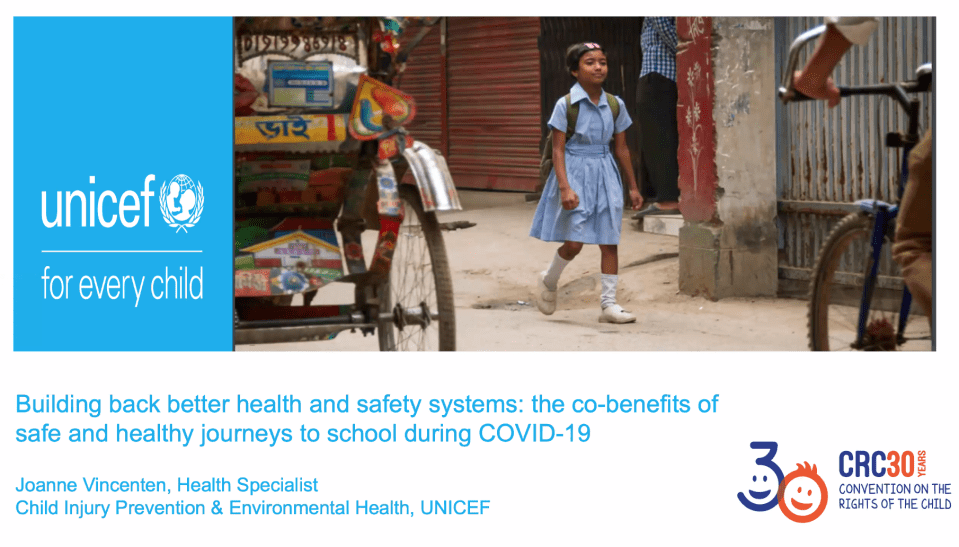
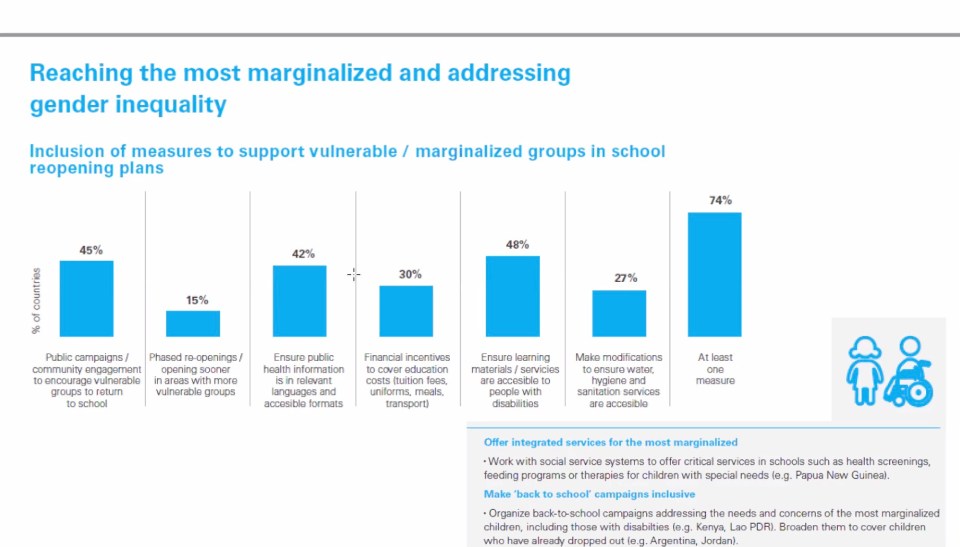 Context setting or rationale for UNICEF’s initiatives
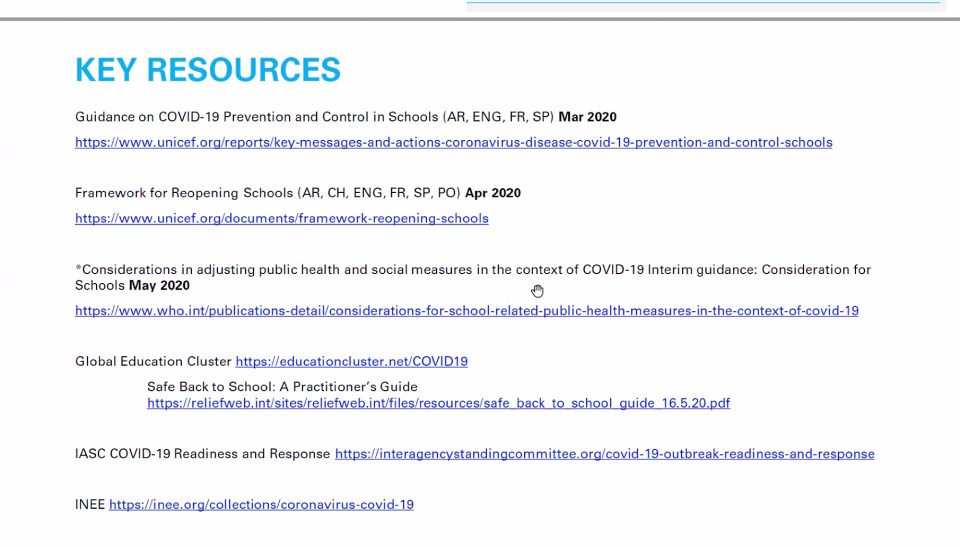 Key resources or references shared by the webinar host
 The term ‘co-benefits’ reminded me of a past project I worked on that was about low carbon transport. We also did assessment using co-benefits of low carbon transport. Among these were road safety.
 The slide and the table speaks for itself – examples of effective strategies
 There were several presentations during the webinar. However, the most interesting and informative for me was this one about the guidance for safe and healthy journeys to school.
 Ten (10) points to consider as guidance for safe and healthy journeys to school
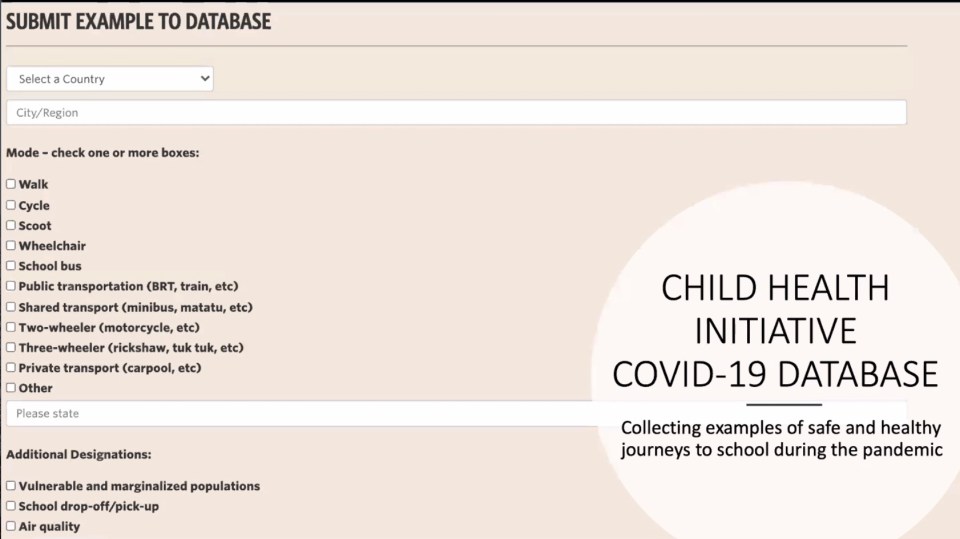 Database initiative in support of the guidance (I will get the link to this and share it in a future post.)
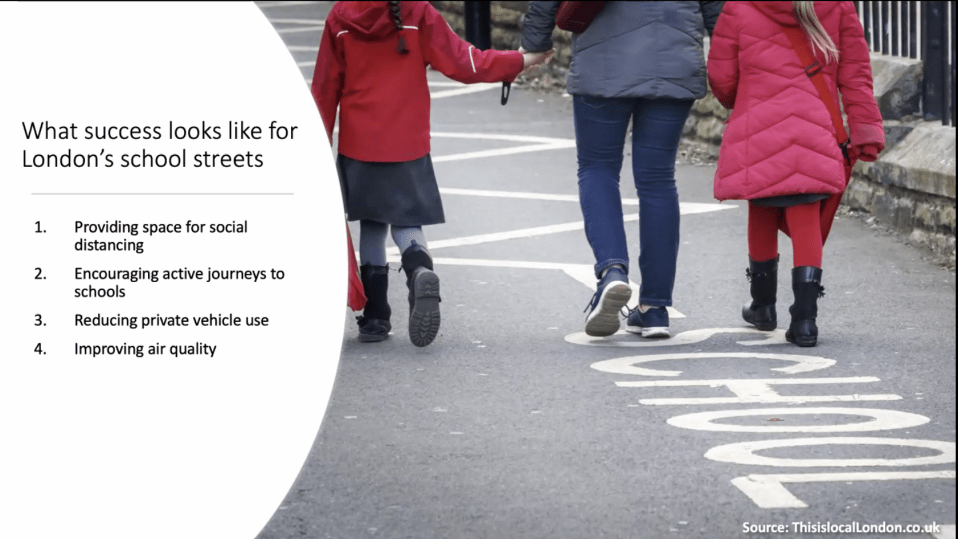 An example from London’s experience
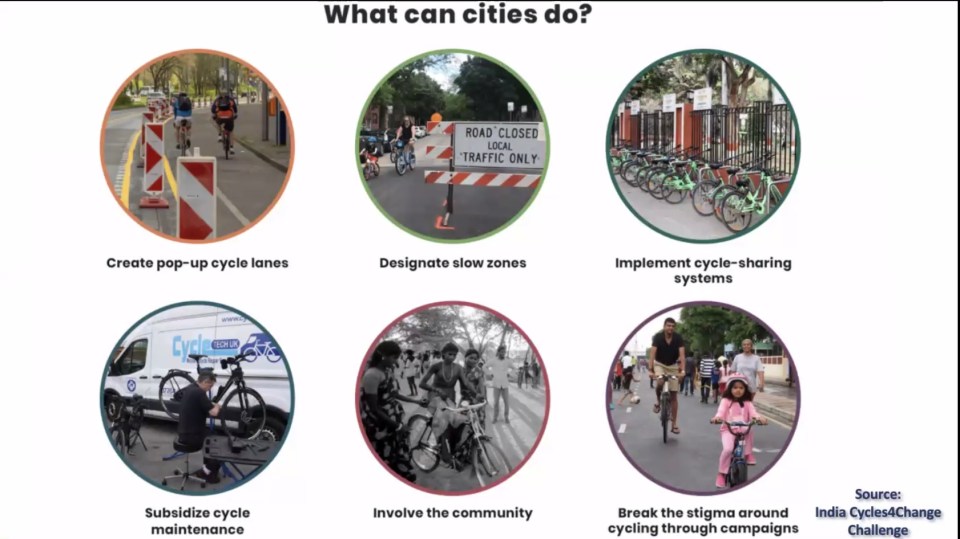 This is a slide on what cities can do to promote active transport among children.
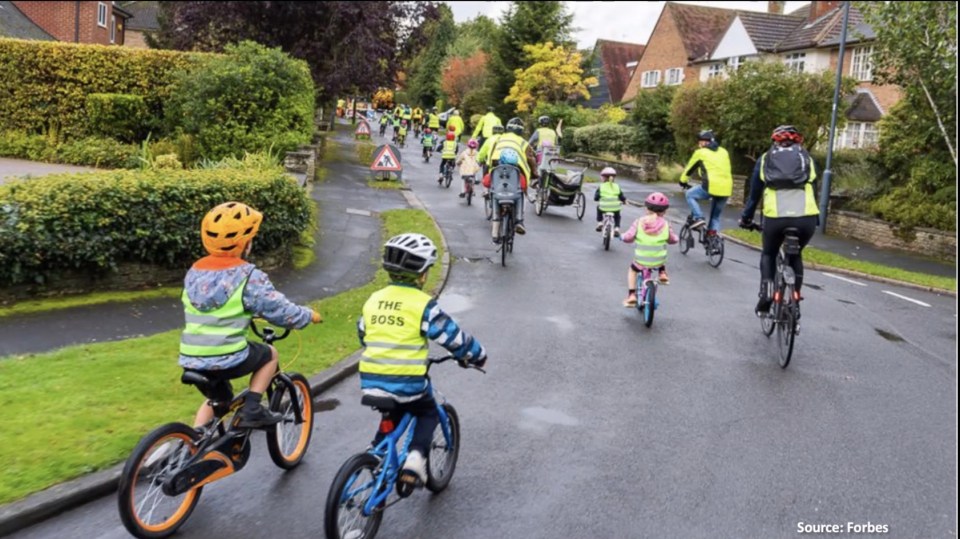 The photo shows what is termed as a “bicycle school bus”. This and “walking school bus” are real options for children and their guardians when traveling between their homes and schools. Such underlines the option of not using motor vehicles (i.e., reduction in motor vehicle trips).
I will try to elaborate on these in future posts, particularly on the 10-point guidance.
–
Requiem for the Antipolo-Cubao jeepneys?
From the time Metro Manila and Rizal transitioned to General Community Quarantine (GCQ), there have been limited public transport services connecting the two considering most Rizal towns are like bed towns to Metro Manila. The term “bed town” refers to towns, or municipalities, even cities, that are basically the place of residence of persons who during the day time usually travel out to workplaces or schools outside their areas of residence. Many who reside in Rizal province actually work or study in Metro Manila. Similar cases may also be found in the other provinces surrounding Metro Manila like Bulacan, Laguna and Cavite. These connections are made mainly by public transport, which for the National Capital Region (NCR) and adjoining areas currently comprise about 70% of total trips. The rest is by private transport. [Note: Not counted are trips mainly by walking and cycling. While everyone walks, walking is usually at the ends of the commutes.]
Current public transport services now comprise of buses plying the Antipolo-Cubao and Taytay-Gilmore routes that were among the first operationalized under the rationalization program of the Department of Transportation (DOTr). For the Antipolo-Cubao route, several companies have shared the load with mostly aircon buses running between Quezon City and Antipolo City. I wrote recently that there are now non-aircon (referred to as ordinary) buses serving this route and that in addition to the main line (Aurora Blvd.-Marcos Highway-Masinag Junction-Sumulong Highway via) there was now a branch going through Cogeo and via Olalia Road.
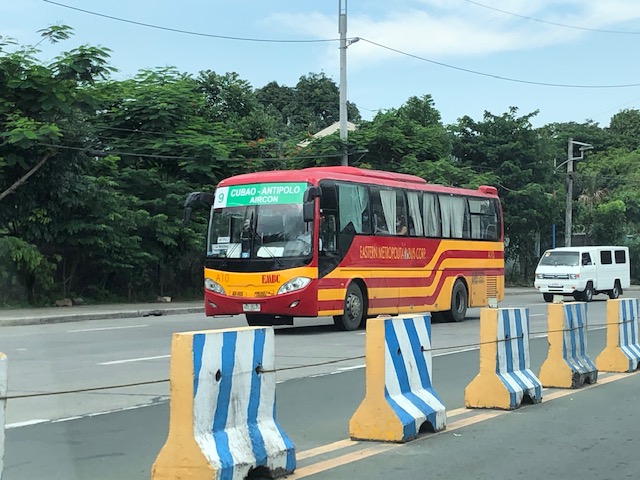 Aircon bus approaching the Robinsons Antipolo terminal
 Non-aircon (ordinary) bus plying the Antipolo-Cubao route along Sumulong Highway past the Masinag Junction
We got a comment about how perhaps DOTr and LTFRB plans to introduce variations to main routes including adding to the route number to distinguish one variation from another. While the original route signs look like the one on top of the windshield in the Aircon bus in the first photo with the white box on the left displaying the route number, the bus in the second photo shows two boxes. The second box to the right of the route name is blank. So perhaps there can be an ‘A’ to refer to the original Route 9 and ‘B’ can refer to the one via Cogeo. Does this mean there can also be a ‘C’ and that can be via the even older route via Felix Avenue, Cainta Junction and Ortigas Avenue. If this becomes a reality, then that probably puts the proverbial last nail on the coffin of the Antipolo-Cubao jeepneys. Jeepneys would have been phased out for the route in favor of the higher capacity buses.
–
On the benefits of shared roads during the pandemic
There is evidence, and they are increasing, for the benefits of shared roads. Here is another quick share of an article supporting that:
Brown, M (2020) “Shared-use roads improve physical distancing, research shows,” Medical Xpress, https://medicalxpress.com/news/2020-07-shared-use-roads-physical-distancing.html%5BLast accessed: 7/30/2020]
With the situation in the Philippines and particularly in Metro Manila appearing to be worsening rather than improving, national and local governments should take heed of the evidence for shared-use roads and the importance of active transport to ensure people’s mobility will not be hampered. This is particularly important for our frontliners and other essential workers if we are to survive this pandemic.
–
The plight of commuters during GCQ
I write this on the eve of the imposition of Modified Enhanced Community Quarantine (MECQ). It is another unfinished article that was intended to be a quick post showing the typical conditions for commuters during the GCQ. Public transport supply was slow to return to adequate levels as the government took advantage of restrictions to impose route rationalization and modernization programs. The following scenes were common along my commuting routes:
 Commuters waiting for a ride near the provincial capitol
 The rains of the wet season added to the misery of the wait.
 Long queue at the public transport terminal at Robinsons Antipolo, which is the terminus for buses connecting Antipolo with Cubao and Ortigas Center.
 The queue reaches beyond the shaded areas of the terminal.
I think national government should be the one to provide for the public transport needs of frontliners (i.e., health care workers including doctor, nurses, medical technologists, pharmacists, etc.) and other essential workers. My definition of the latter are those required for logistics to function as well as those to ensure the required production or manufacturing for the rest of us who need to stay at home. Not everyone has the same, fair circumstances as there are those who can afford to stay at home and those who need to work for them to live, often on a day-to-day basis.
The pandemic has taken a toll not only on the physical but the mental health of many of us. Government rants and retorts are unnecessary and uncalled for given its dismal performance. I dare say dismal as the evidence shows certain local government units and the Office of the Vice President doing much, much more despite their limited resources. We are not in this quandary because government performed well and to the best of their people’s abilities. If that was their best then they have no business staying in their positions. If our health care system fails, then there is nothing to stop this pandemic from claiming much more than lives.
–
On mass transit and active transport
I recently gave a talk on transport in the new normal. There are a lot of materials that you can refer to if you want good visuals for a presentation. It helps to capture the attention and maybe the imagination of your audience, which in this case was varied. While I assume many to be in the physical, chemical & social sciences, and engineering, I knew that there were also people from media and those who were just interested in the topic. And so I made sure there were a lot of infographics mixed in with bullet points to drive the message clear about mass transit systems being the backbone of transport in highly urbanized cities, conventional transit like buses and jeepneys supplementing and complementing these, and active transport enabled and encouraged as a safe option for many.
I wasn’t able to include the following graphic shared by a friend advocating bicycle use especially for work and school trips. The following graphic comes from TUDelft, which is among the major universities in the forefront of research in transit and cycling. Clicking on the graphic will take you to their Facebook page and more links to their programs.

Note the essential information relating bicycles and transit in the graphic. Do we have similar data in the Philippines (or at least for the National Capital Region)? I hope this stirs interest for research work. There are a lot of topics to take on including even data collection to capture the information required for substantial studies on cycling, transit and their relationship.
–
Why cycling or bicycles are good for the economy?
You saw that meme shared in social media where they say “why bicycles are bad for the economy”? There’s some humor there but it doesn’t necessarily convince many people to support cycling or biking over motor vehicle use.
Here goes one and note the logic:
“Cycling or bicycles are good for the economy because…it helps reduce car use/dependence. That means less dependence and expenses to fossil fuels. That means more money available to the household for more important stuff like food, homes and education.”
Can you come up with something like that?
 Workers on bicycles crossing the Marcos Highway bridge from Marikina towards Quezon City.
–
On people’s apprehension to use public transport
Public transport supply issues aside, there is also an apprehension to use public transport in the Philippines because of the perception that using public transportation will expose you to COVID-19 and lead to an infection. So far, this is far from the truth, which is that if proper precautions or countermeasures are applied (including physical distancing), public transportation can be safer than taking a car to move about.
Here is an article from the US co-written by Janette Sadik-Khan, who presided over the complete streets transformation in New York City. Aside from explaining how public transport can be safe, COVID-19-wise, the authors state that one must be most worried about conditions in places they go to including their workplaces, markets and yes, homes.
Sadik-Khan, J. and Solomonow, S. (2020) “Fear of Public Transit Got Ahead of the Evidence,” The Atlantic, https://www.theatlantic.com/ideas/archive/2020/06/fear-transit-bad-cities/612979/ [Last accessed: 6/25/2020].
Several groups have already called for jeepneys to resume services. Unfortunately, DOTr and LTFRB have other plans to implement; opting for a hard-push of the modernization and rationalization programs of the government. As such, despite the demand for public transport, the latter’s unavailability meant that many commuters had to take private vehicles to go to their workplaces. That meant those who usually could leave their cars home or at least opt for public transport most days reverted to their vehicles (note: the number coding scheme is still suspended for Metro Manila). Tricycles could only carry one passenger each; effectively making them 3-wheeler taxis. While train and bus operations have resumed, both have limited passenger capacities due to the physical distancing requirements.
Again, there are precautions and countermeasures that can be applied in order to ensure the reduction or minimization of infection risks. Public transport providers need to follow these guideline to prevent infections that can be attributed to public transport use, and help people trust in using these modes over cars.
–
 Caught (up) in traffic