
Home » Mode Share (Page 19)
Category Archives: Mode Share
Ortigas Center walkways under construction
Currently under construction at the Ortigas Center are elevated walkways that are part of the Ortigas Greenways Project. Following are some photos I took a few weeks back (they’re old!), and so the current state should show significant progress from what is in the photos.
 Elevated walkways are currently under construction at the Ortigas Center. This part can be seen along Julia Vargas Ave. at the intersection with Garnet St.
 Structure at F. Ortigas, Jr.
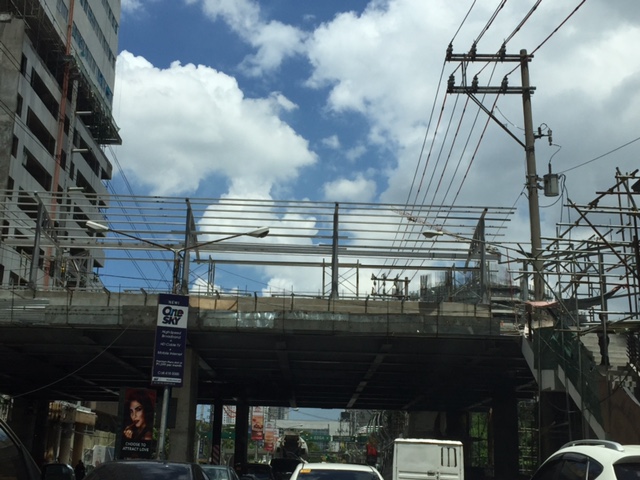 Close-up of the F. Ortigas part of the elevated walkways
 Walkway section under construction along the approach of ADB Ave./San Miguel Ave.
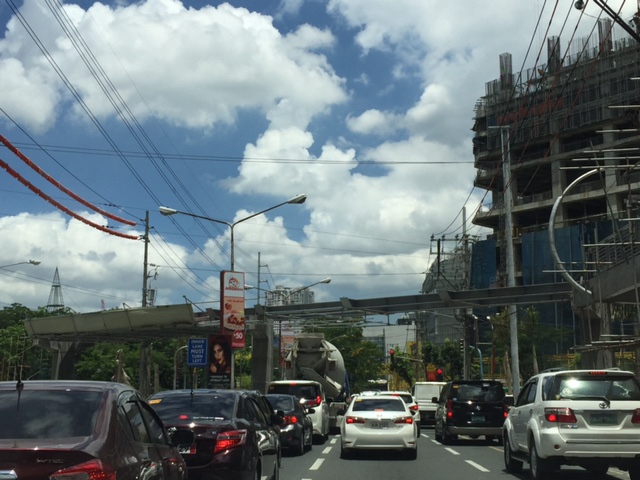 Crossing under construction at the intersection of Julia Vargas with San Miguel Ave. (to the left) and ADB Ave. (to the right).

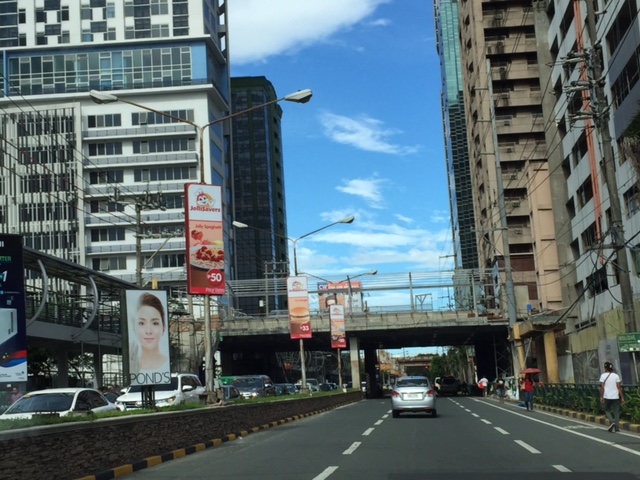 View of the F. Ortigas crossing walkway along the eastbound direction of Julia Vargas Ave.
This project is perhaps one of the most hyped pedestrian facilities in Metro Manila and if I recall right, the concept for this can be traced to workshops conducted during one of the Transport Forums organized by the Asian Development Bank (ADB), whose headquarters are located in Ortigas Center. It took a while to be realized but should be completed soon. This won’t be the first of its kind in Metro Manila as Makati already has one connecting office and residential buildings to Greenbelt and Glorietta. I really do hope it is able to reduce congestion in the area but this would require studies after the facilities are opened for public use. We need more of these around Metro Manila as well as other major cities. We direly need facilities to encourage walking as a preferred mode over motorized transport.
–
Public transport’s importance to a city
I found an “old” article on public transportation and its importance to cities:
Public Transport is Worth Way More to a City Than you Might Think, [by Eric Jaffe in http://www.citylab.com, August 14, 2013]
While much attention has been on walking and cycling, which are essential modes of transport, I believe public transport has an even much more value especially given the land use in many cities. This is particularly true in the Philippines where land use planning is basically a term since implementation is generally weak. This is very much evident in the case of residential development and the limited choices for transport. Many people, for example, reside in the periphery of Metro Manila and its surrounding areas. They often commute over long distances and incur long travel times due to congestion roads. Mass transit infrastructure could have made commutes faster, saving precious time that translates into economic value.
–
Some articles on walking, biking and transit for wellness
Here are a couple of recent articles on walking, biking and transit:
Walk, bike, and transit benefits boost people of all incomes [McAnaney, P. in Greater Greater Washington, June 13, 2017]
“Bikes are happiness machines.” Behind the Handlebars with cyclist extraordinaire Joe Flood [Maisler, R. in Greater Greater Washington, June 7, 2017]
I posted these partly for future reference but also to promote walking, biking and public transport. These are essential elements for mobility anywhere and governments should ensure that people have these as options for traveling about and not be dependent on automobiles for transport.
–
On motorcycle taxis becoming the “new king of the road” (cont.)
This is a continuation of the yesterday’s post on motorcycle taxis. The feature appearing in Sunstar Philippines also focuses on the case of Cebu City where there is a rising demand for motorcycles and issues on public transport have given rise to a motorcycle taxi use despite their being basically illegal under current laws/guidelines. Habal-habal as these motorized 2-wheeler taxis are known have been in service in many cities and municipalities but are mostly tolerated in rural areas where conventional public transport services are scarce.
Part II of the feature by Sunstar:
New King of the Road – Part II
There are three articles in Part II:
Ramirez, J.A.C. (2017) Motorcycles on the rise, Sunstar Philippines, Retrieved from: http://www.sunstar.com.ph, April 4.
Ramirez, J.A.C. (2017) Habal-habal drivers form group to ‘professionalize’ services, Sunstar Philippines, Retrieved from http://www.sunstar.com.ph, April 4.
Ilano, M.V. (2017) Hailing a motorcycle taxi with your smartphone, Sunstar Philippines, Retrieved from http://www.sunstar.com.ph, April 4.
Part III of the feature by Sunstar:
New King of the Road – Part III
Ilano, M.V. (2017) Even with BRT, motorbikes still needed in Cebu City, Sunstar Philippines, Retrieved from www. sunstar.com.ph, April 4.
Ilano, M.V. (2017) Will Cebu City lead the way?, Sunstar Philippines, Retrieved from http://www.sunstar.com.ph, April 4.
I hope these articles on motorcycles and motorcycle taxis will generate meaningful discussions pertaining to their applications and perhaps their regulation. One issue, of course, that should definitely be on the table is safety. That is non-negotiable and assurances by motorcycle taxi transport providers should not be enough to persuade their becoming formalized as a public transport mode. The basis for mainstreaming these should be evidence-based including assessments based on crash (accident) data. Here is something that can be studied by the various schools around the country especially universities that have the capacities and capabilities to conduct such studies in aid of policy formulation at the national and local levels.
–
On motorcycle taxis becoming the new “king of the road”
There is a really nice feature on Sunstar about motorcycle taxis that came out today. This was shared by a good friend on his social media account, which got my attention as we just completed a study on motorcycles last January 2017. Here is the feature:
Part I includes two articles:
Ilano, M.V. (2017) Habal-habal invades cities, Sunstar Philippines, Retrieved from http://www.sunstar.com.ph, April 4.
Anunciado, D.D. (2017) Deadly motorcycle rides, Sunstar Philippines, Retrieved from http://www.sunstar.com.ph, April 4.
Here’s a graphic from the second article that says a lot about motorcycle safety in Metro Manila:

I would just like to comment that the graphic shows MMDA-recorded crashes in Metro Manila. There can be a lot of incidents that went unrecorded or unreported with the MMDA. It would be interesting to check with the local government units about their own statistics and compare these with the MMDA’s. Also, “crashes” is the preferred term over “accidents” as road safety practitioners and advocates argue that these are preventable incidents.
Sadly, such statistics can only be shown by cities doing the diligent work of recording such incidents. The Department of Public Works and Highways (DPWH) has already ceased collecting, processing, analyzing and reporting road crash reports many years ago (which is quite surprising for an agency mandated to plan, design, construct and maintain national roads). There is currently no agency (no, the Department of Transportation (DOTr) has not yet taken over the enormous task) that is collecting, processing, analyzing and reporting on road crashes at a nationwide scale and few LGUs do so at their levels.
I will also post about Part II once its out. There is a preview of what articles will be in the next feature and so that is something to look forward to.
–
Contradictions in transport mode choices?
A friend posted a photo on social media and it immediately got my attention as it featured an ad by popular ridesourcing company Uber on a public bus in Singapore. There is a slogan there that reads: “Because weekends come once a week, make your move.” This statement is a promotion for Uber, which is already making inroads in the city state where taxi services are probably among the better ones in the world in terms of service quality and efficiency.
The ad itself is a contradiction in terms of who is promoting itself and where it is being promoted. Such promotion gimmicks are not beyond companies like Uber, which project themselves as mavericks in what are considered as traditional areas such as transport. Here is the photo of Uber advertising on a public bus in Singapore:

Taxi ownership and operations (i.e., driving) in Singapore is restricted to Singaporeans. Uber faced some issues with their operations as there were a significant number of foreigners, it seems, who took to Uber as a means for employment. In a city-state like Singapore, which discourages private car ownership and use through schemes like congestion pricing and the provision of high quality public transport services, Uber could face a much stiffer challenge to its march towards dominating conventional taxis.
–
The Tagaytay transportation predicament
The title of this article is actually a bit tame and on the diplomatic side of trying to describe transportation and traffic in this city that was once relaxed a retreat for many. I had wanted to end February on a good note and so I decided to defer posting this until March.
We used to frequent Tagaytay and liked spending some rest and recreation time there to the tune of being there almost once a month at one time. Needless to say, at the time travel to Tagaytay from our home in Antipolo took us only about 2 to 2.5 hours excluding our usual stop at Paseo in Sta. Rosa, Laguna. We liked the city so much that we even considered making it a second home; even inquiring and looking at properties there.
Fast forward to the present and it has become an excruciating travel with the highways leading to the city already congested. It didn’t help that when you got there, you also had to deal with serious traffic congestion. This started not a few years ago when the city approved developments by major players including Robinsons, SM and Ayala. The developments by SM and Ayala proved to be the backbreakers with Ayala coming up with the first mall in the city and SM operating an amusement park beside its prime acquisition that is the Taal Vista Hotel. Now, there is another mall under construction by Filinvest and right at the corner of the rotonda where the Aguinaldo Highway terminates.
 Vehicles queue along the Tagaytay – Nasugbu Highway towards the Rotonda where Tagaytay traffic enforcers attempt to manage traffic but appear to create more congestion instead.
More on Tagaytay soon…
–
Article on housing affordability and sprawl
There is a new article from Todd Litman that discusses the state of housing in the context of affordability and sprawl. While this is mainly based on the experiences in the US and Canada, there are many other cities from other countries involved. I noticed an interesting comment on his Facebook post about the elephant in the room being culture. I would tend to agree with this view and in the case of the Philippines is perhaps also heavily influenced by our being under a repressive Spanish regime that was succeeded by an American-style. I say repressive because although there was a semblance of planning during the Spanish period, the urban form revolved around the plaza where church, government, market and schools were located. Social class defined residential ‘development’ also followed this with the wealthier families having homes closer to the center while those in the lower income classes where farther and perhaps even beyond the reach of the sound of church bells. The Americans changed much of that and introduced a larger middle class and the incentive of becoming home and land owners, which during the Spanish period was practically non-existent except perhaps to the buena familias and ilustrados. Fast forward to the present, being a land owner is still very much a status symbol along with being a car owner. Homes in the urban centers (e.g., Makati CBD, Ortigas CBD, BGC, etc.) are very expensive and people would rather reside in the periphery (thus the sprawl) and do their long commutes.
Here is a link to the article:
Unaffordability is a Problem but Sprawl is a Terrible Solution
[Litman, T. (2017) Unaffordability is a problem but sprawl is a terrible solution, Planetizen, Retrieved from http://www.planetizen.com, February 17.]
What do you think?
–
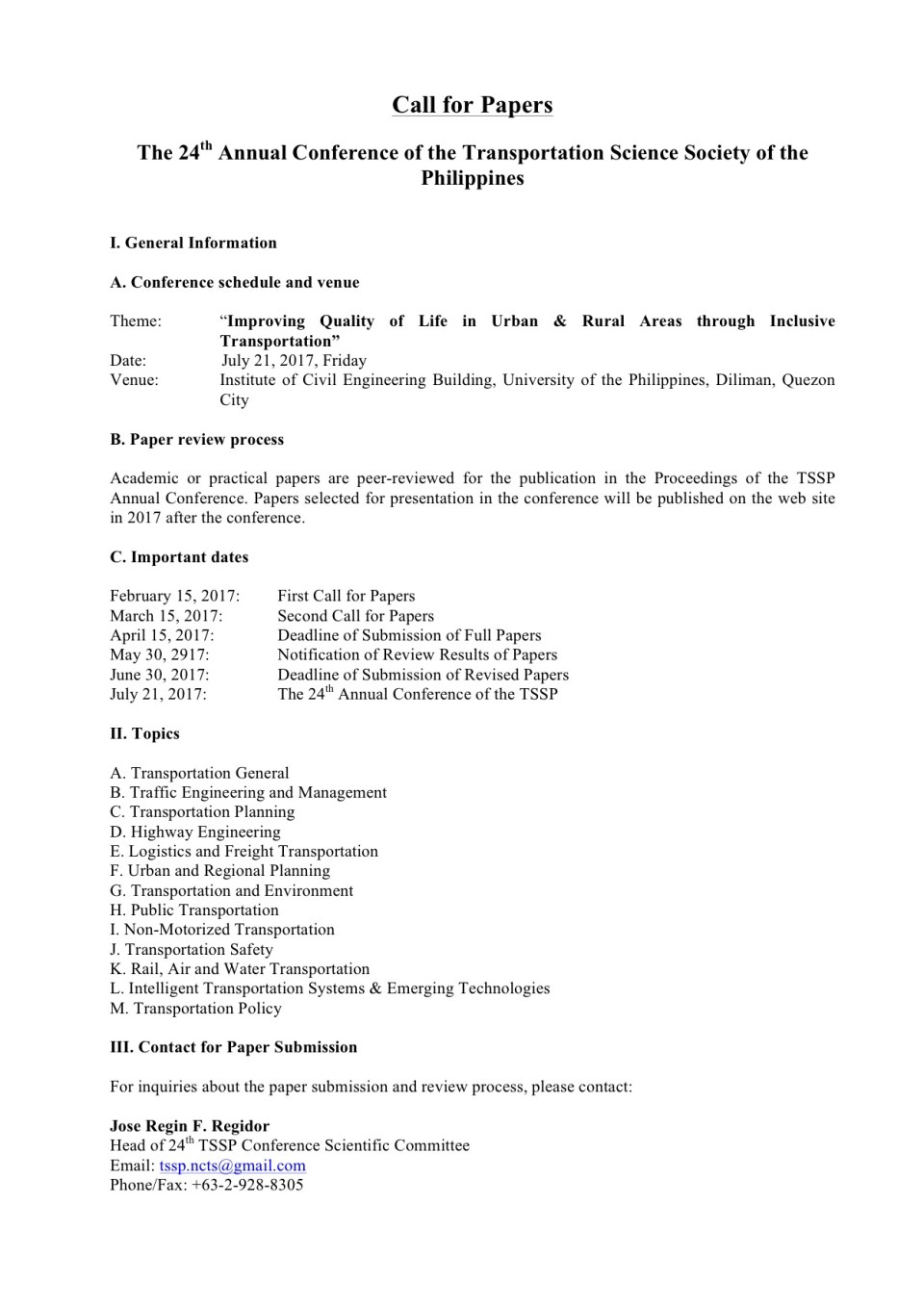
First call for papers for the TSSP 2017 conference
The first call for papers for the 24th Annual Conference of the Transportation Science Society of the Philippines came out last Wednesday, Feb. 15:
–
Commuting and stress
Here is another quick post but on a topic that’s related to health and therefore is something that I think many should be interested in and perhaps take important note of.
Commuting: “The Stress that Doesn’t Pay”
There are many links to various medical articles within the article. At the last part, there is also a list of references that the reader may want to look at. I’m also posting this for future reference. This would contribute to the formulation of topics for research especially the inter-disciplinary or collaborative kind.
–
 Caught (up) in traffic