
Home » Policy (Page 48)
Category Archives: Policy
Flash floods and traffic congestion
Traffic last night along most of Metro Manila’s roads were a nightmare. It took many people hours before they could reach their homes from their offices and schools. The main reason cited for the horrendous traffic jams was the weather. It has been raining almost every afternoon in Metro Manila and its surrounding areas due to the combination of a tropical depression east of the island of Luzon and the intensified monsoon rains (Habagat). Rainfall intensity combined with a high percentage of the water translating into runoff contributed to flash floods all around Metro Manila including some that were waist-high, rendering the road impassable to most vehicles. However, while a lot of motorists and commuters were simmering along many roads last night, I couldn’t help but notice that most vehicles in the photos circulating in social media sites and news footage are private vehicles. Buses along EDSA occupied only the outermost lane for most stretches of the road. Meanwhile, conspicuous is the space in the middle of EDSA, which is the ROW for the MRT-3 tracks.
One lesson we learned last night was something we already knew all along and have failed miserably to address – we need better public transport in Metro Manila. Could there have been less cars on the roads affected by flash floods brought about by the heavy rains yesterday? Could commuters have had an easier way of traveling between their offices or schools and their homes? The answer is yes, that is, we could have built the necessary public transport infrastructure years ago. While there is a need to be transparent and have a corruption-free (is there such a thing?) process for planning, funding, designing, and constructing public transport infrastructure, we must realize that these are all systems that we should have had long ago, and further delay only dooms mobility and accessibility in our cities. Our leaders seem to be too engrossed with processes and making sure they won’t get entangled in controversies or lawsuits that they forget that time is ticking and all other people are caught in the mess that is the traffic congestion we experience every day. I wonder if at least some of our decision-makers for transport and traffic were caught in the monstrous jams last night? Maybe getting caught in one would change their perspectives and give them a sense of urgency for the task at hand? Or maybe, and likely, they were sitting behind their cars and burning time on their notebooks or tablets while their drivers were trying to maneuver in traffic? Frankly, we deserve better transport than what we have but then we don’t get to decide what gets built and when such infrastructure will be built, if at all. We could, however, do our part in lobbying (or demanding) for better transport.
Taken by a good friend commuting to his home last night:

From the GMA News website:
–
Traffic congestion and the limits of quick fixes
One time last summer night, it took me 2.5 hours to get to the airport from where I reside when it should only be an hour or 1.5 hours (on a typical bad day). Very early mornings (between 2 to 4 AM), it only takes me 40 minutes between my home an the airport. The route I usually take is mainly along Circumferential Road 5 (C-5); a route that basically has sparse public transport (mostly jeepneys along different sections) but is a truck route. It was summer though and one would have thought that there would be less vehicles along the road with school still out. I was wrong in that assumption and that cost me both time and fuel that night.
Traffic congestion in Metro Manila and other Philippine cities have been issues for such a long time that one tends to assume there’s nothing being done to fix the problem. In Metro Manila, the Metropolitan Manila Development Authority (MMDA), in cooperation with the various local governments and national agencies, has implemented various schemes including the number coding, truck ban and a bus dispatch system along EDSA. Yet, congestion persists and only last week, the President got caught in traffic as he traveled from Malacanang Palace in Manila to the DOST Compound in Taguig. The news was filled with a comment that he supposedly made to the MMDA Chair about the delay he and his entourage experienced. The bad news is that this congestion will not go away and will only worsen if there are no steps taken to address the problem. And this happens not only in Metro Manila but in other highly urbanized cities in the country. Quite obviously, quick fixes are no longer enough and we have reached the limits of their applicability.
 EDSA during the morning rush hours
 EDSA during the afternoon peak, which actually extends to an evening and even nighttime traffic jam
So how do we alleviate traffic congestion? Here’s three things that come to mind as they seem to be quite logical and very obvious:
1. Build the mass transit infrastructure required – these infra include rail and bus rapid transit systems and are urgently needed in Metro Manila, Metro Cebu, Davao and other highly urbanized cities. A shift from private vehicle use to public transport will not happen if people have no attractive options for commuting. In Metro Manila, there is a backlog of mass transit projects with lines that should have been constructed and operational years or even decades ago.
2. Rationalize transport services – the long standing practice is to increase the number of existing modes of transport as the demand increases. This logic is one that is most abused as a doubling of demand is conveniently but incorrectly interpreted as requiring a corresponding doubling of the number of tricycles or jeepneys, for example. What is required is for our cities to “graduate” from low capacity and less efficient modes to higher capacity and more efficient ones. Many cities seem plagued with tricycles as their main modes of transport within their CBDs when these should have been restricted to residential areas and mainly in the periphery rather than allowed to dominate (and clog) urban streets.
3. Build more walkways and cycling facilities – its difficult to encourage people to walk and cycle if there are no space for pedestrians and cyclists to travel safely and efficiently. Most trips are actually short ones and do not require motor vehicles so it makes sense to invest in pedestrian and cycling facilities so people get the clear message of support for such options for travel. Such investment is also one for healthy living as walking and cycling are forms of exercise and it is well established that these modes of transport promote healthier lifestyles and therefore, healthier people in cities.
–
Common causes of traffic congestion along Philippine roads
As a follow-up to a previous post on traffic congestion, I am writing on some of the most basic causes of congestion along Philippine roads. I say most basic because these are the usual situations we see along the road as we commute. And these are also supposed to be easily solved or addressed by the most basic approaches – enforcement. Here are a couple of photos and commentaries on this matter.
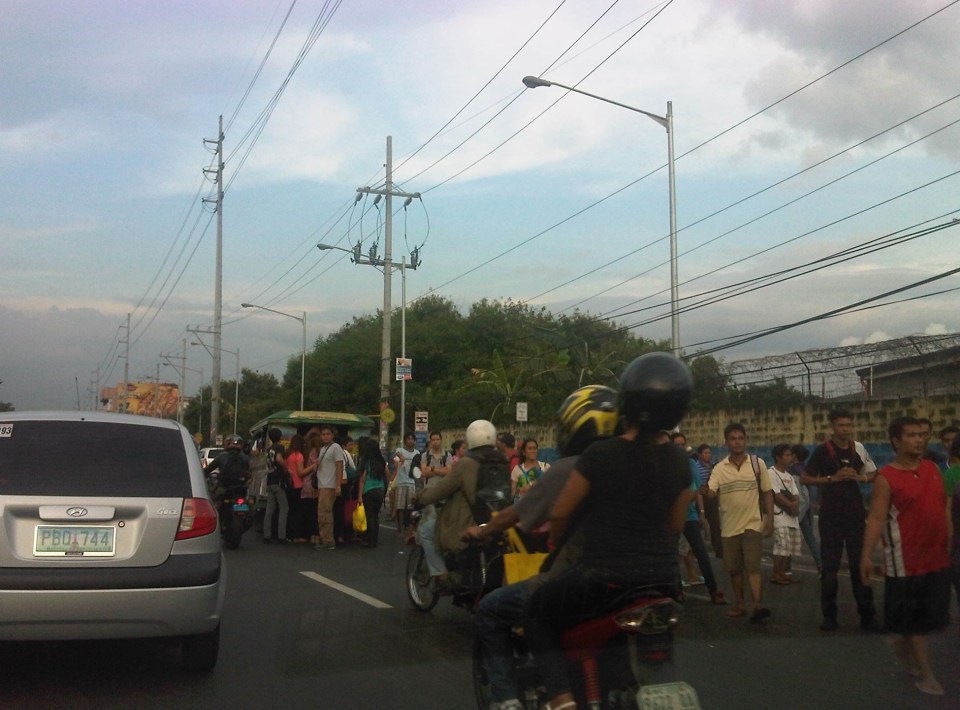 Commuters occupying two lanes of the road as they wait for public transport along Marcos Highway in Pasig – PUVs like the jeepney in the photo stop in the middle of the road to load/unload passengers. Were there traffic enforcers/aides in the area? Sometimes. Were they doing their jobs? Definitely not. In many cases, I’ve seen enforcers using the congestion (i.e., slowed traffic) to apprehend number coding violators. Now, number coding is premised on motorists being discouraged from traveling during certain times of the day to reduce congestion from vehicle volume. In the photo above, it’s pretty clear that the problem isn’t number coding violators but the mayhem caused by public transport and commuters. Something that traffic enforcers/aides could have acted on and with regularity and persistence so that they can positively influence jeepney driver and commuters towards orderly conduct.
 On-street parking and pedestrian activity along Manila roads – many cities such as Manila are guilty of not having any serious initiatives to address on-street parking. In many cases, its tolerated particularly in commercial areas as local governments don’t like to engage business in what they assume to be the small issue (or non-issue) of parking. In the case of pedestrians, it is a behavioral thing that requires a bit more effort than police or enforcer visibility (or the occasional apprehension). As a result, people will generally cross wherever they want and walk along the carriageway, not minding their safety. Of course, such behavior is encouraged by the absence of space for walking as vehicles, merchandise and other stuff occupy space that’s supposed to be for pedestrians.
–
Other issues on second hand imported vehicles
Much of the discussions regarding imported second hand vehicles focus on issues of taxation (customs) or registration and allegations of smuggling. The entry of used vehicles and their significantly lower-priced sales have been issues particularly to the established automobile manufacturers and dealers in the country. Importers and dealers of vehicles coming from these special economic zones/free ports claim that they are serving people who want to own a vehicle but couldn’t afford brand new or even second hand vehicles. While this may be true for some cases where regular cars, vans or even SUVs are concerned, the perception is that these importers and dealers are mainly serving a demand for luxury vehicles like sports cars, limousines and high end SUVs from prominent brands such as Audi, BMW, Lexus, Mercedes Benz, Porsche, and Hummer, and even Ferrari and Lamborghini.
On the surface, the claimed benefits to people seem an acceptable and even noble intention. However, this is further from the truth and there is the strong opinion that all this is really just for money, plain and simple. It is also not enough justification for the negative impacts of these used vehicles, which do not go through a process of being tested for compliance with emission standards as well as for safety. The latter concern is for vehicles that undergo “conversion” from their original right hand drive set-up to become left hand drive vehicles, which are the norm in the Philippines. There is also the issue of fuel efficiency for these used vehicles and the maintenance required for these to stay in A-1 condition. All these concerns stack up and clearly show the folly of the importation of used vehicles through the economic zones.
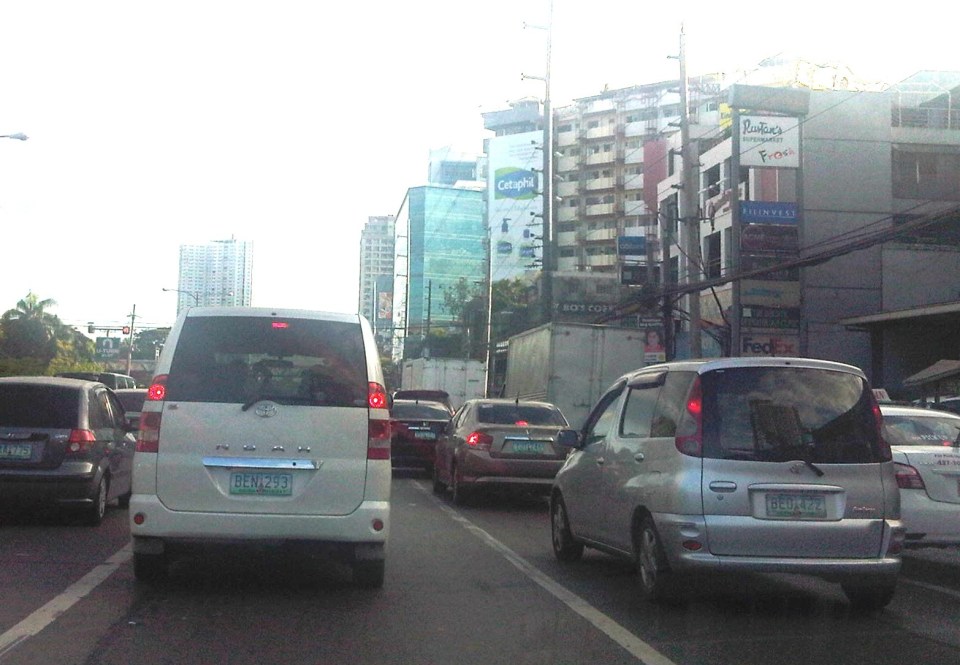 I saw these two vehicles along Katipunan as we were coming from a meeting one afternoon. Both models were not sold by Toyota Motor Philippines and conspicuously have license plates bearing the letter “B” as a first letter, indicative that they were registered in Region 2. Region 2 is where Port Irene, Cagayan is located and which is being alleged as the source of a lot of used vehicles linked to anomalies in taxes and registration. More serious are concerns pertaining to emissions, safety and fuel efficiency.
–
National Budget Memo No. 118
The Department of Budget and Management recently released the National Budget Memo No. 118 with the subject: Adoption of the Budget Priorities Framework in the Preparation of the FY 2014 Agency Budget Proposals. The Memo emphasizes “the need to prioritize the programs critical to the attainment of the desired outcomes for the 2014-2016 period.” In addition to the bottom-up budgeting (BUB) approach, the memo identified priority geographical areas for program convergence for the 2014 budget. It is important to note the focus of the government on inclusive growth and the convergence programs for infrastructure to support industry, agriculture and tourism, as well as significant mention of climate and disaster resilience for programs to be implemented by the government. Following is a link to the DBM site where a PDF copy of the memo can be downloaded:
DBM National Budget Memorandum No. 118
I’ve downloaded a copy and this may be downloaded here:
–
Poverty Statistics in the Philippines
The National Statistical Coordination Board (NSCB) of the Philippines recently released poverty statistics as of the first semester of 2012. The report is based on the outcomes of the Family Income and Expenditure Survey (FIES) conducted by the National Statistics Office (NSO) in July 2012. Both agencies are under the National Economic Development Authority (NEDA). The stats on poverty incidence are shown in the following link:
In relation to these poverty figures, the NEDA Director General Arsenio Balisacan issued the following statement:
STATEMENT OF SEC. BALISACAN AT THE PRESS CONFERENCE ON THE 2012 FIRST SEMESTER POVERTY STATISTICS
I am curious to see how much of family expenditures go to transport. Clearly, the state of the country’s transportation system is a significant factor in development and the government’s initiatives towards inclusive growth will not prosper if we continue to have inefficient transport across all modes for both people and goods.
The Economic Case for Rail Subsidies
Today, I’m sharing a nice article on rail subsidies from The Atlantic Cities:
Air quality and road safety concerns for public transport
While traveling home one late afternoon, I couldn’t help but take a quick photo of a jeepney in front of me that was belching smoke while also carrying several people as sabit (hangers). Though a bit blurry, the photo still shows clearly the cloud of smoke coming out of jeepney’s tailpipe and the three people hanging behind the vehicle. Not obvious from the photo are the speed and lateral motion of the jeepney as it traversed this section of Marcos Highway.
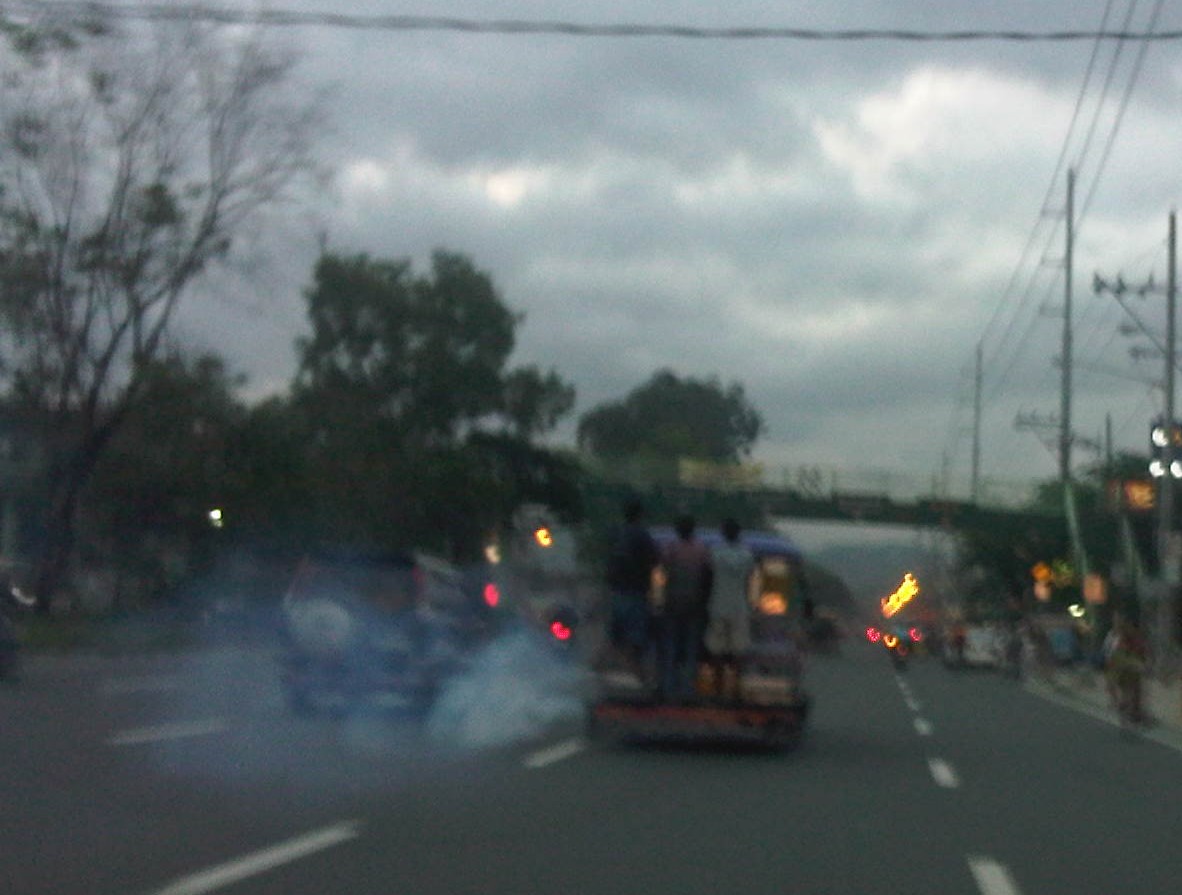
This is a scene we see everyday in our streets despite initiatives or efforts to address problems pertaining to vehicle emissions and safety. The Clean Air Act while enacted more than a decade ago has not been effectively implemented for vehicles. A lot of vehicles are able to register or renew their registrations without really going through a proper emissions test (or smog test for those in the US). “Non-appearance,” the term used for people going through the motions of a test but skipping the measurement itself while getting print-outs stating the vehicle “passed” the test is prevalent throughout the country.
The Land Transportation Office (LTO) has experimented with a lot of schemes to address the problem. These includes the requirement of a photograph showing the actual performance of the emission test on the vehicle. More recent was an initiative where RFID units were supposed to be installed/attached to vehicles and these would be used to ensure that emission tests really were conducted prior to registration. However, with very few Motor Vehicle Inspection Stations (MVIS), the LTO has no choice but to delegate emission testing to private emission testing centers (PETCs). The long standing suspicion, however, is that most of these PETCs collude with vehicle owners and fixers within the LTO to maintain a status quo in “non-appearances” and non-compliance with emission regulations.
Local governments have pitched in with their mobile anti-smoke belching units (ASBUs). In Metro Manila, many cities including Quezon City, Pasig City and Makati City have multiple ASBUs allowing them to set-up several stations along roads in their jurisdictions. These are usually seen along busy roads with policemen assisting them in flagging down vehicles (mostly trucks) observed to be smokebelchers. These vehicles are tested and penalties are imposed on emission regulations violators. The equipment of these ASBUs, however, are only for diesel engines and so are operations of these mobile units are limited in scope from the start. There have also been allegations that some ASBUs have been taking advantage of erring drivers resulting in bribery so as not to be issued violation tickets and penalties.
The bottom line for most cases of emission violations is that most violators are not properly educated about emission regulations including the requirement for them to pass emission tests at any time and not during the registration process only. This is a fact that most drivers or vehicle owners do not understand or choose not to understand, usually because of maintenance cost implications. Nevertheless, we will continue to be in the losing end of the war against air pollution if we cannot properly enforce provisions of the Clean Air Act, particularly for mobile sources that contribute most of the air pollution we experience in this country.
–
More quick wins for cycling
Metro Manila is basically not a cycling-friendly metropolis. Road space is practically devoted to motor vehicles and sidewalks are not wide enough to accommodate a lane for cycling or space that can be shared by pedestrians and cyclists. The latter observation on space is actually arguable considering that in Japan, narrow sidewalks and carriageways are usable for cyclists and people are generally respectful of others’ right-of-way and perhaps right to travel. As such, conflicts are minimized among pedestrian, cyclists and motorists.Such situations can also be achieved in Metro Manila and other Philippine cities as well. Key is to have a consciousness among people of everyone’s right to space. Also, there is a need to actively, persistently promote a safe interaction among road users such as what has been done by cycling advocates like the Firefly Brigade and what the MMDA is now doing with their initiatives promoting NMT.
Searching for some quick wins aside from the example of Marikina (where there are formal bikeways already in place), I’m featuring a few photos taken around Metro Manila that can be regarded as examples where there have been initiatives toward quick wins in promoting cycling. These include a couple of photos in the Malate, Manila area and couple along Marcos Highway in Pasig City.
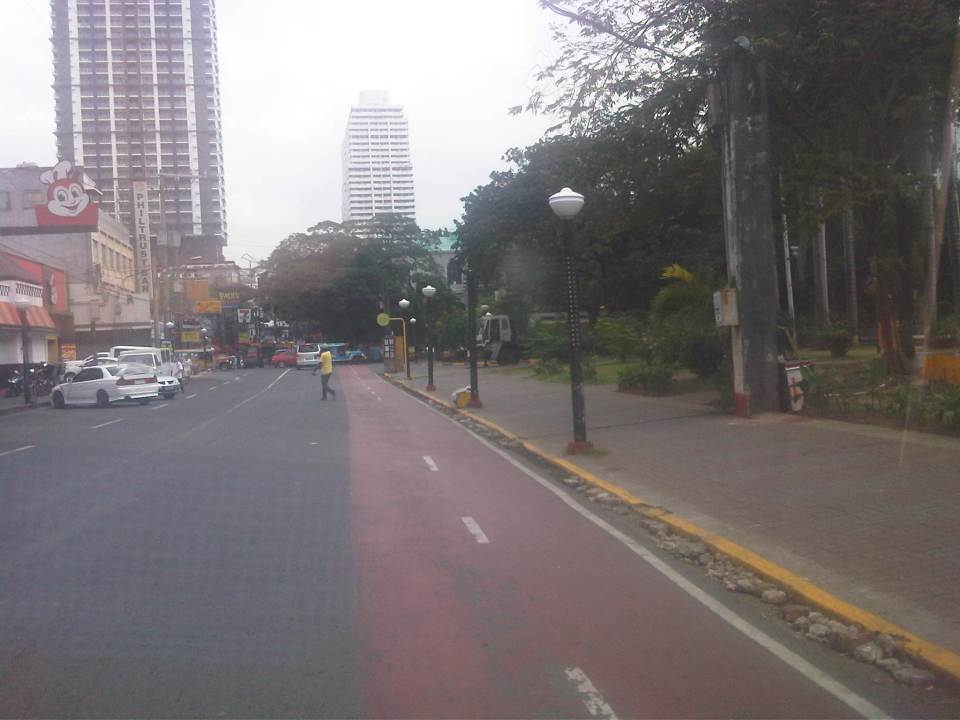 Bikeways in Malate
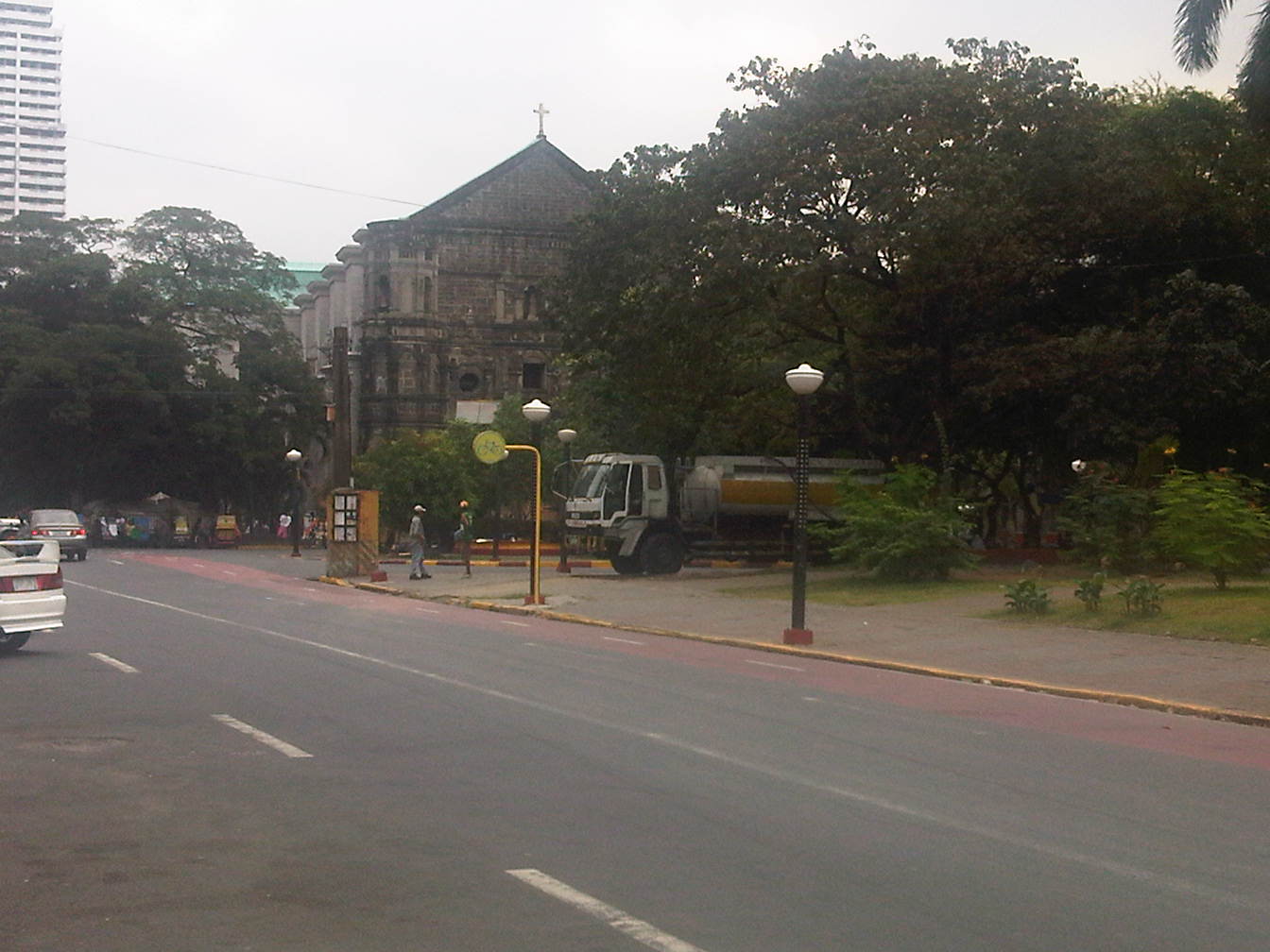 The Malate Church
 Segregated bicycle lane along Marcos Highway
 Cyclists along Katipunan Avenue (C-5)
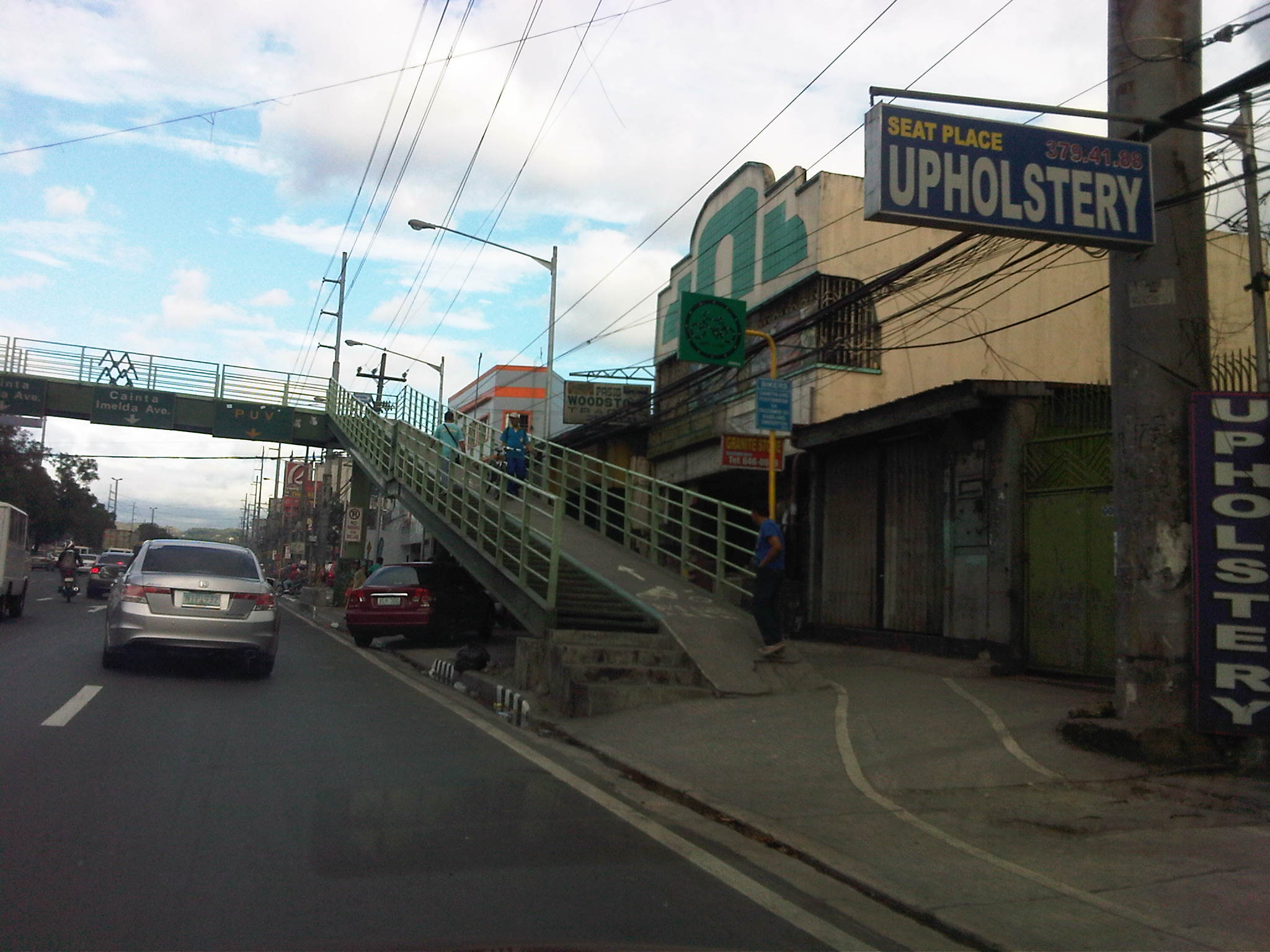 Segregated bikeway and overpass ramp along Marcos Highway
Except for the case of Katipunan, all the photos show space designated for cyclists. But Katipunan should be seen as a corridor that has a high potential for walking and cycling given the nature of the land use between Ateneo and UP Diliman. There are opportunities here to promote suitable non-motorized modes of transport while also working for a reduction in car use associated with the schools in the area. While there are still issues of encroachments (e.g., vehicles parked on the sidewalk, and depriving pedestrians and cyclists of their space) in the case of Marcos Highway, these are enforcement issues that LGUs like Antipolo City should address. I cite Antipolo because Marikina and Pasig are generally for cycling and have often reminded establishments to clear the space for pedestrians and cyclists.
–
Rationalizing public transport in the Philippines
I got a copy of the recent study “Development of a Mega Manila Public Transportation Planning Support System” conducted by UP Diliman’s National Center for Transportation Studies (NCTS) for the Department of Transportation and Communications (DOTC). The main outcome of the study was a planning support system that includes an updated database of bus, jeepney and UV Express routes for Metro Manila and its surrounding areas (collectively called Mega Manila), and a calibrated travel demand model for the region that is supposed to be used by the DOTC and the LTFRB in transport planning including the rationalization of public transport in the region. Among the notable recommendations for addressing public transport issues is the following on the classification of routes according to passenger demand, which I quote from the study:
“…routes and modes may be classified and prioritized as follows:
- Routes with Very High Passenger Demand [>160,000 passengers per day] – shall be served by high capacity modes such as rail-based transit or Bus Rapid Transit(BRT) with passing lanes.
- Routes with High Passenger Demand [100,000 to 160,000 passengers per day] – shall be served by high capacity vehicles such as Bus Rapid Transit System (BRT) without passing lanes;
- Routes with Medium Passenger Demand [10,000 to 100,000 passengers per day] – shall be served by PUVs with 60 or less passengers/seats but not less than 22 passengers (excluding driver) such as buses, CLRVs with more than 22 passengers/seats (including driver), or with 90 passengers/seats in the case of double decker or articulated buses;
- Routes with Low Passenger Demand [not exceeding 10,000 passengers per day] – shall be served by PUVs with less than 22 passengers/seats (including driver) such as jeepneys and other paratransit modes.
Under this principle, high capacity modes would have priority in terms of CPC allocation and transit right of way in a particular route over lower capacity modes with the exception of taxis. The latter, after all, operate as private cars rather than PUVs with fixed routes.
Applications to operate bus and/or minibus service in jeepney routes can be considered, but not the other way around. Similarly, bus service applications can be considered in minibus routes but not otherwise.
Based on the analysis of routes, the establishment of public transportation routes and the corresponding modes of services may be based on the following criteria:
• Passenger demand patterns and characteristics
• Road network configuration
• Corresponding road functions (road hierarchy)
• Traffic capacities and
• Reasonable profits for operation of at most 13% ROI.”
[Source: DOTC (2012) Development of a Mega Manila Public Transportation Planning Support System, Final Report.]
An interesting figure in the report is an illustration of how services can be simplified using buses and rail transport as an example. The following figure shows two maps: one showing the plotted EDSA bus routes (left) and another showing a more consolidated (and rational) route network for buses complementing existing and proposed rail mass transit systems.
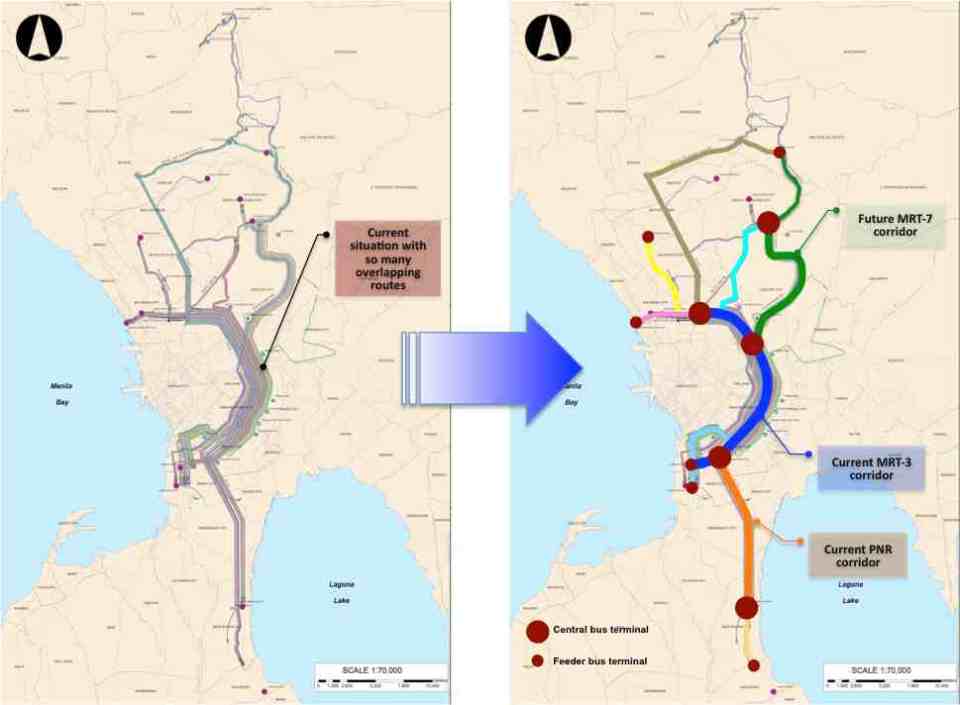 Simplifying bus transport services (source: DOTC, 2012)
What are not included in the figure above are the prospects for Bus Rapid Transit (BRT) systems for Metro Manila. Since the Final Report was submitted in mid 2012, there have been many discussions for BRT in the metropolis and current efforts are now focused on the assessment of a BRT line along Ortigas Avenue. The World Bank is supporting the evaluation of a route between Tikling Junction near the boundary of Antipolo and Taytay (Rizal Province) and Aurora Boulevard. There are also informal talks of a BRT line along Commonwealth Avenue but that would have implications on the proposed MRT-7 along the same corridor. Nevertheless, such mass transit systems have long been required for Metro Manila and their construction have been overdue. A more efficient public transport system will definitely have tremendous impacts on how we commute between our homes, workplaces, schools and other destinations. Long distances can easily be addressed by better transport options and could actually help solve issues pertaining to informal settlements, relocations and housing. That topic, of course, deserves an article devoted to this relationship between transport and housing. Abangan!
–
 Caught (up) in traffic