
Home » Policy (Page 51)
Category Archives: Policy
Traffic congestion in Metro Manila: Is the UVVRP still effective? – Part 1
I was interviewed last week about the traffic congestion generally experienced along major roads in Metro Manila. I was asked whether I thought the Unified Vehicular Volume Reduction Program (UVVRP) more popularly known as the number coding scheme was still effective, and I replied that based on what we are experiencing it is obviously not effective anymore. The reasoning here can be traced from the fact that when the scheme was first formulated and implemented, the main assumption was that if the number of license plates on registered vehicles were equally distributed among the 10 digits (1 to 0), then by restricting 2 digits indicated as the end/last number on a plate we could automatically have a 20% reduction in the number vehicles. This rather simplistic assumption was sound at the time but apparently did not take into consideration that eventually, people owning vehicles will be able to adjust to the scheme one way or another.
One way to adjust when the number coding scheme was implemented was to change traveling times. Everyone knew that the scheme was enforced from 7:00 AM to 7:00 PM (i.e., there was no 10:00 AM to 3:00 PM window at the time) and so people only had to travel from the origins to their destinations before 7:00 AM. Similarly, they would travel back after 7:00 PM, which partly explains why after 7:00 PM there is usually traffic congestion due to “coding” vehicles coming out to travel. In effect, the “coding” vehicle is not absent from the streets that day. Instead, it is only used during the time outside of the “coding” or restricted period.
Another way that was actually a desired impact of the coding scheme was for people to shift to public transport, at least for the day when their vehicle was “coding.” That way, the vehicle is left at home and there is one less vehicle for every person who opted to take public transport. This, however, was not to be and people did not shift to public transport. Perhaps the quality of services available or provided to them were just not acceptable to most people and so they didn’t take public transport and a significant number instead opted for a third way.
That third way to adjust was one that was the least desirable of the consequences of number coding – people who could afford it bought another vehicle. This was actually a result that could have been expected or foreseen given the trends and direct relationship between increases in income associated with economic growth where people would eventually be able to afford to buy a vehicle. Actually, there is no problem with owning a car. The concern is when one uses it and when he opts to travel. Of course, this does not necessarily mean that people started buying new cars outright, making this something like an overnight phenomenon. It happened over several years and involved a cycle that starts when the wealthier people decide to purchase a new vehicle and discards their old ones. These used vehicles become available on the “second hand” market and are purchased by those with smaller budgets. Some of these may have even older vehicles that they will in turn discard, and eventually be owned by other people with even less budget. Note that in this cycle, very few vehicles are actually retired, if at all considering this country has no retirement policy for old vehicles. The end result? More cars on the roads and consequently, more severe and more frequent congestion.
Below is an excerpt from the news report on News TV Channel 11:
National EST Strategy Formal Launch
The National Environmentally Sustainable Transport (EST) Strategy of the Philippines was formally launched yesterday, May 20, 2011. The formal launch event was held at the Columbus Room of the Discovery Suites along ADB Avenue in Ortigas Center, Pasig City. It was graced by the presence of top government officials including Secretary Jose “Ping” P. De Jesus of the Department of Transportation and Communications (DOTC) and Presidential Assistant on Climate Change Elisea “Bebet” Gozun, who was a former Secretary of the Department of Environment and Natural Resources (DENR). The DOTC came full force with Undersecretary for Planning and Policy Ruben Reinoso, Assistant Secretary for Planning George D. Esguerra, Office of Transport Cooperatives Chair Leticia Z. Gorrospe, consultant and former Assistant Secretary Alberto Suansing, and senior technical staff of the DOTC and its line agencies including the Land Transportation Office (LTO) and the Land Transport Franchising and Regulatory Board (LTFRB). The DOTC and the DENR are the national focal agencies for the project and will be expected to lead in the operationalization of the national strategy.
The supporting agencies and organizations were represented by Mr. Choudhury Rudra Mohanty of the United Nations Centre for Regional Development (UNCRD), Ms. Sophie Punte of the Clean Air Initiative for Asian Cities (CAI-Asia), and Mr. Akio Isomata, Minister of the Embassy of Japan to the Philippines, who represented his country’s Ministry of Environment. Development agencies and banks were also present with representatives from the World Bank (WB), the Asian Development Bank (ADB) and the Japan International Cooperation Agency (JICA). Also present were stakeholders led by the Partnership for Clean Air (PCA), Philippines – Global Road Safety Partnership (PGRSP), and the Firefly Brigade, and participants from local government units led by Quezon City and Marikina City. The national collaborating center was well represented by the study team from the National Center for Transportation Studies (NCTS) of the University of the Philippines Diliman.
The formal launch even began with the Opening Remarks from the UNCRD delivered by Mr. Mohanty and was followed by a Message from DOTC Sec. De Jesus. The formal messages were followed by a presentation of the highlights of the national strategy by D. Jose Regin F. Regidor, NCTS Director. Afterwards, a panel discussion with the theme “Operationalization of EST in Support of Sustainable Development in the Philippines.” The discussion was facilitated by Ms. Punte and Mr. Herbert Fabian of CAI-Asia. Panel members included DOTC Asst. Sec. Esguerra, WB Lead Transport Economist Baher El-Hifnawi, ADB GEF focal person Bruce Dunn, and Mactan Cebu International Airport Manager Nigel Paul C. Villarete, who is also a former City Planning Coordinator of Cebu City and who is an advocate of Bus Rapid Transit (BRT) in the Philippines. The formal launch event concluded with congratulatory messages from the Government of Japan and the Presidential Assistant for Climate Change, followed by a photo op for all in attendance that day.
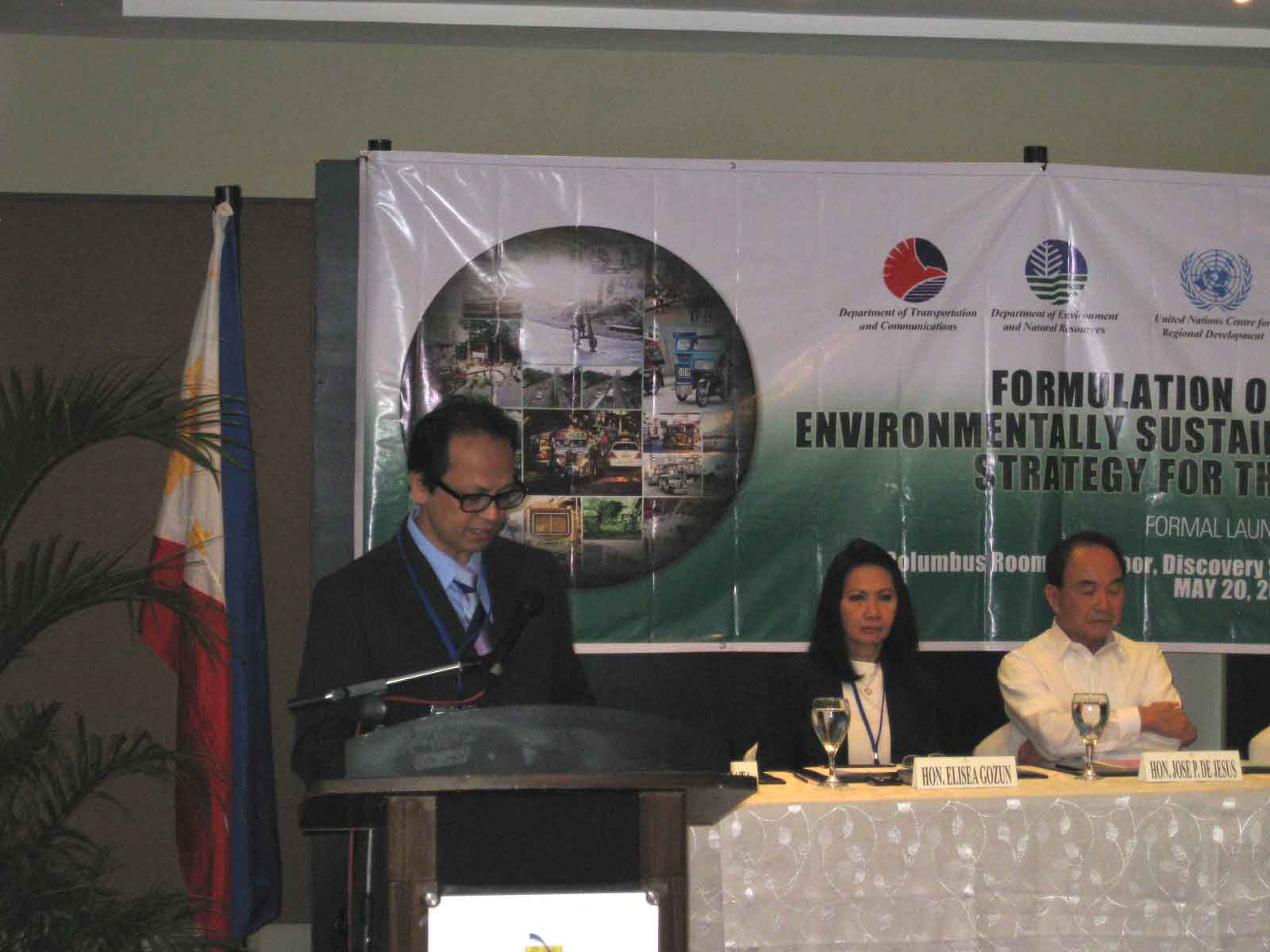 Mr. Mohanty of UNCRD delivering the Opening Remarks
 DOTC Sec. Ping De Jesus delivering a message from the Department
 NCTS Director Regidor presenting the highlights of the national EST strategy
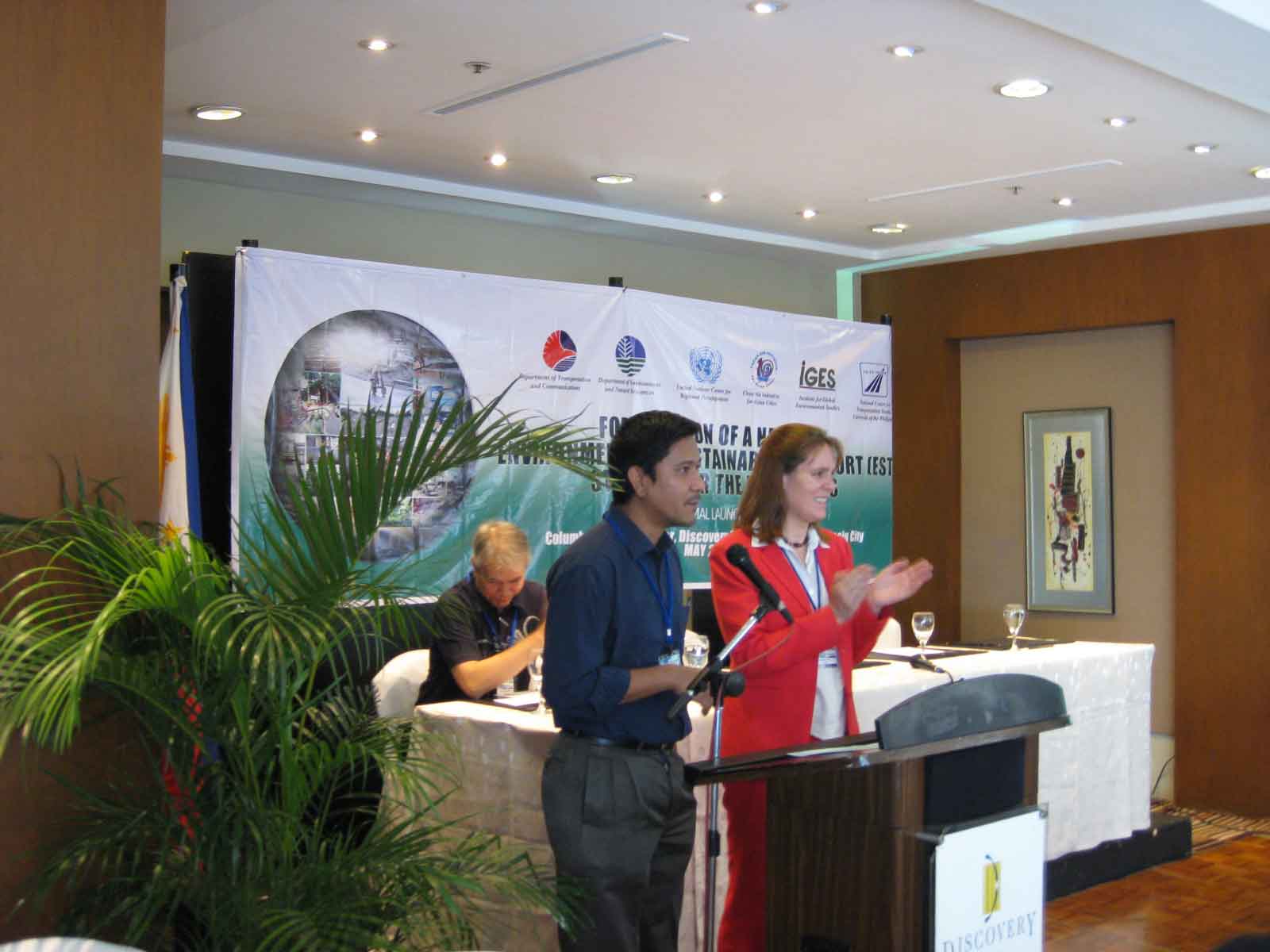 CAI-Asia’s Bert Fabian and Sophie Punte facilitated the panel discussion
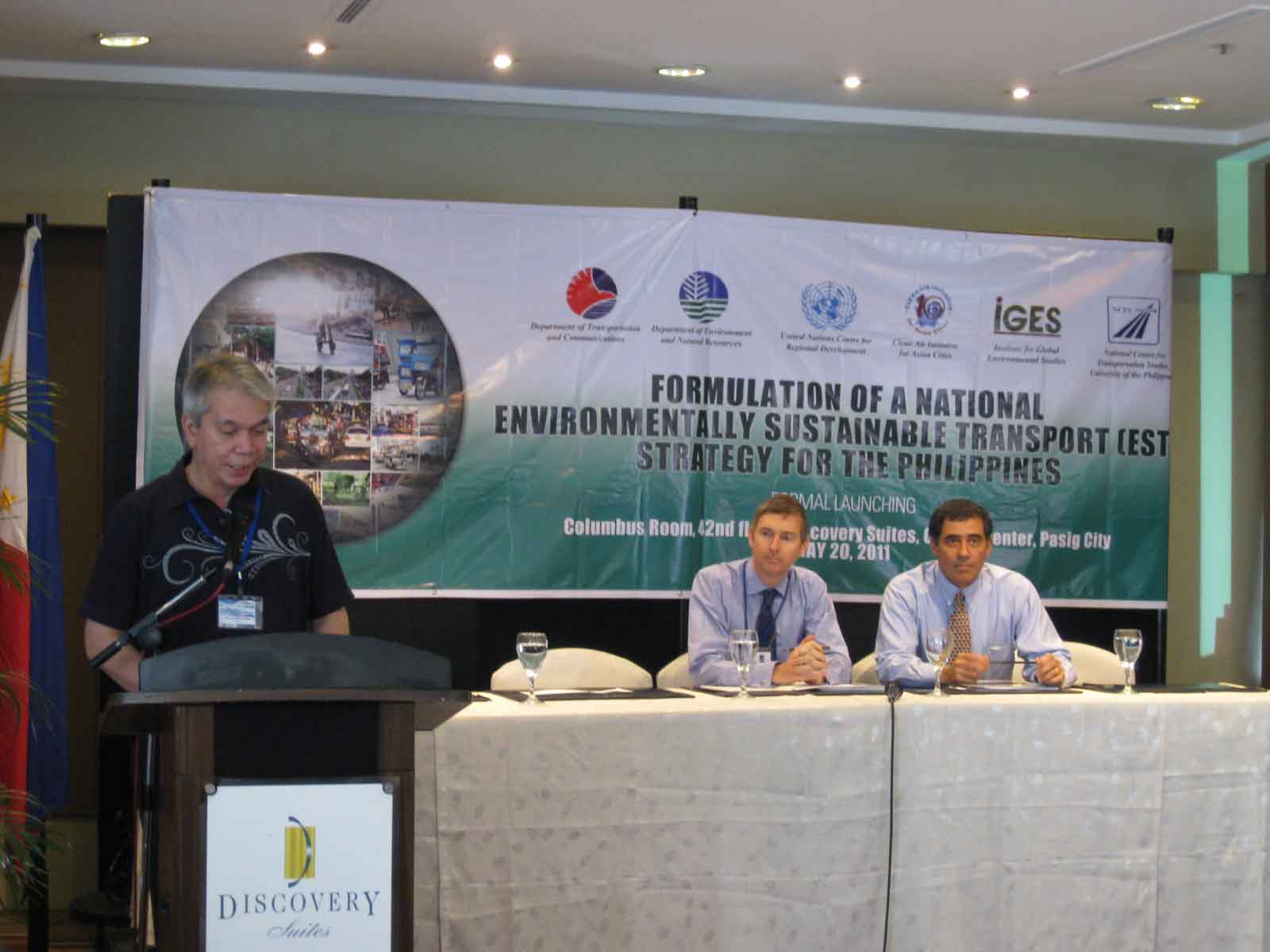 DOTC Asst. Sec. George D. Esguerra responding to the key questions during the panel discussion
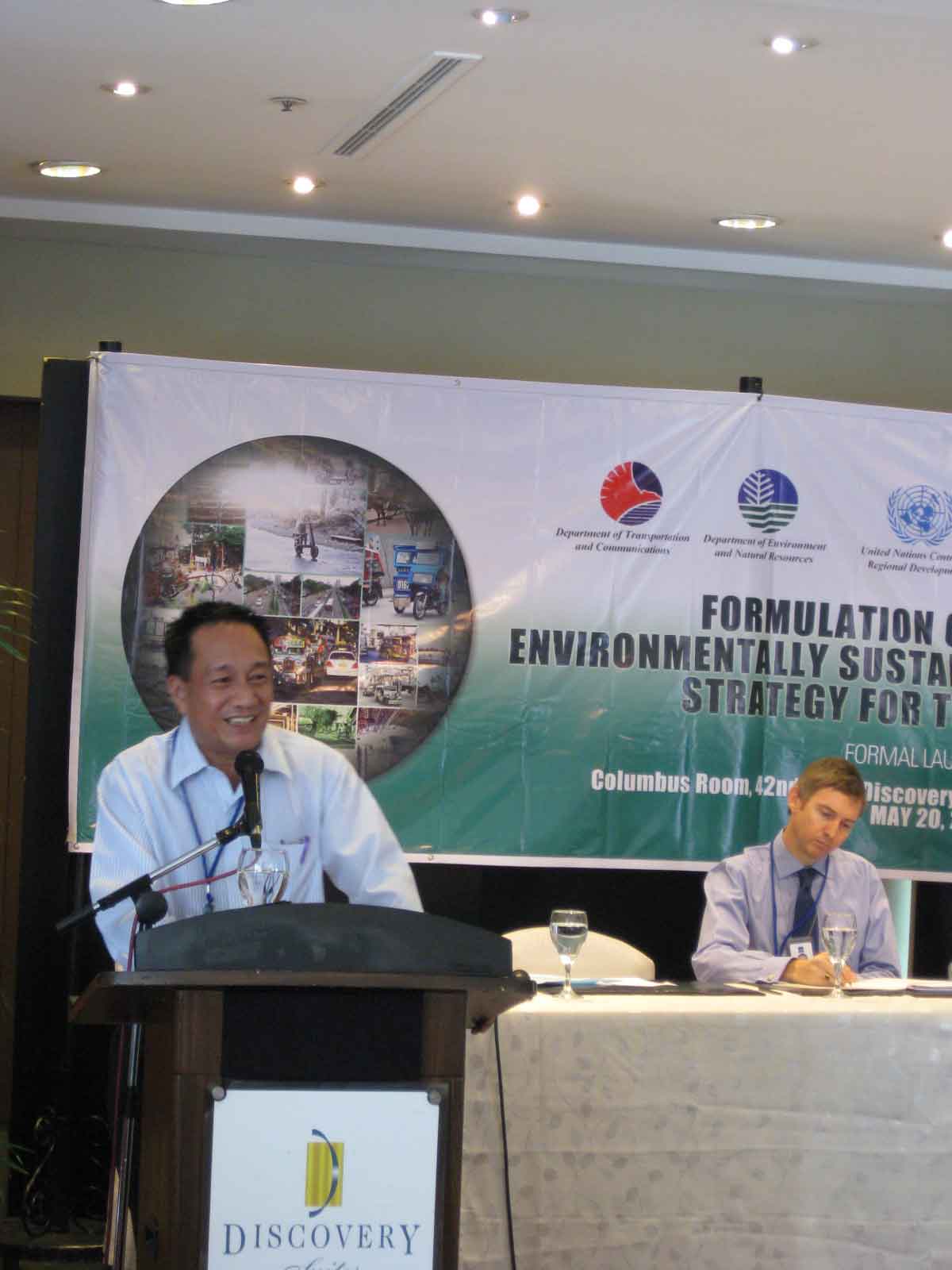 MCIAA’s Nigel Paul Villarete making his comments during the panel discussion
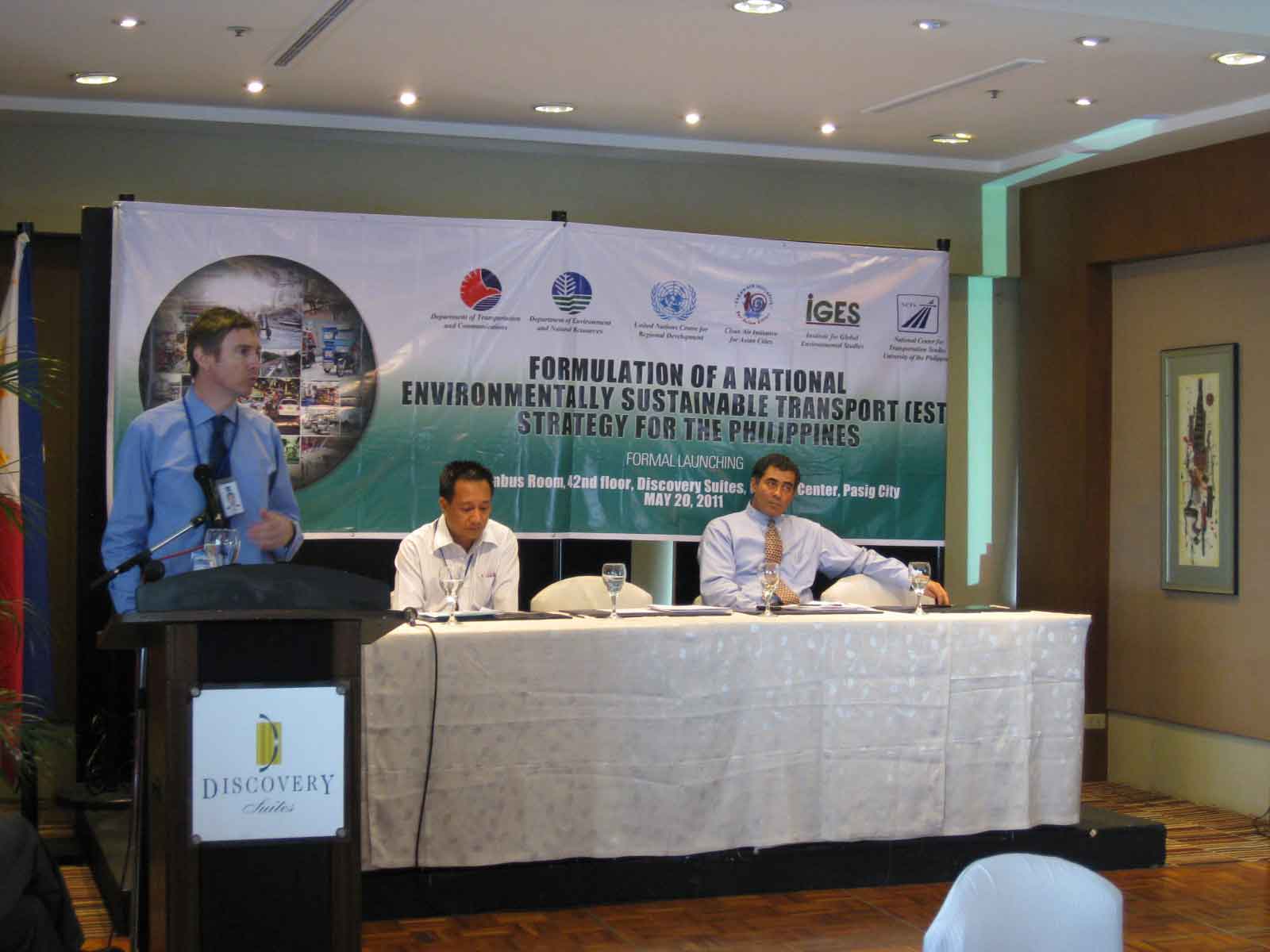 Bruce Dunn explaining about the ADB’s initiatives
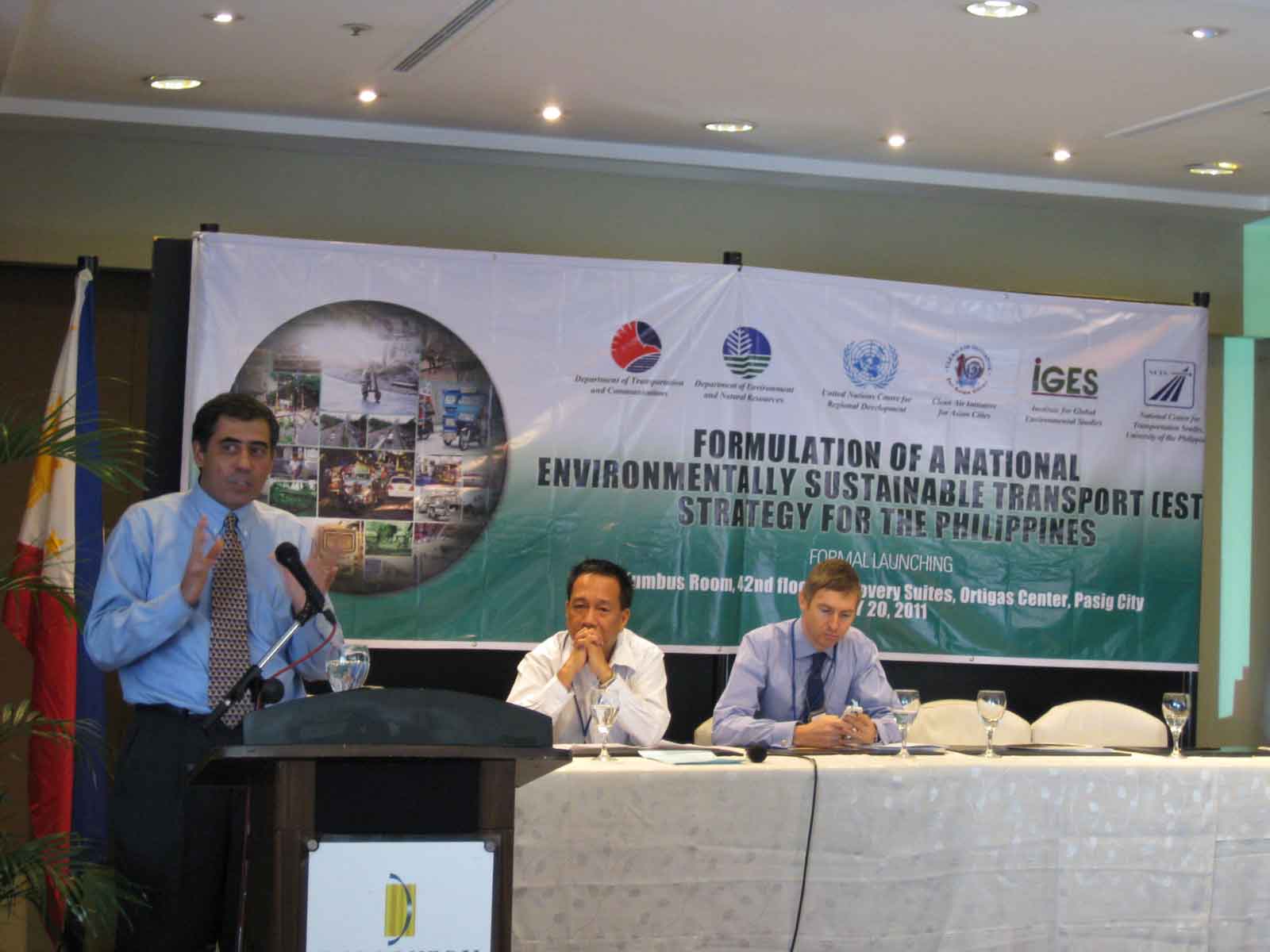 The WB’s Baher El-Hifnawi stressing a point during the panel discussion
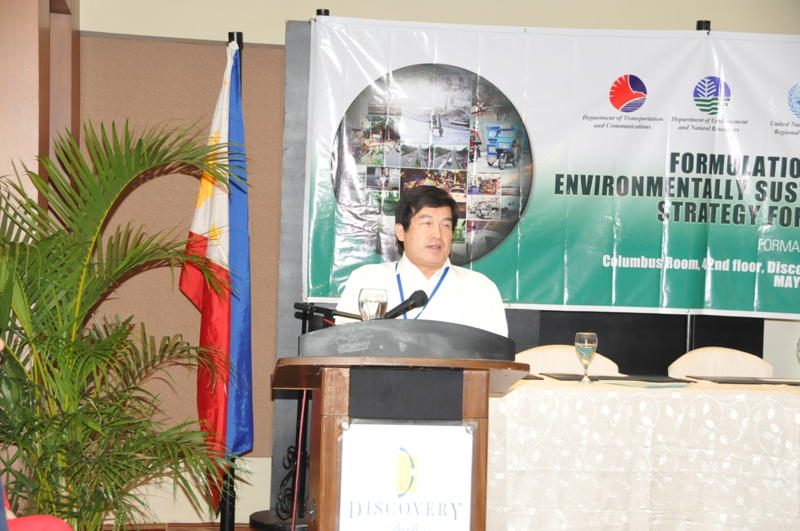 Embassy of Japan Minister Isomata delivering a congratulatory message from the GOJ
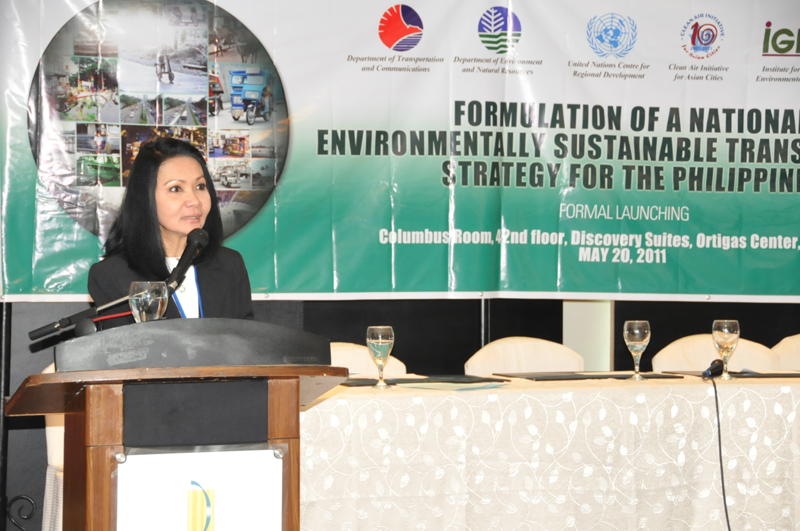 Presidential Asst. on Climate Change Bebet Gozun delivering the concluding message
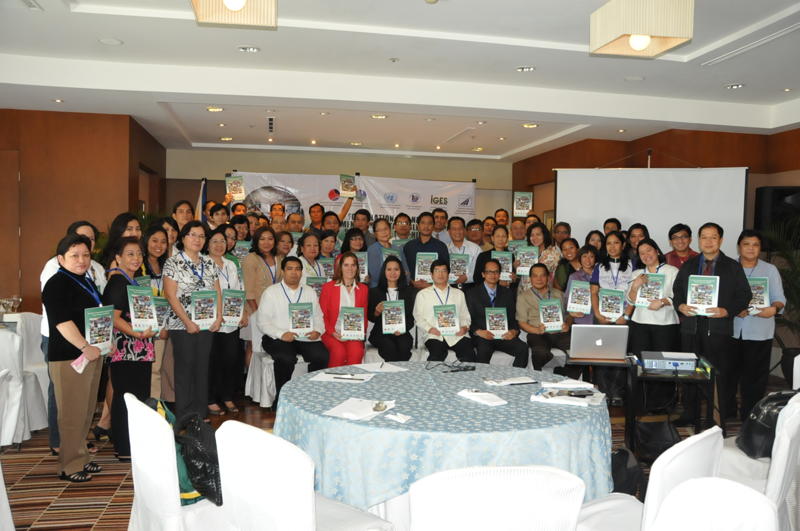 Group photo showing participants to the national EST strategy formal launch
The messages and the panel discussion were one in conveying a challenge to all stakeholders to use the framework provided by the national strategy to come up with action plans and implement these in order to realize sustainable transport in the country. It was also clear from the proceedings of the event that there should be a strong, collaborative effort among national agencies, local government units, NGOs, and development agencies if EST is to be operationalized and for programs and projects to succeed. Significant impacts would then be realized and perhaps lead to the alleviation of transport and traffic problems and their derivatives. It was emphasized that everyone should carefully consider the co-benefits that may be reaped from the implementation of EST.
For more on the national strategy including the reports and other resources, all these are available from the NESTS Web Portal hosted by the NCTS.
Launch of the Decade of Action for Road Safety
The Decade of Action for Road Safety 2011-2020 had a worldwide launch last May 11, 2011. It was a “rolling” launch as different countries held their own events as they greeted May 11 . The Decade of Action seeks to reduce the incidence of road crashes both in terms of crash rates, and fatalities and injuries by half. This would be impossible if people, organizations and institutions will not collaborate or cooperate with one another. The Decade of Action calls for all to combine efforts in addressing what is now considered as a killer disease and among the Top Ten causes of death. If we do nothing, it is expected that road crashes will be ahead of such diseases as tuberculosis and congenital heart disease as a cause of death within a decade or so. It is already the leading cause of death for people aged 15-25 years according to the World Health Organization (WHO).
In the Philippines, the formal launching was hosted by the Asian Development Bank (ADB) at 8:00 AM. The other activities marking the event were held at the Quezon City Memorial Circle later in the afternoon. The morning affair was well attended considering that invitations were limited to selected road safety advocates (it was not open to the public). Among those at the presidential table last Wednesday morning were DOTC Secretary Jose De Jesus, DPWH Secretary Rogelio Singson, Rep. Roger Mercado (who is Chair of the House Committee on Transportation), Philippine Global Road Safety Partnership Chair Augusto Lagman (who is also Automobile Association Philippines President and a newly appointed COMELEC Commissioner), WHO Country Representative Dr. Soe-Nyunt-U, ADB Vice President Bindu Lohani, and ADB Practice Leader for Transport Tyrell Duncan. A placecard with the name of MMDA Chair Francis Tolentino was at the table but he was not able to make it to the event.
The program included remarks and messages from the ADB, the WHO, the Philippine House of Representatives, the Philippine Senate (read by Gus Lagman), and presentations of the ADB Action Plan and revised and improved Philippine Road Safety Action Plan (PRSAP 2011-2020). The final part of the program featured a keynote speech delivered by Sec. Singson where he also read the Presidential Proclamation 159 declaring 2011 as the launching year of the Decade of Action in the Philippines and calling for all to participate and support in efforts to promote road traffic safety. The month of May is already being observed as Safety Month throughout the country.
In his Keynote, Sec. Singson also talked about the DPWH’s commitment to ensure that national highways in the country will be designed for safety and informed the audience about the another launch held the previous week at the DPWH Region IV office in Quezon City. This was a project launch for the International Road Assessment Program (iRAP), which will be assessing about 3,000 kilometers of roads, mostly expressways and national roads in Luzon and Visayas. For security reasons, and particularly because the project involves road trips on-board a vehicle fitted with sophisticated equipment as well as foreign consultants, Mindanao roads were passed up for the current assessment. The assessment will allow for the rating of road sections according to a “star” rating system developed and standardized by iRAP. This would lead to recommendations to address safety issues for motorists, pedestrians and cyclists. Sec. Singson ended his speech with a reiteration of the DPWH’s and the country’s commitment to making roads safe for all.
National EST Strategy Update
The Third Draft (Draft Final Report) of the National Environmentally Sustainable Transport (EST) Strategy (NESTS) formulation study for the Philippines has just been completed. The report is available online via the NESTS Web Portal on the NCTS website. The project is concluding in May 2011 after more than 2 years of developing strategies covering twelve (12) thematic areas as defined by the Aichi Statement of 2005.
The report articulating strategies, indicators and key result activities is written in general terms to allow for flexibility in the further development of strategies and action plans to realize EST. The document is envisioned to be a guide for both national agencies and local government units, as well as for other stakeholders such as non-government organizations (NGOs) and private entities seeking to take on EST as an advocacy.
The National EST Strategy will be formally launched on May 20, 2011.
Clarifying some issues on truck overloading
Following is a Position Paper prepared by the Institute of Civil Engineering and the National Center for Transportation Studies to clarify some issues pertaining to truck overloading. The position paper was presented to the Technical Working Group under the House of Representatives Committee on Transportation, which is handling the issue.
1. Background
This position paper was crafted to clarify some issues pertaining to truck overloading and the implementation of the national law (R.A. 8794) from a technical standpoint, and based on an independent assessment of the concerns put forward recently.
Among the issues raised were on the maximum axle load of 13.5 tons, the computed maximum gross vehicle weight (GVW), and the implications of their enforcement on the transport of goods and the trucking industry.
In the absence of extensive data from measurements on actual roads and bridges in the Philippines, reference is frequently made to tests and studies by the American Association of State Highway and Transportation Officials (AASHTO), which are adopted by many other countries.
2. Maximum axle load
For benchmarking purposes, an 8.2-ton axle is referred to as the equivalent single axle load or ESAL. One (1) ESAL is equivalent to a damage potential of 1.0 based on road tests conducted by AASHTO. Damage potential increases very rapidly as the axle load increases. The maximum axle load of 13.5 tons is equivalent to 60 times the damaging potential of an ESAL or 8.2-ton axle load.
The designation of a 13.5-ton maximum already takes into consideration the practice of overloading. (Note that the original maximum single axle load was 8.0 or 8.2 tons.) The 13.5 tons is based on studies conducted by the DPWH back in the 1990s (Philippine Axle Load Study or PALS), which determined the maximum single axle load that may be allowed without compromising the integrity of structures such as bridges. The study measured the weights of trucks throughout the country to establish typical weights for different types of trucks.
For tandem axles, a different maximum load is prescribed due to established findings by AASHTO that two closely spaced axles have a much greater combined damaging potential than two single axles that are far apart. To keep the damaging potential in check, AASHTO has established that in the case of tandem axles, each axle in the tandem should have a maximum load that is 20% less than the maximum allowed for single axles. Thus, the maximum axle load for tandem axles in the Philippines is 10.8 tons, for a total of 21.6 tons for the tandem.
A similar process of reduction is applied to tridem axles and so on, where the damaging potential changes as a function of the proximity of the axles to each other.
3. Maximum gross vehicle weight
The maximum gross vehicle weight (GVW) computation is partly based on the maximum single axle load. Thus, it is clear that a higher maximum single axle load leads to higher maximum GVW.
The GVW is computed based on the optimum distribution of loads for different types of vehicles. This optimum distribution considers the maximum allowable axle loads as discussed above (AASHTO, 1987) as well as the loading characteristics of bridges, for example as as detailed in the AASHTO LRFD Bridge Design Specifications (2004).
Further, the optimum loads also take into account the stability of the vehicle as it travels along highways and bridges.
The experience in the U.S. where a compromise was reached between government and the private sector concerning maximum GVW is possible because the weights are based on a maximum single axle load of 9.1 tons and the optimum distribution of load for different types of trucks.
4. Consequences of overloaded vehicles
In the previous sections, the impacts of overloading on road infrastructure such as pavements and bridges were taken into consideration. Overloaded vehicles, particularly trucks, can have detrimental effects on highway safety and traffic operations, too.
Highway safety and traffic operations
Overloading would particularly have impacts on the following handling and stability aspects for trucks, affecting safety in highways:
- Rollover threshold
- Braking
- Steering sensitivity
- Low-speed off-tracking
- High-speed off-tracking
Meanwhile, impacts on traffic operations include:
- Speed on upgrades
- Expressway/highway merging, weaving, and lane changing
- Downhill operations
- Intersection operations
- Traction ability
- Longitudinal barriers
The above factors have been analyzed and are the subject of a special report by the Transportation Research Board of the U.S. (TRB, 1990). It has been established, for example, that involvement in fatal road crashes increases as the GVW range increases. Also, it has been established that increased truck weights lead to greater reductions in speed and difficulties in merging, weaving and lane changing, and require greater sight distances for safe stopping.
Modification of trucks
The modification of trucks here pertains to the addition of at least one axle with the objective of increasing the GVW while also decreasing the loads of the axles, in order to comply with maximum axle limits.
Any modifications on trucks, especially the addition of axles, should comply with traffic safety standards including those pertaining to handling and stability. Thus, modified trucks should comply with the specifications of the manufacturer or with established standards, if any, for the modification in question.
Any modifications should also be subject to inspections. Problems will arise if there are no standards. In such cases, the manufacturer or experts in the industry should be consulted. The LTO should defer to the recommendations and disapprove any modifications that are not complying with standards or recommendations by qualified persons especially the manufacturer.
In the absence of comprehensive studies on such modifications, data on road crashes or breakdowns (e.g., flat tires, broken axles) need to be collected in order to establish their frequency, determine how serious these tend to be, and ascertain what the crashes or breakdowns are attributed to. This would require detailed information on crashes and breakdowns over a period of, say, 2 to 5 years for statistical significance.
5. Conclusions and Recommendations
The 13.5 tons designated as the maximum single axle load in the Philippines already incorporated the practice of overloading and thus becomes non-negotiable considering that the DPWH has already taken into consideration the maximum loads that can be withstood by highway structures especially bridges in the country. This maximum single axle load is notably higher than the allowance in the US and most other countries.
The following are recommended for further consideration:
- State the allowable maximum axle loads in terms of single axle, tandem axles, tridem axles and so on, in order not to create confusion on the interpretation of the allowable maximum loads.
- Establish standards, type approval system, and monitoring system for truck modifications, in order to ascertain compliance with safety and stability standards.
- Conduct studies on actual axle loads and GVWs on a more regular basis, say every 5 years, by the DPWH, in order to establish a database from which allowable maximum axle loads and GVWs may be updated in aid of legislation.
- Conduct impact assessments.
The U.S. Department of Transportation (2000) recommendations that may be relevant in the impact assessments include:
- Infrastructure costs – including implications on road pavements, bridges and geometrics
- Safety impacts – including crash/accident rates, public perception, vehicle stability and control, and vehicle comparisons
- Traffic operations – impacts on road capacity and speeds
- Energy and environment – impacts on fuel consumption and vehicle emissions
- Shipper costs – impacts on cost of transporting goods
Impact assessments are essential in order to establish directions for determining the benefits and costs attributed to various scenarios that are currently being discussed at the TWG level. Such benefits and costs will serve as inputs in aid of legislation to improve on the provisions of R.A. 8794 and its Implementing Rules and Regulations.
Design standards particularly for road pavements and bridges in the Philippines are mainly based on AASHTO standards and specifications. The AASHTO standards and specifications are based on AASHTO design vehicles along with their prescribed weight/load distributions. It follows, therefore, that anyone adopting the AASHTO design standards and specifications like the DPWH should also adopt the AASHTO design vehicle specifications. Otherwise, the application of standards and specifications for design will be flawed, resulting in sub-standard infrastructure.
As a general rule, if the Philippines is to adopt a different set of load distributions, maximum axle loads, and gross vehicle weights for its trucks, the country should likewise develop or revise its design standards and specifications to match local experience or setting. This would require comprehensive studies to be led by civil engineering experts in the Philippines and patterned after similar studies conducted elsewhere including the United States.
6. References
AASHTO (1987) Guide for Maximum Dimensions and Weights of Motor Vehicles and for the Operation of Non-Divisible Load Oversize and Overweight Vehicles, Washington, D.C.
AASHTO (2004) LRFD Bridge Design Specifications, 3rd Edition, Washington, D.C.
Department of Transportation, U.S. (2000) Comprehensive Truck Size and Weight Study, Federal Highway Administration, Washington, D.C.
Transportation Research Board (2007) Legal Truck Loads and AASHTO Legal Loads for Posting, NCHRP Report 575, National Cooperative Highway Research Program, Washington, D.C.
York, J. and Maze, T.H. (1996) Applicability of Performance-Based Standards for U.S. Truck Size and Weight Regulations, Semisequicentennial Transportation Conference Proceedings, May 1996, Iowa State University Institute for Transportation.
Odd-Even Now? (Conclusion)
“The papers tackle various traffic schemes implemented in Metro Manila and focuses on the impacts and effectiveness of the UVVRP (Unified Vehicular Volume Reduction Program or number coding) in particular. Unfortunately, at the time the studies did not include evaluation of the Odd-Even scheme although such is mentioned in the first paper as the precursor of the UVVRP. Please note that these schemes are classified among vehicle restraint options that include the truck ban. Color-coding, number coding and the odd-even schemes were originally implemented as short term measures intended to be modified or lifted once the infrastructure projects that were then being implemented (overpasses and underpasses, coordinated and adaptive traffic signals, etc.) were completed. The UVVRP was indeed modified to include a window from 10:00AM – 3:00PM. Meanwhile, some LGUs in the periphery of Metro Manila no longer implement the UVVRP since they do not have much congestion unlike those LGUs where traffic converge along major thoroughfares such as EDSA, C5, C3, Gil Puyat, Espans and Quezon Ave. and Commonwealth. Incidentally, many of these roads are found in Quezon City.
The perceptions on the potential negative impacts of an Odd-Even scheme for EDSA are well founded since vehicles displaced will naturally be diverted to other roads. We have to be careful though not to call such roads simply as side streets or alternate routes since C5 (Katipunan (in QC)-E. Rodriquez (Pasig)-CP Garcia (Makati-Taguig), C3 (Araneta Ave.), Shaw Boulevard, Quezon Avenue and others are major arterials and form part of the circumferential and radial road system of Metro Manila. We are to expect more congestion along these roads that will, in effect, marginalize potential gains along EDSA.
The recommendation therefore, is for the MMDA not to experiment on EDSA from November 2010 to January 2011 but instead undertake in-depth analysis of the implementation of an Odd-Even scheme. Direct experimentation while effective in some cases will without doubt place much of the burden on the people using EDSA and other major roads. It is known that MMDA has acquired the capacity to simulate traffic based on their recent presentations. Perhaps this should be done for the entire stretch of EDSA and include all major roads affected considering that they will bear traffic diverted from EDSA. Such traffic simulation should, however, be properly calibrated and validated to reflect real world conditions. This is because it is also easy to come up with simulations whose results are partial or biased on what the simulator wants to show.”
Truck Ban
Another form of vehicle restraint focuses on freight and logistics vehicles, particularly trucks. These are commonly referred to as large vehicles having at least 6 tires (double-tired rear axle). The prevailing perception is that many if not most of these vehicles are overloaded and impede the flow of traffic due to their slow speeds as well as damage pavements not designed for heavy vehicles.
“The truck ban is a scheme first applied in the late 1970’s to address the perception that freight vehicles are the main culprits in congesting Metro Manila roads. Trucks were prohibited from traveling along major arterials including the primary circumferential and radial road network for most of the day. Exemptions from the daytime ban were applied to roads in the vicinity of the port area where truck traffic was practically inevitable.”
The coverage area of the truck ban included all of Metro Manila’s major circumferential and radial roads – C1 to C5 refer to Metro Manila’s circumferential roads while R1 to R10 refer to the radial roads. These comprise the main arterials of the Metro Manila road network. For reference, C3 refers to Araneta Avenue and related roads, C4 is EDSA, Letre and Samson Roads, and C5 refers to Katipunan, E. Rodriguez and C.P. Garcia Avenues. R1 refers to Roxas Boulevard, R5 is Shaw Boulevard, R6 is Aurora Boulevard, and R7 is España and Quezon Avenues.
“There are the different versions of the truck ban being implemented in Metro Manila. Truck Ban 1 is enforced along EDSA, Metro Manila’s busiest arterial and often its most congested road. Designated as Circumferential Road 4 (C4) it has a 10- to 12-lane carriageway with a mass rapid transit line running along its median. Truck Ban 2 practically covers all other roads except sections of arterial roads that have been designated as truck routes.”
Truck Ban 1 is enforced from 6:00 AM to 9:00 PM everyday except Sundays and Holidays. Meanwhile, Truck Ban 2 is implemented from 6:00 AM to 9:00 AM and 5:00 PM to 9:00 PM everyday except Sundays and Holidays. The second version attempts to minimize trucks during the morning and afternoon/evening peak periods.
“The chronology of the truck ban scheme started in 1978. In recognition of the critical situation of traffic congestion in Metro Manila, the then Metropolitan Manila Authority (MMA) issued Ordinance No. 78-04, which prohibited cargo trucks, with gross vehicular weight (GVW) of more than 4,000 kilogram, from plying along eleven major thoroughfares in Metro Manila during peak traffic hours – from 6:00 A.M. to 9:00 A.M. and from 4:00 P.M. to 8:00 P.M., daily except on Saturdays, Sundays and holidays.
In 1990, the Department of Transportation and Communication (DOTC) issued Memorandum Circulars No. 90-367 and 90-375, changing truck ban hours to: between 7:00 A.M. and 10:00 A.M. on weekdays; 4:00 P.M. to 8:00 P.M. for Monday to Thursday; and from 4:00 P.M. to 9:00 P.M. on Fridays. In response to the appeal of the members and officers of the various truckers’ associations for an alternate route and a 2-hour reduction of truck ban, the MMA issued Ordinance No. 19, Series of 1991, amending MMC Ordinance No. 78-04. This issuance provided alternate routes to the truck ban routes and effected a 2-hour reduction of the truck ban period, thereby prohibiting trucks on the road from 7:00 A.M. to 9:00 A.M. and from 5:00 P.M. to 8:00 P.M.
In 1994 the MMA issued Ordinance No. 5, Series of 1994, further amending Ordinance No. 78-04 as amended by Ordinance No. 19 Series 1991. The Ordinance restricts trucks from traveling or passing along 10 major routes from 6:00 A.M. to 9:00 A.M. and from 5:00 P.M. to 9:00 P.M. daily, except on Saturdays, Sundays and holidays. The Ordinance also provided for an “all-day” truck ban along Metro Manila’s major arterial road, the Epifanio Delos Santos Avenue (EDSA), from 6:00 A.M. to 9:00 P.M. daily, except Saturdays, Sundays and holidays.
In 1996, the MMDA, in its desire to further reduce traffic congestion even on Saturdays, issued Regulation No. 96-008 amending MMA Ordinance No. 94-05, imposing truck ban from Monday to Saturday, except Sunday and holidays. An MMDA Regulation No. 99-002, amended Ordinance No. 5, Series of 1994, wherein the “gross capacity weight” was amended from 4,000 to 4,500 kilograms.”
In the last few years, the MMDA has implemented adjustments to the truck ban scheme in coordination with Metro Manila local government units. Certain truck routes were identified to address the issues raised by the private sector, particularly industries and commercial establishments, regarding the transport and delivery of goods. Other cities in the Philippines have adopted the truck ban in one form or another, often directing trucks to use alternate roads in order to decongest the roads in the central business districts as well as to prevent their early deterioration as a result of truck overloading practices.
[Source of italicized text: Regidor, J.R.F. and Tiglao, N.C.C. (2007) “Alternative Solutions to Traffic Problems: Metro Manila in Retrospect,” Proceedings of the 11th World Conference on Transport Research (WCTR 2007), 24-28 June 2007, University of California Transportation Center, University of California, Berkeley, CA, USA, DVD.]
From Odd-Even to UVVRP… and back
Picking up from where I left off in the last post, I reproduce another part of the paper I co-authored with a good friend who now happens to be the Director of the Center for Policy and Executive Development (CPED) of the National College of Public Administration and Governance (NCPAG) of UP Diliman.
“The UVVRP or the “number coding” scheme, as it is commonly called, is a travel demand management measure that has evolved since its first implementation in 1995. The original intent was to use this measure to address congestion brought about in part by the many road and rail infrastructure projects being implemented throughout Metro Manila in the 1990’s. However, due to its perceived success in decreasing traffic along Metro Manila arterials, the scheme’s implementation was extended and even expanded to include public transport vehicles like buses, jeepneys and taxis.
The original programs involved only the main arterials of Metro Manila including its five circumferential and ten radial roads. These included the three expressways that connected the region to surrounding provinces in the north and south. All these are classified as national roads. The current program includes essentially all roads, with traffic enforcement units of cities and municipalities implementing the scheme for city and municipal roads. The MMDA enforces the scheme along most major roads.
The chronology of the development of UVVRP starts in 1995 when the MMDA Regulation No. 95-001 otherwise known as the “Odd-Even Scheme” was issued. The scheme bans private vehicles with less than three (3) occupants from plying restricted thoroughfares during AM and PM peak periods on particular days. Specifically, low occupancy private vehicles with license plates ending in odd numbers are banned on Tuesdays, Thursdays and Saturdays, while those with license plates ending in even numbers are banned on Mondays, Wednesdays and Fridays. Peak period is defined to be between 7:00 AM to 9:00 AM and 5:00 PM to 7:00 PM. The penalty was set at P 300 per offense. Exempted from this regulation are public transport vehicles, emergency vehicles, police and military vehicles, school buses, diplomatic vehicles and official media vehicles.
In 1996, the MMDA issued Regulation 96-004 otherwise known as the “Modified Odd-Even Scheme” in addition to the existing Odd-Even Scheme. The Modified Odd-Even scheme applied to public utility vehicles such as taxis, buses, public utility jeepneys, etc., which are banned from all streets of Metro Manila on particular days of the week from 9:00 AM to 5:00 PM based on the plate number ending of each vehicle, as follows: 1 and 2 on Mondays, 3 and 4 on Tuesdays, 5 and 6 on Wednesdays, 7 and 8 on Thursdays, 9 and 0 on Fridays. This regulation took effect February 19, 1996 and covered all roads in Metropolitan Manila.
Also, in 1996 the Metro Manila Council, MMDA, adopted and promulgated MMDA Regulation 96-005 entitled the “Unified Vehicular Volume Reduction Program” regulating the operation of certain motor vehicles on all national, city and municipal roads in Metropolitan Manila and repealed MMDA Regulation Nos. 95-001 and 96-004. The UVVRP, commonly referred to as “color-coding”, was adopted from the previous “Odd-Even” scheme which was first implemented in December 1, 1995 by the MMDA together with the Philippine National Police. Under this scheme both public and private vehicles are banned for longer hours (i.e., between 7:00 AM and 7:00 PM). This regulation was first implemented last June 1, 1996 and is still in effect.
In early 2003, the MMDA temporarily suspended the UVVRP. The resulting mayhem, probably due to the abrupt reaction of car-users, forced the MMDA to restore the scheme. A variant of the scheme was later introduced with a window from 10:00 AM to 3:00 PM (i.e., the off-peak period within the day) when banned vehicles may travel. Not all cities and municipalities in Metro Manila, however, adopted the scheme due to its perceived detrimental effects on traffic in their respective areas. The prime central business districts of Makati and Mandaluyong prompted these cities to implement the UVVRP from 7:00 A.M. to 7:00 P.M. This created problems as many roads run through different cities and municipalities, especially the circumferential and radial roads. Thus, it is possible for a motorist to use his vehicle in a city adopting the off-peak period window and get apprehended in another city that enforced the UVVRP during the daytime.”
[Source: Regidor, J.R.F. and Tiglao, N.C.C. (2007) “Alternative Solutions to Traffic Problems: Metro Manila in Retrospect,” Proceedings of the 11th World Conference on Transport Research (WCTR 2007), 24-28 June 2007, University of California Transportation Center, University of California, Berkeley, CA, USA, DVD.]
I am aware of certain stories circulating among those in the transportation and traffic circle(s) claiming an even earlier concept of the Odd-Even scheme. All stories seem to eventually lead to Oscar Orbos who had a brief stint as Secretary of the Department of Transportation and Communications (DOTC) in the Cabinet of Cory Aquino in 1990. He is, of course, credited with the conceptualization and implementation of the “yellow lane” scheme, as lanes alloted for exclusive use of public utility vehicles have come to be known. An earlier version of the Odd-Even scheme has been attributed to him and, perhaps subject to verification, was claimed as among the reasons he was eventually relieved and transferred to another post. I say subject to verification because I do remember but faintly that there was a lot of talk about how to drastically lessen the number of vehicles along Metro Manila roads at the time. I was quite naive to such being a college junior at the time and was quite indifferent to policies that years later I would be evaluating and writing about. Moreover, it has been established that certain stories if allowed to circulate long enough gains the appearance of being true.
At this point, I am already tempted to provide a brief conclusion on the lessons and experience of vehicle restraint policies as implemented in Metro Manila. However, I would have to defer until after another post where the topic will be another vehicle restraint scheme, this time one that is even older than the UVVRP and its various incarnations. It is a scheme that has been subject to probably even more discussions and scrutiny given that it is a scheme other cities have implemented in various forms and had its share of successes and failures. I am talking about the “truck ban.”
Motorcycle lanes
There have been proposals to have exclusive lanes for motorcycles along major roads. The rationale for such proposals is the increasing number of road crashes involving motorcycles. It is assumed that having exclusive lanes will result in a significant decrease in motorcycle involvement in crashes since it is further assumed that with exclusive lanes, there will be fewer interactions among motorcycles and other motor vehicles. There are evidences to support these assumptions.
Anyone observing traffic along our roads can easily see that the biggest reason for the rapidly increasing number of road crashes involving motorcycles is the behavior of motorcyclists. Motorcyclists have the propensity to weave in traffic, heavy or not, often splitting lanes and catching drivers unaware. This behavior frequently results in crashes, most of which involve only damage to property and thus are usually relegated as minor incidents that are not newsworthy. However, crash statistics with both the MMDA (for Metro Manila) and the DPWH (for national roads) indicate that motorcycle crashes with fatalities are alarmingly increasing, and therefore require intervention. Motorcycles’ notoriety are now the among the pet peeves of many drivers, regardless of whether they drive cars, public transport or even trucks.
There are still many riders who do not wear helmets. And not a few bring their gear but choose not to wear these; a habit that has led to jokes about helmets being for elbows or shoulders rather than for heads. This is despite a Helmet Law stipulating penalties that are supposed to discourage non-compliance. The practice significantly increases the chances of having fatalities in crashes, especially considering that there are no restraints for riders or other protective devices for motorcycles like seatbelts and airbags that are already standard features for many other motor vehicles.
There is a bill filed before the Senate, SB 871, which stipulates the delineation of one-meter wide lanes for exclusive use of motorcycles. The bill has a provision directing the DPWH and local government units to designate motorcycle lanes, presumably for both national and local roads. SB 871 proposes fines (i.e., not more than six (6) years of imprisonment or a fine of not less than Five Thousand Pesos (PHP 5,000.00) but not more than Twenty Thousand Pesos (PHP 20,000.00), or both, at the discretion of the court) for motorcyclists using other lanes. There is no mention of penalties for drivers of vehicles encroaching on lanes designated for motorcycles.
While the bill is well meaning, it begs the question of whether its provisions are enforceable once the bill becomes a law given the extent of our national road system. After all, there are many laws that are not effectively enforced but were also designed to instill road discipline among drivers and riders, and to ultimately make roads safer for all users. And motorcycle riders are among those commonly seen as violators of road traffic rules and regulations.
In urban areas, for example, where many roads have multiple lanes, space for motorcycles may be derived from existing lanes but may lead to congestion due to the decrease in road capacities. In some cases, motorcycle lanes of at least one meter may be constructed by taking part of medians (e.g., islands) or shoulders. However, along roads where there are no medians, motorcycle lanes from shoulders may lead to conflicts with public transport vehicles that operate along the outer lanes of the road. Further, it is noticeable that there are no shoulders in most urban roads in the Philippines and there are also many instances where roadside parking is allowed or tolerated. And deriving motorcycle lanes from pedestrian rights of way such as sidewalks is definitely not recommended.
In the case of most national roads including rural highways, there are only 2 lanes and shoulders on either side that are most likely unpaved. Road rights of way are often unsecured, with structures such as houses and shops encroaching within the RROW and leading to shoulders being utilized for parking or other purposes. The DPWH Highway Planning Manual does not stipulate motorcycle lanes or even pedestrian walkways as standard specifications for typical national roads. And it is supposed that a law emanating from bills such as SB 871, should encourage if not mandate a review of road design standards to include provisions for motorcycles, and perhaps more importantly, for pedestrians and non-motorized transport (NMT) as well.
Other countries such as Malaysia have already incorporated in their road design manuals lanes that are for the exclusive use of motorcycles, bicycles and other NMTs. These have reportedly improved safety so much that their governments approved the budgets for implementing the provisions for roads where there is significant motorcycle traffic. Perhaps the Malaysian example is proof of the concept that having motorcycle lanes will indeed improve road safety. It should only be emphasized that road design improvements can go only so far if a key element, enforcement, is lax or nonexistent. Without this key element, motorcycle lanes in this country will just be destined for the ningas cogon hall of shame.
–
For more information about motorcycle lanes and road safety, one may refer to the website of the International Road Assessment Program. They also have a Flickr account showing their activities in Southeast Asia.
Wang wang!
In the inaugural speech of Philippine President Noynoy Aquino, I and my colleagues were pleasantly surprised hearing him start with an item considered to be a pet peeve among multitudes of Filipinos – the use of sirens and blinkers. In fact, the reference to sirens as “wang-wang” puts it in the proper context where use is actually abuse. The “wang-wang” has been a symbol of how many of our government officials as well as those who perceive themselves as entitled have abused our traffic systems to get their way at the expense of others that they seem to believe have much lesser values of time compared to theirs.
Many who have been forced to surrender their sirens and blinkers state various reasons for doing so, including being professionals who needed to be in certain places at certain times. Among these are medical doctors and lawyers who have always claimed to be in a hurry, in the process of addressing emergencies of both the real and the imagined kind. While there are other opposing views on this, I firmly believe that the same people totally missed the point regarding the new president’s stand against “wang-wang” and his current personal crusade against beating the red light, counter-flowing, and the use of sirens by his own presidential convoy.
The statement should be pretty clear that only emergency vehicles may use sirens especially because they are responding to matters of life and death. These include ambulances, fire trucks and official police vehicles that should have distinct sounds according to international standards. The distinction is important for people to be able to recognize what type of vehicle is attempting to come through. But more importantly, the statement is also to show everyone, whatever his place in society may be, that the days of abuse are past and that this administration will do its part to bring back decency in our roads starting with the drive against “wang-wangs.” It is also actually an excellent case for leading by example, and one that hopefully can be sustained by P-Noy and adopted by his officials. For our part, we should make our own contributions and practice more discipline when we drive, commute or even walk along the street. It is not an exercise in futility but rather an exercise in humility and productivity – a demonstration of our commitment to change and help this country become great again.
 Caught (up) in traffic