
Home » Public Transport
Category Archives: Public Transport
Impacts of the energy crisis on tourism – the transport perspective
The Holy Week holidays practically begin this weekend with an expected exodus of people from Metro Manila and its environs (NCR Plus or Mega Manila depending on which term you prefer). Many people take a vacation during the Holy Week. Most probably go for a homecoming. Taking advantage of the holidays to visit their hometowns and have reunions. We did so for most of Holy Weeks past and in my father’s hometown, they take advantage of the homecomings including those of balikbayans from overseas to have a general homecoming at the town’s High School.
Many others in the past decade have their vacations during the Holy Week. The past years saw especially after the pandemic saw people travel abroad to catch spring time in temperate countries like Japan and Korea, even in Europe. Others prefer to travel in the region as Southeast Asian countries provide interesting destinations including the usual Bangkok, Hanoi, Ho Chi Minh, Kuala Lumpur, Jakarta and Singapore. Of course, you can also do local with people flocking to destinations where the beaches are like Bohol, Cebu and Palawan, just to mention some of the choices.
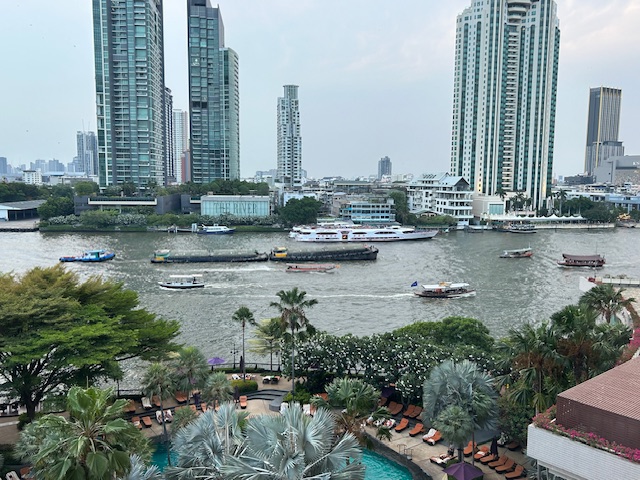 The view from the Shang in Bangkok – we spent the Holy Week there in 2024
Tourism will always involve travel and transportation. The industry will suffer much with the ongoing crisis as fuel prices will eat up a lot of travel budgets as fuel-related expenses will make travel prohibitive to many. On the supply side alone, airlines and maritime companies might have to cancel trips if they cannot sustain fuel supplies. Thus, planes will have to be grounded and ferries/vessels will have to reduce trips to conserve on fuels. That means people cannot travel to tourist destinations and will have to cancel and get refunds (if they can’t reschedule) from their accommodations (hotels, resorts). Less tourists means other businesses suffer, too, including restaurants, cafes and eateries, souvenir shops, and others depended on tourists for incomes. Damay-damay na, as they say.
Let’s hope the crisis will soon be over and this Holy Week, perhaps we can have some reflections and prayers while we take our health and re-energizing breaks.
–
How about a pop-up BRT along Commonwealth Avenue?
I posted this map on social media showing a possible route for a pop-up BRT (Bus Rapid Transit) along Commonwealth Avenue. This was inspired by the reports this week of the horrendous experience of commuters along this corridor due to the current fuel crisis. It seems that a lot of people have reduced their use of private vehicles in favor of what they thought was adequate public transportation only to find out how lacking the supply was.
While this route can be extended (all the way to Fairview via Regalado, for example), I think the one in the map below would be able to capture a majority of the commuters along the corridor with the end at Dona Carmen being a drop-off/pick-up area for those residing to the north. Quezon City Hall and the Elliptical Road is a no-brainer since the Quezon City Bus service terminates here and people can transfer to one of the other lines that will allow them to travel elsewhere covered by the bus network. Quezon City or DOTr can lease buses and come up with a service contracting scheme to sustain operations. The idea is to first run this pop-up BRT while the crisis in Iran is ongoing. Data collection and assessments should coincide with this to refine the service and perhaps, make recommendations for sustaining this service at least until MRT 7 gets online.
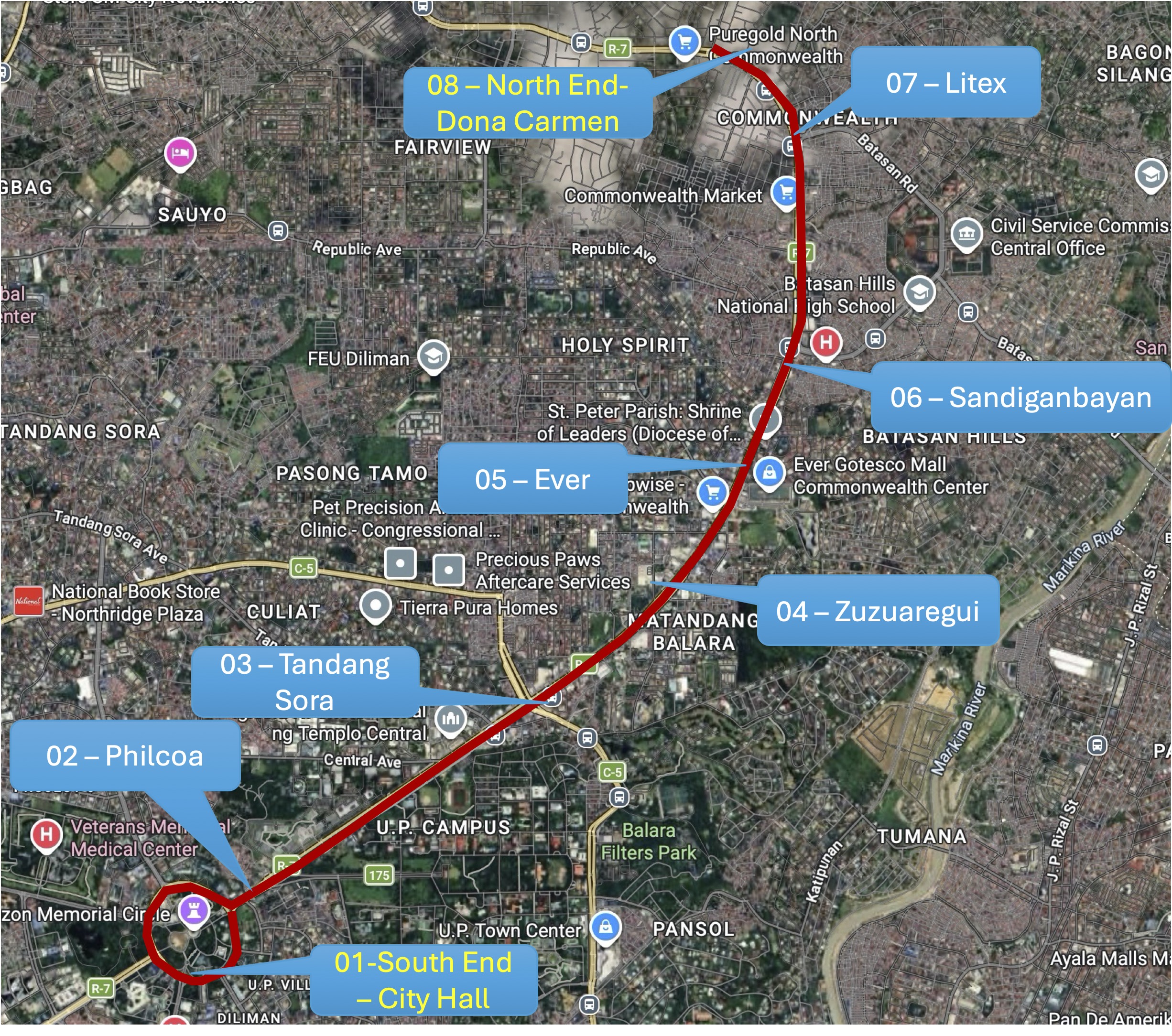
The idea of a pop-up BRT is not really new as there were “proof of concept” runs along Commonwealth and at BGC many years ago. Unfortunately, the BRTs never came to be in both cases; both now missed opportunities as we have come to realize. It’s still a long way before the MRT 7 is up and running. The recent announcement from the proponent that they will probably start operations next year is perceived by many as too late. Government, both national and local, need to be decisive if they want people to be able to go to their workplaces and schools. Maybe this is another opportunity for the more than 70% public transport users to be provided with the services they need while taking advantage of road space being freed up from car dominance?
–
Some thoughts and reflections on transport and the Middle East crisis
Much has been said and written about the ongoing crisis brought about by the US and Israel attacking Iran and the latter retaliating. The prices of fuel have risen rapidly over the past weeks. Consequently, the prices of commodities have also risen. The Philippines is still very much dependent of fossil fuels for transportation with most travel using road-based transport. Even public transportation relies heavily on fossil fuels as buses and jeepneys are mostly using diesel engines. Even paratransit such as trikes and motorcycle taxis use gasoline.
While the energy mix in the country has become more diversified with renewables now having a substantial share, majority of power is produces using coal and natural gas. And so e-powered vehicles are also ultimately dependent on these fuels. Could we have had better transport that could have made our cities more resilient in light of the conflict in the Middle East? Probably, and if we followed and implemented the plans for mass transit systems that were laid out decades ago. Of course, this is already moot and academic given the current situation. The counterfactuals though point to better commuting conditions if projects have not been delayed or shelved.
A colleague and I were just discussing about how MRT 7 could have contributed to the reduction of car use along the Commonwealth Avenue corridor if it was completed according to the original schedule. That was 2019. Even with delays including the impact of the pandemic, it could have been completed a few years ago. If it was operational in 2023, commuters could have already shifted to rail from both private and public road-based transport modes. There was also actually a proposal for a Bus Rapid Transit (BRT) line along Commonwealth about 2 decades ago. That could have been constructed and operational ahead of Line 7 and could have already disrupted commuting preferences along the corridor if it were operated as a true BRT.
There’s just a lot of opportunities already missed that could have alleviated the fuel crisis we have now. Maybe we are really heading towards a bigger crisis when all these price increases lead to a more sweeping increase in the prices of commodities? We hope it doesn’t come to that but we seem to be helpless in this situation where we are caught unprepared for a war we are have nothing to do with.
–
At long last, the Cebu BRT is finally running
After more than two decades, the Cebu Bus Rapid Transit (BRT) is finally operational (partly). I think I wrote about the BRT numerous times here. I was involved in the social marketing of the BRT to major cities almost 2 decades ago. At that time, only Cebu City was receptive to the idea as Metro Manila was more engrossed with railway projects that also took much gestation time. I was also involved in the pre-FS for Metro Manila BRT’s so I can say this has a lot of history and political economy about it.
Here is a report from Rappler via their official Facebook page:
https://www.facebook.com/share/v/1J3Fpmar16/
I already look forward to the next trip to Cebu to have a first hand experience of the BRT there. I wanted to share photos from the internet here but perhaps I can wait til I have my own photos to share.
–
On the rideshare competition among 4 and 2-wheeler companies.
Grab is the current market leader for rideshare or TNVS involving cars or 4-wheeled vehicles. Others like Joyride and Angkas went the way of legalizing motorcycle taxis. Grab applied for the same as they were already operating motorcycles for food and deliveries; competing with another company, Lalamove, which focuses on deliveries. Disallowed by the LTFRB to deploy MC taxis under their brand, they acquired Move It to circumvent the decision.
Meanwhile, as Grab continued their dominance of the rideshare market, the other players decided to offer some competition. I say ‘some’ because the perception is that they have not really gained much vs. Grab. You don’t see many Joyride taxis though a couple of companies appear to be making some impact – In Drive and Green GSM. The latter though is a taxi company that looks to attract people back to the conventional but app-enhanced taxi services
Last week, we saw this car with a familiar brand on its side. Sporting the colors and logo of MC taxi leader Angkas, they coined a brand for their cars – Angcars.
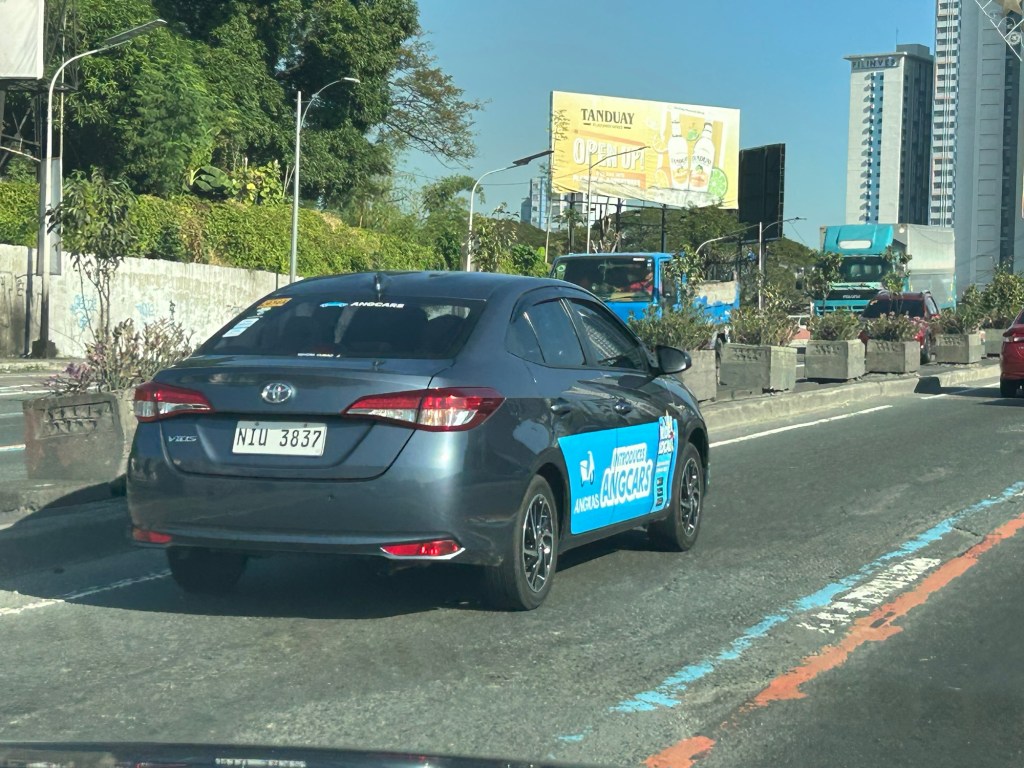
Whether people will take to these competitors for 4 or 2-wheelers so there is not an imbalance of market shares depends on public perception based on the cost and convenience, among other factors, of availing the services of these companies. Conditions may also vary depending on the cities. That is, situations may be different elsewhere like Cebu, Davao or Iloilo.
These modes, however, are still cars and motorcycles, and are regarded as private vehicles in terms of operational characteristics. Even if they are also public utility vehicles (they are for hire with fare rates), these represent a segment of private mode share. There is really a need to improve and improve and expand public transport services in order to retain or increase transit mode shares. Unfortunately, it takes a lot of time and resources to build railways so road-based public transport is still the main option where improvements need to be realized.
–
Green GSM spinoff?
Yesterday, we saw what looked like a Green GSM taxi in Antipolo. The color scheme was certainly the same and the vehicle was of the same Vietnam-made model (Vinfast).
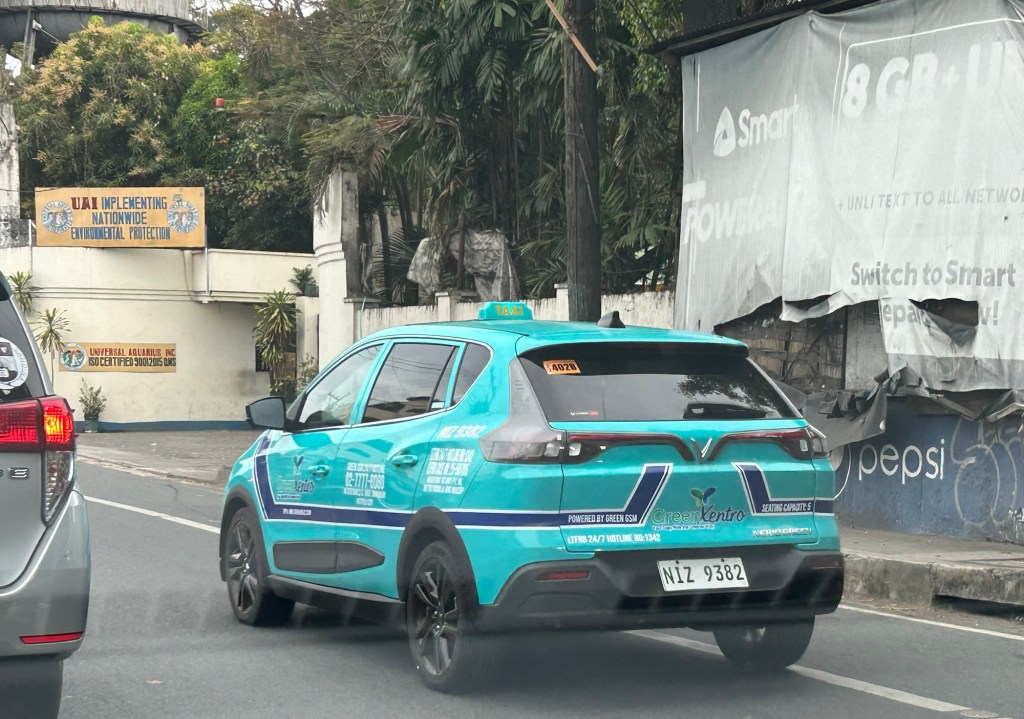
The operator is Green Xentro. Xentro refers to the company operating a few small malls in Rizal and Marikina.
It’s probably related to Green GSM, which might be the mother company. This brings the taxi service closer to Rizal towns. I also have seen a few maintenance shops in Antipolo having a sign indicating they can service Vinfast vehicles. This is welcome if it means we ‘ll see more of these taxis around Rizal towns.
–
Good Transit Is Simple: Lessons in Good Route Design
Here is a quick share of an article on transit route design:
Source: Good Transit Is Simple: Lessons in Good Route Design
I will not preempt the reader (you) on the content but there’s a lot of tips for stop spacing and route design based on the author’s experience in Chicago as transit planner.
–
More buses please
The modernization and rationalization initiatives of the government seem to have slowed down. While there are many modern or modernized jitneys on the road, these are mostly in the big cities including Metro Manila and comprise a small percentage of the total jeepneys currently operating around the country.
Buses have been in the mix of these initiatives especially after the pandemic when jeepney operations were suspended and buses were the first to be activated. In the case of Antipolo City in Rizal, bus services between the city and Cubao in Quezon City were introduced. We even thought that they will replace the jeepneys that dominated the routes. Now they are competitors along with Line 2.
There was a real opportunity there for rationalization that involved upgrading to a higher capacity vehicle but that didn’t materialize. In most cases, the so-called modern jeepneys (many really are mini buses) just added to the conventional jeepneys. Were the number of vehicles reduced while increasing passengers capacities? No.
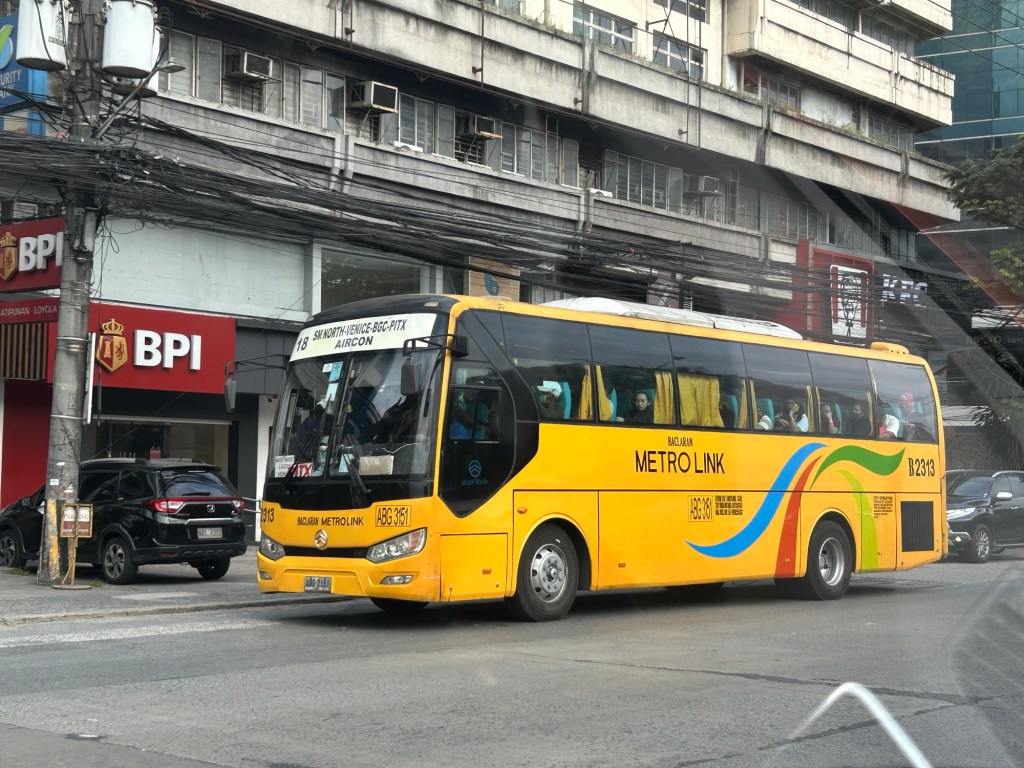
“We need more buses!” is an understatement. We really need more buses but to replace lower capacity vehicles on the road. The inconvenient truth is that we need to phase out jeepneys along certain routes and replace them with buses. Jeepneys may still operate but along shorter routes and would serve as feeder/collector with respect to the main lines operated by rail and buses.
–
Ortigas Avenue Extension counterflow
One traffic scheme that has been constant along Ortigas Avenue Extension is the counterflow scheme. The scheme is applied in the mornings for westbound (outbound from Rizal) traffic. It has been implemented for as long as I can remember; perhaps since the early 1980s. One variant before was a form of “Buhos” where eastbound traffic is stopped for several minutes at certain intervals (6:30am, 7:00am, 7:30am and so on), and westbound traffic is allowed to take all the available lanes during the periods.
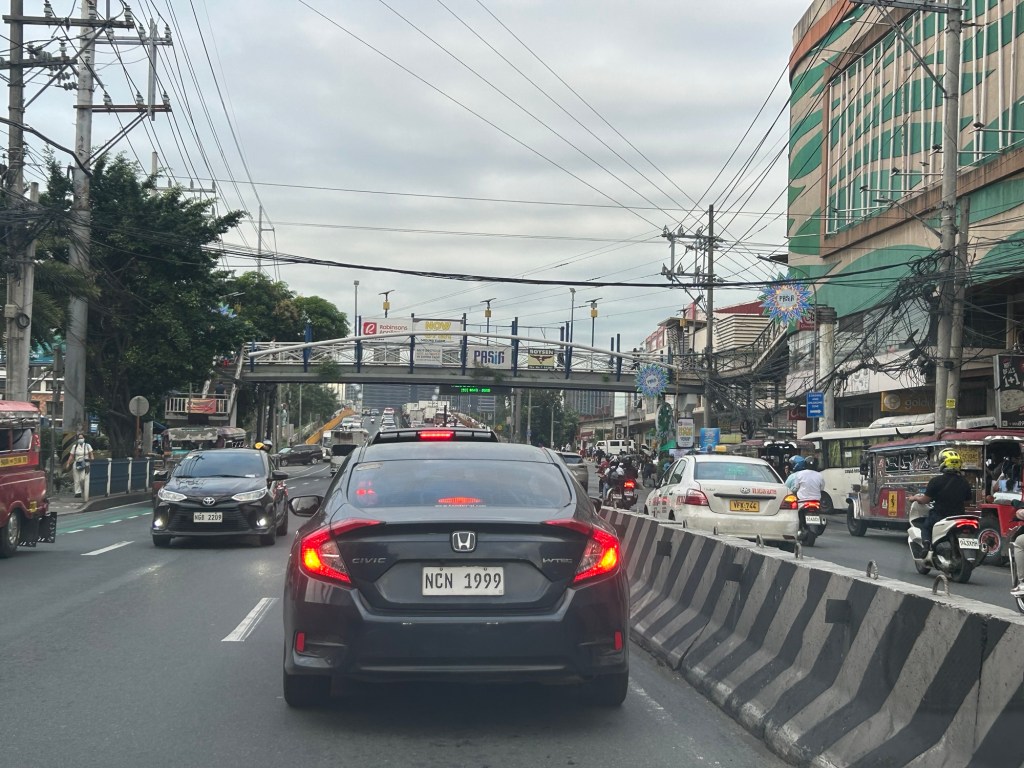
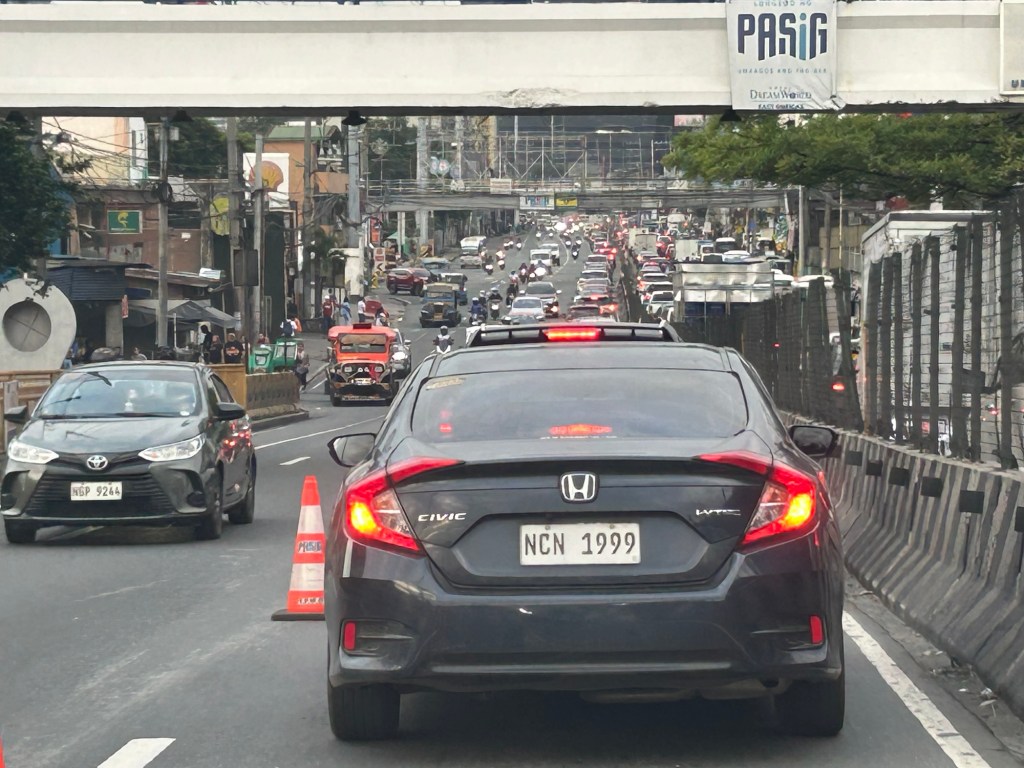
Considering this scheme has been implemented for more than 4 decades now, there must be some measure of effectiveness there. It is an example where the directional distribution during the peak hours allow for such scheme to be implemented. Note that the scheme pre dates number coding and similar counterflow schemes elsewhere in other major roads in Metro Manila (correct me if I’m wrong).
The scheme though only shows that there should have been a better transport system put in place along the corridor, which has had a steady growth in travel demand. There should have already been a transit line along this corridor a long time ago. What happened? Was it not in the government’s radar? There was a line proposed and shown in various master plans before.
–
On the chronic congestion along Ortigas Avenue Extension
I previously wrote about the counterflow scheme along Ortigas Avenue Extension. While this is usually implemented during the mornings. A similar scheme is not applied in the afternoons or evenings. Apparently, the directional distribution in the afternoons and evenings is not suitable for a counterflow scheme. The photos below show the typical eastbound traffic as seen from the Manggahan Floodway bridge.
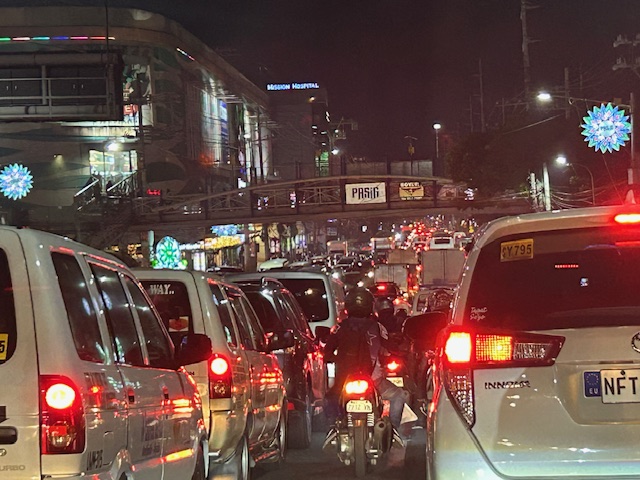 Typical weekday evening traffic along Ortigas Avenue Extension
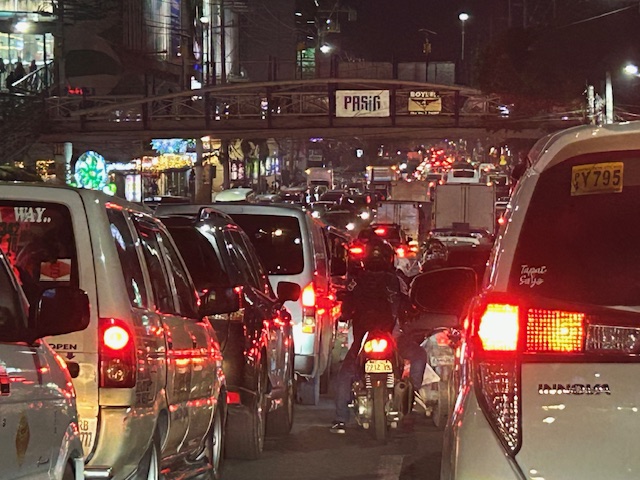 The photos show that the traffic along the opposing direction (westbound) is as heavy as the eastbound traffic. This means a counterflow scheme similar to that in the mornings cannot be implemented during this period.
I have mentioned in the previous article that the corridor already required a mass transit system since the 1980s. Despite the operations of several bus companies over the past decades, these have not been enough (together with jeepneys and vans) to serve the demand along the corridor. It is not uncommon to find so many people stranded along the corridor and waiting to get a ride even during the early mornings. While Lines 2, 3 and 7 were being constructed, people in Rizal who have long endured the traffic along Ortigas Avenue Extension could only wonder why a transit system has not been provided for them. Will the proposed Line 4 be finally constructed? When will it be completed? What could be the traffic impacts of construction considering the limited space available for the construction? Should commuters prepare for more miserable travel once construction is underway?
–
 Caught (up) in traffic