
Home » Railways (Page 17)
Category Archives: Railways
PNR Field Trip in 2003 – Part 1
I found some old photos from a field trip at the PNR we organized for our students back in 2003. I remember we had a big delegation composed of senior undergraduate students of Civil Engineering, senior Tourism students, and graduate students taking up MS Civil Engineering and MA Transportation Planning. The PNR was very kind to accommodate us and explain to the students how the company was making ends meet at the time. Many of us faculty and technical staff who were still fresh out of our stints in Japan were saddened by the state of the PNR and could only utter words of support and encouragement to its management. We are now quite happy that there has been significant progress in the past few years for both the commuter line and Main Line South.
Following are a few photos from that 2003 field trip:
 Students gathered around an old bogey under maintenance at the PNR facilities. The two people on the right in the photo are Dr. Dayo Montalbo of the School of Urban and Regional Planning and Dr. Val Teodoro who was senior technical staff with the NCTS at the time.
 Taking a closer look at a bogey with the detached cars in the background. The state of PNR rolling stock at the time was a depressing sight considering what was once a proud company.
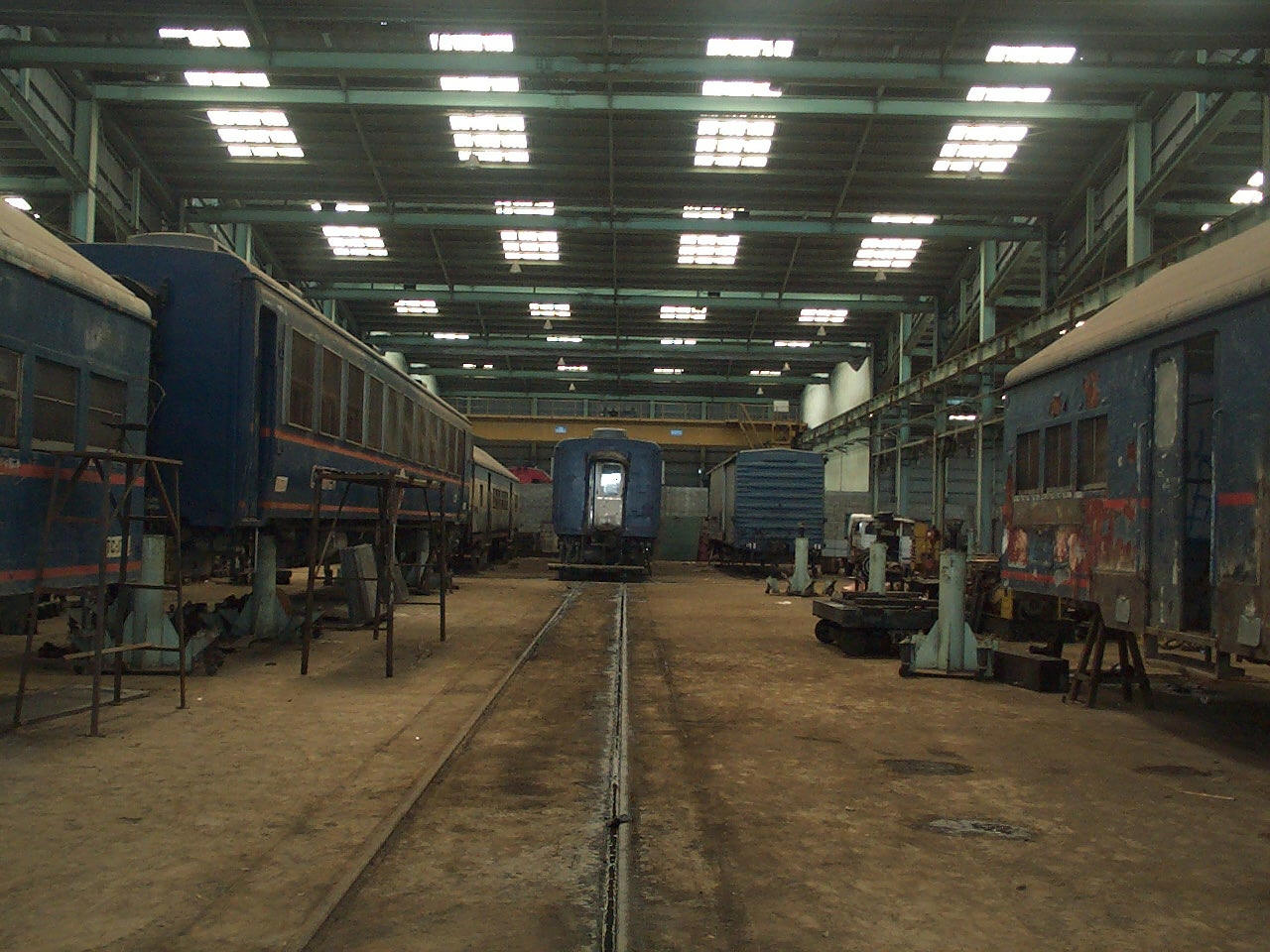 A look at the maintenance facilities at PNR Caloocan. This is a far cry from the modern facilities we later saw at the LRT 2 Depot in Santolan, which was only recently opened at the time.
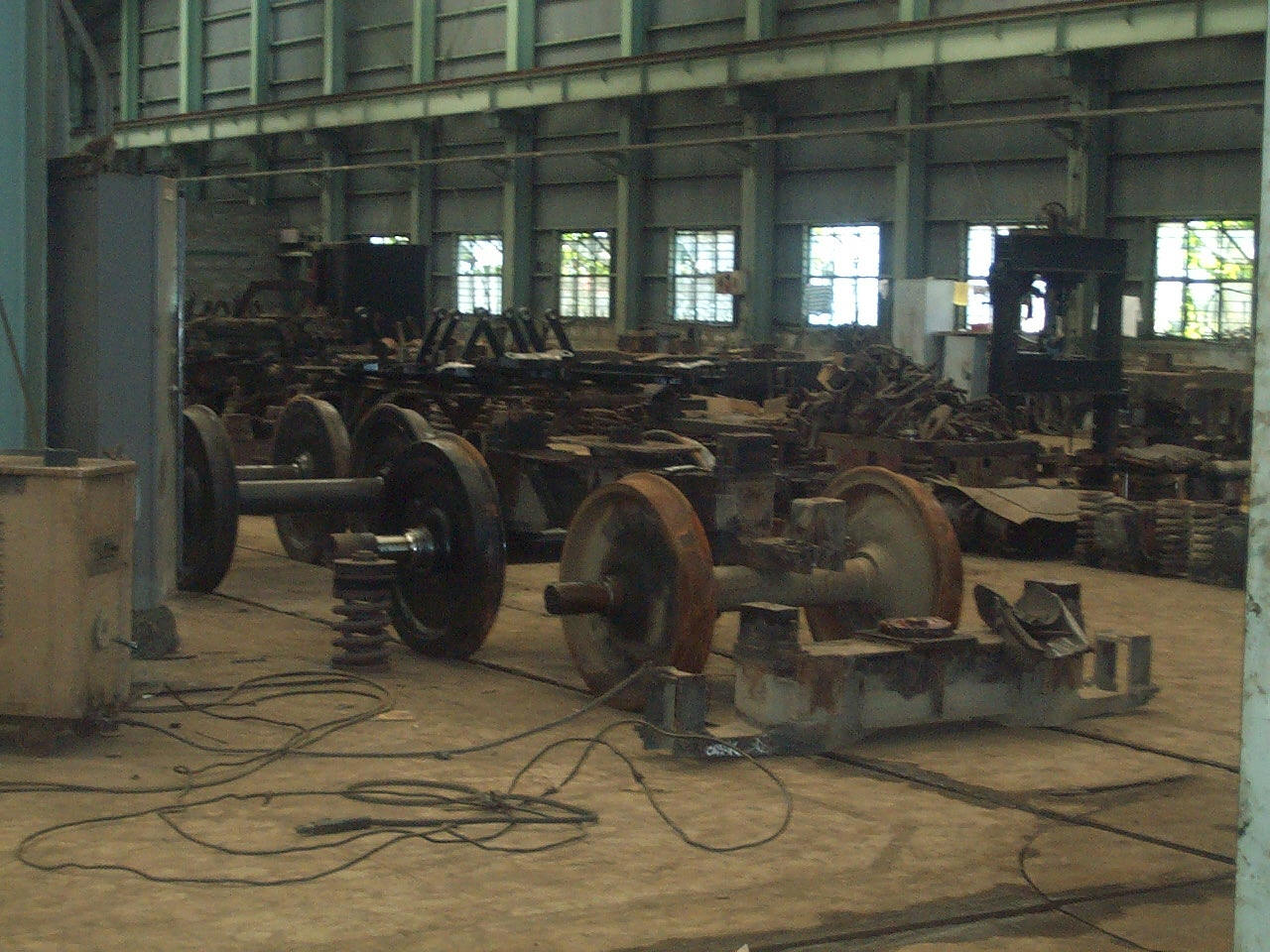 Barbells? These are the trains’ wheels. Other spare parts are in the background. To the untrained eye, the area where they keep the spare parts looks like a scene in a junk shop.
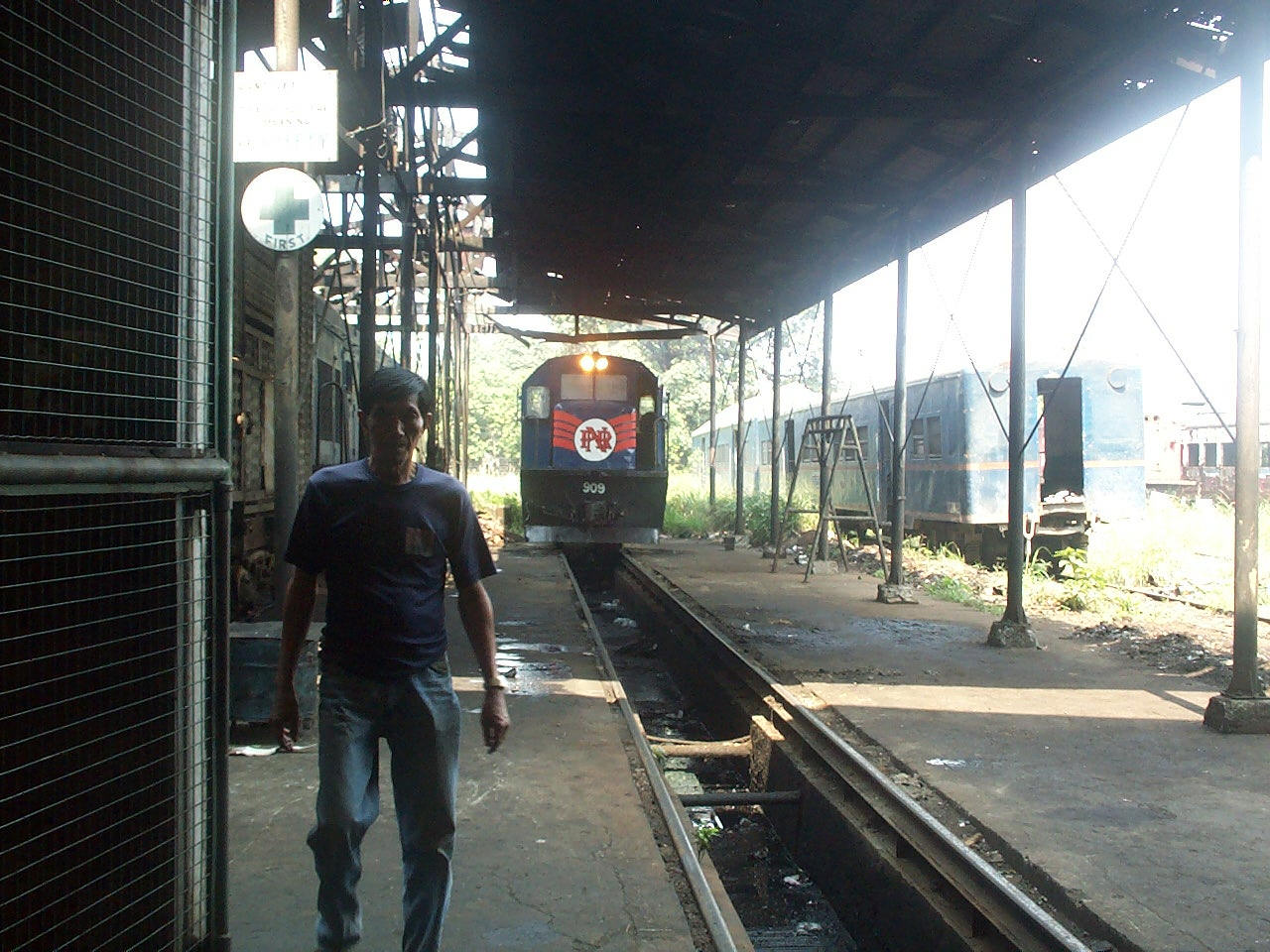 Locomotive coming in for maintenance. PNR rolling stock at the time have seen better days and required a lot of work in order to keep the trains running. Passenger share of the PNR was insignificant due to its often irregular service at the time, partly due to the conditions of its rolling stock and partly, too, because of the conditions of the tracks.
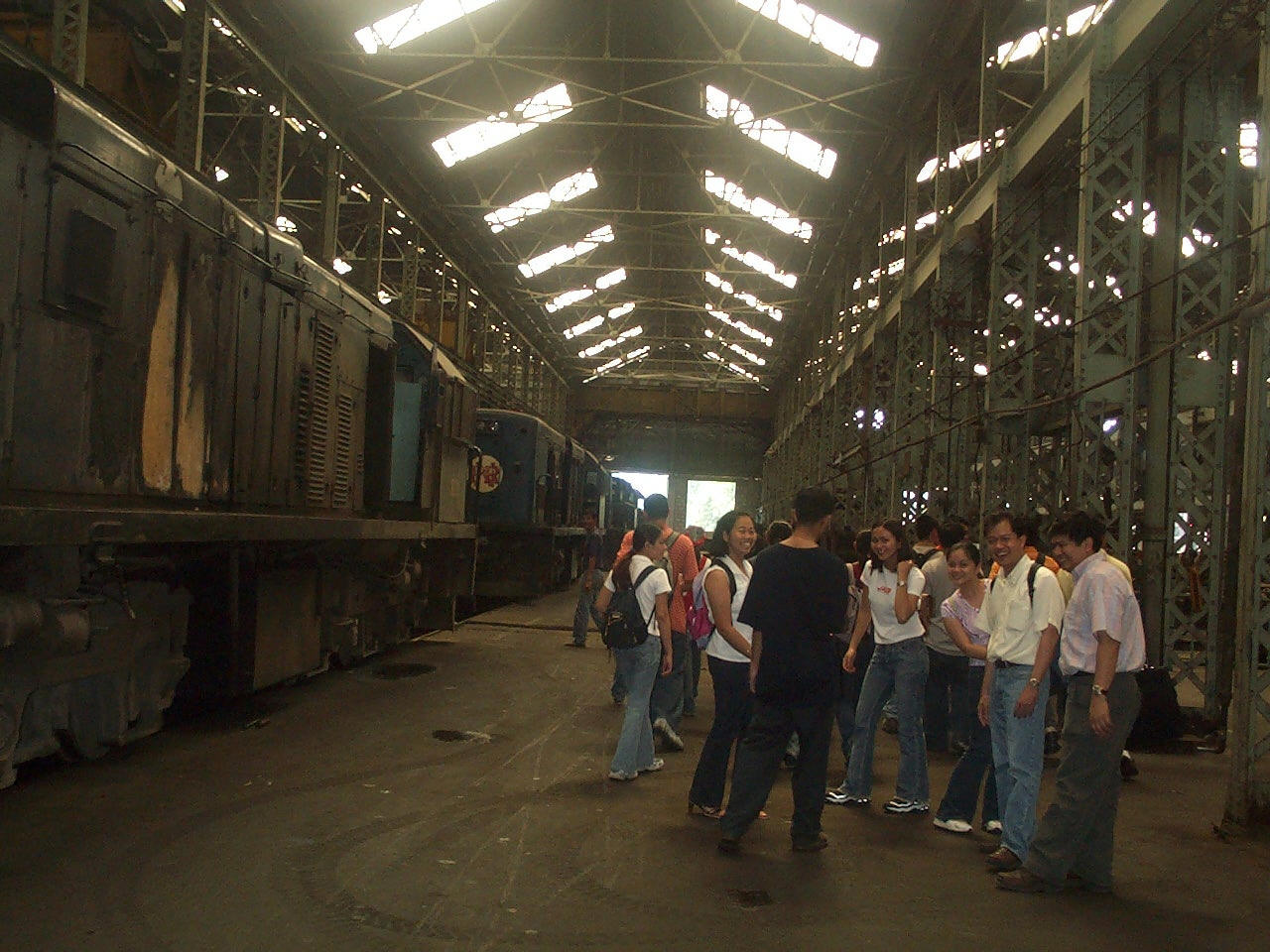 Students and their teachers during a light moment beside locomotives undergoing maintenance in the PNR garage.
More photos on the field trip in a succeeding post.
Railways in Luzon – Main Line North
With the recent re-opening of the railway line from Metro Manila to Naga City in Camarines Sur, railway enthusiasts and old passengers alike have been quite excited about the prospect of finally having trains for travel between Metro Manila and the Bicol Region. I believe that the rehabilitation of the commuter line to the south as well as rail facilities all the way to Legazpi City, Albay should be prioritized especially considering that such services will provide a very attractive alternative to road-based or air transport. The recent donations of rolling stock from Japan are also encouraging developments though, of course, such trains are old models and may have already seen better days while in operation in Japan’s busy railway systems. Yet, with the way JR maintains its trains, these units should run for a few more years as long as PNR take care of them.
A good source for the railway history in the Philippines, including the time when it was still known as the Manila Railroad Company. is the Philippine National Railways where one can also research on old photos and maps. There are also old reports relating operational matters as well as plans for the railways. A handy reference would be the work of Arturo G. Corpuz entitled “The Colonial Iron Horse: Railroads and Regional Development in the Philippines 1875-1935,” published by the U.P. Press in 1999. Copies of the book are still available with the U.P. Press at U.P. Diliman.
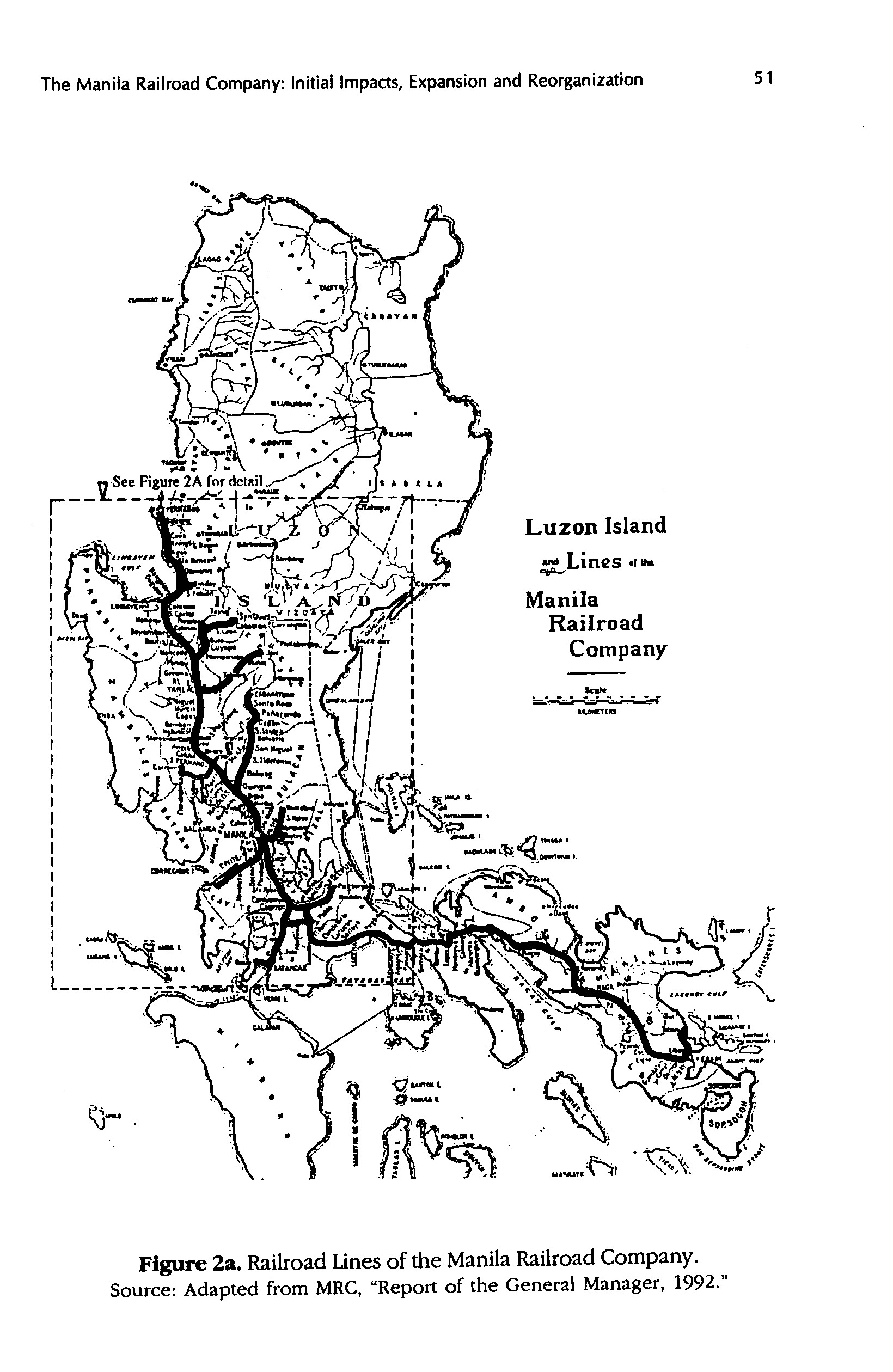 Railroad lines of the then Manila Railroad Company (source: PNR, 1992)
The entire network consisted of two main lines (Main Line North and Main Line South) and their branches. The railway lines to the north of what is now Metro Manila included the following:
- The Main Line North, which stretched from Manila to San Fernando, La Union for a total of 260 km, started construction in 1887 with the section until Dagupan starting operations in 1892. The section until San Fernando was opened in 1929.
- The Cabanatuan Line started from Bigaa, Bulacan and was completed in 1905 for a stretch of 9 km.
- The 7 km Stotsenburg Line from Dau, Mabalacat, Pampanga was completed in 1903. This served what was then known as Fort Stotsenburg that eventually became Clark Airbase (It is now the Clark Freeport.)
- The 6 km Camp One Line started from San Fabian, Pangasinan was opened in 1908 but was abandoned in 1914. It was reconstructed to Binday (now part of San Fabian) in 1937. The end of this line would have been a jump-off point for travelers heading to the “summer capital” of Baguio City.
- The Tayug Branch stretched from Paniqui, Tarlac to San Quintin, Pangasinan on the border with Nueva Ecija for a total of 29 km with the service to San Quintin opened in 1918.
- The Magalang Branch was a 9 km railway emanating from Dau and was opened in 1907.
- The Floridablanca Branch stretches from San Fernando, Pampanga to Carmen (now part of Floridablanca, Pampanga) over 20 km. The branch to Floridablanca opened in 1908 and the one to Carmen in 1919.
- The Arayat Branch also starts from San Fernando, Pampanga and ends the town of Arayat 20 km away. This opened in 1914.
- The San Jose Line was the last extension of the MLN from what is now Tarlac City to San Jose, Nueva Ecija through the town of Guimba and the now Science City of Munoz. The line stretched for a total of 55 km and was completed in 1939, just before World War 2 and the Japanese occupation.
 Caught (up) in traffic