
Home » technology
Category Archives: technology
Safety roller barriers along Sumulong Highway
Last week, I observed that the DPWH is currently installing road safety barriers along a section of Sumulong Highway in Antipolo City. Previously, I posted about the same along the Antipolo-Teresa Road, which has treacherous zigzag sections. Here are photos of the ongoing installation work along Sumulong between Padi’s Point and the Oscar Lopez Center.
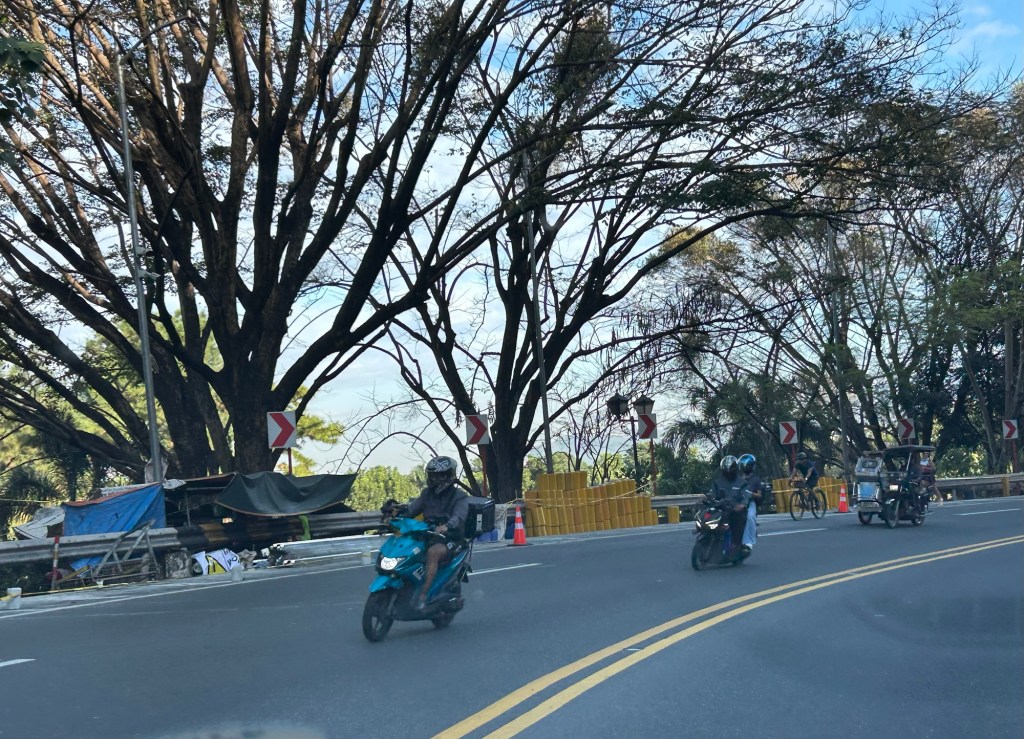
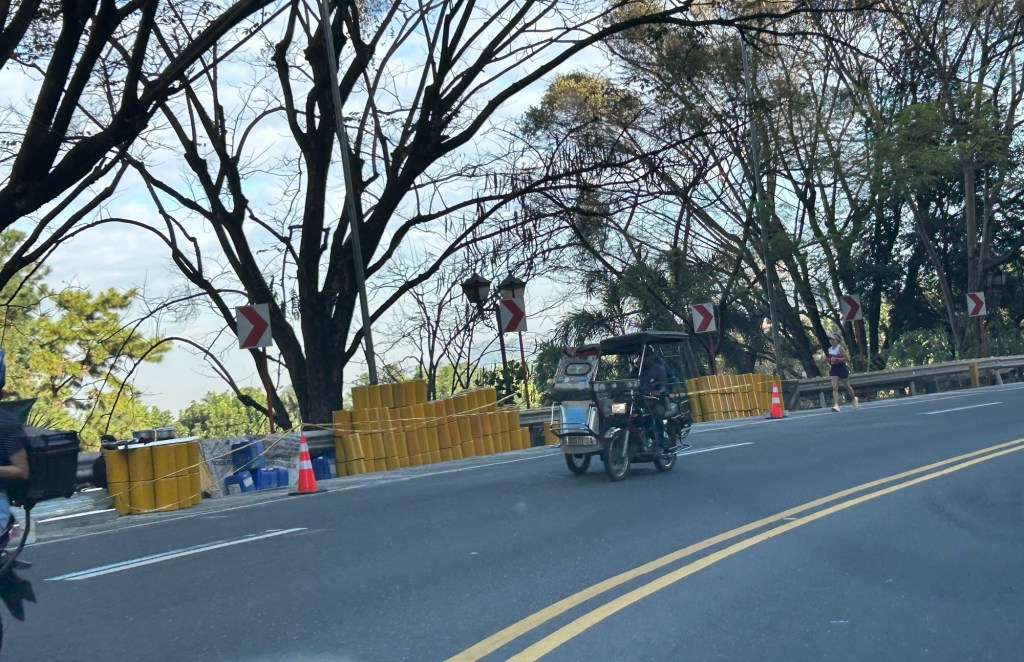
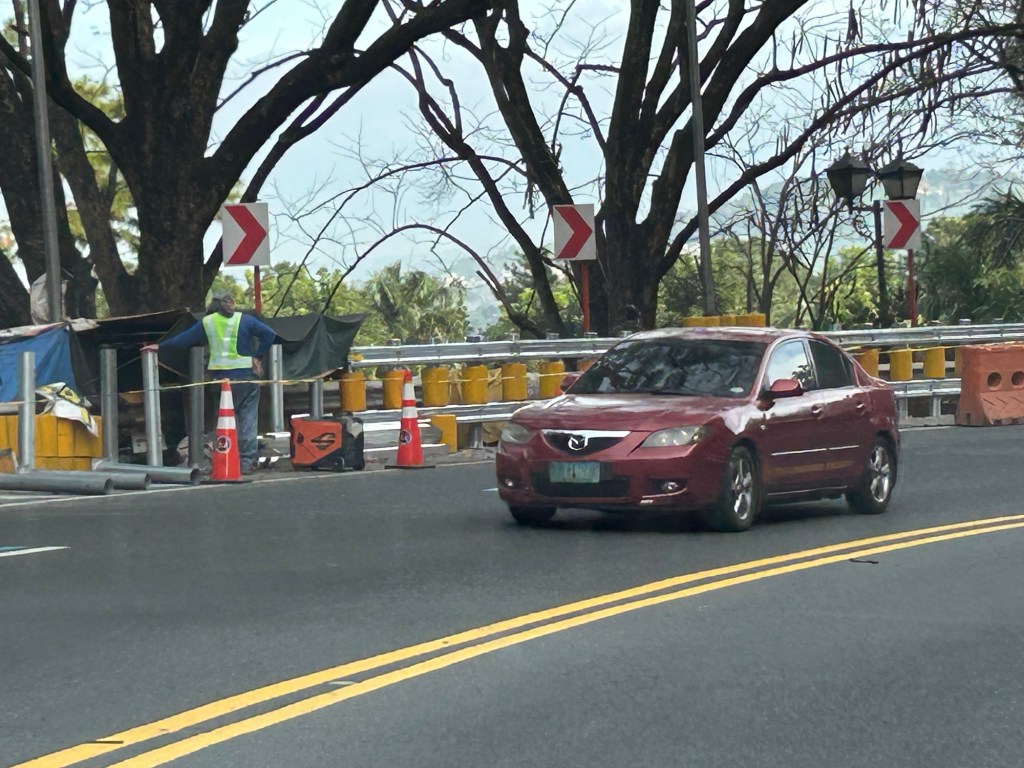
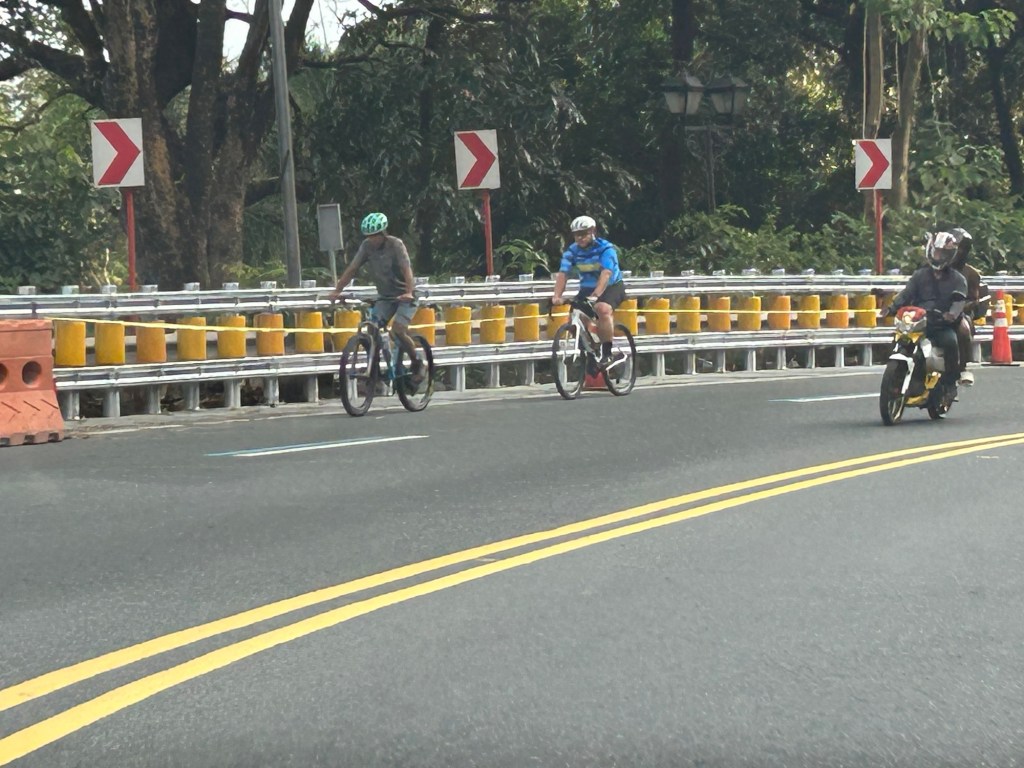
Here is a link to what these barriers are and how they help make roads safer for all users:
https://roadskyguardrail.com/what-is-a-safety-roller-barrier-a-comprehensive-guide
–
AI for Planners Explained: Urban Digital Twins
We begin February 2026 with an article share. The following article (click the link) is about one artificial intelligence (AI) application relevant to the transportation field:
Source: AI for Planners Explained: Urban Digital Twins
To quote from the article:
“UDTs are already being used for development review, infrastructure planning, climate resilience, and operations. They are not speculative technologies. They are becoming part of how cities represent themselves and make decisions.
If planners treat UDTs as purely technical platforms, they risk losing influence over how problems are framed and solutions evaluated. If planners engage early, they can ensure that these systems reflect planning values like equity, transparency, participation, and long-term thinking.
AI will continue to evolve and UDTs offer a preview of how that evolution may shape planning practice. This does not mean by replacing planners, but by changing how planning knowledge is created, tested, and shared.
The question is not whether cities will build UDTs. Many already are. The real question is whether planners will help decide what those twins are for, and how they improve the quality of life.”
-[Note: UDT is urban digital twin]
More electric vehicle taxis
I wrote about the new player in town, Green GSM Taxi, which has an all EV fleet. But while this is a relatively big company, there are smaller players who are also operating EV taxis. Here are a couple of them.
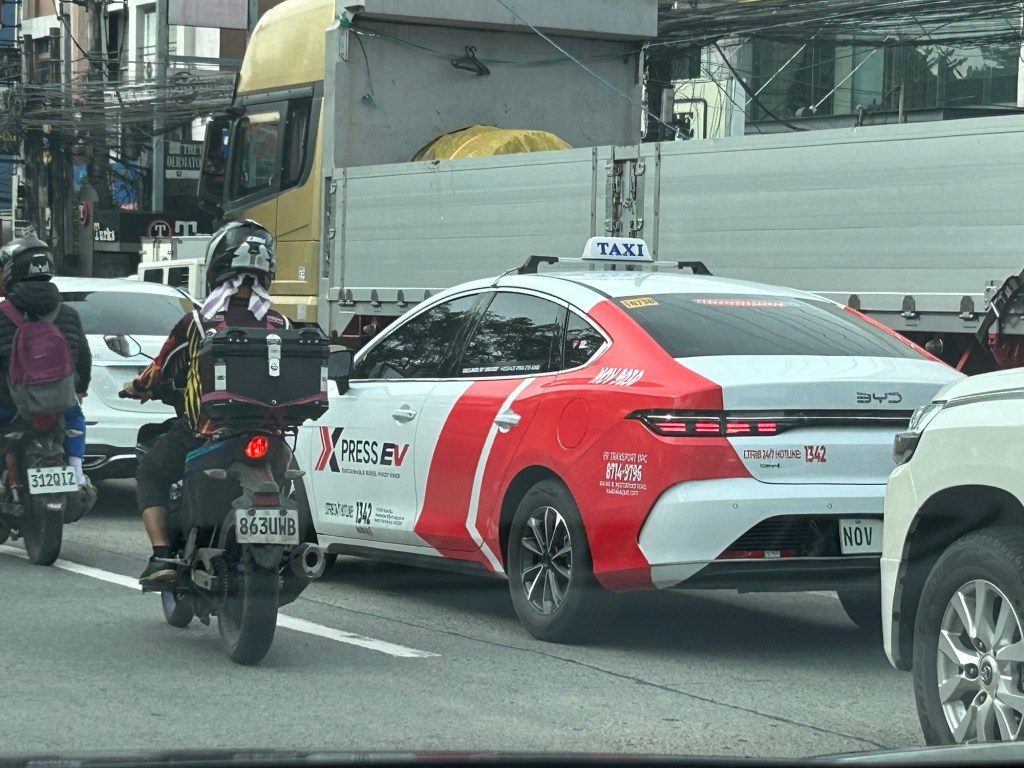
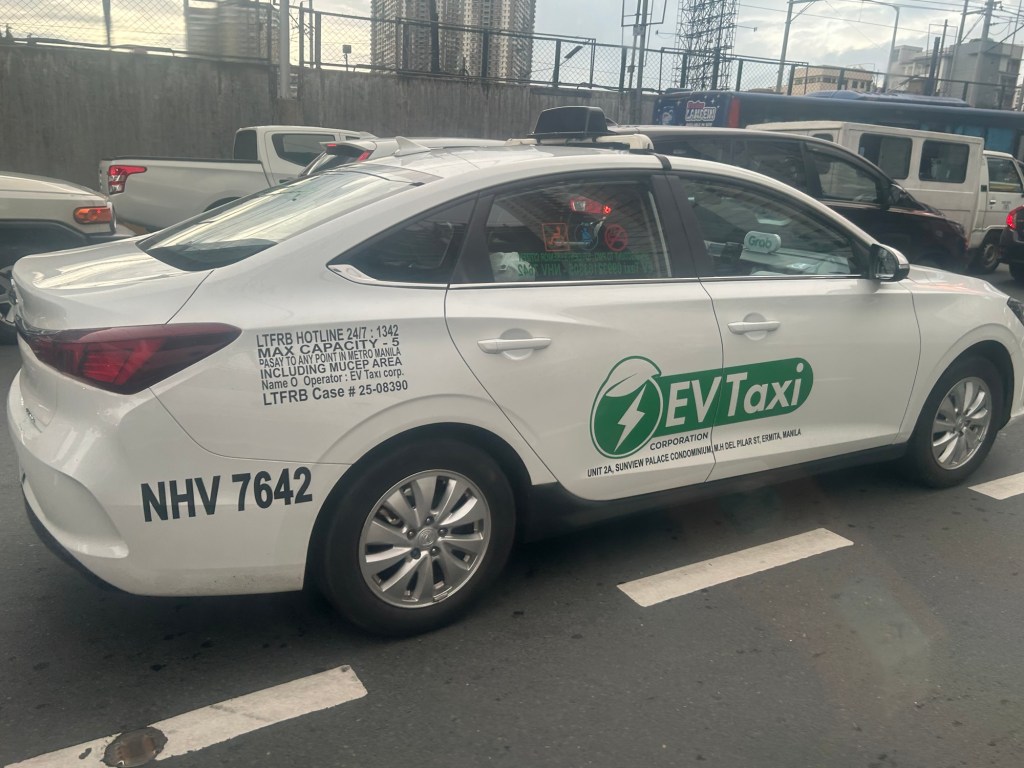
The last one, EV Taxi, is affiliated with Grab. The former doesn’t have sticker or anything identifying it with any of the app-based services. I haven’t seen many of both Xpress EV and EV Taxi so I assume there are fewer vehicles under the operator. This is much the same as previous conventional taxi operators and a consolidation of sorts is via one of the app-based companies like Grab. Is this (small operator) a sustainable venture? Is there anything new about these taxis aside from the vehicles being electric? Maybe the drivers are the same as before (for better or worse)?
–
On transportation problems being treated like diseases
I am sharing this relatively old article on transportation problems needing treatments as if these were diseases. I say it’s ‘old’ because it’s from last year, and these days when much content is being pushed everywhere including mainstream and social media, things get old, quickly. Rewind to more than a decade ago and Intelligent Transportation Systems (ITS) wasn’t as popularly applied as today and Artificial Intelligence (AI) seems to be everywhere now including in transportation systems.
Menard, T. (September 1, 2024) “Transportation Rx: Treating Traffic Glut Like Doctors Treat Sinus Congestion,” Planetizen, https://www.planetizen.com/features/131478-transportation-rx-treating-traffic-glut-doctors-treat-sinus-congestion [Last accessed: 4/21/2025]
To quote from the article:
“Traffic congestion is not unlike congestion that builds up in the human airways. When we see a doctor, we are prescribed a treatment that clears the backup. Similarly for roads, rather than setting up road signs and cones to redirect traffic, cities can take a more prescribed treatment approach through methods such as congestion pricing and other road pricing strategies, as well as technologies like edge computing, navigation-enabled Mobility-as-a-Service (MaaS) modeling, and transit signal prioritization. “
This is not the first article to allude to medicine when the topic is traffic congestion. There are others that use terminology from the human body’s circulatory system. When an artery gets blocked, a bypass can be a solution. But perhaps we don’t need bypasses and look at other. more effective ways of dealing with transportation problems.
–
On “levelling-up” on fare collection
I found this article on how Japan Railways East (JR East) plans to upgrade its Suica card so passengers don’t need to swipe them at the stations. That will mean practically seamless entries and exits at the stations and perhaps the elimination of most queues related to this part of rail operations. Here is the article published on Medium:
To quote from the article:
“You can currently use Suica to pay for goods and services at around 2.26 million locations in Japan. However, JR East has only issued around 31.47 million mobile Suica cards. That lags behind the two most popular cashless payment options — PayPay (66 million) and d-Barai (63 million).
The move comes as transportation cards, long a staple of travel inside of Japan, seem to be going out of style. More train companies are introducing QR code and credit card touch payment options, making the one cutting-edge technology obsolete.”
I have a Suica card as well as others like it from Bangkok, Kuala Lumpur and Singapore. Suica has really been a convenient way to pay transport fares as well as to purchase items such as drinks or snacks particularly at train stations in Japan. We are not yet at the level of the Suica card of more than ten years ago but there are lessons to be learned here in case we finally have something like it and others that make travel or commuting easier.
–
From 9-to-5 to Anytime: How Telecommuting Changes the Traffic Game
Here’s a quick share of an article on telecommuting:
Source: From 9-to-5 to Anytime: How Telecommuting Changes the Traffic Game
To quote from the article:
“As we look across these 83 cities, it’s clear that remote work has brought relief to some areas while leaving others just as crowded as before. The cities seeing the most benefit from WFH were those with a flexible, remote-friendly workforce and a supportive economic structure. For fast-growing cities, or those with heavy industry or logistics, WFH alone wasn’t enough to solve congestion.
Telecommuting has no doubt reshaped our roadways, but it’s clear that tackling urban congestion will require more than just a remote work policy. As cities continue to grow and evolve, the future of urban mobility will rely on creative solutions, from smarter infrastructure to updated transit options, to keep America’s cities moving in this new, work-from-anywhere world.”
There are lessons to be learned here for us in the Philippines. Telecommuting is not a new thing here especially considering we have many BPOs operating across the country. Indeed, it is not to be considered as the only solution but one of many we can use to reduce congestion and improve commutes in our towns and cities.
–
Technical sessions at the TSSP 2024 Conference
I am sharing here the latest draft of the technical sessions for the 30th Annual Conference of the Transportation Science Society of the Philippines (TSSP). The conference will be held in Iloilo City this coming September 13, 2024.
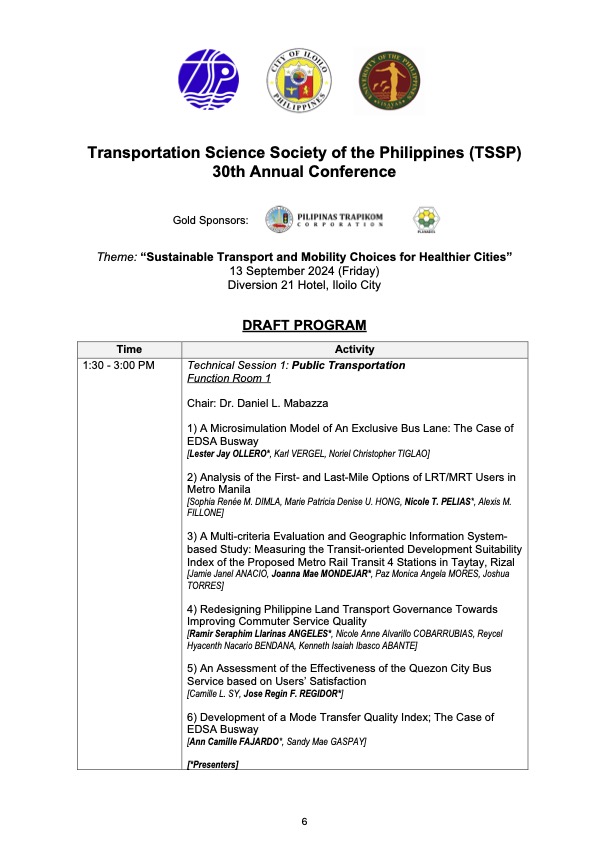
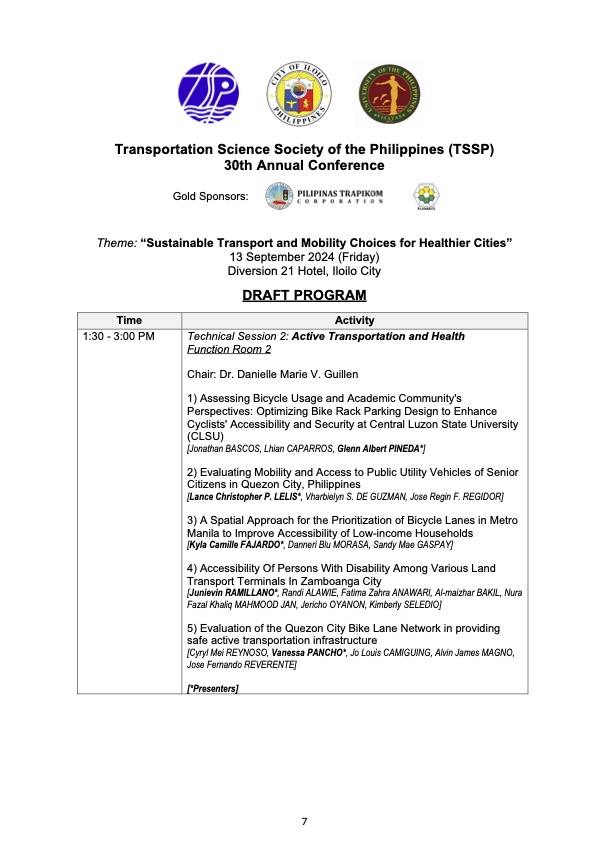
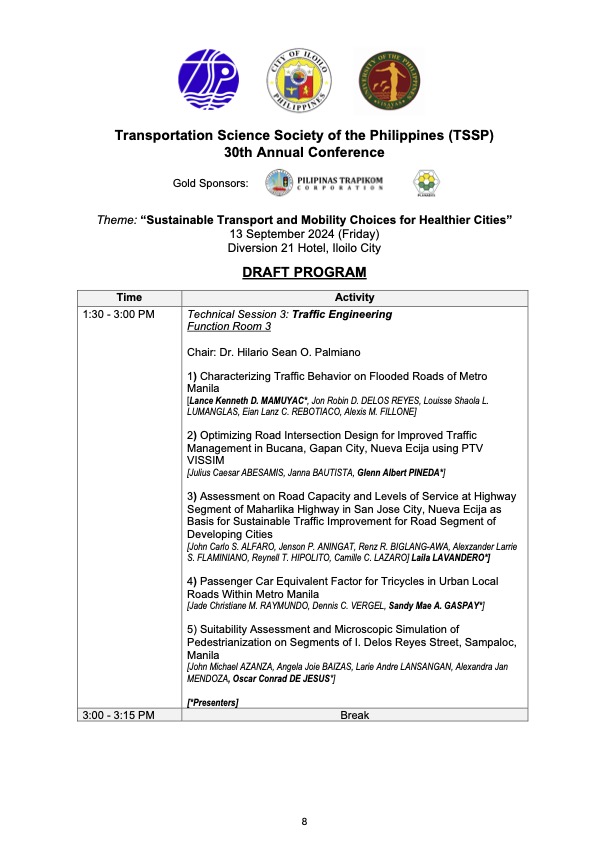
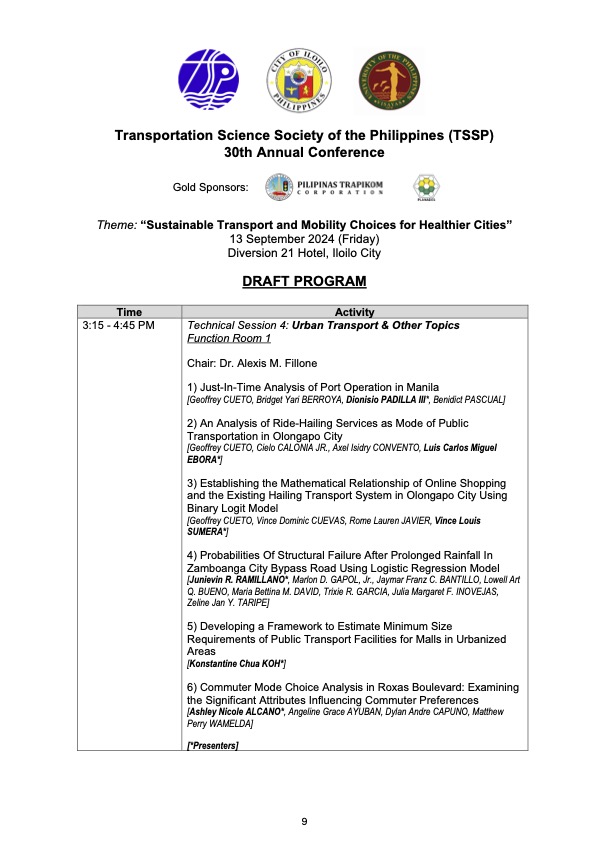
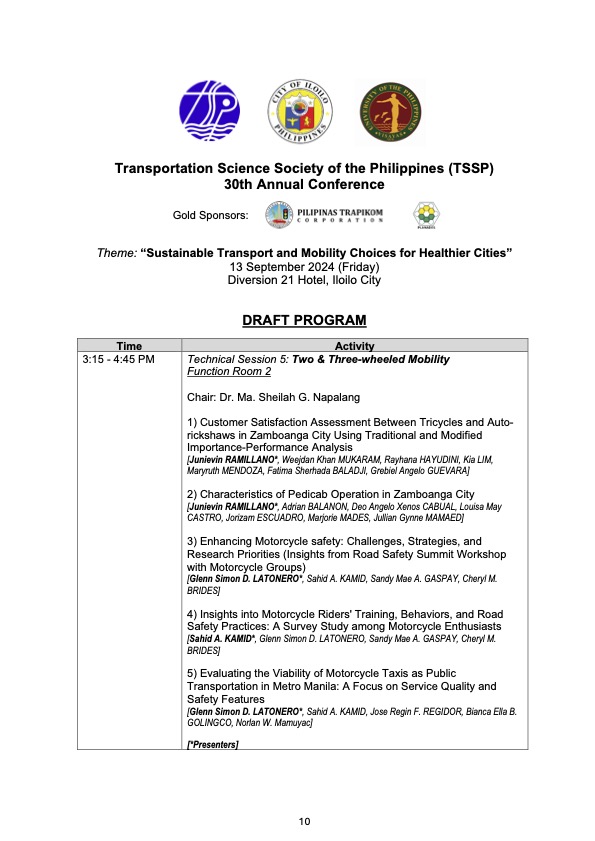
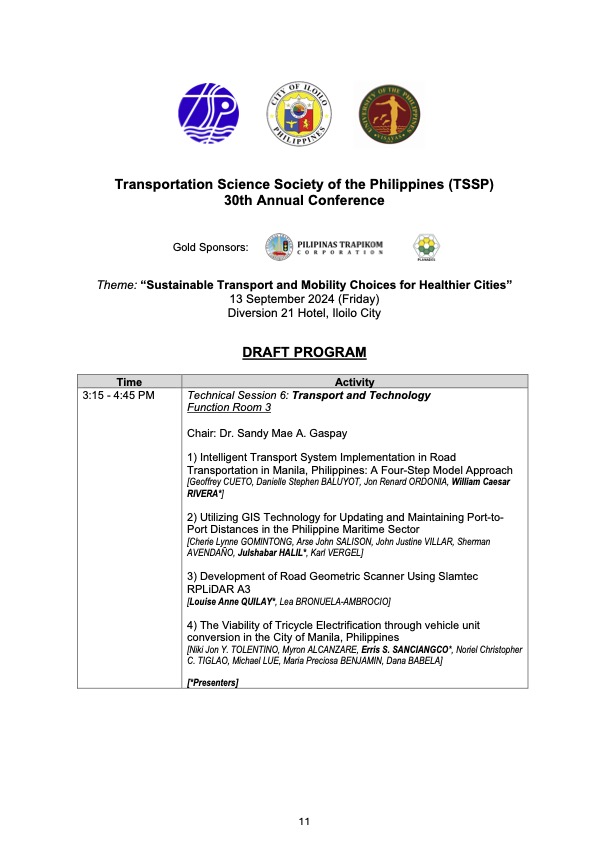
I will share the draft program for the morning plenary session in the next post.
–
Initial thoughts on driverless cars
The wife is currently in San Francisco in the US. She sent me some photos and videos of the driverless car ahead of booked to get to their office there.
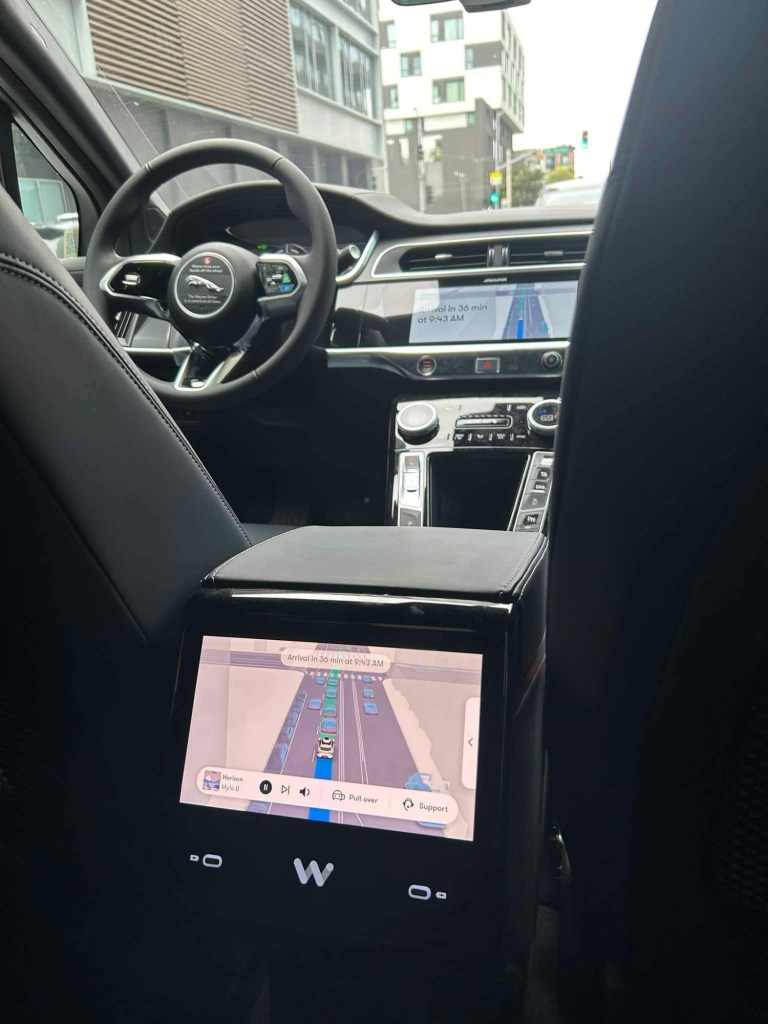
The first thing that came to mind seeing the photos and videos is “It’s cool!” Their creation and operation are indeed wonders from an engineering and technology standpoint. Unfortunately, these are not the solution to our transport problems. These will just replace the cars we already have and causing congestion and other concerns.
–
On the idea of congestion pricing
I purposely titled this post to include the word ‘idea’ as congestion pricing is still very much like that in the Philippines. It is a reality in some part of the world particularly in Singapore where its Electronic Road Pricing (ERP) has evolved and improved over the years. Its success though seems to be an exceptional case that has not been replicated elsewhere where conditions are not exactly like the city state’s.
Here is an article that recently came out from The Washington Post about the New York Governor’s decision to backtrack on the proposed congestion pricing initiative in New York City:
McArdle, M. (June 12, 2024) “People hate traffic. They also hate this great idea to clear it,” The Washington Post, https://www.washingtonpost.com/opinions/2024/06/12/congestion-pricing-great-idea-people-hate/ [Last accessed: 6/14/2024]
To quote from the article:
“Roads are a scarce good; you can fit only so many cars on a road at one time, and fewer if you would like those cars to go somewhere. When roads are “free,” we are forced to fall back on a more costly and inefficient strategy: sitting in traffic. This wastes valuable human time and inflicts noise and pollution on everyone nearby. Far better to charge a modest price that inspires some drivers to carpool and others to take public transit or shop nearer to home, until supply and demand are balanced and traffic flows easily…
In political disputes, a discrete group facing highly concentrated costs often defeats a larger public interest that conveys a small individual benefit to everybody — such as being able to move around the city faster when you really need to. This is particularly true in the American system, which is designed to empower angry minorities. And it’s especially true when they’re abetted by status quo bias and a sympathetic majority, as in this case.
Complain all you want about selfish suburban drivers or the Metropolitan Transit Authority’s bloated cost structure or Hochul’s cowardice; the biggest obstacle to congestion pricing is that almost two-thirds of New York City residents have told pollsters they oppose it — in a city where less than half of all households even own a car. A more technocratic, less democratically responsive government might have been able to ram it through, and perhaps in time everyone would have come to like it. But in fractious America, with all its political veto points, congestion pricing is doomed by the reality that people hate slapping prices on things — especially if they have to pay them.”
There is a congestion pricing proposal in Baguio City and we don’t know yet how this will go. I don’t have the details yet except that a private company whose core business is tollways is involved. Will this be a model or a proof of concept? Or will it just go the way of a typical tollway where users are those who are willing to pay and which would eventually congest if most of the current users pay and use it anyway? Will the funds generated be used to develop a more efficient transport system for Baguio, eventually leading and contributing to less congested streets? That would also mean eventually less revenues from the congestion pricing scheme and probably lead to it being unnecessary.
–
Conventional vs. hi tech – the case of train tickets
Here’s an interesting (for me) read on something we usually assume could be improved by means of technology – transit fare collection:
Unseen Japan (May 27, 2024) “Japan Railways tried replacing tickets with tech., It didn’t go well,” Medium.com, https://unseenjapan.medium.com/japan-railways-tried-to-replace-tickets-with-tech-it-didnt-go-well-1e151f9a400f [Last accessed: 6/10/2024]
To quote from the article:
“So what went wrong? Some experts say that JR East’s major fault was forcing a cutover to online and automated systems before those systems were ready for prime time.”
As with others like this that seek to ‘disrupt’ the conventional or status quo, a hastily implemented system will likely face trouble and a barrage of complaints from users. This would be especially true if the current-old system is already efficient and requires only minor tweaking or improvements and an abrupt phase out or scale down of the old is not necessary.
–
 Caught (up) in traffic