
Home » Posts tagged 'active transport' (Page 5)
Tag Archives: active transport
Another look at home location choices
I recently shared an article showing the results of a survey conducted in the US. That survey appears to show that Americans prefer sprawl. But that may be due to many factors including political leanings that are actually mentioned in the article. I share another article that appears to be a reaction to the first one.
Lewyn, M. (August 14, 2023) “Do Americans Really Prefer Sprawl?” Planetizen, https://www.planetizen.com/blogs/125112-do-americans-really-prefer-sprawl?utm_source=newswire&utm_medium=email&utm_campaign=news-08142023&mc_cid=cd3b2e2ba5&mc_eid=9ccfe464b1 [Last accessed: 8/16/2023]
To quote from the article:
“Why do these surveys yield such drastically different results? The Pew survey notes that 3/4 of rural respondents favor the less walkable alternative; thus, that survey was apparently designed to include a representative sample of Americans, including rural Americans who typically do live in very spread-out environments. It seems to me quite natural that rural Americans would prefer rural lifestyles.
But once rural respondents are excluded, the balance between sprawl and walkable communities in the Pew survey becomes almost a toss-up. 57 percent of urban respondents refer houses with smaller yards and more walkability, and an almost-equal percentage of suburban respondents prefer the opposite.”
Again, I wonder what would be the outcomes if a similar survey were done in the Philippines. Will it reveal preferences for single detached homes rather than condos? Who will prefer the latter or the former? What could be the factors affecting home location choices in the Philippines? Cost is definitely a major factor. Commuting times perhaps and even commuting costs? But how do people weigh these factors? And what other influences are there to the decisions to purchase homes?
–
Bike lane master plan for Metro Manila, Metro Cebu and Metro Davao
The Department of Transportation (DOTr) with support from the United Nations Development Program (UNDP) yesterday formally launched the Bike Lane Master Plan for Metro Manila, Metro Cebu and Metro Davao. Yesterday’s event was actually the third and last leg of presentations, which were also made in Cebu and Davao. Here are a few photos I got from the DOTr Facebook page (these are public):
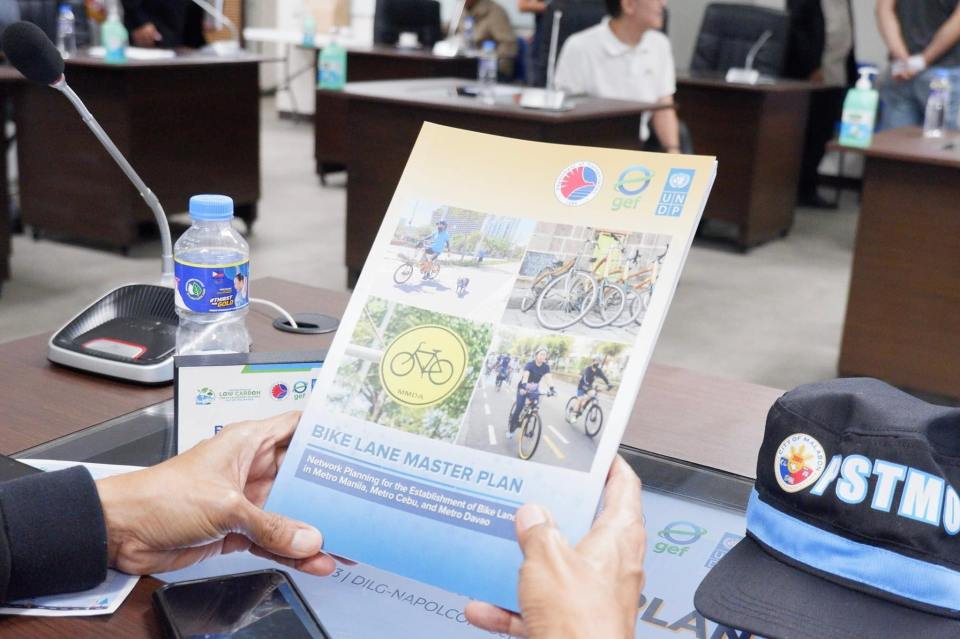 Printed copies of the master plan were distributed to attendees (Photo: DOTr Facebook page)
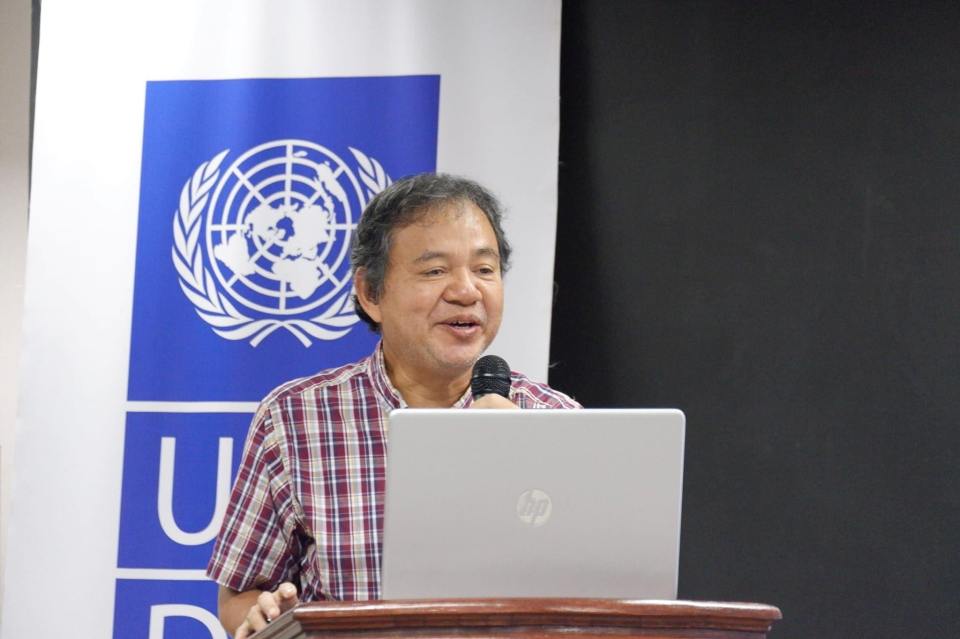 Dr. Ricardo Sigua of the National Center for Transportation Studies presented the highlights or key features of the master plan. The UNDP engaged NCTS to conduct the master planning project for DOTr. (Photo: DOTr Facebook page)
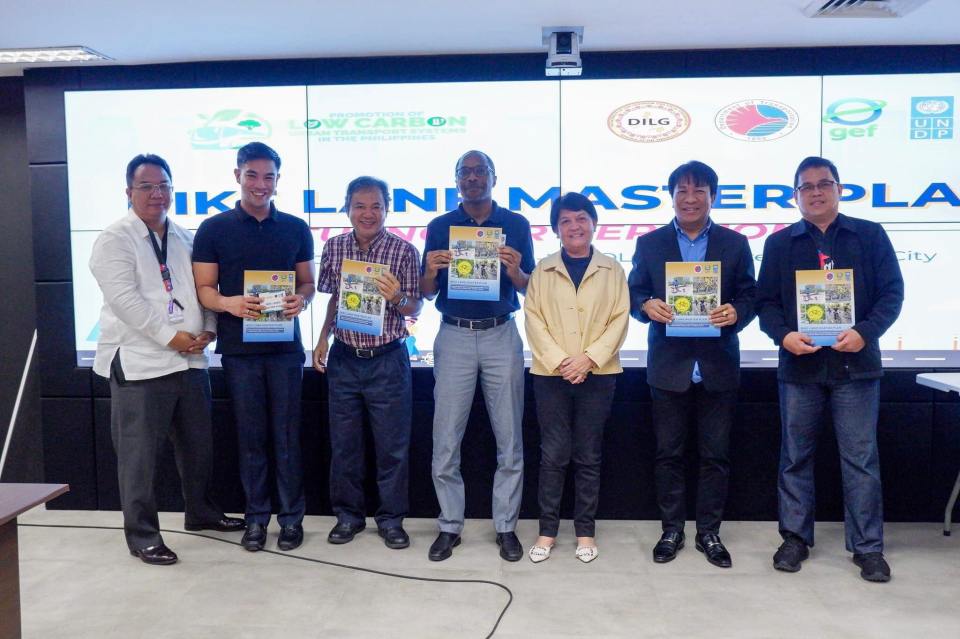 Photo op with participants from the MMDA (Photo: DOTr Facebook page)
While the master plan is most welcome as the country continues to build infrastructure for active transport (mainly walking and cycling), the launch is actually one year late. The project was actually completed last year and though most of the recommendations have yet to be carried out, many items including the inventories are already dated. These master plans though should not be static documents but dynamic in these sense that it would have to be updated regularly. For one, updates would provide the opportunity to reinforce or improve certain aspects of the plan. Updates also provide an opportunity to check whether progress is being made on the targets set in the plan. Also, since the master plan is for three metropolitan areas perhaps it can be part of the foundation for a nationwide plan. However, many plans fail if there is not support or scarce resources allocated for the implementation. Thus, there is a need for resources or allotments especially coming from government to support the realization of the plan.
–
Article share: What’s Incomplete About Complete Streets?
The concept of road diets circulated in Metro Manila more than a decade ago. I recall the Metro Manila Development Authority (MMDA) picked up the concept and attempted to apply it in some parts of Metro Manila. Since there are no evidence of that endeavor surviving now, then we can assume that it was a failure. There is no wonder there as I also recall the effort to be half-hearted and more to get media mileage (cheap talk or lip service) out of it. Road diets eventually evolved into the complete streets (though the literature now will state road diets as part of complete streets). That experience and similar initiatives of varying success (or failure) rates are not unique to the Metro Manila but is actually happening elsewhere including cities in countries where the complete streets have been applied more comprehensively and yet somehow found to be lacking or not as effective a solution as expected. I am sharing an article here that discusses what seems to be lacking or ‘incomplete’ as it is referred to.
Source: What’s Incomplete About Complete Streets?
Quoting from the article:
“What’s missing? First of all, even the best Complete Streets policy can’t solve the problem of fiscal scarcity. Even in a city committed to Complete Streets, street redesign must fight for public dollars with other worthy goals such as education and public safety. As a result, Indianapolis’s improvements are a drop in the bucket. The city maintains 3,400 miles of streets and roads, so its 100 miles of bike lanes affect only 3 percent of the city. Similarly, 2,000 miles of the city’s roads still lack sidewalks.
Second, the quantitative benchmarks seem to focus on sidewalks and bike lanes (Sec. 431-806), and the policy doesn’t mention traffic calming or similar policies. So if the city had a six-lane road with traffic going 60 miles per hour, the Complete Streets policy would not affect that road except to the extent necessary to build a sidewalk or a bike lane.** Thus, even the best Complete Streets policies don’t really address some of the most dangerous features of American street design.”
—
Article on “Fair Share Transportation Planning”
I am sharing this new article from Todd Litman on fair share transportation planning. The content is relevant and very timely in the Philippines considering many people including and especially transport officials are struggling with the thought of allocating resources to provide or improve facilities geared towards more equitable transport systems (e.g., more facilities for active transport).
Here’s the summary as quoted from the article:
“To be efficient and equitable, a transportation system must serve diverse demands. A diverse transportation system allows travelers to use the most efficient option for each trip—safe walking and bicycling for local errands, efficient public transit when traveling on busy travel corridors, and automobiles when they are truly the most cost-effective mode considering all impact—and it ensures that people who cannot, should not, or prefer not to drive receive their fair share of public investments.
Current transportation planning practices are biased in various ways that overinvest in automobile infrastructure and underinvest in more affordable, inclusive, and efficient modes. It is time for planners to reconsider our analysis methods and funding practices to ensure that non-auto modes, and therefore non-drivers, receive their fair share of transportation resources.
This is not anti-car. Motorists have good reasons to support more investments in non-auto modes that reduce their traffic and parking congestion, reduce their chauffeuring burdens and crash risk, and provide better options when their vehicles are unavailable. Everybody wins from a more diverse and efficient transportation system.”
Cool Walkability Planning
I am sharing this article about planning and design for more walkable streets. The term ‘cool’ in the article refers to temperatures as people are less likely to walk if it is too hot to do so.
From the article:
“Improving walkability (including variants such as wheelchairs, hand carts, low-speed scooters) can provide significant benefits to people, businesses and communities, particularly in dense urban areas where land values are high and vehicle travel is costly. However, walking can be uncomfortable and unhealthy in hot climate cities, particularly those that often experience extreme temperatures (over 40° Celsius, 105° Fahrenheit). These conditions make walking unattractive and infeasible during many days…
A well-planned networks of shadeways (shaded sidewalks) and pedways (enclosed, climate-controlled walkways) incorporated into a compact urban village can provide convenient, comfortable and efficient non-auto access during extreme heat. They can create multimodal communities where residents, workers and visitors rely more on walking and public transit, reduce vehicle use, save on vehicle costs, and require less expensive road and parking infrastructure…
The main obstacle to comprehensive pedway development is the well-entrenched biases that favor motorized travel and undervalue non-motorized modes in transportation planning and investment. Transportation agencies have tools for planning and evaluating roadway improvements, and funding to implement them, but lack comparable tools and funding for walkability improvements such as shadeways and pedways, even if they are more cost effective and beneficial than roadway projects.”
Source: Cool Walkability Planning
On bicycles as a preferred mode of transport
Sharing this article on bicycles being the perfect mode of transportation. It is framed with respect to the concept of the 15-minute city. Here is the article:
Johnson, R. (April 19, 2023) “Embracing the 15-Minute City: 7 Reasons why Bicycles Are the Perfect Mode of Transportation,” Momentum Mag, https://momentummag.com/embracing-the-15-minute-city-7-reasons-why-bicycles-are-the-perfect-mode-of-transportation/ [Last accessed: 4/29/2023]
To quote from the article:
“Bicycles are aligned with the goals of sustainability and climate action, as they contribute to reducing greenhouse gas emissions, air pollution, and congestion. In a 15-Minute City, where the focus is on creating sustainable and climate-friendly communities, bicycles can be a powerful tool to achieve these objectives. By promoting cycling as a viable transportation option, cities can reduce their carbon footprint, mitigate climate change impacts, and promote a greener and healthier way of living.”
–
Article share: on pedestrian facilities and climate change
Here is an article that articulates the importance of walking and pedestrian facilities in sustainability and ultimately fighting climate change. It argues that if we had the infrastructure and facilities to make it easier for people to walk, they will and are likely to walk rather than use their cars. This is not limited to short trips as walking can be in combination with public transportation, making it an integral part of trips where public transportation covers the main commute and walking is the proverbial last mile travel.
To quote from the article:
“Walking, biking, and transit need to be prioritized, and treated as legitimate forms of transportation. This means stepping up efforts to collect data on sidewalks the way we do for roads, investing in complete walking networks before engaging in expensive new road projects and making sidewalk construction and maintenance a municipal responsibility rather than an individual one.”
Article share: Redesigning Streets for Livability: A Global View
I am sharing this article on redesigning streets. It is actually a promotion for a book: “Streets For All: 50 Strategies for Shaping Resilient Cities”.
To quote from the article:
“Streets For All: 50 Strategies for Shaping Resilient Cities is an expansive 270-page volume that explores the evolving potential of the most ubiquitous public space in our cities. It offers ideas, tactics and strategies from across the world on how our streets are being, and, can be rethought, recast, repurposed and redesigned towards greater resilience and resourcefulness. The globally diverse opinions and case studies in this book remind us why cities with limited means can offer profound lessons to affluent societies that take their prosperity for granted. And in turn, how the virtues of effective urban administration and reinforcement seen in developed societies could reassuringly serve to inspire less economically developed ones.”
On electric vehicles overshadowing public transportation
There seems to be much ado about electric vehicles. Here in the Philippines, there is much hype about hybrid and electric cars as incentives are now in place for people to purchase them at reduced prices and in Metro Manila at least, there is that additional incentive of these vehicles being exempted from the number coding (vehicle restraint) scheme. Here’s an article
Woodhouse, S. and Mohsin, S. (January 26, 2023) “EV Hype Overshadows Public Transit as a Climate Fix,” Bloomberg, https://www.bloomberg.com/news/articles/2023-01-25/public-transit-gets-left-behind-in-us-climate-change-conversation [Last accessed: 1/28/2023]
Some quotes from the article pretty much describes why we must focus on improving public transportation to increase or at least retain riderships:
“If we want to reduce carbon emissions we can’t just have technology-focused answers…
“Buses and trains have a fraction of the greenhouse gas impact of private cars, whether internal combustion or battery-powered, according to the International Transport Forum. A 2021 study from the National Academies of Sciences, Engineering, and Medicine concluded that the energy saved by passengers in the US using public transit rather than personal vehicles saved 63 million metric tons of carbon dioxide in 2018 — roughly the equivalent of taking 16 coal-fired power plants offline for a year…
“In the postwar era, the US prioritized building out its road network, leaving transit behind. For decades, highways and roads have consumed about 80% of federal transportation funding, with transit getting only 20%. In 2019 state and local governments spent $203 billion on highways and roads alone, with a quarter of expenditures coming from federal transfers. At the local level, continued car use is fueled by suburban development patterns and land-use practices like minimum parking requirements, which require developers to set aside space for vehicles. Outside of major cities, transit options are often limited, and historically low level of public support translate into poor convenience and reliability…
“We’re not going to be able to successfully fight climate change — and prevent more damage to the climate — without heavily investing in mass transit and specifically public transit.”
Here is something I shared last year:
https://d0ctrine.com/2022/09/16/on-bicycles-vs-self-driving-cars/
You’ve probably seen the image that evolved from the original comparison of 50 people on cars, bus and motorcycles from Munster, Germany. The variant is 50 people on conventional cars, 50 people on electric cars and 50 people on self-driving cars. That is another perspective (road capacity and congestion-wise) of how electric vehicles will affect traffic.
–
On the need to change mindsets about bike lanes
Public acceptance of bike lanes has grown during the pandemic. Prior to the pandemic, there were few supporters especially among local government units and national agencies that seem to be comfortable with the status quo. Few like Iloilo and Marikina had any bike facilities worth mentioning. The pandemic was supposed to change that and it did for many. However, the acceptance and the gains seem to be eroding as we return to face-to-face activities and the ‘old’ normal situation.
I’m sharing below an article on the need to change mindsets about bike lanes and cycling in general:
Thompson, C. (January 24, 2023) “The Battle Over Bike Lanes Needs a Mindset Shift,” Wired, https://www.wired.com/story/the-battle-over-bike-lanes-needs-a-mindset-shift/ [Last accessed: 1/27/2023]
To quote from the article:
“Maybe bike lanes will always be fraught, until enough of the public is finally in a true lather about climate change—and it seems reckless to not have them.
Crises, after all, have a way of opening people’s eyes to possibilities. During Covid, restaurants and cafés lost so much business that cities nationwide began allowing them to build curbside seating areas where people could sit, safely, in the open air. It greatly reduced parking—but because, well, crisis, shop owners didn’t see any way around it. Patrons loved the outdoor seating so much that cities are making it permanent: A New York City study of several streets closed during Covid found storeowners making more than before, and diners digging the al fresco lifestyle. If data won’t change minds, customers might.”
There are two opposing sides on this matter. On one side are advocates who naturally will push for bike lanes and will promote them as The solution (emphasis mine) rather than one of a cocktail to address the transport mess we are in. On the other side are conservative, status quo types (or car-lovers as bike advocates will call them) who believe cars should have the roads to themselves. Unfortunately, many in government and particularly in transport agencies are with the latter. Perhaps they should be the first ones that need to be converted to favor active transport?
–

