
Home » Posts tagged 'air safety'
Tag Archives: air safety
Extreme turbulence during air travel
Transport-related news last week included a report about a Singapore Airlines B777 jet flying to London from Singapore that had to make an emergency landing in Bangkok due to extreme turbulence experienced. Many people were seriously injured when the plane suddenly ascended (“tilted up” as some news reports state) and then abruptly descended, resulting in people being tossed up and hitting the compartments above their seats. Obviously, these passengers were not wearing their seatbelts at the time. Otherwise, they would have been restrained to their seats. It is likely that the turbulence was not anticipated by the pilot as they usually advise passengers to put on their seat belts if turbulence was expected at any time during a flight.
The incident raises concerns about extreme and sudden turbulence occurring during flights. I guess this may happen anytime and aircraft instruments may not be able to tell the crew about an impending incident like this. Will such an incident have a significant impact on air travel? Perhaps not if these incidents remain rare. There should be records and monitoring of factors or elements leading to such incidents in order to establish the likelihood of these happening. Incident records will also show if there is an increasing frequency as well as the number of people killed and injured. Such information would be vital as more people use aviation for travel and there are more aircraft activity around the world.
As a precaution, it is good practice not to remove your seatbelt while seated in flight. If it’s tight, then loosen it. At least you have some restraint in case of incidents where the aircraft encounters sudden turbulence.
–
Article share: the safest airplane makers
I found this very interesting (to me) article on what are supposed to be the safest airplane makers and the safest airplanes.
Borba, L. (December 16, 2023) “What Are the Safest Airplane Makers in the World?” Medium, https://medium.com/the-expatriate-guide/what-are-the-safest-airplane-makers-in-the-world-8c9a90f48707 [Last accessed: 3/8/2024].
I won’t quote from this article and leave it up to you to read and find out for yourself what the safest maker is and what the safest plane is. There are also information here about the opposite. That is, about the least safe manufacturer and planes.
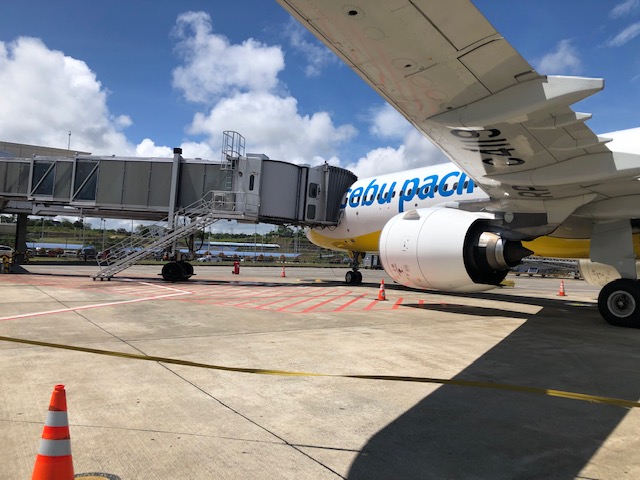 An Airbus A321 plane on the ground at NAIA
–
Article share – on aircraft evacuations and the case of JL516
Here is a very informative article on aircraft emergency evacuations, particularly the case of the recent JAL 516 where all passengers and crew were able to evacuate the burning aircraft.
Tamura, Y. (January 7, 2024) “Why the Evacuation of 379 Passengers from the Burning JAL516 Wasn’t a Miracle,” Medium, https://medium.com/japonica-publication/why-the-evacuation-of-379-passengers-from-the-jal-collision-wasnt-a-miracle-8a03cb02a95c [Last accessed: 3/4/2024]
To quote from the article:
“Japan is said to have become earthquake-resilient over the decades, but it’s less known that the same applies to aircraft accidents.
As the oldest Japanese airline company partially founded by the government in 1951, the history of JAL encapsulates the narrative of Japan’s aviation industry, punctuated by significant accidents.
It is none other than JAL that experienced the worst-ever airplane crash in the world. In 1985, JAL123 crashed into a mountain approximately 100 km from Tokyo.
The crash, believed to have been triggered by improper maintenance of the aft pressure bulkhead, caused 520 fatalities, the largest loss of life in a single aircraft.A former JAL employee comments that those who have survived traumatic incidents often grapple with returning to their duties in the sky. Despite this difficulty, they also carry a deep sense of responsibility to impart their experiences to younger crew members, contributing to the commitment to safety.
I agree that the successful evacuation was not a miracle but a product of the training and dedication of the staff as well as the culture and behavior that was very obviously Japanese. One wonders what could have happened if this were, say, an airliner from a third world country? Or perhaps even one from a country like the US? Would the evacuation have been successful like JL516’s?
–
On recent airline incidents in Japan and the US
There were two recent incidents involving airlines the past days. One was on a collision as a Japan Airlines Airbus A350-900 jet arrived at Haneda Airport in Tokyo. The other was a midair incident where an Alaskan Airlines Boeing 737 Max 9 plane lost part of its fuselage. While both are troubling, the first incident provided a good example of how emergency evacuations should be. The second incident reminds us of the importance of aircraft maintenance and tests to make sure planes are safe for use by passengers.
To quote from a New York Times article on the Haneda Airport incident:
“In addition to a well-trained crew and an advanced plane, the safe evacuation of 367 passengers came down to a relative absence of panic.”
I think that basically described “how to survive a plane crash” in the context of the collision at the airport, where passengers and crew had to evacuate the plane immediately.
Meanwhile, the B737 Max crash is a cause of concern since the model was already involved in previous crashes that caused the planes to be grounded worldwide. There will be an investigation on this incident and perhaps the outcomes can help address the problems concerning the aircraft. On the business side, such incidents will further convince airliners to reconsider acquisition and operations of these planes. I am sure they are already thinking about replacing the B737’s with the competition’s aircraft (e.g., A319, A320 or A321).
–
Article share: on aviation security
I found this article on Israel’s national airline, El Al, being the “most secure airline” in the world. That is, the airline has the capability to evade threats like missiles launched against it (i.e., to shoot a plane down). Here is the link to the article on Medium:
I am not aware of other airlines having similar capabilities. Two examples that I know involved passenger airliners being shot down by missile include the ill-fated Korean Airlines Flight KAL 007 during the height of the Cold War 1983 and the Malaysian Airlines MH17 shot down over Ukraine in 2014. Both could have benefitted from the retrofits/upgrades El Al installed on their planes.
–
On weird weather’s impact on air travel
With the wet season comes a lot of thunderstorms and there have been increasing occurrences of lighting alerts around Ninoy Aquino International Airport (NAIA) that led to the grounding of many planes. That resulted in long delays and surely an inconvenience to a lot of passengers. It looks like ‘weird’ weather or extreme weather events are here to stay and may even become worse as we continue to grapple with climate change and warmer weather. I am sharing a recent article about this here:
Hoover, A. (July 13, 2023) “Weird weather is making air travel even worse,” Wired, https://www.wired.com/story/weird-weather-is-making-air-travel-even-worse/?bxid=5bd6761b3f92a41245dde413&cndid=37243643&esrc=AUTO_OTHER&source=Email_0_EDT_WIR_NEWSLETTER_0_DAILY_ZZ&utm_brand=wired&utm_campaign=aud-dev&utm_content=WIR_Daily_071323&utm_mailing=WIR_Daily_071323&utm_medium=email&utm_source=nl&utm_term=P4 [Last accessed: 7/14/2023]
Quoting from the article:
“But there are more complicated, invisible effects of a warming world too. Hotter air is trapped near the ground, and cooler air above. Shifts in temperature gradients affect the wind shear, or the changes in speed and direction between air near the ground and at higher elevations. These eddies create clear air turbulence, which occurs in the absence of clouds. Light turbulence can cause sudden changes in altitude that feel like bumps, but severe turbulence can cause structural stress to the aircraft.
Turbulence isn’t just unpleasant. It’s the cause of more than one third of injuries aboard air carriers, according to the US National Transportation Safety Board, and in rare instances can even lead to death.
Changing wind patterns may also alter flight lengths. If, for example, there are stronger eastward winds, flights from the US to Europe will speed up, but flights in the other direction may take longer. Transatlantic flights may even need to reroute and refuel.
Research from Paul Williams, a professor of atmospheric science at the University of Reading in the UK, found that jet stream changes could increase the amount of time flights are in the sky each day, leading to more fuel burning, higher costs, and more CO2 emissions. Jet streams are high-altitude air currents that drive weather systems. As the Arctic warms, the North Atlantic Jet Stream is changing, leading to more odd weather.
But heat alone can also lead to delays and cancellations, like when a 119-degree day in Phoenix grounded planes in 2017. That’s because high temperatures decrease air density. When the air is less dense, planes need more time and distance to fight gravity as they take off—so they may need a longer runway to become airborne. Not all airports can accommodate these sudden changes.”
–
On delayed flights and being compensated
The last two times we traveled to Zamboanga City, we experienced significant delays to our flights. Last May, traveled twice to Zamboanga City. The first time, our flight to the city was delayed by a couple of hours. That led to a very late arrival and us having lunch at 3PM! Even though the airline could argue that they had nothing to do with the delay, the fact is that the reason (i.e., the standard “late turnaround of aircraft”) is very much due to their operations. Therefore, they should be accountable or made accountable for the inconvenience and discomfort.
While there was no issue for our return flight then, the situation was reversed the second time we traveled to Zamboanga. Our outbound flight from Manila was not delayed but our return flight was. This time though, the airline promptly distributed snacks in the form of water, crackers and biscuits to passengers.

I think that these or perhaps meals could be provided every time there is significant delay whether charged to the airline or to the airport depending on the circumstances. Travelers are paying for a service that are supposed to be delivered in the most efficient manner. Efficiency here should include safety so delays due to aircraft maintenance or technical issues or weather-related should also be covered when compensating passengers. Of course, cancellations would be another matter. Let’s talk about those later.
–
Articles on air crash incidents
I posted earlier this month about references online on railway crash incidents. This time, I am sharing a site where you can find articles about air crash incidents. There are many interesting articles here including some of the most well-known incidents that involved pilot error, weather-related crashes and those involving aircraft defects or issues. There are also articles here about terror attacks that led to air crashes.
https://admiralcloudberg.medium.com
I have shared a few of his articles before including one on the Concorde crash and another about the ill-fated Malaysian Airlines Flight 370. I have found these articles to be very interesting as the manner of writing is investigative and evidence-based. I have myself been in several near incidents, which I have related in this blog.
–
Air crash mysteries
I wrote about the Concorde recently and how I at one time dreamt of flying in one. I shared an article in that post about the air crash that doomed the Concorde. While it appears morbid to certain people, there is that fascination about air crashes not because of the deaths but because these often lead to better designs for aircraft and policies for the aviation industry. Here is a recent article about the still missing (vanished without a trace?) Malaysian Airlines Flight 307.
Admiral Cloudberg (March 27, 2021) “Call of the Void: Seven years on, what do we know about the disappearance of Malaysia Airlines flight 370?”, Medium.com, https://admiralcloudberg.medium.com/call-of-the-void-seven-years-on-what-do-we-know-about-the-disappearance-of-malaysia-airlines-77fa5244bf99 [Last accessed: 9/23/2021]
Unlike other disastrous crashes that include weather factors, pilot errors, instrument or engine failures, we cannot learn (much) from this crash as the black box or any other parts of the aircraft were never recovered. Of course, not in the same category as these types of crashes are those that were blown up or shot down whether by accident or deliberately such as the ill-fated Korean Airlines Flight 007. There are other lessons to be learned if not yet learned from those tragedies.
–
Near miss
The crash by an Asiana Airlines B777 in San Francisco reminded me of an experience I had in 2011 aboard an Asiana flight from Busan to Manila. Here is the account I posted elsewhere after that experience in 2011:
Lost in the past days’ heavy rains and the resulting floods that threatened to enter our home last Friday night was the close call I had last Thursday night as I returned from Korea. I had just attended the 9th International Conference of the Eastern Asia Society for Transportation Studies (EASTS) held in Jeju, Korea. From Jeju, I took the Air Busan domestic flight that was codeshared with Asiana Airlines to Busan, where I was to connect to Asiana Airlines flight OZ 705.
I had a long layover at Busan and asked for information about the city and what I could do for the 7 hours available to me prior to my flight back to Manila. I had already checked-in my baggage so I was practically unencumbered to move about. Unfortunately, the transit system from the airport to downtown Busan was not operational (surprise!) and I decided that the trip downtown where I would just probably walk around a mall was not worth it. I thought I would just end up spending on unnecessary shopping or dining.
As I entered the departure area after the routine immigration process, I proceeded for some Duty Free shopping for pasalubong. Afterwards, I took advantage of the free internet services at the airport, replying to emails received that day. There was no free WiFi at the airport so I had to make do with the terminals made available to departing passengers near the airline lounges. Afterwards, I proceeded to the gate assigned to our flight. This was about 4 hours prior to the tentative boarding time indicated on the electronic signboard near the gate.
As I had quite some time before my flight, I tried to catch up on the latest issue of Wired magazine that I had brought along specifically for the long lay-over. It was while I was reading that I noted an announcement for an Asiana flight to another Southeast Asian city being delayed due to technical problems with the their aircraft. I also noticed upon looking around outside the terminal that quite a few planes were sitting out from the terminal where passengers were brought to the aircraft by bus. I had experienced this before when our aircraft arrived in Jeju the Monday before, and at NAIA Terminal 2 in past domestic and international flights that couldn’t be accommodated at the terminal due to congestion. It was then that I noticed the Asiana Airlines Airbus A320 sitting across the terminal, and it looked like it was being serviced based on the vehicles parked beside it and the activity I could see from where I sat. I assumed that this was the aircraft that was supposed to be used by the delayed flight announced on the airport PA system.
A few minutes later, however, the airport PA announced that the delayed flight was now boarding. A while later, I saw an Asiana aircraft taking off, about 45 minutes delayed from its original flight departure time. The other aircraft still sat where it was, and still apparently being serviced. I noticed later that there were no other Asiana aircraft arriving or departing prior to our flight though there were many Korean Air, Air Busan and Jeju Air planes arriving and taking off. I also saw that a PAL flight left for Manila ahead of us and a Cebu Pacific flight left for Cebu one hour before ours. That was when I suspected that the plane sitting from across the terminal would be our aircraft for the trip to Manila.
Upon boarding the aircraft, we already noticed that the airconditioning was off along with the plane’s engine. This was already unusual for me considering a plane that was supposed to take off within the next 20 minutes normally had its engines running already. The Koreans on that same flight apparently were not pleased with the conditions as the cabin became warmer as more passengers settled in their seats for the flight to Manila. Not a few were already voicing their displeasure and were doing so in a way we usually see on TV. It seemed to me that they were already berating the crew. When the pilot started the plane’s engines, the cabin suddenly became dark and a weird sound was heard from outside the plane. Minutes later, the pilot announced that the plane was having problems with its electrical system and we had to wait out for it to be repaired. What followed were more complaints and possible offensive words from the Korean passengers who didn’t like the idea of being delayed. We were, after all, originally scheduled to arrive in Manila at 12:00 midnight. Any delay meant we were arriving early morning of Friday.
Abotu 30 minutes later, the pilot again attempted to start the plane and for the second time, the electrical system failed. This resulted in what I thought were insults and other offensive words from the Korean passengers. I could see that the flight attendants were already quite embarrassed and they could do nothing but try to assuage passengers on the situation. I was already thinking about whether we will be asked to deplane and wait our for our plane to be fixed or another aircraft to take its place. No such announcement was made and we had to wait it out for another 20 minutes. I thought that it was good though that there were cooler heads among the Korean passengers who were able to calm down others who were already threatening the pilot and the crew due to the displeasure about the situation.
The third time around, the plane finally responded and we were able to taxi and take-off without any hitch. The pilot continued to apologize even after take-off and assured everyone that the electrical system was repaired. Nevertheless, I could not sleep in the plane no matter how hard I tried to as each shake and rumble due to turbulence made me think about the possibility that the plane’s electrical system will fail, resulting in a crash. It was no light matter considering that we were traveling 3.25 hours between Busan and Manila, and we will be flying between two typhoons including one whose path was to cross ours. Such assured us of much turbulence throughout the flight including a couple that made me quite nervous as I could not even see the plane’s wings from my window seat due to the thick clouds around us. The only thing I could do was to pray silently that we don’t have a breakdown in midflight.
I was only able to relax when we finally landed in Manila. In fairness to the pilot, it was one of the smoothest landings I ever experienced even despite my being too conscious of the turbulence throughout the flight. Yet, my worries were renewed when the the cabin blacked out momentarily after we stopped at NAIA Terminal 1. I could not help but think about what could have happened if this occurred earlier while we were still in the air. Moments later, my suspicion was confirmed by an airport supervisor who was going around the conveyor belt telling Filipino passengers that our bags will be delayed due to the difficulties experienced by ground staff in opening our plane’s baggage compartment. I could not help but feel relieved that I “survived” that flight. Perhaps it was my prayers? My faith? No matter. I am truly thankful and grateful to the One Who watches over us and did so formally while in Church this morning to celebrate the feast of Corpus Christi.
–
 Caught (up) in traffic