
Home » Posts tagged 'Air travel'
Tag Archives: Air travel
Impacts of the energy crisis on tourism – the transport perspective
The Holy Week holidays practically begin this weekend with an expected exodus of people from Metro Manila and its environs (NCR Plus or Mega Manila depending on which term you prefer). Many people take a vacation during the Holy Week. Most probably go for a homecoming. Taking advantage of the holidays to visit their hometowns and have reunions. We did so for most of Holy Weeks past and in my father’s hometown, they take advantage of the homecomings including those of balikbayans from overseas to have a general homecoming at the town’s High School.
Many others in the past decade have their vacations during the Holy Week. The past years saw especially after the pandemic saw people travel abroad to catch spring time in temperate countries like Japan and Korea, even in Europe. Others prefer to travel in the region as Southeast Asian countries provide interesting destinations including the usual Bangkok, Hanoi, Ho Chi Minh, Kuala Lumpur, Jakarta and Singapore. Of course, you can also do local with people flocking to destinations where the beaches are like Bohol, Cebu and Palawan, just to mention some of the choices.
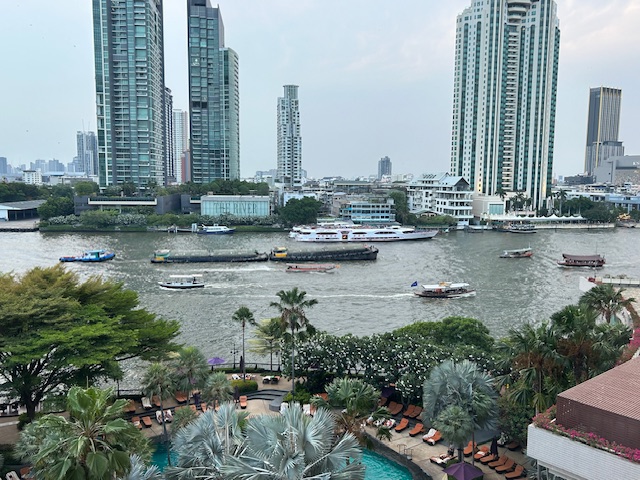 The view from the Shang in Bangkok – we spent the Holy Week there in 2024
Tourism will always involve travel and transportation. The industry will suffer much with the ongoing crisis as fuel prices will eat up a lot of travel budgets as fuel-related expenses will make travel prohibitive to many. On the supply side alone, airlines and maritime companies might have to cancel trips if they cannot sustain fuel supplies. Thus, planes will have to be grounded and ferries/vessels will have to reduce trips to conserve on fuels. That means people cannot travel to tourist destinations and will have to cancel and get refunds (if they can’t reschedule) from their accommodations (hotels, resorts). Less tourists means other businesses suffer, too, including restaurants, cafes and eateries, souvenir shops, and others depended on tourists for incomes. Damay-damay na, as they say.
Let’s hope the crisis will soon be over and this Holy Week, perhaps we can have some reflections and prayers while we take our health and re-energizing breaks.
–
Back in Bicol – arrival at Naga Airport
I posted about the airports in Daraga/Legazpi City and Davao City as I knew I would be traveling to Naga City and likely by air. That likelihood became certainty as horror stories of 14-16 hour travel by bus became unacceptable for short trips where the travel times by road exceeded our actual stay in the city.
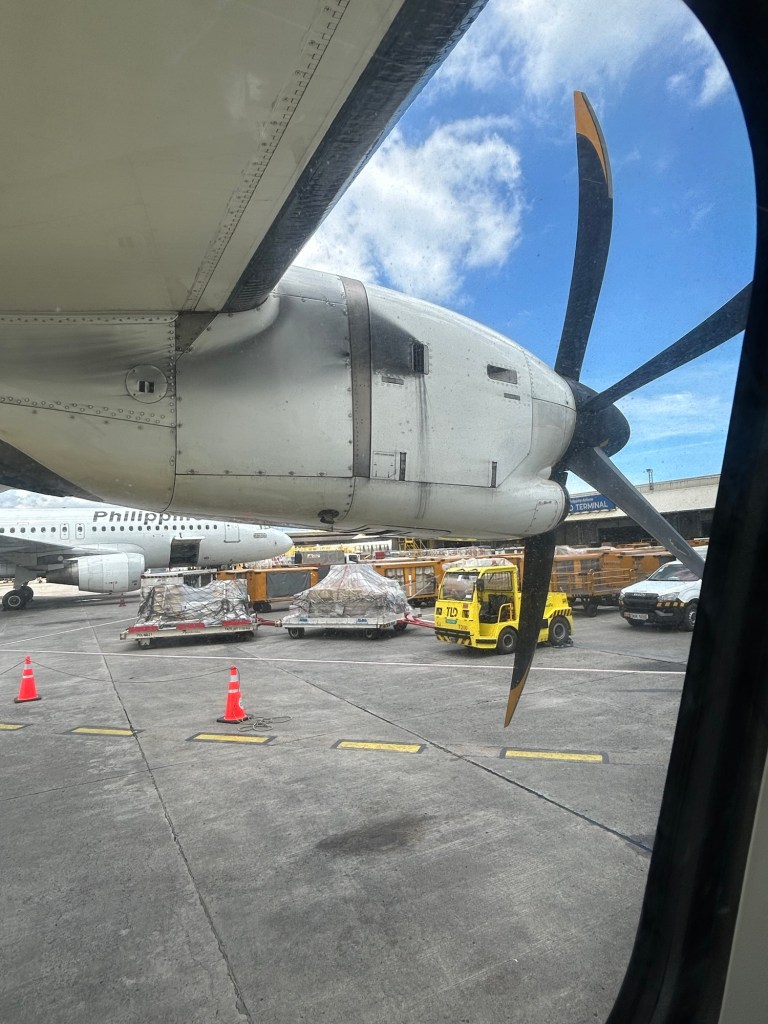
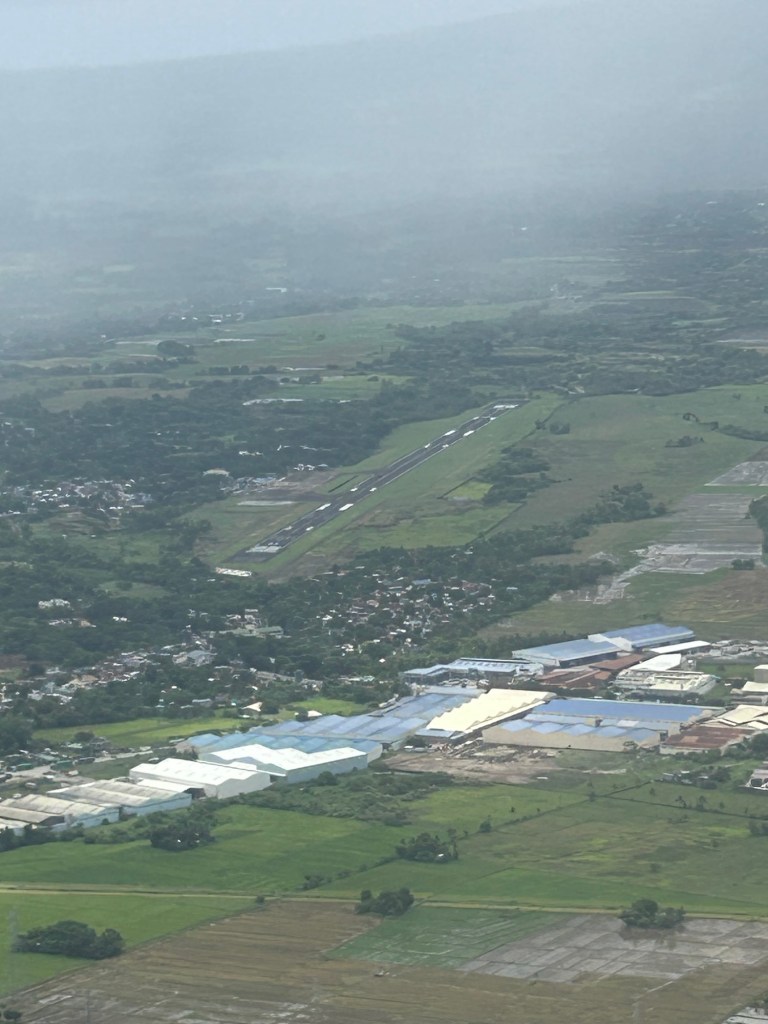
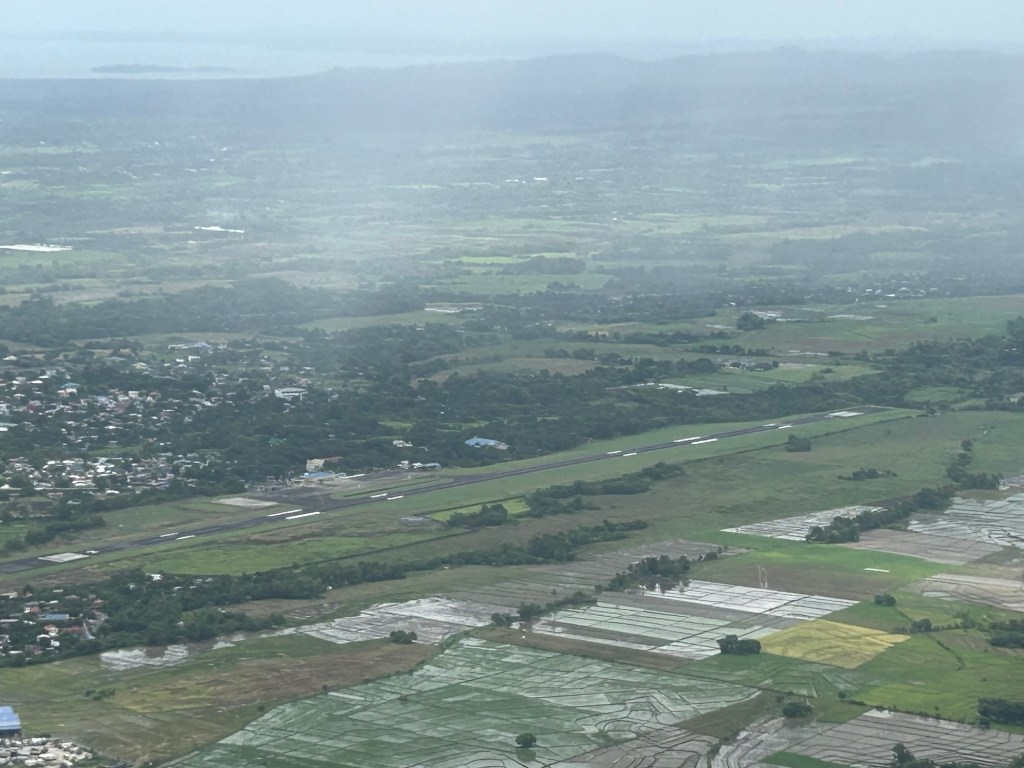
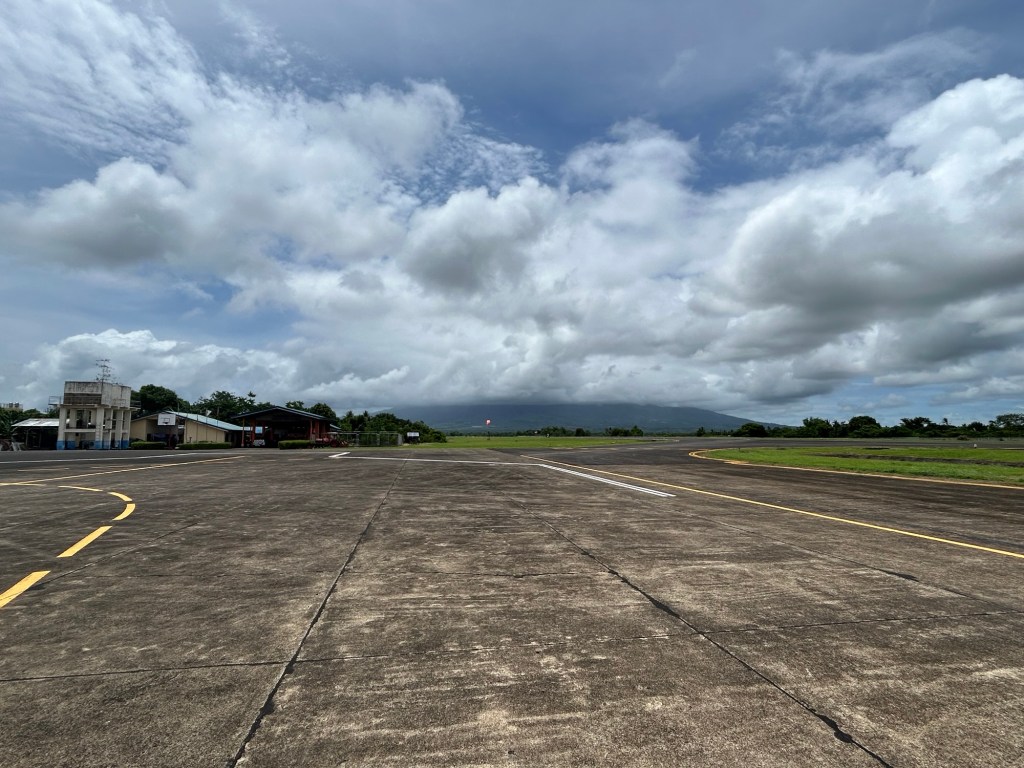
More on Naga City in the next posts!
–
Back in Bicol
I have not been to Bicol since before the pandemic in 2020. But that was in Naga City in Camarines Sur to which I have been a few times. I have not been beyond Naga City since my early high school days. That was my last travel to my mother’s hometown in Gubat, Sorsogon. I think that was when we traveled on the occasion of my maternal grandfather’s passing.
We arrived at Legazpi City yesterday via the Bicol International Airport in nearby Daraga. I was looking forward to this trip as I also wanted to see the new airport and, of course, Mayon Volcano. Unfortunately, the weather is bad and so I currently have not seen the volcano even during the plane’s approach to the airport.
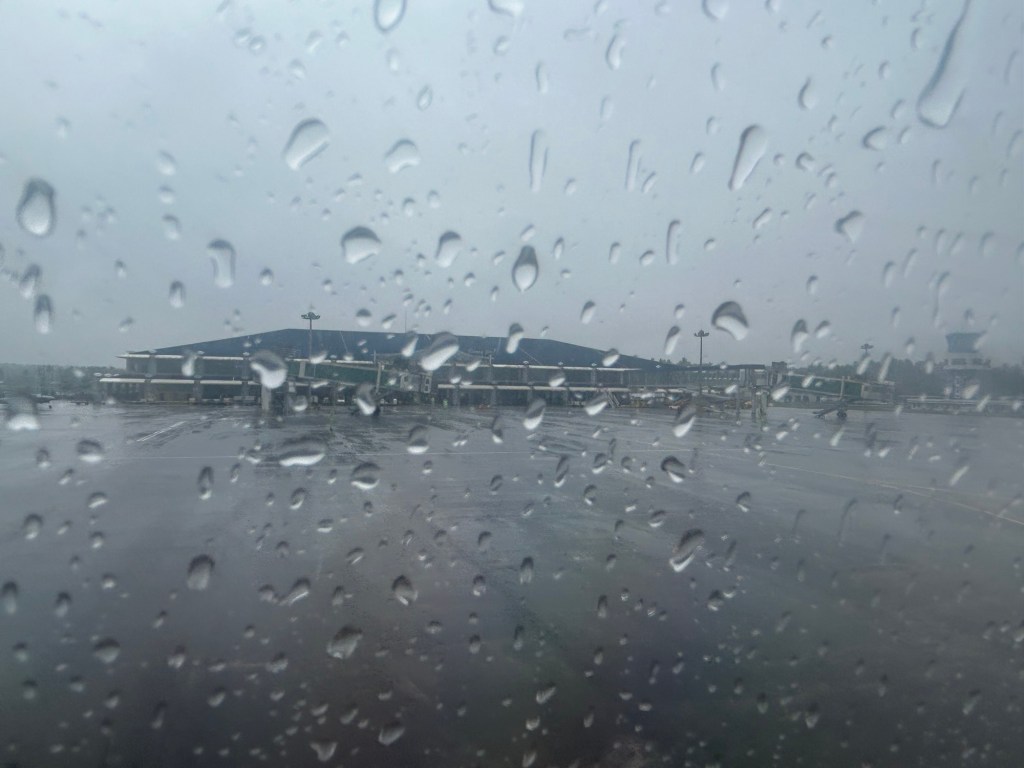
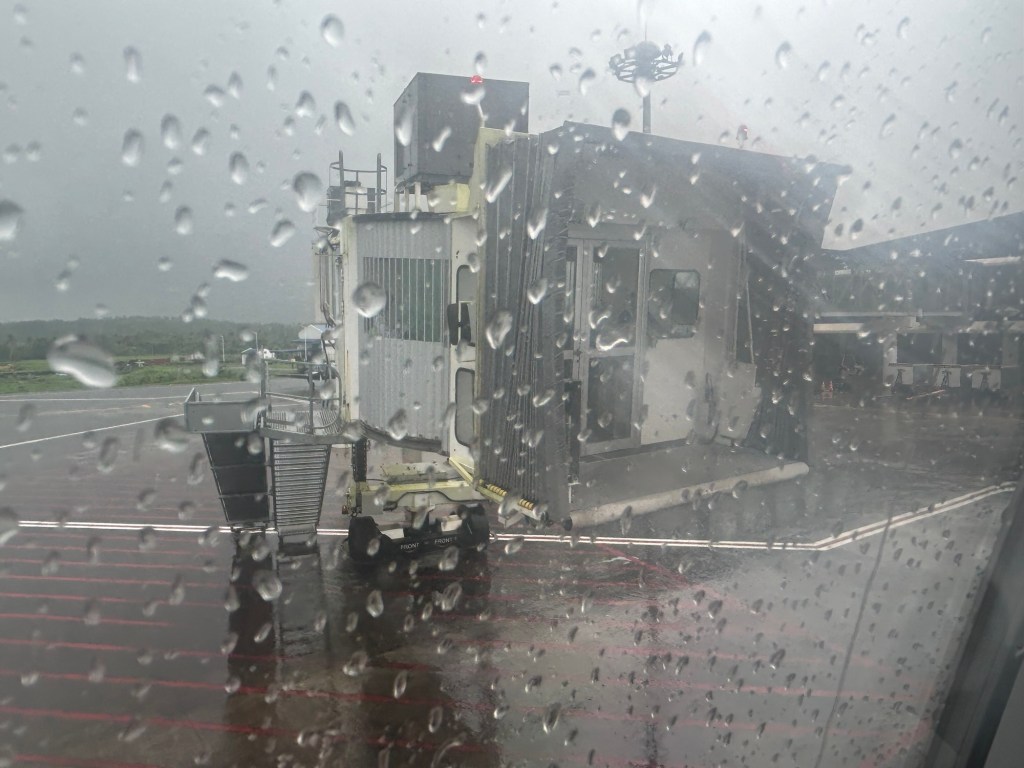
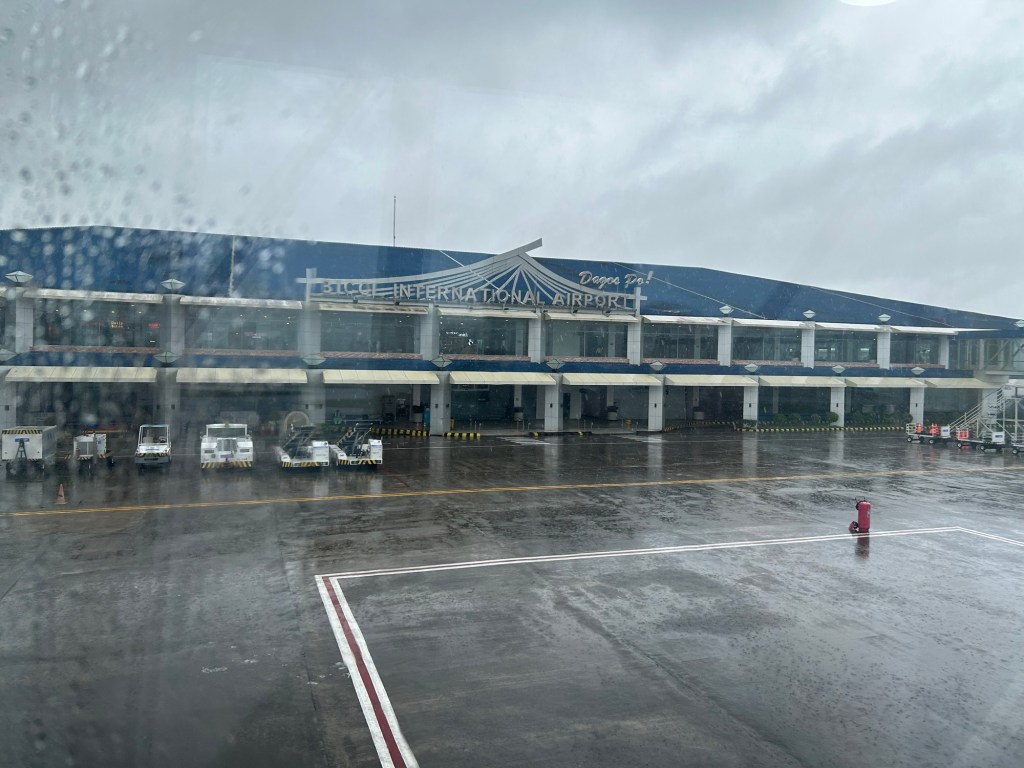
More on Bicol and Legazpi in future posts.
On the impact of more frequent lightning strikes on airports
We were waiting for our plane to arrive at the airport yesterday and can’t help but observe the heavy rains falling while a strong wind blows and causes the rains to fall at an angle. This renders umbrellas to be ineffective in keeping you dry if you’re outdoors. Such weather requires a long coat or even overalls to keep one dry on a very wet day. The rains and wind were brought about by a storm affecting the area. Though distant, the storm was able to influence the weather. Fortunately, there wasn’t any lightning and we wondered if lightning strikes have affected ground crew working in an open area that makes them vulnerable to lightning strikes. Here is an interesting article that describes the threat of lightning strikes particularly to people on the ground at airports.
King, R.E. (September 11, 2024) “Increasing Lightning Strikes from Stronger Storms Could Cripple Airports and Airbases,” Jalopnik, https://jalopnik.com/increasing-lightning-strikes-from-stronger-storms-could-1851645799 [Last accessed: 9/16/2024]
Quoting from the article:
“While flying planes are hardened to withstand lightning strikes, airports are typically a cluster of free-standing structures on a flat, open plot of land. The ongoing increase in lightning strikes caused by climate change is a direct danger to facilities and people on the ground.”
I wonder about similar data or statistics in the Philippines considering the long wet season we have that includes not just threats from typhoons but from seemingly small weather systems that may involve lightning strikes. I recall operations at NAIA were halted a few times when there were lightning storms. Is this phenomena. I wonder how many incidents at our airports have been reported and recorded pertaining to lightning.
–
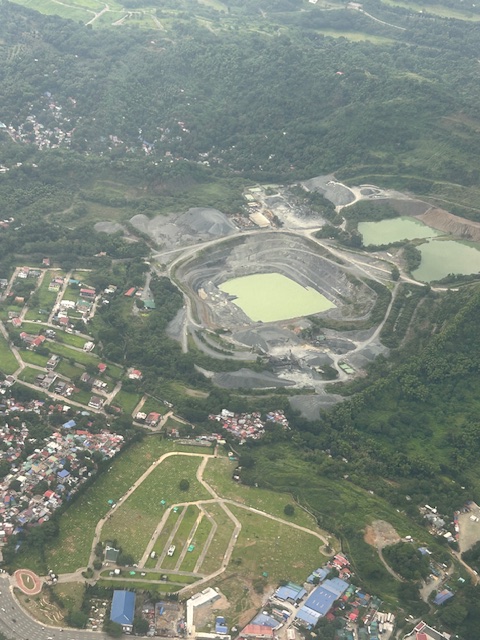
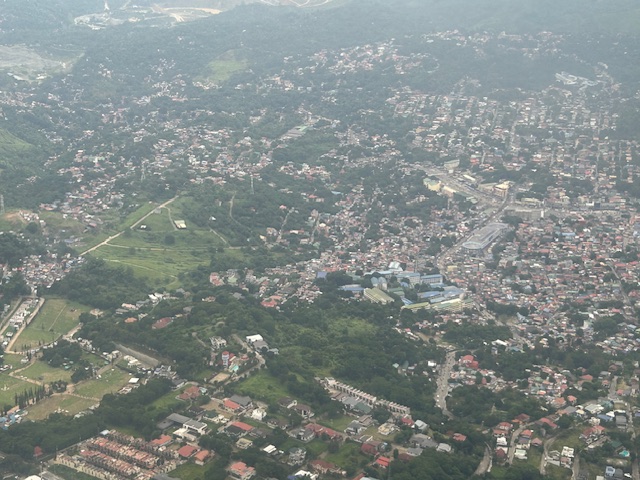
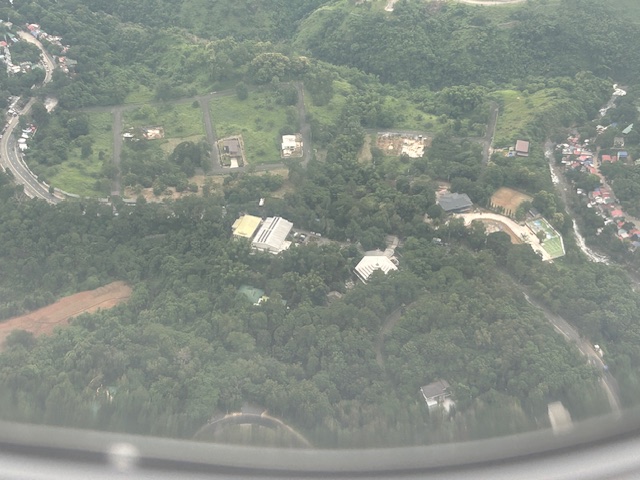
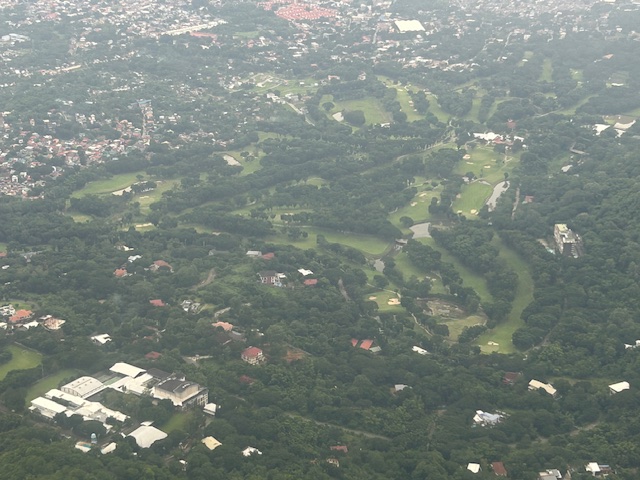
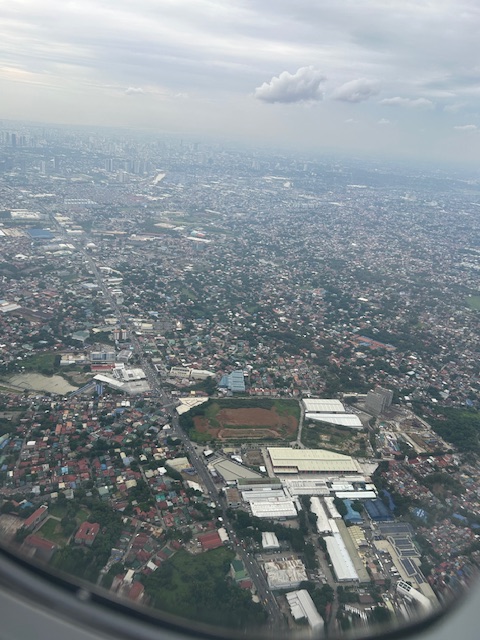
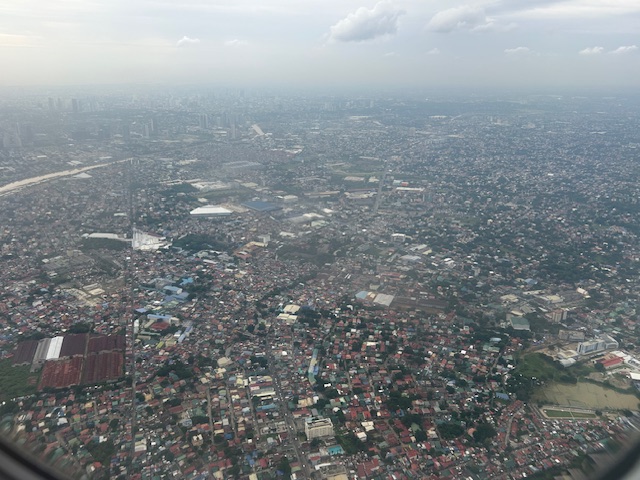
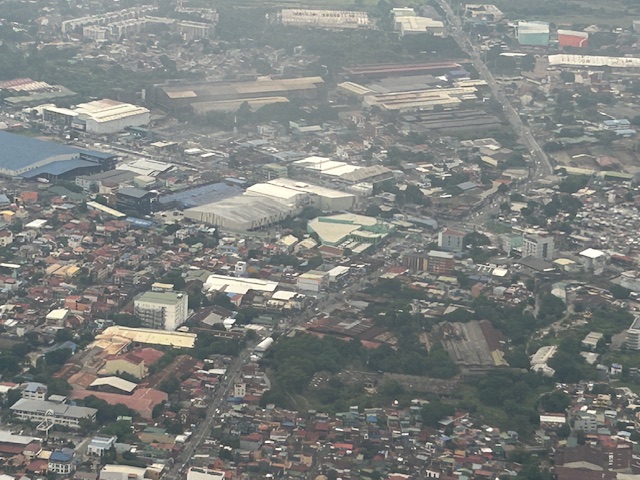
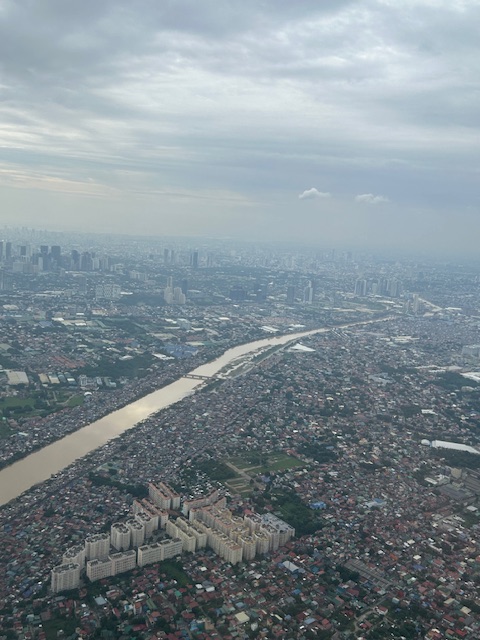
Aerial photos of Rizal
Following is a continuation of my recent post on aerial photos I took when I went to Iloilo for some meetings. This set is from our plane’s approach to land at NAIA. The path led us through Rizal province and the following photos mainly of Antipolo and Cainta.
–
Some aerial photos as we approached Panglao
Here are a few more photos from our plane as we journeyed to Bohol last week. This time, it is from the approach to Panglao. I was expecting the approach for the plane to pass above Cebu. I was rewarded with the following photos:
 Mactan Cebu International Airport as seen from our plane making its approach to Panglao Airport
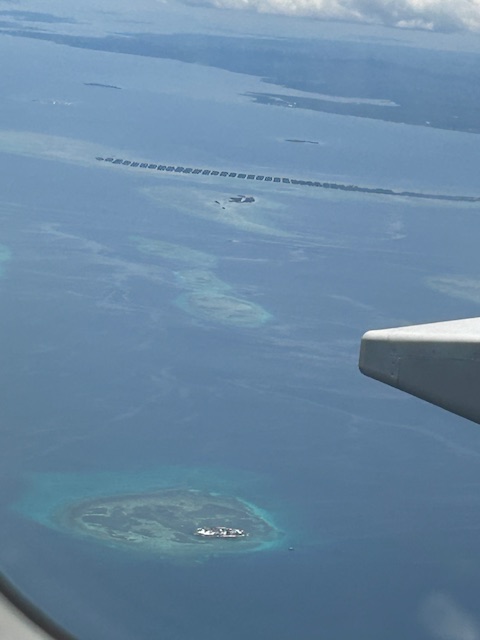 A view of the islands off Mactan and between Cebu and Bohol. There was a view of Olango Island but I wasn’t able to take a photo.
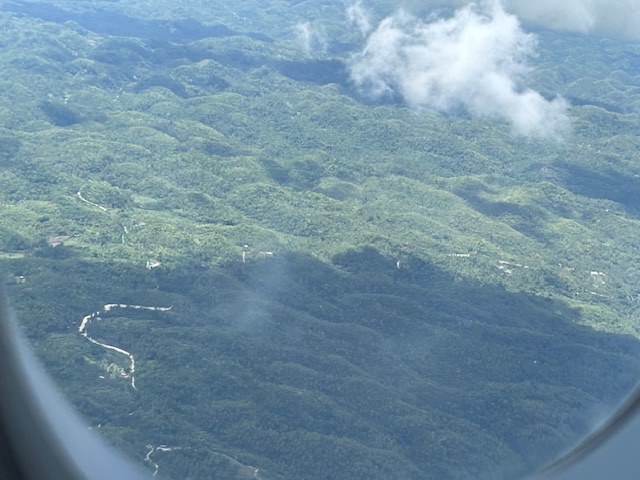 A quick shot of some of the hills at Bohol Island. I am not sure these are the Chocolate Hills but the formation, the geology is the same as the heritage site’s.
–
Some photos after taking off from NAIA
I took a few photos as our plane took off last week on our way to Panglao. The photos are not as good as I wanted them as I wasn’t seated at the window.
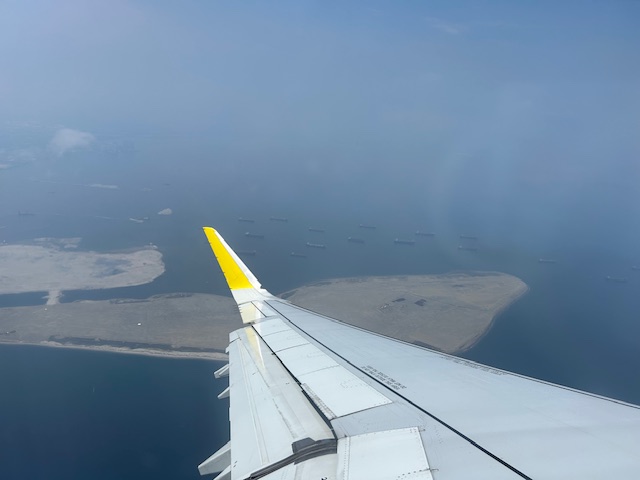 Reclamation at Manila Bay – there are currently several reclamation projects with various proponents. The projects were halted at one point during the start of the current administration. Some if not all have resumed implementation.
 A closer look at one of the reclamation areas. Note, too, the ships anchored around the area.
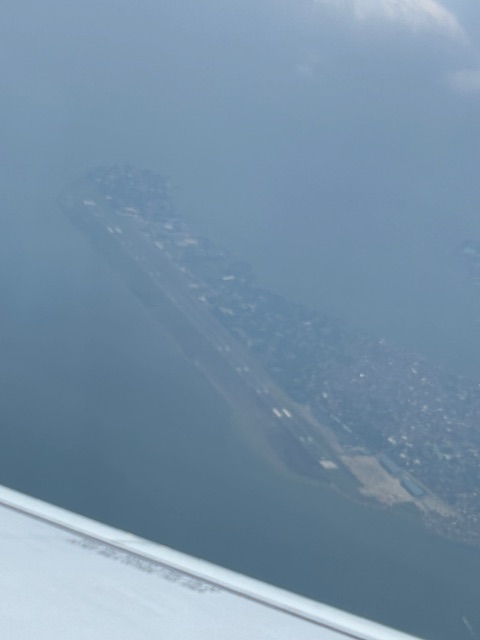 Sangley Point airbase as seen from our airplane. This is proposed to be the location of an airport recommended by a JICA study to replace NAIA. Not in the photo is the controversial former resort that is now a suspicious enclave.
The reclamation projects are also quite controversial considering many of the proponents involved Chinese companies. I have it from a reliable source who was involved in two of the projects that the project land values are sky high. So who would be able to afford settling, locating or residing in whatever will be developed in these reclaimed land? It would be very expensive for the typical Filipino and many local companies will probably balk at the property values. Whatever the developments would be, let’s just hope they don’t go the way of the former Island Cover Resort that is now allegedly a POGO facility.
–
Extreme turbulence during air travel
Transport-related news last week included a report about a Singapore Airlines B777 jet flying to London from Singapore that had to make an emergency landing in Bangkok due to extreme turbulence experienced. Many people were seriously injured when the plane suddenly ascended (“tilted up” as some news reports state) and then abruptly descended, resulting in people being tossed up and hitting the compartments above their seats. Obviously, these passengers were not wearing their seatbelts at the time. Otherwise, they would have been restrained to their seats. It is likely that the turbulence was not anticipated by the pilot as they usually advise passengers to put on their seat belts if turbulence was expected at any time during a flight.
The incident raises concerns about extreme and sudden turbulence occurring during flights. I guess this may happen anytime and aircraft instruments may not be able to tell the crew about an impending incident like this. Will such an incident have a significant impact on air travel? Perhaps not if these incidents remain rare. There should be records and monitoring of factors or elements leading to such incidents in order to establish the likelihood of these happening. Incident records will also show if there is an increasing frequency as well as the number of people killed and injured. Such information would be vital as more people use aviation for travel and there are more aircraft activity around the world.
As a precaution, it is good practice not to remove your seatbelt while seated in flight. If it’s tight, then loosen it. At least you have some restraint in case of incidents where the aircraft encounters sudden turbulence.
–
Dog on board – a cute dog on our Cebu Pacific flight
As we were boarding the plane that will take us to Cebu, we were ‘treated’ to the presence of another passenger. One passenger brought his dog with him on the flight. I don’t know what breed this is but it was really cute. One of the flight attendants carried the dog as the passenger placed his bags to the overhead bin.


 Wearing the shades and hood as they deplaned.
This was the first time I was on a plane with a passenger who had his/her pet with him/her. Bigger dogs would have to be on carriers and transported as baggage/freight. I know some airlines allow for big dogs to be in the main cabin if they have a ticket and a seat like other (human) passengers. There should be some guidelines for this as to what breeds are allowed including whether the dog has a pleasant temperament.
–
Article share – on aircraft evacuations and the case of JL516
Here is a very informative article on aircraft emergency evacuations, particularly the case of the recent JAL 516 where all passengers and crew were able to evacuate the burning aircraft.
Tamura, Y. (January 7, 2024) “Why the Evacuation of 379 Passengers from the Burning JAL516 Wasn’t a Miracle,” Medium, https://medium.com/japonica-publication/why-the-evacuation-of-379-passengers-from-the-jal-collision-wasnt-a-miracle-8a03cb02a95c [Last accessed: 3/4/2024]
To quote from the article:
“Japan is said to have become earthquake-resilient over the decades, but it’s less known that the same applies to aircraft accidents.
As the oldest Japanese airline company partially founded by the government in 1951, the history of JAL encapsulates the narrative of Japan’s aviation industry, punctuated by significant accidents.
It is none other than JAL that experienced the worst-ever airplane crash in the world. In 1985, JAL123 crashed into a mountain approximately 100 km from Tokyo.
The crash, believed to have been triggered by improper maintenance of the aft pressure bulkhead, caused 520 fatalities, the largest loss of life in a single aircraft.A former JAL employee comments that those who have survived traumatic incidents often grapple with returning to their duties in the sky. Despite this difficulty, they also carry a deep sense of responsibility to impart their experiences to younger crew members, contributing to the commitment to safety.
I agree that the successful evacuation was not a miracle but a product of the training and dedication of the staff as well as the culture and behavior that was very obviously Japanese. One wonders what could have happened if this were, say, an airliner from a third world country? Or perhaps even one from a country like the US? Would the evacuation have been successful like JL516’s?
–
 Caught (up) in traffic