
Home » Posts tagged 'DOTr' (Page 2)
Tag Archives: DOTr
Incorporating bike lanes along local roads – an example in Taguig City
I have not used an old route that we usually take to go to BGC from our place in Antipolo. This is via the Manila East Road, Highway 2000, Barkadahan Bridge and C6. From C6, we usually take Ruhale instead of Seagull Avenue as the former provided a shorter route towards Levi Mariano Avenue and C5. So it was only last weekend that I was able to see the improvements along Ruhale Street and how bike lanes were incorporated along this road. I am sharing the following photos showing a two lane road and Class 2 bike lanes.
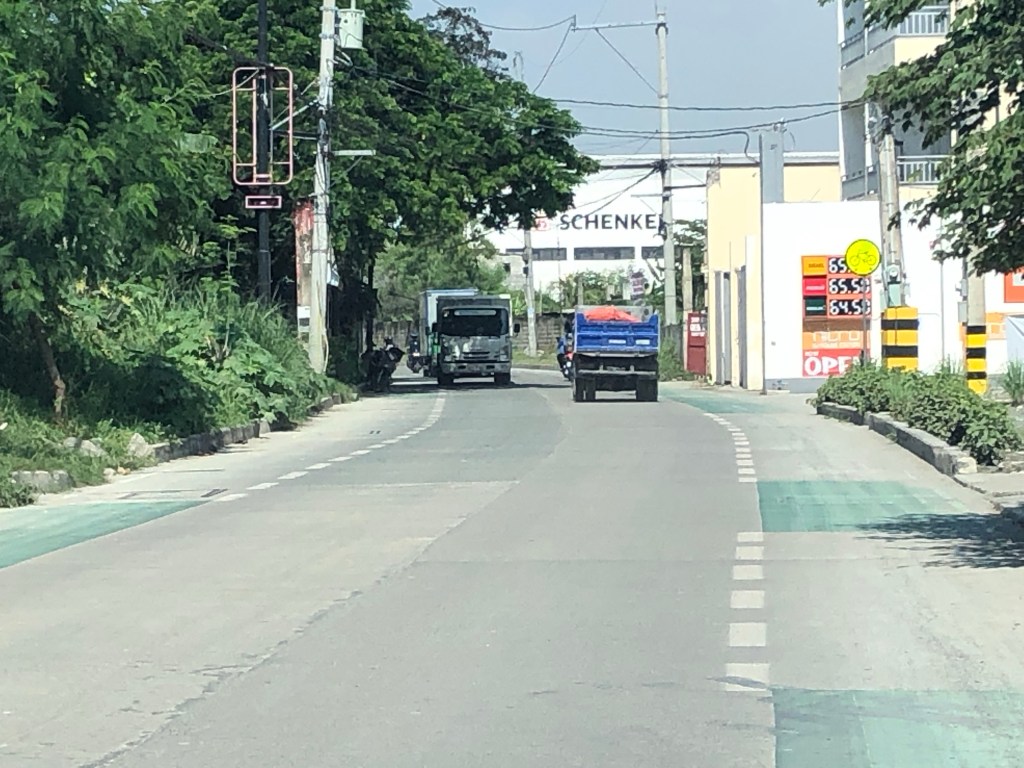 The green pavement markings indicate an intersection or driveway.
 Noticeable are the electric posts that remain along the bike lanes. These need to be transferred so they will not pose danger to all road users.
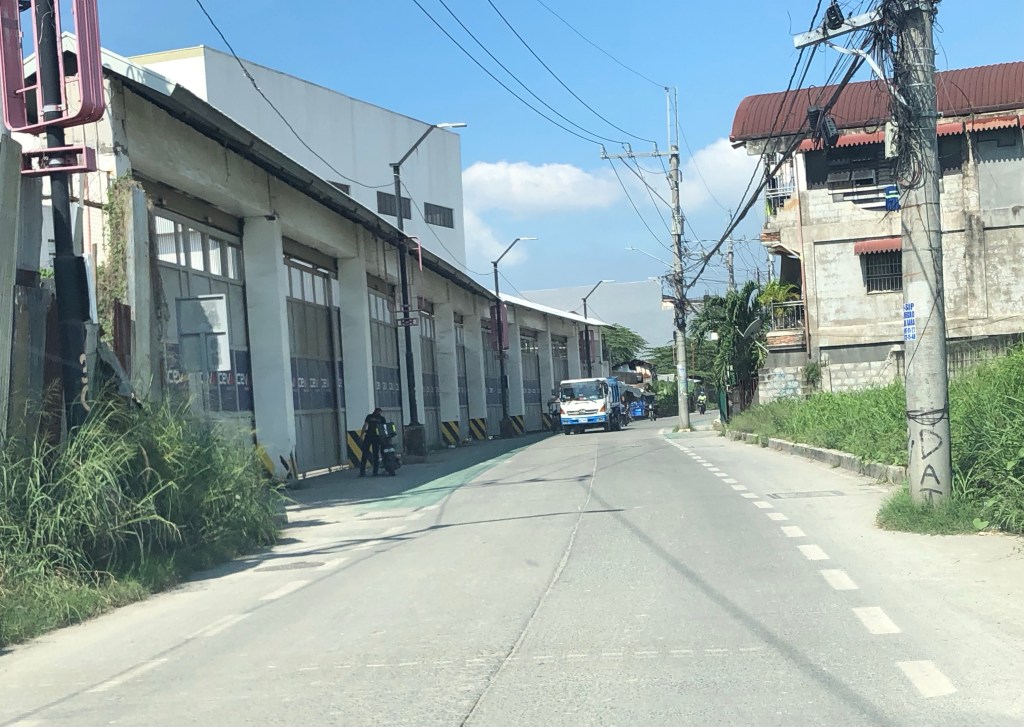 More electric posts along the bike lanes
 Bike lanes in front of an industrial establishment
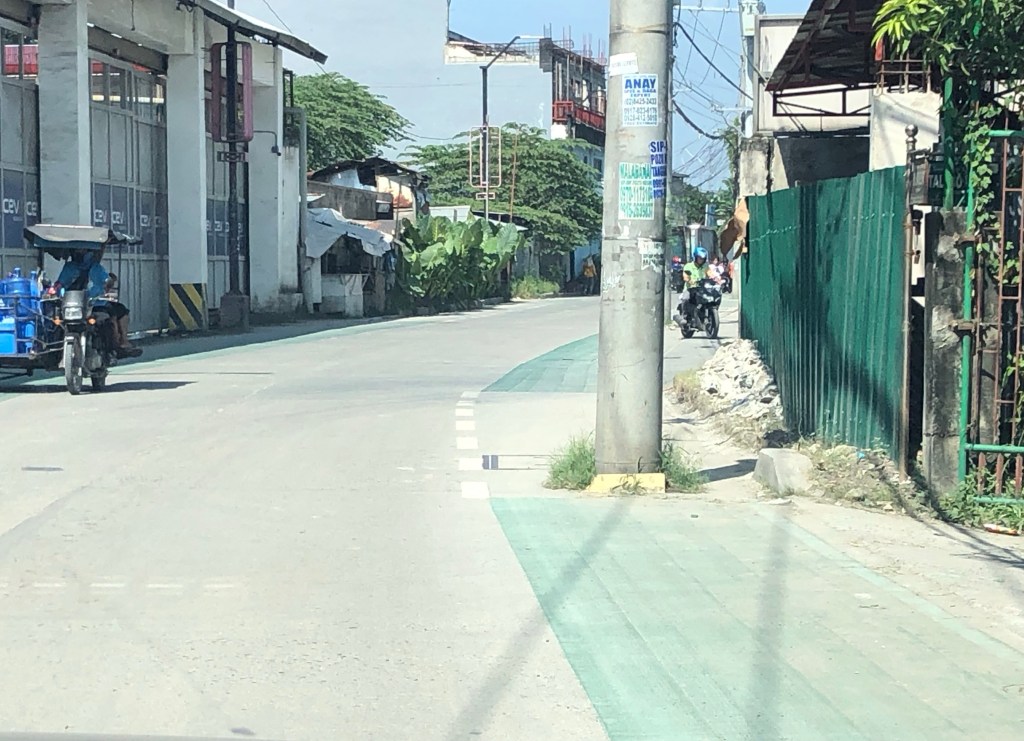 Close-up of a post in the middle of the bike lane.
 Bike lane across another industrial establishment. Again, note the green pavement marking across the driveway of the establishment.
 Bike lanes along a predominantly residential area along Ruhale.
I would consider this as a good practice example that can be replicated elsewhere. Of course, it is not perfect and as shown in the photos, there is much room for improvement including the transfer of electric posts that pose as hazards to all road users. The bike lanes are wide enough that installing bollards for the perception of physical protection vs. motor vehicles can be considered. Ruhale is generally a low speed, low volume road so perhaps the current state with no barriers would be enough for now. Also, we need to appreciate that these are already gains or wins in as far as active transport is concerned. A few years ago, this would not have been implemented by national or local governments.
–
Are transport strikes still effective?
There is supposed to be a transport strike today, after one group, Manibela, declared what they dubbed as a nationwide strike to protest versus the perceived jeepney phase-out and alleged corruption at the Land Transportation Franchising and Regulatory Board (LTFRB). I used the term ‘perceived’ to describe jeepney phase-out because what is actually unfolding or being processed is a rationalization of public transport services. There is also a modernization program where old jeepney units are supposed to be retired and replaced by vehicles that are low emission and higher capacity, among other characteristics. Perhaps one flaw, if you can call it that, is that the new vehicles look nothing like the conventional jeepney. They look like vans and buses. And so somewhat lost here is the classic image of the jeepney, which was heavily influenced by the old WW2 American Jeeps that were the base units that eventually became jeepneys.
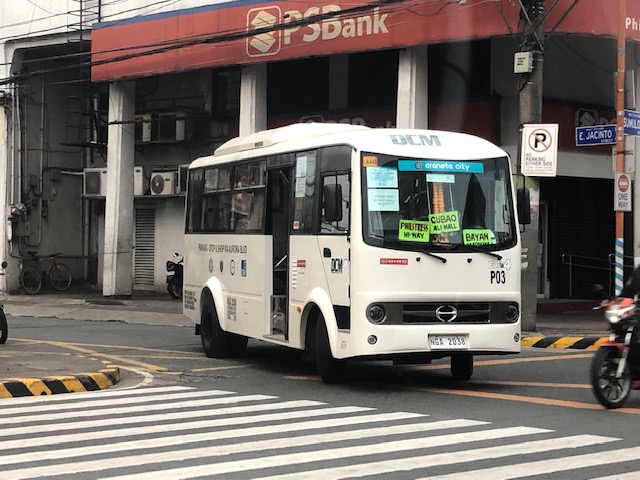 This does not resemble a classic jeepney
Fast forward to present and another declared transport strike fizzled out. It turns out that most transport groups did not want to take part for one reason or another. DILG Secretary Abalos even met with the heads of the more established groups and stated that 95% of jeepney operators and drivers will not join the strike. As many LGUs and schools already anticipated the potential impacts of a strike, they already suspended classes and reverted to online work (WFH) and study modes. In previous occasions, LGUs were prepared with a “Libreng Sakay” (free ride) scheme. That meant most people being able to get rides to go to work, school or home. Transport strikes now seem a thing of the past and further into the future, I don’t think they would be an option. The general public see these more as an inconvenience, and social media and a misinformation/fake news machinery at the employ of those in power means a transport sector with legitimate issues will be demonized.
–
Bike lane master plan for Metro Manila, Metro Cebu and Metro Davao
The Department of Transportation (DOTr) with support from the United Nations Development Program (UNDP) yesterday formally launched the Bike Lane Master Plan for Metro Manila, Metro Cebu and Metro Davao. Yesterday’s event was actually the third and last leg of presentations, which were also made in Cebu and Davao. Here are a few photos I got from the DOTr Facebook page (these are public):
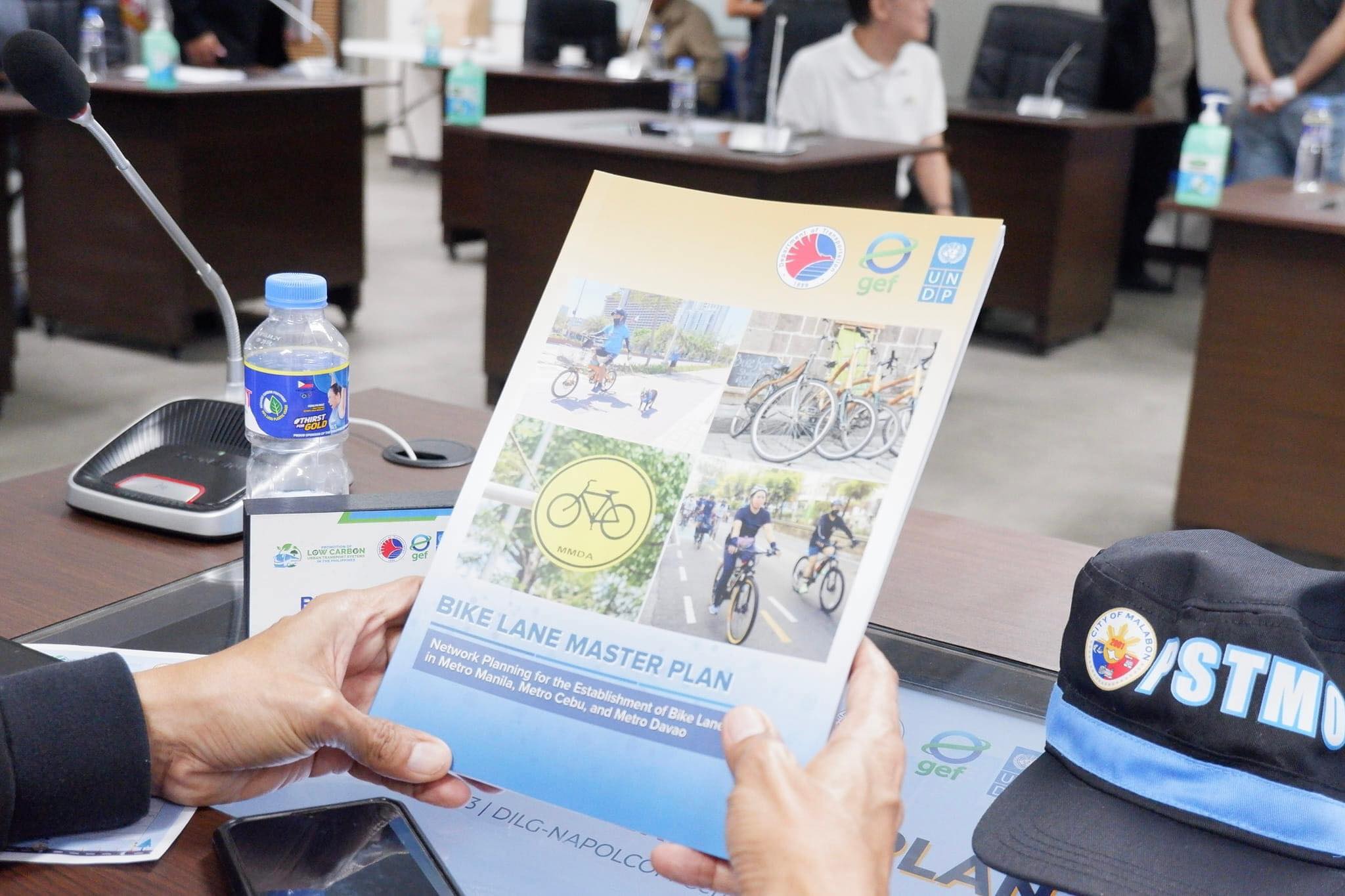 Printed copies of the master plan were distributed to attendees (Photo: DOTr Facebook page)
 Dr. Ricardo Sigua of the National Center for Transportation Studies presented the highlights or key features of the master plan. The UNDP engaged NCTS to conduct the master planning project for DOTr. (Photo: DOTr Facebook page)
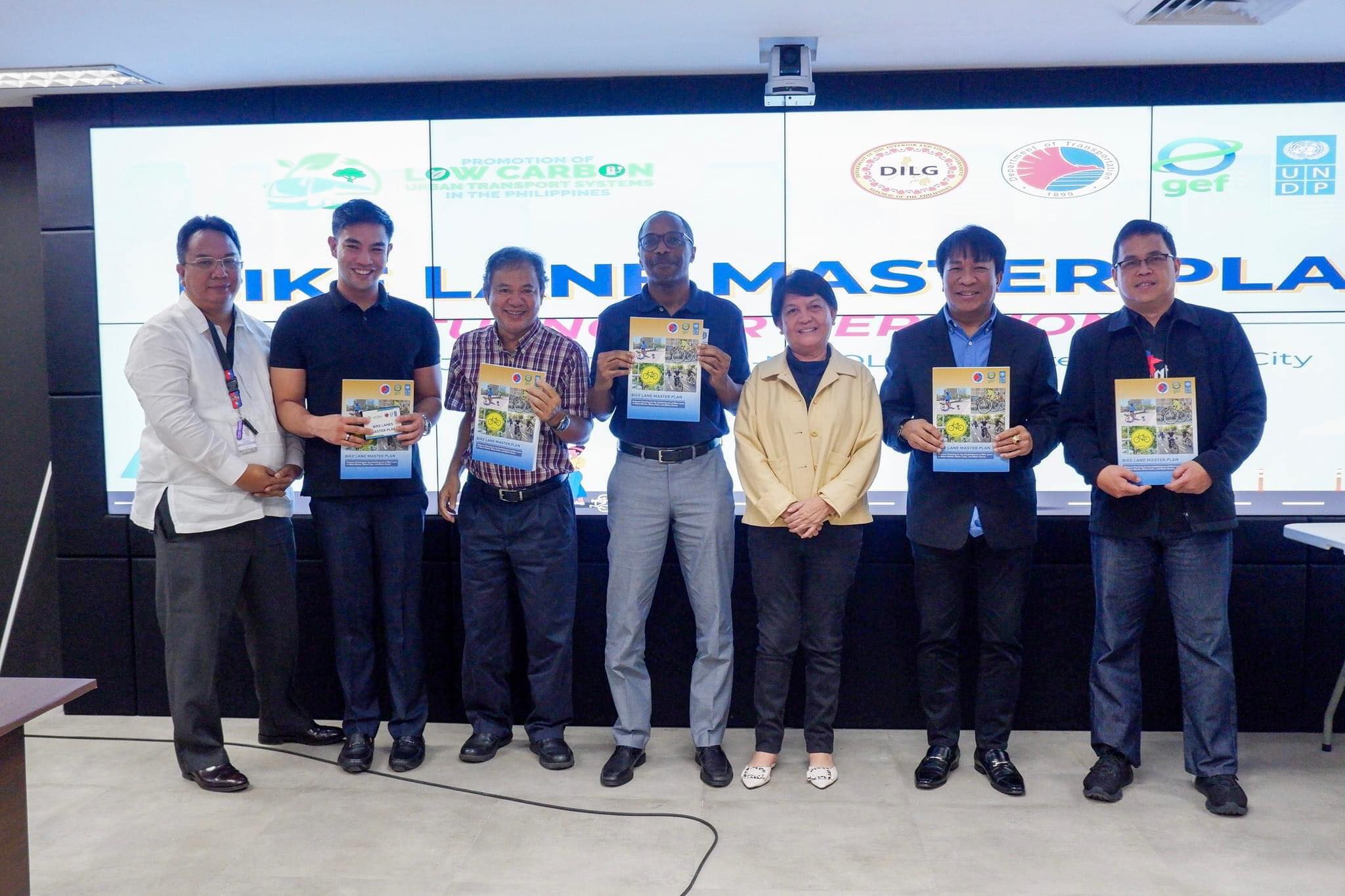 Photo op with participants from the MMDA (Photo: DOTr Facebook page)
While the master plan is most welcome as the country continues to build infrastructure for active transport (mainly walking and cycling), the launch is actually one year late. The project was actually completed last year and though most of the recommendations have yet to be carried out, many items including the inventories are already dated. These master plans though should not be static documents but dynamic in these sense that it would have to be updated regularly. For one, updates would provide the opportunity to reinforce or improve certain aspects of the plan. Updates also provide an opportunity to check whether progress is being made on the targets set in the plan. Also, since the master plan is for three metropolitan areas perhaps it can be part of the foundation for a nationwide plan. However, many plans fail if there is not support or scarce resources allocated for the implementation. Thus, there is a need for resources or allotments especially coming from government to support the realization of the plan.
–
Transport strike again?
There’s a 3-day transport scheduled starting tomorrow when the current President delivers the annual State of the Nation Address (SONA). The reason is reported to be to protest the government’s Public Utility Vehicle Modernization Program (PUVMP). I wrote a 4-part series on these strikes earlier this year and stated that such actions have been diminished over the years especially with government and its agents learning how to use conventional and social media to their advantage. That is, if you have a troll army at your disposal, you will definitely use it and take advantage of the commuting public’s growing perception (as influenced by government’s narratives) that the strikes are unnecessary and based on unfounded gripes. So the blame goes to the drivers and operators and the organizers rather than on the government agencies even despite the legitimate arguments by the former. In this case, it’s supposed to be about PUVMP but most commuters are indifferent about supporting the strike as it can be viewed as vs. modernization of public transport, which people link to improvement (i.e., modernization = improvement).
Here is the link to the last and concluding article in the series:
A brief history of transport strikes – Part 4: impacts and implications
I think my conclusion and the observations I presented in the series still holds. Given the resources and the alternatives to counter the potential impacts of a strike, going through with one presents a likely failure to get support from commuters in general.
–
A brief history of transport strikes – Part 4: impacts and implications
What was supposed to be a week-long transport strike by jeepney drivers and operators was called off yesterday. Frontpage news showed a photo of representatives of protestors with government officials. Government official statements also declare that the government will be talking with the transport sector to sort out issues and to try to address these in relation to the PUV Modernization Program (PUVMP). One day earlier, government was quick to state that the strike had no impact on transport. Were there really no impacts?
I think the fact that schools went back to online mode and offices allowed employees to work from home show the impacts of the transport strike. If you haven’t noticed, the government has been using the tactic of cancellation of classes for quite some time now. To reduce the impacts of transport strikes on commuters, classes on all levels were canceled, thereby reducing transport demand. The only difference now is that there is capacity for online classes due to adjustments made during the height of the pandemic. So instead of cancelling classes altogether, schools reverted to online mode. Meanwhile, for those who needed to go to their workplaces and did not have their own vehicles, there were various free rides (libreng sakay) services provided by national and local government agencies. Cities like Quezon City already operated their own bus services so people could take these instead of their usual PUV modes for commuting.
What are the implications of the shortened strike? The shortened strike has various implications. One is that it showed the protesters did not have enough resources to sustain the strike. It also showed that transport leaders appear to just want some attention from government. A colleague commented about this being something like a show or the strike being part of a game of “bad cop, good cop” among government officials and agencies. If you haven’t noticed, this has been going on for some time now. Government already knows how to reduce the potential impacts of protests like this. Suspending classes in schools significantly reduces the travel demand on a typical weekday. Offices giving their employees the option to work from home during the strike also adds to the reduction in travel demand. And libreng sakay vehicles are easier to deploy as agencies and LGUs have vehicles for this purpose. Meanwhile, the continuing rise in motorcycle ownership also contributed to people being able to still commute (i.e., having the motorcycle taxi option). At least for Metro Manila, once the railway projects are completed, there will be a railway option for commutes. Barring a simultaneous strike with buses and vans, protests from the jeepney sector will surely be diminished.
–
A brief history of transport strikes – Part 2: reasons for a strike
The current transport strike is not about fare hikes or the rising prices of fuel. Those are the most common reasons for jeepney drivers and operators going on strike. It’s quite simple for these reasons: Drivers protest when government refuses to increase fare rates amidst rising costs of operations and maintenance. And they don’t when fares are reduced as fuel prices are going down.
The Department of Transportation (DOTr) through its Land Transportation Franchising and Regulatory Board (LTFRB) is tasked with evaluating operations and maintenance costs of public utility vehicles and prescribe the minimum and incremental fares for these services. Fare hikes (and reductions) are the consequence of fuel price increases (or decreases) but are not set as dynamic or automatic. Fuel prices, as can be observed, can fluctuate and currently change every week. Fares are not automatically adjusted whether fuel prices are increasing or decreasing and are heavily regulated by government in part to supposedly protect the interests of the riding public. As such, fare matrices or the structured fares according to the various routes and the distances covered by public utility vehicles
The reason for the current transport strike is generalized as a jeepney phaseout. The term ‘phaseout’ actually refers to the PUV Modernization Program (PUVMP) of the government that seeks to replace all conventional jeepneys with ‘modern’ or ‘modernized’ units. The latter include mini-bus types as well as those that retain the conventional jeepney form but usually larger and with newer engines and interior layout. This is not necessarily a phaseout like the one I described in Part 1 along the LRT Line 1 corridor.
Again, much of the opposition cites the high cost (and therefore unaffordable) of a modern jeepney. The financing schemes currently available as well as the requirement for jeepney operators and drivers to be part of a transport cooperative to avail of these financing schemes are still considered unacceptable by many. And yet, government seems unwilling to extend resources in order for operators and drivers to be able to afford a new vehicle. The old jeepneys would still have some value but definitely not near a substantial down payment needed for low monthly payments. These monthly payments cannot be covered by the typical boundary (basically rent) for operators or the daily income for drivers.*
What is the cost of replacing conventional jeepneys with new, ‘modernized’ vehicles? Well, let’s assume that a new vehicle costs 2.4M pesos. Also, perhaps cover only the ones operating in the urban setting (i.e., exclude for now those serving provincial routes especially those used also for freight (e.g., top loads)), say 50% of the estimated 250,000 units need to be replaced. That goes up to 300 billion pesos. If we were to replace only Metro Manila jeepneys, that will be 132 billion pesos. These numbers can be compared to the cost of major projects like the Metro Manila Subway (488 billion), the Bataan-Cavite interlink bridge (175 billion) and the New Manila International Airport in Bulacan (735 billion). Would it be worth it (benefits-wise) to invest in new jeepneys?
–
*Of course, this also indicates a flawed business model for jeepney operations. But that’s another story.
A brief history of transport strikes – Part 1: introduction
A nationwide week-long transport strike by jeepney operators and drivers From a CNN news report yesterday, it was stated that an estimated 4 out of 10 or 40% of jeepney drivers will be going on strike and halting operations for a week. These are supposedly members of the group Manibela, which claims to have over 100,000 members nationwide (Aren’t you curious how many jeepneys there actually are nationwide? There are supposedly more than 250,000 public utility jeepneys operating across the country with about 55,000 in Metro Manila.). The other 40% are certain that they will not be going on strike and these include members of the more established groups like PISTON, ACTO and Pasang Masda as well as those who belong to the many transport cooperatives that were formed the last so many years in part for the purposes of modernization. The remaining ones are undecided and include those also affiliated with those groups and those who claim to not have any affiliations.
If media companies like GMA, the defunct ABS CBN and even government station PTV have archives dating back to the 1970s, they will probably see that similar interviews have been conducted of jeepney drivers. Libraries like the National Library or perhaps those of leading universities like the University of the Philippines and Ateneo de Manila University would likely have archives of newspapers from way back. I remember UP Diliman having microfiche facilities but I am unsure to what year they have archives. You will likely read similar reports and interviews about jeepney operations during those times. The idea and initiatives for phasing out the conventional jeepneys is not a new thing or topic. It has been out there for quite some time but in different forms and contexts.
For example, there was a proposal to phase out jeepneys along the corridor of the LRT Line 1 in the Feasibility Study for the railway line as well as in the Metro Manila-wide studies that were conducted in the late 1970s and early 1980s. Jeepneys plying the Monumento-Baclaran and Monumento-Harrison Plaza routes were among those identified for phasing out. Careful reading of the reports though will also show that ‘phase out’ actually meant ‘rationalizing’ or ‘rerouting’ the jeepney services so they will complement the mass transit line. That never happened and the jeepneys still operate today (probably many are still the same jeepneys from the 1970s and 1980s!). Do passengers ride them from Monumento to Harrison (or vice versa)? Probably not as the travel will be too long compared to riding the train. They survive because of the short trips, usually less than 4 kilometers, by passengers who probably should be walking or cycling instead if we were in a Japanese, Korean, Singaporean or European city.
Fast forward today, the call apparently is for a phase-out in favor of the “modern” jeepneys (many are actually mini-buses). Jeepney operators and drivers are also being called to join or form cooperatives under which they can be part of programs that will replace their conventional jeepneys with a ‘modern’ unit. One issue here are the terms for the replacement or the acquisition of a new vehicle. The cost of a new vehicle varies and can be more expensive than a new SUV (e.g., more expensive if not as expensive as a new Montero, Fortuner or Everest) depending on the model and the size of the vehicle. This is apparently the most significant concern among others that is being cited by those opposing or resisting modernization, which they equate to a ‘phase out’.
One of the ‘modern’ jeepney models currently operating in Metro Manila
More in the next article for this series…
–
Early risers and commuters
I was half surprised the other day when I went out to go to our office at 5:00 AM. I am no stranger to early morning or very late night travels including driving myself. I’ve done so under various circumstances before including going to the airport for an early flight or driving to a hospital due to an emergency. You don’t see many people waiting for rides at 11:00 PM or perhaps 3:00 AM. These are basically what people refer to as ‘unholy’ hours. People are asleep during these times. If not, they probably are working the so-called graveyard shift. The latter used to be for workers employed in facilities like factories that usually operate 24/7. Nowadays, these include business process outsourcing (BPO) workers who are active in part due to their employers being in countries in different time zones (e.g., US and Europe).
At one point before the pandemic, transport and traffic had become so bad that people had to leave their homes earlier than when they had. For example, instead of leaving at 7:00 AM, employees had to leave at 6:00 AM in order to reach their workplaces at 8:00 AM. Students have to leave at 5:30 AM to reach their schools at 7:00 AM. Now that we are still in a pandemic but returning to the ‘old normal’ it seems to have become worse than before.
At one point during the pandemic, a senior transport official stated that people will just have to wake up earlier if they want to get to their destinations on time. Whether this was serious or in a joking manners, to tell people to wake up early (or earlier) if they want to get a comfortable ride or just even to get a ride is insensitive. It only shows officials to be uncaring. But that probably is linked to their being elitist or privileged that they cannot even empathize with the regular commuters. With a new administration in place, we seem to have more of the same kinds of officials in our transport agencies but hopefully, the younger staff can convince their bosses to be otherwise and really work towards improving commutes.
–
Examples of legislative actions in support of active transport
While the Philippine government and various local government units seem to be reneging on their commitments to support active transport, other countries have been building on their gains during the pandemic. Here are examples of legislations in New York State that will support active transport through funding of complete streets projects and institutional arrangements for representation of transit dependent individual:
The article is about two legislations:
Legislation (S.3897/A.8936-A) Provides Funding for “Complete Streets” Projects Inclusive of a Holistic Approach to Street Design
Legislation (S.3959-B/A.7822-C) Adds Board Seats to NFTA, RGRTA, CDTA, and Central New York Regional Airport Authority Dedicated to a Transit Dependent Individual
We hope to see something like these at least at the local level. Perhaps if LGUs are able to legislate and implement these, there will be more good practice examples that will compel national government to support active transport development. The latter is actually ironic considering that many plans are supposed to spell out the national government’s commitment to active transport. There are still live memorandum orders and department orders supporting and promoting active transport. Are these also being waylaid? That will be tragic for transportation if we didn’t learn or gain anything from the experiences during this pandemic.
–
On Metro Manila having one of the worst transit systems in the world
This is a follow-up to the previous post on the UC-Berkeley Study. Here is an example of how media featured the study outcomes:
https://www.facebook.com/CNNPhilippines/videos/1089453421728393
I didn’t see whether there was a response from government. These studies end up as features and nothing more if these do not prompt or push authorities to act on the problem. Even experts from academe or industry are reduced to being commentators or even pundits providing context, assessments and opinions, even recommendations that are perceived to fall on deaf ears. Perhaps government is already desensitized about these issues and will just trudge along at its own pace? In the end, it is the commuters mostly taking public transportation who continue to suffer and lose productive time to their daily travels.
–
 Caught (up) in traffic