
Home » Posts tagged 'electric vehicles'
Tag Archives: electric vehicles
Green GSM spinoff?
Yesterday, we saw what looked like a Green GSM taxi in Antipolo. The color scheme was certainly the same and the vehicle was of the same Vietnam-made model (Vinfast).
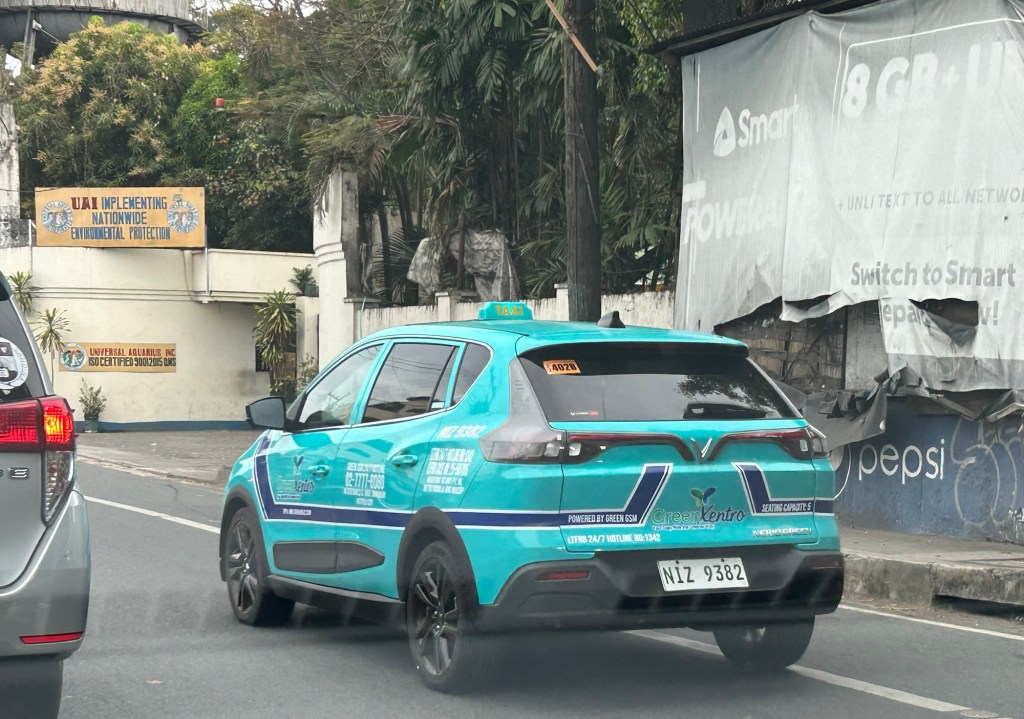
The operator is Green Xentro. Xentro refers to the company operating a few small malls in Rizal and Marikina.
It’s probably related to Green GSM, which might be the mother company. This brings the taxi service closer to Rizal towns. I also have seen a few maintenance shops in Antipolo having a sign indicating they can service Vinfast vehicles. This is welcome if it means we ‘ll see more of these taxis around Rizal towns.
–
Green GSM taxi first impressions
These past months, I have been alternately using Grab and In Drive vehicles for my commutes. If I had another choice, it would have been Green GSM taxi. I have used their taxis traveling between Quezon City Pasig City and within Quezon City. So far, it’s been a good experience including in terms of the fares I’ve paid. Green GSM boasts of an all electric vehicle fleet. They are also a big company compared to the current taxi operators in Metro Manila. I think what may be comparable in terms of fleet size would be the taxi companies in Cebu, Iloilo and Davao. The difference, however, is in terms of their business models. The usual taxis are still basically rental vehicles for the drivers. The latter pay the owners/operators a fee (i.e., boundary) and usually the drivers have to cover fuel and other operating and maintenance costs.
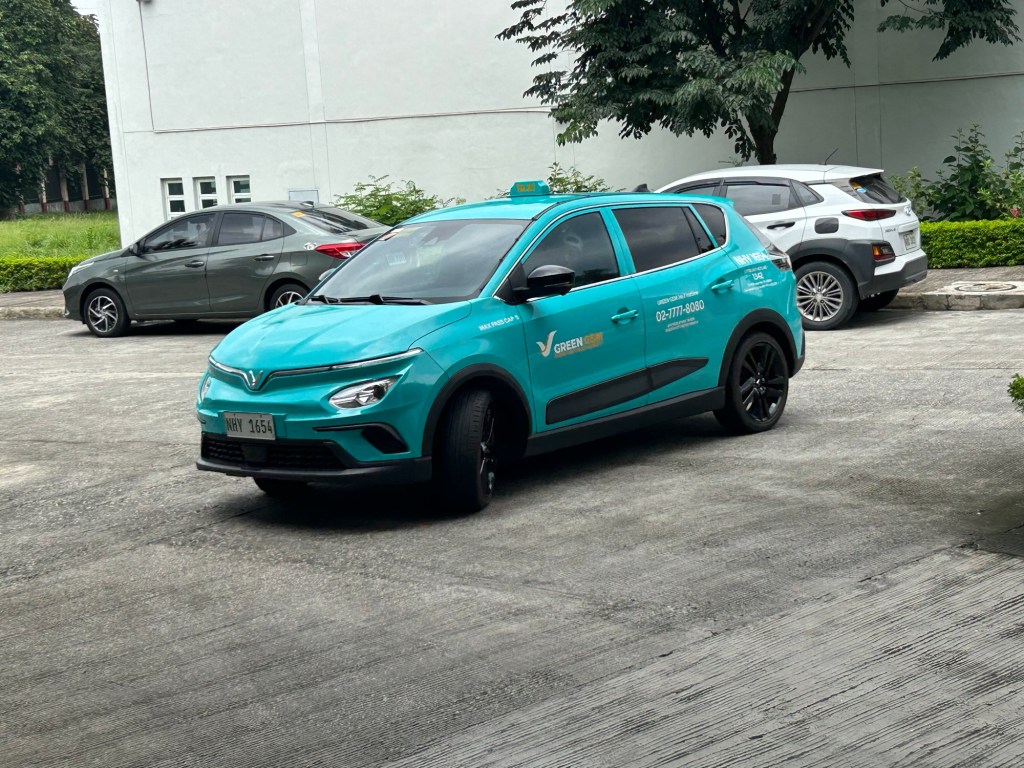
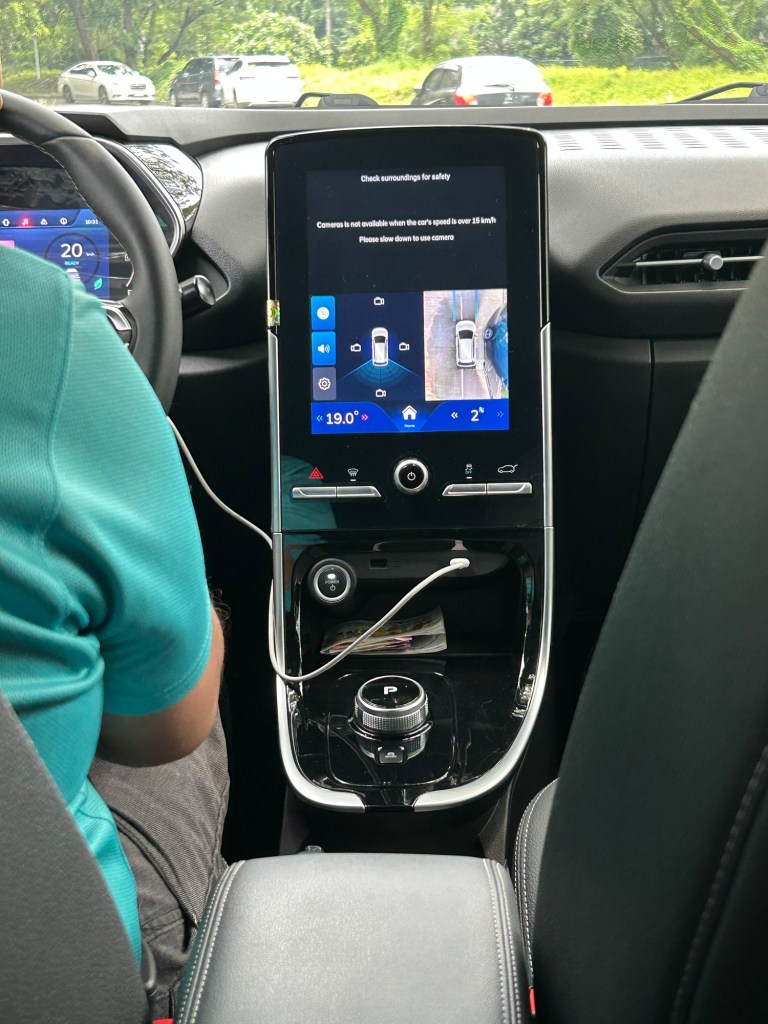
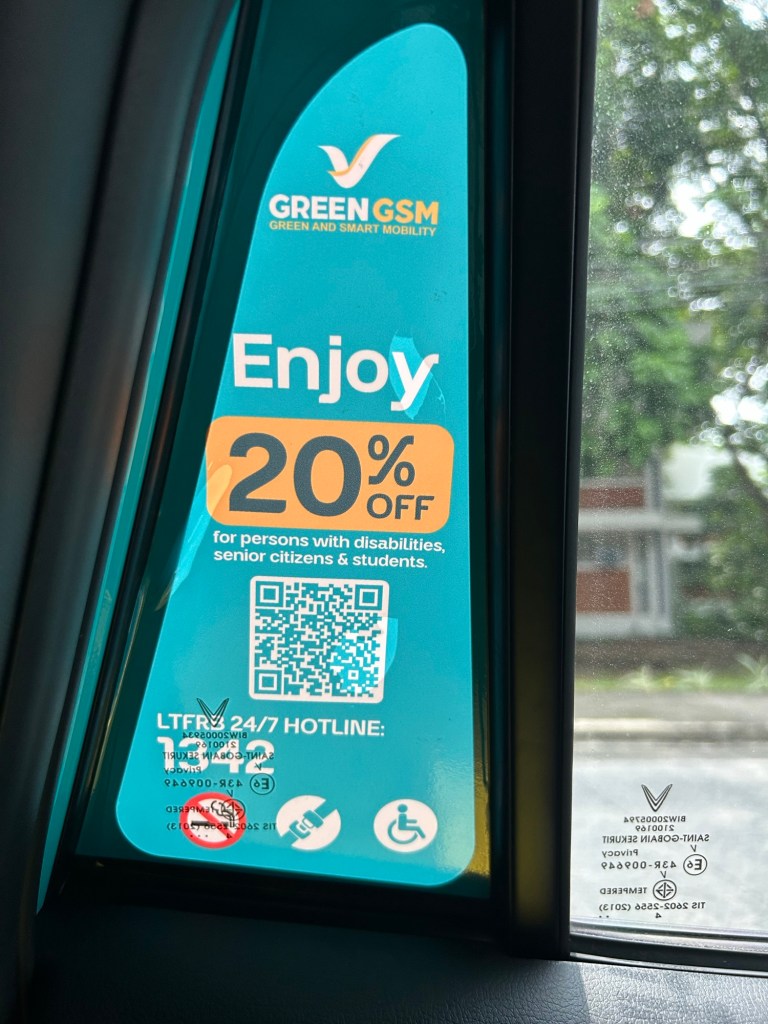
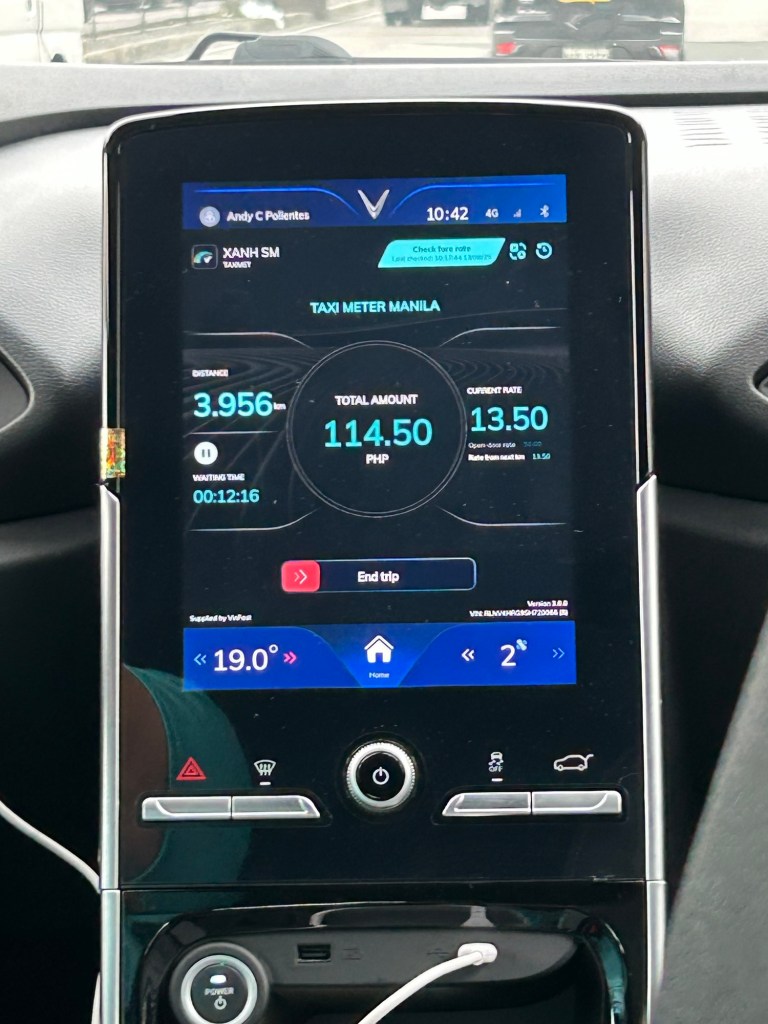
The Green GSM taxi drivers I’ve talked to say they receive a regular salary and have benefits very much like regular employees. They also had accredited stations where they can charge their vehicles or conduct maintenance such as change tires. You can also hail them on the street much like the conventional taxis. You don’t need an app to book a ride but it is more convenient to use their app. The limitation though is that currently you can only book a ride using their app for trips within Metro Manila. If you’re heading out like to Antipolo City, the app will display an error in terms of coverage area. If you happen to hail one of their taxis though, you can use them to go outside Metro Manila. I’ve seen them in Antipolo, Cainta and Taytay so I guess you can also hail them instead of being dependent on the app.
I have a couple of students whose research topic is on Green GSM Taxis characteristics. We’ll soon find out more of their operating characteristics and how their attributes compare with those of TNVS or ride-hailing services like Grab and In Drive.
–
More electric vehicle taxis
I wrote about the new player in town, Green GSM Taxi, which has an all EV fleet. But while this is a relatively big company, there are smaller players who are also operating EV taxis. Here are a couple of them.
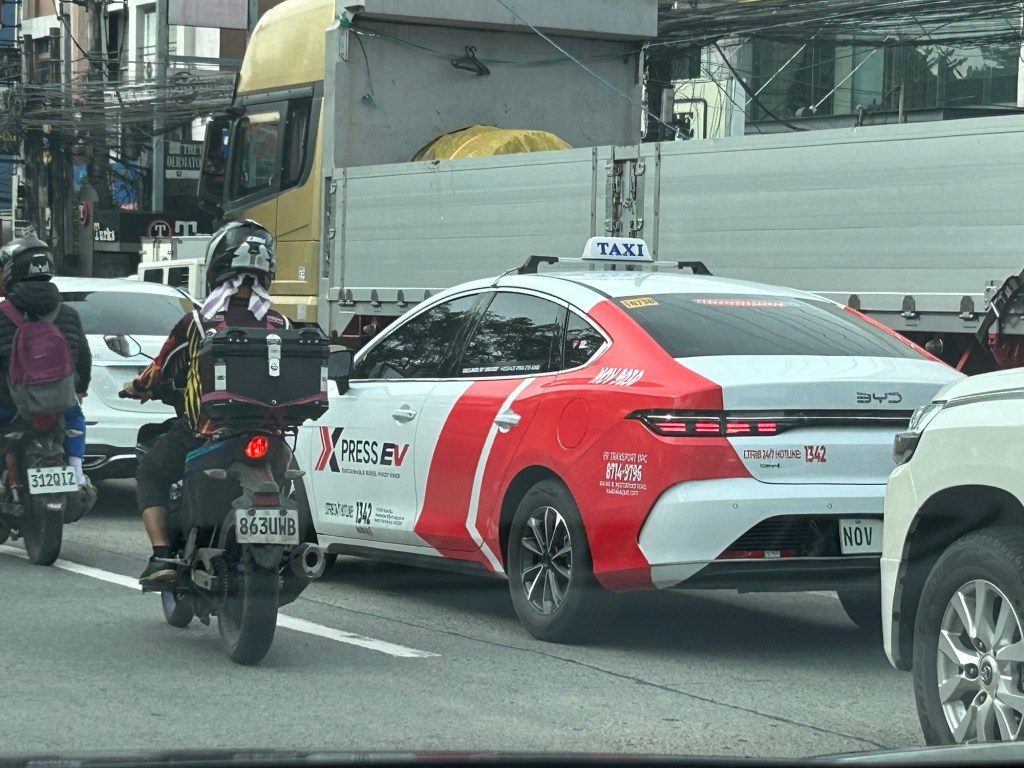
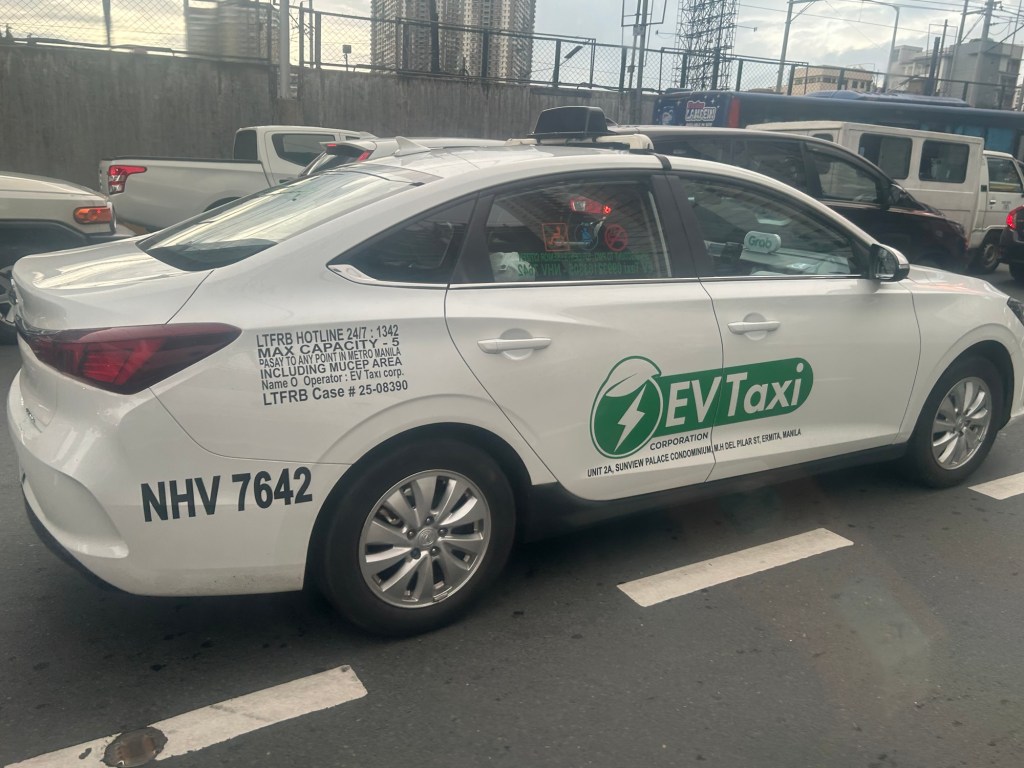
The last one, EV Taxi, is affiliated with Grab. The former doesn’t have sticker or anything identifying it with any of the app-based services. I haven’t seen many of both Xpress EV and EV Taxi so I assume there are fewer vehicles under the operator. This is much the same as previous conventional taxi operators and a consolidation of sorts is via one of the app-based companies like Grab. Is this (small operator) a sustainable venture? Is there anything new about these taxis aside from the vehicles being electric? Maybe the drivers are the same as before (for better or worse)?
–
E-trikes in Naga City
Just like other cities in the Philippines, Naga City now has electric tricycles operating and providing transport services. These are welcome developments for many cities and municipalities as these trikes are low emission and low noise vehicles. They also basically have higher passenger capacities compared to the conventional trikes though service characteristics may not be so different from the conventional trikes. For example, ‘special’ rides mean fewer passengers.
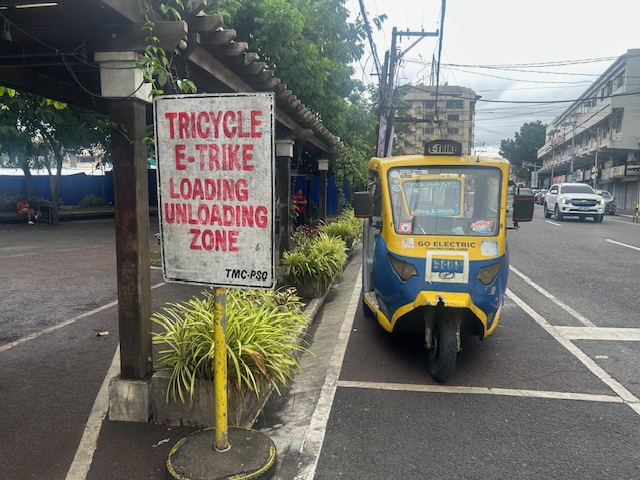 E-trike station at Plaza Rizal
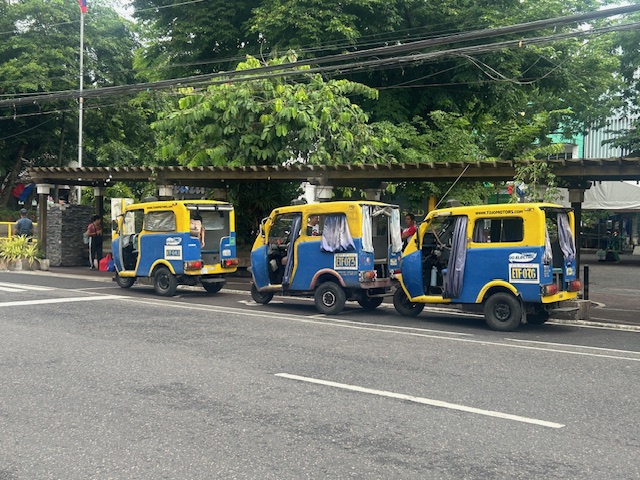 E-trikes queued at the station
Despite the popularity, there are still many questions regarding e-trikes. These include durability, battery life and profitability. With the proliferation of e-trikes and their various models, these issues hope to be resolved in the next few years as more evidence relating to these and other issues come out.
–
Electric taxis anyone?
Finally saw one of the taxis operated by Green GSM, which is a Vietnamese company. This is supposed to be the first all-electric taxi service in the Philippines.
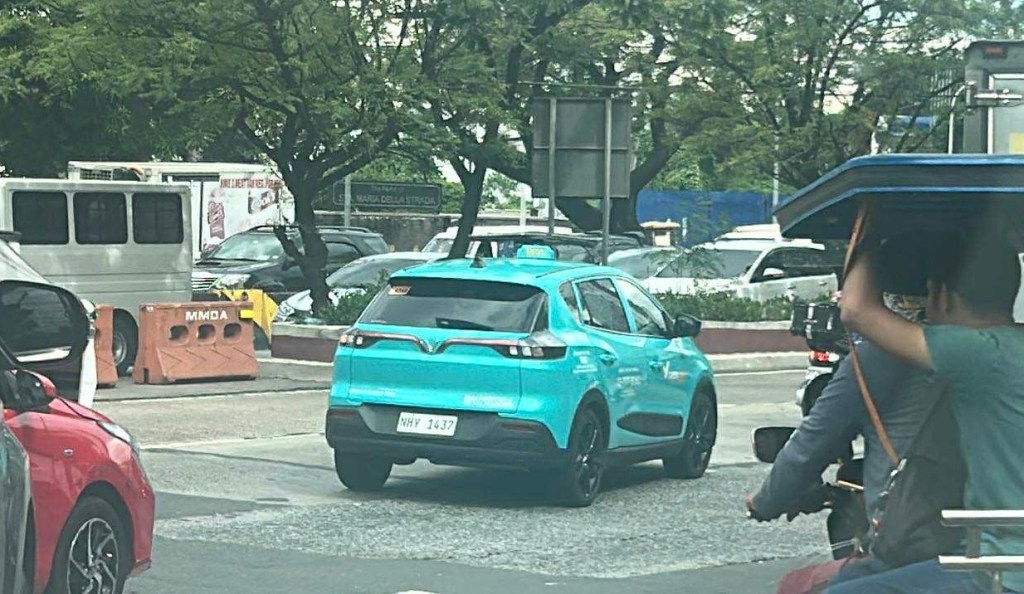
My colleagues and I were talking about this. Among other topics is whether these taxis will not encounter problems once the rains pour and many streets are flooded. We also wondered whether these vehicles will add to the congestion; slugging it out with the established competitors.
Another, more deeper and serious topic is whether these are really clean. While these are emission free as far as the proverbial tailpipe is concerned, the sources of power are not necessarily so.
While we do have renewables in the mix including hydro, geothermal, solar and wind, much of our power used to produce electricity uses fossil fuels.
–
“Coding exempt” vehicles and the demise of the coding scheme
I saw this car ahead of me during my commute. I knew this was an electric vehicle and these as well as hybrid ones were given an incentive in Metro Manila. They are “coding exempt” meaning these vehicles can be driven any day and ay hour during the weekdays.
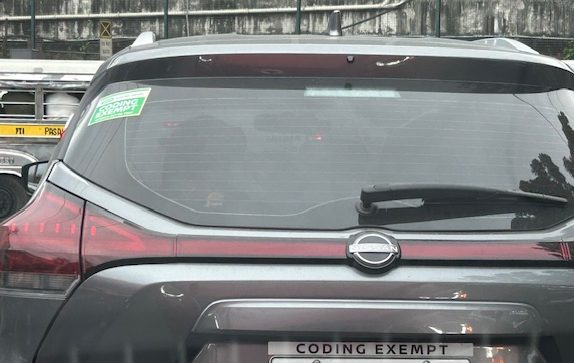 Are they selling these ‘coding exempt’ accessories or do these go free when you buy these cars?
People ask if the number coding scheme (UVVRP) in Metro Manila is still effective or relevant. Well, the answer is a ‘no’ and that is because over time, people have adjusted to it. Car owners have bought a second, even third vehicle that they call their ‘coding’ vehicle. Others opted to purchase motorcycles. And so that’s what we generally see along most roads in Metro Manila. It didn’t help that hybrid and electric vehicles are given exemption from the coding scheme. Those who can afford to buy yet another vehicle or perhaps replace their conventional ones are already buying these as evident from their increasing presence along our roads. While there is the perceived benefits with less emissions and air pollution, we still lose with congestion and its derivatives. Perhaps we should already have a congestion pricing scheme implemented for Metro Manila like the one in New York City. And proceeds should go to the improvement of public transportation to help arrest the erosion of its mode share in favor of private vehicles.
–
On a different kind of transport – electric suitcases
Here’s an interesting article for Sunday. I guess you’ve probably seen these at airports and even malls?
Unseen Japan (February 3, 2025) “Japan Warns Against Use of Electric Suitcases ,” Medium.com, https://unseenjapan.medium.com/japan-warns-chinese-travelers-against-use-of-electric-suitcases-d3eb946f2980 [Last accessed: 2/23/2025]
To quote from the article:
“Electric suitcases act as miniature people-movers, preventing people from having to walk from point A to point B in sprawling locations like airports. With a speed of 10 to 13kph, they’ve proven especially popular among tourists from China.
They’re also somewhat dangerous. On top of the danger of running into other passengers, people can lose their balance and take nasty spills.
The devices have proven a nuisance outside of airports, too. Last year, police in Osaka charged a woman for riding an electric suitcase on a sidewalk. Riding the device violates Japan’s motor vehicle laws, as it’s not legally classified as an e-scooter. It also violates the law around motorized vehicles on the sidewalk, which are only allowed for certain devices that restrict their top speed to 6kph.”
While these “act as people-movers”, I don’t think these could be regarded as transport under the category of micromobilities. If these are allowed to proliferate, then these will create new problems and come into conflict with active transport. What do you think?
–
Article share: On improving the Philippines’ transport system
I share this article on the desire for a sustainable transportation system for the country. This was written by a former Assistant Secretary of the Department of Transportation (on secondment) who has returned to teach at the School of Urban and Regional Planning of the University of the Philippines Diliman. Here is the article published by the Philippine Daily Inquirer:
To quote from the article:
“The present condition of the Philippine public transport system is indispensable to the desired transition from more sustainable, in this case, electric forms of transportation—to a better public transportation system. A good public transportation system is defined by reliability, accessibility, safety, and security…
The imperative to consolidate is clear and crucial. It is not just a technical necessity, but a pathway to inclusive growth where all stakeholders benefit from the transition, and where we can truly create an inclusive and sustainable system for public transportation.
Improving public transportation, by making it cleaner, safer, and more accessible, will directly enhance the quality of lives of Filipinos.”
–
On the current issue about 2 and 3-wheeled electric vehicles
Electric vehicles are again in the news due to the proposed policies regarding them that the government is planning to implement. These include banning them from national roads and requiring their registration as well as their drivers having licenses. While it seems simple enough to many, there are complexities involved here due to the provisions of a law incentivizing the e-vehicle adoption and use.
Most recently, the Electric Vehicle Association of the Philippines or eVAP released a statement regarding the proposed policies on electric vehicle use. Here is their press release, which is available from their official Facebook page:

I tend to agree with the eVAP statement more than the stand of other organizations or entities. Perhaps its because I know many people behind eVAP (at one time I was one of their advisers) and trust that their statement is based on informed discussions not just among themselves but their partners and cooperators among different sectors including the government.
–
The wrong message for electric and hybrid vehicles
There are two billboards along Katipunan Avenue, each displayed to face either the northbound or southbound traffic along the busy thoroughfare. The ad by a major Japanese automaker is a sales pitch for one of its electric vehicle models. The ad states one of the incentives or come-ons for electric and hybrid vehicles granted by government (in this case the Metro Manila Development Authority) to encourage people to buy electric or hybrid vehicles; ideally to replace their fossil fuel-powered vehicles.
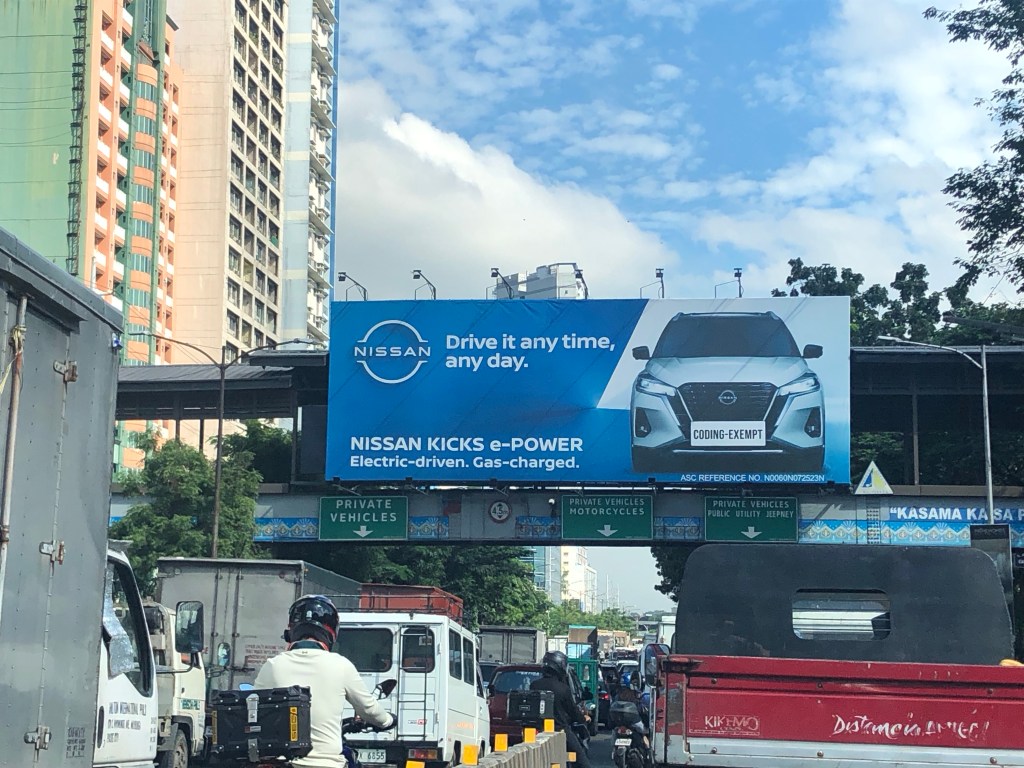 Electric and hybrid vehicles in Metro Manila are exempt from the MMDA’s number coding scheme. The ad is clear about that especially as a selling point for the vehicle featured.
At this point, more electric and hybrid vehicles would probably translate to more traffic congestion. They will just be replacing the conventional vehicles if not adding to them. The incentive will actually backfire vs. the MMDA since the number coding scheme will eventually be rendered ineffective (di pa ba?) with the addition of these coding-exempt vehicles.
–
 Caught (up) in traffic