
Home » Posts tagged 'habal-habal' (Page 2)
Tag Archives: habal-habal
Habal-habal in Metro Manila
Motorcycle taxis, called habal-habal in the many parts of the Philippines, are usually associated with rural areas where 4- or even 3-wheeled vehicles would have a difficult time traveling. Meanwhile, larger vehicles probably won’t fit in narrow rural roads, which can be more like a trail than a road. I saw this habal-habal station along Circumferential Road 6 in the Pasig City part of the road. The area is part of a large relocation area for informal settlers. The settlement is basically unplanned, with homes/buildings a mix of shanties and other design-your-own structures with narrow streets and alleys. The latter is most suitable to walking, bicycles and yes, motorcycles.
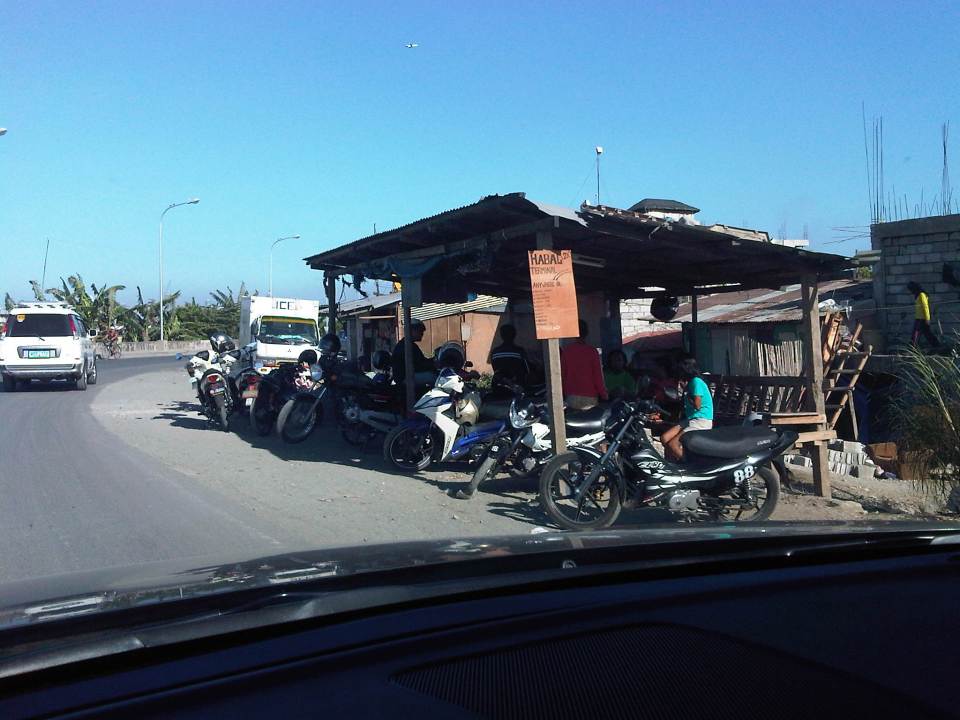 Habal-habal terminal along C-6 in Pasig City near the Napindan Channel
Despite the denial of many local governments including the MMDA, there are motorcycle taxis operating around Metro Manila. Many of these are in areas where there are no public transport services. Tricycles or pedicabs are not allowed or cannot access these areas (streets too narrow or in bad condition). Walking could have been an option but pedestrian facilities are probably even worse or walking distances are long and therefore inconvenient and uncomfortable to most. I don’t know about the fares for their services but I’m sure these are based on what people are willing to pay and established from what providers initially asked for such services. It is likely to that the operators of these services and their passengers know each other as the people in the communities served by habal-habal tend to know each other or another from other people (i.e., everyone knows everyone else).
–
Habal-habal in Metro Manila?
Habal-habal is the term used for motorcycle taxis that proliferate in many rural areas but are steadily making their presence felt in urbanised areas as well. In Metro Manila, there are already some reports and spottings of habal-habal operations at Bonifacio Global City and in the White Plains area in Quezon City. I’m sure there are other areas where these informal services are being offered and the easiest way to spot these are by way of observing if there are motorcycle riders waiting in an area with extra helmets. The usual excuse if they are accosted is that they are just going to fetch someone (perhaps a relative or a friend) so they bring along that extra helmet for that person. When they do engage a passenger, I would like to think that they just ask the passenger to play along with them should they be apprehended and asked about their business.
Checkpoints around Metro Manila and many other cities and towns routinely stop motorcyclists to check on their registrations (i.e., there are many unregistered motorcycles around the country) and to pre-empt crime involving those “riding in tandem.” Motorcyclists with more than one passenger are risky and have a higher likelihood for severe crashes. The provision of services in exchange for monetary compensation (i.e., payment) puts these informal transport under the category of colorum services. These are not covered by insurance as required for formal public transport and so there are issues of liability should there be a crash involving these vehicles. No insurance means that passengers cannot claim for anything except compensation they can demand from the service provider (assuming he survives the crash) or the other parties involved (if it can be established that the other party is also at fault). You can always sue people but in this case, the pre-condition is that they shouldn’t have been riding a habal-habal in the first place.
 Alleged habal-habal waiting in front of an establishment along Katipunan Road. These typically cater to employees of establishments or staffs of households in the exclusive villages along this road, which has no formal public transport service due mainly to its being a private road that happens to tolerate through traffic. You can find other motorcycle riders offering such services at the corner of Katipunan with Boni Serrano Avenue.
–
Habal-habal ambulance
I came across a documentary one late night after watching the news on GMA’s Channel 11. Motorcycle Diaries featured an episode on Surigao and a segment was devoted to habal-habal, those ubiquitous motorcycle taxis that are popular in the rural areas but are also found in many cities around the country. What caught my attention was not really the habal-habal itself (I’ve seen many other features in the past about these taxis.) but the use of the same for a purpose other than public transport. A habal-habal was fitted for use as an ambulance by a community in Surigao to transport people needing medical treatment to the nearest hospital. All photos below were taken from the television screen.
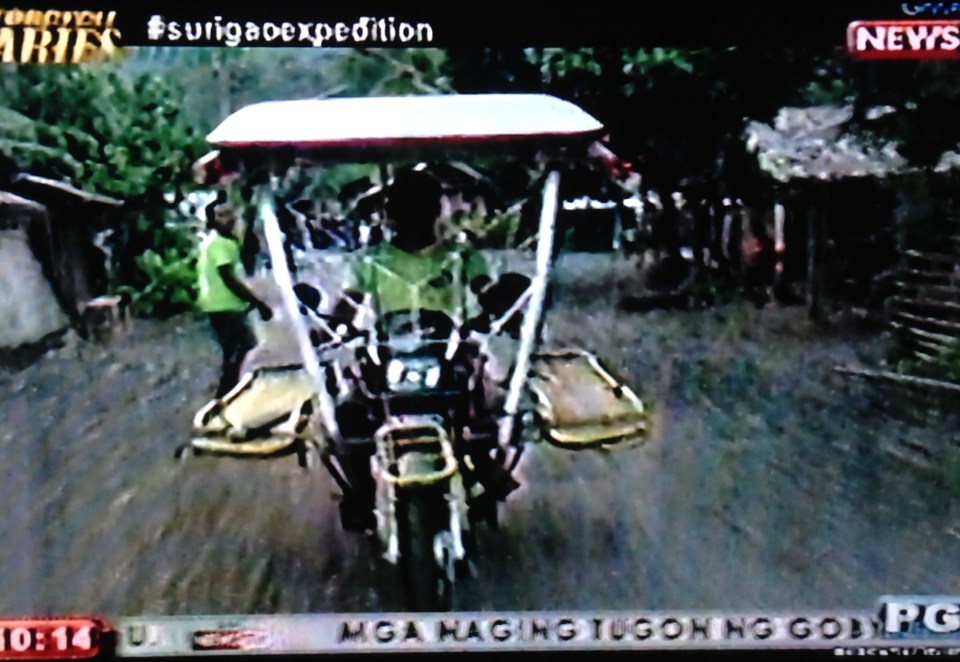 Unlike other habal-habal, this one has a roof and two planks on either side where patients lie down for transport. While I’ve seen habal-habals in Leyte and Samar that have roofs, the planks are more “skylab” than the typical habal-habal. “Skylab” is a term coined for the shape of motorcycle taxis with a plank installed perpendicular to its body. Passengers seated on the plank have to be balanced by the rider/driver.
 All terrain – the habal-habal is popular in rural areas as it can operate on bad roads, trails, no roads and even cross rivers and streams.
 The documentary also had interviews with the owner and driver of the motorcycle ambulance.
 Rough roads, typical of municipal and farm to market roads, do not deter haba-habal operations.
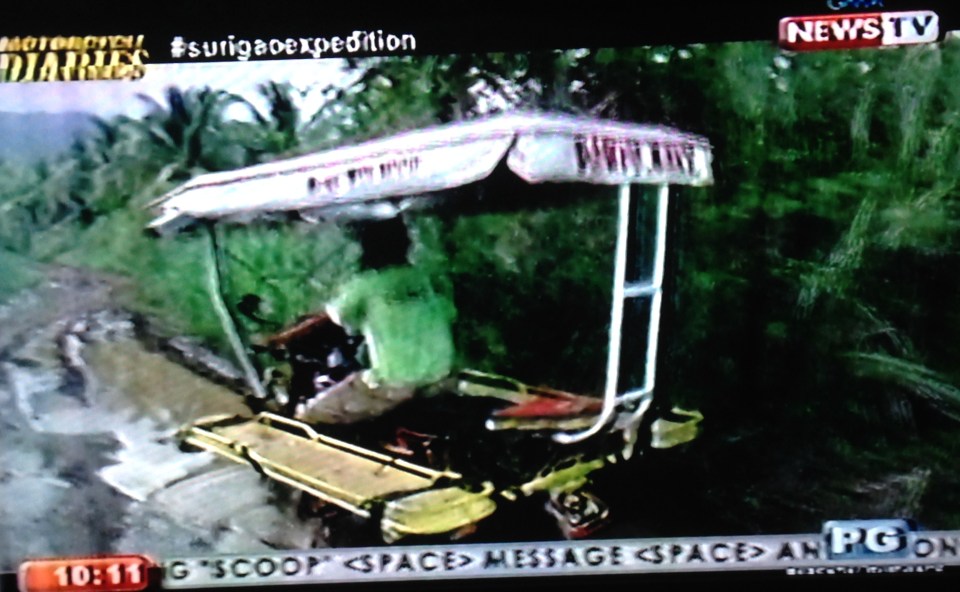 Rural roads are a big challenge given the conditions like these huge holes filled with water. I’ve seen roads like this that are like rivers or streams during the rainy season.
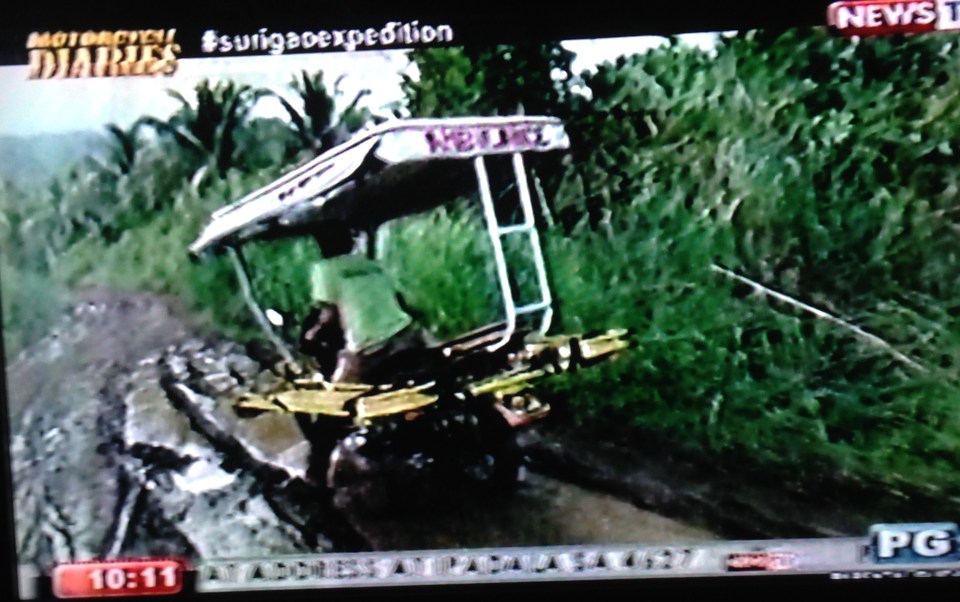 Travel is quite treacherous along these roads and I can only imagine how difficult it would be to transport a patient on a motorcycle ambulance. The risks are quite high that there can be a mishap along the way that could result in not only serious injuries but death.
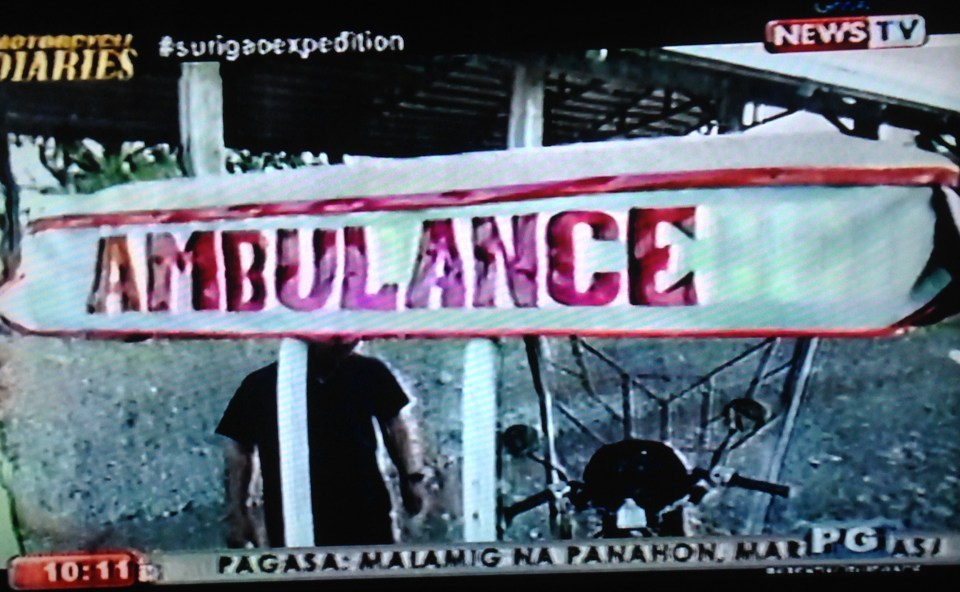 The sign makes it unmistakable for what the vehicle is for.
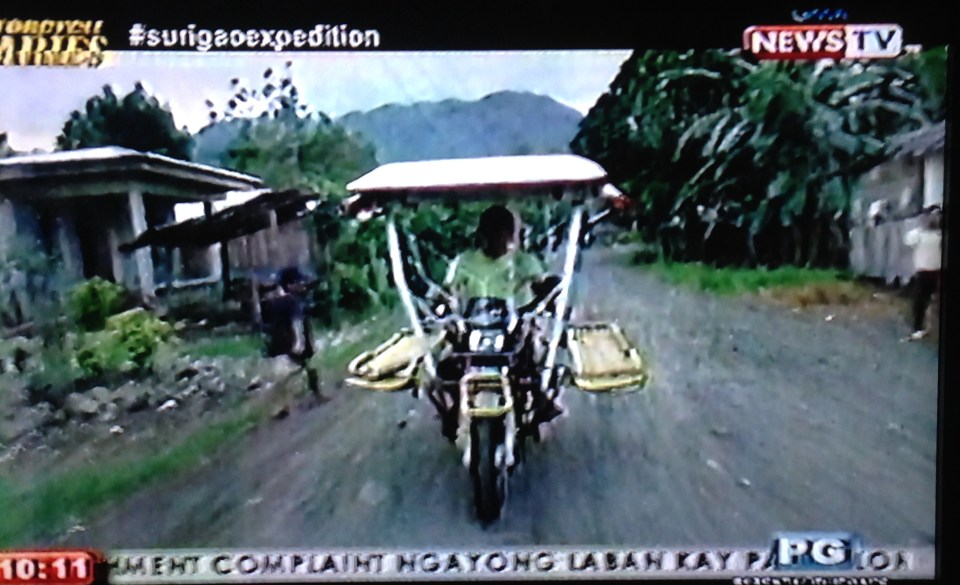 The ride is a balancing act and the driver should be highly skilled for the task.
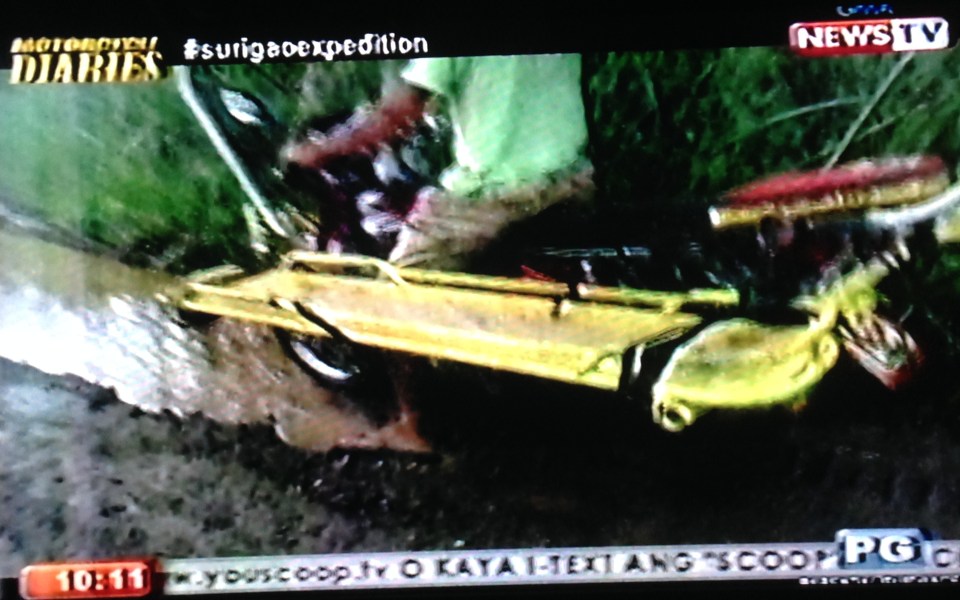 Patients or people needing medical attention are made to lie down on one of these cots on either side of the habal-habal. There are what looks like straps to secure the person. I assume that another person or weight should be placed on the other cot for balance. Likely, another person will ride behind the driver to care for the patient(s).
Such vehicles used for emergency are fitted out of necessity for these communities. As shown in the photos, the roads connecting these communities to the municipal or city centers are unpaved and conditions can be quite bad during the rainy season. It is clear that many such roads need to be paved so that they can be used under all weather conditions. Paving the roads also makes them usable by regular vehicles such as your typical ambulances. It makes me angry to see many such ambulances in Metro Manila being used for personal travel while communities in dire need of emergency vehicles can only improvise with the habal-habal to get people to hospitals.
It’s a shame that our government can spend a lot or engage the private sector in major projects while hundreds or even thousands of communities remain under-served for basic needs including access to schools, hospitals and workplaces. These are not even the typical farm-to-market roads but appears to be municipal, city or provincial roads. The fruits of economic development will not trickle down or cannot be felt in these areas if transport facilities cannot be upgraded. These are requirements for inclusive growth that government should address – and with urgency.
–
 Caught (up) in traffic