
Home » Posts tagged 'LTFRB'
Tag Archives: LTFRB
On strategies for urban mobility
Here is an interesting article on other strategies for urban mobility:
Menard, T. (March 24, 2025) “Beyond Congestion Pricing: Strategies for Revolutionizing Urban Mobility,” Planetizen, https://www.planetizen.com/features/134601-beyond-congestion-pricing-strategies-revolutionizing-urban-mobility [Last accessed: 4/6/2025]
To quote from the article:
“The common thread among successful urban transportation initiatives is the use of data to make mass transit more competitive. When cities invest in improving the transit experience through technology, service enhancements, and targeted incentives, the results are clear: increased ridership, reduced congestion, and lower emissions. These outcomes benefit not just individual commuters but the broader community as well, contributing to improved air quality, reduced traffic-related stress, and more livable urban environments.
In looking ahead, the lessons from New York’s congestion pricing experiment and the initiatives of other progressive cities offer a roadmap for transit agency leaders worldwide. By embracing data-driven strategies, investing in advanced technologies, and creating the right mix of incentives and disincentives, cities can transform their transportation systems to meet the challenges of the 21st century.
The key takeaway for transit agency leaders is clear: when mass transit is made more attractive, efficient, and competitive with private vehicle use, commuters will respond positively. The data from New York and other cities proves that well-designed transportation policies can yield significant benefits for urban communities. As more cities adopt these innovative approaches, we can look forward to a future of smarter, more sustainable urban mobility that enhances the quality of life for all residents.”
Perhaps the main statement to be emphasized here should be: “The common thread among successful urban transportation initiatives is the use of data to make mass transit more competitive.” How many of our cities are doing this now and in the context of the public transport rationalization and modernization? Does the LTFRB or the DOTr collect and use data towards improving public transportation? Are these efforts comprehensive rather than selective?
–
Article share: On improving the Philippines’ transport system
I share this article on the desire for a sustainable transportation system for the country. This was written by a former Assistant Secretary of the Department of Transportation (on secondment) who has returned to teach at the School of Urban and Regional Planning of the University of the Philippines Diliman. Here is the article published by the Philippine Daily Inquirer:
To quote from the article:
“The present condition of the Philippine public transport system is indispensable to the desired transition from more sustainable, in this case, electric forms of transportation—to a better public transportation system. A good public transportation system is defined by reliability, accessibility, safety, and security…
The imperative to consolidate is clear and crucial. It is not just a technical necessity, but a pathway to inclusive growth where all stakeholders benefit from the transition, and where we can truly create an inclusive and sustainable system for public transportation.
Improving public transportation, by making it cleaner, safer, and more accessible, will directly enhance the quality of lives of Filipinos.”
–
Are transport strikes still effective?
There is supposed to be a transport strike today, after one group, Manibela, declared what they dubbed as a nationwide strike to protest versus the perceived jeepney phase-out and alleged corruption at the Land Transportation Franchising and Regulatory Board (LTFRB). I used the term ‘perceived’ to describe jeepney phase-out because what is actually unfolding or being processed is a rationalization of public transport services. There is also a modernization program where old jeepney units are supposed to be retired and replaced by vehicles that are low emission and higher capacity, among other characteristics. Perhaps one flaw, if you can call it that, is that the new vehicles look nothing like the conventional jeepney. They look like vans and buses. And so somewhat lost here is the classic image of the jeepney, which was heavily influenced by the old WW2 American Jeeps that were the base units that eventually became jeepneys.
 This does not resemble a classic jeepney
Fast forward to present and another declared transport strike fizzled out. It turns out that most transport groups did not want to take part for one reason or another. DILG Secretary Abalos even met with the heads of the more established groups and stated that 95% of jeepney operators and drivers will not join the strike. As many LGUs and schools already anticipated the potential impacts of a strike, they already suspended classes and reverted to online work (WFH) and study modes. In previous occasions, LGUs were prepared with a “Libreng Sakay” (free ride) scheme. That meant most people being able to get rides to go to work, school or home. Transport strikes now seem a thing of the past and further into the future, I don’t think they would be an option. The general public see these more as an inconvenience, and social media and a misinformation/fake news machinery at the employ of those in power means a transport sector with legitimate issues will be demonized.
–
Transport strike again?
There’s a 3-day transport scheduled starting tomorrow when the current President delivers the annual State of the Nation Address (SONA). The reason is reported to be to protest the government’s Public Utility Vehicle Modernization Program (PUVMP). I wrote a 4-part series on these strikes earlier this year and stated that such actions have been diminished over the years especially with government and its agents learning how to use conventional and social media to their advantage. That is, if you have a troll army at your disposal, you will definitely use it and take advantage of the commuting public’s growing perception (as influenced by government’s narratives) that the strikes are unnecessary and based on unfounded gripes. So the blame goes to the drivers and operators and the organizers rather than on the government agencies even despite the legitimate arguments by the former. In this case, it’s supposed to be about PUVMP but most commuters are indifferent about supporting the strike as it can be viewed as vs. modernization of public transport, which people link to improvement (i.e., modernization = improvement).
Here is the link to the last and concluding article in the series:
A brief history of transport strikes – Part 4: impacts and implications
I think my conclusion and the observations I presented in the series still holds. Given the resources and the alternatives to counter the potential impacts of a strike, going through with one presents a likely failure to get support from commuters in general.
–
A brief history of transport strikes – Part 4: impacts and implications
What was supposed to be a week-long transport strike by jeepney drivers and operators was called off yesterday. Frontpage news showed a photo of representatives of protestors with government officials. Government official statements also declare that the government will be talking with the transport sector to sort out issues and to try to address these in relation to the PUV Modernization Program (PUVMP). One day earlier, government was quick to state that the strike had no impact on transport. Were there really no impacts?
I think the fact that schools went back to online mode and offices allowed employees to work from home show the impacts of the transport strike. If you haven’t noticed, the government has been using the tactic of cancellation of classes for quite some time now. To reduce the impacts of transport strikes on commuters, classes on all levels were canceled, thereby reducing transport demand. The only difference now is that there is capacity for online classes due to adjustments made during the height of the pandemic. So instead of cancelling classes altogether, schools reverted to online mode. Meanwhile, for those who needed to go to their workplaces and did not have their own vehicles, there were various free rides (libreng sakay) services provided by national and local government agencies. Cities like Quezon City already operated their own bus services so people could take these instead of their usual PUV modes for commuting.
What are the implications of the shortened strike? The shortened strike has various implications. One is that it showed the protesters did not have enough resources to sustain the strike. It also showed that transport leaders appear to just want some attention from government. A colleague commented about this being something like a show or the strike being part of a game of “bad cop, good cop” among government officials and agencies. If you haven’t noticed, this has been going on for some time now. Government already knows how to reduce the potential impacts of protests like this. Suspending classes in schools significantly reduces the travel demand on a typical weekday. Offices giving their employees the option to work from home during the strike also adds to the reduction in travel demand. And libreng sakay vehicles are easier to deploy as agencies and LGUs have vehicles for this purpose. Meanwhile, the continuing rise in motorcycle ownership also contributed to people being able to still commute (i.e., having the motorcycle taxi option). At least for Metro Manila, once the railway projects are completed, there will be a railway option for commutes. Barring a simultaneous strike with buses and vans, protests from the jeepney sector will surely be diminished.
–
A brief history of transport strikes – Part 2: reasons for a strike
The current transport strike is not about fare hikes or the rising prices of fuel. Those are the most common reasons for jeepney drivers and operators going on strike. It’s quite simple for these reasons: Drivers protest when government refuses to increase fare rates amidst rising costs of operations and maintenance. And they don’t when fares are reduced as fuel prices are going down.
The Department of Transportation (DOTr) through its Land Transportation Franchising and Regulatory Board (LTFRB) is tasked with evaluating operations and maintenance costs of public utility vehicles and prescribe the minimum and incremental fares for these services. Fare hikes (and reductions) are the consequence of fuel price increases (or decreases) but are not set as dynamic or automatic. Fuel prices, as can be observed, can fluctuate and currently change every week. Fares are not automatically adjusted whether fuel prices are increasing or decreasing and are heavily regulated by government in part to supposedly protect the interests of the riding public. As such, fare matrices or the structured fares according to the various routes and the distances covered by public utility vehicles
The reason for the current transport strike is generalized as a jeepney phaseout. The term ‘phaseout’ actually refers to the PUV Modernization Program (PUVMP) of the government that seeks to replace all conventional jeepneys with ‘modern’ or ‘modernized’ units. The latter include mini-bus types as well as those that retain the conventional jeepney form but usually larger and with newer engines and interior layout. This is not necessarily a phaseout like the one I described in Part 1 along the LRT Line 1 corridor.
Again, much of the opposition cites the high cost (and therefore unaffordable) of a modern jeepney. The financing schemes currently available as well as the requirement for jeepney operators and drivers to be part of a transport cooperative to avail of these financing schemes are still considered unacceptable by many. And yet, government seems unwilling to extend resources in order for operators and drivers to be able to afford a new vehicle. The old jeepneys would still have some value but definitely not near a substantial down payment needed for low monthly payments. These monthly payments cannot be covered by the typical boundary (basically rent) for operators or the daily income for drivers.*
What is the cost of replacing conventional jeepneys with new, ‘modernized’ vehicles? Well, let’s assume that a new vehicle costs 2.4M pesos. Also, perhaps cover only the ones operating in the urban setting (i.e., exclude for now those serving provincial routes especially those used also for freight (e.g., top loads)), say 50% of the estimated 250,000 units need to be replaced. That goes up to 300 billion pesos. If we were to replace only Metro Manila jeepneys, that will be 132 billion pesos. These numbers can be compared to the cost of major projects like the Metro Manila Subway (488 billion), the Bataan-Cavite interlink bridge (175 billion) and the New Manila International Airport in Bulacan (735 billion). Would it be worth it (benefits-wise) to invest in new jeepneys?
–
*Of course, this also indicates a flawed business model for jeepney operations. But that’s another story.
A brief history of transport strikes – Part 1: introduction
A nationwide week-long transport strike by jeepney operators and drivers From a CNN news report yesterday, it was stated that an estimated 4 out of 10 or 40% of jeepney drivers will be going on strike and halting operations for a week. These are supposedly members of the group Manibela, which claims to have over 100,000 members nationwide (Aren’t you curious how many jeepneys there actually are nationwide? There are supposedly more than 250,000 public utility jeepneys operating across the country with about 55,000 in Metro Manila.). The other 40% are certain that they will not be going on strike and these include members of the more established groups like PISTON, ACTO and Pasang Masda as well as those who belong to the many transport cooperatives that were formed the last so many years in part for the purposes of modernization. The remaining ones are undecided and include those also affiliated with those groups and those who claim to not have any affiliations.
If media companies like GMA, the defunct ABS CBN and even government station PTV have archives dating back to the 1970s, they will probably see that similar interviews have been conducted of jeepney drivers. Libraries like the National Library or perhaps those of leading universities like the University of the Philippines and Ateneo de Manila University would likely have archives of newspapers from way back. I remember UP Diliman having microfiche facilities but I am unsure to what year they have archives. You will likely read similar reports and interviews about jeepney operations during those times. The idea and initiatives for phasing out the conventional jeepneys is not a new thing or topic. It has been out there for quite some time but in different forms and contexts.
For example, there was a proposal to phase out jeepneys along the corridor of the LRT Line 1 in the Feasibility Study for the railway line as well as in the Metro Manila-wide studies that were conducted in the late 1970s and early 1980s. Jeepneys plying the Monumento-Baclaran and Monumento-Harrison Plaza routes were among those identified for phasing out. Careful reading of the reports though will also show that ‘phase out’ actually meant ‘rationalizing’ or ‘rerouting’ the jeepney services so they will complement the mass transit line. That never happened and the jeepneys still operate today (probably many are still the same jeepneys from the 1970s and 1980s!). Do passengers ride them from Monumento to Harrison (or vice versa)? Probably not as the travel will be too long compared to riding the train. They survive because of the short trips, usually less than 4 kilometers, by passengers who probably should be walking or cycling instead if we were in a Japanese, Korean, Singaporean or European city.
Fast forward today, the call apparently is for a phase-out in favor of the “modern” jeepneys (many are actually mini-buses). Jeepney operators and drivers are also being called to join or form cooperatives under which they can be part of programs that will replace their conventional jeepneys with a ‘modern’ unit. One issue here are the terms for the replacement or the acquisition of a new vehicle. The cost of a new vehicle varies and can be more expensive than a new SUV (e.g., more expensive if not as expensive as a new Montero, Fortuner or Everest) depending on the model and the size of the vehicle. This is apparently the most significant concern among others that is being cited by those opposing or resisting modernization, which they equate to a ‘phase out’.
One of the ‘modern’ jeepney models currently operating in Metro Manila
More in the next article for this series…
–
On school bus services and the return to face-to-face classes
I did an interview last August with a major business daily but I couldn’t find it as published as part of an article. The topic was a very timely one as children return to schools for face-to-face (F2F) classes. Here are the questions sent to me and my responses as I remember them:
1. How will the transport sector cope with the expected increase in demand as more schools resume face-to-face classes?
For schools located in the cities, what we see is people opting to take private transportation in the form of cars or motorcycles to take their children to school. This is because public transportation supply is still not back to pre-pandemic levels while at the same time, parents and guardians and even students who commute by themselves (e.g., high school and college levels) may be hesitant to take public transportation as well as school service vehicles. The latter may be attributed to concerns about the safety particularly with regards to health (i.e., getting infected or exposed to Covid-19 if they take public transport or a vehicle where they share the ride with many other people). We need more public transportation capacity to be able to address the increased demand brought about by students coming back for face-to-face classes. We also need to have other options or alternatives for their safe journeys including walking and cycling for their commutes.
For schools in the rural areas, there may be little adjustment concerning transport since most schoolchildren walk or take motorcycles or tricycles to school. This is perhaps because most schoolchildren reside within the school district and do not have long commutes like what we have in many cities (e.g., most schoolchildren who study at schools like Ateneo, LaSalle, etc. likely live in another city or town rather than near the schools).
2. How many school buses are expected to resume operations? How many of them have permanently closed?
I currently don’t have the data on that but LTFRB should have reference or baseline data. School service vehicles are required to register with the LTFRB and perhaps a look at the number registered before and during the pandemic could show how many can be expected to resume operations nationwide and per region. LTO doesn’t have these numbers as they only register by vehicle type. We will not know from LTO data which jeepneys, vans or buses are used for school service. Most school service are tied to the schools the student of which they provide transport services to. If the school closed, then chances are that the school service may apply to other schools. That said, the last two years where schools operated online were a backbreaker to many school service and only the registered numbers with LTFRB can tell us just how many are not returning at least for this school year.
3. How does the surge in fuel prices affect the operations of those involved in school transportation? Will this affect the ability of teachers, schools staff and students to travel on-site?
School services might increase their rates, which are usually monthly or semi-monthly. This is to make up for the increase in fuel prices and vehicle maintenance as well. This will likely only affect students’ travel rather than those of their teachers or school staff. The latter group will likely take public transport or their own vehicles for their commutes. In their case, their travel may be affected by transport fare increase or their own fuel expenses if they use their own vehicles. They have little choice though because they have to travel to work. Student though may still enjoy some respite as many schools are adopting blended or flexible schedules that will only require students to do face-to-face classes on certain days of the week.
4. What’s the long term impact of the pandemic on the school bus industry?
People will remain to be apprehensive in letting their children share a school van or bus ride due to the pandemic. We can only promote vaccination and compliance with health protocols to ensure that schoolchildren will have safe journeys as far as Covid-19 is concerned. The return to face-to-face classes this school year will perhaps help determine if the pandemic will have a long term effect on the industry or if people’s (parents and guardians) trust to school bus services will return within the short term.
5. How can school bus drivers and operators cope with the challenges posed by the pandemic and rising fuel prices?
LTFRB issued Memorandum Circular 2022-066, which adds health protocols for school service:
• Regular examination of the drivers and conductors’ fitness to work by checking their body temperature and screening for symptoms related to COVID-19.
• Regular disinfection of frequently-touched surfaces, such as but not limited to seats, armrests, and handles.
• Mandatory wearing of face masks at all times by drivers and conductors, including passengers.School transport services must comply with these protocols and demonstrate the safety of their mode to convince people to return to using or subscribing to school service vehicles. Meanwhile, there is really no escaping rising fuel prices but collective transport in the form of school service vehicles are still more efficient and cheaper per passenger compared to using private vehicles; not to mention contribute to reducing traffic congestion along school routes. This must also be promoted (i.e., people made aware of the advantages) vs. private vehicle use.
–
No vax, no ride – some insights and opinions
The Department of Transportation (DOTr) recently issued a memo stating unvaccinated people may not use public transportation in Metro Manila. People will have to show proof of vaccination (i.e., vaccination card) before he/she is allowed to board the bus, jeepney, van or train, which are all under the jurisdiction of the DOTr. I assume tricycles are not included here since these are under the local government units.
Certain groups quickly slammed the memo as being “anti-poor”. Note though that vaccinations are covered by government funds and are free. You only have to register and show-up for your shots. Given the period when vaccinations started, there should be few or no excuses for not being vaccinated at this time for most people (children under 11 years old are not yet being vaccinated as of this writing). In fact, many vaccination centers have already been giving booster shots from November 2021 and many have reportedly had fewer people getting vaccinated or boosters by December 2021. That changed when the current surge attributed mainly to the Omicron variant of Covid-19 led to a sudden influx of people at vaccination centers. Workplaces requiring their employees to be vaccinated also probably contributed to people being convinced they needed to get vaccinated. Otherwise, they could not earn a living.
A colleague explained that the modality of vaccinations requiring registrations online meant those without smart phones could only do walk-ins. While certain LGUs such as Cainta automatically registered their constituents, and particularly senior citizens, and posted vaccination schedules that covered everyone registered as their constituents, others especially larger LGUs might not have the capacity to do this simplification. Non-vaxxed people will also have to take some form of transport and not everyone will opt to bike or would have their own private vehicle.
Perhaps we should again look to science for an answer to the question whether this policy is good or bad. Ventilation or air circulation-wise, open air vehicles and without those plastic barriers present a better situation for lesser likelihoods of virus transmission among passengers. Many public transport vehicles though are closed, air-conditioned types. People are also obliged to wear masks (shields have been proved as ineffective and unnecessary) so everyone wearing masks should reduce the risk of transmission even with unvaccinated people (remember there was a time everybody when everybody was unvaccinated). Again the key word here is “reduce”. There is no guarantee that one will not get Covid even with excellent ventilation and mask use.
Implementation-wise, there are many challenges here including the additional delays to travel brought about by the vaccination card checks. If there are to be checkpoints, that’s another source of delay (and we already know how checkpoints can result in carmaggedon-level congestion). The even more recent DOTr pronouncement is their intention to deploy what they call “mystery passengers” seems amusing and inspired by similar people mingling in public to tell on people violating this and that law.
Meanwhile, here’s a question that’s easily answerable by “yes” or “no” but would likely elicit explanations or arguments for or against the idea: “Would you, assuming you’re vaccinated, be willing to take public transportation knowing that you will be riding a vehicle together with unvaccinated people?” I think the most common answer would be a “No”. Exceptional would be the “yes” reply if you consider the potential for spreading Covid-19 post-commute (by both the vaccinated and unvaccinated who are either asymptomatic or symptomatic).
As a parting note, a former student puts it quite bluntly in a social media post – “Smoking in public is banned precisely based on the science. Is smoking then anti-poor? And would you ride in public transport with people who are smoking while in the vehicles?” I think we also know the answer to this question without elaborating on the situation.
–
Why not rationalize other routes now?
There is an enduring discussion in various forums and platforms about the lack of supply of public transportation. I can’t help but notice though that many discussions consciously or unconsciously leave out the part of public transport rationalisation that calls for phasing out lower capacity vehicles in favour of higher capacity ones. I have written about this and explained the necessity particularly along corridors with high transport demand. Delaying what is required (not necessarily what is inevitable) means we fall short of transforming public transport services in this context.
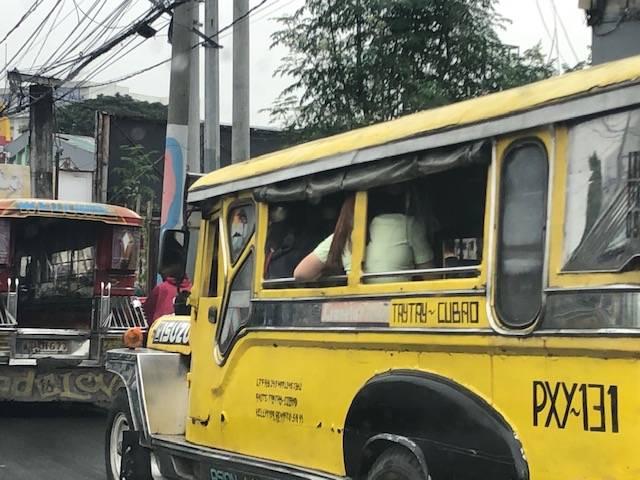
There are definitely missed opportunities here but the current discussions and proposed resources for 2021 including funds for service contracting seems to suggest a status quo in terms of vehicles with the exception of the modernisation part. Perhaps this is because we are still in pandemic mode and survival is still the name of the game? Nevertheless, there should be initiatives and continued dialogue about ‘graduating’ from lower capacity vehicles to higher capacity ones. Of course, this discussion is more urgent for highly urbanised cities than smaller ones.
–
 Caught (up) in traffic