
Home » Posts tagged 'MMDA'
Tag Archives: MMDA
On road clearing and towing of illegally parked vehicles
The MMDA conducted road clearing operations along Katipunan Avenue this Tuesday. To be exact, they towed illegally parked vehicles in the area. We saw a fleet of tow trucks lined along C.P. Garcia Avenue prior to the operations.
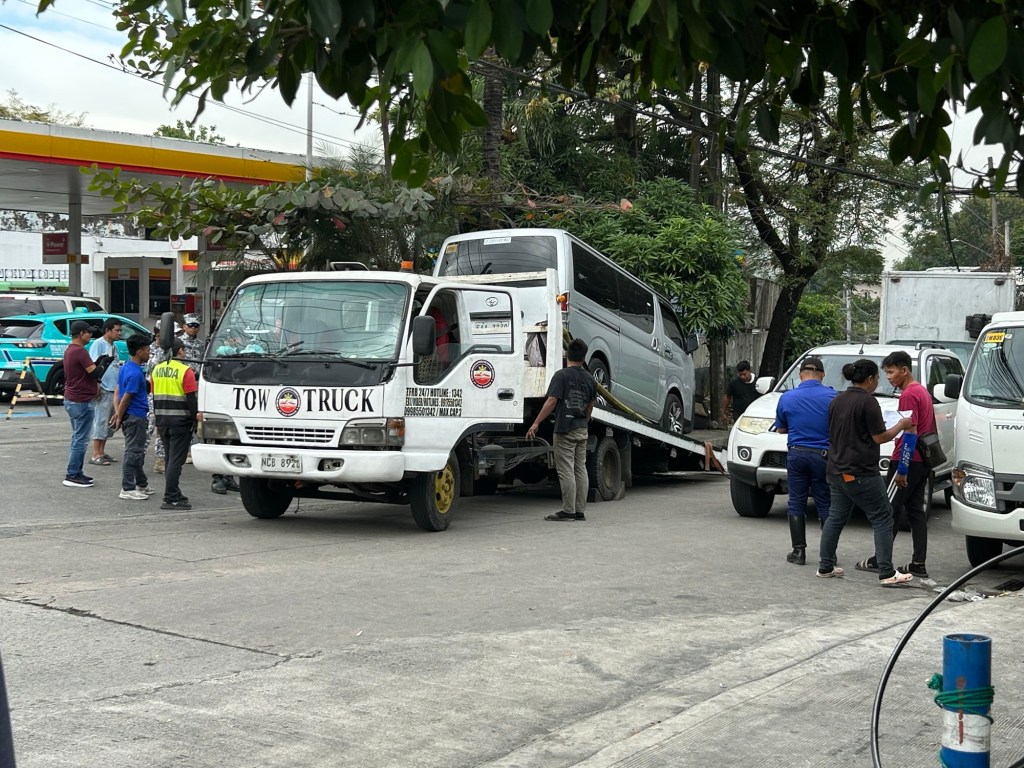
There are many illegally parked vehicles along Katipunan and the side streets to it. It is partly due to parking minimums (as stipulated in the National Building Code) not being followed and mainly because of the dependence on cars and high car ownership attributed to residents there.
Operations like this by the MMDA or LGUs are important because spaces need to be reclaimed especially for pedestrians. There is of course their main objective of easing traffic along roads whose capacities were decreased by on street parking. Do these streets need to be redesigned? Maybe but not now considering the resources required for transformation. It’s not as easy as the examples being peddled on social media.
–
Ortigas Avenue Extension counterflow
One traffic scheme that has been constant along Ortigas Avenue Extension is the counterflow scheme. The scheme is applied in the mornings for westbound (outbound from Rizal) traffic. It has been implemented for as long as I can remember; perhaps since the early 1980s. One variant before was a form of “Buhos” where eastbound traffic is stopped for several minutes at certain intervals (6:30am, 7:00am, 7:30am and so on), and westbound traffic is allowed to take all the available lanes during the periods.
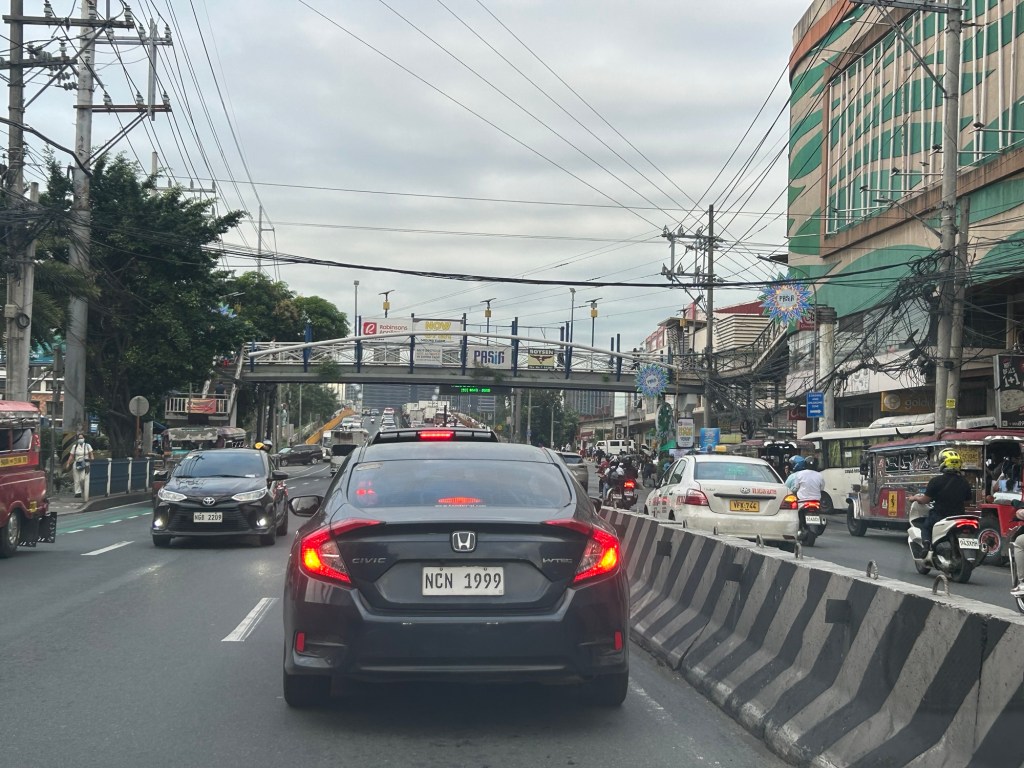
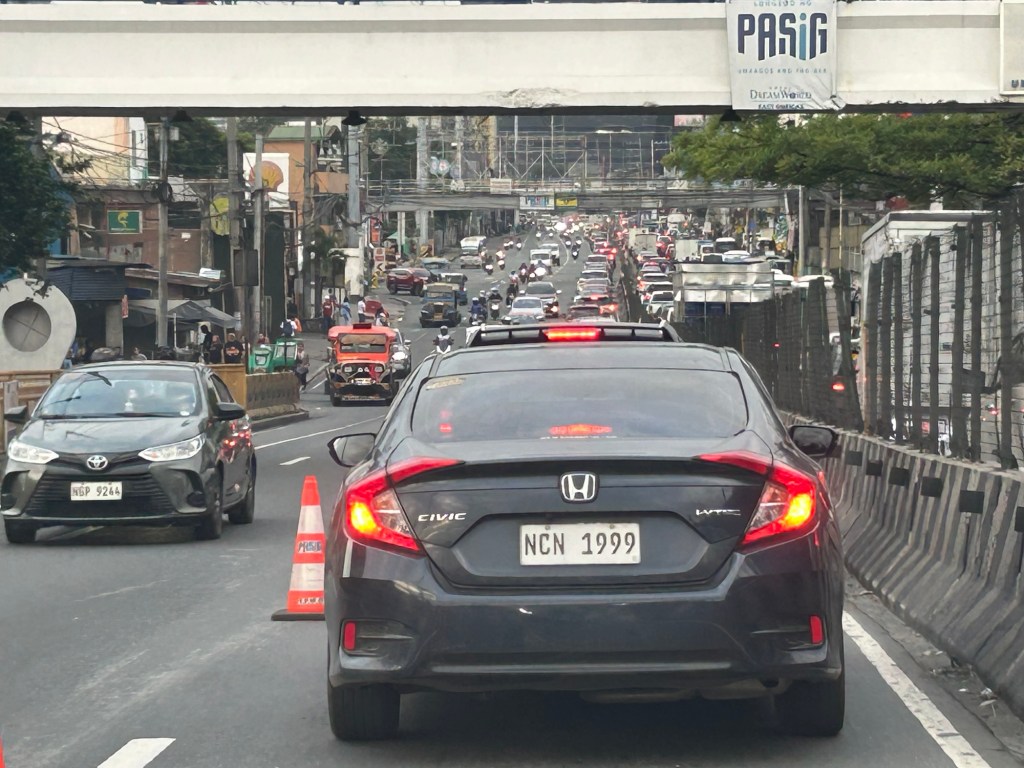
Considering this scheme has been implemented for more than 4 decades now, there must be some measure of effectiveness there. It is an example where the directional distribution during the peak hours allow for such scheme to be implemented. Note that the scheme pre dates number coding and similar counterflow schemes elsewhere in other major roads in Metro Manila (correct me if I’m wrong).
The scheme though only shows that there should have been a better transport system put in place along the corridor, which has had a steady growth in travel demand. There should have already been a transit line along this corridor a long time ago. What happened? Was it not in the government’s radar? There was a line proposed and shown in various master plans before.
–
After getting engrossed with EDSA, is Marcos Highway next?
If you monitored the news articles and social media post over the past two decades, there seems to be an obsession for EDSA. Circumferential Road 4 is the busiest corridor in Metro Manila, stretching across several jurisdictions including Caloocan, Quezon City, Mandaluyong, Makati and Pasay City. Aside from the MMDA, national agencies like the DPWH and DOTr have been heavily involved in traffic schemes and transportation infrastructure development along the corridor. These include variants of the travel demand management (TDM) scheme commonly called number coding. Since the 1990s, there’s the Line 3 and several overpasses/flyovers and underpass that have been constructed along major intersections (e.g., EDSA-Shaw, EDSA-Ortigas, EDSA-Kamuning, EDSA-Quezon Avenue, etc.). Nowadays, people are more into the EDSA carousel and most recently the pavement rehabilitation for EDSA. It seems we failed to realize that EDSA is just one corridor. There are others that also demand attention including those in other parts of the country.
Recently, a “carmaggedon” along Marcos Highway was in the headlines or shall I say was trending in social media. There was a lot of excitement for what has been a recurring nightmare to those residing along the corridor. I recall something worse occurred more than 15 years ago (pre-Ondoy), before social media and influencers and digital creators. At the time, Line 2 terminated at Santolan Station. And even back then, the MMDA insisted on playing with their U-turn scheme. I don’t recall a more in-depth study that could have involved micro-simulation modeling being done for the corridor. And since then, populations and traffic have grown steadily and as I’ve written about previously, the extension of Line 2 to Masinag seems to have had little impact on traffic. And so here we are with the MMDA still insisting on tweaking their U-turn schemes and relying mainly on gut-feel instead of a more scientific approach that may actually lead to more sound solutions for the corridor.
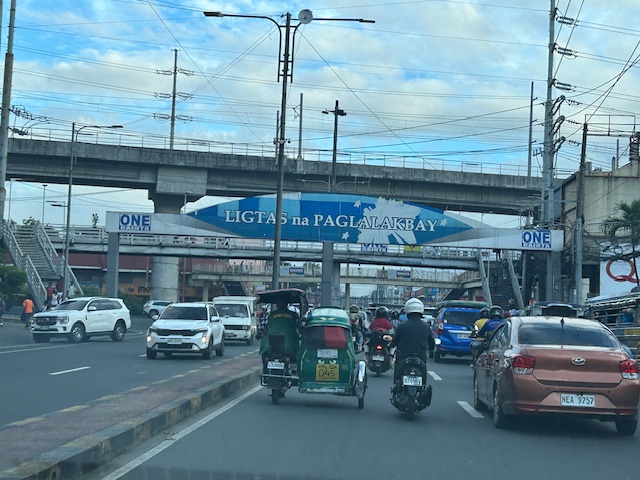 Approach to Marcos Highway from Felix Avenue – that’s the elevated Line 2 superstructure behind the Cainta arch.
 Intersection of Marcos Highway, Felix Avenue and Gil Fernando Avenue – there’s a major foot bridge installed here so people can cross at the intersection, which used to be a signalized junction before the MMDA opted for U-turns for Marcos Highway sections under its jurisdiction.
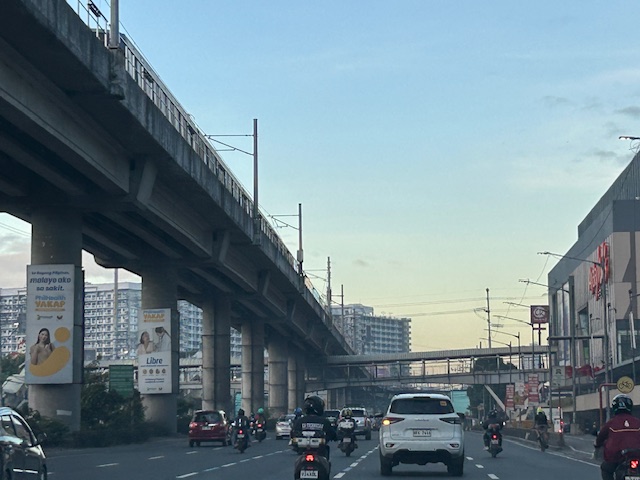 Marcos Highway section fronting the Ayala Feliz Mall – the MMDA has played with the location of the U-turn slots in the vicinity of the Marcos Highway-Amang Rodriguez-J.P. Rizal intersection as they tried to determine the “optimum” locations of these slots.
Of course, there is also the case of Commonwealth Avenue. How many carmaggedons have occurred along that corridor? Isn’t it an everyday thing there? And there’s also Ortigas Avenue Extension and many other roads and streets where congestion seems to have been accepted as the norm. How do we make travel easier for most people? How do we improve commutes given the constraints and realities concerning behavior and choices?
–
On parking for typhoons
The Metro Manila Development Authority (MMDA) recently issued a memo to shopping mall operators in Metro Manila in relation to the anticipated arrival and onslaught of a super typhoon. I reproduce the memo below:
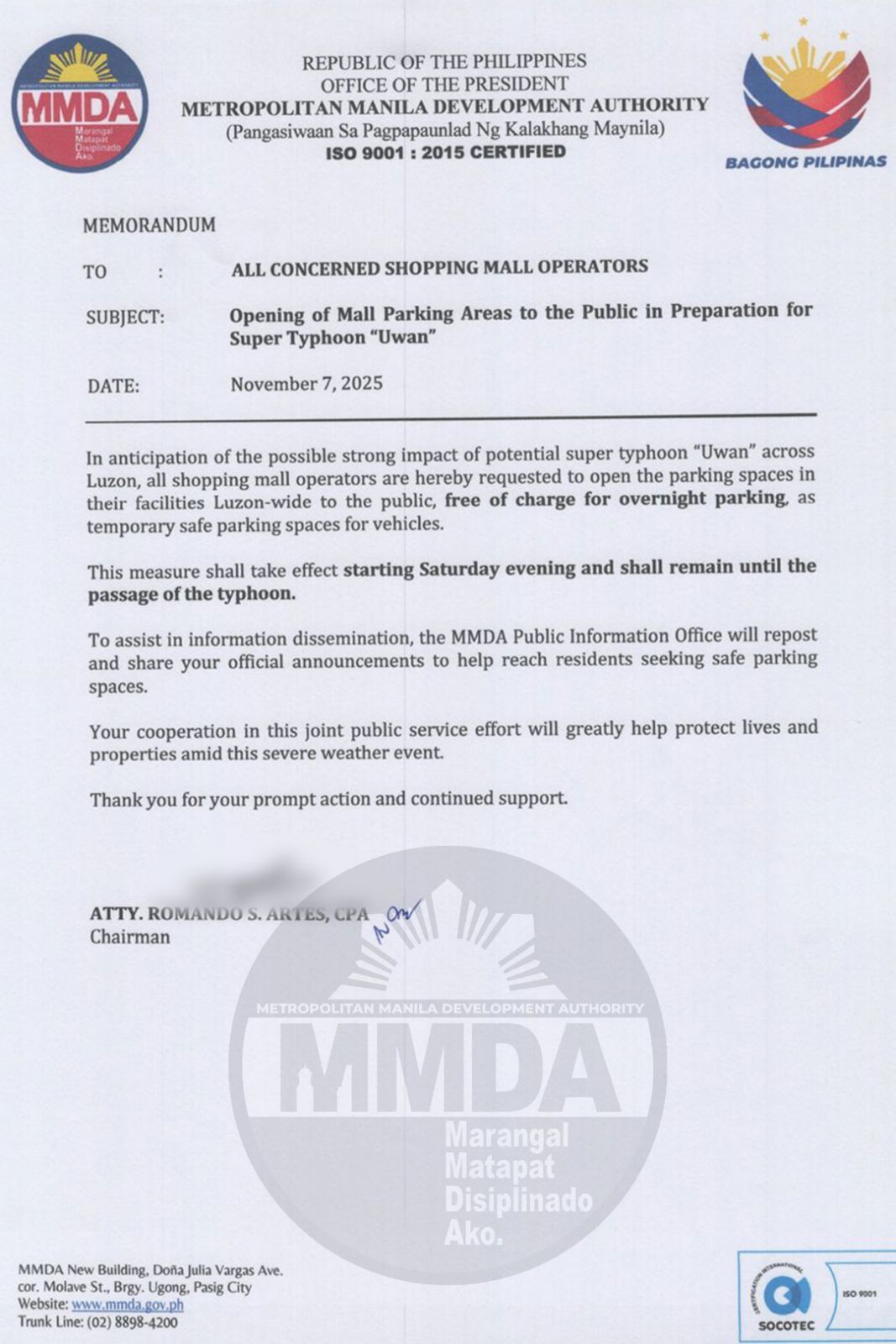
As of this morning, most if not all mall operators (at least all of the major ones – SM, Robinsons, Ayala and Megaworld) have responded positively. Some observations this morning though shows a lot of people already lining up their vehicles at the malls to take advantage of the free parking. It seems a lot of people have misunderstood the memo and responses (from the malls) to mean there’s free parking from today til Monday. Let’s assume that most of these people live in flood prone areas and that many of them probably don’t have garages in their homes. This somewhat shows us another angle of vehicle ownership and the lack of parking for many. It also somehow tells us something about our dependency on cars and how we really need to have a better transportation system.
–
Needed: MMDA Transport Authority similar to Transport for London
I am sharing this article from Business World about the idea (or is it already a proposal) for an MMDA Transport Authority. I seem to recall there were already proposals for something like this but I have to check for references and sources. In the meantime, I am content with sharing the following:
On Nov. 11, 1999, the British Parliament established the Greater London Authority. Prior to that, there was no single entity managing the entirety of London. The governance of the city was fragmented, and responsibilities for planning, transport, and other city-wide matters were divided between local boroughs and national authorities. The Greater London Authority was established […]
Source: Needed: MMDA Transport Authority similar to Transport for London
Traffic congestion along EDSA
I’ve taken some photos of EDSA traffic as well as the EDSA Carousel buses. Here are the more recent EDSA photos I took as I traveled from Makati to Quezon City after serving as a panelist in the Energy Transitions Dialogue last Wednesday.
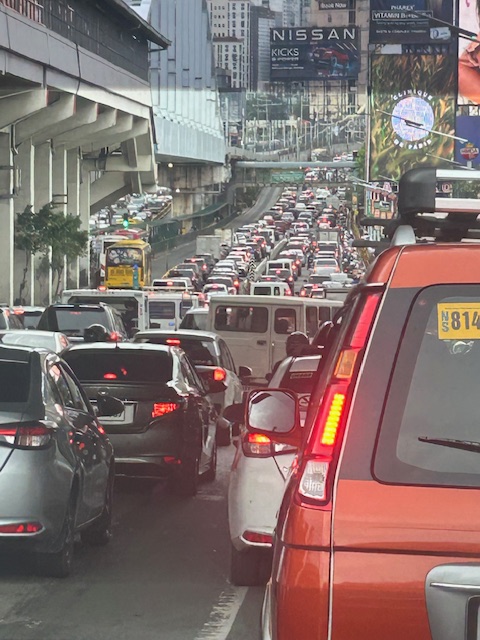 I took this photo as we passed Guadalupe. I like this in the sense that it shows the clear ROW for the EDSA Carousel buses. One wonders why most of these motorists would prefer to drive their vehicles rather than take the bus or the MRT.
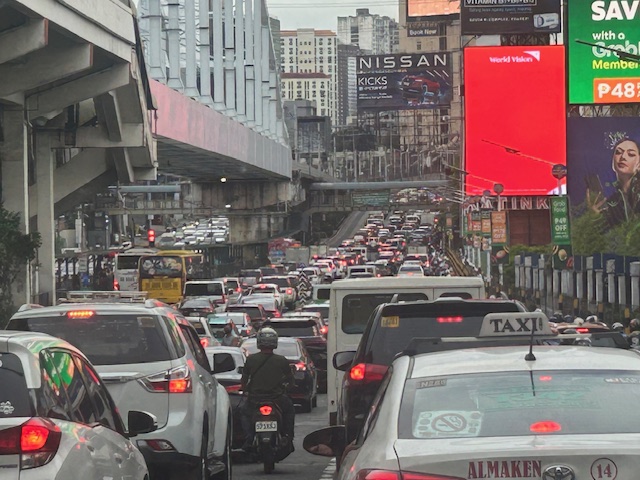 You can see in the photo that EDSA’s northbound side is clogged as far as the eye could see. If you check the image under the MRT bridge, it shows the southbound side was also congested. These photos were taken around 4 PM so this was still an hour before most people would be going home from work.
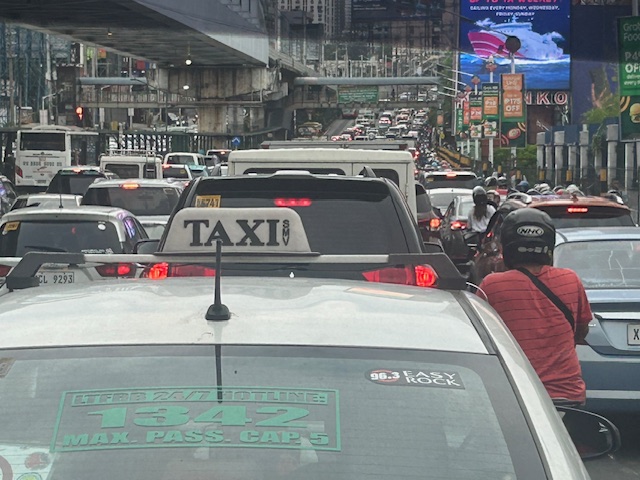 I mentioned in my comments at the panel that one consequence of giving number coding exemption to electric and hybrid vehicles is that this further diminishes the effectiveness (is it still effective?) of the MMDA’s number coding scheme. I don’t have the stats of how many EV’s and hybrids are registered and running in Metro Manila. Those numbers combined with actual counts will tell us how they are impacting traffic. That would be a nice topic for a paper. 🙂
The photos pretty much describe the transport situation in Metro Manila. Many of our major cities will be heading this way unless they improve their public transportation fast. If they do, then public transport mode share will be sustained if not increased. Metro Manila’s is already being eroded by inefficient public transport, motorcycles (including taxis) and perhaps unintentionally, electric and hybrid vehicles.
–
On the pushback vs. bike lanes
I saw this short article at Planetizen that linked to another article that was the original one about cities dismantling or removing bike lanes. This is a very concerning trend in the US but something that’s also happening here. The Department of Public Works and Highways (DPWH) has always been lukewarm to bike lanes (parang napipilitan lang), the Metro Manila Development Authority (MMDA) seemed never to understand it (even during BF’s time as Chair), and many local government units that jumped on the bike lane bandwagon during the COVID-19 pandemic have reneged on their declared commitments. Currently, it seems that only cities like Quezon City and Iloilo City have sustained bike lanes development. Others have removed protected bike lanes or have not enforced vs. motor vehicles encroaching on the bike lanes.
Johnson, R. (February 18, 2025) “Cities Start to Backpedal on Bike Lanes: A Growing Crisis for Cyclists,” Momentum Mag, https://momentummag.com/cities-start-to-backpedal-on-bike-lanes-a-growing-crisis-for-cyclists/ [Last accessed: 3/2/2025]
To quote from the article:
“Bike lanes have become a culture war where those in favor are seen as “woke” or some other terrible conservative slur. But, most who use bike lanes are just regular people who want to save some money, and get the mental and health benefits to cycling to work.
Urban cyclists, bike commuters, and advocates for safer streets, have all noticed a troubling trend. What was once a symbol of progress toward sustainable transportation and safer roads for all is being reversed in multiple cities across North America.”
Will bike lanes and cyclists suffer similar setbacks here? Will the Department of Transportation (DOTr) continue to champion bike lanes? Will the agency be more aggressive and assertive of bike lanes development? Your guess is as good as mine!
–
“Coding exempt” vehicles and the demise of the coding scheme
I saw this car ahead of me during my commute. I knew this was an electric vehicle and these as well as hybrid ones were given an incentive in Metro Manila. They are “coding exempt” meaning these vehicles can be driven any day and ay hour during the weekdays.
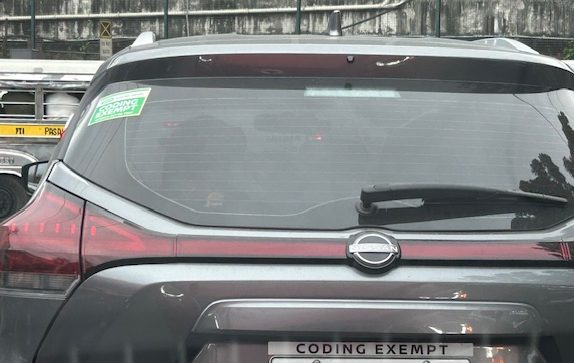 Are they selling these ‘coding exempt’ accessories or do these go free when you buy these cars?
People ask if the number coding scheme (UVVRP) in Metro Manila is still effective or relevant. Well, the answer is a ‘no’ and that is because over time, people have adjusted to it. Car owners have bought a second, even third vehicle that they call their ‘coding’ vehicle. Others opted to purchase motorcycles. And so that’s what we generally see along most roads in Metro Manila. It didn’t help that hybrid and electric vehicles are given exemption from the coding scheme. Those who can afford to buy yet another vehicle or perhaps replace their conventional ones are already buying these as evident from their increasing presence along our roads. While there is the perceived benefits with less emissions and air pollution, we still lose with congestion and its derivatives. Perhaps we should already have a congestion pricing scheme implemented for Metro Manila like the one in New York City. And proceeds should go to the improvement of public transportation to help arrest the erosion of its mode share in favor of private vehicles.
–
To B(RT) or not to B(RT)?
I kind of expected questions or comments from my ‘students’ after my lecture last Wednesday about “Traffic Congestion.” Among my slides were those featuring solutions to transport and traffic problems. I presented both soft and hard approaches including travel demand management schemes and infrastructure that we should have built decades ago. The uniformed officers who were there had a very simple take on congestion – it’s basically because of a lack of discipline. While theirs may also be valid observations based on their experiences, ‘discipline’ is not the most critical problem that we have especially considering the ever increasing demand for travel. One government official present was very direct in his question about what I thought about the MMDA’s pronouncement that they plan to remove the EDSA Bus Carousel. I thought my reply and the following explanation was clear – it was a wrong move.
The EDSA Bus Carousel is simple. Bus lang sa bus lane (Only buses along the bus lane). Pag may private or pa-VIP, bawal at huli dapat (If there are private vehicles or those who regard themselves as VIPs using the lane, then they should be apprehended. An HOV (high occupancy vehicle) lane is more difficult to implement. Mas pahirapan ang pag monitor and enforce (It is very difficult to monitor and enforce). So this proposal to phase out the EDSA bus lanes don’t make sense from this perspective. In fact, I don’t agree with a couple of more senior transport experts who say that the MRT Line 3 is sufficient and that it hadn’t reached capacity yet. It has but in the time that the carousel has been operational, the carousel had absorbed much of the demand along the corridor. There is also the fact that it will take much time before Line 3 is upgraded. Are the new train sets here? Are the stations designed for these trains and more passengers? If the answers are no, then MRT3 will not have its capacity increased in such a short time. That also means the carousel is very much relevant not just to supplement MRT3 capacity but as a needed alternative mode for commuters.
–
Is the MMDA’s coding scheme still effective?
That’s actually a title of a paper or article I co-wrote before. At the time, which was over a decade ago, we were revisiting certain travel demand management (TDM) measures being implemented in Metro Manila. We already concluded that the effectiveness of the number coding scheme has been reduced mainly as people bought a second, third or more vehicles to be able to use any vehicle on coding days.
Since then, coding’s effectiveness continued to be eroded by a combination of increasing vehicle ownership (including more vehicles operating as ride hails) and the rapid increase of motorcycles.
More recently, government decided to give push for electric and hybrid vehicles. The MMDA made these coding exempt, which perhaps is an example of instituting a policy with unintended consequences. I say unintended here because the agency seems oblivious to the fact that people will likely get that second, third or more vehicle. And that will be an EV or hybrid. Manufacturers are already marketing these as ‘coding exempt’ and they are making a good sales pitch here.
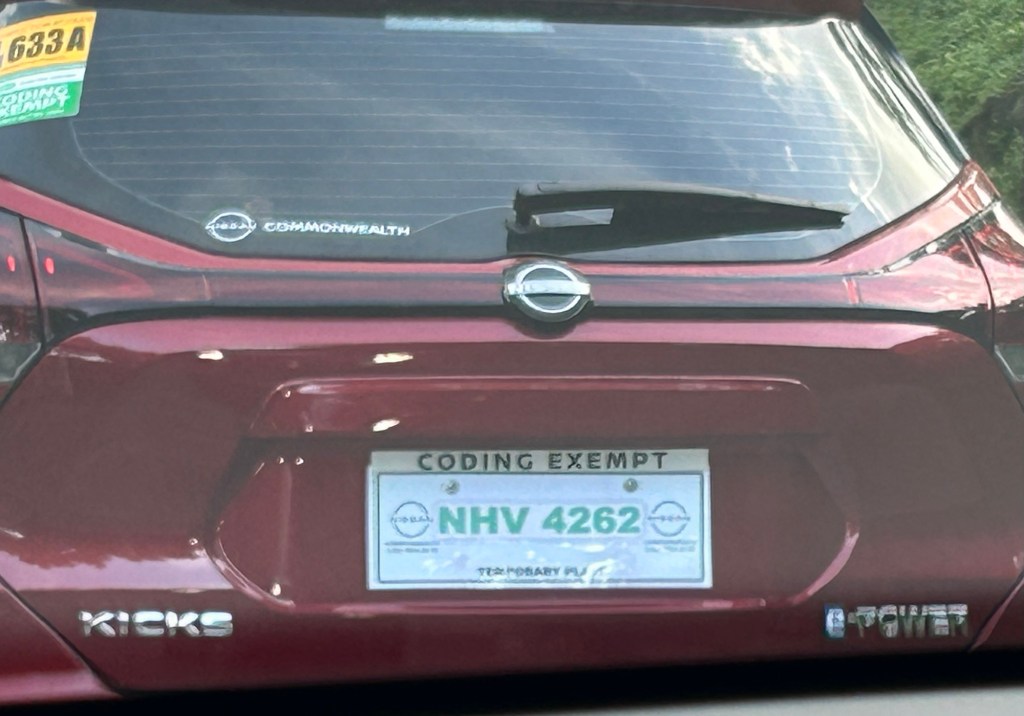
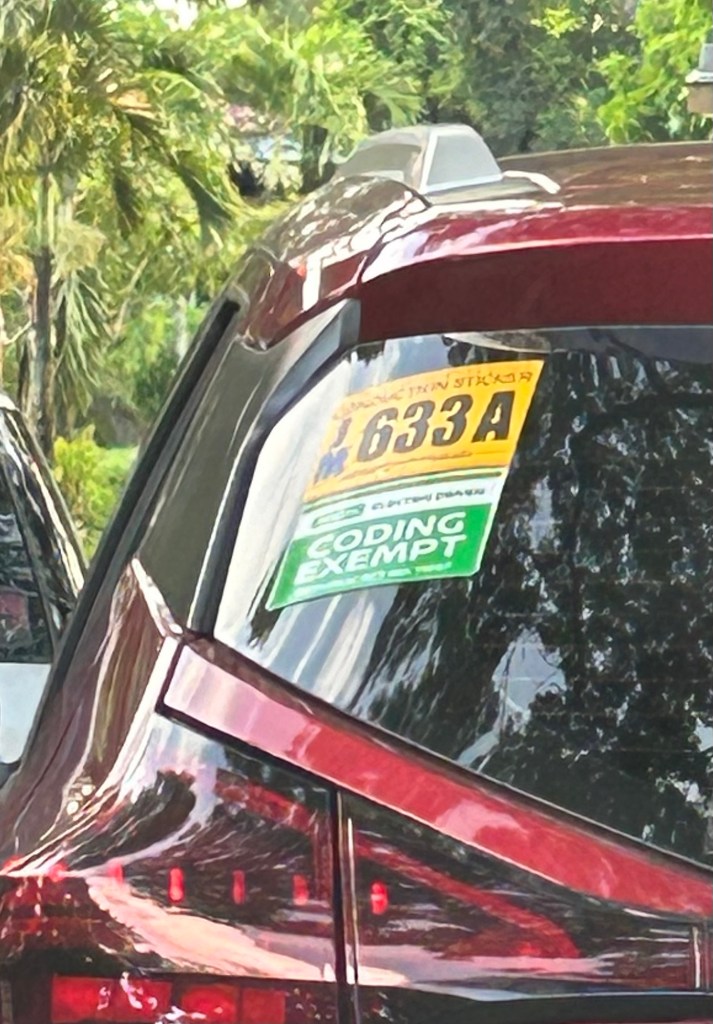
Maybe it’s time to revisit coding and re formulate it? But then coding wasn’t supposed to be sustained as long as it has. Government should be more aggressive and decisive for public transport in order to retain and increase mode shares that have also been reduced by more private vehicle and motorcycle use.
–
 Caught (up) in traffic