
Home » Posts tagged 'motorcycles'
Tag Archives: motorcycles
On the rideshare competition among 4 and 2-wheeler companies.
Grab is the current market leader for rideshare or TNVS involving cars or 4-wheeled vehicles. Others like Joyride and Angkas went the way of legalizing motorcycle taxis. Grab applied for the same as they were already operating motorcycles for food and deliveries; competing with another company, Lalamove, which focuses on deliveries. Disallowed by the LTFRB to deploy MC taxis under their brand, they acquired Move It to circumvent the decision.
Meanwhile, as Grab continued their dominance of the rideshare market, the other players decided to offer some competition. I say ‘some’ because the perception is that they have not really gained much vs. Grab. You don’t see many Joyride taxis though a couple of companies appear to be making some impact – In Drive and Green GSM. The latter though is a taxi company that looks to attract people back to the conventional but app-enhanced taxi services
Last week, we saw this car with a familiar brand on its side. Sporting the colors and logo of MC taxi leader Angkas, they coined a brand for their cars – Angcars.
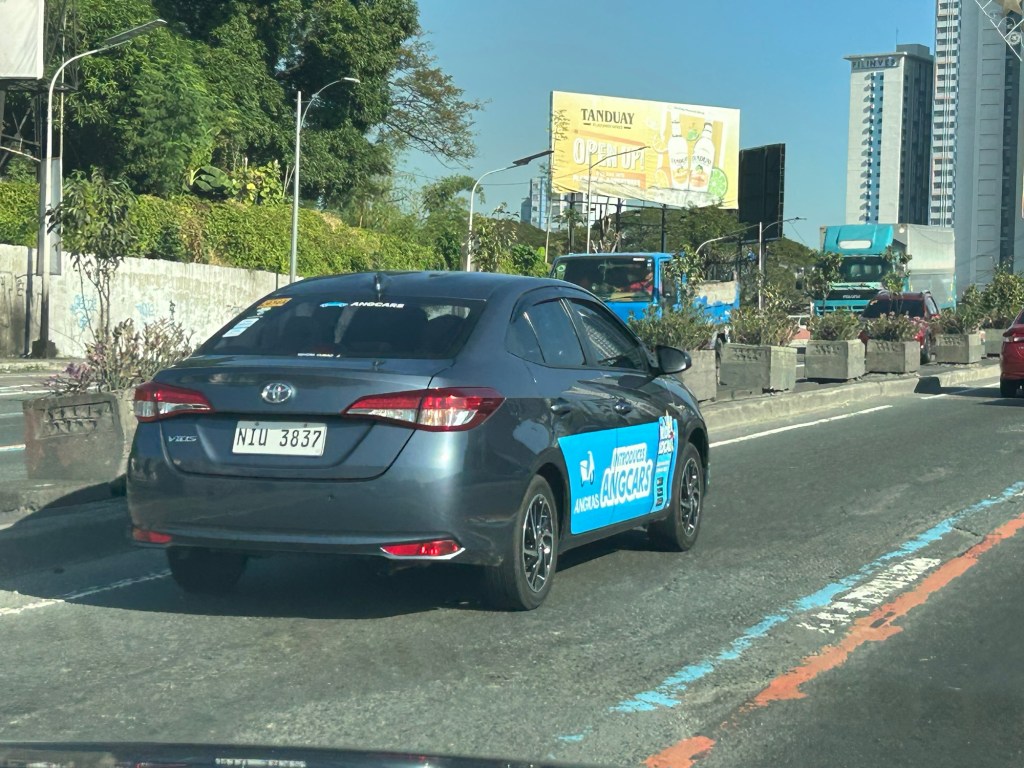
Whether people will take to these competitors for 4 or 2-wheelers so there is not an imbalance of market shares depends on public perception based on the cost and convenience, among other factors, of availing the services of these companies. Conditions may also vary depending on the cities. That is, situations may be different elsewhere like Cebu, Davao or Iloilo.
These modes, however, are still cars and motorcycles, and are regarded as private vehicles in terms of operational characteristics. Even if they are also public utility vehicles (they are for hire with fare rates), these represent a segment of private mode share. There is really a need to improve and improve and expand public transport services in order to retain or increase transit mode shares. Unfortunately, it takes a lot of time and resources to build railways so road-based public transport is still the main option where improvements need to be realized.
–
Street legal vehicle?
I saw this motorcycle being driven along the main road to the Shrine in Antipolo. It seems more like a toy than a mode of transport. Say what you will about people’s right to transportation but it is a risky mode to use as the user can be invisible to most motorists. And I’m talking about jeepneys, buses and trucks. Huwag na lang mga SUVs and cars since the mere mention of these trigger the “car-centric” reactions.
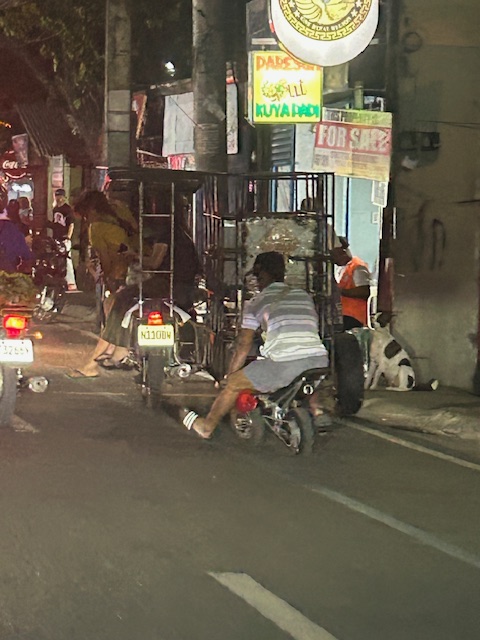 Rider seemed to be struggling with balancing on this “toy” transport. You can compare the rider to the trike in front of him.
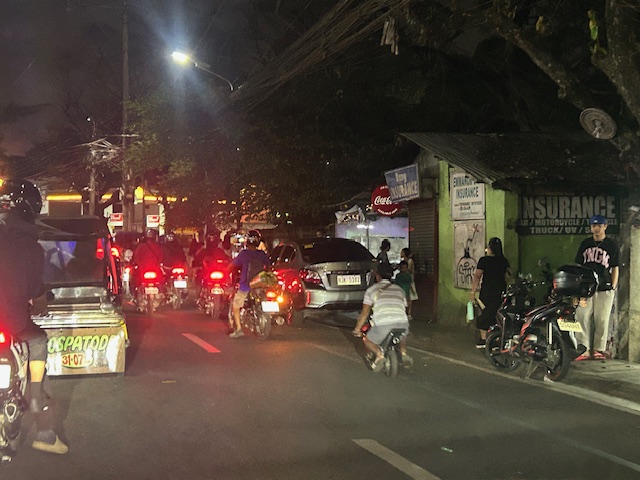 The rider and the vehicle in mixed traffic
I don’t think these can be classified as micromobilty. It would be a stretch. A colleague says these mini motorcycles are actually used for racing. We should draw the line between what is safe and unsafe given the conditions and situation along our streets rather than what is declared as the desired conditions. It is better to err on the side of safety rather than push for advocacy that will lead to road crashes involving these vehicles and their riders.
–
Rain and fog along Sumulong Highway
I just wanted to share a few photos of the conditions along Sumulong Highway these past days. With Felix Avenue and Ortigas Avenue Extension frequently flooded during this season, our commutes would usually be along Sumulong and Marcos Highways.
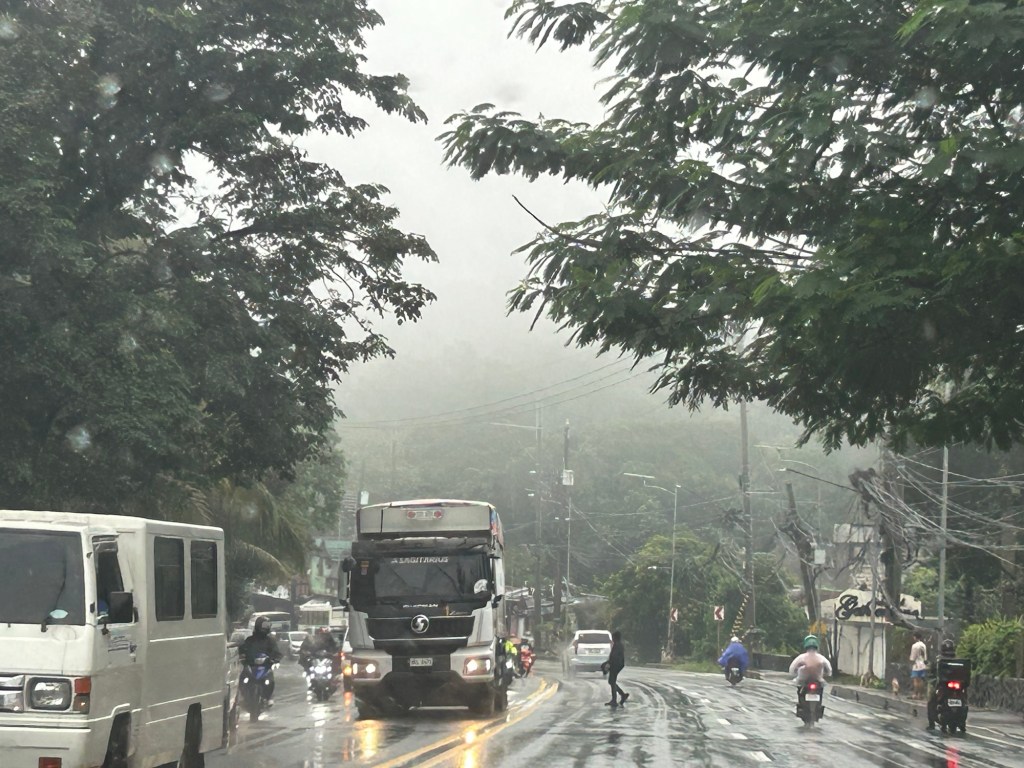
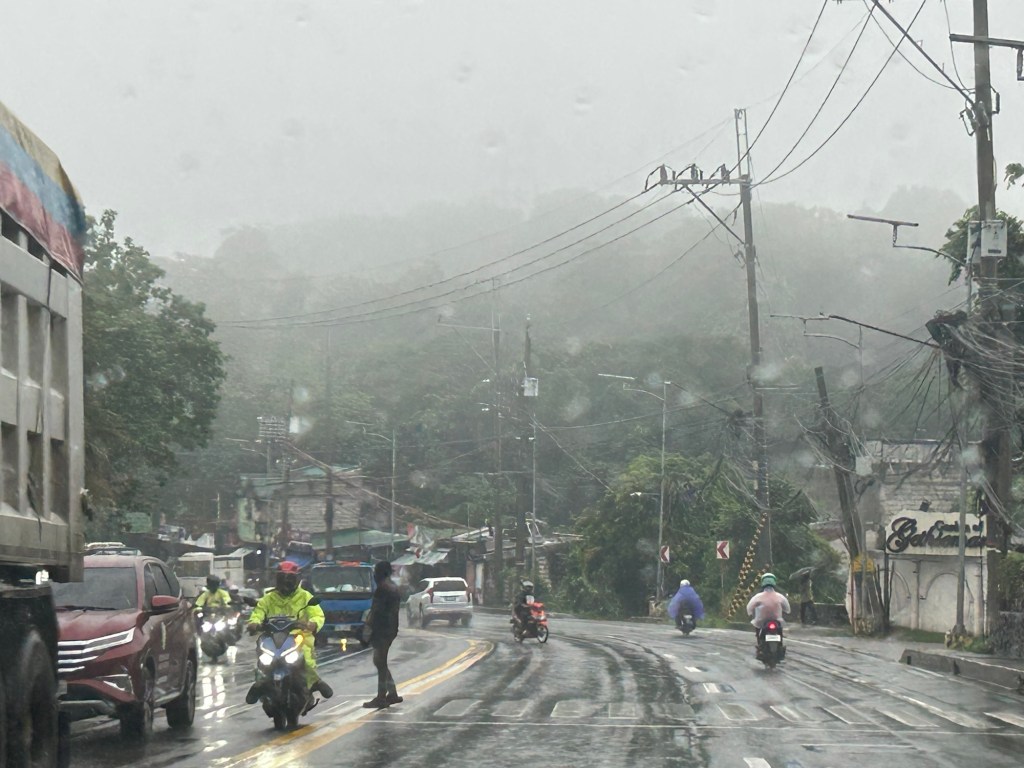
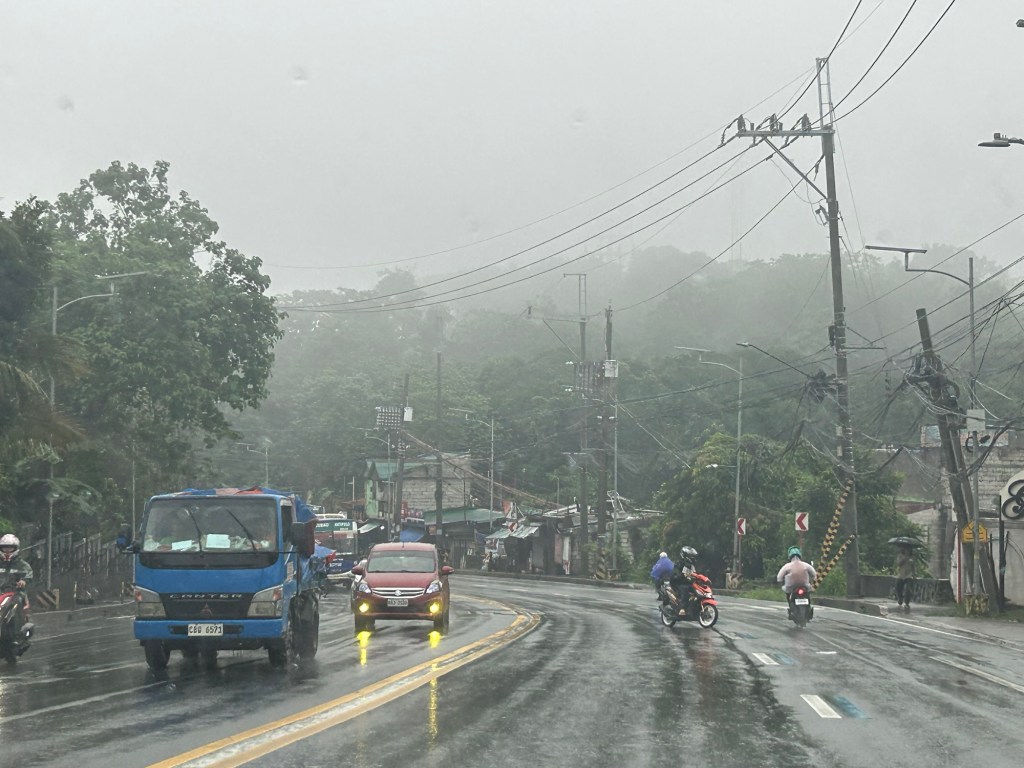
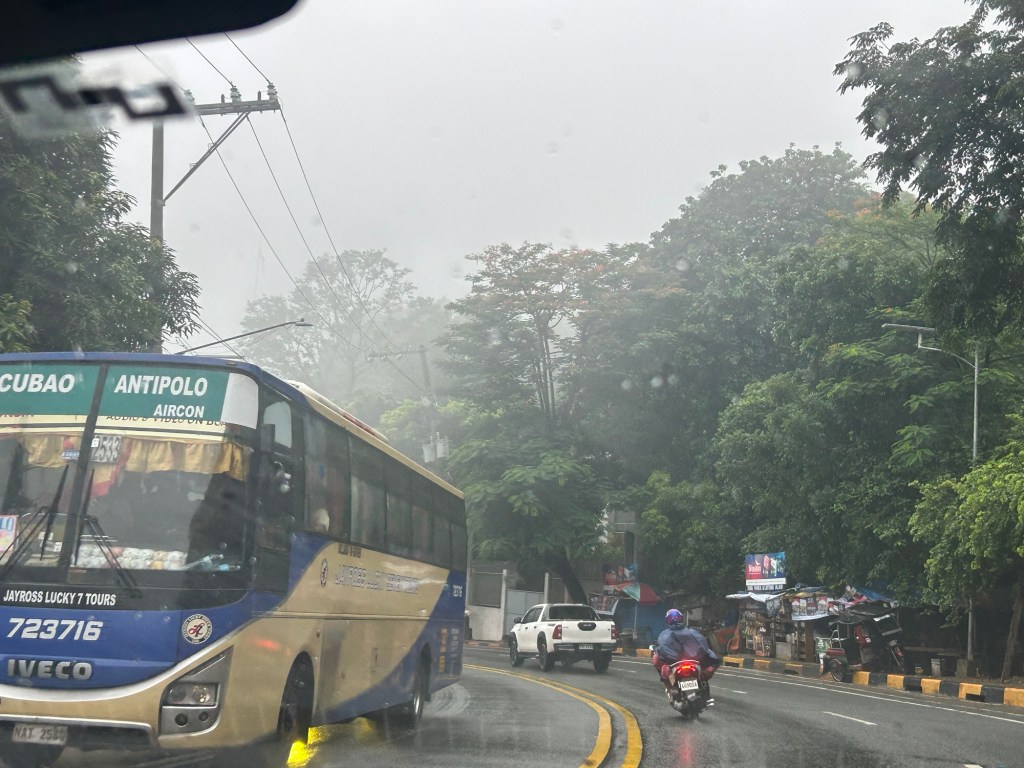
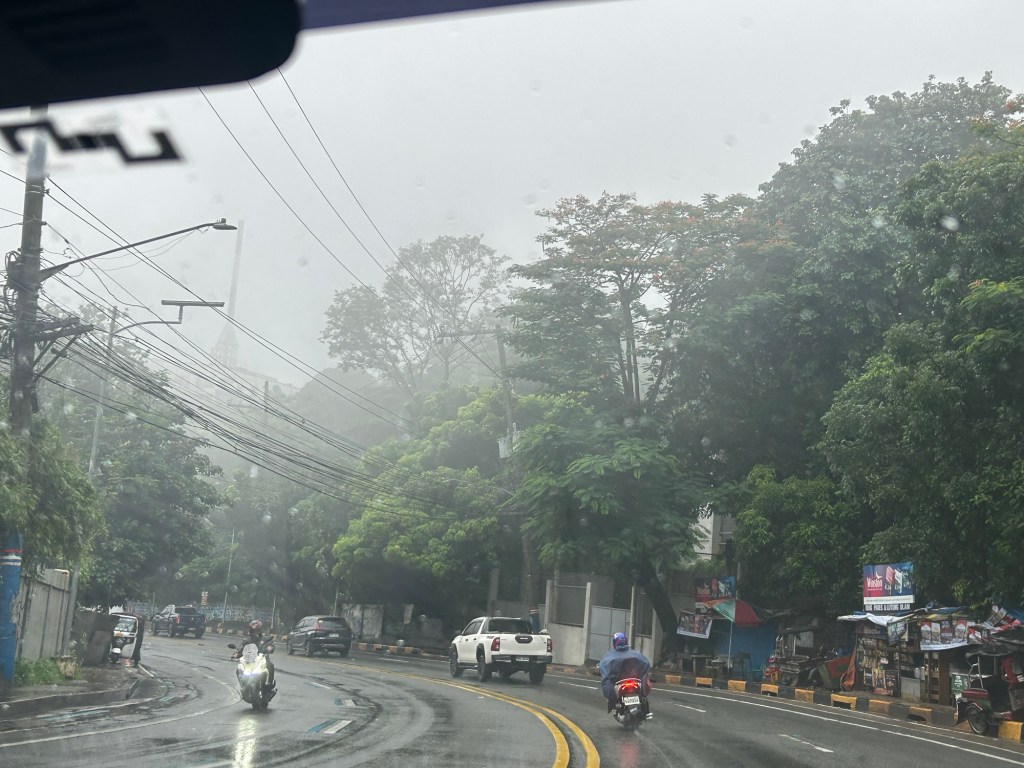
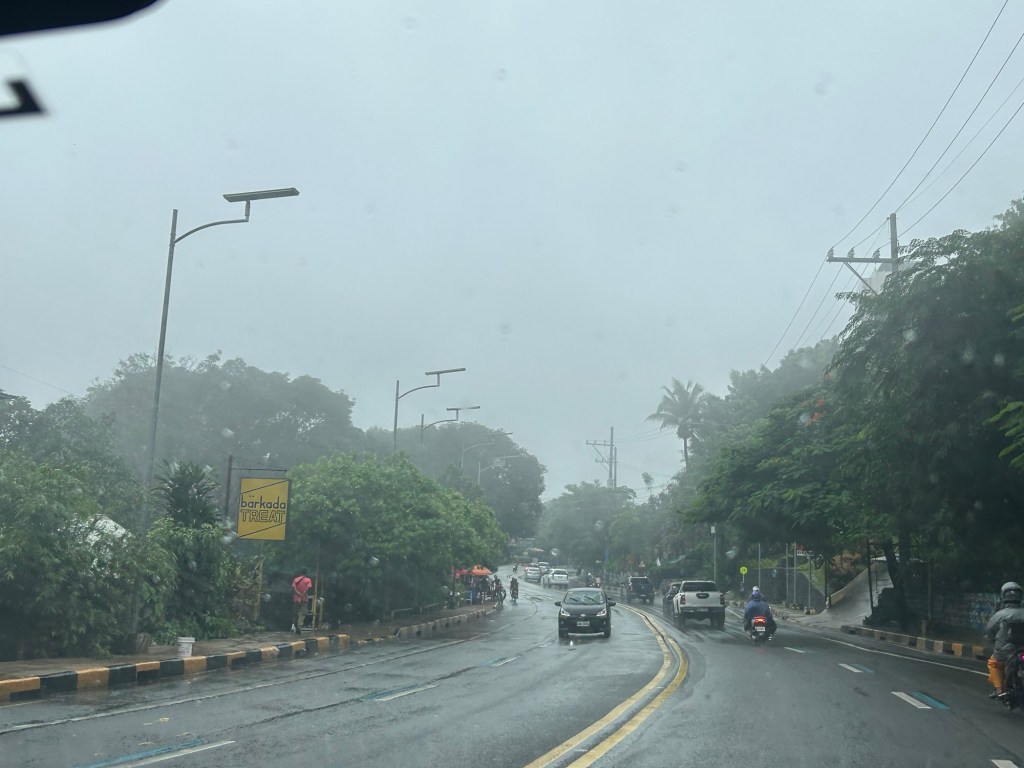
Despite the conditions of the road, there are still many who drive or ride recklessly. Speeding, weaving and cutting on slippery pavements increase the likelihood of crashes, which are preventable if only people will slow down and be more cautious.
–
On the need for helmet laws and their implementation to reduce fatal road crashes involving motorcycles
I found this article reporting on findings of their study on helmet laws and their impacts on road safety:
Insurance Institute for Highway Safety (October 20, 2024) Lax helmet laws have killed more than 20,000 motorcyclists, study shows, https://www.iihs.org/news/detail/lax-helmet-laws-have-killed-more-than-20-000-motorcyclists-study-shows [Last accessed: 10/23/2024]
To quote from the article:
“Wearing a helmet is one of the biggest things riders can do to protect themselves from death and traumatic brain injury,” said Eric Teoh, IIHS director of statistical services and the author of the paper. “We understand that requiring helmets for all riders everywhere would be unpopular with some motorcyclists, but this could save hundreds of lives each year. Those aren’t just numbers. They’re friends, parents and children.”
There’s a link to the study report in the article for those who want to have a copy of the report.
–
Technical sessions at the TSSP 2024 Conference
I am sharing here the latest draft of the technical sessions for the 30th Annual Conference of the Transportation Science Society of the Philippines (TSSP). The conference will be held in Iloilo City this coming September 13, 2024.
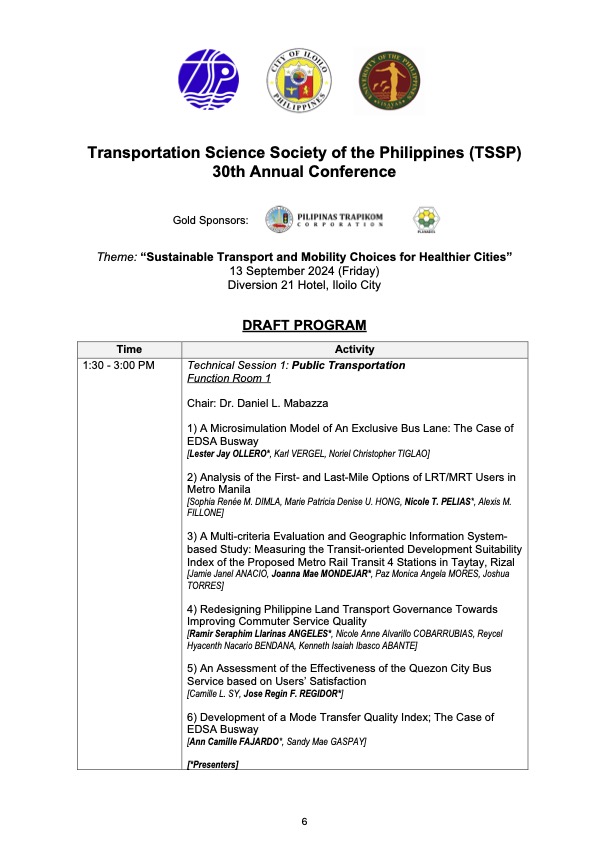
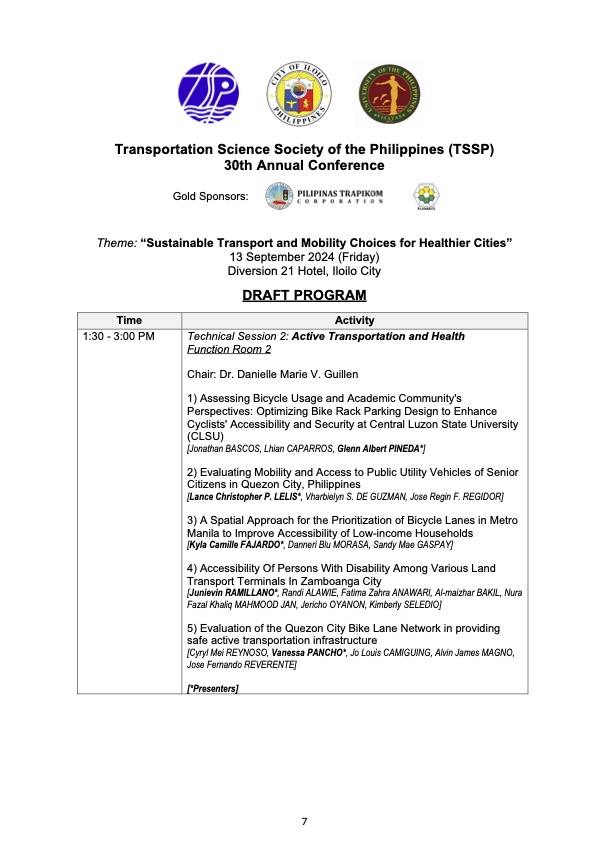
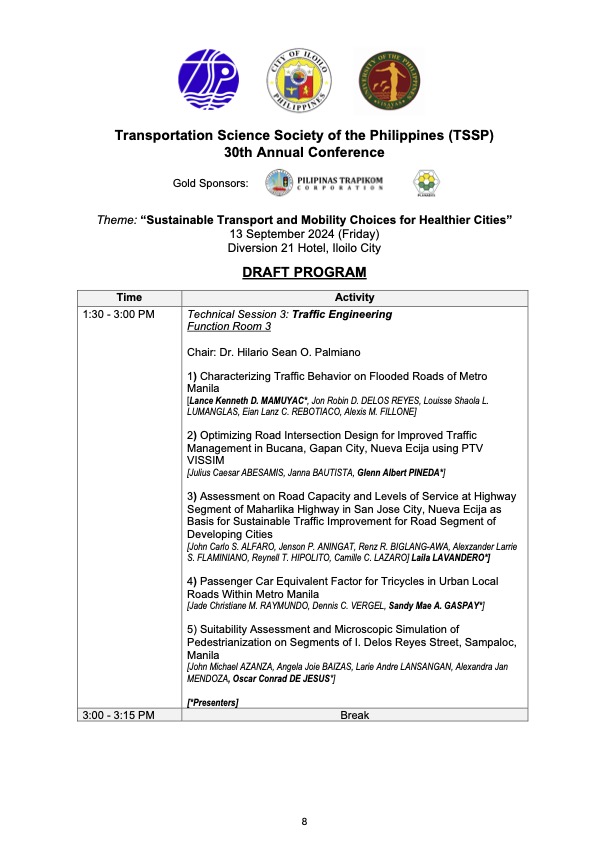
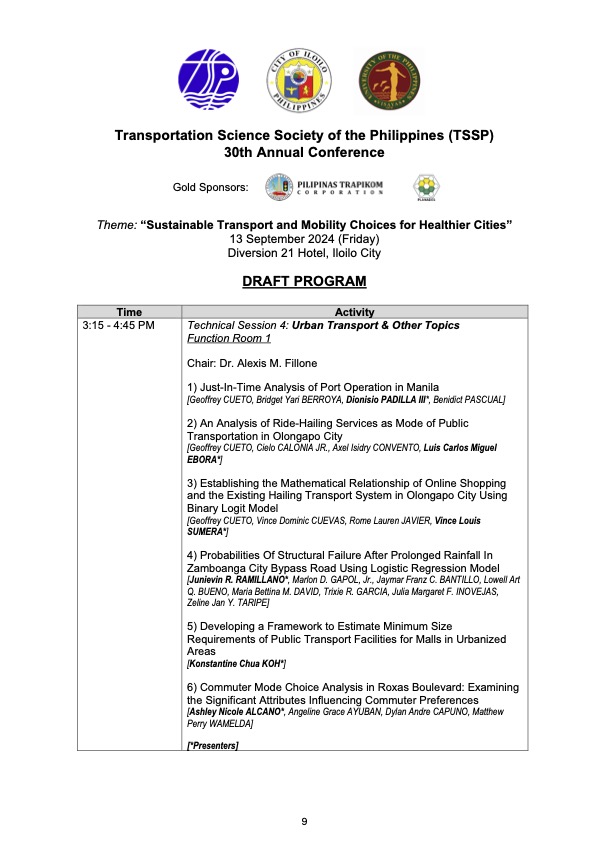
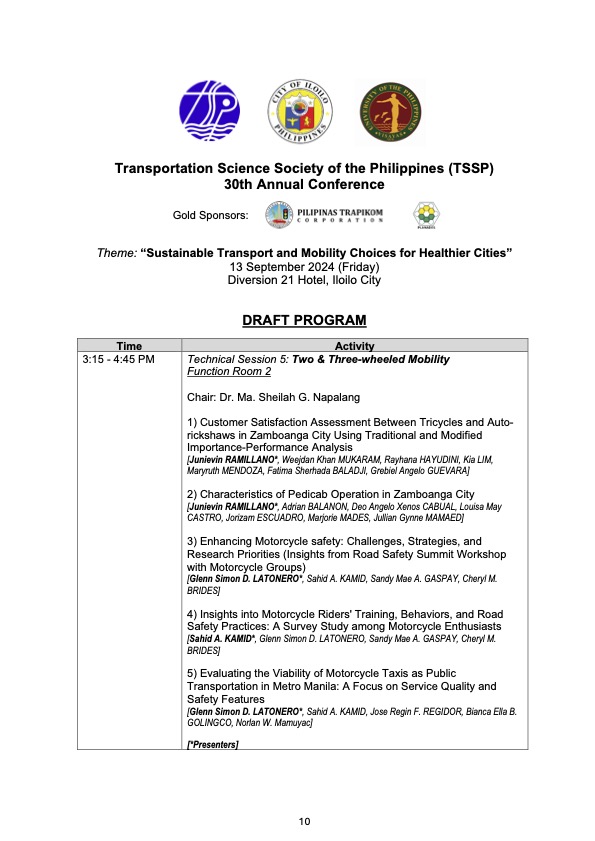
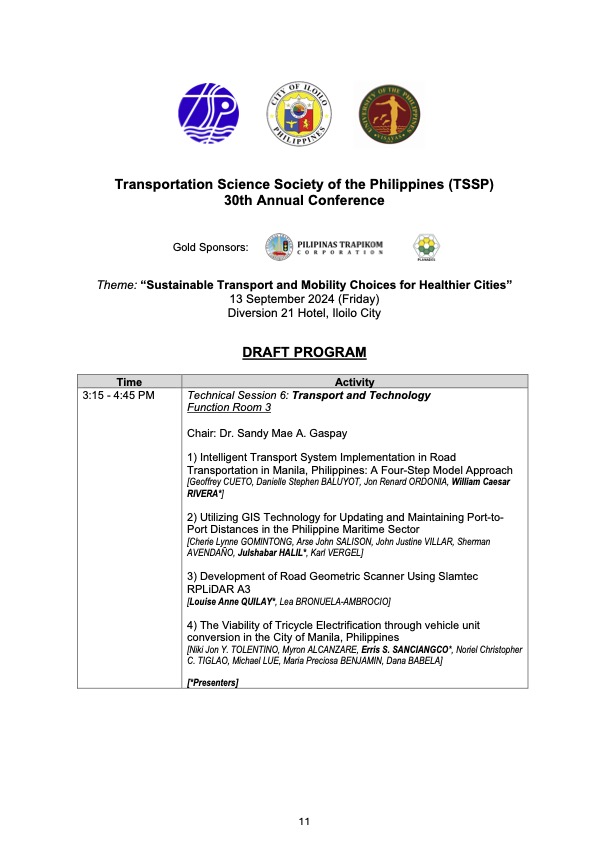
I will share the draft program for the morning plenary session in the next post.
–
On kamote riders
Much has been written and reported about the so-called ‘kamote’ riders. These are motorcyclists who have the propensity for risky behavior including reckless maneuvers on the road. Such often places them in harm’s way whether they are conscious about the actions or not. I see them everyday during my commutes including but not limited to those who counterflow, speed, race, zig-zag through moving traffic, and use the bicycle lanes or pedestrian sidewalks.
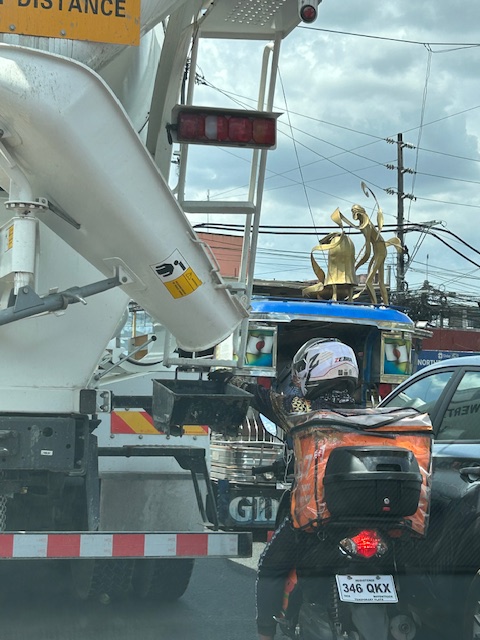 The not so obvious kamote rider positioning himself at the downspout of a concrete mixer.
Not all motorcycle riders are kamote. However, there is a significant number of them out there that put other road users in risky situations. They also contribute to a lot of damage to property as evidenced by a lot of vehicles, especially cars, that have the signature scratches, dinks and dents after being sideswiped or bumped by motorcycles. Such behavior can actually be corrected if the Land Transportation Office (LTO) would be stricter with licensing – requiring more in terms of rider training and certification as well as testing. Traffic law enforcement is also critical here because behavior change can only be done and effective if enforcers are firm. A friend made the observation that law enforcers themselves are the first to violate rules and regulations or bend them in their favor. That sends a wrong signal and would only encourage more ‘pasaway’ and ‘kamote’ riders.
Of course, there are also kamote drivers and cyclists. But those are the topics for future posts.
–
On floods, transport and traffic, again
It’s that time of year again when the heavy rains lead to flash floods along many roads. I took the following photo as we slowly progressed towards Cainta Junction early this week. The Felix Avenue approach was flooded after more than an hour of heavy rains fell upon Cainta and neighboring towns. We learned later that the rains fell on a larger area as EDSA and other major road in Metro Manila also experience flash floods. These cause traffic to slow down if not outright stoppage. Many commuters can get stranded when PUVs are not able to run due to the floods. Deeper waters mean light vehicles including motorcycles and bicycles cannot proceed along certain roads, further exacerbating the traffic situation.
 Motorcyclists emerge from their shelters to travel along flooded roads. A common sight when there are downpours are motorcyclists huddling under overpasses, bridges, or whatever shelter may be available to them. Many bring rain gear but opt to just stop and wait it out until the rain stops.
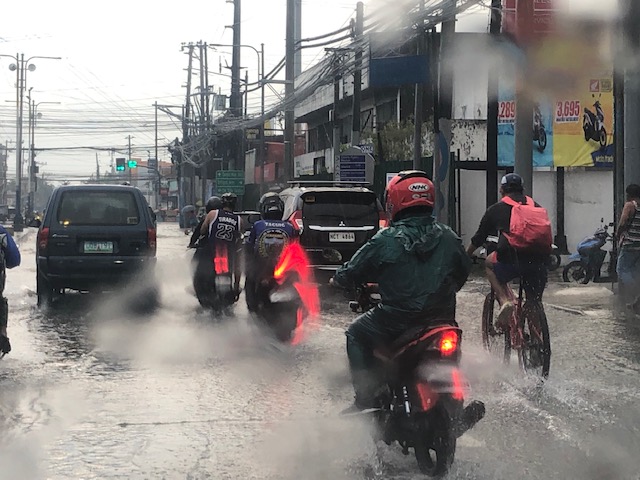 A cyclist braves the floods – while pedestrians will likely stop and wait it out for the rains to stop or for the floods to subside, cyclist might just pedal on. They just have to be more careful as potholes and other dangers may be hidden by the floodwaters.
 Cainta Junction has been submerged by so many floods over so many years. Even with the new drainage constructed under and along Ortigas Avenue Extension, Felix Avenue and Bonifacio Avenue, it seems their capacities are not enough to handle the rainwaters. That or perhaps their intakes need to be redesigned to more efficiently take on the heavy rains and the resulting runoff.
–
Safety remains a big issue in transportation
Even with the supposedly reduced traffic due to the pandemic, there has been a perceived increase in the road crashes. Many of these are speeding and reckless driving/riding related, and many involve pedestrians and cyclists who are most vulnerable considering the reckless behavior of drivers and riders. Following are photos taken in Antipolo along Ortigas Avenue Extension (the section leading up to the capitol):


Much has been said and written about Philippine roads not being up to par with international standards. I would agree with certain roads with designs encouraging speeding and other reckless behavior. However, there have been significant efforts to correct situations involving geometric design, signs and markings where applicable. These include engaging the International Road Assessment Program (iRAP). The road and engineering are just one part of the equation. Education and enforcement are the others that affect or influence the behavior of road users whether they be drivers, riders, cyclists or pedestrians. Even with the best road designs and their intended influence to driver and rider behavior, much is to be desired for driver/rider education and actual behavior on the road.
–
Motorcycle taxis in Cebu
The recent controversies, and issues raised vs. motorcycle taxis (habal-habal) have captured the attention of a lot of people including those who don’t use this mode of transport. I will be writing about this and more of my opinion on motorcycle taxis in another article. For now, I am sharing these photos of habal-habal in Cebu.
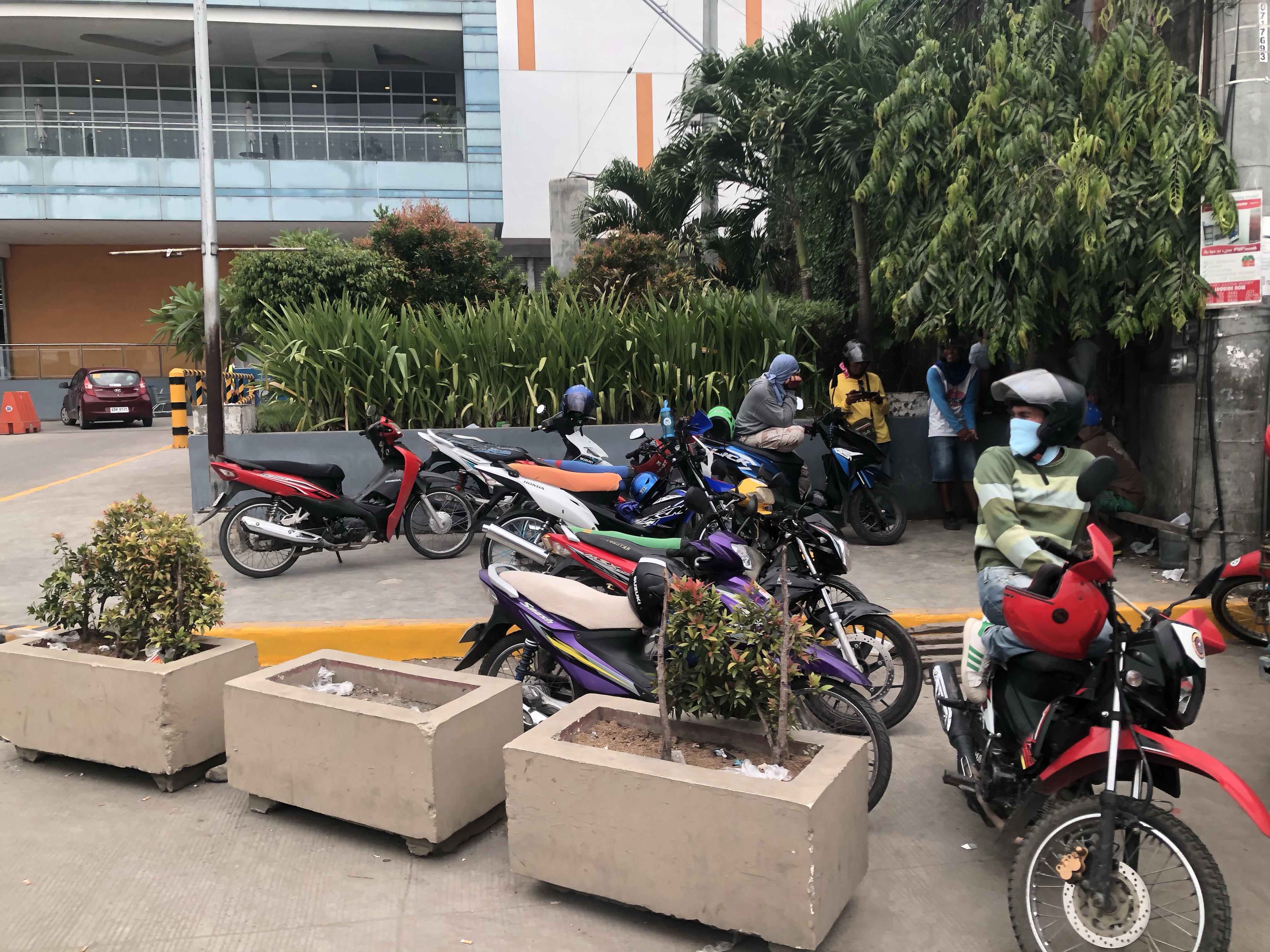 Off-street motorcycle taxi terminal at SM City Consolacion
 The terminal is located on the sidewalk at the corner of the SM lot. I assume it is tolerated by SM though it blocks the pedestrian way to the mall.
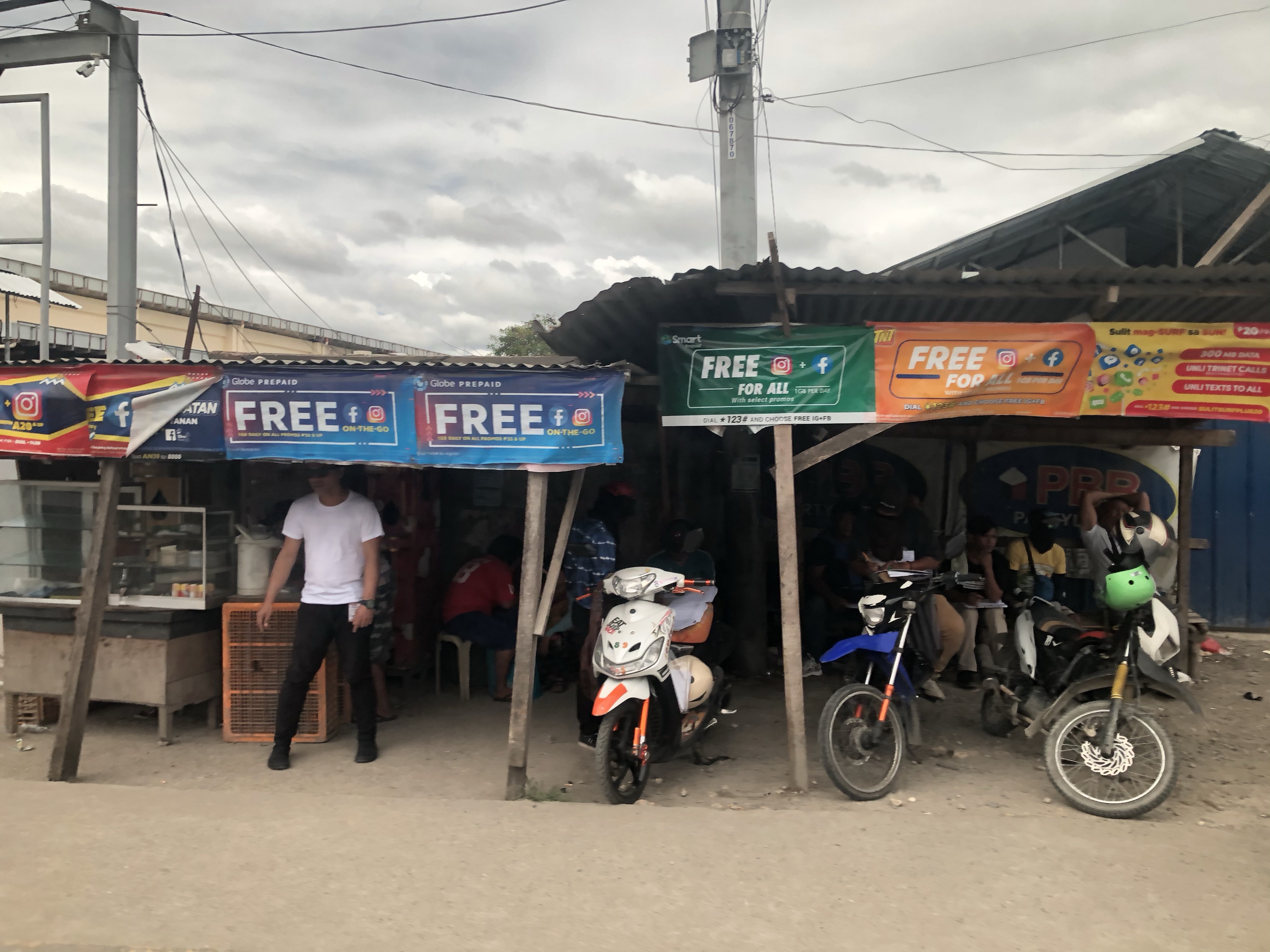 Another herbal-habal terminal near SM Consolacion but serving a different set of barangays from the previous terminal of habal-habal I mentioned.
 Fair matrix? Habal-habal minimum fares to specific destinations
Motorcycle taxis are a popular mode of transport in many Philippine cities and are generally tolerated by local government units. I guess the treatment they get from LGUs show the role they play as a mode of public transport. It is unfortunate and disappointing that the TWG that’s supposedly evaluating motorcycle taxis in Metro Manila cannot give a favorable assessment when it is clear that these habal-habal provide people with another choice for their commutes.
–
Statement of the Philippine Competition Commission on Motorcycles as Public Transport
Here is the link to the press statement of the Philippine Competition Commission on Motorcycles as Public Transport:
I will just leave this here as it stands on its own with the details and discussions provided by the PCC. I will comment on this in another post but in essence I agree with the statement, which I think is a better document in terms of provisions and clarity compared to what the TWG has released so far.
–
 Caught (up) in traffic