
Home » Posts tagged 'policy' (Page 9)
Tag Archives: policy
On the RFID fiasco
Early December 2020, Metro Pacific Corporation suddenly had to deal with jam-packed toll plazas and queues that affected roads connecting to the North Luzon Expressways. Fast-forward and Valenzuela City apparently had enough of it and revoked the tollway corporation’s business permit. Later, matters were resolved with the tollways reverting to mixed toll collection to manage the queues at the toll plazas.
Prior to this, tollways corporation scrambled to meet the deadline set and re-set by the Department of Transportation (DOTr) through the Toll Regulatory Board (TRB) for contactless, cashless toll payments. The question is if there was enough time for tollway operators to acquire the best (not just the minimum required) system for this endeavor. There are some opinions that this was basically required on short notice and for the government to get some brownie points for this.
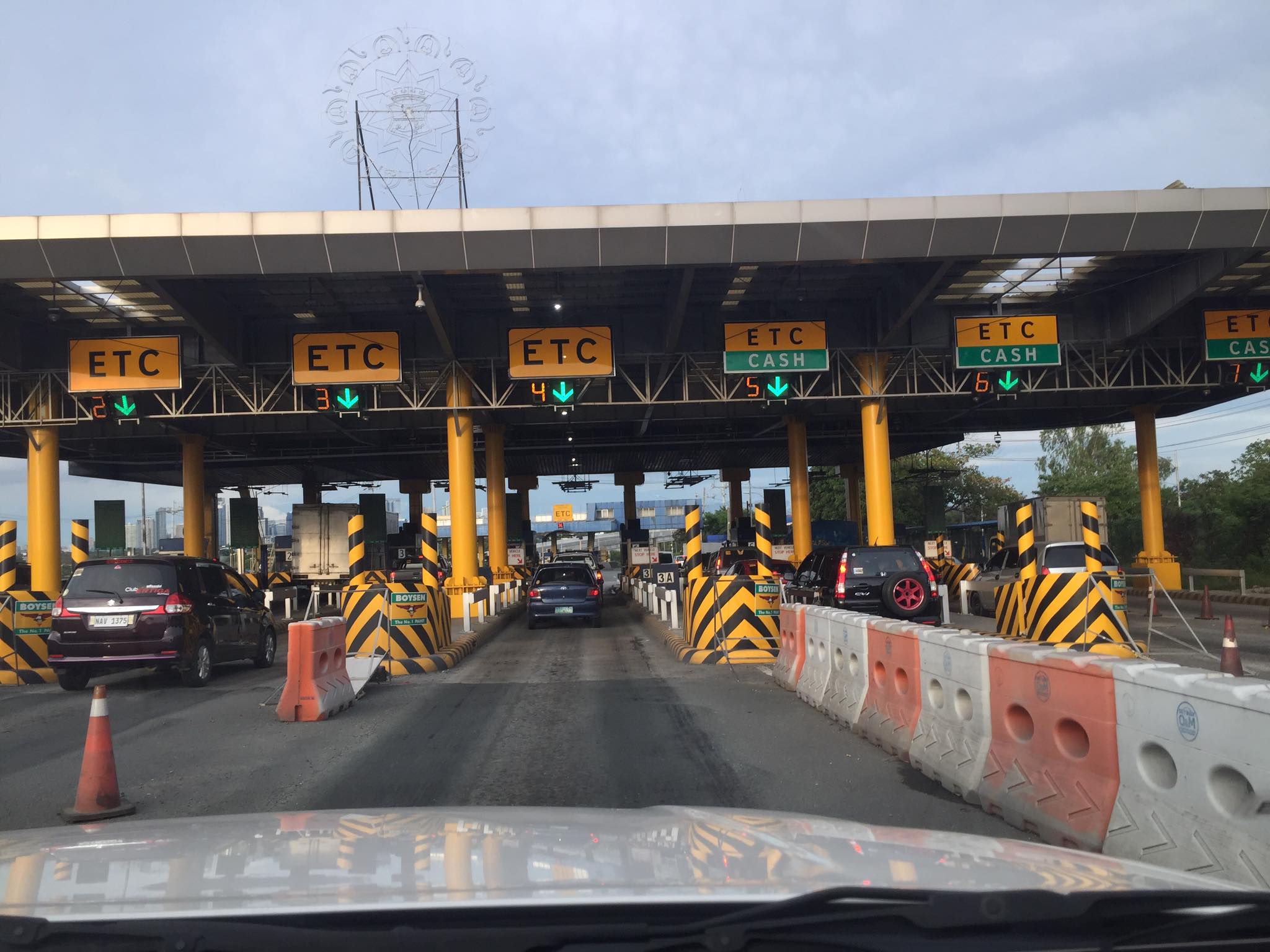
Were there issues about technology and the corresponding costs to the acquisition and deployment of the necessary devices for seamless, contactless, delay-free (in relative terms) transactions for tollways? Probably so. Those RFIDs and the readers installed at strategic locations along tollways (i.e., entries and exits) were certainly not state of the art or the best available out there. Singapore, for example, uses a more sophisticated system for their expressways where you no longer have toll plazas and you won’t have to slow down to be detected by the system. That system has corresponding costs but is perfect for the city state given that most roads are tolled anyway because of their road pricing policy. In the case of our tollways, not all travelers are actually going to utilize the tollways as frequently as it would necessitate them having to get either the Easy Trip or Auto Sweep tags. That is obvious from the relatively low penetration rates for electronic toll collection (ETC). So it still makes sense to have hybrid booths for those not availing the ETC option. Anyway, travelers will have to exercise disinfection protocols to ensure infections are prevented.
–
On cycling fatalities and the way forward
I’ve read a few articles and social media posts about how its become more dangerous or risky for cyclists during the pandemic. The statistics and observations show that there is an increase in the number of cyclists. I am not even considering here the recreational ones (and I have observed that there are a lot more of them). I focus rather on those who use bicycles to commute between their homes and workplaces; or those who cycle to market or do their groceries. The danger lies mainly from motorists who have little or no regard for cyclists and pedestrians; choosing to hog the roads for themselves. And there seem to be more of these motorists these days, too, as people owning cars have opted to use these instead of taking public transportation.
Here’s a recent article about safety in the US. Those stats and assessments can be replicated here given the availability of data on kilometers traveled and crashes that are usually employed for risk assessments.
Marquis, E. (December 22, 2020) “Cars have killed almost 700 cyclists in 2020,” Jalopnik.com, https://jalopnik.com/cars-have-killed-almost-700-bicyclists-in-2020-1845934793
The only solution for our case really is to put up protected bike lanes. Local standards or guidelines need to evolve and the people behind these should be of progressive thinking rather than relying on “what has been done” or “what they have been doing”. That attitude will only give us poorly planned and designed infrastructure for cycling and walking. The coming year offers some opportunities for active transportation as the DOTr and the DPWH (plus the MMDA in the case of Metro Manila, and perhaps the LGUs where applicable) are supposed to implement major projects intending to produce the bike lanes and walkways for Metro Manila, Metro Cebu and Davao. The budget is in the billions of pesos so much is expected about these projects. Will they become models for other Philippine cities and municipalities to follow? Or will these be like going through the motions just to appease those calling for active transport facilities?
–
On experiments and crowd-sourcing for solutions
If you didn’t notice, the government (national agencies and local government units) has implemented and successfully employed experimentation and crowd-sourcing to find solutions for transport and traffic problems. In the case of experimentation with traffic, this has been going for a while now but not at the level of those conducted during Bayani Fernando’s stint at the MMDA. At the time, full scale experiments were undertaken as the agency dabbled with the U-turn scheme. The ultimate product of that time are the twin U-turn flyovers at C5-Kalayaan. I say ultimate because it involved both experimentations and traffic simulation, where the latter was used to justify the U-turn flyovers over what was originally proposed as an underpass along C-5. As I recall, the model was not calibrated or validate contrary to the agency’s claims. I say so because I personally saw how the model ran and the presentations were more like demonstration of the software used. Meanwhile, the DPWH at the time made their own simulation models and did the necessary calibration and validation to come up with sound models for other projects including the Quezon Avenue-Araneta Avenue underpass.
Crowd-sourcing, mainly through social media is a more recent approach. It is not an entirely new animal because prior to social media, there were a lot of inter-agency committees that included people from various stakeholders (some invited, some not) who were the primary “sources”. The crown now is larger and perhaps more diverse. Whether this is a conscious or unconscious effort is uncertain. And this can easily be denied or shrugged-off. But in this age of social media, there are just so many enablers or influencers for crowd-sourcing each of whom have their own agenda. Some mainly to promote or prop up the current administration. Some to mainly criticize without offering solutions. And others to invite constructive scrutiny or assessment while also providing options to address problems and issues. It is the latter group whose opinions and recommendations should carry more weight if indeed the administration is fishing for solutions from the so-called crowd.
Consider the following recent examples (not in any order):
a) Closing U-turn slots along EDSA
b) Requiring face masks for all who are outdoors including cyclists
c) EDSA carousel
d) Resumption of public transport with mostly air-conditioned vehicles
e) Bike lanes along major roads
f) Public transport reform (in general)
There are others but the six listed above have been discussed a lot on social media after government picked up an idea or two about them, and implemented each seemingly without conducting due diligence or paying attention to the details including potential glitches. They ended up with mixed results, many very costly (I wouldn’t say disastrous at this point). However, in all cases, they seem to welcome (though at times begrudgingly or feigning resistance) crowd-sourced solutions particularly those from organized groups who are only too happy for themselves to be in the limelight.*
One thing is for sure and that is that there is still a lack of capabilities among government agencies and LGUs when it comes to transportation. Don’t get me wrong. National government and many LGUs have the resources and capacity to address transport problems. However, their capabilities are in question here because they seem to be unable to harness their capacities and resources to come up with sound and suitable solutions. In the end, they appear to buckle under the pressure of their own crowd-sourced schemes only to emerge as manipulators after they are able get what they want with the willing assistance of the naive.
–
*Some of these are true advocates who have worked hard to make transport better for all while others are the bandwagon types (nakikisakay lang) who are content dropping key words that now sound cliche at every opportunity. I leave it up to my readers to determine which are which. 🙂
Micromobility policy atlas from the Shared-Use Mobility Center
Here’s a quick post sharing a policy atlas on micromobility from the Shared-Use Mobility Center. It looks like this will be something like a work in progress since there surely would be more policies and infrastructure in more cities and countries as micro mobility catches on with people. Already having many users prior to the pandemic, micro mobility, especially cycling, has gained even more during the lockdowns and afterwards when people opted for this mode over public transport (usually because of a lack of it), private cars (expensive), motorcycles (not their thing), and walking (too slow for their taste?).
Here is the link to the atlas: https://learn.sharedusemobilitycenter.org/atlas/?
–
New WHO publication on transport in the context of COVID-19
I’m just sharing the new publication from the United Nations (UN) World Health Organization (WHO) – Supporting healthy urban transport and mobility in the context of COVID-19:
https://www.who.int/publications/i/item/9789240012554
The brief document contains recommendations for travelers and transport service providers. It is a compact, concise reference for everyone as we continue to deal with the impacts of COVID-19.
On making jaywalking legal
Road safety experts and advocates have been calling for more people-friendly streets through design, policy and awareness initiatives embodied in what are usually referred to as 3 E’s – engineering, eduction and enforcement. Among the more contentious issues of road safety is jaywalking, which is defined as a pedestrian walking into or crossing a road while there are designated places or facilities for doing so. Jaywalking is a crime in most cities though enforcement can be lax in many. But while most technical and non-technical advocates of road safety agree that a more people-friendly or people-oriented environment along roads can be attained by decriminalizing jaywalking, the resistance to such a proposal mainly comes from the government and enforcement agencies. It is a bit surprising because even with studies and best practices showing better designs and policies coupled with IECs, the notion of pedestrians crossing the roads anywhere while not castigating motorists deliberately running down or swiping at the pedestrians seem unfathomable or difficult to understand for many administrators or enforcers.
Here is a nice article that argues for decriminalizing jaywalking:
Schmitt, A. and Brown, C.T. (October 16, 2020) “9 Reasons to Eliminate Jaywalking Laws Now,” Bloomberg CityLab, https://www.bloomberg.com/news/articles/2020-10-16/jaywalking-laws-don-t-make-streets-safer.
Of course, there’s another angle or perspective there in the article since it was written from the context of the current situation in the US. All the reasons, however, are valid and should be taken up seriously in a country like the Philippines where there is also a push for more people-friendly transportation that includes our roads and all its users.
–
On personal mobility devices (PMD)
Personal mobility devices (PMD) are in the news now as the Land Transportation Office (LTO) issued a statement calling for their users to be required to get a license. Apparently, the agency is interpreting the law for people operating motor vehicles as something that extends to users of all powered vehicles. This may be an example of the law not being apt or suitable for the times and not considering the specifications or operating characteristics of these vehicles. Thus, this issue emphasizes the need to update policies and regulations and perhaps re-formulate them to be less car-oriented or biased vs. active transport as well as this emergence of PMDs as another mode choice for travelers.
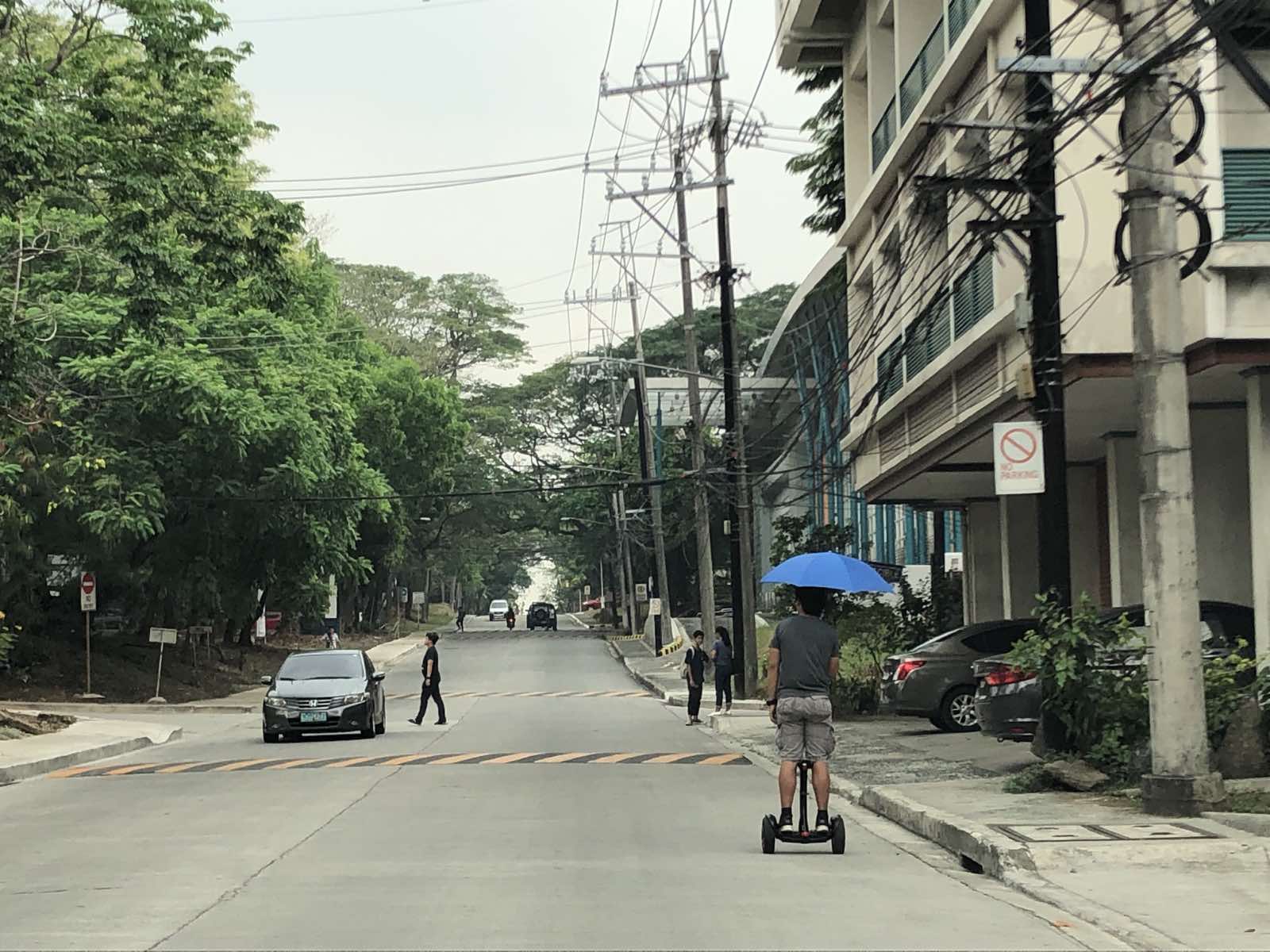
I took the following photos while conversing with one of the project research staff at our center who uses an electric PMD for his commute between UP and his home in the Cubao district. He related that he alternates between this and his motorcycle. When asked if he felt safe using the PMD, he said it was the same as when he rides a motorcycle as he also wears a helmet and protective pads when using the PMD.

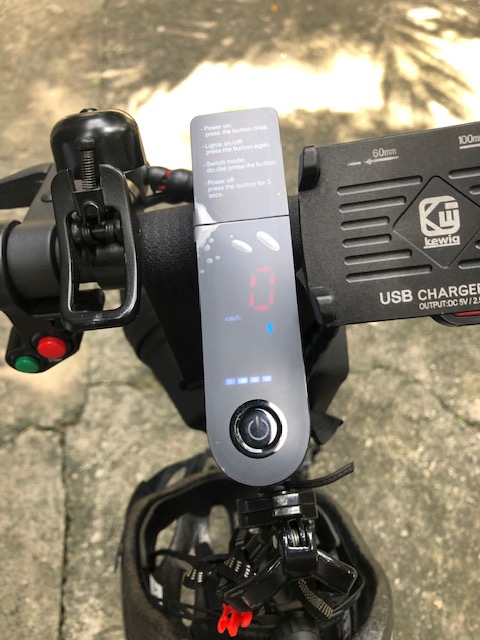

I’ve seen a few PMD users along my commute and for most I thought they practiced safe riding. There were some though who seem to fancy themselves as stunt riders. These are the ones who endanger not only themselves but other road users with their reckless behavior on the roads. They are not different from other so-called “kamote” drivers or riders (with all due respect to the kamote or sweet potato). Like any road user, these should also be apprehended and penalized for unsafe behavior that endangers others.
–
On the safety of transit use during the pandemic
Here is another quick share of an article that reports on a study showing that there is no direct correlation between COVID-19 and public transportation use:
editor@aashto.org (October 2, 2020) Study: No Direct Correlation Between COVID-19, Transit System Use. AASHTO Journal. https://aashtojournal.org/2020/10/02/study-no-direct-correlation-between-covid-19-transit-system-use/
Such articles and the study (there is a link in the article for the report) support the notion that public transportation can be made safe for use by commuters during the pandemic. The report is a compilation of best practices around the world that can be replicated here, for example, in order to assure the riding public that public transport (can be) is safe. Needless to say, car use is still less preferred and other findings have also supported active transport whenever applicable. This reference is both relevant and timely given the new pronouncement (or was it a proposal?) from the Philippines’ Department of Transportation (DOTr) to implement what they termed as “one seat apart” seating in public utility vehicles in order to increase the capacity of public transport in the country. The department has limited the number of road public transport vehicles and the current physical distancing requirements have reduced vehicle capacities to 20-30% of their seating capacities. It is worse for rail transit as designated spaces/seats in trains translated to capacities less than 10% of pre-lockdown numbers.
–
On the transformation from car-oriented to people-oriented streets
I saw this article shared by a friend on social media and share it here as an interesting piece providing ideas and the thinking or attitude required if we are to transform our streets:
Jaffe, E. (2020) “4 ways to go from “streets for traffic” to “streets for people”, Medium, https://medium.com/sidewalk-talk/4-ways-to-go-from-streets-for-traffic-to-streets-for-people-6b196db3aabe [Last accessed: 9/30/2020]
It is actually interesting to see how this plays out in Philippine cities. The ‘honeymoon’ or ‘grace’ period from the lockdown to the ‘normalization’ (read: going back to the old normal) of traffic might just have a window and this is closing for active transport. National and local officials, for example, who seemed enthusiastic and quickly put up facilities for active transport have slowed down efforts or even stopped or reneged on their supposed commitments. The next few weeks (even months) will show us where we are really headed even as there are private sector initiatives for active transport promotion and integration.
–
References for improvements for active transportation
Here’s a nice link to a National Academies of Science, Engineering and Medicine pointing to the wealth of researches supporting improvements for active transportation:
Paths to Biking, Walking Improvements Supported by Wealth of Research
Link: https://www.nationalacademies.org/trb/blog/paths-for-walking-and-biking
The references listed should aid researchers, practitioners, advocates and policymakers in their work towards realizing a people-oriented vs car-centric transportation.
–
 Caught (up) in traffic