
Home » Posts tagged 'preferences'
Tag Archives: preferences
On desire paths
I found this article on desire paths. These are paths made by people based on their preferred ways to get from one place to another. Often, the paths or ways that are constructed and paved are not the shortest or most desirable ones and appear to force people into following them. Perhaps the built pathways are planned or designed to follow a certain aesthetic in as far as infrastructure is concerned. Desire paths often are the most direct routes from one place to another. These shortcuts are defined over time by the wear along the path. In some cases, they eventually become formalized when they are paved or maintained one way or another including trimming of foliage along the paths.
https://www.boredpanda.com/desire-paths-pictures/?utm_source=share&utm_medium=top&utm_campaign=user
Here’s an example at the National Science Complex grounds of the University of the Philippines Diliman:
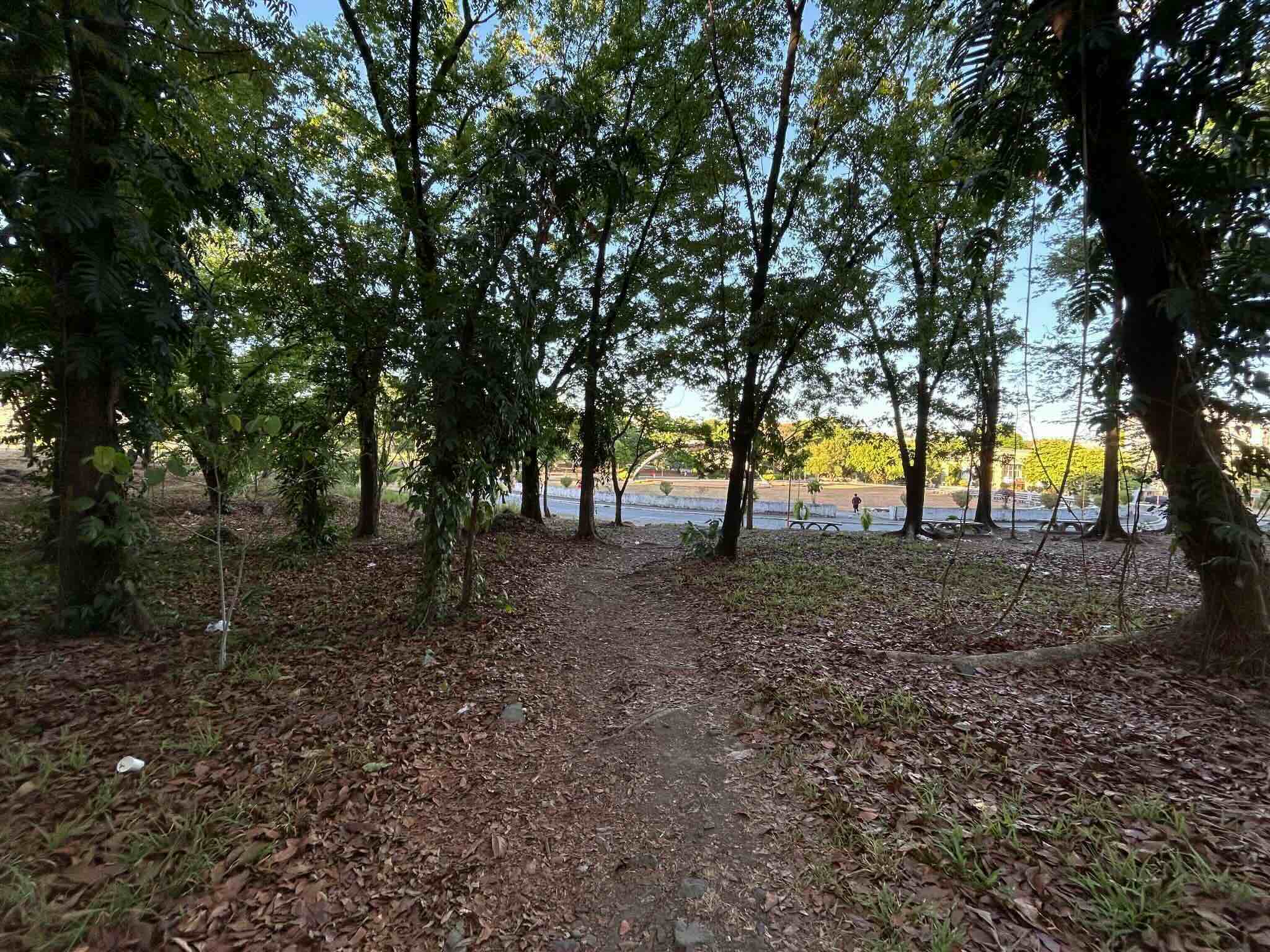 Desire path created by students and staff as a shortcut from the complex core to one of the outlier buildings.
–
Alternative reasons for the rise of SUVs in the Philippines
I recently shared an article about the rise of large vehicles in the US and how they have negatively affected road safety in that country. There are mentions there of the elements that led to people preferring SUVs including the usual technical specifications of SUVs and trucks (what they call the pick-up) that proliferate US roads. These are probably safer for transport from the perspective of the occupants including the driver. However, they are unsafe to other road users especially pedestrians and cyclists. I guess the reasons for owning large vehicles are similar for the Philippine case but there are other stories and reasons behind the preference of large vehicles in many parts of the country. A couple of these are quite common reasons that has nothing to do with people having car-centric mindsets. The latter is probably far from their consciousness.
One reason for preferring larger vehicles is practicality. I first encountered this reason during vacations in Iloilo in the 1970s and 1980s. People had pick-ups and owner type jeeps built for the rough roads at the time. Cars would not have survived the road conditions with the shock absorbers and tires being the first to go. This would probably be the same reason in other provinces as well. The unpaved and poorly maintained roads necessitated pick-ups and the SUV models of those times. Eventually, these evolved into the Pajeros, Patrols and Land Cruisers and later the Monteros, Everests and Fortuners. Add to these the AUVs (e.g., Innova, Adventure, etc.) that also became preferences depending on the affordability to people.
Another reason for preferring larger vehicles is not just about practicality but survival. People from flood prone areas tend to have larger or taller vehicles. Ground clearance is a criteria for vehicles as these have to be able to navigate flooded highways and streets. Most flash floods are probably ankle or gutter deep. But there are more severe situations where floods can be knee or waist-deep. And so people preferred vehicles that can get them out of their flooded homes if not get to their not flooded home but via flooded roads. This comes from first hand experience. After Typhoon Ondoy inundated much of Mega Manila, sales of SUVs and AUVs were up. People replaced their vehicles with these rather than regular cars. They generally didn’t transfer homes as many decided to stay as they probably couldn’t afford to get a new hour or have gotten used to the flood situation in their places. Floods, after all, are seasonal and the Ondoys are not so frequent.
The stories or reasons I cited above are real and will probably be attested to by many who share the experiences in flood-prone and/or rural areas. These narratives though have been set aside or dismissed in favor of the car-centric narrative that’s the in thing these days. If we really look more deeply, the failures of infrastructure development, whether pertaining to basic roads or drainage systems, have tremendous impacts on our lives including our preferences for vehicle types or models. In fact, weren’t those also among the questions for resisting electric vehicles? Kaya na niyan ang rough roads? Kaya ba niyan ang ahon? Kaya ba niyan ang baha? Of course, housing location preferences and options (along with affordability) are also factors. Why live in a flood prone area after all? But that’s another topic that I plan to write about as well very soon. I think I wrote something about this here or in my other blog. I should write about it again and probably in light of the flood control projects that have been the hot topics these past months.
–
“Nobody Walks Here. It’s Too Hot or Cold or Wet or Dry.”
I’m sharing this article as it provides a clear response to the question about walking under different circumstances. Those circumstances include weather conditions. How many times have we heard people saying “people won’t walk because it’s too hot or rainy” ? Maulan (rainy)! Mainit (too hot)! And yet we find a lot of people walking, even when its extremely hot or the rains are pouring.
Source: “Nobody Walks Here. It’s Too Hot or Cold or Wet or Dry.”
Quoting from the article:
“The human ability to adapt is the key to our spectacular success on this planet. Our problem is that the people who lead our public conversations, our elites of wealth and opinion, are often some of the least adaptable people on earth. And when societies assume that we should listen to those people, we all end up internalizing the message that there’s something wrong with us if we even try to walk…
…Sometimes walking a few blocks is the key to liberty and prosperity in someone’s life. Most people do what makes sense in the place where they live. Only if we recognize that will we make the investments in urban design to make walking more bearable in extreme weather. And only then will our cities include everyone.”
Here’s another quote and a take on what certain people say that often influences our choice for walking:
“The functionality of a city, and of its transport system, arises from the sum of everyone’s choices about how to travel, not just the preferences of elites. When elites make pronouncements about what “people” will tolerate, while really speaking only of themselves, they mislead us about how cities actually succeed. They also demean the contributions of the vast majority of people who are in fact tolerating extreme weather to do whatever will give their lives meaning and value.”
–
On housing and transport
I am always amused about discussions and posts about transport and traffic where people appear to isolate the traffic as what needs to be solved, and where people criticize the latter and state that it is a transport and not a traffic problem. Both do not have the complete picture if that is what we want to start with. Land use, land development and the choices people make based on various other factors (including preferences) are among the other ingredients of the proverbial soup or dish that need to be included in the discussion. Remember land use and transport interaction? That’s very essential in understanding the big picture (macro) before even going into the details at the micro level. Why are there many car users or those who prefer to use private modes over public transport modes? Why do people prefer motorized over non-motorized modes? Maybe because people live far from their workplaces and schools? Why is that? Maybe because of housing affordability and other factors influencing choices or preferences?
Here’s a nice recent article on housing and transportation to enrich the discourse on this topic:
Litman, T. [January 7, 2021] “Housing First; Cars Last”, Planetizen, https://www.planetizen.com/node/111790?utm_source=newswire&utm_medium=email&utm_campaign=news-01112021&mc_cid=2985a82f48&mc_eid=9ccfe464b1 [last accessed: 1/13/2021]
–
On transportation equity
Here’s another quick share of an article on transport equity:
McQuaid, H. (November 23, 2020) “Equitable Transportation Starts At Community Level,” CT News Junkie, https://www.ctnewsjunkie.com/archives/entry/20201123_equitable_transportation_starts_at_community_level/
How many times have I heard and read about people talking about the concept of “dignity of travel” or “dignity of transportation” referring to the quality of our commutes in terms of the quality of transport services available to us. The article also talks about societal exclusions and biases that sometimes we only attribute to America but in reality are also applicable here based on how we regard people from the rural areas or our being regionalistic.
–

