
Home » Posts tagged 'Public Transport'
Tag Archives: Public Transport
Some thoughts and reflections on transport and the Middle East crisis
Much has been said and written about the ongoing crisis brought about by the US and Israel attacking Iran and the latter retaliating. The prices of fuel have risen rapidly over the past weeks. Consequently, the prices of commodities have also risen. The Philippines is still very much dependent of fossil fuels for transportation with most travel using road-based transport. Even public transportation relies heavily on fossil fuels as buses and jeepneys are mostly using diesel engines. Even paratransit such as trikes and motorcycle taxis use gasoline.
While the energy mix in the country has become more diversified with renewables now having a substantial share, majority of power is produces using coal and natural gas. And so e-powered vehicles are also ultimately dependent on these fuels. Could we have had better transport that could have made our cities more resilient in light of the conflict in the Middle East? Probably, and if we followed and implemented the plans for mass transit systems that were laid out decades ago. Of course, this is already moot and academic given the current situation. The counterfactuals though point to better commuting conditions if projects have not been delayed or shelved.
A colleague and I were just discussing about how MRT 7 could have contributed to the reduction of car use along the Commonwealth Avenue corridor if it was completed according to the original schedule. That was 2019. Even with delays including the impact of the pandemic, it could have been completed a few years ago. If it was operational in 2023, commuters could have already shifted to rail from both private and public road-based transport modes. There was also actually a proposal for a Bus Rapid Transit (BRT) line along Commonwealth about 2 decades ago. That could have been constructed and operational ahead of Line 7 and could have already disrupted commuting preferences along the corridor if it were operated as a true BRT.
There’s just a lot of opportunities already missed that could have alleviated the fuel crisis we have now. Maybe we are really heading towards a bigger crisis when all these price increases lead to a more sweeping increase in the prices of commodities? We hope it doesn’t come to that but we seem to be helpless in this situation where we are caught unprepared for a war we are have nothing to do with.
–
More buses please
The modernization and rationalization initiatives of the government seem to have slowed down. While there are many modern or modernized jitneys on the road, these are mostly in the big cities including Metro Manila and comprise a small percentage of the total jeepneys currently operating around the country.
Buses have been in the mix of these initiatives especially after the pandemic when jeepney operations were suspended and buses were the first to be activated. In the case of Antipolo City in Rizal, bus services between the city and Cubao in Quezon City were introduced. We even thought that they will replace the jeepneys that dominated the routes. Now they are competitors along with Line 2.
There was a real opportunity there for rationalization that involved upgrading to a higher capacity vehicle but that didn’t materialize. In most cases, the so-called modern jeepneys (many really are mini buses) just added to the conventional jeepneys. Were the number of vehicles reduced while increasing passengers capacities? No.
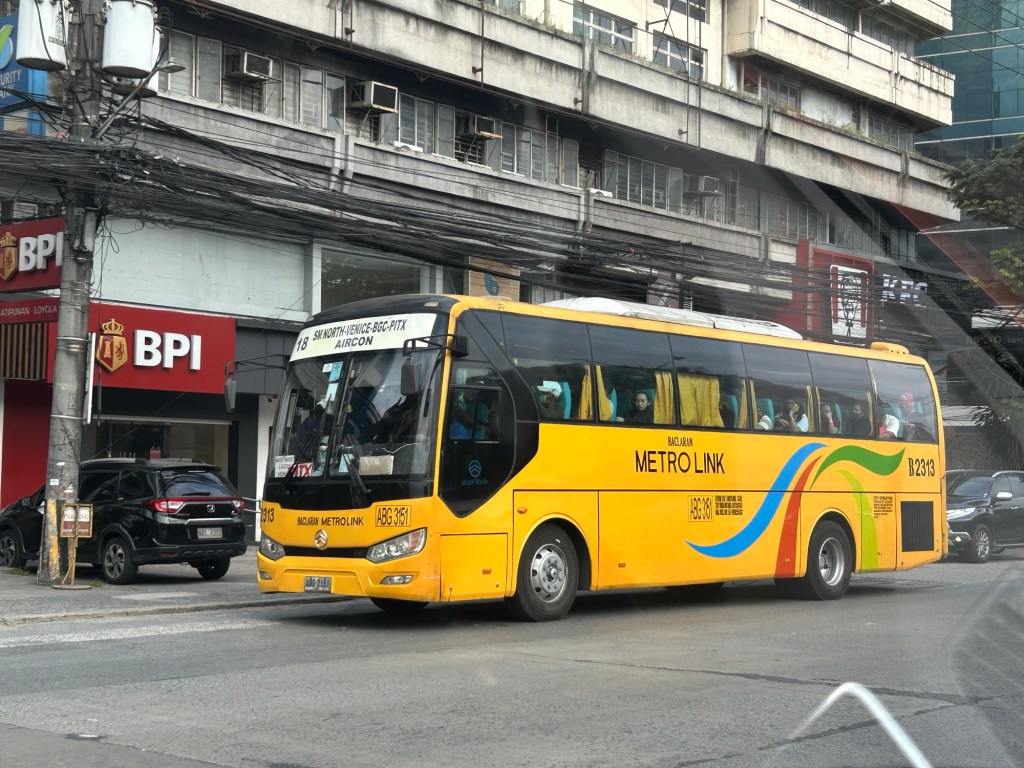
“We need more buses!” is an understatement. We really need more buses but to replace lower capacity vehicles on the road. The inconvenient truth is that we need to phase out jeepneys along certain routes and replace them with buses. Jeepneys may still operate but along shorter routes and would serve as feeder/collector with respect to the main lines operated by rail and buses.
–
Reference share – study on transport equity
Here is a quick share of a study report on equity in public transportation from the Mineta Transport Institute:
Defining and Equity in Public Transportation, https://transweb.sjsu.edu/research/2100-Public-Transit-Equity-Metrics-Measurement
Perhaps income, physical ability/disability, age and gender are the more applicable aspects of equity in our case. However, the concepts and methodology in the report may still be applicable and can be customized or contextualized for the Philippine setting.
–
Early risers and commuters
I was half surprised the other day when I went out to go to our office at 5:00 AM. I am no stranger to early morning or very late night travels including driving myself. I’ve done so under various circumstances before including going to the airport for an early flight or driving to a hospital due to an emergency. You don’t see many people waiting for rides at 11:00 PM or perhaps 3:00 AM. These are basically what people refer to as ‘unholy’ hours. People are asleep during these times. If not, they probably are working the so-called graveyard shift. The latter used to be for workers employed in facilities like factories that usually operate 24/7. Nowadays, these include business process outsourcing (BPO) workers who are active in part due to their employers being in countries in different time zones (e.g., US and Europe).
At one point before the pandemic, transport and traffic had become so bad that people had to leave their homes earlier than when they had. For example, instead of leaving at 7:00 AM, employees had to leave at 6:00 AM in order to reach their workplaces at 8:00 AM. Students have to leave at 5:30 AM to reach their schools at 7:00 AM. Now that we are still in a pandemic but returning to the ‘old normal’ it seems to have become worse than before.
At one point during the pandemic, a senior transport official stated that people will just have to wake up earlier if they want to get to their destinations on time. Whether this was serious or in a joking manners, to tell people to wake up early (or earlier) if they want to get a comfortable ride or just even to get a ride is insensitive. It only shows officials to be uncaring. But that probably is linked to their being elitist or privileged that they cannot even empathize with the regular commuters. With a new administration in place, we seem to have more of the same kinds of officials in our transport agencies but hopefully, the younger staff can convince their bosses to be otherwise and really work towards improving commutes.
–
On Metro Manila having one of the worst transit systems in the world
This is a follow-up to the previous post on the UC-Berkeley Study. Here is an example of how media featured the study outcomes:
https://www.facebook.com/CNNPhilippines/videos/1089453421728393
I didn’t see whether there was a response from government. These studies end up as features and nothing more if these do not prompt or push authorities to act on the problem. Even experts from academe or industry are reduced to being commentators or even pundits providing context, assessments and opinions, even recommendations that are perceived to fall on deaf ears. Perhaps government is already desensitized about these issues and will just trudge along at its own pace? In the end, it is the commuters mostly taking public transportation who continue to suffer and lose productive time to their daily travels.
–
On school bus services and the return to face-to-face classes
I did an interview last August with a major business daily but I couldn’t find it as published as part of an article. The topic was a very timely one as children return to schools for face-to-face (F2F) classes. Here are the questions sent to me and my responses as I remember them:
1. How will the transport sector cope with the expected increase in demand as more schools resume face-to-face classes?
For schools located in the cities, what we see is people opting to take private transportation in the form of cars or motorcycles to take their children to school. This is because public transportation supply is still not back to pre-pandemic levels while at the same time, parents and guardians and even students who commute by themselves (e.g., high school and college levels) may be hesitant to take public transportation as well as school service vehicles. The latter may be attributed to concerns about the safety particularly with regards to health (i.e., getting infected or exposed to Covid-19 if they take public transport or a vehicle where they share the ride with many other people). We need more public transportation capacity to be able to address the increased demand brought about by students coming back for face-to-face classes. We also need to have other options or alternatives for their safe journeys including walking and cycling for their commutes.
For schools in the rural areas, there may be little adjustment concerning transport since most schoolchildren walk or take motorcycles or tricycles to school. This is perhaps because most schoolchildren reside within the school district and do not have long commutes like what we have in many cities (e.g., most schoolchildren who study at schools like Ateneo, LaSalle, etc. likely live in another city or town rather than near the schools).
2. How many school buses are expected to resume operations? How many of them have permanently closed?
I currently don’t have the data on that but LTFRB should have reference or baseline data. School service vehicles are required to register with the LTFRB and perhaps a look at the number registered before and during the pandemic could show how many can be expected to resume operations nationwide and per region. LTO doesn’t have these numbers as they only register by vehicle type. We will not know from LTO data which jeepneys, vans or buses are used for school service. Most school service are tied to the schools the student of which they provide transport services to. If the school closed, then chances are that the school service may apply to other schools. That said, the last two years where schools operated online were a backbreaker to many school service and only the registered numbers with LTFRB can tell us just how many are not returning at least for this school year.
3. How does the surge in fuel prices affect the operations of those involved in school transportation? Will this affect the ability of teachers, schools staff and students to travel on-site?
School services might increase their rates, which are usually monthly or semi-monthly. This is to make up for the increase in fuel prices and vehicle maintenance as well. This will likely only affect students’ travel rather than those of their teachers or school staff. The latter group will likely take public transport or their own vehicles for their commutes. In their case, their travel may be affected by transport fare increase or their own fuel expenses if they use their own vehicles. They have little choice though because they have to travel to work. Student though may still enjoy some respite as many schools are adopting blended or flexible schedules that will only require students to do face-to-face classes on certain days of the week.
4. What’s the long term impact of the pandemic on the school bus industry?
People will remain to be apprehensive in letting their children share a school van or bus ride due to the pandemic. We can only promote vaccination and compliance with health protocols to ensure that schoolchildren will have safe journeys as far as Covid-19 is concerned. The return to face-to-face classes this school year will perhaps help determine if the pandemic will have a long term effect on the industry or if people’s (parents and guardians) trust to school bus services will return within the short term.
5. How can school bus drivers and operators cope with the challenges posed by the pandemic and rising fuel prices?
LTFRB issued Memorandum Circular 2022-066, which adds health protocols for school service:
• Regular examination of the drivers and conductors’ fitness to work by checking their body temperature and screening for symptoms related to COVID-19.
• Regular disinfection of frequently-touched surfaces, such as but not limited to seats, armrests, and handles.
• Mandatory wearing of face masks at all times by drivers and conductors, including passengers.School transport services must comply with these protocols and demonstrate the safety of their mode to convince people to return to using or subscribing to school service vehicles. Meanwhile, there is really no escaping rising fuel prices but collective transport in the form of school service vehicles are still more efficient and cheaper per passenger compared to using private vehicles; not to mention contribute to reducing traffic congestion along school routes. This must also be promoted (i.e., people made aware of the advantages) vs. private vehicle use.
–
On Transit, Urban Equity and Sustainability
Here is another quick share of an article about public transport, urban equity and sustainability:
Descant, S. (September 2021) “How Can Transit Deliver Urban Equity and Sustainability?”, Government Technology, https://www.govtech.com/transportation/how-can-transit-deliver-urban-equity-and-sustainability [Last accessed: 9/21/2021]
The article discusses how the Covid-19 pandemic clearly shows the role of public transportation in the lives of a lot of people. There is that opportunity to significantly if not radically improve public transportation now more than ever. Surely governments and their transit or regulating agencies have thought about this. While the pandemic led to situations that are not necessarily clean slates for many, there are definitely opportunities here and there to implement change that will increase benefits for transit users while attracting non-users to shift from their preferred modes (i.e., private vehicles). Here’s a takeaway from the article:
“We know that public transportation is the solution. So there needs to be a commitment at the federal level, not just in terms of funding, but also integrating public transportation deeper into the fabric of society, through land use policy and through other transportation access policies — the sidewalk and bike lane piece — with the data and payment apps as well…”
What improvements do you think should and can be done now given the pandemic situation? Are these still timely or have we figuratively “missed the bus”, so to speak?
On the BRT gaining popularity
Bus rapid transit or BRT has been around at least since the 1970s when the first ‘real’ BRT systems went into operation in Curitiba, Brazil. Here’s an article presenting the current state of deployment of these systems in the US:
Duncan, I. (July 23, 2021) “Cities are turning to supercharged bus routes to more quickly and cheaply expand transit services,” The Washington Post, https://www.washingtonpost.com/transportation/2021/07/23/bus-routes-public-transit-brt/
“There are indications that BRT lines can promote some of the density long associated with rail routes. A new analysis of job and residential growth by researchers at the University of Arizona examined areas around BRT stations in 11 cities between 2013 and 2019. In each case, they found areas close to the stations accounted for a significant share of regional growth.”
The Philippines should have had its first BRT line more than a decade ago if the government had been decisive about it. The first opportunity was under the administration of Macapagal-Arroyo when it was first conceptualized for Cebu City under a UNDP project and picked up by the WB for implementation.* The next opportunity came under the Aquino administration when the Cebu BRT could have been one of those low-hanging fruits for public mass transportation. Now, the same project is nowhere near completion as the Duterte administration has less than a year before it bows out. Meanwhile, there are proposed BRT’s in Metro Manila and Davao that have yet to see the proverbial light of day. The EDSA carousel is supposed to morph into a BRT but has not become so and requires more tweaking for it to be one.
*[Note: The BRT that was supposedly implemented by the MMDA under its then Chair Bayani Fernando was not a BRT or even a BRT light. It is not even at the scale of the current EDSA carousel.]
Tinkering with decentralization of public transportation planning, franchising and regulations
I recall an informal discussion my colleagues and I had about the then Department of Transportation and Communications (DOTC) more than a decade ago. We were comparing the Department of Public Works and Highways (DPWH)’s and DOTC’s structures. DPWH has regional offices but also District Engineering Offices (DEO). These DEOs were practically mini me’s of the DPWH with the District Engineer calling the shots. Under him were a Design Engineer, Planning Engineer, Maintenance Engineer, etc. who were the equivalent at that level of the Bureaus. DOTC didn’t have the equivalent even though there were Land Transportation Office (LTO) and Land Transportation Franchising and Regulatory Board (LTFRB) regional offices. So if there were regional development council (RDC) meetings, the DOTC’s representatives are usually from the regional offices of LTO and LTFRB plus other offices of agencies under DOTC – Maritime Industry Authority (MARINA), Air Transportation Office (ATO now CAAP) and the Philippine Ports Authority (PPA).
I mention these because perhaps one vision for the future is to have something like Metropolitan, City or Municipal Transit Authorities similar to those you’ll find in other countries. And these should have the capacities for route planning and assessment that are currently centralized in DOTr (i.e., Road Transport Division). But perhaps these transit authorities should not only have road based public transport under them but also rail, too. This is especially applicable to metros like MM, the loosely defined Metro Cebu and Metro Davao and other HUCs that maybe ripe for some form of urban rail transport. In some cases, I would even dare include maritime transport as well since modes like the Pasig River Ferry should also be included.
This idea of decentralization is something worth considering as local government units build capacity and capability for public transportation planning, operations and management. Some are already capable though mainly concern themselves with tricycles and pedicabs. These two modes are not under the LTFRB but are arguable the most in number around the country. There are already best practices about their management including those that have been documented in past studies on sustainable transport (e.g., San Fernando, La Union, Quezon City, Olongapo City, Davao City, etc.). Many of these cities are highly urbanized and would need to deal with all public transport and might just be the most knowledgeable and experienced in their jurisdictions. National government should at least identify pilot cities where bus, jeepney and van transport planning, franchising and management (including operations and enforcement) can be devolved or delegated. That is so we can already have an idea how these local transit authorities can be operationalized. Many already have their Local Public Transport Route Plans (LPTRP) so that is a good starting point for LGUs to establish their transit units around.
–
On the arguments vs. free transit
Here is a quick share of an article discussing about the idea of free public transport (no fare or minimal fares):
Grabar, H. (June 1, 2021) “The Problem with Free Transit,” Slate, https://slate.com/business/2021/06/free-transit-is-not-a-great-idea.html [Last accessed: 6/16/2021]
Apparently, “better transit, not cheaper transit” should be the mantra for both providers (operators including government) and users (commuters). It is a very sensitive topic for regulatory bodies though since higher fares are generally unpopular to the commuting public. One transport official recently stated that fare setting is a political issue. I tend to agree with this but only because the riding public is currently still largely ignorant or unappreciative of the benefits of efficient public transportation. Perhaps this is also because we’ve really had no efficient public transportation such as the ones we see in other countries including Singapore and Hong Kong? In Singapore, for example, the road pricing policies have educated people about the true costs of transport and that convinces most to take public transportation over private cars.
–
 Caught (up) in traffic