
Home » Posts tagged 'Public Transport' (Page 3)
Tag Archives: Public Transport
School shuttle bus service in Cebu
Almost 20 years ago, there was an initiative by the Metro Manila Development Authority (MMDA) involving the fielding of buses to take students of Ateneo and Miriam from certain pick-up points (e.g., SM North EDSA, White Plains, SM Marikina, etc.). That was in an effort to reduce the private vehicle traffic that clogs Katipunan during the weekdays. That did not meet any success and was scrapped. Years later another initiative was hatched with buses again provided with a pick-up point at SM Marikina. That is supposed to be still operational at present but one acquaintance observed that there are fewer passengers on this bus and that he fears it will soon be scrapped, too.
Last January, we chanced upon a bus service provided by the University of Cebu. The pick-up point was SM Consolacion, which was to the north of Cebu City. Consolacion town was the second town to the north after Mandaue City. We chanced upon this after observing the early arrival and formation of a queue by students at the still-closed mall. Security informed us of the service after we inquired with them. We were conducting surveys for a transport study we were doing in the area and were deploying our surveyors when we saw the students.
 University of Cebu School Service bus turning across SM City Consolacion towards the bay in front of the mall
 Students boarding the bus include what looks like grade school, high school and college students
The bus didn’t return for another pick-up, and there were no other buses or school service vehicles that arrived that morning so I guess this was a scheduled service with a capacity just enough for the number of students waiting that morning (typical number?). I do not know if these students are subscribed to or had to sign up for the service but there has to be a system of sorts so the university can assess what type of vehicle and the frequency for pick-ups. We were not able to observe if the bus returned sometime later that day for the return trips of the students.
We thought that such efforts are advantageous to many students and even faculty members and staff of the university. Such practices or services should be replicated by other schools as well and collectively may help alleviate congestion by reducing individual vehicle trips.
–
On the financial viability requirement for public transport operators
I came upon the news that the P2P Bus service between SM City North EDSA and SM Megamall suspended operations The Land Transportation Franchising and Regulatory Board (LTFRB) released a statement to clarify the circumstances surrounding the suspension, which apparently was the initiative of the operator rather than the agency. Apparently, too, some people were quick to attribute (blame seems to be the more appropriate adjective to describe how some netizens reacted) the suspension to LTFRB. Here is the statement posted on their social media page:
Land Transportation Franchising and Regulatory Board – LTFRB
February 23 at 7:52 PM ·LTFRB PRESS STATEMENT ON P2P OPERATIONS OF FROEHLICH TOURS, INC.
23 February 2020The Land Transportation Franchising and Regulatory Board (LTFRB) would like to clarify that it did not order the cessation of the P2P operations of Froehlich Tours, Inc. (FTI) which plied the SM North EDSA-SM Megamall and Trinoma-Park Square routes.
FTI was one of the first to be awarded with P2P routes in 2016. In November 2019, MAN Automotive Concessionaires Corporation (MAN) submitted a letter requesting the Board to look into the financial capability of FTI to maintain its operations, fund expenses that may arise from accidents, and continue to provide public service.
According to MAN, an exclusive truck and bus importer, assembler, and distributor, FTI initially acquired 17 bus units amounting to a total of P185.7 million from them. FTI was only able to pay P39.2 million which resulted in MAN having to repossess 12 bus units. To this day, P19.75 million is still left unpaid by FTI.
While these allegations are still under investigation by the Board, an inspection of the FTI bus units revealed that the company’s Provisional Authority, which allowed them to run and function as a public service provider, has already expired and no renewal was filed.
As of now, an order has been sent out to Froehlich Tours Inc. to submit its 2019 Financial Statement within a period of five (5) days from receipt of a copy. The hearing is reset, upon the agreement of both parties, on 3 March 2020 at the LTFRB Central Office.
Pending the outcome of the hearing, the Board shall adopt measure in the coming weeks to ensure that the riding public will be provided with the needed transport service on the routes affected.
–
There are two major points in the statement. One is on the financial viability of the operator and another is on the provisional authority granted by the LTFRB, which is a regulatory agency. The latter pertains to something more temporary and authoritative than a franchise, which is basically a license to provide transport services. These provisional authorities are often granted by the agency for so-called “missionary routes” as well as for supplementing the supply of vehicles during peak seasons like Christmas, Holy Week and Undas.
Financial viability is a requirement for all public transport operators. It is part of the formula for determining the viable number of units (i.e., vehicles) considering the fare that is to be charged to passengers taking into consideration the operating costs of operators. If this requirement was implemented strictly, a lot of operators would not be operating PUVs in the first place. The LTFRB, however, as well as its mother agency, the DOTr, have been lax about this requirement for so long a time that it is difficult to recall the last case where this was cited as a reason for suspending operations.
–
Comments on current transport issues – Part 2: On motorcycle taxis
I continue with my comments on current and persistent transport issues. This time, I focus on one of two hot topics – motorcycle taxis or “habal-habal”.
1) On motorcycle taxis:
I am not a member of the Technical Working Group (TWG) that’s supposed to be evaluating the trial operations. I know one or two of the key members of the TWG and am surprised that they have not referred to the academe for studies that may have already been done about this mode of transport. I know there have been studies about it in UP and DLSU. Perhaps there are more from other universities in the country. Motorcycle taxis or “habal-habal”, after all, are practically everywhere and would be hard to ignore. Surely, researchers and particularly students would be at least curious about their operations? Such is the case elsewhere and many studies on motorcycle taxis have been made in the region particularly in Vietnam, Thailand and Indonesia, where these modes also proliferate.
The terms “trial”, “experimental” or “pilot” are actually misleading because motorcycle taxis have been operating across the country for so many years now. They are supposed to be illegal and yet they serve a purpose in the areas where they are popular. What is often referred to as an informal transport mode is ‘formal’ to many people who are not being served by so-called formal modes including the tricycle. Of course, one can argue that these terms (i.e., trial, experimental and pilot) refer to the app that are supposed to enhance the existing habal-habal operations.
I would strongly endorse motorcycle taxis but companies need to be held accountable should there be fatal crashes involving their riders. They are supposed to have trained and accredited them. The companies should also have insurance coverage for riders and passengers. LGUs tolerant of these should be watchful and do their part in enforcing traffic rules and regulations pertaining to motorcycle operations in favor of safe riding. This is to reduce if not minimize the incidence of road crashes involving motorcycle taxis.
I think one of the problems with motorcycle taxis is not really their being a mode of choice but the behavior of their drivers. While companies like Angkas and Joyride conduct training sessions with their riders, many revert to reckless on-road behavior including executing risky maneuvers in order to overtake other vehicles on the road. This is actually a given with many ‘informal’ motorcycle taxis (i.e., those not affiliated with the recognized app companies). But then this is also an enforcement issue because we do have traffic rules and regulations that are poorly enforced by authorities. Thus, there is practically no deterrent to reckless riding except perhaps the prospect of being involved in a crash.
I will refrain to include the politics involved in the issue of motorcycle taxis. I will just write about this in another article.
Coming up soon: hot topic #2 – Obstacles to the PNR operations
The problem with public transport in the Philippines…
There is a collage of two photos, one taken in 1975 and another in 2019, showing buses that managed to squeeze themselves into a jam. The 1975 photo was taken at the ramp of the overpass near Liwasang Bonifacio (Quiapo, Manila). There is a commentary describing the photo that attributes ‘monstrous daily traffic jams’ to the behavior of Filipino drivers. Special mention was made of public transport drivers and the photo showed proof of this. This was 1975 and motorization had not reached the levels we are at now so the arguably, traffic congestion was not as bad as the present we experience daily.

The problems pertaining to driver behavior persist today and probably even worsened along with the general conditions of traffic in Philippine roads. I say so since the volume of vehicular traffic has increased significantly from 1975 to the present and there are much more interactions among vehicles and people that have led to a deterioration of road safety as well. Traffic congestion and road crashes are asymptomatic of the root causes of most of our transport problems. And so far, it seems we have had little headway into the solutions. The photos speak for themselves in terms of how many people can easily put the blame on poor public transport services despite the fact that cars are hogging much of the road space. And what have authorities done in order to address the behavioral issues that lead to these incidents?
Someone joked that the guy in the 1975 photo who appeared to be posing in disbelief of what happened is a time traveler. The 2019 photo shows a similar guy with a similar pose though with more people around. Maybe he can tell us a thing or so about what’s wrong with transportation in the Philippines and provide insights to the solutions to the mess we have.
–
Zamboanga City Integrated Bus Terminal
I open the year by sharing photos of the Zamboanga City Bus Terminal. It is a ‘central’ terminal as most most buses terminate here and cannot proceed to the city center. At the terminal, passengers may transfer between buses, jeepneys and vans.
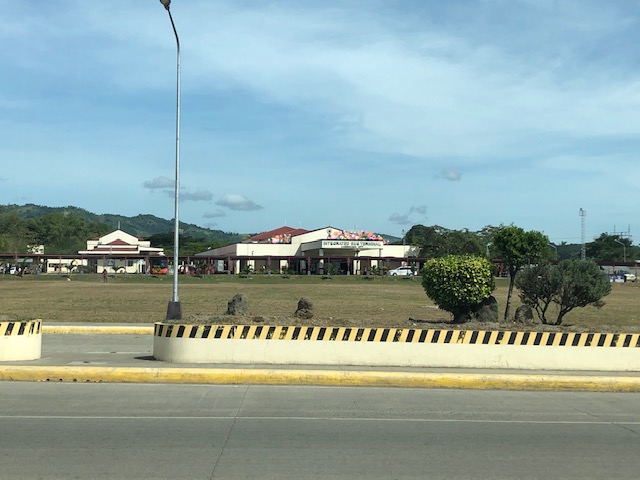 View of the terminal from the national highway. There are driveways leading to and from the terminal from the highway and one can appreciate the expanse between the facility and the main access road.
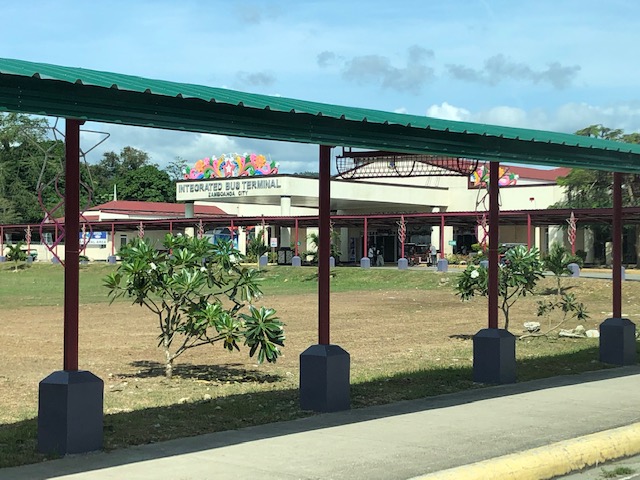 There are covered walks connecting the terminal to the national road.
 Provincial buses and long-distance vans at the terminal
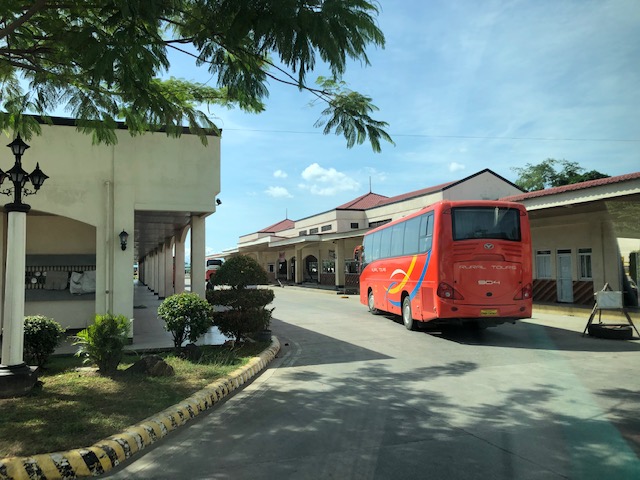 Provincial bus arriving at the terminal
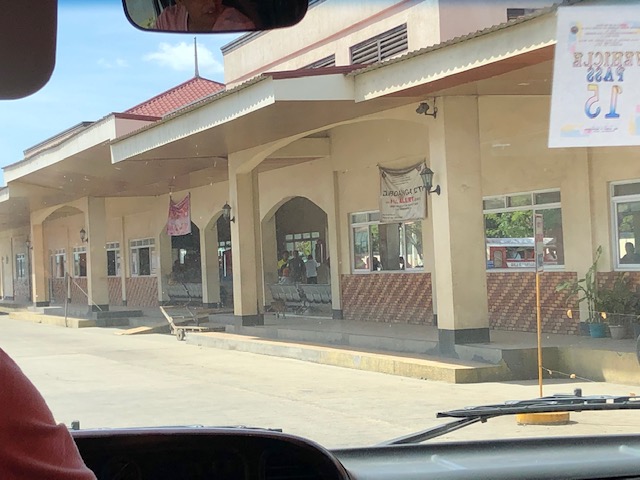
 Jeepneys at the terminal
 Motorcycles parked along a shaded area. The lamp’s vintage design seems to be a good accent to the terminal.
 Close-up showing the spacious parking area shared by cars, jeepneys, motorcycles and even tricycles
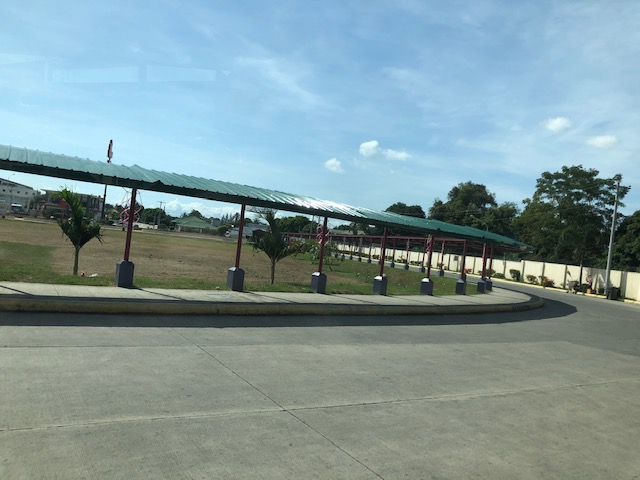 Another look at the covered walkways leading to the national highway. Not all public transport go to the terminal because of the fees and the distance for the diversion from the highway.
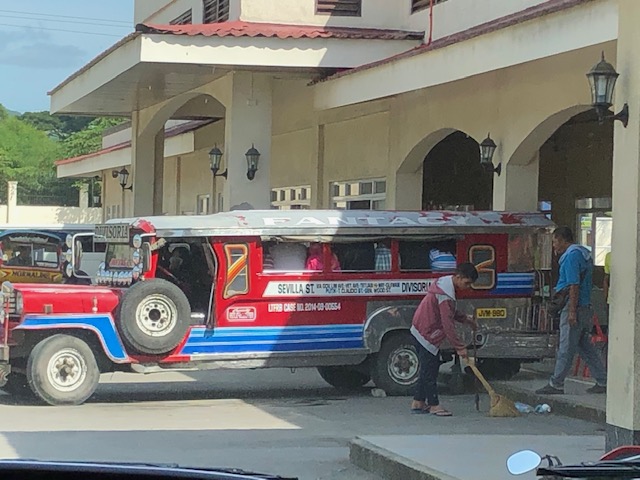 Jeepneys waiting to be filled with passengers prior to departure
 A look at the front of the terminal shows a wide driveway and the connection of the covered walkway to the main entrance
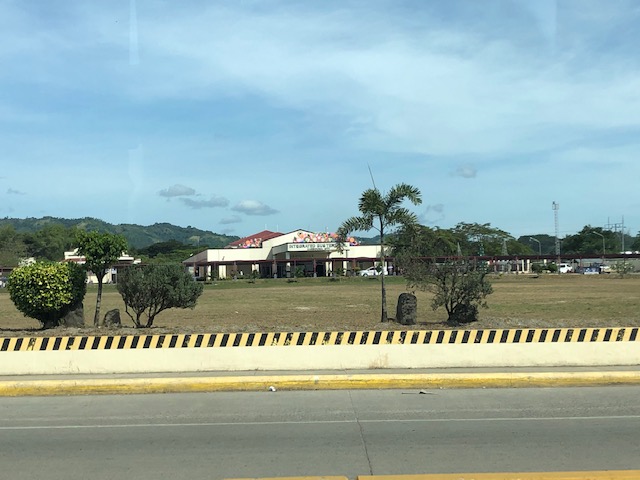 Another look at the integrated terminal from the highway
We will be evaluating the terminal soon as part of a study we are doing for the city. More photos and some assessments about its features soon!
–
Bus stops in Bangkok
My former professor – my second adviser – posted a few photos of bus stops in Bangkok. I am re-sharing these here to show one aspect of how buses operate in Bangkok including the route numbering and the schedules.
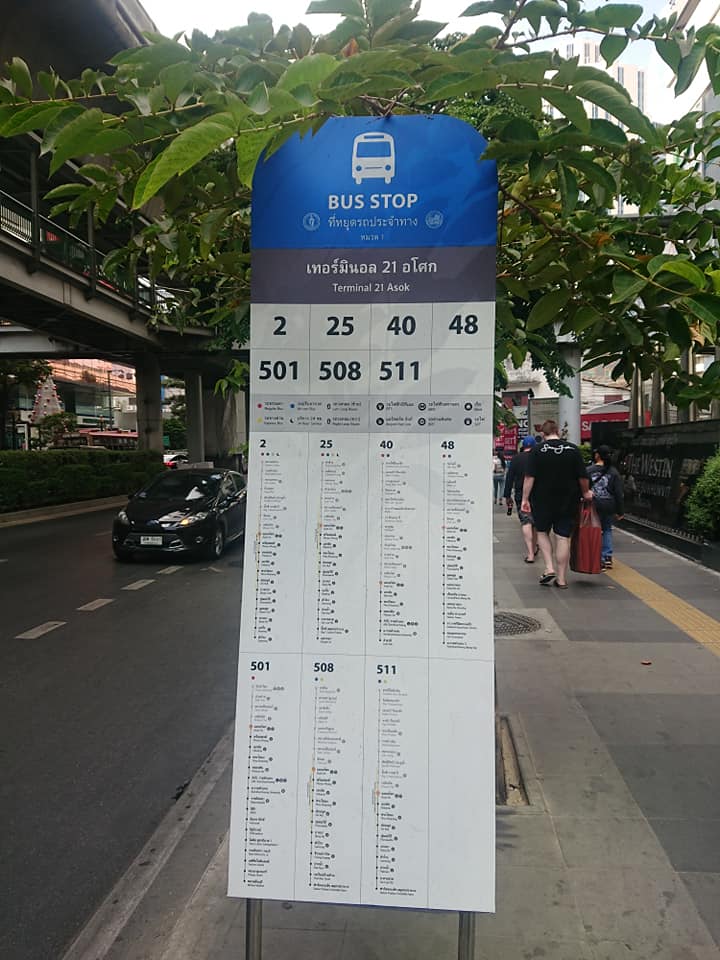 Bus route numbers and lists of designated stops for each [Photo credits: Fumihiko Nakamura]
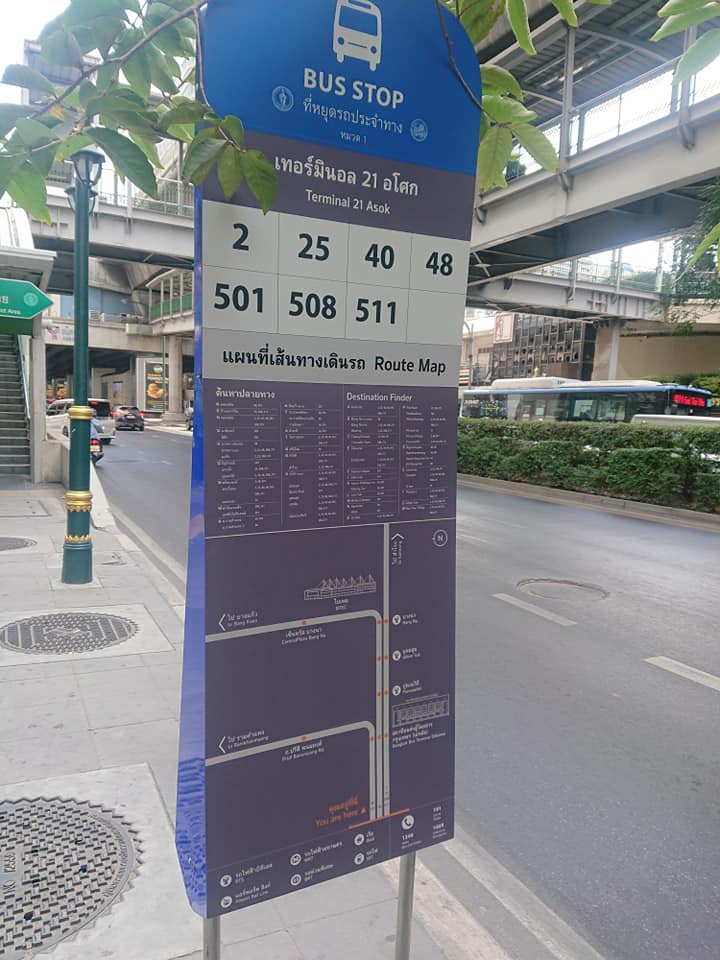 Route map on the other side of the panel [Photo credits: Fumihiko Nakamura]
There are no schedules here like the ones on bus stops in Japan or Singapore but the basic information is quite helpful for commuters and tourists who opt to take regular public transport instead of taxis or ride share. Are such devices being considered by the MMDA or other cities for their public transportation? If not, then maybe they can consider and include this in their New Year’s resolutions.
–
Transit station connections in Singapore
The connections between transit stations in Singapore show us examples of how to encourage people to walk long distances. The links, mostly underground, are interconnected with branches to common exits to hotels, office and residential buildings. These are basically transit malls lined with cafes, restaurants and shops. There are even gyms (e.g., UFC) and play venues along some connections.
 Underground transit mall between a City Hall Station (red line) and Esplanade Station (orange line)
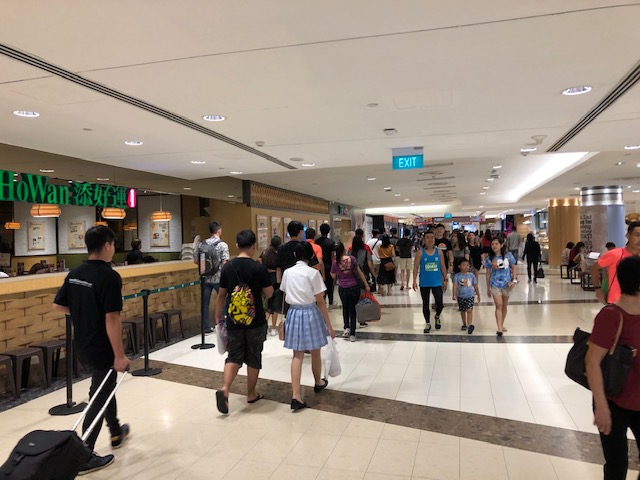 The connection is lined with restaurants, cafes and shops
Singapore’s underground connections reminded me of similar structures in Tokyo and Yokohama. You can just walk underground and come up near your destination. This is especially advantageous and comfortable during the summers when the hot weather becomes a detriment to walking outdoors. Underground transit malls or connections are usually air-conditioned or air is pumped into them for ventilation. As such, temperatures are significantly lower compared to the surface/ground. Will we have similar facilities/developments here in the Philippines and particularly in Metro Manila once the MM Subway is developed?
–
Some advantages of transit access – the case of a stadium and an arena
One of the advantages of having mass transit access to a major venue is that mass transit can carry more people than any other modes of transport to and from the venue. In the recent U2 concert held at the National Stadium in Singapore, we experienced first hand how a mass transit system is able to serve the surge in the demand to and from the Stadium Station of the SMRT’s Orange Line.
 People filing towards the station – most people calmly I say most because there were some who apparently were not so familiar with the ways in Singapore and tried to muscle their way into the crowd. Maybe its like that in their own countries?
 It was just like rush hour conditions at the station. Only, people weren’t going to work but home from the concert
Previous to this, I had similar experiences when I was residing in Japan. One time it was a surge in demand due to the popular fireworks display at Yamashita Park in Yokohama covered by three of JR Stations and the end station of the old Tokyu Toyoko Line. There was no Minato Mirai Line at the time that terminated at the park so people had only the JR Sakuragicho, JR Kannai and JR Ishikawacho Stations and the Tokyu Sakuragicho Station.
This is the weakness of the Philippine Arena, which can only be accessed via the NLEX and by road transport. The result for the larger capacity stadium’s hosting of a U2 concert resulted in horrendous traffic jams and hellish travel times for attendees. Friends stated that whatever high that they got from the concert was steadily depleted by their commutes to their homes. This will not improve even with Manila-Clark railway line because the line will be along the other side of the tollway. It won’t make sense for a branch to be constructed for the arena given the intermittent demand for the events it typically hosts in a year. But there can be a road transport connection to the nearest rail stations to at least alleviate the car traffic generated by the venue.
–
Commuting in Singapore
Another thing we miss about Singapore is the public transportation. It was easy to go around Singapore especially with its comprehensive, extensive rail transport network. This is complemented by even more extensive bus transit services. All these are offer convenient, comfortable and reliable public transportation. As such, there is practically no need to use your own private vehicle for transportation unless there really is a need arising for their use (e.g., emergencies).
 Passengers wait for the train to arrive at an SMRT platform
 Passengers line up before the platform gates at an underground station
The transport system in Singapore actually reminded me of how efficient and reliable it was to commute in Japan where I’ve lived in three area – Tokyo, Yokohama and Saitama – for various lengths of time. These transport systems are what Metro Manila and other rapidly urbanizing cities in the Philippines need in order to sustain growth while providing for the transport needs of its citizens.
–
Sabit
A common sight along Philippine roads are overloaded public utility vehicles. It may be indicative of how difficult it is to get a ride because such is usually the case when there is a lack of public transport vehicles during peak periods (i.e., when transport demand is greater than the supply of vehicles). That lack maybe due to simply not enough vehicles to address the demand or that there is enough on paper and operating but they are not able to make the return trips fast enough. The first case means demand has grown but the number and capacity of vehicles have not kept pace with the demand. The second means that technically there are enough vehicles (franchises) but the traffic conditions along the route have worsened and has resulted in vehicles not being able to travel fast enough to cover the demand.
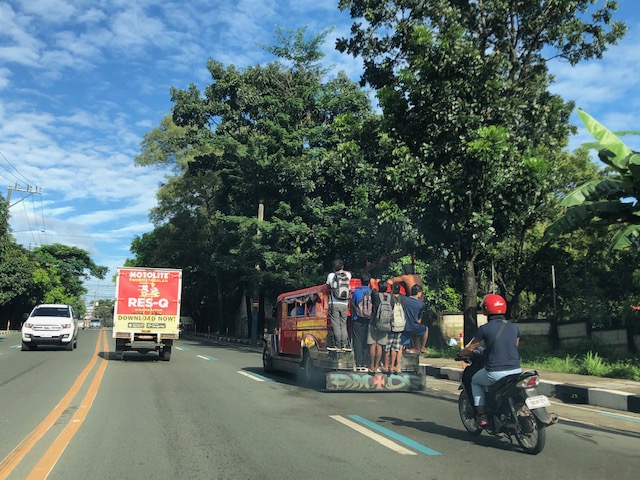 Jeepney with 6 passengers hanging by the back. All look like they are laborers or workers (construction?) but it is not uncommon to see students in their school uniform similarly dangling from jeepneys especially during the peak hours when its difficulty to get a ride.
Sabit is actually illegal and, if enforcers are strict, will incur apprehension and a ticket. Many local enforcers including those of the MMDA though are lax about this especially during peak periods. Jeepney drivers are more cautious when they know that Land Transportation Office (LTO) enforcement units are on watch as these are usually strict about passengers dangling from the vehicles. Newer jeepney/jitney models basically eliminated sabit as the doors are now on the right side of the jeepney instead of the back and there are no spaces or features to hold and step on to in the new models. It is for good as this is an unsafe situation for the passengers and there are reckless jeepney drivers who tend to exacerbate the situation by deliberately maneuvering the jeepney as if he wants passengers to fall off the vehicle. To those looking for a thrill (or death wish as a friend calls it), it is an exhilarating experience. But in most cases, it is a disaster waiting to happen.
–
 Caught (up) in traffic