
Home » Posts tagged 'public transportation' (Page 2)
Tag Archives: public transportation
Good Transit Is Simple: Lessons in Good Route Design
Here is a quick share of an article on good route design:
Source: Good Transit Is Simple: Lessons in Good Route Design
I won’t be posting a quote from the article as there is really no summary to it. The article identifies the characteristics of a good transit route as well as the “don’t’s” or “no – no’s”.
Public transport in Iloilo
I took some snapshots of public transportation on my recent travel to Iloilo. These are typical PUVs you would find in most towns across the country. Iloilo’s have some distinct features that they also share with other towns in other provinces.
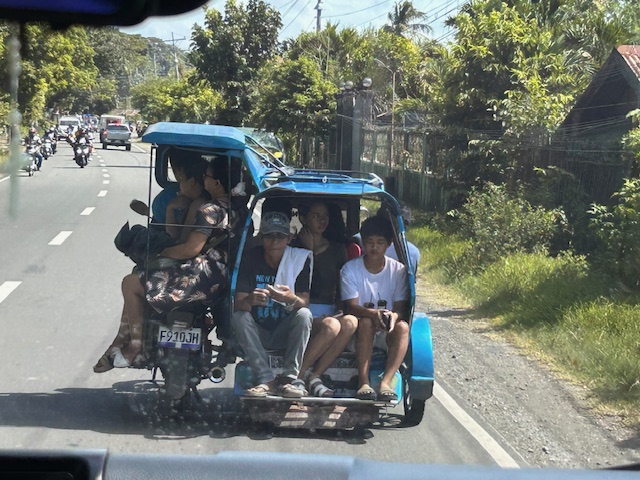 A typical tricycle along the Iloilo-Antique road seats 8 to 9 passengers. Sometimes passengers even sit on top of the sidecar. Sidecars here and other provinces often have roofs designed to carry heavy loads including agricultural products. Usual trike sidecar seating have passengers facing front. This one has them “talikuran” or “back to back” with some passengers facing back – not really a nice view when traveling along a highway and vehicles tailing or bearing down on the trike.
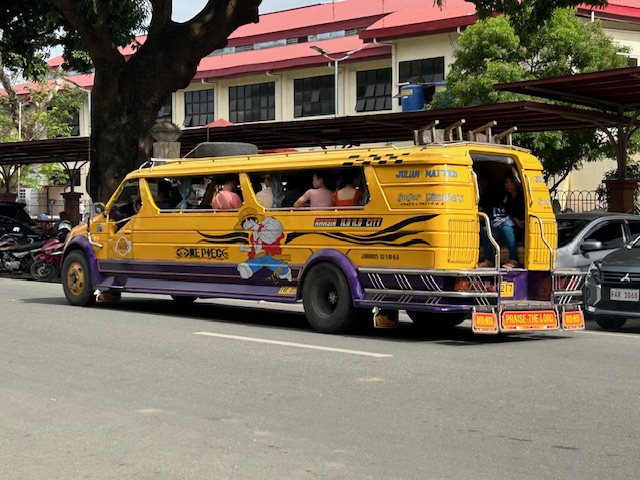 The typical jeepney in Iloilo is stretched whether it’s for inter-town or city operations. Instead of having the ‘face’ of the jeep (from which jeepneys evolved from), they use the front of the Toyota Fortuner or Mitsubishi Montero. These seat 20 to 24 passengers not counting those who are seated on the bench along the aisle. I wonder what engines they now use for these vehicles.
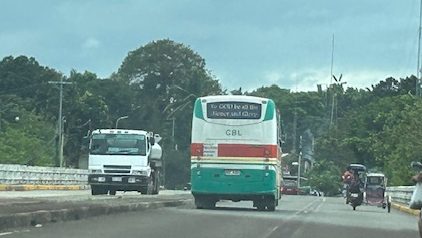 I took this fleeting photo of a bus. For me it wasn’t just a regular bus like the Ceres buses that now dominate the inter-provincial routes. This was a Calinog Bus Line (CBL) bus. We used to take their buses whenever we traveled from Cabatuan town proper to Tigbauan Road. One of my aunts also rode on these buses going to work as a teacher in another town along its route.
–
More Buses, Fewer Riders? Thoughts on the Ridership vs Coverage Tradeoff
Here is a quick share of an article on ridership vs. coverage:
Source: More Buses, Fewer Riders? Thoughts on the Ridership vs Coverage Tradeoff
Basically, there is that question of whether planners or decision makers should prioritize ridership over coverage? Or should it be the other way around? The article provides a detailed discussion of the trade-offs. Perhaps this is again a case of determining which is more suitable for your city?
–
Still towards a car-oriented future?
Saw this photo being circulated on social media.
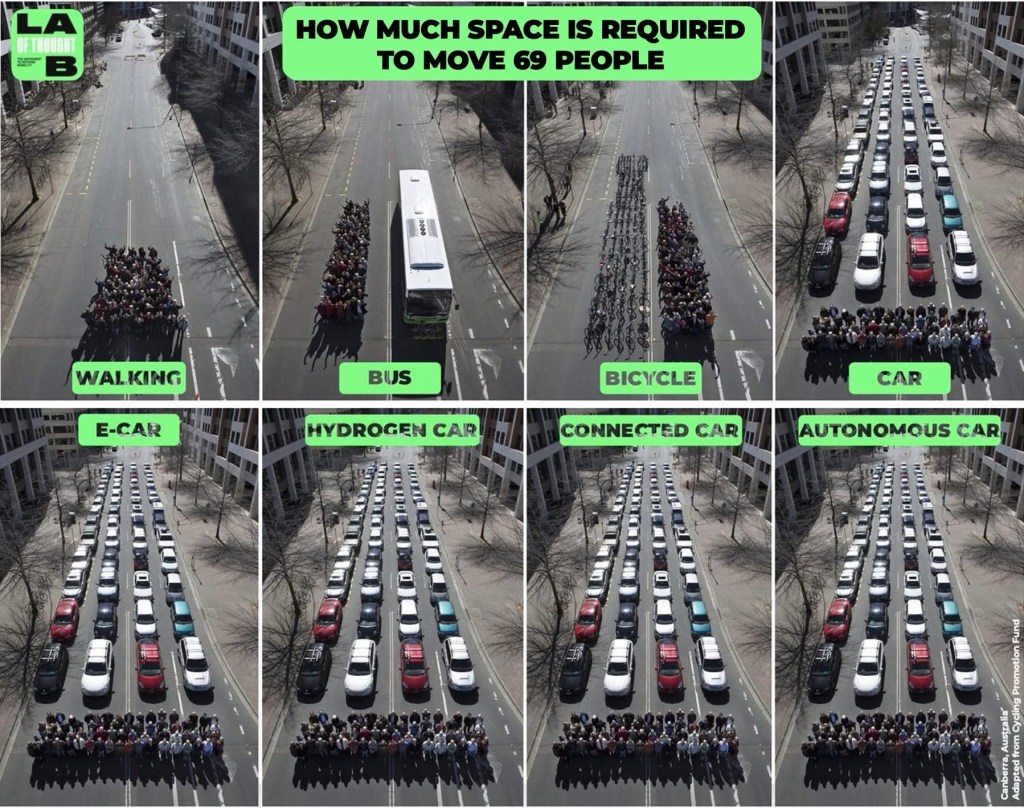
Again, there are many versions of this including the original from a town in Germany that compared 50 people on cars, a bus and on bicycles. The bottom line in the latest images (do these qualify as memes?) is that all these efforts in developing the car, whether regarding the engine or fuel, or perhaps autonomy or connectivity related, ends up being still car-oriented or car-centric. I
t doesn’t really solve our transport problems despite what is being packaged as environmentally friendly. The discussions about this is timely and relevant as electric and hybrid cars are now quickly replacing conventional ones. And there’s a kicker for those driving in Metro Manila, hybrid and electric vehicles are exempted from the travel demand management scheme that is number coding.
How do we veer away from this temptation from technology? How do we keep mode shares in favor of active and public transportation? How do we influence mode choice for the latter options?
–
Quezon City’s electric buses
While Quezon City rolled out its new electric buses, I have not seen them along my typical commutes that takes me to C5, particularly and mainly along Katipunan Avenue. Most of these buses are probably deployed along the other routes served by the Q City buses. So I took this snapshot of one that I saw not in QC but along Ortigas Avenue Extension in Pasig City. Maybe it was en route to the end station/terminal at Bridgetown, which is at its border with Pasig?
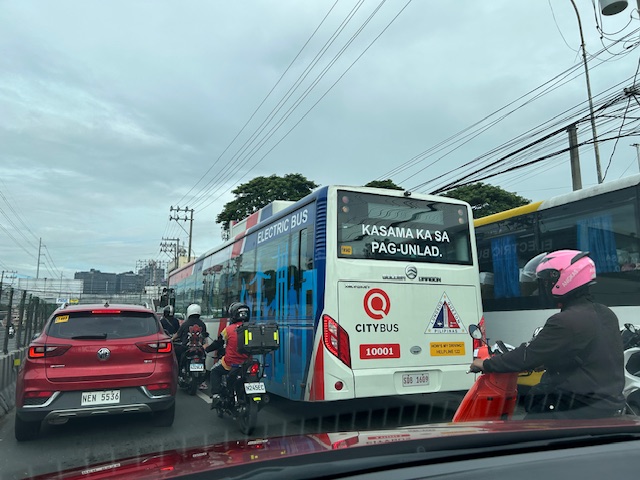 One of Quezon City’s electric buses
–
Article share: What Is Good Transit?
Here’s an article share on transit and what should be the attributes of a good transit system:
Source: What Is Good Transit?
To derive the main points from the article:
- Good transit is frequent
- Good transit is reliable
- Good transit is (reasonably) fast
- Good transit feels safe
- Good transit is equitable by nature
This is a good read whether you’re a regular commuter taking public transportation or perhaps one looking into topics for research or advocacy.
–
Needed: MMDA Transport Authority similar to Transport for London
I am sharing this article from Business World about the idea (or is it already a proposal) for an MMDA Transport Authority. I seem to recall there were already proposals for something like this but I have to check for references and sources. In the meantime, I am content with sharing the following:
On Nov. 11, 1999, the British Parliament established the Greater London Authority. Prior to that, there was no single entity managing the entirety of London. The governance of the city was fragmented, and responsibilities for planning, transport, and other city-wide matters were divided between local boroughs and national authorities. The Greater London Authority was established […]
Source: Needed: MMDA Transport Authority similar to Transport for London
Traffic congestion along EDSA
I’ve taken some photos of EDSA traffic as well as the EDSA Carousel buses. Here are the more recent EDSA photos I took as I traveled from Makati to Quezon City after serving as a panelist in the Energy Transitions Dialogue last Wednesday.
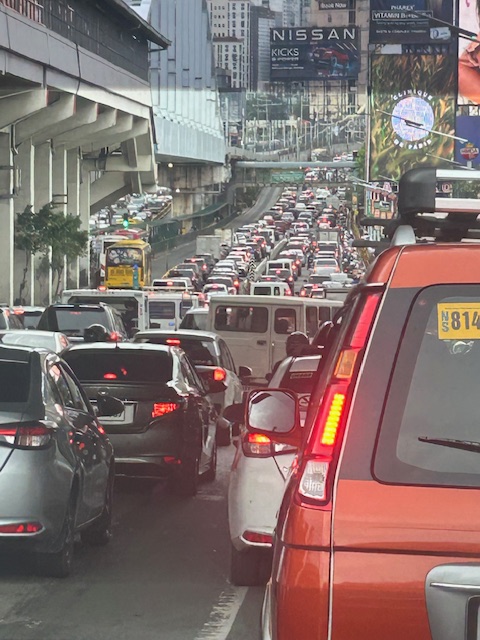 I took this photo as we passed Guadalupe. I like this in the sense that it shows the clear ROW for the EDSA Carousel buses. One wonders why most of these motorists would prefer to drive their vehicles rather than take the bus or the MRT.
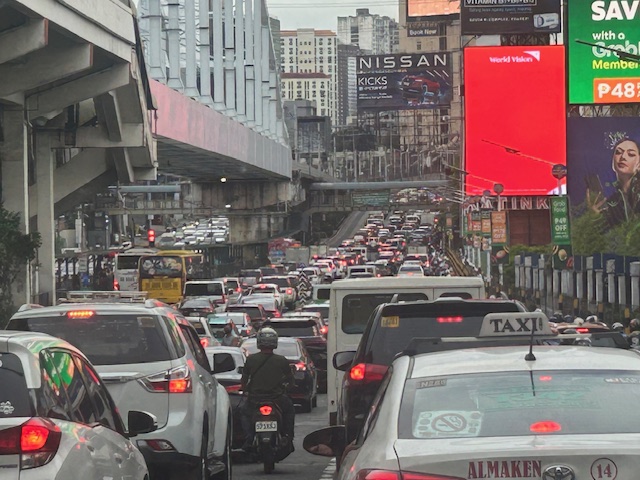 You can see in the photo that EDSA’s northbound side is clogged as far as the eye could see. If you check the image under the MRT bridge, it shows the southbound side was also congested. These photos were taken around 4 PM so this was still an hour before most people would be going home from work.
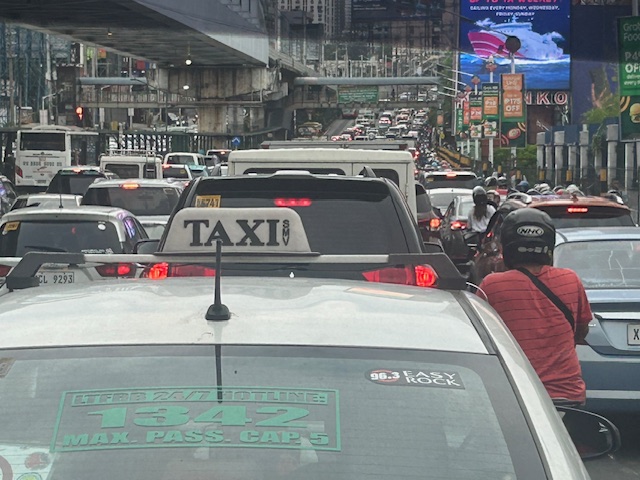 I mentioned in my comments at the panel that one consequence of giving number coding exemption to electric and hybrid vehicles is that this further diminishes the effectiveness (is it still effective?) of the MMDA’s number coding scheme. I don’t have the stats of how many EV’s and hybrids are registered and running in Metro Manila. Those numbers combined with actual counts will tell us how they are impacting traffic. That would be a nice topic for a paper. 🙂
The photos pretty much describe the transport situation in Metro Manila. Many of our major cities will be heading this way unless they improve their public transportation fast. If they do, then public transport mode share will be sustained if not increased. Metro Manila’s is already being eroded by inefficient public transport, motorcycles (including taxis) and perhaps unintentionally, electric and hybrid vehicles.
–
Flash floods in Quezon City
The rains poured again this afternoon and it was quite intense for more than an hour in Quezon City. We had floods at the UP campus and along Katipunan Avenue. Reports from various sources stated that there were also floods along EDSA and other major roads in the city. The floods come at a time when QC flagged flood control projects undertaken by the DPWH without the city’s blessings.
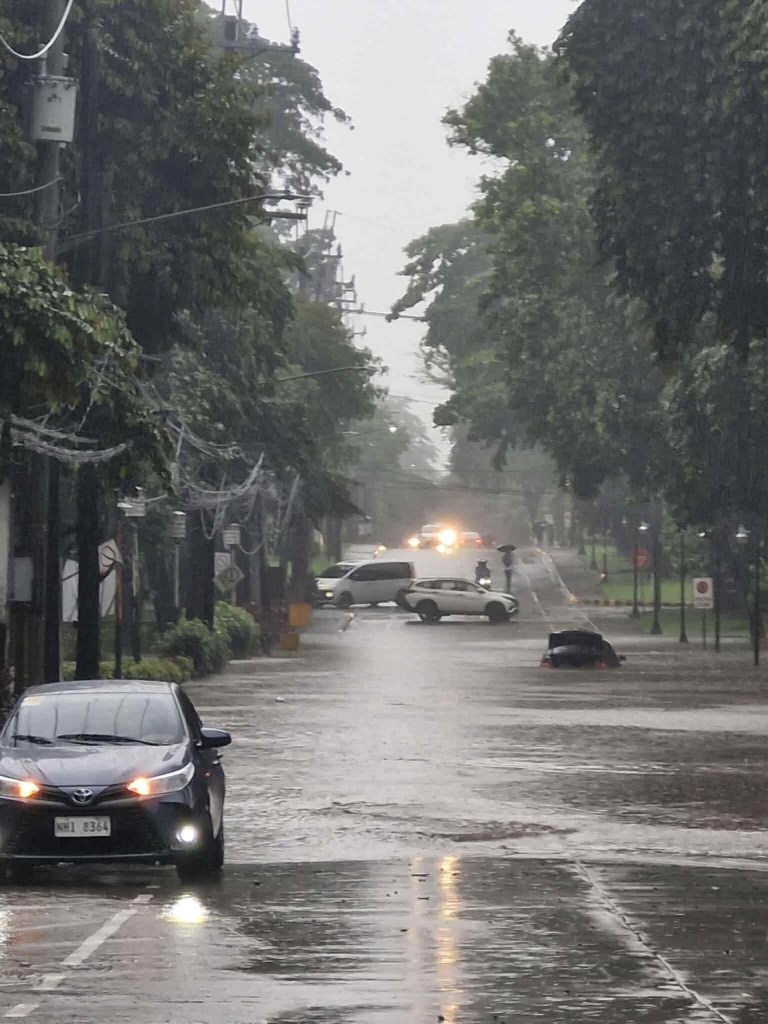
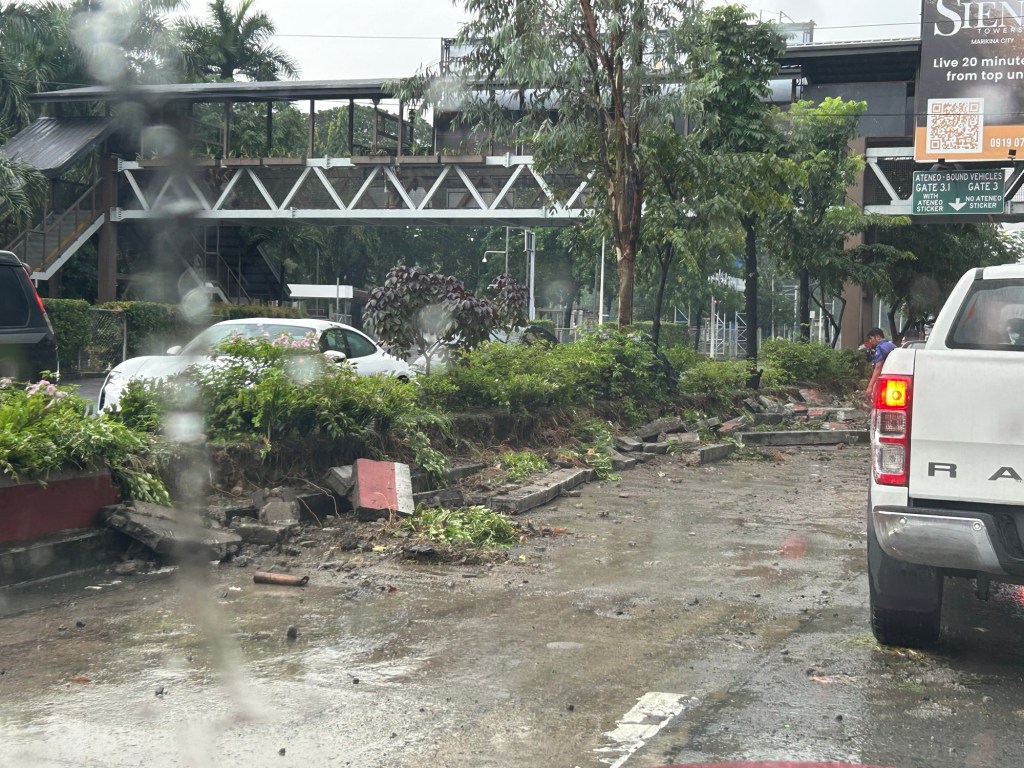
The flash floods were probably proof of the shoddy work associated with DPWH and its contractors. While QC residents and the LGU should share the blame for these, the scale and frequency of the floods indicate drainage issues.
The floods have led to intense traffic congestion and commuters being stranded due to public transport vehicles not being able to turn around. The latter is one of the cases where public transport appears to be lacking. Their numbers may not be lacking at all but the traffic conditions prevent their turnaround to address the demand for transport.
–
Is it possible to have zero traffic deaths in a year?
Is it possible to have zero traffic deaths in a year? Is it even probable? As it turns out, yes. Here’s an article on what Helsinki did in order to make this a reality:
Andrei, M. (August 1, 2025) “Helsinki went a full year without a traffic death. How did they do it?” ZME Science, https://www.zmescience.com/science/news-science/helsinki-went-a-full-year-without-a-traffic-death-how-did-they-do-it/ [Last accessed: 8/19/2025]
To quote from the article:
“A lot of factors contributed to this, but speed limits are one of the most important,” said Roni Utriainen, a traffic engineer with the city’s Urban Environment Division.
More than half of Helsinki’s streets have a speed limit of 30 km/h (approximately 20 mph). Half a century ago, the city barely had half of its area with a 50 km/h limit (30 mph). They gradually worked to reduce the speed limit, especially around schools and kindergartens.
Smarter street design also played a key role. Pedestrian and cycling infrastructure was prioritized for upgrades in recent years. More and more people started using public transit or bikes, or just walking. Substantial investments also made public transit more efficient and reliable.“Public transport in Helsinki is excellent, which reduces car use, and with it, the number of serious accidents,” Utriainen noted.
Another key component was bringing the police on board. Helsinki introduced automated traffic cameras and enforcement systems, which also helped bring down reckless driving.”
 Caught (up) in traffic