
Home » Posts tagged 'public transportation' (Page 9)
Tag Archives: public transportation
Early morning commuting
Early morning commutes are not new to me as I’ve been doing this since I started to commute by myself decades ago. My usual trip between home and school consisted of two jeepney rides or one jeepney ride and a tricycle ride, depending on whether I carried a lot of items or if I didn’t feel like walking the so-called last mile between the jeepney stop and my home. While traffic wasn’t as bad in the 1980s and 1990s as it is today, it was still difficult to get a ride. Little has improved with public transport even though there are air-conditioned vans, P2P and additional railway option for me now along my usual routes to the office.
Back in the day, I liked to enlist in the 7:00 – 8:30 AM classes at UP Diliman as it was easy to get a ride at 6:00AM. That allowed for some time to spare before class and in the rare cases when UP-Katipunan jeepney drivers were on strike, you can walk the length of Katipunan and arrive in time for class. It was later when my classes were mostly in the afternoon that I had to delay my trips so I wouldn’t have to travel during the peak periods. It was difficult to get a ride and travel times were longer. When I was already working, I often traveled early if we had field work scheduled. That meant traveling before 6AM. There were fewer jeepneys but most were not full and it was easy to get a ride.
I took a couple of photos of a bus plying the Antipolo-Cubao route at around 5:30 AM one Friday morning. This was before the return to work order was issued to many workers so perhaps it does not show the current situation for the same time.
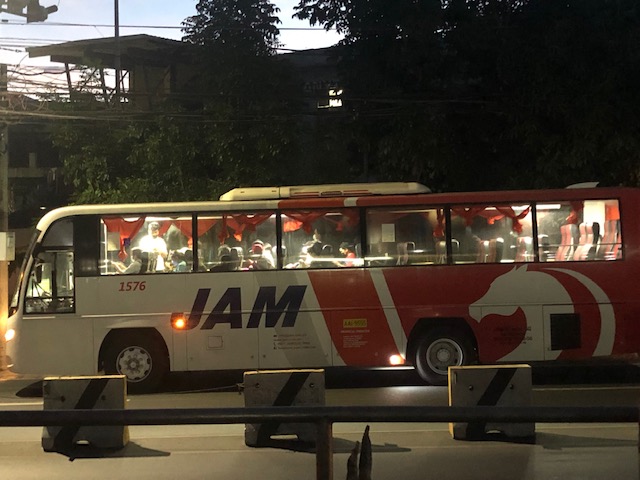
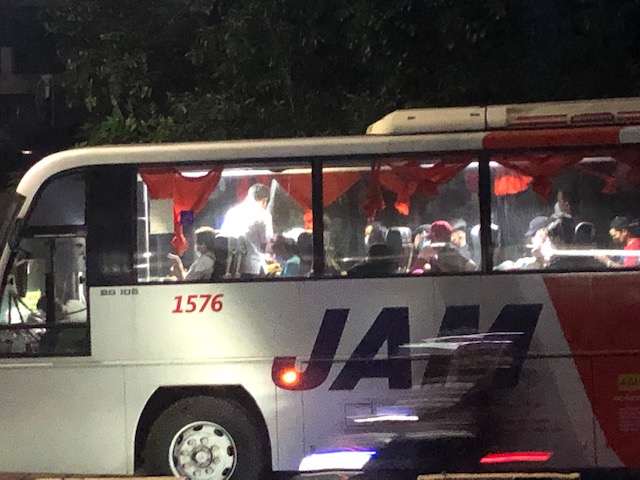
I now go to the office twice or thrice per week. On my way at 7:30 AM, I see many people lined along the streets at the typical loading/unloading areas along my routes. People would have to travel earlier if they want to easily get a ride and if their travel distances are relatively far (i.e., many people live outside of Metro Manila and have to travel 10+ kilometers one way).
–
On the future on urban transportation
I’m sharing the following article on the idea of mobility hubs in cities:
Descant, S (March 16, 2022) “Are mobility hubs the future of urban transportation?” Government Technology, https://www.govtech.com/fs/are-mobility-hubs-the-future-of-urban-transportation [Last accessed: 3/18/2022]
To quote from the article:
“As cities reimagine transportation and transit, they’re turning toward innovative attempts to bring multiple modes together, with the essential aim of making it easier for residents and others to choose a mode of travel other than the single-occupancy car.”
Though I support this idea, I think it only implies that housing issues are already covered. In reality, there should be clear-cut and simultaneous initiatives covering both housing and transport. In Metro Manila’s case, for example, the sprawl is over a much wider area and covers at least 4 provinces surround the metropolis where people have chosen to settle/reside due to the high and rising cost of housing in the MM. While the example of Tokyo and its railway lines may be used as inspiration, it will take a lot for Metro Manila to have such a transit network to carry so many people around MM+.
–
Article on evaluating transport equity
Here is another quick share of an article on transportation equity:
Litman, T. (February 2, 2022) “Evaluating Transportation Equity: ITE Quickbite,” Planetizen, https://www.planetizen.com/news/2022/02/116058-evaluating-transportation-equity-ite-quickbite [Last accessed: 2/4/2022]
Transportation equity is a very relevant, very timely topic as people in the Philippines are just beginning to understand and weigh the advantages of having more efficient transport in the forms of active and public transport over private vehicles.
–
No vax, no ride – some insights and opinions
The Department of Transportation (DOTr) recently issued a memo stating unvaccinated people may not use public transportation in Metro Manila. People will have to show proof of vaccination (i.e., vaccination card) before he/she is allowed to board the bus, jeepney, van or train, which are all under the jurisdiction of the DOTr. I assume tricycles are not included here since these are under the local government units.
Certain groups quickly slammed the memo as being “anti-poor”. Note though that vaccinations are covered by government funds and are free. You only have to register and show-up for your shots. Given the period when vaccinations started, there should be few or no excuses for not being vaccinated at this time for most people (children under 11 years old are not yet being vaccinated as of this writing). In fact, many vaccination centers have already been giving booster shots from November 2021 and many have reportedly had fewer people getting vaccinated or boosters by December 2021. That changed when the current surge attributed mainly to the Omicron variant of Covid-19 led to a sudden influx of people at vaccination centers. Workplaces requiring their employees to be vaccinated also probably contributed to people being convinced they needed to get vaccinated. Otherwise, they could not earn a living.
A colleague explained that the modality of vaccinations requiring registrations online meant those without smart phones could only do walk-ins. While certain LGUs such as Cainta automatically registered their constituents, and particularly senior citizens, and posted vaccination schedules that covered everyone registered as their constituents, others especially larger LGUs might not have the capacity to do this simplification. Non-vaxxed people will also have to take some form of transport and not everyone will opt to bike or would have their own private vehicle.
Perhaps we should again look to science for an answer to the question whether this policy is good or bad. Ventilation or air circulation-wise, open air vehicles and without those plastic barriers present a better situation for lesser likelihoods of virus transmission among passengers. Many public transport vehicles though are closed, air-conditioned types. People are also obliged to wear masks (shields have been proved as ineffective and unnecessary) so everyone wearing masks should reduce the risk of transmission even with unvaccinated people (remember there was a time everybody when everybody was unvaccinated). Again the key word here is “reduce”. There is no guarantee that one will not get Covid even with excellent ventilation and mask use.
Implementation-wise, there are many challenges here including the additional delays to travel brought about by the vaccination card checks. If there are to be checkpoints, that’s another source of delay (and we already know how checkpoints can result in carmaggedon-level congestion). The even more recent DOTr pronouncement is their intention to deploy what they call “mystery passengers” seems amusing and inspired by similar people mingling in public to tell on people violating this and that law.
Meanwhile, here’s a question that’s easily answerable by “yes” or “no” but would likely elicit explanations or arguments for or against the idea: “Would you, assuming you’re vaccinated, be willing to take public transportation knowing that you will be riding a vehicle together with unvaccinated people?” I think the most common answer would be a “No”. Exceptional would be the “yes” reply if you consider the potential for spreading Covid-19 post-commute (by both the vaccinated and unvaccinated who are either asymptomatic or symptomatic).
As a parting note, a former student puts it quite bluntly in a social media post – “Smoking in public is banned precisely based on the science. Is smoking then anti-poor? And would you ride in public transport with people who are smoking while in the vehicles?” I think we also know the answer to this question without elaborating on the situation.
–
Cities and Automobile Dependence: What Have We Learned?
We end the year with an article from Todd Litman via Planetizen. The topic is something that we really need to ponder on as we or if we are to move towards more sustainable transportation for our cities and municipalities. The experiences during this Covid-19 pandemic should have provided us glimpses of how it could be if we put active and public transport above automobile dependence or car-centricity.
Source: Cities and Automobile Dependence: What Have We Learned?
The main article may be found here (in proper citation for academic/researchers reading this):
–
Back to the old normal?
As traffic continues to worsen after, The MMDA has reinstated the number coding scheme albeit from 5:00 to 8:00 PM on weekdays for now. This is in recognition of the worsening traffic congestion brought about by people returning to their workplaces and the easing of travel restrictions across the entire population. People are now moving about as can be seen in transport terminals and commercial areas (e.g., shopping malls, markets, etc.). With the return of severe traffic congestion, it begs the question whether we are back to the ‘old normal’.
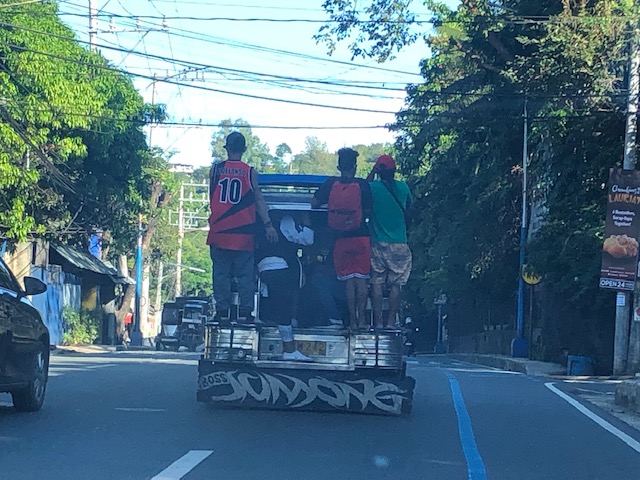
I thought the photo above pretty much describes how it was before Covid-19. The problem is that this photo was taken earlier today and we are still technically in a pandemic. Does the photo show the people’s renewed confidence in using public transportation? Or is it a matter of necessity (i.e., commuters having no choice but to risk it in order to get to their workplaces or home)? If they had motorcycles, these people would likely use them instead of taking the jeepney. I will also dare ask why don’t they bike instead? They seem able bodied enough to try cycling instead. Is it because their commuting distances are long? Or are there other reasons that evade us? If these are the same reasons and Covid-19 is not a major factor for their choice, then perhaps we are back to the ‘old normal’ and have not progressed significantly despite claims by various groups that we are experiencing a paradigm shift in favor of active transport. All the more that we need to urgently revisit and reassess how transport should be in order for us to transition to a more sustainable future.
–
TSSP 2021 [27th Annual Conference]
The Transportation Science Society of the Philippines (TSSP) held its 27th Annual Conference last November 19, 2021. Here are the poster and program for the conference:
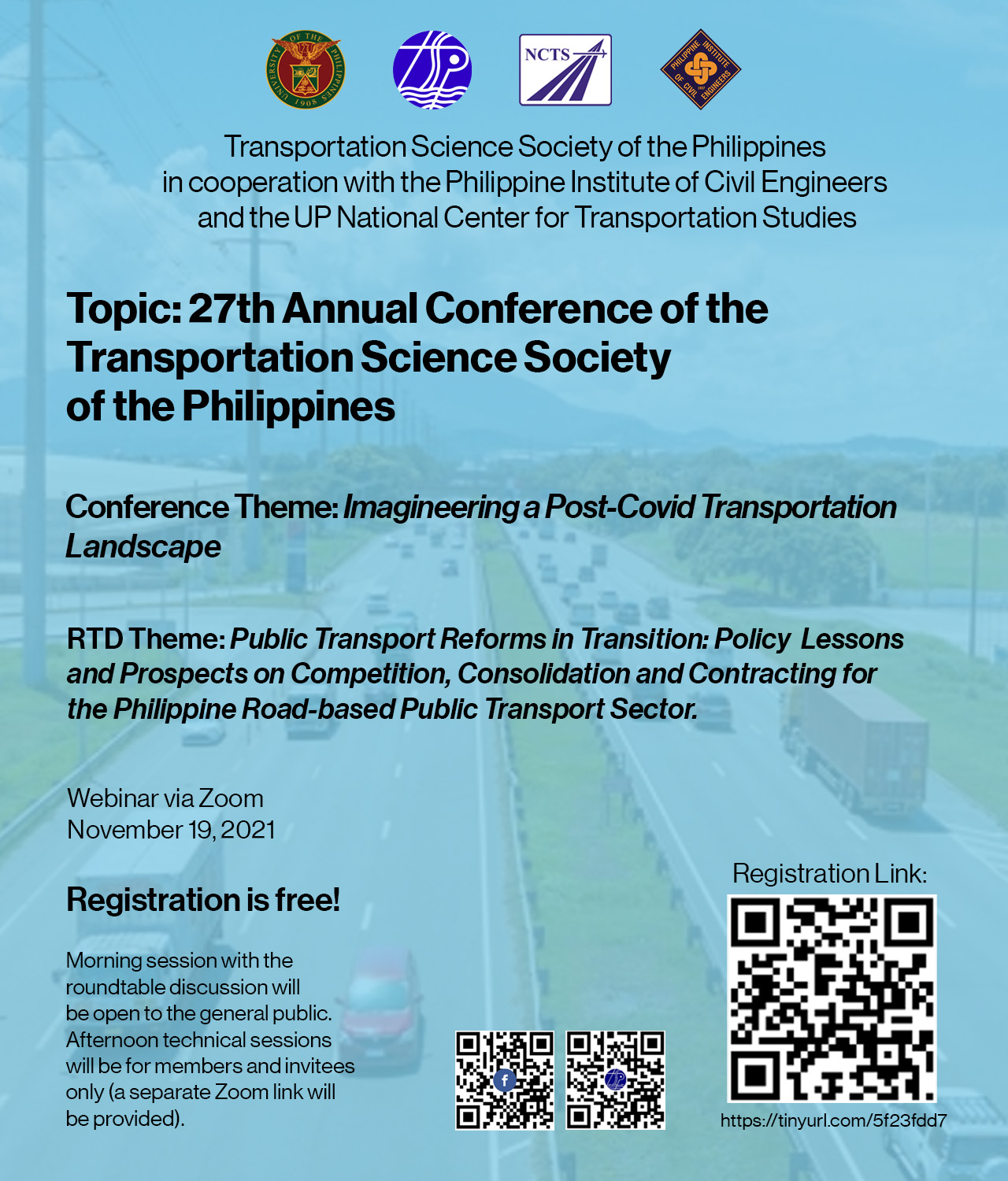
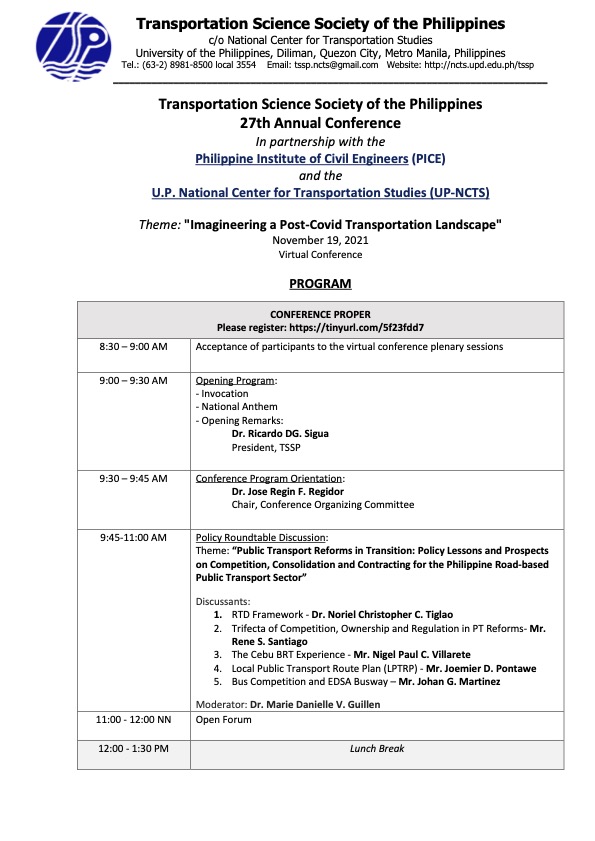
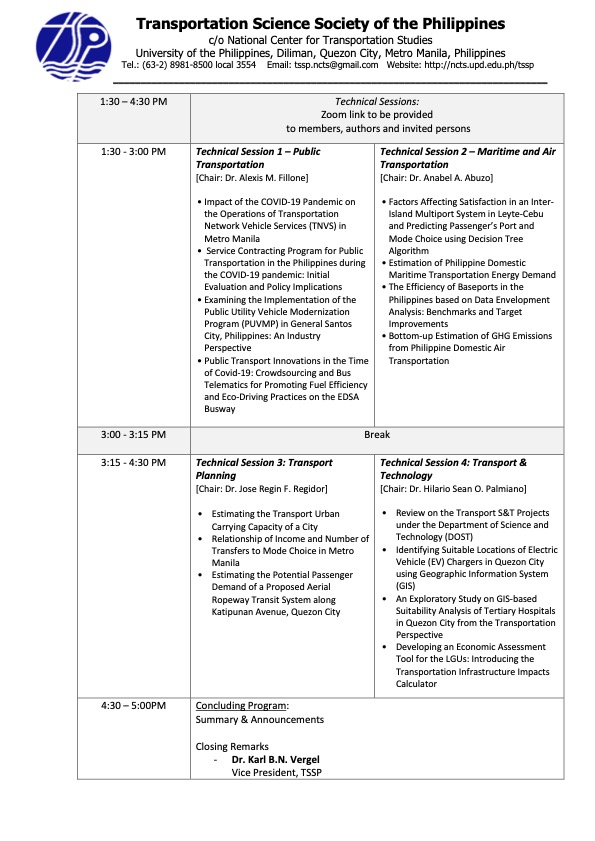
I initially intended to write about the conference before it was held but things got pretty busy last week so this is a post conference write-up. The organizers also announced the final program late (i.e., just a few days before the conference proper) so it seemed sort of anti climactic to post about it. Nevertheless, the conference proceeded as planned and the TSSP has announced it will be posting the proceedings on their official website. It is not yet there but here’s a link to the TSSP official website: http://ncts.upd.edu.ph/tssp/
–
On preserving railways – an example in Bulgaria
Here’s a quick share of an article about saving Bulgaria’s last narrow gauge railroad:
The article is relevant as it discusses the plight of railways amidst shrinking ridership and escalating costs of operations and maintenance. The railways in the article is not a isolated case. It is quite common for many railway systems. The difference of this example from another similar service like those in Japan is that Japan Railways or private companies can probably absorb the costs and maintain the line not just as a service but to show their commitment. Historically, there are many railway lines, branches if you prefer, of the Manila Rail Road Company (later the Philippine National Railways) that had to be discontinued due in part to a combination of diminished ridership and escalating O&M costs. The Main Line South, for example, had several branches including an extension from Albay to Sorsogon that had to be discontinued. Nowadays though, the topic should also be considered as the railways in the country is being expanded again. There is still the issue of ridership and this will always be in competition with road-based transport as well as aviation.
–
On the key transformations needed to achieve sustainable, low carbon transport
Also related to COP26, I am sharing material from the Sustainable Low Carbon Transport (SLOCAT) partnership, of which our center is part of. SLOCAT recently released the 11 key transformations for sustainable low carbon land transport urgently needed to meet the climate targets. Here’s a link to their site:
SLOCAT also has the following Wheel of Transport and the Sustainable Development Goals (SDG’s) on the same site. The Wheel illustrates the four cross-cutting themes: equitable, healthy, resilient and green.
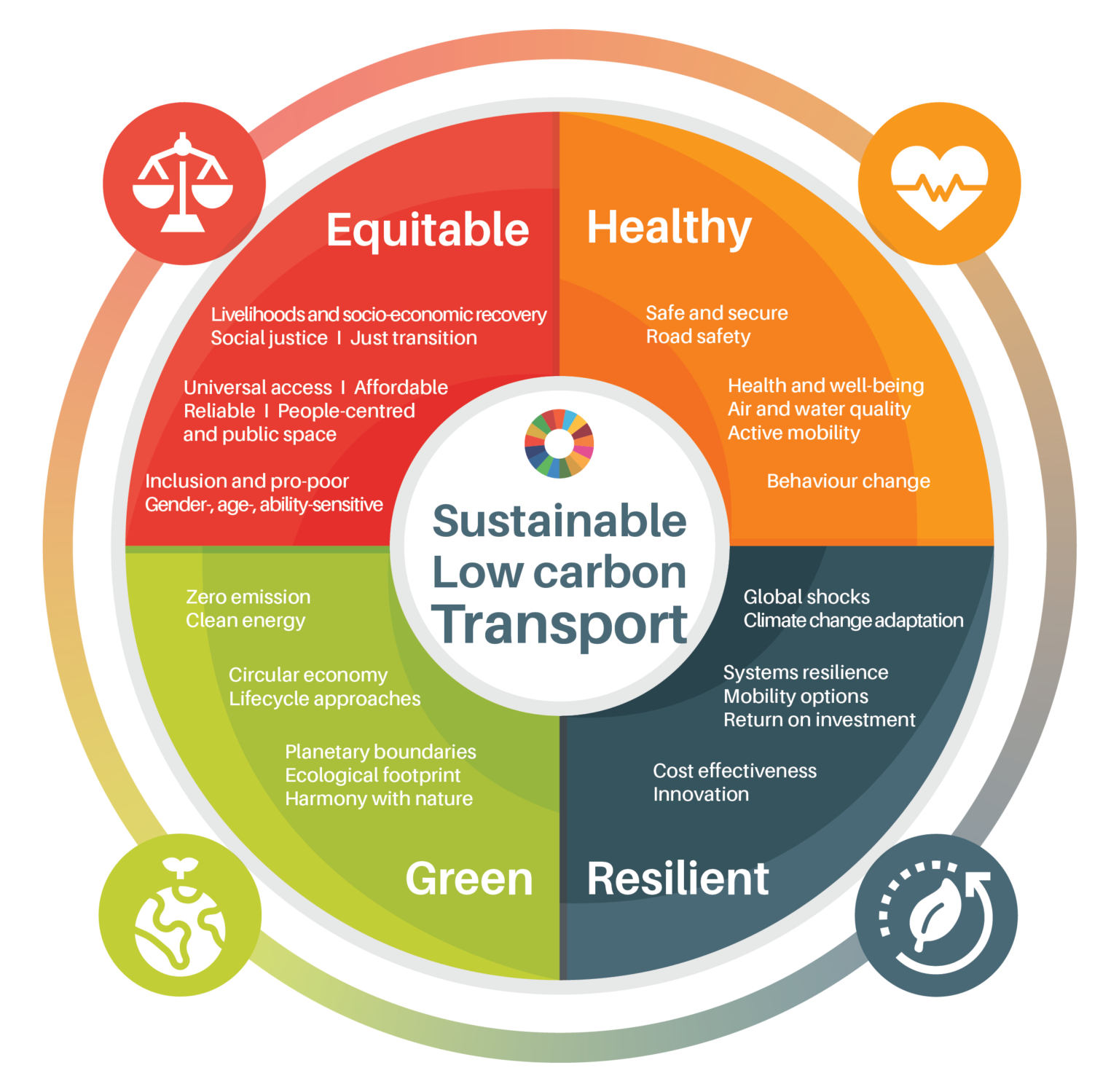
In the SLOCAT site, they list the following to support the transformations:
Overarching approaches to apply across transport modes and sub-sectors overtime
- Put people first, not vehicles and technology
- Co-create and communicate a compelling vision and targets
- Guide short- and medium-term action with clear, coherent political messages
- Combine push and pull measures: Regulate and incentivise
- Link policies within and beyond transport for synergies
- Prioritise resources by social and sustainable value for money
- Engage, empower and coordinate stakeholders across government levels and sectors
- Build capacity and improve data
- Implement pilots to learn and share, then roll out at scale
–
On housing and transportation
I’ve written about how we should not be trying to isolate transportation as if it is singly at fault for the transport and traffic mess many of us are in at present. There are many factors affecting travel behavior including mode choice. Travel distances, travel times and mode choices are not a consequence of transportation system (including infrastructure) alone. Land development and pricing especially those pertaining to housing are critical in how people decide where to live. These are intertwined with transportation and can be quite complex without the proper data or information to help us understand the relationship. That understanding, we are to assume, should lead us to the formulation of policies intended to correct unwanted trends and perhaps encourage more compact developments that are closer to desirable concepts such as the 15-minute city.
Here is an interesting article to enrich the discussion on this topic:
Dion, R. (October 28, 2021) “Coupling Housing and Mobility: A Radical Rethink for Freeways,” Planetizen.com, https://www.planetizen.com/features/115126-coupling-housing-and-mobility-radical-rethink-freeways?utm_source=newswire&utm_medium=email&utm_campaign=news-11012021&mc_cid=85ec2b565f&mc_eid=9ccfe464b1%5BLast accessed: 11/3/2021]
The first thing that came to my mind are residents of northern and southern Metro Manila and the surrounding provinces. Many chose to buy houses there and beyond (i.e., Bulacan, Laguna and Cavite) and yet work or study in Metro Manila CBDs like Makati, Ortigas and BGC. And they do use the tollways (e.g., NLEX, SLEX, CaviTEX, Skyway) to get to their workplaces and schools.
This is also a relevant and timely topic in the Philippines as many cities are already headed for sprawls that will inevitably put more pressure on transportation infrastructure development that usually leans towards car-oriented projects (e.g., road widening, new roads, flyovers, etc.) rather than people-oriented ones (e.g., modern public transportation systems, bikeways, pedestrian infrastructure). Note that only Tokyo has developed an extensive enough railway system to cover the sprawl that is the Tokyo Metropolitan Area, which if interpreted loosely also includes Yokohama, Kawasaki and Chiba in the sprawl. No, we cannot build as fast to have as dense a railway network as Tokyo’s or other cities with similar rail systems. And so we have to figure out another way to address this problem.
–

