
Home » Posts tagged 'research' (Page 6)
Tag Archives: research
Research topics on transport and traffic in the Philippines?
I noticed that this site has received a lot of hits for inquiries regarding undergraduate research topics. While we at UP have yet to start our first semester of the academic year 2015-2016, other schools have already started their semesters, trimesters or quarterms. I suspect students in their final or graduating year would be looking for topics for their research projects or, what some schools refer to as the undergraduate thesis projects.
I have written about our undergraduate researches at UP Diliman the past few years and listed down the topics our students have implemented for their undergraduate projects. In our case, we have 2 subjects that our students take during their final year – CE 190, a one unit course that focuses on the formulation and approval of the research project and CE 199, a three unit course for the implementation of the approved project. These are taken over 2 semesters, usually the last 2 that the student takes before graduating.
Unfortunately, not all schools would have the capability and capacity to advise students taking on topics on transport and traffic. I noticed that many schools and their advisers just let their students select topics of their own choice. Many provide minimal if any guidance to students. The latter often choose topics on current issues or problems without checking if they have the knowledge and tools to undertake substantive studies. Often too, it seems to us that the advisers are not capable of providing guidance to their own students and as such just let them seek advise elsewhere including people they would identify as resource persons but to whom they would be more dependent on for advice than their schools’ faculty members. Although their enthusiasm and interest in various topics are commendable and there are many out there who would be gracious and generous to share their time, knowledge and experience with these students, they cannot do so as regularly as full-time faculty members. In fact, it is unfair to these people whose times and resources are already constrained by their own responsibilities (e.g., a professor at DLSU also has his own students to guide and classes to teach).
Schools need to develop their own research agendas. That is so that students would be able to choose topics that their faculty can realistically and effectively guide their students instead of sending them out to become the burdens of others. These would include topics concerning local issues. Are there road safety issues at locations such as intersections near the school? Are the streets in the nearby CBD experiencing congestion? Is there an oversupply or lack of public transport services in the city or a nearby town? It seems awkward for a university in Pampanga, for example, to have students taking on a topic concerning EDSA-MRT or students of a university in Metro Manila taking on a topic on Mindanao railways, if their faculty have no relevant experiences or capabilities to properly guide the students.
I would encourage schools to identify topics concerning local issues first. As they say, charity begins at home, and working on solutions for local problems should be top of the agenda of any school. That includes us at UP and there are many topics that focus on issues in and around UP Diliman. If we can’t solve our own problems then how can we be believable in addressing those outside our direct influence area?
In the next post, I will share and example research agenda from the last academic year. This was the basis for our students selecting topics for their undergraduate researches and as starting points for our graduate students in formulating topics for their MS thesis.
–
On doing research for your undergraduate course requirements
It’s that time of year again when we are swamped with requests for interviews from students taking undergraduate courses. These undergraduate courses include those on Science, Technology and Society, English, Communications, Architecture, Geography, Business, and Economics. These requests are not limited to students from our university but also come from students in other schools as well. While we are happy to oblige, granting interviews face-to-face or through correspondence (through email, of course), we are becoming wary about students not doing their part first before requesting an interview. In many cases, they just fire off a list of questions in the first email, probably hoping the addressee would be kind enough to answer all these questions in a comprehensive manner. That way, perhaps the student will be able to save on time and effort in doing his/her report. That’s right, let the expert answer all the questions and tell me what references I should list down in my report. If the student can’t understand what the expert wrote in reply or if the student thinks its not enough, then the latter could just send a follow-up with additional questions or request another interview.
Is this the right way to do research? I do not agree with this and perhaps the faculty handling their respective courses these students are enrolled under should take care in how they frame their requirements. It is as if they are passing on their responsibilities to other faculty members, experts in their particular fields, who would have to contend with requests for interviews or outright questions in their emails. That’s probably understandable for general education courses like English and STS, but not acceptable for undergraduate research projects that are supposed to be “capping” courses in their programs.
How do I address such inquiries in my mailbox? I do respond immediately and in fairness to the students whom I assume are somewhat misguided in his/her research work; particularly on how to conduct research. My usual reply is that I cannot accommodate the request due to my schedule followed by a counter-request for the student to send me his/her questions first (if he/she hasn’t done so in the first email). If I already have an idea of the students’ topics, then I would suggest some reading material or references first, and hopefully that can help the students frame their questions. That way, I can gauge if the students are really serious about their research or are just going through the motions. It’s difficult for me to be serious or passionate with my replies if the person on the other side of the proverbial table is not at all interested in the topic and treats the exercise as just another requirement for him/her to get a good grade.
Doing his/her part before even contacting experts mean the student needs to do some literature review. That can be in the form of research online and not the kind where the student will just mention a few articles (often opinion pieces) that they read on Rappler, Yahoo or other online sources. There’s a wealth of more scholarly and objective information now available on the net and UP students have access to journals, books and other references through the university’s libraries. These are privileges that they have already paid for as part of their tuition so why let these resources go to waste? I believe students can do a good job in their research projects if they are given proper guidance by their advisers or instructors, who should be the “first line of defense” against mediocrity in their studies at this level. Getting rarer these days are students who come in prepared and are really passionate about the topics they are studying.
–
Undergraduate research topics on transportation for AY2014-2015
The Transportation Engineering Group (TEG) of the Institute of Civil Engineering (ICE) recently finalised the researches to be implemented by undergraduate students assigned to the group.
- Calibrating car-following and lane-changing models for local traffic micro-simulators
- Effects of clear yielding rules at weaving sections
- Evaluation of re-opening of traffic signals along Katipunan Avenue
- Shuttle service for University of the Philippines Diliman employees
- Analysing trip-cutting behaviour of jeepneys and UV express with respect tot he LRT Line 2 Santolan and Katipunan Stations
- Assessment of pedestrian facilities along Ortigas Avenue Extension and Marcos Highway
- Study on satellite parking system for UP Diliman
- Road safety audit checklist for expressways
- Study on Philippine National Railways (PNR) station congestion
- Using drones for analysis of weaving sections, and traffic circulation in roundabouts
- Air quality assessment at the Centennial Dormitory along C.P. Garcia Avenue
- Estimating bus passenger demand between UP Diliman and UP Los Banos
- Mode choice modelling of new transport systems
- On-road energy efficiency of alternative fuel vehicles
Note that several topics in the list are focused on issues concerning the UP Diliman campus. These are a continuation of studies geared at providing solutions to transport or traffic problems at UP’s flagship campus sprawled over an area of 493 hectares. The above are working titles at best as students taking up the topics are supposed to develop their research proposals (complete with literature review, methodology and budget) this semester and then implement these in the next semester. Since UP has already adjusted its academic calendar, research implementation will be undertaken from January to May 2015.
–
2014 Professorial Chair lectures on transport topics
The 2014 Professorial Chair Colloquium of UP Diliman’s College of Engineering was held from yesterday until today. Most of the lectures concerning transport were presented today. Here are some of the highlights of the lectures delivered this morning:
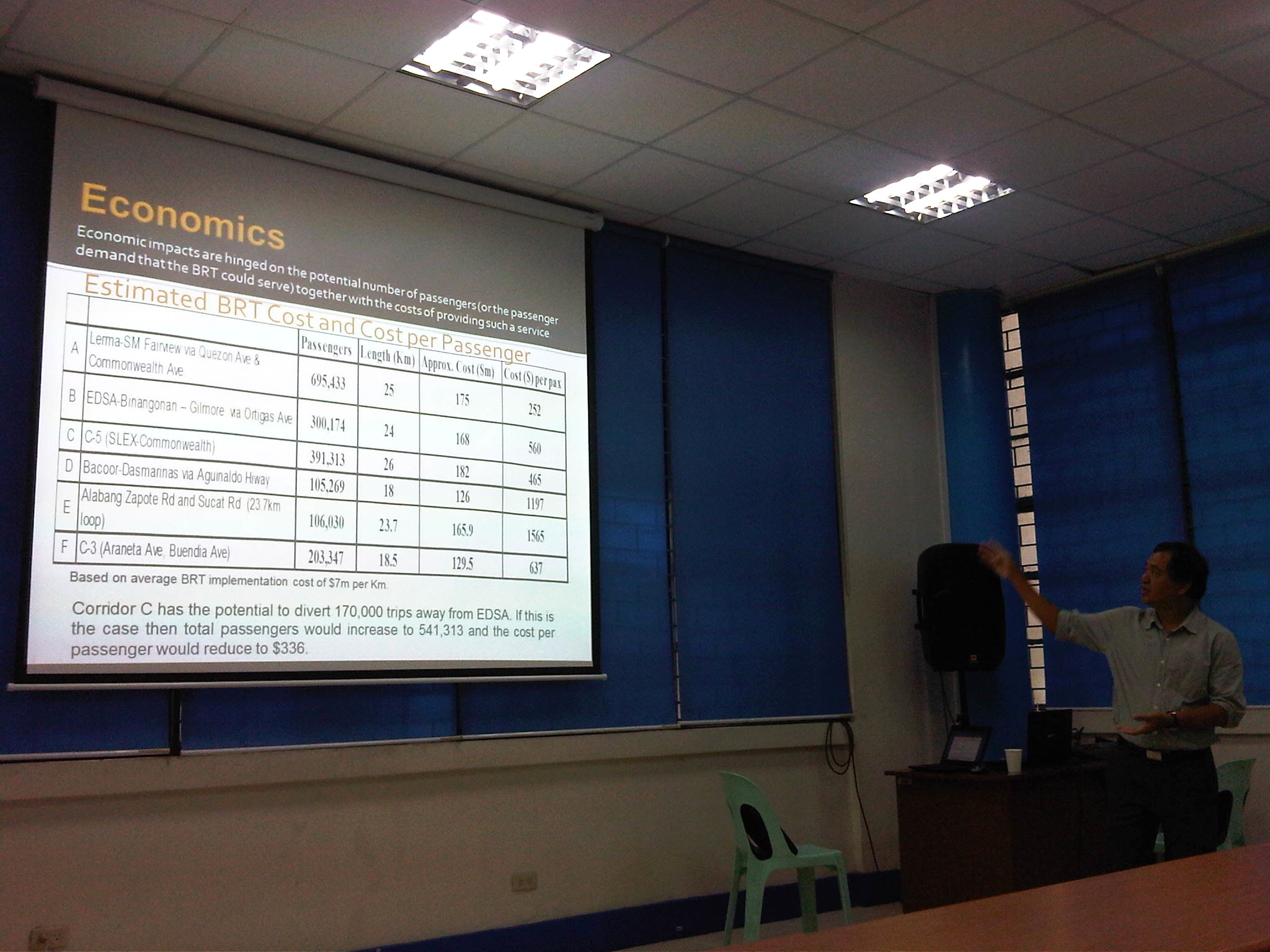 Dr. Ric Sigua, Director of the Institute of Civil Engineering, making a point about the economics of Bus Rapid Transit (BRT).
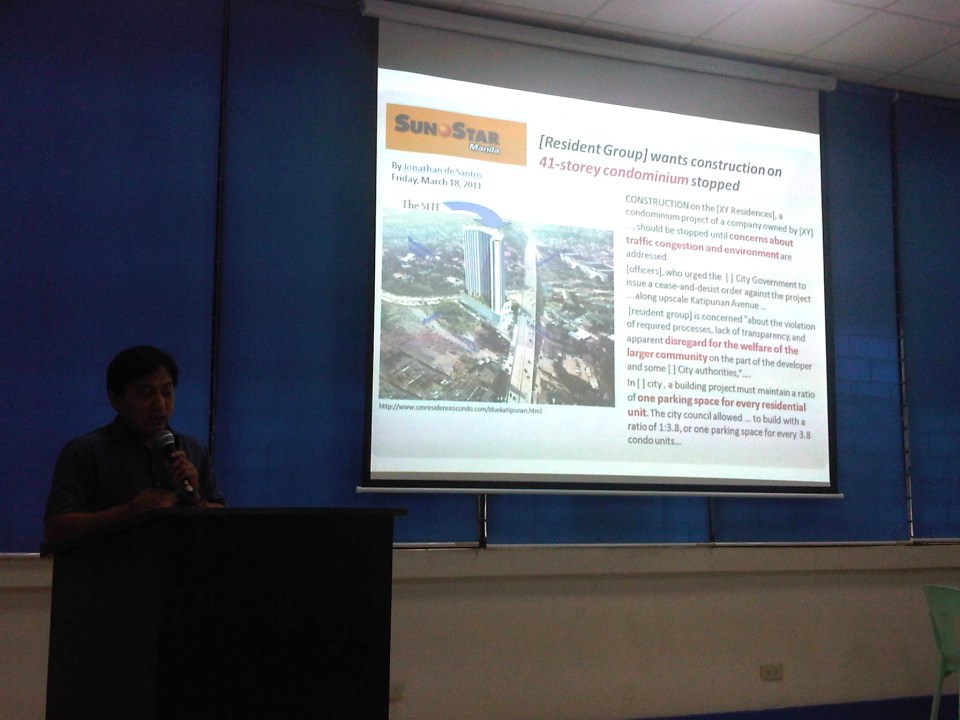 Dr. Sean Palmiano, Director of the National Center for Transportation Studies, explaining the finer points of traffic impact assessment for high density residential developments.
 Prof. Happy Denoga of the Department of Mechanical Engineering explaining on the advantages of hybrid systems for vehicles.
 Dr. Karl Vergel of the Institute of Civil Engineering talking about the on-road tests for jeepneys using B5 or 5% CME-blended fuels in a project commissioned by the Philippine Coconut Authority.
 Comparison of jeepney mileage using 2% and 5% blended fuels.
 Dr. Edwin Quiros of the Department of Mechanical Engineering’s Vehicle Research and Testing Laboratory (VRTL) discussing the dynamometer tests conducted for jeepneys using B5 fuel.
There were other presentations but unfortunately, I wasn’t able to attend these as lectures were spread among various venues at the college. That’s often the hang-up of having parallel sessions during these colloquiums. Nevertheless, it is nice to know that transport remains a popular subject for these lectures.
–
Research topics for undergraduates?
Looking at the recent statistics for this site, I noticed the surge in interest on research topics for undergraduates. What they found were posts I made over the last few years that included lists of titles of researches being undertaken by our undergraduate students at UP Diliman Civil Engineering. In addition, there are also a lot of articles I posted about various topics on transport and traffic that could be used as basis for developing or identifying research topics for their undergraduate research work. There are a lot of problems or issues or challenges that the Philippines needs to solve. Thus, there should be a number of topics that students can choose from depending on their interest as well as perhaps the capacities or capabilities of their respective advisers to guide them in the implementation of their researches. Among the more “in demand” topics are those relating to road safety, public transport, traffic congestion, walking, cycling and even parking. Topics for undergraduate research should be something that could be implemented over a semester or two including the required review of literature, data collection (i.e., field surveys as well as secondary data collection from various sources) and the analysis of such data. Some topics can be more challenging than others and those requiring specific software (e.g., commercial rather than open-source) should not be encouraged if a school doesn’t have the resources. For the “techies,” topics involving development of software tools or apps may be encouraged as long as the objectives and data requirements are well defined and students don’t end up with useless products.
The National Center for Transportation Studies (NCTS) receives a lot of inquiries every year from students of various universities about research topics on transportation. Most of these are emails and letters without the endorsement of their advisers or teachers. And so we advise them to get the necessary endorsements first before they could do their researches at the Center. This gives the request a bit of a formality though we can only usually extend limited assistance as the Center’s resources are also limited. We have to state, however, that we are not in the business of advising or guiding students from other universities or colleges. That is the responsibility of your faculty whose job is to guide your students. The Center can provide whatever it has in terms of data or information but the specific data or information should first be identified by the students and their advisers by doing research on the topics of interest.
I have not yet posted on research topics for Academic Year 2014-2015 as UP has moved its academic calendar from June to August starting this year. At this time of year, we usually already have a list of topics for our students to choose from. These are topics that faculty have provided and which they could confidently guide students who would be under them (i.e., those who selected the topics they listed). It is highly likely that I would be selecting topics from some of the articles I have posted here and my co-faculty would be listing topics that address current issues or challenges in transport. Until perhaps the middle to last part of August when we would already know how many students will be assigned to our Transportation Engineering Group could we come up with a long list. By early September, our students would have selected their topics to embark on their undergraduate research work.
–
A study on a long-term transport action plan for ASEAN
The National Center for Transportation Studies of the University of the Philippines Diliman participated in the project “Study on the Long-Term Action Plan for Low Carbon Transport in ASEAN.” The study was funded by the Nippon Foundation and implemented by the Institution for Transport Policy Studies (ITPS) and Clean Air Asia with experts coming from ASEAN countries including Indonesia, Malaysia, the Philippines, Thailand and Vietnam, and Mizuho of Japan, which led the development of the Backcasting and Visioning Tools employed in the study. Detailed case studies were performed for Indonesia through the Universitas Gadjah Mada and for the Philippines through the University of the Philippines Diliman.
The Final Symposium for the study was held last February 20, 2014 at the Hotel Okura in Tokyo, Japan. A link containing information on the study, the symposium program, information on speakers, and presentation files are hosted by the Japan International Transport Institute, which is affiliated with ITPS.
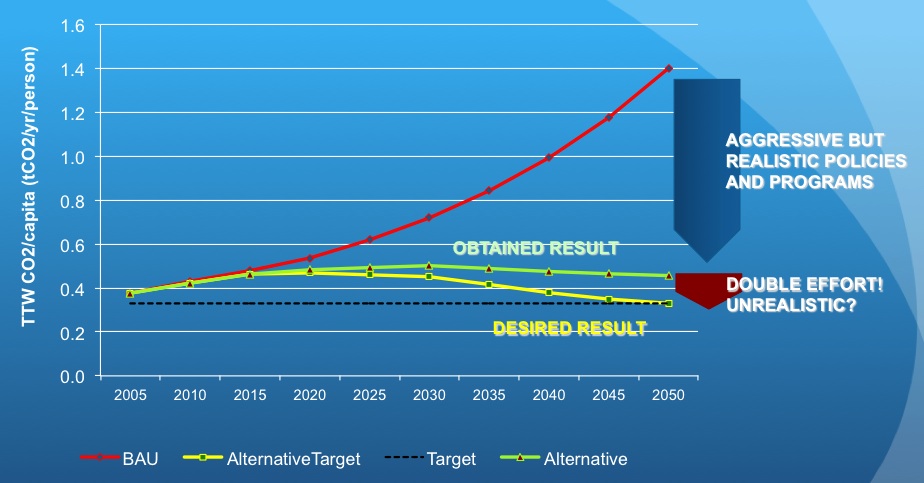 Graph of the result of backcasting for the Philippines using available transport data, policies and other information on various socio-economic and transport factors. (Image capture from the presentation by UP’s Dr. Regin Regidor)
–
Locally made AGT
I got my first look at the vehicle currently being developed by the DOST-MIRDC at the DOST complex in Bicutan. This was the same vehicle that was shown on some news programs a couple of days ago when there was some buzz about a MOA being signed between UP and DOST for the development of an automated guideway transit (AGT) prototype and test track at UP Diliman. The DOST Secretary was supposed to have said that it would cost somewhere between a fourth or a fifth of those developed elsewhere (read: other cities abroad) and that it would have a capacity of 60 passengers. The Secretary also was reported to have said that the AGT would eventually be travelling at 100 – 120 kilometers per hour! That’s quite fast for something that’s being packaged as an urban mass transit system.
Together with the reports, both on TV and print (I haven’t heard anything from radio.), were images of a transit vehicle used by DOST in publicizing the project. What appeared was an artist’s impression (or so it seems) of what looked more like a monorail than an AGT. But coming to Taguig for a meeting, I made it a point to ask our friends at DOST to give us a brief tour of the test track they constructed at the complex where the MIRDC with a little help from another agency involved in rail transit was testing a prototype vehicle that was shown on TV. I wasn’t able to catch those news reports so I was a little excited to see the vehicle being developed and by local engineers and scientists. Below are a few of photos of the vehicle together with the test track.
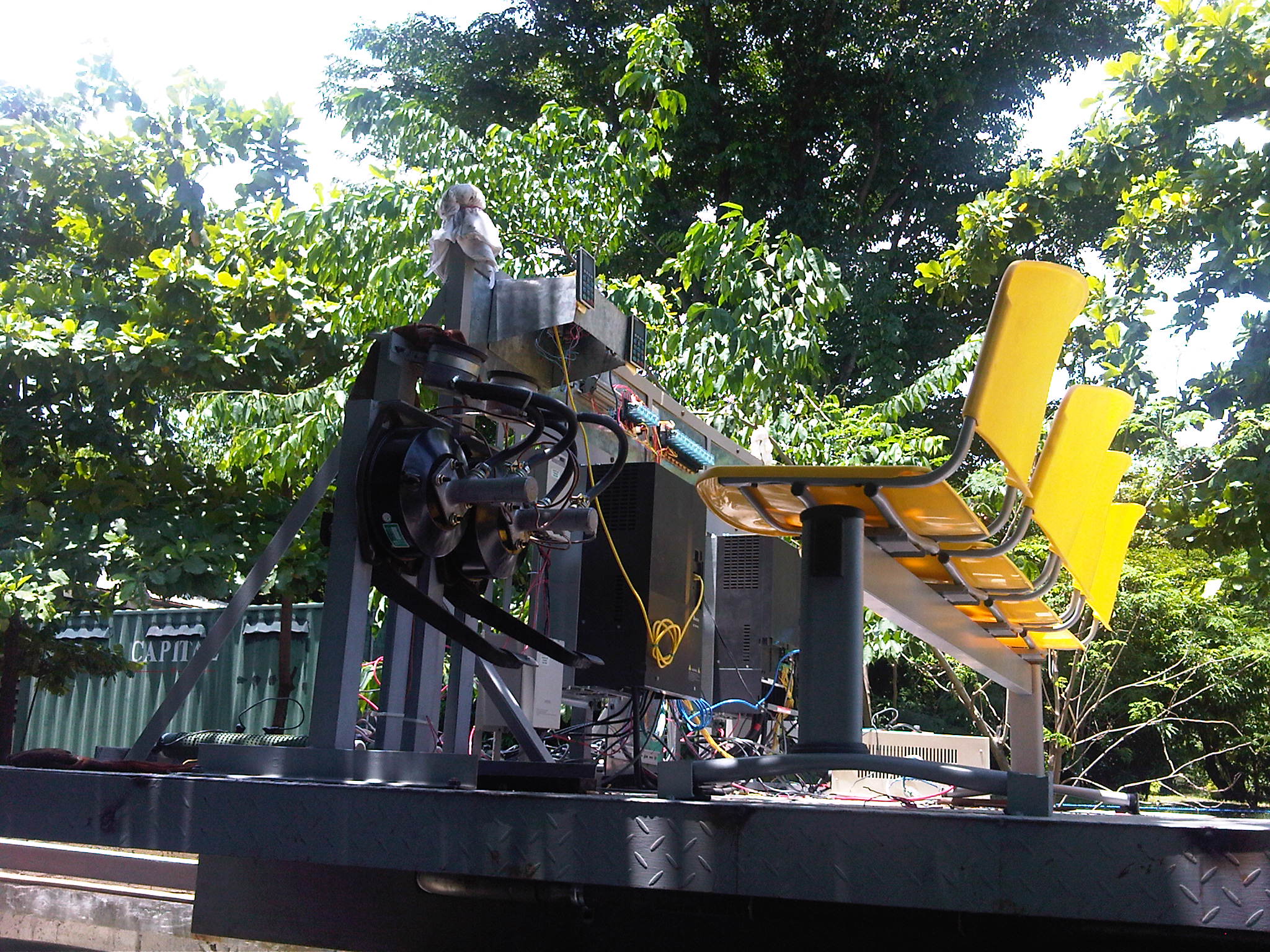
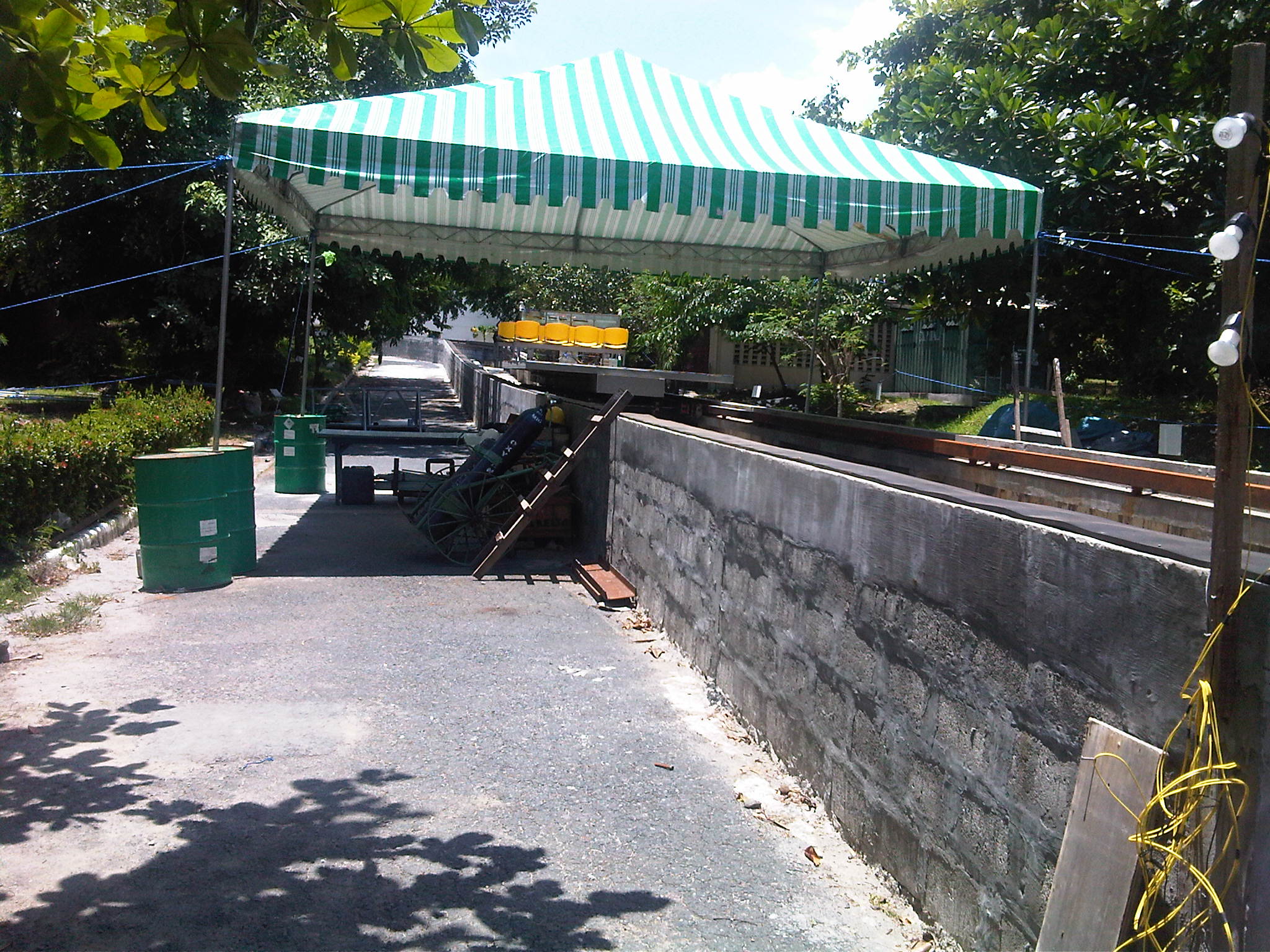
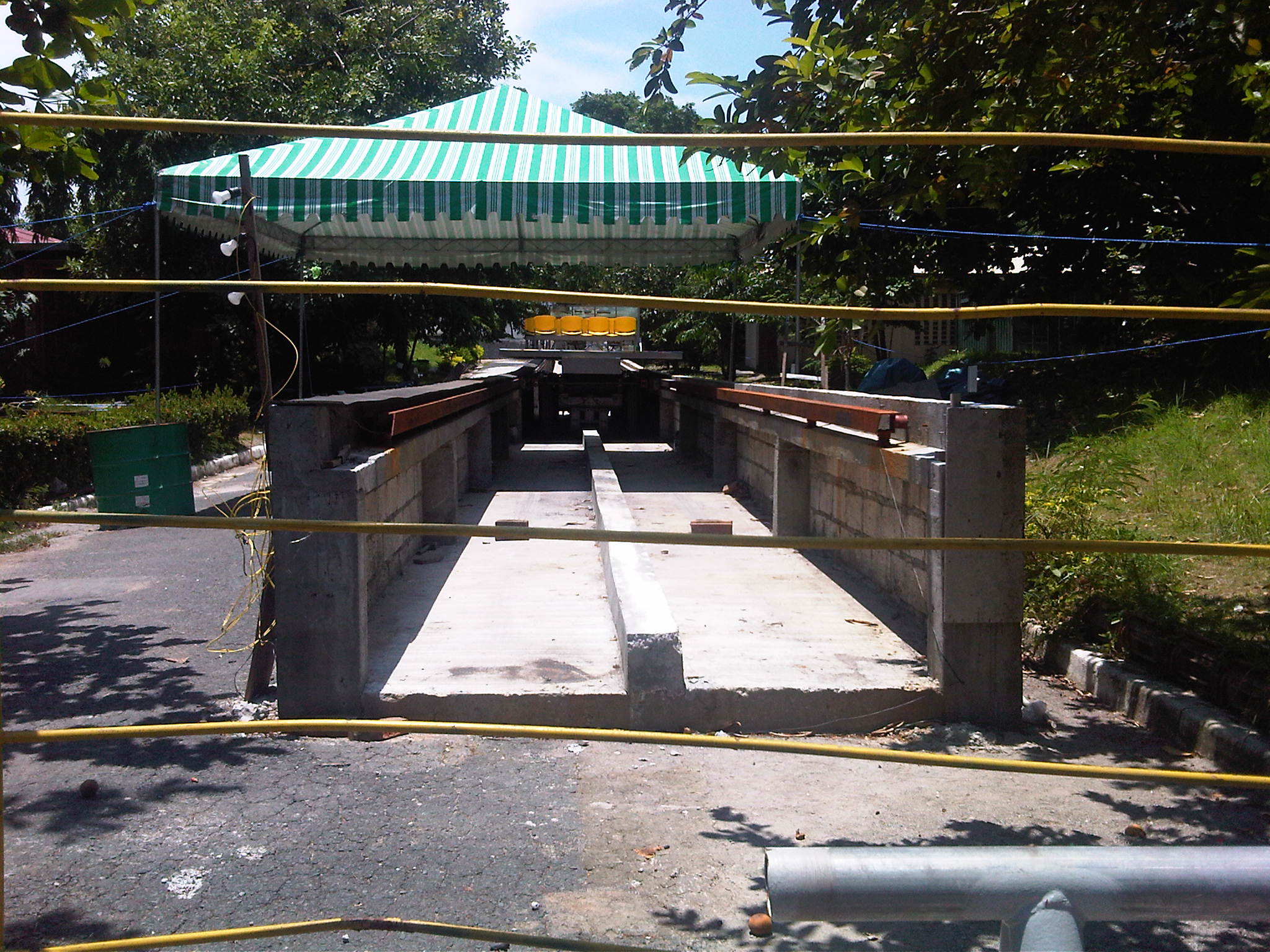
I’m sure a lot of pundits out there were disappointed with what they saw after getting all the hype about the UP AGT. However, it turns out that this won’t even be what will run along the test track to be constructed at UP Diliman. Our friends at the DOST say that this was just a practice vehicle of sorts that DOST staff experimented on just to prove that we (Filipinos) are capable of developing a transit vehicle and the track that will carry it. Of course, the future track and the proposed loop in UP Diliman will be overhead. Also, there will be other challenges pertaining to the superstructure (foundations, columns, girders, stations, etc.). Then there is the vehicle itself that should be safe and comfortable with designs adhering to ergonomic standards, an efficient motor and controller (it will be electric), and a suspension system that should give a smooth ride. Needless to say, the vehicle should also look good to be able to attract people and for it to be marketable. These are tremendous expectations indeed and it could really use all-out support from the government and maybe the private sector. I would not be talking about the funds and other resources required for this undertaking. Info on these are already available from the DOST and UP, and there are already initiatives to attract the private sector into having a look at the project and perhaps provide support in whatever way they can.
I can’t help but be proud of what has been accomplished and what is still to come in as far as the project is concerned. I believe we should be eager to pitch in what we can in order to ensure the success of this collaboration between UP and DOST. Who would not want to be involved in a project where Filipino engineers and scientists will come together to come up with a product we can not only showcase as home-grown but something that would have a significant impact on public transportation in this country.
Meanwhile, it would be better for DOST and UP to temper expectations so as not to put undue pressure on those who will be involved in the project. Pronouncements claiming that the system will replace the IKOT jeepneys are at this stage premature and only raises flags that would not be in the interest of the project. Claims, too, that the vehicle will run at 100 kph is unfounded and unnecessary considering, for one, that the average running speeds of such systems would be between 30 and 40 kph and probably top at 60 kph if there were sufficient distance between stations. I understand that the statements made were probably words of encouragement but I guess we have our work cut out before us and the challenges have been revealed on the way to the development of a home-grown AGT.
Transport topics in the 2011 Professorial Chair Colloquium
The 2011 Professorial Chair Colloquium of the College of Engineering of the University of the Philippines on July 4 will feature a number of lectures with transportation themes. These are the following:
– Development of a Diesel Hybrid Vehicle Prototype [Gerald Jo. C. Denoga, Emerson Professorial Chair in Mechanical Engineering]
– Survival Versus Sustainability: Challenges to Environmentally Sustainable Transport [Hilario Sean O. Palmiano, Transport Training Center Professorial Chair]
– LPG in Dual-Fuel SI and CI Engine Applications – Effects on Maximum Power and Fuel Consumption [Edwin N. Quiros, Emerson Professorial Chair in Mechanical Engineering]
– Traffic Congestion in Metro Manila: Is the UVVRP Still Effective? [Jose Regin F. Regidor, Pozzolanic Philippines Inc. Professorial Chair]
– Design and Production of a Vehicle Run by Cordless Drills [Joseph Gerard T. Reyes, Emerson Professorial Chair in Mechanical Engineering]
– Towards a Safer Intersection Design [Ricardo G. Sigua, Prof. Emeritus Norbert S. Vila Professorial Chair]
– Estimation of Emissions and Fuel Consumption of Sustainable Transport Measures in Metro Manila [Karl B.N. Vergel, Maynilad Professorial Chair]
The lectures are to be delivered mainly by Civil Engineering and Mechanical Engineering faculty and it is quite obvious from the titles that the ME’s have focused on vehicle technologies while the CEs are into sustainable transport and design. These topics also reflect on the researches currently being implemented at the college although it is also known that IEs and EEs are doing transport-related researches including those on Intelligent Transport Systems (ITS) and logistics. Hopefully, the outputs of these researches will be beneficial to the country considering their applications to local problems.
Philippine participation in EASTS 2011
The 9th International Conference of the Eastern Asia Society for Transportation Studies (EASTS) was recently held in Jeju, Korea. The conference was well attended with over 700 participants from at least 12 countries including those from member societies in eastern Asia. The Philippines was represented by academics and researchers coming mainly from the UP Diliman, Mapua Institute of Technology and St. Louis University (Baguio City).
Following is a photo taken during the Welcome Dinner last June 20, 2011 held at the Jeju International Convention Center.
 Seated [L-R]: Grace Padayhag (ITPS), Regin Regidor (UP); Standing [L-R]: Mark De Guzman (SLU, partially obscured), Riches Bacero, Aldrine Uy (Mapua), Francis Villareal, Dr Shigeru Morichi (ITPS), Jun Castro (UP), Ric Sigua (UP) and Ernie Abaya (UP)
The next photo shows Philippine participants taking a break at a cafeteria at the Jeju ICC:
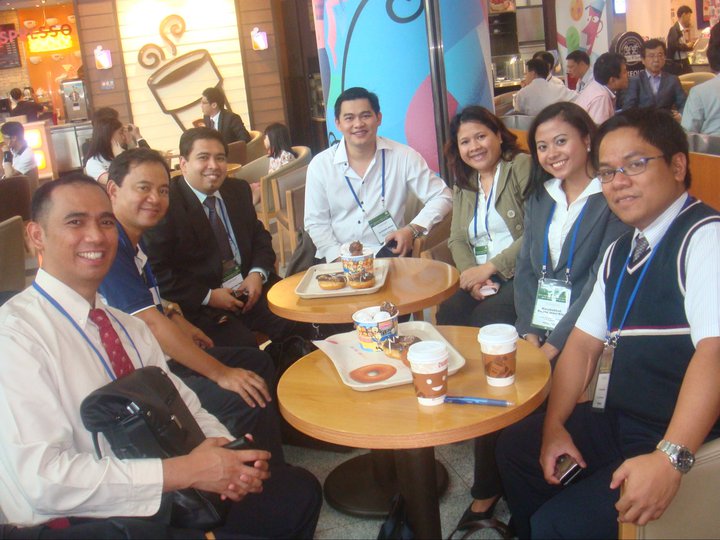 [L-R]: Riches Bacero, Ric Sigua, Regin Regidor, Aldrine Uy, Grace Padayhag, Reigna Macabbabad, and Mark De Guzman
Acquisitions
The last time the National Center for Transportation Studies (NCTS) was able to benefit from the acquisition of equipment for research and extension work was in the mid-90’s when the last of the big ticket items like the Horiba mobile air quality monitoring equipment were delivered. These items were donated by the Government of Japan through the Japan International Cooperation Agency (JICA). At the time, there was a strong JICA presence at the Center that included several experts and visiting professors because of the project that transformed what was previously the Transport Training Center (TTC) into the NCTS.
Many of the donated equipment eventually showed signs of wear and tear as a lot of researches employed them; some sparingly and others extensively. Of course, there were items such as the mainframe computer, that rapidly lost relevance and value due to the much rapid developments in computers. The problem with big ticket items, as we later found out, was that it was quite expensive to maintain and even operate them. This was especially true for the Horiba, which cost a lot because of the calibration gases required for field experiments and the costly repairs at a time when components had to be shipped to Japan and back because there were no qualified technicians in the Philippines. It was okay back then when JICA maintained a presence at the Center since the experts were able to use their budgets or apply for support for repairs directly to JICA. It became so much difficult later when, after the NCTS Project was concluded, it became just too difficult to get support for equipment repair. After almost 10 years of submitting applications and justifications for repairs or replacements, and promises by JICA experts assigned to national agencies, we practically gave up on the matter and resigned ourselves to the prospect of never getting such important tools in the foreseeable future.
In 2007, however, hope was reborn in the form of the Engineering Research and Development for Technology (ERDT) program supported by the Philippines’ Department of Science and Technology (DOST). The ERDT involved a consortium of the top universities in the country led by the University of the Philippines Diliman. It was an ambitious yet realistic program that had the best intentions of giving R&D in engineering a much needed boost. Among the essential elements of the program was the upgrading of facilities at UP that led to the construction of new laboratories and the acquisition of modern equipment to encourage relevant researches. The Institute of Civil Engineering would be acquiring a shaking table for earthquake engineering research, recent-model hydraulics equipment, and long delayed upgrades to construction materials testing machines.
In the case of its Transportation Engineering Group, the latter’s affiliation with the NCTS led to the proposals for acquiring equipment that would allow for more progressive studies on Traffic and Highway Engineering. Among those in the wishlist that were approved and have been delivered are a portable digital axle weighing equipment and a portable particulate matter monitoring system. Also approved was equipment that would finally upgrade and revive the Center’s mobile air quality measurement and monitoring system. In fact, the equipment intended for air quality measurements will also benefit the Institute’s Environment and Energy Engineering Group.
Such equipment are vital if the University is to be at par with the best in the region and perhaps, if sustained, in the world. The fact that we have been left behind is an understatement and we cannot pursue relevant and progressive researches if we do not have the necessary tools to implement programs and projects. True, we probably have the brainpower to do research considering many have been trained at the best institutions abroad, yet unless we are able to create tools and things straight out from the power of our minds, we are limited and will just end up frustrated about not being able to undertake the research and extension that we are supposed to do, whose outcomes may just spell the difference if this country of ours is to move towards progress and a more prosperous future for its citizens.
 Caught (up) in traffic