
Home » Posts tagged 'road crashes'
Tag Archives: road crashes
On reducing deaths due to road crashes
Following is a link to an article on the increase in road crash-related deaths in Singapore. The city state prides itself as one of the safest places in terms of transportation yet road crash deaths recently hit a 10-year high.
From the article:
“Cellphone-related driving violations surged 39.1% to 4,193 cases, the report showed. Motorcyclists, who make up just 15% of Singapore’s vehicle population, accounted for 54.8% of all traffic accidents and 53% of fatalities.
Speeding violations jumped 25.9% to 253,550 cases, equivalent to roughly 695 motorists caught daily. While speeding-related fatal accidents dipped from 46 to 41, red-light running accidents surged 27.1% to 122, resulting in seven deaths. Drink-driving accidents fell from 166 to 156, but the number of fatal drink-driving accidents held steady at 12 in both years…
…”Road safety requires a culture of mutual respect and graciousness among all road users,” the police force said. “Simple acts of courtesy, such as maintaining a safe following distance of at least three seconds, giving way to pedestrians, reducing speed near junctions and being patient during peak hours, can create a better road culture.” “
What can we learn from Singapore’s experience? Are we capable and equipped to improve road safety in the Philippines? Can we be more courteous, respectful and gracious in the way we drive or behave as road users?
–
NAIA Terminal 1’s departure level driveway and drop-off
Weeks ago there was a fatal incident involving a motorist who plowed into well-wishers and passengers at NAIA Terminal 1. It was revealed. I finally had the chance to see the area for myself. I had not gone to Terminal 1 in a long while and especially after San Miguel Corporation had taken over the airport. The photos shared below were taken by my wife as we eased into the departure driveway of NAIA T1 one early morning last week.
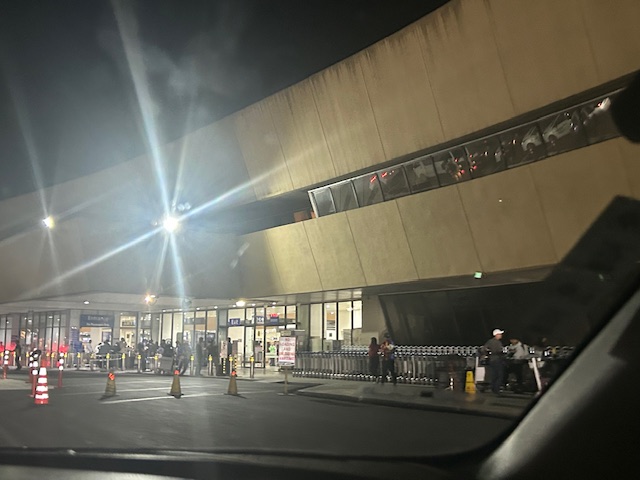 Arriving at the west wing of the departure level of Terminal 1. Those are luggage carts lined up along the sidewalk. There are cones for the restricted area but these turned out to be to block vehicles from using the inner lane adjacent to the terminal.
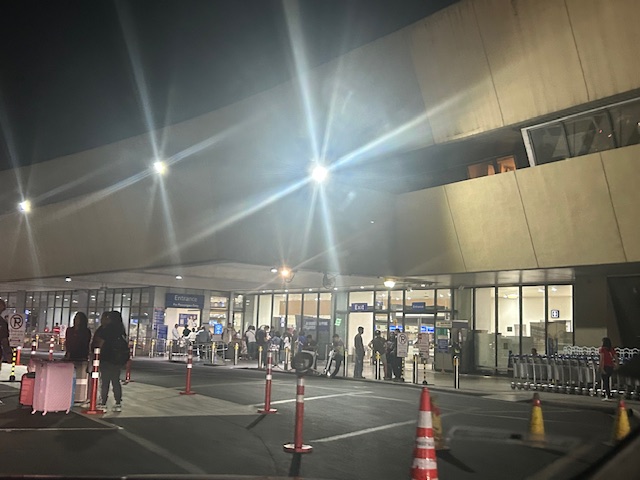 West wing entrance of Terminal 1 – unlike Terminals 2 and 3, there is really no area for well-wishers. Note the bollards that are supposed to protect people from errant vehicles. We now know these were not built or installed to the required specifications for protection.
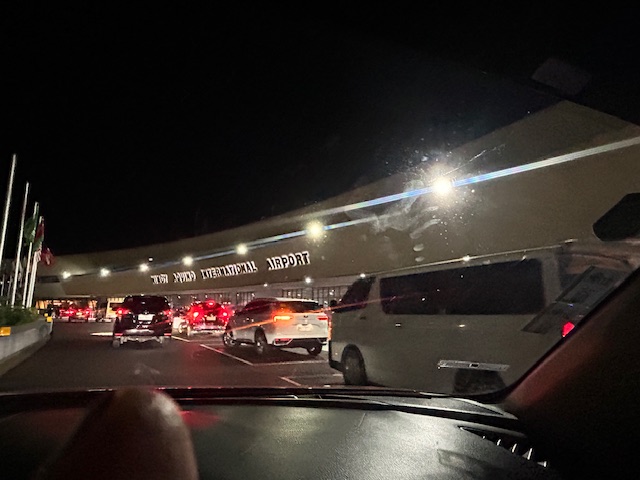 Vehicles are now parked parallel along the center of the driveway. Previously they were angled facing the terminal.
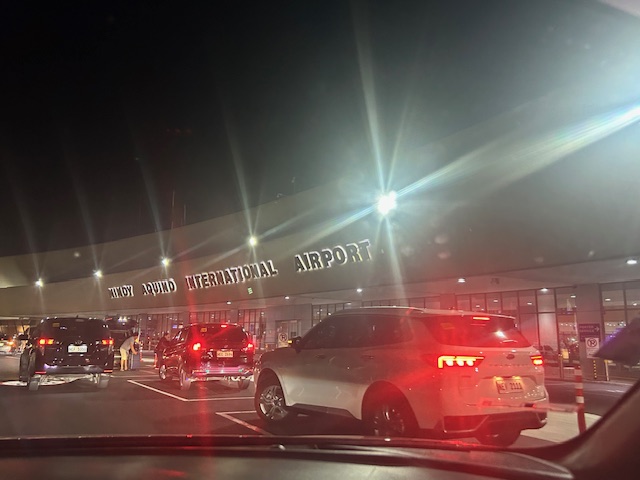 In terms of the space available, this significantly reduces the number of vehicles that can park to drop off passengers at the departure driveway.
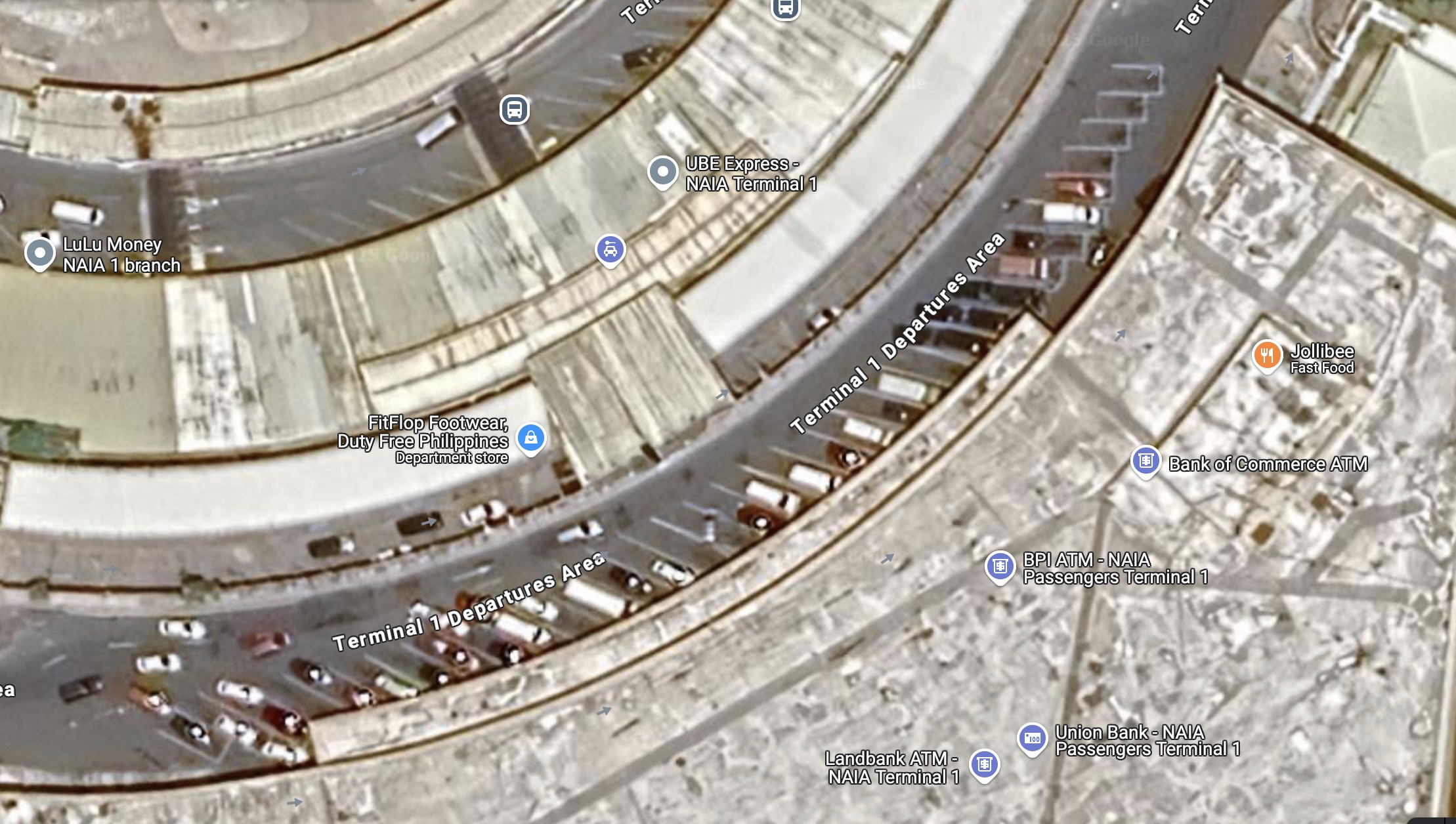
Screenshot from Google Maps showing the previous layout of the drop-off parking. Note the vehicles pointing towards the terminal.
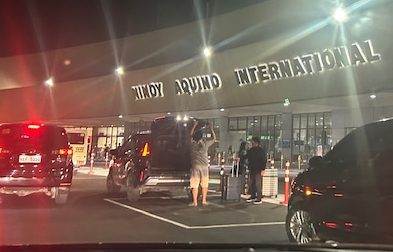
Passengers unloading their luggage behind the vehicles. There are markings for the vehicle slot but most just park parallel where space is available at the center of the driveway.
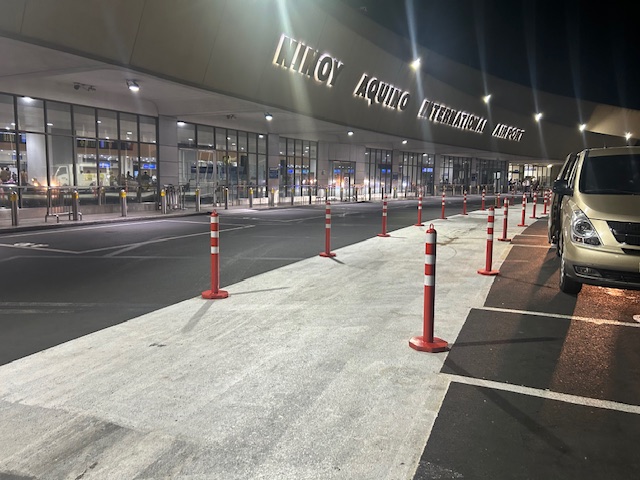 There is a buffer zone between the inner driveway lane and the drop-off lane. There were no vehicles using the inner lane but you can see in the photo that there are also curbside slots. Perhaps these are used during the busier times at the terminal?
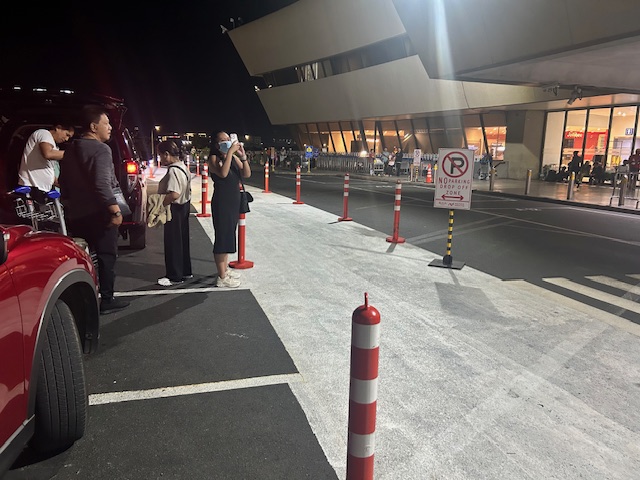 Other passengers were also taking photos as their luggage were being unloaded from their vehicles.
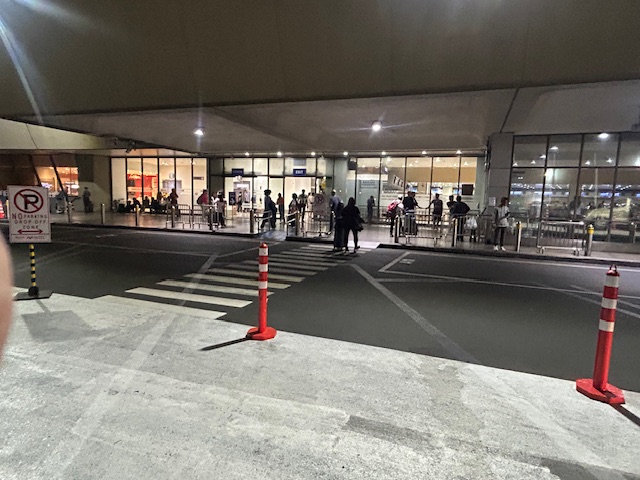 This is where the fatal crash occurred. It seems the damage has been repaired and quickly and its business as usual at the airport.
NAIA authorities should already start retrofitting or reinstalling the bollards at the terminal. This would ensure the safety of passengers vs. vehicles that may or may not be under the control of their drivers. The effort to quickly address the concern is much appreciated but a long term solution needs to be implemented to prevent future crashes from occurring here and at other terminals.
–
On the fatal Katipunan road crash
The vehicles involved in a recent road crash that killed at least 4 people are still there and parked under the Aurora Flyover. A truck apparently lost its brakes and control and the driver ended up plowing into other motor vehicles, likely trying to gain some control in order to stop the truck. It was reported in news articles that there were 4 immediate fatalities and many suffered serious injuries. We probably won’t know the final fatality count unless someone reports on those hospitalized for injuries.


The crash highlighted again the need for vehicles, especially trucks, to be roadworthy. This time of year, most of these trucks run busy schedules with the logistics requirements. But maintenance is just one part of the problem here as the truck was reported to be speeding. So driver behavior is also a factor and apparently there was no monitoring (having those CCTVs don’t count if they are only used in a passive manner such as for evidence after a road crash had already occurred) or enforcement versus speeding for these large vehicles. Also, was the truck overloaded? This practice may also lead to the deterioration of the truck’s brakes and the vehicle’s mass contributes to the severity of the crash including the damage to other vehicles. The MMDA and LGUs have their work cut out for them to address these road safety concerns.
–
On non-roadway traffic deaths and incidents
I found this interesting article about non-roadway crashes or incidents that may cause deaths. These are often recorded in buildings including parking lots or facilities but are not generally collected and reported by governments as part of road crash data.
Wilson, K. (April 18, 2024) “Why Does the Vision Zero Movement Stop At the Edge of the Road?,” Streetsblog USA, https://usa.streetsblog.org/2024/04/18/why-does-the-vision-zero-movement-stop-at-the-edge-of-the-road [Last accessed: 4/28/2024]
From the article:
“According to the latest report from the National Highway Traffic Safety Administration, a shocking 3,990 people died in car crashes that occurred outside of the traditional transportation space in 2021, the last year for which data is available. One-quarter of those people were outside vehicles, including, pedestrians, cyclists, wheelchair users, and even children simply wishing their parents goodbye before they were accidentally run over by the caregivers who loved them most; all lost their lives after they were struck by drivers on private property, like parking lots, driveways, drive-thrus, and private roads.”
These crashes very likely contribute to under-reporting. One wonders, for example, how many incidents occur in mall parking lots, schools and subdivisions. Recall the incident in Ateneo years ago when a child got ran over and killed as students were being dropped off in the morning. Surely there are other incidents though not involving deaths, and these need to be recorded among traffic incidents. The deaths need to be included in the reports. These are important information to complete the picture of road traffic safety in any country including the Philippines.
–
On emergency vehicles, speeds and road widths
I recall an online discussion about how roads need to be wide to accommodate emergency vehicles such as fire trucks/engines, ambulances and police vehicles. There are also videos shared on social media about how, with wide roads, motorists could move their vehicles to the sides to give way to emergency vehicles. These are used to support the argument that we need wide roads and that speeding for emergency vehicles is justified because of their purpose. The following article attempts to make a counter-argument:
Lewis, M. (November 21, 2022) “Ambulances vs. Pedestrians,” Planetizen, https://www.planetizen.com/blogs/119785-ambulances-vs-pedestrians [Last accessed: 11/24/2022]
To quote from the article:
“the “emergency response” argument in favor of wide streets only makes sense if the risk of death from a too-slow ambulance outweighs the risk of death from a speeding car.”
Certainly, the data on road crashes due to speeding should support the perception that there’s a higher risk of death from speeding vehicles compared to the risk of dying in relation to the emergency that’s supposedly being responded to. And in our country, perhaps this counter-argument is valid considering the “wang-wang” type of emergency vehicles moving about.
–
Back to the old normal in road safety?
Last week, I almost witnessed a multiple vehicle crash along Katipunan Avenue. Almost because we reached the location minutes after the incident happened and before the traffic build-up. Here are photos as we passed the area. You can see from the photos that there were already a lot of onlookers (i.e., miron and usyoso), most of whom were motorcycle riders taking photos of the vehicles involved. No one seemed to be helping those involved aside from the MMDA personnel who appeared to have just arrived as we passed the area.
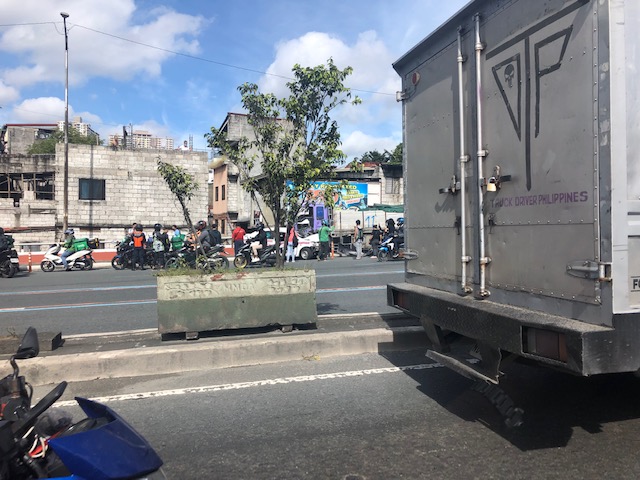 Miron and usyoso in the area near where a large truck plowed to the roadside near a residential area
 Some of the vehicles involved in the crash were this black SUV and the red car
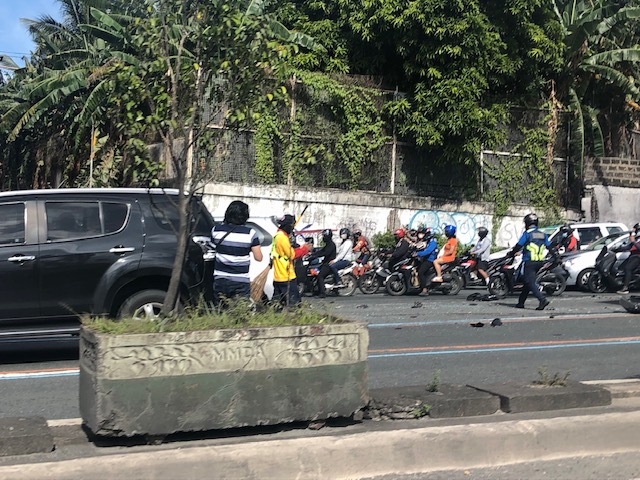 There were scattered debris from the vehicles involved.
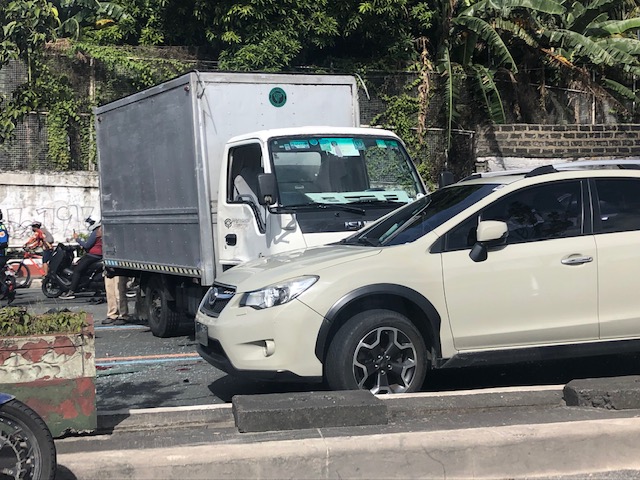 This truck and SUV collided probably as the truck attempted to avoid one of the vehicles
 Traffic jam quickly formed along the southbound side of the Katipunan-Aurora flyover
Traffic along the southbound side of Katipunan is usually heavy that time of day (around 8:00 AM). But there are sections including the flyover where vehicles typically speed up. Still, the likelihood of crashes is perceived to be low given the conditions unless a vehicle such as the truck in the first photo had some trouble with the driver losing control of the vehicle. It takes just one wayward maneuver or movement to initiate a chain reaction among other vehicles that would lead to a multiple vehicle crash.
Traffic has steadily returned to pre-pandemic levels and it seems that road crashes are also back and on the rise. Hopefully, the authorities such as the MMDA and the PNP will be monitoring traffic closely and address the issues contributing to road crash incidence such as reckless driving and defects in road facilities. I believe the data is available but are these being analyzed and evaluated in order to come up with the most suitable or appropriate solutions or countermeasures? Are there timely interventions to improve road safety along our roads?
–
On gender and transportation safety
There was a nice discussion among colleagues about which among male or female drivers were the safer motorists. My take based mainly on observations is that female drivers were safer or practiced safe driving and riding more than males. Road crash data should be able to validate (and perhaps support) this observation. My colleagues were also in agreement with this view. Here is an article providing some statistics from the US that clearly show female to be safer drivers and riders:
Egan, L. (August 17, 2022) “Road To Zero Fatalities: Male vs. female drivers,” KSLTV.com, https://ksltv.com/503038/road-to-zero-fatalities-male-versus-female-drivers/ [Last accessed: 9/2/2022]
Some quotables from the article/report:
“The girls are more teachable, they want to learn how to be a good driver,” he explained. “The boys really do think they already know how.”
In 2020, males accounted for 72% of all motor vehicle crash deaths and 92% of motorcyclist deaths, according to the institute’s analysis of data from the U.S. Department of Transportation.
In Utah, crash data from 2017 to 2021 showed that 85% of motorcycle crashes involved males, according to the Utah Department of Public Safety.
“Males are more prone to make riskier decisions and tend to be a little more thrill seeking,”
Again, we need to get the data and present these in a meaningful way. You can take the cue from the article above how data can easily be presented to provide insights to driver and rider behavior. More information or details (e.g., age, years of experience in driving/riding, etc.) can lead to even deeper analysis that will allow us to draw or formulate suitable measures to improve safety for everyone.
–
Road safety history – first fatality and crash
Have you ever wondered when the first road crash involving a motor vehicle occurred? Or who was the first person to die (i.e., fatality) in a car crash? Here’s a brief but informative article on this topic:
Sal (April 15, 2022) “Who Was the First Person Ever to Die in a Car Crash?” Medium.com, https://sal.medium.com/who-was-the-first-person-ever-to-die-in-a-car-crash-8385add6cbcb [Last accessed: 4/20/2022]
Were you surprised about the 3 mph speed of the car that ran over the first fatality involving a car? That’s really slow considering the speeds of vehicles these days and how high speed limits are along streets where there are many pedestrians. Meanwhile, the circumstances about the first crash appears to be similar to what we still have now. That is, reckless driving, increasing speed limits and (truth be told) pedestrians not being aware of their surroundings (say what you will but the car was traveling at 4 mph and there was a claim that the driver tried to get the attention of the victim to no avail). I agree though with the author that this was a portent of worse things to come as road crashes has become a top killer and health concern.
–
More frequent road crashes?
My personal observations during my commutes lead to a conclusion that there is indeed an increase in the number of road crashes and perhaps this is attributable to the conditions during this pandemic. During my almost daily trips the past weeks, I have witnessed or passed by road crash incidents. These mostly involved motorcycles but last Friday, there was severe congestion along Ortigas Avenue due to a large truck that slammed into a post and ended up blocking most of the westbound lanes of the road. Yesterday, my wife sent me photos of a truck on its side after also being involved in a crash where it was reported that the driver lost control of the vehicle. Also involved, based on the Taytay report posted on their social media page, was a tricycle whose passengers sustained minor injuries. The incident could easily have been fatal to those involved considering the truck hitting the tricycle.


So are these incidents to be called accidents like how media and local governments still label them? These appear to be preventable. For one, vehicle-related problems could have been addressed by proper maintenance of the vehicle. But then there is also the question of whether the drivers or riders involved in these crashes were practicing safe driving or riding. Were they speeding or doing any risky maneuver? Were they aggressive or reckless? These are but a few factors that come into play and that led to a crash such as the one shown in the preceding photos.
–
On the increase of road crash fatalities during the pandemic
The general observation has been that roads have become less safe as drivers and riders have tended to speed up their vehicles during this pandemic. Speeding up apparently is just part of a bigger picture and even bigger concern considering what is perhaps also an issue related to mental health. We’ve read, heard or watched something about people’s transformation once they are behind the wheel or riding their motorcycles. I remember a Disney cartoon showing how Goofy transforms from being mild-mannered to somewhat demonic once behind the wheel of the car. The article below reinforces that and relates this behavior with the pandemic.
To quote from the article:
Art Markman, a cognitive scientist at the University of Texas at Austin, said that such emotions partly reflected “two years of having to stop ourselves from doing things that we’d like to do.”
“We’re all a bit at the end of our rope on things,” Dr. Markman said. “When you get angry in the car, it generates energy — and how do you dissipate that energy? Well, one way is to put your foot down a little bit more on the accelerator.”
 Caught (up) in traffic