
Home » Posts tagged 'road safety'
Tag Archives: road safety
On the dangers of drowsy driving
Here’s another quick share of an article on road safety. This one is about drowsy driving, which is said to be more dangerous than drunk driving. Drowsy here is equated to being sleepy – for whatever reasons may have led the driver to be drowsy. Perhaps lack of sleep, fatigue or being simply tired, or maybe due to food or medication he/she took before driving.
Here is the link to the article, which has a link to the report referred to in the article:
https://www.ghsa.org/news/drowsy-driving-new-data-analysis
From the article:
“…several strategies to combat this dangerous behavior:
-
Start with prevention: Promoting healthy sleep habits for everyone – especially for teens as they begin their driving journey – is essential. Drivers should practice good “sleep hygiene,” which includes sleeping in a quiet, cool, device-free environment and avoiding caffeine or alcohol before bed.
-
Vehicle technology that’s available now: Advanced Driver Assistance System (ADAS) features can monitor for telltale signs of drowsiness (like yawns or long blinks) and issue visual, auditory or haptic alerts to tell drivers to take a break. Notably, none of the current systems prevent a driver from ignoring them and continuing to drive, or from turning them off entirely.
-
Change the culture at work and school: Employers should implement responsible scheduling and travel policies to minimize fatigue. School districts can consider shifting high school start times later in the day to help teens get more rest. One study of high school student drivers found significantly lower crash rates with a later school start time.
-
Build more, smarter infrastructure: Infrastructure changes such as rest stops, rumble strips and cable median barriers can help prevent drowsy driving, wake drivers up or reduce the severity of a run-off-the-road crash.”
–
On at-grade crossings and footbridges
Here’s a quick share of an article on how at-grade crossings are generally better and preferred over footbridges:
When Footbridges Cost Lives and At-Grade Crossings Save Them
The article effectively articulates the case for at-grade crossings and presents the facts and references in support of these crossings. I will only add here that context is still important along with an appreciation or understanding of the volume of traffic and occupancy of vehicles along the roads. Commonwealth Avenue, for example, requires footbridges but there should be better designs for these footbridges than the current ones along this highway. I think we lack good designs that we can refer to and this leads to a summary dismissal of footbridges where they are actually most suitable.
–
A quick note on road safety parks
A new road safety park is to open today in Muntinlupa City in Metro Manila. While the objectives of the park appear to be clear enough to most people, I’ve seen some unusual reactions vs. the park. Instead of stating my piece about this and road safety parks, I will just share a couple of links on similar facilities in two countries in our region where road safety is strongly advocated not just by private citizens but by their governments:
Road Safety Park in Singapore: https://www.torque.com.sg/features/singapores-road-safety-community-park-was-built-30-years-ago/
Traffic Garden (Taman Lalu Lintas) in Malaysia: https://www.facebook.com/share/p/1BF8ruywsZ/
You can also try to Google other road safety parks or gardens in other countries to see other examples of these and how other cities have utilized the parks to promote road safety especially among children. It is better to learn about these parks and perhaps recommend how these can help rather than start shooting from the hip to discredit these and their proponents.
[Note: The MMDA has a road safety park in Manila that is patterned after the Malaysian and Singapore examples.]
–
Safety roller barriers along Sumulong Highway
Last week, I observed that the DPWH is currently installing road safety barriers along a section of Sumulong Highway in Antipolo City. Previously, I posted about the same along the Antipolo-Teresa Road, which has treacherous zigzag sections. Here are photos of the ongoing installation work along Sumulong between Padi’s Point and the Oscar Lopez Center.
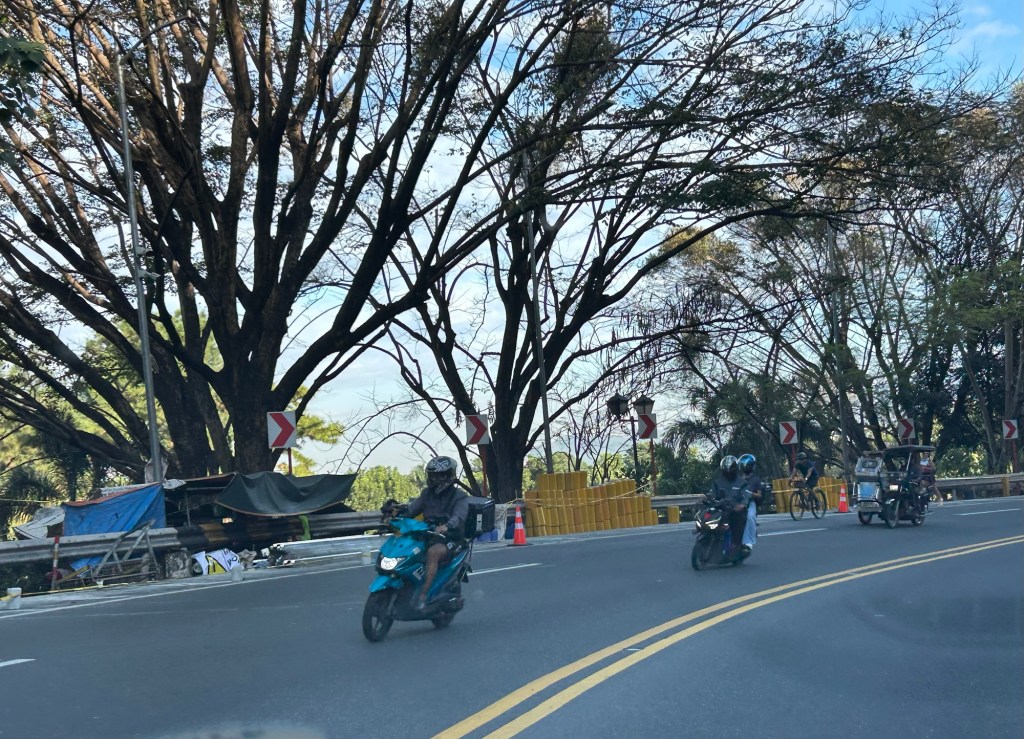
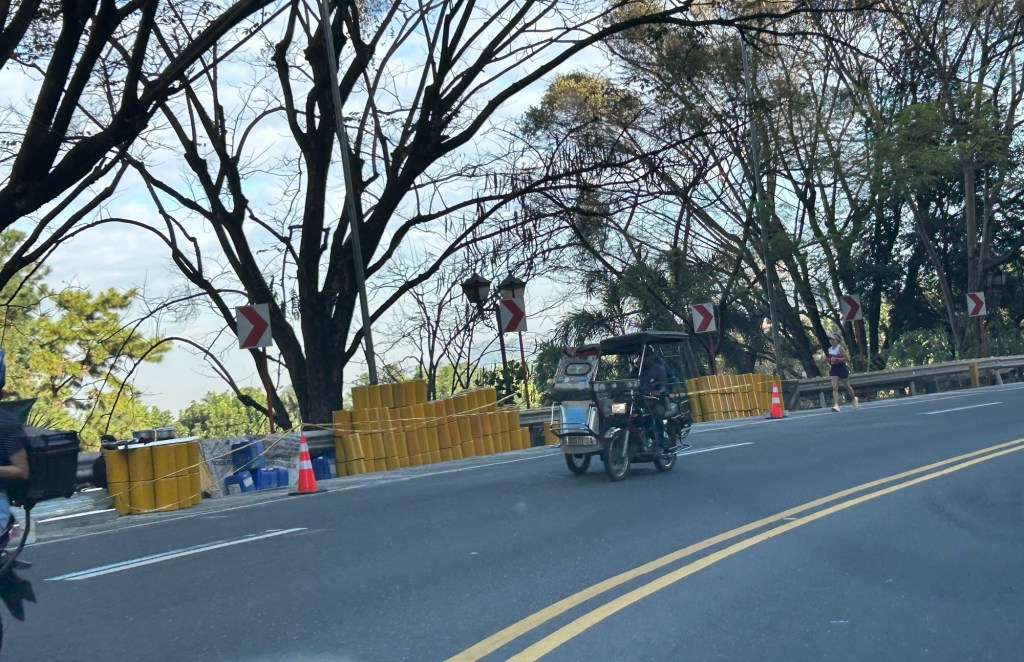
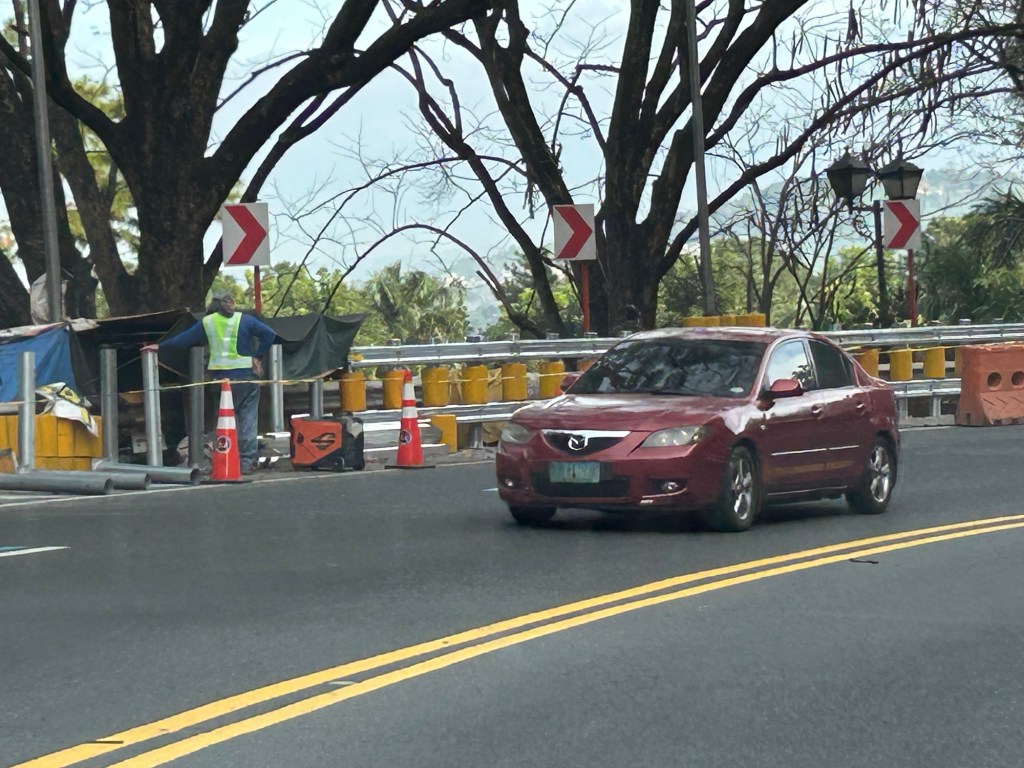
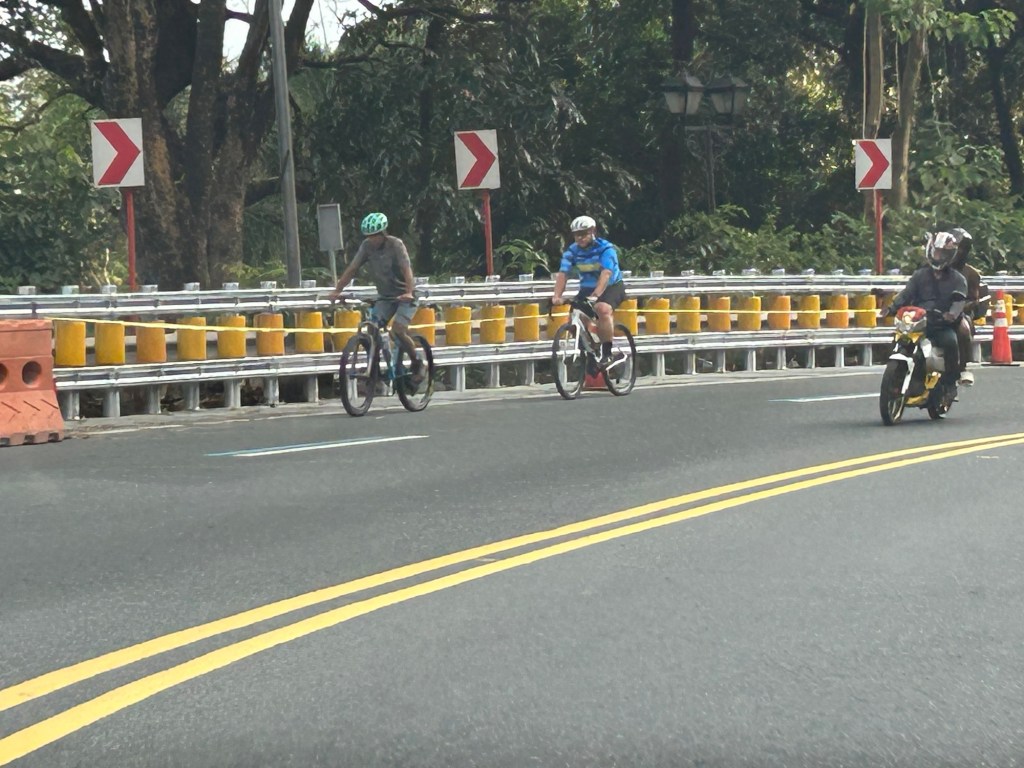
Here is a link to what these barriers are and how they help make roads safer for all users:
https://roadskyguardrail.com/what-is-a-safety-roller-barrier-a-comprehensive-guide
–
Street legal vehicle?
I saw this motorcycle being driven along the main road to the Shrine in Antipolo. It seems more like a toy than a mode of transport. Say what you will about people’s right to transportation but it is a risky mode to use as the user can be invisible to most motorists. And I’m talking about jeepneys, buses and trucks. Huwag na lang mga SUVs and cars since the mere mention of these trigger the “car-centric” reactions.
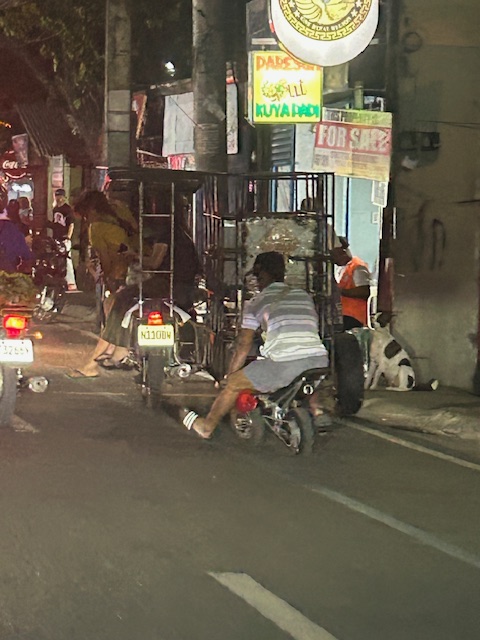 Rider seemed to be struggling with balancing on this “toy” transport. You can compare the rider to the trike in front of him.
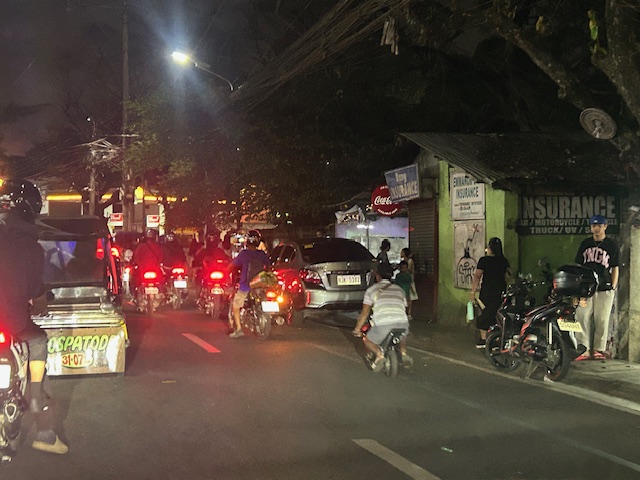 The rider and the vehicle in mixed traffic
I don’t think these can be classified as micromobilty. It would be a stretch. A colleague says these mini motorcycles are actually used for racing. We should draw the line between what is safe and unsafe given the conditions and situation along our streets rather than what is declared as the desired conditions. It is better to err on the side of safety rather than push for advocacy that will lead to road crashes involving these vehicles and their riders.
–
Traffic calming devices in the vicinity of schools – speed tables
Traffic calming devices are an effective means to reduce speeds especially where there are many pedestrians crossing the streets. These are usually applied near schools where there are significant numbers of pedestrians, particularly schoolchildren. Following are examples of raised crossings or speed tables located at the approaches and exits of an intersection in Naga City. These are located at the intersection of J. Hernandez Avenue and P. Burgos Street. Burgos leads straight to the main gate of the University of Nueva Caceres. However, there is no raised crossing for Burgos. There are only those for both legs of Hernandez.
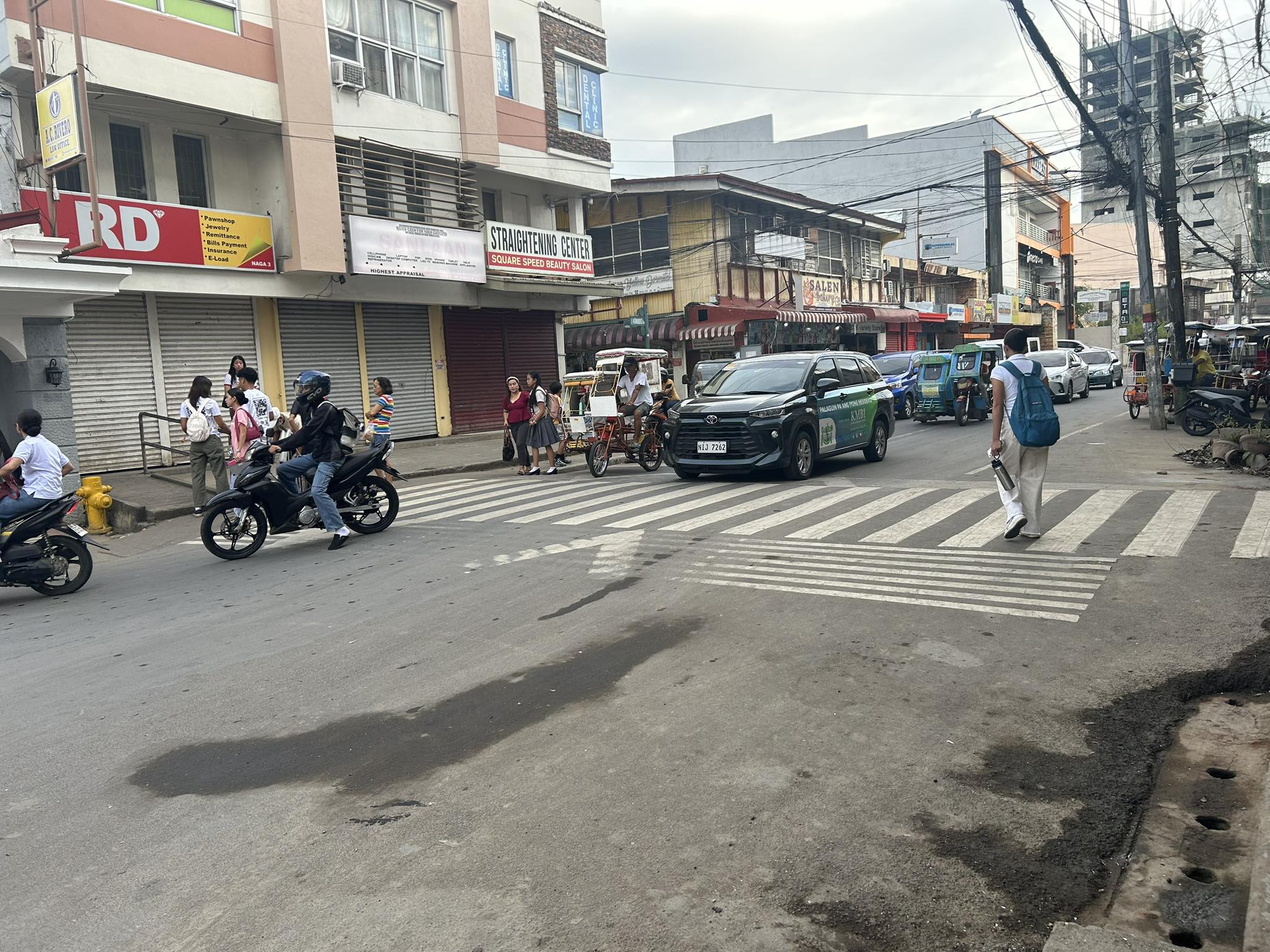 Speed table along north approach of J. Hernandez Avenue
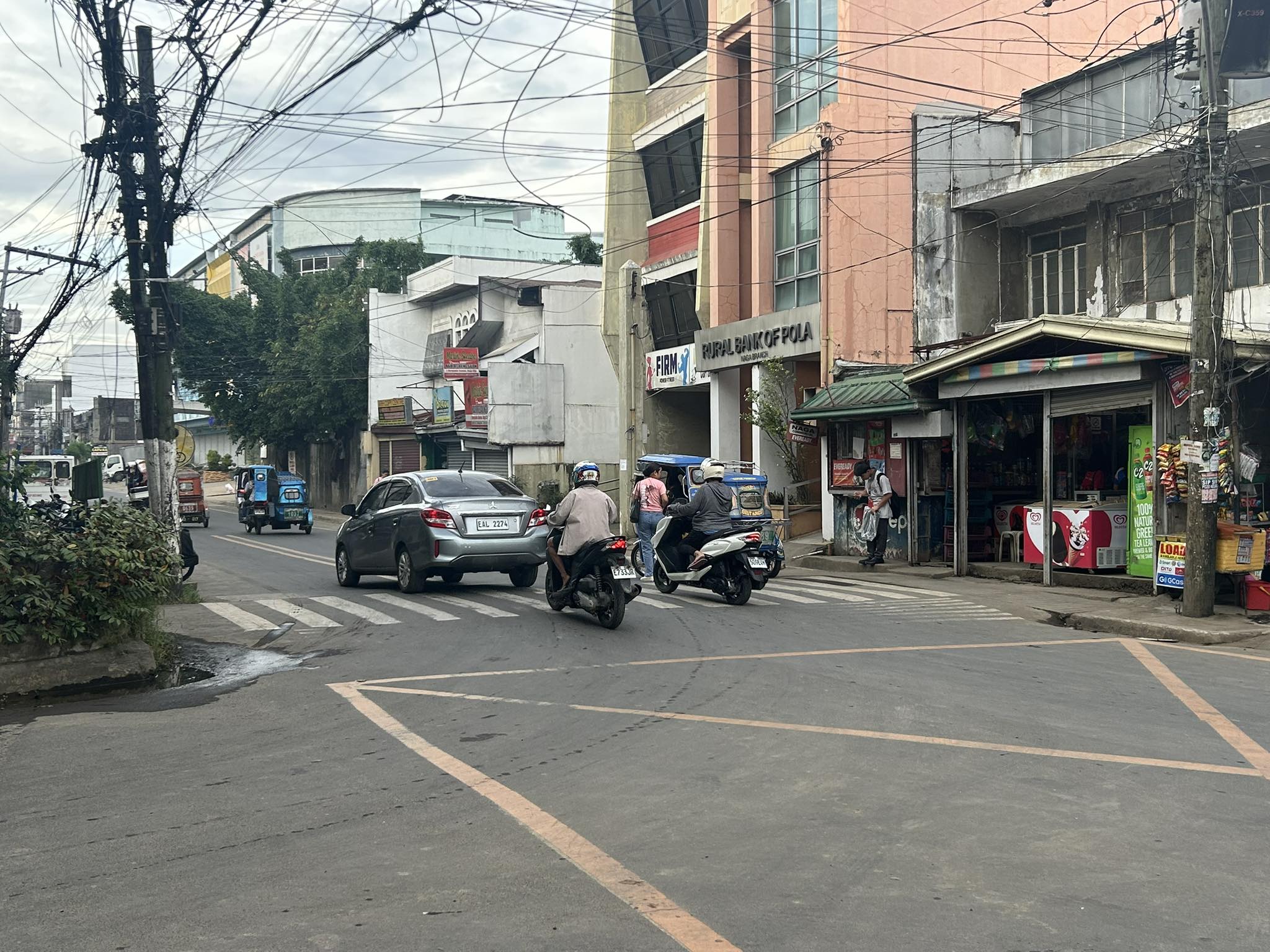 On the other side, there is another raised crossing along J. Hernandez Avenue.
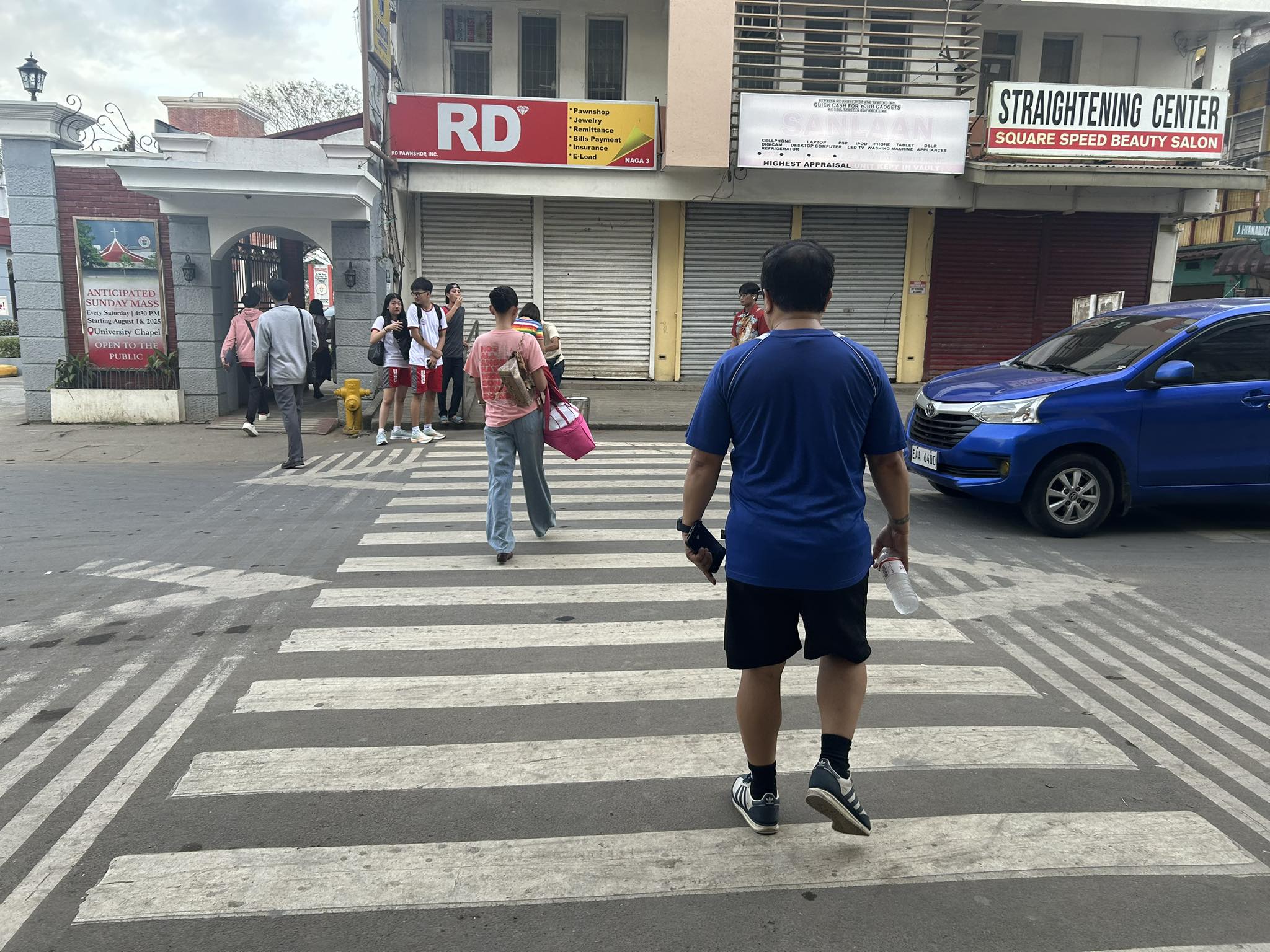 POV of a pedestrian crossing at the speed table towards the UNC main gate (to the left in the photo).
There is a need to have these traffic calming devices in other locations across the city and particularly near schools where crossings are located and vehicle speeds need to be reduced. There should be no exceptions for the application of traffic calming. That includes national roads along which certain agencies like the DPWH like to maintain higher speeds despite the obvious risks posed on pedestrians. Many schools are located along national highways and raised crossings can be designed to reduce speeds while offering safe crossings to schoolchildren. We just have to change mindsets pertaining to safety and priorities.
–
Complicated intersections in Rizal – Tikling Junction
There are several major intersections in Rizal Province. Among them are 3 junctions in Cainta, Taytay and Antipolo – Cainta Junction (Ortigas Ave Ext.-Felix Ave), Masinag Junction (Marcos Highway-Sumulong Highway), and Tikling or Kaytikling Junction. The first two are signalized intersections. The last one is supposed to be a roundabout. All three are problematic in various ways and have been associated with congestion along the major roads intersecting at these junctions.
Tikling is quite interesting as traffic seems to have worsened after it was set up as a roundabout. Taytay enforcers have been deployed here but they seem to contribute more to worsening congestion rather than easing it. Motorists familiar with the area will tell you that traffic is better when there are no enforcers. Unfortunately, not all motorists here are from the area or are familiar with the rules for navigating or positioning at a roundabout. And so the intersection is often constricted with vehicles whose drivers and riders don’t practice courtesy.
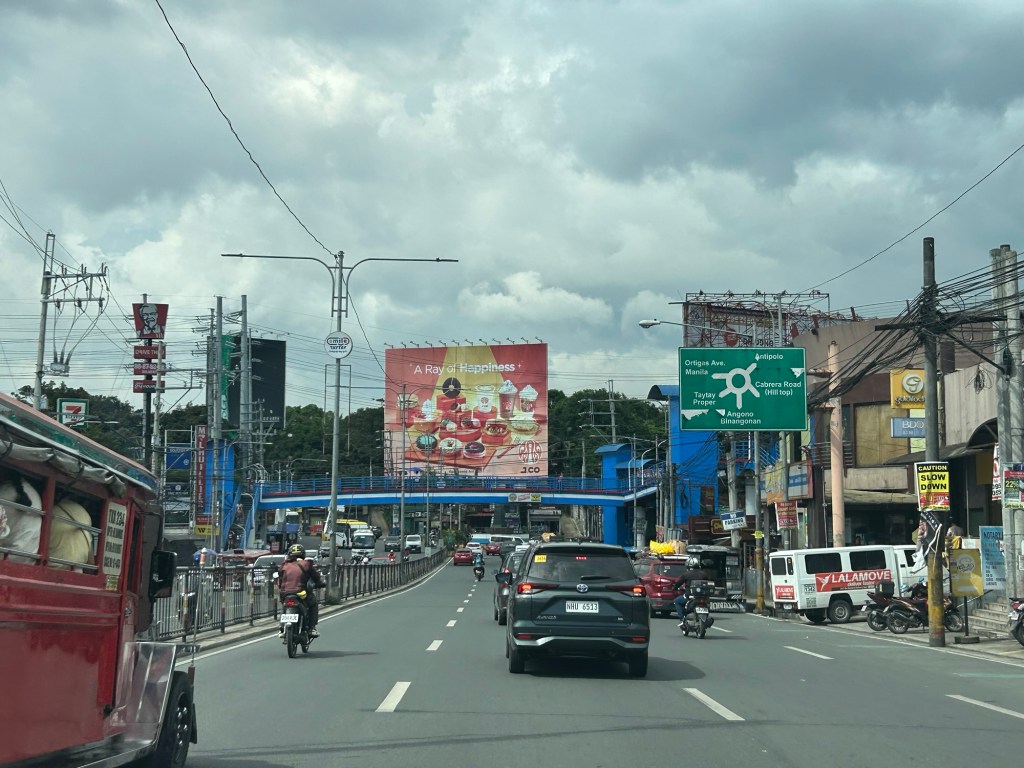
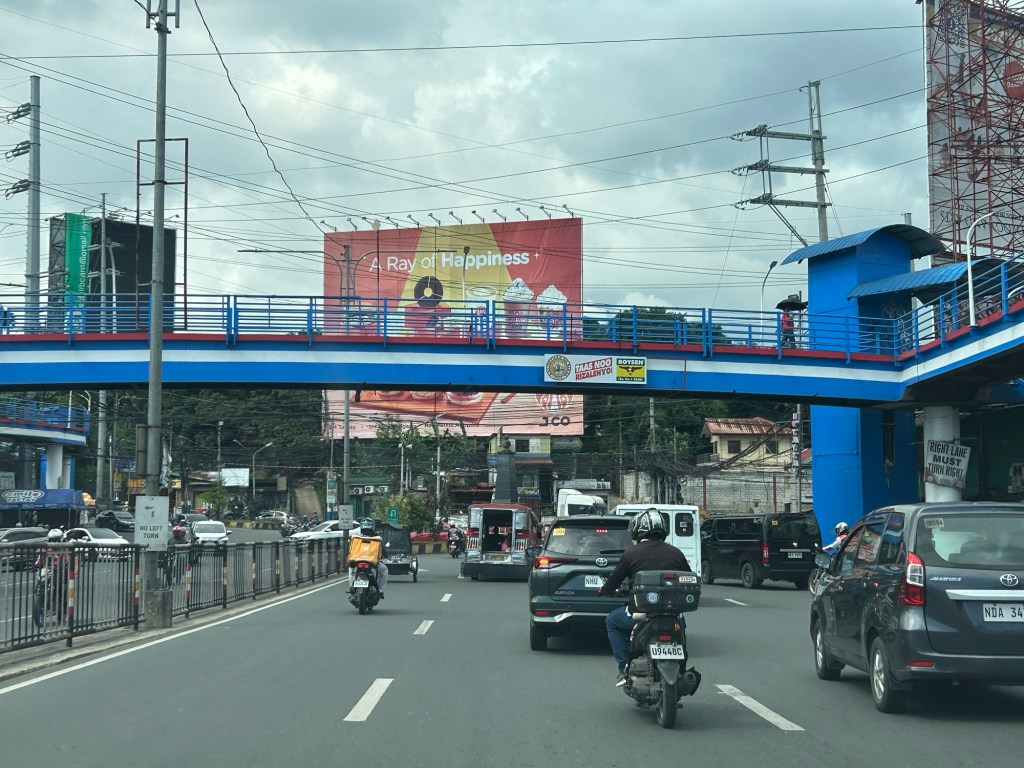
Perhaps a combination of geometric improvements and more clever enforcement/management can improve intersection performance?
–
Senseless road crashes
My staff shared the following cctv footage of a recent road crash along C.P. Garcia Avenue just across the College of Science Complex in UP Diliman. The videos show two vehicles colliding along the road at nighttime. This is usually a busy road with traffic to and from Katipunan, mostly comprised of travelers associated with the schools I the area.
https://www.facebook.com/share/v/17MPeJnrCk/
The black SUV appears to be speeding and suddenly veered towards the opposing lane where it collided with another vehicle. It is unclear if the driver lost control of the vehicle or was aware of what he was doing. That cost 2 lives as both drivers reportedly died from the crash.
This is among those crashes that can be regarded as senseless incidents. This could have been avoided if the driver was not speeding in the first place or perhaps was not influenced by any factor like alcohol or drugs. Perhaps it’s really about the behavior of certain motorists who shouldn’t have licenses to drive in the first place? We commonly refer to them as kamote drivers or riders. The LTO should do their part in ridding the roads of these menaces.
–
On roundabouts and how they can improve safety at intersections
Roundabouts are perhaps something that should be considered for Philippine roads. The concern, however, is that Philippine drivers don’t know how to navigate or position themselves in roundabouts. And the results as we have seen in several cases are congested roundabouts or rotundas.
AASHTO (September 26, 2025) “State DOTs Highlight How Roundabouts Improve Safety,” AASHTO Journal, https://aashtojournal.transportation.org/state-dots-highlight-how-roundabouts-improve-safety/%5BLast accessed: 10/19/2025]
To quote from the article:
“To highlight the safety benefits of roundabouts, the Ohio Department of Transportation recently released an analysis of crash data from 76 intersections statewide that had been converted to roundabouts. That analysis indicated single lane roundabouts decreased injury crashes by 69 percent while multi-lane roundabouts resulted in a 25 percent decline.”
And here another quotable from the same article:
“For us, it’s simple. Roundabouts remove cross-traffic turns and eliminate T-bone crashes, while improving traffic flow,” said PennDOT Secretary Mike Carroll …”“Any design that dramatically reduces the most serious crashes we see on the road is worthy of consideration in our projects.”
The article also includes a YouTube video on traffic circles.
–
 Caught (up) in traffic