
Home » Posts tagged 'road safety' (Page 4)
Tag Archives: road safety
Sharing the road with persons with disabilities
The wife took this photo as we were turning at the roundabout at Tikling Junction in Taytay, Rizal. I just wanted to share this here for everyone’s awareness that there are those of us traveling who have certain disabilities that may not be so obvious. We probably see people on wheelchairs or special vehicles like those you’d find along Cainta roads especially near or in the vicinity of Tahanang Walang Hagdanan. And then there are those with PWD stickers on their motor vehicles. But are we aware and sensitive to the needs of others like this deaf cyclist? There should be policies to ensure their safety as they should be able to travel for whatever purpose they may have similar to our senior citizens and children who are among the most vulnerable road users. And drivers and riders should have the training and the empathy to share the road with them.
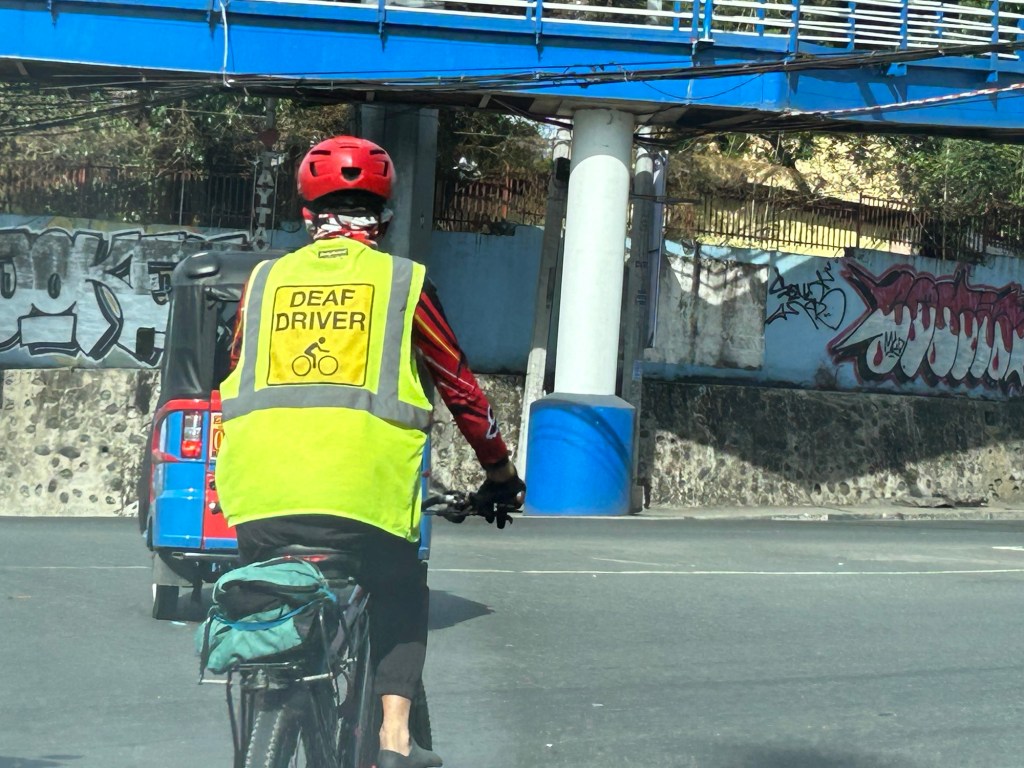 Deaf rider along Tikling Junction, Taytay, Rizal – not all would probably have a vest like this and motorists likely would be oblivious to their situation. There will also be pedestrians with similar circumstances who have natural disabilities. Irresponsible would those who are “deafened” by their gadgets like those wearing earphones or headphones while riding or walking.
 –
On transportation and global health – article share
I was supposed to write about the keynote lecture delivered during the 30th Annual Conference of the Transportation Science Society of the Philippines (TSSP). I am sharing instead an article written by Dr. Renzo Guinto who is an Associate Professor at the SingHealth Duke-NUS Global Health Institute based at the National University of Singapore.
Here is the link to his article on the Philippine Daily Inquirer: Health at the center of transport and mobility
I will not quote from the article and leave it to my readers to read and appreciate the articles content.
–
Foggy roads – Part 2
This is supposed to be a follow-up to the post on foggy roads in Tagaytay last month. Unfortunately, I could other things came in the way of finishing this Part 2. Intersections can be quite dangerous if all approaching one have limited visibility. Add to that the flaws in intersection geometry that may contribute to it being risky to travelers. Following is an example along the Tagaytay-Calamba Road with an intersection with Belleview Drive, which is the main access road to Tagaytay Highlands.
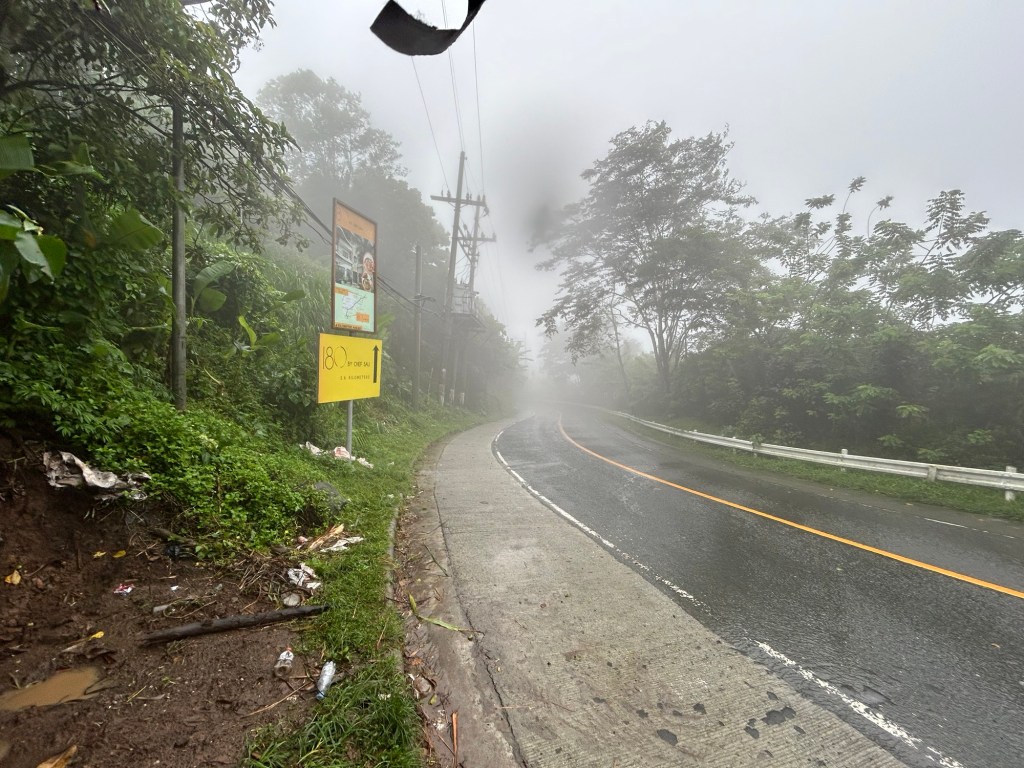 The approach from Tagaytay features a curve. I didn’t notice any streetlights along the road so I can imagine it must be poorly lit at night. What more if there is a thick fog in the area?
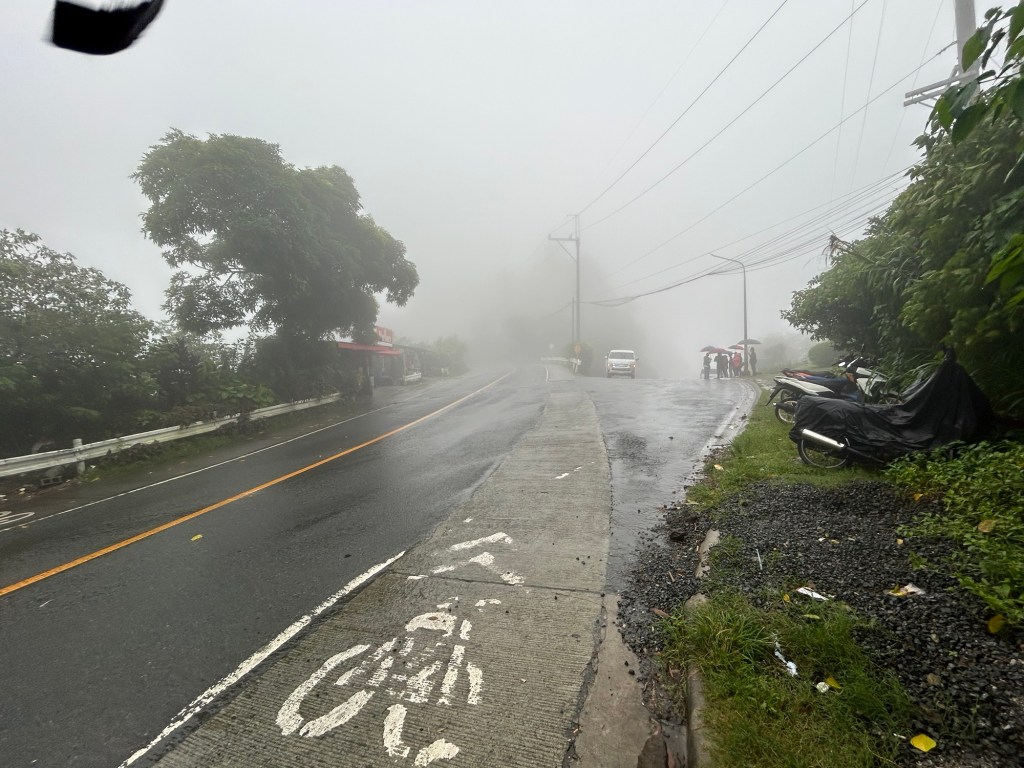 The bike lane is a product of the government’s efforts to come up with a bike lane network along national roads during the pandemic. This is actually the shoulder painted to become a bike lane. This is the view of the intersection approach if you’re coming from Tagaytay. The leg to the right with the people with umbrellas is Belleview Drive and towards Tagaytay Highlands. You can easily miss this if you were not familiar with the area and cruising along the highway. Note the thick fog obscuring your vision of the intersection. The curvature to the left also adds to the complex situation.
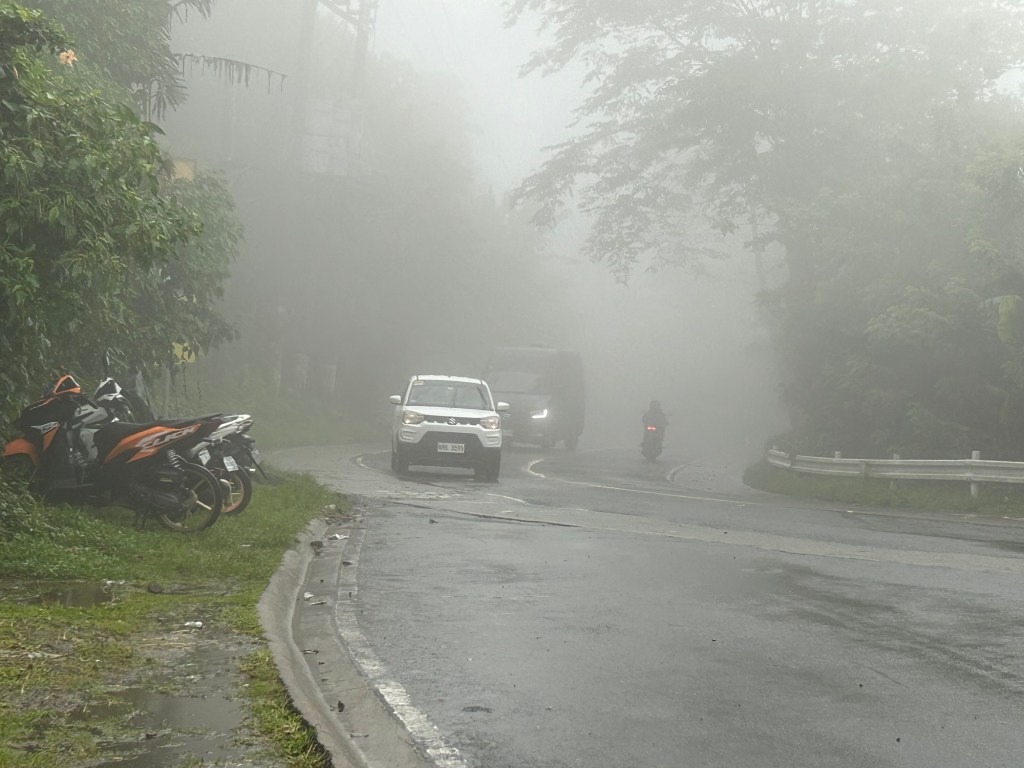 This is a closer look at the highway approach from Tagaytay taken a few minutes after I took the first photo in the article. Note the fog quickly setting in and the limited visibility. The motorcycle moving away from us would disappear into the fog. This is during the daytime and supposedly in broad daylight. Vehicles would need to turn on their lights so others may see them on the road.
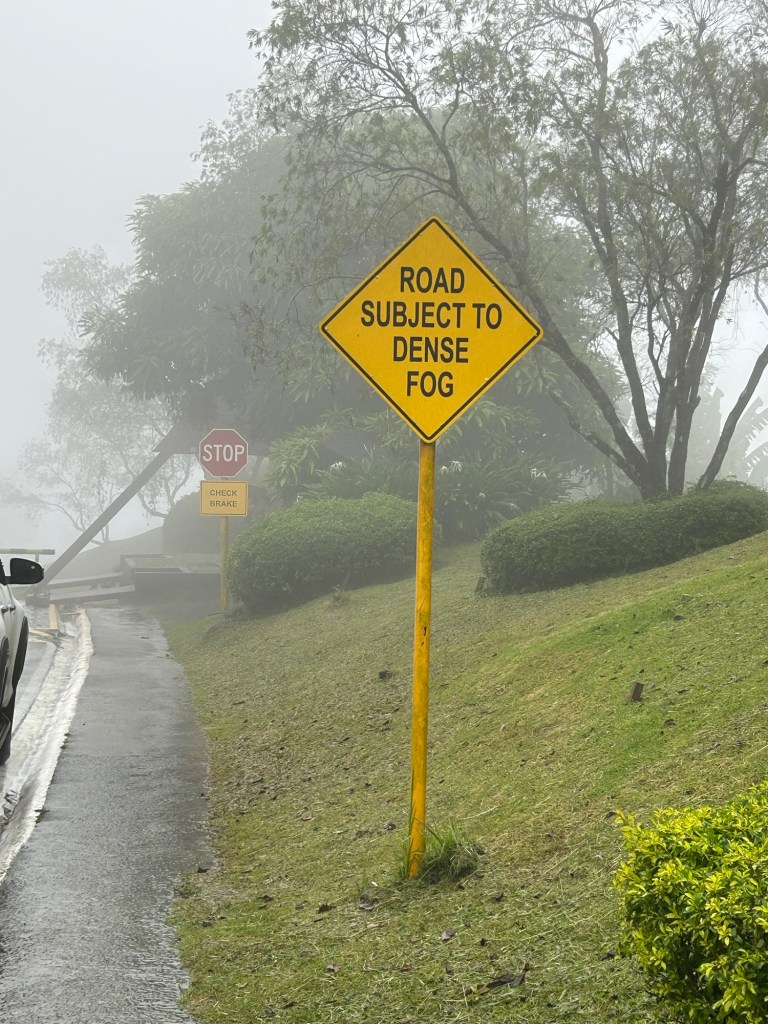 The sign along Belleview Drive states the obvious. There should be more signs like this located strategically along the Tagaytay – Calamba Road and others usually cloaked in the fog we experienced in Tagaytay recently.
I assume there would be similar situations elsewhere including in Baguio City. We also experienced fog (not smog) in Antipolo but these were quick to dissipate unlike the ones in Tagaytay and Baguio.
–
Technical sessions at the TSSP 2024 Conference
I am sharing here the latest draft of the technical sessions for the 30th Annual Conference of the Transportation Science Society of the Philippines (TSSP). The conference will be held in Iloilo City this coming September 13, 2024.
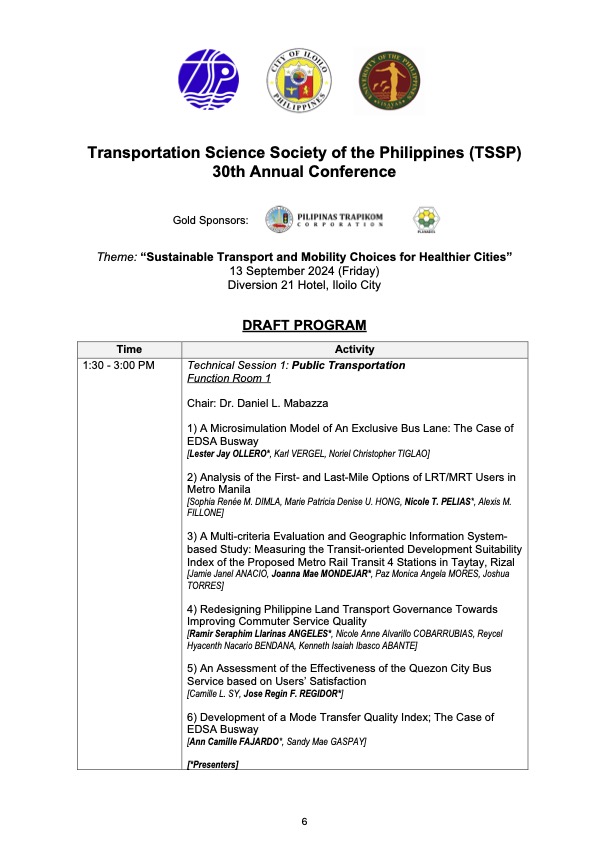
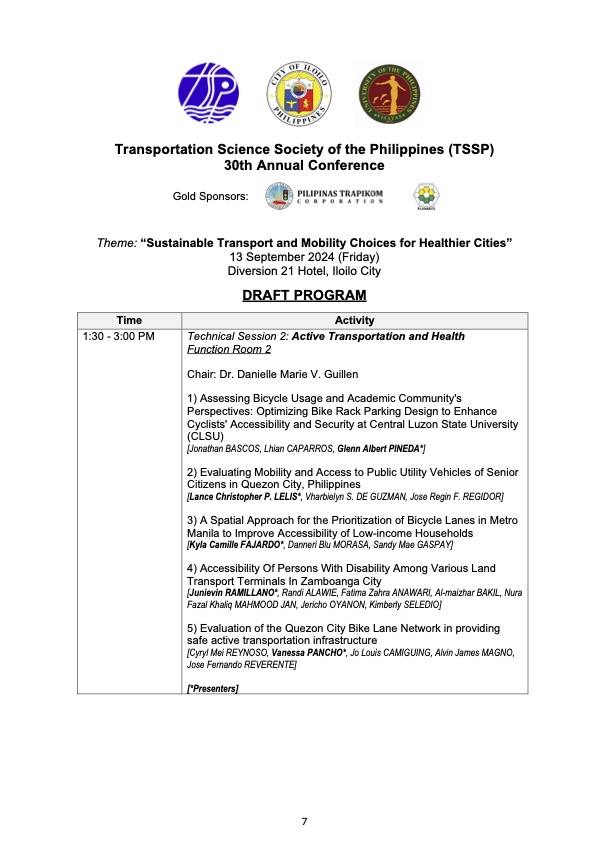
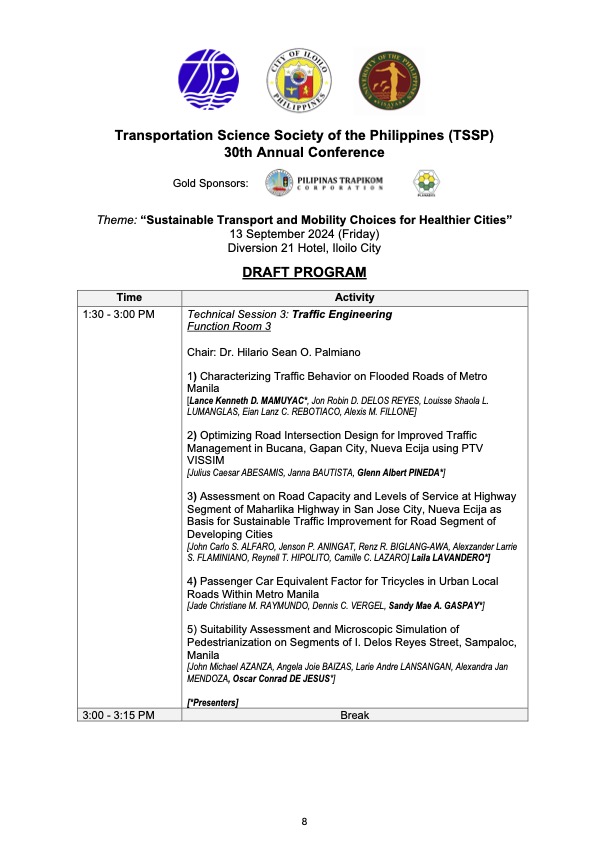
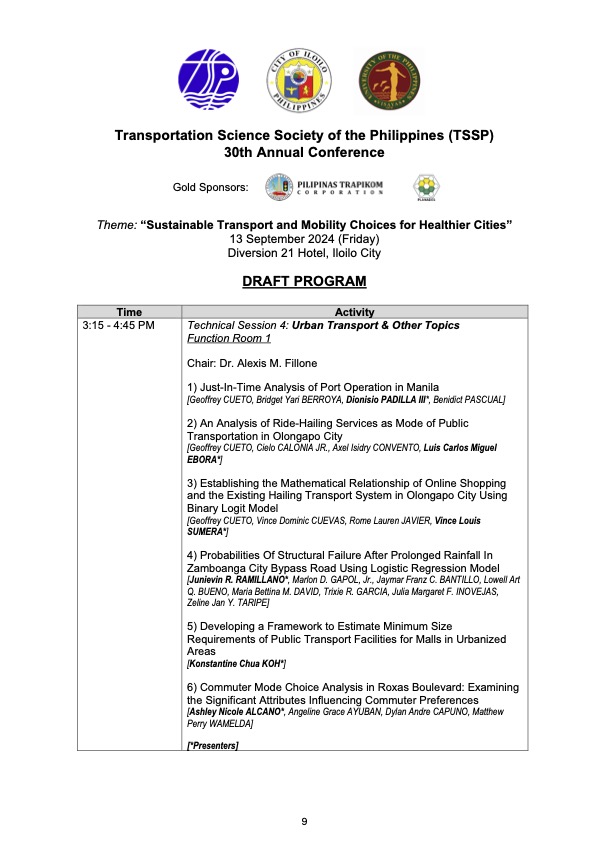
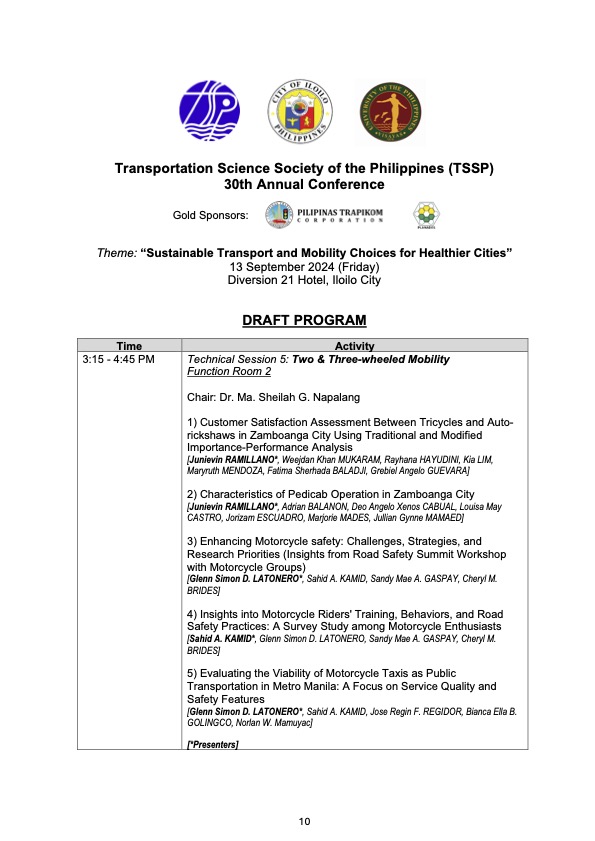
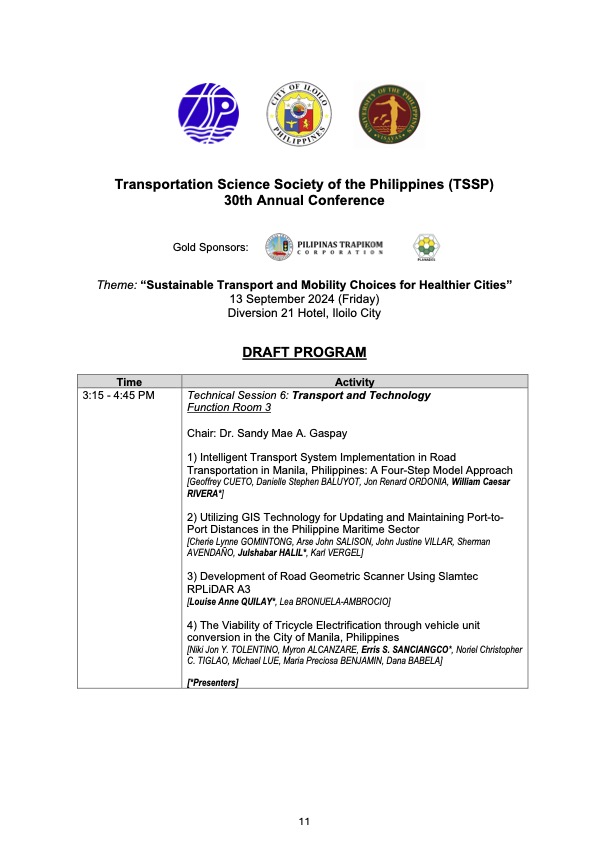
I will share the draft program for the morning plenary session in the next post.
–
Foggy roads in Tagaytay – Part 1
It’s been a while since the last time I was in Tagaytay. We used to go there at least once a month. Eventually, we grew tired of the traffic and the city becoming quite crowded. Of course, our schedules also became more busy so the drives for a weekend getaway turned into trips for music lessons (for our daughter) and meet-ups with friends. It was a welcome return last July when I had to go to Tagaytay Highlands for a meeting and then join up with our college for a workshop on the other end of the city. Here are some photos of the foggy roads that reminded me of the Tagaytay of old.
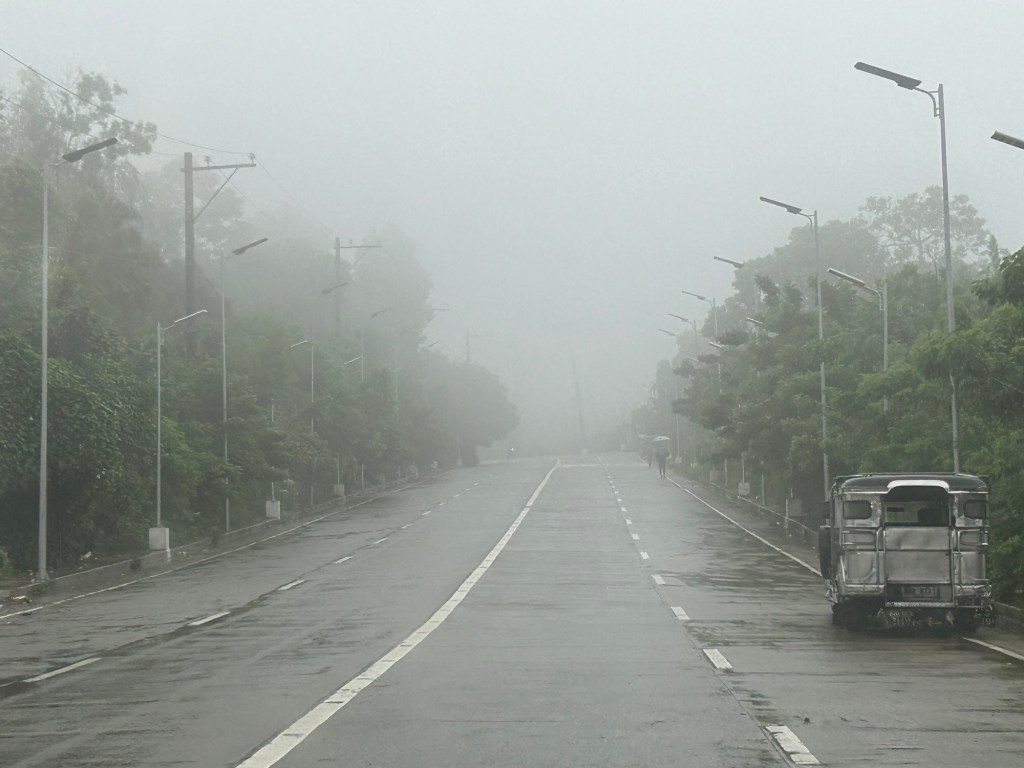
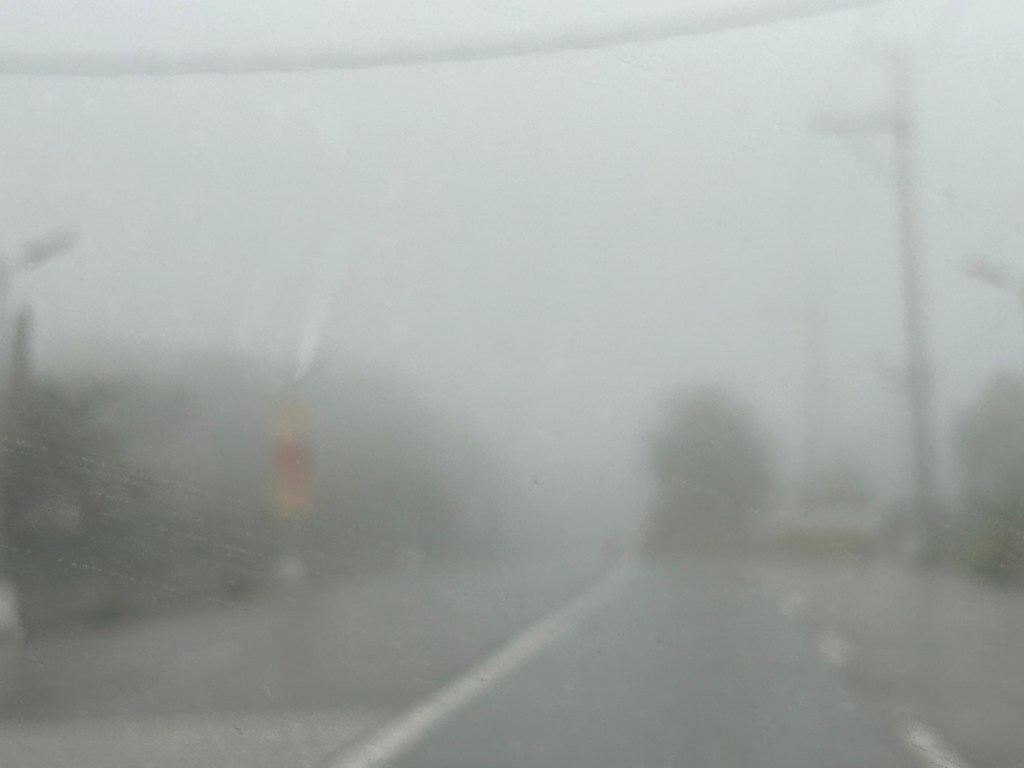
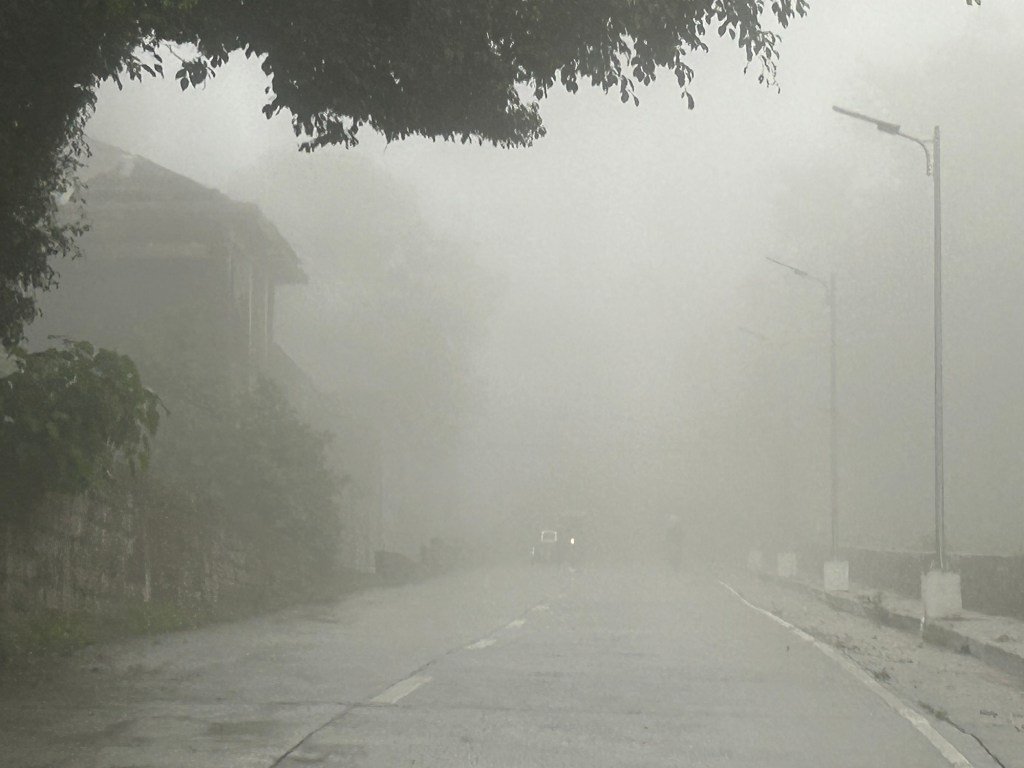
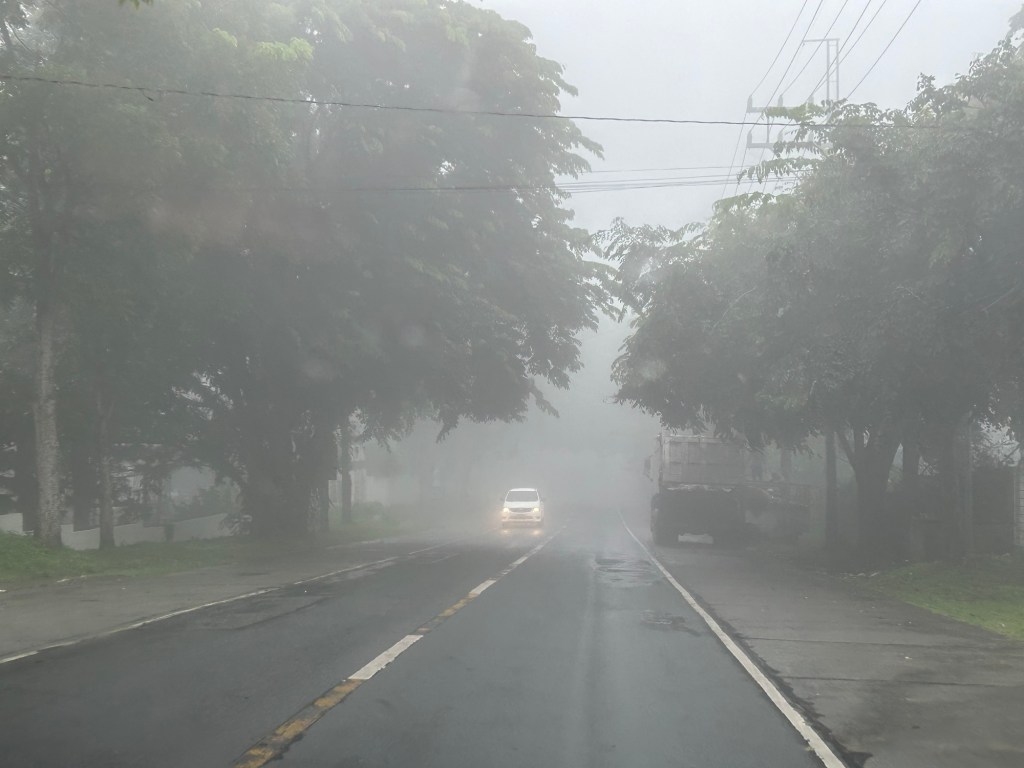
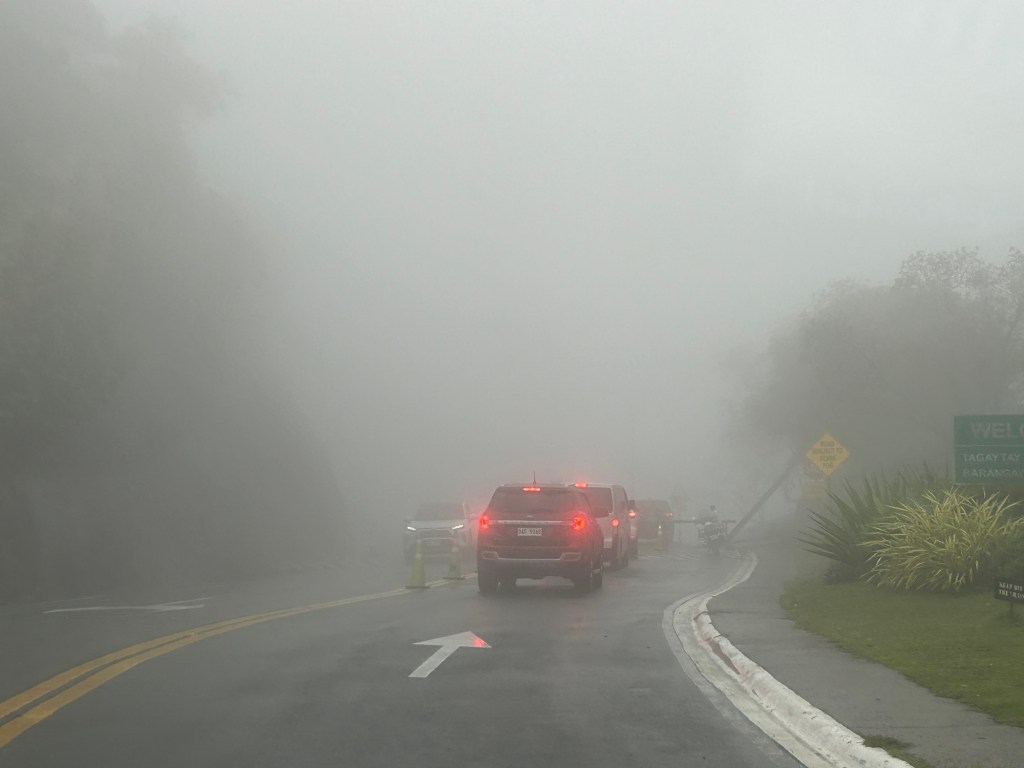
More photos of the foggy roads in the next post!
–
Article share: Applying the New Traffic Safety Paradigm
Here is a quick share of an article on traffic safety from Todd Litman of the Victoria Transport Policy Institute. Source: Applying the New Traffic Safety Paradigm
In the article, the author discusses the use of ‘exposure’ as a measure of risk in as far as safety is concerned. The variable ‘vehicle miles traveled’ or in our case ‘vehicle kilometers traveled’ may be considered a risk factor. That is, higher or more VMT or VKT may lead to more crashes and casualties (and additionally damage to property). The objective is to reduce VMT or VKT in order to improve traffic safety.
To quote from the article:
“The new traffic safety paradigm recognizes the additional risk resulting from increases in low-risk vehicle travel and so favors strategies that reduce total vehicle-miles such as improved public transit services with free service for students, efficient school parking pricing to discourage driving, and more compact communities that reduce distances between homes and schools. In addition to reducing traffic risk these strategies also reduce household costs, traffic congestion and pollution problems making them win-win solutions. “
–
Article share: Planners’ Complicity in Excessive Traffic Deaths
Here is a recent article on safety and the involvement on traffic engineers from Todd Litman:
Source: Planners’ Complicity in Excessive Traffic Deaths
Let me note here about the interchangeability of the terms ‘traffic engineer’, ‘transportation engineer’ and ‘planner’. This is important to contextualize who is actually complicit or involved or responsible particularly in the Philippine setting. Too often and too quickly, traffic engineers or even civil engineers (in general) are blamed for traffic deaths or flaws in road designs. Disregarded is the fact that, as the article mentions, of the two major elements of travel – distance and speed – distance is often determined by the plans and designs of non-engineers. These are planners, or to be accurate land use planners, many of whom are architects by profession. We also want to differentiate between traffic engineers and highway engineers, who in the Philippine setting are actually quite different. One common thing about many of them is that they are slow to adopt progressive ideas or concepts of road planning and design such as complete streets and road diets. The outcome of this stubbornness is the specter of road crashes that lead to fatalities and serious injuries. But then they are not solely to blame or who should take responsibility for the atrocious road safety situation. The ‘distance’ component of travel is very much a product of land use planning and land development as practiced in our country. For many if not most developments, architects and planners are the ones who call the shots for the roads and transportation in the proposals. Traffic engineers are involved later and if not progressive complicates the situation regarding safety. Thankfully, some local government units are becoming progressive and are more mindful of development proposals including implications to road safety. Hopefully, many things will change among those involved so we can improve travel safety.
–
On the impact of bike lanes on motor vehicle traffic
With the news that bike lanes will be removed along major roads including, most recently, I share some findings from the US about a decrease in traffic speeds when there are protected bike lanes. The decrease in speeds are associated with a reduction in road crashes, ergo safer streets.
McPherson, K. (June 3, 2024) “Traffic Speeds Decrease When Bike Lane is Present,” Rutgers.edu, https://www.rutgers.edu/news/traffic-speeds-decrease-when-bike-lane-present [Last accessed: 6/8/2024]
To quote from the article:
“They found that the presence of the delineated bike lane made a difference: a 28 percent reduction in average maximum speeds and a 21 percent decrease in average speeds for vehicles turning right. For those heading straight and not turning, a smaller speed reduction of 8 percent was observed. In addition, drivers moving at a perpendicular angle to the bike lane did not slow down.
Marking the bike lanes with cones as a clearly delineated space was more effective at reducing speed than a painted-only bike lane. The painted-only bike lane was associated with a smaller speed reduction of between 11 percent and 15 percent, but only for drivers turning right.
Younes hypothesized that drivers slow down when they see a bike lane marked with the cones because the driving lane is narrower and requires more concentration, and it’s easier to notice cones or planters or some other space delineator than it is to spot painted lines on the road surface.”
Of course, one major element that was probably not considered in their studies is the presence and behavior of motorcycle riders. Motorcycles here frequently enter and use bike lanes whether protected or not. Often they crowd out bicycle users leading to situations where riders of motorized and non-motorized 2-wheelers come into conflict. Still, it would be nice to have a study to determine not just whether there are similar outcomes here but to what extent as well as how motorcycles figure in the study.
–
Safety or speed?
We start June by sharing a video on why safety and vehicle speed are incompatible:
I saw this video while browsing an article on “Dangerous by Design”. The article discusses a new publication where road designs are evaluated from the perspective of safety. Most of our roads have been designed with speed in mind. That is, how to facilitate the movement of motor vehicles to ensure they travel faster. Forgotten or, even worse, disregarded is the most important element of safety. Why do we widen roads or insist on higher speeds in populated areas or school zones? Such questions are not addressed directly or not answered at all by agencies in charge of planning, designing, constructing and maintaining roads and bridges. The same is true for agencies or units in charge of traffic regulations or management. The result not surprisingly is an increase in the number of road crashes, fatalities and injuries due to our roads being ‘dangerous by design’.
–
On non-roadway traffic deaths and incidents
I found this interesting article about non-roadway crashes or incidents that may cause deaths. These are often recorded in buildings including parking lots or facilities but are not generally collected and reported by governments as part of road crash data.
Wilson, K. (April 18, 2024) “Why Does the Vision Zero Movement Stop At the Edge of the Road?,” Streetsblog USA, https://usa.streetsblog.org/2024/04/18/why-does-the-vision-zero-movement-stop-at-the-edge-of-the-road [Last accessed: 4/28/2024]
From the article:
“According to the latest report from the National Highway Traffic Safety Administration, a shocking 3,990 people died in car crashes that occurred outside of the traditional transportation space in 2021, the last year for which data is available. One-quarter of those people were outside vehicles, including, pedestrians, cyclists, wheelchair users, and even children simply wishing their parents goodbye before they were accidentally run over by the caregivers who loved them most; all lost their lives after they were struck by drivers on private property, like parking lots, driveways, drive-thrus, and private roads.”
These crashes very likely contribute to under-reporting. One wonders, for example, how many incidents occur in mall parking lots, schools and subdivisions. Recall the incident in Ateneo years ago when a child got ran over and killed as students were being dropped off in the morning. Surely there are other incidents though not involving deaths, and these need to be recorded among traffic incidents. The deaths need to be included in the reports. These are important information to complete the picture of road traffic safety in any country including the Philippines.
–
 Caught (up) in traffic