
Home » Posts tagged 'sustainable transport' (Page 7)
Tag Archives: sustainable transport
Electric vehicle deployment in the Philippines
Electric vehicles have been around in the Philippines for quite some time now. Most of these have been electric 2- and 3-wheelers with electric tricycles or e-trikes being the most visible. Of course, there are also electric 4-wheelers in the form of jitneys or e-jeeps. The electric vehicle wave has not caught on with private transport with the exception of those who bought electric scooters or motorcycles (but these are few and are not in significant numbers compared to those using conventional motorcycles).
The following map from the Electric Vehicle Association of the Philippines (EVAP), the organization of e-vehicle manufacturers, importers and advocates in the country. It shows where electric vehicles are operating, what kind of vehicles and the manufacturer for the model in use in those places.

This is not a comprehensive rendering of the presence of e-vehicles throughout the country as there are also e-trikes and e-jeepneys in many other cities and towns as well. Perhaps EVAP only illustrated where e-vehicles have made significant strides or presence. I believe that with the right conditions including policies, incentives and infrastructure, e-vehicles will continue their rise among transport in the Philippines. Energy mix aside, e-vehicles have a great potential to reduce air pollution and noise, reduce fossil fuel consumption, and also has a potential to reduce road crashes. Cheaper operating costs from e-vehicles can also help increase income (i.e., take home pay) of public transport drivers and operators. It would be nice to find champions for electric vehicles in the incoming government especially from the heads of agencies like the Department of Transportation and Communications (DOTC), the Department of Interior and Local Government, the Department of Trade and Industry (DTI), the Department of Environment and Natural Resources (DENR), and the Department of Energy (DOE), among others that have a direct hand in transforming our fossil fuel dependent transport sector to an environment-friendly one.
–
Progress in promoting and realizing sustainable transport in the Philippines
There is a very good article that came out of Rappler last March 28, 2016:
Creating sustainable transport systems: PH’s progress so far
The article caught my attention as I have lost track of what should be the monitoring of sustainable transport initiatives anchored on the pillars of EST as described in the National EST Strategy and the article. The formulation of the national EST strategy started under the administration of President Gloria Macapagal-Arroyo (DOTC Secretary Leandro Mendoza) and was completed under President Benigno C. Aquino III (DOTC Secretary Jose Dela Cruz). The formulation was initiated and supported by the United Nations Centre for Regional Development (UNCRD) and is unique partly because it is the only one to be completed among similar projects across ASEAN. The other countries like Indonesia, Vietnam and Cambodia were only able to get to the baseline and consultations stages of their own national EST strategy formulations. The Philippines National EST Strategy document eventually became an input for the formulation of the National Transport Policy Framework (supported by AusAID) as well as the National Transport Infrastructure Framework (supported by the WB).
–
Electric vehicle models at the 5th Electric Vehicle Summit – Part 2
I already featured a lot of the electric vehicle models that were on display at the 5th EV Summit and this second part adds to those in the Part 1. There are some new models in the following photos including a mini-bus model that features a lot of doors and a similarly-designed jitney model. I took photos of the interiors as well to give the reader an idea of the layout of these models and perhaps imagine how they could fit as potential public utility vehicles.
 Electric minibus model
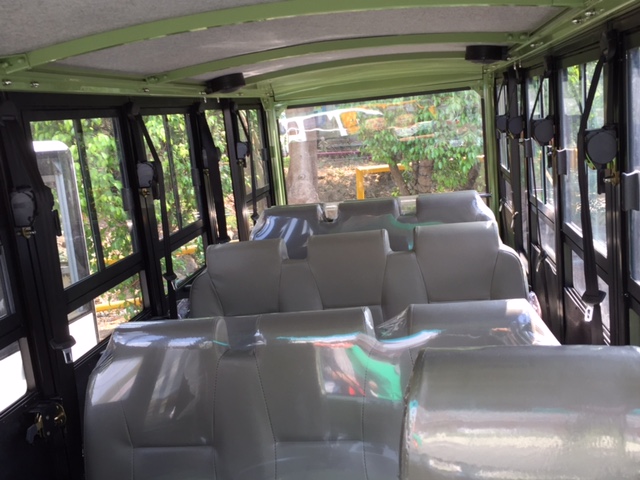 Interior of the minibus showing rows of seats
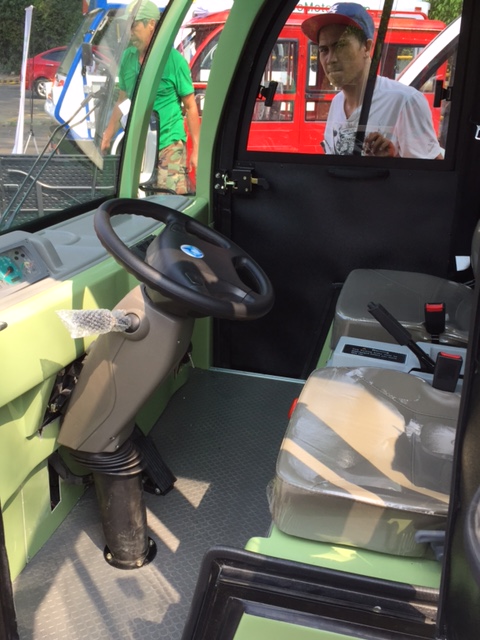 Driver and front seats
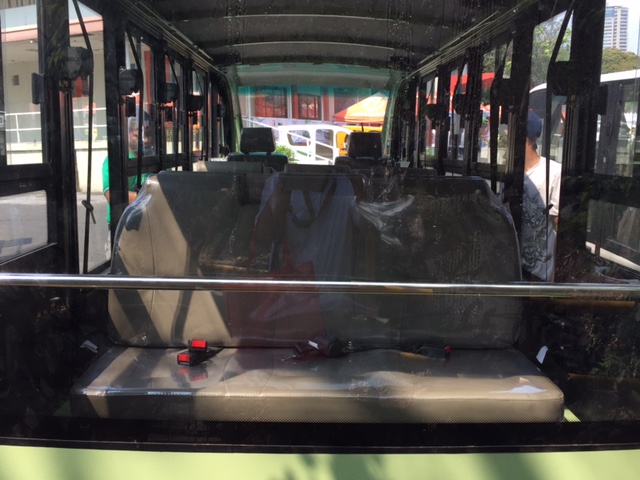 Rear seats facing the back instead of the front – the large window gives passengers a nice clear view of following vehicles, among others.
 The minibus had many doors (8 total) to allow passengers to board and alight from each row.
 Front of the mini-bus featuring a single large wiper
 Jeepney-sized version of the minibus also featured multiple side doors (6 of them for this vehicle).
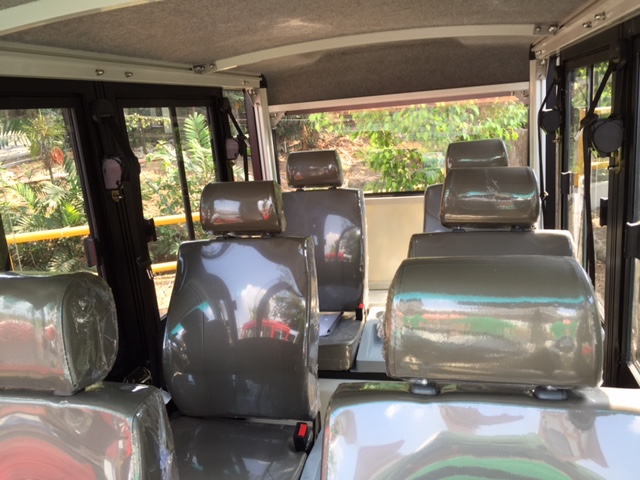 Seats inside the jitney
 Dashboard and steering wheel of the electric jitney
 Another look at the latest model of the electric jeepney
 The door is at the curbside
 Driver’s seat
 Bench seat layout for the e-jeepney
 Front view of the e-jeepney featuring a pronounced and familiar snout
 Setting up for display and demo
 Star8’s e-trike model featuring a side door instead of one at the rear
 Bench seat layout for Star8’s e-trike
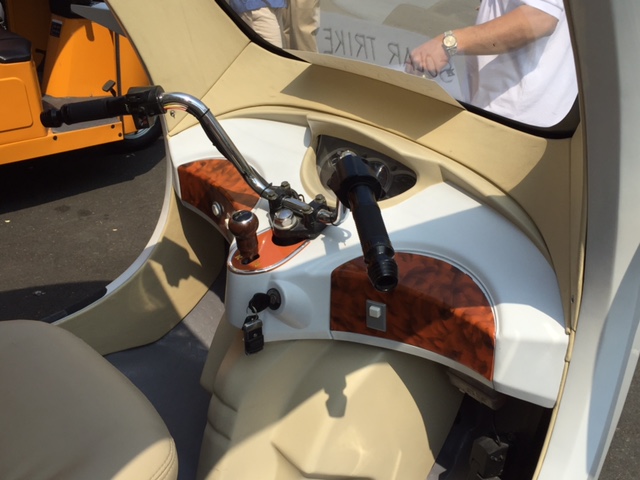 Dashboard and driver seat for the Star8 e-trike
 Star8’s tuktuk design for the e-trike
The variety of electric vehicle models and the increase in the number of industry players is encouraging. Interest in electric vehicles have steadily increased over the past half decade. Perhaps the government should have a stronger role as catalyst or enabler for this industry to flourish and perhaps transform not only the public transport scene but also for people to adopt e-vehicles for private use. This can only be done if the proper incentives are in place that include policy, fiscal and financial instruments favoring electric vehicles as well as their hybrid relatives. These will go a long way towards a low carbon transport future for the country.
–
Electric vehicle models at the 5th Electric Vehicle Summit – Part 1
The 5th Electric Vehicle Summit was held last April 14-15, 2016 at the Meralco Multi-Purpose Hall. Following are photos I took at the summit where many current electric vehicle models were on display and demonstration. Many of the photos show variants of the electric tricycle designs from various manufacturers that conform with the design promoted by the Asian Development Bank (ADB). These are basically in the form of the Thai tuktuk and similar to Cagayan De Oro’s motorella.
 Go Electric e-trike by ToJo Motors
 E-trike model by Clean Air Transport Solutions, Inc.
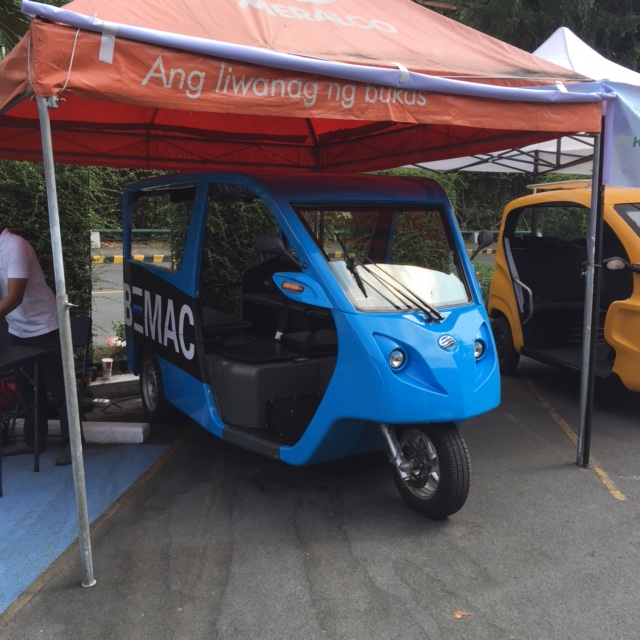 BEMAC e-trike model – the company recently landed a big contract to produce e-trikes.
 E-trike by Kyto Green Technologies Co., Ltd.
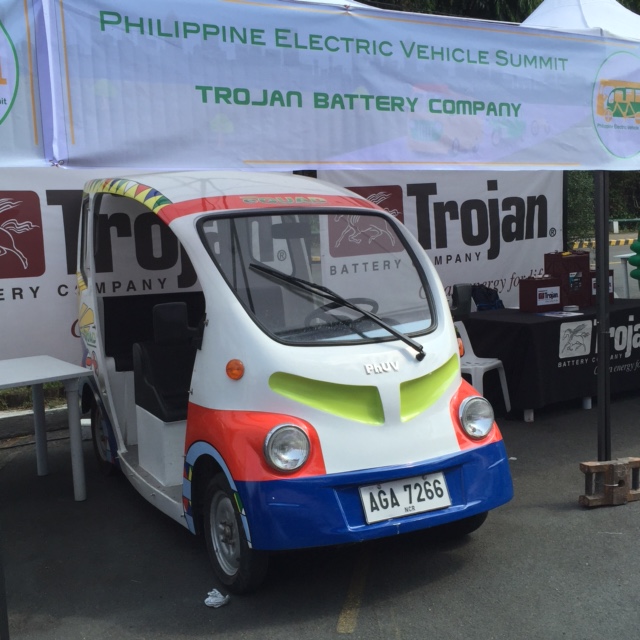 Electric car (4-wheeler) by PhUV powered by Trojan batteries
 E-trike model by Green Mobility Service
 PhUV’s e-trike variants
 E-trike and charging station by KEA
 Exhibitors setting up their booths and electric vehicles
 Conventional vehicle converted into electric by Le Guider International
 E-trikes by Guider Power
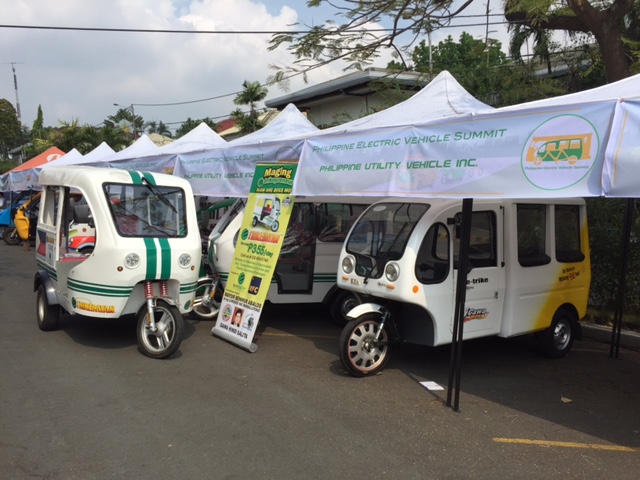 Another look at PhUV’s e-trikes
 Electric motorcycles by Alternative Energy Trailblazer, Inc.
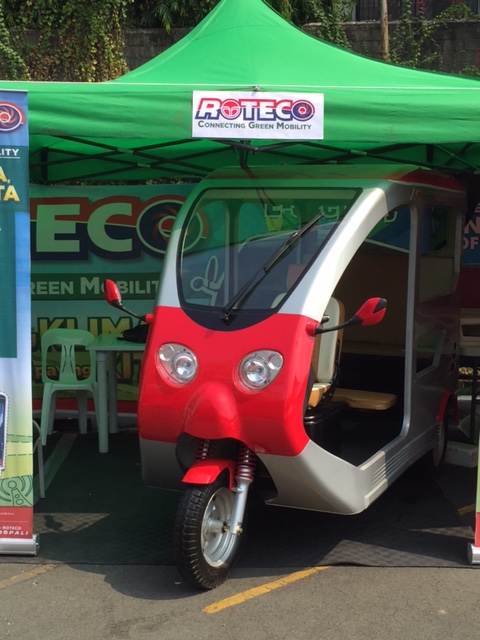 E-trike by Roteco
 SunE-trike and Roteco booths at the summit exhibition area
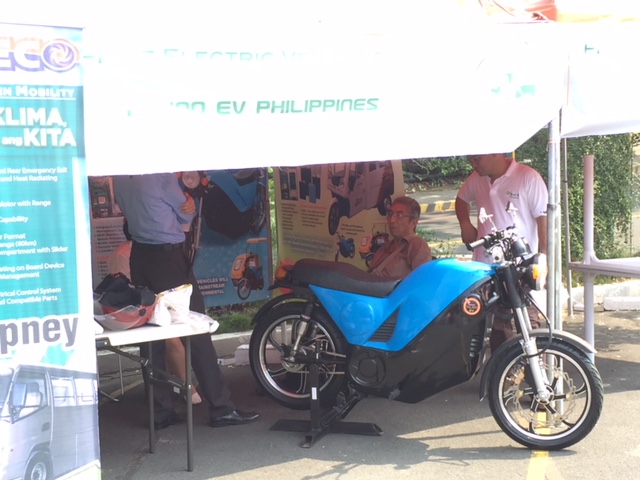 Sporty electric motorcycle model by Talino EV – this can be paired with a sidecar to serve as an e-trike.
 The ToJo Motors booth
 Electric vehicles powered by solar energy by Star8
 E-vehicle models by Clean Air Transport Solutions, Inc.
 Latest model e-jeepney by PhUV featuring side door and a higher ceiling
To be continued…
–

