
Home » Posts tagged 'traffic'
Tag Archives: traffic
On transportation and floods
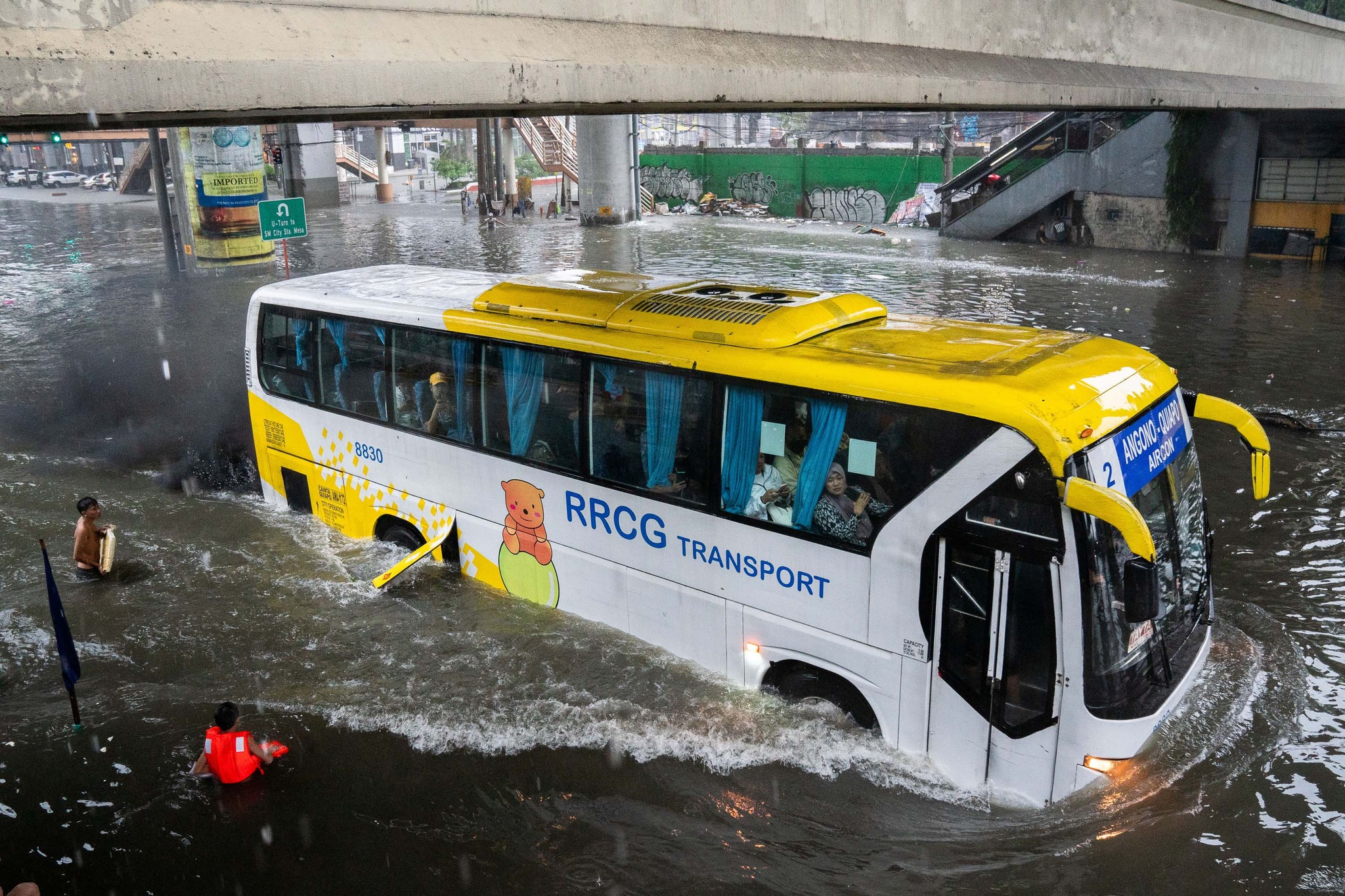
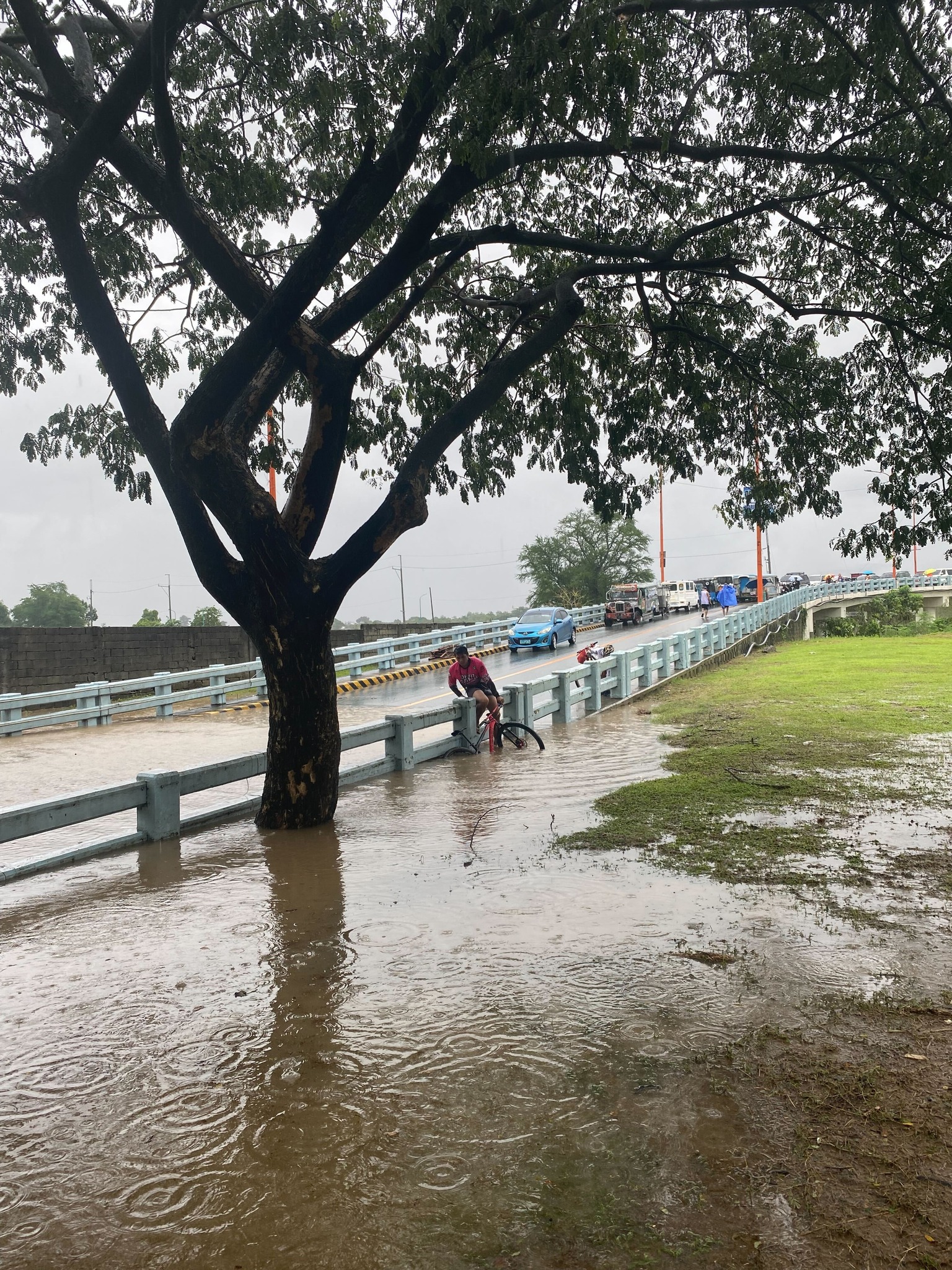
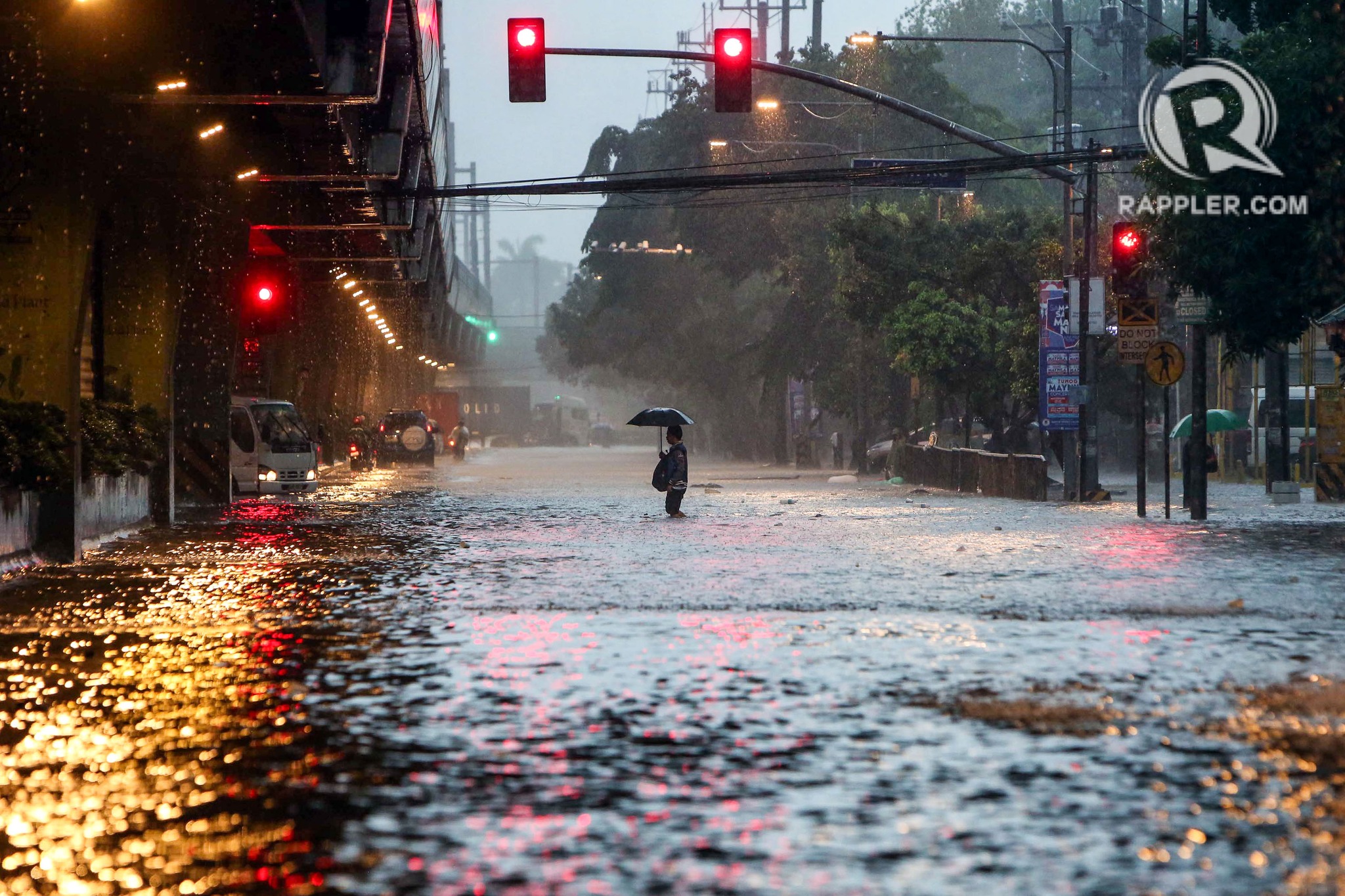
Some people say transport and traffic concerns take a backseat to floods and related concerns, which affect other aspects of our lives aside from our commutes. The heavy rains the past days have rendered many streets impassable to most types of vehicles. That means people cannot go to work, school or come home. Lives are disrupted by floods this way. But even more disruptive and disastrous are the damages brought about by flooding in many communities. Homes are submerged. Properties are damaged, many beyond repair or replacement. There is also the psychological aspect of floods especially for those who will experience them for the first time. These will surely add to the already fragile mental health of people still reeling from the effects of the COVID-19 pandemic.
As I write, the Marikina River has breached and many areas of Metro Manila and surrounding provinces of Bulacan, Rizal, Laguna and Cavite are flooded. The floods are now being mentioned along with those brought about by Ondoy (Ketsana) in 2009.
Here are some photos from the internet being shared by various social media accounts including the official pages of Rappler and Inquirer:
–
Back in Tagaytay
It’s been a while since I’ve been to Tagaytay. I think the last time was before the pandemic and with family. There used to be a time when we went there at least every month not counting the seminars and workshops we attended there. It was an easy drive from our home in Antipolo to Tagaytay via C6, SLEX and the Sta. Rosa-Tagaytay Road. We had our favorite stopovers with breakfasts usually at the Paseo de Sta. Rosa. Later, as Tagaytay became more crowded and congested, the trips became fewer. Of course, our schedules also became busier but then it wasn’t like we looked forward to the traffic and the crowded attractions there. I’m doing a project there now with my team at the office and that means I get to go there for work. Since we’ll be there anyway, we could have some side trips to eat some good meals (bulalo!) and maybe take some photos of Taal volcano.
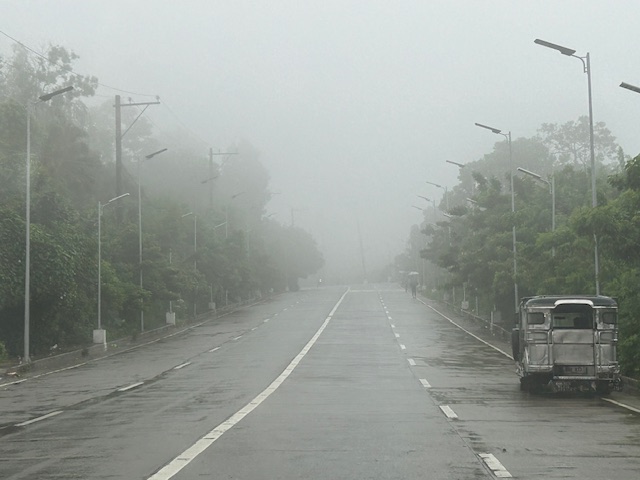
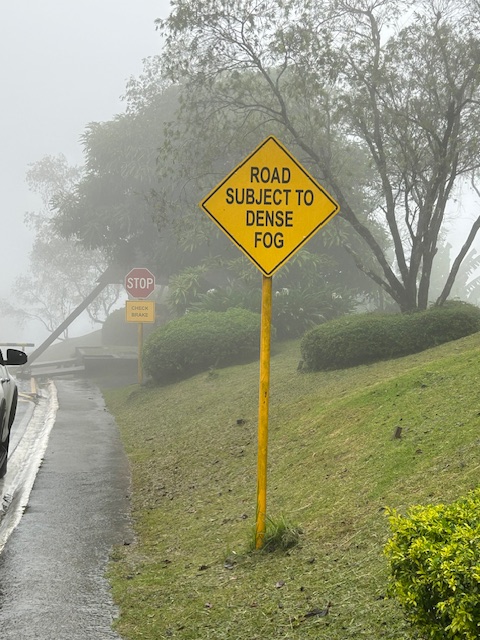
The fog was a quick reminder of the Tagaytay of old that we frequented before. But what we noticed was that it wasn’t cool. It was still somewhat warm if there was no breeze or wind blowing. This was certainly not smog as you can smell the pollution if it was. We even joked that it probably wasn’t because of the volcano as the smell of sulphur would probably be strong. We were in Tagaytay during the weekdays so there were fewer people and traffic. We were told that it was worse on weekends. That was to be expected. And with CALAX, Tagaytay became more accessible to visitors. I will write about the developments there in the next post. I feel there’s just too many buildings and the intense development has made Tagaytay less attractive. I have similar memories and feelings about Baguio but that’s another story to tell or write about.
–
Article share: Applying the New Traffic Safety Paradigm
Here is a quick share of an article on traffic safety from Todd Litman of the Victoria Transport Policy Institute. Source: Applying the New Traffic Safety Paradigm
In the article, the author discusses the use of ‘exposure’ as a measure of risk in as far as safety is concerned. The variable ‘vehicle miles traveled’ or in our case ‘vehicle kilometers traveled’ may be considered a risk factor. That is, higher or more VMT or VKT may lead to more crashes and casualties (and additionally damage to property). The objective is to reduce VMT or VKT in order to improve traffic safety.
To quote from the article:
“The new traffic safety paradigm recognizes the additional risk resulting from increases in low-risk vehicle travel and so favors strategies that reduce total vehicle-miles such as improved public transit services with free service for students, efficient school parking pricing to discourage driving, and more compact communities that reduce distances between homes and schools. In addition to reducing traffic risk these strategies also reduce household costs, traffic congestion and pollution problems making them win-win solutions. “
–
A widened Col. Bonny Serrano Avenue and opportunities for complete streets
Col. Bonny Serrano Avenue is one of the major roads directly connecting EDSA (C-4) and C.P. Garcia Avenue (C-5). The last time I used the road was before the pandemic. So it came as a surprise to pass by last weekend and see the avenue had been widened. I guess that pretty much “solved” the traffic along this usually busy thoroughfare that is part of jeepney routes to Cubao (via Murphy – referring to Camp Aguinaldo, which was formerly Camp Murphy). The avenue was renamed after a Korean War Hero (my uncle fought under him with the 10th Battalion Combat Team in the Korean War in the 1950s). It was called Santolan Road before.
 What used to be a 4-lane road is now an 8-lane road
The area used for road widening was carved out of Camp Aguinaldo. The headquarters of the Armed Forces of the Philippines (AFP) gave up quite a lot of square meters for this project and you can see from the photo the now very wide avenue. I thought perhaps they could have placed a median island where they could have also planted some trees (note how exposed to the sun the area is). They also could have designed protected bike lanes along either side of the road. These could have connected the EDSA and C5 bike lanes. And, of course, they should have also improved the pedestrian sidewalks. You can see how narrow the sidewalks are and how electric and light posts block pedestrians using the sidewalks. There were opportunities here for the application of complete streets and its not too late to do just that.
I assume there are many men in uniform who use bicycles for their commutes and recreation. Camp Crame is just across EDSA from Camp Aguinaldo and Bonny Serrano Avenue also passes along the headquarters of the Philippine National Police (PNP). Down the road towards Marikina City in Libis is another camp, Camp Atienza, which is home to the 51st Engineering Brigade of the Philippine Army. I mention these camps as I know many there regularly use Bonny Serrano for commuting and many use bicycles. A cousin-in-law (my wife’s first cousin) who is an army officer bikes a lot from Camp Atienza and Camp Aguinaldo and tells me there are many enlisted men who bike to work.
–
Musings on rainy day commutes
I sympathize with a lot of people whose activities were disrupted by the inclement weather the past days. The rains from the other night and today resulted in floods around Metro Manila and Rizal (where I live). The forecast of more rains during the past days made government suspend classes at all levels for both public and private schools. However, many and particularly students have already traveled to their schools as some announcements came late or not early enough for those who usually leave home early to avoid the usual traffic congestion around schools.
I myself used to leave our home early to go to school. As I took public transportation to the university, I had to leave before 6:00 AM (even earlier if it was raining) to be able to get a jeepney ride and have a comfortable trip (shorter travel time than when I leave later in the morning). I had one transfer at what used to be the K-Mart terminal. Both legs of the trip were via jeepneys. I recall silently cursing the guards at Ateneo for prioritizing what seemed to be an infinite number of cars entering and exiting that university via their Gates 2 and 3. At the time, Ateneo still operated the blue school buses and you can see few students on those buses. I observed already then that most of their students probably had their own vehicles to take them to school. Once past the gauntlet of Ateneo and Miriam (which was Maryknoll before), traffic was smoother. And to think that there was no C.P. Garcia yet and Katipunan at the UP Diliman and MWSS areas was not as wide as it is now. The old Katipunan section was basically a two lane road with UP on one side and MWSS on the other. What is now a center island with large acacia trees used to be the frontage of MWSS. UP’s walls were lined with eateries and small stores catering to students and workers.
My commutes during the wet season can be quite difficult as you can’t simply hang on to the jeepney (at the back) when it’s pouring. And when the weather’s particularly bad, there were flooding along my route, not to mention where I resided. I also remember wading in floodwaters along Katipunan (yes, there were floods along Katipunan before) because the road was impassable to vehicles and the only way to get home was to walk from UP to Aurora Boulevard. Our home in Cainta was often flooded during typhoons, and I also waded in floodwaters along portions of Felix/Imelda Avenue an in our village. The flood experiences probably deserve separate articles here and I will share some stories as soon as I can organize my thoughts and memories of these. Of course, I will relate these to transportation as there were lots I learned from these experiences. The frustration though is that it seems we have yet to do in order to address climate’s and weather’s impacts on transportation.
–
On one’s exposure to noise
Here is another article on noise, relating about how it affects our health (e.g., “noise can damage your heart as well as your hearing”). The article also includes reference to an app developed by the US National Institute for Occupational Safety and Health (NIOSH) – a sound level meter iOS app that utilizes sound energy, and has its accuracy verified in an acoustics lab.
To quote from the article something related to transport and traffic:
“As a general rule of thumb, the World Health Organization considers average road traffic noise levels above 53 decibels and average aircraft noise levels above 45 dB to be associated with adverse health outcomes, though their metrics are weighted slightly differently than the average on your screen.
Nighttime noise is considered particularly harmful because it can fragment your sleep and prompt a stress response, even if you don’t remember waking up. The W.H.O. has long recommended less than 30 dB of nighttime noise inside your bedroom for high-quality sleep.”
We tend to dismiss or take for granted the noise from transport and traffic. While it seems that it does not have an effect on our health and well-being, it will eventually catch up with us and cost us health-wise. I have downloaded and installed the NIOSH app on my phone and occasionally monitor the noise around me whether I am at home or at the office. It can get pretty loud during my commutes and I drive so am curious how loud it can be for those taking public transportation. I have experienced riding in jeepneys blaring loud music. A daily dose of that for long periods each way of the commute will surely affect one’s hearing and overall health. Exposure, after all, isn’t just about the intensity of the noise but how long you experience or endure it.
–
It’s not that simple: the math on vehicle sales and registration
I read the statement of a government official about vehicle sales, and the subsequent responses it got. He cited math and seemingly joked about not being good at it while trying to make sense of the numbers. It is not as easy as he supposes. And I think that is partly why we fail to address the transport problems. For one, we think it is just about road capacities. For another, it may be about public transport supply. These are not mutually exclusive but rather intertwined along with so many other factors.
Housing, for one, (i.e., its availability, affordability and location) is among the most important factors that affect or influence how we commute. I have been asking the question about housing affordability in CBDs such as Makati, Ortigas and BGC. Lucky for those who already reside at or near those places but most people working there have to contend with expensive mortgages, leases or rents. How much is a condo unit in BGC, for example? If you have a family of 4, you certainly can’t and won’t opt for a studio unit just because its near your workplace. It’s obvious here that you also would have to consider where your children will be going to school as well as the workplace location of your partner if he or she is also working. No schools for now but imagine how it was and would be once our children go back to physical school. Such facts of life seem lost to many pundits commenting or offering opinions about transportation.
I think to be fair this should also be framed from various perspectives. For example, those vehicle purchases don’t necessarily mean additional vehicles on certain roads. like what one MMDA official claims. These will be distributed across the network of roads, and these will be operating during certain times of the day. Some of these vehicles were purchased by new car owners. Others as replacements to older or unserviceable units (e.g., upgrades). It would be nice to see, for example, the stats from 2008, 2009 & 2010. Thousands of vehicles were doomed by Ondoy in the greater Metro Manila in 2009 resulting in their replacements late that year until 2010. Then there was the boom in sales in the following years as people ventured into TNCs (Uber and Grab). The recent surge in private car use and what seems to be strong sales of these vehicles in the wake of the Covid-19 pandemic is more out of necessity (why do you think people aren’t taking to cycling for their commutes as much as is desired?)
The question why people still prefer to purchase and use their own vehicles has not been answered in the most honest way because different people with their own agenda tend to paint different pictures of the car owner. In some cases, car owners are being portrayed as ‘evil’ while those taking the more environment-friendly modes as ‘good’. Again, it should be obvious that this is not a ‘good’ vs. ‘evil’ discussion nor is it something that is black and white. We should pay (a lot of) attention to the grays, which can have so many different shades when it comes to transportation. No one really wins a “holier than thou” exercise where people on opposite sides tend to take hard line stances and close their minds to constructive ideas from either side.
–
On empty malls and what’s in store for us under the new normal
I took the following photos inside a mall that’s close to my residence. One had to go inside to get to the drugstore located at the second level of the mall so you can see what it looks like during the lockdown. Not surprisingly, it is deserted but it looks clean and orderly. It seems that mall’s doing maintenance work and I did see a couple of janitors inside. They are probably the skeletal staff of the mall in-charge of making sure the building does not deteriorate during the lockdown period.
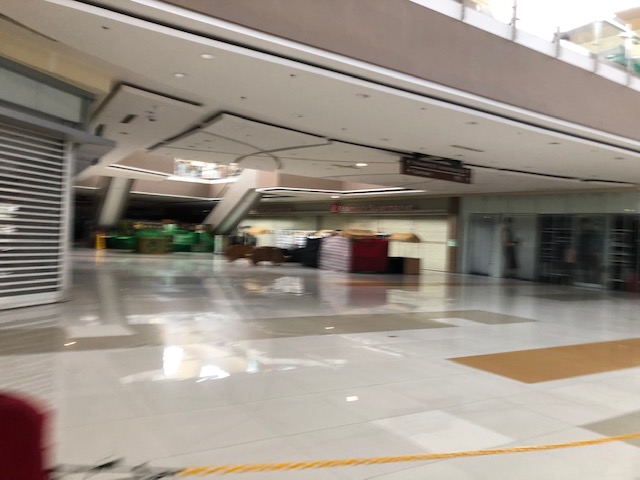 This used to the a very busy area leading to the supermarket and the appliance shop. The area also usually was at the events venue and often set-up here are the weekend stalls selling local items including our favorite cashew butter and sylvanas.
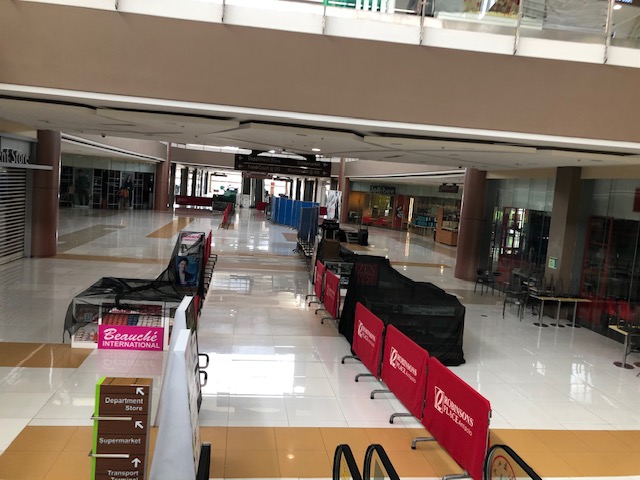 A look back at what was usually a crowded area at the center of the mall as I moved up the working escalator
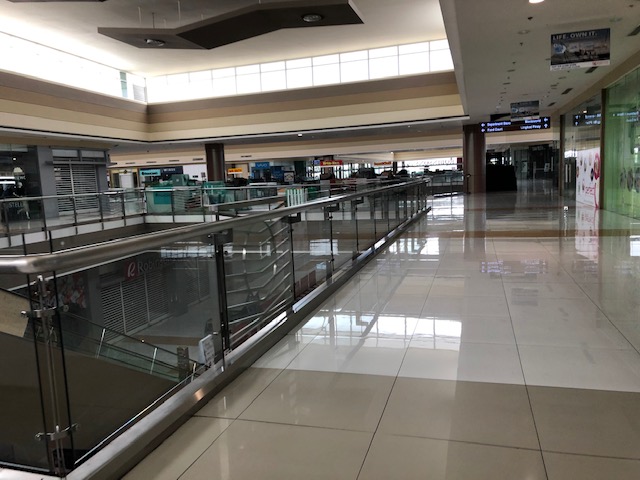 The second level was also practically deserted with only a few customers going to the drugstore and the occasional janitor or security personnel going around
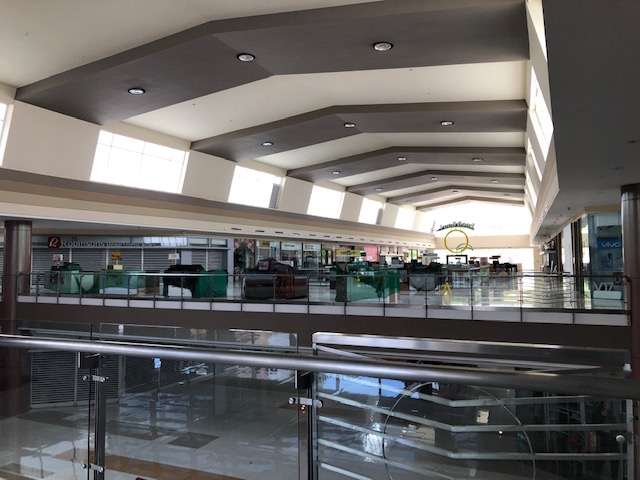 Across from where I was walking was another crowded area as this is the food court with the cinemas just beside it.
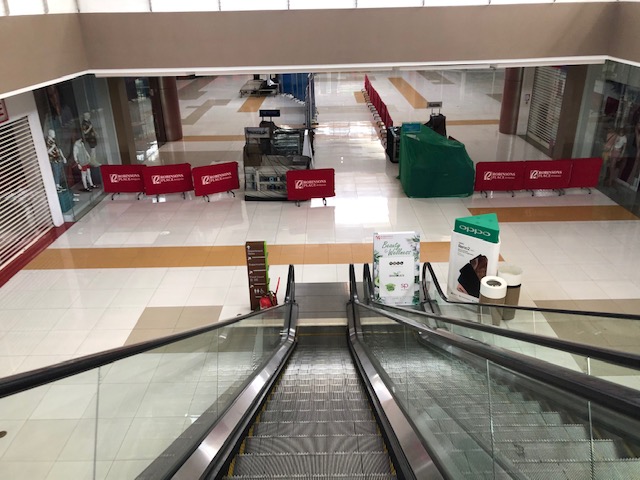 View of the ground floor as I descended on the non-functioning escalator on the other side of the second level.
I saw the photos posted on social media and the news yesterday as people crowded at mall entrances on the first day after the lifting of the Enhanced Community Quarantine (ECQ) in many cities. Of course, they are still under the General Community Quarantine (GCQ) but more people are allowed to go outside their homes with businesses like the malls starting to resume operations. I sure hope this ‘excitement’ and the resulting crowds will not lead to a worse second wave of Covid-19 infections. That will surely lead to the reimposition of ECQ in those areas. There are lessons to be learned from the reopening of businesses like shops and restaurants once quarantines have been relaxed. Those are lessons that are mostly from the experiences of other countries that we should carefully and meticulously consider in order to avoid the mistakes that have led to a second wave of infections. Let us not lead ourselves towards recklessness or irresponsible behavior that can spell disaster to many. Let us not think that things will go back to the ‘normal’ we used to live.
–
 Caught (up) in traffic