
Home » 2012 (Page 11)
Yearly Archives: 2012
Olongapo-Castillejos Road: Subic
I took the following photos en route to the venue of our annual planning workshop. This year our office went to San Antonio, Zambales and our trip allowed me to photograph road conditions and characteristics along the Olongapo-Castillejos Road, which is a national highway. Like most Philippine highways, one will notice the operations of the ubiquitous tricycle, a motorized three-wheeled paratransit mode popular and dominant in many towns and cities.
 City limits – boundary of Olongapo City and Subic municipality with one of the most colorful arches I’ve seen along a national road
 Rounding the curve – some congestion due to the slow-moving trailer carrying a backhoe/excavator
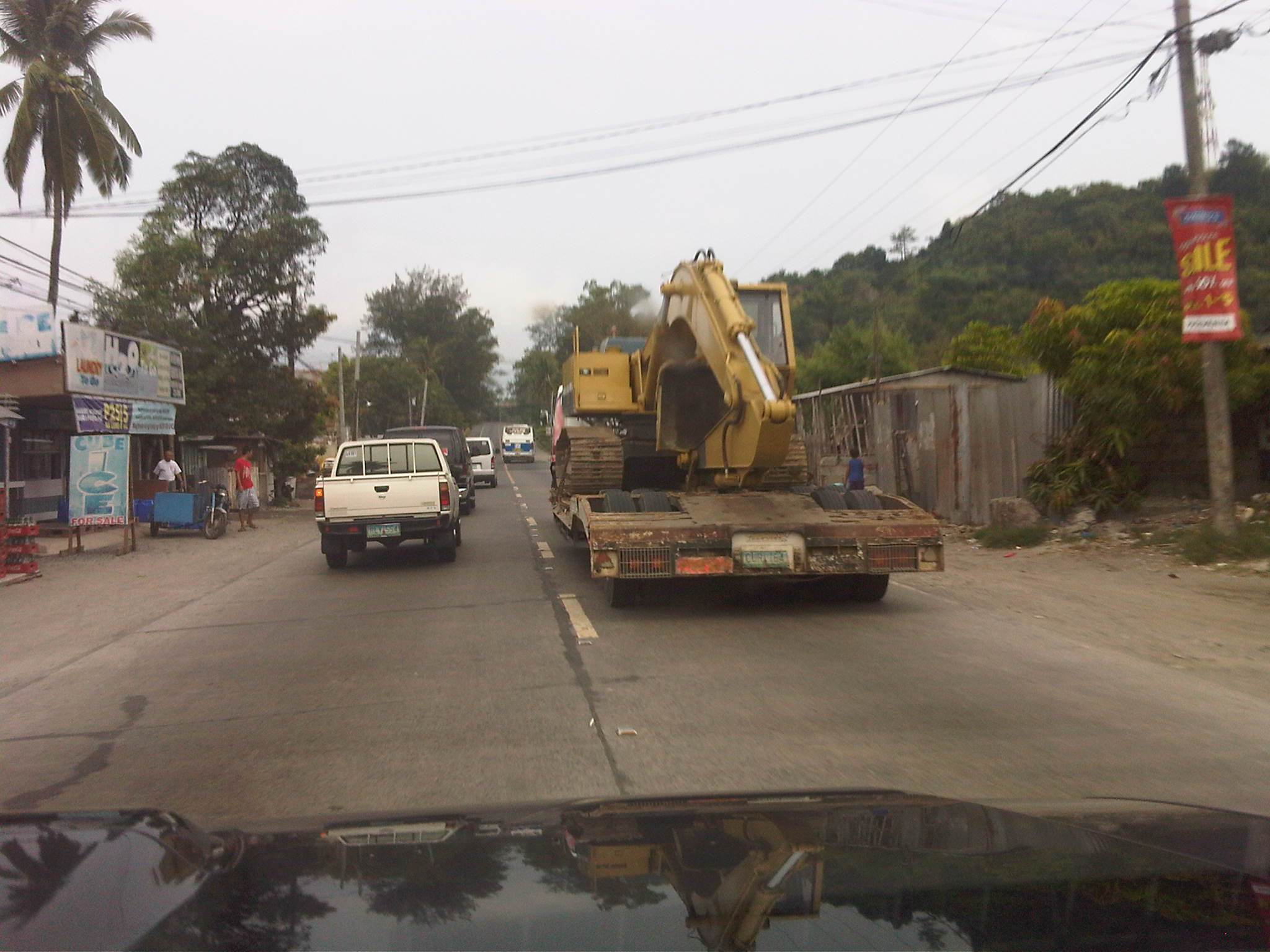 Passing distance – a platoon of vehicles passes the slow-moving truck. With no vehicles along the opposing lane, many vehicles succeed in the passing maneuver
 Regional buses – including mini-buses tend to stop anywhere along their routes and tend to cause congestion like pedicabs, tricycles and jeepneys
 The real Subic – Municipal hall of Subic town. People always refer to Subic as the former US naval base; the area of which was carved out from the provinces of Zambales and Bataan. In reality, no part of the Subic Freeport is in Subic town and the name comes from the bay rather than the town.
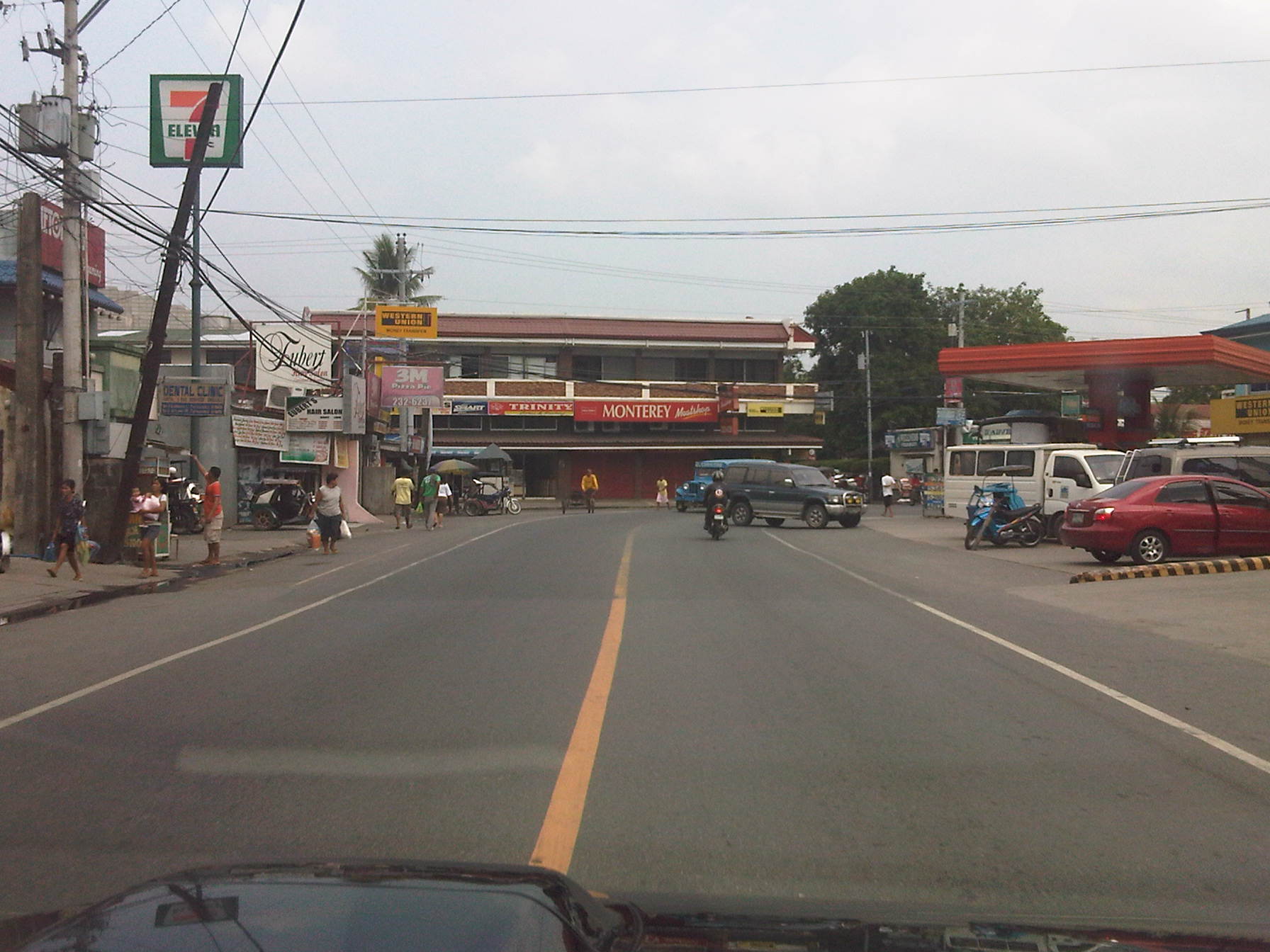 Good roads – the roads along the national highway were mostly in good or excellent condition including those in the CBD or bayan
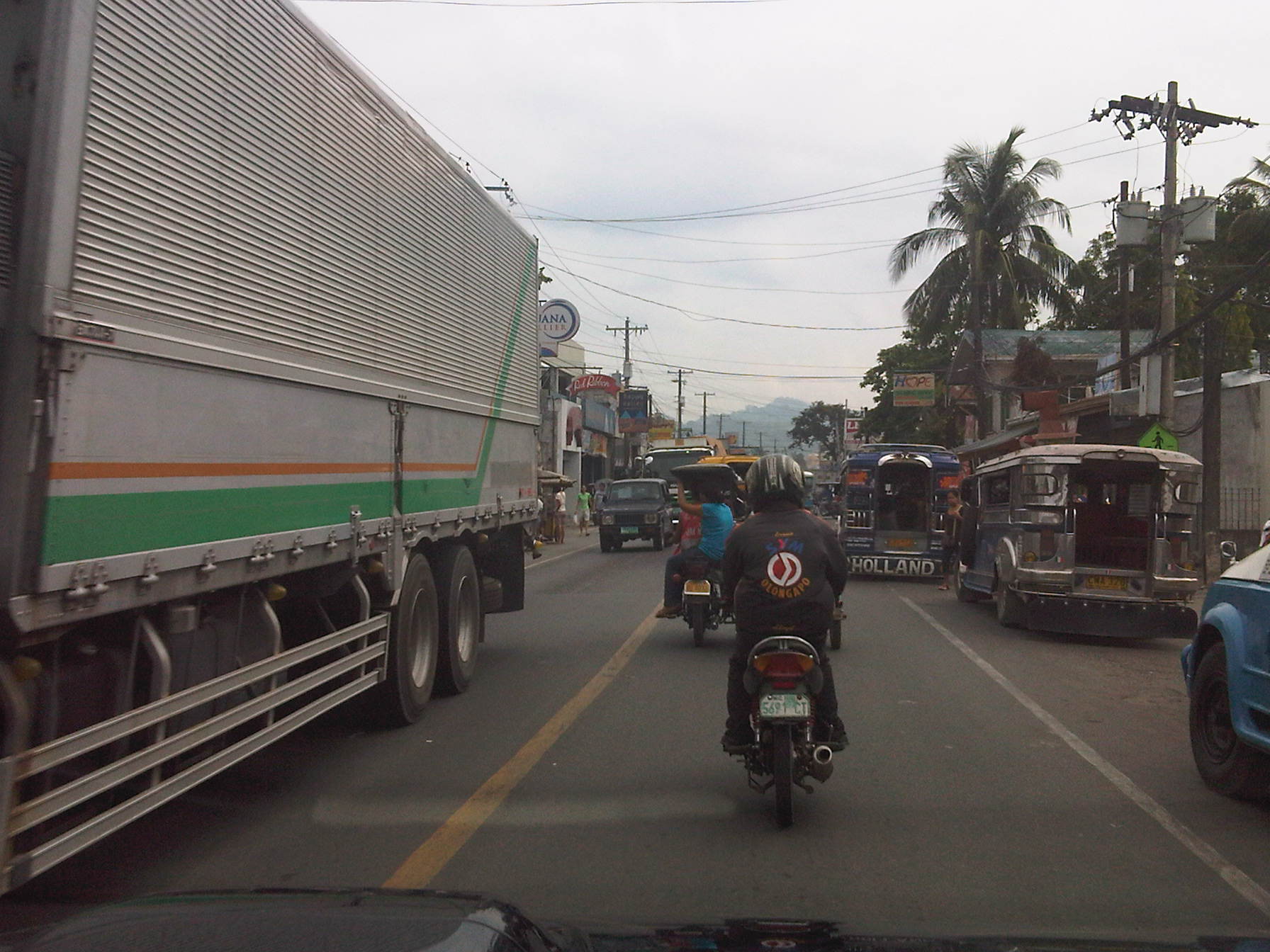 Busy streets – traffic was relatively heavy along the highway at Subic
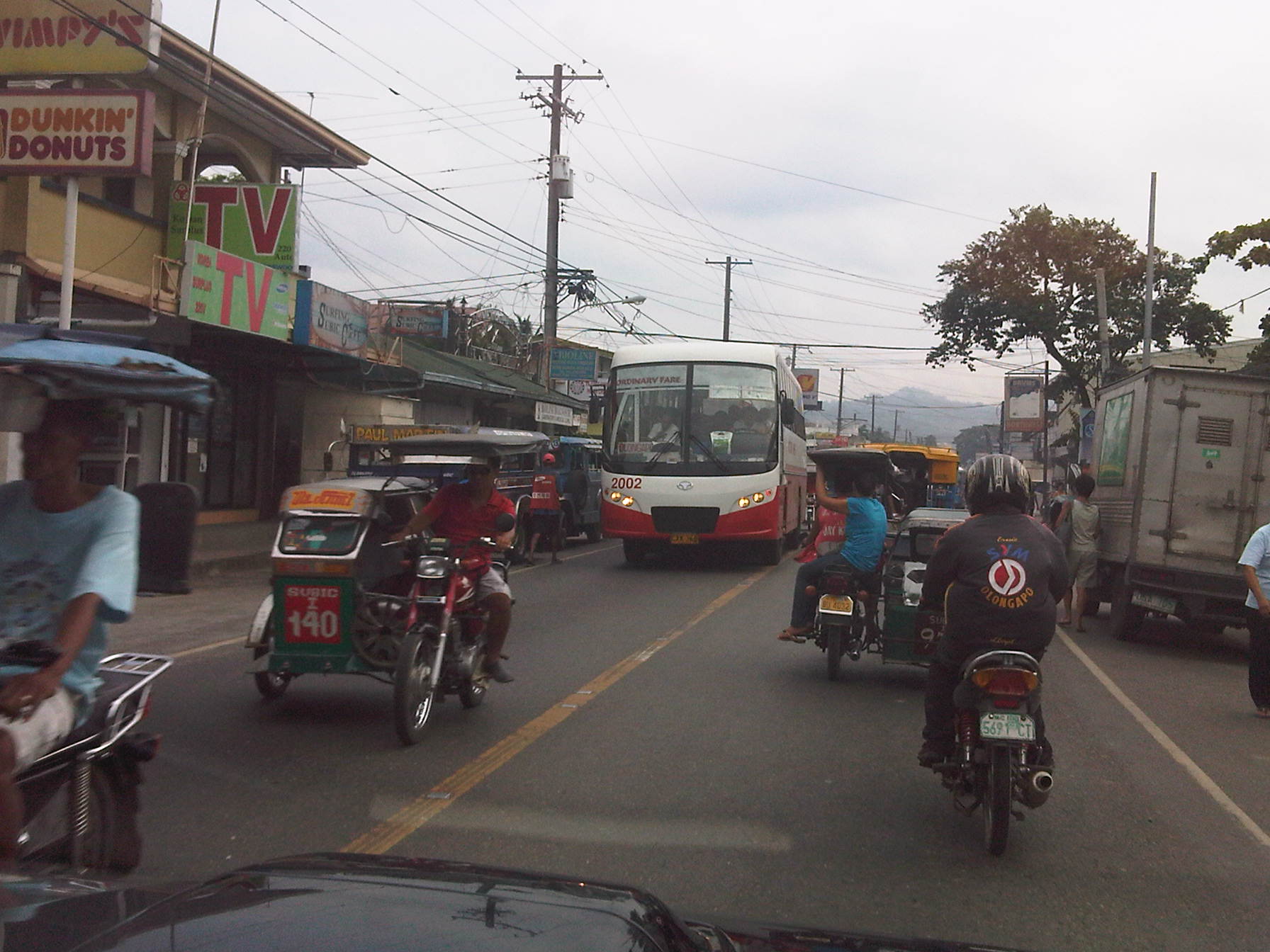 Mixed traffic – aside from the typical jeepneys, tricycles and motorcycles everywhere, there were a significant number of buses and trucks
 Parade of tricycles – like most towns around the Philippines, roads are often dominated by local traffic most especially tricycles that are used for public transport in even large cities
 Air conditioning? – we came upon this tricycle carrying a block of ice (apparently purchased by a passenger) and wondered what would be left of the block once they reach their destination
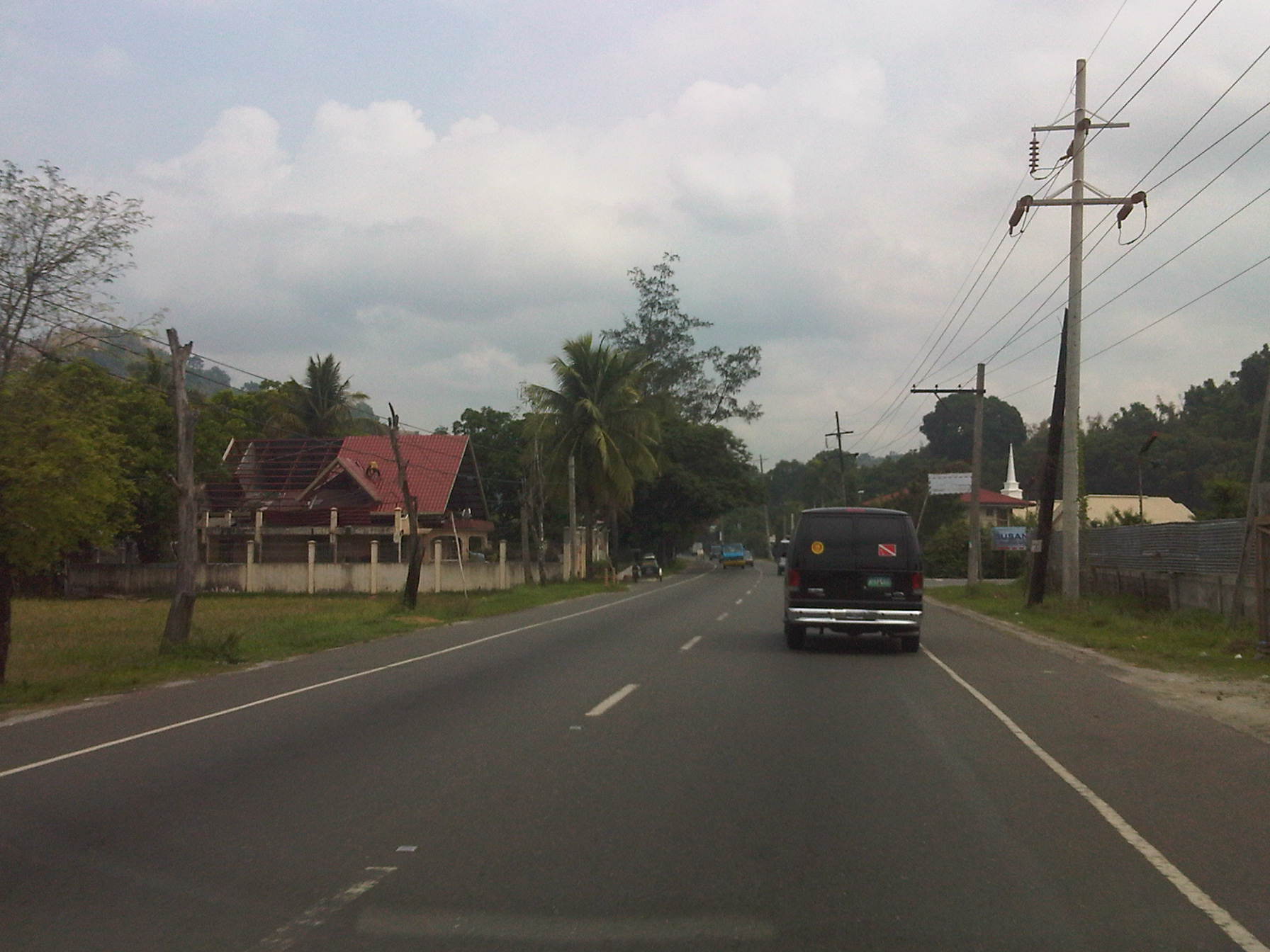 Open road – past Subic town center, traffic was already very light
 No overtaking – many sections along the road featured a solid orange-yellow line along the middle of the highway that should be understood as no overtaking. Shoulders are also clearly marked by the solid white lines on either side of the carriageway
 Curvature – overtaking is discouraged along curves as sight is limited and therefore restricts drivers’ and riders’ capabilities to properly discern opposing vehicles.
 Passing sight distance – the view from our position as we prepared to pass a slower moving vehicle in front of us illustrates sufficient PSD for us to succeed in our maneuver. Note the perceived distance between us and the vehicle in the opposing lane.
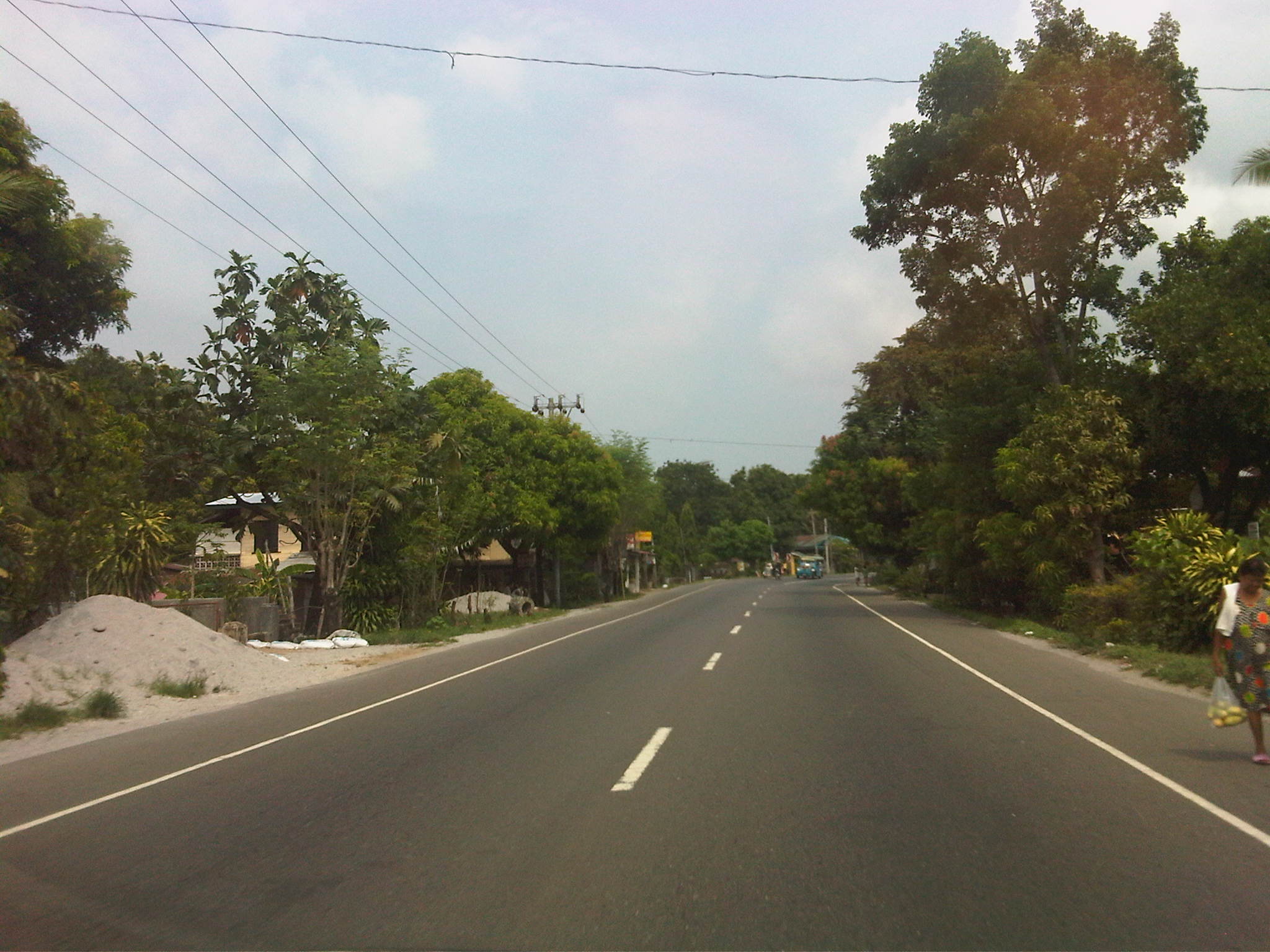 Clear for take-off – such scenes along low traffic volume highway sections around the country and elsewhere seem to invite drivers to speed up.
 Bridge before the boundary – I didn’t pay attention enough to see the name of the bridge and had to google it. Pamatawan Bridge allows people to cross the Balaybay River in Zambales. Just after the bridge and visible downstream from our position in the photo is the arch welcoming travelers to the Municipality of Castillejos.
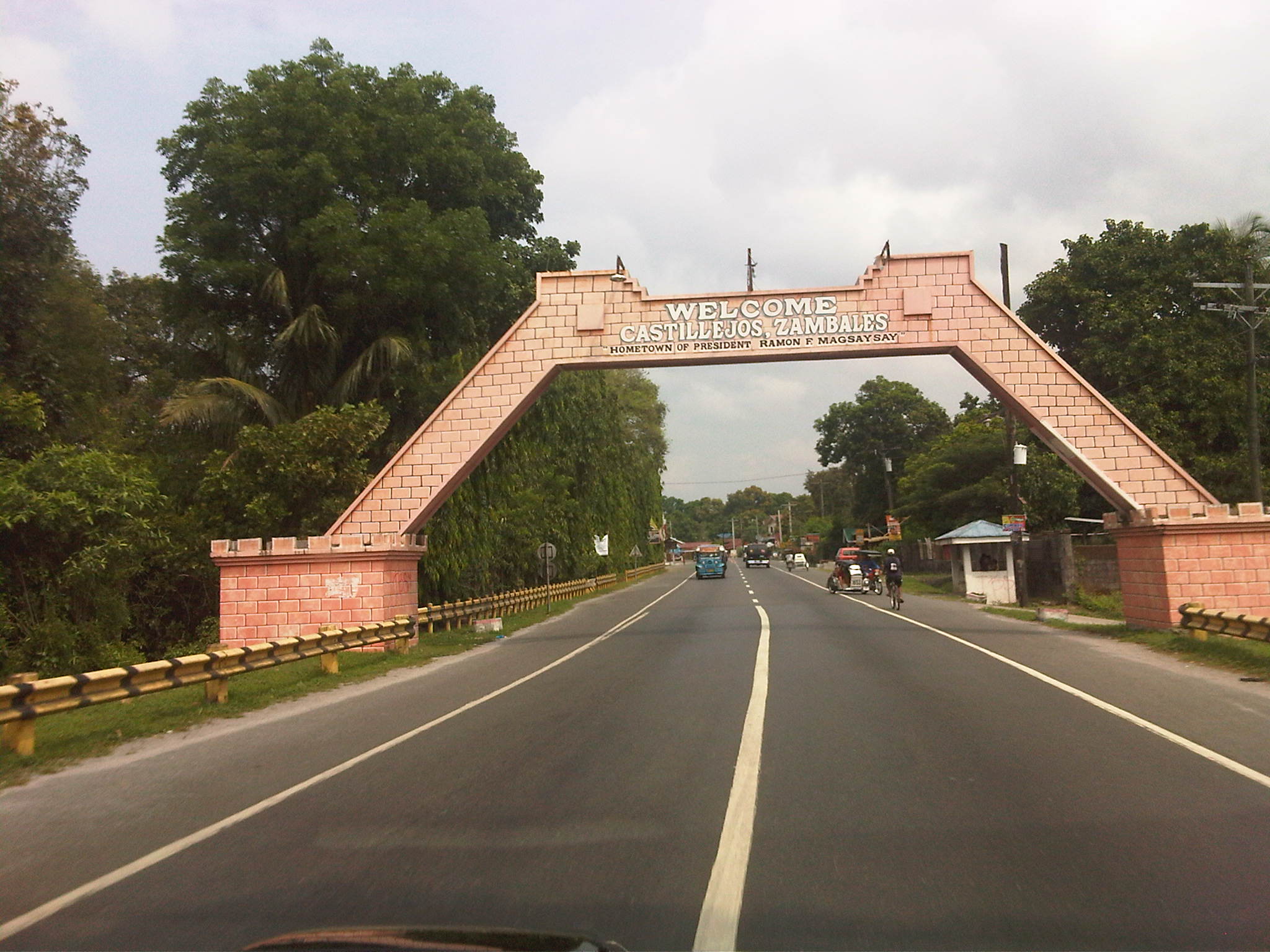 Municipal boundary – like many others across the country boundaries are marked by arches like the one in the photo welcoming travelers to Municipality of Castillejos. This one though is among the more appropriate ones given the town’s name, which translates to “small castle.”
–
Failure in transplant? – The trees along the Katipunan median island
A day after featuring the ongoing lane rationalization project along Katipunan Avenue, I was able to take photos of the transplanted trees along the median as we traveled along the southbound direction of the road. The trees were transferred to the new median as will the light posts later.
Following are three photos taken last May 16, 2012 showing the transplanted trees with their leaves still green but already showing signs of withering (nalalanta na). I thought this was natural given the grown trees being balled and transferred plus the fact that we were still enduring the summer heat.
 1
1
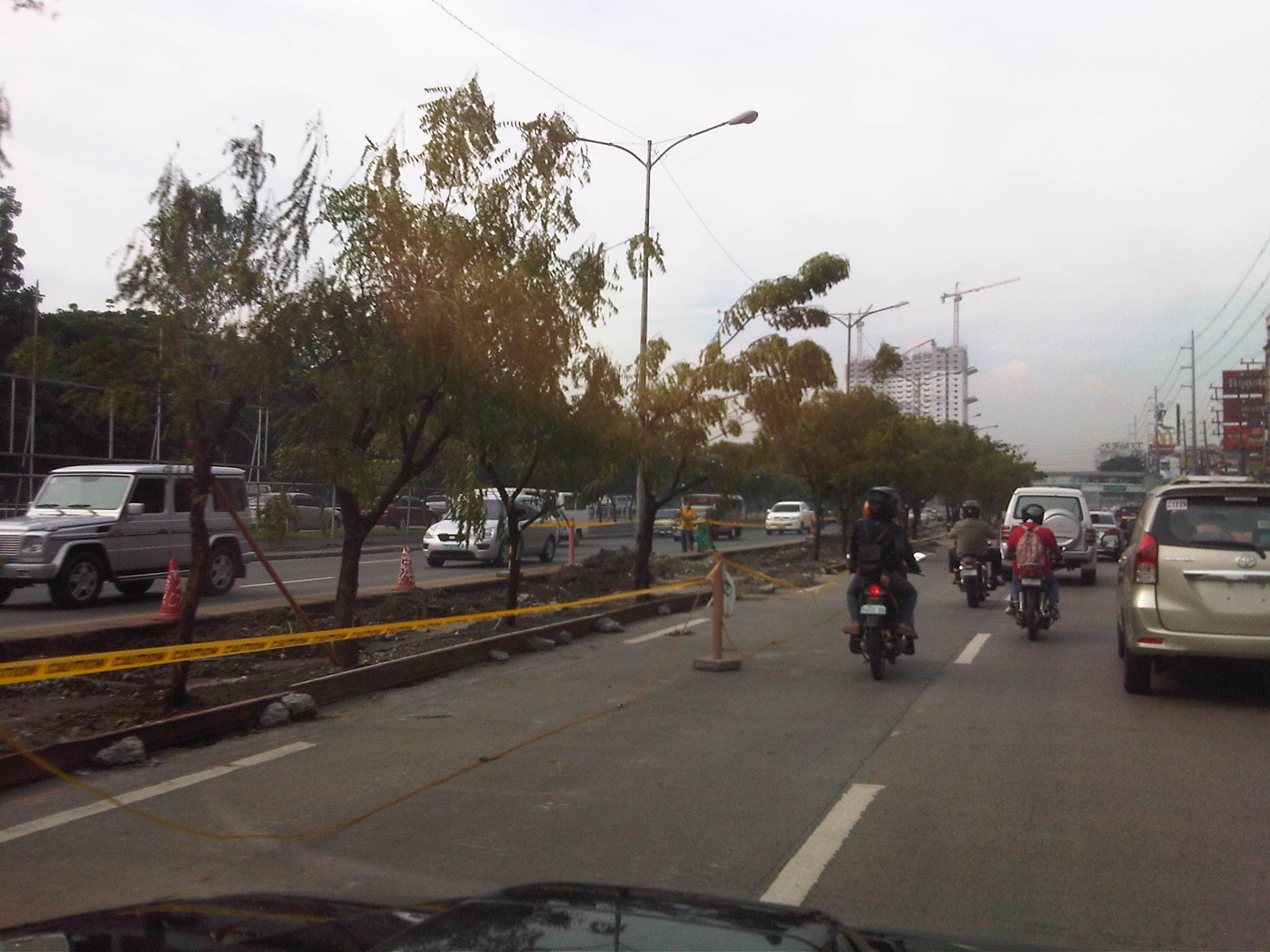 2
2
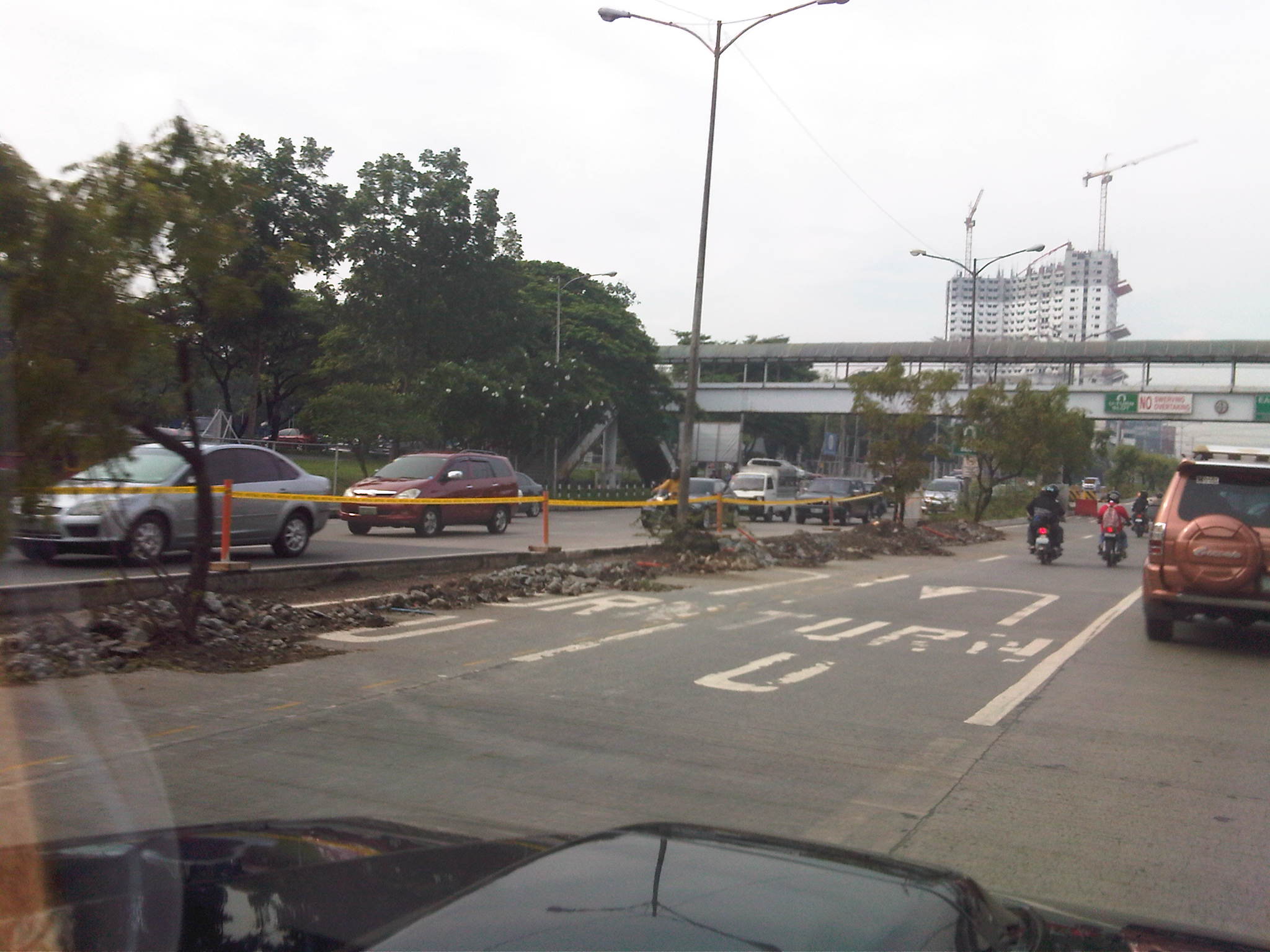 3
3
This morning (Sunday, May 20), as I drove along the same way I saw that the trees’ branches have been cut off. I am not a botanist or an expert with flora but perhaps this was done to allow the trees to recover? The optimist in me says leaves will eventually sprout from the stubs much like they did for the trees removed from the Katipunan service road about a decade ago that were transferred to the Marikina Riverbanks, many of which lived only to perish from Ondoy’s floods in 2009. The following photos are what’s left of the median island trees of Katipunan.
 4
4
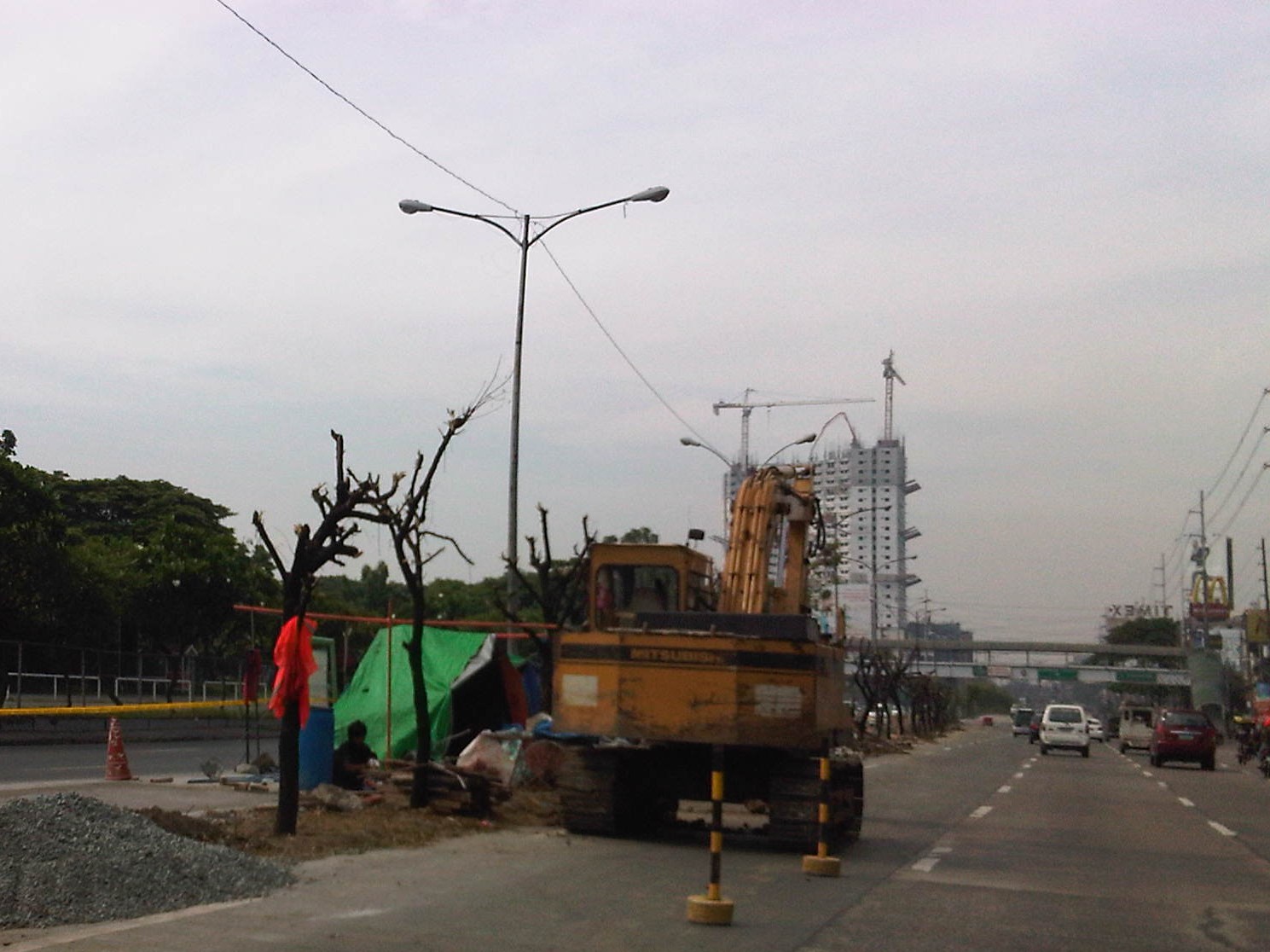 5
5
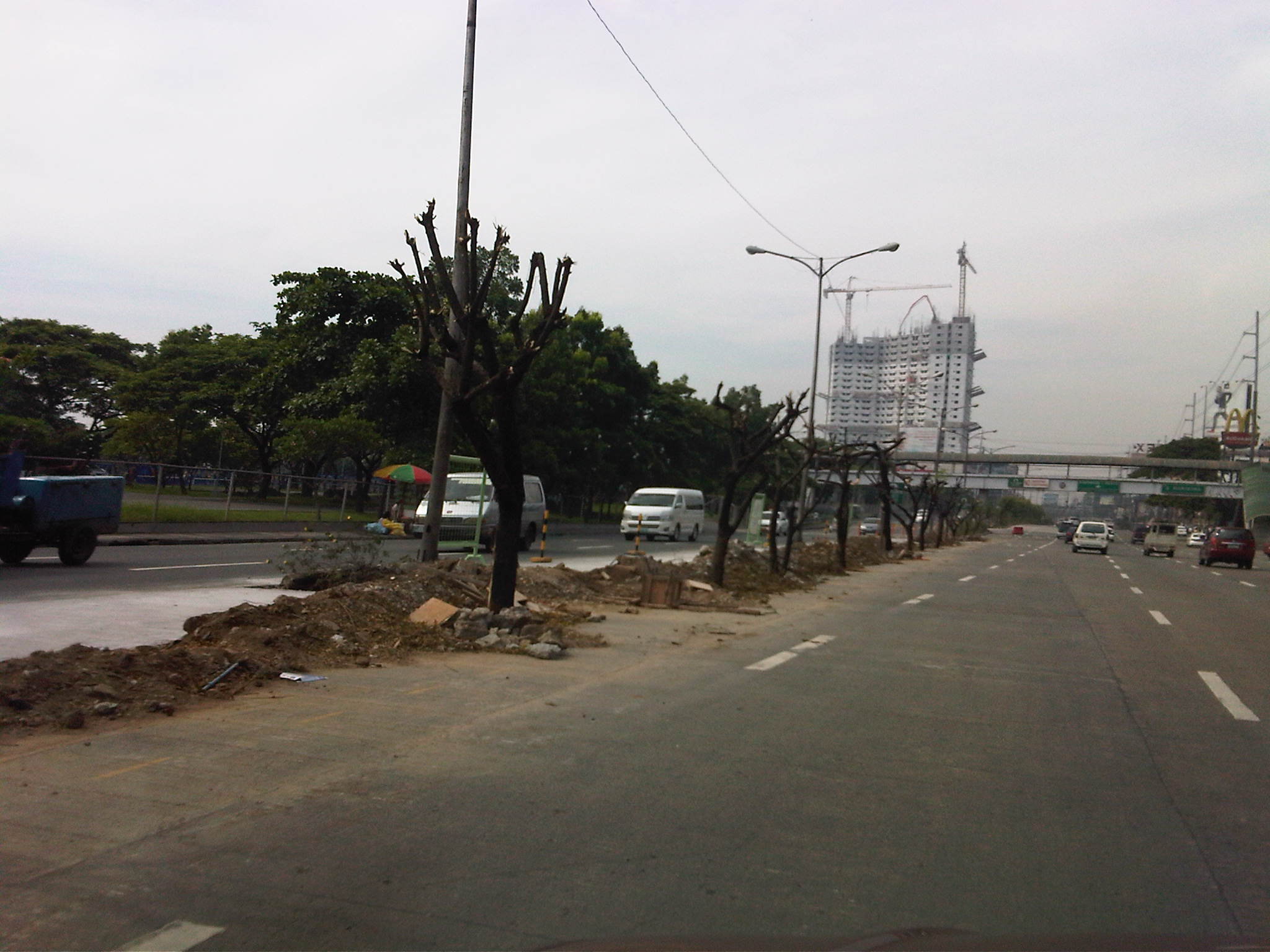 6
6
–
Melaka central bus terminal
Trips between Singapore and Malaysia are quite frequent given the proximity between the two countries (Singapore used to be part of Malaysia.) with a lot of people employed just across the borders and Malaysia being a popular destination for shopping and recreation. In fact, the first Premium Outlet in Asia is located in Johor, Malaysia, which is just across the border from Singapore. On a weekend trip to Melaka (Malacca), we took an express bus that made only 3 stopovers including one each for immigration control/processing in Singapore (exit) and Malaysia (entry). On the way back, we only had an extra stopover due to a fellow passenger requesting for a toilet break.
Arriving at Melaka, I was impressed with the central bus terminal, a sprawling complex that connected with commercial establishments around it. Inside the terminal, there are many shops and restaurants so one doesn’t need to leave the terminal to eat or to make some last minute shopping. Good buys are rubber sandals much like those being sold under Brazilian brands. Malaysia is a major producer of rubber and the sandals made in Malaysia are of high quality but less expensive than the Brazilian and perhaps Chinese counterparts.
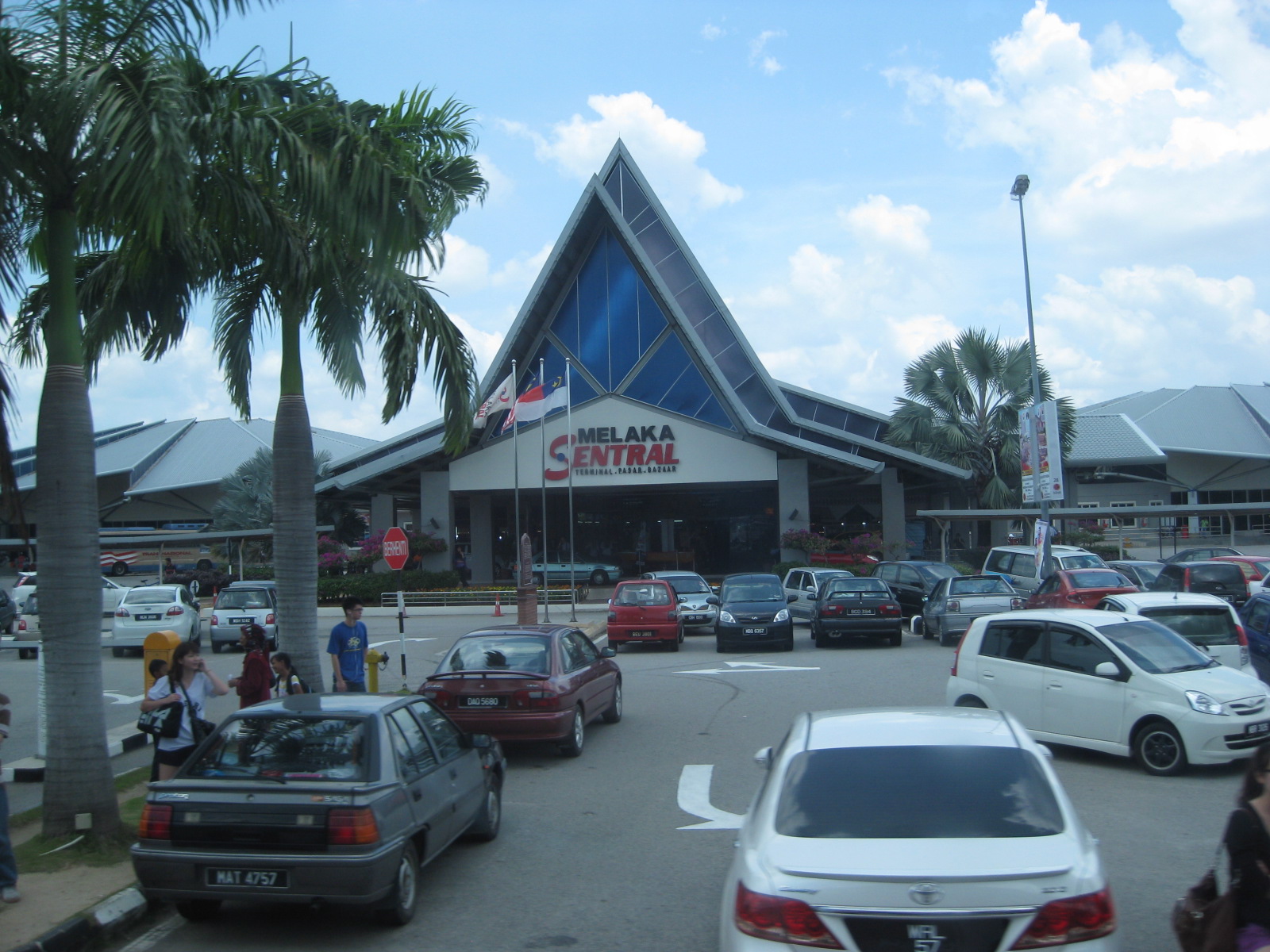 Terminal building and parking
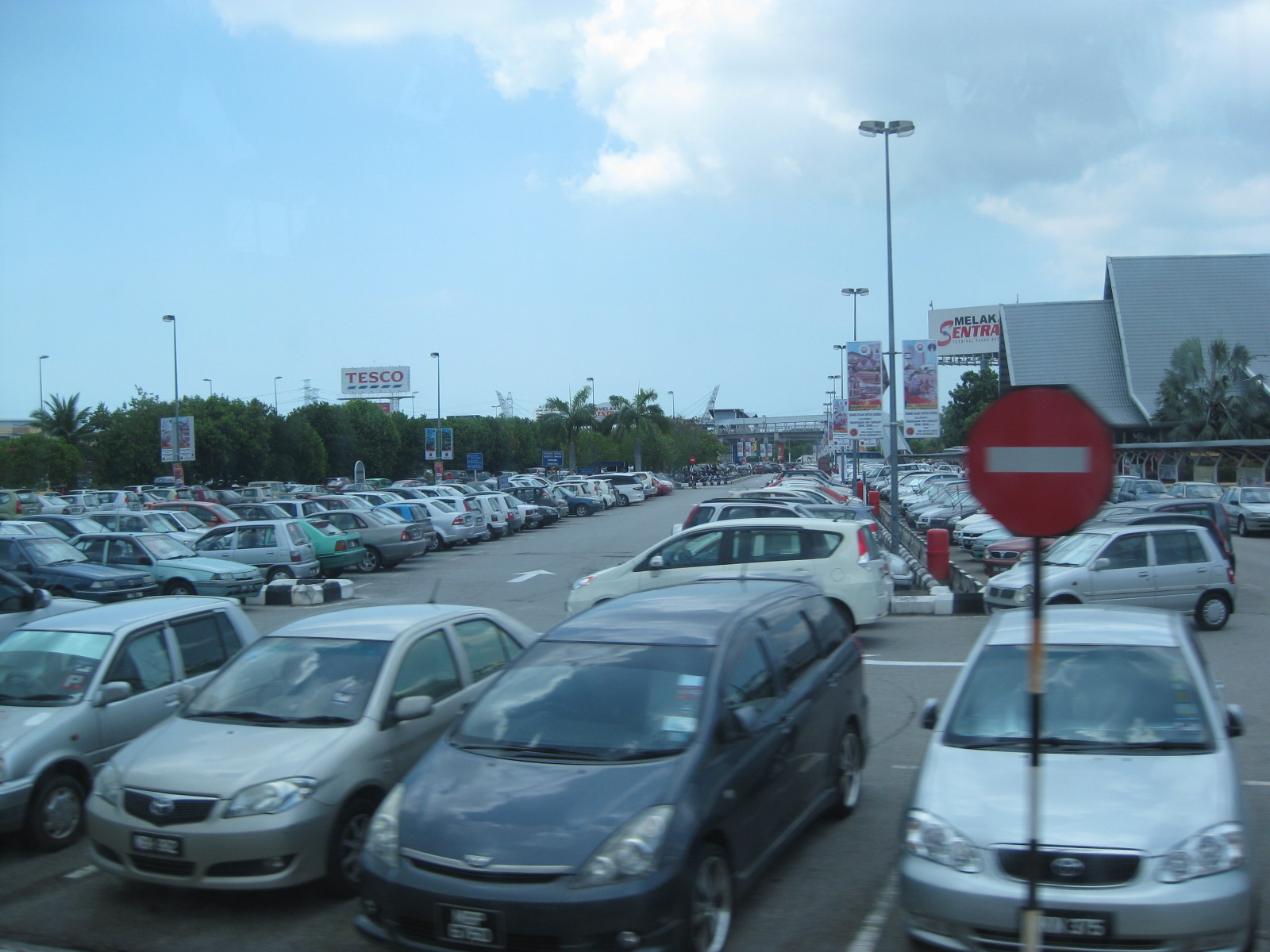 A look at the spacious parking area around the terminal.
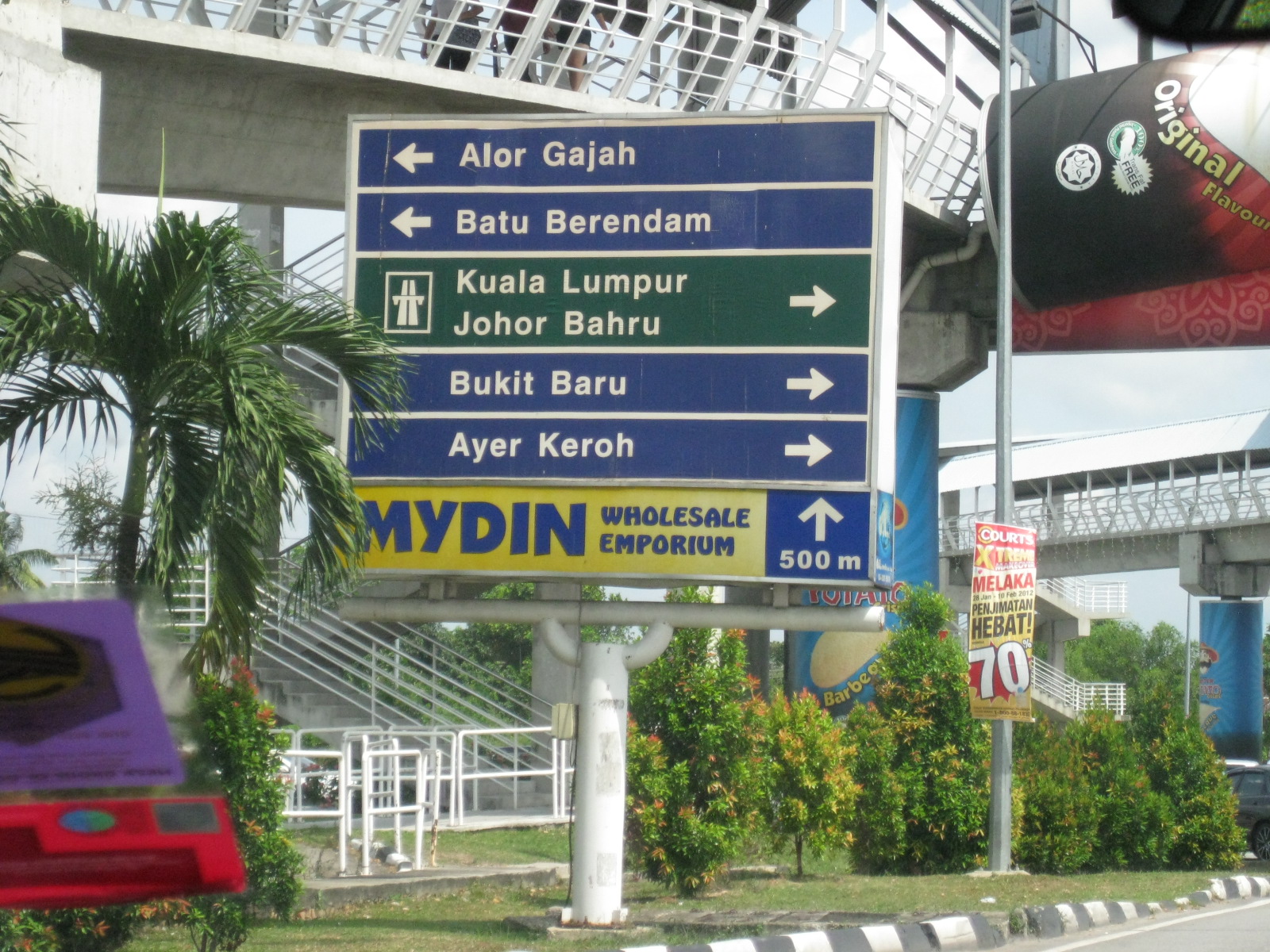 Directional sign to guide visitors (probably sponsored by the emporium indicated at the bottom).
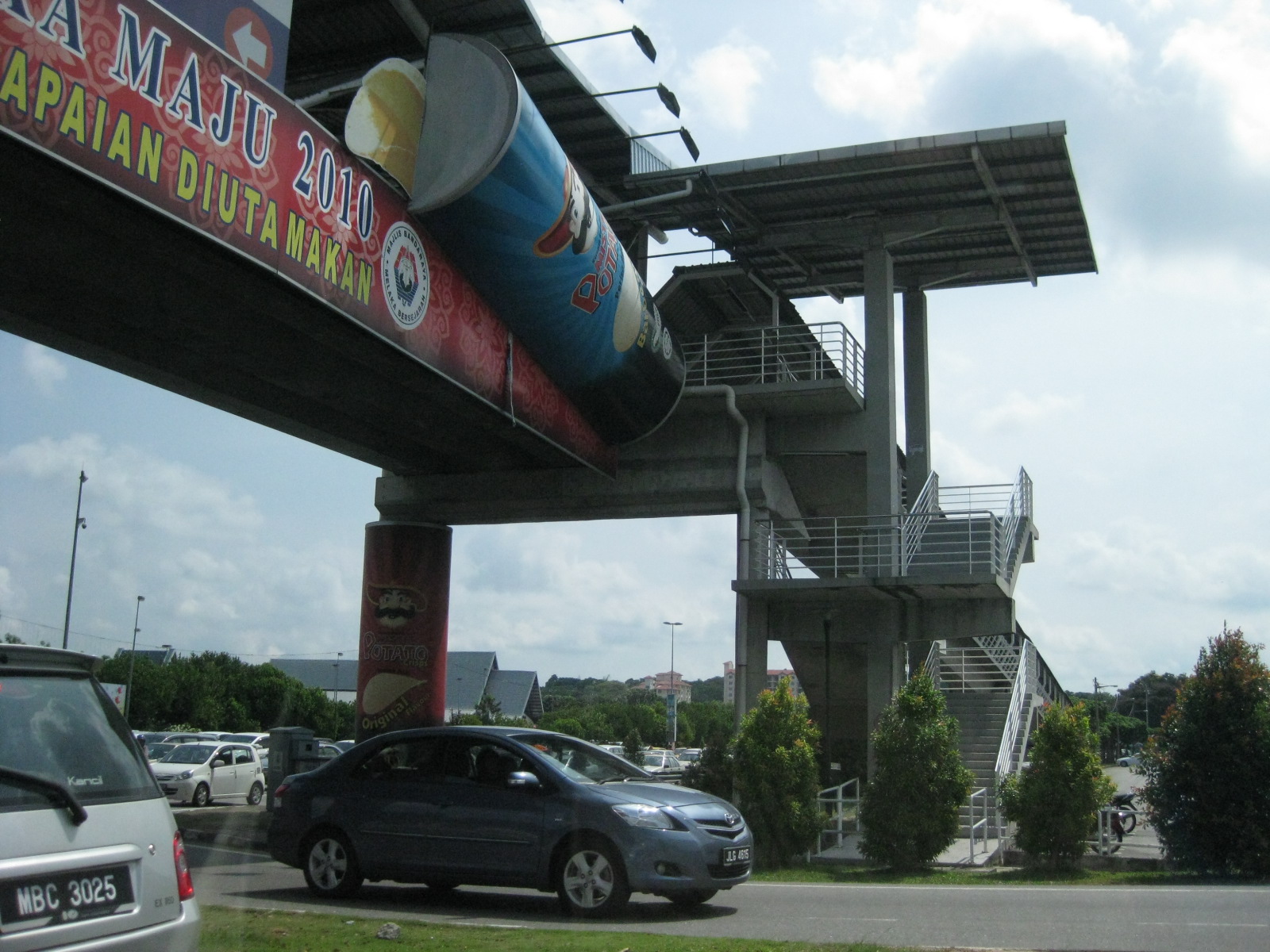 Pedestrian overpass for people crossing the busy highway in front of the terminal.
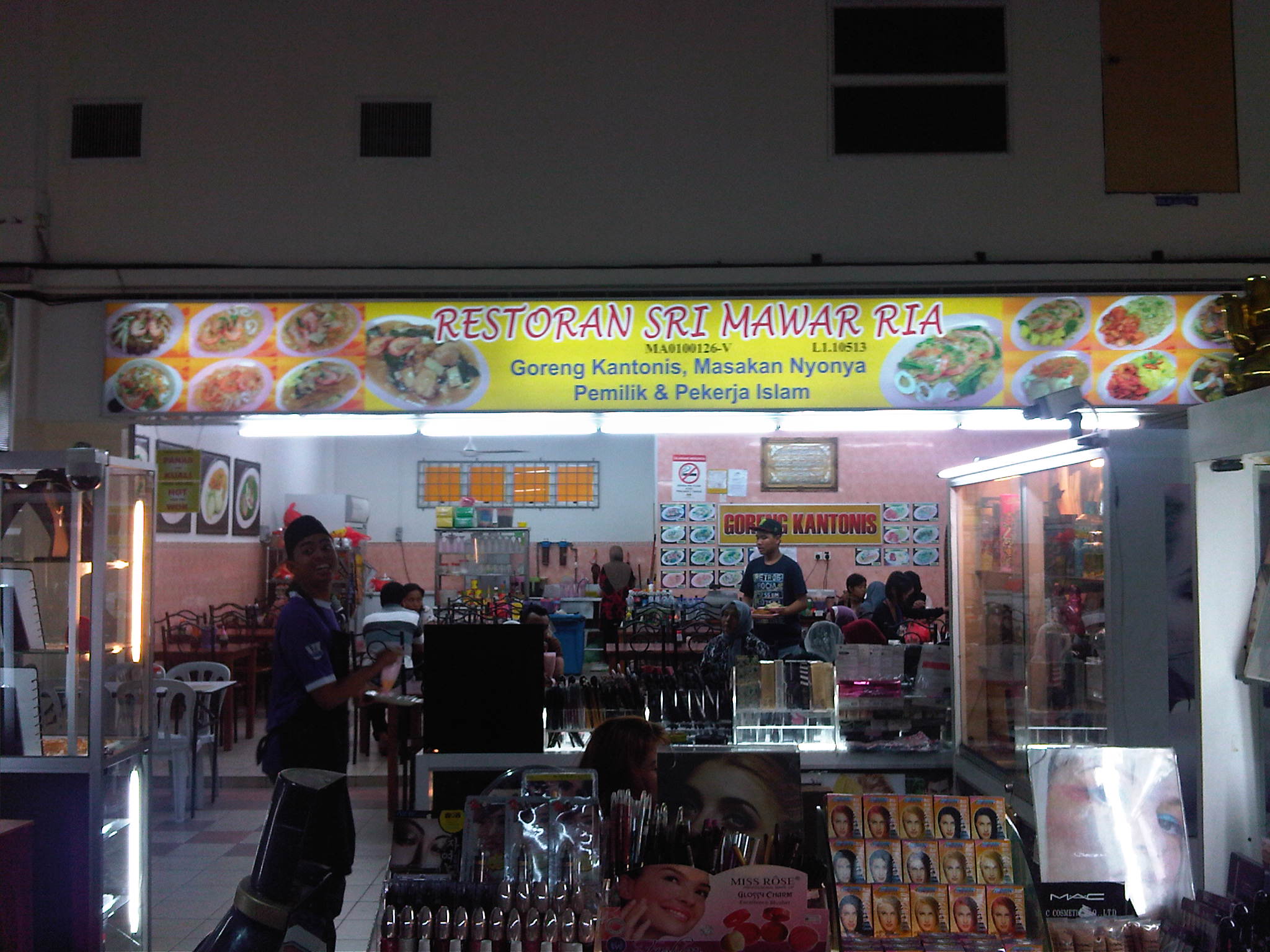 There are many restaurants and shops inside the terminal, which is by itself a commercial establishment.
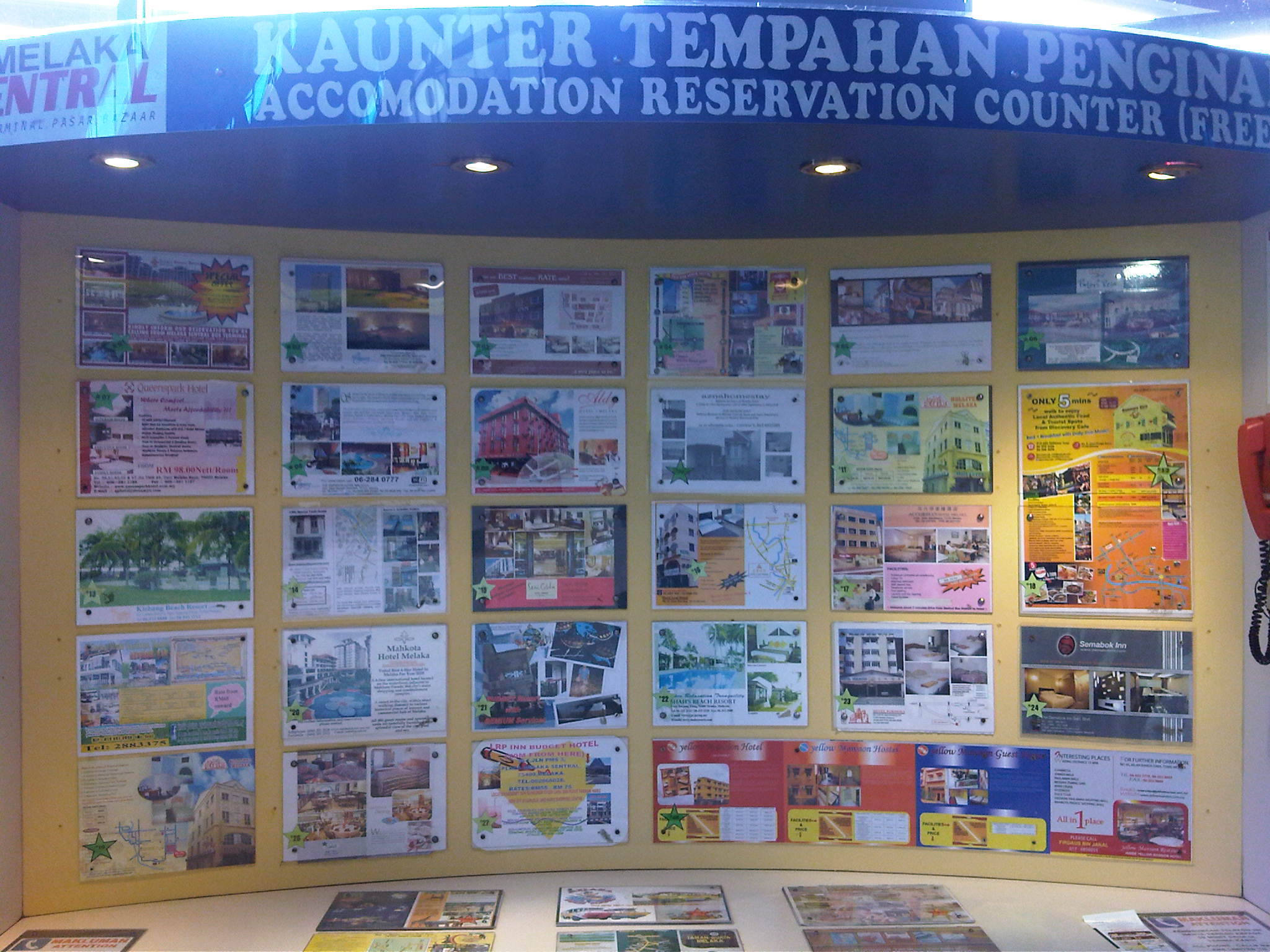 Hotel/accommodations information for travelers are posted at the terminal.
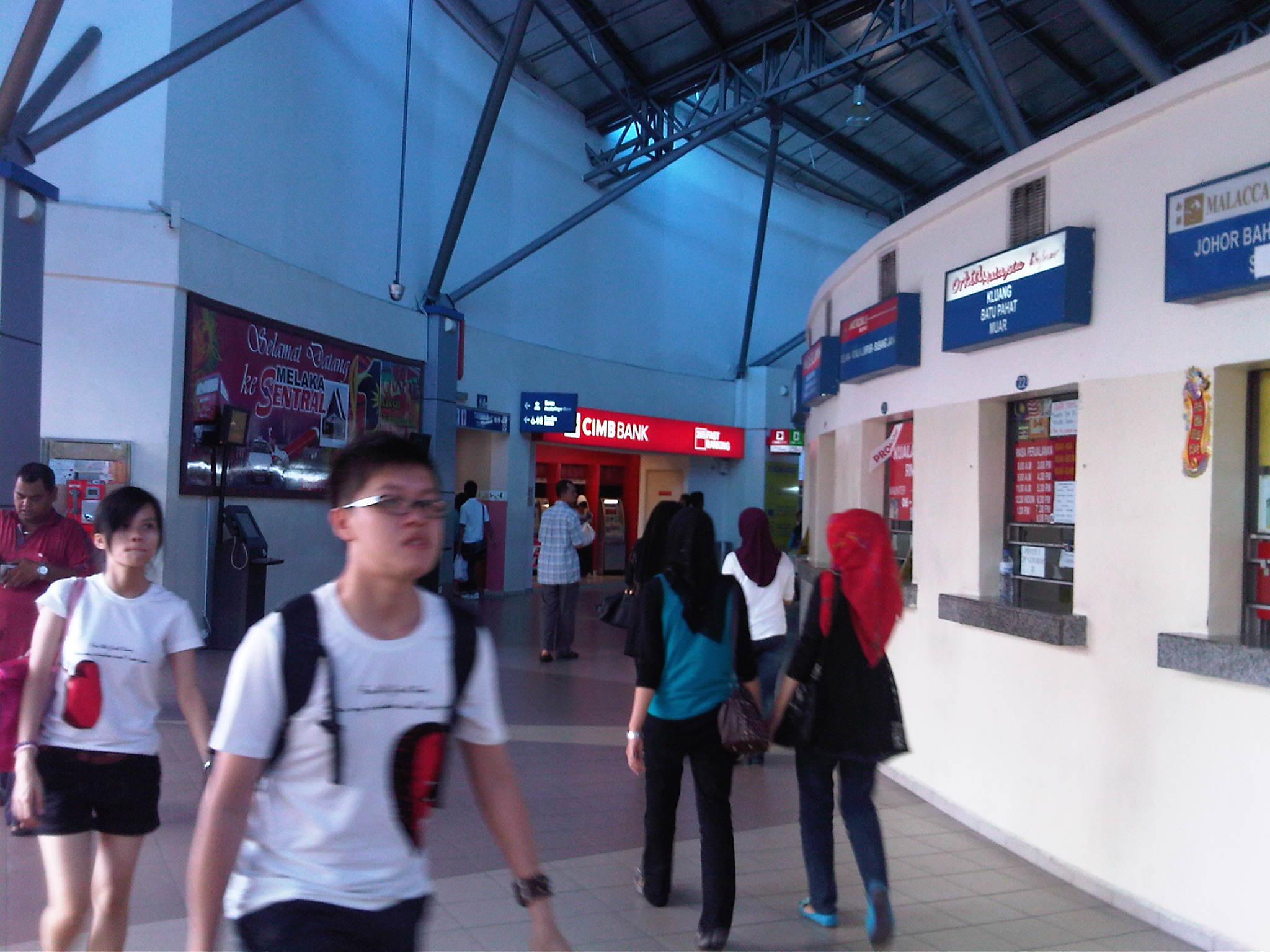 The different bus companies operating out of the terminal have their booths were travelers may buy/reserve tickets.
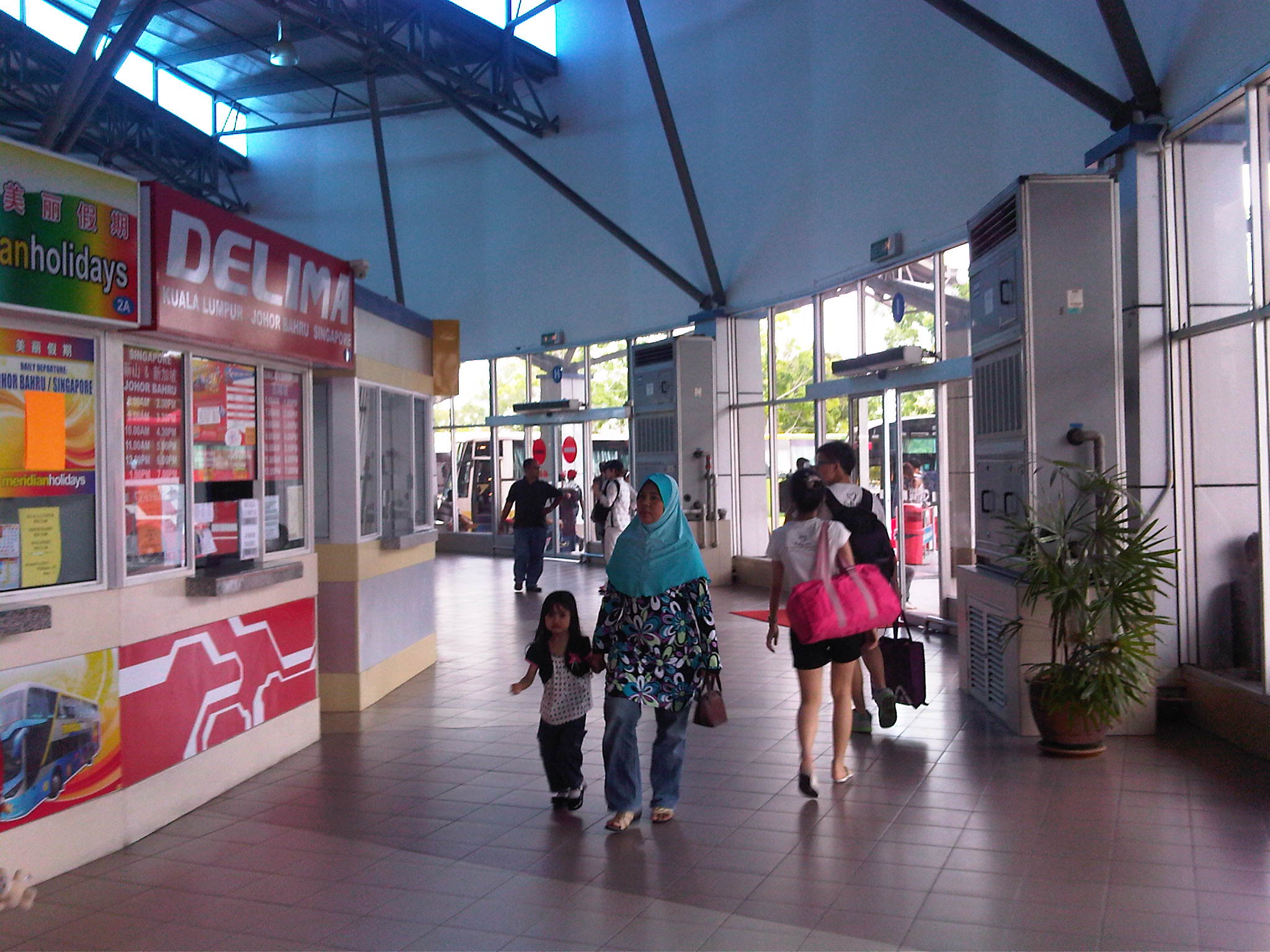 The ticketing area is spacious and there were no long lines, in part due to the availability of online (internet) ticket purchases. Seating is not free for all so travelers need to reserve or purchase tickets ahead of travel in order to get good schedules and seats.
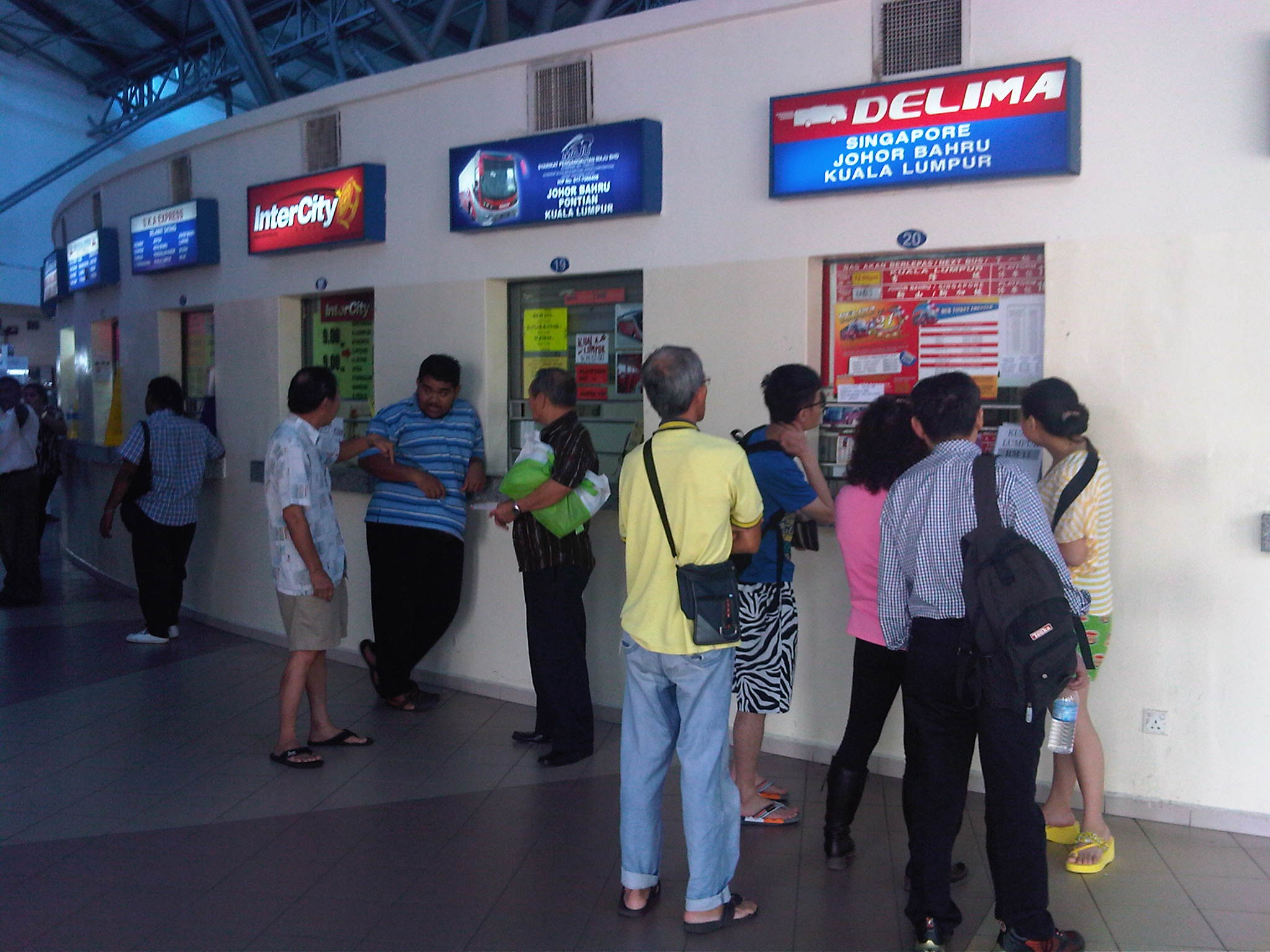 One can purchase tickets to any point in Malaysia (local long distance trips) and Singapore (another country) is among the most popular destinations. Schedules and fares are posted for information of travelers.
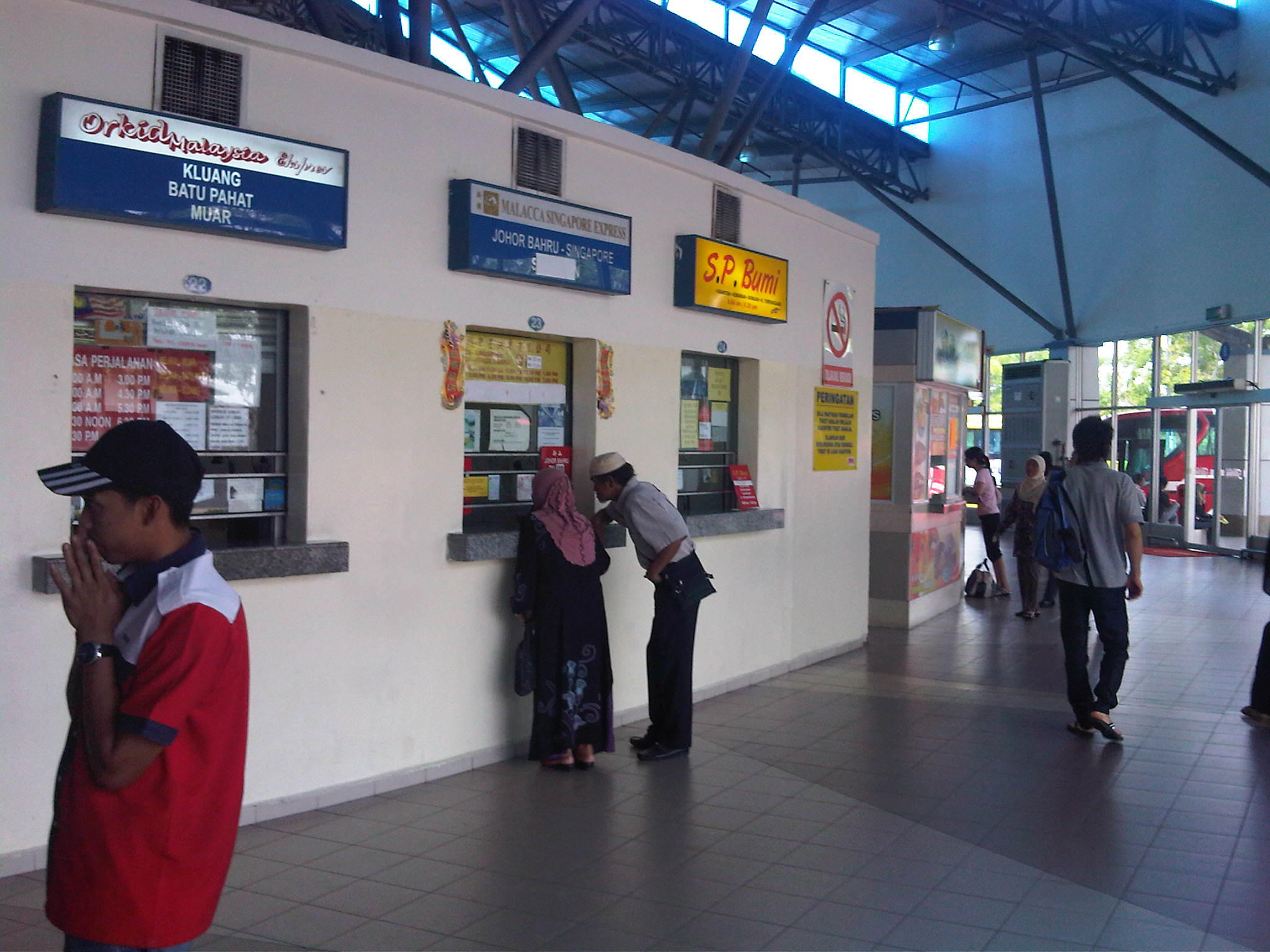 There are many choices among the bus companies but I would strongly recommend Starmart Express buses when traveling between Singapore and Malaysia. They provide excellent service and have well-maintained buses. One can purchase tickets online and claim these at their booths/stations.
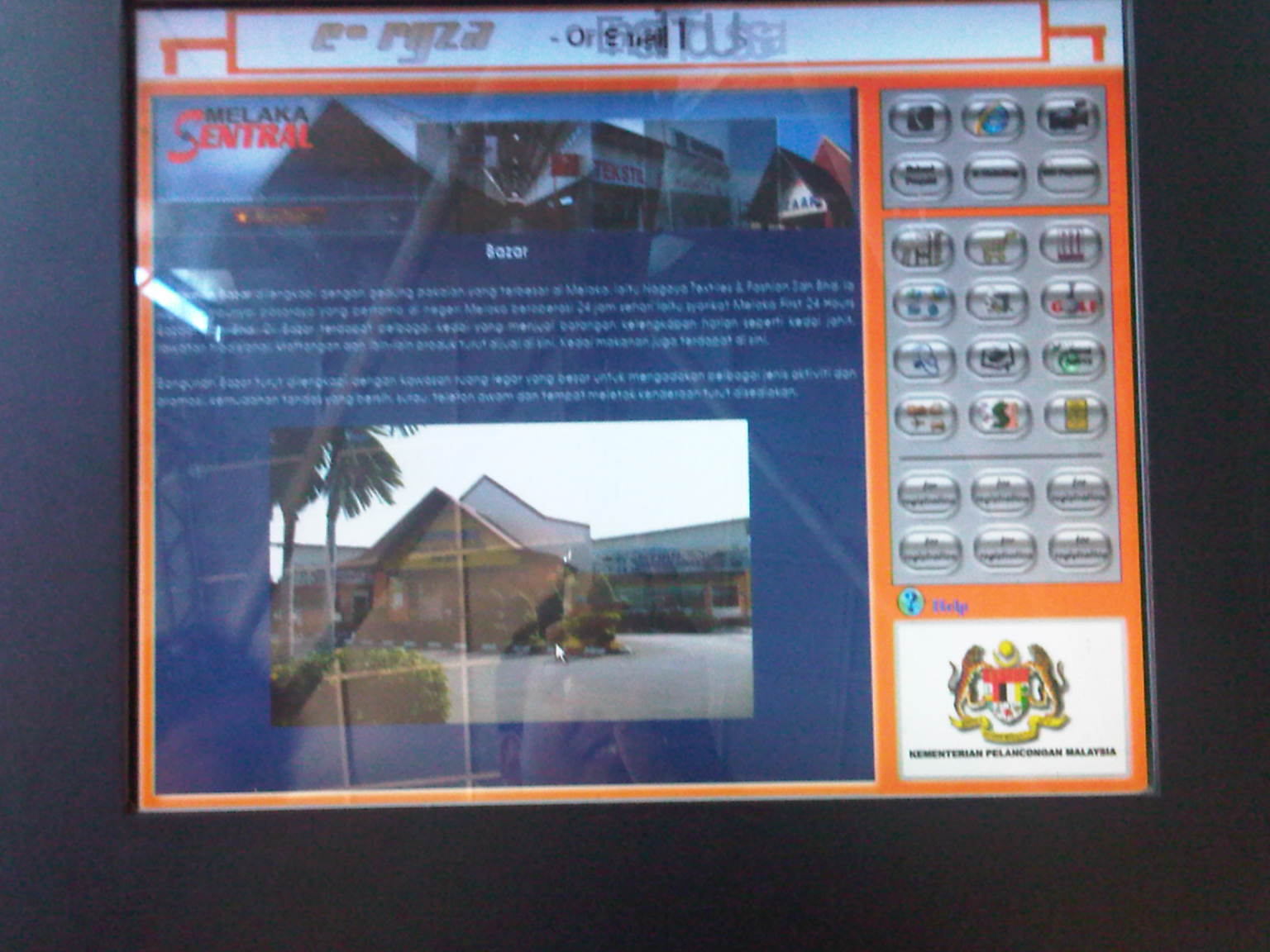
Interactive information screen at the terminal
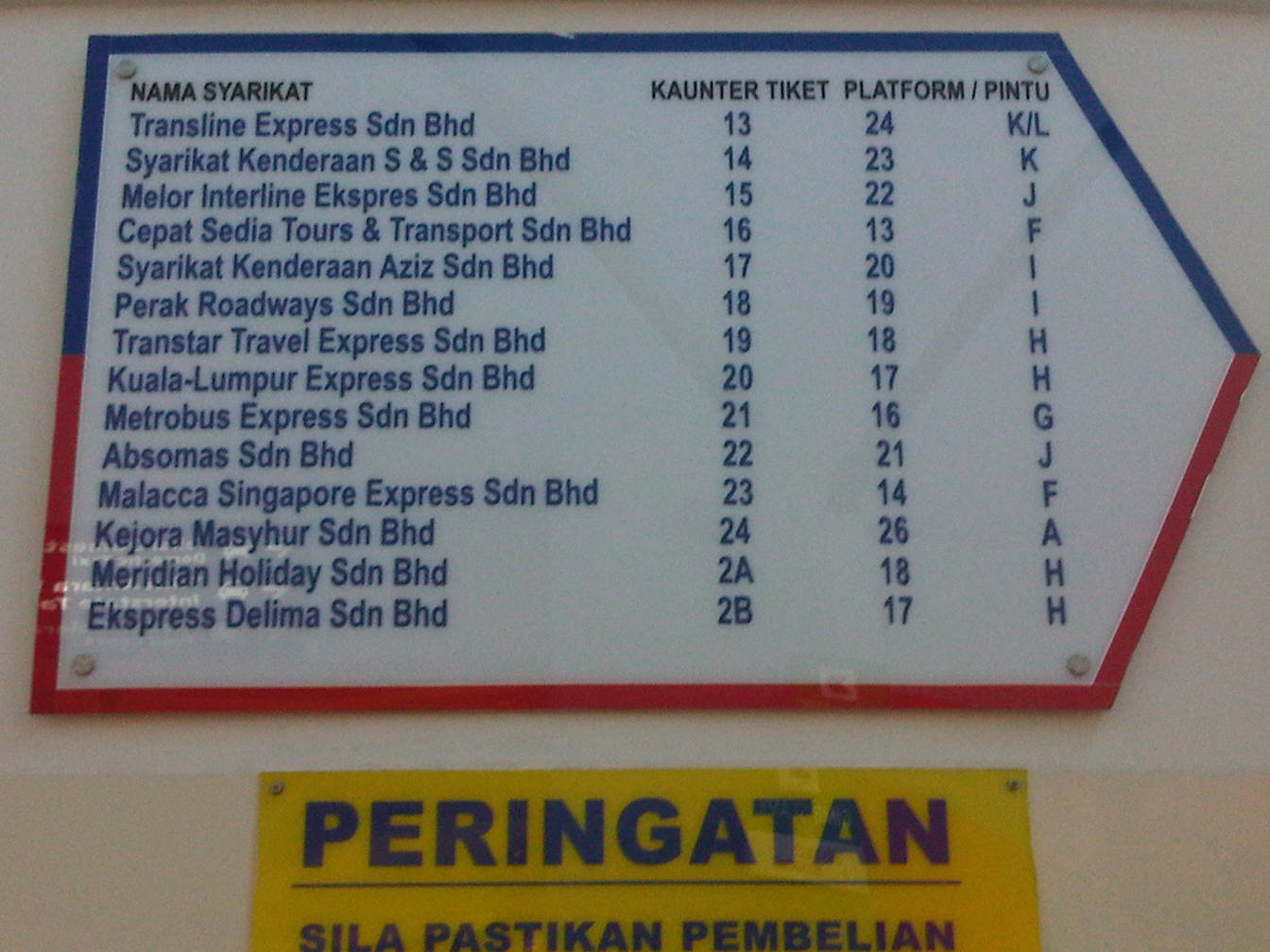 Static information board for the locations of bus company booths at the terminal
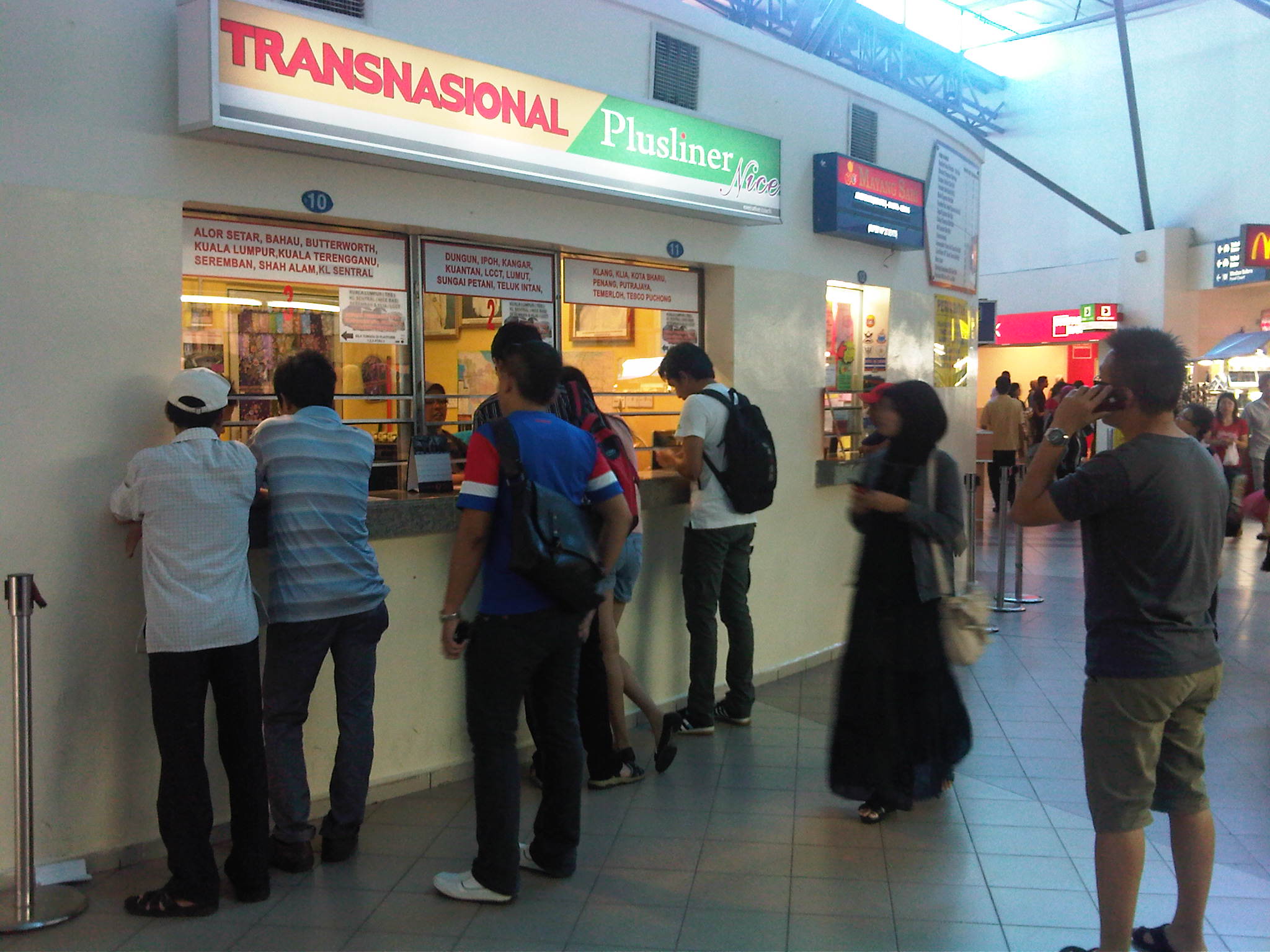 Travelers lining up before a booth to purchase tickets
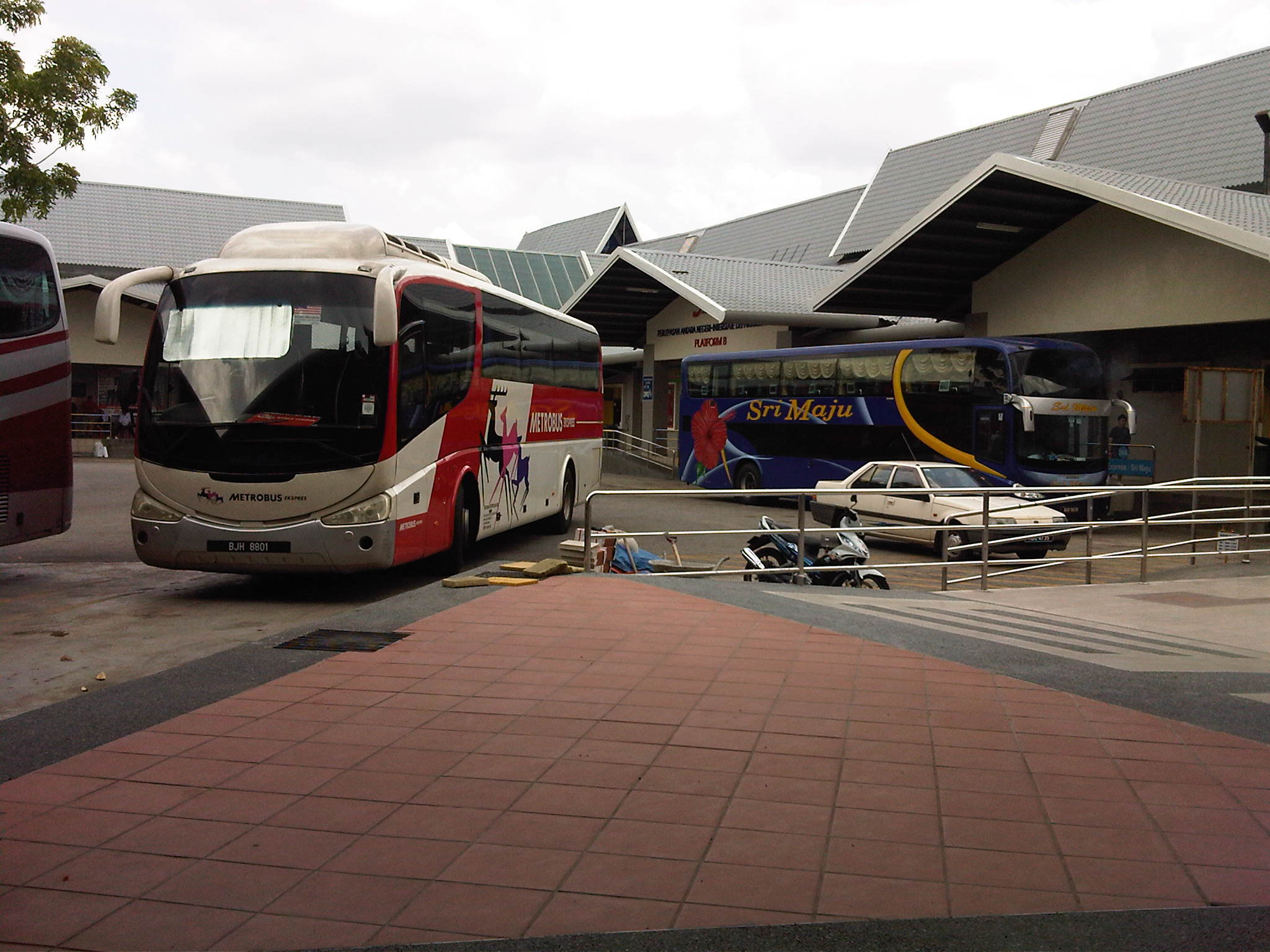 Buses berthed at the terminal departure area
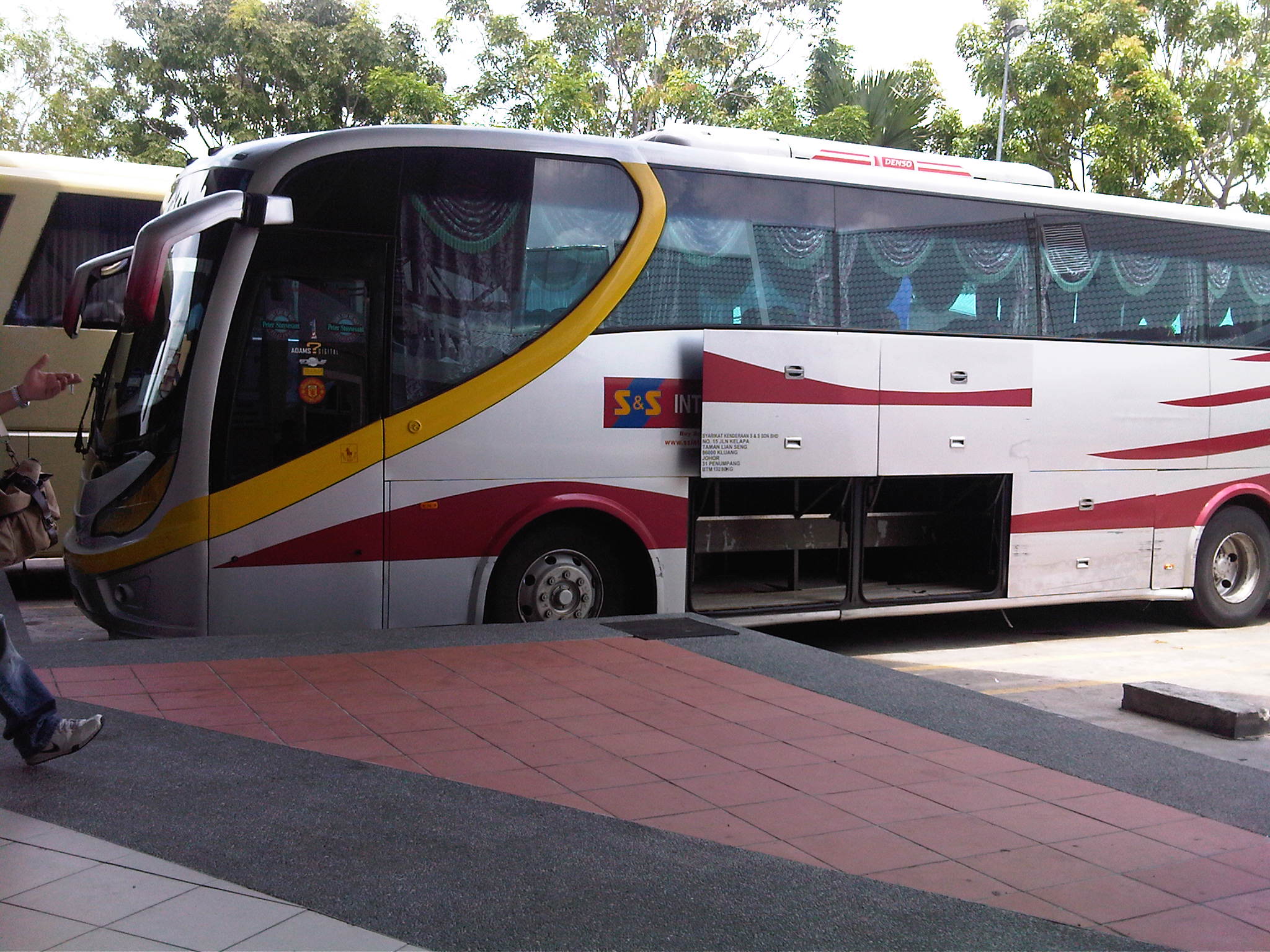 Typical long distance limousine bus plying routes between Malaysia and Singapore
The central bus terminal at Melaka is a good example of terminal design for long distance buses. Such concepts are also found in the Philippines but with some significant variations in the design. Among the notables are the terminals in Mabalacat (Pampanga), Lucena (Quezon) and Legazpi City (Albay) in Luzon. Other terminals in the Philippines are not good examples in the sense that many are not developed or well-planned, many without the amenities or features of a modern terminal. Perhaps local and international examples of terminals should serve as templates for central terminal development in the Philippines including those being conceptualized for Metro Manila.
–
Another look at the Muelle Del Rio
Got to pass by the Muelle Del Rio again en route to a meeting at the DPWH in the Port Area. We took this route as we wanted to avoid congestion in front of the Manila City Hall and along Padre Burgos. I made sure I took additional photos of the road including the approach from the Quezon Bridge to show the parked vehicles, mostly UV Express, parked along the road. Some maps already refer to the Muelle Del Rio as Riverside Drive. I think this is not appropriate especially from the perspective of heritage and the preservation of street names that are strongly linked with history. Such is an unnecessary simplification that should not be the case especially in the historic City of Manila and in the vicinity of Intramuros.
 Approach from the Quezon Bridge – UV Express (FX taxis) parked along the roadside
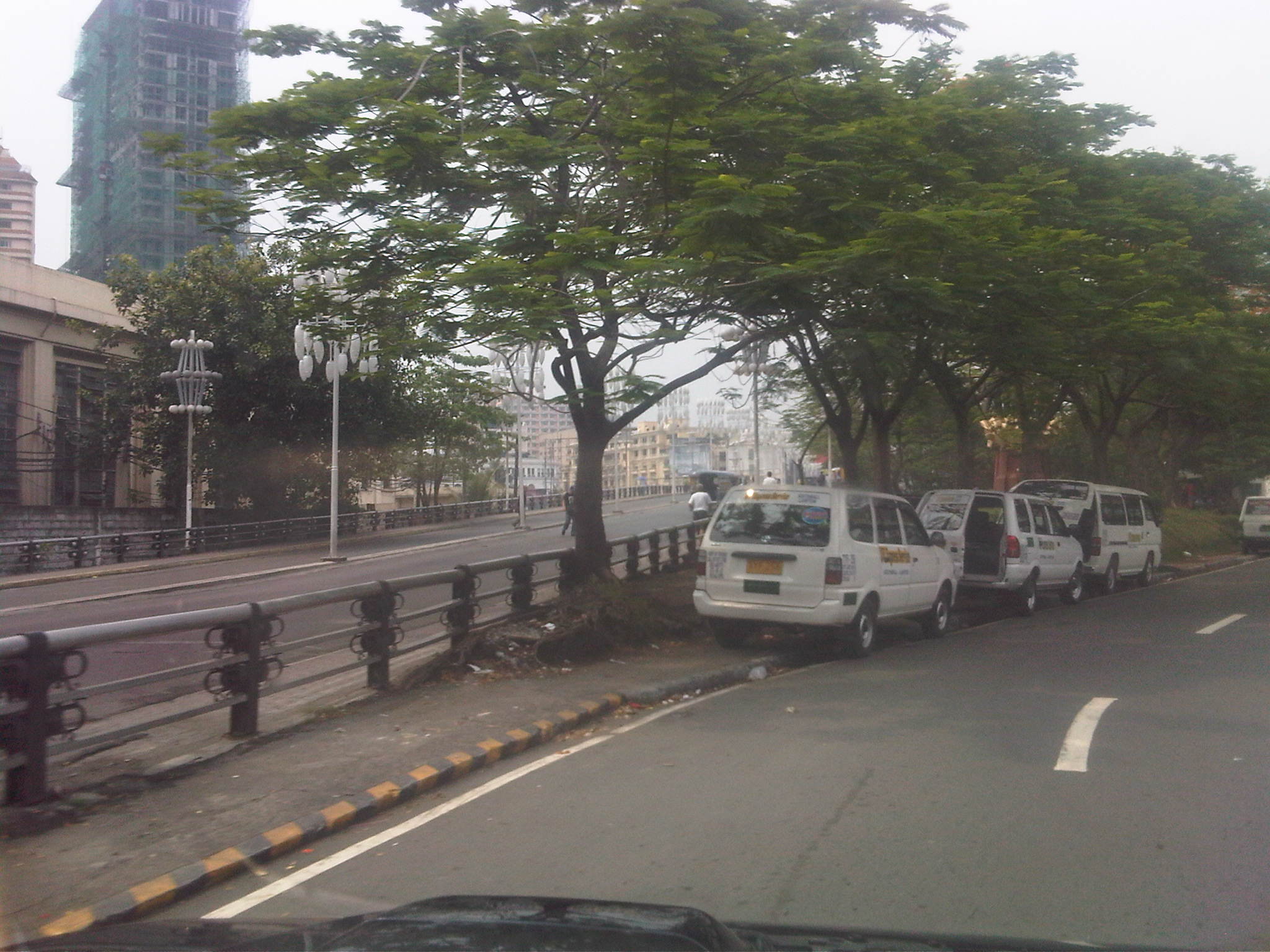 A bridge too close – the road comes quite close to the approach to MacArthur Bridge (the road on the other side of the barrier), which leads from Padre Burgos to Carriedo
 Taking a turn – turning from the approach towards the riverside portion of the Muelle del Rio, one can see the bridge for the LRT Line 1 and trees where homeless people usually take shelter. The driveway under the bridge is for a public transport terminal occupying the area under the bridge.
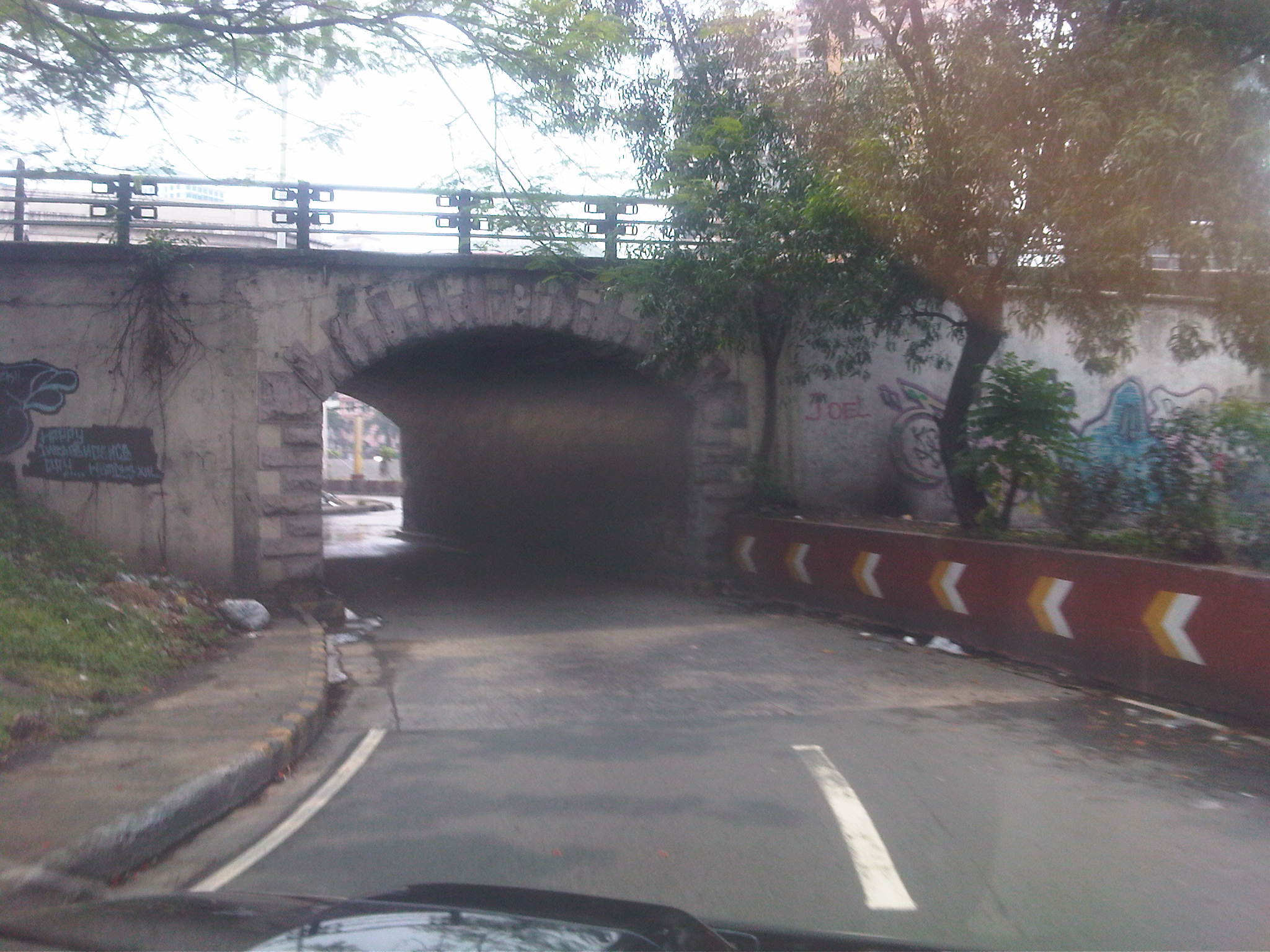 Underpass at MacArthur – the walls of the plant box are painted and seem to be well-maintained while that of the bridge are vandalized
 Behind the Post Office – the walls/fence of the post office is vandalized while there seems to be no one using the walkway along the Pasig River at the right of the photo. The yellow poles are light posts. There are no pavement markings along this stretch of the road.
 Pools – water from the mid-day rains accumulate along the gutters at either side of the road. The walls of the Manila Central Post Office look dirty from the combination of grime and vandalism.
 Sidestreet – approach to the junction to the sidestreet between the central post office and the building of the Philpost Bank before the underpass at the Jones Bridge
 Jones Bridge underpass – the underpass is obscured by the tree growing beside the wall. The stairs shown on the right of the photo is the pedestrian access to the bridge from the riverside walkway.
 After the bridge – there is significant traffic behind the National Press Club building
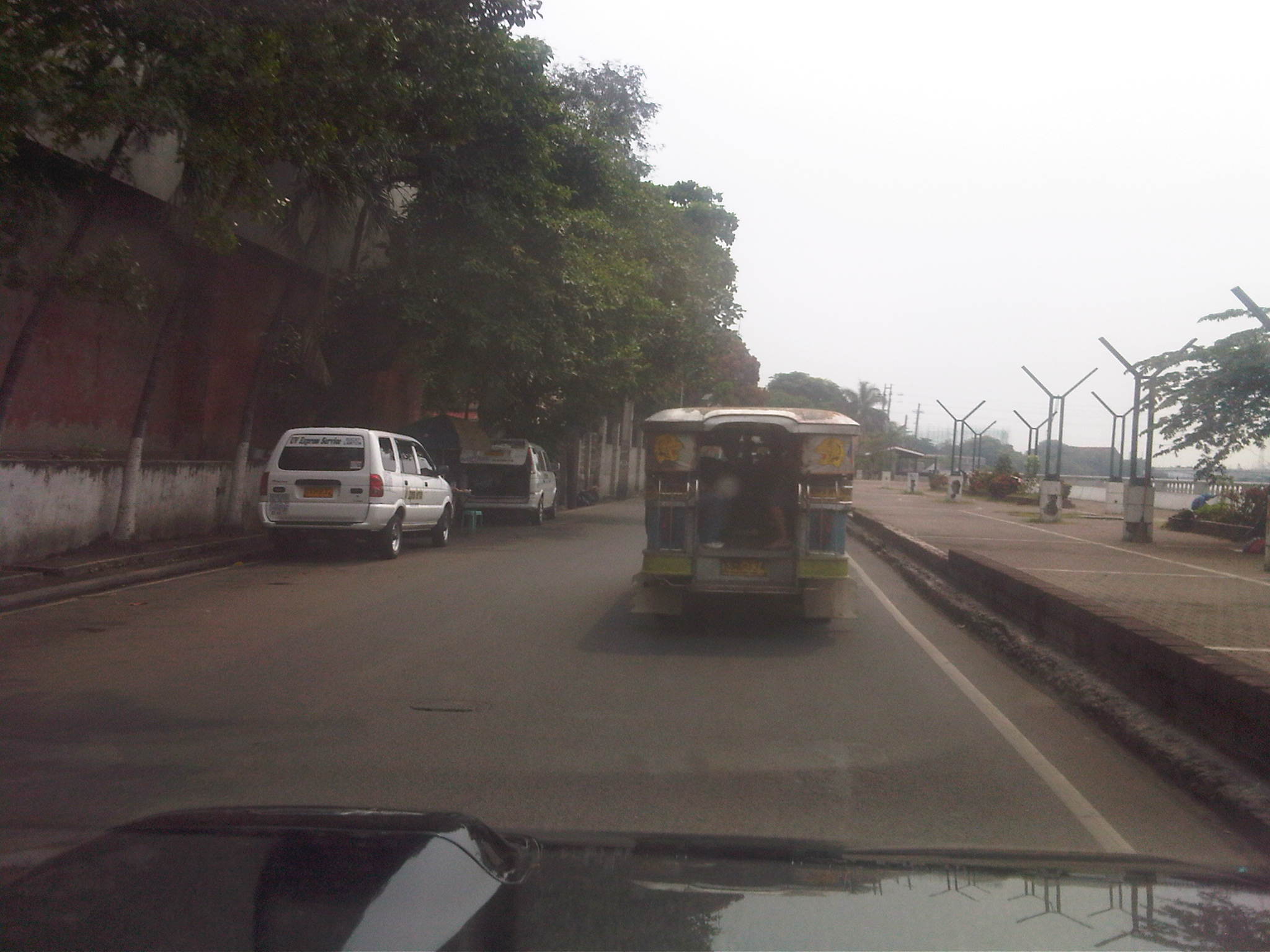 Bureau of Immigration – the BI complex is behind the wall shown on the left of the photo. There is a wide buffer zone along the Pasig River that’s been developed into a riverside park by the City of Manila. The curious Y-shaped structures are lamp posts that provide ample illumination at night time.
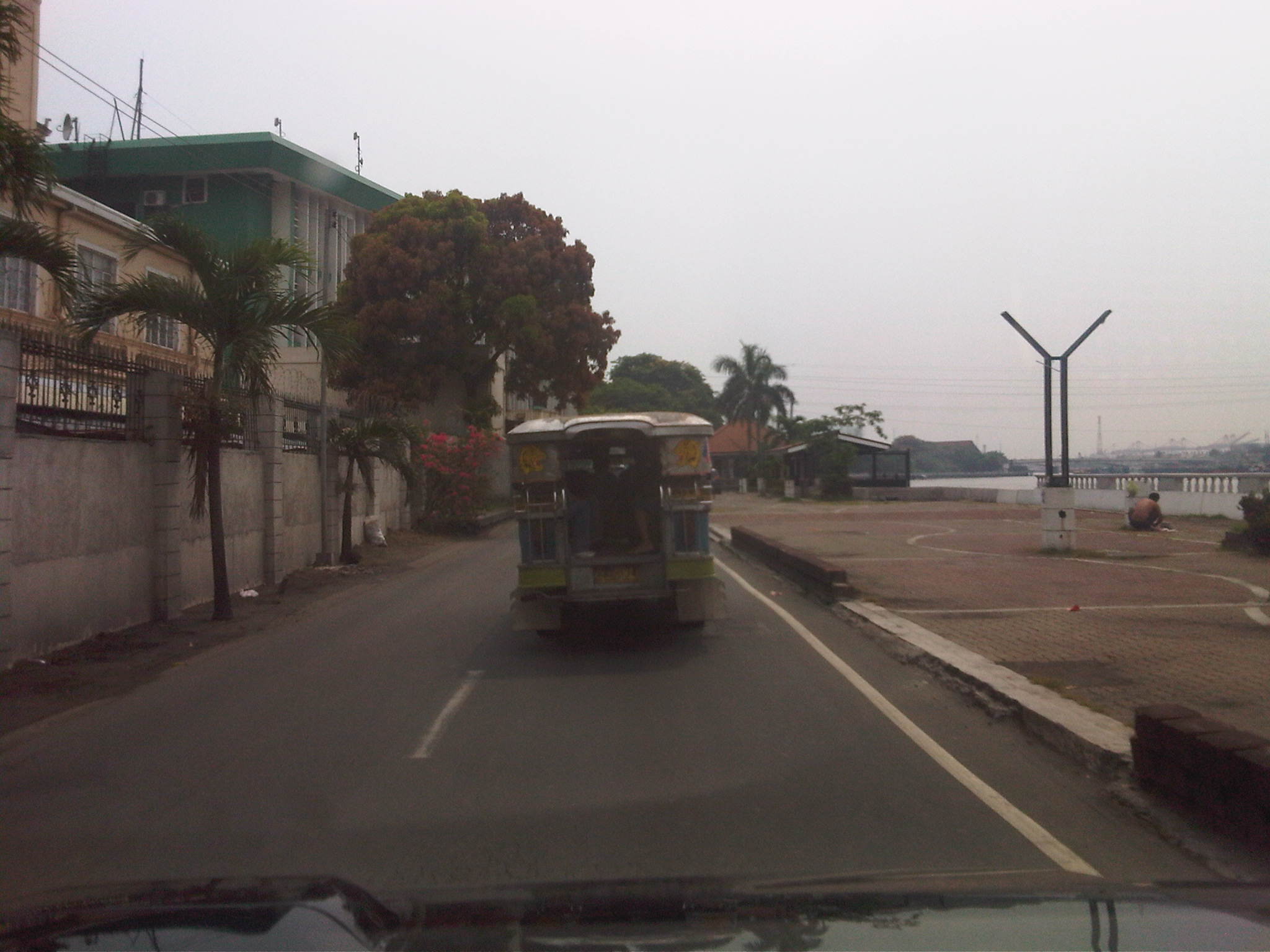 Approaching the terminal – the park area on the right is also used as parking space by visitors of the BI and those using the now non-operational Pasig River Ferry terminal at the mouth of the Pasig.
 Ferry terminal – parked vehicles along the terminal plaza are actually those of employees and visitors of the BI
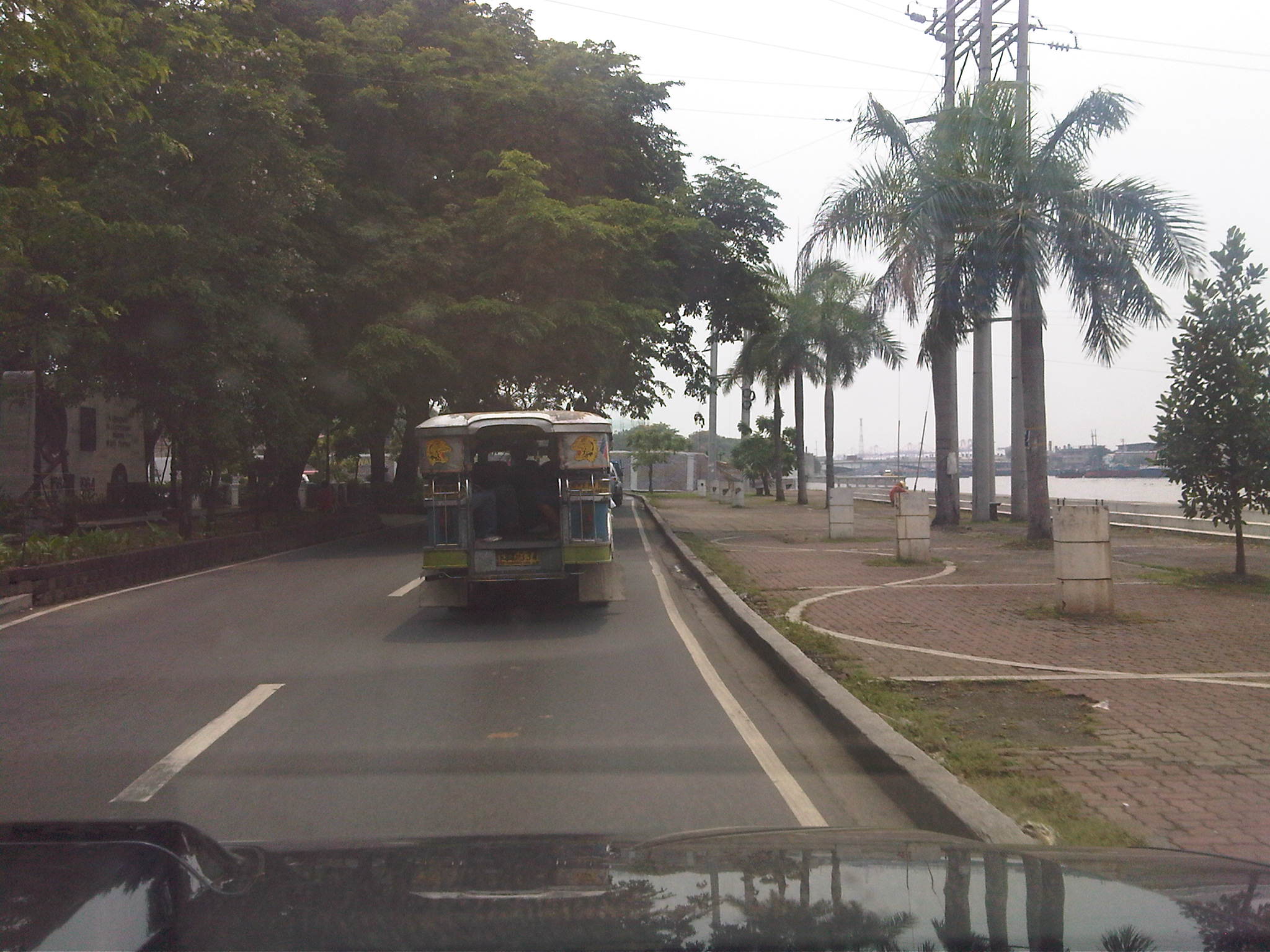 Post-terminal – the open area/riverside park continues after the ferry terminal and across the Plaza Mexico. Faintly visible on the left of the photo is the Acapulco Galleon Trade Monument that commemorated the trade route between the Philippines and Mexico during the Spanish Period. Across from the other side of Plaza Mexico are the ruins of the old Aduana (Customs) building.
 The dark side – the lamp posts seem to have been removed from their concrete bases. This was also shown in the preceding photo and I can just imagine how dark it is at night. The area has much potential as a park and the City of Manila should develop the place for it to attract people.
 Reconstruction – the Intramuros Administration and the Department of Tourism are already implementing some projects here and there but more would have to be done for Intramuros and the Muelle del Rio to be revived and become a major attraction if only for its heritage value. I certainly would like to see it developed like Melaka in Malaysia.
The Intramuros area including the Muelle del Rio may be considered for cycling and pedestrian facilities to encourage people to walk and cycle in the area. The stretch certainly has potential for walking and NMT, and should not be allowed to deteriorate further. Off-street parking facilities should also be considered and carefully planned such that on-street parking may be restricted and space be made available for pedestrian facilities. I am sure there are many planners and architects who would be up to this challenge.
–
Lane rationalization along Katipunan Avenue
While driving along Katipunan last weekend, I noticed the excavations beside the median island along the southbound direction. The excavations were of curious shapes as they were large holes that were conspicuously beside each of the small trees planted on the median island. It suddenly struck me that this was likely the implementation of the planned adjustment of the median island to allow for an additional lane along Katipunan northbound. A few more passes along the project site confirmed my suspicion and I was finally able to take a few photos this morning of the work along this section of C-5.
 The old median island has already been removed to make way for an additional lane along Katipunan (C-5) northbound. This will increase the number of lanes from 3 to 4 and should ease traffic when classes open in June. Meanwhile, the trees have been replanted on the adjacent lane on the southbound direction where a new median will be constructed.
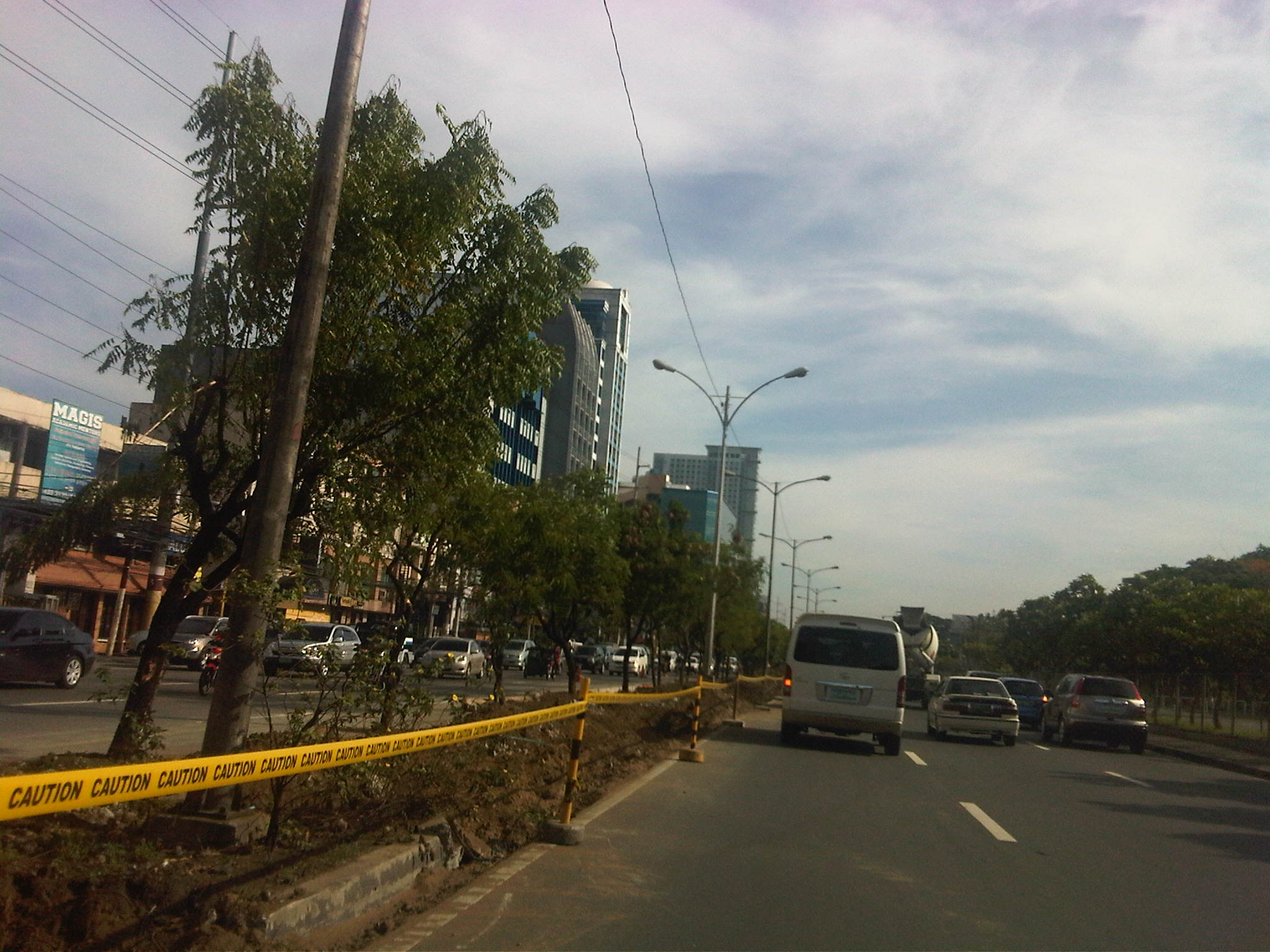 Aside from the trees, the light poles will also have to be transferred. I assume this will be done with Meralco and during the night time to reduce impacts on traffic.
 After transferring the trees, the old curb is demolished and the soil excavated and transferred to the new median on the other side. A new curb is being constructed and is visible in center of the photo.
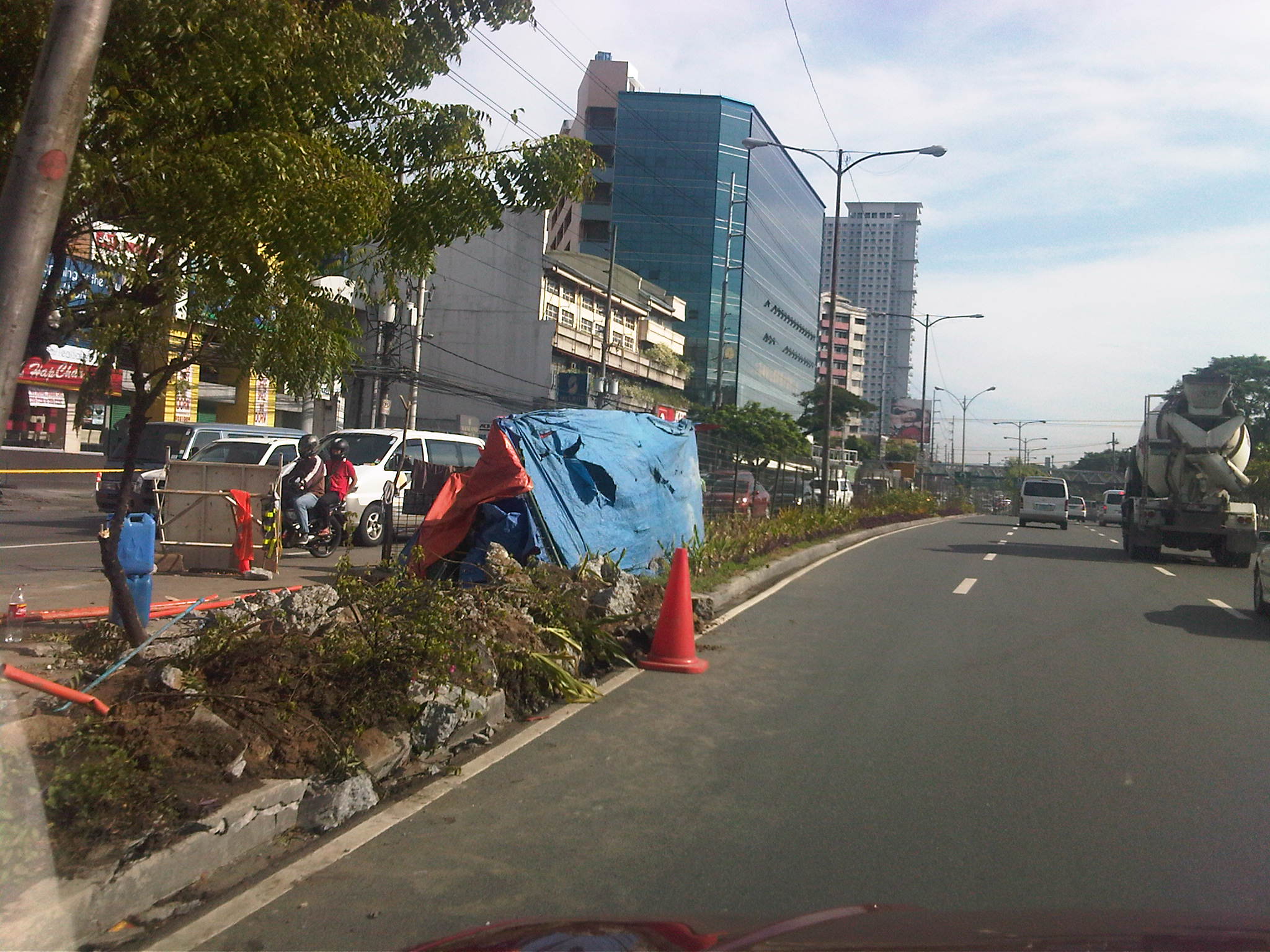 While the project is being implemented 2 lanes of the southbound side are effectively unusable to traffic with one lane being converted into a median and another being used by the contractor for their equipment and materials.
Once completed, the section of Katipunan should have 4 lanes along the northbound direction. Meanwhile, the southbound direction will have 5 lanes from the 6 it had after the west service road was removed as part of the U-turn scheme implementation by the MMDA 9 years ago. The 5 lanes are not all usable to general traffic since 1 or 2 lanes area often occupied by parked or standing vehicles in relation to the establishments on this side of Katipunan.
–
R-10: Smokey Mountain
I have not been to the Smokey Mountain area in a long while. The last time I’ve been there was in the mid 1990s (around 1995) when the area was still largely undeveloped and literally smoking from the smoldering garbage and the fires caused by methane released by the decomposing waste in the open dump site that grew to mountainous proportions. At the time, there were some efforts to alleviate the living conditions of people who resided here, many of whom depended on scavenging for junk and the production of charcoal. While Quezon City had its own mountains of garbage in Payatas, Smokey Mountain at the time symbolized poverty and desperation in the Philippines and took informal settlement to an even higher level than what we usually see around factories and vacant lots mainly in cities around the country where people try their luck in the hopes of having better conditions in life.
The following photos were taken while we were returning to Quezon City from a meeting in Manila. Our driver offered the idea to take this route as against the usual one that passed through Quezon Blvd and the Quiapo area, believing that a route via R-10 and C-4 would be faster. It was indeed faster and afforded me photo ops of the road environment along the way. Admittedly, the photos are not of good quality (blurry) as it was a gloomy afternoon and there was a slight drizzle the entire time we drove from the Port Area to UP Diliman.
 R-10 northbound – having an animated conversation with my fellow passenger, I almost forgot where we were and the area we were passing en route to C-4. I suddenly recognized the area when I saw what looked like a small hill in the horizon. It was then that I realized that that was no hill. It was a mountain – Smokey Mountain.
 Walk-up – on our right were 4-storey apartment buildings that looked like they were at the point of bursting what with all the protruding wood, metal and cardboard from the buildings. The original building is colored beige and all other “enhancements” are actually attempts to expand units probably made by residents to accommodate more (extended) family members.
 Extensions and expansions – I don’t know if the modifications to the tenements are legal or done with the approval of local authorities. I am sure though that these are unsafe and would probably collapse if a significant magnitude earthquake hit Metro Manila. Such are the urgent problems of mass housing that need to be addressed and quickly. But then, beneficiaries of such housing should not abuse their units to the point that they become decrepit and safety hazards.
 On-street parking – along R-10 were parked vehicles of which many were trucks and tricycles. The residential areas are served mainly by 3-wheelers including tricycles and pedicabs (padyak). Most business along the roadside cater to truckers: vulcanizing shops, vehicle repair, eateries and sari-sari stores that are part of the informal (and underground) economy; a major aspect of transport in the Philippines.
 Wide carriageway – the sections of R-10 in the Smokey Mountain area had something like 5 lanes per direction. There were no pavement markings so this is just an estimate based on the likely lane widths to factor in the significant truck traffic passing through the area. My previous memory of the place was a 2 lane road without curbs or shoulders.
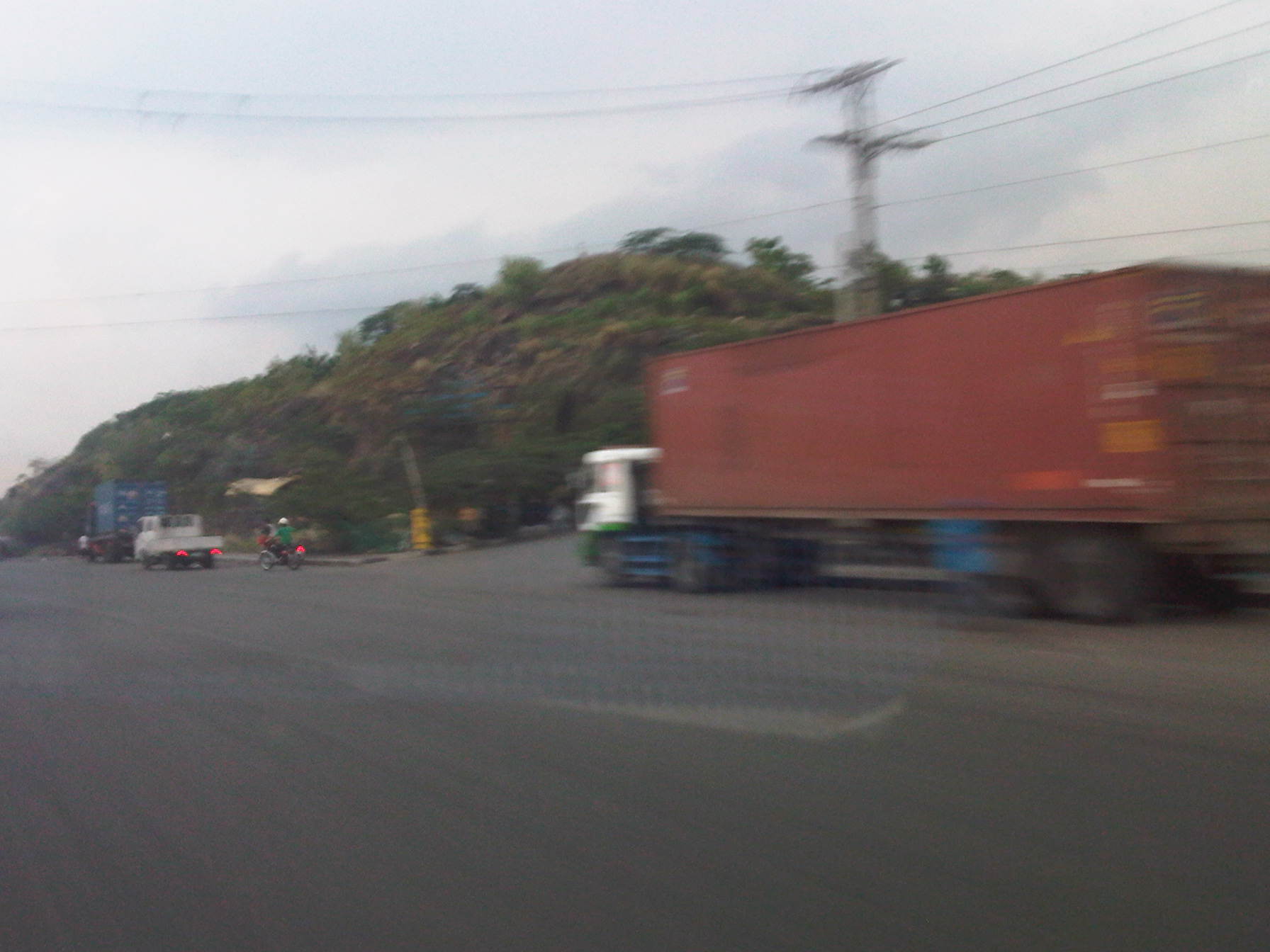 Foot of the mountain – this is what remains of Smokey Mountain after much of the garbage had been transferred, and the rest treated after dumping was ordered discontinued in the 1990s after outcries from environmentalists and various NGOs. The pavement conditions back in the 1990s were so bad that there were frequent congestion along the road and leachate from the garbage flowed along the roads. It was worse during the wet season as the rain and the usual winds sprayed a stinky mix unto vehicles passing the area. One had to wash or take his/her vehicle to the car wash as it will smell really bad. If you allow the vehicle to dry, its even worse because in addition to the smell, the car exterior would be sticky.
 Mountainside – there were garbage and other wastes, the homeless and informal settlers everywhere in the area. Mountains of waste were on either side of the road, and the smell will seep into a vehicle, never mind if one drove a new car as the stench was strong enough to overwhelm filters and air-conditioning given enough time.
The residential buildings in the preceding photos are not the first ones to be built in the area. In the early 1990’s a few walk-ups were constructed on the other side of the highway as a first effort to address the question of informal settlements around Smokey Mountain. I remember those to be the first ones to be abused by the residents/tenants themselves who seem to think it was their right rather than privilege to be granted housing and be beneficiaries of livelihood projects by both government and NGOs.
It is a good thing that the dump site was closed many years ago. Unfortunately, similar waste disposals are present elsewhere including parts of Payatas in Quezon City and San Mateo in Rizal. Open dump sites should not be an option for many LGUs without the proper guidance of experts from pertinent government agencies and the private sector. Proper and suitable waste management systems should be a priority for LGUs.
–
Future of road assessments in the Philippines
The field surveys conducted under the International Road Assessment Program (iRAP) in cooperation with the Department of Public Works and Highways (DPWH) employed a van fitted with cameras taking video of the road environment. The surveys were mobile and covered more than 2,000 kilometers of national roads in Luzon and Visayas. The video is then processed prior to evaluation by a team trained to rate road sections according to a criteria established by iRAP and applied in many other countries including Malaysia and Australia. I haven’t had the chance to explain the project to a close friend of ours with the Geodetic Engineering Department of the University of the Philippines Diliman when he explained to me his proposal for a mobile mapping system that we included in the Intelligent Transport System (ITS) program for consideration by the Department of Science and Technology (DOST) with their Engineering Research and Development for Technology (ERDT) program.
The GE Department recently acquired state of the art equipment for mobile mapping under another project. I presume this will eventually be used for the road environment and the equipment includes a 3D Laser scanner installed on top of a survey vehicle. The scanner will enable the construction of 3D images of the road environment with an accuracy that will allow for a more automated (and objective) assessments of road safety.
They also installed an inertial measurement unit (IMU) on the vehicle. This device will be able to measure horizontal and vertical movement of the vehicle, enabling it to measure displacement that can be used to determine road roughness. The latter may be used to determine the international roughness index (IRI), which is a measure of quality of road pavements.
 State of the art equipment being installed on an AUV
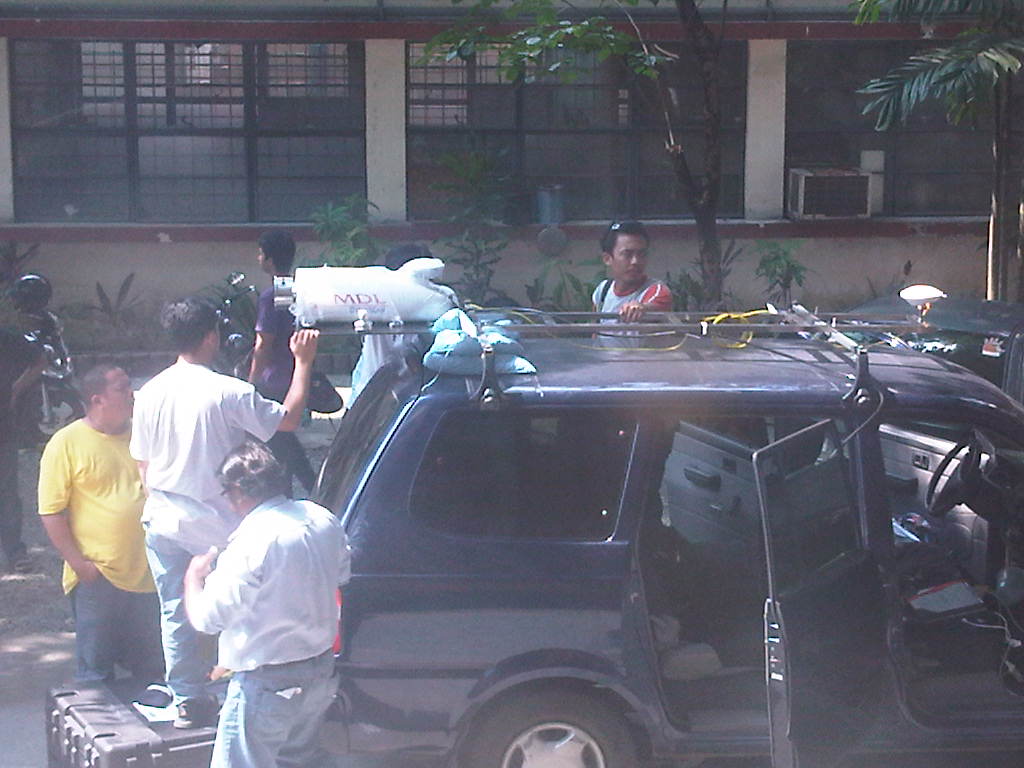 Close-up of installation work
 UP College of Engineering Staff posing after completing installation of the 3D scanner
The Road Safety Research Laboratory (RSRL) of the National Center for Transportation Studies (NCTS) look forward to working with the GE Department on applications of their hardware and software for evaluating road safety in the country. Hopefully, we can get support from the pertinent agencies for this endeavor.
–
Hong Kong International Airport
I’ve been to HKIA only twice and both have been in transit to another country rather than me visiting Hong Kong for business or its attractions. As such, I would say that the photos I was able to take do not do justice to the terminal, which is probably the caveat for this article.
Hong Kong would be in the Top 3 airports in Asia and perhaps in the world. In terms of efficiency, I would still say Singapore’s Changi would still be the best but HKIA will be a very close second. Incheon will probably come in as 3rd but not really that close to the first two.
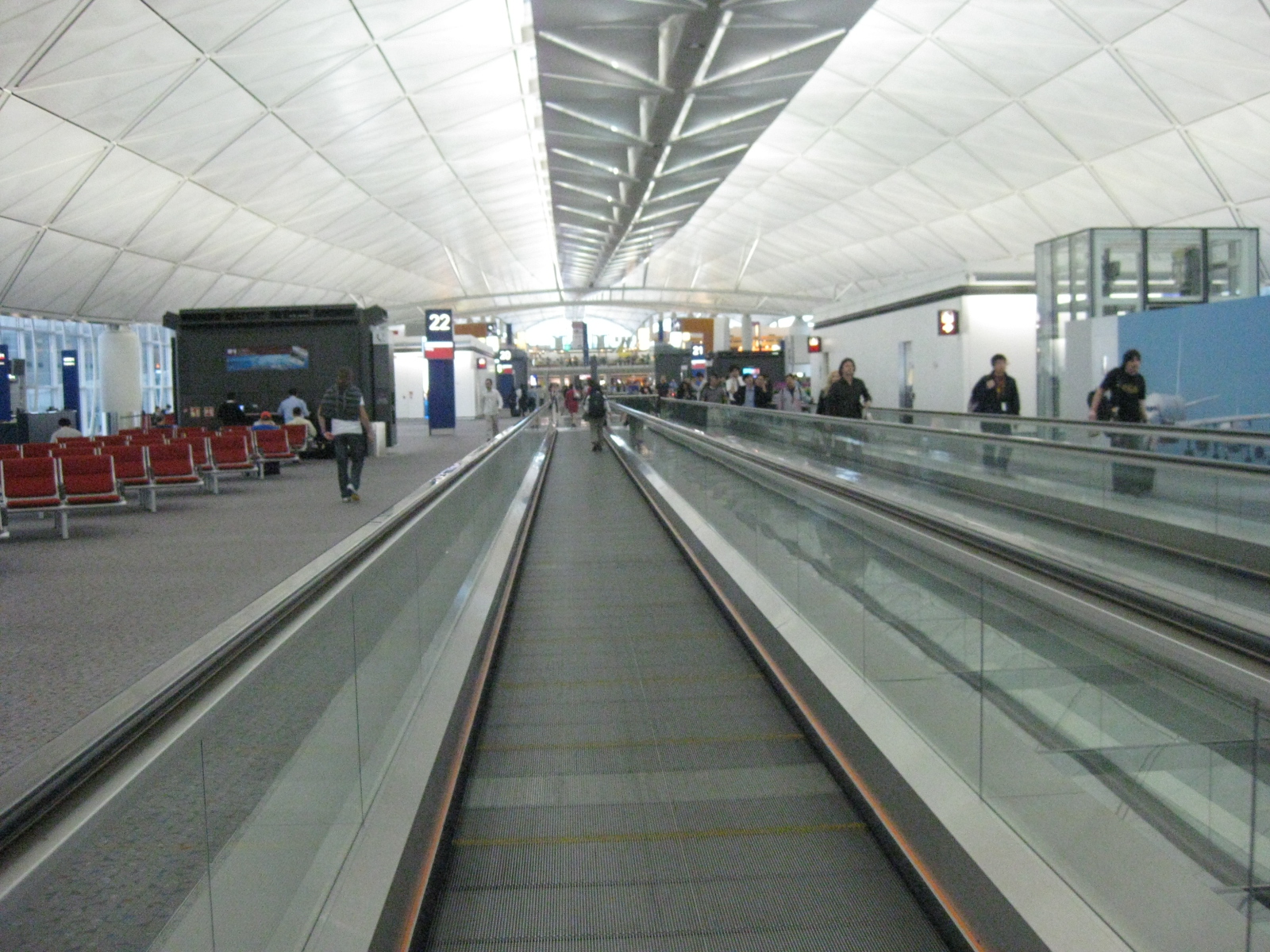 Moving walkways – these facilities are a necessity even for those who at first assume they don’t need to use them. The airport terminal is huge and it would take time for one to walk or run to catch a flight, especially a connecting one.
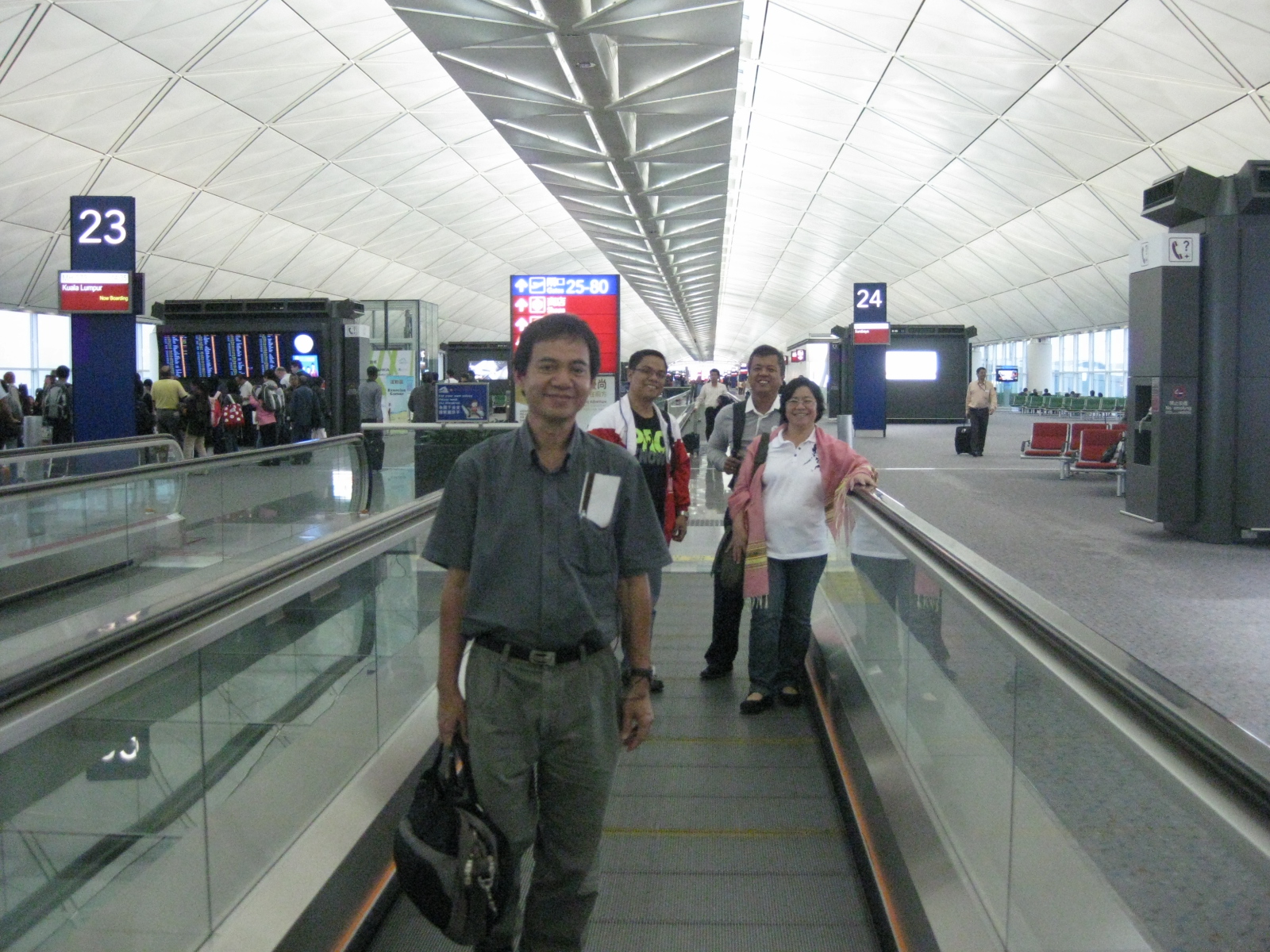 Information technology – the information systems at the airport are top of the line and allows travelers, like our group in the photo, to easily navigate the airport and know the status of our flight.
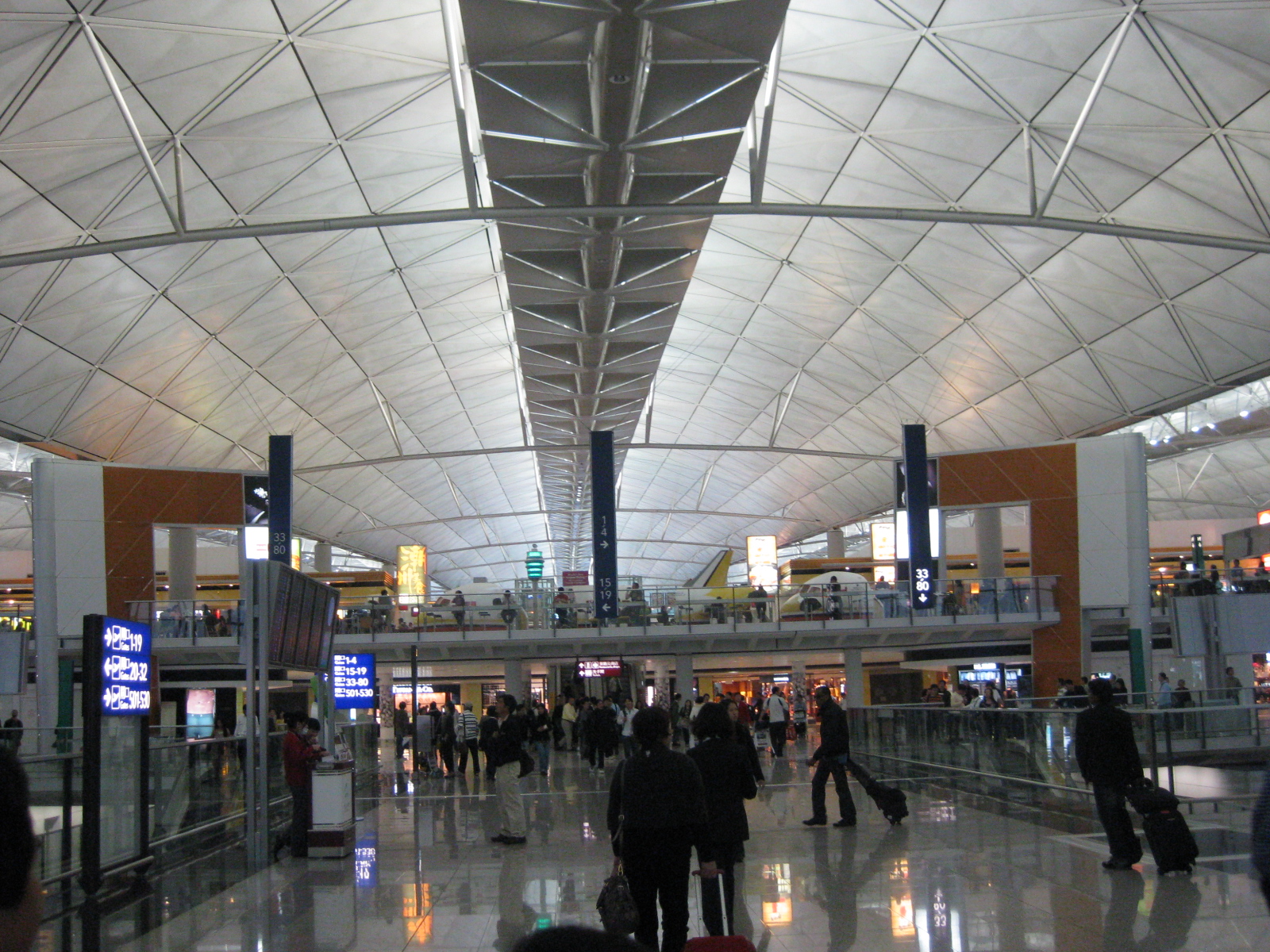 Shops and restaurants – HKIA is a microcosm of Hong Kong itself as one may go shopping or dining at the airport. We saw a lot of popular booths where travelers can grab quick meals or drinks while waiting to board their flights. The retail shops are a mix of the affordable to the more expensive goods including souvenirs even if you just happen to be in transit at HKIA. There’s even a large Disney Store at the airport.
 Cavernous – the architecture of the terminal gives travelers a sense of immensity with the very high ceiling and tremendous space for going around. This is just appropriate for a terminal handling millions of passengers.
 Hub – HKIA is the hub of the island’s major carrier, Cathay Pacific. CX, as the airline is designated, flies to so many destinations from HKIA making it a major player among international carriers. I think Cathay Pacific is easily among the top 3 or 5 airlines in the world where all in my list being Asian (e.g., Singapore Airlines, Thai Airways).
 View from afar – airport access may be via road or rail transport and one could see the Hong Kong cityscape from the airport. In the photo, the tall buildings before the mountains are probably high-rise apartments where many reside. HK is a very dense city, which necessitates such residential developments instead of the single-detached and even walk-up types to account for space limitations.
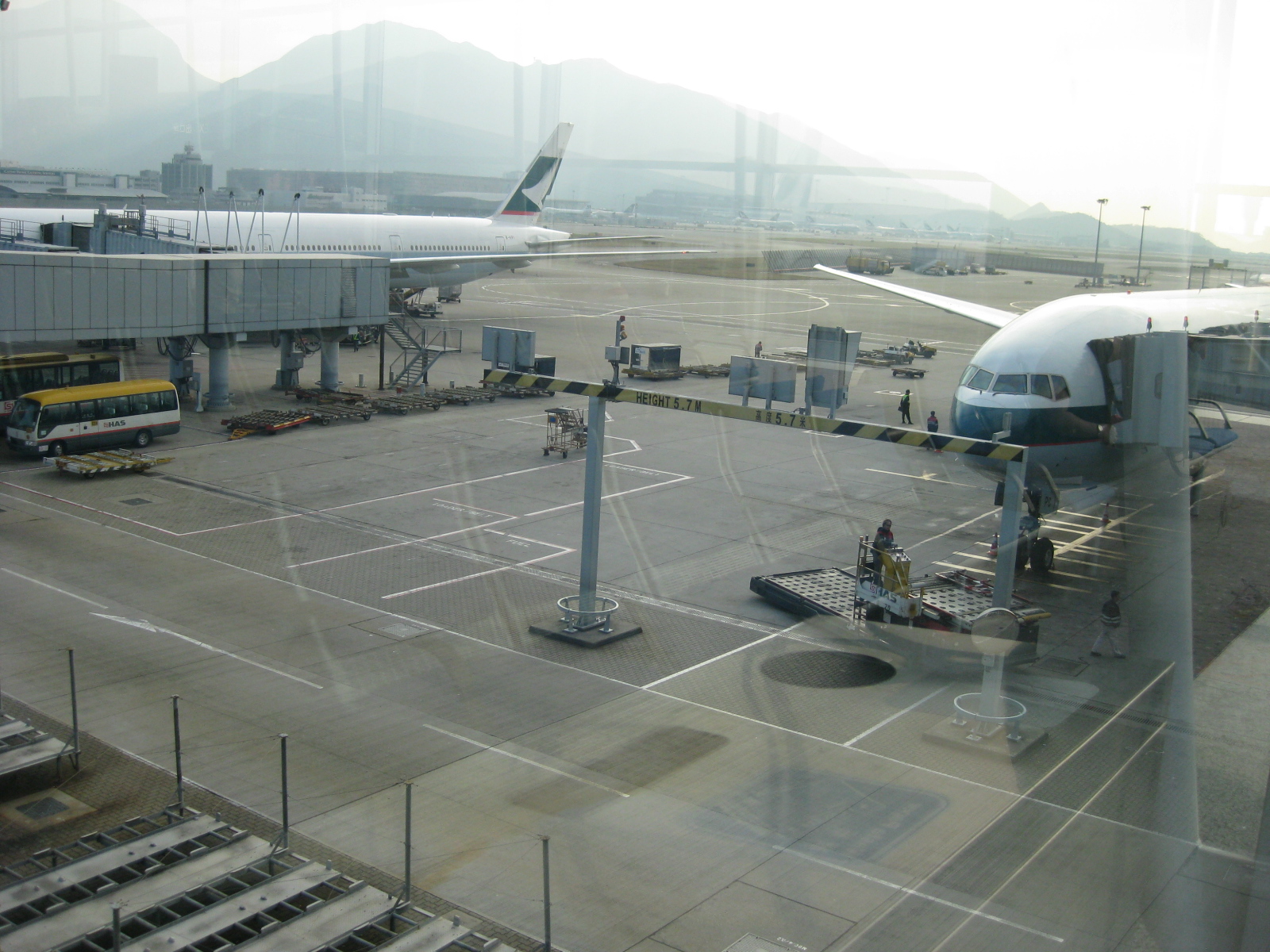 Ground handling – a view of the tarmac where a lot of activities happen. I remember a video going around in You Tube about the baggage of a Philippine carrier being mishandled by HKIA ground staff. I guess such things happen everywhere, even in what are already considered as top airports.
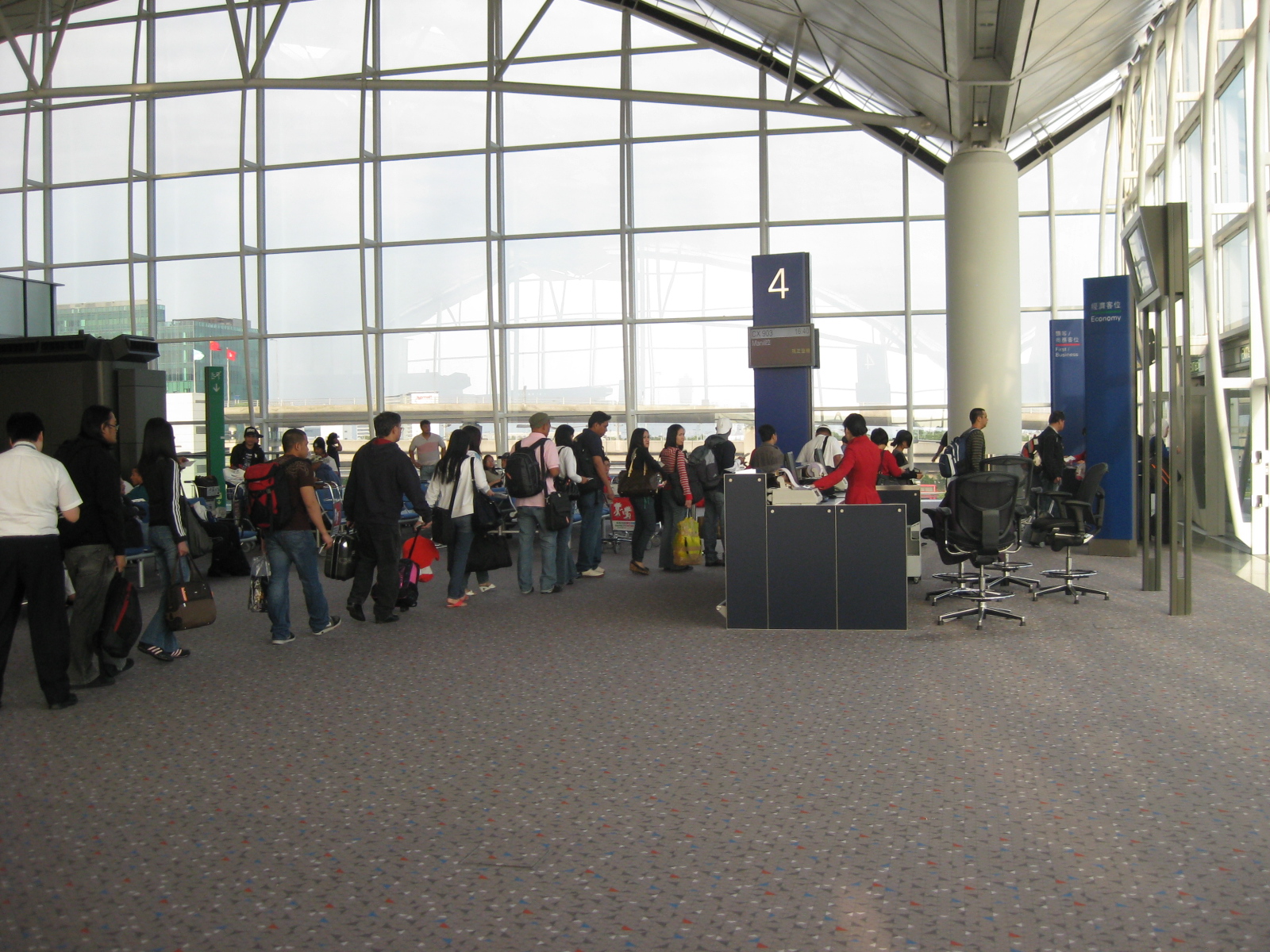 Boarding – passengers queued before Gate 4 at HKIA
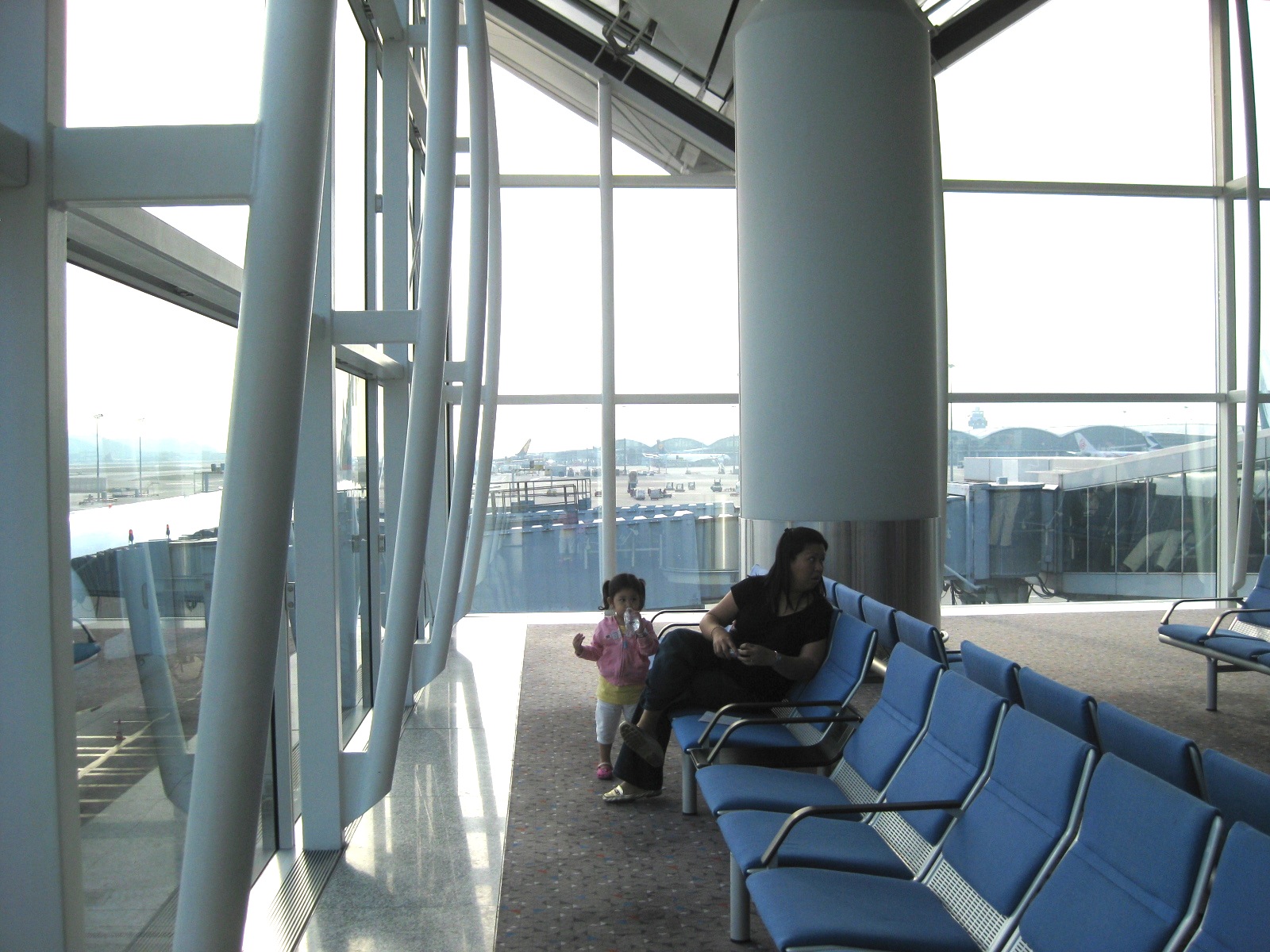 Best seats in the house – the layout of seats at the departure area allow people to have some personal space in a very public place. The windows afford a view of the surrounding area including airport operations for people interested in transport like our group just coming from an academic conference on transportation.
 Window seat – the large windows and high ceilings make every seat practically a window seat
 Not crowded at all – we were to board an Airbus A340 for our flight back to Manila. Minutes before the flight, most passengers seem to be anywhere but near the our boarding gate.
 Boarding time – I was able to take a photo of a friend taking a photo as well as two queues before a couple of boarding gates at the airport. The queues were generally orderly with airport staff checking the boarding passes of people in line to facilitate the boarding procedure.
 Line-up – this line here is actually for our flight. As there were no boarding sequence for those riding in coach, we decided to board later as the line was quite long.
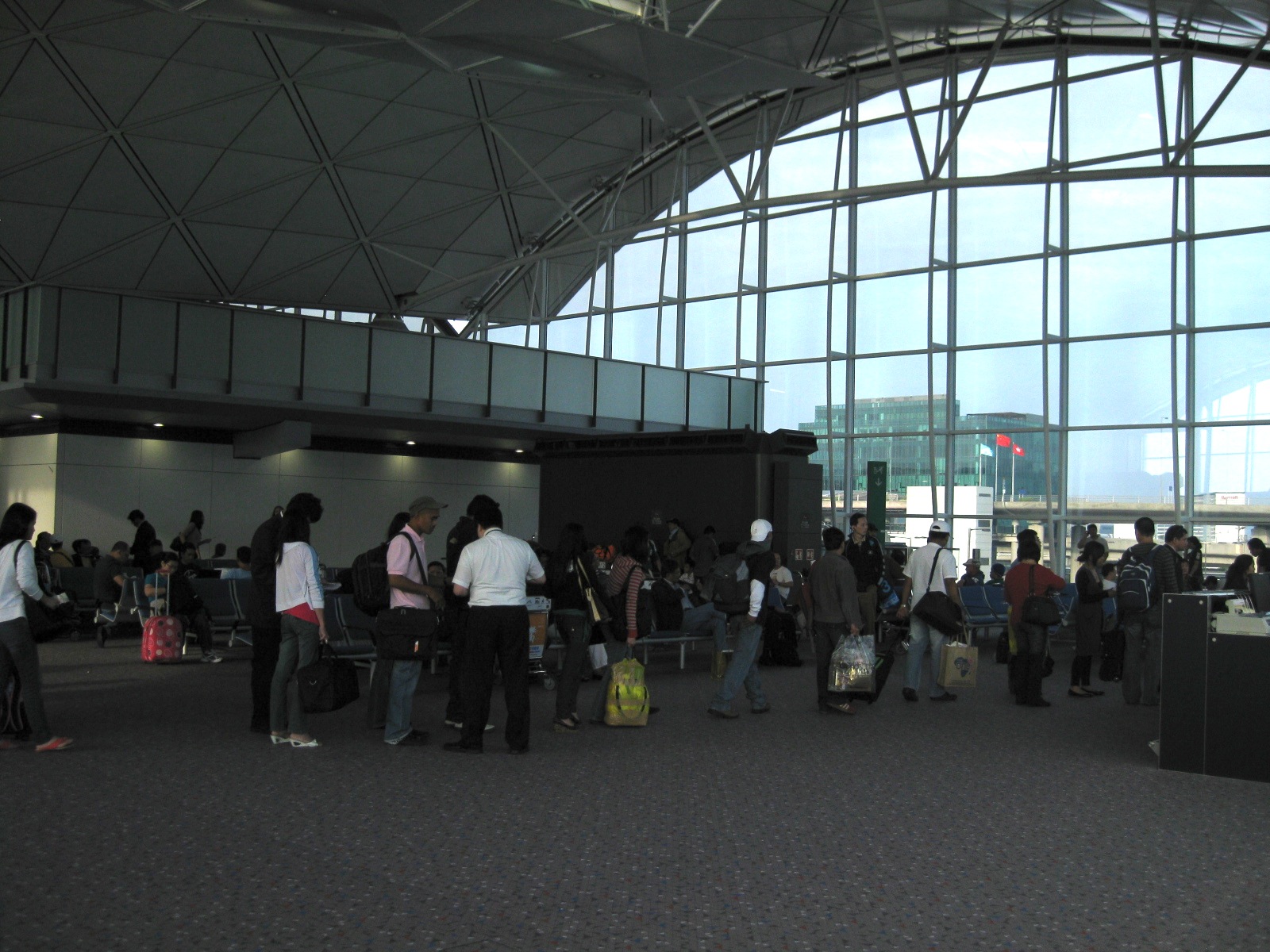 Another look at our fellow passengers lined up to board our aircraft.
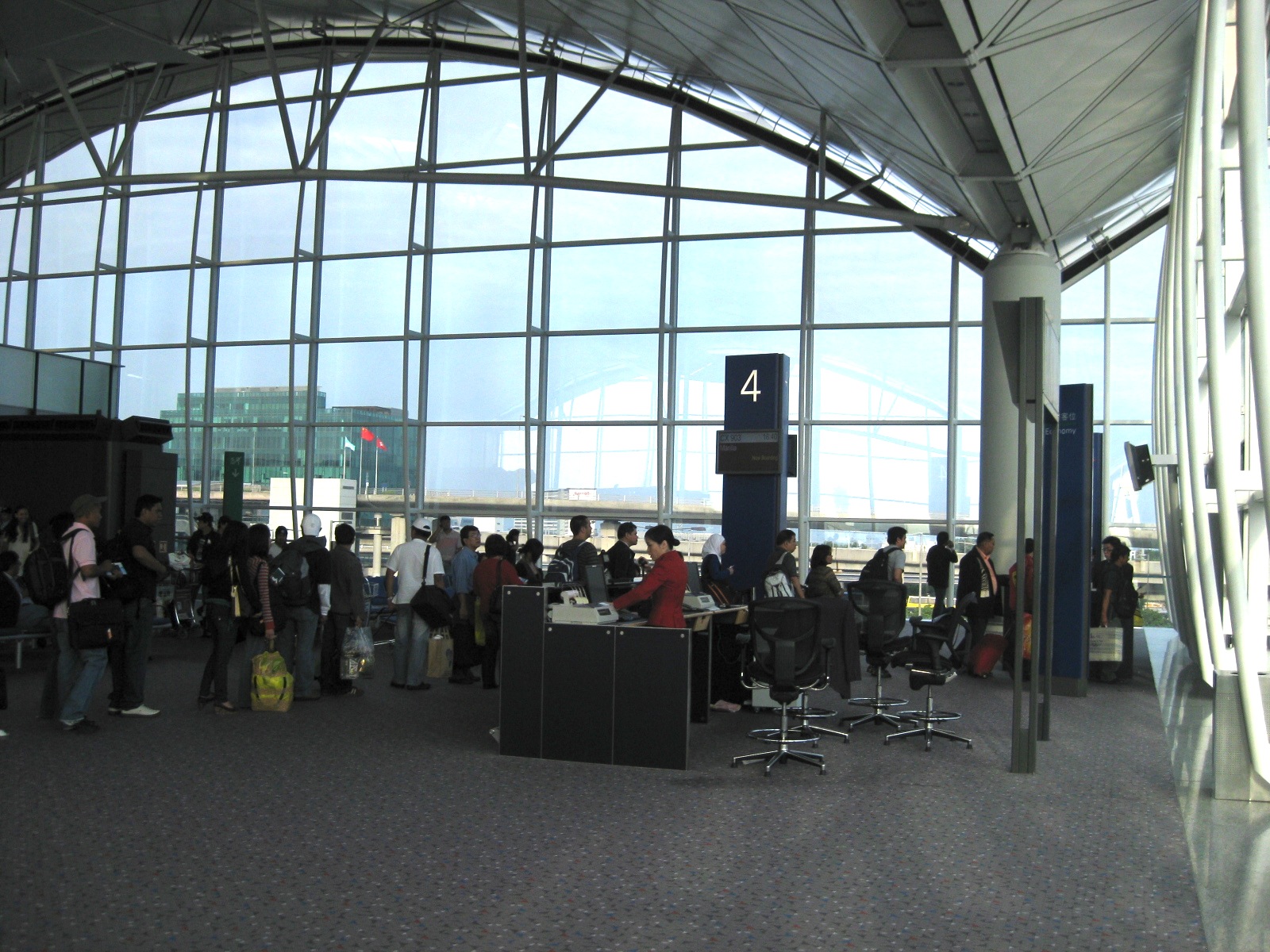 Boarding gate – we boarded our aircraft through the same gate where I took a photo of earlier
I’m not sure when I will be using the HKIA again but I’m sure I’ll be trying to take a lot more photos particularly the restaurants and shops in the terminal. Perhaps, too, I could be going around HK itself (I haven’t gone anywhere here except the airport terminal.). I am curious about the streets, the delicious food and, of course, the transportation system.
–
Port Area Roads 1: Bonifacio Drive to 2nd Street
Heading to a meeting at the DPWH’s National Capital Region office one afternoon, I made sure to take photos of the roads en route to their building located across the Sout Harbor’s container terminal and before the (and therefore near) the Baseco compound along 2nd Street.
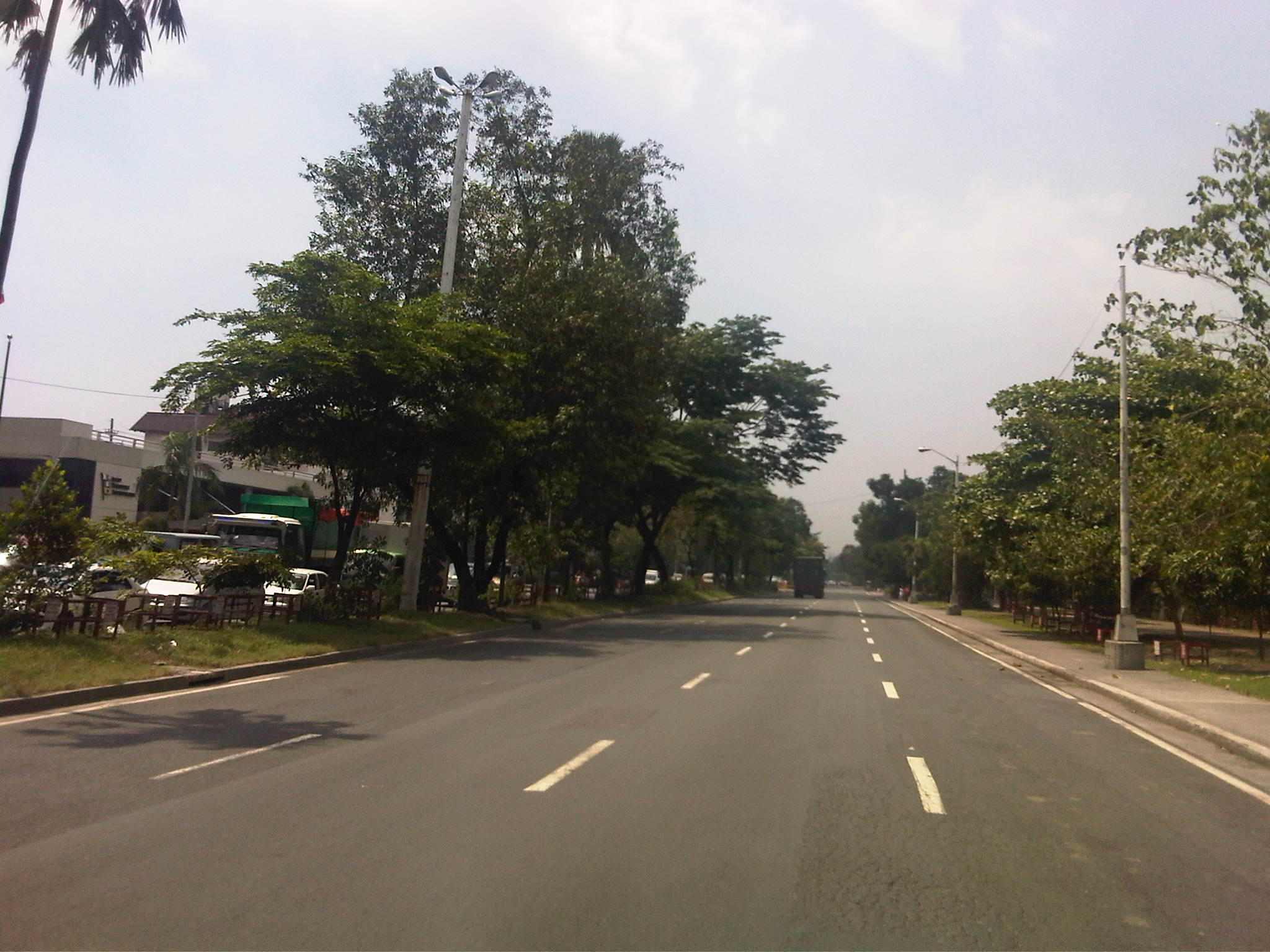 Bonifacio Drive – this section is part of Radial Road 1 (R-1) and has 4 lanes per direction. It stretches from R-1’s intersection with Burgos (in front of The Manila Hotel) where Roxas Boulevard (the road more associated with R-1) has its north end. Bonifacio Drive has a generous median and the northbound side is lined with trees on either side since Intramuros is on the right.
 DPWH Head Office – this is the approach to the median opening for the DPWH Head Office located along Bonifacio Drive. The Head Office houses the Offices of the Secretary, Undersecretaries and Assistant Secretaries of the department. It also houses the Planning Service and Bureau of Design. There used to be a railroad behind the DPWH building when the port area was connected to the railway system particularly to carry freight from the ships calling on the Port of Manila.
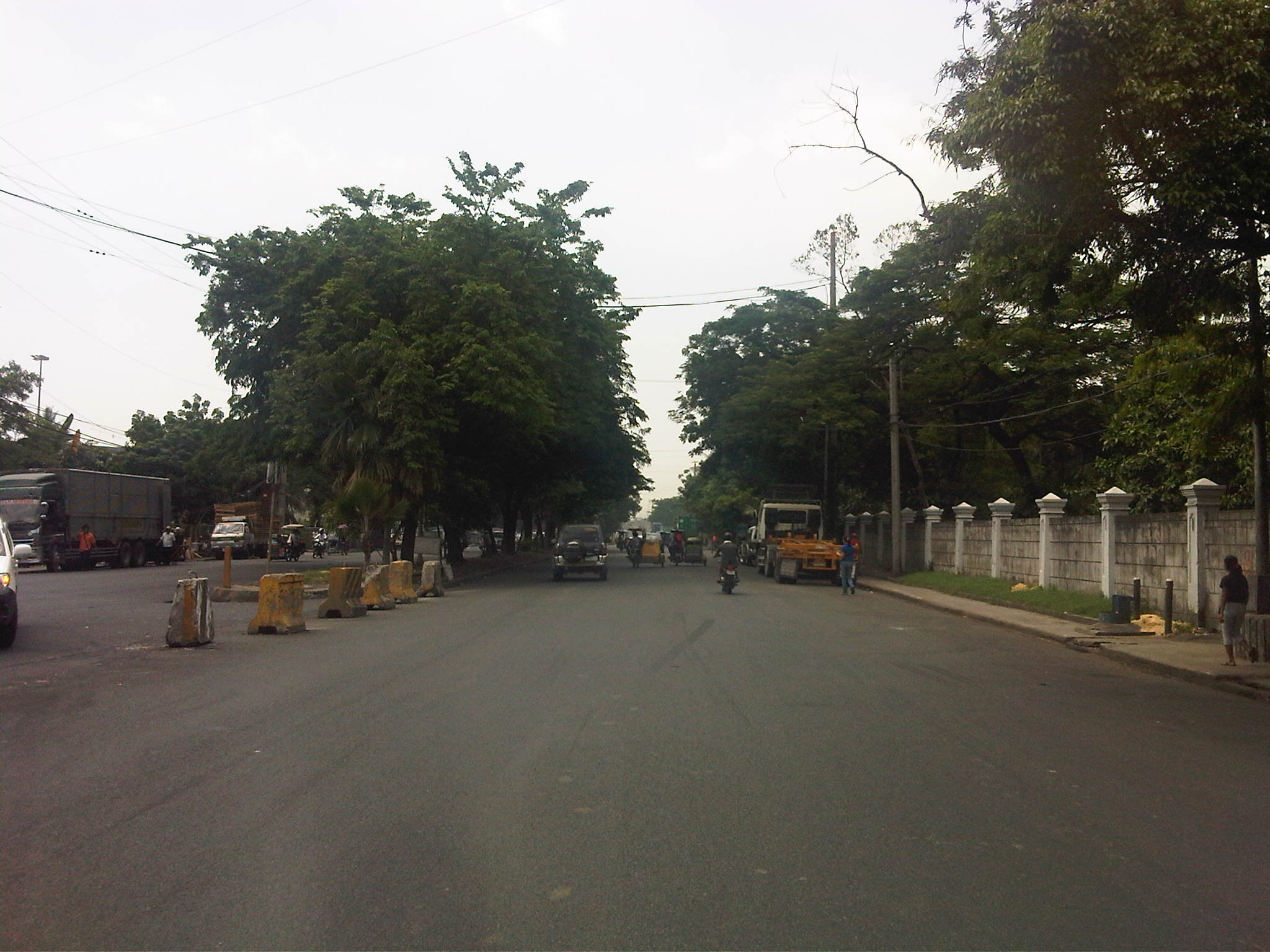 Walls of Intramuros – the walls on the right are not The Walls but those of the Intramuros Golf Club, which is located in the area that used to be the buffer zone before the Walled City, much of which are part of a golf course. It is interesting to note that despite the excellent condition of the pavement, much of Bonifacio Drive does not have lane markings. In the previous photo, the markings are badly weathered. It can be observed that many trucks are parked along either side of the road – a preview of more trucks parked along the curbside in the area.
 Approach to the Del Pan Bridge – the bridge is where Radial Road 1 ends and Radial Road 10 begins. We didn’t cross the bridge spanning the mouth of the Pasig River but instead took the service road that led under the bridge to what is technically part of the Muelle Del Rio. The interchange provides access to Baseco and the container terminal as well as for vehicles making U-turns towards the southbound side of Bonifacio Drive.
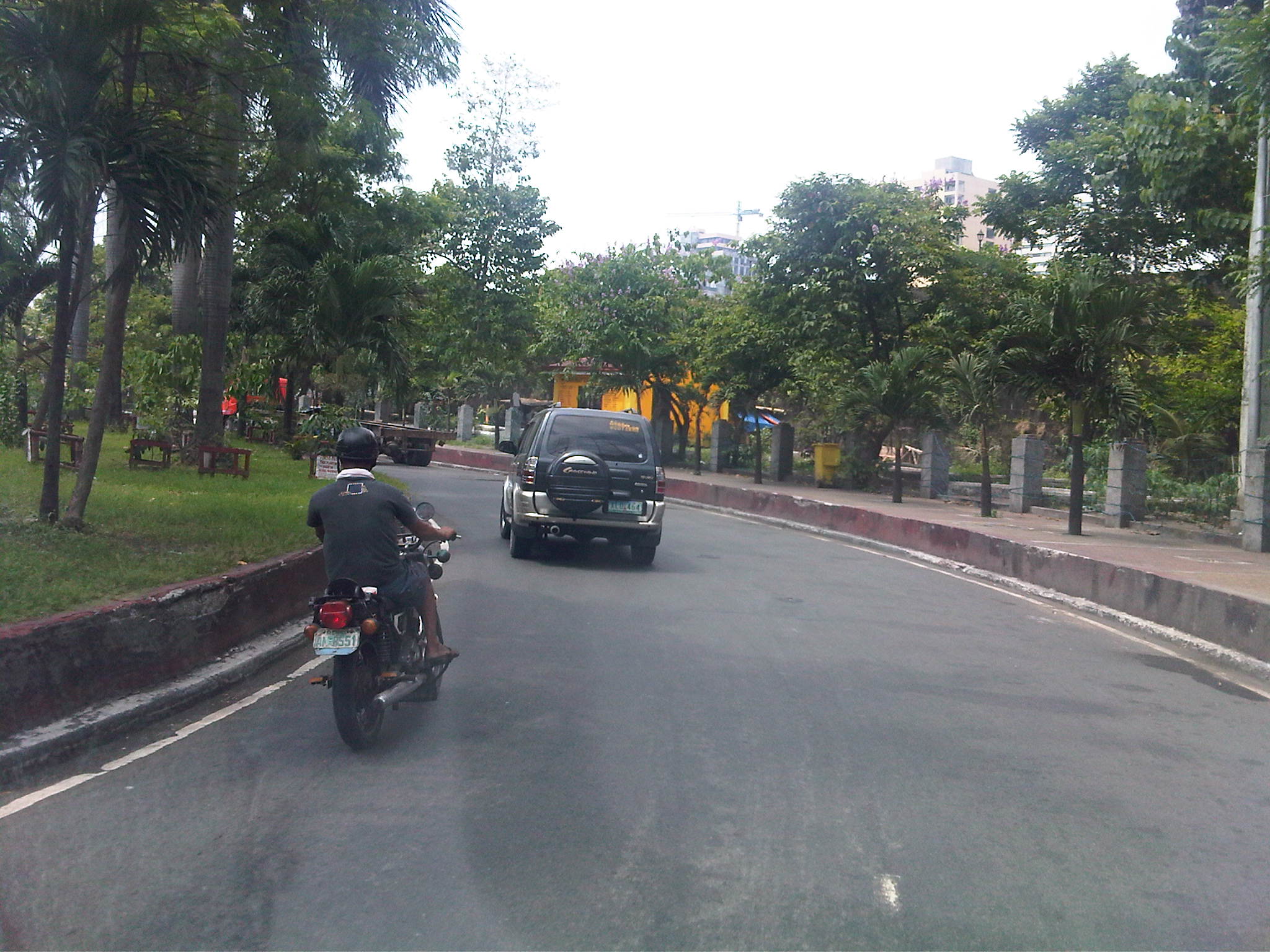 Service road – keeping to the right of Bonifacio Drive, we took the turn prior to Del Pan Bridge. On the right side is a buffer area prior to the walls of Fort Santiago, which is strategically located at the mouth of the Pasig River.
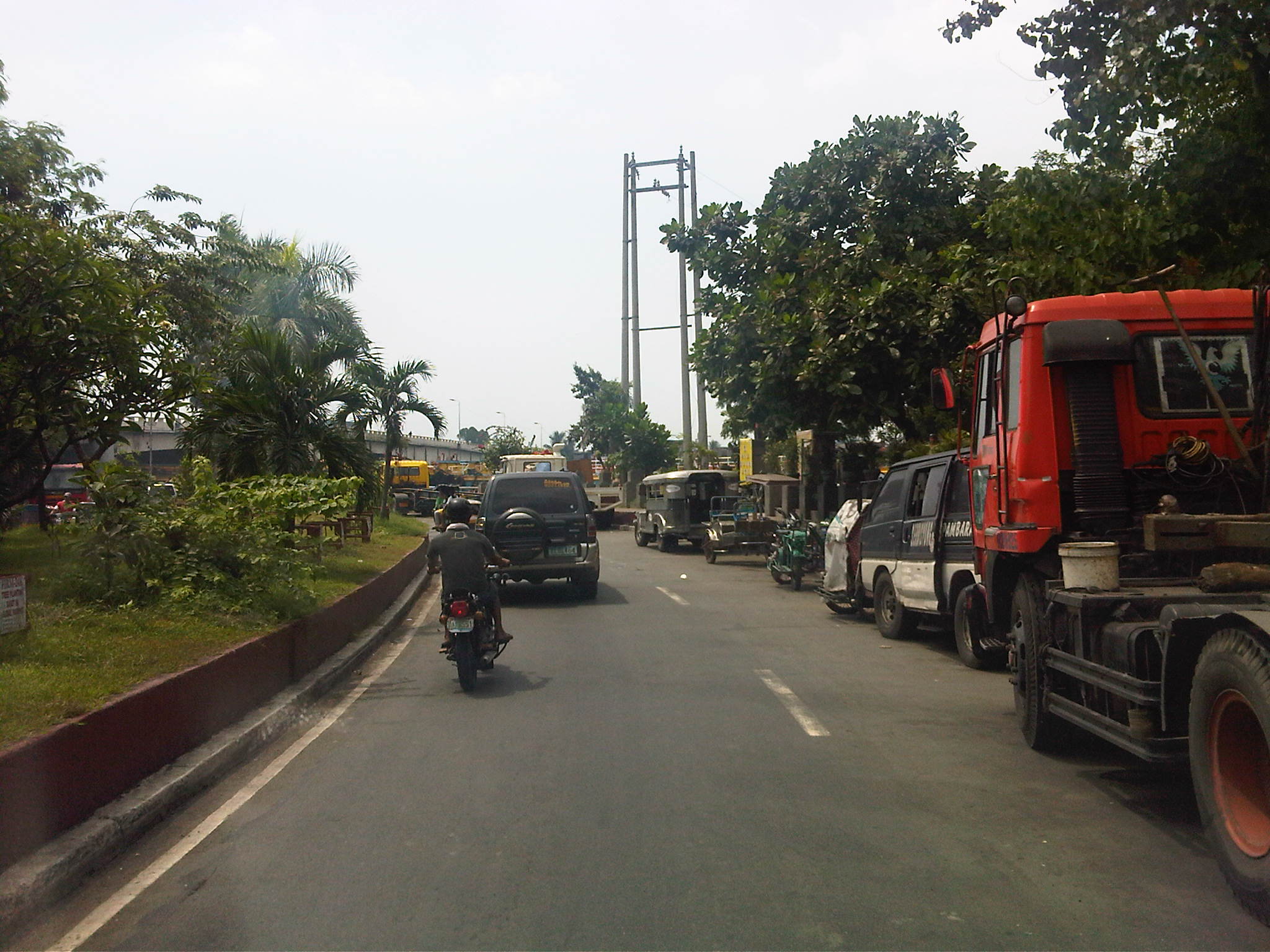 Reduced capacity – the service road’s capacity is significantly reduced by the vehicles, mostly trucks, parked along the road. I am not sure why this is allowed but toleration of such practices goes to show the lack of adequate facilities for freight vehicles around the Port Area, which is something that needs urgent attention.
 More parked trucks – many trucks we saw had trailers and were probably waiting to pick up containers at the South Harbor. Conspicuously, many trucks like the yellow ones in the photo seem to be owned by a few companies, who perhaps have no suitable depots or garage facilities for their trucks. Of course, there is also the constraints brought about by the truck ban being enforced in Metro Manila. But this seems to be a flimsy excuse considering many roads in the area allow truck traffic throughout the day, being designated as trucks routes.
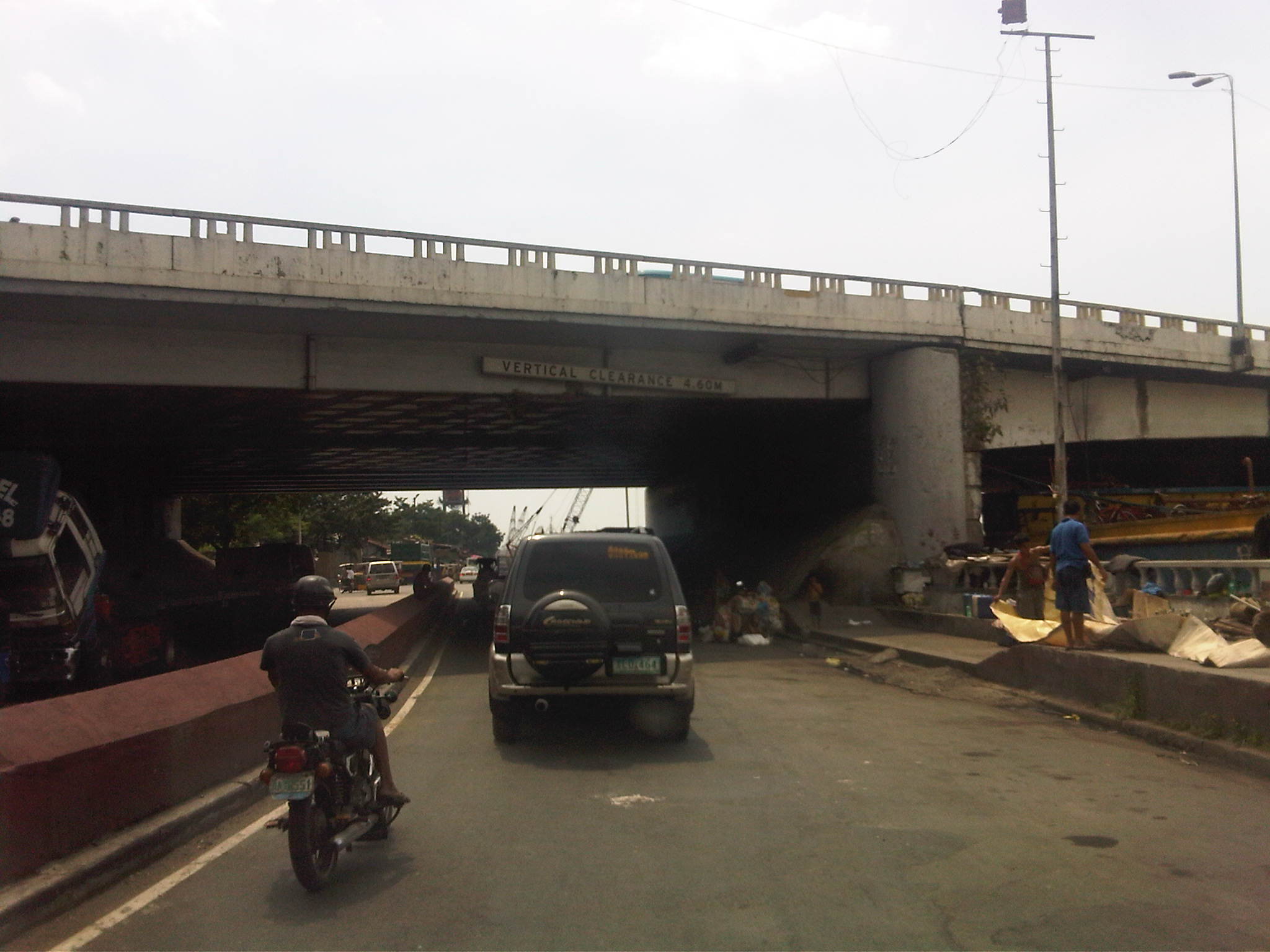 Beneath the bridge – under the Del Pan Bridge, there are more parked trucks. Many are being maintained or repaired and there are informal settlers among the truckers camped out under the cover of the wide bridge. There are also barges lined along the river that also seem to be waiting for their turn to be towed and/or loaded.
 Intersection – the channelization at this point along the service road guides motorists to where the road branches out into the Muelle Del Rio (straight) and the segment towards 2nd Street and the ramp to Bonifacio Drive southbound (left).
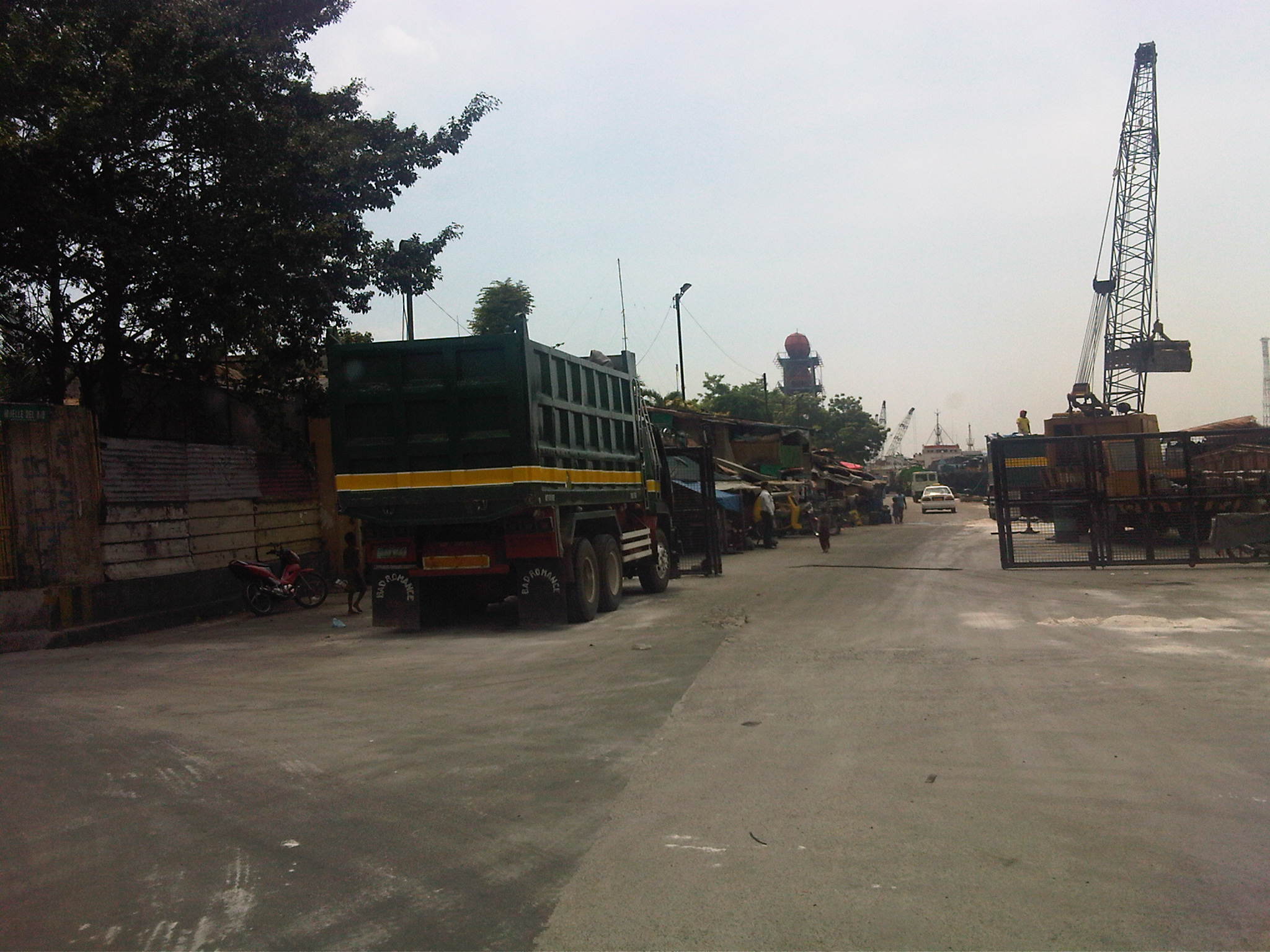 Muelle Del Rio – the road is supposed to be part of the Muelle Del Rio but is being used as part of the port where cranes load and unload materials unto barges lined along the river mouth. There is a gate structure, which suggests that the area is limited access to general traffic. The road is actually a dead-end.
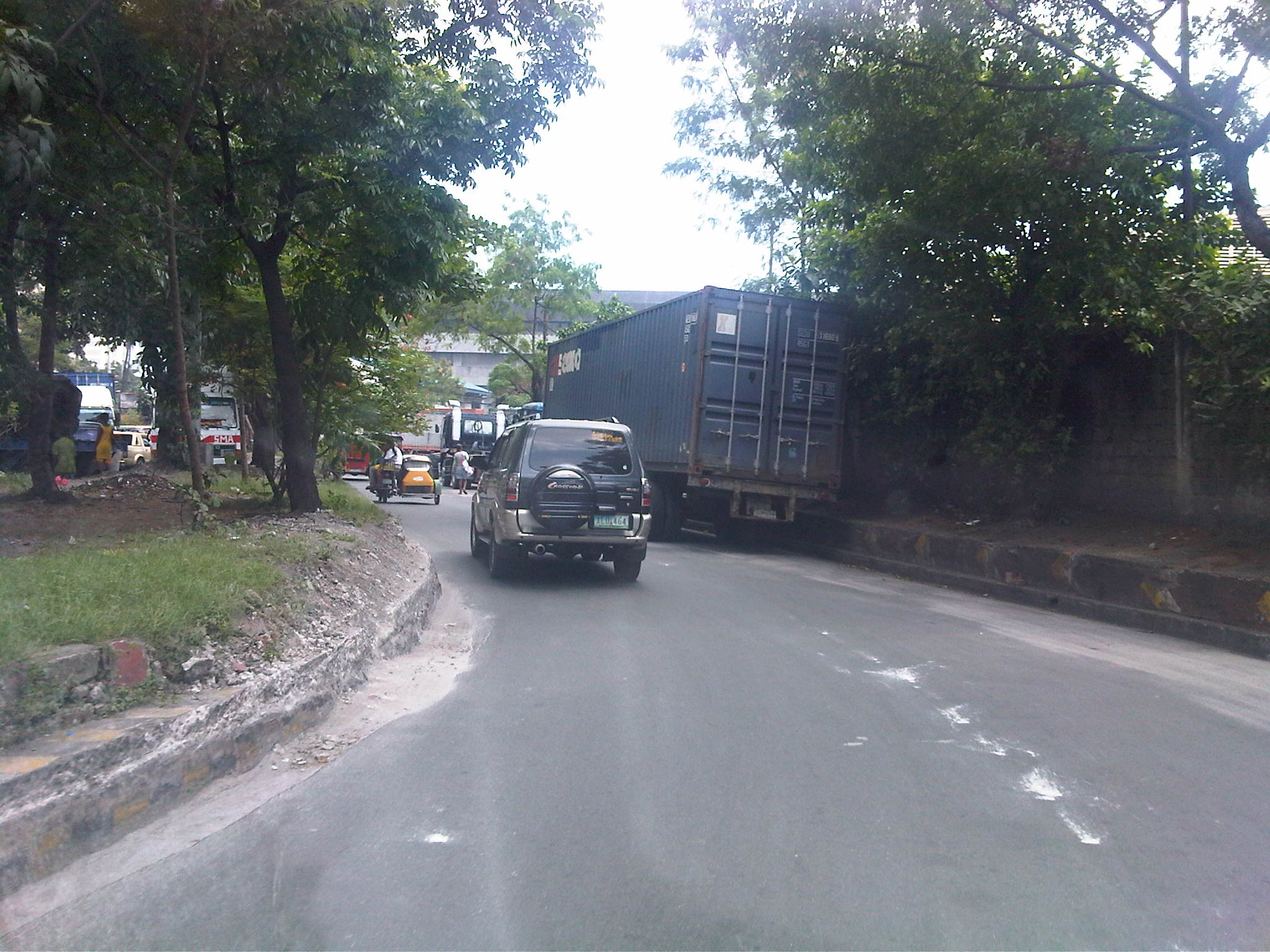 U-turn – turning left at the intersection had us practically making a U-turn under the bridge. In front of us were more parked trucks as we proceeded towards the junction to 2nd Street. Notice the damaged curbs? These are caused by trucks maneuvering and often hitting the curbs.
 Container terminal – trucks lined along 2nd Street included those bound for the South Harbor’s container terminal. The one with the blue container is entering the gate, which entails some clearance procedures conducted by security. Truckers seem oblivious to the general traffic that they block on a regular basis. Our friends from the DPWH state that this congestion due to the trucks is among the complaints they get from their visitors.
 More queuing – just when we thought the queue of trucks were only because of the South Harbor’s container terminal, we saw this line of trucks past the gate. The buildings on the right are DPWH’s (NCR and Bureau of Maintenance). There is often no other choice but to run counter-flow to the traffic in order to get to our meeting.
 Home free – our driver managed to get through the queue of trucks as truck drivers allowed us to turn towards the DPWH offices after we got their attention and signaled towards our destination.
 Return trip block – after the meeting, we had to go back to where we came from as 2nd Street was a dead-end. We were greeted by the same queue that occupied one lane of the road and necessitated for counter flows like the lorry partially covered by the trailer in the photo.
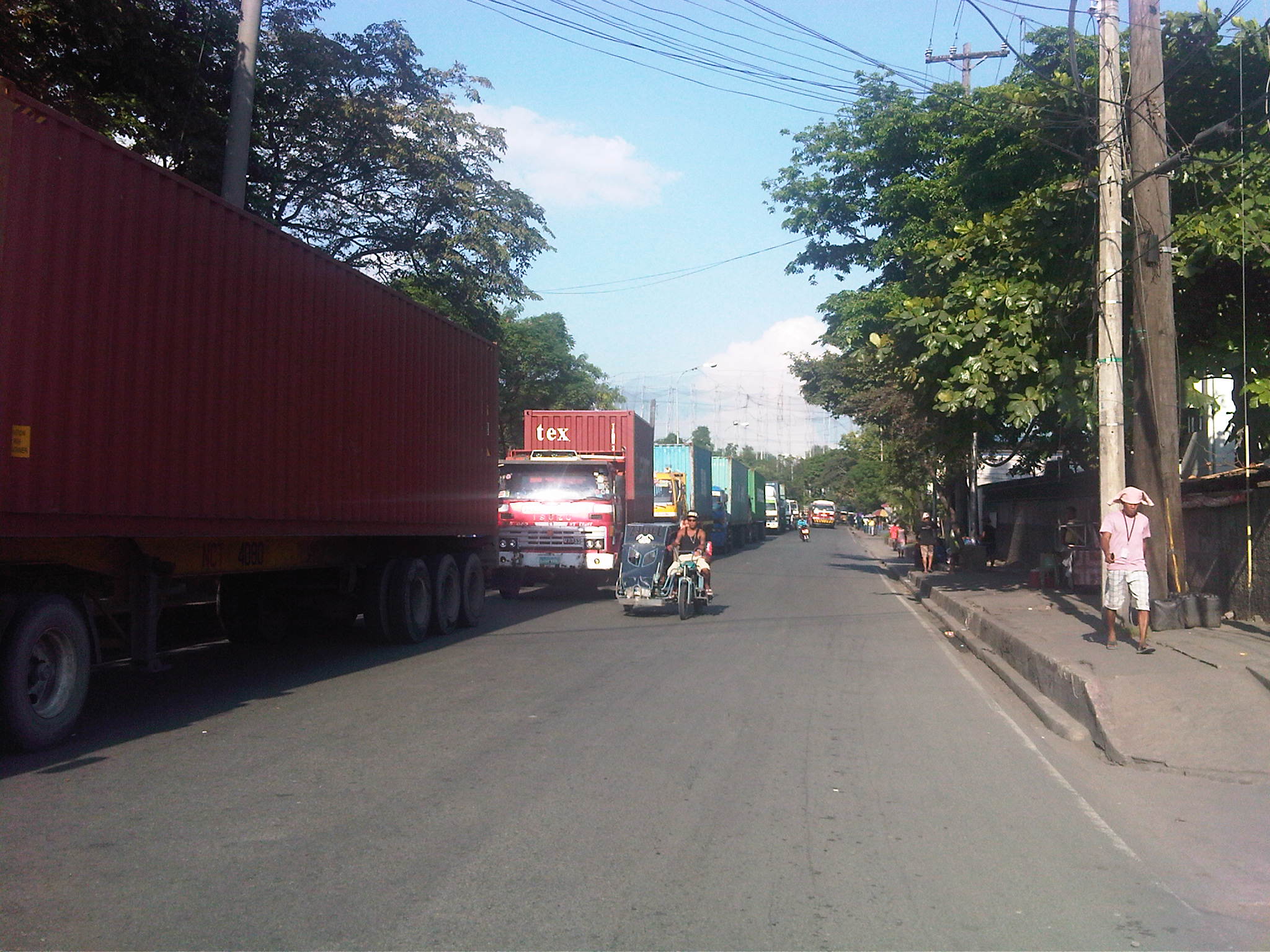 Container traffic – most if not all the trucks bound for the terminal carried containers. I assume these were laden with various goods that are to be loaded unto ships at the port. Those that didn’t have containers were probably picking up freight previously unloaded at the terminal and cleared for transport. I can only imagine what if there was still a railroad line operating to transport such containerized freight. These would have been more efficient for long distance origins and destinations where trucks will only have to provide feeder or collector services (distribution).
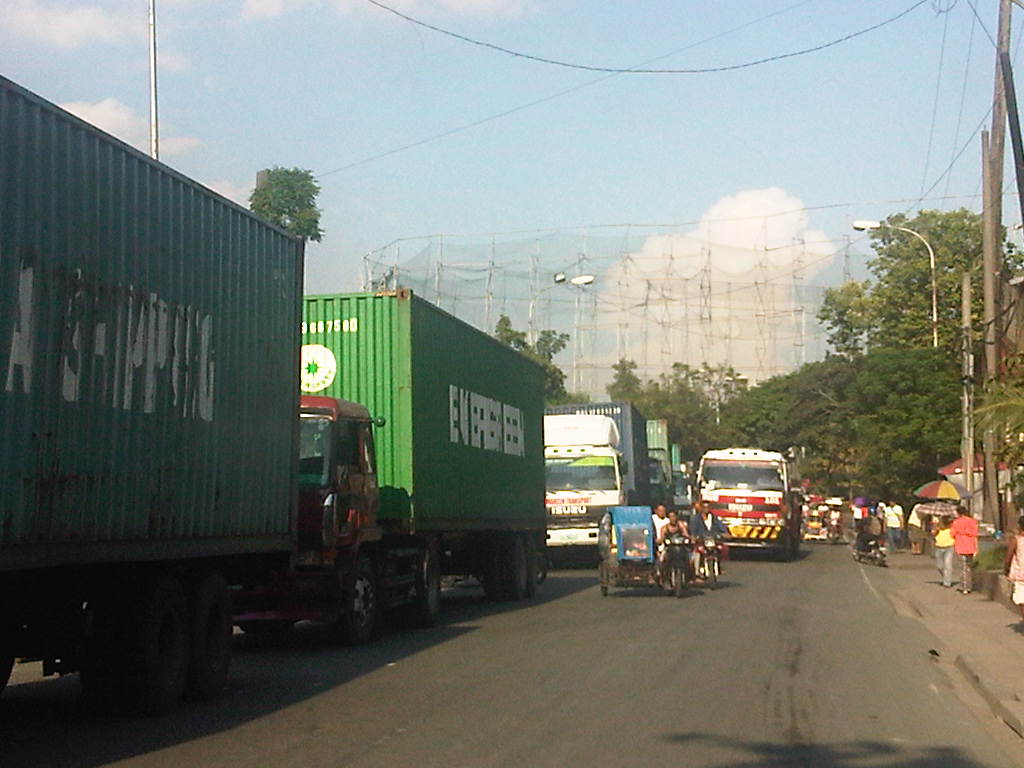 Hogging the lanes – as if the queued trucks occupying one lane were not enough to cause congestion, this truck followed the counter-flowing tricycles (Yes, there are tricycles here serving the Baseco compound and 2nd Street.). It was a good thing the 2nd Street’s lane widths were quite generous so it could actually fit 3 lanes. Curiously, there are no pavement markings on the street to delineate the traffic lanes.
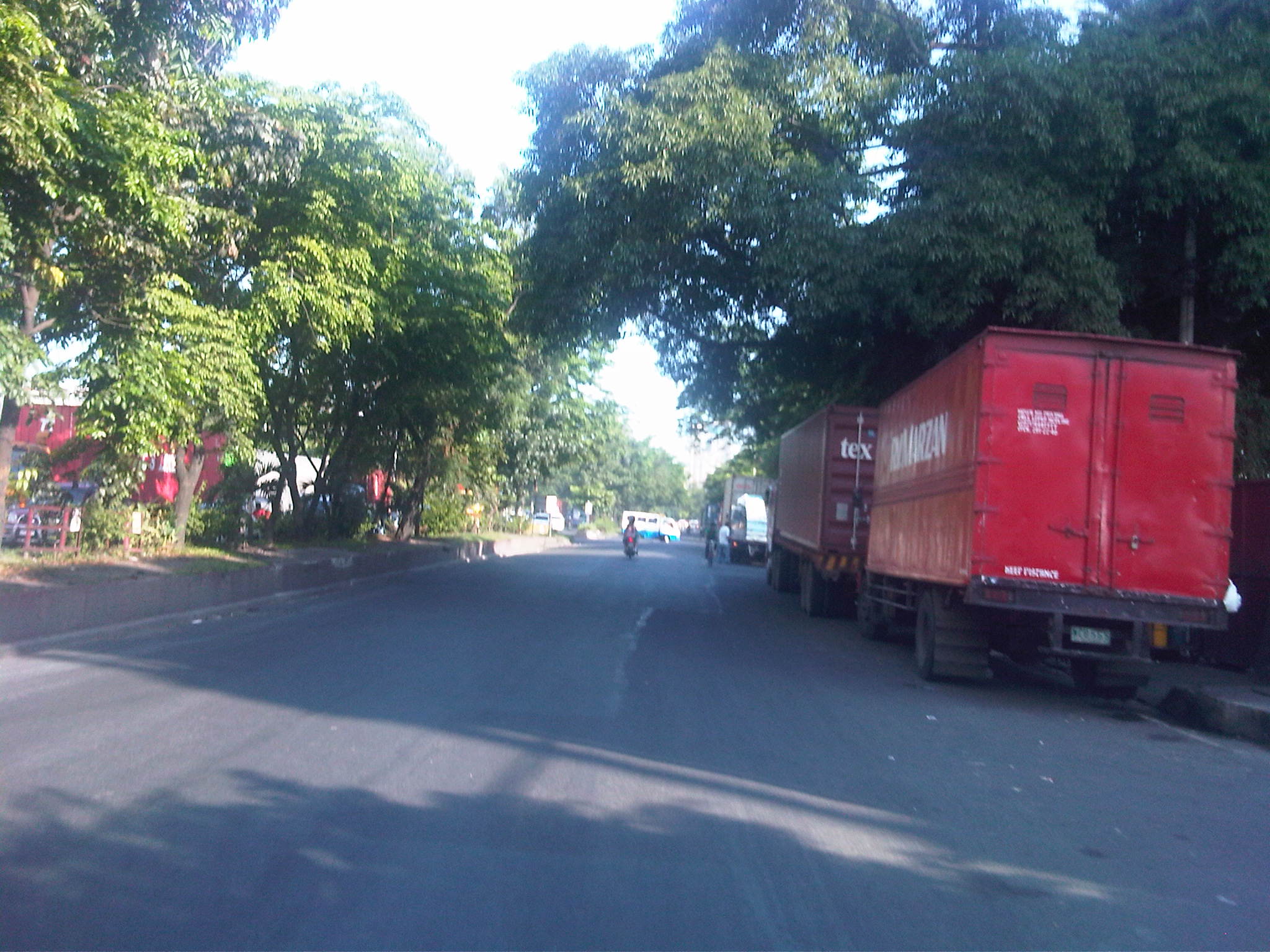 Trucks galore – finally getting back on Bonifacio Drive (southbound) to return to Quezon City, we were greeted with more trucks, this time parked along R-1. While traffic was generally light, I couldn’t help but wonder why these practices of trucks are allowed to continue and why such issues have not been addressed by the City of Manila and the Philippine Ports Authority.
 Tolerated too? – we spotted these tricycles with the yellow sidecars along Bonifacio Drive. These apparently serve the streets (local roads) in the port area. Tricycles are supposed to be banned from national roads so they should not be traversing Bonifacio Drive nor should they be allowed to have informal terminals here.
 Underground economy – vendors and hawkers at the island to the entrance to 13th Street (aka Oca, Sr.) at the Anda Circle (rotonda).
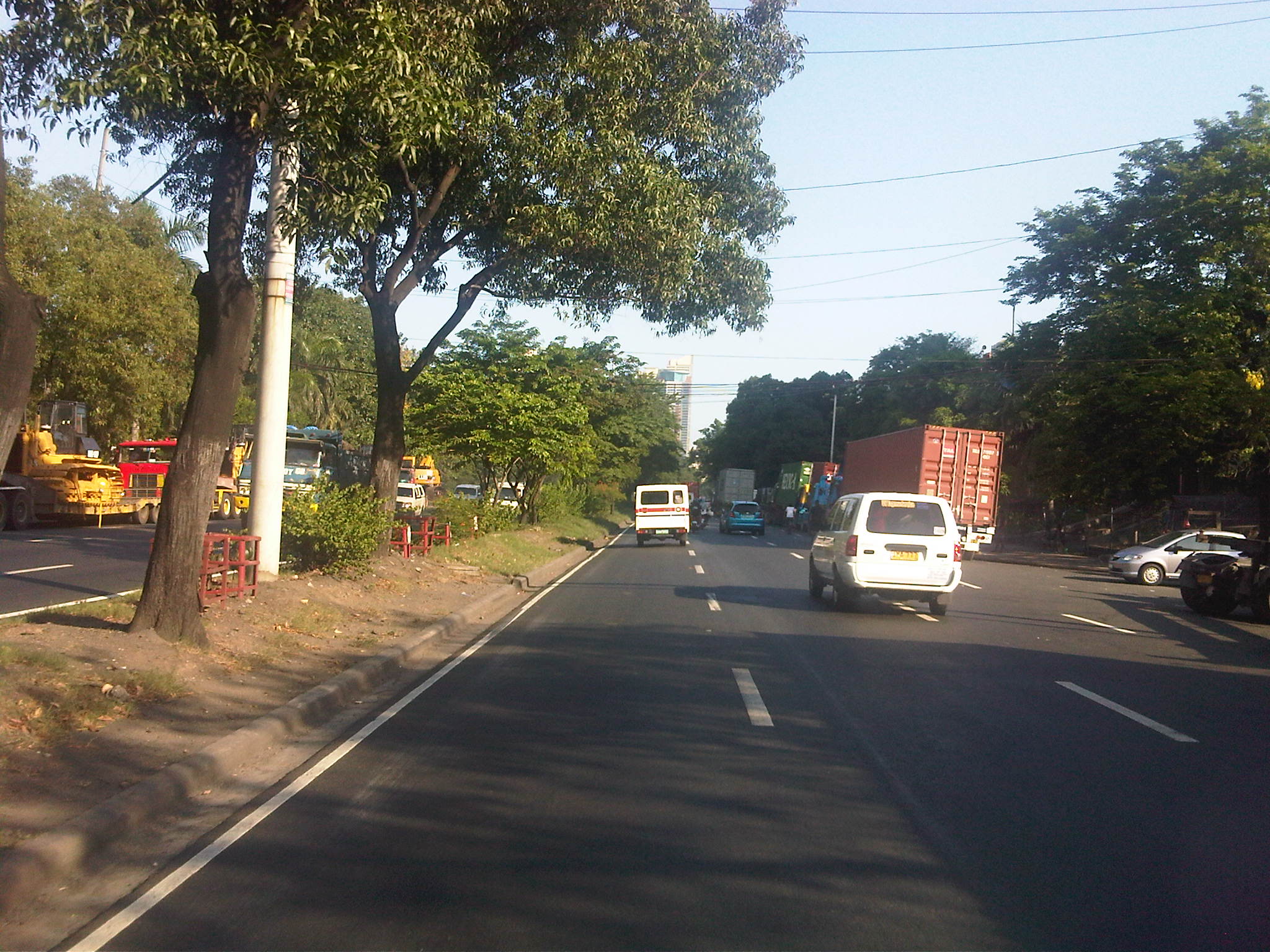 Model roads – past the Anda Circle, the well-maintained section of Bonifacio Drive was complete with lane markings and noticeably clean.
 Proof of concept – Bonifacio Drive should indeed be according to standards considering that its just in front of the DPWH Head Office. It would be an embarrassment for the department if the road in its backyard is poorly maintained.
–
Fort Bonifacio flyover
After only seeing the new overpass to C5 northbound from Bonifacio Global City when it was under construction and after its completion from the perspective of a traveler using C5, I was finally able to use the flyover a couple of weeks ago. The following photos show the newly constructed overpass connecting 36th Street to C5 northbound that is supposed to decongest the older interchange emanating from 26th Street/McKinley Parkway.
 Approach to the new overpass – the chevrons are supposed to guide motorists as to the separation of traffic lanes. The lane to the right leads to the service road for Market! Market! and connects with C5 southbound.
 Curvature – the alignment from the approach to the turn towards C5 is actually a reverse curve
 View from the top – this is what motorists will see upon reaching the top of the overpass as he/she turns towards C5, which is shown on the left of the photo. There is also a good view of the Sierra Madre mountains.
 Descent – traffic along the two-lane overpass was very light when we used it; quite ideal for speeding a bit to save on time on our return to the university
 Separate ways – the lines delineating the two lanes of the flyover transform into chevrons and directional arrows are visible to guide motorists merging into C5 and traveling in the direction of Pasig and Quezon City, and those heading towards Taguig and Pateros via the service on the right.
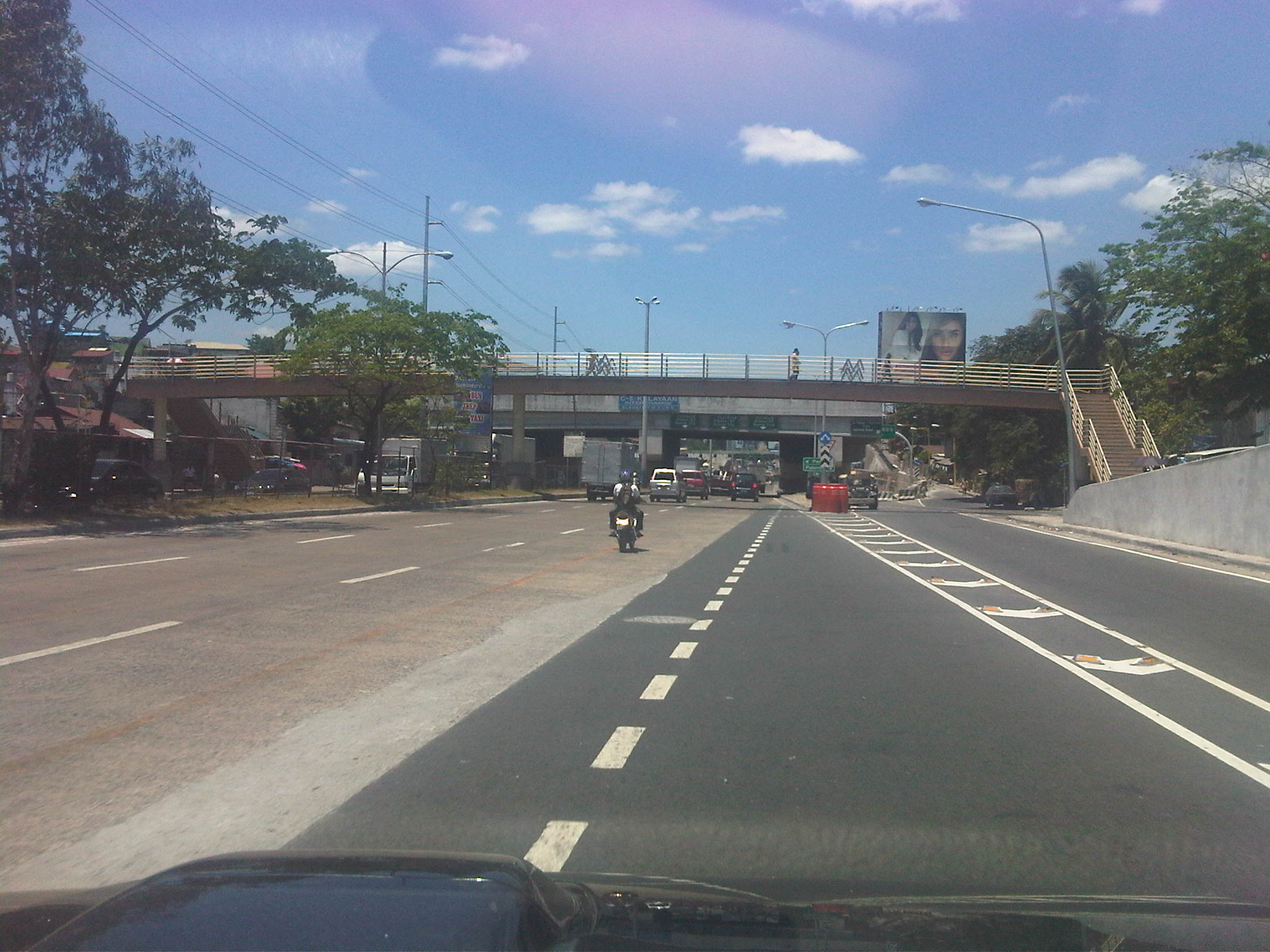 Overpasses galore – the south component of the elevated U-turn pair, a remnant of the previous MMDA dispensation, is obscured by the pedestrian overpass connecting the East Rembo districts separated by C5.
 Interchange? – the pair of elevated U-turns is called the C5-Kalayaan interchange, quite a stretch to many traffic and highway engineers who were critical of the facilities that were constructed instead of the recommended underpass along C5.
–
 Caught (up) in traffic