
Home » 2015 (Page 10)
Yearly Archives: 2015
Another look at the Puerto Princesa Airport passenger terminal
I was in Puerto Princesa, Palawan recently and too the opportunity to take a few photos at the passenger terminal. The last time I was in Puerto Princesa was in November of last year and that was during the off-peak season. This time, I wanted to capture scenes at the airport during the peak season (i.e., summer) when Palawan is a major destination for a lot of tourists who want to enjoy its excellent beaches and other attractions including the famous Underground River, which is a UN Heritage Site and a wonder of nature.
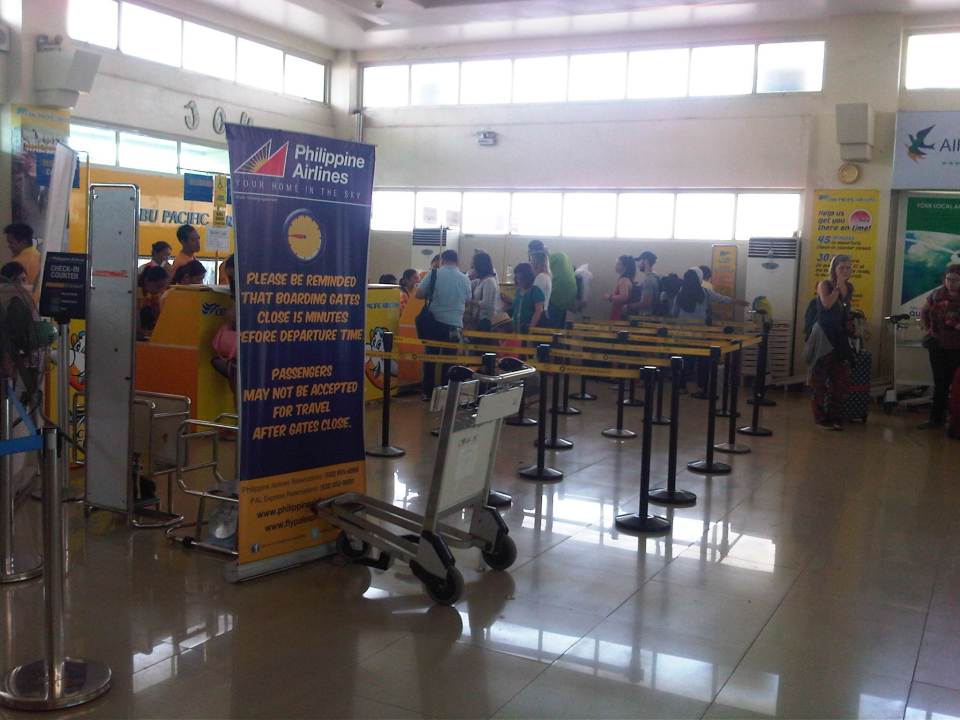 Check-in counters for Cebu Pacific and Philippine Airlines
 Check-in counters for Air Asia Zest
 The pre-departure area has been expanded recently and it looks like it was enough for now. There were many people but there were enough seats and no one really had to stand around or sit on the floor as they wait for their boarding calls.
 A look at the expanded area of the terminal. There are a few concessionaires here selling the usual souvenirs. There is one good coffee stand here for those who need their shot of caffeine.
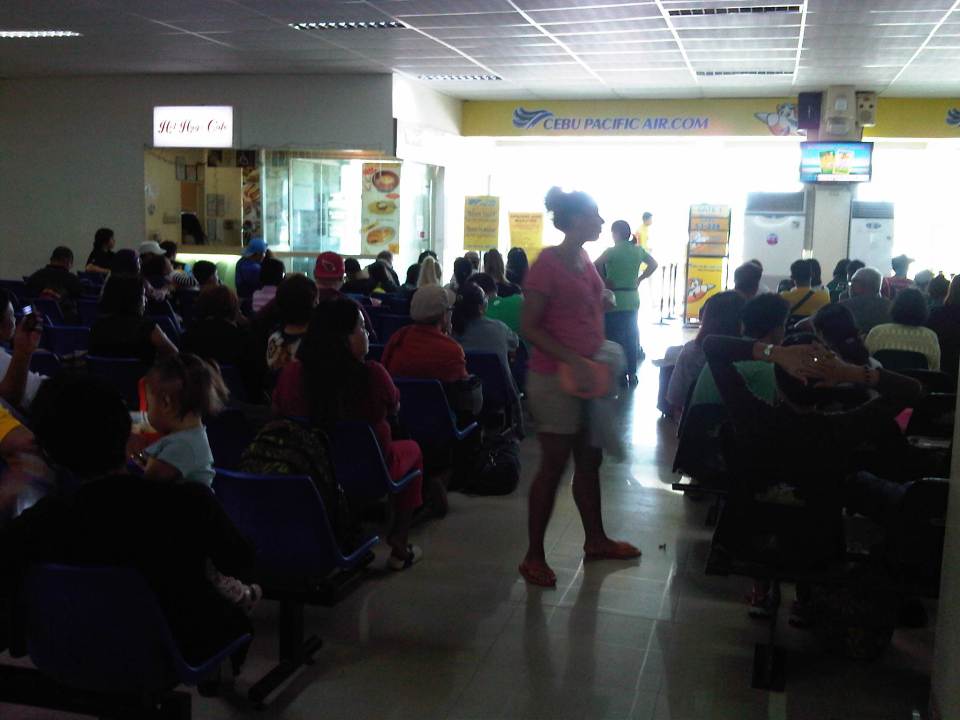 Passengers on the next flights sit up front awaiting their boarding calls
Puerto Princesa is currently building a new airport terminal on the other side of the runway. This terminal should have a much larger capacity than the current, expanded one. The project is necessary as the number of visitors to the city and the island of Palawan continues to increase mainly due to tourism. the airport will eventually become a full international airport with regular flights to/from regional cities like Hong Kong and Singapore.
–
Still on license plates
I can’t seem to get over this pet peeve of mine that is the earlier move of the Land Transportation Office (LTO) for all new vehicles to adopt the same license plate design. It was an illogical move even as the LTO claimed the new plates had security features that allowed easy verification of vehicle registration. Common sense tells us that the easiest verification of whether a vehicle is for private or public utility is by simple vision. You don’t need high tech equipment to tell you that a van sporting a private plate and picking up passengers for fares is operating illegally. You didn’t need to exert a lot of effort to read the very small lettering on the new license plate for where the vehicles is registered because the first letter of the old license plates already indicated the region (i.e., the first letter corresponds to a region – ‘B’ for Region 2, ‘F’ for Region 6, and so on).
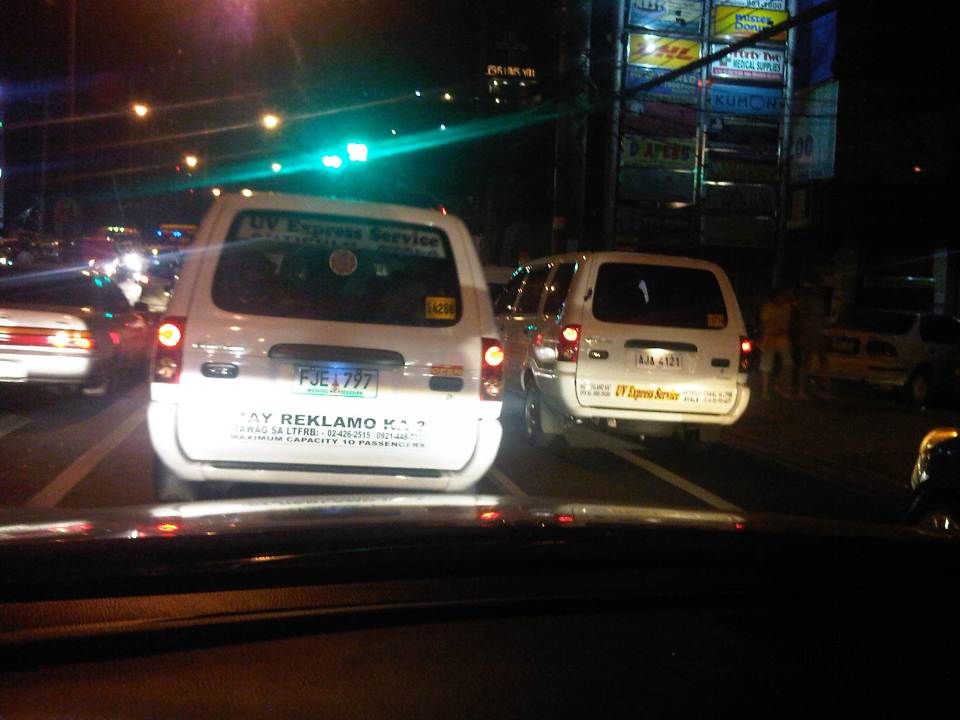 Two UV Express vehicles bearing plates that are supposed to be for private vehicles. The one on the left didn’t even make the cut for the new plates, being issued the older green plates.
I really hope that this is corrected ASAP considering that the LTO has rescinded the earlier policy and is supposed to issue yellow plates again for public utility vehicles.
–
Resistance is futile? The case against electric jeepneys
There is a strong sentiment against electric jeepneys along the route where the COMET is currently operating. This opposition has always been there even before the COMET came about. I would like to think that this is partly due to the perception among many operators and drivers that conventional jeepneys would be phased out and replaced by e-jeepneys. But then isn’t this replacement supposed to be an upgrade in terms of having a more energy efficient and therefore economical vehicle that had a significant bonus of being low emission as well.
I finally got a photo of the sign Katipunan jeepney operators and drivers put up at the terminal below the Aurora Blvd. flyover.
 Protest against electric jeepneys written on Manila paper and posted on overpass column at the Katipunan jeepney terminal
Given the recent innovations and the rapid advances in electric and other fuel vehicles, it should come as no surprise that more reliable and more efficient models of these vehicles will be available in the market. In the case of the Philippines where the thrust for e-vehicles is focused on public transport, there will eventually be a model that will comprehensively beat conventional jeepneys in every aspect. That is, if there is not yet a model that good. Arguably, the COMET and the latest e-jeepney model (BEEP) are already better than conventional jeepneys. However, their acceptability is pending with operators and drivers who seem uninterested with the case against conventional jeepneys. Perhaps these people are being fed false information by another party? Hopefully, they will open their eyes and mind to the reality that will eventually catch up with them if they do not embrace change.
–
Another example of mismatched plates
My most recent post was on the inappropriateness of the new license plates issued by the LTO to public utility vehicles. New taxis, UV express and jeepneys suddenly had the back and white license that’s supposed to be issued only to private vehicles. This meant that it would be difficult to distinguish the legitimate PUVs from colorum or illegally operating ones. In the last post, I was able to show an example each for these license plates on a taxi and a UV Express van. Yesterday, I was able to get a photo of a jeepney bearing this “anomalous” plate as I was caught in an unexpected traffic jam along an otherwise free-flowing road in Rizal.
 Jeepney bearing the black and white license plate issued to private vehicles
–
On the uncommon sense on license plates
The issuance of new license plates has been a very “painful” process and experience to a lot of people and it is not without serious issues. For one, there is still a backlog in license plates as evident from Strictly speaking, these vehicles shouldn’t be operating or not allowed to be driven even considering they are technically registered with the Land Transportation Office (LTO). The proliferation of vehicles without license plates allows for the abuse of such by owners of relatively new vehicles who can remove their plates in order to be able to take their cars on their coding days. It is also possible to be involved in a road crash or incident where the driver of a vehicle without a license plate can make an escape (the details on the conduction sticker are not easy to spot and memorize) or evade apprehension.
Among the most problematic is the issuance of plates of the same design as that used by private vehicles to public utility vehicles like UV Express and taxis. This creates a lot of opportunities for abuse especially private vehicles masquerading as PUVs. These are without the proper franchises and are illegal (i.e., colorum). What the LTO claims as security features on the plate are meaningless as the uniform color of the plates defy the simple logic behind the old policy of having a specific color to quickly distinguish among vehicles bearing different color plates. This makes it easier for traffic officers including the Philippine National Police (PNP) to spot vehicles with mismatched or inappropriate license plates.
 Taxi cab bearing plate with the same design as that used by private vehicles.
 UV Express van bearing license plate for private vehicles
The purpose of having plates with different colors is for quick identification and distinction of vehicles. A plate with yellow background has always been associated with public utility vehicles. Those with blue lettering or background are those for diplomatic plates. Those with red lettering or background are for government plates. Fortunately, the LTO has reverted to the original policy pertaining to the license plate colors and new plates to be issued to PUVs will once again be a distinctive yellow. Perhaps corrections are due for those legitimate PUVs that were issued inappropriate design (i.e., color) plates.
–
Metro Manila Urban Transport Development Plan (1990-2000) Project (UTDP)
I stumbled upon an unfinished draft I have on a study or series of studies conducted back in the 1990’s. These studies were conducted by several agencies over a decade. I think I have been procrastinating on finishing this brief post on a project that has had a major impact on Metro Manila transport and traffic since that time and prior to the completion of the JICA-funded Metro Manila Urban Transportation Integration Study (MMUTIS) in 1999. The project actually overlapped with MMUTIS’ implementation from 1996-1999 and probably influenced MMUTIS in terms of what government agencies provided as inputs to the study.
The Metro Manila Urban Transport Development Plan (UTDP) is an inter-agency collaboration among the DOTC, DPWH, MMA (precursor of the MMDA), NEDA, CHPG (Constabulary Highway Patrol Group of the Philippine National Police) and MTPC. This consists of various studies undertaken from the year 1990 to 2000 aimed to determine what projects can be implemented to improve urban transport in Metro Manila towards the turn of the century. Sounds familiar?
Among the most relevant studies conducted was the comparison of proposals for a mass transit system along EDSA. The two proposals compared were the Philtrak bus system and Street-level LRT. The Philtrak option is quite intriguing because its description is very much like the current bus rapid transit (BRT) systems in many cities around the world. However, there is no reference to bus systems already operating abroad at the time (e.g., Curitiba in Brazil already had an extensive BRT network at the time).
The study concluded that the Philtrak was preferable to the LRT along EDSA. Of course, we now know what got built along EDSA – a light rail system (EDSA MRT) that is now carrying more than twice the number of passengers it was estimated to carry. This is despite the conclusion from collaborating government agencies including the DOTC favoring the bus system with an exclusive ROW. It is also now obvious that neither the LRT nor Philtrak is most suitable as a mass transit system along EDSA. What is most appropriate is a heavy rail system that would be able to carry more passengers along the corridor.
[Reference: UTDP reports, 1999-2000, NCTS Library, UP Diliman]
–
All roads lead to Antipolo: rerouting for the Alay Lakad
The Rizal Provincial Government and the Antipolo City Government recently posted traffic rerouting schemes on their Facebook pages. Lalawigan ng Rizal was the first to post schemes that affect traffic in at least 3 major local government jurisdictions – Antipolo, Cainta and Taytay. The schemes affect the two major corridors that basically lead to Antipolo’s National Shrine of Our Lady of Peace and Good Voyage (or Antipolo Cathedral to many) – the Ortigas Avenue corridor and the Marcos Highway-Sumulong Highway corridor. There are many major and minor routes connecting to these corridors and are clearly seen in the maps.
Within Antipolo, there are also re-routing schemes, which the Antipolo City Government posted along with a “clearer” re-posting of the maps from the Rizal FB page. The Antipolo FB page includes information/maps on the rerouting within the city center. These schemes will affect traffic circulation including public transport routes. Critical would be the permanent and temporary terminals and parking areas set-up around the city that should be able to accommodate the thousands of vehicles that are also expected to be used by people who won’t be walking or cycling.
What the maps basically say is that from 4:00 PM today, Maundy Thursday, to 6:00 AM tomorrow, Good Friday, the stretch from Cainta Junction to the Shrine will be closed to traffic. This is to allow the hundreds of thousands expected to make the trek to Antipolo to have the road for themselves. What the maps don’t say is that motorcycles and tricycles would likely be allowed, too. I can understand that motorcycles could easily squeeze into the throngs of people but then allowing tricycles to operate among the walkers and bikers would be risky given their drivers’ behavior. Add to this that they would be making a killing out of charging opportunistic fares.
Technically, the rerouting schemes don’t appear to be as well thought of as can be expected from the LGUs. Baka ito lang nakayanan ng staff o ng consultants nila, and surrender na agad ang Rizal and Antipolo with regards to the coming up with more options for people to travel to the Antipolo Shrine? Not all people can walk or cycle but are willing to an could take public transport for their pilgrimage. The maps themselves are a bit crude and the Province of Rizal and City of Antipolo could have done much better maps given the resources of these LGUs. There are open source tools now available as well as your basic software like PowerPoint or Photoshop (even Word!) that can be used to render good quality images to guide people making the Alay Lakad. This is a regular event and though it happens once a year then perhaps the LGUs could have better plans especially to transport people who cannot make the walk to Antipolo. The objective after all is to convey the masses to and from the shrine safely and efficiently – something a mass transport system can do whether via Marcos/Sumulong or Ortigas corridors.
One reminder to all doing the Alay Lakad: keep your garbage to yourselves if you cannot find a proper waste bin. Do not dispose of your waste along the route and make a dumpsite out of Ortigas Avenue, Marcos Highway, Sumulong Highway or whatever roads you are taking! Kasalanan din po ang irresponsableng pagtatapon ng basura. While you might be forgiven for these “sins” through the Sacrament of Reconciliation (which many will likely take at the Cathedral), nature will have a way of getting back at you for your environmental travesty. –
End game: flyover frenzy
The Manila Bulletin featured news on the Japanese government extending a loan to the Philippines for road projects in Metro Manila that include the construction of several major interchanges. An excerpt from the article is as follows:
The Japanese government will be providing some P4 billion to the Philippines for road projects aimed at decongesting monstrous traffic jams in Metro Manila.
Noriaki Niwa, chief representative of the Japan International Cooperation Agency (JICA), said the loan will cover major interchanges to address traffic congestion in Metro Manila, including flyovers, and road links.
Among them are the interchanges on EDSA/Roosevelt/Congressional, EDSA/West/North, and C-5/Green Meadows and North/Mindanao Avenue.
“This is to help Metro Manila sustain growth and develop it as an attractive investment destination,” said Niwa.
While these interchanges have been recommended many years ago and are also reiterated in the recent transport roadmap for Mega Manila, one cannot help but make the observation that these projects will not alleviate congestion over the long term. Instead, it will likely encourage more vehicle traffic (with the availability of more road space – part of a vicious cycle).
Other major projects that are ongoing in Metro Manila include the NAIA Expressway, which is an elevated tollway connecting to the Skyway. A friend commented that this is basically a glorified flyover project as I will explain later in this post.
 NAIA Expressway construction in full swing – a column rises near NAIA Terminal 3
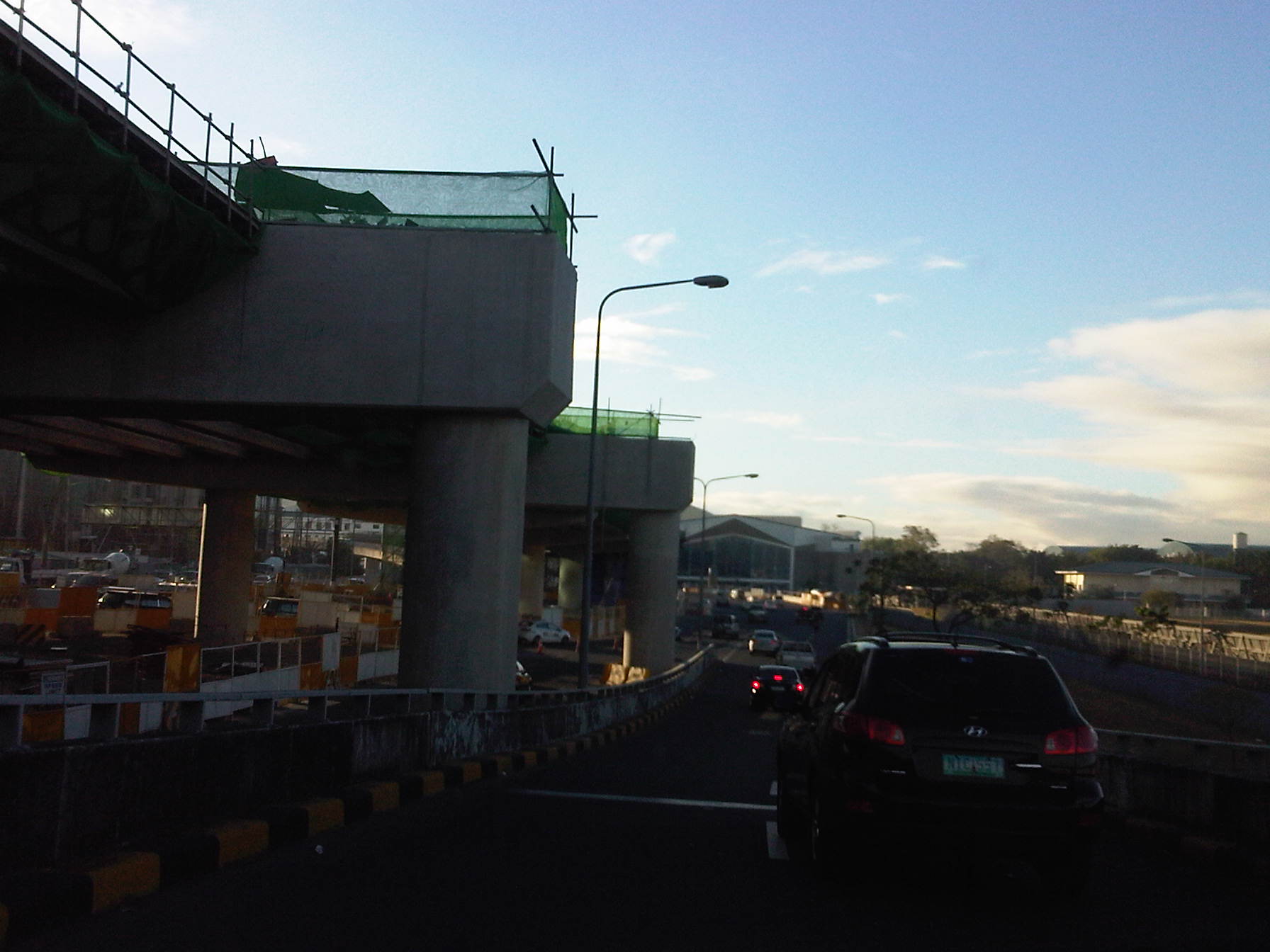 NAIA Expressway elevated sections nearing completion across from Terminal 3
The term of the current administration concludes next year (2016) and so we are almost in the endgame, to borrow a term from chess. What seems to be a frantic move for the government to build all these flyovers (and elevated tollways) can be interpreted as a way to compensate for the underspending and underachieving ways of the government in putting up the necessary infrastructure to address transport and traffic problems in urban areas. Unfortunately, all the funding (public and private) seems to be going to road projects instead of to mass public transport systems like rail and BRT that should be the priority because these could provide the positive impacts over a longer term than what road projects could deliver in terms of mobility and sustainability.
A friend reminded me of a similar situation back in 1991/92 when government embarked on a slew of flyover projects in an effort to leave a legacy in transport. That administration’s excuse for failing to deliver any mass transit project was that it was transitioning from a dictatorship. However, it also failed to deliver on power projects, which led to the energy crisis that had to be solved quickly (but with costly PPP power plant projects). There is a looming energy crisis now but more worrying is a transport crisis as we continue to procrastinate about public transport infrastructure. Should we be hopeful of transport with the next administration? That is still a big question as of now.
–
“Gatong” comments by traffic enforcers
Friends who have been involved in a road crash have noted that traffic enforcers seem to have the propensity for making unnecessary remarks while attending to a crash scene. I have experienced this first hand. Some of the more common comments that enforcers make include:
– How crash or accident-prone an area is (citing issues in the area);
– How certain motorists are more likely to be involved in crashes (often referring to one of the parties involved); and
– How one party’s behavior leads or led to a crash (essentially blaming one party for the incident).
[You’re free to add a comment you heard yourself or someone else got from a crash scene.]
Traffic enforcers or police should not make such comments at the scene of a crash especially in front of the parties involved. It is not about whether they have the right to do so but whether it is appropriate coming from a person of authority who should first and foremost be neutral in such circumstances. For one, such unnecessary comments could affect how people involved in a crash could behave. Generalized statements could wrongly favor one party over the other simply because a person of authority made a comment to the contrary of how things really happened. Enforcers should be neutral and go about their business in getting the facts about an incident and proceed in making the formal report for the crash. Even the investigator assigned to the scene should be as objective as possible in order to have a fair assessment of the incident.
–
Legit or kabit? Follow-up
I wrote about the “kabit” system last February. I mentioned that the EMBC bus I saw was actually operated by another company (RRCG) that seems to have also engaged another company (Jasper Jean) to provide bus units operating the EMBC routes. Unfortunately, I was not able to get a photo showing information on the original operator of this bus company and its lines to Rizal and Laguna via the eastern route through Antipolo. I was finally able to get a photo of an EMBC bus bearing information on the original operator/company for comparison with the information on the bus in the previous post. It clearly states here that EMBC is the operator of this bus.
 Information printed on the bus as required by law
–
 Caught (up) in traffic