
Commuting conveniences in Singapore
My recent trip to Singapore allowed me to get reacquainted with its efficient and convenient public transport system. The first thing I did when I arrived at Changi was to proceed to the SMRT station beneath the airport to take a train to the city center where our hotel was located. There I got me a tourist pass for unlimited 2-day commuting over the weekend we were there. I also decided to get a new EZ link card as I saw they released a design for the Chinese New Year (Year of the Monkey). I missed getting myself a Star Wars card, which the staff said were immediately sold out.


 Escalator to the SMRT Station beneath the Changi Airport Terminal 2
 Heading down, you realize that the station is way under the airport terminal
 After a second long flight of escalators, you reach the station level for the N-S line (green)
 Ticket machines for purchasing tickets, cards or topping up (reloading) your card
 Ticket office where you can purchase a pass or EZ link card
 N-S line platform at Changi Airport Terminal 2
Singapore along with Hong Kong provides very good examples of how public transport should be and the benefits these can provide to people. Tourist passes and the EZ link card gives us a good example of how convenient commuting can be in terms of fare payment/collection.
–
Pinagmisahan Street, Antipolo City
A couple of weeks ago, traffic had to be rerouted from a section of the city’s Circumferential Road (also known as the Sen. Lorenzo Sumulong Memorial Circle) between the intersection with Taktak Road and Pinagmisahan Street to Pinagmisahan Street. This was due to the preventive maintenance work that had to be done to the pavement. As such travelers including myself had to use Pinagmisahan to travel between Sumulong Highway and Ortigas Ave. Extension. It was not my first time along Pinagmisahan but it was my first to traverse the road from end to end. Following are photos showing sections of Pinagmisahan Street from the Clinica Antipolo end to the Daang Bakal end (i.e., northbound).
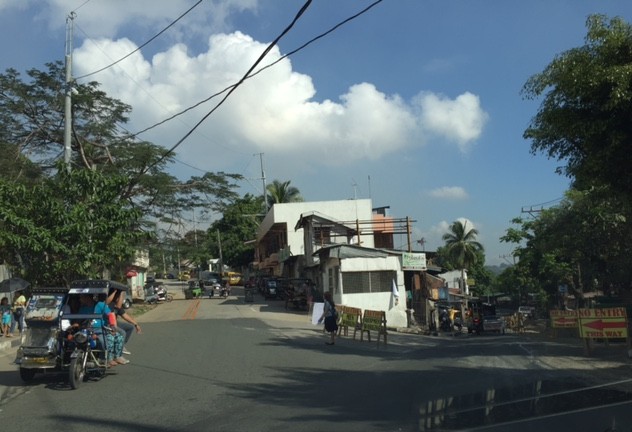 Pinagmisahan Street on the left with ‘No Entry’ signs for the Circumferential Road section being maintained.
 On a typical weekday, there are many school service vehicles parked along the road. Many of these are for the Montessori school across from Clinica Antipolo, which does not have sufficient parking for vehicles it attracts.
 Pinagmisahan used to be a narrow 2-lane road. It has been expanded recently into a 4-lane road with Portland Cement Concrete Pavement (PCCP).
 While the expansion included the construction of sidewalks, many electric posts remain in their original positions and pose safety hazards to motorists.
 White Cross, which is a popular destination during the Lenten Season and especially during the Holy Week is accessible via this road.
 There appears to be many informal settlers living in communities along the road. They have encroached on the RROW and hamper the completion of the expansion of the road.
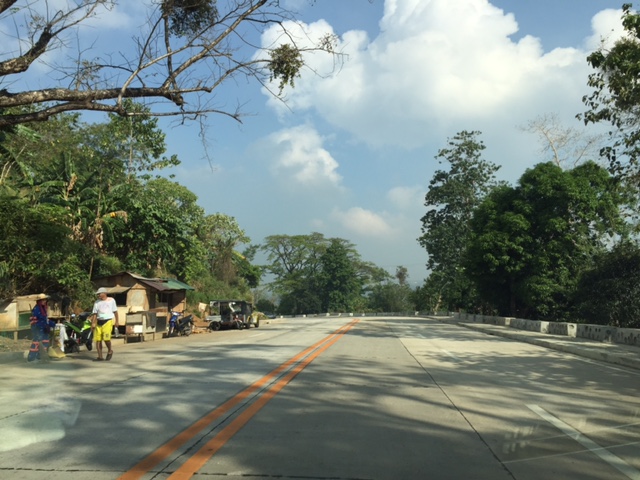 I think this part of the road is practically the highest in terms of elevation. There should be a good view of the surrounding areas including the city center and Hinulugang Taktak from this area.
 Another section of Pinagmisahan showing informal settlers
 Curved downward section towards Daang Bakal and Taktak Road – the fence on the left is for Fairmont Subdivision.
 Straight section approaching Daang Bakal
 Approach to intersection with Daang Bakal – the other lanes of the road is used as parking for visitors of Hinulugang Taktak
 Daang Bakal with Hinulugang Taktak on the left
I’m featuring Pinagmisahan here as I thought its timely given a lot of people will be using it this Holy Week to go to White Cross, which has life-size images for the Stations of the Cross.
–
Is a truck ban the solution to truck-related crashes in Antipolo?
The crash near Masinag Junction in Antipolo City that led fatalities, injuries, damage to property and terrific costs due to the congestion was caused by a truck that apparently had defective brakes. I’ve read some posts on social media calling for a truck ban in Antipolo City. Some comments go as far as specifying major roads like Sumulong Highway and Marcos Highway where a truck ban can be ‘most effective’.
Is a truck ban in Antipolo City and particularly along major roads like Marcos Highway and Sumulong Highway going to solve truck-related road safety issues? It should have some success but it does not address the root causes of the problem. Among these root causes are related to driver behaviour and the maintenance or condition of trucks. Issues pertaining to driver behaviour can be seen in the form of aggressive or reckless driving (e.g., speeding trucks, trucks weaving in traffic, overtaking at critical sections, etc.). Meanwhile, issues pertaining to vehicle maintenance/condition can be seen in instances where trucks climbing Sumulong Highway, Marcos Highway or Ortigas Ave. Extension tend to slow down traffic (overloaded and/or underpowered?) as well as in crashes involving the malfunctioning braking systems. These cannot be addressed through truck bans, which are likely to be more effective for cases of severe congestion that can be directly attributed to trucks.
A truck ban will only punish the good (read: disciplined and competent) drivers and responsible truckers/truck operators. Good drivers know their traffic rules and regulations and how to position themselves on the roads as well as the speeds they need to travel by together with mixed traffic. They exercise caution especially along areas where there are a lot of pedestrian activity (e.g., Masinag area, Mambugan, Cogeo, Tikling, Cainta Junction, etc.). Meanwhile, responsible trucking company operators would likely have more structured or organised maintenance regimes for their trucks and likely would have newer and standard (read: non-modified) vehicles in their fleets. These would be able to carry load according to their specifications and maneuver safely in varying traffic and road conditions. On a larger scale, truck bans will definitely have a detrimental impact on logistics that will carry over to the local economy as well as Antipolo is the origin of many goods/freight and much also pass through the city.
–
City bus layout
At the European Motor Show last weekend at Bonifacio High Street in Bonifacio Global City, there were obviously a lot of European made vehicles on display including the usual attractions from Italy and Germany. What also caught my attention was the new MAN bus currently being used Froehlich Tours for their P2P bus services. Here are some photos of the interior of the bus.


Note the low floor for entry and exits and the layout of the seats that could maximise the number of passengers carried by the bus. The layout maximises the space for standing passengers and seats can be assigned to those with special needs such as persons with disabilities, pregnant women, and senior citizens. Those traveling over longer distances can be seated at the back in order for them not to block those who would be boarding and alighting over shorter distances (i.e., with the likelihood for more frequent movements). This layout should be the standard for city buses in Metro Manila and other cities considering bus services (e.g., Cebu and Davao). In fact, I think the DOTC and LTFRB should seriously consider coming out with a policy/memo requiring bus companies to transition into these buses. That means replacing non-compliant buses over a grace period (i.e., to account for the investments of bus operators/companies). This is one way of modernising bus fleets as most buses for city operations you see now, especially along EDSA, are configured for long distance (provincial?) trips with their narrow aisles and maximising the number of seats as well as the baggage compartments at the buses’ bellies.
–
Fatal road crash at Masinag, Antipolo City
I learned this evening about a major road crash that occurred at the Masinag Junction in Antipolo City in the late afternoon. This was probably why there was a tremendous buildup of vehicles along Aurora Boulevard near Katipunan. Marcos Highway’s capacity is already reduced due to the ongoing construction of the LRT Line 2 Extension from Santolan, Pasig City to Masinag. A major traffic incident like the one this afternoon surely affects traffic along this very busy corridor connecting the already densely populated eastern cities and towns (i.e., Marikina, Antipolo, Cainta) with Metropolitan Manila. This was actually along one of my usual routes between my workplace and my home in Antipolo. Today, however, I decided to take Ortigas Ave. Extension as advised by Waze.
I had written about Marcos Highway already being a killer highway (Another killer: highway…, August 6, 2014) though I think it is not at the level of Commonwealth Avenue in Quezon City. Still, the potential is high for road crashes occurring along Marcos Highway and this potential has increased due to the hazards posed by the construction works between Santolan and Masinag. As they say, such crashes are disasters waiting to happen and such a disaster in terms of both lives lost and traffic congestion costs happened this afternoon when a truck plowed into a building at Masinag.
Hopefully, this crash will be an eye opener and would lead to immediate actions from the LGUs and agencies responsible for ensuring safe roads and safe travels to commuters passing through Masinag Junction and the two major highways converging there, Marcos Highway and Sumulong Highway.
–
Safe steps – Road Safety
I would like to share on an initiative that’s close to my heart – road safety. I had been part of several road safety initiatives before and continue to be part of several today. I have also been doing research on pedestrian and cycling safety together with my students as part of our institute’s research agenda. Here is an example of very good promotional material on road safety including videos highlighting relevant statistics on safety that we should be aware of as well as encourage us to act and contribute towards safer roads for everyone.
Featured in the videos is Road Safety Ambassador Michelle Yeoh, whom people might remember for the movie “Crouching Tiger, Hidden Dragon” that now has sequel at Netflix. I had the honor and pleasure of meeting her many years ago when she was in Manila to speak on road safety at the Asian Development Bank’s Transport Forum. In fact, she visited the University of the Philippines Diliman to inaugurate the road safety and traffic discipline zone that is the campus core and along the Academic Oval. I had the privilege of driving her around the oval on an electric jeepney.
–
Curiosities of transport services in Metro Manila
There are a few interesting observations we can make out of transport services in Metro Manila and chief among them is the poor quality of service that we can generalize among most if not all modes of public transport available to commuters. This poor quality of service of public transport is what drives many people to aspire to own and drive or ride their own vehicle. Already there has been a surge in motorcycle ownership in Metro Manila and its neighboring towns and cities (collectively Mega Manila) and car ownership is also on the rise. These trends have led to increased congestion along many roads. And we will probably not see a significant improvement until the mass transit projects have all been completed. These include the Line 2 Extension to Masinag, the MRT 7 along Commonwealth, the Line 1 Extension to Cavite, and yes, the capacity improvement of MRT 3. Hopefully, there will also be BRT lines along C-5 and Quezon Avenue to complement the rail transport projects.
The UV Express is actually a response to poor public transport services as it evolved out of the FX taxi services of the 1990s that later mixed with informal van and AUV services. These are actually a precursor of today’s ride sharing modes. Only, in those days when the FX service was born, you didn’t have tools like apps to facilitate your ride. People had to agree about the fares and the destinations from terminals like those in Cubao (Quezon City) and Crossing (Pasig/Mandaluyong).
But let us focus on three services that would not have been attractive if only services by their conventional counterparts were (very) satisfactory and if there was a comprehensive and efficient mass transit network in the metropolis. These are Uber, P2P buses and airport express buses.
Uber offers services much like that of the conventional taxi. Its advantages are mainly having recent model vehicles (not dilapidated ones), a better driver (this attribute is quite subjective), and an app-based system for availing services. Fares are generally more expensive than those for regular taxis. And there is a surge pricing for when congestion is really bad. It has a very good feedback mechanism that allows passengers to evaluate their drivers. However, this wouldn’t have been necessary if taxi drivers in general were more disciplined and courteous to their passengers.
P2P buses operated by Froehlich Tours offers services much like that of conventional buses. Its current advantages over conventional buses are that it operates express services, buses are new, well-maintained, and with drivers that appear to be more disciplined than the typical public utility bus driver. A friend’s take is that P2P’s are the bus equivalent of UV Express. It is not at all necessary if the quality of service of regular buses were much better than it is right now. And I am referring to the practically stop anywhere, recklessly driven and poorly maintained regular buses.
Premium airport buses have recently been introduced and these are operated by Air21, which is a freight forwarding company. It is a service that’s long overdue given the many difficult experiences of people to and from NAIA’s passenger terminals. While an airport limousine bus service should have been provided many, many years ago it also is a reflection of the poor quality of airport taxi services. Airport taxis are expensive and according to many stories circulating can be predatory.
What I am driving at, if it is not yet so obvious, is that many ‘new’ services are actually borne out of crappy services of conventional modes. There are many lessons to be learned here in and lest I be accused of neglecting other Philippine cities, I should mention that Metro Manila presents so many lessons to be learned by other rapidly growing and urbanizing areas in the country. At this time we can mention Cebu, Davao, Iloilo, Cagayan de Oro and perhaps Clark/Angeles as metropolitan areas to watch in terms of transport system development. Hopefully, there’s a kind of reverse psychology in their approaches to address their transport needs in that they avoid what has been done in Metro Manila. Surely, transport services in these other cities can do better than Metro Manila’s.
–
Biking/cycling in Japan: Can we achieve a similar environment here?
I biked a lot when I stayed in Japan for long periods in four separate periods. These include a 35-day stint in Tokyo, 3 years in Yokohama, and 1.5-month and 3-month stays in Saitama. What I discovered was a safe environment for cycling where motorists generally respect cyclists using the road and sharing road space is a given. I could even use the sidewalk and share it with pedestrians. People seemed to know how to position themselves and respect each others’ right to use facilities, giving way to each other.
Here’s a link to a nice article a friend shared on social media:
Why Tokyo is home to many cyclists but so few bike lanes
My friend also resided in Japan for a few years where I’m sure he also used a bicycle to get around. Hopefully, we can be like the Japanese in terms of how people respect each others’ right to travel as well as one’s choice of transport mode. While it would be nice to have bike lanes (and protected ones at that) this exclusiveness is not an assurance that a similar culture of sharing and respect will develop. Is it a culture thing? Do we need to be encouraged (or forced) to modify behavior? These are but a few questions that need answers and not just by the typical “if you build them, they will come” statement that seems to have become a mantra for hardliners. A more holistic approach is required and it does not come as a surprise that basic transport infrastructure and more efficient services are necessary prerequisite to achieve such a sharing and respectful society.
–
Interesting site: Japan Railway Journal
We start the month of March with a link to a television show on Japan’s NHK World. Japan Railway Journal features articles in English that includes topics on rail technology (e.g., the latest shinkansen or bullet train) and stories related to railways in Japan such as operations, trends and even history.
Here’s the link:
Japan Railway Journal (http://www3.nhk.or.jp/nhkworld/en/tv/japanrailway/)
–
When conventional taxis were a little better
There was a time when conventional taxis were at least a bit better than what they are perceived to be now. I say “a bit” because then as now, unruly taxi drivers were quite rampant and many drivers were into negotiating fares or choosing passengers. But to those who remember the taxis from the 80s and the 90s, there was one R&E taxi company that was supposed to be more reliable than others. There was even one movie starring the father of a current presidential candidate where the recognized king of Philippine cinema played a taxi driver along with a host of popular basketball players. That was a time when people preferred R&E over other taxis and it was easy to spot their yellow and green cabs.
Then there was also Basic taxi company, which featured a phone-a-taxi (on demand) service. The wife used to call for a taxi to her home or office so she didn’t need to stand out to wait and hail a taxi when she had some heavy stuff with her. I was reminded of this feature of their service when I spotted a Basic taxi in front of our vehicle earlier today. Pick-up call services are still available and I guess there are other taxi companies with similar services for the convenience of passengers. However, with the eventual deregulation of taxis and the proliferation of individually owned cabs, services continued to deteriorate in Metro Manila and other cities.

These convenience features are not new ones as what it seems to younger people these days who have their Uber and Grab apps on their smart phones. I guess if there were smartphones in the 1980s and 1990s, then similar apps could have been developed for taxi services. I had written about one taxi company in Iloilo City that has these pick-up call services and an app for people who prefer to use these with their gadgets. One just wonders if conventional taxi companies could have been preferred by more people over Uber and Grab if their drivers were more professional (i.e., stuck to their meters and weren’t choosy of passengers).
–
 Caught (up) in traffic