
Alay Lakad 2024
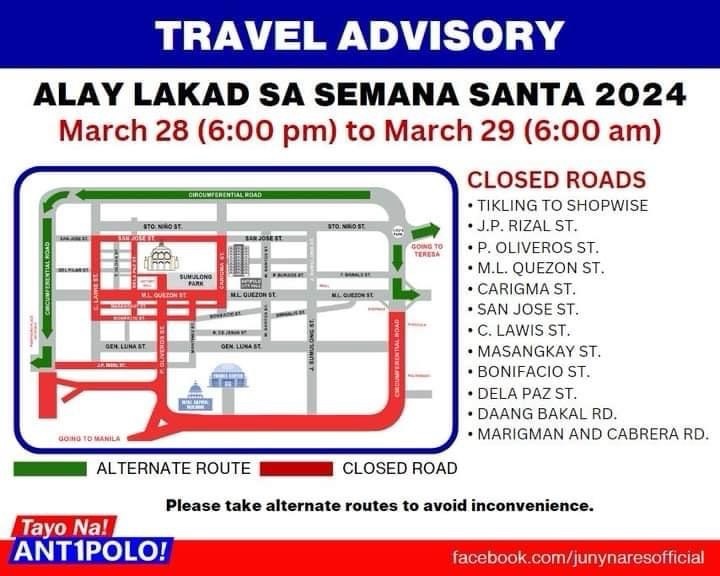
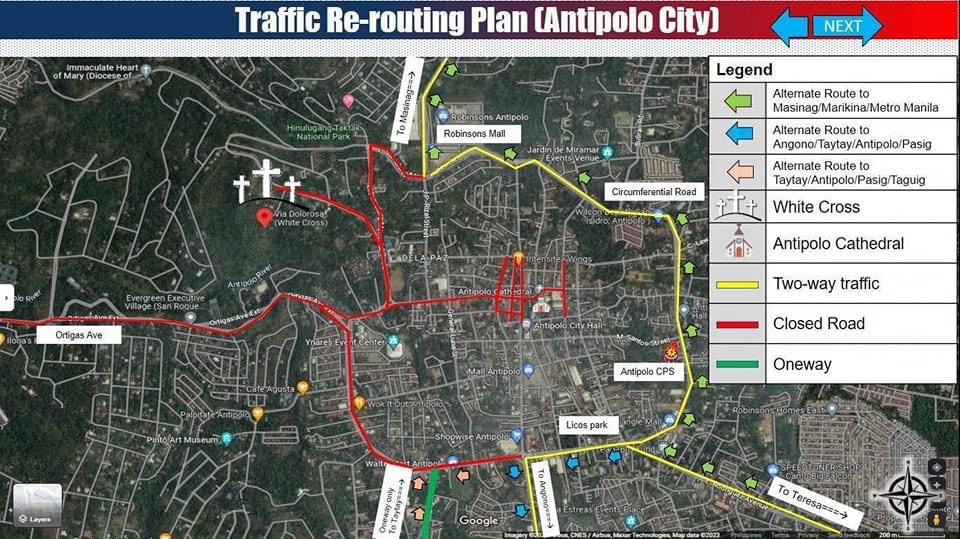
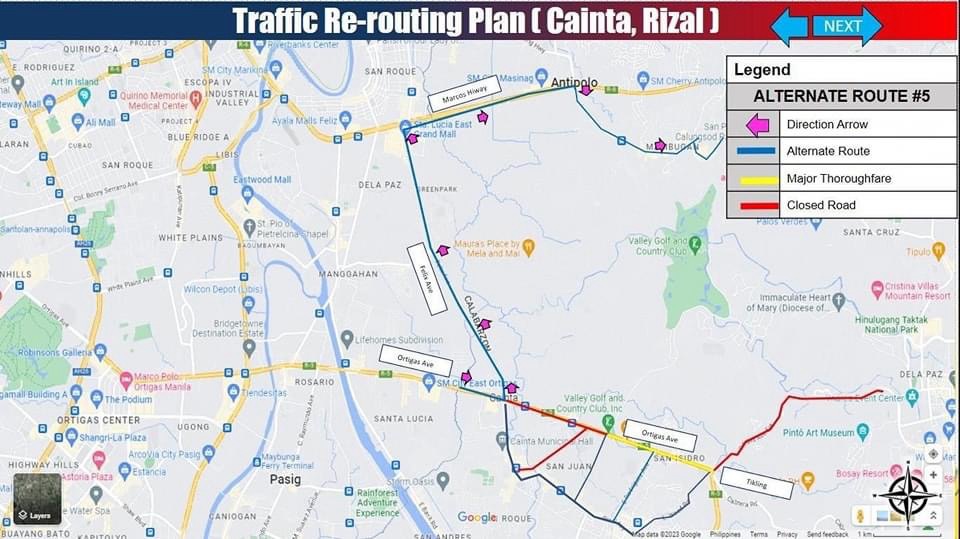
I’m sharing here the announcements and maps shared by Antipolo, Cainta and Taytay regarding road closures and alternative routes during the Alay Lakad this Holy Week. The roads leading to the Antipolo Shrine will be closed from 5pm of March 28 (Maundy Thursday) to 6am of March 29 (Good Friday). Expected are hundreds of thousands of people making the trek to the Shrine of Our Lady of Peace and Good Voyage, which is among the most popular pilgrimage sites in the country.
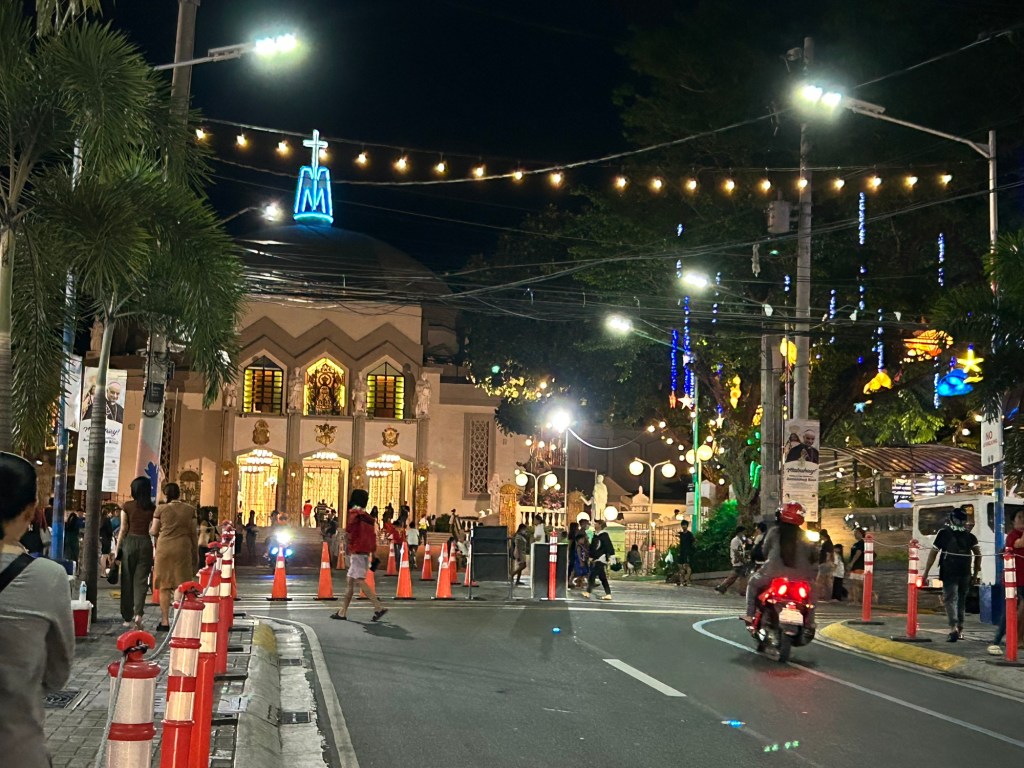
Many are probably walking as part of their panata or commitment in exchange for a favor they have prayed for. This may be healing for an illness or finding work or passing a licensure exam. Of course there are those who also pray for wants rather than needs like a new car, a big house or winning the lottery. And then there are those who are in it for the adventure, treating this as an excursion or a gig with the barkada.
Here are the maps and announcements posted in the official pages of the LGUs:
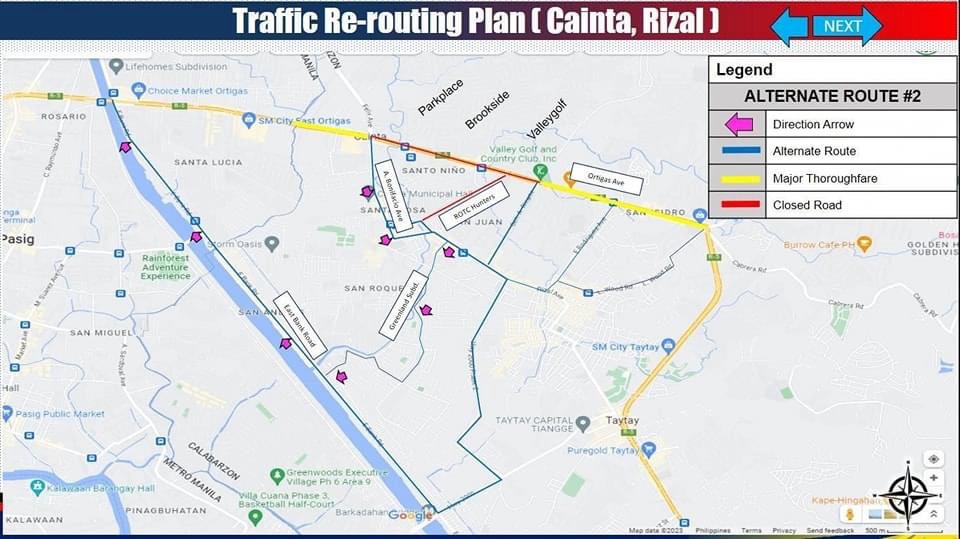
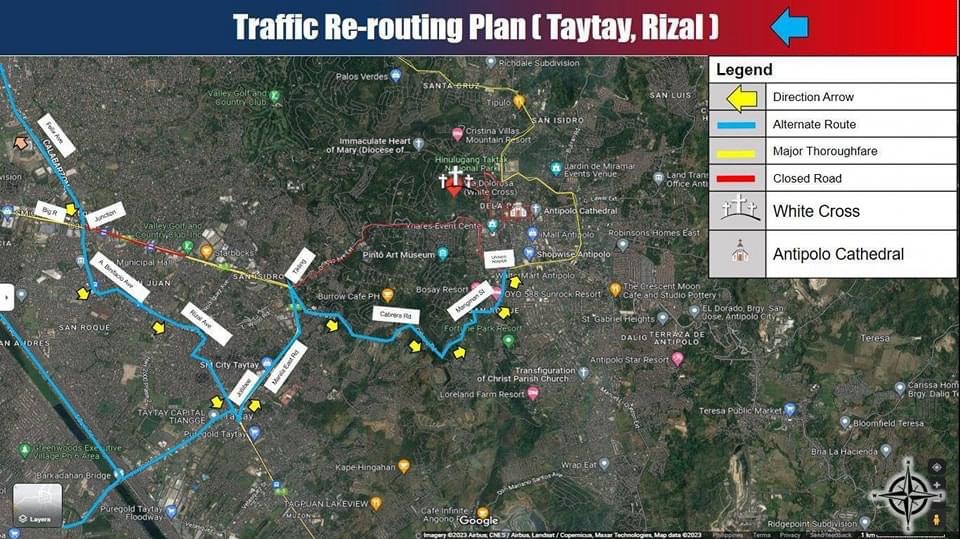
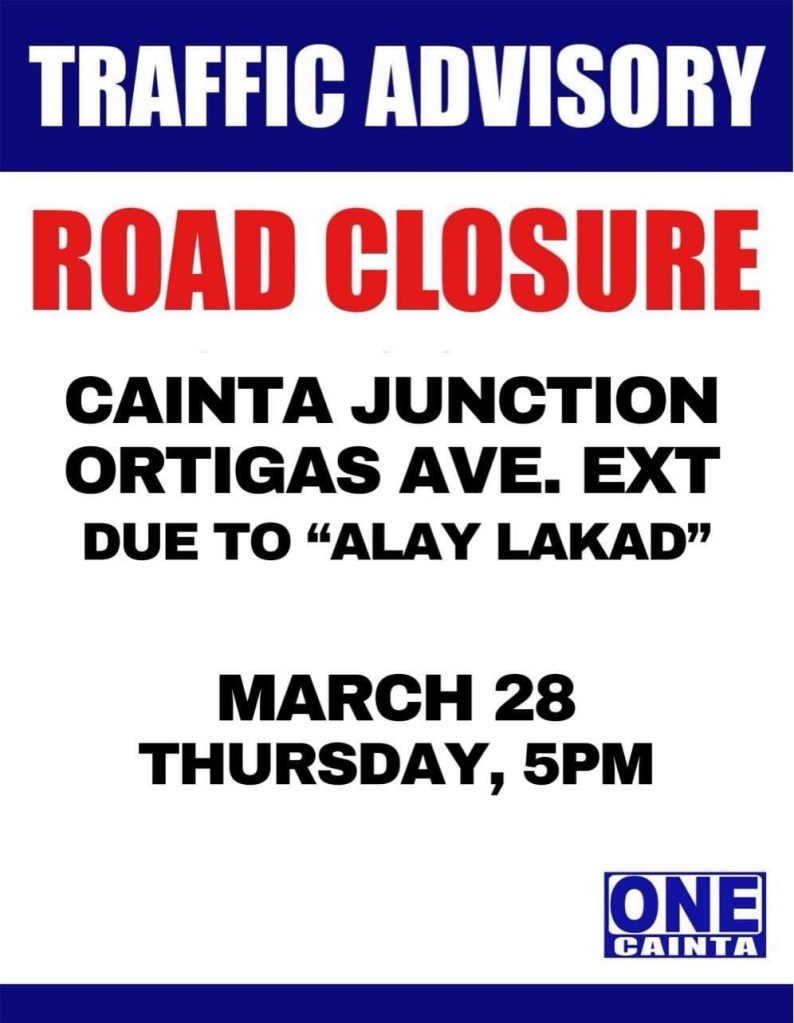
–
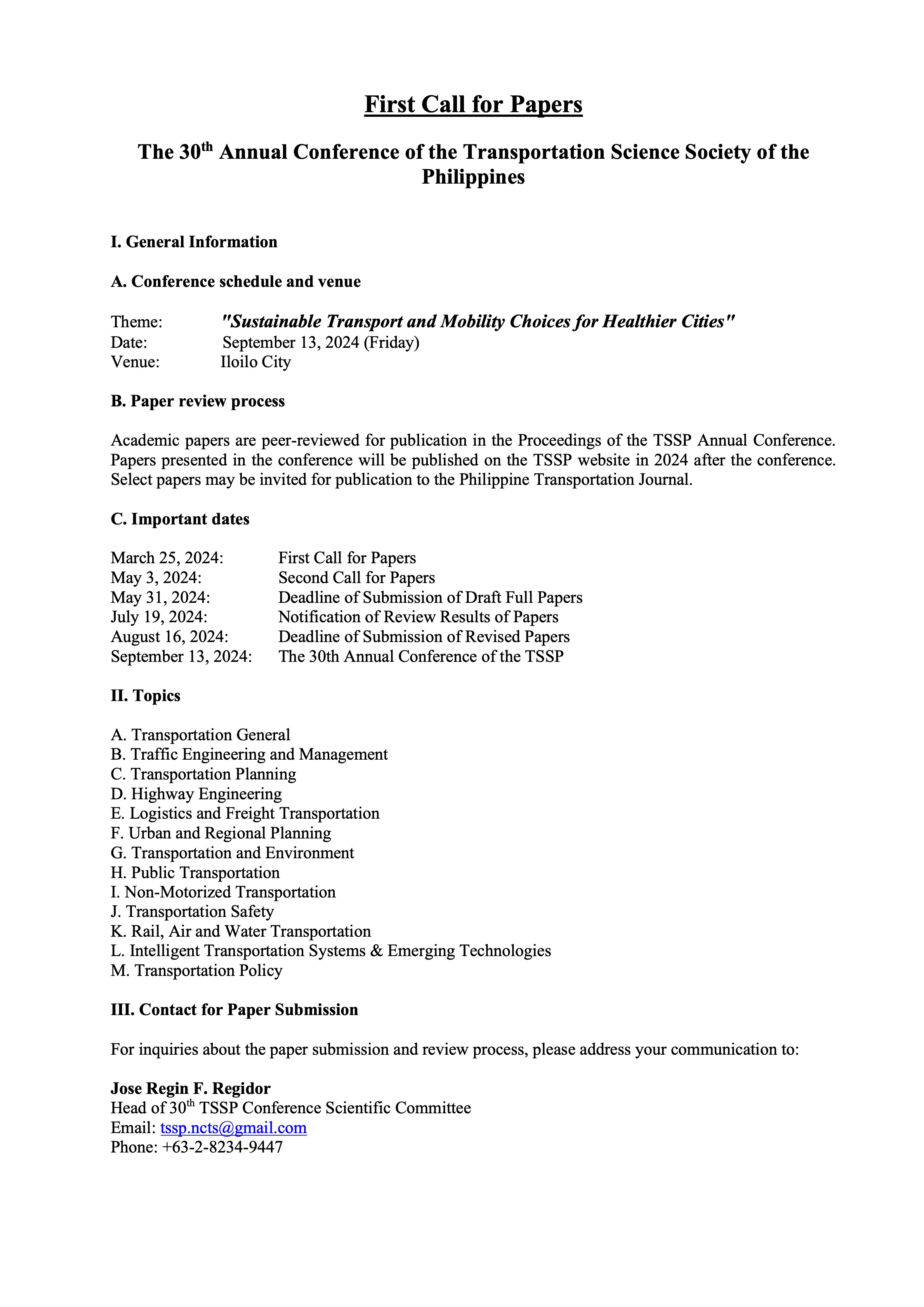
30th Conference of the Transportation Science Society of the Philippines
I am sharing here the First Call for Papers for the 30th Annual Conference of the Transportation Science Society of the Philippines (TSSP). The conference will be held in Iloilo City almost to the day of the last time it was held there in Sept. 12, 2014.
Information on past conferences may be found here: https://ncts.upd.edu.ph/tssp/conferences
–
On kamote riders
Much has been written and reported about the so-called ‘kamote’ riders. These are motorcyclists who have the propensity for risky behavior including reckless maneuvers on the road. Such often places them in harm’s way whether they are conscious about the actions or not. I see them everyday during my commutes including but not limited to those who counterflow, speed, race, zig-zag through moving traffic, and use the bicycle lanes or pedestrian sidewalks.
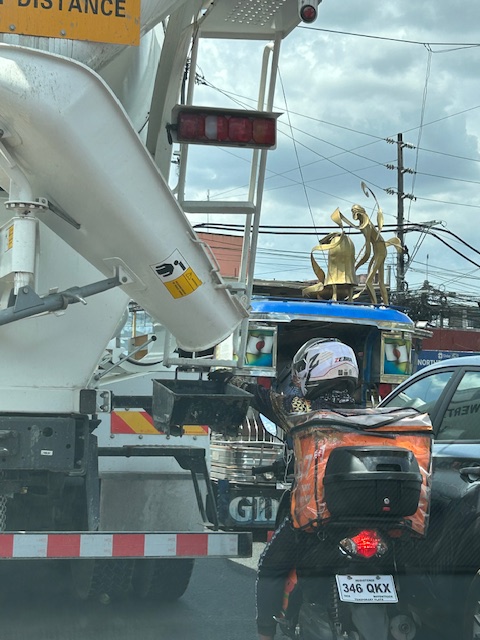 The not so obvious kamote rider positioning himself at the downspout of a concrete mixer.
Not all motorcycle riders are kamote. However, there is a significant number of them out there that put other road users in risky situations. They also contribute to a lot of damage to property as evidenced by a lot of vehicles, especially cars, that have the signature scratches, dinks and dents after being sideswiped or bumped by motorcycles. Such behavior can actually be corrected if the Land Transportation Office (LTO) would be stricter with licensing – requiring more in terms of rider training and certification as well as testing. Traffic law enforcement is also critical here because behavior change can only be done and effective if enforcers are firm. A friend made the observation that law enforcers themselves are the first to violate rules and regulations or bend them in their favor. That sends a wrong signal and would only encourage more ‘pasaway’ and ‘kamote’ riders.
Of course, there are also kamote drivers and cyclists. But those are the topics for future posts.
–
UP’s University Avenue
A week ago, I was invited to witness the renewal of a Memorandum of Understanding (MOU) between UP Diliman and a leading and prominent engineering company. I think one of the highlights of that event was getting to go to the Board of Regents meeting room at the top of Quezon Hall. This used to be an open area that we went to during our college days. The only times the place was off limits was when there were important meetings at Quezon Hall (e.g,, meetings of the UP Board of Regents) and during commencement exercises. It has been transformed into an air-conditioned facility that now hosts offices and this conference room. What’s the transportation thing in this post is the magnificent view of the University Avenue, which is the main gateway to the campus.
 UP Diliman’s University Avenue as seen from the top of Quezon Hall
The University Avenue has also evolved as it now features bike lanes along each direction of the road. There are walkways that also served as bike lanes along either side of the avenue. These are visible in the photo and are protected, exclusive ROWs from the main travel lanes that used to be assigned to motorized traffic. The avenue connects UP’s Academic Oval, its campus core, to Commonwealth Avenue. I remember splendid sunsets viewed from the same vantage point as this generally faces the west.
–
Lower speed limits may not slow drivers, a before-and-after study shows
I am sharing this article on drivers not reducing their speeds after speed limits have been lowered along certain roads. My first reaction after reading the article is that it is that perhaps in the US case, the after study was conducted quite early and before people have become aware, understood and adjusted to the lower speed limits. The responses or reactions to lower speed limits (particularly those posted or on signs) may vary among cities and countries. In the Philippines, where drivers and riders appear to be oblivious to speed limits, other interventions may be required including some types of traffic calming devices. This is very much a concern particularly in school zones where children are exposed to the risks of being run over by motor vehicles speeding along the roads and not minding the speed limits in the area.
Here is the Research report:
Source: Lower speed limits may not slow drivers, a before-and-after study shows
Article share: on using optical narrowing to make streets safer
I’m sharing this interesting article on the concept and application of optical narrowing to improve road safety:
Erfurt, E. (September 15, 2023) “How to Use Optical Narrowing to Make a Street Safer,” Strong Towns, https://www.strongtowns.org/journal/2023/9/15/how-to-use-optical-narrowing-to-make-a-street-safer?fbclid=IwAR147sLmkMBwStj51FR1ehNcVsi1YpN70etrpGOwv9DHL4ZhJIDLzP8cb1s [Last accessed: 3/14/2024]
To quote from the article:
“We all perceive the world around us through visual reference points. As we look around, we are next to the wall, or across the street from the bank—in other words, we position ourselves relative to what we see. This is even more apparent when we are driving: you may perceive yourself as behind another car, or between the lines on the road.
Drivers make decisions based on these visual cues. If things are further away, we are more inclined to speed up. The auto industry has marketed this as the “freedom of the open road,” and the visual of a wide open road is paired with the acceleration of the car. If no one is near and all the fixed objects, such as curbs and buildings, are far away, then the perception is that we have less risk and we throw caution to the wind.
If things are closer, we are more inclined to slow down. Our natural inclination is caution and possibly a little bit a fear that we may hit something. When you drive on a street where the lanes are a little narrower, or the buildings are at the back of the sidewalk, our reference points become closer. We have to focus, and in an abundance of caution we drive slower. The perspective is that we have more risk, and we pay more attention to counter that risk.”
This would be a good quick reference to planners and engineers who are involved in road safety, particularly in applying complete streets concepts to reduce the risk of crashes along streets.
–
Article share: the safest airplane makers
I found this very interesting (to me) article on what are supposed to be the safest airplane makers and the safest airplanes.
Borba, L. (December 16, 2023) “What Are the Safest Airplane Makers in the World?” Medium, https://medium.com/the-expatriate-guide/what-are-the-safest-airplane-makers-in-the-world-8c9a90f48707 [Last accessed: 3/8/2024].
I won’t quote from this article and leave it up to you to read and find out for yourself what the safest maker is and what the safest plane is. There are also information here about the opposite. That is, about the least safe manufacturer and planes.
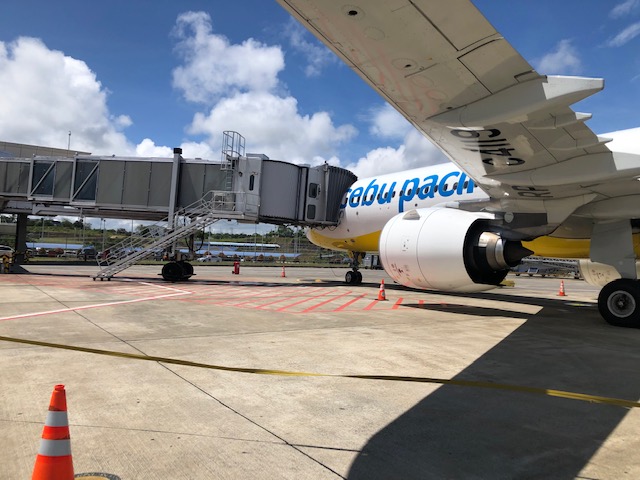 An Airbus A321 plane on the ground at NAIA
–
Article share – on aircraft evacuations and the case of JL516
Here is a very informative article on aircraft emergency evacuations, particularly the case of the recent JAL 516 where all passengers and crew were able to evacuate the burning aircraft.
Tamura, Y. (January 7, 2024) “Why the Evacuation of 379 Passengers from the Burning JAL516 Wasn’t a Miracle,” Medium, https://medium.com/japonica-publication/why-the-evacuation-of-379-passengers-from-the-jal-collision-wasnt-a-miracle-8a03cb02a95c [Last accessed: 3/4/2024]
To quote from the article:
“Japan is said to have become earthquake-resilient over the decades, but it’s less known that the same applies to aircraft accidents.
As the oldest Japanese airline company partially founded by the government in 1951, the history of JAL encapsulates the narrative of Japan’s aviation industry, punctuated by significant accidents.
It is none other than JAL that experienced the worst-ever airplane crash in the world. In 1985, JAL123 crashed into a mountain approximately 100 km from Tokyo.
The crash, believed to have been triggered by improper maintenance of the aft pressure bulkhead, caused 520 fatalities, the largest loss of life in a single aircraft.A former JAL employee comments that those who have survived traumatic incidents often grapple with returning to their duties in the sky. Despite this difficulty, they also carry a deep sense of responsibility to impart their experiences to younger crew members, contributing to the commitment to safety.
I agree that the successful evacuation was not a miracle but a product of the training and dedication of the staff as well as the culture and behavior that was very obviously Japanese. One wonders what could have happened if this were, say, an airliner from a third world country? Or perhaps even one from a country like the US? Would the evacuation have been successful like JL516’s?
–
On the current issue about 2 and 3-wheeled electric vehicles
Electric vehicles are again in the news due to the proposed policies regarding them that the government is planning to implement. These include banning them from national roads and requiring their registration as well as their drivers having licenses. While it seems simple enough to many, there are complexities involved here due to the provisions of a law incentivizing the e-vehicle adoption and use.
Most recently, the Electric Vehicle Association of the Philippines or eVAP released a statement regarding the proposed policies on electric vehicle use. Here is their press release, which is available from their official Facebook page:

I tend to agree with the eVAP statement more than the stand of other organizations or entities. Perhaps its because I know many people behind eVAP (at one time I was one of their advisers) and trust that their statement is based on informed discussions not just among themselves but their partners and cooperators among different sectors including the government.
–
Taxi services at NAIA Terminal 2
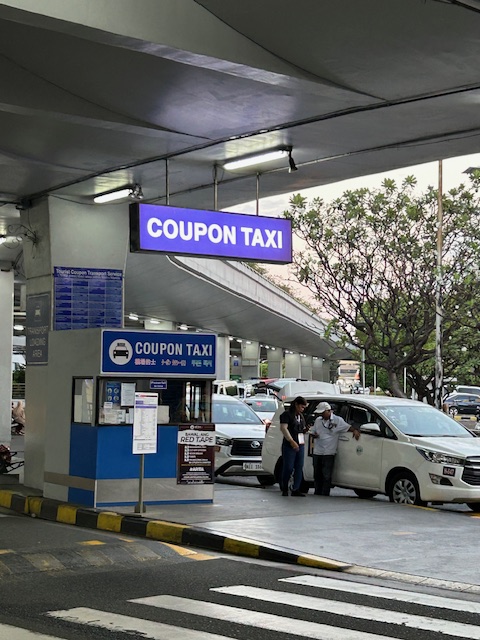
The previous post on NAIA Terminal 2 featured photos of taxi or ride share services at the airport. Coupon Taxis are the most expensive option for travelers as they have the highest rates. Often, these are even higher than vehicle rental rates. These rates are shown to prospective customers though so I can’t really understand why people go for this option and then slam it for being expensive. The information is provided there so accepting the terms means you understand and accept the rates. Perhaps they didn’t have other options?
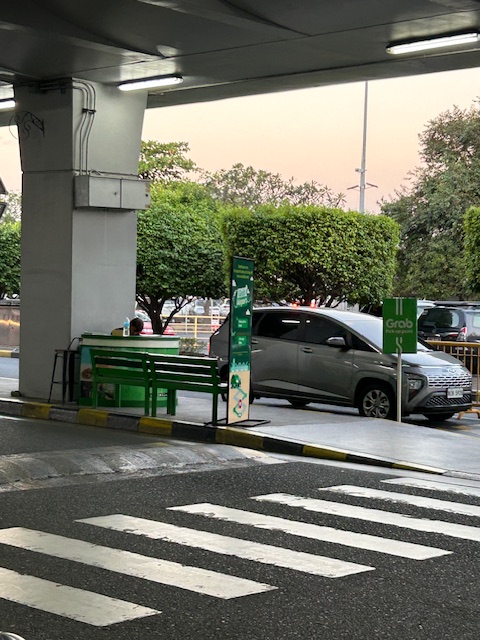
There is a Grab stand at the terminal. I assume that since Grab is quite popular at least in Southeast Asia (even taking over Uber’s share), then travelers who likely have smart phones should have the app and be able to book a ride using it. This might be the best option for those on the go.
There is also a regular taxi stand at the airport terminal so that is another option. Unfortunately, one will likely have to haggle with the drivers for the fare. Other drivers might use their meters but will suggest or solicit tips from their passengers.
There is no rail service for the NAIA Terminals but there is an airport bus, UBE Express, that travelers can take to go to major CBDs like Cubao, Ortigas and Manila or perhaps to major terminals like PITX or the Victory Liner Terminal in Pasay City.
–
 Caught (up) in traffic